Loyal to the Tsar: General Tatishchev and Prince Dolgorukov
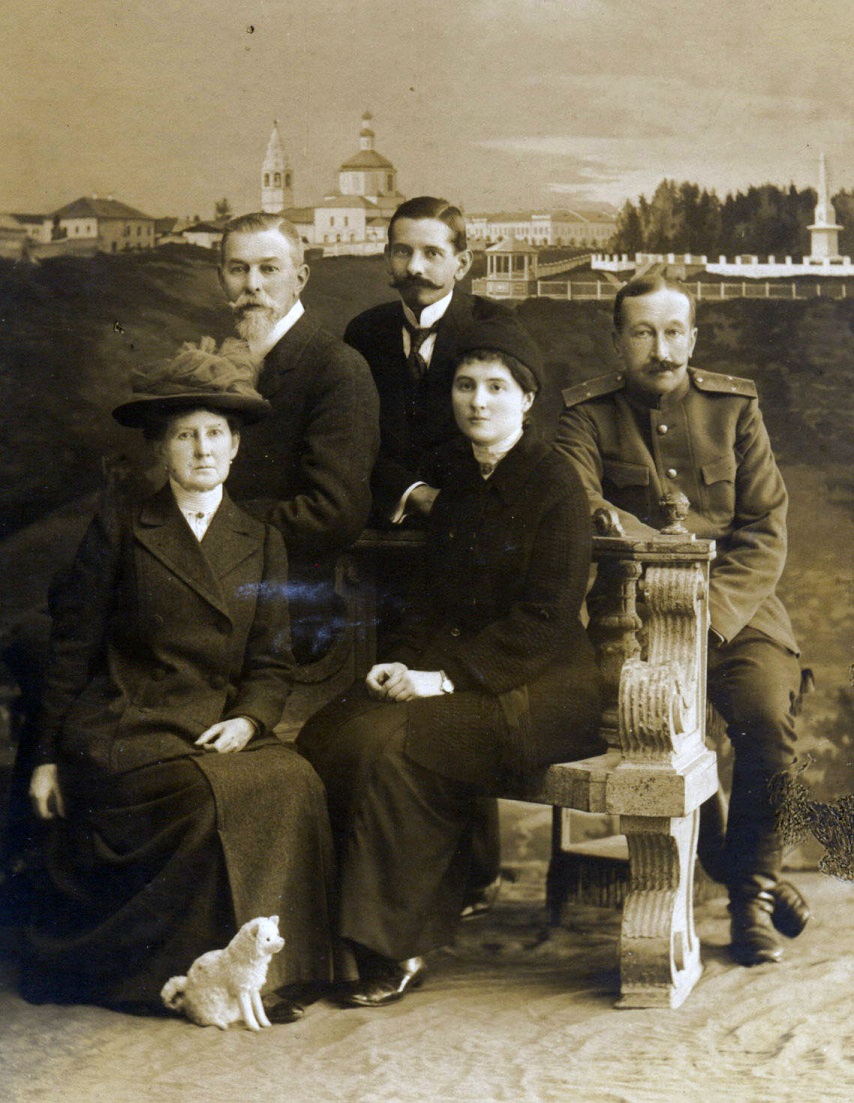
PHOTO: From left to right: Catherine Schneider, Ilya Tatishchev, Pierre Gilliard, Anastasia Hendrikova and Vasily Dolgorukov
On this day – 10th June 1918 – two faithful servants to Emperor Nicholas II – General Ilya Leonidovich Tatishchev and Prince Vasili Alexandrovich Dolgorukov – were murdered by the Bolsheviks.
General Tatishchev and Prince Dolgorukov, faithfully and selflessly served Emperor Nicholas II, for many years. With Christian courage and nobility, they remained faithful to the sovereign, voluntarily followed the Emperor and his family to Tobolsk, and then to Ekaterinburg.
It was on 10th June 1918, that they together took a martyr’s death at the hands of the Bolsheviks and were buried in the cemetery of the Novo-Tikhvin Convent.
Memory Eternal! Вечная Память!
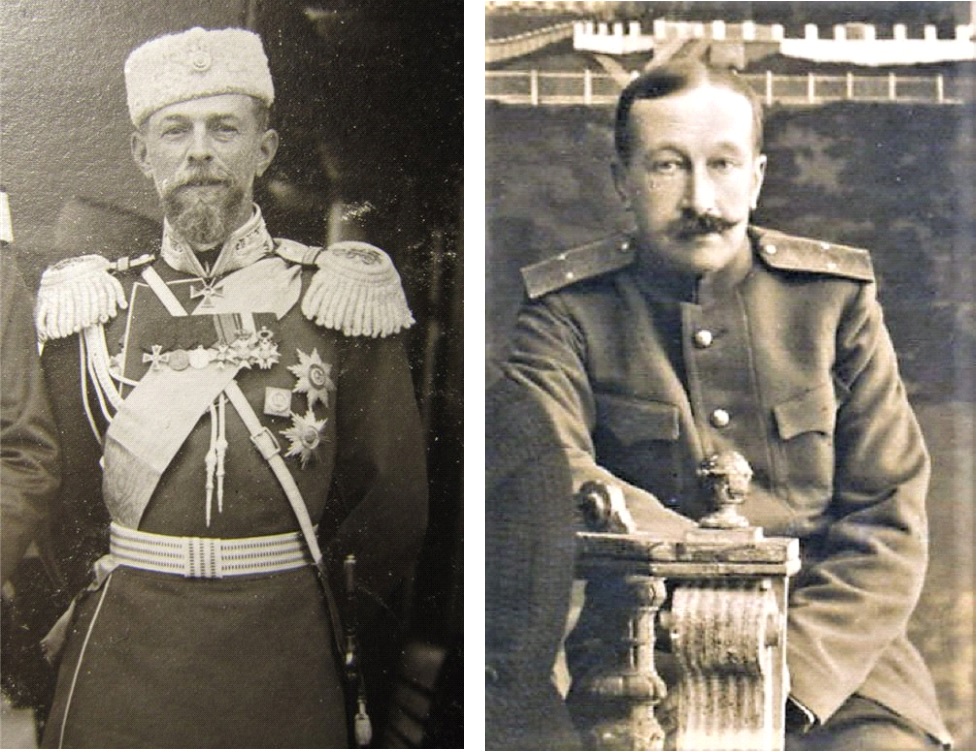
PHOTO: General Ilya Leonidovich Tatishchev and Prince Vasili Alexandrovich Dolgorukov
Ilya Leonidovich Tatishchev (1859 – 1918) – Adjutant-General of Emperor Nicholas II. The son of General Leonid Aleksandrovich Tatishchev (1827-1881) and Catherine Ilinishna (1835-1915), Ilya Tatishchev is one of the descendants of the founder of Ekaterinburg. He graduated from the Corps des Pages in St Petersburg, and later entered the service of the His Majesty’s Life Guard Hussar Regiment. He later served as adjutant to the Grand Duke Vladimir Alexandrovich (1847-1909). On 6th December 1895, he was promoted to colonel. From 1905 he served as Major-General of the Retinue of His Imperial Majesty. In 1910 he was promoted to Adjutant General. He was a member of the Holy Prince Vladimir Brotherhood. He faithfully followed Emperor Nicholas II and his family into exile. He was murdered by the Bolsheviks on 10th June1918. Ilya Tatishchev is buried in the cemetery (*lost during the Soviet years) of the Novo Tikhvinsky Convent in Ekaterinburg.
Prince Vasily Alexandrovich Dolgorukov ( 1868 – 1918) – Major-General, marshal of the Ministry of the Imperial Court and lands. The son of Prince Alexander Vasilyevich Dolgorukov (1839-1876) and Princess Mary Sergeyevna (1846-1936). He graduated from the Corps des Pages in St Petersburg, and then entered the service of the Life-Guards Horse-Grenadier Regiment. In 1907, he was promoted adjutant to His Imperial Majesty Emperor Nicholas II. From 1912-1914, he served as Regimental Commander of the Life-Guards Horse-Grenadier Regiment. During the First World War, he served at General Headquaters in Mogilev. Dolgorukov faithfully and selflessly served Emperor Nicholas II for 22 years. In March 1917, he voluntarily stayed with the Emperor during his house arrest in the Alexander Palace at Tsarskoye Selo. In August 1917, he then followed the Emperor and his family into exile to Tobolsk.
After his arrival in Ekaterinburg on 30th April 1918, Prince Dolgorukov was arrested “in order to protect public safety.” He was placed in the political department of the Ekaterinburg prison. The Chekists tried to accuse him of planning the escape of the Imperial family. Historians call these accusations groundless. On 10th June 1918, he was shot in a wooded area near the city’s Ivanovskoe Cemetery,. His body was later discovered by a unit of the White Army, and buried in the autumn of 1918 in the cemetery (*lost during the Soviet years) of the Novo-Tikhvinsky Convent in Ekaterinburg.
Tatishchev and Dolgorukov were canonized by the Russian Orthodox Church Outside Russia (ROCOR) in October 1981.
© Paul Gilbert. 10 June 2022
 Nicholas II
You must be logged in to post a comment.