On this day – Nicholas II and members of his family were handed over to the Ural Soviet

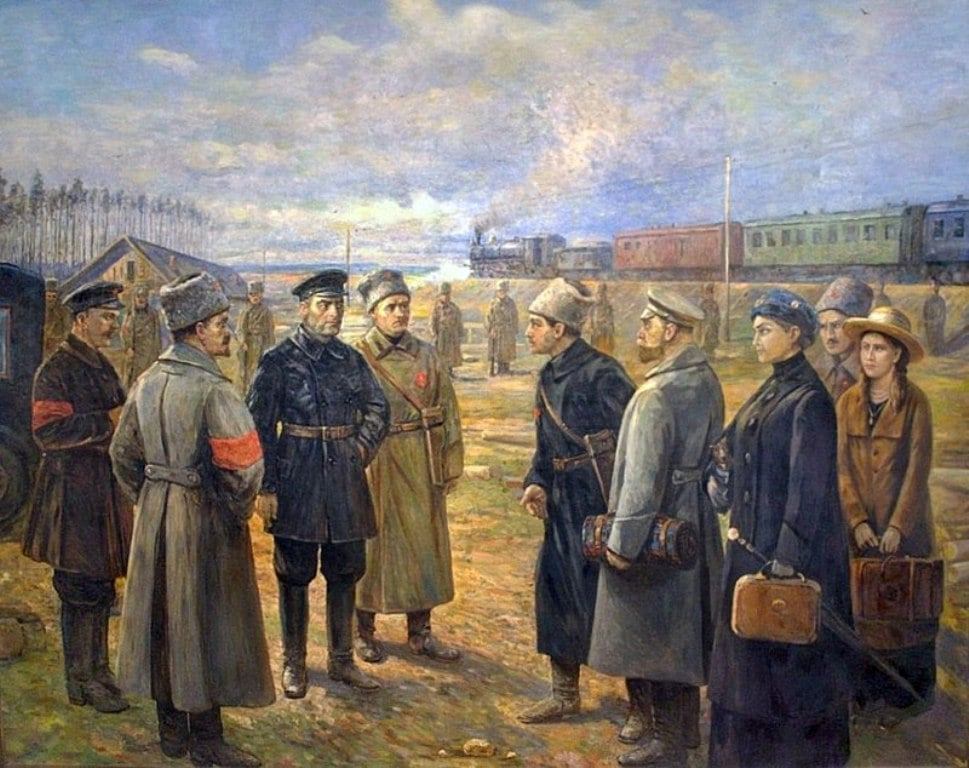
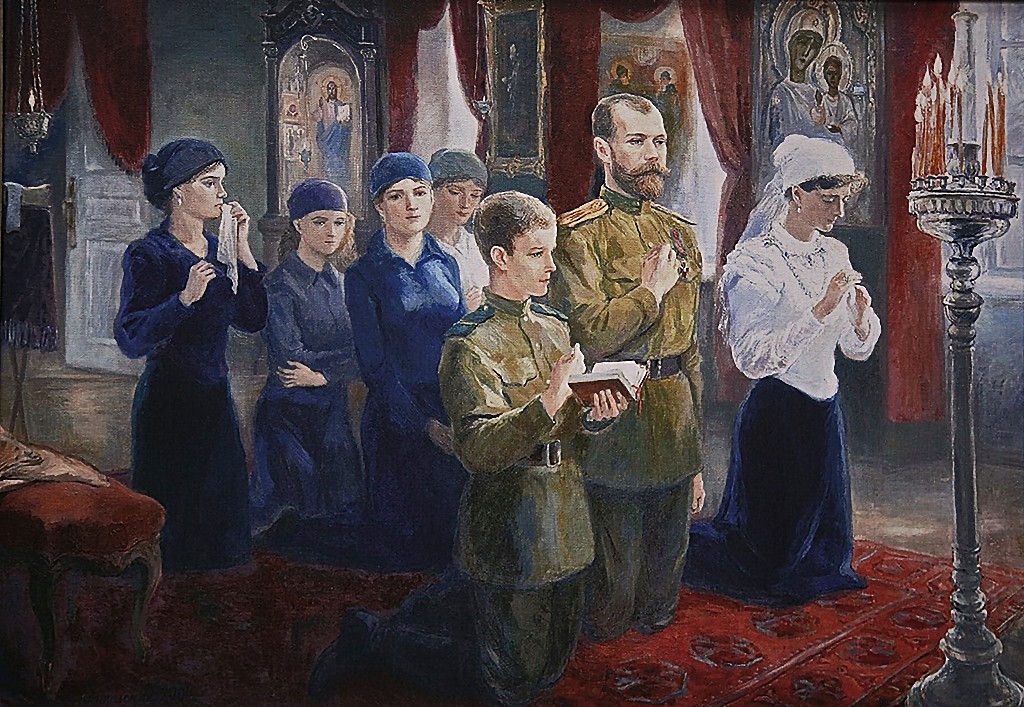
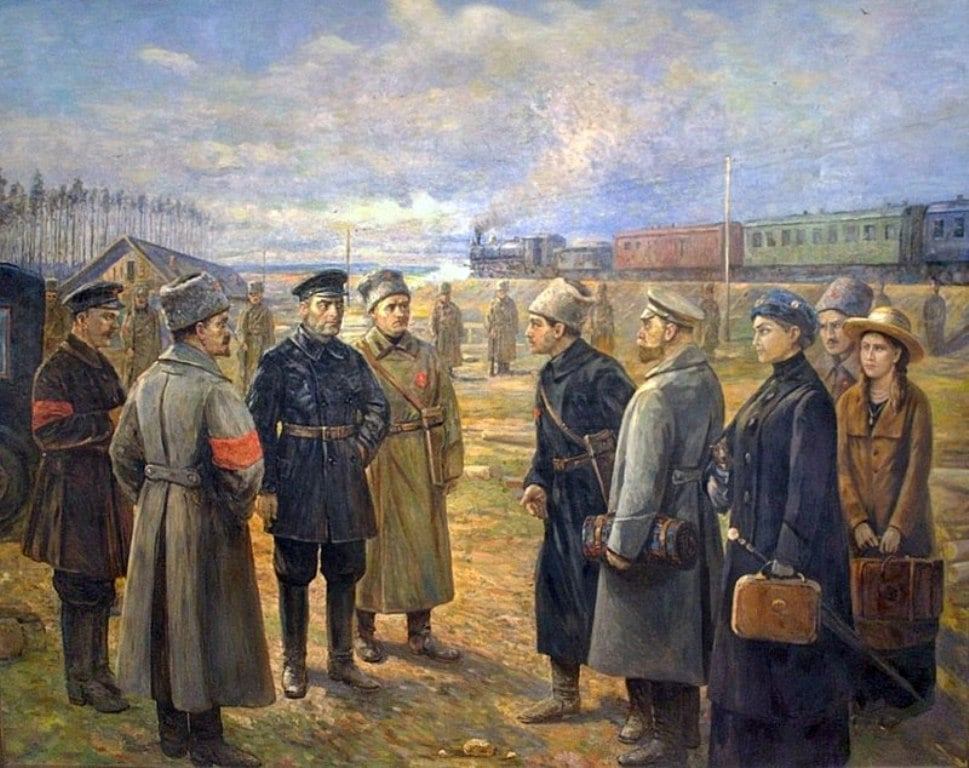
PHOTO: “Transfer of the Romanov family to the Ural Soviet” (1927)
Artist: Vladimir Nikolayevich Pchelin (1869-1941)

On this day – 30th April (O.S. 17th April) 1918, Emperor Nicholas II, Empress Alexandra Feodorovna and Grand Duchess Maria were handed over to the Ural Soviet in Ekaterinburg. It was at this point, that their fate was sealed.

Recall that on 26th (O.S. 13th) April 1918, Emperor Nicholas II, Empress Alexandra Feodorovna, their daughter Grand Duchess Maria Nikolaevna were brought from Tobolsk to Ekaterinburg. They arrived in Ekaterinburg on 30th April 1918, whereupon they were handed over the Ural Soviet.

They were accompanied by five faithful retainers: Dr. Eugene Botkin Botkin, Prince Vasily Dolgorukov, maid Anna Demidova, valet Terenty Chemodurov, sailor Ivan Sednev, all of whom voluntarily accompanied the Imperial Family. The only one who survived the regicide was Chemodurov.

Nicholas II wrote the following in his diary:

“At 8.40 we arrived in Ekaterinburg. We stood for three hours in one station. There was a heated dispute between the local commissars and our own. In the end, the first prevailed and the train was moved to another goods terminal. After standing there for an hour and a half, we got off the train. Yakovlev handed us over to the local regional commissar, with whom we drove by motor through empty streets to the accommodation which has been prepared for us—the Ipatiev house. Slowly our people and our things began to arrive, but they would not let Valia through.

“The home is pleasant and clean. We have been given four large rooms. We were not able to unpack our things for a long time, as the commissar, the commandant and the guards captain had not had time to inspect our trunks. Then the inspection was like a customs search, just as strict, right down to the last capsule in Alix’s travelling medicine kit. This annoyed me so much that I expressed my opinion sharply to the commissar. By 9 o’clock we had at last settled in.

“This is how we installed ourselves: Alix, Maria and I together in the bedroom, sharing the dressing room, Demidova in the dining room, Botkin, Chemodurov and Sednev in the hall. The duty officer’s room is by the entrance. In order to go to the bathroom of W.C., it was necessary to go past the sentry at the door of the duty office. There is a very high wooden pallisade built all around the house, about two sajens from the windows, all along there was a line of sentries, in the little garden also.”

Grand Duchesses Olga, Tatiana, Anastasia and Tsesarevich Alexei joined their parents the following month. They were accompanied by more retainers, including valet Aloysius Trupp, the cook Ivan Kharitonov, Ivan Sednev’s nephew Leonid Sednev and Klimenty Nagorny, among others.

To mark this solemn anniversary, the Ekaterinburg Diocese prayerfully celebrates the memory of the Holy Royal Passion-Bearers. Orthodox Christians will fill churches today, offering prayers to the Tsar and his family Many Ekaterinburg residents will also honour the memory of the Holy Royal Passion-Bearers, by taking part in a Cross Procession along the so-called “Path of Sorrow”, which passes through the places associated with the final days of Russia’s last Tsar and his family in the Ural capital.

The Path of Sorrows begin with the place where Emperor Nicholas II, Empress Alexandra Feodorovna, Grand Duchess Maria Nikolaevna and their five faithful retainers disembarked from the train on 30th April 1918. Here, near the Shartash-Yekaterinburg-II Railway Station, a Memorial Cross and a foundation stone were installed. There are plans to build a church in honour of the Valaam Icon of the Mother of God on this site – one of the three miraculous icons that appeared during the reign of Nicholas II.

Then the Path of Sorrow follows Vostochnaya Street, where the Church of the Icon of the Mother of God “Port Arthur” was built at the intersection with Shevchenko Street. In 2008, during the Cross Procession, a memorial stone was laid at this place, and in 2017, the construction of the church was completed. Here, according to historical records, on 23rd May (new style), 1918, Tsesarevich Alexei Nikolaevich, abd the Grand Duchesses Olga, Tatiana and Anastasia Nikolaevna arrived by train. They too, were subsequently placed under arrest, and then taken to the Ipatiev House.

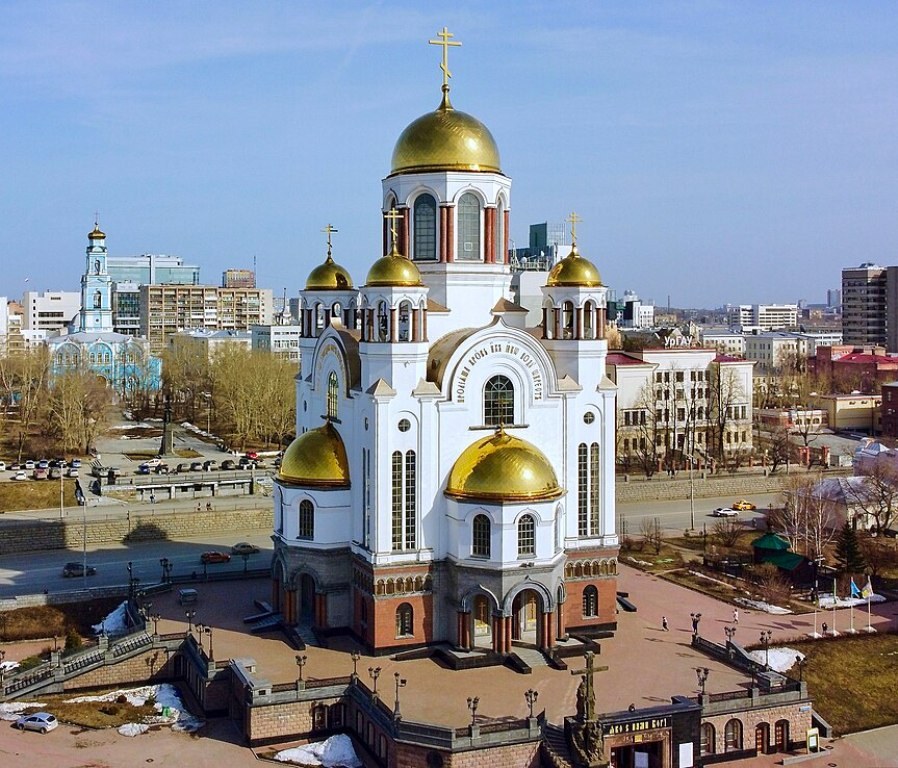
PHOTO: the Church on Blood in Honour of All Saints Resplendent in the Russian Land

Not far from the railway station, in Nevyansky Lane, there is an Orthodox church in honour of the Reigning Icon of the Mother of God. It was consecrated in 2011 by Metropolitan Kirill of Yekaterinburg and Verkhoturye. In 1918, the Yekaterinburg-I Railway Station was located here, where on 30th April (new style), 1918, the train carrying Nicholas II, his family members and their five retainers stood for several hours, before proceeding to the the Shartash-Yekaterinburg-II Railway Station, where they disembarked.

The last point of the Path of Sorrow is the Church on Blood in Honour of All Saints Resplendent in the Russian Land on Tsarskaya Street. It was here on this site, that Emperor Nicholas II, his family and four faithful retainers met their death and martyrdom. The church was erected on the site of the Ipatiev House, where the regicide took place on the night of 16/17 July 1918.

In the Lower Church sanctified in honour of the Holy Royal Passion-Bearers, there is the “Imperial Room” – a side-chapel of which the altar allegedly rests on the site of the murder room in the basement of the Ipatiev House. The decoration of the room received the blessing of the Metropolitan of Ekaterinburg and Verkhoturye Kirill. It was timed to coincide with the events marking the 100th anniversary of the death and martyrdom in July 2018, in which more than 100,000 attended.

© Paul Gilbert. 30 April 2026

***

The following NEW title was compiled and edited by independent researchers and Romanov historian Paul Gilbert was published in August 2024. 

This fascinating new study features 14 chapters on this tragic event, which include the memoirs of a British intelligence officer and journalist, and two First-English translations. In addition, 11 chapters were written by Paul Gilbert, based on new documents sourced from Russian archival and media sources over the past decade.

Please refer to the link provided for further details about the content of this new title . . .

CLICK HERE TO READ MORE ABOUT THIS TITLE

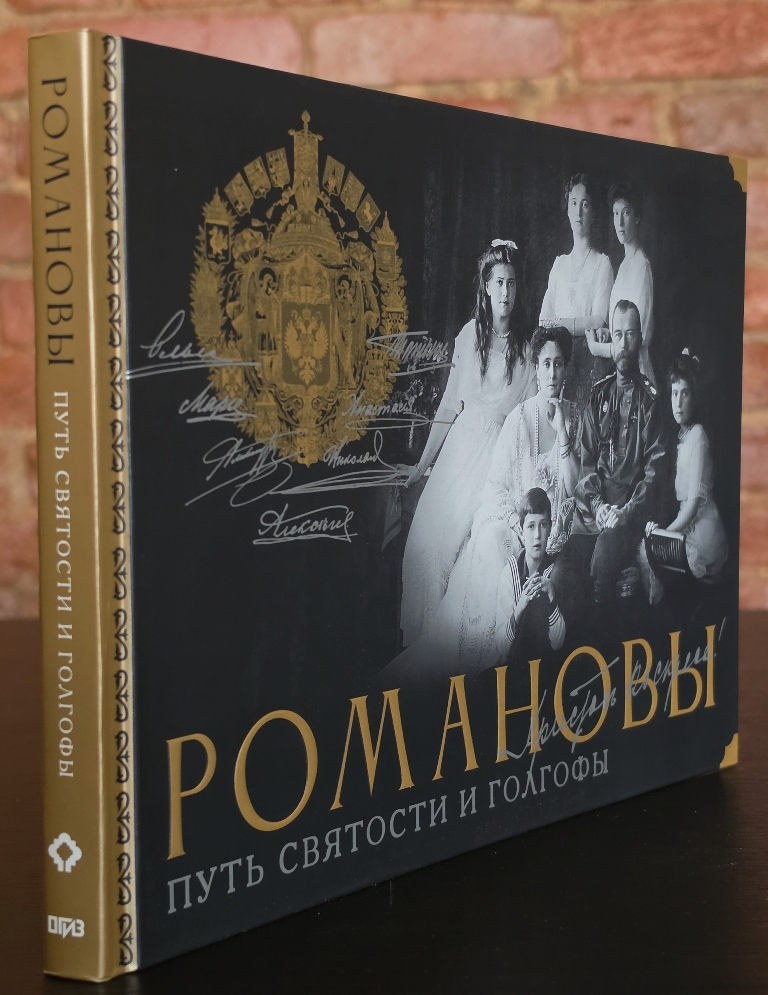
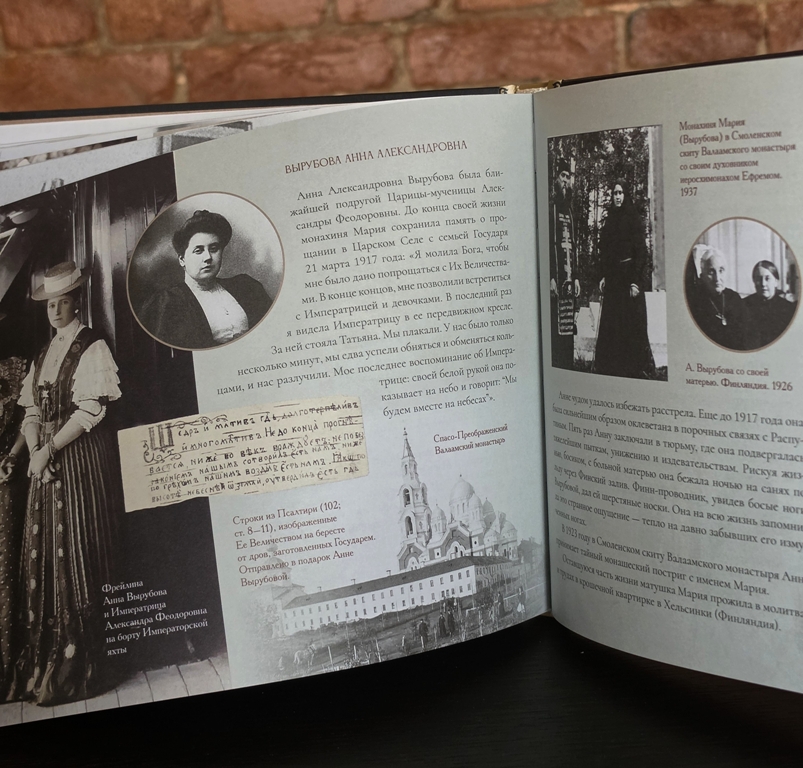
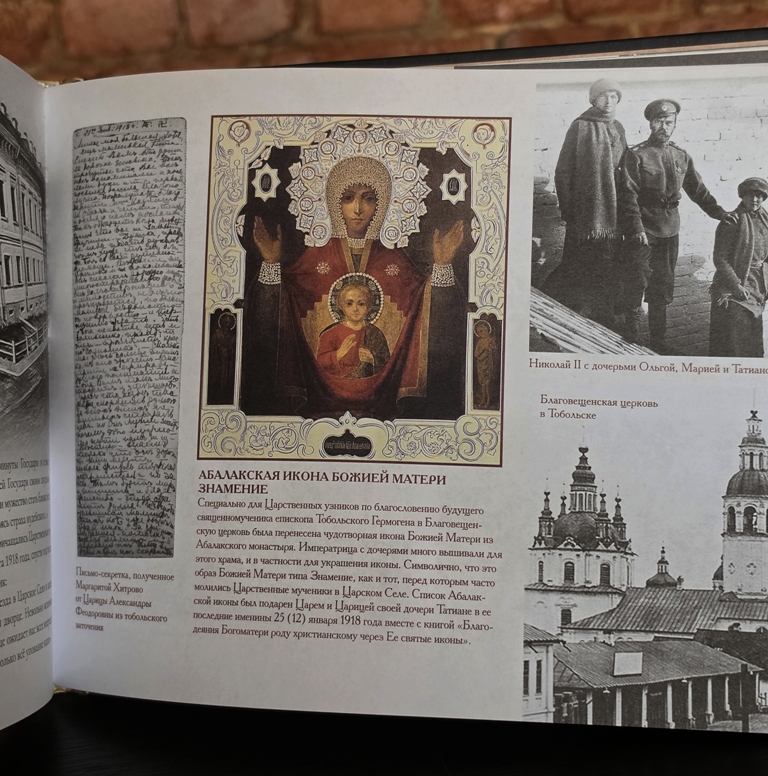
NEW BOOK – ‘The Romanovs. The Path of Holiness and Golgotha’

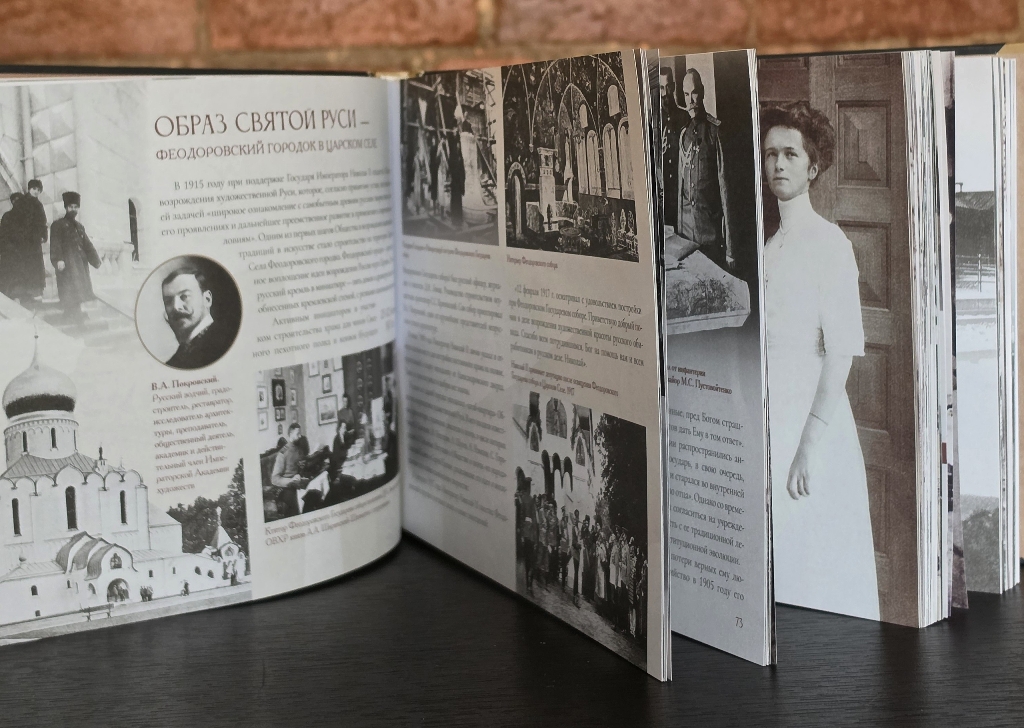
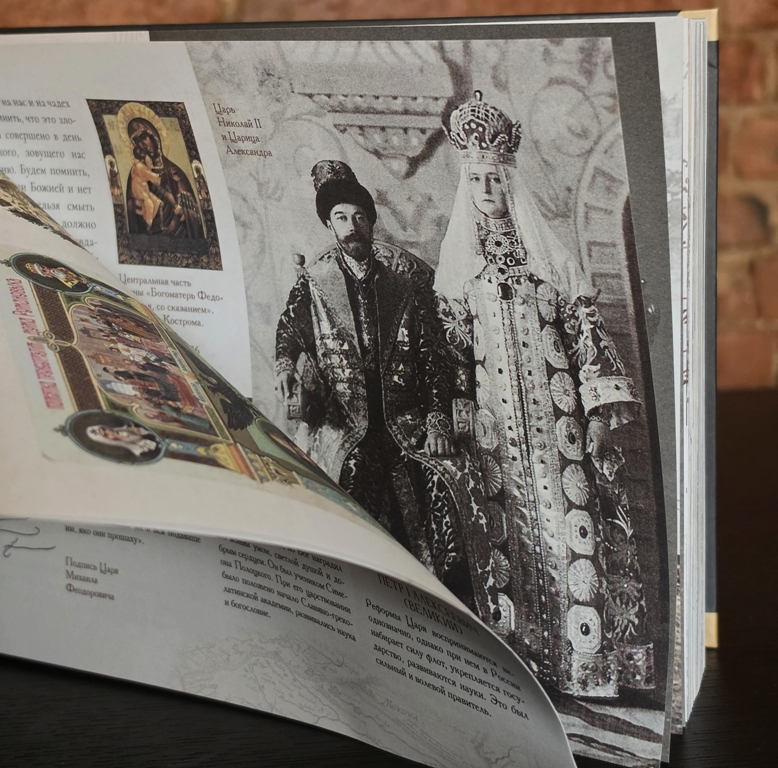
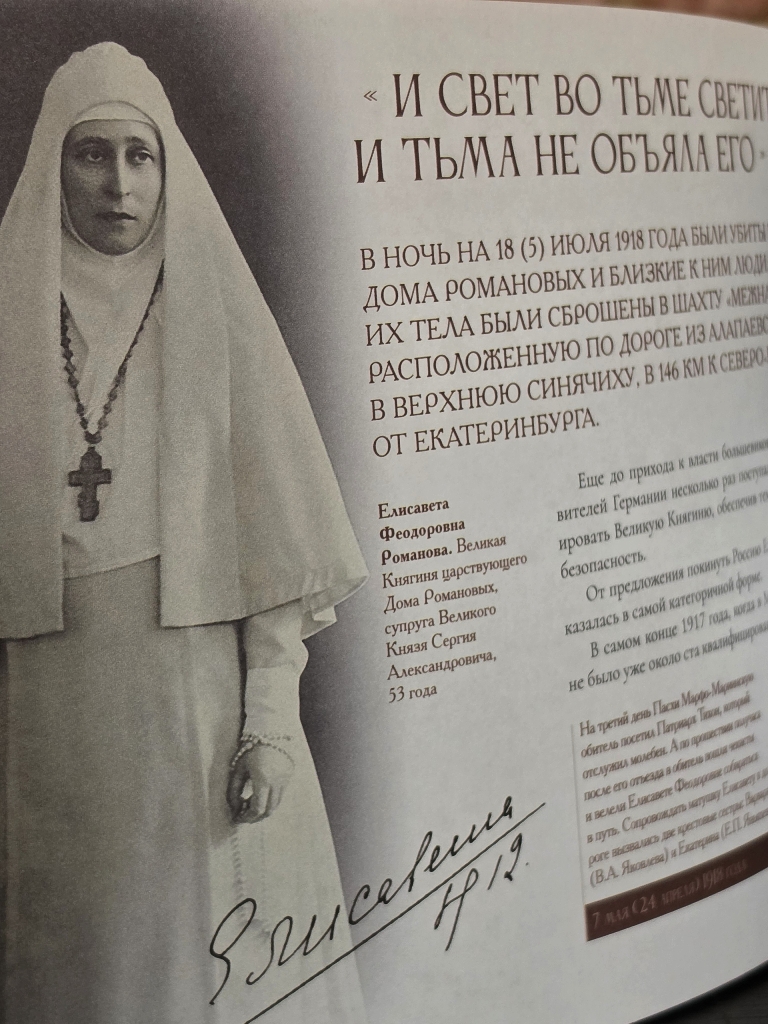
Large hard cover. 208 pages. Richly illustrated throughout. Russian edition only

The long-awaited edition of Романовы. Путь святости и Голгофы (The Romanovs. The Path of Holiness and Golgotha), has been published by the AST Publishing House. The Russian-language book is the result of many years of research by Dmitry and Ekaterina Ostroumov, dedicated to the Romanov dynasty and the spiritual path of the Holy Royal Martyrs Nicholas II and his family.

The publication is based on the exhibition dedicated to Russia’s last Tsar and his family, which opened in January 2025, in the Museum to the Royal Passion-Bearers. The permanent exhibition takes up the entire ground floor of  the Church of the Holy Royal Passion-Bearers in the Russian city of Dno, situated 114 km from Pskov.

The exposition project, which went from a temporary exhibition to a permanent memorial museum. It was here that on 14th (O.S. 1st) March 1917, the Imperial Train carrying the Tsar stopped. The following day, Nicholas II abdicated the throne. The event marked the beginning of his Way of the Cross.

Today, the museum preserves unique archival materials that reveal not only the historical, but also the spiritual aspects of the life of the last Russian Emperor and his family. The museum is a tribute of the deepest respect to their sacrificial feat. The scale of the project attracted the attention of the AST Publishing House, which proposed to transfer the exhibition concept to a book forma.

The large hard cover pictorial is based on authentic documents, diary entries, letters and rare photographs. The album recreates the history of the Romanov dynasty, covering the path from the calling of Mikhail Romanov in 1613 to the glorification of the Imperial Family as passion-bearers by the Moscow Patriarchate in 2000.

The main topic of the book, however, is the last Tsar and his family – from the upbringing of the heir Tsesarevich Nicholas Alexandrovich [future Emperor Nicholas II] to a martyr’s death in 1918. Particular importance is attached to the inner world of the Holy Royal Martyrs, their family way of life, their piety and sincere service to the Fatherland.

“Understanding the person of the Tsar in the Russian state today is important not only in its political and administrative significance, but also in its sacred function,” says Dmitry Ostroumov, co-author of the book. “This album, through immersion in the history of the Imperial Family, allows us to take a deeper look at this key role of the bearer of the Tsar’s life and reign.”

Through the fate of each family member, the reader comes closer to understanding the sacred depth of the monarch’s service, where earthly government and heavenly calling are inseparable, and a look into the past helps to see what often remains hidden behind the vanity of time.

The album Романовы. Путь святости и Голгофы (The Romanovs. The Path of Holiness and Golgotha) is currently available for purchase in Russian book shops, online stores, and the official website of the AST Publishing House.

***

PLEASE NOTE: This post is for information purposes only. This book is ONLY available in Russia, there is NO English edition available, nor is there one planned. I regret that I do not know any booksellers who offer this book.

The current sanctions imposed by the West on Russia forbid financial transactions, therefore it is not possible to order this title from a Russian bookseller online – they will not accept Western credit cards, nor can you use PayPal, Western Union, etc. Although there are numerous Russian bookshops in the West, please note that some countries such as the United States now impose a 40% tariff on books being imported from Russia.

It is very unlikely that we shall ever see an English edition of this book. Having said that, if and when the sanctions are lifted, and English-speaking tourists return to Russia in the numbers prior to 2022, the Russian publisher may just issue an English language edition of what looks like something many of us would like to add to our personal libraries – myself included!

© Paul Gilbert. 28 April 2026

“They Suffered for the Faith”: Russia honours the memory of Nicholas II and his family

On the Day of Remembrance of the Synaxis of the New Martyrs and Confessors of the Russian Church 

There is a day in the Orthodox calendar when the faithful remember those who suffered during the years of persecution of the Church. This feast day changes from one year to the next. That is, the established date of 7th February (25th January according to the Old Styke Julian calendar) may change depending on the day of the week. Since the feast is always celebrated on Sunday, this year it falls on 8th February.

The Russian Church spoke with the cleric of the Holy Trinity Cathedral in Slonim, Priest Nikolai Savitsky.

The meaning of the holiday

On Sunday, divine services will be held in Orthodox churches in memory of the New Martyrs and Confessors. These are the faces (categories) of holiness in Christianity, indicating the feat of faith.

“A martyr is someone who died for Christ, and a confessor is someone who endured persecution for the faith, but survived,” explains Priest Nikolai Savitsky. — On 8th February, the church commemorates the New Martyrs — those who suffered in the twentieth century. At the moment, 1623 saints are known, but research continues. Clergy are given access to personal files and archives. The history of the church is studied, new facts are discovered. It takes time to confirm them — this is very serious and painstaking work. When people did not deviate from their faith until their last breath, they are then considered. We must then learn about them in order to perform glorification.

On the Day of Remembrance of the Synaxis of the New Martyrs and Confessors, it is important to read the biographies of several saints in order to understand how much they suffered.

Vneration of the Tsar’s family

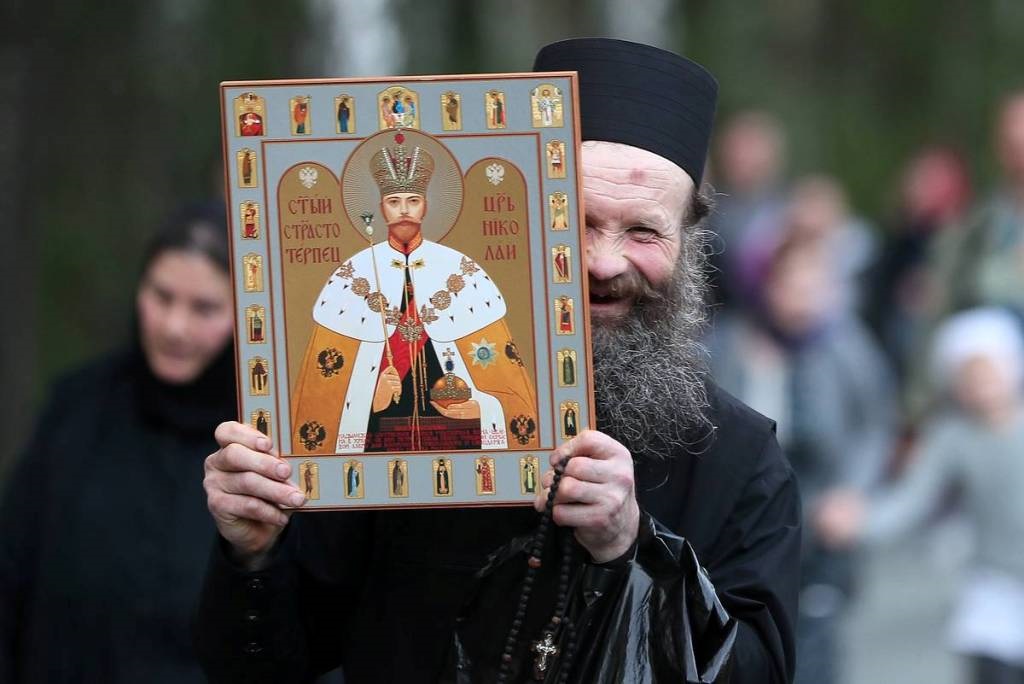
There is an icon of the Synaxis of the New Martyrs and Confessors of the Russian Church, in the center of which the Tsar’s family is among the saints. Recall that Emperor Nicholas II, his wife Alexandra Feodorovna and their five children (Olga, Tatiana, Maria, Anastasia and Tsesarevich Alexei) were the last Imperial Family of Russia. After the abdication of Nicholas II from the throne on 15 March 1917 (O.S. 2 March) 1917, the family was initially held under house arrest in the Alexander Palace at Tsarskoye Selo, before being sent into exile to Tobolsk. Then they were transferred to Ekaterinburg, where they were shot in the Ipatiev House on the night of 16/17 July 1918.

“Yes, history needs to be studied, but it is so twisted and distorted that it is very difficult to get to the bottom of the truth. Nevertheless, the Tsar’s family are glorified by the Russian Orthodox Church – after this fact, questions should disappear,” the priest emphasizes. – The Emperor, his wife and children were canonized in 2000 as passion-bearers. These are saints who suffered during their lifetime or were martyred, but not for confessing their faith in Jesus Christ. As a rule, they became victims of the hatred and deceit of their enemies for other, very different reasons. Virtue is that they met death without malice and resistance. In order to further increase the evil in the world by their resistance, in truly Christian humility and love for those who have hurt them. In this love, the passion-bearers became like Christ, Who humbly accepted crucifixion, death and forgave His tormentors.

Holy Royal Passion-Bearers, pray to God for us!
Святые царственные страстотерпцы, молите Бога о нас!

FURTHER READING

Prayer to the Holy Martyred Tsar Nicholas II

© Paul Gilbert. 8 February 2026
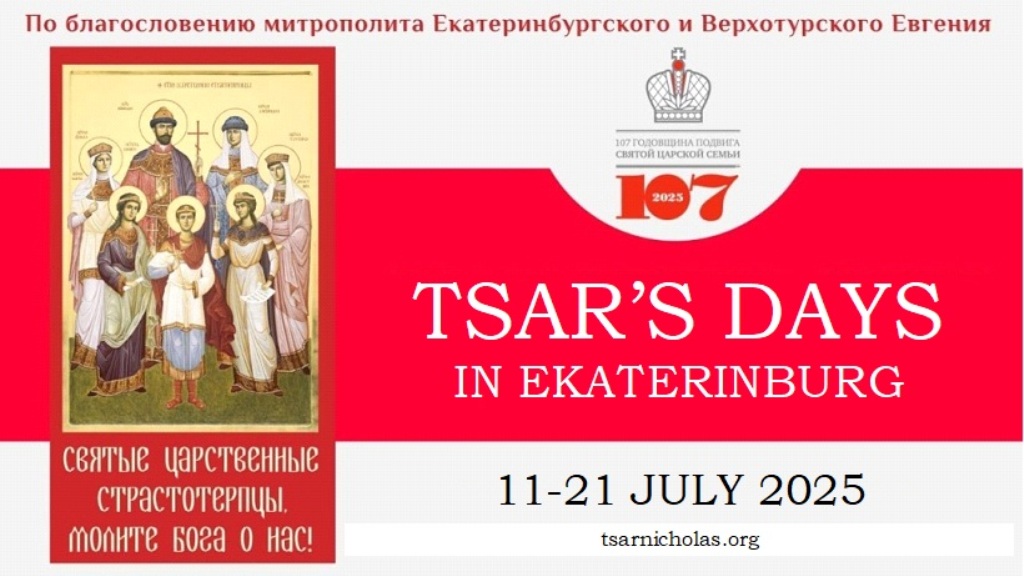
Ekaterinburg prepares for Tsar’s Days 2025

The Ekaterinburg Metropolis are currently preparing for Tsar’s Days – 2025, which will be held in the Ural capital and in Alapaevsk from 11th to 21st July. This year marks the 107th anniversary of the death and martyrdom of Emperor Nicholas II, his family and their four faithful retainers on 17th July 1918. It also marks the 107th anniversary of the death and martyrdom of Grand Duchess Eliabeth Feodorovna and other Romanov family members in Alapaevsk on 18th July 1918.

Metropolitan Evgeny of Yekaterinburg and Verkhoturye noted the importance of the upcoming memorial events, which traditionally bring together tens of thousands of faithful from across Russia and abroad.

The central event of Tsar’s Days is the Divine Liturgy held on the night of 16/17 July, followed by a 21-km [13 miles] Cross Procession, from the Church on the Blood in central Ekaterinburg to the Monastery of the Holy Royal Passion-Bearers at Ganina Yama. for which “the whole of Russia gathers” in the Ural capital.

This years’ Tsar’s Days is part of the 24th International Festival of Orthodox Culture, which will be held over a 10-day period from 11-21 July. Aside from divine services and religious processions, the festival will feature many events in honour of the Holy Royal Martyrs, including bell ringing, concerts and musical evenings, as well as exhibitions and conferences hosted by well-known historians, theologians and authors.

Preparations for the Tsar’s Days are being carried out by the Ekaterinburg Metropolia with the support of the regional and city authorities.

Once again, Porosenkov Log will not included in this year’s Cross Procession. Porosenkov Log is where the remains of the Imperial Family were exhumed in two separate graves in 1991 and 2007 respectively. Due to the fact that the Moscow Patriachate does not yet recognize the Ekaterinburg Remains as those of the Imperial Family. Their official recognition rests with the Bishops’ Council of the Russian Orthodox Church.

The veneration of Nicholas II

The veneration of Nicholas II and his family actually began just days after their murder in July 1918. During the Soviet years, such activity would most certainly have been suppressed, forcing the faithful to honour the Holy Royal Passion-Beaers in secret.

After the fall of the Soviet Union in 1991, everything changed, when in 2000, some 300 faithful gathered at the sight of the Ipatiev House in Sverdlovsk [Ekaterinburg]. In 2002, the first Cross Procession in memory of the Holy Royal Martyrs was held in the Ural capitlal, attracting 3,000 faithful. The procession has been held every year since, the most important being in 2018, the year marking the 100th anniversary of the death and martyrdom of the Imperial Family.

FURTHER READING:

What is Tsar’s Days? + PHOTOS and VIDEO

© Paul Gilbert. 25 June 2025

Exhibition dedicated to Nicholas II and his family opens in Istra

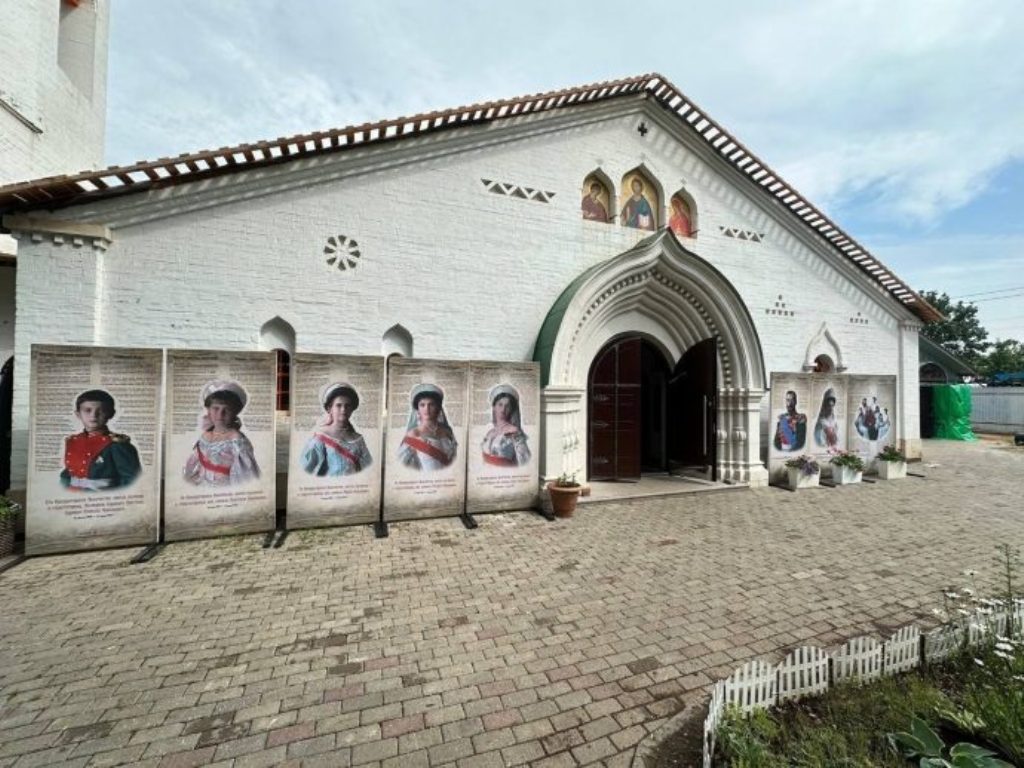
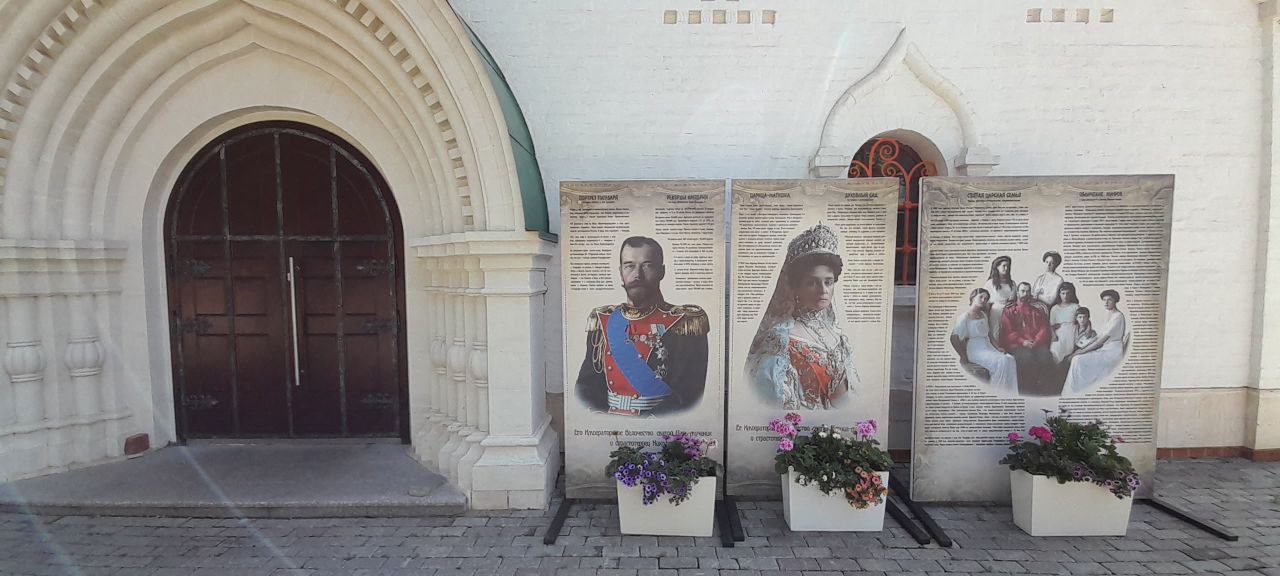
Earlier this month, a unique outdoor exhibit dedicated to Emperor Nicholas II and his family opened on the grounds of the Mironositsky Church [the Church of the Holy Myrrh-Bearing Women] in the Russian city of Istra [Moscow oblast].

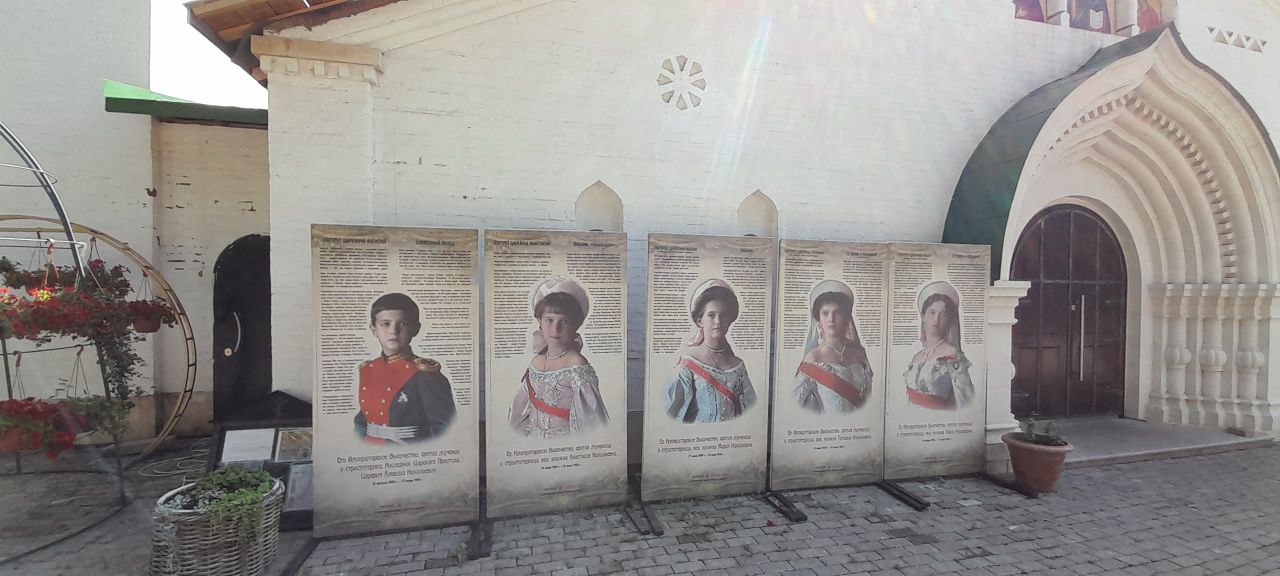
The Tsar’s Crown, featured 8 posters, which provide visitors with a deeper understanding of the life of the Imperial Family during the late 19th and early 20th centuries, and their death and martyrdom.

The exhibition ran until June 15, and has now moved to the St. George Church in the city of Dedovsk.

***

*As I have noted in previous posts, I support any initiative – big or small – to help keep the memory of Nicholas II and his family alive in 21st century Russia – PG

© Paul Gilbert. 16 June 2025
On this day – Nicholas II is handed over to the Ural Soviet in Ekaterinburg

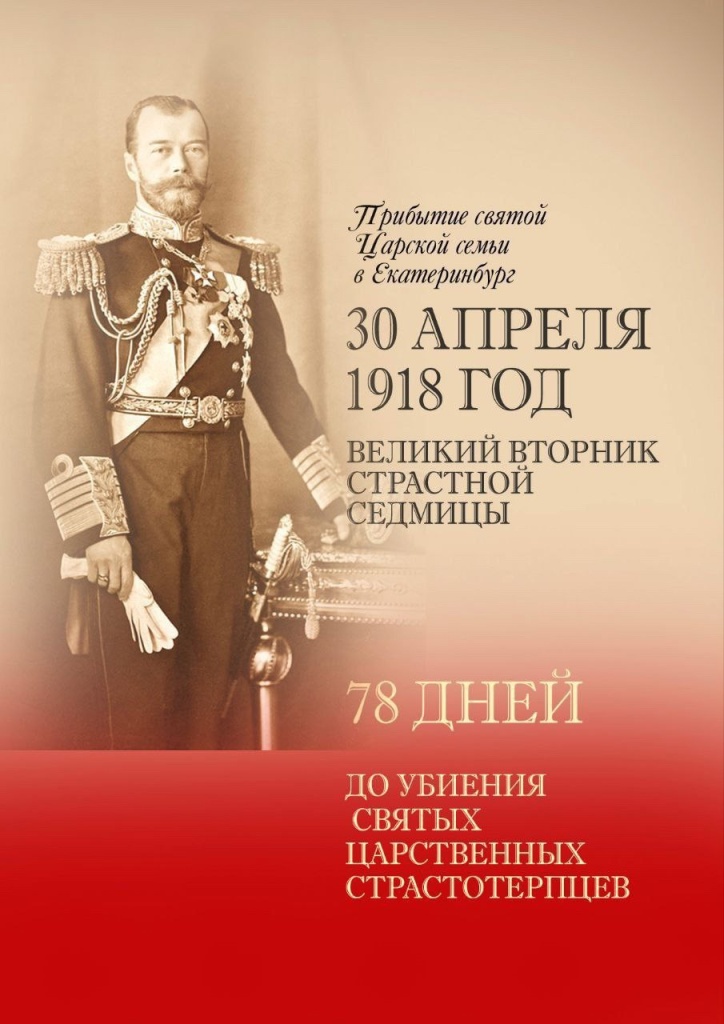
прибытие святой царской семьи в екатеринбуре. 30 април 1918 год. великий вторник старстной седмицы. 78 дней до убиения святых царственных страстотерпцев.

Arrival of the Holy Royal Family in Yekaterinburg. April 30, 1918. Great Tuesday of Holy Week. 78 days before the murder of the Holy Royal Passion-Bearers.

Today marks a very sad anniversary . . . it was on this day – 30th April (O.S. 17th April) 1918, Emperor Nicholas II, Empress Alexandra Feodorovna and Grand Duchess Maria were handed over to the Ural Soviets in Ekaterinburg

Nicholas II wrote the following in his diary:

“At 8.40 we arrived in Ekaterinburg. We stood for three hours in one station. There was a heated dispute between the local commissars and our own. In the end, the first prevailed and the train was moved to another goods terminal. After standing there for an hour and a half, we got off the train. Yakovlev handed us over to the local regional commissar, with whom we drove by motor through empty streets to the accommodation which has been prepared for us—the Ipatiev house. Slowly our people and our things began to arrive, but they would not let Valia through.

“The home is pleasant and clean. We have been given four large rooms. We were not able to unpack our things for a long time, as the commissar, the commandant and the guards captain had not had time to inspect our trunks. Then the inspection was like a customs search, just as strict, right down to the last capsule in Alix’s travelling medicine kit. This annoyed me so much that I expressed my opinion sharply to the commissar. By 9 o’clock we had at last settled in.

“This is how we installed ourselves: Alix, Maria and I together in the bedroom, sharing the dressing room, Demidova in the dining room, Botkin, Chemodurov and Sednev in the hall. The duty officer’s room is by the entrance. In order to go to the bathroom of W.C., it was necessary to go past the sentry at the door of the duty office. There is a very high wooden pallisade built all around the house, about two sajens from the windows, all along there was a line of sentries, in the little garden also.”

PHOTO: “Transfer of the Romanov family to the Ural Soviet” (1927)
Artist: Vladimir Nikolayevich Pchelin (1869-1941)

© Paul Gilbert. 30 April 2025 

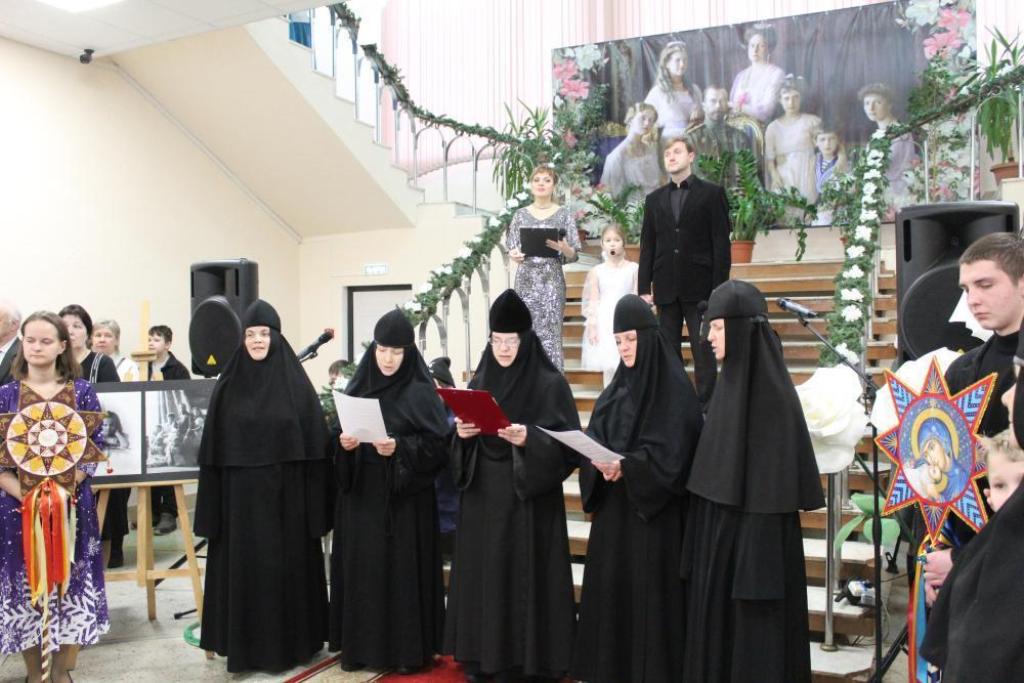
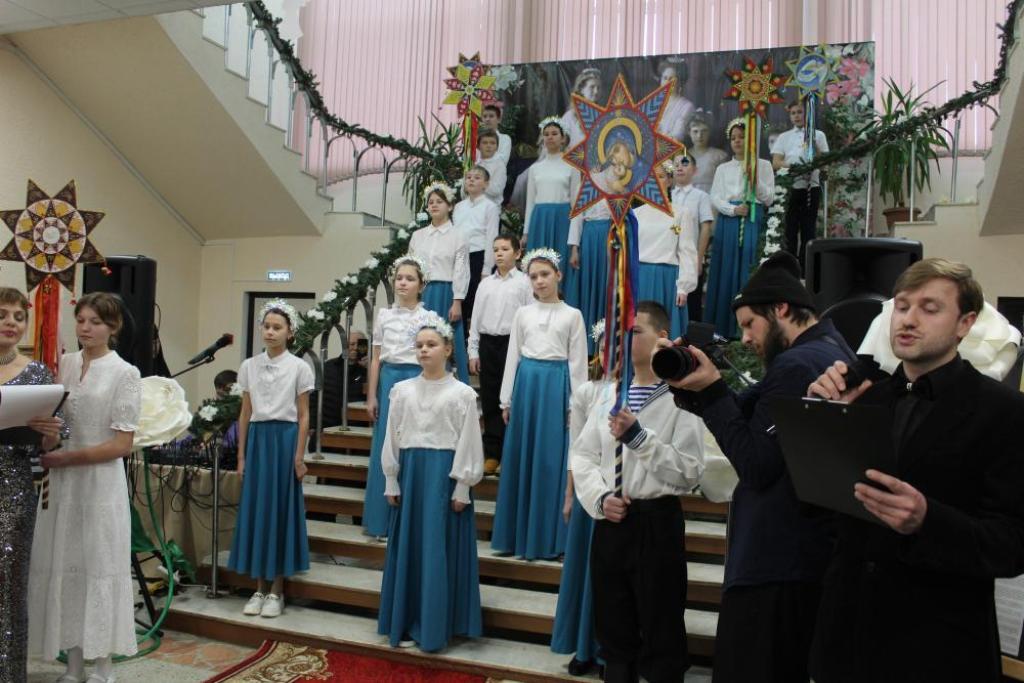
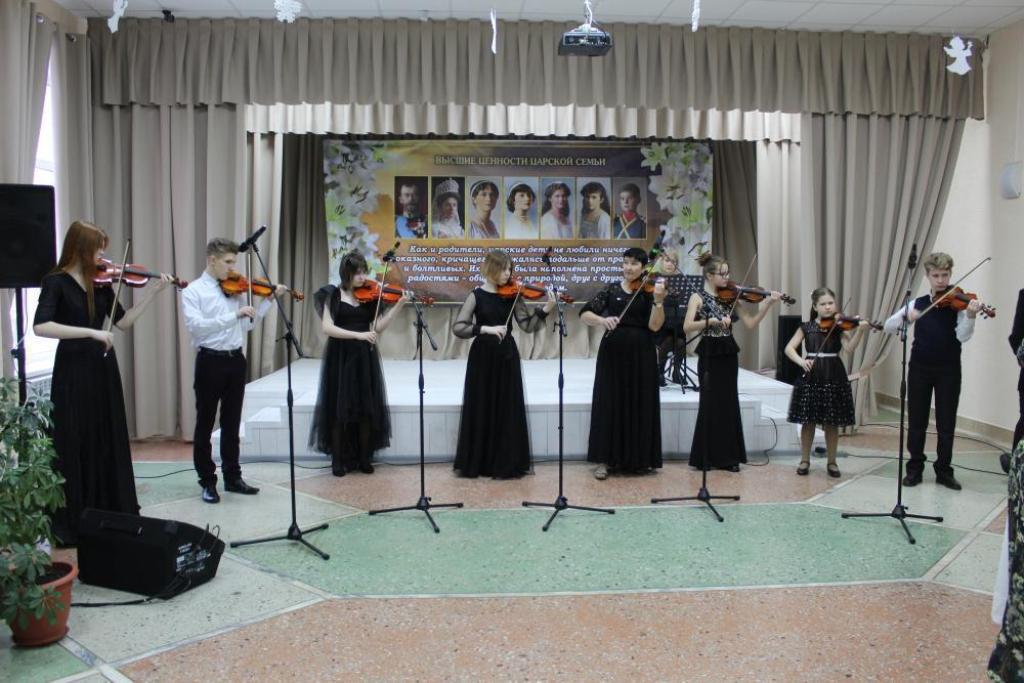
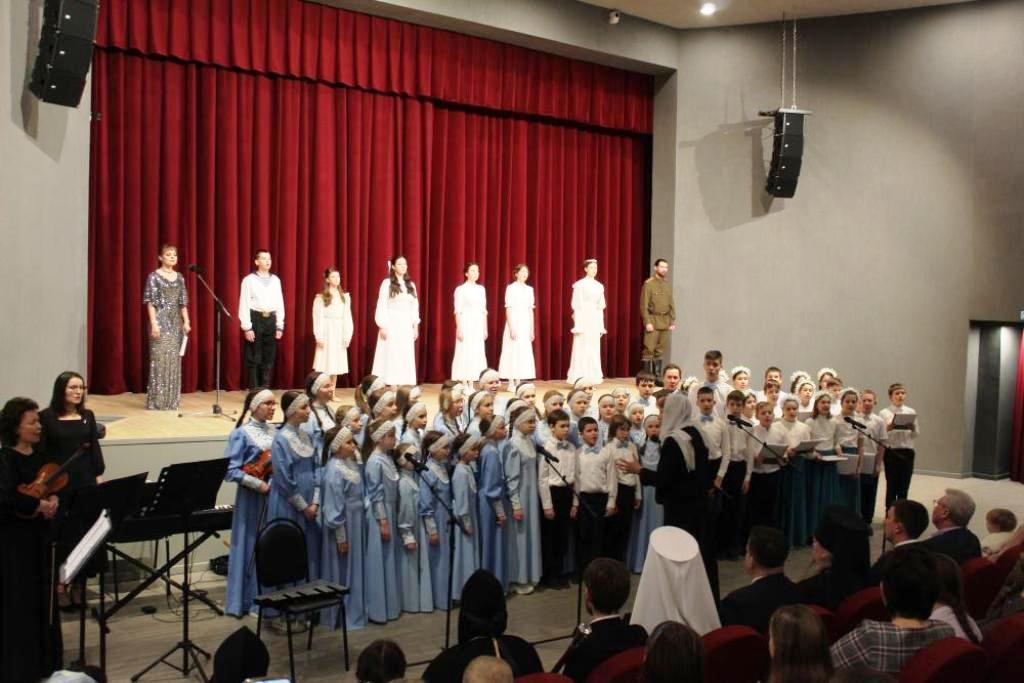
“Christmas in the circle of the Tsar’s Family” held in Penza region

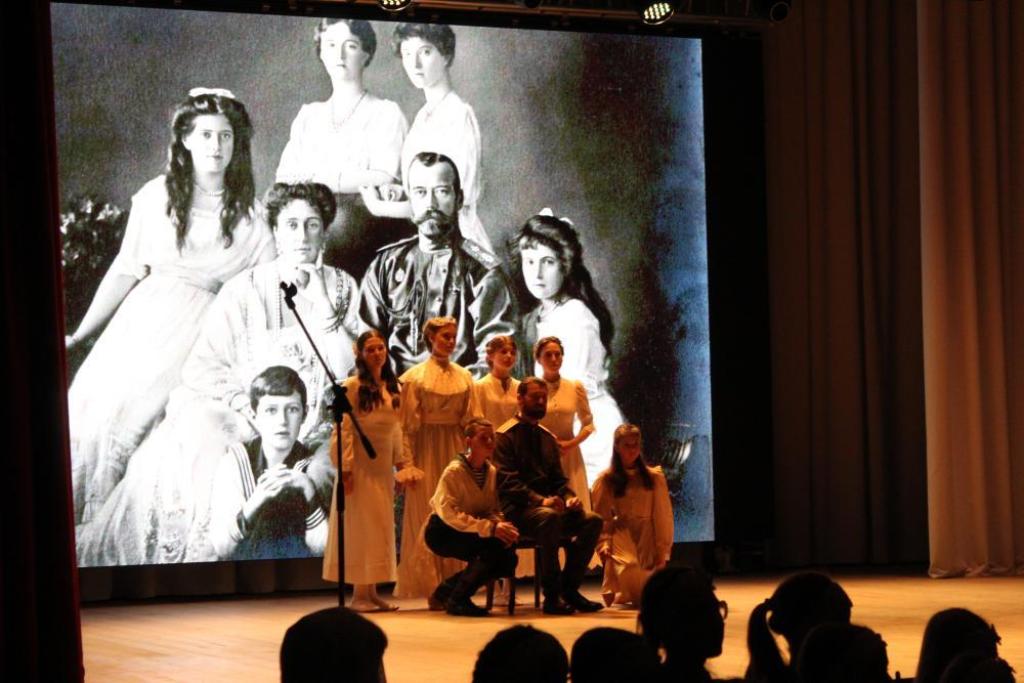
PHOTO: local actors perform the roles of the Imperial Family

On 11th January 2025, a *Christmas event dedicated to Emperor Nicholas II and his family was held in the House of Culture in the village of Narovchat, Penza Region. Christmas in the Circle of the Tsar’s Family marked the traditions of celebrating the Nativity of Christ in the circle of the family of the Holy Royal Passion-Bearers and Imperial Russia.

* Recall that Orthodox Christians celebrate Christmas on 14th January, according to the Old Style Julian Calendar

The event was organized by the nuns of the Trinity-Scanov Monastery, the pupils of the monastery Sunday School, the pupils of the Bishop’s Children’s Choir of the Penza Diocese and the staff of the Penza Museum of Local Lore.

The guests of honour included Metropolitan Seraphim of Penza and Nizhnelomovsk, Bishop Mitrofan of Serdobsk and Spassky, Minister of Culture and Tourism of the Penza Region Sergey Vyacheslavovich Bychkov, and acting head of the Narovchat district Sergey Viktorovich Skudin.

Guests were greeted in the lobby by the pupils of the Sunday school and the nuns of the Trinity-Skanov Monastery, who sang carols and praises to the newborn Christ child.

On stage the private world of the Imperial Family was revealed. Local actors read aloud the personal letters of Tsar Nicholas and Tsarina Alexandra to each other, which revealed to the audience the tender and loving image of the Imperial Family.

An Imperial Ball was held, which focused on the splendour of the Russian Imperial Court in the early 20th century. Elegantly dressed ladies and gentlemen performed waltzes and polkas to live music of the era – all of which created an inspiring atmosphere of the holiday.

At the end of the solemn event, all participants received gifts from the abbess of the Trinity-Scanov Monastery, Abbess Innocent.

Also during the event, an exhibition of photographs courtesy of the Sretensky Monastery “The Royal Family: Love and Mercy” was opened. The exhibition features photographs reflecting the life and work of the Imperial Family.

In addition, the White Flower Festival was celebrated, which offered guests many skillful crafts made by the nuns, delicious pastries and much more. The tradition of the White Flower Festival was initiated by Empress Alexandra Feodorovna and her children at the beginning of the 20th century.

© Paul Gilbert. 18 January 2025

New museum dedicated to Nicholas II and his family opens in Pskov region

PHOTO: entrance to the exhibition which takes up the entire ground floor of the
recently constructed Church of the Holy Royal Passion-Bearers in Dno

On 26th December 2024, a new museum dedicated to Emperor Nicholas II and his family was officially opened and consecrated in the Church of the Holy Royal Passion-Bearers in the Russian city of Dno, situated 114 km from Pskov.

Recall that on the same day, a new monument to the Holy Royal Passion-Bearers was unveiled and consecrated on the grounds of the church.

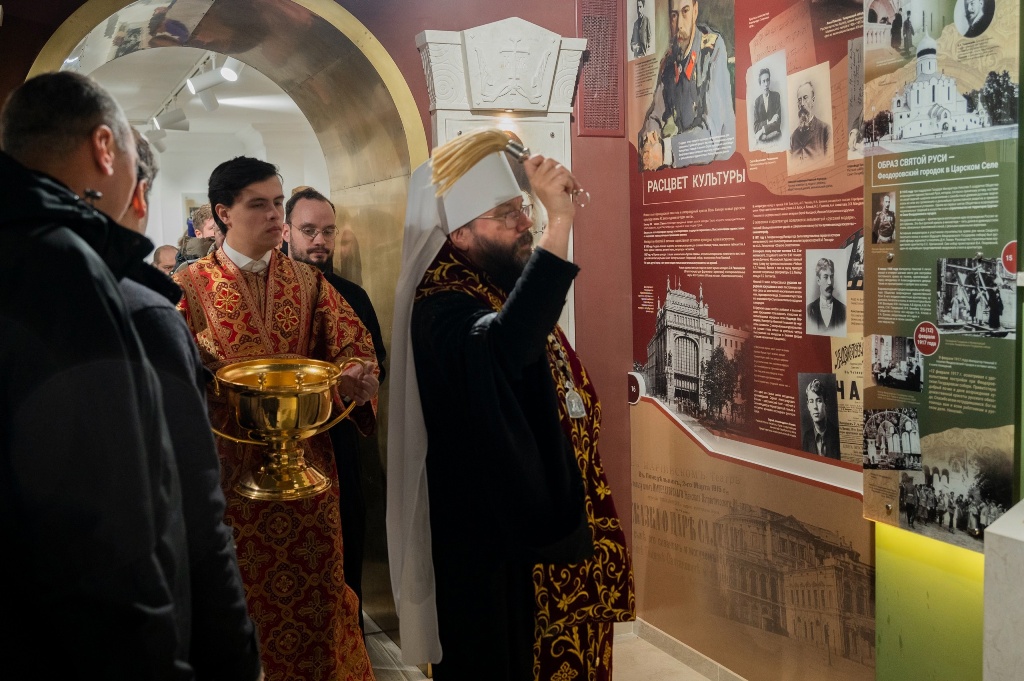
Metropolitan Matthew of Pskov and Porkhov performed the rite of consecration of the museum to the Royal Passion-Bearers. The museum takes up the entire ground floor of the church. Admission to the museum is FREE to all!

PHOTO: His Eminance performs the rite of consecration of the museum to the Royal Passion-Bearers

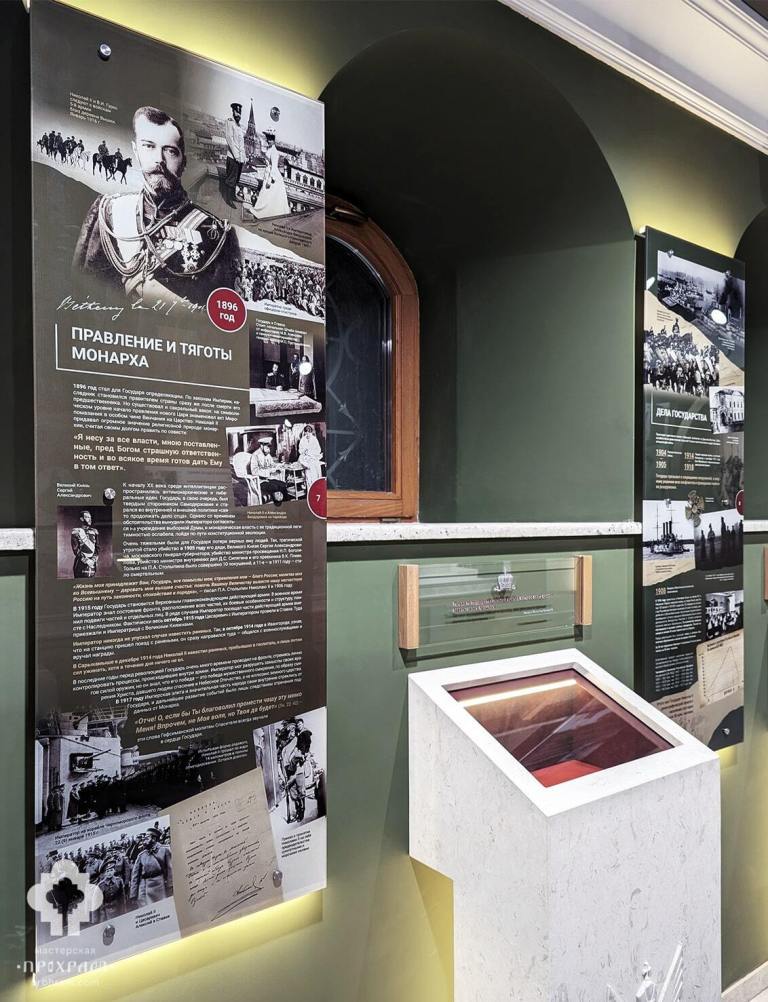
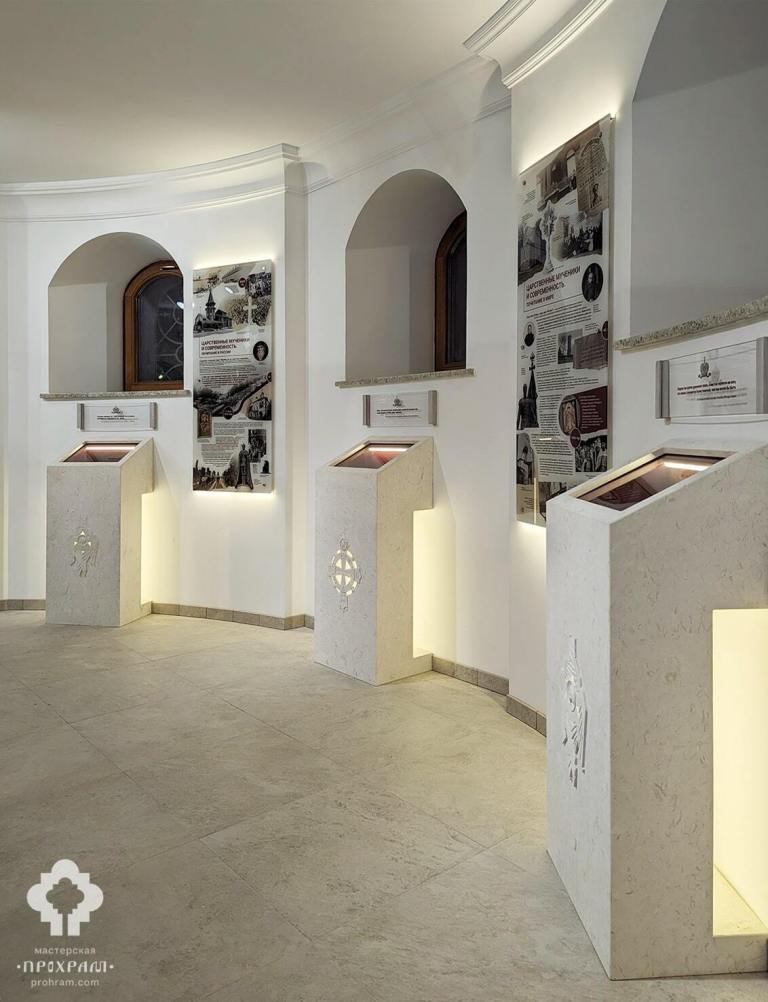
The interiors of the museum are a wonderful example of modern exhibition spaces, designed in the Neo-Russian Style [aka the Russian Revival Style], characteristic of the early twentieth century and beloved by Russia’s last Tsar.

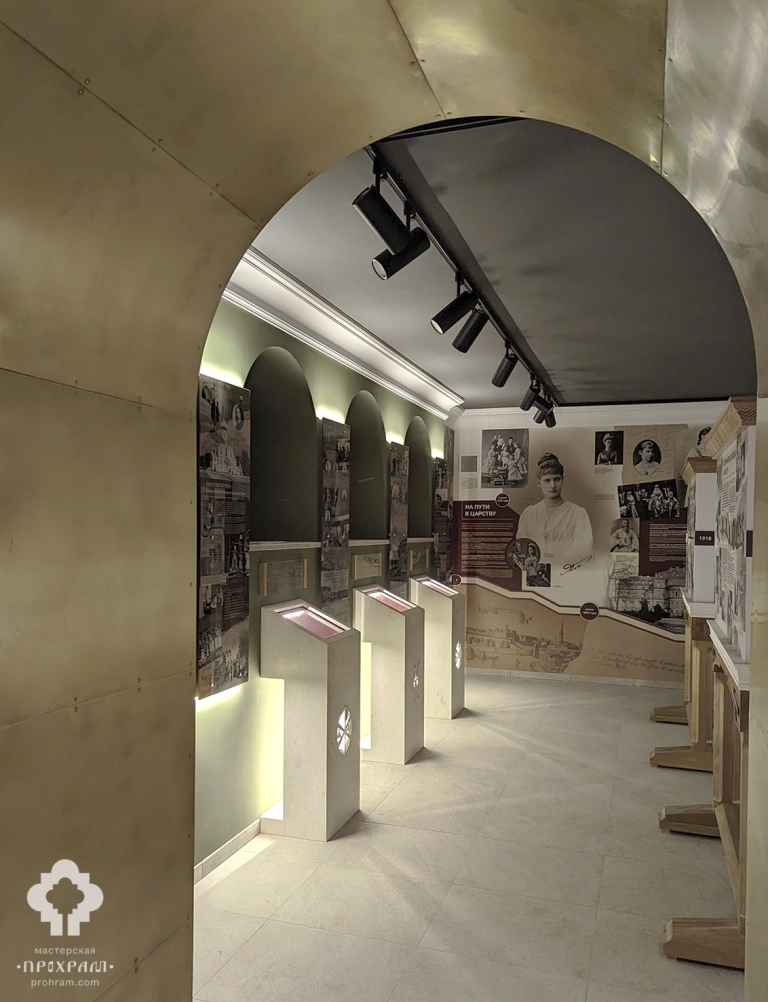
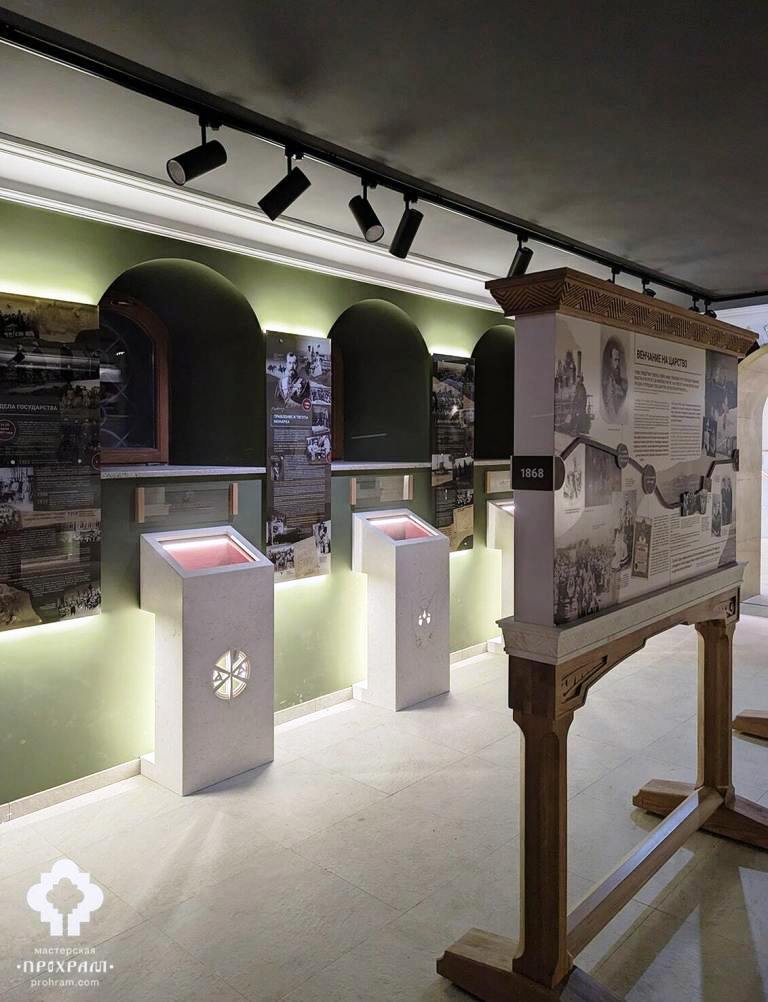
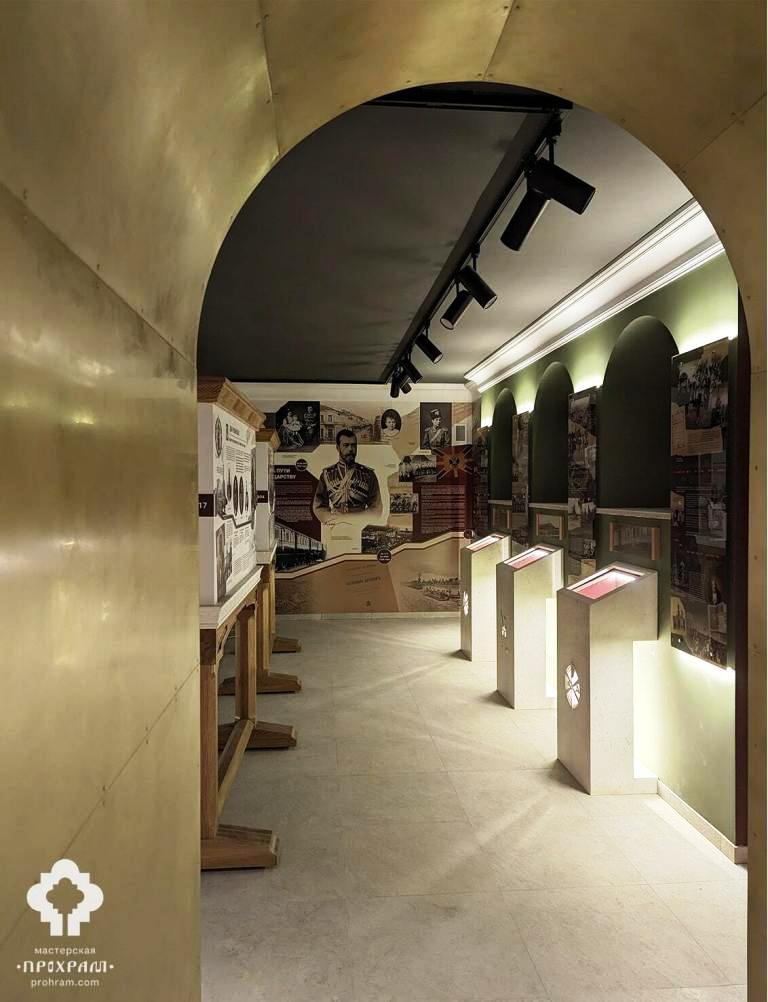
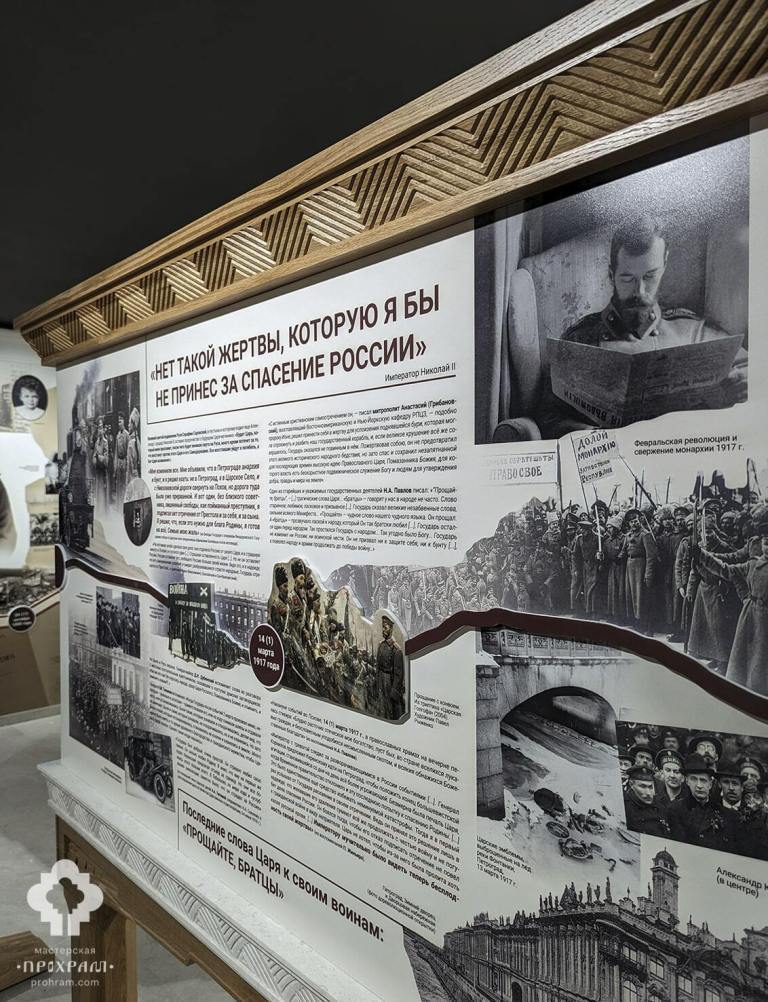
The museum is divided into two halls. The first hall, which is painted burgundy-green, combined with dim lighting. Burgundy is the colour of the Imperial Porphyry, green is the colour of the monk. In this hall, the exposition explores the life of the Imperial Family from Emperor Nicholas II’s and Empress Alexandra Feodorovna’s childhood to the tragic vents of 1917. Two stands describe the history of the House of Romanov – from the calling to the throne of Mikhail Feodorovich in 1613 and to the death and martyrdom of Nicholas II 305 years later.

Archival photographs and documentary materials, diary entries, testimonies of contemporaries, statements by prominent public and church figures reveal in detail the life of the Imperial Family. They tell about their service to Russia, their close family relations, and the historical context of the events of the late 19th and early 20th centuries. In addition, the exposition explores the cultural, scientific, and political life of the Russian Empire during the era of Nicholas II.

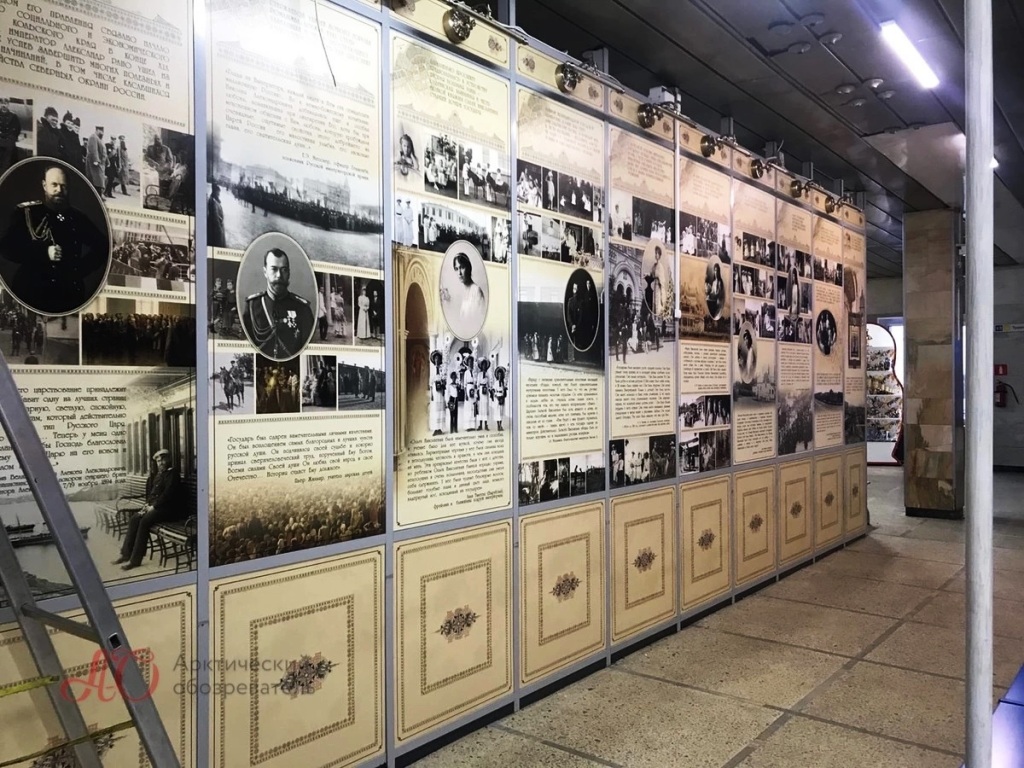
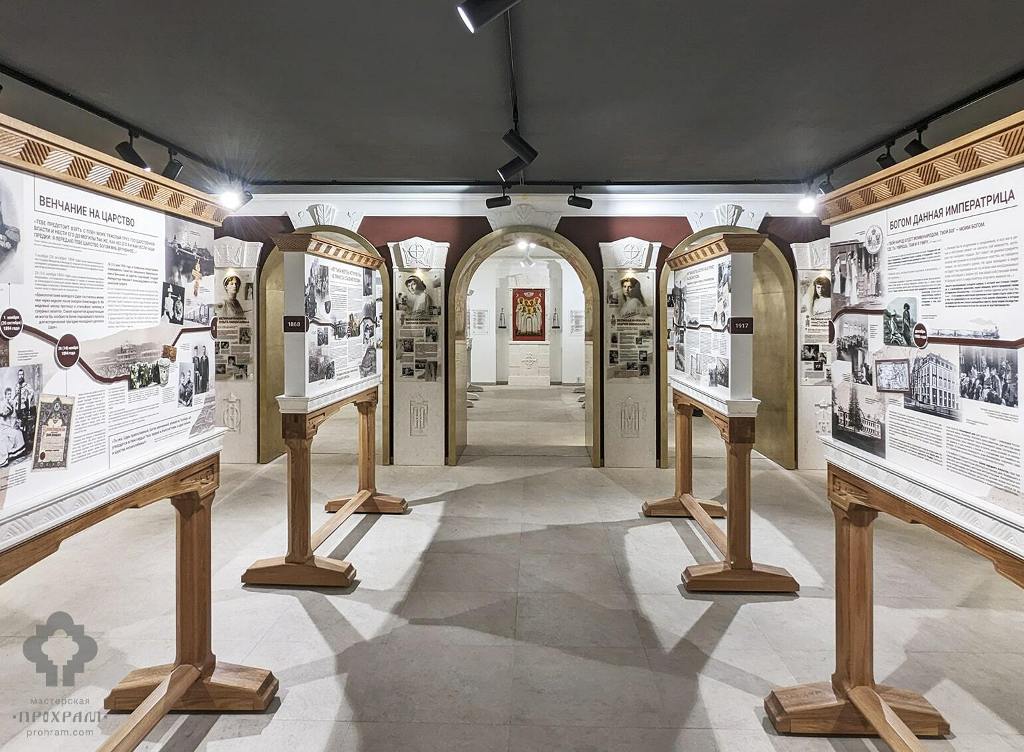
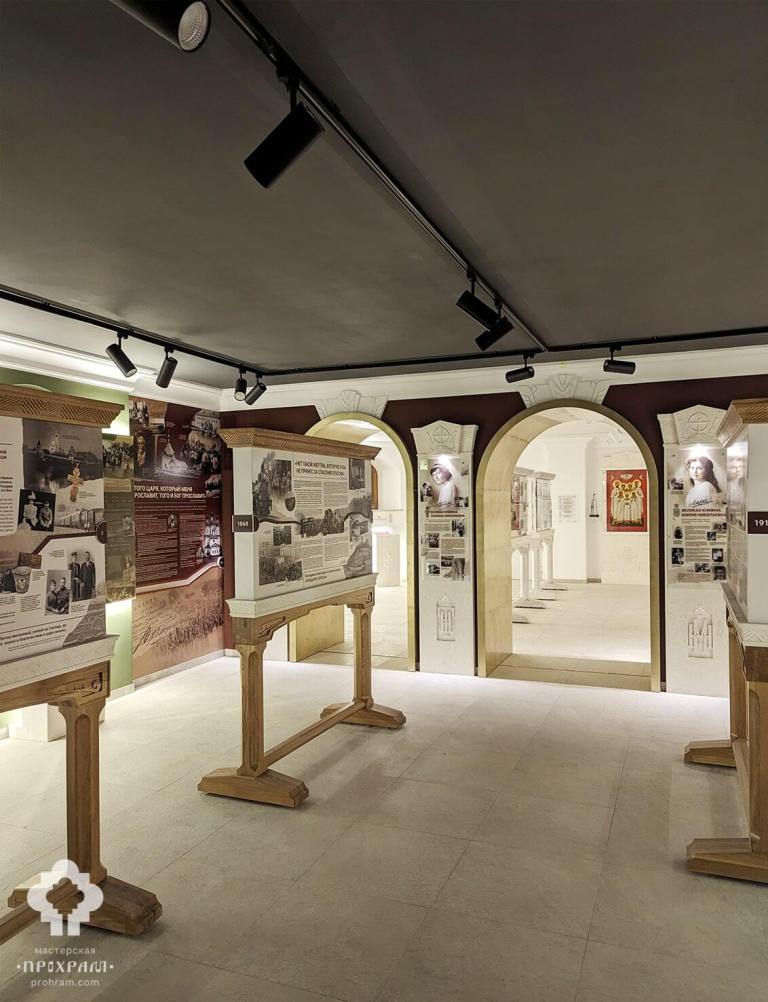
PHOTOS: four double-sided mobile stands display documents and
photos which explore the life of Emperor Nicholas II and his family

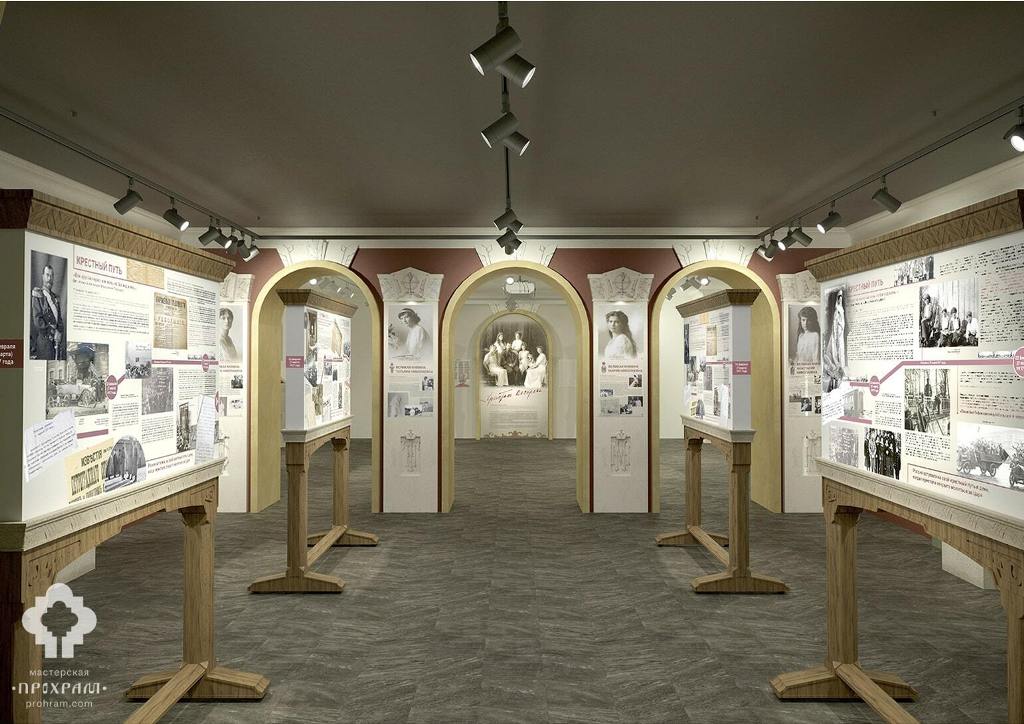
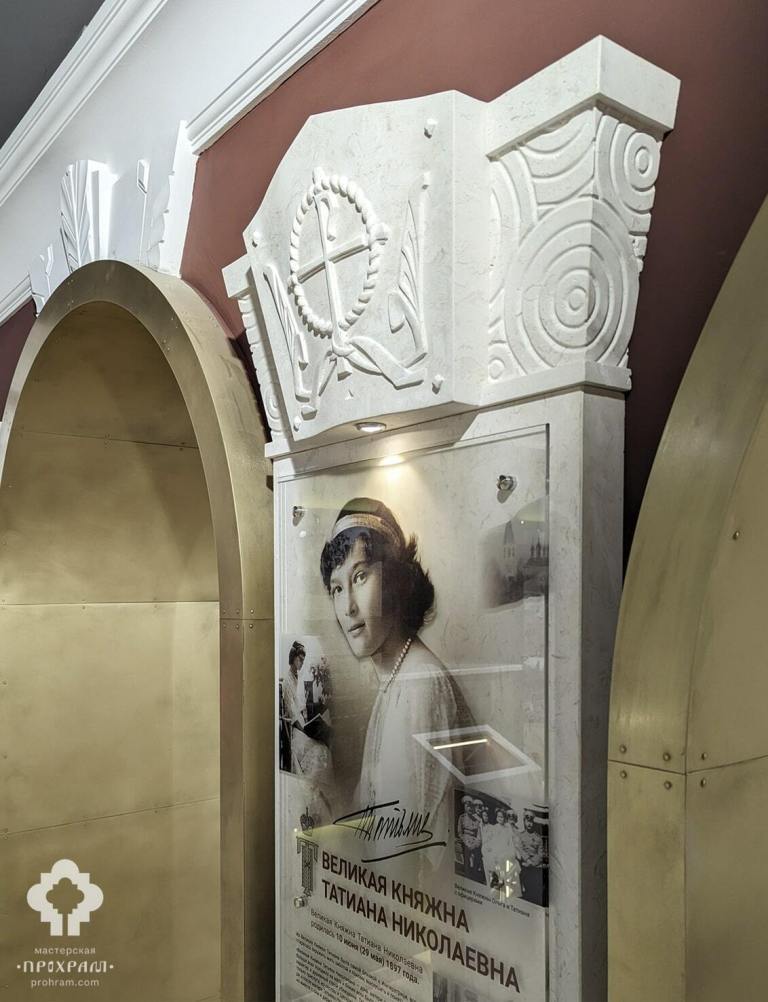
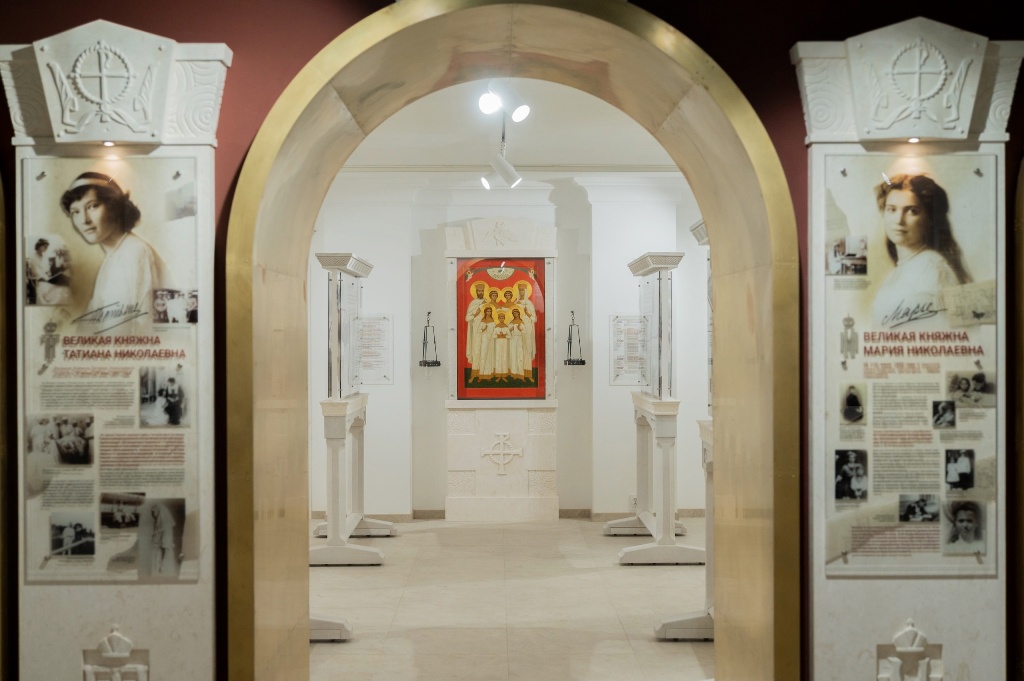
The photographs and documents are displayed on four double-sided mobile stands on small wheels with stoppers. At the northern and southern walls there are carved white-stone lecterns with carvings, under which relics of the era of Emperor Nicholas II are placed. In the eastern part of the hall there is a passage through three brass decorative arches which leads to the White Hall. Between the arches, there are four kiot stands made of white stone with carvings (initials), glass, lighting and a carved finial, dedicated to the Grand Duchesses Olga, Tatiana, Maria and Anastasia Nikolaevna. The ceiling is dark, with diffused and directional track lighting.

In the White Hall there is information about the Way of the Cross of the Imperial Family – the period from the events at the Dno station, the Tsar’s abdicated in March 1917, to the murder of Nicholas II and his entire family on 17th July 1918 in Ekaterinburg and the subsequent history of the veneration and glorification of the Imperial Family as saints. Extensive textual and illustrative material makes it possible to speculatively walk this path together with the Royal Passion-Bearers, to come into spiritual contact with the last year of their lives, to see the light of the Paschal victory in the darkness of the Ipatiev House.

CLICK on the photos below to enlarge and see in greater detail . . .

Also in the White Hall there are stands dedicated to the faithful retainers, who voluntarily followed the Imperial Family into exile and shared their sufferings, showing an example of loyalty to duty; stands dedicated to the Grand Duke Sergei Alexandrovich, the Venerable Martyr Grand Duchess Elizabeth Feodorovna, the Alapaevsk Martyrs, who were murdered by the Bolsheviks the day after the Imperial Family; two kiot stands dedicated to Tsesarevich Alexei Nikolaevich; and stands dedicated to the memory, glorification and modern veneration of the Holy Royal Martyrs.

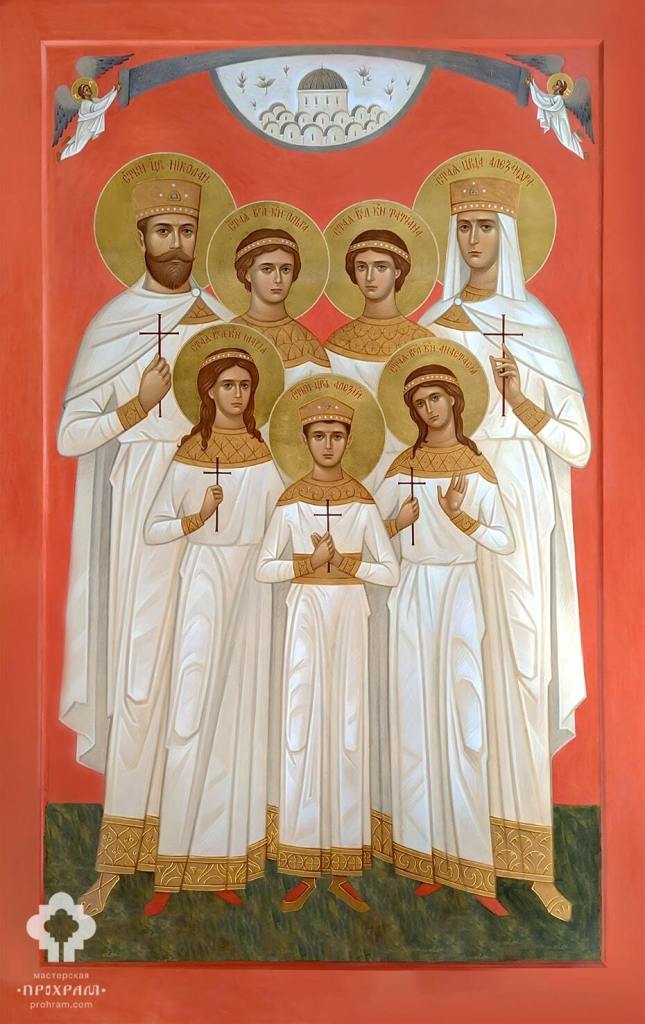
The hall is crowned by a large carved icon case with an icon of the Royal Martyrs, visible from the very entrance to the burgundy-green hall. The saints are depicted in white robes with a reference to the apocalyptic image of martyrs overcoming earthly sufferings and faithful to Christ (Revelations 6:9-12).

The White Hall is also used as a venue for small gatherings. The 4 white stands can be rrolled to the sides, thereby freeing up the central space of the hall. Attached to the ceiling in this room is a screen that can be opened in the eastern part of the hall, with a projector at the entrance to the burgundy-green hall. Folding chairs which are stored in the adjoining utility room, provide for guests attending lectures, films and other events.

CLICK on the photos below to enlarge and see in greater detail . . .

The museum is a project of love and deepest respect to the Holy Royal Martyrs and their feat on the Cross, which formed the basis of the feat of faith of all the New Martyrs and Confessors of the Russian Church and the preservation of the Holy Russian spirit in the 20th and early 21st centuries.

The opening of the new museum in Dno is the fourth such museum in Russia dedicated to Emperor Nicholas II and his family, the other three are the Museum of the Holy Royal Family in the Tsarsky Cultural and Educational Center, situated in the Patriarchal Compound of the Church on the Blood (Ekaterinburg); the Museum of the Family of Emperor Nicholas II (Tobolsk); and the Museum in Memory of Emperor Nicholas II and His Family (Kotelniki-Moscow).

PHOTO: icon of the Royal Martyrs in the White Hall

© Paul Gilbert. 9 January 2025

New monument and museum dedicated to the Imperial Family opened in Dno

Click HERE to watch a VIDEO of the unveiling and consecration of the monument, followed by a tour of the new museum dedicated to Nicholas II and his family, located in the Church of the Holy Royal Passion-Bearers in Dno. Duration: 2 minutes, 30 seconds

***

On 26th December 2024, a new monument to Emperor Nicholas II and his family was installed and consecrated on the grounds of the Church of the Holy Royal Passion-Bearers in the Russian city of Dno, situated 114 km from Pskov. In addition, a museum dedicated to the Imperial Family was officially opened and consecrated.

A Divine Liturgy was conducted in the new Church of the Holy Royal Passion-Bearers (constructed in 2023) by Metropolitan Matthew of Pskov and Porkhov.

The sculptural composition was made by Moscow sculptor Vladimir Gennadievich Ivanov [b. 1983], and took one year to complete. According to him, the bronze monument weighs three and a half tons, and stands almost four and a half meters [almost 15 feet] in height. Each of the seven members of the Imperial Family is depicted holding a cross.

Following the liturgy, a new monument of Emperor Nicholas II and his family was unveiled and consecrated on the grounds of the church. In addition, a museum dedicated to the history of the life of the Imperial Family [see photo below] was officially opened and consecrated. The museum is located in the basement of the church – which can be seen in the video at the top of this post. Admission is FREE to all.

Recall that the Dno railway station became the penultimate point of the Imperial Train, which was transporting the Tsar to Petrograd on 14th (O.S. 1st) March 1917. From here, Nicholas II was forced to Pskov, where the following day, he signed his abdication from the throne. As Bishop Matthew noted during the opening of the museum in the basement of the church, “these events became a turning point in the history of the country”.

Recall that earlier this month a mural of the pre-war railway station at Dno was recreated on the building of the museum and exhibition center in Dno. The mural was created In memory of Emperor Nicholas II’s historic stop at Dno in March 1917, the day before he abdicated the throne.

© Paul Gilbert. 27 December 2024

***

Paul Gilbert’s Romanov Bookshop on AMAZON

I have published nearly 50 titles to date through AMAZON – featuring one of the largest selections of books on Nicholas II, the Romanov dynasty and the history of Imperial Russia.

Please CLICK on the BANNER or LINK above to review my current selection of titles in hardcover, paperback and ebook editions. Listings provide a full description for each title, pricing and a Look inside feature.

‘The True Story of the Romanov Family’ – UPDATED!

HOW TO ORDER THIS BOOK

NOTE: the English language edition of this book is now available in both hard cover and paperback editions. You can now order this book direct from the following suppliers in the United States:

AMAZON

St. Paisius Monastery Gift Shop 

In addition, you can order this book directly from the publisher in Romania. Books are shipped by mail or courier (DHL). I had NO problem ordering a copy, and received it promptly.

HOW TO ORDER FROM THE PUBLISHER: the order page is a bit confusing, because the actual order instructions located at the bottom of the page are in Romanian. Simply use Google (or similar) to translate, the rest is simply.

Click HERE to order your copy. Scroll down to the bottom of the page. Select ‘COVER TYPE’ – hard cover or paperback. To the left of the ‘ADD TO CART’ button, you must select how many copies you want. Click on ‘VIEW CART’ and ‘CONTINUE TO CHECKOUT’. payment is in Euros, credit cards accepted – PG

***

The publishing division of the Diaconești Monastery in Moldavia, Romania, have published an exiting new title: The True Story of the Romanov Family.

Although an abundance of books have been written about the Imperial Family, the present work is an unparalleled graphic study. Drawing from a wealth of historical sources, including memoirs, diaries, letters and scholarly works on the Imperial Family, the publisher has painstakingly recreated key moments in their private and public lives. In addition, eleven Faberge eggs, meticulously painted by Romanian artist Ovidiu Gliga are prominently featured in the book.

The text of the book is complimented by Ovidiu Gliga’s artwork. Over the past four years, the publisher has collaborated closely with this exceptional artist, whose artwork helps envelope the reader. His work for this book is showcased in the video found at the end of this summary. This book has been issued in both English and Romanian editions, in both hard cover and paperback formats.

CLICK on each image below, to enlarge and view page in greater detail

According to the publisher, “this project has been a labour of love, driven by our admiration for these revered saints and our desire to present their lives in a visually engaging format suitable for readers of all ages. We believe it fills a significant void in the literature about the Imperial Family, offering a detailed exploration of their lives and the enduring impact on Russia’s history.”

It is interesting to note, that the monastery’s inspiration for this project was profoundly influence by the popular book The Romanov Royal Martyrs: What Silence Could Not Conceal, published in 2019 by the Mesa Potamos Monastery in Cyprus, which the nuns of the Diaconești Monastery translated into Romanian.

The Romanian-based publisher has prepared a 2-minute English language video, which will give readers a sample of this unique publishing project, including a glimpse of it’s content and Ovidiu Gliga’s beautiful colour illustrations.

CLICK on the red arrow below to start the VIDEO . . .

© Paul Gilbert. 27 September 2024