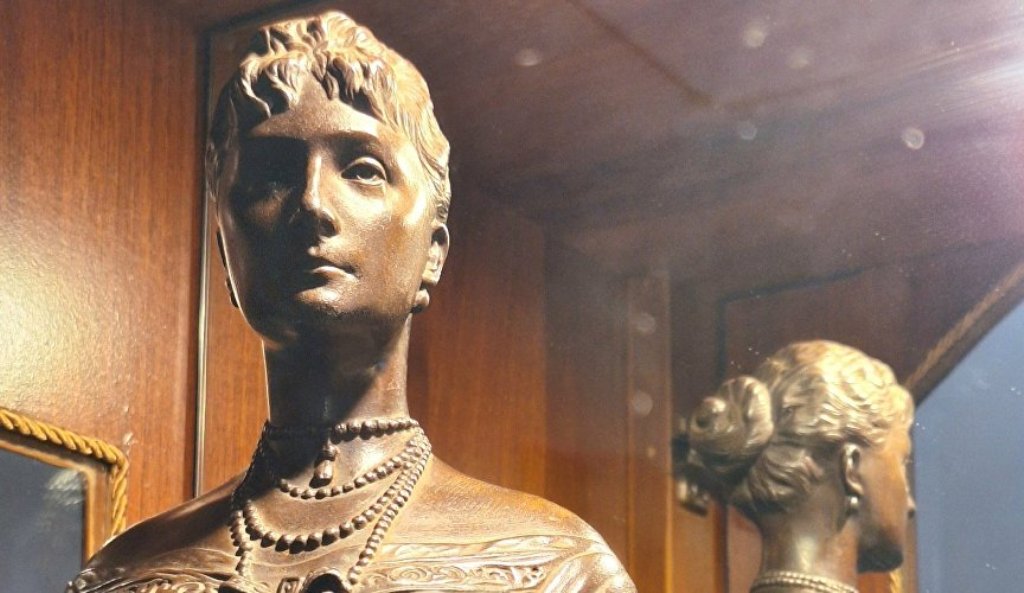
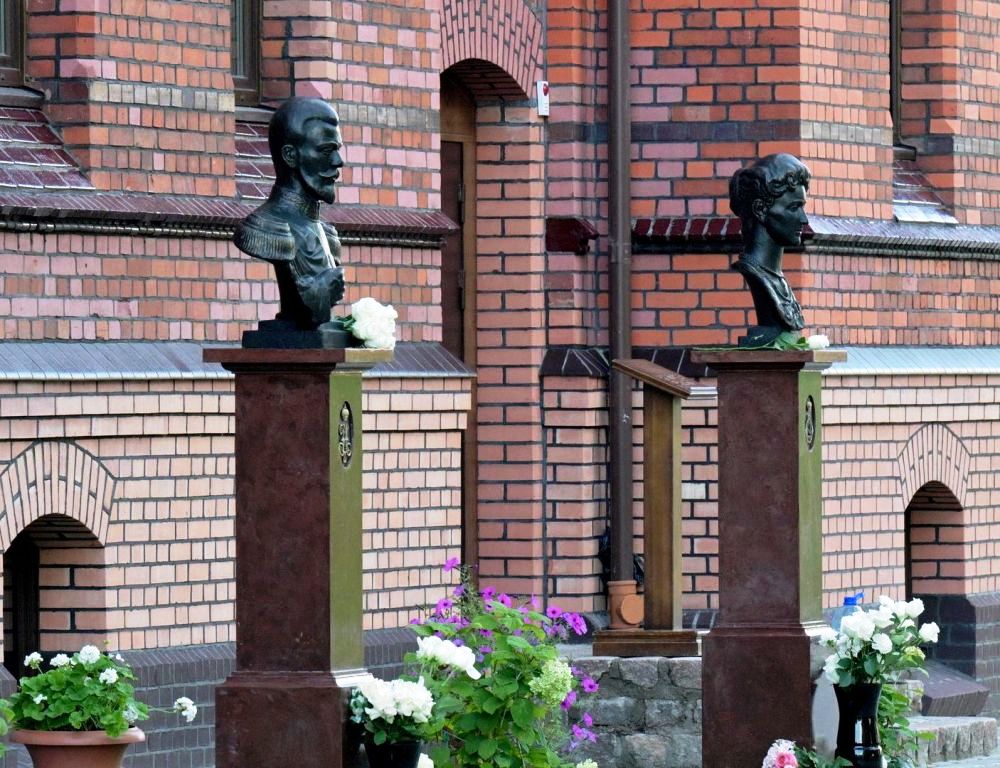
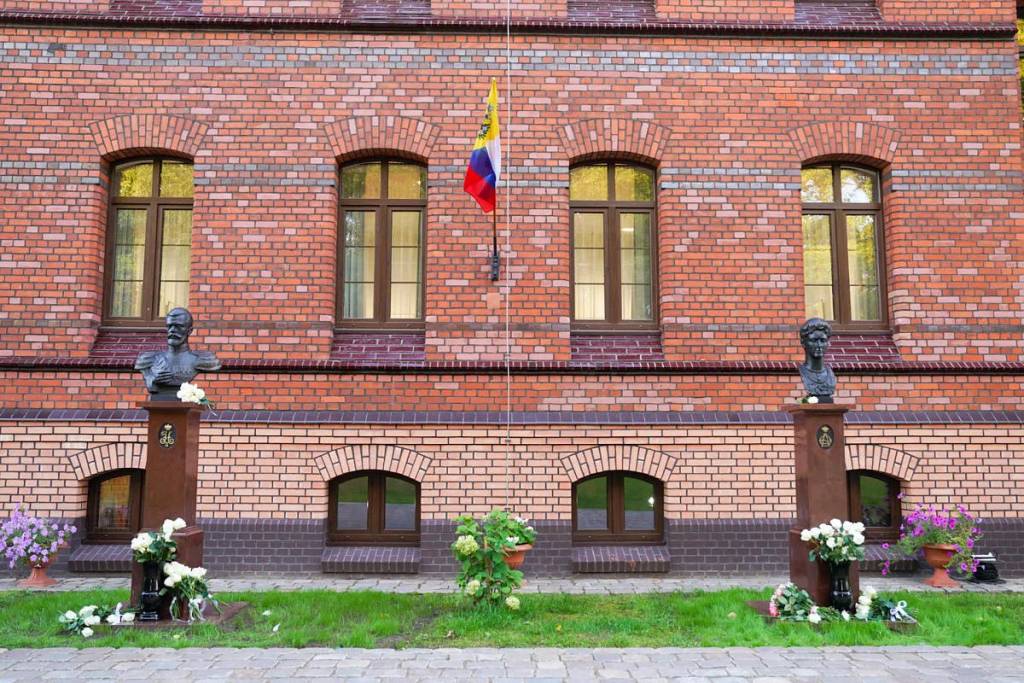
Bust-monuments to Nicholas II and Alexandra Feodorovna unveiled in Gusev

PHOTO: Bust-monuments to Nicholas II and Alexandra Feodorovna
in the courtyard of the Museum of History and Local Lore in Gusev

On Saturday, 5th September 2026, a pair of bust-monuments to Emperor Nicholas II and Empress Alexandra Feodorovna were unveiled and consecrated in the courtyard of the Museum of History and Local Lore in the Russian city of Gusev, situated about 112 km (70 miles) from Kaliningrad.

The brass monuments were installed near the second building of the museum, where, after reconstruction, the Center for the Preservation of the Memory of the First World War was opened in 2025.

The event coincided with Tsar’s Days, which is currently taking place in Kaliningrad. This event honours the memory of Russia’s last Tsar and his family in cities across the Russian Federation.

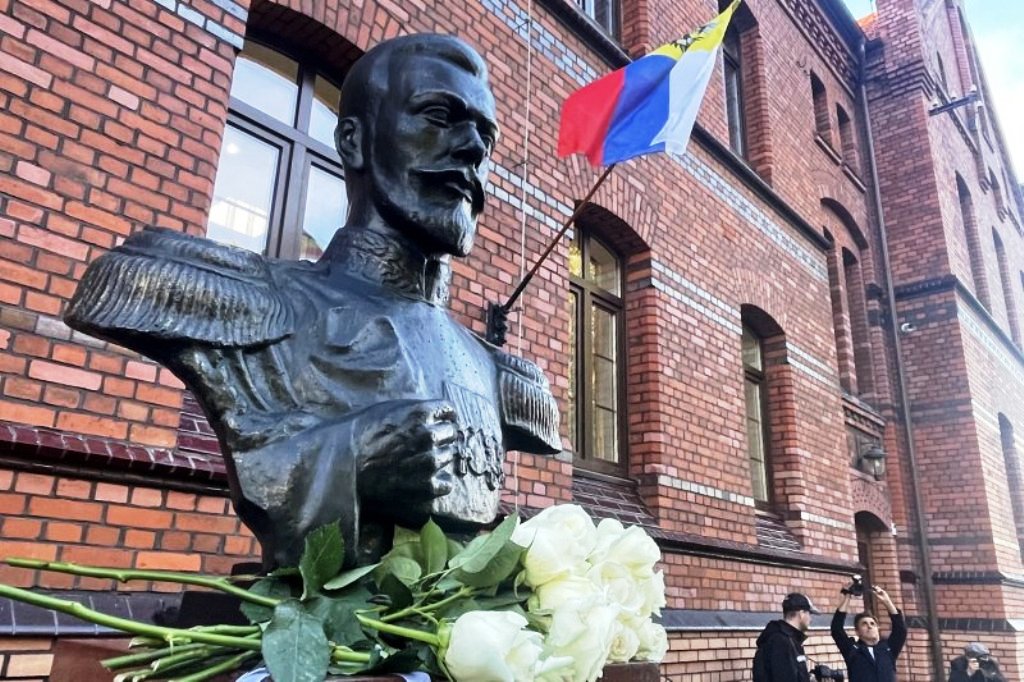
PHOTO: Bust-monument to Emperor Nicholas II at Gusev

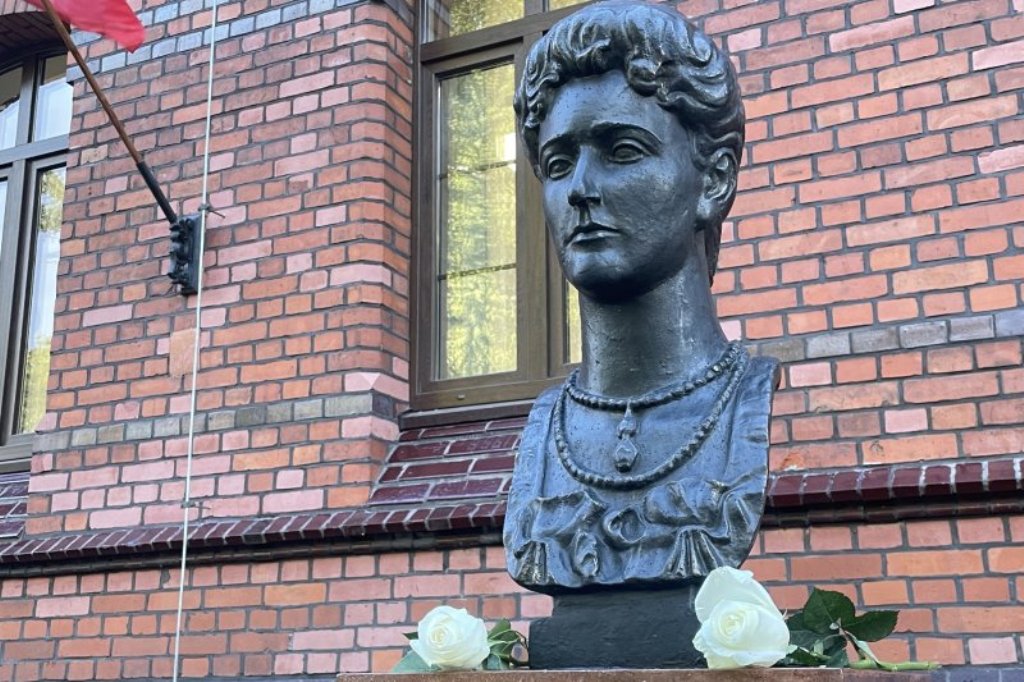
PHOTO: Bust-monument to Empress Alexandra Feodorovna at Gusev

The ceremony began with much pomp and pageantry, including a march of the Life Guards Regiment. Bishop Nikolai of Chernyakhov and Slavsk performed a Divine Liturgy and consecrated bust monuments to the Holy Passion-Bearers.

“Let those who will come here know, these were people who loved Russia, who served their country faithfully. And if we serve our Fatherland, our life has meaning,” His Eminence said.

According to the government of the Kaliningrad region, the monuments were created by sculptor Leonid Mikhailenko in St. Petersburg.

“The Holy Passion-Bearers Nicholas II and Alexandra Feodorovna are the main saints who pray for Russia,” said the Director of the Elisabeth-Sergius Educational Society Foundation (ESPO) Anna Vitalievna Gromova.

“This event was made possible thanks to the joint efforts of the leadership of the region, scientific, museum, local history communities and philanthropists,” she added. “The events and reforms that took place during the reign of Emperor Alexander III and Emperor Nicholas II largely predetermined the fate of Russia, including the victory in the Great Patriotic War (1941-45).”

The ceremony ended with the laying of flowers at the monuments and a performance by a military band.

PHOTO: Bust-monuments to Nicholas II and Alexandra Feodorovna
in the courtyard of the Museum of History and Local Lore in Gusev

© Paul Gilbert. 7 September 2026

Nicholas II and his family “come to life” in iconic 1913 photograph

CLICK on the IMAGE or START BUTTON to WATCH. ENJOY!

To share this page, just click and paste the URL at the top of this page.

Some very clever and talented person in Russia, has brought Emperor Nicholas II and his family “to life,” from an iconic 1913 photograph using Artificial Inteligence (AI). The result is nothing short of remarkable!!

This iconic photograph is one of a series taken in 1913 marking the 300th anniversary of the Romanov Dynasty. These were mass produced and sold as postcards, the proceeds of which went to various charities supported by the Imperial Family.

The 40-second video clip first “brings Nicholas II to life” – the likeness is truly haunting! We then see his four daughters, the Grand Duchesses Olga, Tatiana, Maria and Anastasia getting ready for the photoshoot. The Tsar is next seen with his son and heir Tsesarevich and Grand Duke Alexei Nikolaevich.

As the photographer gets his camera ready, the Imperial Family enter and assemble around three chairs. The Emperor and Empress are seated in the center, their children around them. Anastasia is seated next to her father, while Maria sits next to her mother. Olga and Tatiana stand behind their parents. Alexei sits on the floor, his hands wrapped around his father’s boot. Tatiana whispers something into Olga’s ear, they giggle, only to be hushed by their mother. Nicholas II smiles. The whole scene is absolutely charming!

The camera clicks, the photographer has immortalized this beautiful family for posterity.

© Paul Gilbert. 25 August 2026

NEW BOOK -The Real Tsaritsa’ by Lili Dehn

*You can order this title from most AMAZON outlets, including
the United States, United Kingdom, Ireland, Canada, Australia,
France, Germany, Spain, Italy, Netherlands, Belgium, Poland, Sweden,
Brazil, Mexico and Japan
*Note: prices are quoted in local currencies

CLICK HERE TO ORDER THE HARD COVER EDITION @ $25.00 USD

CLICK HERE TO ORDER THE PAPERBACK EDITION @ $20.00 USD

CLICK HERE TO ORDER THE EBOOK (KINDLE) EDITION @ $9.99 USD

English. Size: 8-1/2″ x 5-1/2″. 231 pages.

***

NOTE: this book was originally published in 2021. This NEW 2026 edition features a beautiful sepia-colour cover and is available in a hard cover edition for the first time.

***

Rumour was busy in her lifetime with amazing tales about the late Empress of Russia; how much or little truth lay behind such rumours was known only to her few closest friends, and one of the few was Lili Dehn (1888-1963).

Great-granddaughter of Prince Koutousoff, the famous defender of Moscow against Napoleon I, Lili Dehn was admitted, after her presentation at Court, into the home circle of the Tsaritsa, and a great friendship grew up between them. Her study of the Empress’s personality, habits, views, life as she led it, is intimate and illuminating.

Here is the truth about Rasputin, with new light on the legend of his alleged “power over” the Imperial Household, the inner reason for the scandalous reports circulated concerning him and the Empress, and a grim, enthralling account of his death and burial. Lili Dehn was the first person to whom the Empress came with the news of the Tsar’s abdication, and she witnessed his return after that supreme humiliation.

There are dramatic elements in the narrative of the early days of the 1917 Revolution; life at Tsarskoye Selo while the Tsar and his family were under house arrest in the Alexander Palace; and in the record of the writer’s own imprisonment and adventurous escape. The interest of the book is intensified by the letters written to Lili Dehn by the Tsaritsa from captivity in Tobolsk and Ekaterinburg. This revelation at first hand of the whole tragedy of the Empress, as a wife and a mother, and of all that led to the downfall of a great dynasty, makes a profoundly human appeal.

PHOTO: Lili Dehn with Empress Alexandra Feodorovna. Crimea. 1913

Lili Dehn reflects on Russia’s much slandered Empress

“The first idea of writing this book occurred to me some time after my arrival in England. I had always known that the Empress had been grossly misrepresented in Russia, but I had not attached much importance to the fact, as I had seen the Revolutionary propaganda, and I fully realized the methods of the Revolutionaries in relation to the Imperial Family. I was, however, astonished and horrified to discover that the same ideas were current in the broad-minded and enlightened country which has afforded me and so many other fugitives such kindly sanctuary.

“If possible, I think the Empress has been more universally condemned in England than in Russia. I have scarcely heard her name mentioned without its being coupled with the degrading attributes of treachery, sensualism, hysteria, and religious mania. To one who knew her intimately and who loved her devotedly, such a state of things is unspeakably painful. I accidentally saw a film which was the grossest libel on her character and her personality, the mind of the producer having been apparently bent upon presenting the Empress as a combination of the chief forms of lurid wickedness which appeal to patrons of the cinema. I have also read novels about her which, whilst enraging me as mendacious chronicles, have considerably enlightened me as to the capacity for invention of which the human imagination is capable. More serious works have condemned the Empress in a courteous manner, but they have been none the less scathing in their judgment. Some writers, after the story of Ekaterinburg was authentically given to the world, have been more tolerant and more pitying in their censure, but it has been always censure. Therefore, in the face of such hatred and contempt for one at whose hands I have received nothing but kindness and love, I determined to write my impressions of the Empress as I knew her, both in the happy days and afterwards in those of war and unrest during the first dark weeks of the Revolution.

I reasoned, I trust with justice, that although the majority of people are always ready to believe the worst of anyone, there must be others who, in the spirit of fair play, would be willing to look on the reverse side of the picture. There must surely be friends and relations in England who would welcome facts which proved that the Empress had been true to her English upbringing and to the traditional right living of the descendants of Queen Victoria. English people seem to have forgotten, when the Empress was vilified on the screen and in cold type, that she was the daughter of Princess Alice, a name which is associated with all that is noblest and best in woman, a name which alone, one might have thought, would have pleaded for that of her daughter. But nothing protected her, not even the facts that her first cousin was King of England and that one of her sisters was married and living in this country. I knew the almost impossible task of rehabilitation which lay before me, but, as the task daily assumed greater proportions, love and pity for my beloved friend urged me to attempt.”

The Real Tsaritsa by Lili Dehn was first published in English in April 1922 in London by Thornton Butterworth Ltd., followed by a US edition later that year from Little, Brown and Company.

PHOTO: Lili Dehn (left), Anna Vyrubova (center) and Grand Duchess Tatiana Nikolaevna (right), having tea at Vyrobova’s house in Tsarskoye Selo .1907

Who was Lili Dehn?

Lili Dehn (born Yulia Alexandrovna Smolskaia; 1888–1963) was a Russian aristocrat, memoirist, and close personal friend of Empress Alexandra Feodorovna during the final years of the Russian Empire.

Lili was born on 9th August (O.S. 27th July) 1888, at the family estate in southern Russia, Revovka, the home of her ancestor General Mikhail Kutuzov, victor over Napoleon in the invasion of Russia in 1812. Her parents were Ismail Selim Bek Smolsky and Catherine Horvat. Both sides of her family had a long history in Russia. Her parents divorced when she was eleven and her mother later remarried. Her maternal grandmother then helped raise Lili.

Lili was educated by tutors at home and understood very little Russian as a child because her family spoke French. When she was a young girl, she loved listening to the popular stories of old Russia told by her maternal grandmother and her childhood nanny. Later she had an English governess. She loved her childhood estate, and every time she went to visit her uncle in Livadia, she took with her a bit of Revovka soil to remind him of home.

Lili married in 1907 in Yalta Carl Alexander “Joachimovitch” Akimovich von Dehn, a Russian naval officer whose family was from Tallinn, Estonia, Finland and Sweden. Dehn was an officer on the imperial yacht Standart and was a favourite of the imperial children. The Tsarina took an interest in Dehn’s new wife and became friends with her after the marriage.

The Tsarina was the godmother of the Dehns’ son, Alexander Léonid, born 9th August 1908 and nicknamed him “Titi”. Alexander was baptized according to the Lutheran rite, which was required by her husband’s family to maintain an inheritance. Alexandra remained troubled by the fact that her godson had a Lutheran baptism and insisted seven years later that the child be rebaptized in the Russian Orthodox Church. The Dehns granted her request.

Lili trained as a Red Cross nurse during World War I and treated wounded soldiers in a military hospital.

PHOTO: Lili Dehn in exile – year unknown

She was with the Imperial family at the outbreak of the Russian Revolution of 1917 and helped care for the Imperial children and the Tsarina’s friend, Anna Vyrubova, who was also Dehn’s distant cousin, during a measles epidemic. She witnessed the abdication of the Tsar and the imprisonment of the family by the new provisional government. Dehn left the palace and tried to persuade the provisional government to place the imperial family under house arrest in their own home because her son Alexander was dangerously ill.

Lili fled Russia aboard the ship SS Kherson with her mother and son via Turkey and Greece. They eventually reached England. The family first settled in England, where the von Dehns had two more children, Catherine, in December 1919, and Maria, in April 1923.

They later moved to her father’s estate, Hołowiesk near Bielsk Podlaski, in eastern Poland. Her husband died in 1932. After World War II broke out, Lili was forced to emigrate again and ended in Caracas, Venezuela, with her son Alexander and her daughter Maria. In 1958 she moved with Maria and her husband Kurt Happe to the United States and then to Rome

Lili Dehn died in Rome on 8th October 1963 at the age of 78. She was buried in the Testaccio Cemetery (grave No 820).

© Paul Gilbert. 4 August 2026
Two NEW books on the Alexander Palace

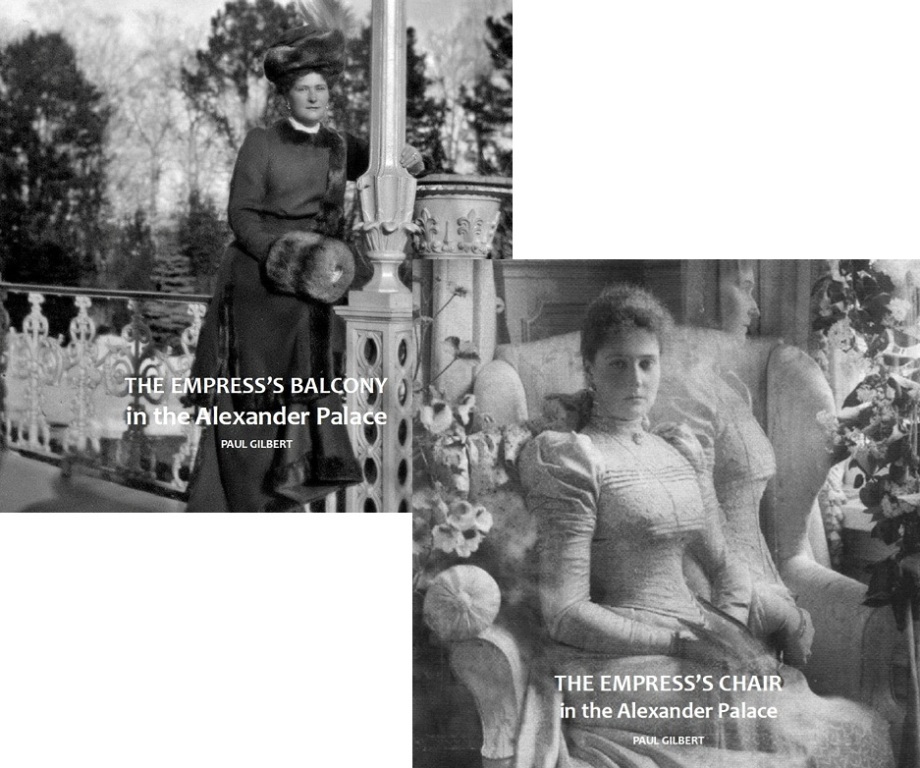
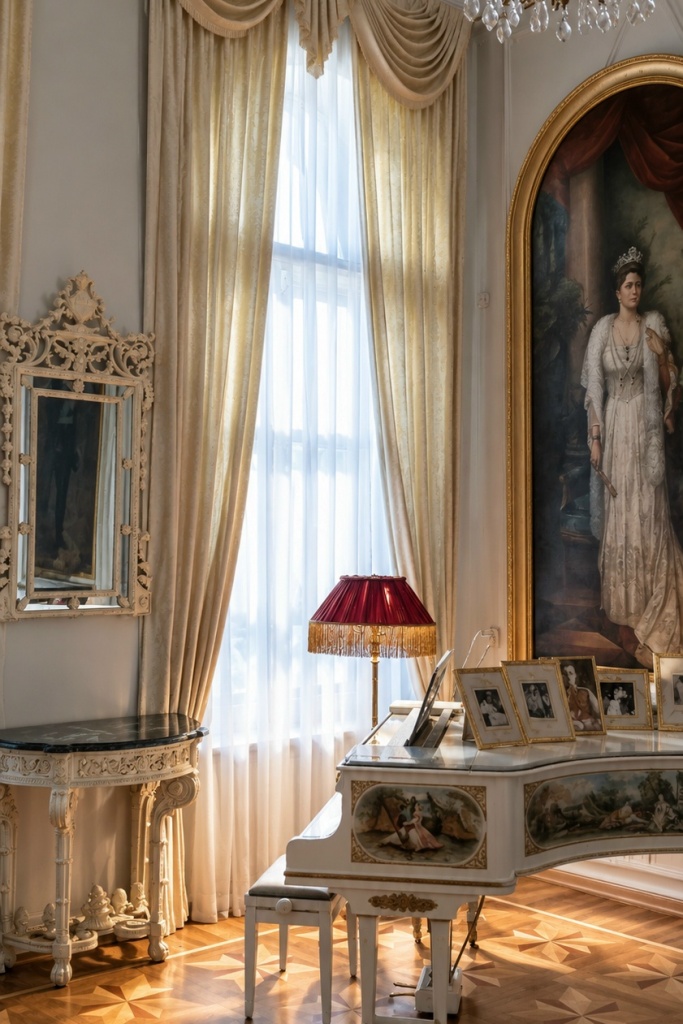
I am pleased to a nnounce the release of a NEW edition of The Empress’s Balcony (published in 2026) and it’s companion volume The Empress’s Chair (published in 2023).

I have compiled two unique pictorials dedicated to two of the most iconic spots in the Alexander Palace – the former residence of Russia’s last Imperial Family at Tsarskoye Selo – both of them favourite spots for the rest and relaxation of Empress Alexandra Feodorovna.

The Empress’s famous balcony and the corner chair in her Mauve Boudoir served as the settings for hundreds of iconic photographs of herself, the Tsar, their children, as well as extended family members and those close to the Imperial Family.

Each of these pictorials feature more than 100 full-page black-and-white photos. The accompanying text explores the history of both the balcony and chair, as well as the history and recreation of the Maple Drawing Room and Mauve Boudoir. While the balcony was demolished during the Soviet years, the Empress’s chair has recently been recreated for the restored interior of her Mauve Boudoir, which opened to the public in 2021.

Each of these charming pictorials will be a welcome addition to any one who shares an interest in the Alexander Palace and its Imperial residents during the late 19th to early 20th centuries.

***

*This title is available from AMAZON in the USA, UK, Canada, Australia,
France, Germany, Spain, Italy, Netherlands, Poland, Sweden and Japan

CLICK HERE TO ORDER THE PAPERBACK EDITION @ $13.99 USD

English. 112 pages, 100 black & white photos

Originally published in 2023, this NEW 2026 edition features a NEW cover, plus two additional pages and NEW photographs

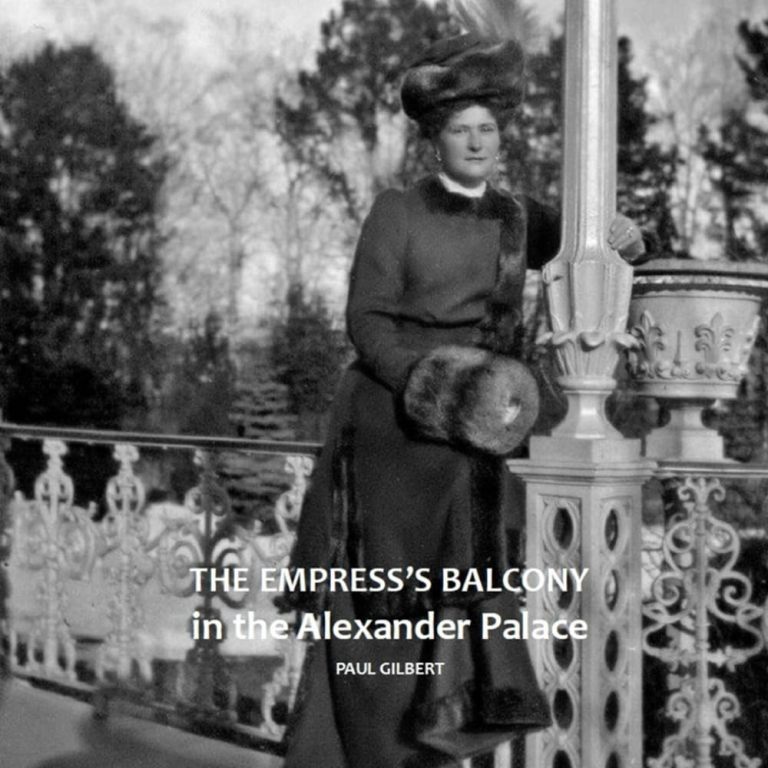
Between 1896-1898 – the Court architect Silvio Danini carried out the reconstruction of the eastern wing of the Alexander Palace, which included the personal apartments of Nicholas II and Alexandra Feodorovna.

In addition, he installed the famous L-shaped iron balcony for the Empress, which was accessed via the Maple Drawing Room.

The Empress’s balcony became a favourite setting for taking family photographs, taken by the Empress and her children, all of whom were avid amateur photographers. More than a century later, these iconic images provide us with a rare glimpse into the private world of the Imperial Family.

The photographs presented in this pictorial, have all been selected from the private albums of the Empress and her children, and that of Alexandra’s friend and lady-in-waiting Anna Vyrubova.

Read why the balcony was dismantled between 1947-49, and why the palace-museum have no plans to restore it. In the meantime, we have to content ourselves with the selection of vintage photographs which have survived to this day, and are presented in this pictorial.

*This title is available from AMAZON in the USA, UK, Canada, Australia,
France, Germany, Spain, Italy, Netherlands, Poland, Sweden and Japan

CLICK HERE TO ORDER THE PAPERBACK EDITION @ $13.99 USD

English. 120 pages, 107 black & white photos

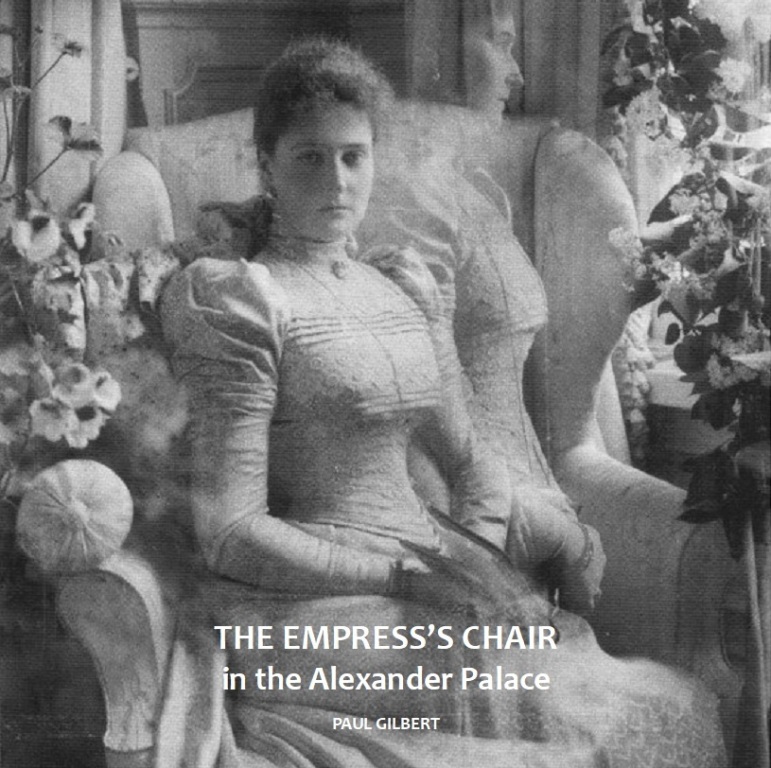
Between 1896-1898 – the Court architect Silvio Danini carried out the reconstruction of the eastern wing of the Alexander Palace, which included the personal apartments of Nicholas II and Alexandra Feodorovna.

Among the Empress’s quarters was the Mauve Boudoir, which would become her favourite room. According to legend, the Empress gave Alexnder Meltzer a lilac branch, her favourite flower, so that he could choose the colour scheme for the decoration of the room.

Among the most notable pieces of furniture in this room was a corner chair, which became a popular spot for family photographs, taken by the Empress and her children, all of whom were avid amateur photographers. More than a century later, these iconic images provide us with a rare glimpse into the private world of the Imperial Family.

Like many other rooms in the Alexander Palace, the Mauve Boudoir suffered a sad fate – the decoration and the interior were lost during the Great Patriotic War. The room has since been reconstructed and restored to its original historic look, as has the Empress’s famous chair.

© Paul Gilbert. 8 February 2026

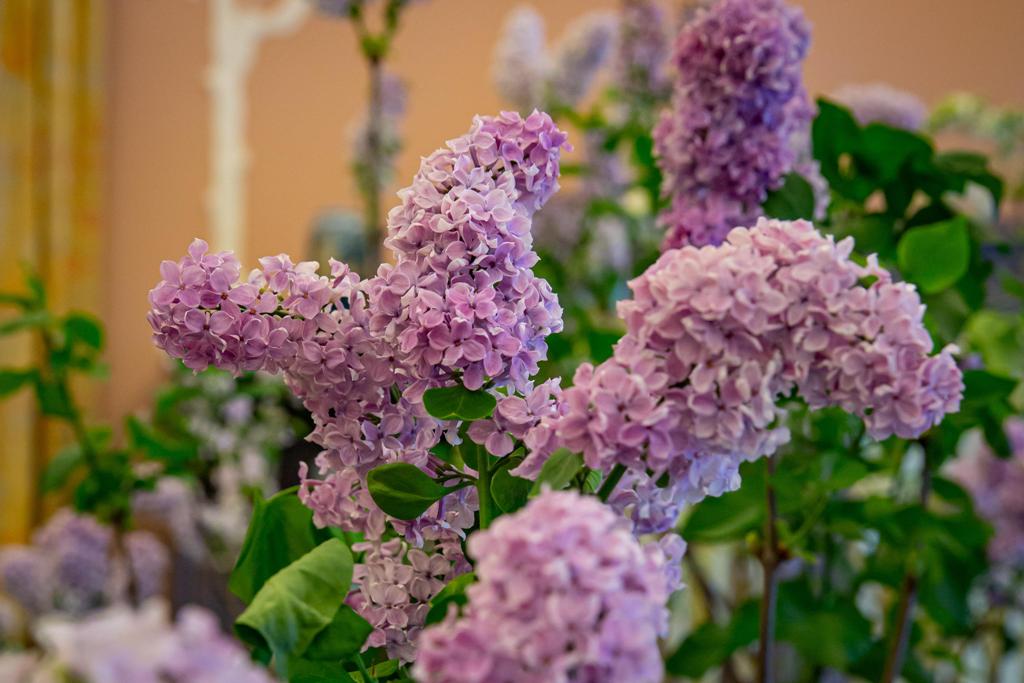
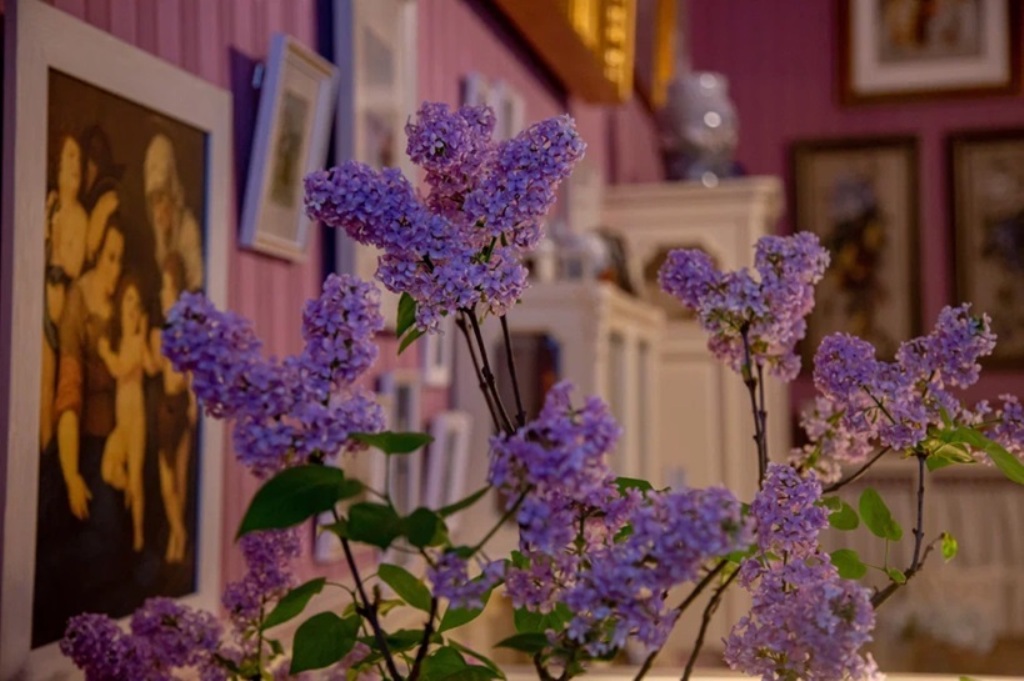
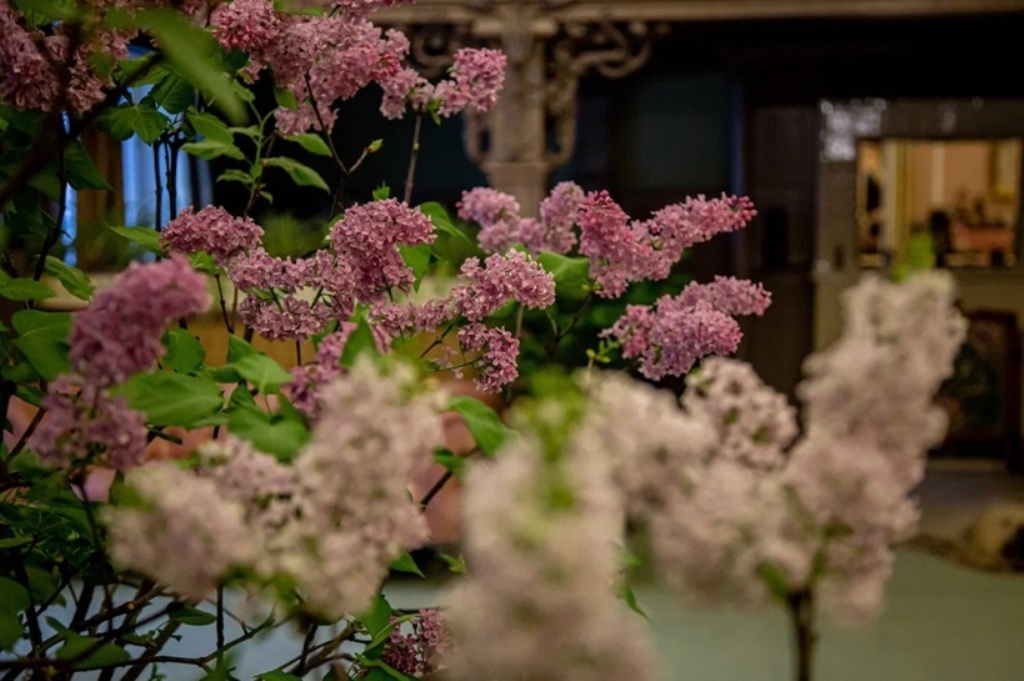
Lilacs bloom . . . again, in the Alexander Palace

Lilacs in bloom in the Alexander Palace
Photo © Tsarskoye Selo State Museum

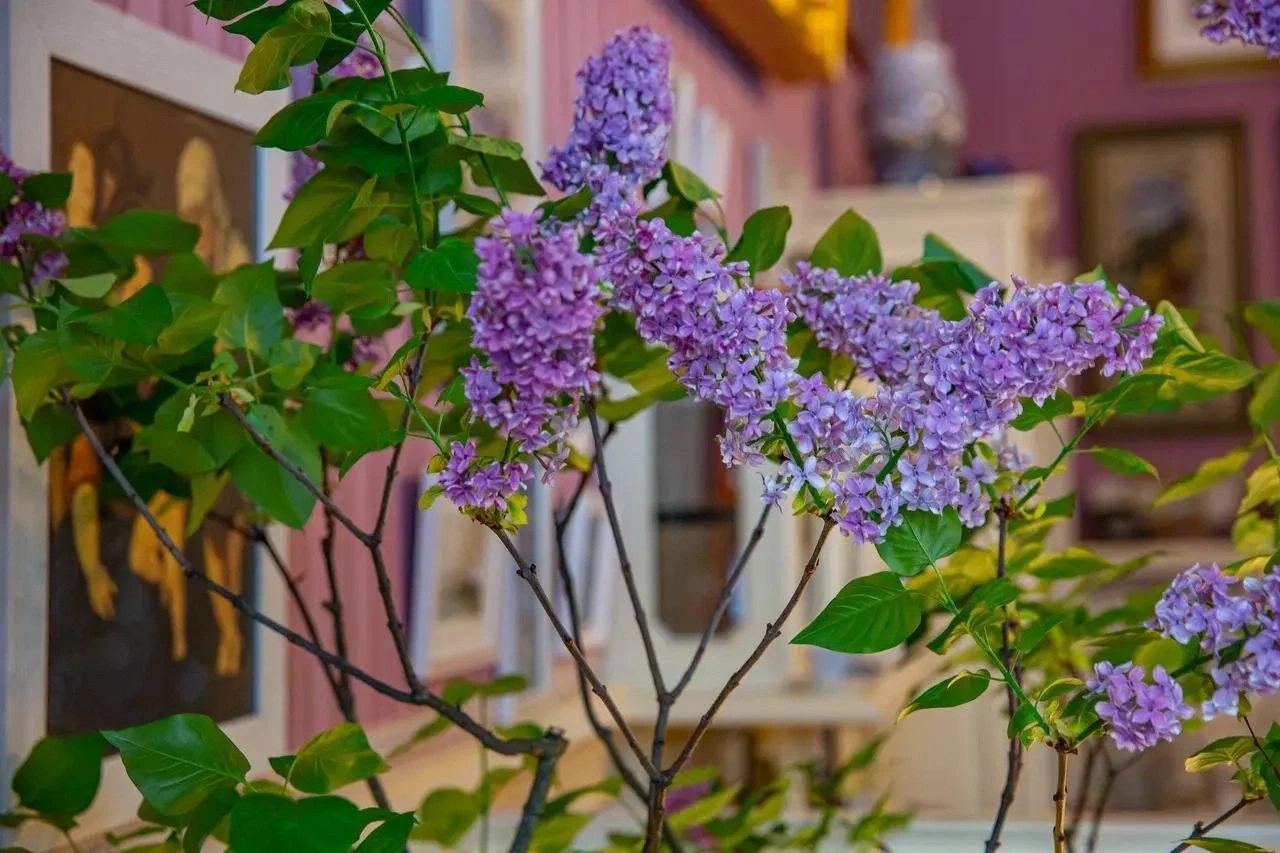
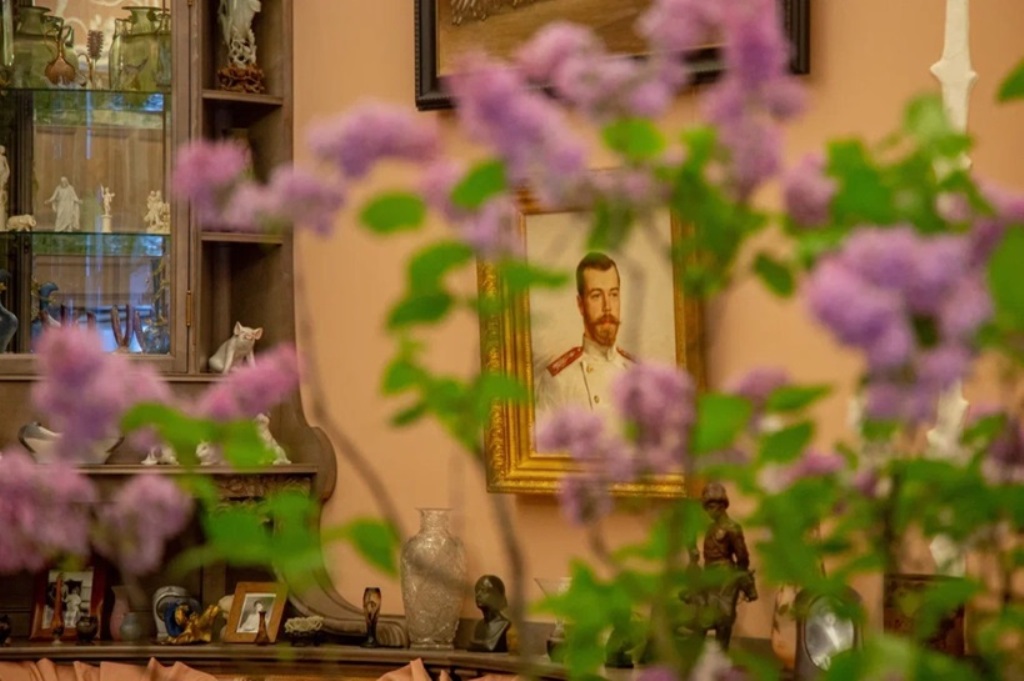
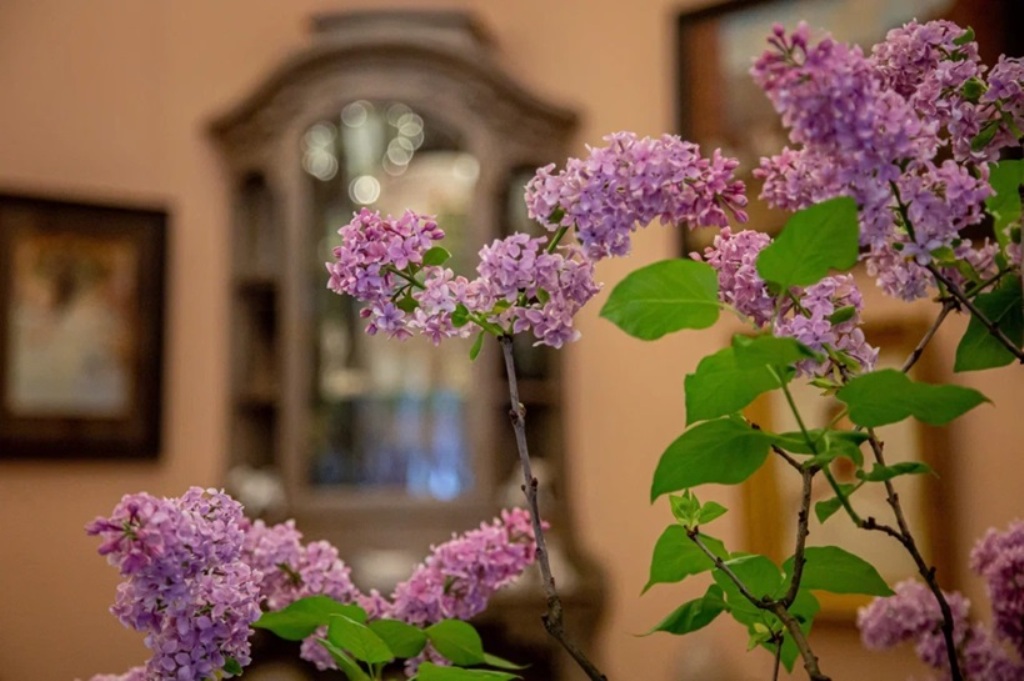
Despite the January frosts, lilacs and almond bushes have bloomed again in the Tsarskoye Selo greenhouses, and have now been transferred to the private apartments of Empress Alexandra Feodorovna in the Alexander Palace. This unique tradition, which was adopted by the family of Nicholas II, was revived by the museum in the winter of 2022.

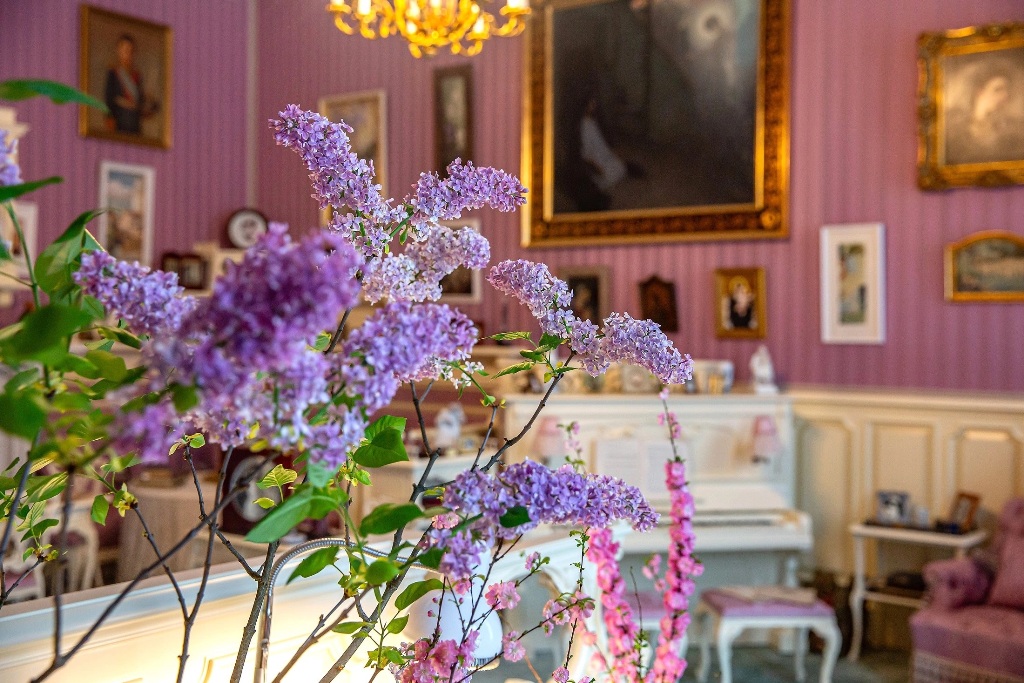
On 14th January 2025, the first six lilac bushes of historical varieties, including “Memory of Ludwig Speth” and “Madame Lemoine”, were placed in special tubs and brought into the Mauve (Lilac) and Maple Drawing Rooms. Their aroma filled the interiors of Empress Alexandra Feodorovna recreated rooms, which are situated in the Eastern Wing of the palace.

Lilacs in the Mauve Boudoir of the Alexander Palace
Photo © Tsarskoye Selo State Museum

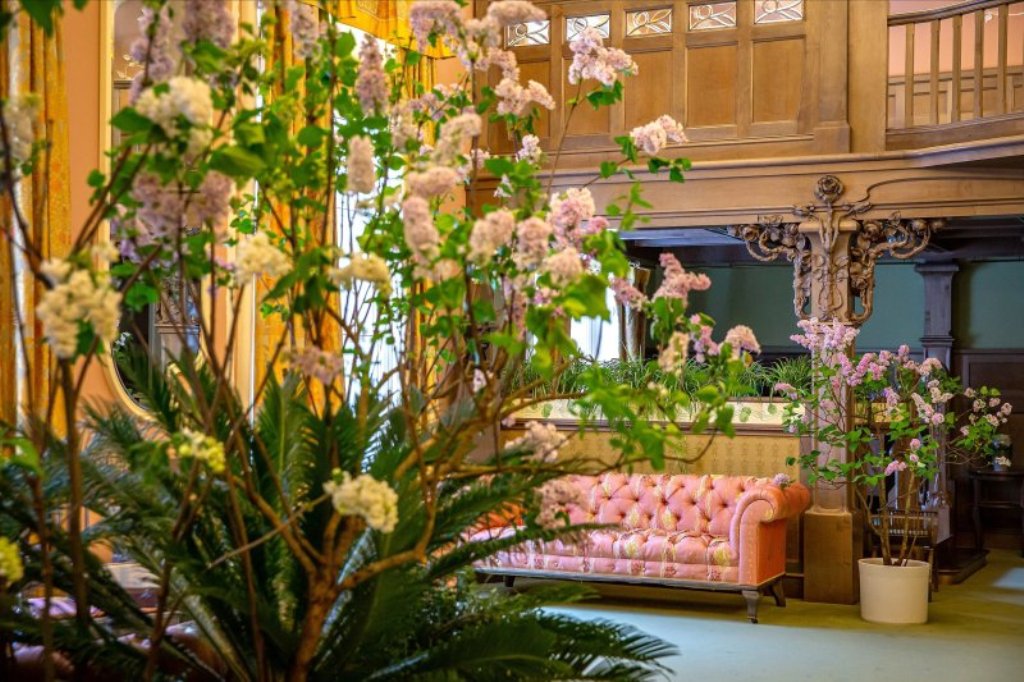
Lilacs in the Maple Drawing Room of the Alexander Palace
Photo © Tsarskoye Selo State Museum

This year, for the first time, an almond bush of the “Tanyusha” variety with delicate pink double flowers was delivered to the Mauve (Lilac) Drawing Room. 

According to the chief curator of the museum’s parks Olga Filippova, the flower exposition is created on the basis of historical materials using the old traditional methods of the 19th century. The process takes place in three stages in the museum greenhouse complex.

This year a total of 18 lilac bushes will decorate the Mauve (Lilac) and Maple Drawing Rooms. The bushes will replace each other as they bloom, ensuring continuous flowering until April. Soon, lilies of the valley, azaleas, tulips and other plants grown in Tsarskoye Selo greenhouses will be added to the flower decoration in the Alexander Palace.

Lilacs in bloom in the Alexander Palace
Photo © Tsarskoye Selo State Museum

FURTHER READING

Lilacs return to the Alexander Palace + PHOTOS

For the first time in more than a hundred years, the fragrant scent of lilacs once again fill the interiors of the Alexander Palace during the cold winter months. The Tsarskoye Selo State Museum have revived the tradition, by placing lilacs in the Mauve (Lilac) Boudoir and the Maple Drawing Room of the Alexander Palace.

© Рaul Gilbert. 14 January 2025

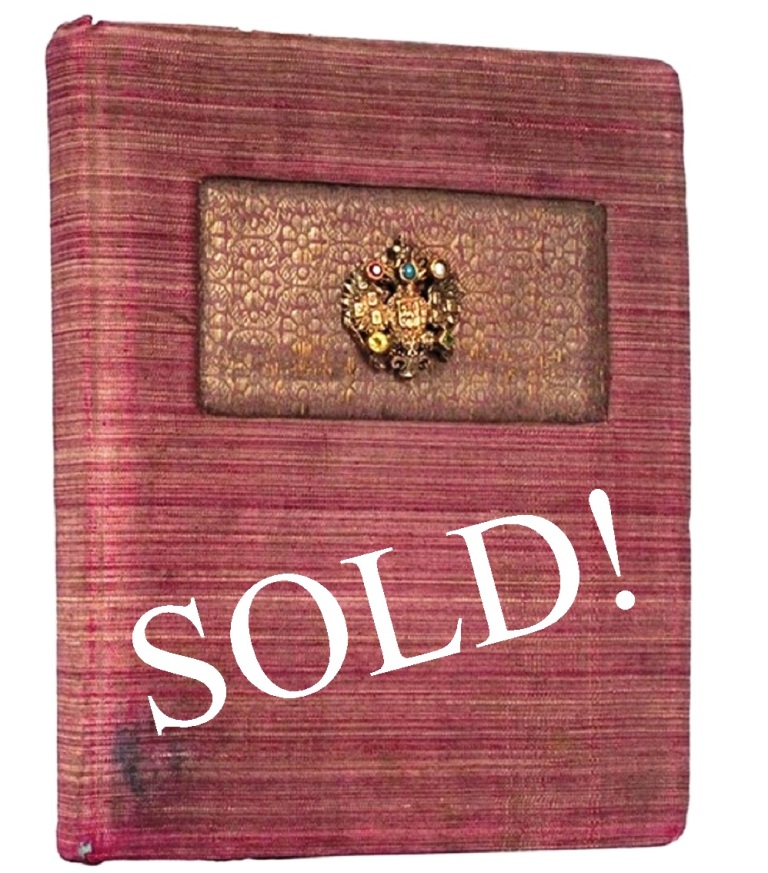
Empress Alexandra Feodorovna’s photo album sells for 13 million rubles at auction

On 15th October 2025, I reported that a rare photo album belonging to Empress Alexandra Feodorovna (1872-1918) was being auctioned on 23rd October 2025, at the Literary Fund Auction House (Litfond) in St. Petersburg.

The opening bid for the album was 10 million rubles [$125,600 USD], but collectors bidding against one another, managed to drive the price even higher. The photo album sold for 13 million rubles [$163,000 USD], to an unknown Russian bidder.

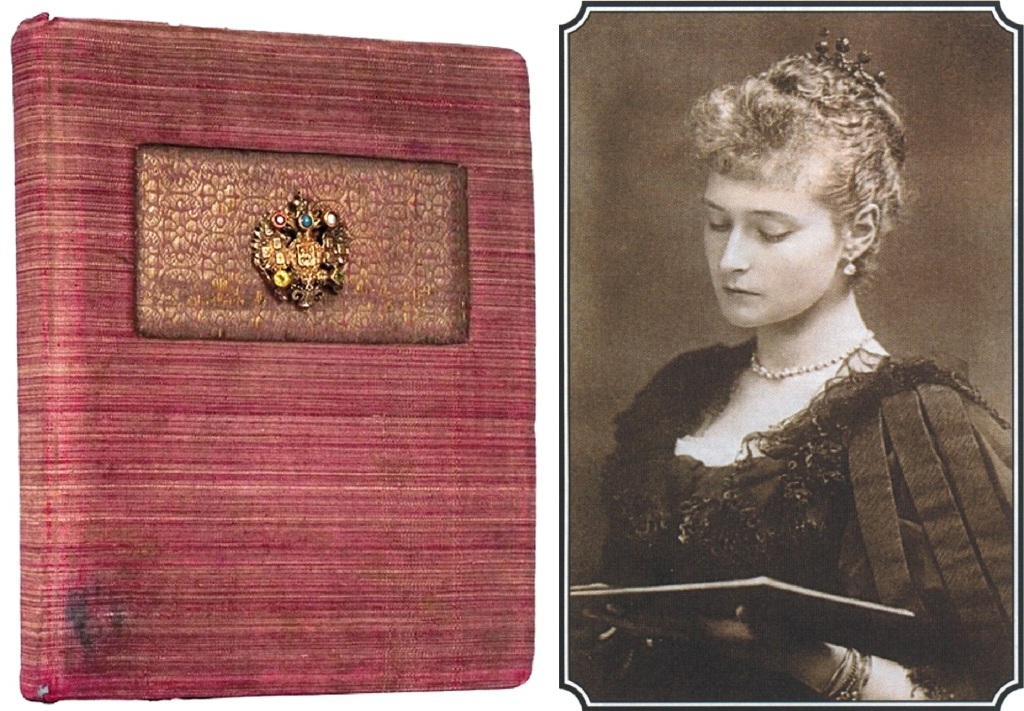
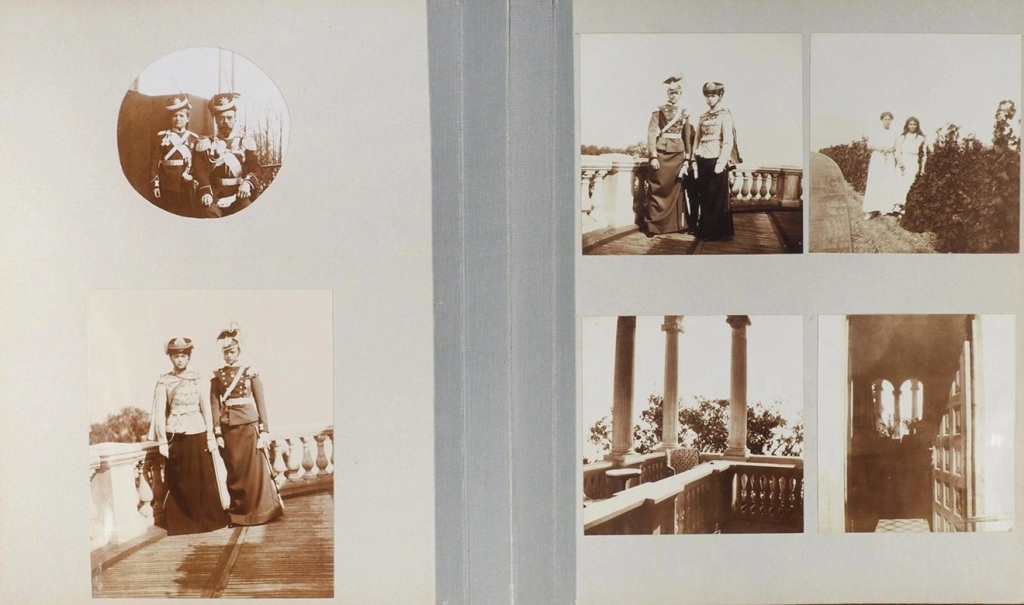
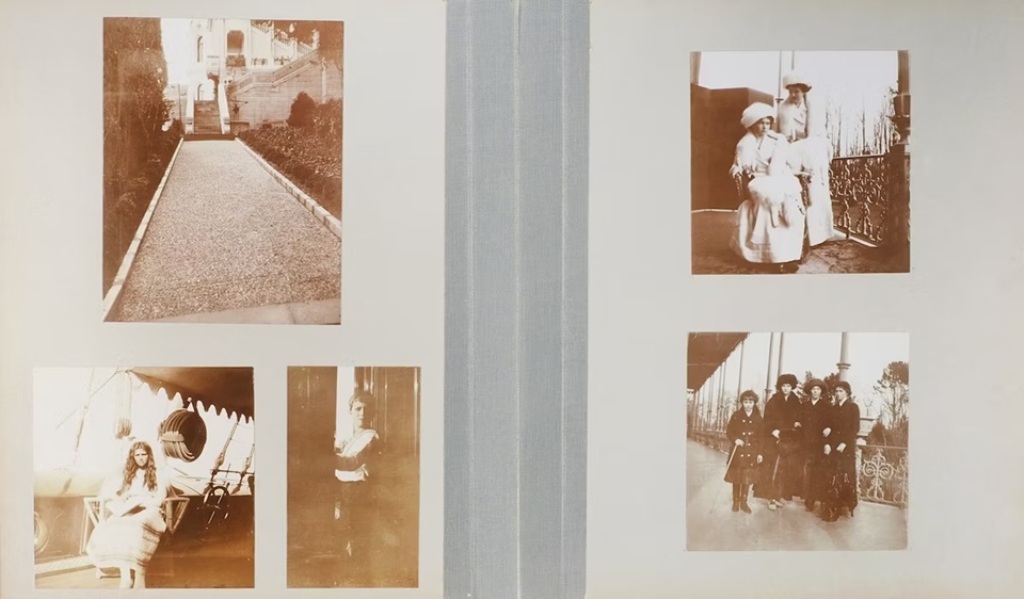
The lilac-coloured album includes 12 pages with 26 photographs of the Imperial Family taken by the Empress herself, using her Kodak Brownie Box camera. The photos were taken in 1913-1914 in the Crimea and Tsarskoye Selo.  The size of the album is 24.5×20 cm, the photographs are from 8.5×5.3 to 11.8×9.3 cm. All the photos were personally pasted into the album by Alexandra Feodorovna and Emperor Nicholas II.

This album is one of only two of the Imperial Family’s photo albums, known to the author of this article, that was not included in the state archival funds. The other photo album belonging to Emperor Nicholas II in the Museum of Local Lore in Zlatoust, which is situated 270 kilometers (168 mi) south of Ekaterinburg. 

On a personal note, I am happy that the photo album was purchased by a Russian buyer, rather than sold abroad to a foreign collector. Let us hope, that the album will be gifted to a museum – preferably the Alexander Palace, from where it was taken in August 1917, when the Imperial Family were sent into exile.

FURTHER READING:

Photo album belonging to Russia’s last Empress to be auctioned in St. Petersburg + PHOTOS

© Paul Gilbert. 29 October 2025

Photo album belonging to Russia’s last Empress to be auctioned in St. Petersburg

On 23rd October 2025, a unique photo album of the last Russian Empress Alexandra Feodorovna (1872-1918), the wife of Nicholas II, will be put up for auction at the Literary Fund Auction House (Litfond) in St. Petersburg. The starting bid is set at 10 million rubles [$127,000 USD], although it is expected to sell for much more.

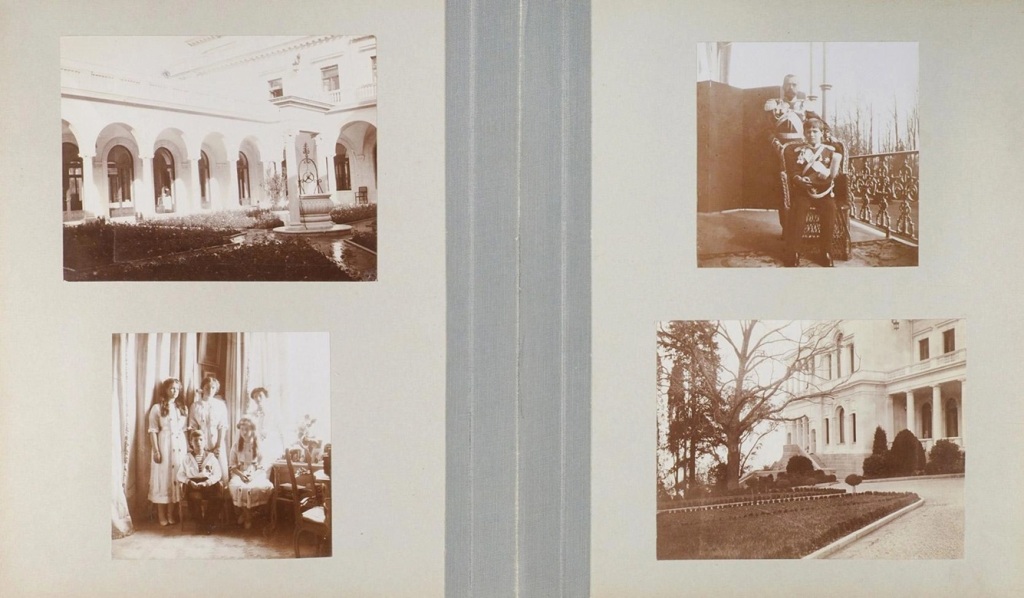
The album includes 12 pages with 26 photographs of the Imperial Family taken by the Empress herself, using her Kodak Brownie Box camera. The photos were taken in 1913-1914 in the Crimea and Tsarskoye Selo.  The size of the album is 24.5×20 cm, the photographs are from 8.5×5.3 to 11.8×9.3 cm. All the photos were personally pasted into the album by Alexandra Feodorovna and Emperor Nicholas II.

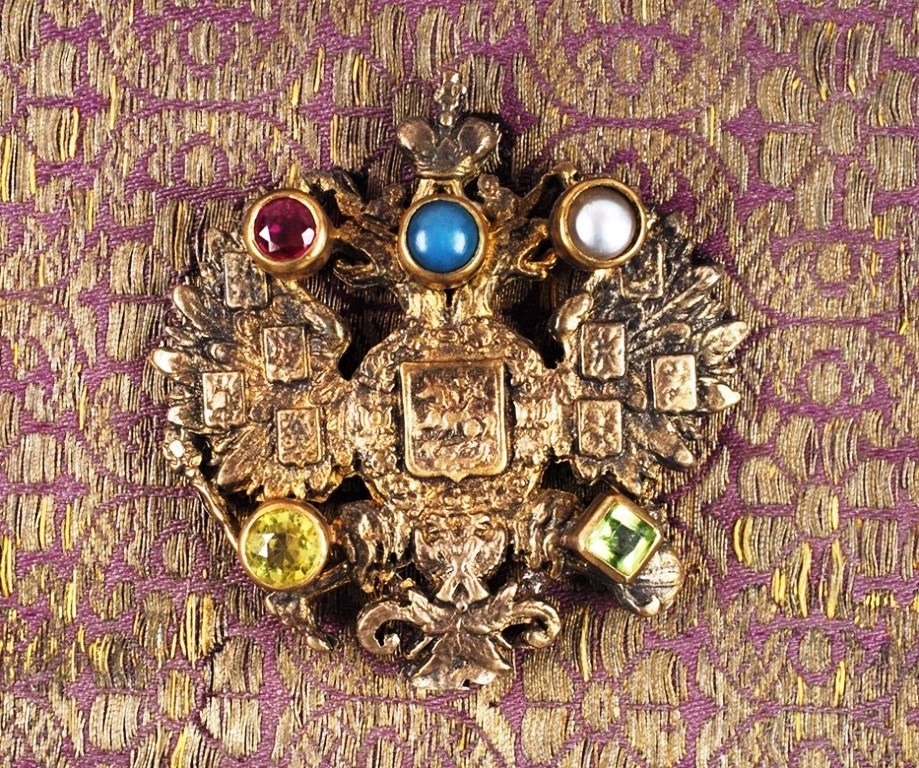
The lilac-coloured cover of the album is decorated with a metal coat of arms of the Russian Empire, inlaid with five precious stones – ruby, turquoise, pearls, demantoid and chrysolite, each of which symbolizes one of the five children of the August Couple.

The Empress purchased the album at a charity bazaar in Yalta in 1913, a record of which is recorded in her own handwritting has been preserved on the inside front cover. Until 1917, the album was in the Alexander Palace in Tsarskoye Selo, and then was taken by Alexandra Feodorovna into exile to Tobolsk.

In the autumn of 1917, Alexandra presented the album to the dentist of the Imperial Family, Sergei Sergeievich Kostritsky (1875-1944). After the 1917 Russian Revolution, Kostritsky found himself abroad, in Nice, France, where he befriended members of the His Majesties Life Guards Cavalry Regiment. In 2003, the photo album was returned to Russia by Nikita Tuchkov, and three years later it was acquired by a private collector.

This album is one of only two of the Imperial Family’s photo albums, known to the author of this article, that was not included in the state archival funds. The other photo album belonging to Emperor Nicholas II in the Museum of Local Lore in Zlatoust, which is situated 270 kilometers (168 mi) south of Ekaterinburg. 

Below, are six pages from the album, featuring just some of the 26 photos:

Sergey Burmistrov, who serves as General Director of Litfond, noted: “The starting price is high, but this album has probably generated the most interest in this auction, one of great historial significance. We have informed both the state archives and museums in St. Petersburg, Moscow and Crimea, and we do not rule out that they may be interested in bidding on this album.”

Let us all hope, that this photo album, which has such a close personal connection to Empress Alexandra Feodorovna, does not end up in another private collection, but instead, is purchased by or for one of the museums or palaces, where it will be put on display for visitors to see and researchers to study.

AUCTION RESULTS – 23rd October 2025

Empress Alexandra Feodorovna’s photo album sells for 13 million rubles at auction

© Paul Gilbert. 15 October 2025

***

While my research is dedicated to clearing the name of Russia’s much slandered Tsar, I am also actively looking for articles and news stories on the Romanovs, from Russian archival and media sources, which may be of interest to my readers.

In exchange for this 18-page booklet, please consider making a small $5 or $10 donation in aid of my research. These donations are of great assistance in helping me offset the cost of obtaining and translating documents from Russian archival sources, which are often paid for out of my own pocket. It is these documents which help present new facts and information on the life and reign of Nicholas II. In addition, my research continues to debunking many of the myths and lies which exist more than a century after his death and martyrdom.

Please note, that there is NO obligation, thank you for your consideration!

CLICK HERE TO MAKE A DONATION

The favourite tunes of Nicholas II and his Family – Part 3

This third video features another tune, which was apparently a favourite of Emperor Nicholas II and his Family. Click on the image above to listen to Осенний сон / Autumn Dream, a waltz. [Duration: 3 minutes, 27 seconds].

The music of the waltz “Autumn Dream” was written by the English pianist and composer Archibald Joyce (1873-1963) in 1908, who wrote a whole series of waltzes loved by listeners and even received the unspoken title of “King of Waltzes”.

In 1909, he came to Russia where he performed concerts, after which “Autumn Dream” immediately gained popularity. A few years later, records were released in huge editions, and “Autumn Dream”, along with other popular works by Joyce, began to be referred to as “old Russian waltzes”.

Several attempts were made to write lyrics to this music. The first to do this was Prince Feodor Nikolaevich Kasatkin-Rostovsky (1875-1940), who dedicated poems to Baroness Olga Nikolaevna Taube. But they did not receive recognition among the public. In the pre-war years, other poets tried to write lyrics to this opera, but the most popular was the version of Vasily Ivanovich Lebedev-Kumach (1898-1949).

NOTE: the translation is not perfect, but it will give you the gist of the lyrics – ENJOY!

The autumn wind blows off the leaves,
All nature is full of sadness.
Only hope does not die —
The heart knows: spring will come.

And sorrows, and bad weather —
Everything will pass like autumn rain.
There will be joy, there will be happiness,
And the warm sun will rise!

You have had enough of crying, maples, birches,
You can’t collect old leaves.
It’s enough to shed big tears for you,
The spring day will come again.

Soon the autumn of separation will pass,
The green leaf will grow again,
Dear hands will embrace us again,
There will be joy, love will come.

Set against the background of this opera are a number of images (some of which have been photoshopped) depicting Emperor Nicholas II and Empress Alexandra Feodorovna set against the autumn colours of the Alexander Park at Tsarskoye Selo. In addition are vintage newsreels and photos of the Imperial Family.

The vocals of this waltz is performed by the famous Russian soloist Irina Krutova, who perform Russian romances and classical music, accompanied by soloists of the State Academic Russian Concert Orchestra. The video was created by Irina Koroteeva (Moscow).

NOTE: Stay tuned for additional videos, featuring more favourite tunes of Nicholas II and his family.

More favourite tunes of Nicholas II and his family:

Part 2 – Я ехала домой / I was on my way home

Part 1 – Утро туманное (Misty Morning)

© Paul Gilbert. 4 March 2025

Alexander Palace filled with the scent of lilacs

Lilacs in the Maple Drawing Room of the Alexander Palace
Photo © Tsarskoye Selo State Museum

In the middle of winter, the Alexander Palace at Tsarskoye Selo is again decorated with blooming lilacs. Their fragrant aroma fill the former interiors of Empress Alexandra Feodorovna, a beautiful reminder of the Imperial Family and their favourite Imperial Residence.

On 23rd January 2025, of the 16 lilac bushes in the greenhouses near the Alexander Palace, six were moved to the palace halls, the rest will be moved from the greenhouses in stages, as they bloom. The tradition of placing lilacs in the former rooms of the last Russian Empress began in 2022, the first time the aroma of her favourite flowers filled the interiors of the palace in more than 100 years.

Lilacs of the historical varieties, such as “Memories of Ludwig Späth” and “Sensation” are exhibited in the Mauve Boudoir and Corner Drawing Rooms. Five bushes form a luxurious “lilac cloud” with delicate pink and purple flowers. Lilacs were exposed at the peak of flowering, this year so their distinctive aroma is especially noticeable. Visitors can admire lilacs in the interiors of the Alexander Palace until April.

Lilacs in the Maple Drawing Room of the Alexander Palace
Photo © Tsarskoye Selo State Museum

“Documents have been preserved indicating that the Tsarskoye Selo greenhouses diligently carried out the task of creating a spring atmosphere during the gloomy winter months. In 1898, by order of the gardener Zort, lilacs, double-cherries, hydrangeas and lilies of the valley arrived in Tsarskoye Selo for the winter decoration of the palace. So flowers in the Alexander Palace are an integral part of the interior, and we are talking not only about the rich floral decoration of the walls – roses, orchids, dandelions, but also about the blooming flowers as well,” said Olga Filippova, the chief curator of the parks of the Tsarskoye Selo State Museum-Reserve.

Lilacs in the Mauve Boudoir of the Alexander Palace
Photo © Tsarskoye Selo State Museum

The process of preparing lilacs for “premature” flowering begins in the fall. In accordance with the methods from gardening books of the 19th century, the employees of the greenhouse complex plant bushes in special boxes, and in December they set the plants up for awakening. The care process is extremely painstaking: every forty minutes during the working day, staff need to perform the necessary manipulation. One of the main conditions is strict compliance with the temperature and humidity.

Lilacs in the Maple Drawing Room of the Alexander Palace
Photo © Tsarskoye Selo State Museum

Empress Alexandra Feodorovna loved flowers – the rooms in her private half were decorated with fresh flowers all year round. Floral themes were also present in the upholstery of the walls, furniture, as well as the stucco reliefs on the walls and ceilings. The Empress was especially fond of lilacs. It is no coincidence that in her Mauve Boudoir [aka Lilac Study] the furniture and walls were decorated with silk of lilac shades, Alexandra Feodorovna also preferred lilac tones in her clothes, and perfume with the aroma of lilac.

Recall that the first 13 interiors of the Alexander Palace – the private rooms of Nicholas II and Alexandra Feodorovna – opened to the public after restoration in August 2021, in February 2023 the restoration of the Marble Hall with a slide was completed. The interiors of the palace-museum are complemented all year round with decorative indoor plants and cut flowers.

© Paul Gilbert. 23 January 2025

The favourite tunes of Nicholas II and his family – Part 2

This second video features another tune, which was apparently a favourite of Emperor Nicholas II and his Family. Click on the image above to listen to Я ехала домой / I was on my way home, a romanice, which tells us a short story through the eyes of Empress Alexandra Feodorovna’s heart. [Duration: 3 minutes, 11 seconds]

The romance “I Was on my way home”, composed by Marie Poiret in 1901 or 1905, is about the love and tenderness of a woman’s heart. The romance became very famous and was part of the repertoire of many performers of the time, including Alexander Vertinsky, Keto Dzhaparidze, Rada Volshaninova, Alla Bayanova among others.

Maria Yakovlevna Poiret (1864-1933) was a Russian dramatic actress, journalist, poet, writer and composer. Her fame has reached our time as the author of several romances, including “I was on my way home”. She also wrote the lyrics to such tunes as “Swan Song”, “I Don’t Want to Die”, as well as to the music of other composers.

NOTE: the translation is not perfect, but it will give you the gist of the lyrics – ENJOY!

I was going home, my soul was full

Unclear for myself, some kind of new happiness.

It seemed to me that everyone with such a fate,

They looked at me with such affection.

I was on my way home… Two-horned moon

I looked out of the windows of the boring car.

The distant annunciation of the morning bells

He sang in the air like a gentle string…

I was driving home, I was thinking about you,

My thought was anxiously both confused and torn.

A sweet slumber touched my eyes.

Oh, if only I had never woken up again…

Set against the background of this romance are a number of images depicting Empress Alexandra Feodorovna riding on the Imperial Train [these images have been photoshopped]. In addition are vintage photos of Nicholas and Alexandra. The vocals of this haunting romance is performed by the popular contemporary Russian singer Irina Krutova. The video was created by Irina Koroteeva (Moscow).

NOTE: Stay tuned for additional videos, featuring more favourite tunes of Nicholas II and his family.

More favourite tunes of Nicholas II and his family:

Part 1 – “Утро туманное” (Misty Morning)

© Paul Gilbert. 19 January 2025