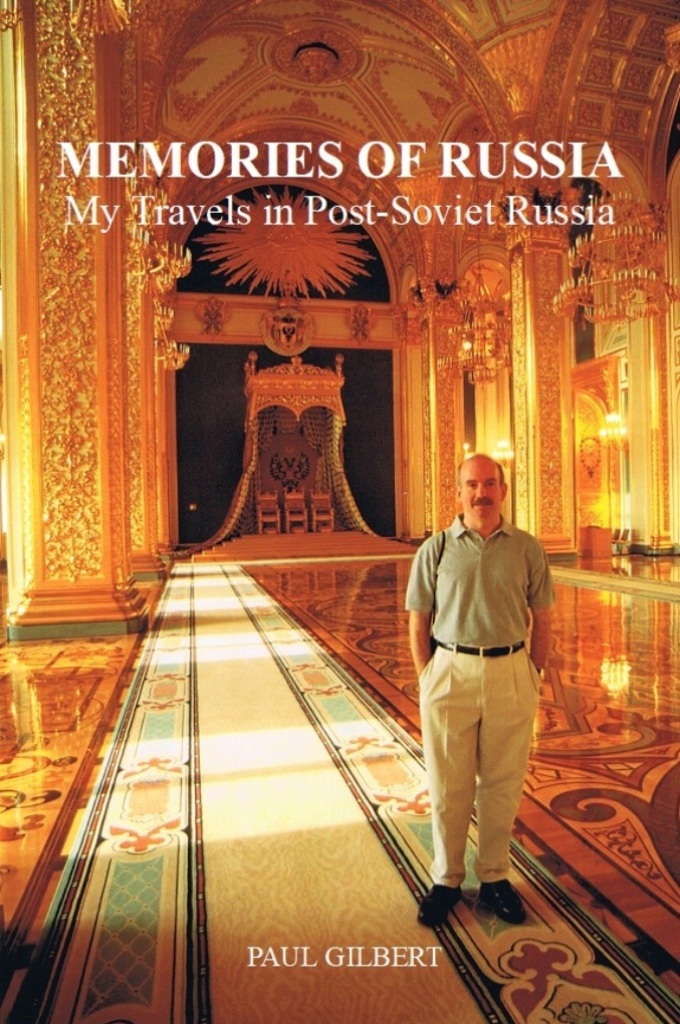
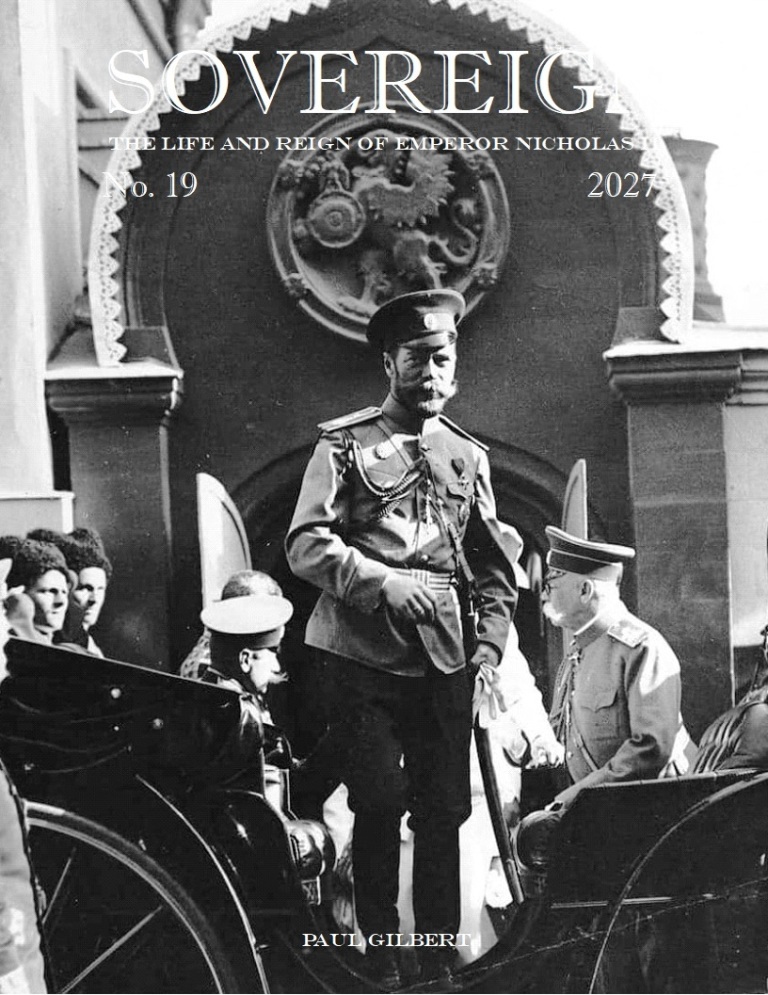
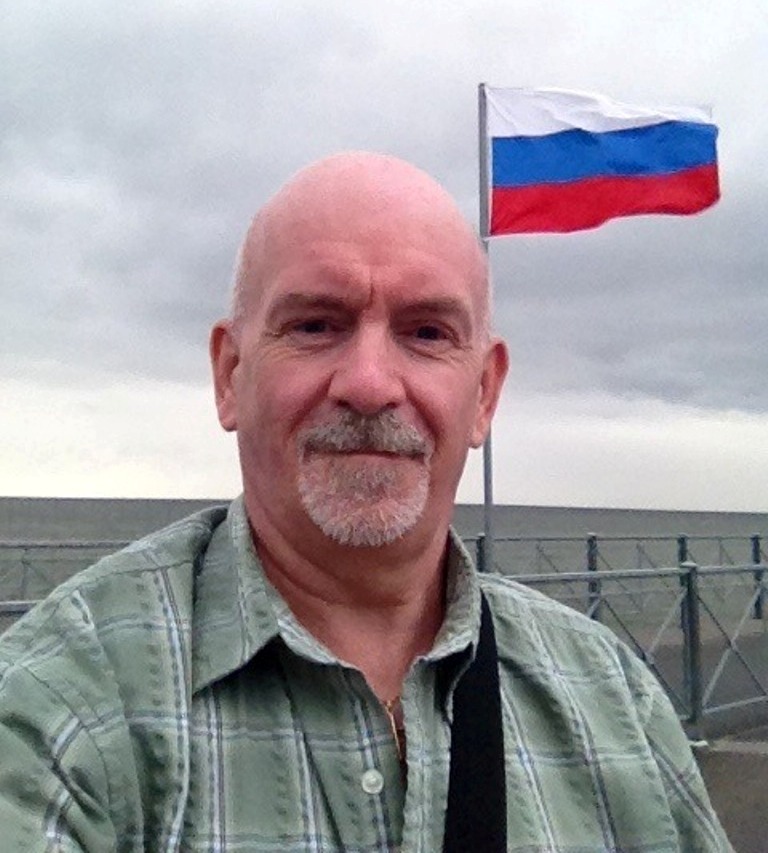
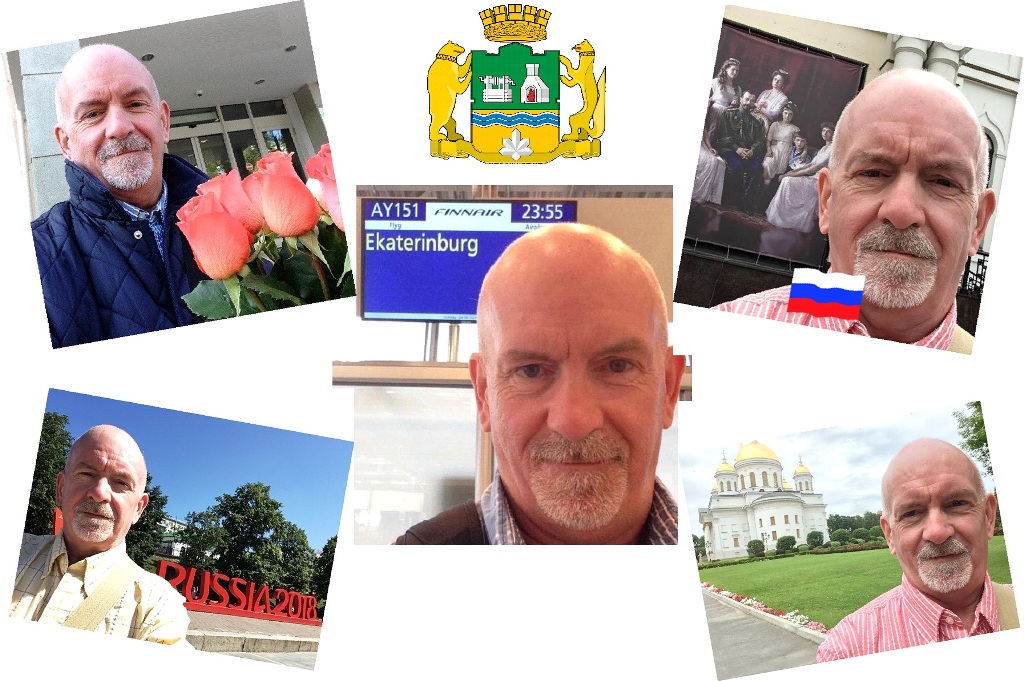
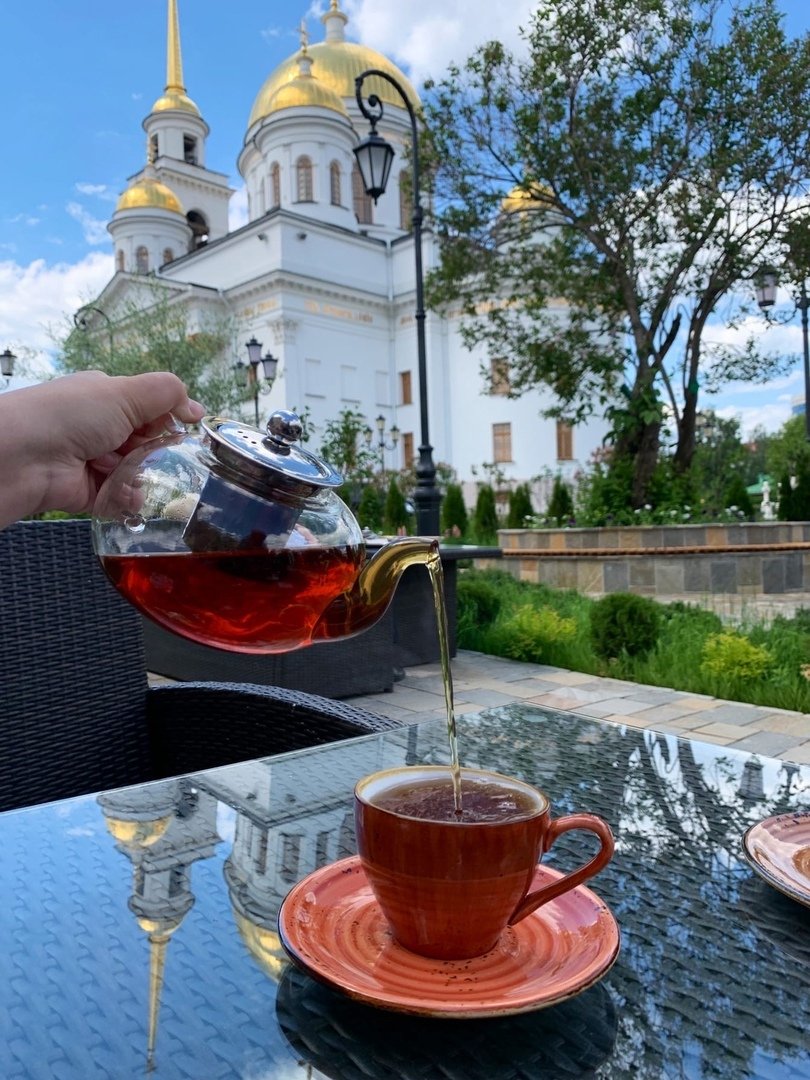
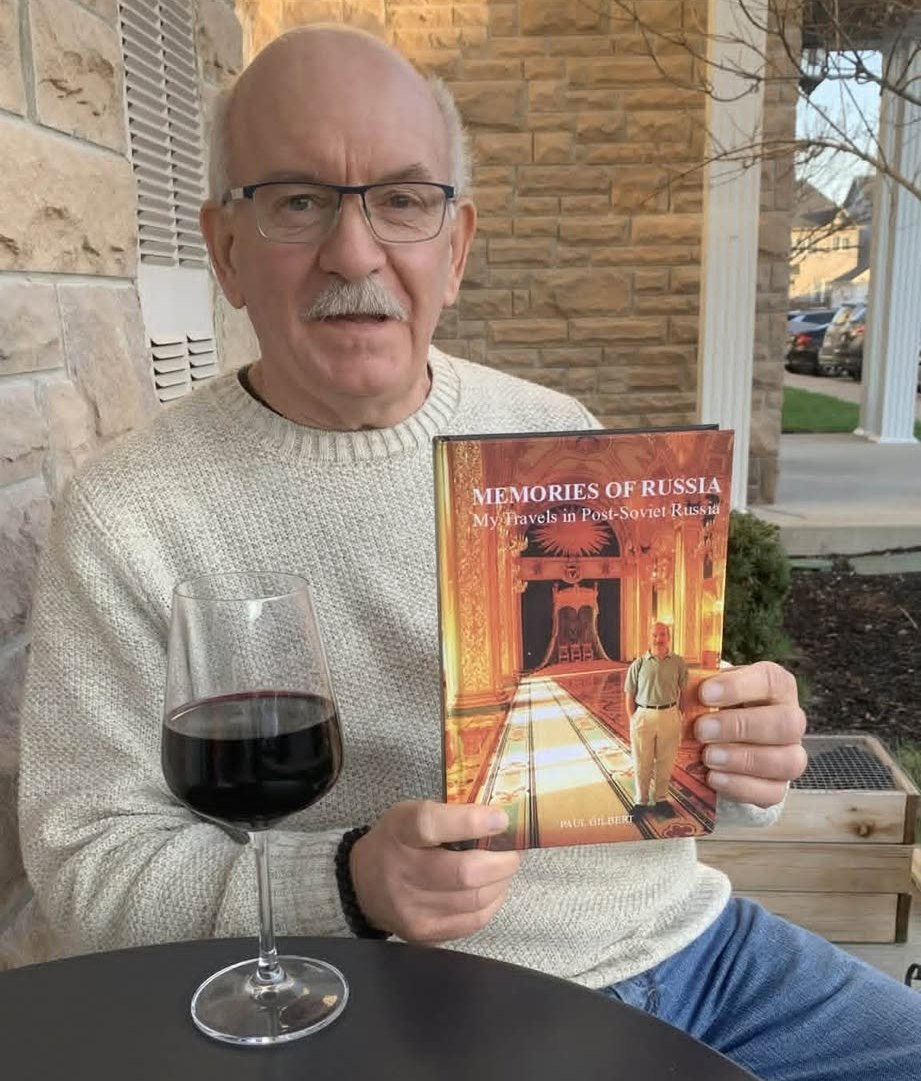
NEW BOOK – ‘Memories of Russia: My Travels in Post-Soviet Russia’ by Paul Gilbert

*You can order this title from most AMAZON outlets, including
the United States, United Kingdom, Ireland, Canada, Australia,
France, Germany, Spain, Italy, Netherlands, Belgium, Poland, Sweden,
Brazil, Mexico and Japan
*Note: prices are quoted in local currencies

CLICK HERE TO ORDER THE HARD COVER EDITION @ $25.00 USD

CLICK HERE TO ORDER THE PAPERBACK EDITION @ $20.00 USD

English. 9″ x 6″ format. Hard cover and paperback. 314 pages.

This year marks the 40th anniversary of my first visit to Russia. During the past four decades, I have visited Russia 29 times!

I travelled to Moscow, St. Petersburg – and the suburban towns of Tsarskoye Selo, Peterhof, Pavlovsk, Gatchina and Strelna – as well as Yalta and Crimea, Ekaterinburg and Alapaevsk.

In my new book, which is part travelogue, part history, I share my personal impressions and history of a dozen historic sites, that I have visited – some on numerous occasions. Out of the dozen historic sites covered in my book, all but two have a connection to Russia’s last tsar Nicholas II.

Join me as I revisit such places as the Grand Kremlin Palace, the Petrovsky Travelling Palace and the Russian State Archives – where I explore the Romanov archives in Moscow; learn the fate of Nicholas II’s private apartments in the Winter Palace and the State Hermitage Theatre – venue for the famous 1903 Costume Ball; travel with me to the Children’s Island and the Feodorovsky Sovereign Cathedral – Nicholas II’s favourite church at Tsarskoye Selo; the ruins of the Lower Dacha at Peterhof and much more!

Richly llustrated with more than 200 black and white photographs!

Every one has one country in which they are drawn, for me it is Russia
– PAUL GILBERT (Retired)

© Paul Gilbert. 15 April 2026

Paul Gilbert: “Ekaterinburg is my favorite Russian city”

Ekaterinburg was founded on 18th November 1723, by decree of Emperor Peter I (1672-1725), however, its ‘City Day is officially celebrated on the third Saturday of August. The name of the city was given in honor of Empress Catherine I (1684-1727), the second wife of Peter the Great. The Ural city celebrated it’s 300th anniversary in 2023.

In 1924 Ekaterinburg was renamed Sverdlovsk – after the Bolshevik leader Yakov Sverdlov – and lived with the Bolshevik name for 67 years. It was during the Soviet years that Sverdlovsk was a “closed city”, particularly foreigners. Everything changed after the fall of the Soviet Union in 1991, when the city returned to its historical name of Ekaterinburg. Since that time, the city has boomed, attracting both business and tourism from across Russia, the former Soviet republics, Europe, the UK and the United States.

In the May 14th 2020 issue of ‘Forbes Magazine,’ travel writer Jared Ranahan named my favourite Russian city of Ekaterinburg as one of the ‘Five Underrated Russian Cities To Explore After Moscow’

Ranahan writes: “Though often overshadowed by its larger neighbours to the west, Yekaterinburg is a major cultural hub for the country, often referred to as the “third capital of Russia” as well as the “Window to Asia” thanks to its location on the eastern edge of the Ural mountain range. While the city is home to a truly impressive skyline featuring some of Russia’s tallest buildings, a major draw for tourists is the city’s rich cultural legacy. Of the many historic sites scattered throughout Yekaterinburg, one of the most significant is the Church of All Saints in Honour of All Saints Resplendent in the Russian Land [Church on the Blood]. This grand Russian Orthodox structure marks the location where Bolshevik forces executed Nicholas II, the last emperor of Russia, and his family.”

* * *

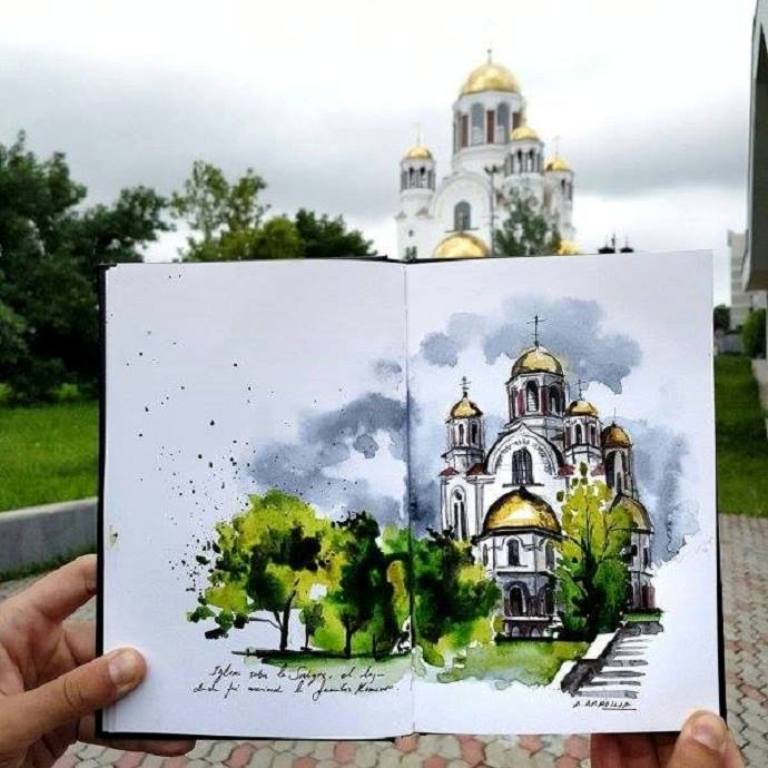
PHOTO: St. Alexander Nevsky Cathedral, Novo-Tikhvinsky Convent, Ekaterinburg

Why is Ekaterinburg my favourite city in Russia?

People often ask me “Why Ekaterinburg?” as opposed to the former Imperial capitals of St. Petersburg or Moscow and “Ekaterinburg has such a dark history.”

Ekaterinburg has done more to honour Nicholas II and his family than any other city in Russia. Thanks to my visits to Ekaterinburg in 2012, 2016 and 2018, it is a city which I have grown to love.

“On a spiritual level, Ekaterinburg was the last capital of the Russian Empire, because the residence of the Sovereign was always considered the capital in Russia. Peter the Great never officially transferred the capital from Moscow to St. Petersburg, but since he lived there, it was the capital,” says Russian historian Peter Multatuli.

Multatuli noted that in 1918, for 78 days, Emperor Nicholas II and his family lived in Ekaterinburg, and that is why the Ural capital can be considered the last capital of the Russian Empire. [It is important to note that many historians – myself included – firmly believe that the Tsar’s signing of the instrument of abdication, his status as Tsar remained inviolate and unassailable – PG]

“Petrograd and Moscow to one degree or another welcomed his overthrow, and they bear a greater responsibility in this than any other Russian city. No matter what anyone says, it was Ekaterinburg that served as the last Imperial residence, which, according to God’s special plan, became the Royal Golgotha,” added Multatuli.

According to him, in the near future, Ekaterinburg will play a great role in the history of Russia, because “the city named after St. Catherine and becoming the Royal Golgotha ​​will be the city of Russian resurrection.”

Once a bastion of Bolshevism, Ekaterinburg has slowly shed its status as the “capital of atheism”. Since the fall of the Soviet Union in 1991, the Urals have experienced a revival of faith, with Ekaterinburg at the center of Orthodox Russia in the Urals.

Below, is a list of places associated with the last days of Nicholas II and his family, during their house arrest from April to July 1918, which are worth visiting. More than a century after his death and martyrdom, churches, monasteries, monuments, museums and exhibitions honour him and his beloved family. These are just some of the reasons “why” Ekaterinburg is my favourite city in Russia.

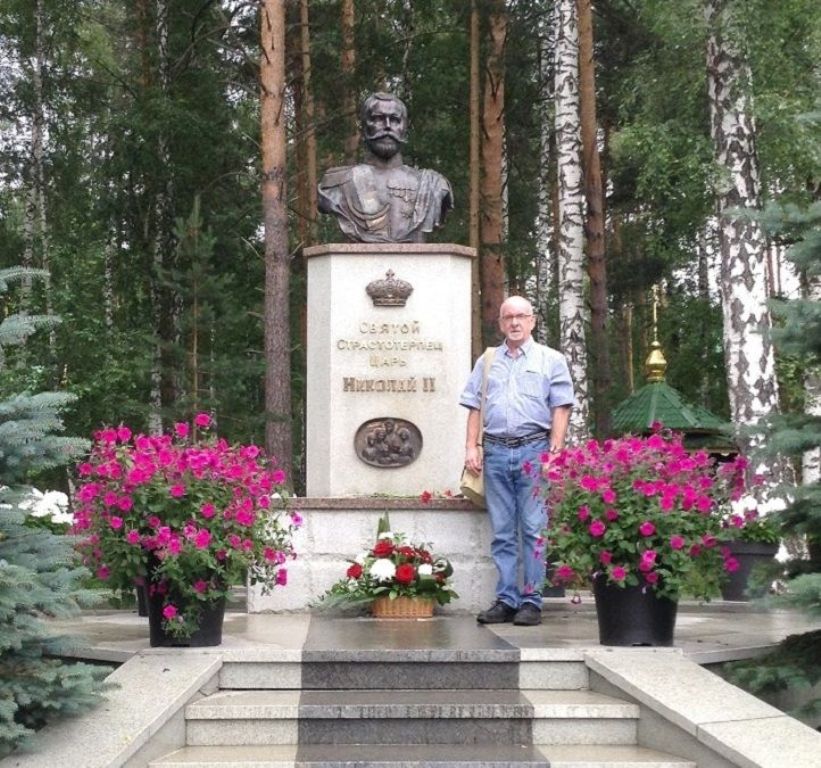
PHOTO: the author of this article standing next to the bust-monument to Tsar Martyr Nicholas II, located on the grounds of the Monastery of the Holy Royal Passion-Beaers at Ganina Yama. July 2018 – Tsar’s Days

Places in th Ekaterinburg worth seeing

Tsar’s Days – an annual event which marks the anniversary of the death and martyrdom of Emperor Nicholas II, his family and four faithful retainers. Each year it attracts tens of thousands of Orthodox Christians, monarchists and adherents of Russia’s last Tsar, from across Russia and around the world. In 2018 – the year marking the 100th anniversary of the regicide – more than 100,000 faithful attended. The event culminates on the night of 16/17 July, with an outdoor divine liturgy, followed by a a 21-km (13 mile)  Cross Procession to the Monastery of the Holy Royal-Passion Bearers at Ganina Yama.

Church on the Spilled Blood – built in 2000-2003 on the site of the former Ipatiev House, which was demolished in 1977. The completed complex comprises two churches, a belfry, a patriarchal annex, and a museum dedicated to Nicholas II and his family. The altar, which is situated in the Lower Church is directly over the site where the Romanovs were murdered. A large monument to Nicholas II and his family stands outside the church. The staircase on the left of the monument represents the 23 steps the Imperial Family and their retainers descended to their death and martyrdom in the Ipatiev House in the early morning hours of 17th July 1918.

Patriachal Compound – situated on the square across from the Church on the Blood, the Patriachal Compound serves as the residence of His Holiness Patriarch Kirill, when he is visiting the region. The compound is also home to the Tsarsky Cultural Educational Center and the Museum of the Holy Royal Family. A bust-monument on pedestal of Emperor Nicholas II stands at the top of the stairs leading to the museum.

The Romanovs in the Urals – the permanent exhibition opened in the Poklevsky-Kozell House Museum of the Sverdlovsk Regional Museum of Local Lore in July 2023. Among the exhibits is the original cast iron fireplace (among other items), salvaged from the dining room of the Ipatiev House before its demolition in September 1977, and evolvers used by the regicides – including Peter Ermakov’s – to murder the Imperial Family in the Ipatiev House on 17th July 1918.

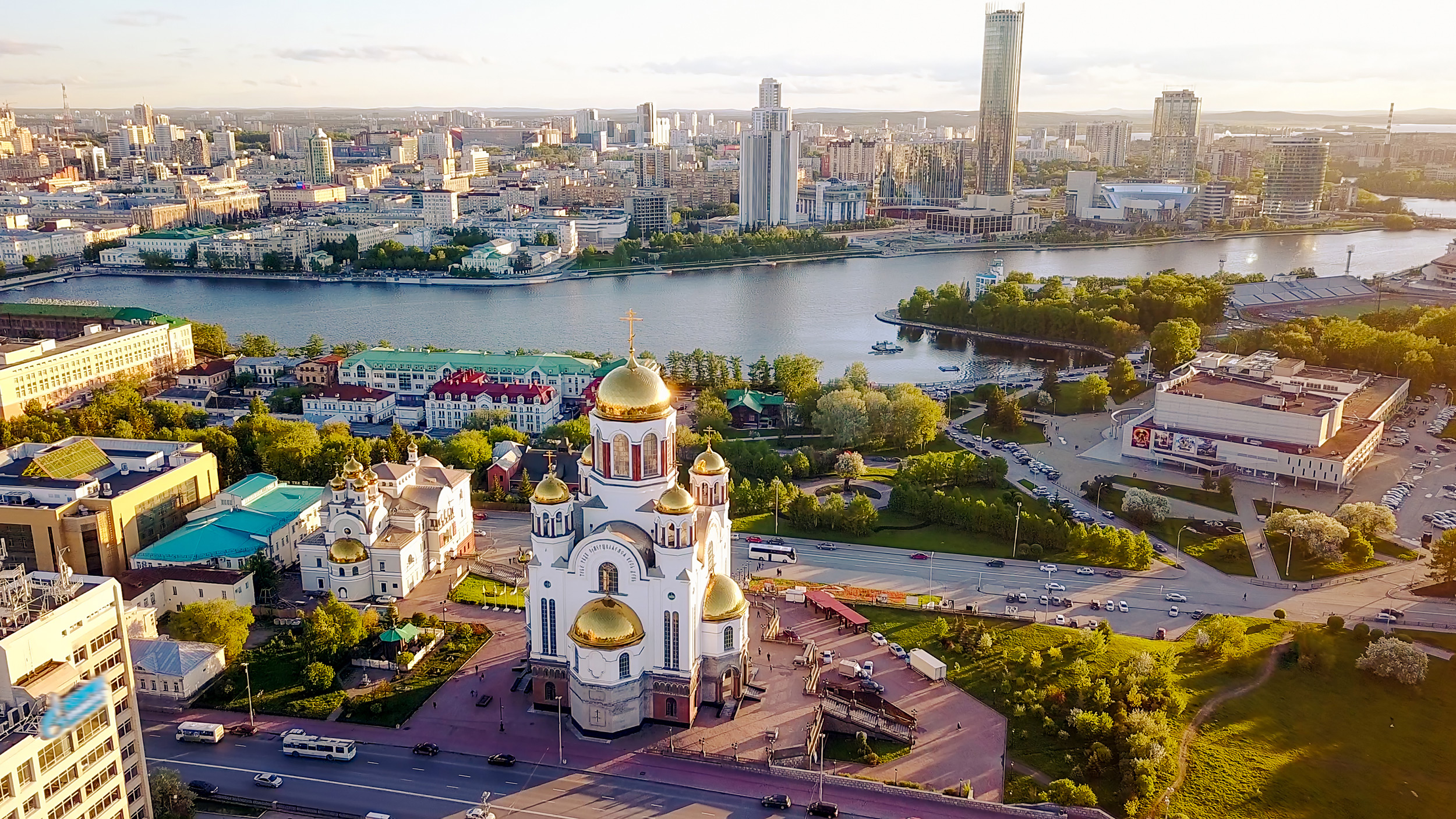
PHOTO: this splended view of Ekaterinburg is highlighted by the Churh on the Blood

Monastery of the Holy Royal Passion-Bearers – at Ganina Yama is the site of the Four Brothers mine, which is located near the village of Koptyaki, 15 km north from Ekaterinburg. It was here, on 17th July 1918, that the regicides tried to hide the remains of the Imperial Family. Seven wooden chapels were constructed around the site, one for each member of the Imperial Family. A tall Orthodox cross marks the edge of the mine shaft, visible by a depression in the ground. Several monuments can be found on the grounds of the monastery, including Emperor Nicholas II, Empress Alexandra Feodorovna, OTMAA (the children of Nicholas II) and Nikolai Sokolov, who in February 1919, launched an investigation into the murder of Nicholas II and his family. There is a permanent Romanov exhibit in the Museum and Exhibition Cente, located in the basement of Church of the Reigning Icon of the Mother of God.

Romanov Memorial at Porosenkov Log – situated about 3.8 km from Ganina Yama, it was here at Porosenkov Log that regicides reburied the remains of the Imperial family and their four faithful retainers in two separate graves. The remains of the Tsar, his wife, three of their five children, and four faithful retainers were discovered in 1978, then exhumed in 1991, while the remains of Alexei and Maria were discovered in 2007. It is the only place in Ekaterinburg, which is associated with Russia’s last Tsar, that has survived to this day unchanged.

Novo-Tikhvinsky Convent – during their house arrest from April to July 1918, the sisters’ helped the Imperial Family by offering prayers, and through deeds: disregarding their own safety, they supported the Tsar and his family by passing over various foods to them through the guards on a daily basis. The Alexander Nevsky Cathedral is magnificent. The convent is a sanctuary for prayer and reflection in the beautifully landscaped gardens. In June 2022, a monument to four other faithful retainers of the Imperial Family was installed and consecrated in these gardens.

Sredneuralsky Monastery – in 2014, the Trinity Church was consecrated. It is dedicated to Nicholas II and his familyI. The Lower Church reproduces the interior of the basement of the Ipatiev House, where the Imperial Family were shot. Next to the church e is a huge worship cross dedicated to the Romanovs. In 2007, a bronze monument to Nicholas II was installed and consecrated on the grounds of the monastery.

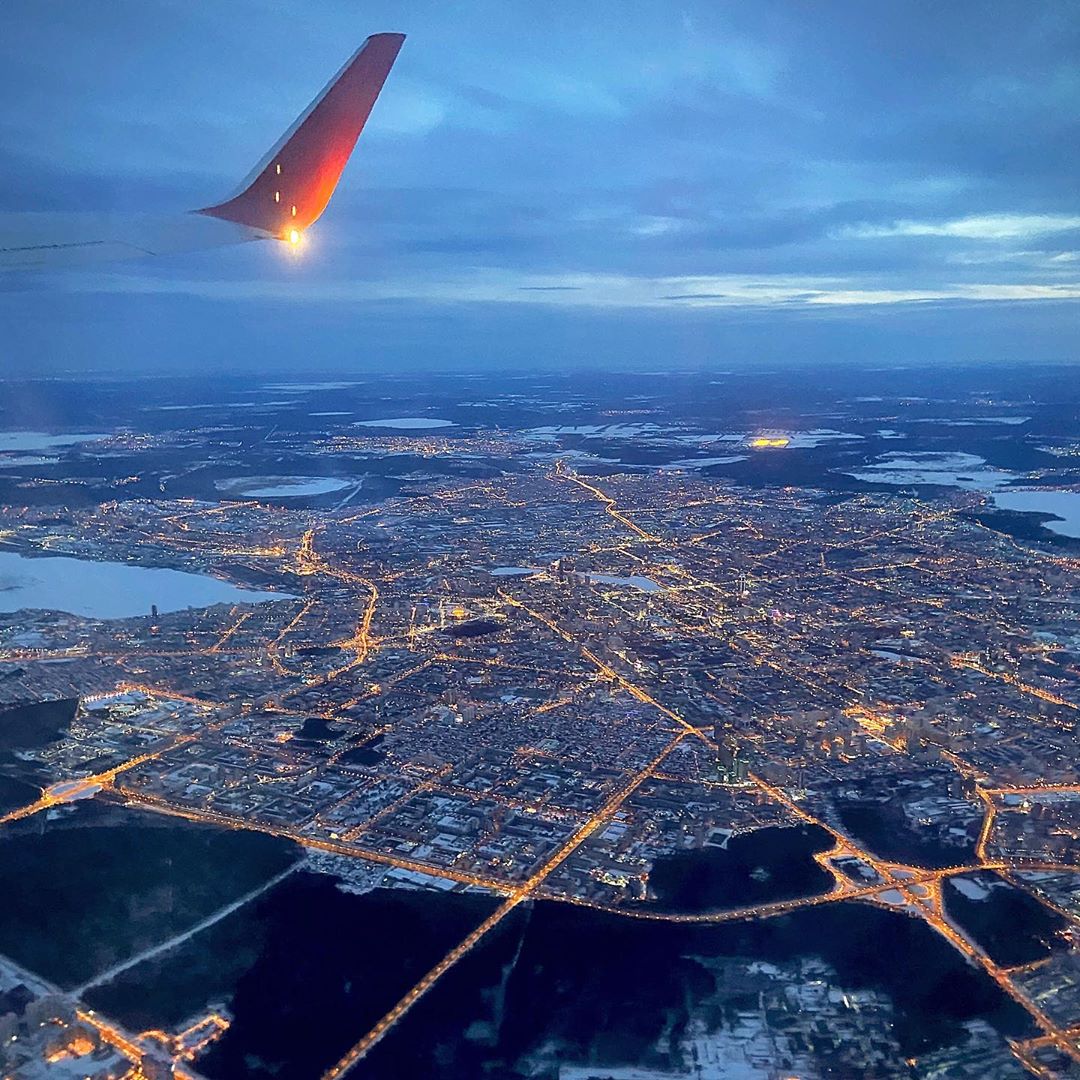
PHOTO: a stunning aerial view of Ekaterinburg lit up at night . . . beautiful!

FURTHER READING – ENGLISH LANGUAGE SOURCES

Pilgrimage to Ganina Yama – “for reflection and prayer” + PHOTOS

What is Tsar’s Days? + PHOTOS

Nicholas II monuments in and around Ekaterinburg + PHOTOS

FURTHER READING – RUSSIAN LANGUAGE SOURCES

Пол Гилберт: «Екатеринбург – мой любимый российский город»

Интерес мира к жизни и царствованию Николая II сохраняется по сей день»: британский историк о Царской семье

Британский историк поддержал Средний Урал в продвижении «Императорского маршрута»

Как один британец борется с мифами о Николае II и царской семье

BOOKS ON EKATERINBURG

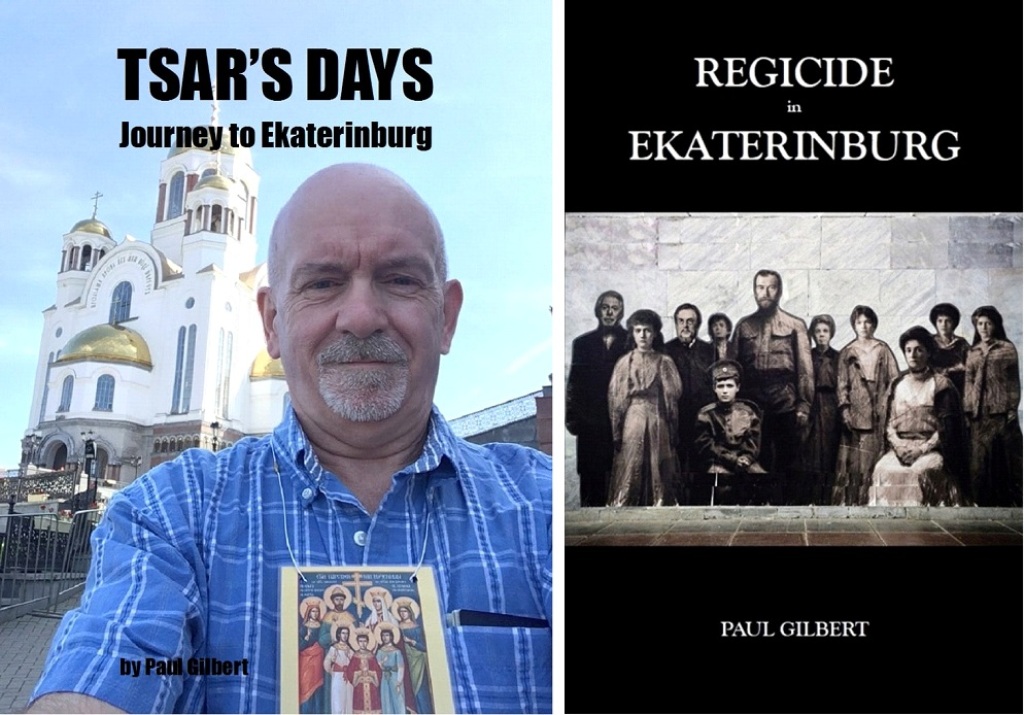
Tsar’s Days: Journey to Ekaterinburg

Regicide in Ekaterinburg

© Paul Gilbert. 4 April 2026
My Nicholas II blog now features 1,000 articles!

Well, I did it! Today, I posted the 1,000th article on my ‘Nicholas II. Emperor. Tsar. Saint.’ blog, which is dedicated to clearing the name of Russia’s much slandered Tsar. This is indeed a major milestone, and one worth celebrating! 🎉🎉🎉

I think it is safe to say, that my blog is now one of (if not the largest) sites dedicated to the study of Nicholas II, his family, the Romanov dynasty and the history of Imperial Russia, the articles of which have been researched from Russian archival and media sources and translated into English.Since September of 2019, my blog has received more than 1.6 MILLION hits, from people all over the world.

I have been researching, writing and publishing books and articles on these topics, on a full-time basis for more than 35 years. My blog, books on Nicholas II and semi-annual publication SOVEREIGN have become rich resource tools for scholars, historians and writers from all walks of life.

My works reflect a truthful assessment of events in the life and reign of Emperor Nicholas II (1868-1918), based on reliable Russian and English language sources, which often challenge the popular held negative Bolshevik and Soviet historiography, which academically lazy historians and writers in the West continually rehash.

I retired from publishing and bookselling in 2021, however, my dedication to preserving the memory of Nicholas II has not waned. Despite personal health issues, I continue to write daily, with more than half a dozen new book titles in the works I pray the Lord grant me many more years 🙏

THANK YOU / БОЛЬШОЕ СПАСИБО
for your ongoing interest and support of my research

© Paul Gilbert. 25 February 2026

Paul Gilbert celebrates anniversary of cutting ties with “Russian Imperial House”

PHOTO: Maria “Masha” Vadimirovna and her son George “Gosha” Mikhailovich

It was 5 years ago today – 5th February 2021 – that I officially cut all ties with the “Russian Imperial House“. It was on this day that I ceased to support Maria Vladimirovna’s claim as “Head” of the House of Romanov and as the “legitimate claimant” to the Russian throne. In addition, I severed all ties with the Russian Legitimists (Kirillists) and their cause.

My announcement on social media created quite a buzz that day: garnering nearly 650 “LIKES” and more than 200 comments by followers supporting my decision.

On 5th February 2021, I returned by mail the diplomas (‘gramotas’) for the Order of St. Stanislaus 3rd Class (2013), and the Order of St. Anna 3rd Class (2016), and also withdrew my oath of allegiance to Maria, dated and signed 03/14/16 – see below.

The following day, Russell Martin, a prominent American mouthpiece for Maria Vladimirovna, who acts as both translator and International Communications Advisor to the so-called “Chancellery of Her Imperial Highness”, leaped to his computer and wrote a nasty rebuttal as fast as his grubby little fingers could type. Martin made the most outrageous statements and even lies about me!

Maria and George are greatly disliked in both Russia and in the West, and I am not the only one who disputes their claims, however, the Legitimists must have felt very threatened by me for Martin to have responded to my blog and social media announcement in the manner in which he did.

In particular, regarding my “oath of allegiance” to Maria – pictured below – Russell Martin wrote the following: “It appears too that at a certain point he [Paul Gilbert] signed some kind of oath of allegiance to the Grand Duchess as head of the dynasty, because he states that he will no longer abide by this oath.”

Martin’s words “some kind of oath of allegiance” are carefully chosen. They are meant to imply that I am either making it all up or that such a document does not exist. Well, fortunately I save everything, and below is the evidence of this “kind of oath of allegiance” . . .

A person, who is awarded an imperial order receives a diploma (‘gramota’) then has the option to purchase the actual order itself. I (foolishly) paid $350 USD to receive my Order of St. Stanislaus 3rd Class. I never bothered purchasing the other order. As it turns out, these exact same orders, complete with the same red velvet cases are available in souvenir shops up and down Nevsky Prosspekt in St. Petersburg. I have even seen them for sale in Dom Knigi (House of Books). In addition, one can also buy a tiny lapel pin. Someone is making an awful lot of money from the sale of these trinkets!

But Martin does not work alone. Riding in his back pocket is his lapdog Nicholas B.A. Nicholson, a well known social media troll, who very briefly served as Curator of the Russian History Museum in Jordanville, NY., from April 2020 to September 2021.

Together, Martin and Nicholson coo and fawn over “Her Imperial Highness”, and work diligently to spread her agenda to an English speaking audience. Nicholson is very active on social media, spewing forth Legitimist crap to any one who will give him the time of day. Their work is aided by a small group of Legitimist zealots, most of whom are American. And God help you, if you dare to disagree with any of them!

Why is any of this relevant? Because I want people to get an idea of the type of people with whom Maria surrounds herself with. Their actions and words speak volumes of the lengths they will go to promote and protect this ridiculous woman’s claims!

Recall that during the February Revolution of 1917, Maria’s grandfather Grand Duke Kirill Vladimirovich (1876-1938), marched to the Tauride Palace in Petrograd at the head of the Naval Guards bearing a red armband and swore allegiance to the Russian Provisional Government. In 1926, Kirill proclaimed himself emperor-in-exile, but his claims were contested by a number of grand dukes, grand duchesses, princes and princesses of the Imperial Blood in exile, as well as monarchists in a division that continues to this day.

On a more personal note, it made me sick to my stomach to think that I supported Kirill’s descendants. My decision to severe ties with Masha and Gosha was the right one, I simply followed my heart and my conscience!

Many monarchists (including myself) and those faithful to the memory of Tsar-Martyr Nicholas II, believe that Kirill’s act of treason in 1917, should eliminate the Vladimir branch of the Russian Imperial Family from any further consideration.  

Further, I no longer wish to involve myself in the dynastic squabbles which continue to this day between Legitimists and those monarchists who dispute Maria’s claim as Head of the Russian Imperial House and claimant to the Russian throne.

While I am a devout monarchist, I do not recognize any person as the claimant to the now defunct throne of Russia. I believe that the Russian monarchy ceased to exist upon the abdication of the Sovereign Emperor Nicholas II on 15th (O.S. 2nd) March 1917 and the murder of both the Tsar and his family on 17th July 1918. If the monarchy is ever to be restored in 21st century Russia, it is up to the citizens of Russia to make that decision, no one else.

I will continue to devote my time to researching and writing about the life and reign of Nicholas II, and committing myself to clearing his much slandered name.

***

Under no pretext can we admit to the throne those whose ancestors belonged to parties involved in the 1917 revolution in one way or another. Nor can we admit those whose ancestors, who betrayed Tsar Nicholas II. Nor can we ignore those whose ancestors who openly supported the Nazis. Thus, without any reservations, the right to the succession to the throne of the Kirillovich branch should be excluded!

Any person who supports this branch of the Romanov dynasty, dishonours the memory of the murdered Holy Tsar Martyr Nicholas II.

© Paul Gilbert. 5 February 2026

Sovereign: The Life and Reign of Emperor Nicholas II

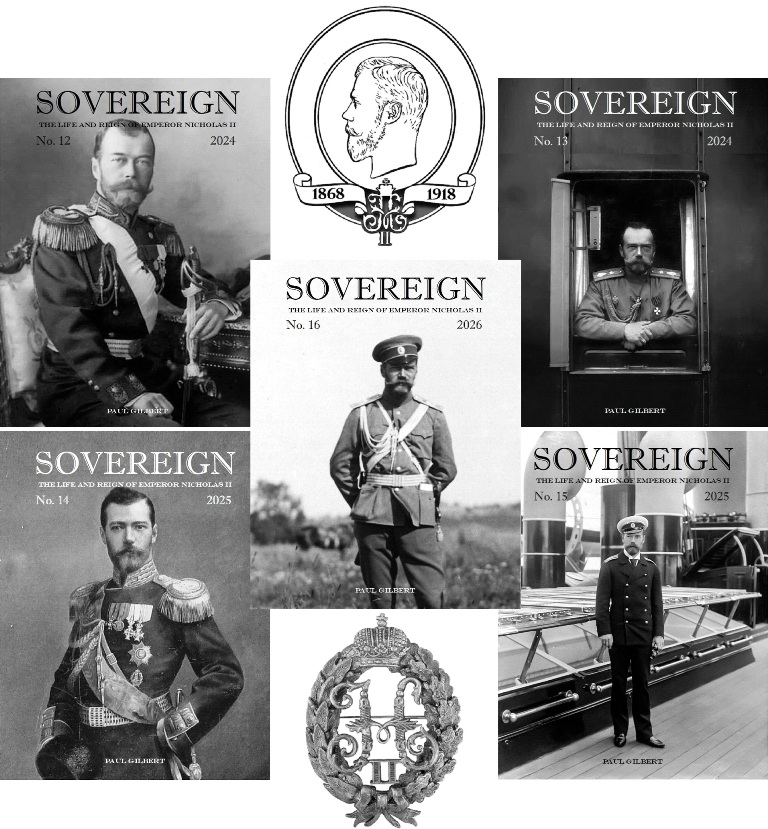
BACK ISSUES OF SOVEREIGN

CLICK on the LINK below for more details, including a full list of the articles found
in each issue + links to ORDER copies of the issues which interest you most:

No. 16 Winter 2026

No. 15 Summer 2025

No. 14 Winter 2025

No. 13 Summer 2024

No. 12 Winter 2024

*You can order SOVEREIGN from most AMAZON outlets, including the United States, United Kingdom, Ireland, Canada, Australia, France, Germany, Spain, Italy, Netherlands, Belgium, Poland, Sweden, Brazil, Mexico and Japan – *Note: prices are quoted in local currencies

SOVEREIGN was launched in 2015, by Paul Gilbert, a British-born historian and writer, who has dedicated more than 35 years to researching and writing about Emperor Nicholas II, his family, the Romanov Dynasty and Imperial Russia. Now retired, he focuses his work on clearing the name of Russia’s much slandered Tsar.

He is able to achieve this through his blog, social media, conferences and SOVEREIGN. It is through these venues that he challenges the negative myths and lies about Nicholas II, which have existed for more than a century. He is the author of more than a dozen books, which explore the life and reign of Nicholas II, based on research from Russian archival and media sources.

From 1986 to 2018, he travelled to Russia 29 times, visiting St. Petersburg, Moscow, Ekaterinburg and Crimea. In the 1990s, shortly after the fall of the Soviet Union, Gilbert organized annual Romanov Tours, which offered visits to the Imperial Palaces, palaces of the grand dukes and grand duchesses in and around St. Petersburg, museums, among others.

PHOTO: SOVEREIGN publisher and editor Paul Gilbert. Ekaterinburg. July 2018

These tours featured lectures by leading authors and Romanov historians and museum curators. Several tours included visits to the State Archives of the Russian Federation (GARF) in Moscow, to view photo albums, letters, diaries and personal items of Nicholas II and his family.

Some of the highlights of these tours included the Alexander Palace in 1996 – one of the first groups from the West to explore the interiors of Nicholas and Alexandra’s private apartments; the Grand Kremlin Museum in Moscow; Livadia Palace in Crimea, among others.

One of the highlights of his career, was organizing and hosting the 1st International Nicholas II Conference, held on 27th October 2018, in Colchester, England. It was a memorable event, which brought together more than 100 people from almost a dozen countries. A second conference is in the works.

About SOVEREIGN

There are few monarchs in history about whom opinion has been more divided than the last Emperor and Tsar of Russia, Nicholas II (1868-1918).

Myths and lies about the “weak-willed”, “incompetent”, “bloody” tsar, were created on the basis of gossip, slanderous fabrications and Bolshevik propaganda in the early 20th century. For more than 70 years, the Bolsheviks and the Soviets were perfectly content to allow these myths and lies to stand. Sadly, they remain deeply rooted in the minds of both Westerners and the Russian people to this day.

Since the fall of the Soviet Union in 1991, Nicholas II has undergone nothing short of a renaissance in modern-day Russia. Much of this is thanks to the efforts of the Russian Orthodox Church and monarchist groups. He has been the subject of hundreds of new biographies and historical studies, documentaries, exhibitions, discussion forums, etc. In 2002, Tsar’s Days was revived in Ekaterinburg, an annual event which draws tens of thousands from across Russia and abroad to honour the memory of Nicholas II and his family.

Sadly, many of today’s academically lazy, British and American historians and biographers, prefer to rehash the popular negative myths and lies of Nicholas II’s early 20th century detractors. Few – if any of these “experts” – have traveled to Russia to utilize the vast archival sources now available to researchers. Instead they focus on Nicholas II’s failures, and seldom reflect on the many accomplishments he made during his 22+ year reign.

It was these very myths and lies, which compelled Gilbert to launch SOVEREIGN in 2015.

In 2024, SOVEREIGN was relaunched with a new format, which now features articles researched and written by Paul Gilbert and published on this blog. Gilbert has researched these works from Russian archival and media sources. Beginning with the No. 12 Winter 2024 issue of SOVEREIGN, these articles are now available in a printed format for the first time!

In addition, are a number of First English language works by Russian historians and experts, based on new archival documents discovered since the fall of the Soviet Union in 1991. Thanks to this new generation of post-Soviet historian, we can now review the life and reign of Russia’s last Emperor and Tsar through Russian eyes, instead of Soviet ones! They challenge and put to rest many of the lies and myths presented over the past century by their Western counterparts. Their works are based on facts and information from reliable Russian sources.

***

SOVEREIGN was launched in 2015, and has published a total of 15 issues. Please note, that issues No. 1 through 11 are now out of print, although used and second-hand copies are available on eBay and Amazon.

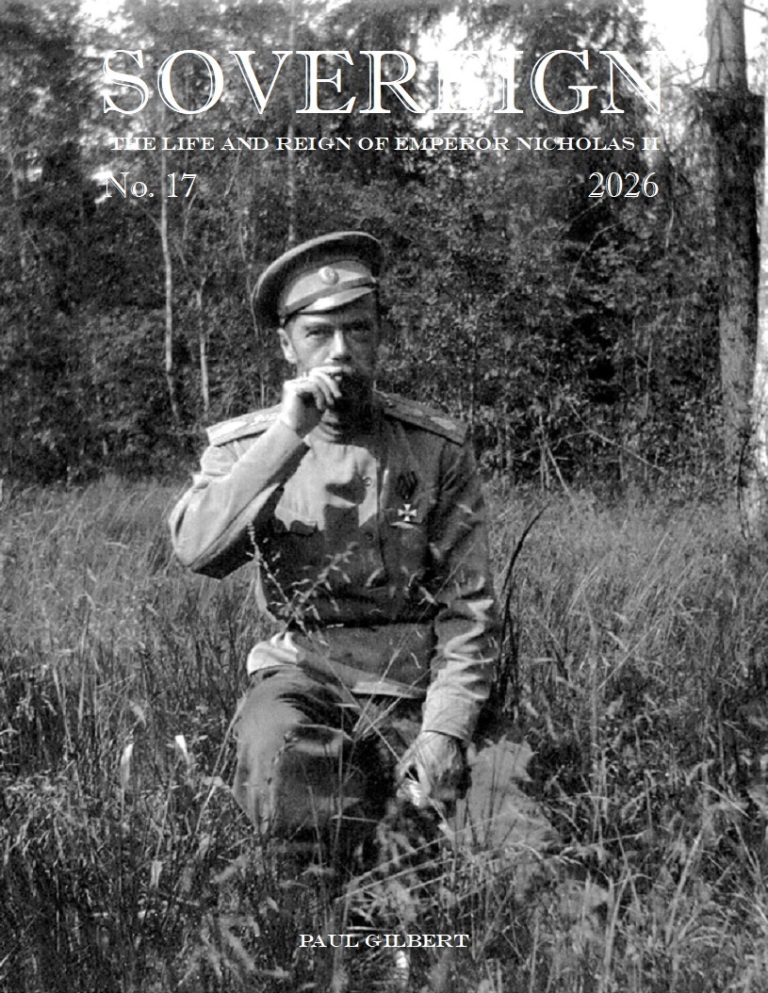
Issues No. 12 to 16 are available exclusively from Amazon – please refer to the links below. The No. 17 Sunner 2026 issue will be published in June 2026.

Current issues of SOVEREIGN

– CLICK on the LINK below for more details, including a full list of the articles found in each issue + links to ORDER copies of the issues which interest you most:

No. 16 Winter 2026

No. 15 Summer 2025

No. 14 Winter 2025

No. 13 Summer 2024

No. 12 Winter 2024

© Paul Gilbert. 7 January 2026

NEW BOOK – Sovereign No. 16 (Winter 2026)

*You can order this title from most AMAZON outlets, including
the United States, United Kingdom, Ireland, Canada, Australia,
France, Germany, Spain, Italy, Netherlands, Belgium, Poland, Sweden,
Brazil, Mexico and Japan
*Note: prices are quoted in local currencies

CLICK HERE TO ORDER THE PAPERBACK EDITION @ $20.00 USD

English. Large format 8-1/2″ x 11-1/2″. 132 pages. 124 Black & White photos

The No. 16 Winter 2026 issue of SOVEREIGN features 28 articles about Russia’s last Tsar, his family, the Romanov dynasty and the history of Imperial Russia. These articles have been researched and written by independent historian and author Paul Gilbert. His works are based on new research from Russian archival and media sources.

Please note, that this issue features 3 articles researched and written by Russian historians (see list below). These articles have been translated and published and published in English for the first time.

In an effort to preserve his 30+ years of research, the author has reproduced a selection of the more than 950 articles he has written for his blog. They are made available in a printed format for the first time. The author has updated many of the articles in this issue with additional information and photos. In addition, this issue features one new First English translation.

The No. 15 issue features the following 28 articles:

[1] Nicholas II’s visits to the Marfo-Mariinsky Convent in Moscow – 1912, 1913 and 1914

[2] 25th anniversary of the canonization of Nicholas II by the Moscow Patriarchate

[3] Empress Alexandra Feodorovna’s photo album sells at St. Petersburg auction

[4] Lord Mountbatten’s letter regarding Anna Anderson

[5] Monument to Nicholas II and his family to be installed in Mogilev

[6] New monument to Nicholas II installed in Krasnodar

[7] The fate of the kokshniks presented to OTMA in Kostroma (1913)

[8] Divine Liturgy for the Imperial Family performed in the Winter Palace

[9] Thousands of items at Pavlovsk, have not been return to the Alexander Palace

[10] Faithful to the End: Prince Vasily Alexandrovich Dolgorukov

[11] The Great Imperial Crown Of the Russian Empire

[12] The Imperial Legacy of Carl Fabergé (1846-1920)

[13] In 2007, General Wrangel’s grandson decrid Bolshevism, Lenin and Stalin

[14] Nicholas II wanted reforms, Lenin wanted recolutions: who was right?

[15] Obituary: Maria Dmitrievna Ivanova-Tatishcheva (1930-2025)

[16] Tsar’s Days in Ekaterinburg 16/17 July 2025

[17] Chinese Theater at Tsarskoye Selo to be restored

[18] State Halls in the Alexander Palace reopened after restoration

[19] The marriage that shocked The Russian Empire

[20] The fate of four faithful retainers of the Imperial Family

[21] Nicholas II visits the Iverskaya Chapel in Moscow

[22] “They did not betray their oath” —The fate of the generals who reamained loyal to Nicholas II

[23] Nicholas II’s menu: culinary preferences of Russia’s last Tsar

[24] Carpet from Governor’s House in Tobolsk preserved in United States ,museum

[25] Russia honours the Romanovs

SPECIAL TO THIS ISSUE OF SOVEREIGN

[26] Confession of a regicide Pyotr Ermakov’s deathbed confession 1952

[27] Trotsky’s version of the murder of the Imperial Family

[28] Attempts at Church Reform bythe Holy Emperor Nicholas IIAL TO THIS ISSUE OF

***

Back issues of SOVEREIGN

No. 15 Summer 2025

No. 14 Winter 2025

No. 13 Summer 2024

No. 12 Winter 2024

NOTE: back issues of Nos. 1 to 12 are now out of print.
Second-hand copies are available on AMAZON and eBay
.

© Paul Gilbert. 1 December 2025

65th anniversary of the death of Grand Duchess Olga Alexandrovna

PHOTO: Paul Gilbert, author of this post and administrator of this blog, at the grave of Grand Duchess Olga Alexandrovna in York Cemetery, on 24th November 2025, the day marking the 65th anniversary of her death. Paul Gilbert © 2025

Today, 24th November 2025, marks the 65th anniversary of the death of Grand Dycgess Olga Alexandrovna, the youngest child of Emperor Alexander III and Empress Maria Feodorovna, and youngest sister of Emperor Nicholas II.

Today, I travelled into Toronto, where I visited York Cemetery located in the North York area of of the city. It was a beautiful morning, the sun was shining, a slight breeze, but overall, a perfect autumn day.

I laid a bouquet of a dozen white roses on the grave of Russia’s last grand duchess, and offered prayers. I was both surprised and somewhat saddened that no one else was at the grave, nor was there much in the way of fresh flowers left at her gravesite.

I attached a small photo (see below) the outside of the bouquet, depicting Olga in happier times, with her brother Emperor Nicholas II, taken in the lower Massandra Park, Crimea in the Autumn of 1913.

Paul Gilbert © 2025

Paul Gilbert © 2025

Grand Duchess Olga is interred in the Russian Orthodox section of the cemetery, Section 15. Her grave is marked by a large white marble cross with Cyrillic script and is a site of historical interest, with memorial services occasionally held there by Russian Orthodox clergy, attended by members of Toronto’s Russian Orthodox community and Russian diplomats

There are four persons buried in the grave: Grand Duchess Olga Alexandrovna, her husband Captain Nikolai Kulikovsky, their eldest son Tikhon Kulikovsky and his wife Olga Kulikovsky.

Paul Gilbert © 2025

I was 4 years old when Olga died. I was just a young child, so I had no idea of who she was, but ironically, the apartment in which she died on Gerard Street in Toronto, was just blocks away from where I grew up as a child at Gerard and Parliament Streets.

Little did I realize then, that the family and extended family of Russia’s last Tsar, would play such an important part in my life. For more than 35 years, I have dedicated my life to the study and writing of the Romanov’s, in particular, clearing the name of Russia’s much slandered Tsar. My many years of research have resulted in books, magazines, a conference, lectures and 29 journeys to Russia, visiting palaces, museums and archives associated with Nicholas II and his family.

All this combined, is my reason for laying flowers at Olga’s grave today.

Give rest, O Lord, in blessed repose to the soul of Thy handmaiden, the Right-Believing
Sovereign Grand Duchess Olga Alexandrovna, and make her memory to be eternal.

***

The death of Grand Duchess Olga Alexandrovna

PHOTO: The house (left) at 716 Gerrard Street, where Grand Duchess Olga Alexandrovna died in Toronto, Canada on 24th November 1960. The property, which is now dilapidated and in need of repair, has served as a beauty salon, a travel agency and a religious building, as well as an “imperial” residence.

Following her husband Nikolai Kulikovskys’ death in 1958, Olga became increasingly infirm. In April 1960, she was hospitalized at Toronto General Hospital, located on University Avenue in downtown Toronto. It was here, that Olga was diagnosed with cancer.

Olga was not informed (or she was not aware) that her elder sister, Grand Duchess Xenia Alexandrovna [b. 1875], had died in London during that month [20th April 1960] at the age of 85.

Unable to care for herself, Olga went to stay with Russian émigré friends, Konstantin and Zinaida Martemianoff, in their second-floor apartment above a beauty salon at 716 Gerrard Street East, Toronto. The main reason that she chose Konstantin and his wife was that Konstantin had been a member of the Akhtyrsky Hussar Regiment, of which Olga served as the honorary Commander-in-Chief in Russia.

On 21st November, 1960, Olga slipped into a coma, and died on 24th November at the age of 78.

It is interesting to note, that although she lived simply, bought cheap clothes, and did her own shopping and gardening, her estate was valued at more than 200,000 Canadian dollars (about $1.5 million as of 2013) and was mostly held as stock and bonds.

On 13th November 2020, a memorial plaque in honour of Grand Duchess Olga Alexandrovna, was unveiled outside 716 Gerrard Street, where she died in Toronto, Canada on 24th November 1960.

The plaque is a joint project of Heritage Toronto and the Riverdale Historical Society.

***

The funeral of Grand Duchess Olga Alexandrovna

VIDEO: VIDEO (click on image above to play – duration: 42 seconds)

On 30th November 1960 – the funeral for Grand Duchess Olga Alexandrovna was held in Toronto, Canada. Grand Duchess Olga’s body lay in state in Christ the Saviour Cathedral in Toronto. The Union Jack and Russian imperial standard hung from each corner of the platform where the coffin sat. Officers of the Akhtyrsky Hussars and the Blue Cuirassiers stood guard in the church.

The service was performed by the Mitred Archpriest John Diachina (1904-1976). Parishoners filled Christ the Saviour Cathedral to capacity – more than 500 mourners attended. In fact, the church could not contain all those who attended the services.

Wreaths were sent by King Frederik IX and Queen Ingrid of Denmark, King Olav V of Norway and Queen Elizabeth II of Great Britain; imperial guardsmen from the 12th Hussars Ahtyrsky Regiment were the pallbearers.

Olga was buried next to her husband Nikolai Alexandrovich Kulikovsky (1881-1958) , in the Russian Section of York Cemetery. The Grand Duchess’ friend, Bishop John of San Francisco, sprinkled Russian earth on her grave.

Grand Duchess Olga Alexandrovna was the soul and the heart of the Toronto parish, and her death in 1960 created a void within the Russian community, leaving none of the parishioners untouched, many regarding her passing as a personal tragedy.

Legacy

Born on 13th June [O.S. 1st June] 1882, Olga endured much loss during her life, outliving her entire family, including her beloved father Emperor Alexander III (1894); her brother George (1899); her brother Michael (1918); her brother Emperor Nicholas II and his entire family (1918); her mother Dowager Empress Maria Feodorovna (1928); her sister Xenia (April 1960); and was forced to flee Russia with her husband and two sons in 1919. She lived in Denmark until 1948, when she emigrated to Canada.

In addition, following the 1917 Revolution, Olga and her family were forced to flee the Bolsheviks, and then in 1948, feeling threatened by Stalin, she and her family were forced to flee Denmark for Canada.

Of course, the main characteristic of Olga Alexandrovna was her attitude towards the people around her. Her non-exclusive kindness towards everyone, her openness and her welcoming heart left a deep imprint in the memory of those who knew her.

To this day, Grand Duchess Olga Alexandrovna remains one of the most beloved members of the Russian Imperial family. Her memoirs ‘The Last Grand Duchess’ were written by Ian Vorres in 1964.

PHOTO: Grand Duchess Olga Alexandrovna’s grave in York Cemetery, North York.
Paul Gilbert © 2025

Memory Eternal! Вечная Память! ☦️

***

Grand Duchess Olga’s devoted companion and former maid Emilia Tenso (“Mimka”) is buried near the grand duchess’s grave in York Cemetery, Toronto.

Ian Vorres notes in his book ‘The Last Grand Duchess’ that she died in 1954, however, the date on her gravestone shows 24th January 1955.

FURTHER READING:

Olga: Nicholas II’s younger sister + PHOTOS

Russia’s Ambassador to Canada attends memorial service for Grand Duchess Olga Alexandrovna + PHOTOS

Queen Elizabeth II receives Grand Duchess Olga Alexandrovna in 1959 + PHOTOS

© Paul Gilbert. 24 November 2025

Emperor Nicholas II on Facebook

CLICK HERE to be redirected to my Nicholas II Facebook page

In April 2016, I launched a Facebook page dedicated to the life and reign of Emperor Nicholas II, which do not appear on this blog. In addition are posts about his family, the Romanov Dynasty and the history of Imperial Russia.

Each day, I create up to a dozen new posts, featuring news – translated into English from Russian archival and media sources – plus, contemporary and vintage photos – to date, there are more than 5,000 colour and black & white photos on my Nicholas II Facebook page!

In addition are videos and newsreels, as well as new book announcements, new monuments, portraits, and exhibitions in Russia, which are not covered in English social media and news outlets.

I currently have 5,000 Facebook friends – the maximum that FB will allow – plus, an additional 4,500+ followers, from all over the world. Friends are allowed to comment on posts and engage in discussions with others. My FB page has become a perfect “watering hole” for those of us who share an interest in Russia’s last Tsar, his family, the Romanov dynasty, and the history of Imperial Russia.

Please note, that as I have already reached the maximum number of friends that Facebook will allow me, you can still become a “FOLLOWER” of my FB page.

Simply CLICK on the LINK above, which will redirect you to my FB page, whereupon you CLICK on the FOLLOW button. This will ensure that you receive instant updates on all new posts, however, you will not be able to comment on them. You always have the option to send a FRIEND REQUEST at a later date.

Please join me today, in celecrating the life, reign and
era of Russia’s last Emperor and Tsar! remains concise

CLICK HERE to be redirected to my Nicholas II Facebook page

© Paul Gilbert. 1 November 2025

The truth about Russia’s much slandered Tsar

This year marks the 157th anniversary of the birth of Emperor Nicholas II on 19th May [O.S. 6th May] 1868 and the107th anniversary of his death and martyrdom on 17th July 1918.

In recognition of these historic dates, I am reaching out to friends and supporters for donations to help support my research on the life and reign of Nicholas II, and in aid of my personal mission to clear the name of Russia’s much slandered Tsar.

There are many web sites, blogs and Facebook pages dedicated to the Romanovs, however, I work very hard searching Russian archival and media sources to bring something new to the table every day, including articles and news stories – from Russian archival and media sources – on Nicholas II and his family, the Romanov dynasty, their palaces, exhibitions + photos, videos and more.

Every dollar collected goes toward the acquisition and translation of documents, letters and diaries from Russian archival sources. In addition are the first English translations of articles researched by a new generation of Russian historians, which challenge the popular negative assessment of Nicholas II, which prevails to this day.

Your donation also helps offset the cost of maintenance of my blog: Nicholas II. Emperor. Tsar. Saint, and the organization and promotion of Romanov themed events, such as the 2nd International Nicholas II Conference and other events.

If you enjoy all the articles, news, photos, and videos, please help support my work in the coming year ahead by making a donation.

CLICK HERE TO MAKE A DONATION IN US DOLLARS

CREDIT CARDS and PAYPAL ACCEPTED
Donations as little as $5 are much appreciated, and there is NO obligation!

Thank you for your consideration

© Paul Gilbert. 31 July 2025