Job the Long-suffering and Nicholas II

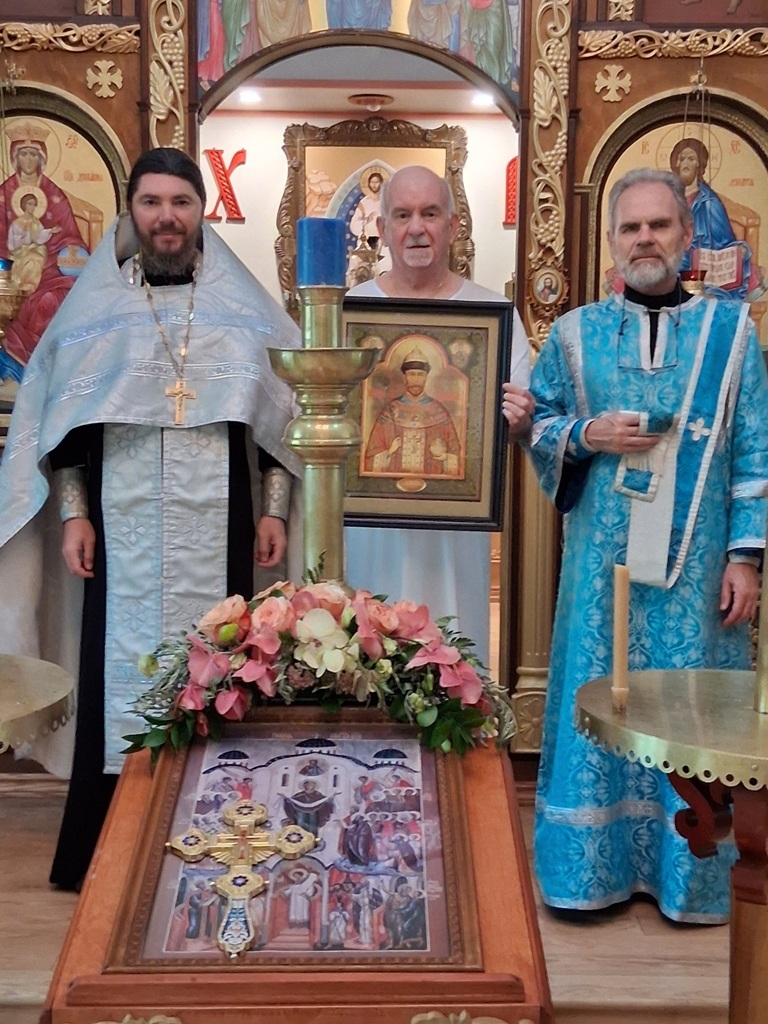
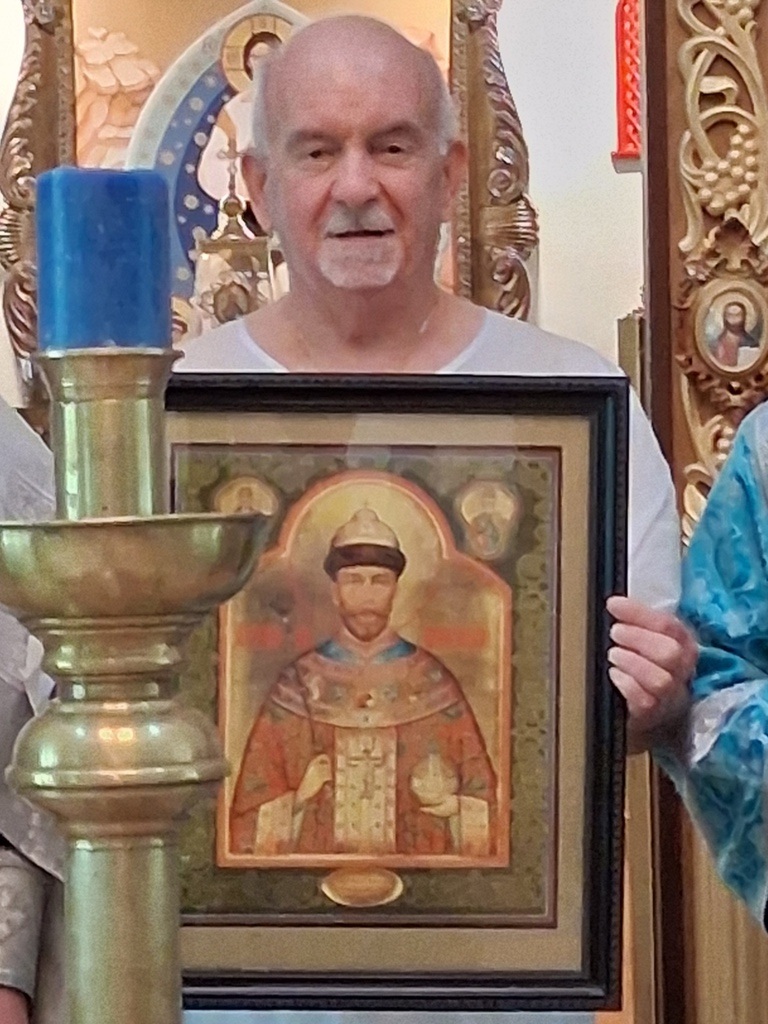
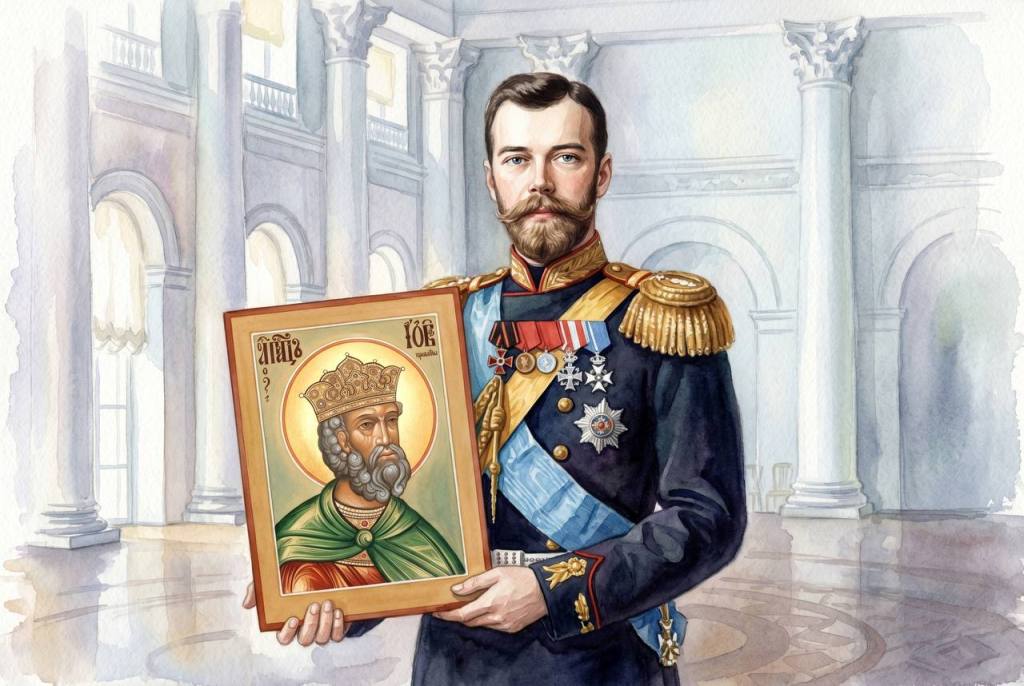
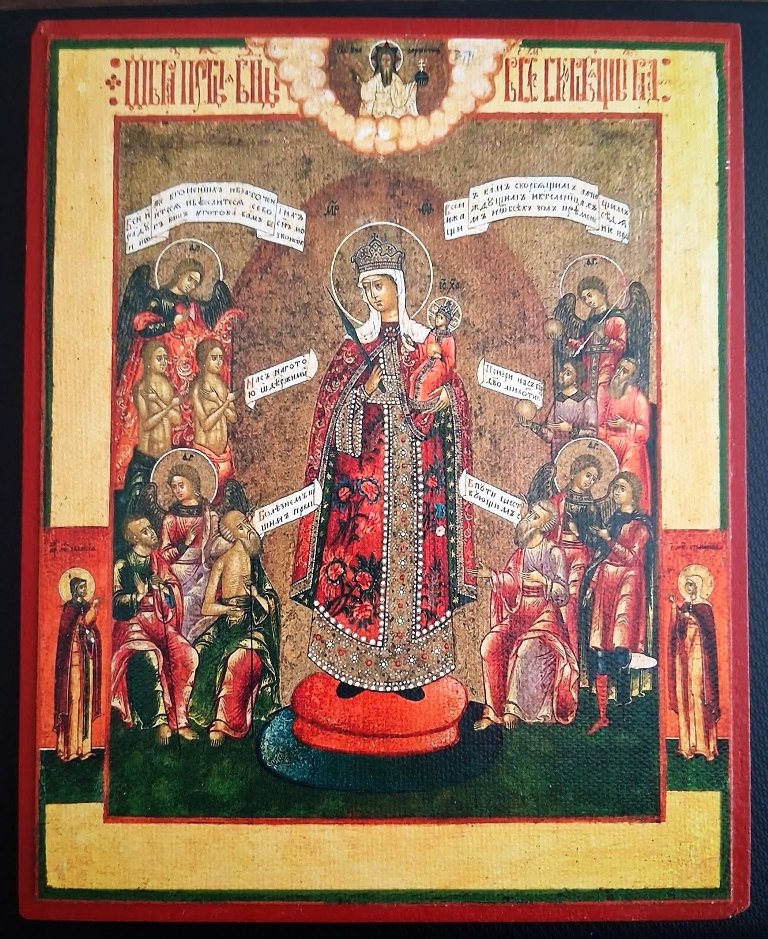
PHOTO: an AI generated image depicting Emperor Nicholas II
holding an icon depicting Saint Job the Long-suffering

On 19th May, the Russian Orthodox Church honours the memory of the Old Testament righteous Job the Long-suffering. On the same day, according to the church calendar, the last Russian emperor was born, the holy passion-bearer Nicholas Alexandrovich Romanov.

. Both the Russian Orthodox Church and Nicholas himself viewed this as a deeply prophetic omen, believing his life would parallel the Old Testament figure’s endless trials, suffering, and eventual loss of all earthly status. 

Emperor Nicholas II was born on 6th May 1868 according to the Old Style (O. S.) Julian calendar in Tsarskoye Selo. In the New Style Gregorian or civil European calendar of the time, it was 18th May, as the difference between the Julian and Gregorian calendars was then 12 days. Today, 6th May, according to the church calendar, corresponds to 19th May according to the new style. Therefore, for church memory, the sovereign’s birthday remains associated with the celebration of the righteous Job the Long-suffering.

At birth, the future emperor received not the name Job, but the traditional name for the House of Romanov Nicholas – in memory of his uncle, Tsesarevich and Grand Duke Nicholas Alexandrovich (1843-1865), the elder brother of Emperor Alexander III (1845-1894), who died at the age of 21 in 1865. But, despite this, the spiritual connection between Nicholas II and St. Righteous Job is seen as especially deep.

Job the Long-Suffering went down in sacred history as an example of faith, patience and trust in God in the midst of the most difficult trials. Having lost wealth, children, health and the support of loved ones, he did not deny the Lord and did not blaspheme Him. His words: “The Lord giveth, and the Lord taketh away; blessed be the name of the Lord” — became an expression of supreme humility before God’s Providence.

We see a similar uncomplaining acceptance of sorrows in the life of the Holy Tsar Nicholas II. He had to endure severe trials: wars, turmoil, betrayal, renunciation, imprisonment, humiliation and martyrdom along with his family. But through all this he strove to preserve faith, meekness, dignity and hope in God.

That is why the Church glorified Emperor Nicholas II, Empress Alexandra Feodorovna, their children and faithful servants as Holy Passion-bearers. Their podvig[1] is not in earthly victory, not in political triumph, but in Christian endurance of suffering, in gentleness, patience and faithfulness to Christ to the end.

It is difficult for us to imitate such a feat to the fullest. But the memory of Righteous Job the Long-suffering and the Holy Passion-Bearer Nicholas II reminds each of us that the path to salvation passes through trust in God. Not only in joy and well-being, but also in sorrows, losses, misunderstandings and trials.

The saints teach us not to grumble, not to become hardened and not to lose faith, but to walk with thanksgiving the path that the Lord allows us for the sake of our salvation.

Source: Orthodoxy in Tatarstan. Information and educational website of the Tatarstan Metropolis

NOTES

[1] In Orthodox Christianity, podvig is understood as a spiritual struggle or ascetic practice aimed at purifying the soul and drawing closer to God. It involves mastering the body and overcoming passions through practices such as fasting, prayer, prostrations, and other forms of self-denial, helping the practitioner achieve theosis (deification) and spiritual growth.

© Paul Gilbert. 21 May 2026
Divine Liturgies celebrated on the anniversary of the birth of the Holy Emperor Nicholas II

On 19th May 2026, the Russian Orthodox Church marked the 158th anniversary of the birth of Tsesarevich and Grand Duke Nicholas Alexandrovich – the future Emperor Nicholas II – who was born on 19th (O.S. 6th) May 1868 – the day when St. Job of the Long Suffering was born..

In connection with this historic date, Orthodox churches throughout Russia and abroad performed Divine Liturgies in memory of Russia’s much slandered Tsar.

From the very beginning of his reign, Nicholas II treated the duties as Emperor and Tsar of the Russian Empire as a sacred duty. As God’s Anointed, he strongly believed that for the hundred million Russian people the Tsar’s power was and remained sacred.

The family of Emperor Nicholas II was imbued with the spirit of the Orthodox faith. They lived in accordance with the traditions of Orthodox piety. Obligatory attendance at divine services on Sundays and feast days, observing fasts were an integral part of their lives. The August couple not only visited churches and monasteries during their numerous trips, venerated miraculous icons and relics of saints, but also made pilgrimages, as was the case in 1903 during the glorification of St. Seraphim of Sarov.

The Emperor paid great attention to the needs of the Orthodox Church throughout his reign. Like all Russian emperors, Nicholas II generously donated from his own funds for the construction of new churches, including those outside Russia. During the 22+ years of his reign, the number of parish churches in Russia increased by more than 10 thousand, and more than 250 new monasteries were opened. The Emperor himself participated in the laying of new churches and other church celebrations.

The personal piety of the Tsar was also manifested in the fact that during the years of his reign more saints were canonized than in the two previous centuries, when only 5 saints were glorified. During Nicholas II’s reign, the following saints were glorified: St. Theodosius of Chernigov (1896), St. Seraphim of Sarov (1903), St. Joasaph of Belgorod (1911), St. Ermogen of Moscow (1913), St. Pitirim of Tambov (1914), St. John of Tobolsk (1916) were canonized, and the veneration of St. Princess Anna of Kashin was renewed (1909).

The Holy Emperor Nicholas II said: “If you see me calm, it is because I have the firm, the absolute conviction that the fate of Russia, my own fate, and that of my family is in the hands of God, Who has placed me where I am. Whatever happens, I will bow to His will, conscious of never having had a thought other than that of serving the country that He confided to me.”

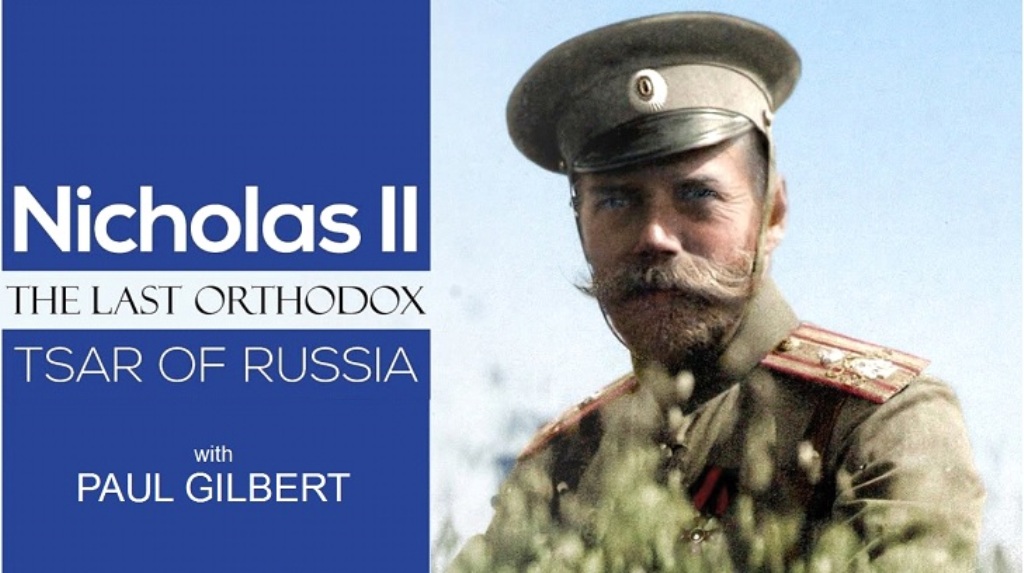
VIDEO: Nicholas II: The Last Orthodox Tsar of Russia
with Paul Gilbert (in English)

In 2020, the Holy Monastery of St. John the Forerunner of Mesa Potamos in Cyprus invited me to research, write and narrate this 20-minute English-language VIDEO, within the framework of the project for the book “The Romanov Royal Martyrs: What Silence Could Not Conceal“, of which I was a project colleague. The VIDEO has been watched by more than 134,000 people to date!

CLICK on the LINK to watch the VIDEO: Nicholas II: The Last Orthodox Tsar of Russia

VIDEO: Piety of His Imperial Majesty Sovereign Emperor Nicholas II
Duration: 11 minutes, 24 seconds

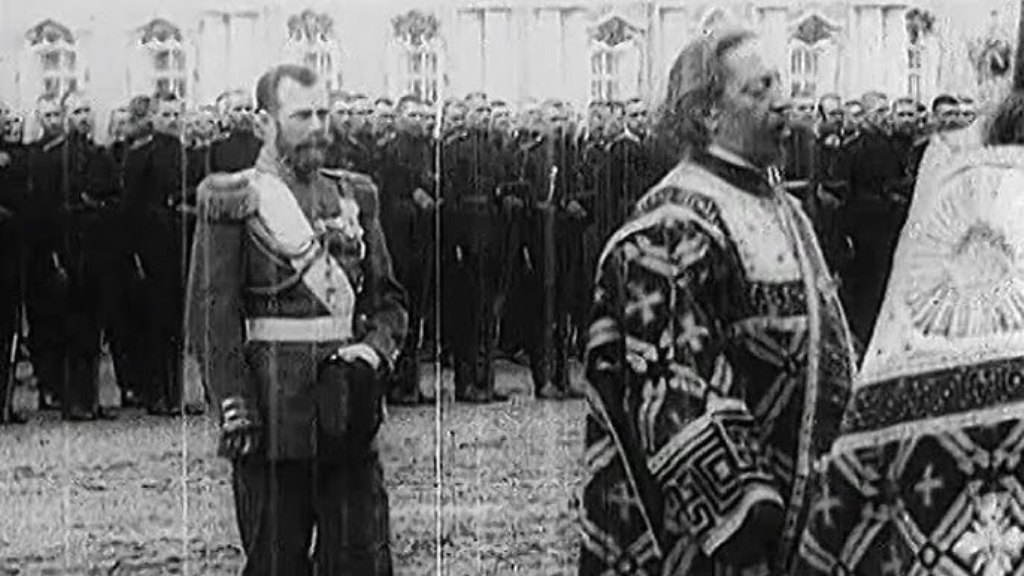
A wonderful collection of vintage newsreels from the Russian State Documentary Film & Photo Archive at Krasnogorsk (RGAKFD).

This newsreel has preserved for posterity those moments when Emperor Nicholas II together with his Family attend the divine services, kisses reverently the cross and the icons, blesses his troops, makes the sign of the cross, participates in the sacred processions and converses with the religious leaders.

Soundtrack: 1) Song «Tsar Nicholas» (written and composed by Gennady Ponomarev; sung by the famous Russian singer Zhanna Bichevskaya in 1999); 2) Fragment of the national anthem of the Russian Empire «God Save the Tsar» (another name: «The Prayer of Russians»; written by Vasily Zhukovsky in 1814, sung by Zhanna Bichevskaya).

CLICK on the LINK to watch the VIDEO: Piety of His Imperial Majesty Sovereign Emperor Nicholas II

© Paul Gilbert. 19 May 2026
***

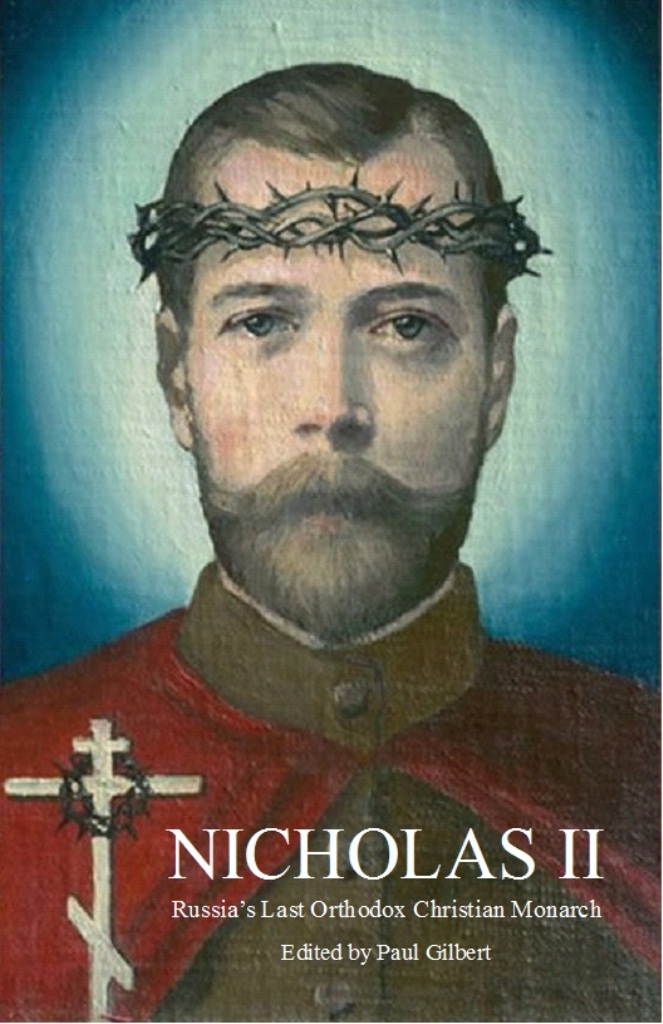
NICHOLAS II: RUSSIA’S LAST ORTHODOX CHRISTIAN MONARCH

CLICK ON THE LINK BELOW TO ORDER FROM AMAZON

PAPERBACK EDITION – PRICE $10.99

E-BOOK EDITION – PRICE $9.99

BOOK DESCRIPTION

This book is not only for Orthodox and non-Orthodox persons, but for any one who shares an interest in the life, death, and martyrdom of the Holy Tsar-Martyr Nicholas II.

An illustrated Introduction by independent researcher Paul Gilbert explores the piety of Nicholas II, and his devotion to the Russian Orthodox Church, which reached its fullest development and power, during his 22-year reign.

This book further examines the trials and tribulations the Tsar endured, which later led to his canonization by the Russian Orthodox Church.

Paperback edition, with 134 pages + 23 black & white photographs

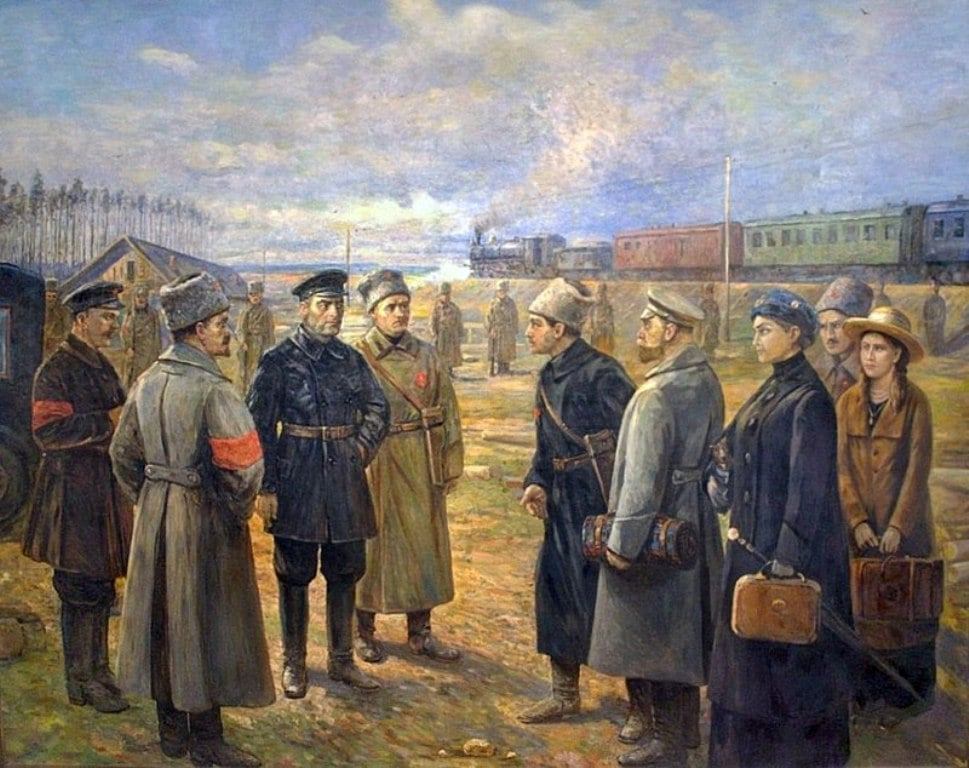
On this day – Nicholas II and members of his family were handed over to the Ural Soviet

PHOTO: “Transfer of the Romanov family to the Ural Soviet” (1927)
Artist: Vladimir Nikolayevich Pchelin (1869-1941)

On this day – 30th April (O.S. 17th April) 1918, Emperor Nicholas II, Empress Alexandra Feodorovna and Grand Duchess Maria were handed over to the Ural Soviet in Ekaterinburg. It was at this point, that their fate was sealed.

Recall that on 26th (O.S. 13th) April 1918, Emperor Nicholas II, Empress Alexandra Feodorovna, their daughter Grand Duchess Maria Nikolaevna were brought from Tobolsk to Ekaterinburg. They arrived in Ekaterinburg on 30th April 1918, whereupon they were handed over the Ural Soviet.

They were accompanied by five faithful retainers: Dr. Eugene Botkin Botkin, Prince Vasily Dolgorukov, maid Anna Demidova, valet Terenty Chemodurov, sailor Ivan Sednev, all of whom voluntarily accompanied the Imperial Family. The only one who survived the regicide was Chemodurov.

Nicholas II wrote the following in his diary:

“At 8.40 we arrived in Ekaterinburg. We stood for three hours in one station. There was a heated dispute between the local commissars and our own. In the end, the first prevailed and the train was moved to another goods terminal. After standing there for an hour and a half, we got off the train. Yakovlev handed us over to the local regional commissar, with whom we drove by motor through empty streets to the accommodation which has been prepared for us—the Ipatiev house. Slowly our people and our things began to arrive, but they would not let Valia through.

“The home is pleasant and clean. We have been given four large rooms. We were not able to unpack our things for a long time, as the commissar, the commandant and the guards captain had not had time to inspect our trunks. Then the inspection was like a customs search, just as strict, right down to the last capsule in Alix’s travelling medicine kit. This annoyed me so much that I expressed my opinion sharply to the commissar. By 9 o’clock we had at last settled in.

“This is how we installed ourselves: Alix, Maria and I together in the bedroom, sharing the dressing room, Demidova in the dining room, Botkin, Chemodurov and Sednev in the hall. The duty officer’s room is by the entrance. In order to go to the bathroom of W.C., it was necessary to go past the sentry at the door of the duty office. There is a very high wooden pallisade built all around the house, about two sajens from the windows, all along there was a line of sentries, in the little garden also.”

Grand Duchesses Olga, Tatiana, Anastasia and Tsesarevich Alexei joined their parents the following month. They were accompanied by more retainers, including valet Aloysius Trupp, the cook Ivan Kharitonov, Ivan Sednev’s nephew Leonid Sednev and Klimenty Nagorny, among others.

To mark this solemn anniversary, the Ekaterinburg Diocese prayerfully celebrates the memory of the Holy Royal Passion-Bearers. Orthodox Christians will fill churches today, offering prayers to the Tsar and his family Many Ekaterinburg residents will also honour the memory of the Holy Royal Passion-Bearers, by taking part in a Cross Procession along the so-called “Path of Sorrow”, which passes through the places associated with the final days of Russia’s last Tsar and his family in the Ural capital.

The Path of Sorrows begin with the place where Emperor Nicholas II, Empress Alexandra Feodorovna, Grand Duchess Maria Nikolaevna and their five faithful retainers disembarked from the train on 30th April 1918. Here, near the Shartash-Yekaterinburg-II Railway Station, a Memorial Cross and a foundation stone were installed. There are plans to build a church in honour of the Valaam Icon of the Mother of God on this site – one of the three miraculous icons that appeared during the reign of Nicholas II.

Then the Path of Sorrow follows Vostochnaya Street, where the Church of the Icon of the Mother of God “Port Arthur” was built at the intersection with Shevchenko Street. In 2008, during the Cross Procession, a memorial stone was laid at this place, and in 2017, the construction of the church was completed. Here, according to historical records, on 23rd May (new style), 1918, Tsesarevich Alexei Nikolaevich, abd the Grand Duchesses Olga, Tatiana and Anastasia Nikolaevna arrived by train. They too, were subsequently placed under arrest, and then taken to the Ipatiev House.

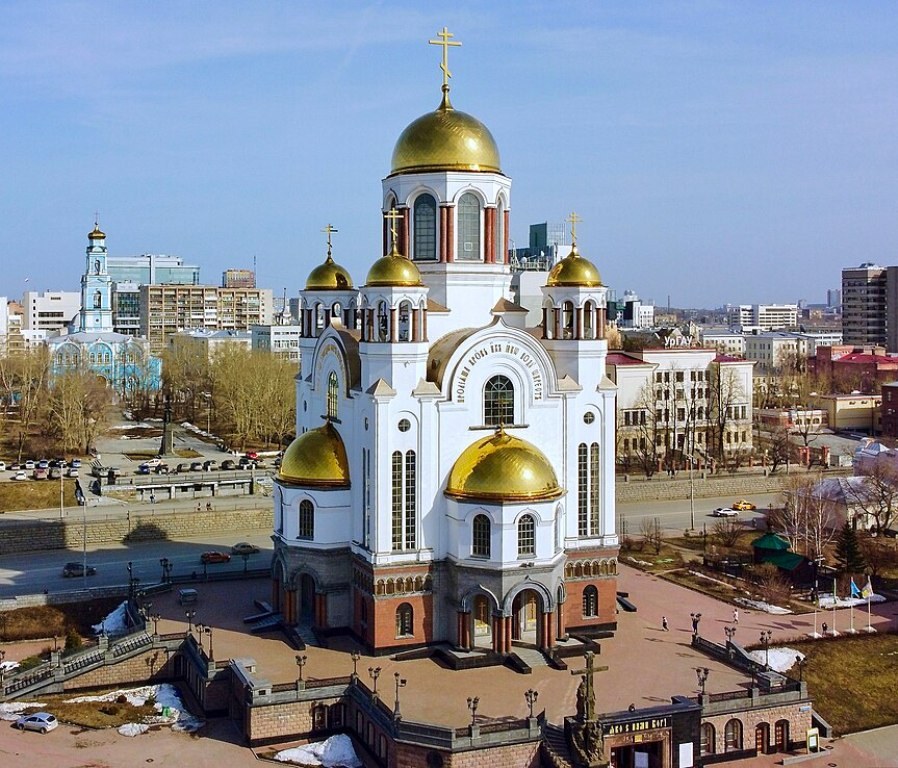
PHOTO: the Church on Blood in Honour of All Saints Resplendent in the Russian Land

Not far from the railway station, in Nevyansky Lane, there is an Orthodox church in honour of the Reigning Icon of the Mother of God. It was consecrated in 2011 by Metropolitan Kirill of Yekaterinburg and Verkhoturye. In 1918, the Yekaterinburg-I Railway Station was located here, where on 30th April (new style), 1918, the train carrying Nicholas II, his family members and their five retainers stood for several hours, before proceeding to the the Shartash-Yekaterinburg-II Railway Station, where they disembarked.

The last point of the Path of Sorrow is the Church on Blood in Honour of All Saints Resplendent in the Russian Land on Tsarskaya Street. It was here on this site, that Emperor Nicholas II, his family and four faithful retainers met their death and martyrdom. The church was erected on the site of the Ipatiev House, where the regicide took place on the night of 16/17 July 1918.

In the Lower Church sanctified in honour of the Holy Royal Passion-Bearers, there is the “Imperial Room” – a side-chapel of which the altar allegedly rests on the site of the murder room in the basement of the Ipatiev House. The decoration of the room received the blessing of the Metropolitan of Ekaterinburg and Verkhoturye Kirill. It was timed to coincide with the events marking the 100th anniversary of the death and martyrdom in July 2018, in which more than 100,000 attended.

© Paul Gilbert. 30 April 2026
***

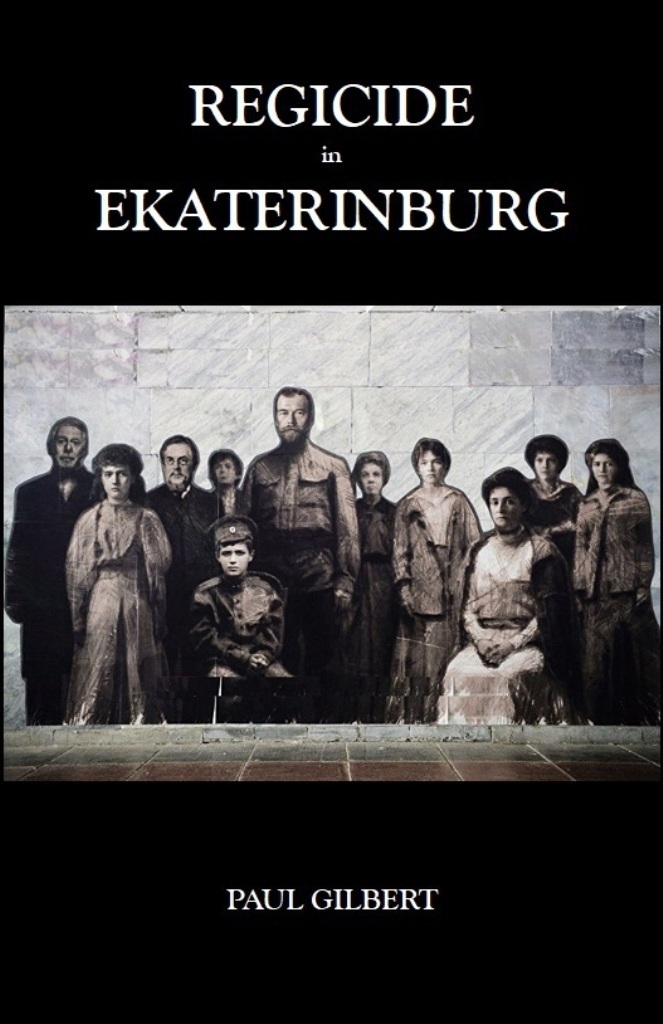
The following NEW title was compiled and edited by independent researchers and Romanov historian Paul Gilbert was published in August 2024. 

This fascinating new study features 14 chapters on this tragic event, which include the memoirs of a British intelligence officer and journalist, and two First-English translations. In addition, 11 chapters were written by Paul Gilbert, based on new documents sourced from Russian archival and media sources over the past decade.

Please refer to the link provided for further details about the content of this new title . . .

CLICK HERE TO READ MORE ABOUT THIS TITLE

The Church of the Saviour on the Waters to be revived in St. Petersburg

PHOTO: the Church of the Saviour on the Waters in St. Petersburg,

On 23rd March 2026, it was announced that the Church of the Saviour on the Waters, one of the most famous lost churches of old St. Petersburg will be revived. Recall that the church was was constructed in 1910-1911 as a memorial to the sailors who died in the Battle of Tsushima during the Russian-Japanese war (1904-05). The church was destroyed by the Soviets in 1932.

The reconstruction of the Church of the Saviour on the Waters is past of a large-scale renovation of Novo-Admiralty Island. 

History and Construction

The site for the construction of the church was at the end of the English Embankment, at the place where the Novo-Admiralty Canal and the Neva river meet, and not far from the Admiralty Shipyards where the ships of the Imperial Russian Navy were built. The location of the church was chosen well. Lined with white stone, it looked very beautiful from the Neva River, closing the perspective of the embankment.

In 1908, a committee was created in St. Petersburg to collect donations for the construction of the memorial church. The honorary chairman of the committee was the only female admiral of the Imperial Russian Navy, the Queen of the Hellenes / Grand Duchess Olga Konstantinovna (1851-1926).

PHOTO: construction of the church took place in 1910-11

The foundation stone of the church was laid by Bishop Nikon (Rozhdestvensky) of Vologda on 28th (O. S. 15th) May 1910, on the day marking the 5th anniversary of the Battle of Tsushima. The event was followed by a procession of the cross from the St. Nicholas Naval Cathedral. Grand Duchess Olga Konstantinovna laid the soldier’s St. George Cross in the foundation stone.

The white-stone church was built in the Neo-Russian Style, by the Russian architect Marian Marianovich Peretyatkovich (1872-1916). The two-storey church consisted of a lower church in the name of St. Nicholas the Wonderworker and an upper one in honour of the Gethsemane Agony of Christ the Saviour. The church was designed for 300-400 parishioners.

On 10th August (28th July) 1911, the military protopresbyter Georgy Ivanovich Shavelsky (1871-1951) consecrated the lower church,in the presence of the relatives of the victims of the war. The solemn consecration of the upper church took place on 13th August (O.S. 31st July) 1911. It was attended by Emperor Nicholas II and his daughters, Queen Olga of the Hellenes / Grand Duchess Olga Konstantinovna, her brother, Grand Duke Konstantin Konstantinovich (1858-1915), among other members of the Imperial Family.

PHOTOS: Emperor Nicholas II along with other members of Imperial family arrive for the consecration of the the Church of the Saviour on the Waters in St. Petersburg, 13th August (O.S. 31st July) 1911

Design and Interior

The church was erected in the likeness of the Vladimir-Suzdal churches of the 12th century. According to the builders, it was supposed to resurrect the wonderful traditions of ancient Russian architecture. Many famous artists participated in the decoration.

The gate led to the church, above which was a belfry and a mosaic icon of the Saviour Not Made by Hands according to a sketch by the famous Russian painter and graphic artist Viktor Mikhailovich Vasnetsov (1848-1926). Relief doors lined with copper imitated the gates of the 13th century in the Suzdal Cathedral of the Nativity of the Virgin. The dome of the church was covered with golden smalt.

PHOTO: a colour view of the upper church and the mosaic
“The Saviour Walking on the Waters”

In the upper church, on the altar wall, there was a mosaic “The Saviour Walking on the Waters” made according to a sketch by the Russian painter Nikolai Aleksandrovich Bruni (1856-1935). Two mosaic icons – “Praying for the Chalice” and “Carrying the Cross” – on the pillars were made according to sketches by artists Viktor Vasnetsov and Nikolai Bruni.

The iconostasis was made in the ancient style of carved light gray stone and had two tiers. The Holy Doors were made of chased bronze. The altar curtain was the St. Andrew’s flag. Bronze choros chandeliers hung on anchor chains. The white-marble tabernacle was carved in the shape of the church itself.

The entrance to the lower church was through a narrow corridor. The low vaults of the lower church were covered with a continuous painting made by the Russian painter and graphic artist Mikhail Mikhailovich Adamovich (1884-1947), depicting the Gospel scenes and the life of the patron saint of sailors, St. Nicholas the Wonderworker.

The wooden two-tiered iconostasis, covered with brocade and basma, was decorated with bronze overlays. The Holy Doors were donated by the builder of the church Sergei Nikolaevich Smirnov (1877-1958) and dated to the 16th century. The Kazan icon of the Mother of God was embroidered with gold.

A covered gallery connected the church with the tower, where the maritime museum was located, and the belfry, which in turn was connected by a gallery with the clergy house.

The unique memorial church became “a symbol of a mass grave for the heroic sailors who died without burial” in the Russo-Japanese War of 1904-1905.

The Soviet Years to the Present

The Church of the Saviour on the Waters was closed by the Bolsheviks in early 1918. For a short time, irregular services continued to be conducted without too much fuss from the authorities. In 1919, the Soviet authorities concluded an agreement with the parishioners that the building would be transferred to them, and in return, the church was ordered to pay taxes, report on donations, and maintain the building in order. The teaching of doctrine was prohibited. Failure to comply with the orders would result in arrests and imprisonment.

n December 1931, at a meeting of the Presidium of the Leningrad Soviet, it was decided “to transfer the building to the plant for scrapping using materials for construction needs.”

The Soviets wasted little time in looting the church: Icons, vestments, the Gospel, silverware and precious stones were taken during two confiscations. Some were taken to local museums. Less valuable things, such as lamps, chalices, discos – were simply melted down into metal. Some of the mosaics were saved by an employee of the Morozov Museum, and stored in the basements of the museum.

Following the pillaging and looting, the church was blown up in the spring of 1932, despite thousands of signatures collected. The clergy and some of the parishioners were repressed by the local Soviet.

PHOTO: the Church of the Saviour on the Waters
was reduced to a pile of rubble on 8th March 1932

On 27th May 1998, on the 93rd anniversary of the Battle of Tsushima, a small chapel was built on the site of the church. With the blessing of Metropolitan Vladimir of St. Petersburg and Ladoga, a foundation stone, a marble plaque with a canonical commemorative text and the St. George Cross, brought from France by the grandson of one of the builders of the Church of the Saviour on the Waters, were laid in the foundation of the new chapel.

PHOTO: members of the planning working committee meet in St. Petersburg to discuss plans for the reconstruction of the Church Savior on the Waters

Reconstruction

On 23rd March 2026, representatives of the working committee gathered at the Russian Geographical Society in St. Petersburg to discuss the project for the reconstruction of the Church of the Saviour on the Waters. Among them were representatives of the St. Petersburg clergy, descendants of the heroes of the Battle of Tsushima and historians.

The decision to revive the church was made as part of the large-scale redevelopment of the Novo-Admiralteysky Island. The Church Savior on the Waters is one of the most famous lost churches of old St. Petersburg, t was created in memory of the sailors who died during the Russo-Japanese War. The church will be restored at the expense of private philanthropists.

© Paul Gilbert. 26 March 2026
15th March: Reigning Icon of the Mother of God Revealed

034a

PHOTO: the original Reigning Icon of the Mother of God in
the Church of Our Lady of Kazan, Kolomenskoye (near Moscow)

NOTE: this article was originally posted on 15th March 2019. It was updated
with additional information and photos on 15th March 2026
– PG

***

On 15th (O. S. 2nd) March 1917, Emperor Nicholas II abdicated from the throne. That same day, the Reigning Icon of the Mother of God was revealed to a peasant woman in Kolomenskoye. Many believe the reappearance of the icon was an indication that the Virgin Mary was displeased with Russia for dethroning Nicholas II during the February 1917 Revolution.

The Reigning Icon of the Mother of God is believed to date from the 18th century. It is considered one of the most revered icons both inside Russia and in Russian emigre circles. 

The icon was originally venerated in the Ascension Convent, in the Chertolye neighborhood near the Moscow Kremlin. In 1812, as Napoleon Bonaparte’s Grande Armée approached Moscow during the French invasion of Russia, the icon was taken to the village church in Kolomenskoye for safekeeping and subsequently forgotten until 1917.

At the end of the February Revolution of 1917, on 15 March (O.S. 2 March) 1917, Tsar Nicholas II of Russia abdicated the throne. That same day, Evdokia Adrianova, a peasant woman in the village of Pererva in Moscow Province, dreamed that the Blessed Virgin appeared and spoke to her. She was instructed to travel to the village of Kolomenskoye, where she would find an old icon which, “will change colour from black to red.”

SONY DSC

PHOTO: the Church of Our Lady of Kazan in Kolomenskoye (nearMoscow)

Upon her arrival, the parish priest Father Nikolai Likhachev (1865-1893) took Evdokia at her word and together they searched until they found, in an old storage room located in the basement, an icon covered with candle soot. When they took the icon outdoors, the sunlight revealed that the Mother of God was wearing the scarlet robes of a monarch. She also wore the Imperial crown and held a sceptre and orb — the symbols of Imperial power.

Since all this took place on the same day as the Tsar’s abdication from the throne, the appearance of the icon was immediately thought to be connected with that event. What is more, the priest was given to understand that the Crown that had fallen from the head of the Tsar had been taken up by the Theotokos, the Mother of God: henceforth, She would be the reigning Tsarina of the Russian State. Thus the icon was named the ‘Reigning’ icon and became widely revered among the Russian people.

The discovery of the miraculous appearance of the Reigning Icon spread instantly, and crowds of pilgrims began to flock to the Church of Our Lady of Kazan, Kolomenskoye (near Moscow) to venerate it.

PHOTO: The original Reigning Icon of the Mother of God in
the Church of Our Lady of Kazan, Kolomenskoye (near Moscow)

Russian monarchists believe the reappearance of the icon was an indication that the Virgin Mary was displeased with Russia for dethroning Tsar Nicholas II during the February 1917 Revolution. They believe that She will hold the Imperial Crown for safekeeping until the House of Romanov is restored.

After the revolution, efforts were made to protect and preserve the icon. It was transported from one place to another. She visited the Marfo-Mariinsky [Martha and Mary] Convent – founded by the Grand Duchess Elizabeth Feodorovna (1864-1918) – in Moscow, where she was greeted with great honours. Later, in Soviet times, the icon was kept in the vaults of the State Historical Museum in Moscow.

On 27th July 1990, the Reigning Icon of the Mother of God  was returned to the Church of Our Lady of Kazan in Kolomenskoye. Today, anyone can come to Moscow, to the Kolomenskoye Museum-Reserve, and pray before the miraculous image.

034c

PHOTO: A copy of the Reigning Icon of the Mother of God
is carried in a cross procession held in Moscow

After the reunification of the Moscow Patrichate of the Russian Orthodox Church and the Russian Orthodox Church Outside Russia (ROCOR) in August 2007, the icon was taken to Russian parishes in Europe, the United States and Australia.

In modern times, Orthodox believers celebrate the day of the Reigning Icon of the Mother of God on 15th March. The significance of the Reigning Icon for the Russian people is enormous: it reminds them that even when earthly power collapses, heavenly protection remains with them. The icon has become a symbol of the inflexibility of the Russian spirit and protected Russia for more than a century.

The Reigning Icon does not require a special complex prayer. You can turn to the Mother of God in your own words, the main thing is to do it from the bottom of your heart. Traditionally, an akathist to the Reigning Icon or a troparion to the feast is read before the icon. Many Orthodox Christians come to church on 15th March or 2nd March (according to the Old Style Julian Calendar). On this day that worshippers light a candle and ask for intercession. During the Great Lent (from 23rd February to 11th April 2026), prayer before the Reigning Icon acquires a special meaning. Lent is a time of purification and repentance, and turning to the Mother of God helps to strengthen the spirit and walk this path with dignity.

PHOTO: a contemporary Russian icon depicting the Holy Royal
Passion-Bearers standing under the image of the Mother of God

During the service held on the eve on the day of the discovery of the Reigning Icon of the Mother of God, Metropolitan Evgeny of Yekaterinburg and Verkhoturye diocese noted that the mystery of what happened that night at the Dno station is completely hidden from us, as well as what happened in the heart of the Tsar on the day of his abdication.

“We must warm our hearts with the Mother of God. To tell Her that Her appearance in Kolomenskoye was not in vain. It was not in vain that all those labours and prayers that She lifted up for Russia, so that Russia would be called Holy Russia and the home of the Most Holy Theotokos,” – His Eminence noted. 

FURTHER READING

The Abdication of Emperor Nicholas II, March 1917 + PHOTOS and VIDEO

© Paul Gilbert. 15 March 2019 – Updated on 15th March 2026

First governor of Sverdlovsk regrets that the ROC has not recognized the Ekaterinburg Remains

PHOTO: the first governor of the Sverdlovsk region, Eduard Rossel
and Ural geologist Alexander Avdonin

*** Please note that this is my 1,000th article, researched from
Russian archival and media sources, and translated into English 
– PG

In 1991, Valery Nikolaevich Shevelin found himself in the center of historical events by accident. A friend and neighbor, Alexander Avdonin (1932-2026), who was searching for the remains of Russia’s last Tsar and family, asked him to guard the excavations on the old Koptyaki Road near Sverdlovsk [Ekaterinburg].

Avdonin was sure that he would find the remains of the Imperial Family, so he asked his friend Eduard Rossel, who served as the Head of Sverdlovsk Oblast [Region] Administration, to help organize the expedition. Soon the soldiers arrived. They built a tall palisade, pitched tents, brought beds and deployed field kitchens.

On Sunday, 22nd February, Alexander Avdonin (1932-2026) was laid to rest in the village cemetery in Kurganovo, Sverdlovsk region, where the famous Ural geologist recently lived.

Recall that Alexander Avdonin died in Ekaterinburg on 20th February 2026. – NOTE: click on the link, to see little known photos of Avdonin with Prince Michael of Kent, during the latter’s visit to the Urals in 2012.

During the funeral service, the first governor [from 1995 to 2009] of the Sverdlovsk region, Eduard Rossel, said goodbye to his friend Alexander Nikolaevich Avdonin, the man who, together with his colleagues, discovered the remains of Emperor Nicholas II and his family.

Below is the full text of the eulogy that Rossel gave at Avdonin’s funeral, this past Sunday:

PHOTO: Avdonin, and the abbot of the Verkhoturye Monastery, Hegumen Tikhon, view sculptural portraits of members of the Imperial Family at the exhibition ‘The Romanovs: Return to History‘. 17 April 1997.

“I was acquainted with Alexander Nikolaevich for many years. Together, we honoured the memory of the the last emperor and his family. We took many risks, persevered and, finally, brought the true fate of the Imperial family out of darkness and oblivion,

“If it were not for Alexander Nikolaevich and his associates: Geliy Ryabov, Kochurov and Vasiliev, the incredible story of finding the Tsar’s remains would not have happened. There would have been no Church on the Blood, no Ganina Yama, no annual Tsar’s Days, no museum exhibitions, no books, and no educational events – which reflect one of one of the most tragic events in Russian history.

“In recent years, Alexander Nikolaevich was very ill, so we we were not able to communicate as much, but I will always remember our first meeting in the Regional Executive Committee, which saw the beginning of our working together on the extraction and identification of the Tsar’s remains, but also an enduring friendship.

“I will forever remember him as a man who opened my eyes to true patriotism – a positive attitude to one’s history, and that without paying tribute to it’s memory, it is impossible to move forward!

“And indeed, the development of the Tsarist project began here in the Sverdlovsk region, which I headed, emerging from the most severe socio-economic and spiritual crisis caused by the collapse of the USSR and the formation of a new Russia.”

PHOTO: Alexander Avdonin examining items found during excavations in and around the site where the remains of Nicholas II and his family were exhumed in 1991

During the eulogy, Eduard Rossel expressed his sincere disappointment in the Moscow Patriarchate of f the Russian Orthodox Church, who have still not recognized the Ekaterinburg Remains as those of Emperor Nicholas II and his family.

My soul aches from the fact that the remains of the Imperial Family are not as yet, recognized as *Holy Relics. Alexander Nikolaevich and I, had even selected the particles [from the bones] of which, wanted to place in the reliquaries in the Lower Church of the Church on the Blood, near the place [today, the Imperial Room] where the the Holy Royal Passion-Bearers met their deaths.

“Everything was done for this: the best genetic research in the world was financed and carroed out, the reliability of the results was provided to the investigation committee and proven with one hundred percent result, but, apparently, the time has not yet come,” said Rossel

Recall that the Russian Orthodox Church have yet to offficially recognize the remains discovered in two graves on the Old Koptyaki Road as those of Russia’s last Tsar and his family. In the summer of 1998, when, by decision of the government of the Russian Federation, to bury the remains took place in the Saints Peter and Paul Cathedral in St. Petersburg.

Patriarch Alexei II (1929-2008) and other bishops did not attend the commemorative event. The final decision on this issue was to be made by the Bishops’ Council of the Russian Orthodox Church, but its meeting has not yet taken place.

“Today, thousands of people venerate the memory of the Nicholas II and his family, through events marking the annual Tsar’s Days, bishops pray, the Church on the Blood receives believers, but the end of this sorrowful matter has not yet been made.

“Deepest condolences to Alexander Nikolaevich’s wife Galina Pavlovna, to his family, relatives and friends. Eternal memory to the man who opened the way to true repentance for all of us by deeds, not words!” concluded Eduard Rossel.

PHOTO: Alexander Avdonin (right) with histirian Nikolai Neuymin (left) Sverdlovsk Museum of Local Lore, at the cross at the Romanov Memorial, at Porosenkov Log, near Ekaterinburg.

© Paul Gilbert. 25 February 2026

Nicholas II visits St. Barnabas of Gethsemane, 1905

PHOTO: fresco depicting Emperor Nicholas II meeting the Elder Barnabas

Emperor Nicholas II was known for his piety and religiosity. During his 22-year reign, he loved to visit monasteries and speak with the elders. In early 1905, the Emperor visited the famous Elder Barnabas – shortly before the elder’s death – in the Gethsemane Skete near the Trinity-Sergius Lavra at Sergiev Posad.

Following the tragic events of Bloody Sunday in January 1905, Nicholas II’s visit itself was timely. Although the Tsar was not to blame for the tragedy, he wanted in conscience, to repent in the presence of the man of God and listen to his instruction and admonition.

It is known that the Elder Barnabas not only confirmed the prophecy already known to the Emperor about the fate that awaited him, but also gave him his blessing to accept this fate, strengthening in him the will to bear his cross when it pleased the Lord to lay this cross on him.

Nicholas was already aware of the prophecies of the monk Abel (1801) in 1901 and St. Seraphim of Sarov (1833) in 1903.

In 1909, during the Emperor’s visit to the ancient St. George Monastery near Sevastopol, two devout schema-monks, who never showed themselves to people from their cells, suddenly came out, approached the Sovereign, silently fell down in prostration, stood up, crossed themselves, and also silently departed.

Elder Barnabas died on 17th February 1906. The famous elder and ascetic, was officially canonized by the Moscow Patriarchate of the Russian Orthodox Church in 1995. He is celebrated for his spiritual wisdom, prophecies, and for serving as a confessor to Emperor Nicholas II in 1905.

PHOTO: icon depicting St. Barnabas of Gethsemane

© Paul Gilbert. 24 February 2026

“They Suffered for the Faith”: Russia honours the memory of Nicholas II and his family

On the Day of Remembrance of the Synaxis of the New Martyrs and Confessors of the Russian Church 

There is a day in the Orthodox calendar when the faithful remember those who suffered during the years of persecution of the Church. This feast day changes from one year to the next. That is, the established date of 7th February (25th January according to the Old Styke Julian calendar) may change depending on the day of the week. Since the feast is always celebrated on Sunday, this year it falls on 8th February.

The Russian Church spoke with the cleric of the Holy Trinity Cathedral in Slonim, Priest Nikolai Savitsky.

The meaning of the holiday

On Sunday, divine services will be held in Orthodox churches in memory of the New Martyrs and Confessors. These are the faces (categories) of holiness in Christianity, indicating the feat of faith.

“A martyr is someone who died for Christ, and a confessor is someone who endured persecution for the faith, but survived,” explains Priest Nikolai Savitsky. — On 8th February, the church commemorates the New Martyrs — those who suffered in the twentieth century. At the moment, 1623 saints are known, but research continues. Clergy are given access to personal files and archives. The history of the church is studied, new facts are discovered. It takes time to confirm them — this is very serious and painstaking work. When people did not deviate from their faith until their last breath, they are then considered. We must then learn about them in order to perform glorification.

On the Day of Remembrance of the Synaxis of the New Martyrs and Confessors, it is important to read the biographies of several saints in order to understand how much they suffered.

Vneration of the Tsar’s family

There is an icon of the Synaxis of the New Martyrs and Confessors of the Russian Church, in the center of which the Tsar’s family is among the saints. Recall that Emperor Nicholas II, his wife Alexandra Feodorovna and their five children (Olga, Tatiana, Maria, Anastasia and Tsesarevich Alexei) were the last Imperial Family of Russia. After the abdication of Nicholas II from the throne on 15 March 1917 (O.S. 2 March) 1917, the family was initially held under house arrest in the Alexander Palace at Tsarskoye Selo, before being sent into exile to Tobolsk. Then they were transferred to Ekaterinburg, where they were shot in the Ipatiev House on the night of 16/17 July 1918.

“Yes, history needs to be studied, but it is so twisted and distorted that it is very difficult to get to the bottom of the truth. Nevertheless, the Tsar’s family are glorified by the Russian Orthodox Church – after this fact, questions should disappear,” the priest emphasizes. – The Emperor, his wife and children were canonized in 2000 as passion-bearers. These are saints who suffered during their lifetime or were martyred, but not for confessing their faith in Jesus Christ. As a rule, they became victims of the hatred and deceit of their enemies for other, very different reasons. Virtue is that they met death without malice and resistance. In order to further increase the evil in the world by their resistance, in truly Christian humility and love for those who have hurt them. In this love, the passion-bearers became like Christ, Who humbly accepted crucifixion, death and forgave His tormentors.

Holy Royal Passion-Bearers, pray to God for us!
Святые царственные страстотерпцы, молите Бога о нас!

FURTHER READING

Prayer to the Holy Martyred Tsar Nicholas II

© Paul Gilbert. 8 February 2026

Lost Orthodox Churches of Imperial Russia – Cathedral of Christ the Saviour (Borki)

PHOTO: view of the Cathedral of Christ the Saviour at Borki. 1916

During the Bolshevik and later the Soviet war against the Russian Orthodox Church (1920-1980s), thousands of Orthodox churches, cathedrals and monasteries of the Russian Empire were destroyed. Many of these architectural monuments were blown up, their materials were used to construct new buildings. For instance. the marble salvaged from the demolished Cathedral of Christ the Saviour in Moscow in 1931, was used to decorate some of the city’s elaborate Metro stations.

One of the greatest architectural losses of both the Russian Empire and the Russian Orthodox Church is that of the Cathedral of Christ the Savior in Borki, Kharkov Oblast (today, part of eastern Ukraine).

The cathedral was built in 1891-1894 in the village of Borki, on the site of the crash of the Imperial Train on 17th October 1888, in memory of the dead and in honour of the miraculous salvation of the Emperor Alexander III and his family. The majestic cathedral, was designed in the Russian-Byzantine style, by the Russian architect Robert Robertovich Marfeld (1852-1921).

PHOTO: Emperor Nicholas II and Empress Alexandra Feodorovna leaving the Cathedral of Christ the Saviour on 20th August 1898, the day marking the 10th anniversary of the Borki train disaster

History

On 27th April 1889, on the initiative of the Kharkov governor Alexander Ivanovich Petrov (1838/1841—1915), a committee was created to erect a memorial at the site of the crash of the tsar’s train. On 30th May, the committee decided to construct a cathedral in the center of the architectural ensemble, and to erect a chapel on the site of the disaster itself. On the same day, the landowner Apollon Mikhailovich Mernenkov donated the land near the site of the disaster for the construction of the cathedral.

At the time, the crash site of the Imperial Train attracted a lot of people who came to pray at the site, but expressed dissatisfaction with the fact that there was no room for offering thanksgiving prayers for the salvation of the Tsar and his family, Archbishop Ambrose (Klyucharev) of Kharkov and Akhtyrka (1820-1901) and the Venerable Herman of Svyatogorsk (Gregory Ivanovich Klitsa (1816–1890) organized the construction of a wooden church and skete.

In addition, buildings for visitors to the skete, buildings for monastic cells and refectory, and a summer shelter for pilgrims were erected on the land donated by the peasants of the village of Sokolovo, Trees used for the construction of the Old Russian style church came from a pine forest in Moscow, and transported by rail. On 20th August 1889, the opening of the skete and the consecration of a church in honour of the Image of Christ the Saviour Not-Made-by-Hands took place.

PHOTO: view of the iconostasis of Christ the Saviour at Borki. 1908

PHOTO: view of the iconostasis of Christ the Saviour at Borki. 1908

PHOTO: view of the two side chapels of Christ the Saviour at Borki. 1908

The project of the stone Cathedral of Christ the Saviour was developed by Robert Robertovich Marfeld (1852-1921), construction was carried out at the expense of the local manufacturer I. Voronin and numerous donors.

On 21st May 1891, the foundation was laid, the ceremony was attended by Empress Maria Feodorovna, Tsesarevich and Grand Duke Nikolai Alexandrovich [future Emperor Nicholas II] and other members of the Imperial Family.

The cathedral was designed to hold 1400 worshippers. It was a majestic structure, surrounded on three sides by a covered gallery and crowned with a huge golden dome. All the exterior gilding of the cathedral and chapel were made of gold leaf.

The interior of the cathedral was distinguished by simplicity and at the same time elegance. On the right side of the Holy Doors was placed the Image of the Saviour Not-Made-by-Hands, in honour of which the cathedral was erected, and on the left side was an icon of the Mother of God. The Holy Doors were carved from linden wood. On three sides of the church there were extensive choirs.

On 17th October 1891, a chapel was laid at the place where the Imperial Family miraculously came out from under the wreckage of the train. At first, its underground section was erected in the railway embankment, then aboveground, in the form of a tetrahedral tower with a golden dome. The Ministry of Railways at its own expense built two majestic staircases on the slope of the embankment and a platform opposite the cathedral itself.

On 14th July 1894, in the presence of Emperor Alexander III and members of his family, the solemn consecration of the cathedral in the name of Christ the Saviour took place.

A landscaped park was laid out in front of the cathedral, and outdoor lighting was installed. At the place where the Empress tended to the wounded victims of the train crash, a gazebo made of stones and metal was erected.

In 1900, the cathedral complex was transferred to the jurisdiction of the Ministry of Railways. With the money raised by the railway and voluntary donations, a hospital and a home for elderly railway workers were built at the cathedral complex, a parochial school and a public library were opened, as well as a museum dedicated to the events of 17th October 1888.

On 20th August 1898, Emperor Nicholas II, Empress Alexandra Feodorovna along with other members of the Imperial Family visited the Cathedral of Christ the Saviour, on the day marking the 10th anniversary of the Borki train disaster.

In 1908, a monument to Emperor Alexander III was erected next to the cathedral.

PHOTO: view of the Cathedral of Christ the Saviour at Borki. Only the Chapel of the Saviour (right) has surived to the present day


 Destruction

During the Great Patriotic War (1941-45), the cathedral complex was completely destroyed. The Cathedral of Christ the Saviour caught fire, the golden dome collapsed. On 7th September 1943, the cathedral was blown up during the offensive of Soviet troops. It is not known whether it was the Soviets or the Nazis who shelled it. After the war, the ruins of the cathedral were blown up.

Miraculously, only the Chapel of the Saviour, situated some 60 meters from the cathedral survived, although it to was badly damaged during the war. In 1992-1993, the chapel was restored, funded by conations raised by local residents and the Southern Railway. On 27th April 2003, the chapel was consecrated by Bishop Onufriy.

PHOTO:  the Chapel of the Saviour at Borki as it looks today

FURTHER READING

Lost Orthodox Churches of Imperial Russia – Part I + 13 PHOTOS

Lost architectural monuments of the Moscow Kremlin + 13 PHOTOS

© Paul Gilbert. 30 January 2026

Nicholas II: defender of the Orthodox faith

Nicholas II, Russia’s last emperor, is revered by the Russian Orthodox Church Outside Russia (ROCOR), the Moscow Patriarchate of the Russian Orthodox Church (ROC) and the Serbia Orthodox Church as a saint for his deep piety, unwavering defense of Orthodoxy, embodying the traditional role of the Tsar as God’s anointed Defender of the Faith.

A symbol of Steadfastness. Nicholas II serves as an inspiration for Orthodox Christians, representing the ideal of a ruler and believer who remained true to God amidst immense trials and tribulations.

Nicholas II saw himself as the Supreme Defender of the Orthodox faith, fostering church growth, promoting canonizations, and upholding traditional values, while the ROC honours him as an example of steadfast faith and a symbol for believers against modern evils.

As God’s Anointed, Nicholas II could not be displaced during his lifetime. Since the will of God was nowhere manifest, neither in the naming of his brother Grand Duke Mikhail to the throne, nor in the Tsar’s signing of the instrument of abdication, his status as Emperor and Tsar remained inviolate and unassailable.

The Tsar was a living incarnation of faith in the Divine Providence that works in the destinies of nations and peoples and directs Rulers faithful to God into good and useful actions
– St. John of Shanghai and San Francisco (1896-1966)

Religion and the Church Under Nicholas II

Nicholas II believed his divine duty as Supreme Guardian of the Orthodox faith and ‘Head of the Church’ in the spirit of his Byzantine imperial predecessors, and to protect the Orthodox Church and its doctrines, viewing himself as the first among believers and God’s chosen ruler.

During his reign (1894-1917), the Russian Orthodox Church expanded significantly with construction of new churches, monasteries, and schools, with the Tsar personally supporting religious publications and artifacts. He personally helped to finance from his own pocket, the construction of new churches, both within the Russian Empire and abroad.

The Russian Orthodox Church under Emperor Nicholas II flourished. In 1914, it consisted of 68 dioceses, 54,923 churches, 953 monasteries, 4 theological academies, 185 religious schools, 40,530 schools and 278 periodicals. The clergy consisted of 157 bishops, 68,928 priests, 48 ​​987 clerics, 21,330 monks in monasteries and 73,229 nuns in convents.

Nicholas II actively supported the canonization of revered figures, most notably St. Seraphim of Sarov, and other saints such as Theodosius of Uglitsk and John of Tobolsk.

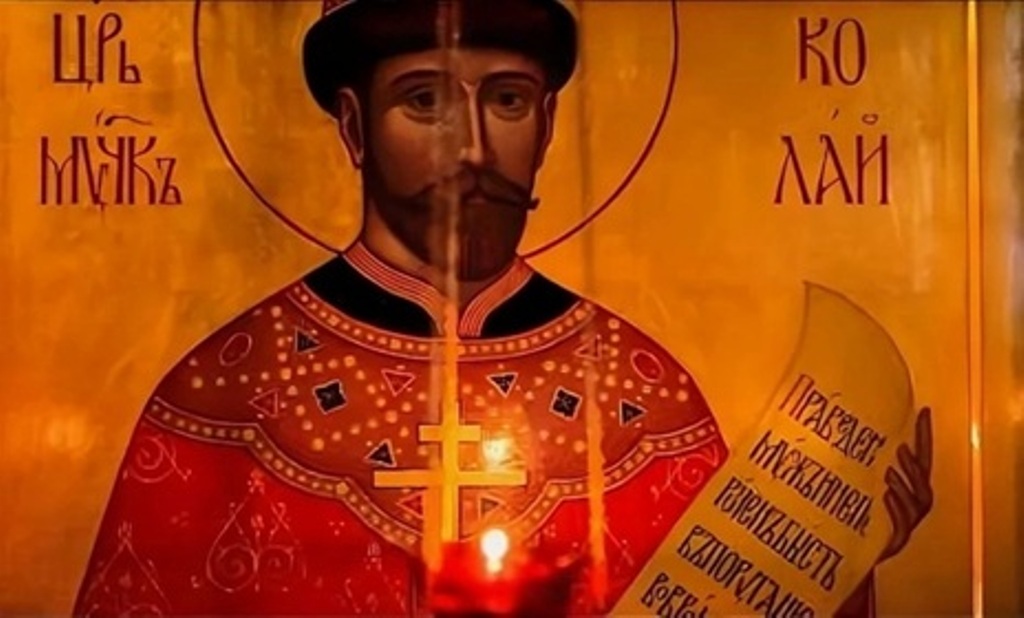
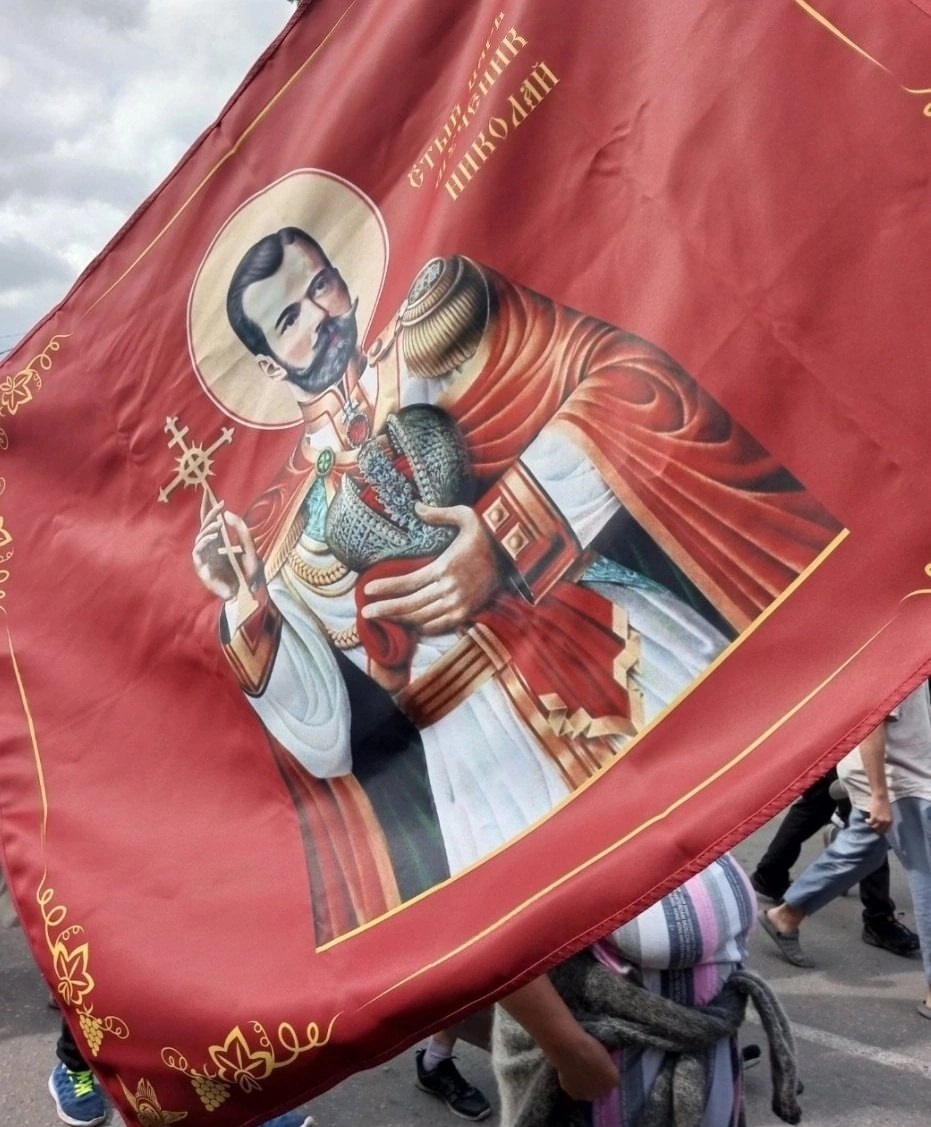
Icons of the Holy Royal Martyr Nicholas II are now found in Orthodox churches globally, and many Orthodox believers venerate him as a great saint.

His Canonization as a Saint

The canonization of Russia’s last Tsar, also known as “glorification,” was the elevation to sainthood of Nicholas II as a “new martyr” by the ROCOR on 1st November 1981 and as a “passion-bearer” by the Moscow Patriarchate on 15th August 2000, recognizing his peaceful endurance of persecution and execution by the Bolsheviks. Despite his official designation as “passion-bearers” by the Moscow Patriarchate, Nicholas II is nevertheless spoken of as “martyr” in Church publications, icons, and in popular veneration by the people.

Nicholas II was canonized by the Serbian Orthodox Church primarily for his role as a pious “passion-bearer”—a saint who faced death with Christian humility and resignation—and for his significant support of Serbia during World War I, specifically his efforts to protect Serbia and his solidarity with the Serbian people.

In essence, Nicholas II embodies the historical ideal of the Orthodox Tsar, and his life and martyrdom solidified his place as a revered saint, a defender of his people and his faith until the very end.

***

CLICK on the above image to watch the VIDEO
Researched, written and narrated by Paul Gilbert
Duration: 20 minutes. Language: English

Emperor Nicholas II reigned for 22+ years – from November 1894 to February 1917. With his murder, the last Orthodox Christian monarch, along with the thousand-year history of thrones and crowns in Russia, ended, ushering in an era of lawlessness, apostasy, and terror, one which would sweep Holy Orthodox Russia into an abyss which would last more than 70 years.

This new video production is based on the research of project colleague and independent researcher Paul Gilbert, who also narrates this video.

In the first 24 hours of it’s release on YouTube, some 3,000 people had watched the video! Since it’s release in July 2020, it has been viewed by more than 134.000 people.

The creators have done a remarkable job of incorporating a wonderful collection of photos – both vintage B&W and colourized by Olga Shirnina (aka KLIMBIM) – historical newsreel film footage and music.

One viewer noted on social media: “Only 20 minutes long, this is the BEST portrayal of the last Tsar’s Orthodox faith I have ever seen. Very well-made, historical and moving.”

The crowning moment of this video is near the end, which shows film footage of the actual canonization ceremony of Emperor Nicholas II and his family, performed on 20th August 2000 by Patriarch Alexei II (1929-2008) in the Christ the Saviour Cathedral in Moscow. You can hear His Holiness calling out each of the names of the Imperial Family. The footage is extremely moving to watch.

This 20-minute video is presented in the framework of the production of the book The Romanov Royal Martyrs: What Silence Could Not Conceal published by Mesa Potamos Publications in 2019.

© Paul Gilbert. 25 January 2026

***

CLICK on the IMAGE below for more details and to order your copy

‘NICHOLAS II: RUSSIA’S LAST ORTHODOX CHRISTIAN MONARCH’

Compiled and Edited by Paul Gilbert

134 PAGES. ILLUSTRATED

AVAILABLE IN PAPERBACK and EBOOK EDITIONS

An illustrated 16-page Introduction by independent researcher Paul Gilbert explores the piety of Nicholas II, and his devotion to the Russian Orthodox Church, which reached its fullest development and power, during his 22-year reign.

This book further examines the trials and tribulations the Tsar endured, which later led to his canonization by the Russian Orthodox Church.