Tsarskoye Selo launches ‘The Blooming Palace’
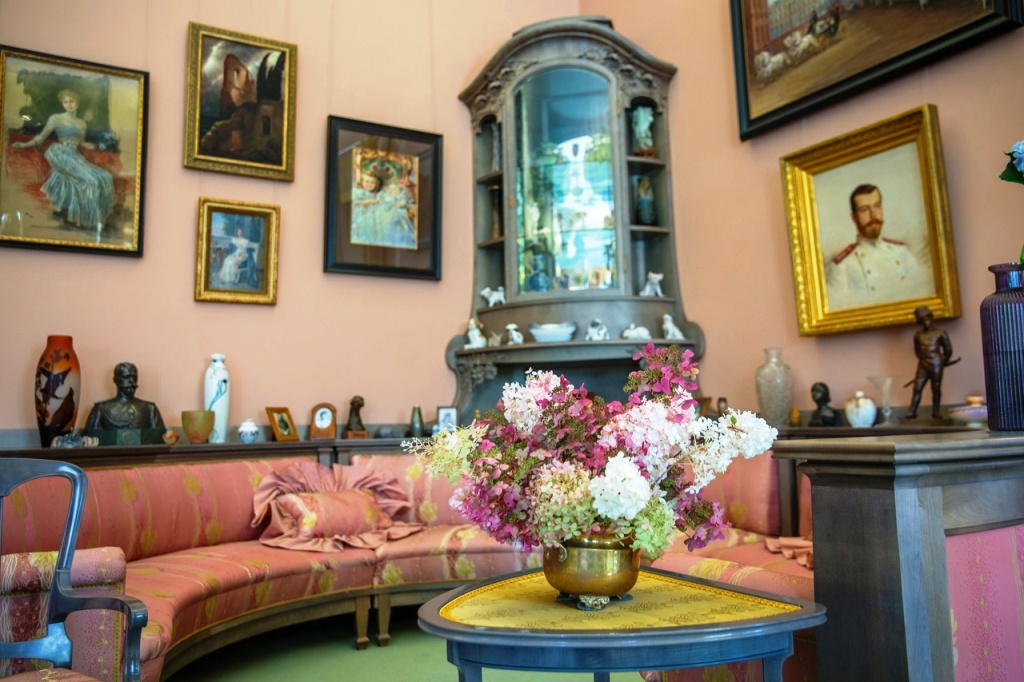
PHOTO © Tsarskoye Selo State Museum

The Tsarskoye Selo State Museum has launched a very innovative new project: “Blooming Palace”, to be held in the Alexander Palace over the next 12 months. Once a month, flower arrangements created by modern designers and florists will be displayed in different interiors of the Alexander Palace, the favourite Imperial residence of Nicholas II and his family.

Arrangements will include hydrangea, chrysanthemum, forsythia, camellia, lilacs and other flowers and plants. The flower marathon will last a year, ending in August 2024. The museum is implementing this project in partnership with representatives of various creative industries in St. Petersburg.
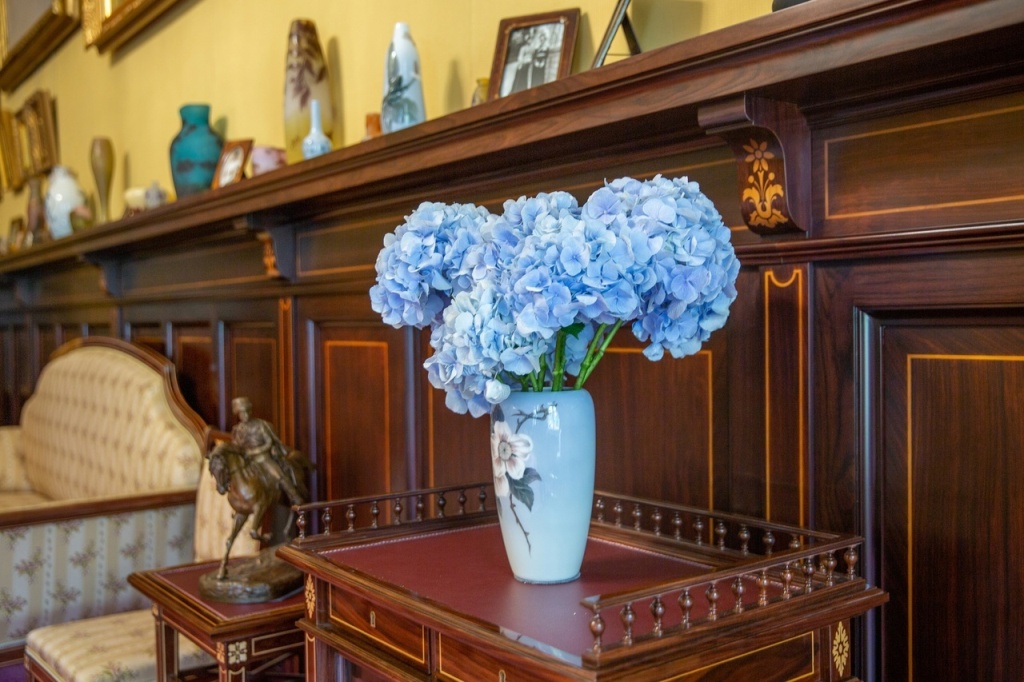
PHOTO © Tsarskoye Selo State Museum

“We set ourselves the most important task – to create an atmosphere of family warmth in the private rooms of Emperor Nicholas II and Empress Alexandra Feodorovna, said Olga Taratynova, director of the Tsarskoye Selo State Museum.

“At the beginning of the last century, there were fresh flowers all year round, the floral theme was also present in the upholstery of the walls, furniture, stucco reliefs on the walls and ceilings. We supplemented the recreated interiors with freshly cut flowers and decorative plants. In addition, more than a hundred years later, the Empress’s tradition of decorating her rooms with lilacs was revived – their fragrant aroma fills the interiors from late January to March, “she added.
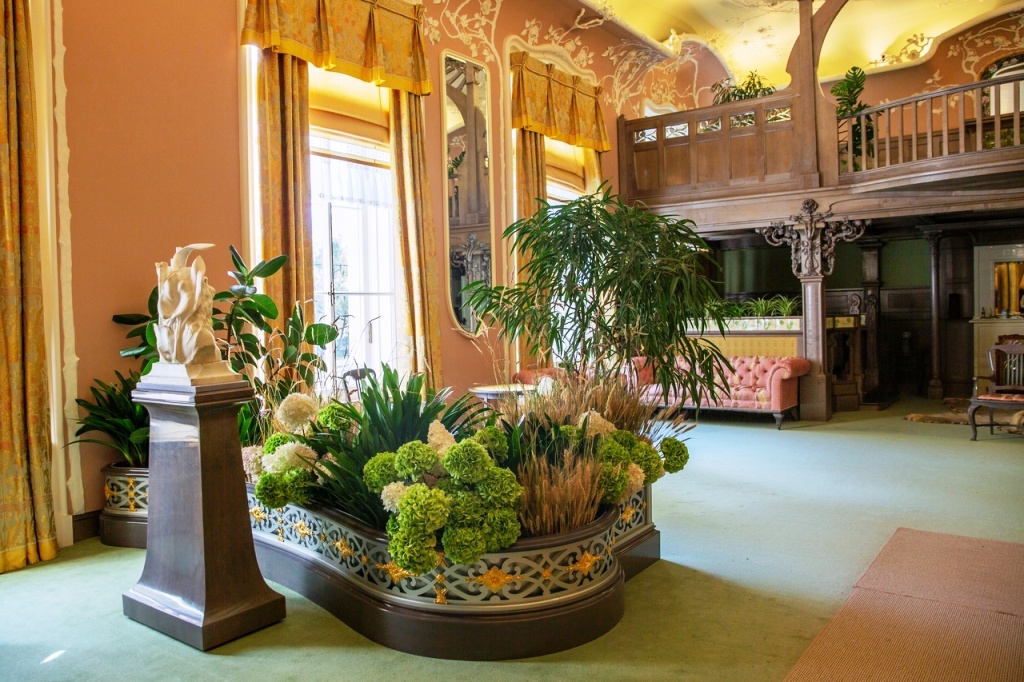
PHOTO © Tsarskoye Selo State Museum

The first compositions were created in September, for the Maple and Rosewood Drawing Rooms, located in Alexandra Feodorovna’s rooms. The main flower was hydrangea – in total, florists used more than 80 luxurious flowers of white, pink, blue and green blooms. The idea was initiated by a colour autochrome of the interior, taken in 1917 by Andrei Zeest. The photographer took this photo with hydrangea in a vase in the Rosewood Drawing Room just a few hours after the Imperial Family were sent into exile to Tobolsk on 1st August 1917. In addition to hydrangea, designers used autumn flowers and plants, including live branches with paradise apples, rose hips and various types of grain plants.
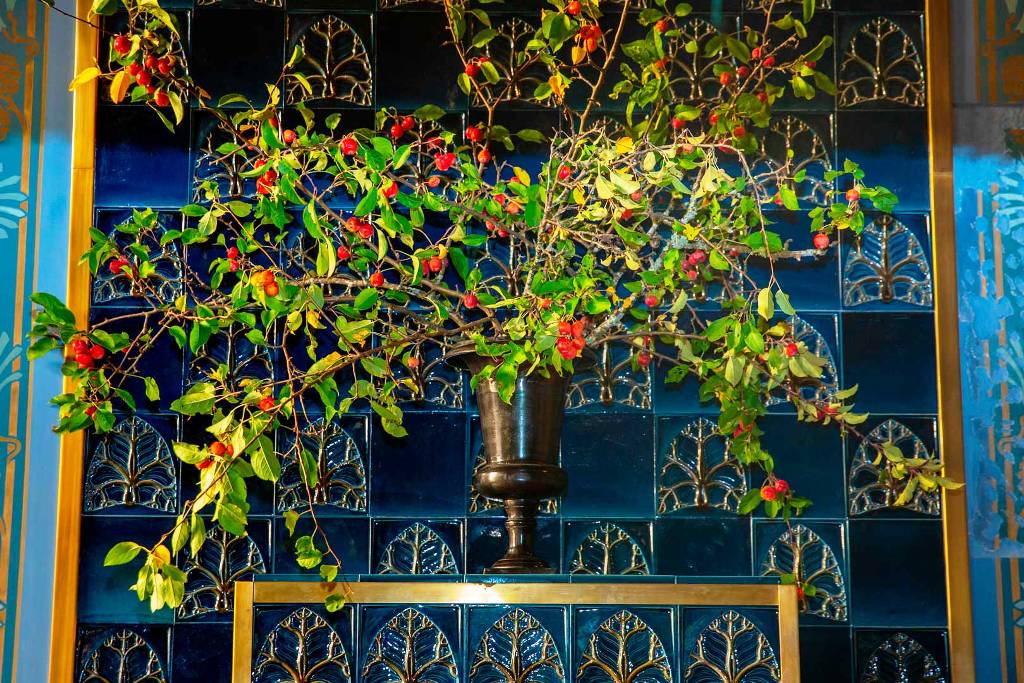
PHOTO © Tsarskoye Selo State Museum

In total, the “Blooming Palace” project involves the creation of 12 compositions under the guidance of designer, florist, designer Maxim Languev. Each of them will be in one way or another be connected with the history of the Alexander Palace as an Imperial residence, and the personal tastes of the family of the last Russian emperor. Sources of inspiration includes – historical facts (i.e., the eastern journey of the heir, engagement, wedding, the stay of the Imperial Family in Livadia); floral motifs in the decoration of interiors (symbolism of lilies in the decoration of the palace); items of the museum collection (vases in the technique of cloisonné enamel, Venetian glass, incense burners); documentary evidence – photographs, autochromes, paintings.
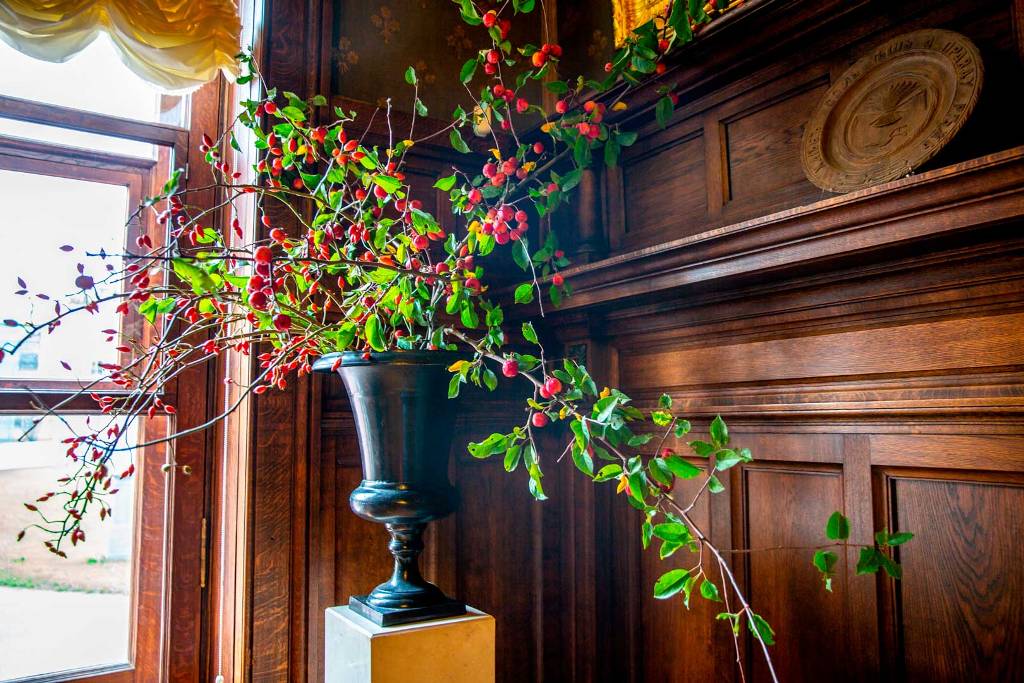
PHOTO © Tsarskoye Selo State Museum

The “Blooming Palace” project is a joint prohect with the Higher School of Economics, the museum will hold a creative competition among students to create souvenirs based on the Blooming Palace. Interest in the project and readiness to support it was expressed by the organizers of the federal competition “Young Design”.

The project “Blooming Palace” is the winner of the “Creative Museum” competition of the Vladimir Potanin Charitable Foundation. The information partner of the project is the magazine “Interior + Design”.

© Paul Gilbert. 28 September 2023
Alexander Palace hosts ‘Romanovs in the Crimea’ exhibition

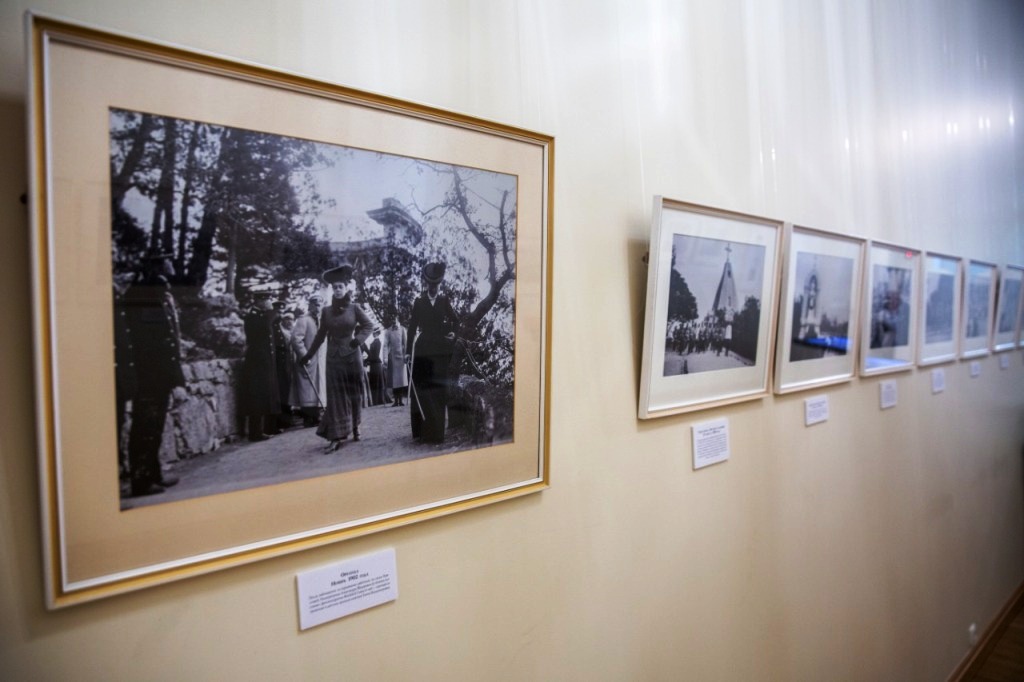
On 21st September 2023, a new exhibition ‘Imperial Visits to the Crimea: 1900, 1902, 1909‘ opened in the Alexander Palace at Tsarskoye Selo.

NOTE: during their visits to Crimea, Nicholas II and his family stayed in the Small (Maly) Palace, until 1911, when the iconic white stone palace was constructed on the site of the Large (Bolshoi) Palace, by the Russian architect Nikolai Krasnov (1864-1939).

The Small Palace survived until the Great Patriotic War (1941-45). While there is no exact information about the destruction of the palace, some say it was the work of the Nazis, while others cite evidence from local eyewitnesses that it was the Soviets who set fire to the historic wooden palace – PG

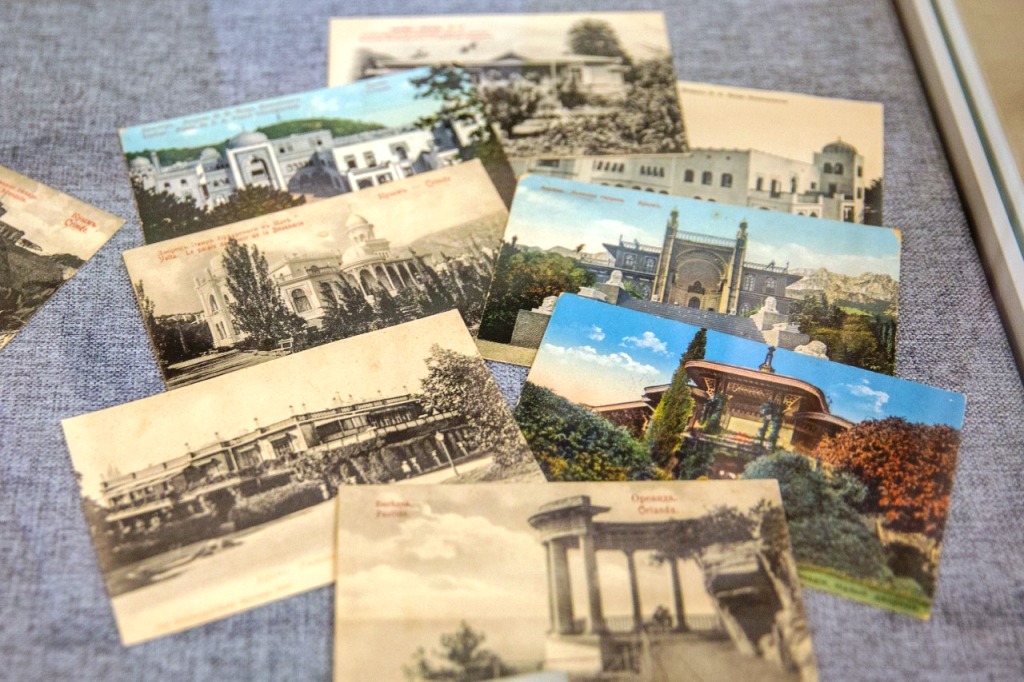
PHOTO: early 20th century postcards depicting palaces along the Black Sea coast, including the wooden palaces at Livadia – the Large (Bolshoi) and Small (Maly) Palaces are depicted above the photo of the Rotunda at Oreanda (bottom)

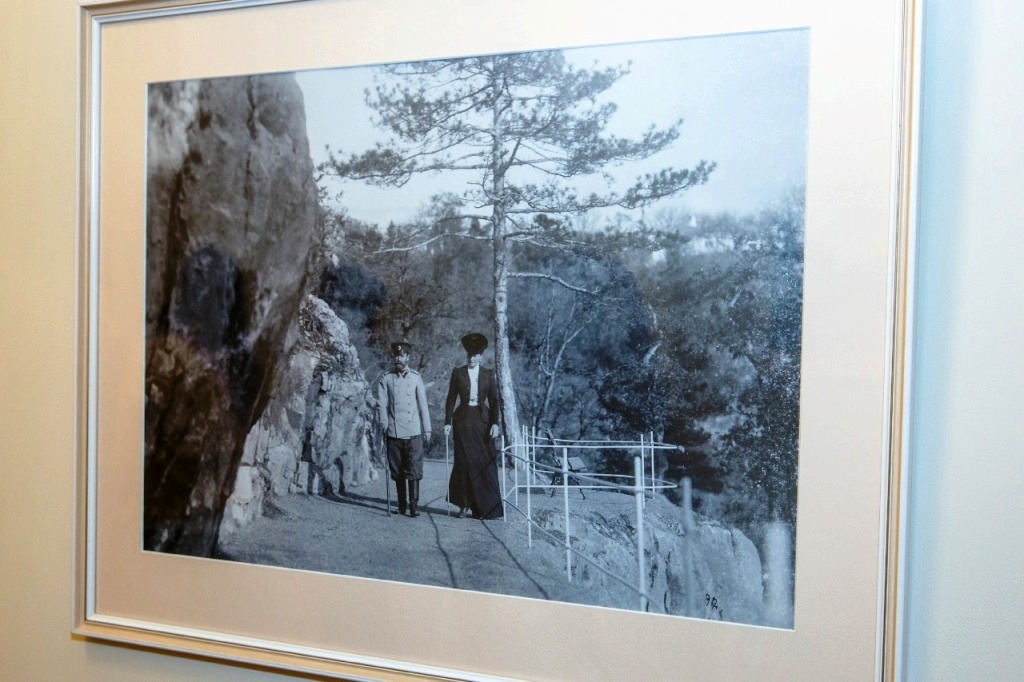
The exhibit is a joint project of the Tsarskoye Selo State Museum and the Alupka Palace Museum (Crimea), which showcases photographs from the private albums of Emperor Nicholas II and his family, as well as imperial memorabilia from the Tsarskoe Selo collection.

The albums with photographs capturing Emperor Nicholas II and his family during their visits to the Crimea in 1900-1909 were made for the Romanovs by K.E. von Gan & Co., a famous photography atelier in the town of Tsarskoye Selo, who were licensed to photograph the imperial family.

Their photographer and cinematographer Alexander Karlovich Yagelsky (1861-1916) used a then-innovative approach by printing still frames from film reels and thus getting more real, ‘live’ photos instead of stiff, staged shots. 

The photographs on display show the Imperial Family in Livadia, Yalta, Oreanda and Sebastopol, visiting infirmaries, regimental celebrations, the ship Rostislav and cruiser Pamiat’ Merkuria (Memory of Mercury), meeting with veterans and sisters of mercy of the Crimean War, as well as walking around or playing ball and lawn tennis. 

“This is not just a series of photographs from beautifully designed albums with impeccable artistic taste. Before us are documents of the era that allow us to look into the past and see the people and events of the early 20th century through the eyes of the last Tsar and his family,” said Iraida Bott, Deputy Director for Research at the Tsarskoye Selo State Museum-Reserve.

An interactive touch table at the exhibition gives access to other over 130 digitized photos from the imperial albums.

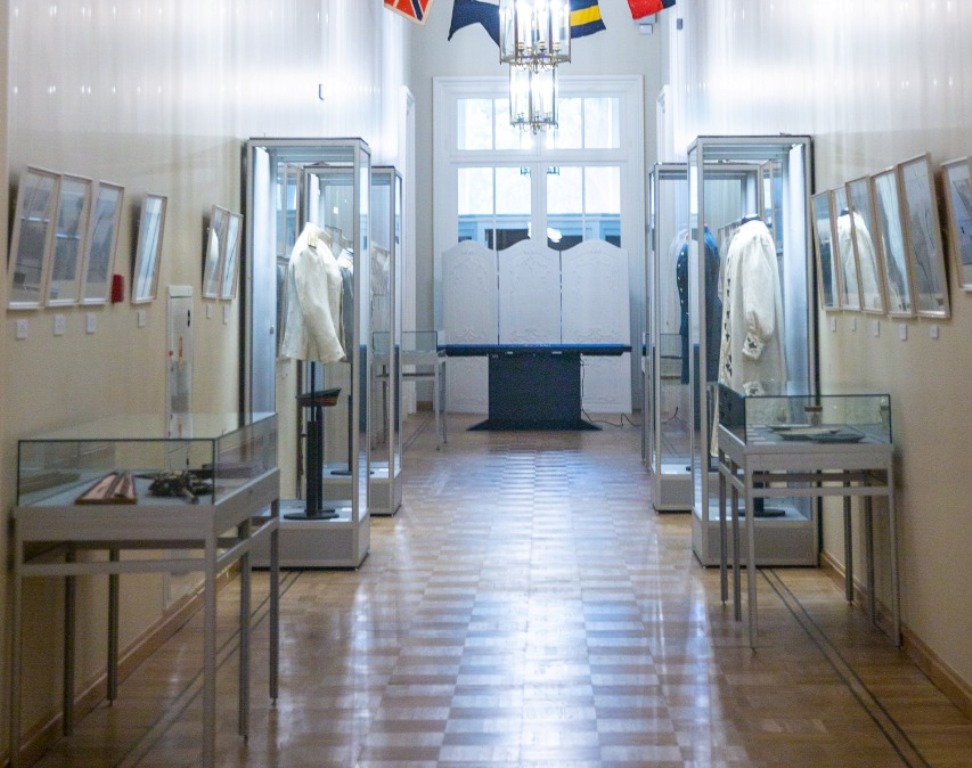
Among the items of imperial memorabilia on display are Tsesarevich Alexei’s hat of a lower-rank officer from the imperial yacht Standart, Emperor Nicholas II’s jacket of a Naval Captain 1st rank, Empress Alexandra Fiodorovna’s dress, worn during their visits to Crimea in the early 20th century.

The exhibition runs until 20th November 2023.

***

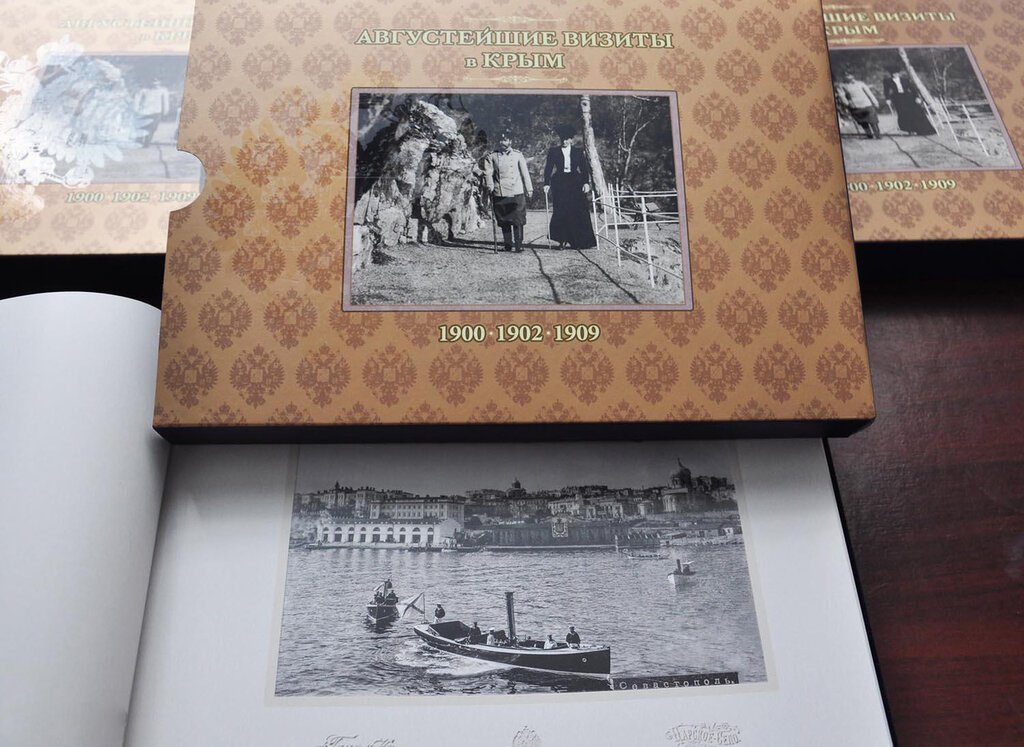
In 2013, the photographs from this exhibition were published in a large 240-page hardcover album – *Августейшие визиты в Крым. 1900, 1902, 1909 (Imperial Visits to Crimea. 1900, 1902, 1909). Only 1000 copies were printed.

*I regret that I do not know how to obtain copies, or where copies can be obtained. Current financial sanctions imposed on Russia by the West, it is impossible to order from Russian booksellers in the Russian Federation – PG

© Paul Gilbert. 27 September 2023

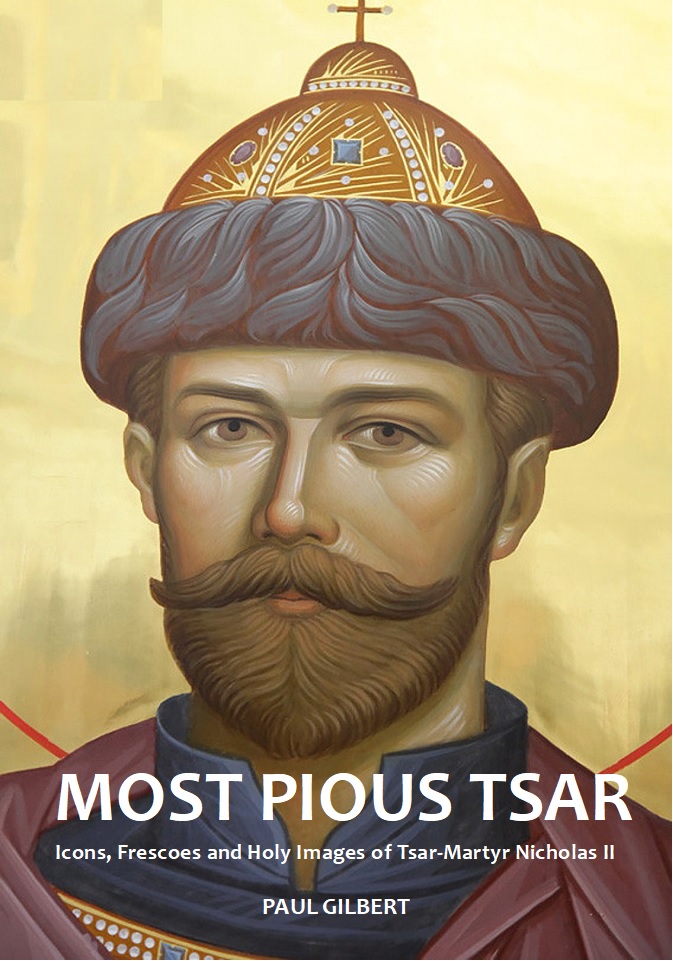
NEW BOOK: Most Pious Tsar

*You can order this title from most AMAZON outlets, including
the United States, United Kingdom, Canada, Australia,
France, Germany, Spain, Italy, Netherlands, Poland, Sweden and Japan
*Note: prices are quoted in local currencies

CLICK HERE TO ORDER THE HARD COVER @ $50.00 USD

CLICK HERE TO ORDER THE PAPERBACK EDITION @ $40.00 USD

English. Large 7″ x 10″ format. 162 pages with 132 photos in FULL COLOUR

In 1938, Russia’s last tsar Nicholas II was canonized by the Serbian Orthodox Church. On 1st November 1981, he was canonized as a new martyr by the Russian Orthodox Church Outside Russia (ROCOR). On 20th August 2000, after 8 years of study, he was canonized as a passion bearer by the Moscow Patriarchate, although the people had already been venerating him as a saint for a long time, and this canonization was simply a confirmation of a fact that already existed by itself.

Since these historic dates, icons of Russia’s last Tsar have been installed in Orthodox churches across Russia and around the world. In addition home icons have been mass produced and sold for veneration by Orthodox Christians. This book features more than 130 of these icons in full colour.

Inside, are a series of articles, plus an introduction, in which the author explains iconography, Nicholas II as a martyr or passion bearer, the veneration of icons, intercession, miracles, non-canonical icons, frescoes, and more.

This book also includes a Prayer and Akathist to the Holy Martyred Tsar.

This book will not only appeal to Orthodox and non-Orthodox persons, but for any one who shares an interest in icons and iconography, as well as adherants to the Holy Royal Martyr Nicholas II.

© Paul Gilbert. 8 September 2023

Nicholas II assumes command of the Russian Imperial Army, 1915

On this day – 5th September (O.S. 23rd August) 1915 – Emperor Nicholas II assumed the position as Commander-in-Chief of the Russian Imperial Armed Forces.

After the great retreat of the Russian army in the summer of 1915, the Tsar removed his cousin Grand Duke Nicholas “Nikolasha” Nikolaevich (1856-1929) of the position on 21st August 1915.

In the order, the Tsar wrote with his own hand: “With firm faith in God’s mercy and with unshakable confidence in the final victory, we will fulfill our sacred duty of defending the Motherland to the end and will not disgrace the Russian land. Nicholas”.

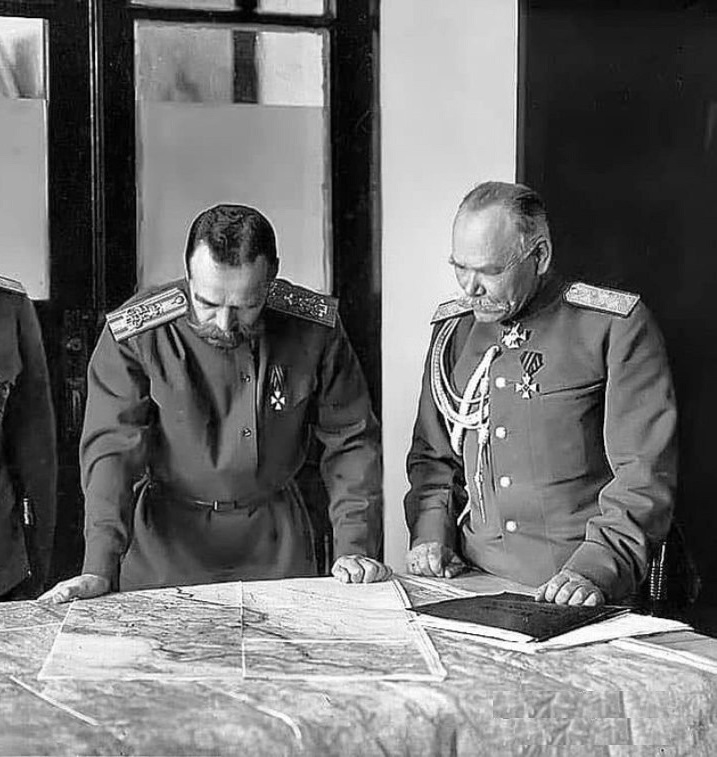
Some historians have wrongly suggested that Nicholas II’s decision was disastrous, citing that the move was largely symbolic. It was at this stage of his reign that the Tsar’s patriotism reached its zenith. He travelled up and down the Eastern Front on the Imperial Train, in his motorcars and even on horseback to show himself to his troops, boasting morale, reviewing troops, inspecting field hospitals and preside over meetings with his chief-of-staff General Mikhail Vasilyevich Alekseyev (1857-1918).

PHOTO: Nicholas II with his chief-of-staff General Mikhail Vasilyevich Alekseyev

When Nicholas II assumed command of the Russian armed forces, he appointed Alekseyev as Chief of Staff of the General Headquarters and placed in charge of all military operations. He served in this capacity from August 1915 to March 1917.

According to Russian historian George Mikhailovich Katkov (1903-1985): “Alexeev was a modest and reserved man, an educated general, to whom the Tsar treated extremely attentively . . . . Every morning the Tsar and Alexeev discussed the affairs of the front for several hours. They apparently understood each other well, and there is no indication that the Emperor tried to impose any strategic or tactical ideas on his Chief of Staff. In fact, Alexeev was the commander-in-chief, and each of his undertakings was supported by the Sovereign.”

History has now proved that Russia made great gains under Nicholas II’s command. For instance, shortly after he assumed command of the armed forces, the Russian Imperial Army carried out at least 15 major victorious operations, not counting the Brusilov Breakthrough. Russia’s military historians now believe that had the revolution not interfered, Russia was bound to have won the war.

On 1st September (O.S. 19th August) 1916, he wrote the following in a letter to Empress Alexandra Feodorovna:

“Thank God, the news is good – on the first day of our offensive we captured 300 officers and more than 15,000 Austrian and German soldiers…”

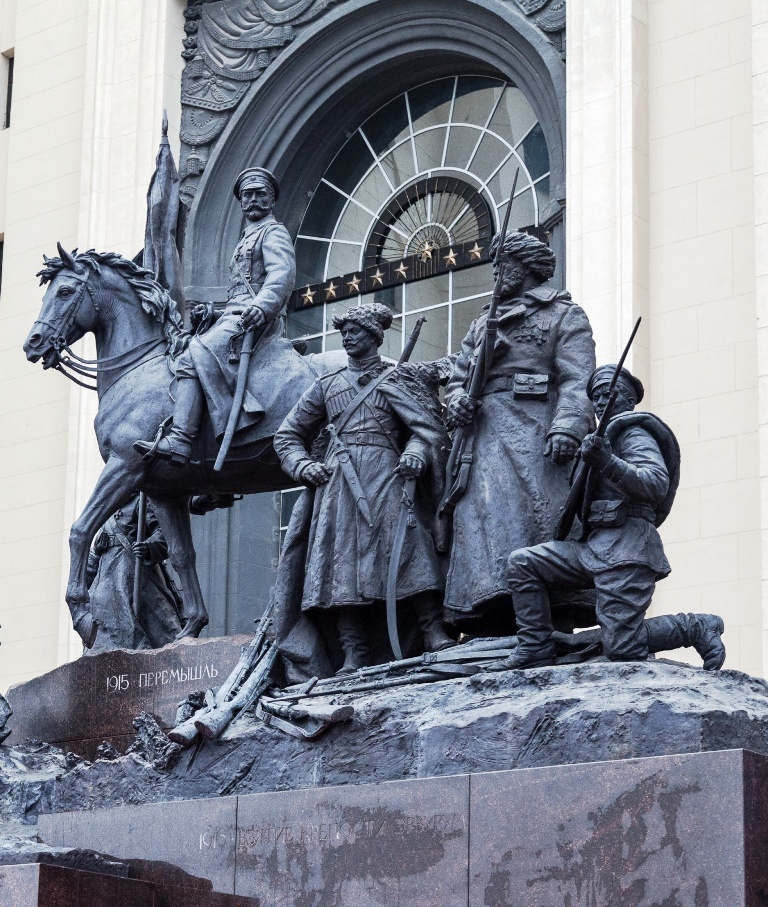
On 16th December 2013, Russia’s Defense Minister Sergei Shoigu opened a sculptural composition dedicated to the heroes of World Wars I and II on the grounds of the National Defense Control Center (NDCC) building – situated on Frunze Embankment in Moscow. The WWI monument (above) features Nicholas II on horseback, recognizing and honouring his efforts during the Great War.

FURTHER READING:

“They did not betray their oath” – the fate of the generals who remained loyal to Nicholas II + PHOTOS

© Paul Gilbert. 5 September 2023

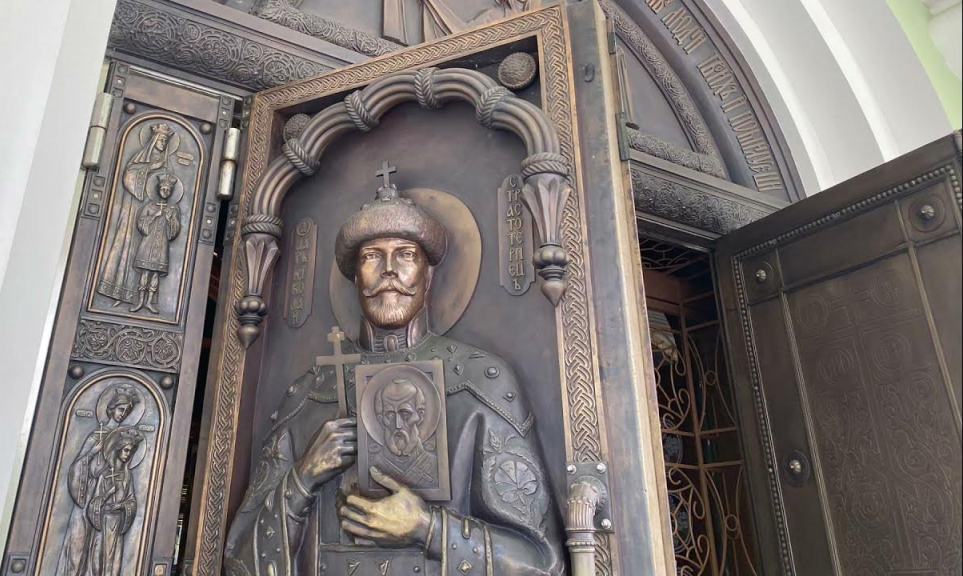
Life-sized brass image of Tsar-Martyr Nicholas II removed from Kiev cathedral

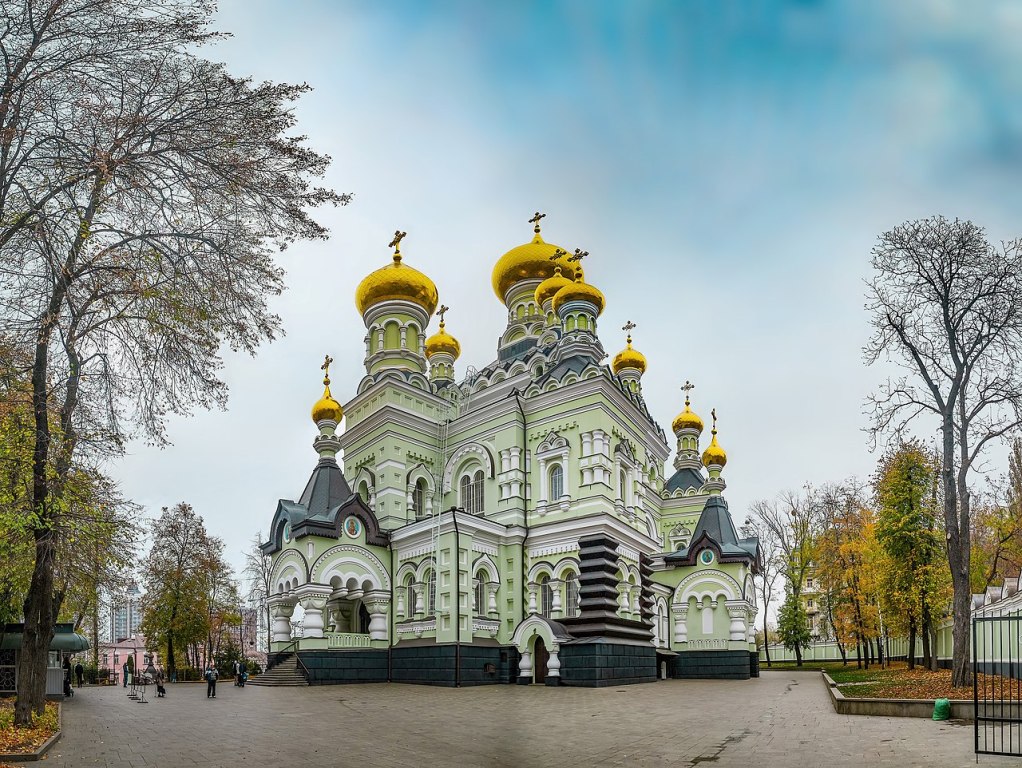
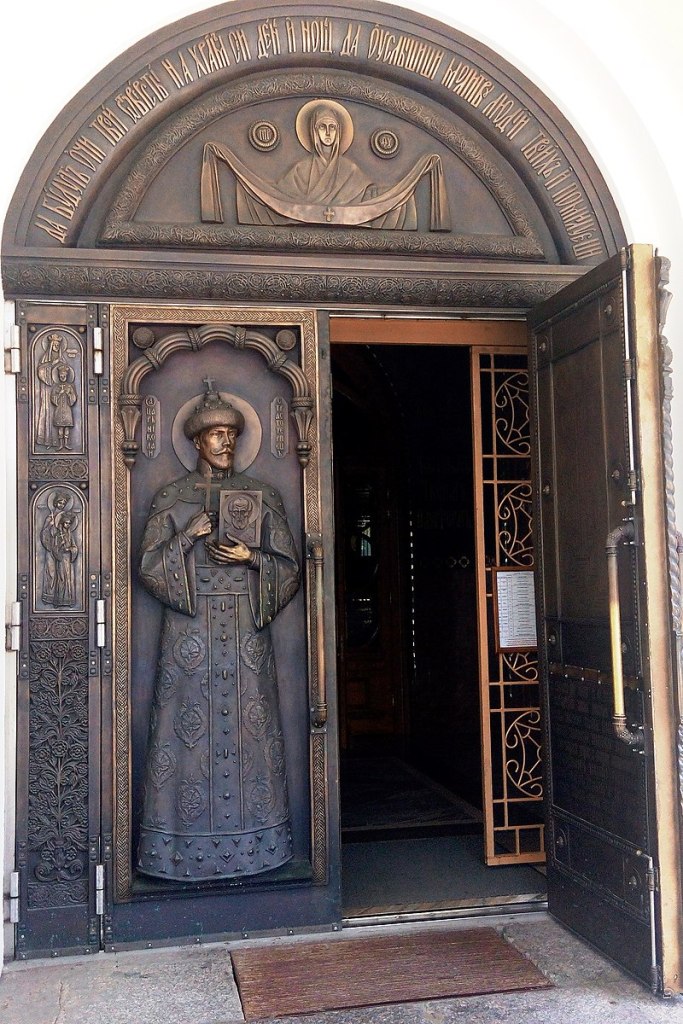
On 22nd August 2023, a life-sized brass image of Tsar-Martyr Nicholas II was removed from the doors of St. Nicholas Cathedral, situated at the *Pokrovsky [Holy Intercession] Convent in Kiev, Ukraine.

*The convent was founded in 1889 and developed in the last decade of the 19th century by the Grand Duchess Alexandra Petrovna (1838–1900), the estranged wife and later widow of Grand Duke Nicholas Nikolaevich, Sr. (1831-1891). The laying of the St. Nicholas Cathedral took place on 21st August (O.S.) 1896. The first stone in the foundation of the cathedral was laid by Emperor Nicholas II. Grand Duchess Alexandra Petrovna died on 25th (O.S. 12th) April 1891, and was buried in the convent, according to her wishes.

PHOTO: a beautiful autumn view of St. Nicholas Cathedral, situated at the Pokrovsky [Holy Intercession] Convent in Kiev, Ukraine

On 15th August, Ukrainian People’s Deputy Rostislav Pavlenko published a post on social media, in which he pointed out that “despite the war with the Russian Federation, an image of the last Russian tsar can be seen on the doors of the Kiev convent”. Pavlenko was responding to complaints from local residents, who demanded the removal of the image.

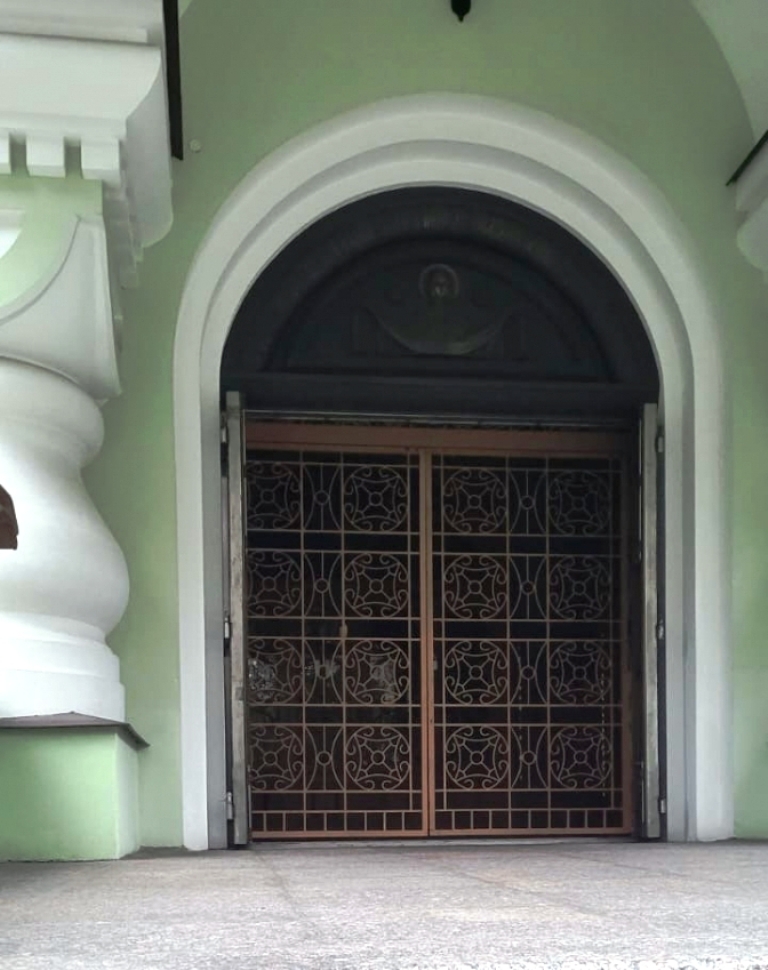
He then filed a deputy appeal to the Security Service of Ukraine (SBU), regarding “the inadmissibility of the image of Nicholas II the bloody on the doors of St. Nicholas Cathedral in Kiev”. Two weeks later, the SBU, in response to the deputy’s appeal, reported that on 22nd August, at the direction of the administrator of the Kiev Diocese of the Ukrainian Orthodox Church, the doors with the image of the Russian tsar were dismantled. Pavelenko personally went to the convent to confirm that the doors of St. Nicholas Cathedral with the image of Nicholas II was no longer in place.

PHOTOS: before (above) and after (below) views of the life-sized brass image of Tsar-Martyr Nicholas II, depicted on the doors leading into St. Nicholas Cathedral

***

On 3rd April 2023, Ukrainian nationalists hung a large black banner denouncing the Moscow Patriarchate, across the facade of the Chapel in Honour of the Miraculous Image of the Lord Jesus Christ in Odessa. In addition, two icons including one depicting the Holy Tsar-Martyr Nicholas II were dismantled.

In July 2022 Ukrainian nationalists destroyed a bust-monument to Emperor Alexander III in the village of Pershotravneve, located in the Kharkiv region of Ukraine. The bust of the “Tsar-Peacemaker” was knocked to the ground, while the plaque, which included Putin’s name was also removed from the front of the pedestal.

The bust-monument was erected in 2013 on the occasion of the 400th anniversary of the Romanov dynasty and the 125th anniversary of the BorkiTrain Disaster on 29th October 1888, when the Imperial Train carrying Alexander III and his family from Crimea to St Petersburg derailed at high speed at Borki.

© Paul Gilbert. 2 September 2023