PHOTO © Crown Prince Filip Karadjordjević of Serbia
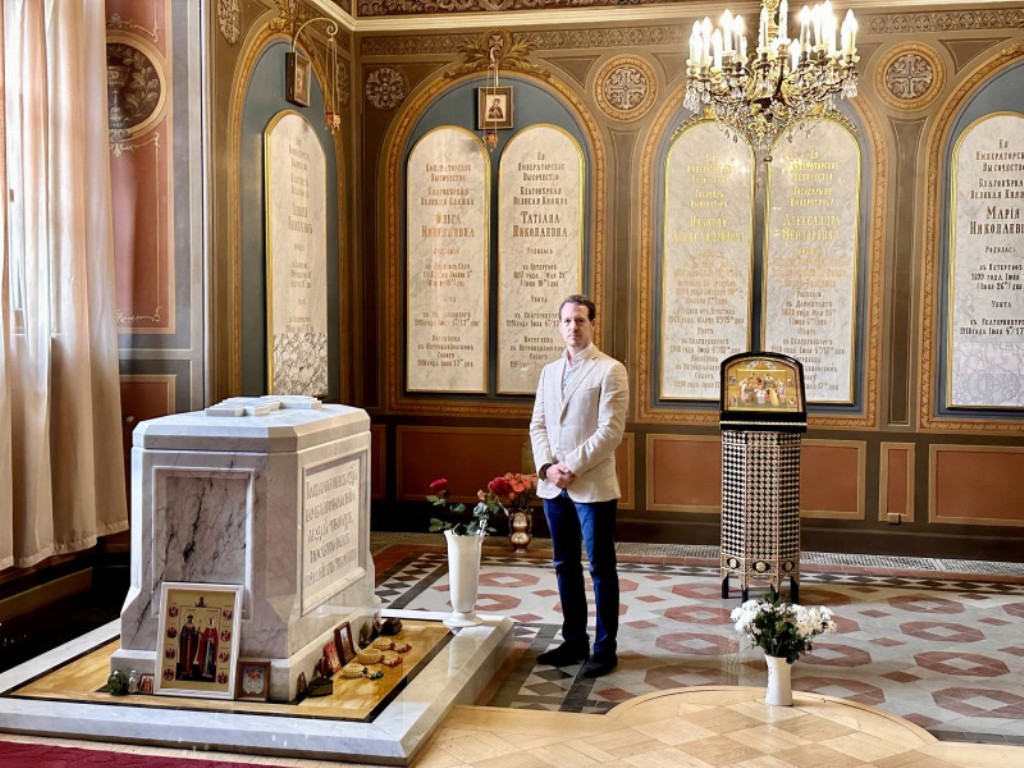
On 16th August 2024, Crown Prince Filip Karadjordjević of Serbia visited the Saints Peter and Paul Cathedral in St. Petersburg, where he laid flowers at the base of the marble tombstone which marks the final resting place of Emperor Nicholas II, which is located in St. Catherine’s chapel, a side chapel of the cathedral.
“During my visit to St. Petersburg, one of the greatest cities in the world, I paid tribute to my courageous ancestor, His Imperial Majesty the Holy Emperor Nicholas II”, wrote the Crown Prince. “Holy Tsar Nicholas II, a devoted family man and staunch defender of Orthodox Christian values, was brutally murdered by the Bolsheviks along with his beloved family, marking a tragic and dark chapter in history. This was followed by a period of great suffering, when tens of millions of Christians were killed in the name of the vicious and destructive ideology of communism. The Russian Revolution should not be celebrated, but remembered as a grim reminder of extreme and misguided actions driven by a senseless system that defies our very nature. The love and devotion of the Holy Tsar Nicholas II to his family and to Orthodox Christianity stands in stark contrast to the tyranny and discord sown by those who set out to destroy them.”
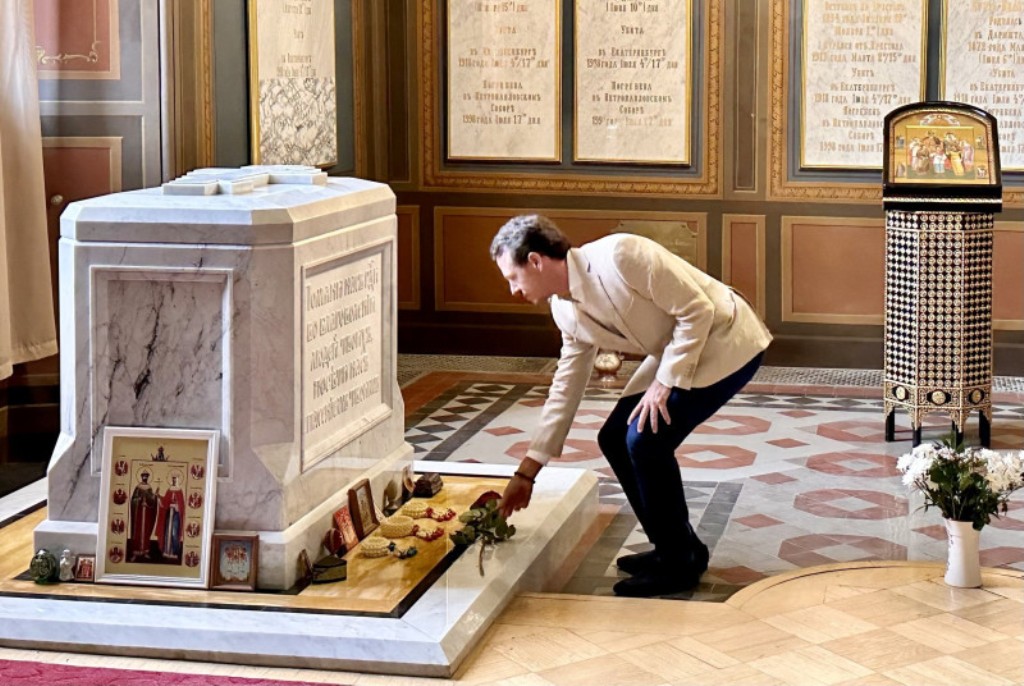
PHOTO © Crown Prince Filip Karadjordjević of Serbia
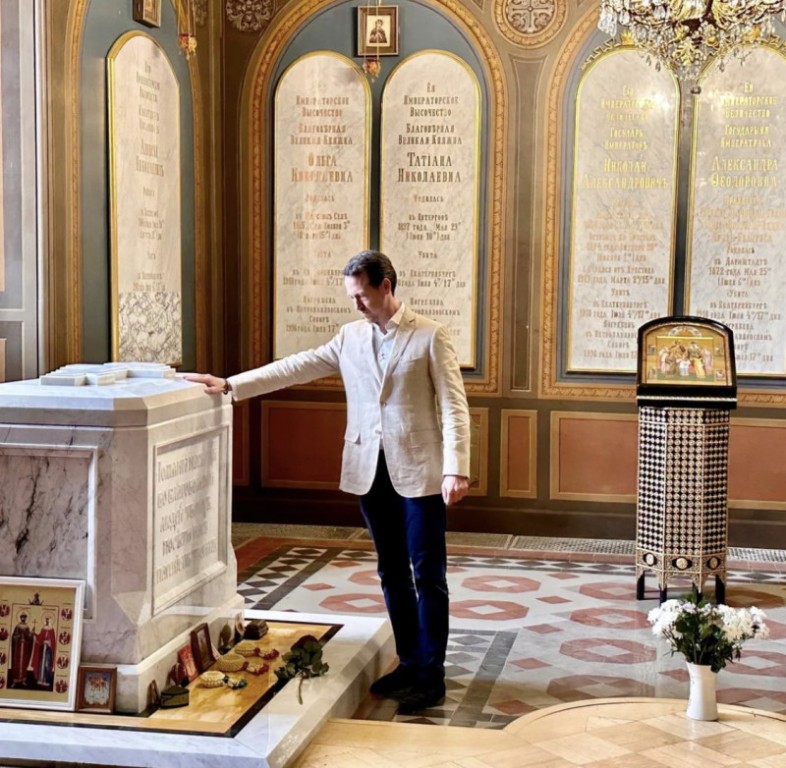
PHOTO © Crown Prince Filip Karadjordjević of Serbia
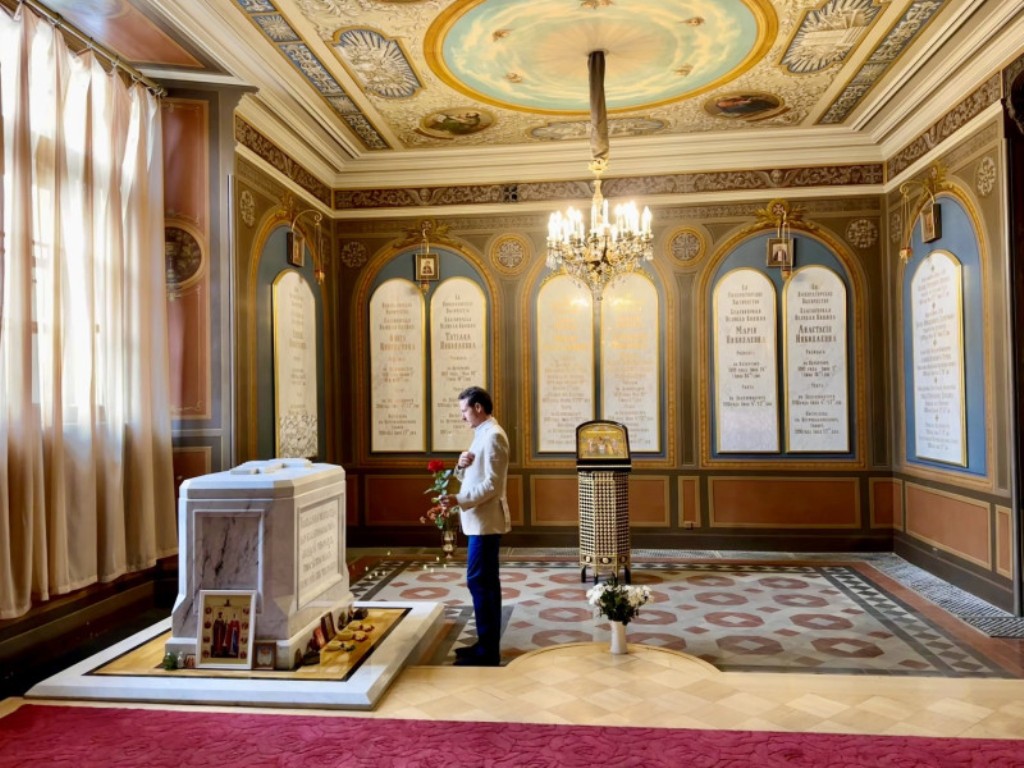
PHOTO © Crown Prince Filip Karadjordjević of Serbia
***
For Serbians, Emperor Nicholas II is revered both as a saint and as a statesman, for his efforts in coming to Serbia’s aid during the First World War. Recall that it was Serbia – where thousands of White Russian emigrants were warmly received – and the veneration of Nicholas II as a saint was born. It was in Belgrade that the first museum of personal belongings of the Russian emperor appeared. The museum opened in the Russian House of Culture in the center of the Serbian capital in the 1930s. It was in Serbia, long before the emperor was glorified in the face of saints, his first images appeared in churches, and Belgrade is the only capital in the world where a street bears his name, something not found in either St. Petersburg or Moscow.
During the early 20th century, the October Revolution of 1917 and the subsequent Russian Civil War, each contributed to the mass resettlement of Russians in Serbia. In April 1919 and the early 1920s, the government of the Kingdom of Serbs, Croats and Slovenes, welcomed tens of thousands of anti-Bolshevik Russian refugees.
The defeat of the White Russian Army under General Pyotr Nikolayevich Wrangel (1878-1928) in Crimea, resulted in a third wave of emigration (November-December 1920), of another 20,000 emigrants.
The Kingdom extended its hospitality as gratitude to Russia for it’s intervention on the side of Serbia at the outbreak of World War I. Thus, the Kingdom of Serbs, Croats and Slovenes, became home for 40,000 exiles from the Russian Empire of Emperor Nicholas II. The mass exodus of refugees from war-torn Bolshevik Russia, prompted the founding of the State Commission for the Arrangement of Russian Refugees in Belgarde.
© Paul Gilbert. 17 August 2024
 Nicholas II
You must be logged in to post a comment.