
PHOTO: Wedding of Nicholas II and Alexandra Feodorovna
Painted in 1895 by the Danish artist Laurits Tuxen (1853-1927)
From the collection of the State Hermitage Museum, St. Petersburg
NOTE: the following is an excerpt from the original full-length version (researched from Russian sources), which will be published in the No. 14 – Winter 2025 issue of my semi-annual periodical SOVEREIGN: The Life and Reign of Emperor Nicholas II. The full article will feature expanded text, with more facts and information, and illustrated with additional photos. This issue is scheduled to be released in December 2024 – PG
***
Today 27th (O.S. 14th) November – marks the 130th anniversary of the wedding of Emperor Nicholas II and Grand Duchess Alexandra Feodorovna[1] in St. Petersburg.
It was on this day in 1894, that the ceremony took place in the Church of the Saviour Not Made by Hands [aka the Grand Church] (the home church of the Imperial Family) of the Winter Palace in St. Petersburg.
Plans for the wedding, had originally been set for the spring of 1895, followed by a week of public celebrations. The death of Emperor Alexander III on 2nd November [O.S. 20th October], however, put an end to such plans. The date for the wedding was now scheduled to take place on the birthday of Nicholas II’s mother, Maria Feodorovna, which would allowed for court mourning to be somewhat relaxed.
To announce the historic occasion, a manifesto was issued, proclaiming “In the midst of deep sorrow, with which Our hearts and those of all the faithful sons of Russia are filled, may this day be a bright herald of the people’s hopes for the continuation of God’s mercy to Us in the new reign that has come.”
Invitations were sent out, the dress code was determined. Russian gentlemen had to appear in full regimental uniform, officials had to dress in uniforms, according to the Table of Ranks of Peter the Great. Russian ladies had to appear in ceremonial court dresses, and foreign women were invited to appear in evening dresses, with full awards and jewelry.
The wedding was attended by Nicholas’s mother, the recently widowed Dowager Empress Maria Feodorovna, as well as members of the Russian Imperial Family, which included 14 grand dukes, 6 grand duchesses. In addition, were Kings, Queens, Princes and Princesses from more than a dozen royal houses of Europe: Denmark, Greece, Great Britain, Roumania, Prussia, Oldenburg, Hesse and by Rhine, Saxe Coburg, Mecklenburg, Mecklenburg-Stelitz, Baden, Leuchtenberg, and Saxe-Altenburg.
As photography was not permitted during weddings, baptisms, funerals, etc., in Orthodox churches, we only have paintings and illustrations which depict the wedding. This restriction has been somewhat relaxed in more modern times.
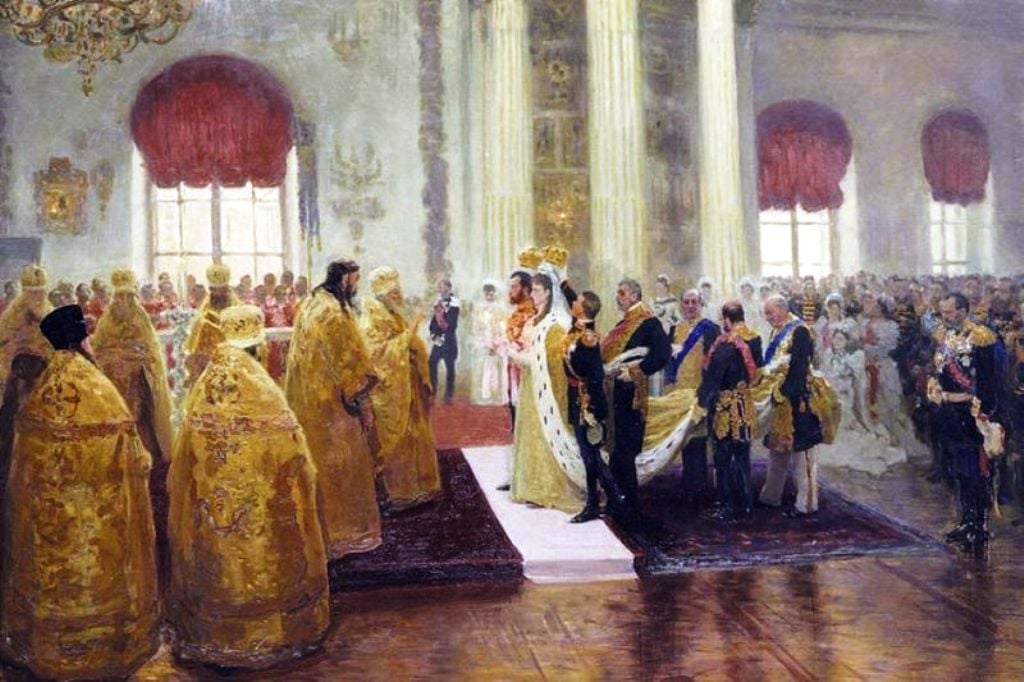
PHOTO: Wedding of Nicholas II and Alexandra Feodorovna
Painted in 1894 by the Russian artist Ilya Yefimovich Repin (1844-1930)
From the Collection of the State Russian Museum, St. Petersburg
On the day of the wedding, in the morning, the Emperor left the Anichkov Palace for the Winter Palace in an open landau, accompanied by his brother, Grand Duke Mikhail. The Dowager Empress went in a closed carriage to the Sergiev Palace – the St. Petersburg residence of Grand Duke Sergei and Grand Duchess Elizabeth, from where she escorted Alexandra Feodorovna to the Winter Palace.
Nicholas Alexandrovich was dressed in the red uniform of a hussar colonel with orders and an orange sash of the Order of Hesse-and-by-Rhine. The bride wore a dress of white silk with silver flowers. Her English Honiton lace veil was created by her maternal grandfather, Prince Albert of Saxe-Coburg and Gotha (1819-1861). This veil was worn at the weddings of the brides mother Princess Alice (1843-1878) and her sisters. Alexandra Feodorovna also wore the traditional Romanov Imperial Wedding Crown, a 475-carat necklace and earrings, which belonged to Catherine the Great. Her ensemble was completed by a golden brocade robe with a long train, lined with ermine. Eyewitnesses at the wedding noted that “she shone with fragile and pure beauty.”
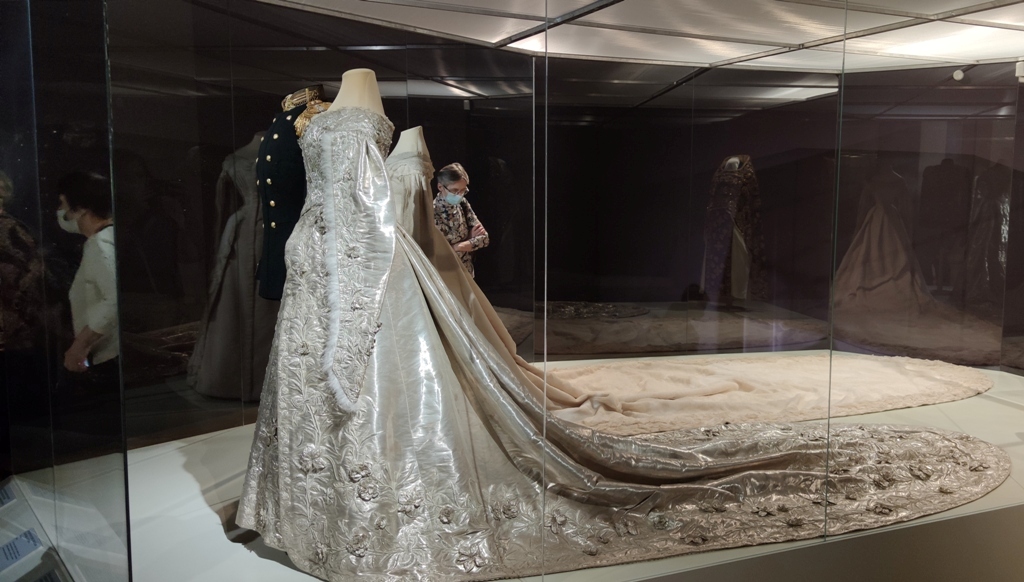
PHOTO: the wedding dress of Alexandra Feodorovna
From the Collection of the State Hermitage Museum in St. Petersburg
It is interesting to note, that the wedding dress of Empress Alexandra Feodorovna was based on a sketch made by her sister Grand Duchess Elizabeth Feodorovna. According to tradition, Romanov brides donated their wedding dresses to the church after their wedding. However, Alexandra Feodorovna, chose to keep hers, which is why her wedding dress has survived to this day, and now in the Collection of the State Hermitage Museum in St. Petersburg.
At noon, the procession of the cross to the Church of the Saviour Not Made by Hands [aka the Grand Church], which served as the home church of the Imperial Family began. The cannons of the Peter and Paul Fortress announced the beginning of the ceremony. The procession was led by Dowager Empress Maria Feodorovna, who accompanied her future daughter-in-law. Nicholas Alexandrovich followed behind.
The service was conducted by the imperial confessor and head of the palace clergy, Protopresbyter Ioann Yanyshev (1826-1910). Nicholas II stepped onto the platform, followed by Alexandra Feodorovna. The couple exchanged rings and wedding vows, walked around the lectern, and kissed the cross. After the prayer, Nicholas and Alexandra were declared husband and wife. Church bells rang all over St. Petersburg, while cannons roared from the Peter and Paul Fortress.
Nicholas II recalled that the wedding ceremony was a torment for both him and his young wife: “The thought that our dear, selflessly beloved Papa was not among us, did not leave me during the wedding; I had to exert all my strength not to burst into tears there in the church in front of everyone.”
Thus, the modest wedding ceremony took place in an atmosphere of deep mourning for the deceased Emperor Alexander III. Due to court mourning, there was no reception, nor honeymoon. During the 12 months in which the Imperial Court was in mourning, Nicholas II and Alexandra Feodorovna seldom appeared in public and did not make any journeys. The newly married couple settled together with Dowager Empress Maria Feodorovna in the Anichkov Palace on Nevsky Prospekt in St. Petersburg.
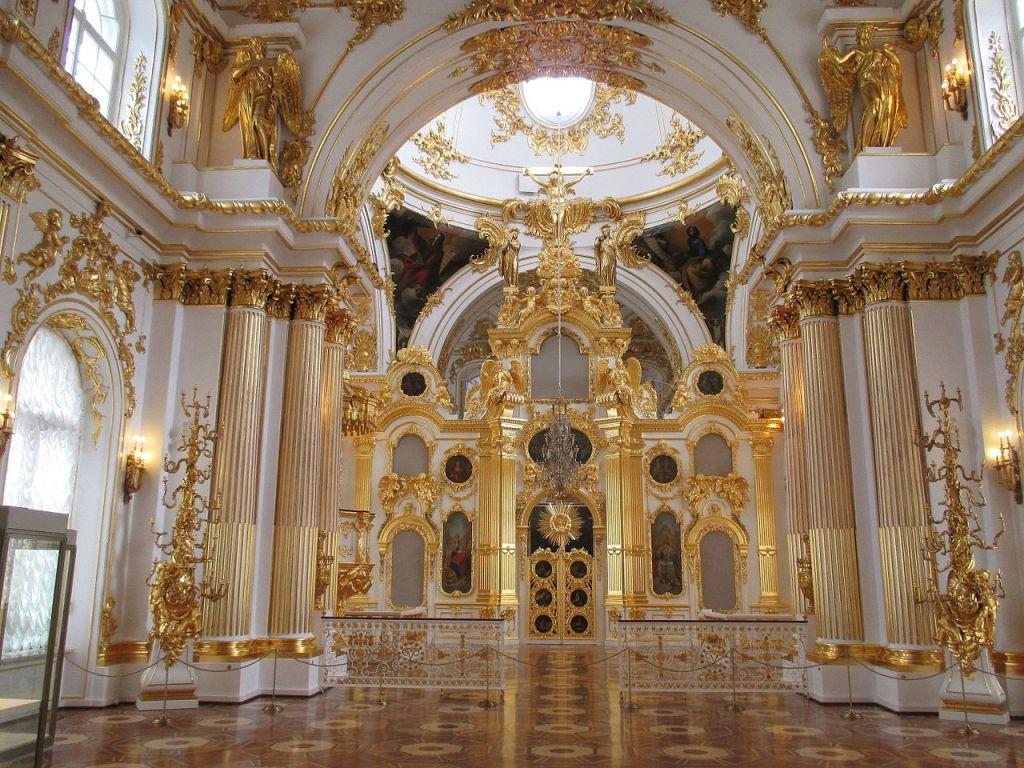
PHOTO: the Church of the Saviour Not Made by Hands 0 the home church of the Imperial Family
as it looks today, in the Winter Palace in St. Petersburg
NOTES:
[1] Following her conversion to Orthodoxy, Princess Alix of Hesse and by Rhine took the name Grand Duchess Alexandra Feodorovna, in honour of the Feodorovskaya Icon of the Mother of God, patroness of the Romanov dynasty. While her conversion was completely voluntary, it was required by her marriage to the Emperor as well as her future role as Empress.
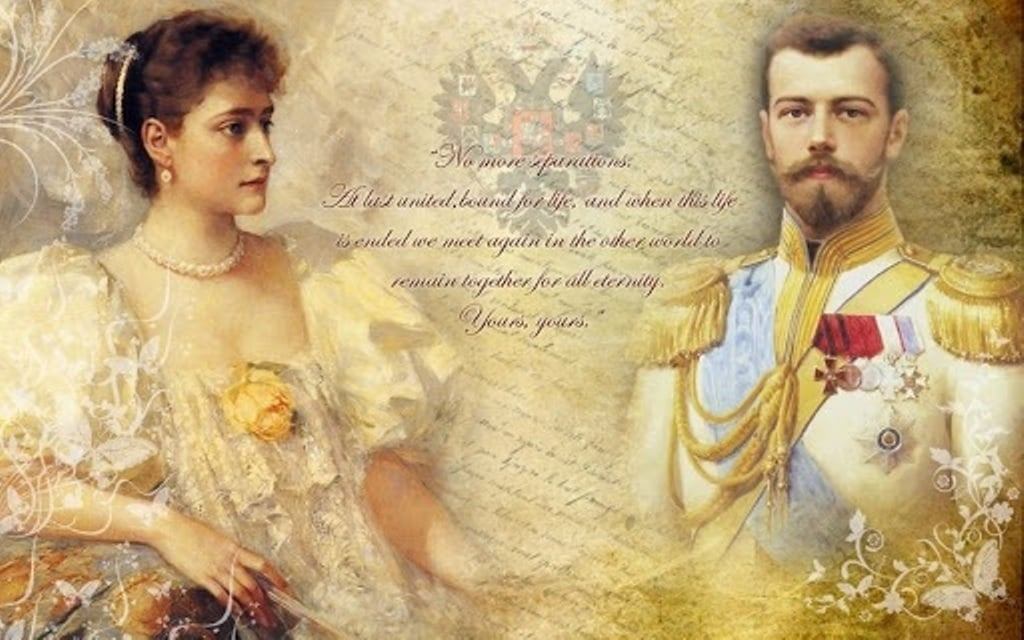
“No more separations. At last united, bound for life, and when this life is ended we
meet again in the other world to remain together for all eternity. Yours, yours.”
© Paul Gilbert. 27 November 2024
 Nicholas II
You must be logged in to post a comment.