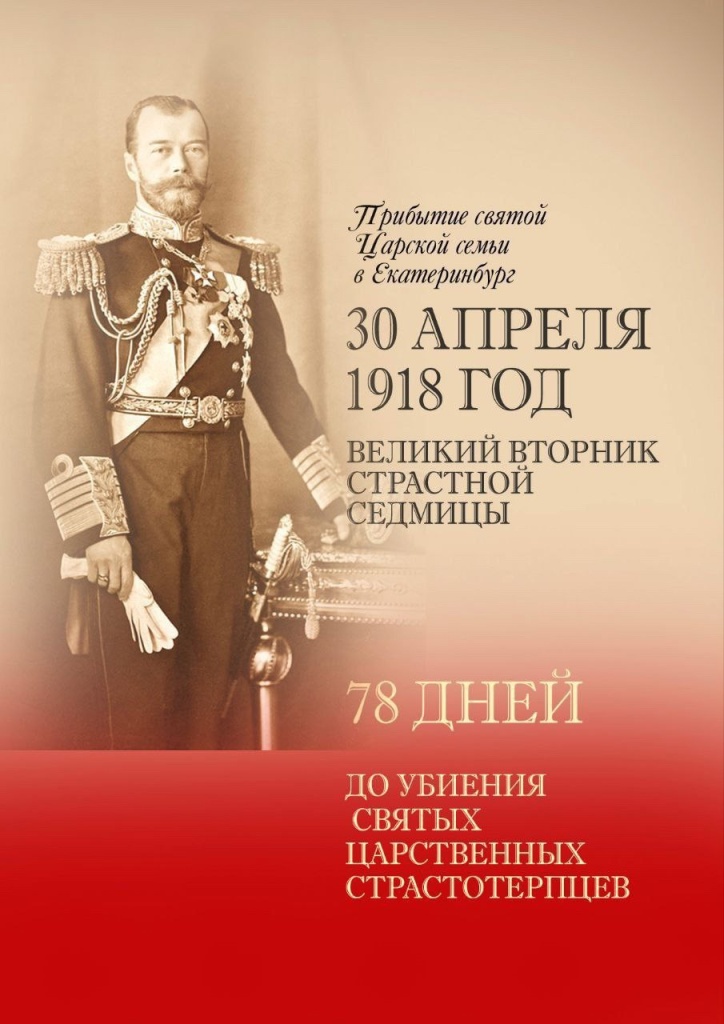
прибытие святой царской семьи в екатеринбуре. 30 април 1918 год. великий вторник старстной седмицы. 78 дней до убиения святых царственных страстотерпцев.
Arrival of the Holy Royal Family in Yekaterinburg. April 30, 1918. Great Tuesday of Holy Week. 78 days before the murder of the Holy Royal Passion-Bearers.
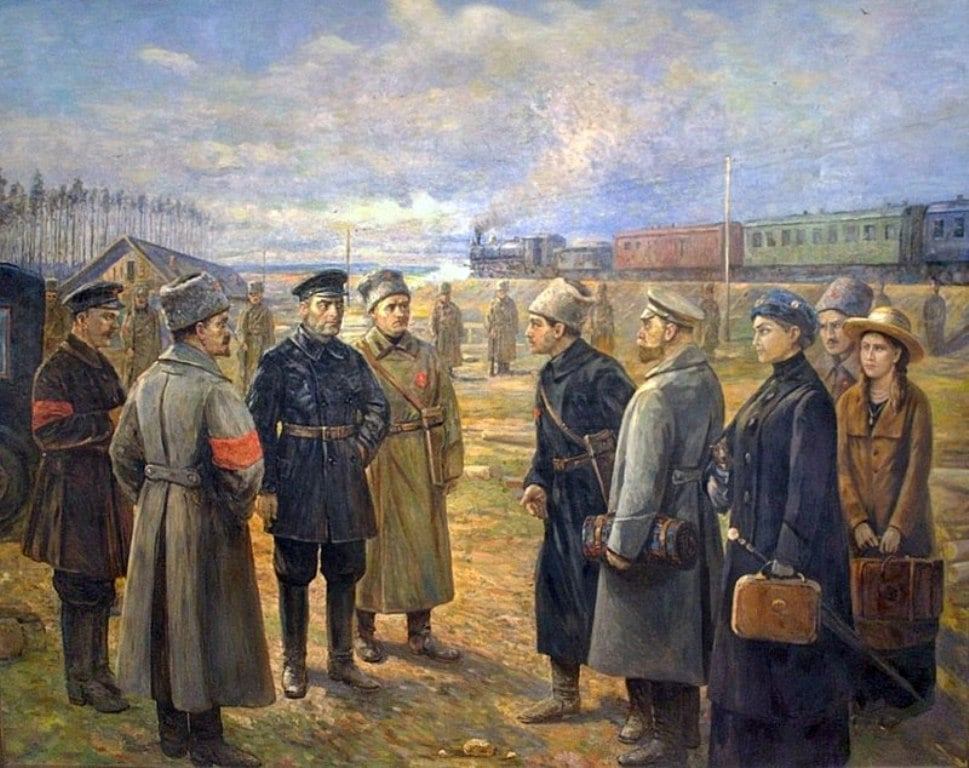
Today marks a very sad anniversary . . . it was on this day – 30th April (O.S. 17th April) 1918, Emperor Nicholas II, Empress Alexandra Feodorovna and Grand Duchess Maria were handed over to the Ural Soviets in Ekaterinburg
Nicholas II wrote the following in his diary:
“At 8.40 we arrived in Ekaterinburg. We stood for three hours in one station. There was a heated dispute between the local commissars and our own. In the end, the first prevailed and the train was moved to another goods terminal. After standing there for an hour and a half, we got off the train. Yakovlev handed us over to the local regional commissar, with whom we drove by motor through empty streets to the accommodation which has been prepared for us—the Ipatiev house. Slowly our people and our things began to arrive, but they would not let Valia through.
“The home is pleasant and clean. We have been given four large rooms. We were not able to unpack our things for a long time, as the commissar, the commandant and the guards captain had not had time to inspect our trunks. Then the inspection was like a customs search, just as strict, right down to the last capsule in Alix’s travelling medicine kit. This annoyed me so much that I expressed my opinion sharply to the commissar. By 9 o’clock we had at last settled in.
“This is how we installed ourselves: Alix, Maria and I together in the bedroom, sharing the dressing room, Demidova in the dining room, Botkin, Chemodurov and Sednev in the hall. The duty officer’s room is by the entrance. In order to go to the bathroom of W.C., it was necessary to go past the sentry at the door of the duty office. There is a very high wooden pallisade built all around the house, about two sajens from the windows, all along there was a line of sentries, in the little garden also.”
PHOTO: “Transfer of the Romanov family to the Ural Soviet” (1927) Artist: Vladimir Nikolayevich Pchelin (1869-1941)
PHOTO: Tsesarevich Alexei Nikolaevich and Archpriest Alexander Petrovich Vasiliev. Livadia, 1912
Alexander Petrovich Vasiliev (1868-1918), was an archpriest, tutor to the children of Tsar Nicholas II, confessor of the Imperial Family, and monarchist.
He was born into a peasant family in the village of Shepotovo, Smolensk Province. He was orphaned at an early age. He studied at the school of the famous pedagogue Sergei Aleksandrovich Rachinsky (1833-1902).
After graduating from school, Rachinsky facilitated Vasiliev’s admission to the Belsk Theological School, after which Alexander Petrovich entered the Bethany Theological Seminary, and then the St. Petersburg Theological Academy. In 1893, he graduated with the degree of Candidate of Theology.
While studying at the Academy, he married Olga Ivanovna. The couple had seven children.
On 19th July 1892, he was ordained to the priesthood and sent to St. Nicholas Church, where he served as rector, in the village of Yam-Izhora, Tsarskoye Selo District.
While studying at the Academy, and following the example of his first teacher S.A. Rachinsky, Vasiliev founded a temperance society. The first sermons on sobriety were delivered in the Church of the Righteous Prince Alexander Nevsky at the famous Vargunin paper mill in Maly Rybatskoye, a village located on the southeastern outskirts of St. Petersburg. Alexander Vasiliev’s sermons inspired the Vargunin workers to create a temperance society at the church. The first meeting was attended by 60 people, the second attracted 146 people.
PHOTO: Tsesarevich Alexei Nikolaevich with his tutors among others . . . from left to right: Assistant Chief of the Palace Police, Colonel N.P. Shepel; Alexei’s “sailor-nanny” A.E. Derevenko; French tutor Pierre Gilliard; Tsesarevich Alexei Nikolaevich; Russian language and literature tutor Pyotr Petrov and Archpriest Alexander Vasiliev. Spala 1912
In May 1894, he was transferred to the Church of the Presentation of the Lord in Polyustrovo, and from 7th September of the same year he combined his service in Sretensky Church with the rectorship of the Church of the Exaltation of the Holy Cross at the Holy Cross Community of Sisters of Mercy.
In 1910, Father Alexander was appointed spiritual father and tutor to the children of Emperor Nicholas II and Empress Alexandra Feodorovna.
According to eyewitnesses, members of the Imperial Family were very fond of the divine services performed by Father Alexander Vasiliev.
In his memoirs, Protopresbyter Georgy Ivanovich Shavelsky (1871-1951) reflected on Fr. Alexander Vasiliev: “Before his appointment to the Imperial Court, he enjoyed fame in St. Petersburg as an excellent public preacher, a practical teacher of law, and a beloved spiritual father. His excellent spiritual qualities, kindness, sympathy, simplicity, honesty, zeal for carrying out God’s work, and affability endeared him to both his disciples and his flock. …”
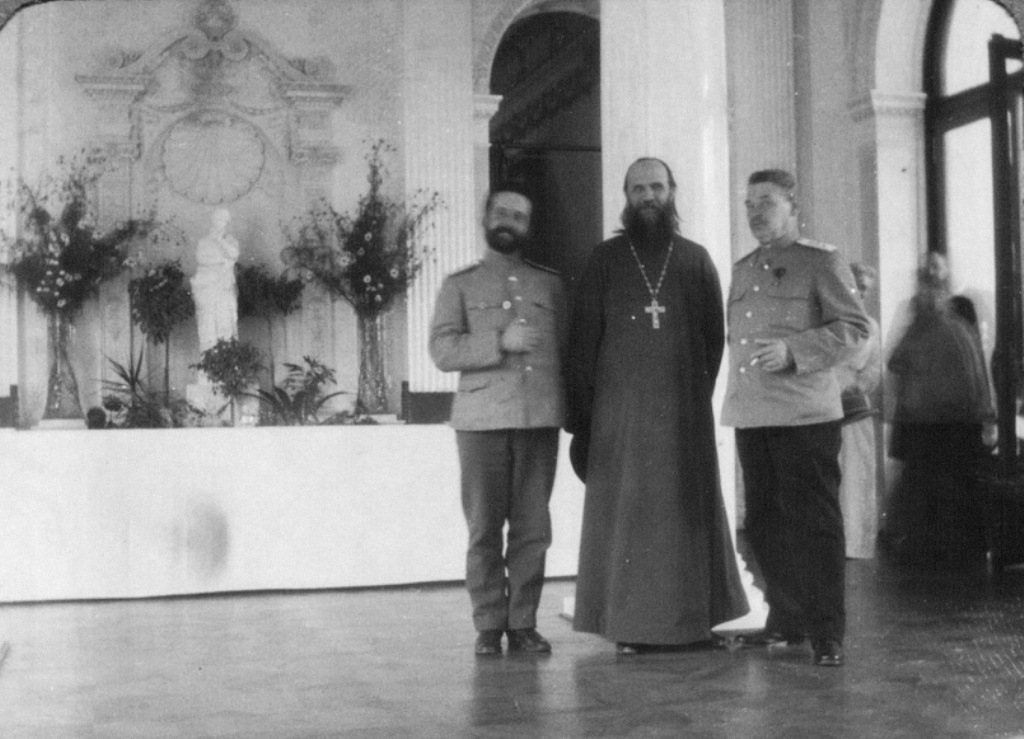
PHOTO: unidentified man (left), Archpriest Alexander Vasiliev (center) and Russian language and literature tutor Pyotr Petrov (right). Livadia Palace, Crimea. 1913
In 1913, he became an archpriest and first rector of the Feodorovsky Sovereign Cathedral in Tsarskoye Selo. In 1914, he was appointed as confessor to the Imperial Family.
He took an active part in the right-wing monarchist movement; in 1910 he was elected a member of the Russian People’s Union of the Archangel Michael (RNSMA). He attended the opening of the Conference of Monarchists, held in Petrograd on 21-23 November 1915.
In 1915, through the efforts of Father Alexander, a wooden church was built at the Tsarkoselskoye Brethren Cemetery, where soldiers of the Tsarskoye Selo garrison and soldiers who died in the hospitals of Tsarskoye Selo were buried.
On 7th September 1916, his son Sergei Alexandrovich, an officer of the Pavlovsk Regiment, died at the Front. Out of sympathy for her spiritual father’s grief, Empress Alexandra Feodorovna offered to transfer his other sons from combat units to the rear, but he refused, but his son’s death undermined his health.
PHOTO: Archpriest Alexander Vasiliev in Fedorovsky Gorodok in Tsarskoye Selo. 1916
Following the February 1917 Revolution and the abdication of Emperor Nicholas II, the head of the new Provisional Government Alexander Kerensky (1881-1970) decided to send the Imperial Family into exile to Siberia.
On the evening before their departure, Archpriest Alexander Vasiliev served a parting moleben before the Znamensky Icon of the Mother of God. With the departure of the Imperial Family to Tobolsk, the priest’s health began to deteriorate noticeably, and he began to experience severe pain in the heart.
In early 1918, he was appointed rector of the Church of St. Catherine the Great Martyr in Yekateringof. The monumental 5-domed church featured an altar and two side-chapels: the northern one dedicated to the Martyr Alexandra and the southern one to St. Nicholas the Wonderworker. The iconostasis was made by the Novgorod iconographer Chistyakov. The bell tower was built according to the project of the architect Vasily Dorogulin in 1871-1873. The church was destroyed by the Soviets in 1929.
On 29th August 1918, Father Alexander Vasiliev was arrested by the Cheka in Petrograd. On 5th September – the first day of the Red Terror – Archpriest Alexander Vasiliev was shot by a Bolshevik firing squad, along with the clergy of St. Catherine’s Church. Like so many victims of Lenin’s Red Terror, Vasiliev’s remains were most likely thrown into an unmarked mass grave and forgotten.
PHOTO: Emperor Nicholas II, Empress Alexandra Feodorovna and their daughter Grand Duchess Maria Nikolaevna
On this day – 26th (O.S. 13th) April 1918 – Emperor Nicholas II along with members of his family were transferred from Tobolsk to Ekaterinburg. It was on this day, that they embarked on their final journey to Golgotha.
Emperor Nicholas II, Empress Alexandra Feodorovna, along with their daughter Grand Duchess Maria Nikolaevna departed Tobolsk for Ekaterinburg. They were accompanied by several members of their retinue: Prince Vasily Aleksandrovich Dolgorukov (1868-1918), Dr. Eugene Botkin (1865-1918), Anna Demidova (1878-1918), Terenty Chemodurov (1849-1919), and Ivan Sednev (1881-1918). All but one of their faithful retainers would survive the dreadful fate which awaited them.
In the early morning hours of 26th (O.S. 13th) April 1918 they departed Tobolsk under the escort of Vasily Yakovlev’s detachment, which comprised of a convoy of nineteen tarantasses (four-wheeled carriages). Yakovlev was acting on order from the Bolshevik leadership to “deliver Nicholas II to the red capital of the Urals” – Ekaterinburg.
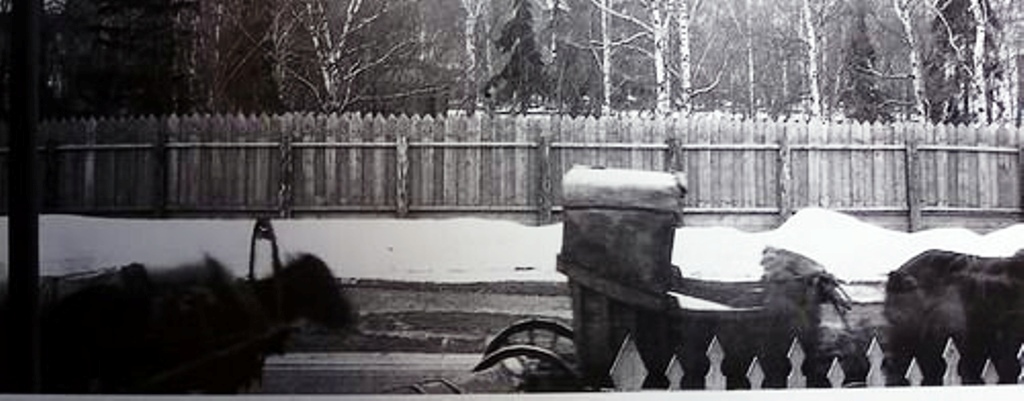
PHOTO: A very sad photo . . . the tarantasses which transported Emperor Nicholas II, Empress Alexandra Feodorovna and Grand Duchess Maria Nikolaevna from Tobolsk to Tyumen, and then by train to Ekaterinburg. This photo was hastily shot by Charles Sydney Gibbes from the window of the Governor’s Mansion on the morning of 26th (O.S. 13th) April 1918.
As Tsesarevich Alexei Nikolaevich was very ill, he remained in Tobolsk, with his three sisters Grand Duchesses Olga, Tatiana and Anastasia, as well as Pierre Gilliard, Charles Sydney Gibbes and other members of the family’s retinue. They reunited with their parents and sister in Ekaterinburg the following month.
Nicholas II wrote the following entry in his diary that day: “At 4 o’clock in the morning we said goodbye to our dear children and climbed into the tarantases. The weather was cold, with an unpleasant wind, the road was very rough with terrible jolts from a seized-up wheel.”
On the night of 24/25th April 2025, American author Greg King died, aged 61. The cause of death was cardiovascular disease.
King is the author of more than a dozen biographies of prominent historical figures, but he is perhaps best known for his writings about Russia’s last tsar Nicholas II (2006), Empress Alexandra Feodorovna (1994), the Grand Dukes Konstantinovich (2006), Prince Felix Yusupov (1996) and Anastasia/Anna Anderson (2010).
His works on European and British royalty include biographies on King Ludwig II of Bavaria (1996), Crown Prince Rudolph of Austria, Archduke Franz Ferdinand of Austria, Wallis Simpson Duchess of Windsor (1999) and the Court of Queen Victoria (2007).
His non-royalty works included studies of the Luisitania (2015) and the Andrea Doria (2020).
A number of King’s works were co-authored by his long-time friend Penny Wilson.
In addition, Greg King was a frequent onscreen expert and commentator for historical documentaries, his work has appeared in numerous publications including The Washington Post, Majesty Magazine, and Royalty Magazine.
On a personal note, I only met Greg on one occasion, and that was in the mid-1990s. He was among the first group of American and Canadian travellers who took part in my first organized tour of Russia: The World of Nicholas and Alexandra. We communicated by telephone and email for some years after that, and then we parted ways. I continued to follow his work.
My favourite book written by King is The Court of the Last Tsar: Pomp, Power and Pageantry in the Reign of Nicholas II (2006). I recall him telling me of his plans to write this particular book, during our visit to St. Petersburg and Moscow all those many years ago. In addition, is his book A Life for the Tsar: Triumph and Tragedy at the Coronation of Emperor Nicholas II of Russia (2016).
While I did not agree with some of Greg’s research, I have to give credit where credit is due. He had a large and dedicated following and his passing will leave a large void in research on the life and reign of Russia’s last Tsar and his family. His death at such an early age is indeed tragic, may he rest in peace.
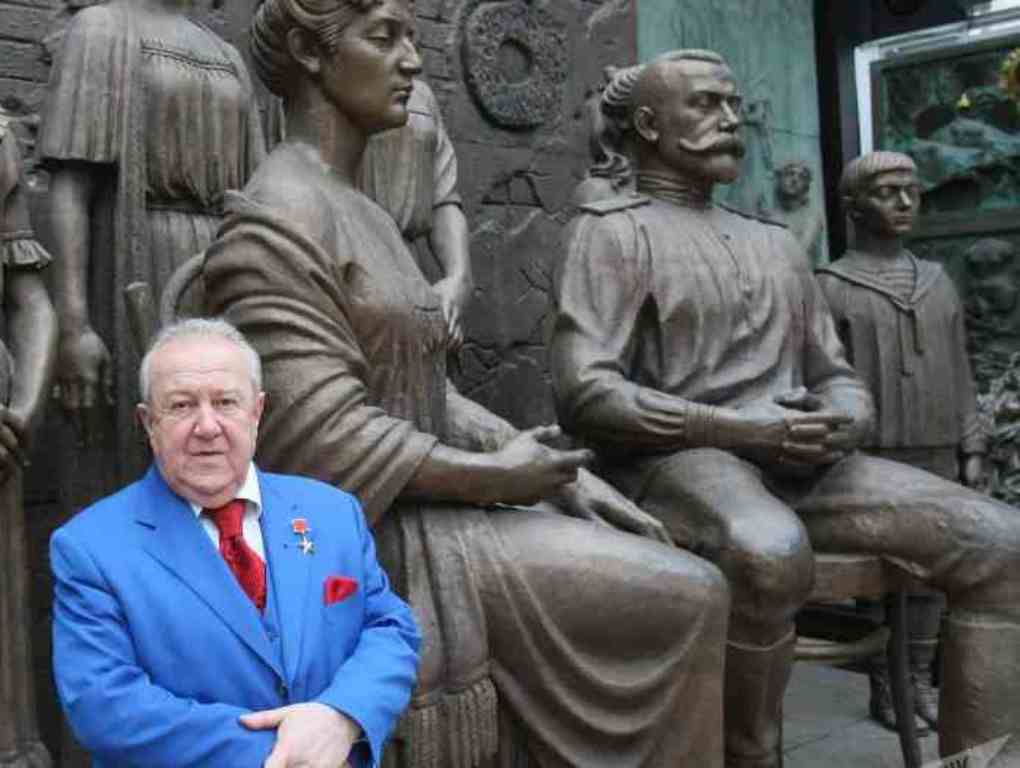
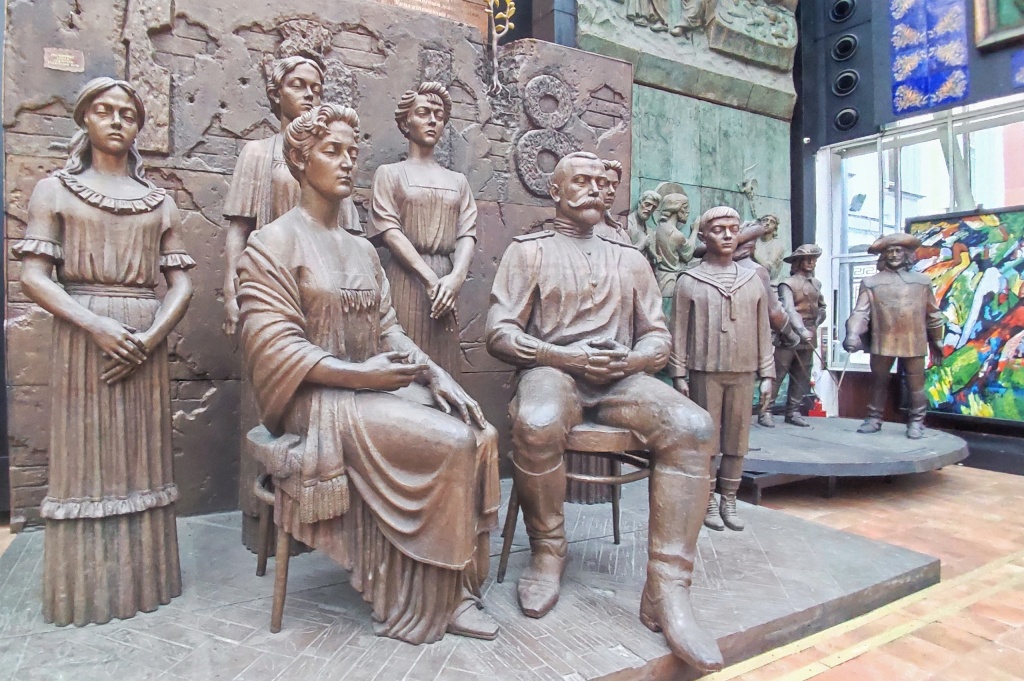
PHOTO: Zurab Tsereteli standing in front of his sculptoral composition ‘Night at the Ipatiev House’, depicting Nicholas II and his family, at the Zurab Tsereteli Art Gallery in Moscow– see photo at the end of this post for a full view
On Tuesday, 22nd April 2025, the famous Russian-Georgian sculptor and President of the Russian Academy of Arts Zurab Konstantinovich Tsereteli died in Moscow, after a lengthy illness, at the age of 91. The cause of death was cardiac arrest.
Tsereteli was born in Tbilisi (Georgia) on 4th January 1934. He studied at Tbilisi State Academy of Arts, graduating in 1958. The same year, he married Inessa Alexandrovna Andronikashvili (1937-1998), a princess from a noble Georgian family that claimed patrilineal descent from Byzantine Emperor Andronikos I Komnenos (1118-1185).
The sculptor has been the president of the Russian Academy of Arts since 1997. Tsereteli is known for his works not only within Russia, but in many countries around the world. Among them are monuments to Nikolai Gogol (Rome, 2002), St. Nicholas the Wonderworker (Bari, Italy, 2003), Pope John Paul II (Ploermel, France, 2006), “The Three Musketeers” (Condom, France, 2010), monument to Marina Tsvetaeva (Saint-Gilles Croix de Vi, France, 2012), the Apostle Paul (Veria, Greece, 2013), a monument to Nicholas II (Republika Srpska, 2014), “The Birth of the New World” (Arecibo, Puerto Rico, 2016) and others. In 2018, Tsereteli donated a monument to the poet Alexander Griboyedov to the Russian Drama Theater named after A.S. Griboyedov in Tbilisi.
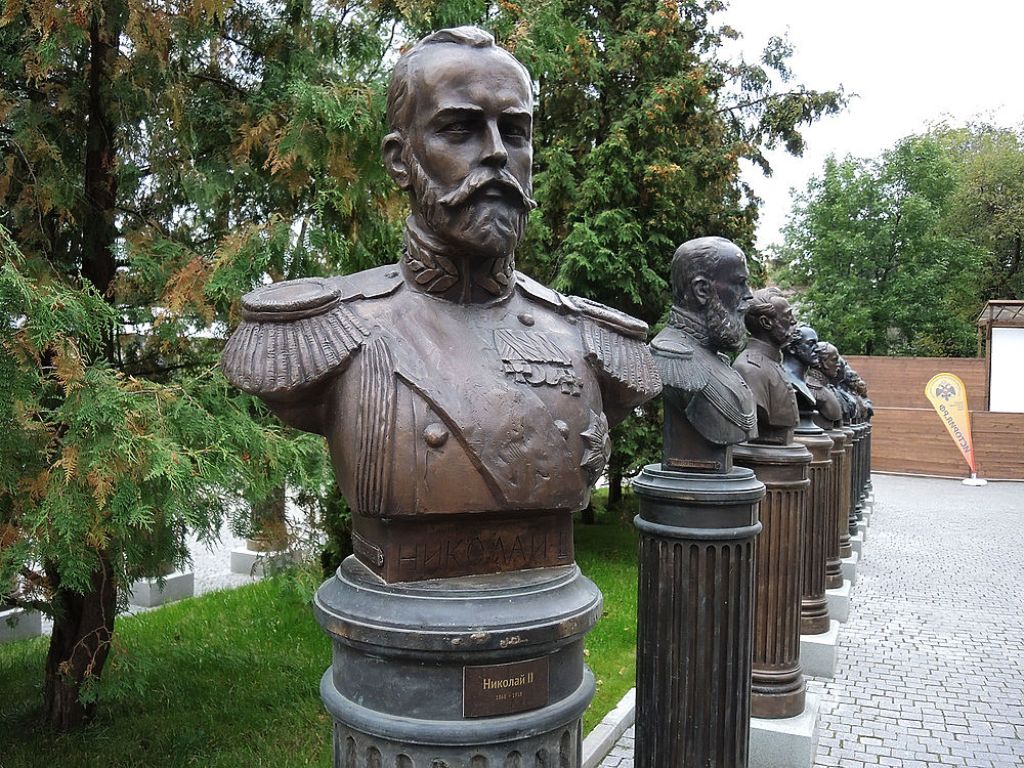
PHOTO: the ‘Alley of Rulers’ in Moscow, features bust-monuments of Russia’s political leaders and emperors, including Nicholas II
In Russia, some of Zurab Tsereteli’s most famous works are “Night at the Ipatiev House” (Moscow, 2007), Princess Olga (Pskov, 2003), “Wives of the Decembrists, The Gates of Destiny” (Moscow, 2008), among many others. On 31st May 2024, a magnificent equestrian monument to Emperor Alexander III was unveiled and consecrated in the city of Kemerovo, the capital of Kuzbass, situated in Western Siberia.
In 1997, by order of the Moscow government, a 98-meter monument to Peter the Great was opened at the western confluence of the Moskva River and the Vodootvodny Canal in central Moscow. The then mayor Yuri Luzhkov (1936-2019) criticized the monument for it’s “gigantism and bad taste”. There were protests demanding the dismantling of the sculpture. In 2008, the monument was included in the list of the ugliest man-made structures in the world.
On 1st October 2024, the ‘Alley of the Rulers of Russia’ opened at Boldino, the former estate of the outstanding statesman and historian Vasily Nikitich Tatishchev (1686-1750), near Moscow. This sculptural composition by Zurab Tsereteli consists of 43 busts of historical figures who have led Russia over its more than 1,000 year history – from Prince Rurik to the Romanovs to the first President of the Russian Federation Boris Yeltsin.
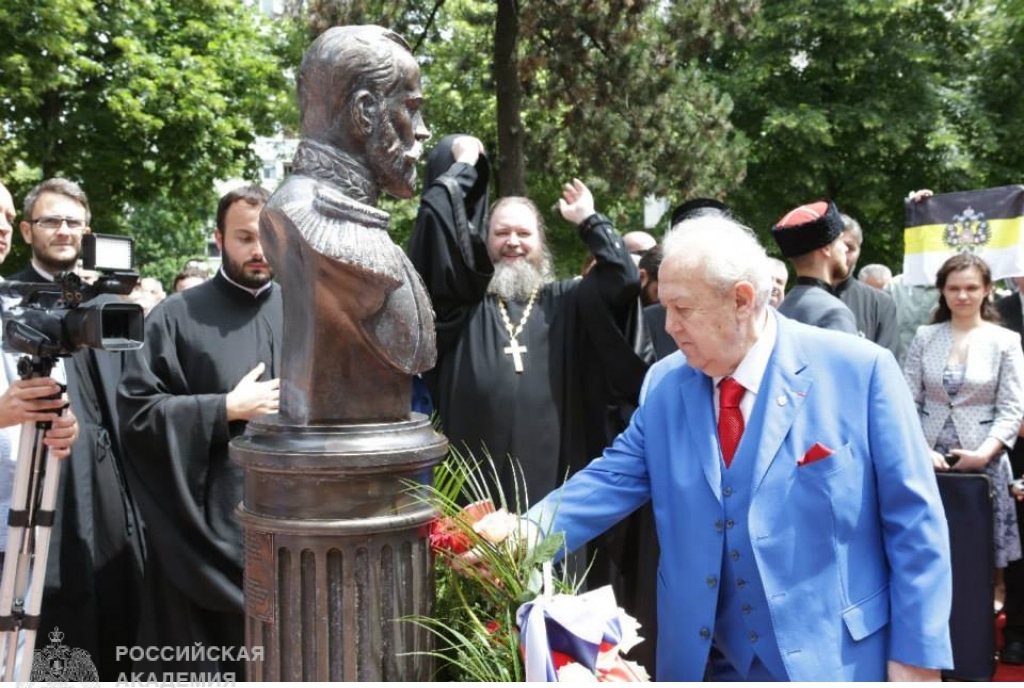
PHOTO: Zurab Tsereteli at the unveiling of his bust-monument to Nicholas II, in Banja Luka, the capital of the Republika Srpska (Bosnia and Herzegovina), on 21st June 2014
Tsereteli was the Founder of the Moscow Museum of Modern Art (1995), the Zurab Tsereteli Art Gallery (2000) and the Museum of Modern Art in Tbilisi (Georgia, 2012). He is the author of more than 5 thousand works of painting, graphics, sculpture, frescoes and mosaics, however, he gained the greatest fame as a sculptor-monumentalist. In 1995–2000, he participated in the reconstruction of the Cathedral of Christ the Saviour in Moscow.
According to the sculptor’s grandson Vasily Tsereteli, a farewell to Tsereteli, will be held on 23rd April, in the Cathedral of Christ the Saviour in Moscow. Tsereteli will be buried on Sunday, 27th April, in the Mtatsminda Pantheon of Writers and Public Figures in Tbilisi, Georgia where his wife rests.
PHOTO: Zurab Tsereteli’s‘Night at the Ipatiev House’ (2007), depicting Emperor Nicholas II and his family, at the Zurab Tsereteli Art Gallery in Moscow
In a statement issued by Maria Zakharova, a representative of the Russian Foreign Ministry: Zurab Konstantinovich Tsereteli will be remembered as a world-renowned artist and sculptor, a public figure who knew “neither borders nor obstacles in strengthening peace and supporting creativity.
“He will live on, not only in our hearts, but also through his works: in stained glass windows and enamels decorating foreign missions, and in monuments and sculptures installed in different parts of the world,” she added.
DISCLAIMER: the following article is based on the research of Russian historian and author Peter Multatuli, and does not reflect the opinion of the administrator of this blog, it is published here for information purposes only. Please read my comments at the end of this article – PG
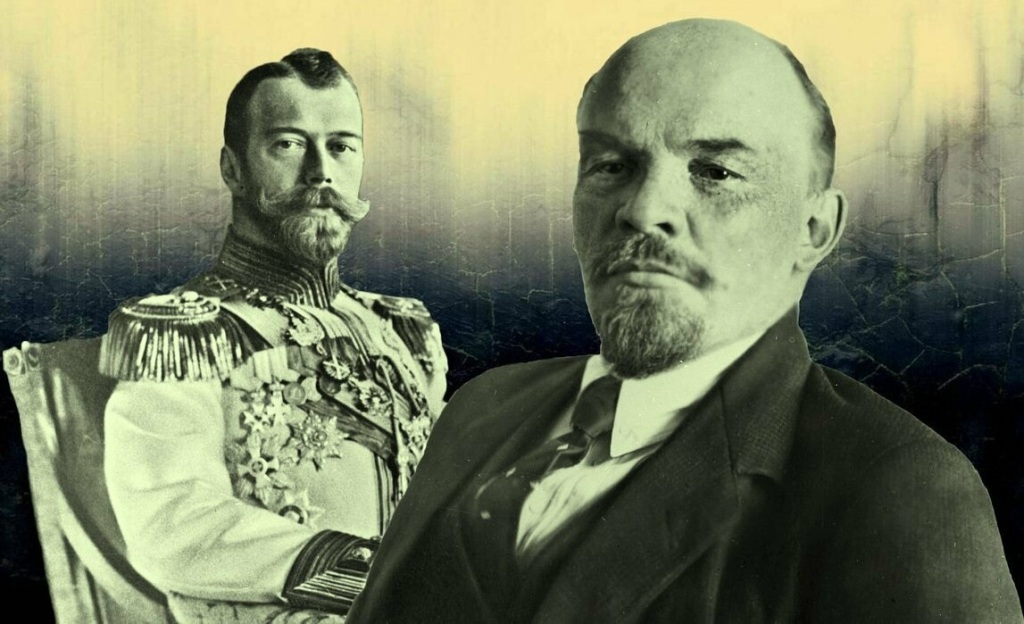
To this day, the question of whether the execution of Emperor Nicholas II and his family was carried out on Vladimir Ilyich Lenin’s order or not, remains the subject of ongoing debate. Some historians argue that the leader of the proletariat did not intend to kill the Tsar, and that the “liquidation” of Nicholas II, his wife and their children came as a complete surprise to the Bolshevik leader.
“Take under your protection!”
According to Peter Multatuli, author of the book Император Николай II. Мученик (2018) [Emperor Nicholas II. Martyr], Lenin took the house arrest of the Tsar for granted. At least, the minutes of the meeting of the Council of People’s Commissars chaired by Lenin on 2nd May 1918 testify to the fact that shortly after Nicholas II was transferred to Ekaterinburg. Lenin was in Moscow at that time, and persistent rumors spread around the capital, fueled by the press, that the Tsar had already been killed. Lenin ordered his closest assistant and secretary, Vladimir Dmitrievich Bonch-Bruyevich (1873-1955), to send a telegram to Ekaterinburg with a request to confirm or deny these rumours.
Without waiting for an answer, Lenin sent the commander of the North-Ural-Siberian Front, Reinhold Iosifovich Berzin (1888-1938), to the Ipatiev House to check. Berzin reported that as of 21st June, all members of the Imperial Family including the Tsar himself were alive, and that he considered the various speculations about their murder to be provocations. As Russian historian and author Yuri Alexandrovich Zhuk writes in his book Гибель Романовых (2009) [The Death of the Romanovs], Lenin in turn ordered Berzin to “take the entire Imperial Family under his protection and prevent any harm against them.” And finally, Vladimir Ilyich added that Berzin would be responsible for carrying out the execution of this order with his own life. History of course has confirmed that such an order was not carried out.
Lenin’s plans
For what purpose did Lenin care so much about the fate of the Tsar? Viktor Kozhemyako in his book Деза. Четвертая власть против СССР (2012) [Deza. The Fourth Estate Against the USSR] cites the words of Mikhail Medvedev-Kudrin (1891-1964), one of the participants in the murder of the Imperial Family, who claimed that the revolutionary Philip Goloshchekin (1876-1941) went to Moscow to see Yakov Sverdlov (1885-1919) – nicknamed “the Black Devil”. However, he failed to obtain permission from the All-Russian Central Executive Committee to kill the Tsar and his family. Allegedly, Sverdlov assured Goloshchekin that he had consulted Lenin on this matter, who insisted that Nicholas II and his wife should be transported to Moscow in order to conduct a show trial, to be covered in the press.
As further evidence that Lenin really intended to organize a show trial of the Tsar, we can cite the fact that in March 1917, that is, almost the day after the abdication of Nicholas II, on the initiative of Lenin, the Supreme Extraordinary Investigation Commission was created, whose duties included investigating the activities of the supreme representatives of the former regime. As E. Gromova and L. Gromov write in the publication “Ural Scaffold” with reference to Alexander Kerensky, the leader of the Provisional Government who appointed the “talented and energetic” investigator Vladimir Mikhailovich Rudnev, who was given a specific goal – to find evidence of treason in the actions of the Tsar and his wife. The “talented and energetic” investigator failed to find any such evidence.
Evidence of Lenin’s intentions
The fact that Lenin really planned a show trial is also supported by a telegram in which the leader of the proletariat assures one of the Copenhagen newspapers that the Tsar was alive, and the rumours of his death are nothing more than the “intrigues of the capitalist press”. In fact, Lenin benefited more from a show trial than from the murder. After all, as Anatoly G. Latyshev notes in his book Рассекреченный Ленин [Declassified Lenin], the mother of Nicholas II, Dowager Empress Maria Feodorovna, was a Danish princess, and his wife Alexandra Feodorovna, her four daughters and sister Grand Duchess Elizabeth Feodorovna were all considered German princesses. There was absolutely no need for Lenin to aggravate relations with Germany.
But the allegation that it was Lenin who ordered the execution of the Tsar and his family was spread by Trotsky. At least, this is the version that appears in Elena Prudnikova’s book Последняя тайна Романовых [The Last Secret of the Romanovs]. In the 1930s, Trotsky wrote in his diary that he learned about the execution when he arrived from the front. Allegedly, Trotsky asked Sverdlov who made such a decision, and he, in turn, replied: “Lenin.”
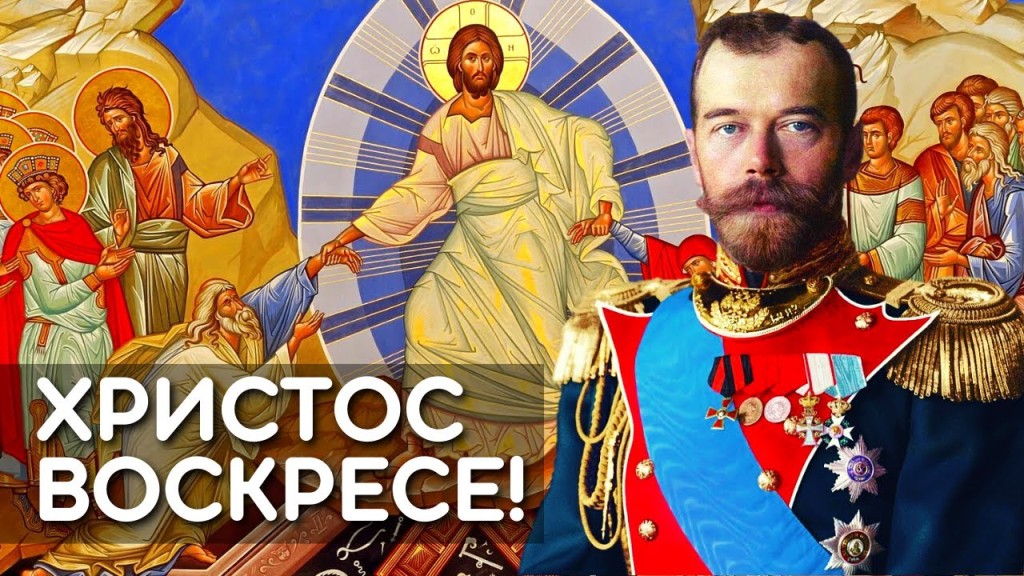
Pascha (Easter) stands as the cornerstone of Orthodox Christian faith, marking the Resurrection of Jesus Christ. The Resurrection is so central to Orthodox Christianity that all elements of the faith revolve around it, making Pascha the most important and joyous celebration of the ecclesiastical year.
“Христос Воскресе / Christ is risen!” With these words, the hearts of all Orthodox Christians are filled with a feeling of ineffable joy and spiritual warmth. The same was true for the Russian Imperial Family, who are now a saints [Russian Orthodox Church Outside Russia] and Passion-Beaers [Moscow Patriarchate of the Russian Orthodox Church].
The Pascha of 1895 was the first for the newly wedded couple. Emperor Alexander III peacefully reposed in the autumn of 1894. His son, the twenty-six year-old Nicholas Alexandrovich, immediately ascended the Russian throne and married the German princess Alice of Hesse on 14th November of the same year. The young Emperor was on the threshold of a different life. A new page of Russian history was unfolding.
The Pascha of April 1918 was the last for the Tsar and his family, three months later, they were to meet their death and martyrdom.
In these two newsreels below, we see the Emperor and his family celebrating Pascha at their Crimean residence Livadia (1914) and at the Headquarters of the Supreme Commander-in-Chief of the Russian Armed Forces in Mogilev (1916) respectively.
VIDEO – duration: 1 minute, 23 seconds with musical background
The music in this newsreel is ‘Христос Воскресе из мертвых!’ Christ is Risen from the Dead!, the main hymn of the Paschal service, recorded in 1909-1912, Moscow. Composer: D. Bortnyansky. Performed by the choir of A. A. Arkhangelsky. Text: “Christ is risen from the dead, trampling down death by death, and giving life to those in the tombs”.
In this newsreel Emperor Nicholas II exchanges khristosovanie (greeting) with officers on the first day of Easter – 6th April 1914 – in the Italian courtyard of the Livadia Palace. The Grand Duchesses Olga, Tatiana, Maria and Anastasia Nikolaevna can be seen standing against the wall.
Every year on the first two days of Pascha, the August Couple exchanged khristosovanie with all the employees of their palace and other ranks who were nearby at that time, as well as with members of deputations from volost elders and Old Believers. The Tsar exchanged khristosovanie with the men, the Empress with the women. The Tsar would exchange the traditional three kisses on alternating cheeks with the men, and the men kissed the Tsarina’s hand, who in turn handed each officer and soldier a porcelain egg.
In 1914, on the first day of Easter, 6th April, the Imperial Family was congratulated by 525 officials, and on the second day, by 893. In 1916, on the first day of Easter, 10th April, some 754 employees, mainly from the Court Department, congratulated Her Majesty at Tsarskoye Selo. On the second day, the Empress was congratulated by 576 officials.
VIDEO – duration: 2 minutes, 59 seconds with musical background
The music in this newsreel is ‘Христос Воскресе из мертвых!’ Christ is Risen from the Dead!, the main hymn of the Paschal service. Performed by the Choir of the St. Vladimir Cathedral in Kiev. Composer Dmitry Stepanovich Bortnyansky . Date of recording: 1914.
The Last Pascha in the Russian Empire was celebrated in April 1916. Less than a year later the Tsar would abdicate the throne ending 300+ years of the Romanov dynasty.
In this newsreel Tsar Nicholas II exchanges khristosovanie (greeting) with His Imperial Majesty’s Own Convoy – the Cossack unit which served as the Tsar’s elite guard, at the Headquarters of the Supreme Commander-in-Chief on the occasion of the feast of Holy Easter. Following behind the Tsar is General Count Alexander Grabbe (1864-1947), who served as the last Commander of His Imperial Majesty’s Own Convoy from 1914 to 1917.
If you look closely, at 00:15 you can see one of the Court photographers readying his camera to photograph the occasion. And at 00:30 you can see standing behind the Tsar, the Minister of the Imperial Court Count Vladimir Frederiks [with his signature long white moustache] and General Vladimir Voeikov, who served as Palace Commandant. Once again, we see the Tsar exchange khristosovanie with the officers, and the traditional three kisses on alternating cheeks with each man. He then hands each officer a porcelain egg. At 2:00 we see the Tsar repeat the khristosovanie with the ranks of soldiers of a regiment. Look at the faces of some of the soldiers, some of who are in awe of seeing their Sovereign.
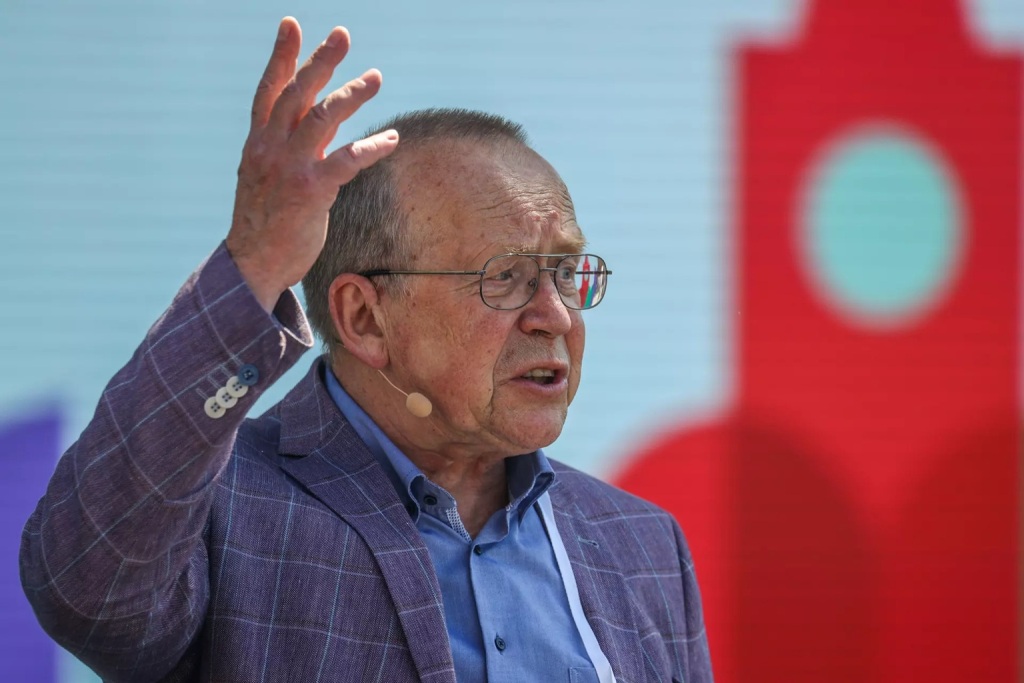
During a recent interview, the popular Russian journalist Yuri Vyazemsky[1], a member of the Patriarchal Council for Culture[2], recipient of numerous church and state awards[3], said that he would have personally shot the Holy Tsar-Martyr Nicholas II.
Vyazemsky, made the shocking statement during an interview on Умницы и умники [Smart Girls and Smart Guys], the television program which Vyazemsky has hosted since 1992.
“The Anointed of God was shot. But I would have shot him myself!” he raged. “Of course, I would not touch his family, but the Tsar deserved to be shot. He destroyed the Fatherland. He was a terrible ruler. He took over a prosperous country and was responsible for the terrible revolution, and a terrible war. Nicholas II made a lot of mistakes,” Vyazemsky vented during the program.
Archimandrite Raphael (Karelin), a hesychast[4], theologian, spiritual writer, reacted angrily to Vyazemsky’s words.
“These spiritual successors of the executioner [Yakov] Yurovsky[5] and those who turned monasteries into prisons and gulags, desecrated the altars of churches, made public toilets out of altars, now want to desecrate with their own dirt – the Tsar and his family,” Raphael wrote about Vyazemsky and his supporters. “They spit in the soul of the people, being confident in their impunity, and considered themselves the new masters of the land. They did not ask the people what they wanted and instead dictated their will and forced their evil plans upon them, and they ignored the indignation and protests . . .”
Vyazemsky’s comments have outraged many Orthodox Christians and monarchists, who are demanding that Vyazemsky’s membership in the Patriarchal Council for Culture be revoked, and that he be stripped of his numerous church and state awards.
NOTES:
[1] Yuri Pavlovich Vyazemsky, born 5th June 1951 in Leningrad, is a Soviet and Russian writer, philosopher, and TV presenter. Candidate of Historical Sciences, Professor, Head of the Department of World Literature and Culture of the Faculty of International Journalism of the Moscow State Institute of International Relations (MGIMO) of the Ministry of Foreign Affairs of the Russian Federation. Honored Worker of Culture of the Russian Federation.
[2] The Patriarchal Council for Culture is one of the synodal institutions of the Moscow Patriarchate of the Russian Orthodox Church. Founded in March 2010, the tasks of the Council include dialogue and interaction with state cultural institutions, creative unions, public associations of citizens working in the field of culture, and other similar organizations in the countries of the canonical space of the Moscow Patriarchate.
[3] On 5th June 2021, Vyazemsky was awarded the Order of Alexander Nevsky, a prestigious State Award of the Russian Federation “for his great contribution to the development of the media and many years of fruitful activity“.
[4] a member of a movement dedicated to contemplation, originating among the Orthodox monks of Mount Athos in the 14th century.
[5] The regicide and chief executioner of the Imperial Family Yakov Mikhailovich Yurovsky (real name and patronymic Yankel Khaimovich, 1878-1938).
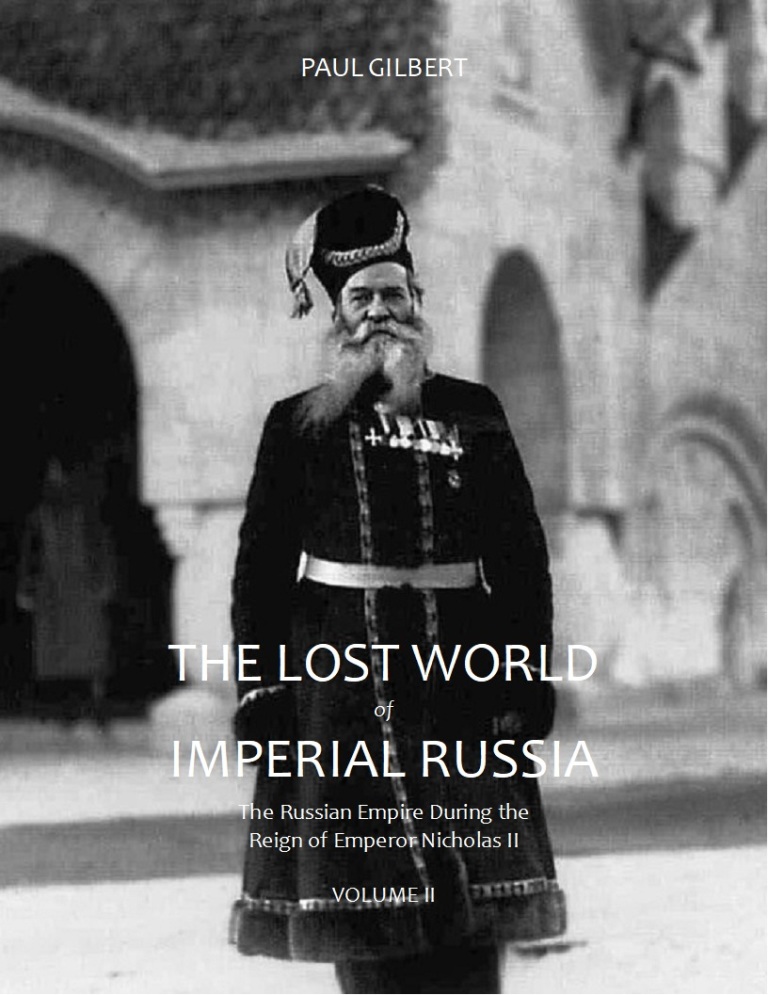
Large 8-1/2″ x 11″ format, 240 pages, featuring 400+ black & white photos
“Keeping the memories of Old Russia alive!”
This second volume of The Lost World of Imperial Russia, features more than 400 additional vintage photographs of architectural gems, people and places of the Russian Empire during the reign of Emperor Nicholas II, between 1894 to 1917. This second volume complements Volume I, which was published in September 2022.
Imperial palaces, palatial mansions, seaside villas, suburban dachas, churches, government buildings, all of which reflect a variety of architectural styles, and many which reflect Imperial Russia itself are featured. In addition, are photographs depicting daily life, social activities, life in the Russian Imperial Army and Navy, and much more.
Like Volume One, this second volume is a photographic record of a lost world, one of great historical value in our understanding and appreciation of the Russian Empire during the reign of Russia’s last Tsar.
Volume II is available in both hard cover and paperback editions, 240 pages, richly illustrated with more than 400 vintage black and white photos! AVAILABLE exclusively from AMAZON.
COVER PHOTO: Andrei Alexeevich Kudinov (1852–1915), standing at the Emperor’s Porch at the Feodorovsky Cathedral in St. Petersburg in January 1914. This is probably one of the last photographs taken of him before his death in June 1915. Kudinov served as bodyguard to Grand Duke Alexander Alexandrovich [future Emperor Alexander III]. In December 1878, he was assigned to Grand Duchess Maria Feodorovna [future Empress Maria Feodorovna]; he stayed at this post when she became Empress in 1881 and continued until his death. Photo by Karl Bulla.
***
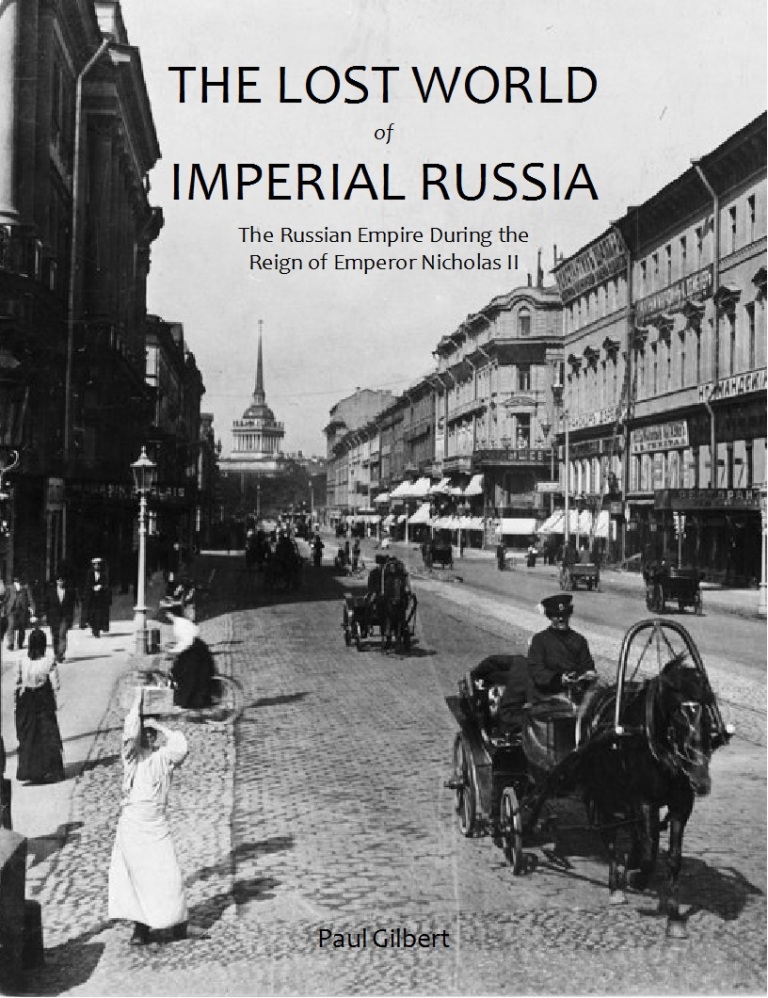
THE LOST WORLD OF IMPERIAL RUSSIA Volume I – Published in September 2022
*This title is available from AMAZON in the USA, UK, Canada, Australia, France, Germany, Spain, Italy, Netherlands, Poland, Sweden and Japan
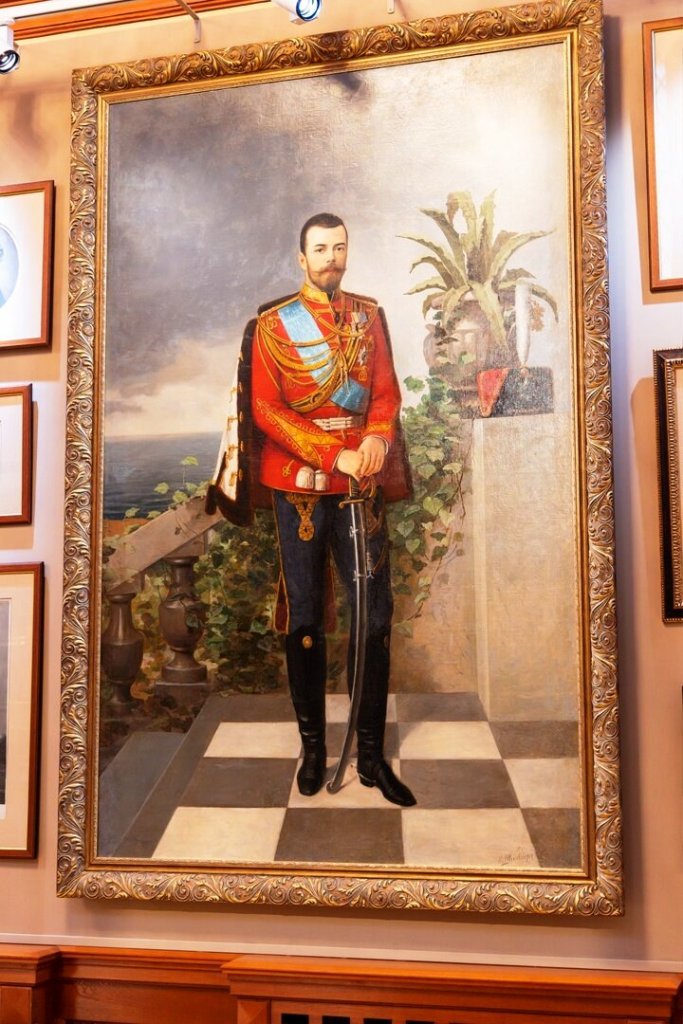
Portrait of Emperor Nicholas II, late 19th century. Artist: Nikolai Schilder (1828 – 1898) From the Collection of the Russian Cultural Foundation
After the Bolsheviks came to power in October 1917, Russia experienced a massive outflow of art objects from the collections of members of the nobility who were lucky enough to escape. Objects of historical heritage, paintings by outstanding artists, folios and entire archives were sent abroad. Priceless exhibits found their way into private collections, and replenished the museums of European countries or simply disappeared.
To save the cultural heritage that ended up outside Russia after 1917, White Russian officers founded the American Cultural and Educational Society ‘Rodina’ in Lakewood, New York, which existed until the 1980s. Among the carefully preserved items were paintings, books, letters, and awards. Hundreds of rare exhibits, became the basis of the collection of the largest museum in the entire Russian diaspora.
One of the founders of the Rodina Society, Vsevolod Pavlovich Stelletsky (1904-1982), recalled that the guest of honour at the opening of the Historical Museum of the Society was the last of the Romanov family, Her Highness Princess of the Imperial Blood Vera Konstantinovna (1906-2001), who left Russia at the age of 12. Examining the halls, the princess went to the department dedicated to the House of Romanov, with portraits of monarchs and their families, and stopped in front of a full-length portrait of Emperor Nicholas II and looked at it for a long time.
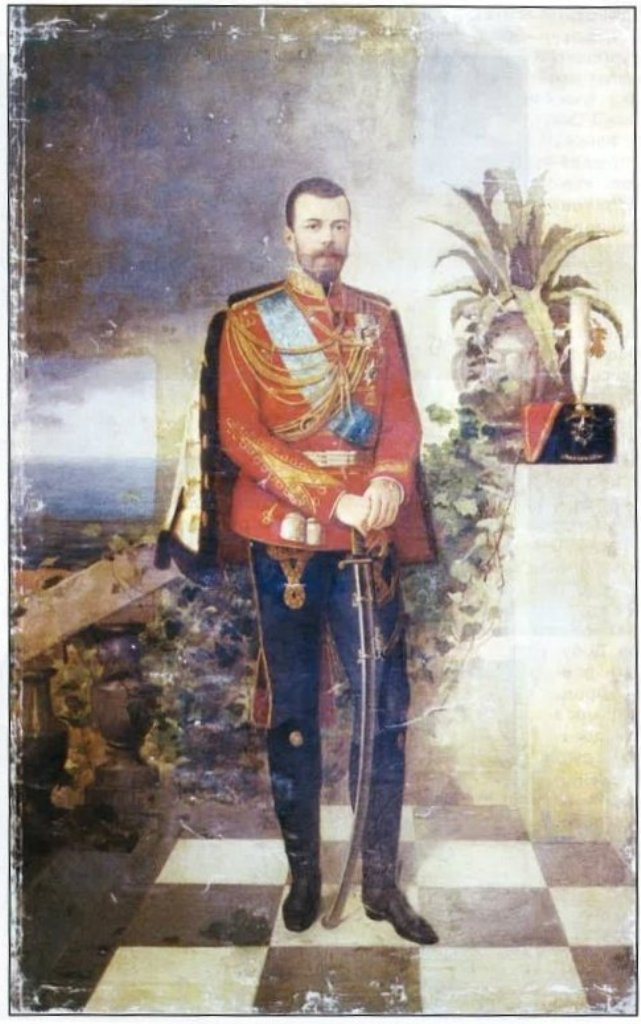
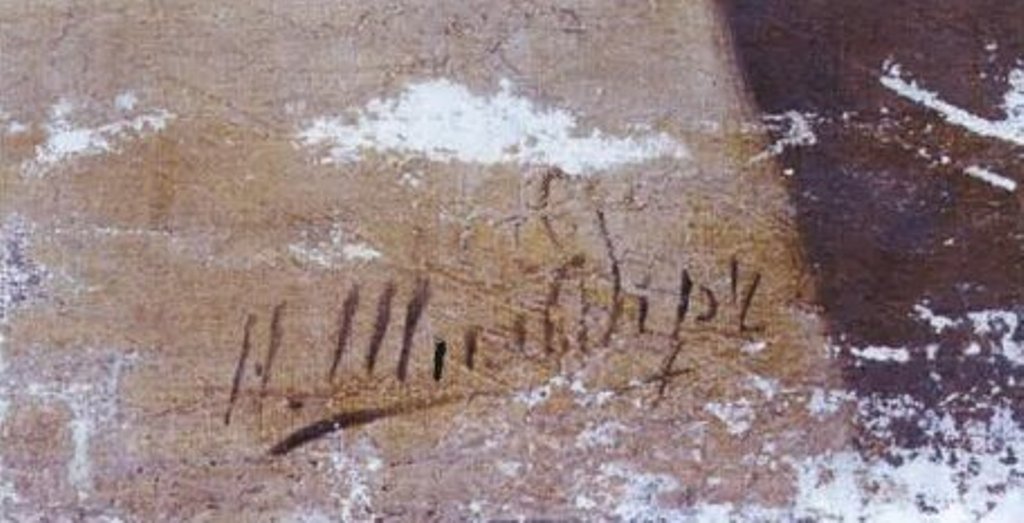
Schilder’s portrait of Emperor Nicholas II, before restoration. From the Collection of the Russian Cultural Foundation
The artist’s signature N.G. Schilder, revealed in the process of restoration. From the Collection of the Russian Cultural Foundation
“Where did you get this portrait from?” The princess said to Stelletsky, who accompanied her.
“This portrait,” he answered, “once hung in the Russian Consulate in New York, Your Highness, and it was given to us by an honourary member of the society, a donor, Prince Beloselsky-Belozersky.
“What a wonderful portrait. God willing, someday it will hang not in a museum, but in the St. George Hall in the Grand Kremlin Palace.
The princess continued to go around the halls dedicated to the Russian Imperial Army and Navy of the museum. When there was no one left in the museum, she once again turned to Stelletsky.
“I want to look at the portrait of the Emperor again,” the princess said decisively.
Approaching the portrait of Nicholas II, she gazed intently at the image of the Tsar in the uniform of His Majesty’s Life Guards Hussar Regiment, moving very close, she said convincingly:
“I wasn’t sure, but now I can definitely see that there is anguish in the Emperor’s gaze.“
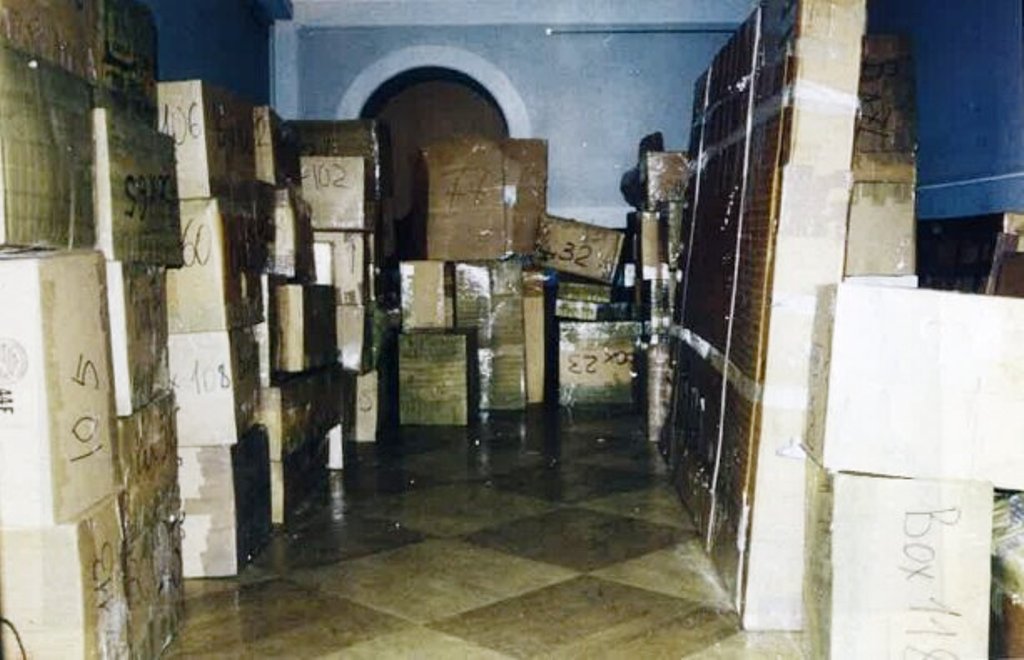
Boxes containing the precious cargo arrive in Russia from America, 1990s. From the Collection of the Russian Cultural Foundation
In the 1990s, the collection began to return to Russia. This was the wish of all those who once preserved these unique items wanted. The exhibits of the museum were carefully packed and sent to Russia in several containers.
Between the autumn of 1994 to the Spring of 1995, about 40 thousand items were transferred to Moscow, which were received at two addresses: objects of military history – to the Central Museum of the Armed Forces, and objects of artistic value – to the Russian Cultural Foundation.
The portrait of Emperor Nicholas II now hangs in the Tapestry Hall of the Russian Cultural Foundation.
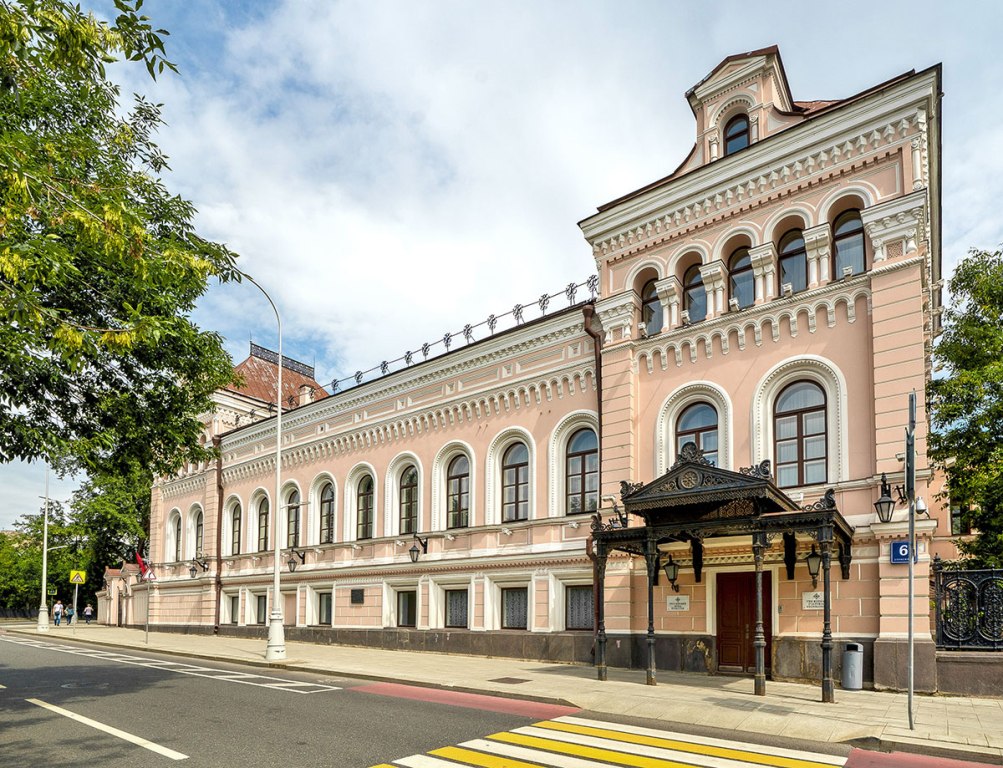
The Russian Cultural Foundation is located near the Kropotkinskaya Metro Station, on Gogolevsky Boulevard in Moscow. The Foundation and museum is housed in a Neo-Russian Style mansion – the former house of the Zamyatin-Tretyakov Estate – seen in the photo above.




 Nicholas II
You must be logged in to post a comment.