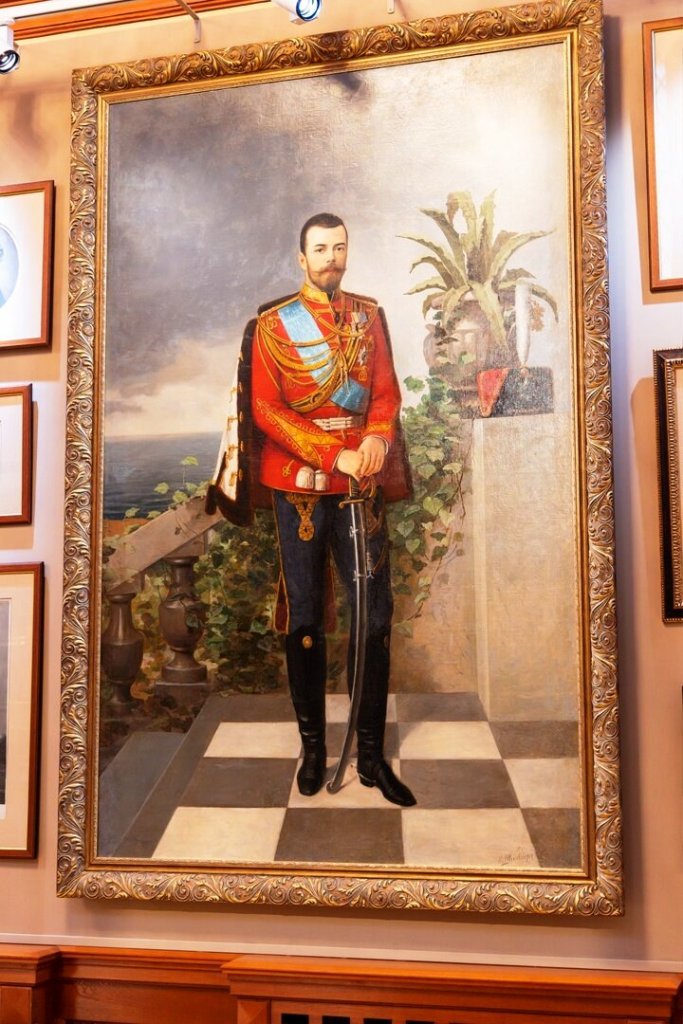
Portrait of Emperor Nicholas II, late 19th century.
Artist: Nikolai Schilder (1828 – 1898)
From the Collection of the Russian Cultural Foundation
After the Bolsheviks came to power in October 1917, Russia experienced a massive outflow of art objects from the collections of members of the nobility who were lucky enough to escape. Objects of historical heritage, paintings by outstanding artists, folios and entire archives were sent abroad. Priceless exhibits found their way into private collections, and replenished the museums of European countries or simply disappeared.
To save the cultural heritage that ended up outside Russia after 1917, White Russian officers founded the American Cultural and Educational Society ‘Rodina’ in Lakewood, New York, which existed until the 1980s. Among the carefully preserved items were paintings, books, letters, and awards. Hundreds of rare exhibits, became the basis of the collection of the largest museum in the entire Russian diaspora.
One of the founders of the Rodina Society, Vsevolod Pavlovich Stelletsky (1904-1982), recalled that the guest of honour at the opening of the Historical Museum of the Society was the last of the Romanov family, Her Highness Princess of the Imperial Blood Vera Konstantinovna (1906-2001), who left Russia at the age of 12. Examining the halls, the princess went to the department dedicated to the House of Romanov, with portraits of monarchs and their families, and stopped in front of a full-length portrait of Emperor Nicholas II and looked at it for a long time.
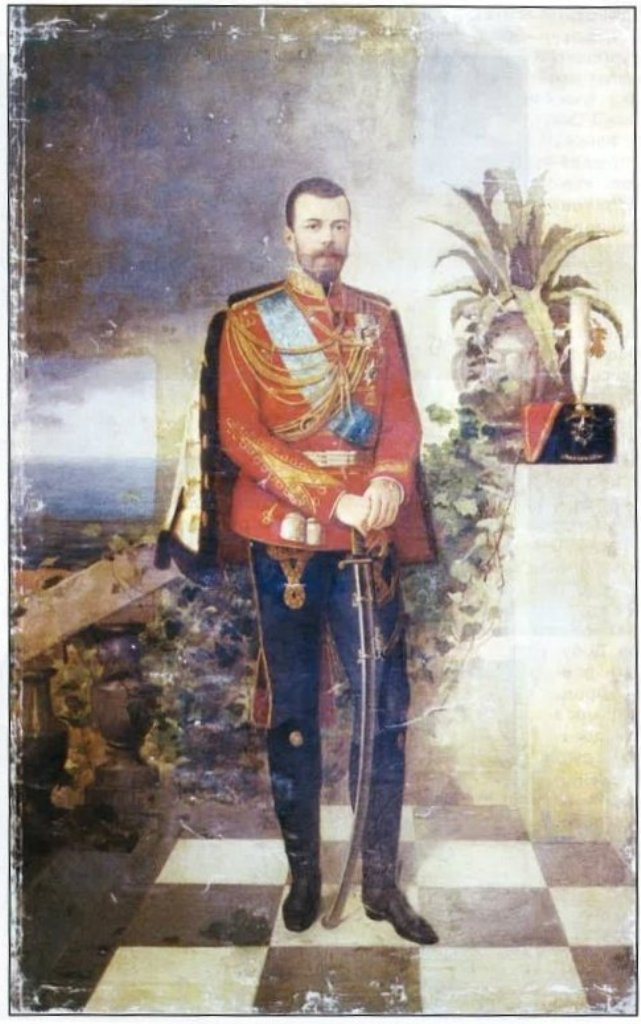
Schilder’s portrait of Emperor Nicholas II, before restoration.
From the Collection of the Russian Cultural Foundation
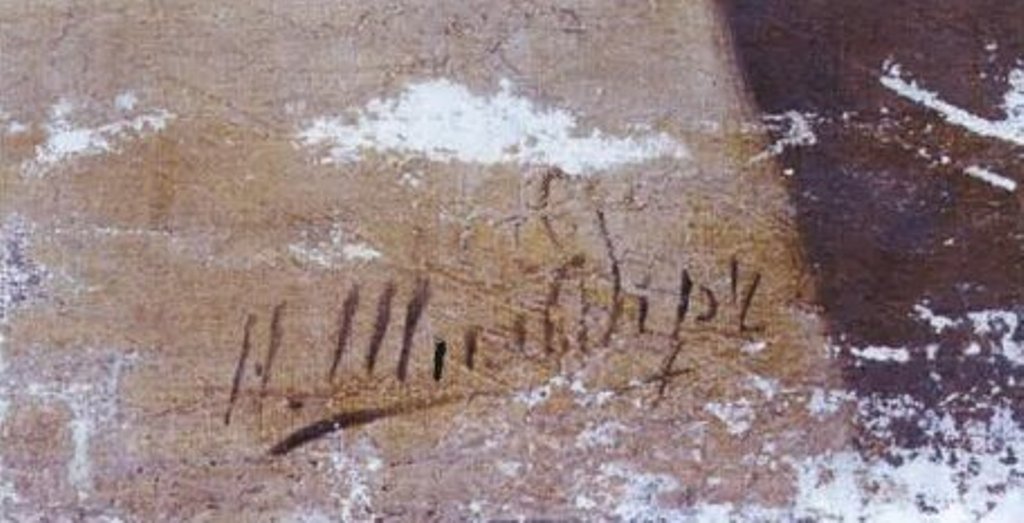
The artist’s signature N.G. Schilder, revealed in the process of restoration.
From the Collection of the Russian Cultural Foundation
“Where did you get this portrait from?” The princess said to Stelletsky, who accompanied her.
“This portrait,” he answered, “once hung in the Russian Consulate in New York, Your Highness, and it was given to us by an honourary member of the society, a donor, Prince Beloselsky-Belozersky.
“What a wonderful portrait. God willing, someday it will hang not in a museum, but in the St. George Hall in the Grand Kremlin Palace.
The princess continued to go around the halls dedicated to the Russian Imperial Army and Navy of the museum. When there was no one left in the museum, she once again turned to Stelletsky.
“I want to look at the portrait of the Emperor again,” the princess said decisively.
Approaching the portrait of Nicholas II, she gazed intently at the image of the Tsar in the uniform of His Majesty’s Life Guards Hussar Regiment, moving very close, she said convincingly:
“I wasn’t sure, but now I can definitely see that there is anguish in the Emperor’s gaze.“
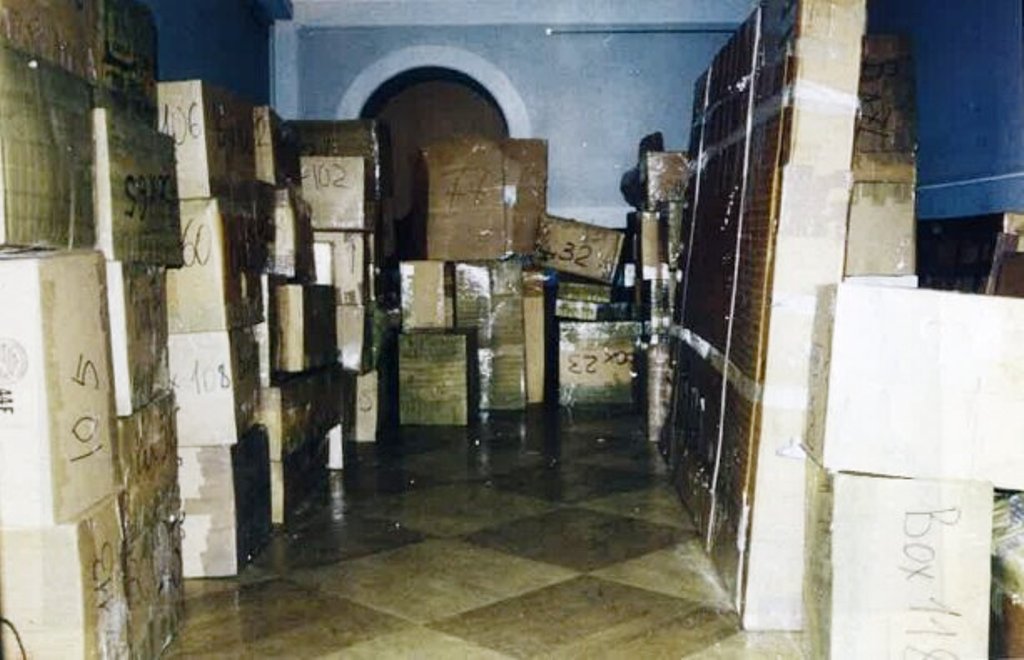
Boxes containing the precious cargo arrive in Russia from America, 1990s.
From the Collection of the Russian Cultural Foundation
In the 1990s, the collection began to return to Russia. This was the wish of all those who once preserved these unique items wanted. The exhibits of the museum were carefully packed and sent to Russia in several containers.
Between the autumn of 1994 to the Spring of 1995, about 40 thousand items were transferred to Moscow, which were received at two addresses: objects of military history – to the Central Museum of the Armed Forces, and objects of artistic value – to the Russian Cultural Foundation.
The portrait of Emperor Nicholas II now hangs in the Tapestry Hall of the Russian Cultural Foundation.
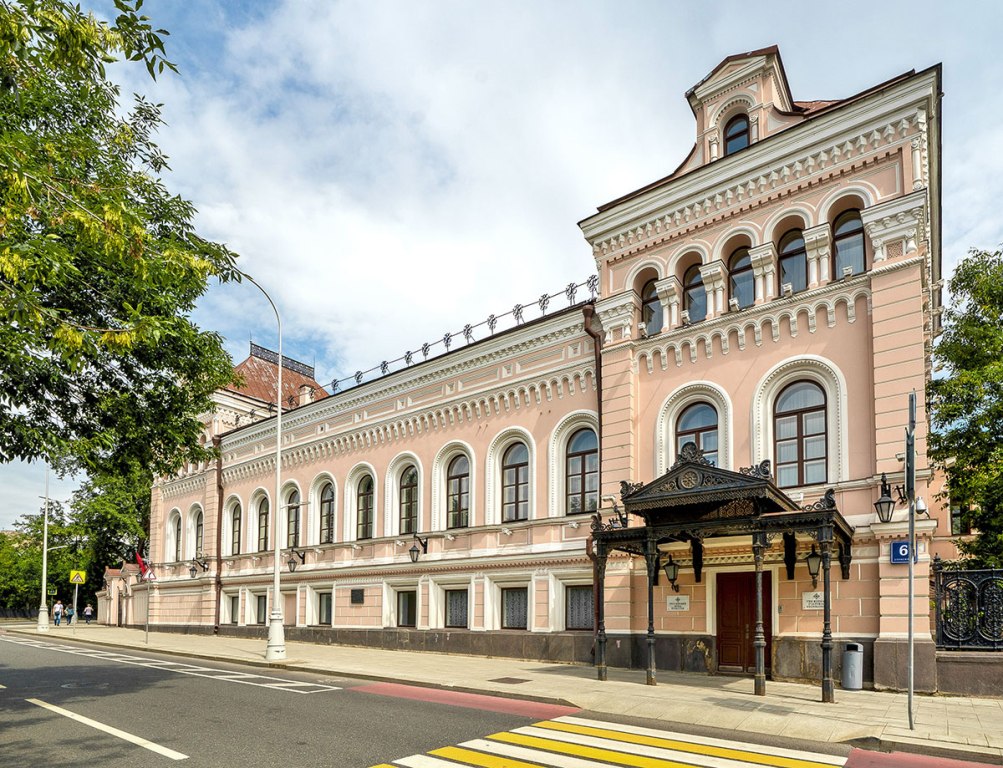
The Russian Cultural Foundation is located near the Kropotkinskaya Metro Station, on Gogolevsky Boulevard in Moscow. The Foundation and museum is housed in a Neo-Russian Style mansion – the former house of the Zamyatin-Tretyakov Estate – seen in the photo above.
© Paul Gilbert. 12 April 2025
 Nicholas II
You must be logged in to post a comment.