DISCLAIMER: the following article is based on the research of Russian historian and author Peter Multatuli, and does not reflect the opinion of the administrator of this blog, it is published here for information purposes only. Please read my comments at the end of this article – PG
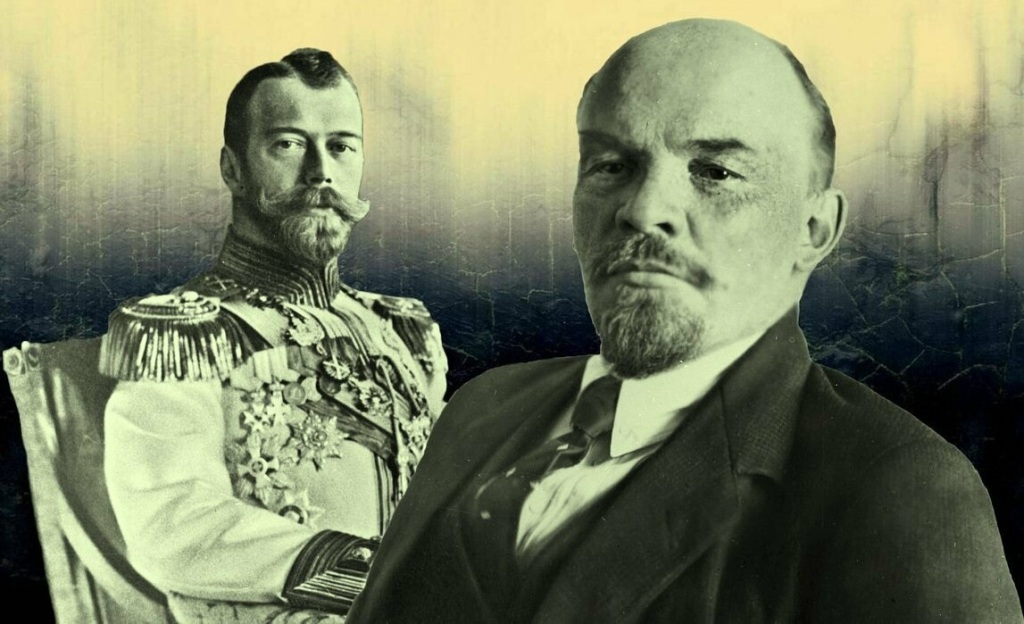
To this day, the question of whether the execution of Emperor Nicholas II and his family was carried out on Vladimir Ilyich Lenin’s order or not, remains the subject of ongoing debate. Some historians argue that the leader of the proletariat did not intend to kill the Tsar, and that the “liquidation” of Nicholas II, his wife and their children came as a complete surprise to the Bolshevik leader.
“Take under your protection!”
According to Peter Multatuli, author of the book Император Николай II. Мученик (2018) [Emperor Nicholas II. Martyr], Lenin took the house arrest of the Tsar for granted. At least, the minutes of the meeting of the Council of People’s Commissars chaired by Lenin on 2nd May 1918 testify to the fact that shortly after Nicholas II was transferred to Ekaterinburg. Lenin was in Moscow at that time, and persistent rumors spread around the capital, fueled by the press, that the Tsar had already been killed. Lenin ordered his closest assistant and secretary, Vladimir Dmitrievich Bonch-Bruyevich (1873-1955), to send a telegram to Ekaterinburg with a request to confirm or deny these rumours.
Without waiting for an answer, Lenin sent the commander of the North-Ural-Siberian Front, Reinhold Iosifovich Berzin (1888-1938), to the Ipatiev House to check. Berzin reported that as of 21st June, all members of the Imperial Family including the Tsar himself were alive, and that he considered the various speculations about their murder to be provocations. As Russian historian and author Yuri Alexandrovich Zhuk writes in his book Гибель Романовых (2009) [The Death of the Romanovs], Lenin in turn ordered Berzin to “take the entire Imperial Family under his protection and prevent any harm against them.” And finally, Vladimir Ilyich added that Berzin would be responsible for carrying out the execution of this order with his own life. History of course has confirmed that such an order was not carried out.
Lenin’s plans
For what purpose did Lenin care so much about the fate of the Tsar? Viktor Kozhemyako in his book Деза. Четвертая власть против СССР (2012) [Deza. The Fourth Estate Against the USSR] cites the words of Mikhail Medvedev-Kudrin (1891-1964), one of the participants in the murder of the Imperial Family, who claimed that the revolutionary Philip Goloshchekin (1876-1941) went to Moscow to see Yakov Sverdlov (1885-1919) – nicknamed “the Black Devil”. However, he failed to obtain permission from the All-Russian Central Executive Committee to kill the Tsar and his family. Allegedly, Sverdlov assured Goloshchekin that he had consulted Lenin on this matter, who insisted that Nicholas II and his wife should be transported to Moscow in order to conduct a show trial, to be covered in the press.
As further evidence that Lenin really intended to organize a show trial of the Tsar, we can cite the fact that in March 1917, that is, almost the day after the abdication of Nicholas II, on the initiative of Lenin, the Supreme Extraordinary Investigation Commission was created, whose duties included investigating the activities of the supreme representatives of the former regime. As E. Gromova and L. Gromov write in the publication “Ural Scaffold” with reference to Alexander Kerensky, the leader of the Provisional Government who appointed the “talented and energetic” investigator Vladimir Mikhailovich Rudnev, who was given a specific goal – to find evidence of treason in the actions of the Tsar and his wife. The “talented and energetic” investigator failed to find any such evidence.
Evidence of Lenin’s intentions
The fact that Lenin really planned a show trial is also supported by a telegram in which the leader of the proletariat assures one of the Copenhagen newspapers that the Tsar was alive, and the rumours of his death are nothing more than the “intrigues of the capitalist press”. In fact, Lenin benefited more from a show trial than from the murder. After all, as Anatoly G. Latyshev notes in his book Рассекреченный Ленин [Declassified Lenin], the mother of Nicholas II, Dowager Empress Maria Feodorovna, was a Danish princess, and his wife Alexandra Feodorovna, her four daughters and sister Grand Duchess Elizabeth Feodorovna were all considered German princesses. There was absolutely no need for Lenin to aggravate relations with Germany.
But the allegation that it was Lenin who ordered the execution of the Tsar and his family was spread by Trotsky. At least, this is the version that appears in Elena Prudnikova’s book Последняя тайна Романовых [The Last Secret of the Romanovs]. In the 1930s, Trotsky wrote in his diary that he learned about the execution when he arrived from the front. Allegedly, Trotsky asked Sverdlov who made such a decision, and he, in turn, replied: “Lenin.”
© Paul Gilbert. 21 April 2025
 Nicholas II
You must be logged in to post a comment.