The church where Nicholas II and his family worshiped in Tobolsk
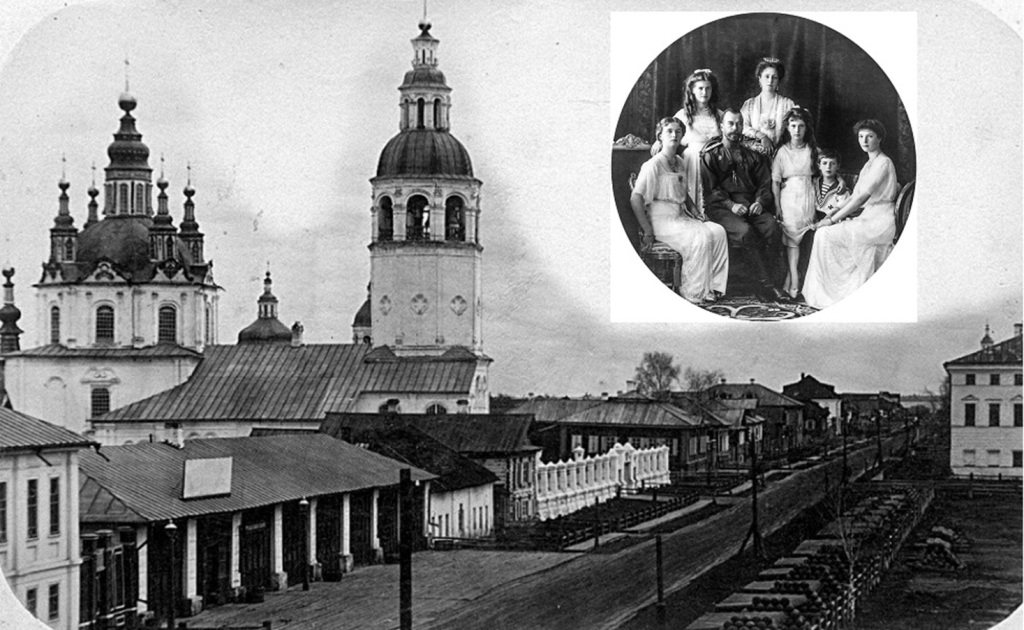
PHOTO: Church of the Annunciation of the Blessed Virgin, Tobolsk. 1910

During their eight month stay in Tobolsk [August 1917-April 1918], Nicholas II and his family were held under house arrest in the former Governor’s Mansion [renamed the “House of Freedom” by the Bolsheviks]. Their movements were restricted, as they had been at Tsarskoye Selo from March 1917 to the end of July 1917. Several weeks after their arrival in Tobolsk, they were permitted to worship in the nearby Church of the Annunciation of the Blessed Virgin up until January 1918, after which services were restricted to the confines of the “House of Freedom”.

The brick church was built between 1735-1758. A two-story quadrangle, completed with an octagon, on which five decorative domes were placed, with a two-aisled refectory and a three-tiered bell tower. The refectory included the chapels of Procopius and Ioann of Ustyug and the Great Martyr Catherine.

For more than three centuries, the Church of the Annunciation of the Blessed Virgin served as a spiritual center of life for hundreds of parishioners. The church featured a library, an almshouse, and a parochial school.

Pierre Gilliard recalls: “Finally, on September 21st, the festival of the Nativity of the Virgin, the prisoners were allowed for the first time to go to the church. This pleased them greatly, but the consolation was only to be repeated very rarely. On these occasions we rose very early and, when everyone had collected in the yard, went out through a little gate leading on to the public garden; which we crossed between two lines of soldiers. We always attended the first Mass of the morning, and were almost alone in the church, which was dimly lighted by a few candles; the public was rigorously excluded. While going and returning I have often seen people cross themselves or fall on their knees as Their Majesties passed. On the whole, the inhabitants of Tobolsk were still very attached to the Imperial family, and our guards had repeatedly to intervene to prevent them standing under the windows or removing their hats and crossing themselves as they passed the house.”

Empress Alexandra Feodorovna wrote in her diary: “During the services, officers, the commandant and the commissar stand beside us so that we do not dare to speak”.
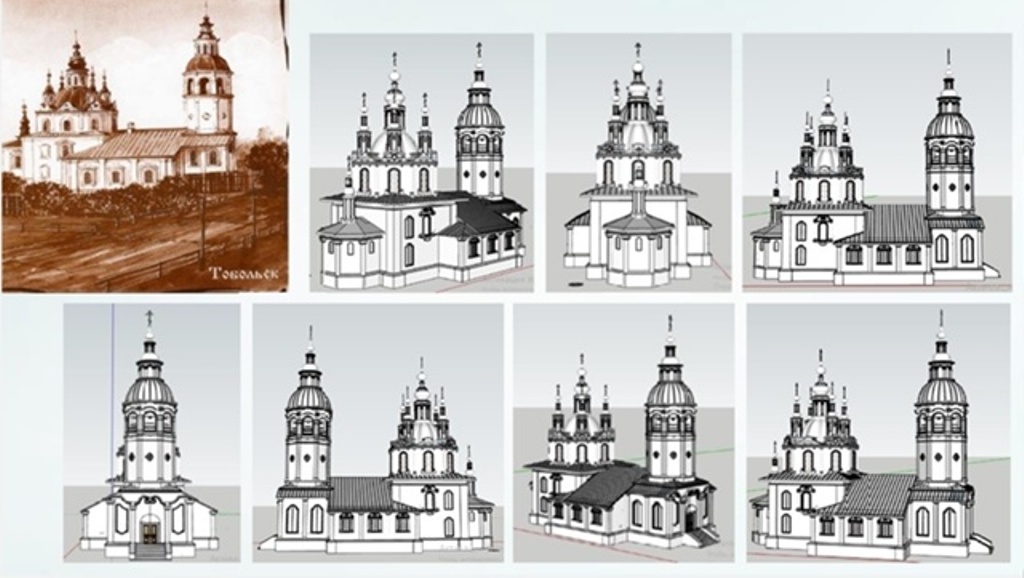
PHOTO: drawings of the Church of the Annunciation of the Blessed Virgin, Tobolsk

On 8th September 1917, the Empress wrote in her diary: “We went to the service in the Cathedral of the Annunciation on foot, I was in my [wheel]chair, through the city garden, the soldiers were stationed all the way, the crowd stood where we had to cross the street. It is very unpleasant, but, nevertheless, I am grateful for being in a real church for [for the first time] in 6 months ”.

Commissar Vasily Pankratov described this event as follows: “Nicholas Alexandrovich was informed that tomorrow a Liturgy would be performed in the church, and that it was necessary to be ready by 8 o’clock in the morning. The prisoners were so pleased with this news that they got up very early and were ready by 7 o’clock. When I arrived at 7:30, they were already waiting. About 20 minutes later, the duty officer informed me that everything was ready. It turned out that Alexandra Feodorovna decided not to walk, but to ride in a chair, as her legs hurt. Her personal valet quickly wheeled the chair out to the porch. The whole family went out, accompanied by their retinue and servants, and we proceeded to the church. Nicholas II and his children, walking in the garden, looked around in all directions and talked in French about the weather, about the garden, as if they had never seen it. In fact, this garden was located just opposite their balcony, from where they could observe it every day. But it is one thing to see an object from a distance and, as it were, from behind a lattice, and another to walk through it freely. Every tree, every twig, bush, bench acquires charm … From the expressions on their faces, from their movements, one could assume that they were experiencing some special euphoria. As she was walking through the garden and not watching where she was going, Anastasia even fell. Her sisters laughed, even Nicholas himself was amused with this awkwardness of his daughter. Alexandra Feodorovna’s face remained motionless. She sat majestically in her chair and was silent. On leaving the garden, she got up from the chair, from where we crossed the street to enter the church. Outside stood a double line of soldiers, [a chain of riflemen was also placed in the garden along the entire route] and behind them stood curious onlookers. Upon entering the church, Nicholas and his family took their place on the right, their retinue closer to the middle. Alexandra Feodorovna knelt down, Nicholas and the four grand duchesses followed her example. After the service, the whole family received a prosphora [a small loaf of leavened bread used in Orthodox liturgies], which for some reason they always passed to their servants”.

The prisoners were allowed to visit the church again – on 14th September, the feast of the Exaltation of the Cross. On 18th September, Grand Duchess Tatiana Nikolaevna wrote to her aunt Grand Duchess Xenia Alexandrovna: “We were twice in church. You can imagine what a joy it was for us after 6 months, because do you remember how uncomfortable our camp church in Tsarskoye Selo was? The church here is good. One large summer room in the middle, where they serve for the parish, and two winter ones on the sides [referring to the side-chapels]. The right side-chapel is reserved for us”.
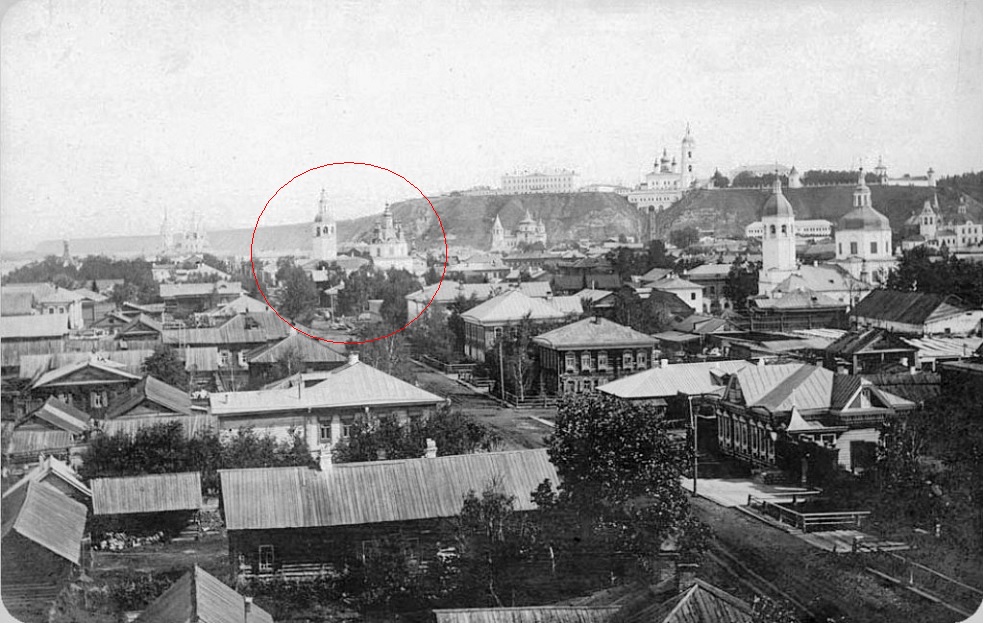
PHOTO: View of Tobolsk and the Church of the Annunciation of the Blessed Virgin

The family managed to visit the church for a third time on 1st October – on the feast of the Protection of the Most Holy Theotokos. Then again on 22nd October, the day marking the anniversary of the accession of Nicholas II to the throne and the feast of the Kazan Icon of the Mother of God. The entire family received communion on this day of the Holy Mysteries of Christ. “What a spiritual consolation in the time we are going through!” – the Emperor wrote in his diary that day. In addition, the Imperial family were allowed to attend church on 26th November, 3rd and 10th December, and 19th January.

Pierre Gilliard again writes: “The next day, Christmas Day, we went to church. By the orders of the priest the deacon [Fr Vasiliev] intoned the Mnogoletie [the prayer for the long life of the Imperial family] This was an imprudence which was bound to bring reprisals. The soldiers, with threats of death, demanded that the prayer should be revoked. This incident marred the pleasant memories which this day should have left in our minds. It also brought us fresh annoyances and the supervision became still stricter.”

Following the incident involving Fr Vasiliev, the Imperial family were no longer permitted to attend church. Instead, an improvised chapel was set up in the ballroom of the mansion, which consisted of a folding iconostasis and an altar, decorated with the Empress’s bed-spread, which served as an altar cloth. The local priest was invited to perform services for the Imperial family and their retinue up until April 1918, when they were transferred to the Ipatiev House [renamed the “House of Special Purpose”] in  Ekaterinburg, where they were subsequently murdered by members of the Ural Soviet on 17th July.

The Church of the Annunciation of the Blessed Virgin was closed by the Soviets in 1930, the building demolished in 1956 – the same year that the author of this article was born.
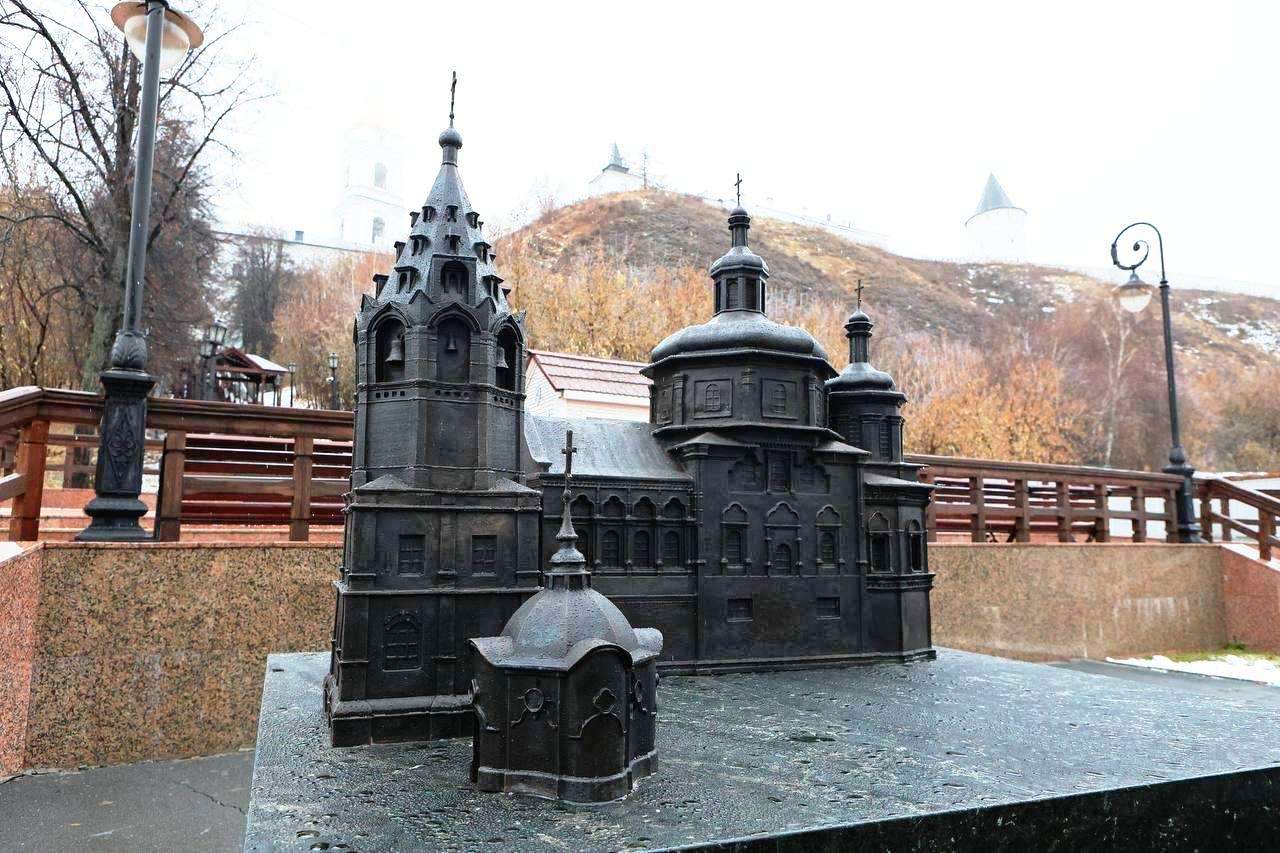
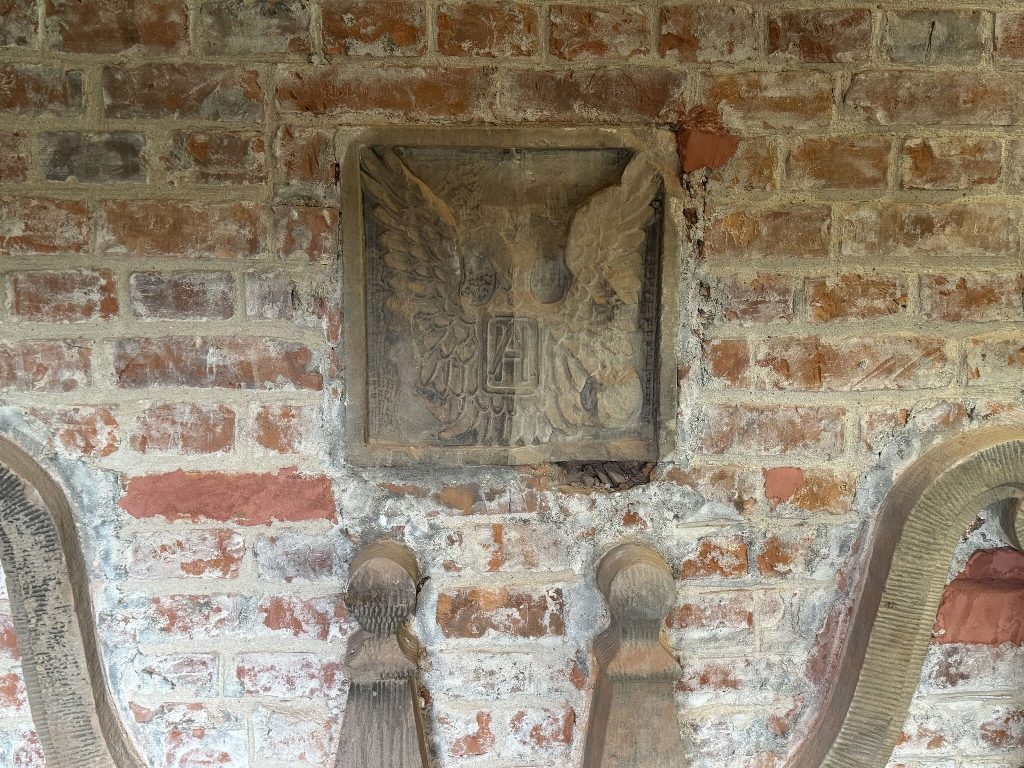
On 8th November [Siberia Day] 2025, a 1.4 m [4 ft. 6 in.] bronze 3D model of the Church of the Annunciation of the Blessed Virgin, was installed in its historical place – at the intersection of Ulitsas Mira and Ershov.

More information about the history of the church can be found on the audio guide using the QR code found on the information plate of the model.

The outdoor 3D model is part of the ‘Lost Churches of Tobolsk’ project, designed to remind residents and visitors to Tobolsk of the city’s rich spiritual history. It is a shame, that the church was not reconstructed.

NOTES:

[1] Siberia Day was established by Emperor Alexander III, on 8th November 1881, marking the 300th anniversary of the annexation of Siberia to the Russian State. Siberia Day honours the history and cultural significance. The holiday was abolished during the Soviet period, and revived in the 1990s.

© Paul Gilbert. 8 January 2021 – UPDATED on 9 November 2025
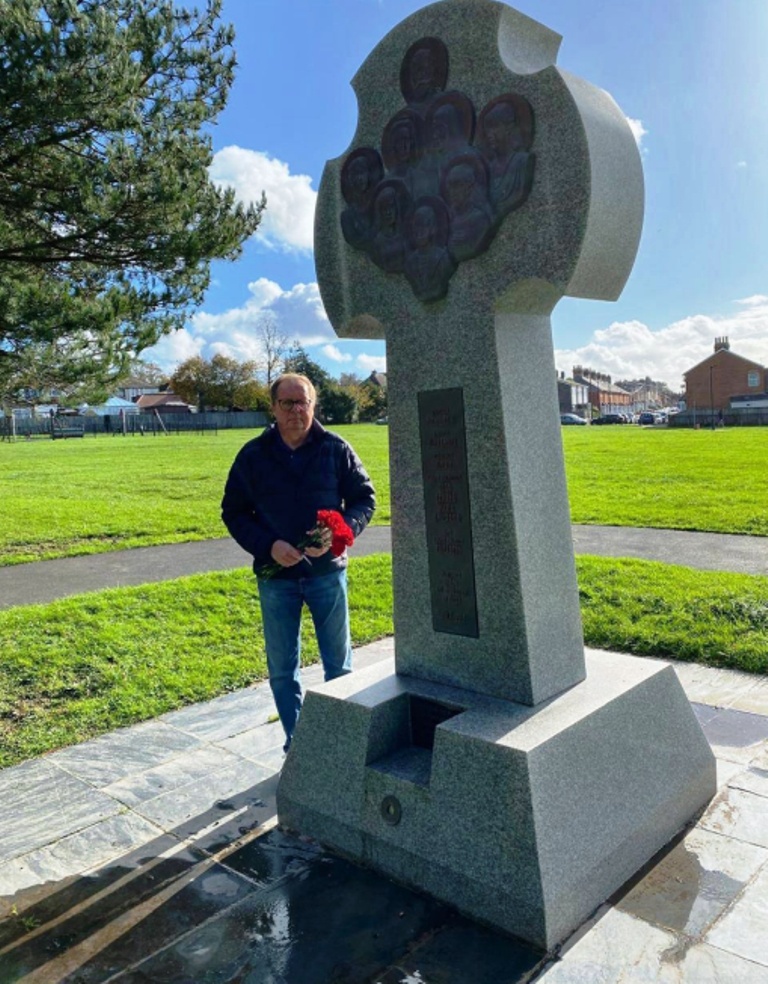
Russia’s ambassador to Britain laid flowers at the monument to Nicholas II on the Isle of Wight

PHOTO: Russia’s Ambassador to the UK Andrei Kelin
at the monument to Nicholas II on the Isle of Wight

On 4th November 2025 – on the occasion of National Unity Day – Russia’s Ambassador to the UK Andrei Kelin laid flowers at the monument to Nicholas II and his family on the Isle of Wight.

The granite monument with bronze relief portraits of the Imperial Family, was unveiled on 7th July 2018, by the Grand Duchess Elizabeth Romanov Society. The monumetn stands in Jubilee Green in East Cowes, close to Queen Victoria’s residence, Osborne House on the Isle of Wight, which is situated just off the southern coast of England.

The monument marking the 100th anniversary of the death and martyrdom of Emperor Nicholas II and his family was created by the renowned Moscow sculptor Elena Bezborodova. At its base there is a capsule with soil from the site, where the Imperial Family’s remains were found near Ekaterinburg.

“The Isle of Wight has a special connection with Russian history: Empress Alexandra Feodorovna and her sister Elizabeth Feodorovna spent time here as children with their grandmother, Queen Victoria. Nicholas II first visited the island in 1884 and visited it again in 1909, staying at the Barton estate,” said the Russian ambassador.

National Unity Day has been celebrated in Russia annually, on 4th November since 2005. The holiday commemorates the popular uprising which ended the Polish-Lithuanian occupation of Moscow in November 1612, and more generally the end of the Time of Troubles and turning point of the Polish intervention in Russia.

FURTHER READING:

Britain’s first memorial to the Russian Imperial Family + PHOTOS

© Paul Gilbert. 5 November 2025

Restoration of interiors of the Imperial Railway Pavilion at Tsarskoye Selo

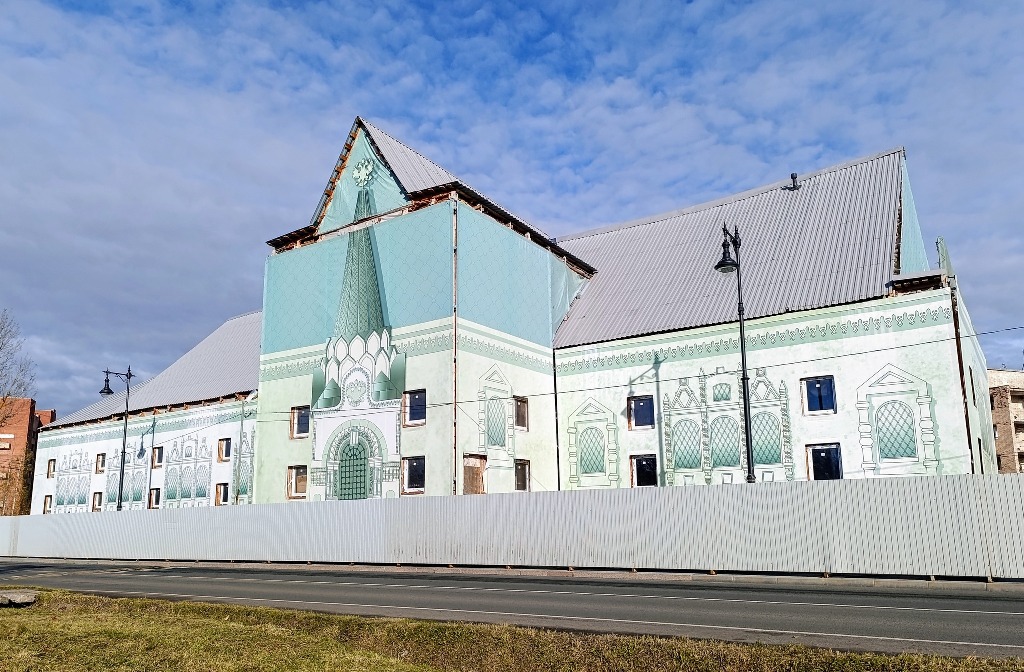
PHOTO: the Imperial Railway Pavilion is currently covered with a false building cover

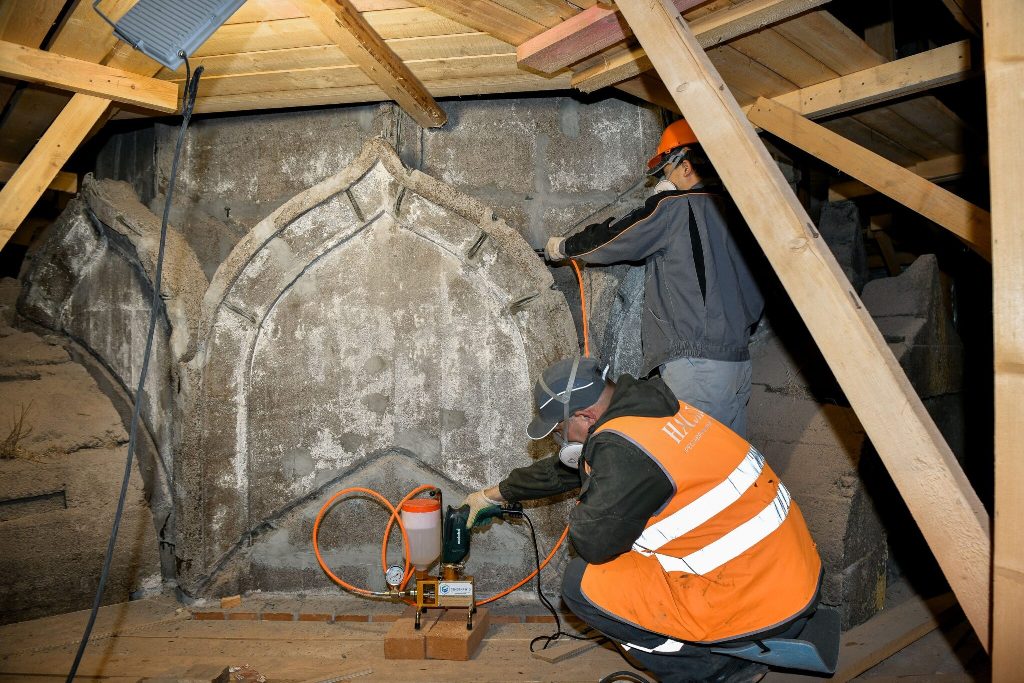
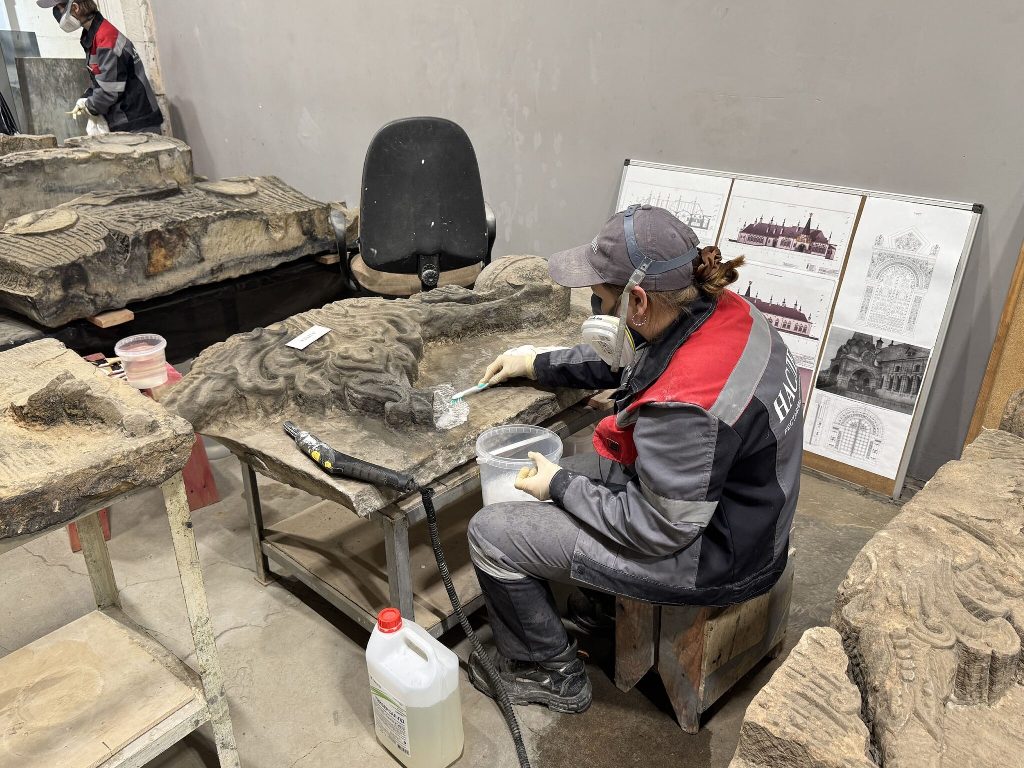
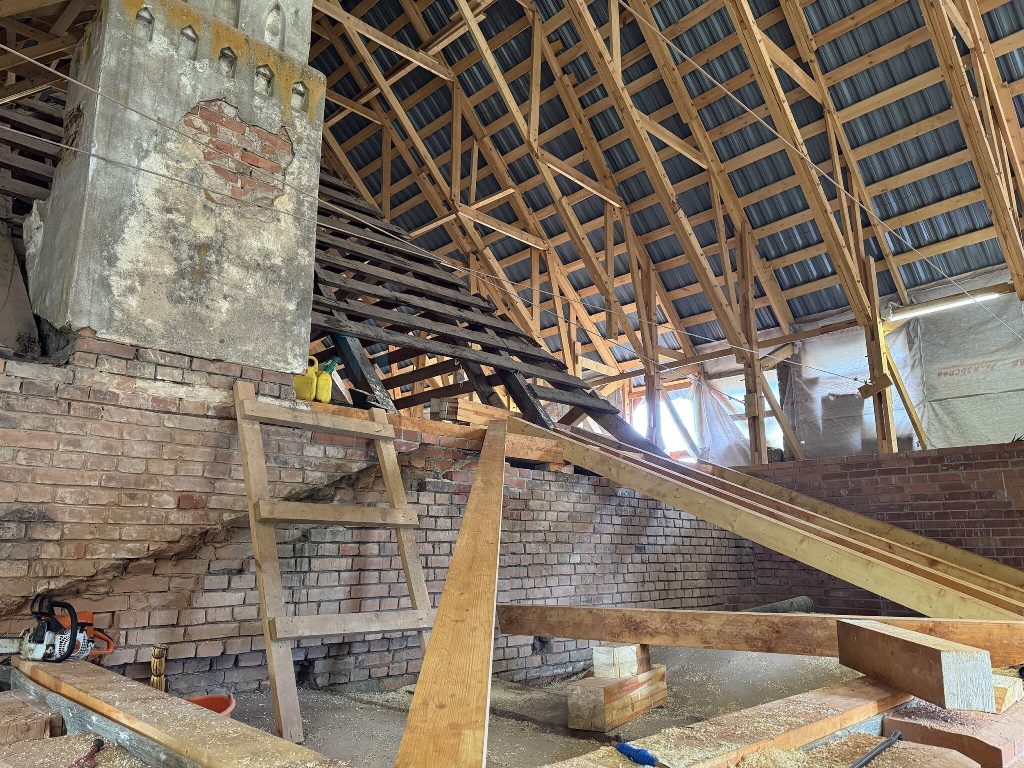
The Imperial Railway Pavilion at Tsarskoye Selo is currently covered with a temporary false building cover, but inside, great progress is being made on the restoration of the building’s interiors to their historic original.

Recall that in the summer of 2023, work began on the restoration of the Imperial Railway Pavilion to it’s historic original, under the direction of  the Tsarskoye Selo Station Foundation.

Earlier this year the Contractor, Heritage-Project Restoration Workshop LLC, received permission from the Committee on State Use and Protection of Historical and Cultural Monuments of St. Petersburg to carry out work at the Imperial Train Pavilion’s interiors.

The richly decorated interiors were originally stylized as chambers with heavy stone vaults. The decoration of the facades and interiors corresponded to the grand presentation of the station, being an example of a synthesis of architecture, monumental painting and decorative art, which successfully combined the forms of ancient Russian architecture of the 17th century. The imperial chambers of the pavilion were painted by the artist M. I. Kurilko, reflecting the chambers of the beloved suburban palace of Tsar Alexei Mikhailovich.

According to restorers, many of the building’s original details have surprisingly been well preserved. The historical painting of the dome of the main entrance to the Tsar’s Station has been miraculously preserved – a photograph shows an area which had been cleaned, revealing the colourful painting underneath. Early 20th century watercolours, drawings and photographs of the interiors – which have been preserved in archives – will be of great assistance to artists in their efforts to restore the once beautiful interiors to their historic original.

Once the restoration is completed, the building were serve as a mutli-purpose museum. There are plans to use the Imperial Pavilion for other purposes, including a Wedding Palace. In addition, the façade of the building, it’s rich interiors and painted vaults will be offered as an ideal place for celebrations and photo shoots.

As you can see from the photos below, great orogress is being made on the restoration of the interiors, the goal being to restore them to their historic appearance.

PHOTOS © Tsarskoye Selo Station Foundation

PHOTOS © Tsarskoye Selo Station Foundation

PHOTOS © Tsarskoye Selo Station Foundation

FURTHER READING:

This author has been closely following the progress of this project since August 2023. Below are my articles which provide details on the restoration of this historic building, the Imperial Train of the last Russian Emperor, among others . . . .

Reconstruction of the Imperial Pavilion in Tsarskoye Selo – features 9 photos

Imperial Railway Pavilion in Tsarskoye Selo is being restored – features 13 photos of the initial restoration work

Update on the restoration of the Imperial Railway Pavilion at Tsarskoye Selo

Artist concept of Imperial Railway Pavilion restoration project at Tsarskoye Selo – features VIDEO

The sad state of the Imperial Railway Pavilion at Tsarskoye Selo – features 20 photos!

Imperial Railway Pavilions during the reign of Nicholas II

The fate of Nicholas II’s Imperial Train – features 8 historic photos

© Paul Gilbert. 5 November 2025

Carpet from Governor’s Mansion in Tobolsk preserved in the United States

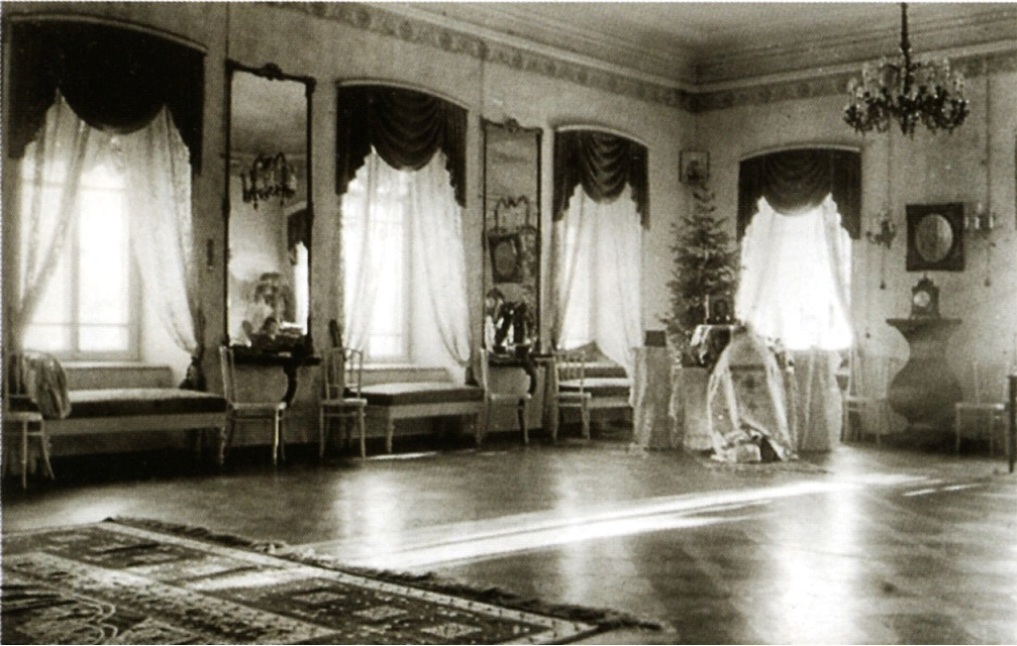
PHOTO: view of the Drawing Room in the Governor’s Mansion in Tobolsk, where the carpet can be seen in the lower left-hand corner of the photo. 1917-18

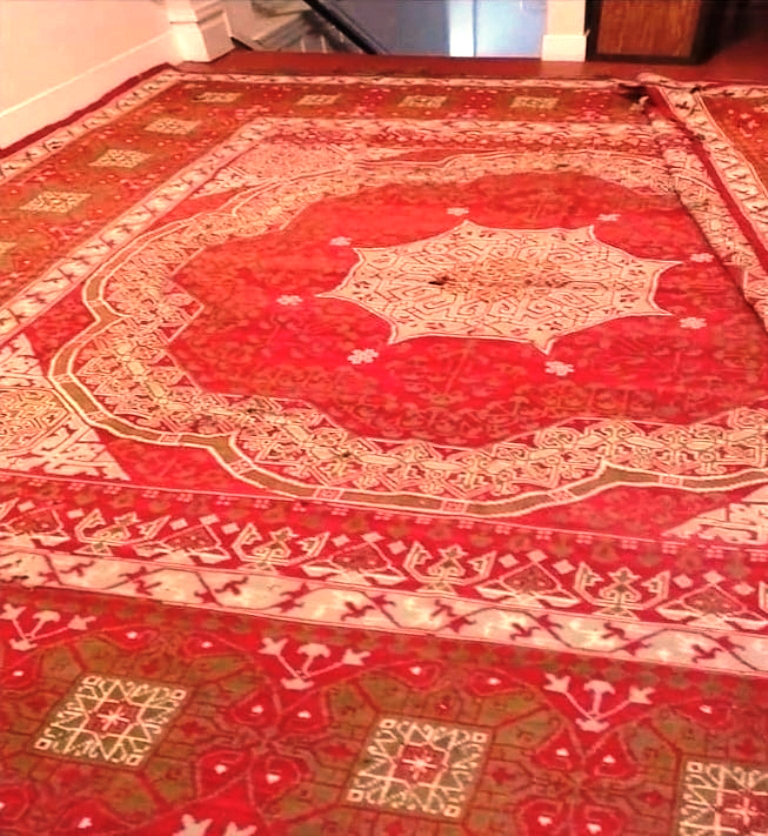
The Museum of Russian Culture in San Francisco, has a valuable historic relic related to the Tobolsk exile of Nicholas II and his family, from August 1917 to April 1918.

In October 1973, doctor Anatoly Pavlovich Timofievich (1886-1975), who was living at the Novo-Diveevo Monastery in New York at the time, wrote to the Museum that, with the blessing of Archbishop Andrei (Rymarenko), he would like to donate for preservation a large carpet from the Governor’s Mansion in Tobolsk.

The carpet was in the Drawing Room, where a chapel was recreated, consisting of of a folding iconostasis and an altar. It was in this room, that the Imperial Family prayed during their house arrest in Tobolsk. The carpet was given to Timofievich by the sister of Nicholas II – Grand Duchess Xenia Alexandrovna (1875-1960), but how the carpet came into Xenia’s possession remains a mystery.

Timofievich sent a photograph of the Drawing Room in the Governor’s House, in which part of this carpet is visible. The photo was taken in 1917-18 by Pierre Gilliard, French tutor of the heir to Tsesarevich Alexei, and published in his memoirs Thirteen Years at the Russian Court in 1921.

PHOTO: carpet from Tobolsk on display Museum of Russian Culture in San Francisco

Another photo of the carpet in Tobolsk was a great stroke of luck – from a book by Charles Sydney Gibbes, the August children’s English tutor. This photo shows the Christmas service in the house chapel in the Drawing Room of the Governor’s Mansion. In the lower left, part of the carpet can be seen – see photo above. It is known that the service was conducted by the rector of the Church of the Annunciation in Tobolsk, Archpriest Alexei Pavlovich Vasiliev (1865-1929), Christmas, December 1917.

On 8th November 1973, the carpet was sent to Nikolai Aleksandrovich Slobodchikov (1911-1991), chairman of the Museum of Russian Culture in San Francisco.

It was not until 2015, that the carpet was discovered in the museum’s vast archive. The carpet was identified, restored and put on display in the Museum of Russian Culture in San Francisco.

In 2018 – the year marking the 100th anniversary of the death and martyrdom of Russia’s last Tsar and his family – the Museum of the Family of Emperor Nicholas II opened in the former Governor’s Mansion in Tobolsk.

In July of the same year, employees of the Museum of Russian Culture in San Francisco and employees of the Museum of the Royal Family took place in Tobolsk.

NOTE: if you have any additional facts or information about this relic, please contact me by e-mail: royalrussia@yahoo.com

© Paul Gilbert. 4 November 2025

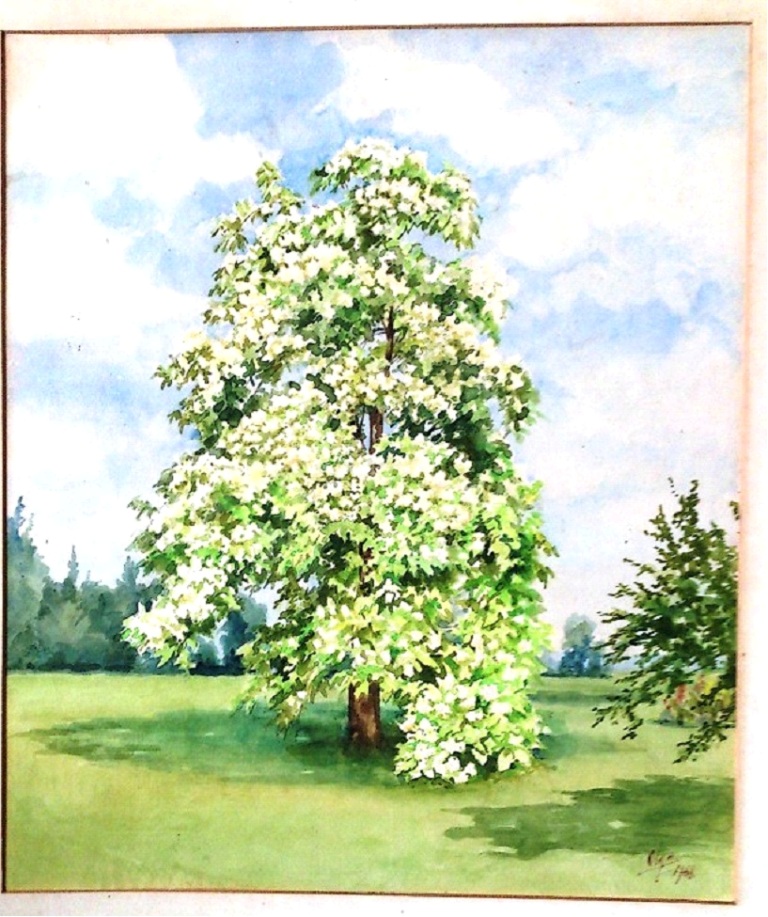
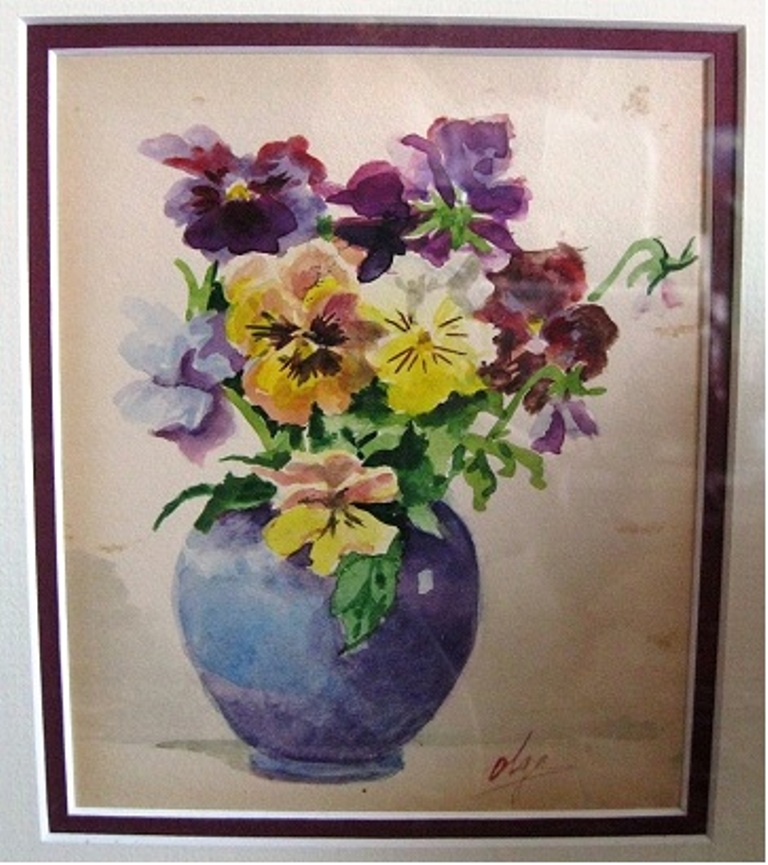
Buy / Sell paintings by Grand Duchess Olga Alexandrovna

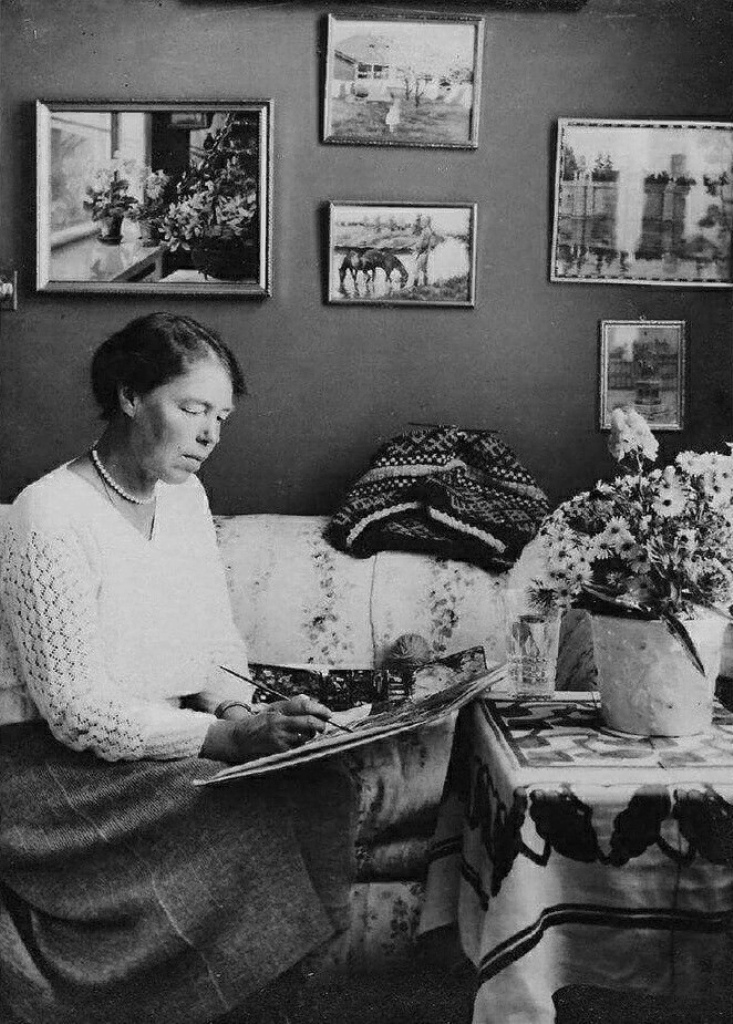
Grand Duchess Olga Alexandrovna (1882-1960) is famous for her lovely still life and landscapes in water-colours. During her lifetime, she produced over 2,000 paintings. The sale of these paintings provided a source of income for her and her family during their years in exile, in Denmark and later Canada.

Her works are now in the private collections of HM Queen Elizabeth II, HRH the Duke of Edinburgh, HM King Harald of Norway, the Ballerup Museum, Denmark, as well as private collections in the United States, Canada, and Europe. Today, her paintings are highly sought after by private collectors, each one fetching a handsome sum at auction – averaging any where from $3,000 to $5,000 USD and more.

PHOTOS: These are just two examples of Grand Duchess Olga’s
paintings, which I have found buyers in recent years

Over the years, I have been approached on numerous occasions by people, who owned one of Olga’s paintings – each one with an interesting provenance – that they were interested in selling. I was able to find these sellers a buyer, through the thousands of people who have followed and supported my research all these many years.

I currently have buyers who are actively seeking Grand Duchess Olga’s paintings. All sales are private, all seller/buyer information is confidential + there are no outrageous commissions paid out to dealers – some of whom charge 20 to 35% or more!

Please note that if you have a painting to sell, I do charge a finders fee, paid by the seller. Payment for the painting is processed between the buyer and seller. The seller is responsible for packing and shipping the painting on each painting. The buyer is responsible for shipping charges, insurance, as well as any taxes, customs duties, and tariffs.

If you own a painting by Grand Duchess Olga, and are seeking a buyer, please contact me at the following e-mail address with details and photos of the painting:

PAUL GILBERT – royalrussia@yahoo.com

© Paul Gilbert. 2 November 2025

Emperor Nicholas II on Facebook

CLICK HERE to be redirected to my Nicholas II Facebook page

In April 2016, I launched a Facebook page dedicated to the life and reign of Emperor Nicholas II, which do not appear on this blog. In addition are posts about his family, the Romanov Dynasty and the history of Imperial Russia.

Each day, I create up to a dozen new posts, featuring news – translated into English from Russian archival and media sources – plus, contemporary and vintage photos – to date, there are more than 5,000 colour and black & white photos on my Nicholas II Facebook page!

In addition are videos and newsreels, as well as new book announcements, new monuments, portraits, and exhibitions in Russia, which are not covered in English social media and news outlets.

I currently have 5,000 Facebook friends – the maximum that FB will allow – plus, an additional 4,500+ followers, from all over the world. Friends are allowed to comment on posts and engage in discussions with others. My FB page has become a perfect “watering hole” for those of us who share an interest in Russia’s last Tsar, his family, the Romanov dynasty, and the history of Imperial Russia.

Please note, that as I have already reached the maximum number of friends that Facebook will allow me, you can still become a “FOLLOWER” of my FB page.

Simply CLICK on the LINK above, which will redirect you to my FB page, whereupon you CLICK on the FOLLOW button. This will ensure that you receive instant updates on all new posts, however, you will not be able to comment on them. You always have the option to send a FRIEND REQUEST at a later date.

Please join me today, in celecrating the life, reign and
era of Russia’s last Emperor and Tsar! remains concise

CLICK HERE to be redirected to my Nicholas II Facebook page

© Paul Gilbert. 1 November 2025