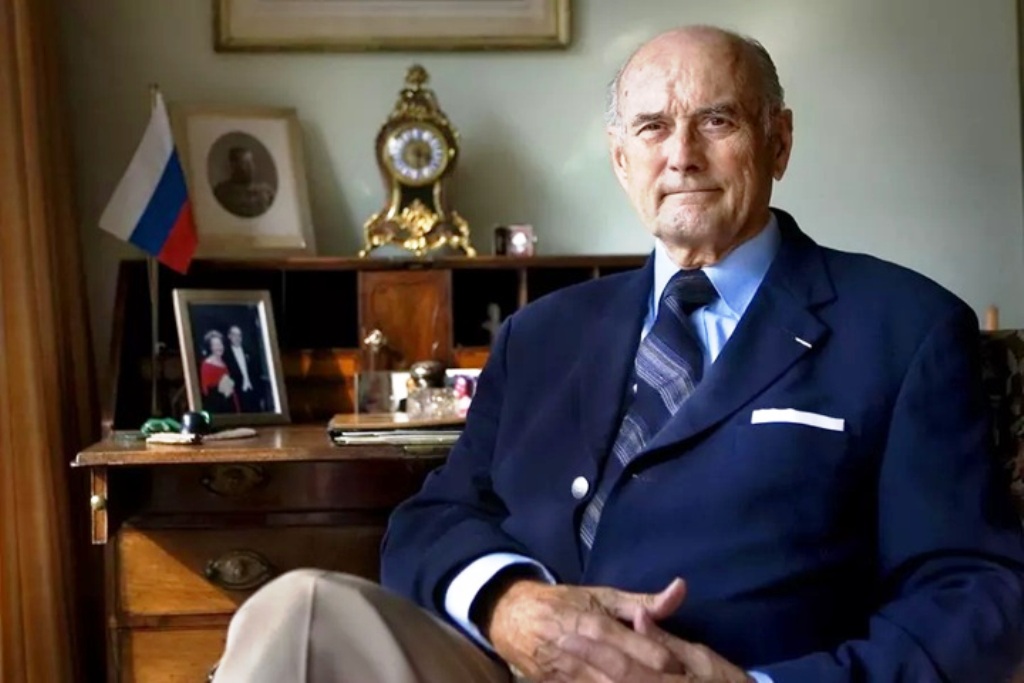
Prince Dmitri Romanovich Romanov
1926-2016
On this day – 31st December 2016 – Prince Dmitri Romanovich Romanov died in Copenhagen, Denmark at the age of 90. Following the death of his brother Prince Nicholas Romanovich in 2014, Dmitri became his rightful successor as Head of the House of Romanov.
Through his paternal lineage, Prince Dmitri was a great-great-grandson of Emperor Nicholas I of Russia (1796–1855) and his consort, Princess Charlotte of Prussia (1798-1860), who founded the Nikolaevichi branch of the Russian Imperial Family. He is a second cousin of the last Russian Emperor Nicholas II.
Dmitri was born on 17th May 1926 in in the villa of his grandfather, Grand Duke Peter Nikolaevich (1864-1931), in Cap d’Antibes on the French Riviera. He was the youngest son of Prince of the Imperial Blood Roman Petrovich (1896-1978) and his wife Princess Praskovia Dmitrievna (née Countess Sheremeteva, 1901-1980). In connection with the birth of their son, a congratulatory telegram addressed to Dmitri’s parents was sent from Denmark to France by the Dowager Empress Maria Feodorovna (1847-1928).
Prince Dmitri spent the first ten years of his life in France. He was brought up entirely in the Russian spirit under the guidance of his paternal grandmother, Grand Duchess Militsa Nikolaevna (1866-1951). Dimitri Romanovich’s teachers were graduates of the Smolny Institute in St. Petersburg [established by Catherine the Great in 1765]. Every Sunday, the family visited the home church, where young Dimitri served in the altar.
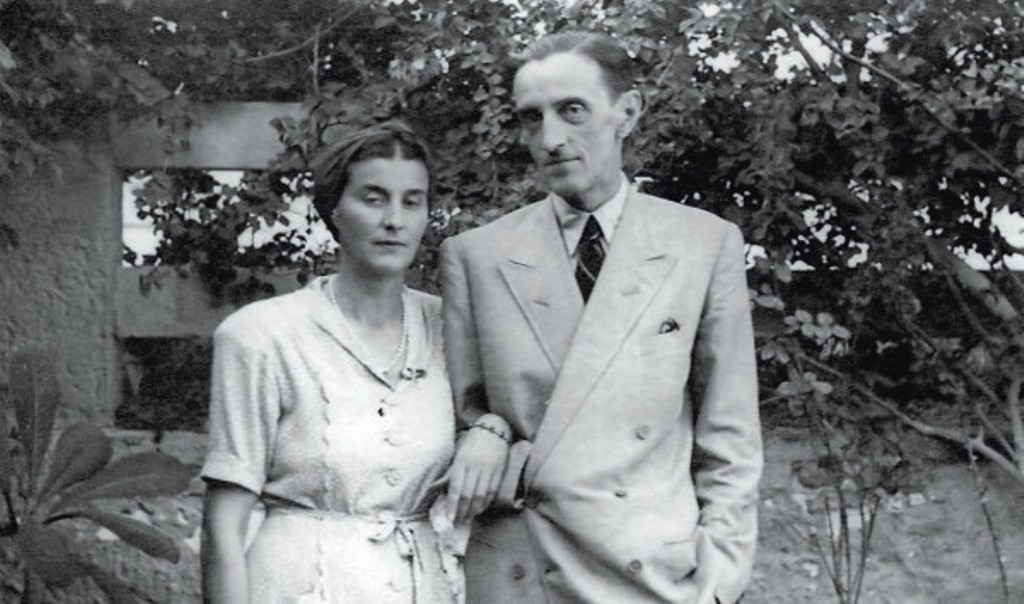
PHOTO: Prince of the Imperial Blood Roman Petrovich and his wife Princess
Praskovia Dmitrievna (née Countess Sheremeteva. Egypt. Circa early 1950s
Early life – France, Italy, Egypt
After the victory of the Socialists in the French parliamentary elections in 1936, Dmitri moved with his parents to Italy, where the queen was Helena of Savoy [born Princess Jelena of Montenegro, 1873-1952] the sister of his paternal grandmother Grand Duchess Militsa Nikolaevna. For a short time, the family lived in the Quirinal Palace in Rome, the official residence of the king of Italy.
Dmitri studied at a private Italian school, where he was taught Latin and classical Greek. When Italy withdrew from the war in 1943 and Germany occupied Rome, Dimitri and his family hid from the Germans for nine months, changing apartments and addresses, as the Nazis announced a hunt for all relatives of the Italian king Victor Emmanuel III.
In May 1946, Dmitri and his family sailed from Naples to Cairo on the Italian ship Obruzzi. Initially, the family planned to stay in Egypt for only two months and then return to Europe, but their forced exile lasted until 1952. Soon after arriving in Egypt at the age of 19, Dimitri Romanovich, with the consent of his parents, began working as a simple mechanic at the Ford repair plant in Alexandria, where he earned a mechanic’s certificate. Dimitri Romanovich worked at the plant for three years, and then worked as a car sales manager.
In 1960 Prince Dmitri moved to Denmark, where he worked for a number of banks including the Danske Bank, where he was an executive until his retirement in 1993.[2] He was fluent in Russian, French, English, Danish and Italian. Dmitri became a Danish citizen in 1979
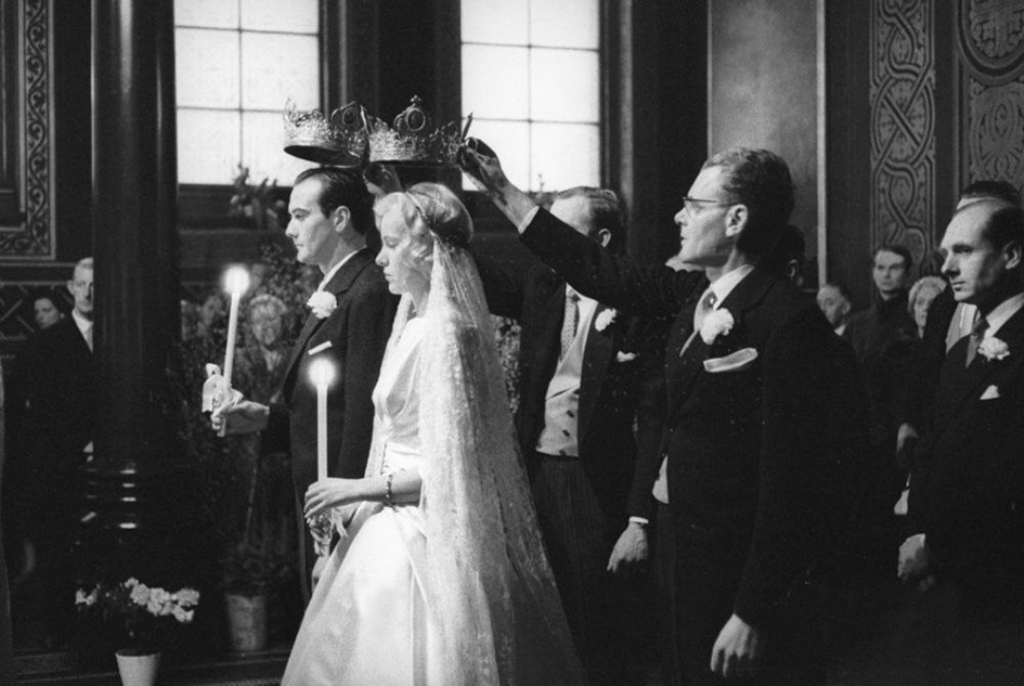
PHOTO: the wedding of Prince Dmitri Romanovich and Johanna von Kaufmann, 1959
Marriages
Prince Dmitri Romanovich was married twice.
In 1958, Dimitri and his friends went on a trip to Scandinavia by car. In Helsinki, he met a young girl named Johanna von Kauffmann (1936–1989). In 1959, the young couple married, settling in the suburbs of Copenhagen. Johanna died of cancer on 13th 1989, at the age of 52. The couple had no children.
In 1989, Prince Dimitri Romanovich married Dorrit Reventlow (born 1942) on 28th July 1993, at the Trinity Cathedral of the Ipatiev Monastery in Kostroma. His second marriage was the “FIRST” time a Romanov had been married in Russia since the fall of the dynasty in 1917. Before the wedding, Princess Dorrit converted to Orthodoxy taking the name Feodora Alexeevna. The couple had no children.
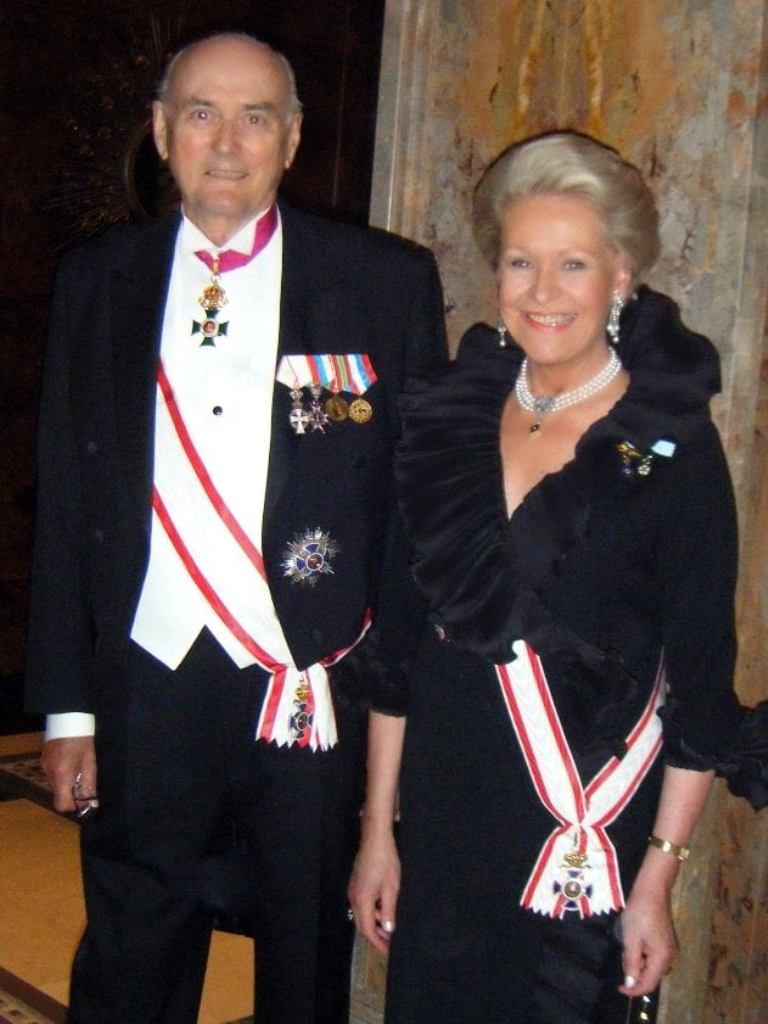
PHOTO: Prince Dimitri Romanovich and his second wife Princess Feodora Alexeevna
Dynastic status
From birth, Dmitri Romanovich was titled by His Highness Prince of the Imperial Blood, which, however, was never recognized by the descendants of Grand Duke Kirill Vladimirovich (1876-1938).
Since the creation of the Romanov Family Association in 1979, which today unites most of the male and female descendants of Emperor Nicholas I (1796-1855). Dmitri Romanovich did not recognize Prince Vladimir Kirillovich (1917-1992) as the head of the House of Romanov. After the death of the latter in April 1992, Dmitri recognized his brother Prince Nicholas Romanovich as the rightful head of the House of Romanov. Together with other representatives of the House of Romanov, he repeatedly declared the illegitimacy of the claims to the Russian throne of Vladimir Kirillovich and his daughter Maria Vladimirovna. From 1989 to 2014, Prince Dmitri served as an adviser to the head of the Romanov Family Association.
After the death of his brother in September 2014, Dmitri Romanovich headed the Romanov Family Association. All descendants of the Russian Imperial House (except Maria Vladimirovna and her son George Mikhailovich) recognized him as the head of the House of Romanov. The successor of Dimitri Romanovich was Prince Andrei Andreevich (1923-2021), who was the oldest living representative of the House of Romanov at the time.
Dimitri Romanovich was the last male representative of the Nikolaevichi branch of the House of Romanov, which originated from Grand Duke Nicholas Nikolaevich, Sr. (1831-1891) and his wife, Grand Duchess Alexandra Petrovna (born Duchess Alexandra of Oldenburg, 1838-1900). Dimitri Romanovich had no children, and his elder brother Nikolai Romanovich had only daughters. As a result, upon the death of Prince Dimitri Romanovich on 31st December 2016, the male line of the Nicholaevich branch of the Romanov family died out.
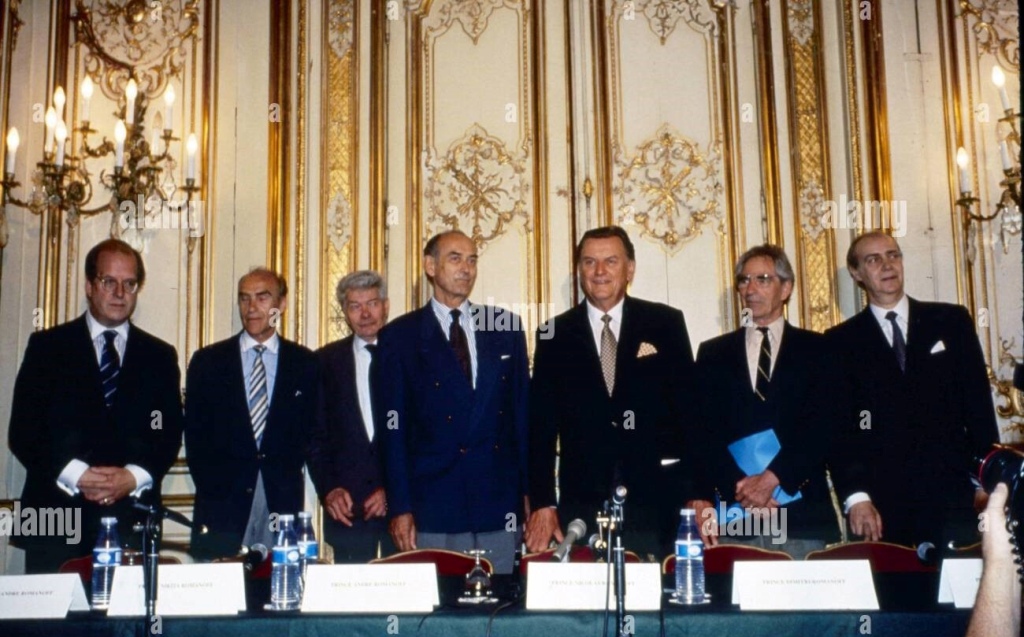
PHOTO: seven Romanov princes gather in Paris in June 1992
Social activities
On 29th June 1992, seven Romanov princes met in Paris: Nikolai Romanovich (1922-2014), Dimitri Romanovich (1926-2016), Andrei Andreevich (1923-2021), Mikhail Feodorovich (1924-2008), Nikita Nikitich (1923-2007), Alexander Nikitich (1929-2002) and Rostislav Rostislavovich (1938-1999).
The male descendants of the House of Romanov declared that none of them had any claims to the Russian throne, and that their activities in Russia would only be educational and charitable. Prince Dmitri was an opponent of the restoration of the monarchy. He believed that in Russia “there should be a democratically elected president.
It was during this meeting, that the princes decided to create a charitable foundation to help Russia. The foundation was established in 1994 and registered in London. The Romanov Fund for Russia was headed by Dimitri Romanovich.
As part of its humanitarian activities, the foundation provides charitable assistance and support to those in need in the field of medicine, education and social welfare, and promotes activities in the field of culture, art and enlightenment. The foundation takes care of hospitals for hearing-impaired children, boarding schools and nursing homes.
In July 1992, Prince Dmitri visited Russia for the first time, visiting St. Petersburg and Moscow. In the first years of its activity, the foundation faced difficulties of various nature associated with the collapse of the Russian state economy and the critical state of the social security system. In the period from 1993 to 1995, Dimitri Romanovich headed five humanitarian visits to Russia on behalf of the Romanov Fund for Russia.
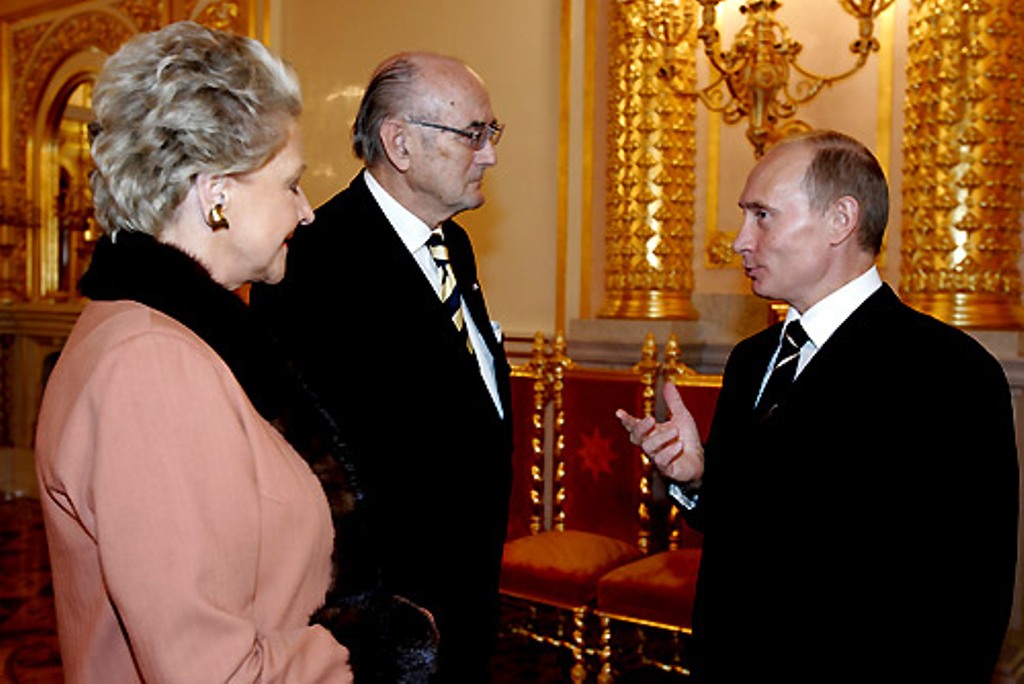
PHOTO: Russian president Vladimir Putin with Prince Dmitri Romanovich and his wife Princess Feodora Alexeevna, during an official reception held in the Grand Kremlin Palace in Moscow. 2006
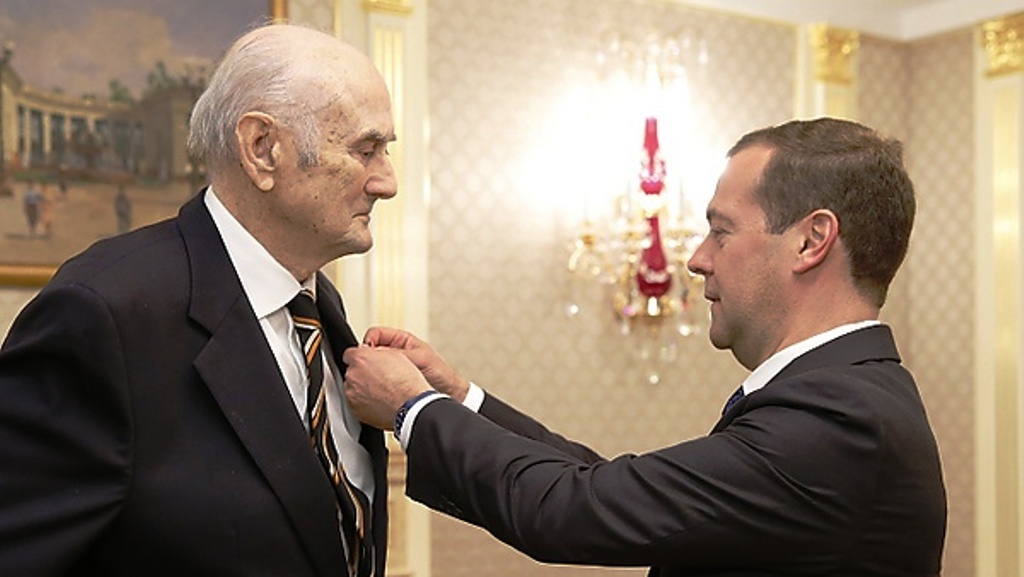
PHOTO: Prime Minister Dmitri Medvedev awarding Prince Dmitri Romanovich with the Order of Alexander Nevsky, 6th October 2016
Awards and honours
In 2006, Prince Dmitri Romanovich met with Russian President Vladimir Putin in Moscow. The meeting took place during a state reception devoted to National Unity Day in St. George’s Hall of the Grand Kremlin Palace.
This meeting occurred in the context of the reburial of the Dowager Empress Maria Feodorovna (Emperor Nicholas II’s mother). Maria Feodorovna had died in exile in Denmark, and her dying wish was to be buried next to her husband, Emperor Alexander III, in Russia.
In June 2011, the then President of the Russian Federation Dmitri Medvedev awarded Prince Dmitri the “Order of Friendship” for “great achievements in strengthening friendship and cultural cooperation between Russia and the Kingdom of Denmark and for his achievements as chairman of the Romanov Fund for Russia.” The award ceremony took place in Moscow.
In May 2016, Dimitri Romanovich was awarded a certificate of honour from the Government of the Russian Federation “for his great contribution to the dissemination of knowledge about the historical and cultural heritage of Russia abroad, and assistance in strengthening international humanitarian ties.”
In August 2016, by decree of the President of the Russian Federation Vladimir Putin, Prince Dmitri was awarded the Order of Alexander Nevsky. The Chairman of the Government of the Russian Federation Dmitri Medvedev, headed the award ceremony in the building of the Government of the Russian Federation, on 6th October 2016. Prince Dmitri receive the award “for his great contribution to spreading abroad the knowledge of Russia’s historical and cultural heritage and efforts to promote international humanitarian ties.”
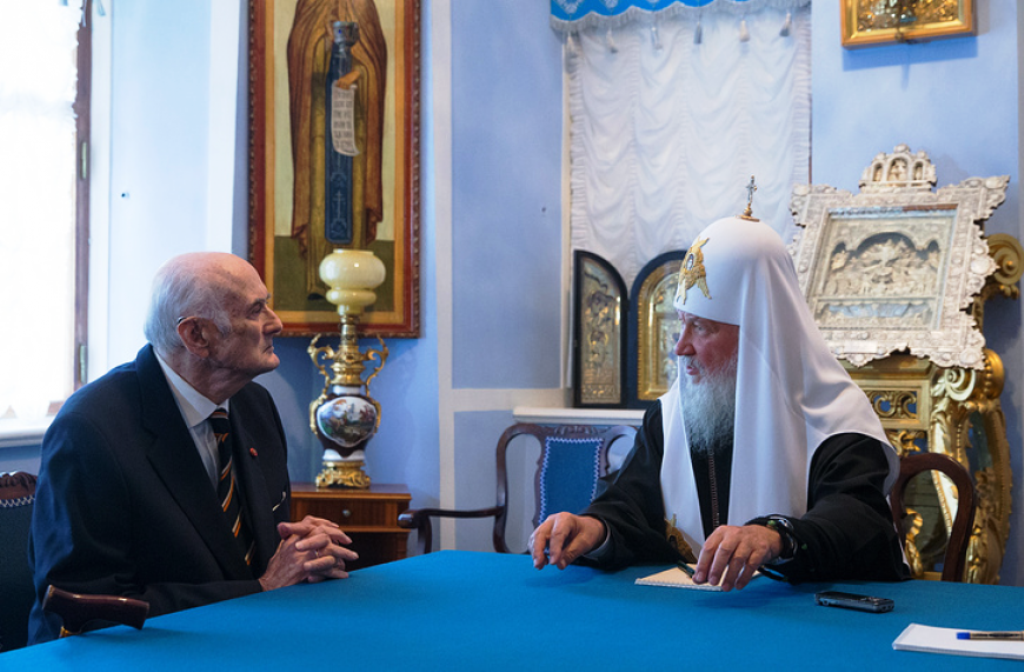
PHOTO: Prince Dmitir Romanovich with His Holiness Patriarch Kirill of Moscow and All Russia, at the Trinity Lavra of St. Sergius. October 2016
In October 2016, Prince Dmitri also met with His Holiness Patriarch Kirill of Moscow and All Russia at the Trinity Lavra of St. Sergius. During the meeting, His Holiness said: “Thank you for your love for our common Motherland, for preserving the wonderful traditions of the House of Romanov, for your participation in the delivery of the remains of both [Empress] Maria Feodorovna and [Grand Duke] Nicholas Nikolaevich. Your work unites history. This is the uniqueness of your personality and the uniqueness of the House of Romanov in general. Living people united in their family tradition of honouring our national history, torn apart by the tragic events of the early 20th century.”
Patron of the Arts
Dimitri Romanovich was also known as a patron of the arts. In December 2000, he donated the sabre of his great-grandfather, Grand Duke Nikolai Nikolaevich, Sr (1831-1891), as well as the Shipka battle banner, to the State Hermitage Museum in St. Petersburg.
In July 2004, he donated the family icon of the Saviour, which once belonged to his paternal grandmother Grand Duchess Militsa Nikolaevna (1866-1951) to the Novodevichy Convent in St. Petersburg.
In July 2005, he donated an icon of the Saviour to the restored Church of the Bright Resurrection of Christ on the Smolenka River in St. Petersburg. This 19th-century icon was kept in the Romanov family and passed down from generation to generation.
In July 2009, together with his wife, he donated the family icon of Saints Mitrophan and Tikhon of Voronezh to the restored Feoodorovsky Cathedral in St. Petersburg. According to Dimitri Romanovich, he was blessed with this icon. in Rome in 1944 by his spiritual mentor, Hieromonk Zosima,
Dmitri Romanovich has appeared in the media and documentaries, giving interviews about the history of the Romanov. For example: in 2003 in the Danish documentary “En Kongelig familie“, in 2007 on France 3 in the film “Un nom en héritage, les Romanov“, in 2008 on NTV in the film “Ghosts of the House of Romanov“, as well as in 2014 in the ZDF documentary “Royal Dynasties: The Romanovs” and in 2015 in the documentary “The Crown of the Russian Empire” produced by Russia-24.
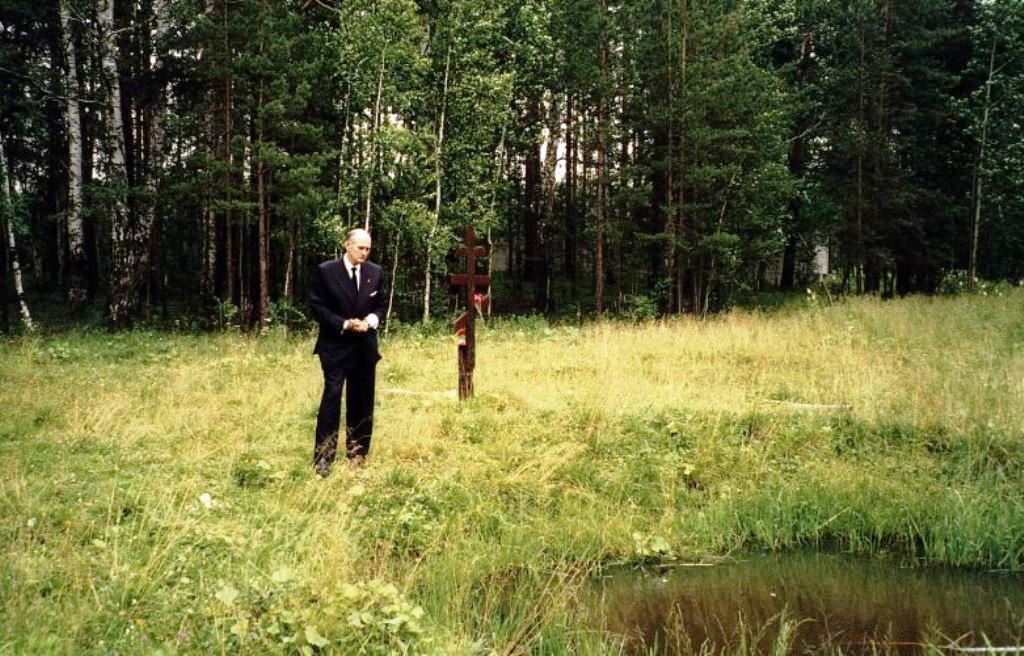
PHOTO: Dmitri Romanovich at the place where the remains of the Imperial Family were found on the Old Koptyaki Road, near Ekaterinburg
Reburial of the Imperial Family
After the discovery of the remains of Emperor Nicholas II, Empress Alexandra Feodorovna, three daughters and four faithful retainers near Ekaterinburg in July 1991, Prince Dmitri Romanovich actively assisted the government commission and the investigation in identifying the remains.
Dmitri Romanovich was one of the first members of the House of Romanov to visit the place where the remains were found on the Old Koptyakovskaya Road, near Ekaterinburg. He was the only one of the Romanovs who took part in the mourning events that took place in Ekaterinburg before the remains were sent to St. Petersburg.
On 17th July 1998, together with other representatives of the House of Romanov, he participated in the funeral ceremony for the reburial of the remains of Emperor Nicholas II, members of his family and servants, which took place in the SS Peter and Paul Cathedral in St. Petersburg.
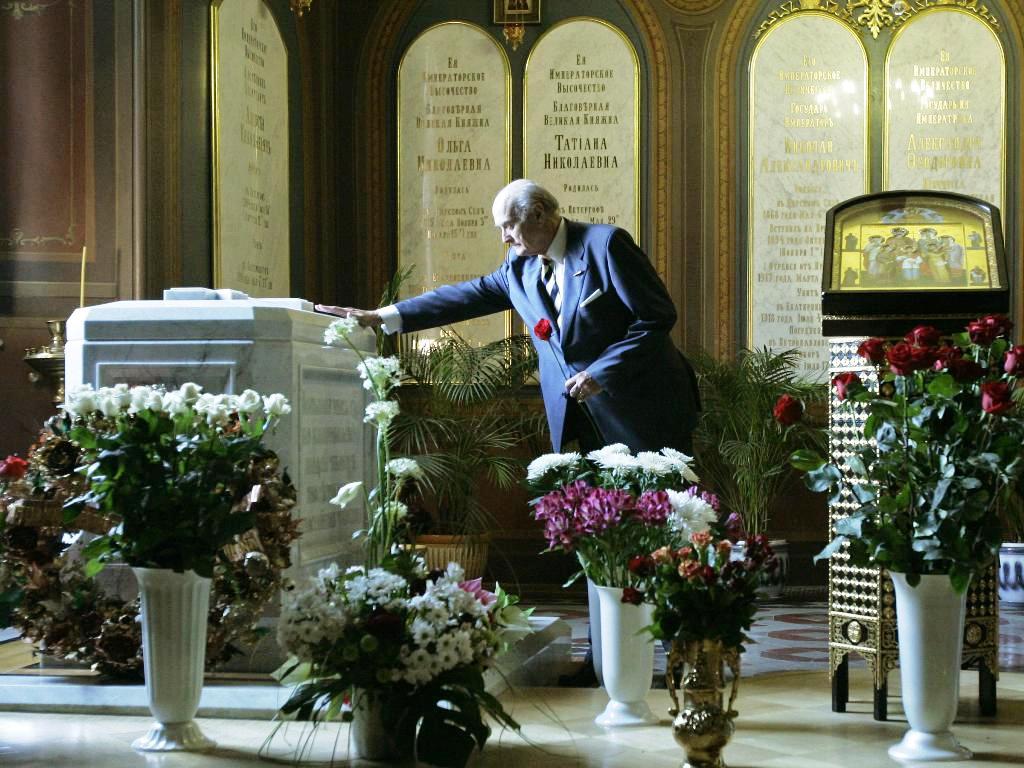
PHOTO: Dmitry Romanovich pays his respects at the tomb holding the remains of Emperor Nicholas II, Empress Alexandra and their three daughters in St. Petersburg’s St. Peter and Paul Cathedra. 2008
Russian president Boris Yeltsin (1931-2007) attends the funeral on 17th July 1998. Addressing the funeral ceremony, Yeltsin described the murder of the Russian Imperial Family as “one of the most shameful pages in Russian history”, and urged Russians to close a “bloody century” with repentance.
He said: “Today is a historic day for Russia. For many years, we kept quiet about this monstrous crime, but the truth has to be spoken.”
Yeltsin said he had no choice but to attend this funeral in consideration of the fact that the funeral presented a historical opportunity for the Russian people to exculpate themselves from the sins of their fathers, and the sins of the murder of their Romanov family.
More than 50 Romanov descendants attended the historic burial. The only family members who did NOT attend were Princess Maria Vladimirovna, her mother Princess Leonida Georgievna, and Maria’s son Prince George Mikhailovich.
The author of this article was invited to attend the events marking the burial of Nicholas II and members of his family. On the morning of 17th July 1998, I met many descendants of the House of Romanov in the lobby of the Astoria Hotel. I was invited to ride in one of the special buses provided for the more than 50 Romanov descendants, from the Astoria Hotel to the Peter and Paul Fortress. This was the one and only time that I met Princes Nicholas (1922-2014) and Dimitri Romanovich (1926-2016) in person.
After the discovery in July 2007 of the remains of Tsarevich Alexei Nikolaevich and Grand Duchess Maria Nikolaevna, Dmitri Romanovich actively assisted the investigation in identifying the remains. He advocated the speedy burial of the Tsesarevich and his sister in the SS Peter and Paul Cathedral.
In December 2015, Alexei and Maria’s remains were transferred from the State Archives of the Russian Federation to the Lower Church of the Transfiguration Cathedral of the Novospassky Monastery in Moscow, where they remain to this day.
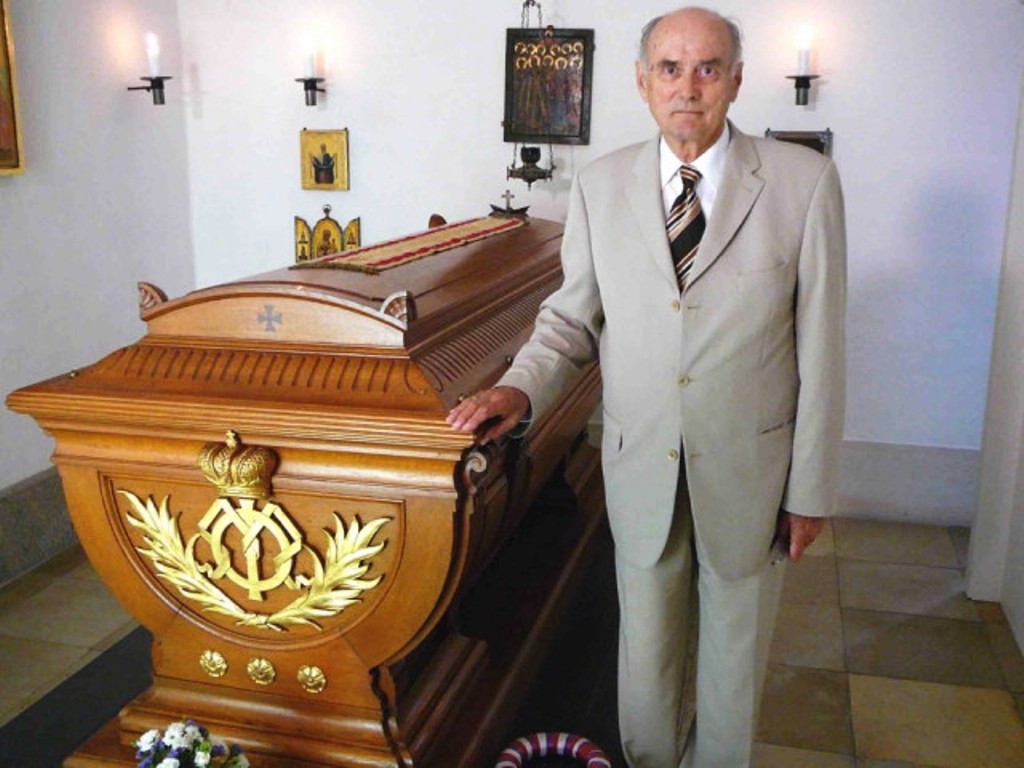
PHOTO: Prince Dimitri Romanovich at the coffin of Empress Maria Feodorovna in the Rosskile Cathedral, Denmark. August 2006.
Reburial of Empress Maria Feodorovna
In 2001 Prince Dmitri together with his brother Prince Nikolai Romanovich and Prince Mikhail Andreevich (1920-2008), who lived in Australia, initiated the reburial to Russia of the Dowager Empress Maria Feodorovna [born Princess Dagmar of Denmark, 1847-1928].
Prince Dmitri acted as an intermediary during negotiations between the government of the Russian Federation and the Danish royal court. Together with his wife, Princess Feodora Alexeevna, he accompanied the coffin with the remains of the Empress from Copenhagen to St. Petersburg.
From 25th to 29th September 2006, Prince Dmitri and his wife, together with other members of the Romanov Family Association, took part in the events for the reburial of the Dowager Empress, next to those of her husband Emperor Alexander III in the SS Peter and Paul Cathedral in St. Petersburg.
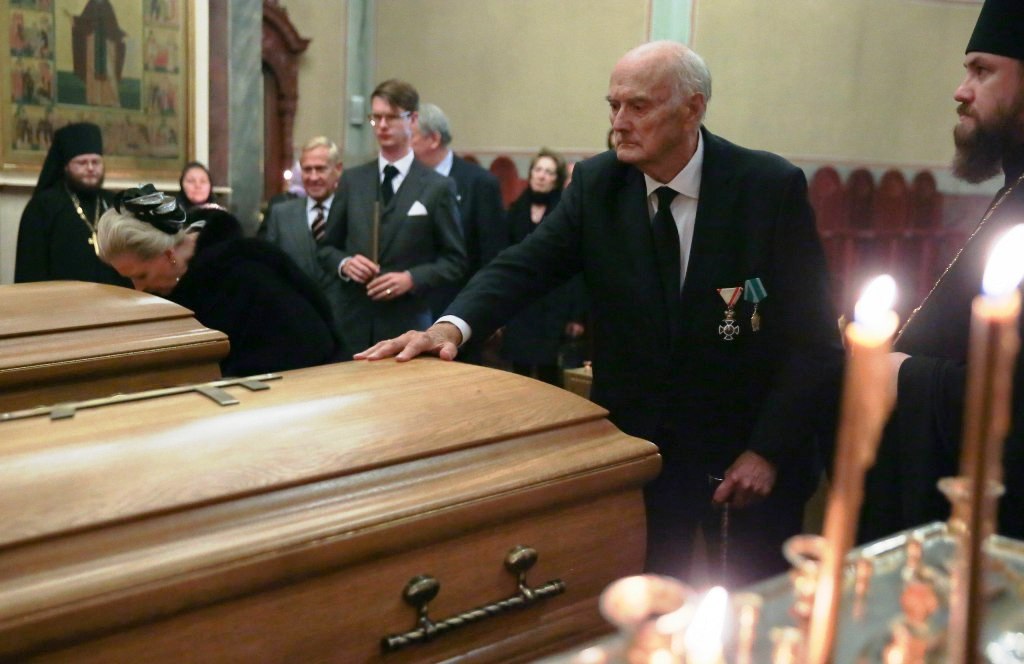
PHOTO: Prince Dmitri Romanvich at the coffins of his uncle Grand Duke Nicholas Nikolaevich and aunt Grand Duchess Anastasia Nikolaevna, in the Donskoy Monastery, Moscow
Reburial of Grand Duke Nicholas Nikolaevich
In December 2013, Prince Dmitir and his brother Prince Nicholas Romanovich, appealed to the Russian government with a request to rebury the remains of their paternal uncle Grand Duke Nikolai Nikolaevich (1856-1929) and aunt Grand Duchess Anastasia Nikolaevna (born Princess Anastasia of Montenegro, 1867-1935) in Moscow.
In April 2015, Prince Dmitri Romanovich participated in the reburial ceremony of Grand Duke Nikolai Nikolaevich and his wife, Grand Duchess Anastasia Nikolaevna, in in the chapel in honour of the Transfiguration of the Lord at the the World War I memorial military cemetery in Moscow.

PHOTO: Prince Dmitri Romanovich and his wife admire a portrait of Empress Alexandra Feodorovna in the Livadia Palace, during their visit to Crimea in 2015
Visit to Crimea
Together with his brother, Prince Dmitri supported the annexation of Crimea by the Russian Federation in 2014. He was the first of the Romanov family to visit Crimea after the Russian annexation. On 25th August 2015, Dimitri Romanovich and his wife Princess Feodora Alekseevna arrived in Sevastopol, where during a press conference they announced their readiness to move from Denmark to Crimea for permanent residence.
The following day, Dmitri and Princess Feodora Alekseevna visited the Livadia Palace, where they laid flowers at the monument to Emperor Nicholas II, erected in the spring of 2015. Dimitri Romanovich also visited the Djulber (aka Dulber) Palace, the family estate of the Nikolaevichs in the Crimea, which was built by Dmitri’s grandfather Grand Duke Peter Nikolaevich.
On 27th August, Dimitri Romanovich visited the museum-panorama of the defense of Sevastopol. On the same day, he visited the flagship of the Black Sea Fleet, the Guards missile cruiser Moskva. He was told about the history of the ship, its combat characteristics and the life of sailors and officers. At parting, the crew of the cruiser presented Dimitri Romanovich with two commemorative coins with a face value of 10 rubles, minted in honor of the annexation of Crimea by Russia. On the final day of the visit, 28th August, Dimitri Romanovich visited the Massandra Palace of Emperor Alexander III.
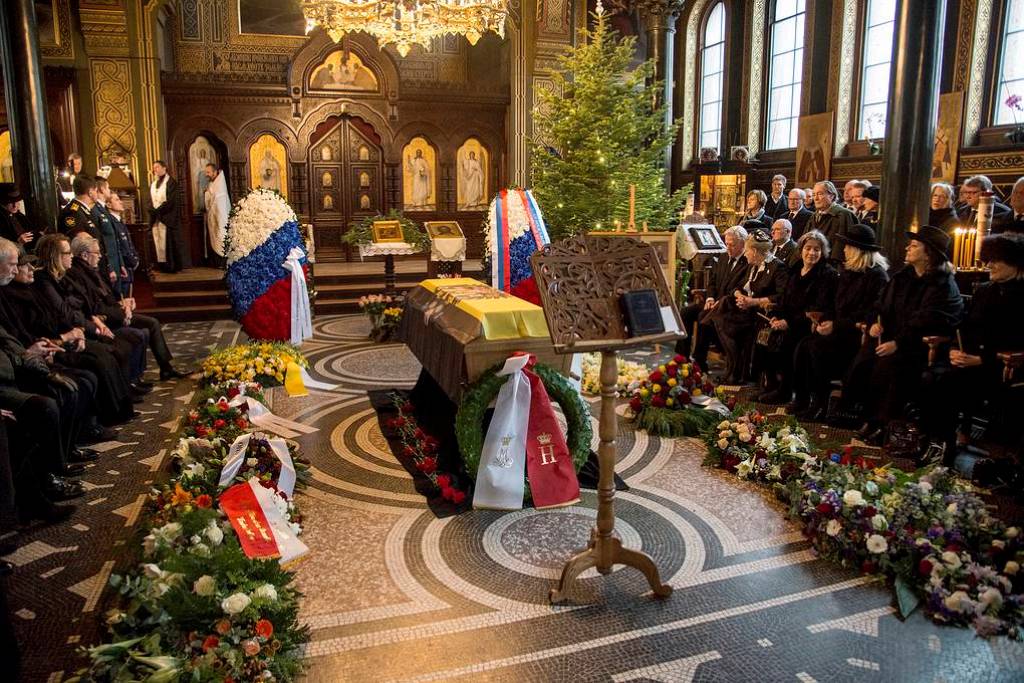
PHOTO: Prince Dmitri’s funeral was held on 10th January 2017, at the Alexander Nevsky Russian Orthodox Cathedral in Copenjagen, Denmark.
Death and funeral
At the end of December 2016, Prince Dmitri ‘s health deteriorated and he was subsequently hospitalized. He died on 31st December 2016 in a hospital in Copenhagen, Denmark.
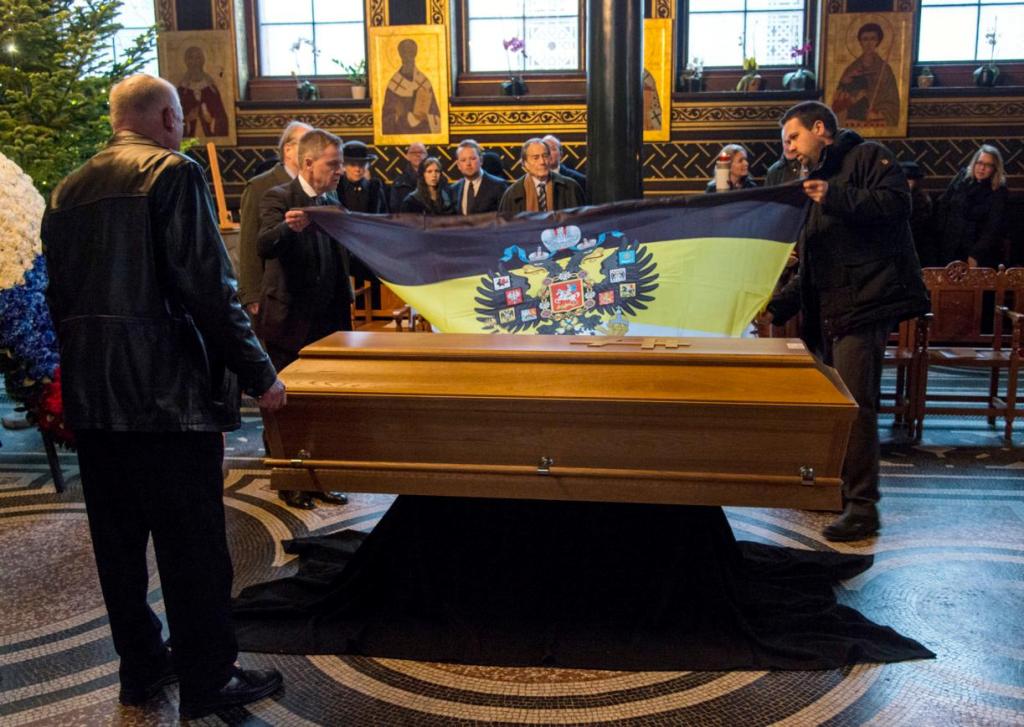
The funeral service was held on 10th January 2017, in the Church of Alexander Nevsky in Copenhagen, performed by Archpriest Sergei Plekho
The prince’s coffin, covered with the Romanov tri-colour flag – black, yellow, white with a double-headed eagle, was surrounded with flowers and wreaths, among which two stood out – from Queen Margrethe II of Denmark and President of the Russian Federation Vladimir Putin.
Russia’s Ambassador to Denmark Mikhail Vanin, who was present at the funeral service, read out a message from Russian President Vladimir Putin, expressing his condolences on the death of Prince Dimitri Romanov.
“Dimitri Romanovich was a “true patriot of Russia,” said Putin. “Throughout his life, the chairman of the Romanov Family Association kept the indissoluble spiritual connection with the motherland and made a great contribution to the dissemination of knowledge about the history and culture of our country abroad and about the heritage and traditions of the Russian Imperial House,” the Russian president added.
Numerous representatives of the foreign Russian diaspora attended his funeral, as well as Marshal of the Royal Court of Denmark Michael Eyrinreich, Chief Herald of the Russian Federation Georgy Vilinbakhov, and numerous Danish and Russian officials.
On 11th January 2017, a pannikhida [memorial service for the dead] was performed for the newly-departed Dimitri Romanovich, which was conducted by Archpriest Sergius Plekhov In the small chapel, at the Wedbeck Cemetery, situated about 20 km north of Copenhagen.
Then the coffin was transferred to the final resting place next to his first wife, Princess Joanna, née von Kauffmann, who died in 1989. After lowering the coffin into the grave, those present took turns throwing a handful of earth and Dimitri Romanovich’s favorite flowers, red roses.
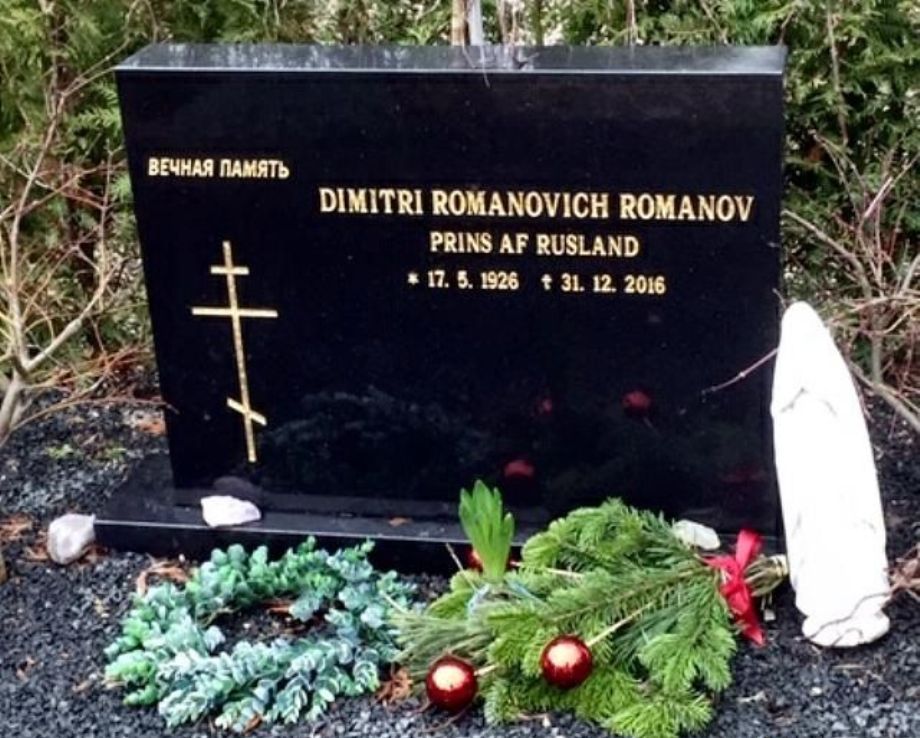
PHOTO: grave of Prince Dmitri Romanovich Romanov (1926-2016) in Vedbaek Cemetery
Upon the death of his brother Nicholas in 2014, Dimitri assumed the Headship of the Imperial House of Russia. When Prince Dimitri Romanovich died on 31st December 2016, the male line of the Nicholaevich branch of the Romanov family died out.
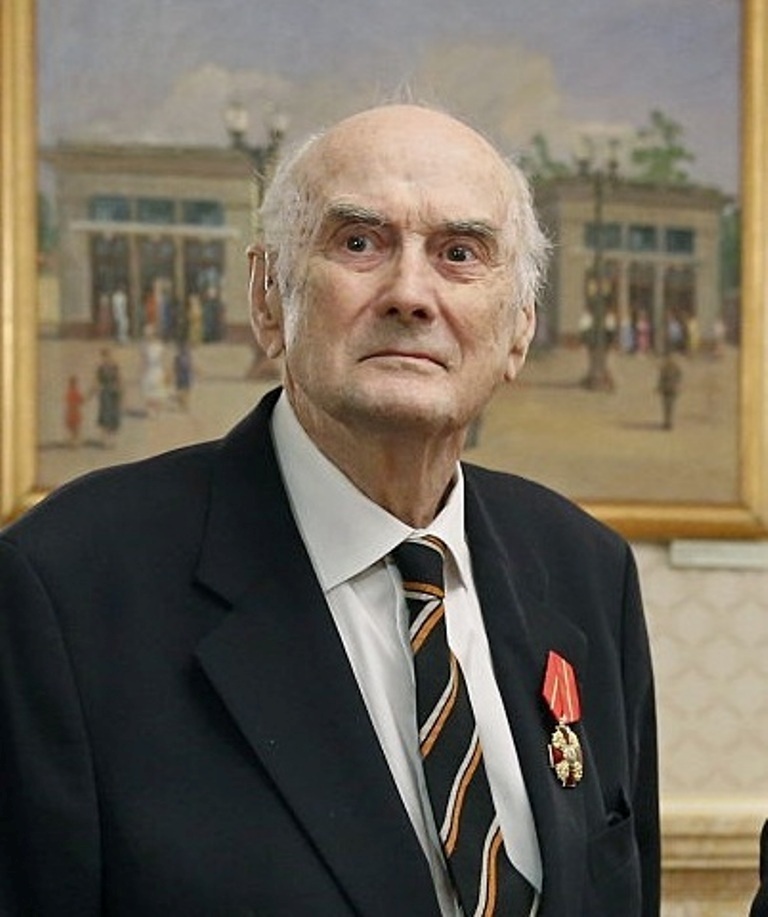
Prince Dmitri Romanovich Romanov with the Order of Alexander Nevsky
(1926-2016)
Memory Eternal! Вечная Память! ☦️
© Paul Gilbert. 31 December 2025
 Nicholas II
You must be logged in to post a comment.