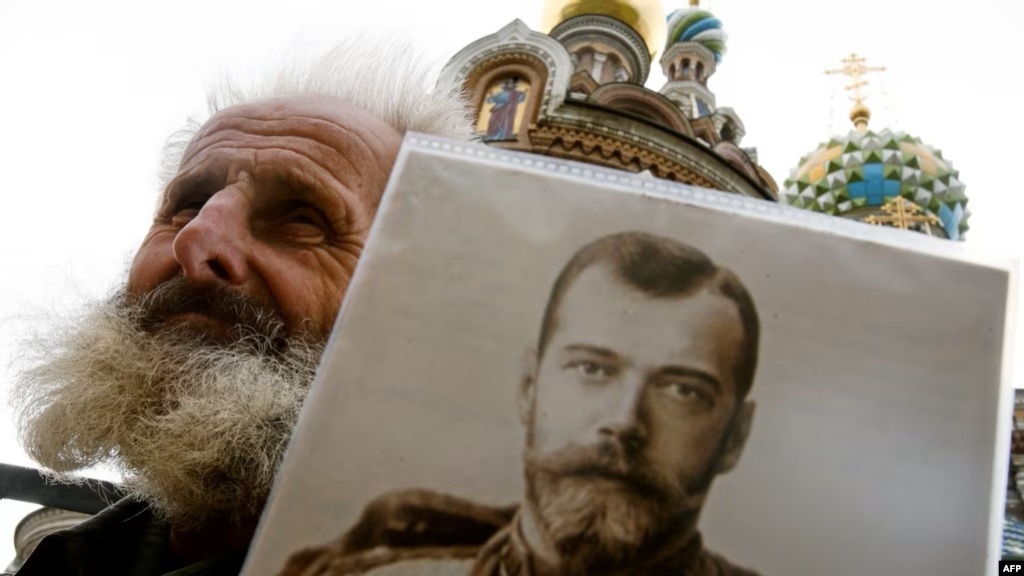
Nicholas II, Russia’s last emperor, is revered by the Russian Orthodox Church Outside Russia (ROCOR), the Moscow Patriarchate of the Russian Orthodox Church (ROC) and the Serbia Orthodox Church as a saint for his deep piety, unwavering defense of Orthodoxy, embodying the traditional role of the Tsar as God’s anointed Defender of the Faith.
A symbol of Steadfastness. Nicholas II serves as an inspiration for Orthodox Christians, representing the ideal of a ruler and believer who remained true to God amidst immense trials and tribulations.
Nicholas II saw himself as the Supreme Defender of the Orthodox faith, fostering church growth, promoting canonizations, and upholding traditional values, while the ROC honours him as an example of steadfast faith and a symbol for believers against modern evils.
As God’s Anointed, Nicholas II could not be displaced during his lifetime. Since the will of God was nowhere manifest, neither in the naming of his brother Grand Duke Mikhail to the throne, nor in the Tsar’s signing of the instrument of abdication, his status as Emperor and Tsar remained inviolate and unassailable.

“The Tsar was a living incarnation of faith in the Divine Providence that works in the destinies of nations and peoples and directs Rulers faithful to God into good and useful actions”
– St. John of Shanghai and San Francisco (1896-1966)
Religion and the Church Under Nicholas II
Nicholas II believed his divine duty as Supreme Guardian of the Orthodox faith and ‘Head of the Church’ in the spirit of his Byzantine imperial predecessors, and to protect the Orthodox Church and its doctrines, viewing himself as the first among believers and God’s chosen ruler.
During his reign (1894-1917), the Russian Orthodox Church expanded significantly with construction of new churches, monasteries, and schools, with the Tsar personally supporting religious publications and artifacts. He personally helped to finance from his own pocket, the construction of new churches, both within the Russian Empire and abroad.
The Russian Orthodox Church under Emperor Nicholas II flourished. In 1914, it consisted of 68 dioceses, 54,923 churches, 953 monasteries, 4 theological academies, 185 religious schools, 40,530 schools and 278 periodicals. The clergy consisted of 157 bishops, 68,928 priests, 48 987 clerics, 21,330 monks in monasteries and 73,229 nuns in convents.
Nicholas II actively supported the canonization of revered figures, most notably St. Seraphim of Sarov, and other saints such as Theodosius of Uglitsk and John of Tobolsk.
Icons of the Holy Royal Martyr Nicholas II are now found in Orthodox churches globally, and many Orthodox believers venerate him as a great saint.
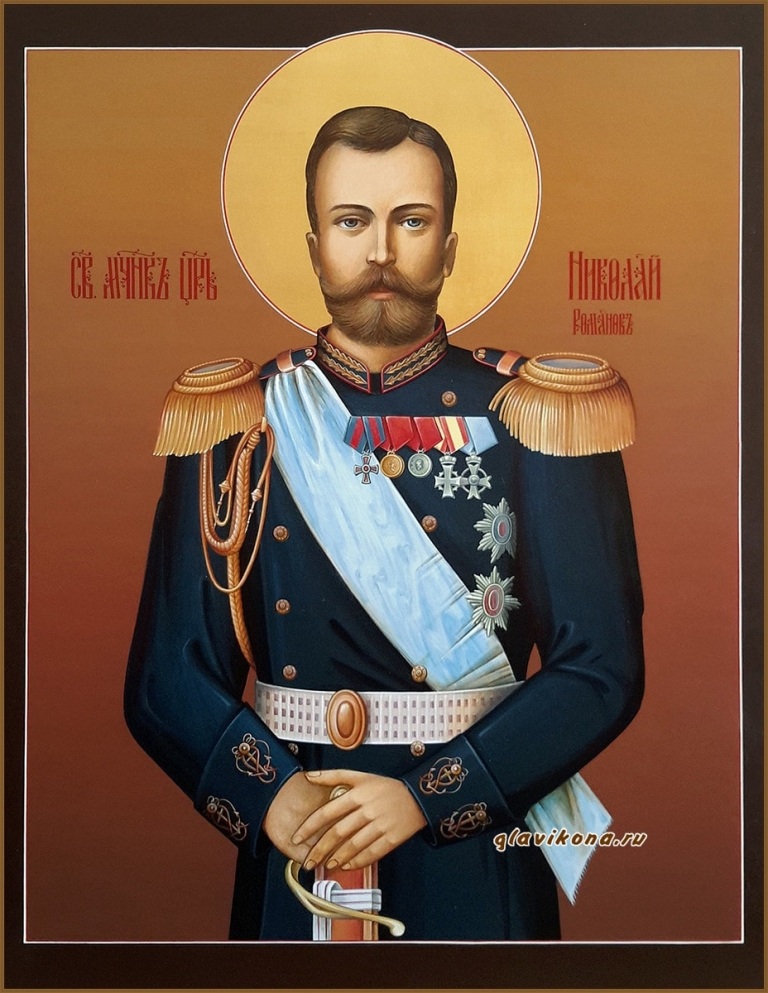
His Canonization as a Saint
The canonization of Russia’s last Tsar, also known as “glorification,” was the elevation to sainthood of Nicholas II as a “new martyr” by the ROCOR on 1st November 1981 and as a “passion-bearer” by the Moscow Patriarchate on 15th August 2000, recognizing his peaceful endurance of persecution and execution by the Bolsheviks. Despite his official designation as “passion-bearers” by the Moscow Patriarchate, Nicholas II is nevertheless spoken of as “martyr” in Church publications, icons, and in popular veneration by the people.
Nicholas II was canonized by the Serbian Orthodox Church primarily for his role as a pious “passion-bearer”—a saint who faced death with Christian humility and resignation—and for his significant support of Serbia during World War I, specifically his efforts to protect Serbia and his solidarity with the Serbian people.
In essence, Nicholas II embodies the historical ideal of the Orthodox Tsar, and his life and martyrdom solidified his place as a revered saint, a defender of his people and his faith until the very end.
***
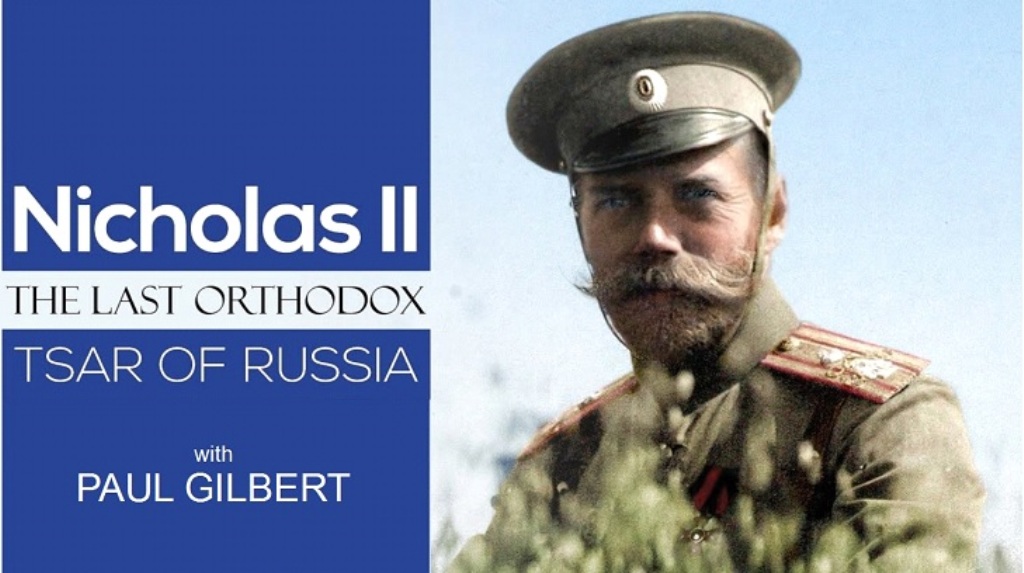
CLICK on the above image to watch the VIDEO
Researched, written and narrated by Paul Gilbert
Duration: 20 minutes. Language: English
Emperor Nicholas II reigned for 22+ years – from November 1894 to February 1917. With his murder, the last Orthodox Christian monarch, along with the thousand-year history of thrones and crowns in Russia, ended, ushering in an era of lawlessness, apostasy, and terror, one which would sweep Holy Orthodox Russia into an abyss which would last more than 70 years.
This new video production is based on the research of project colleague and independent researcher Paul Gilbert, who also narrates this video.
In the first 24 hours of it’s release on YouTube, some 3,000 people had watched the video! Since it’s release in July 2020, it has been viewed by more than 134.000 people.
The creators have done a remarkable job of incorporating a wonderful collection of photos – both vintage B&W and colourized by Olga Shirnina (aka KLIMBIM) – historical newsreel film footage and music.
One viewer noted on social media: “Only 20 minutes long, this is the BEST portrayal of the last Tsar’s Orthodox faith I have ever seen. Very well-made, historical and moving.”
The crowning moment of this video is near the end, which shows film footage of the actual canonization ceremony of Emperor Nicholas II and his family, performed on 20th August 2000 by Patriarch Alexei II (1929-2008) in the Christ the Saviour Cathedral in Moscow. You can hear His Holiness calling out each of the names of the Imperial Family. The footage is extremely moving to watch.
This 20-minute video is presented in the framework of the production of the book The Romanov Royal Martyrs: What Silence Could Not Conceal published by Mesa Potamos Publications in 2019.
© Paul Gilbert. 25 January 2026
***
CLICK on the IMAGE below for more details and to order your copy
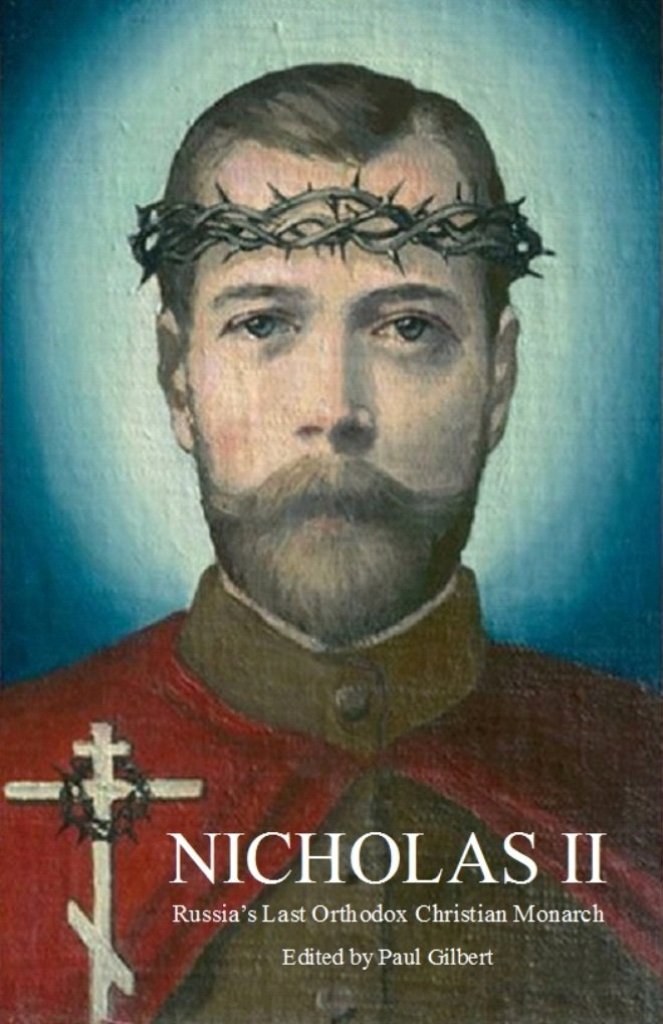
‘NICHOLAS II: RUSSIA’S LAST ORTHODOX CHRISTIAN MONARCH’
Compiled and Edited by Paul Gilbert
134 PAGES. ILLUSTRATED
AVAILABLE IN PAPERBACK and EBOOK EDITIONS
An illustrated 16-page Introduction by independent researcher Paul Gilbert explores the piety of Nicholas II, and his devotion to the Russian Orthodox Church, which reached its fullest development and power, during his 22-year reign.
This book further examines the trials and tribulations the Tsar endured, which later led to his canonization by the Russian Orthodox Church.
 Nicholas II
You must be logged in to post a comment.