Moscow is not responsible for Petrograd
Further to my previous post ‘United States demands billions from Russia for Romanov-era bonds‘ – published on 16th January 2026, I am pleased to provide the following update on this issue:
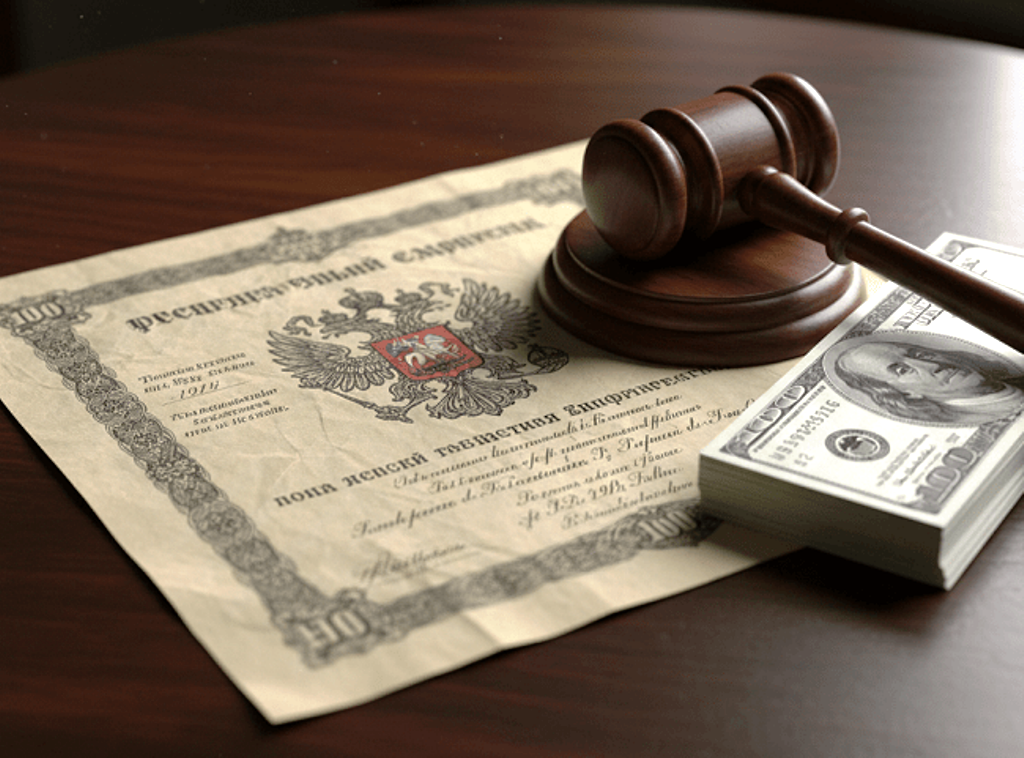
“The Russian Federation does not intend to pay the debts of the Russian Empire” – said Deputy Finance Minister of the Russian Federation Vladimir Kolychev regardubg the lawsuit filed on 16th January 2026 by the American investment fund Noble Capital RSD LLC. The lawsuit filed in the court of the District of Columbia (USA) is demanding $225.8 billion USD from Moscow for sovereign bonds issued by the Tsarist government in December 1916. The chances of this claim being satisfied are close to zero, if we proceed from historical logic.
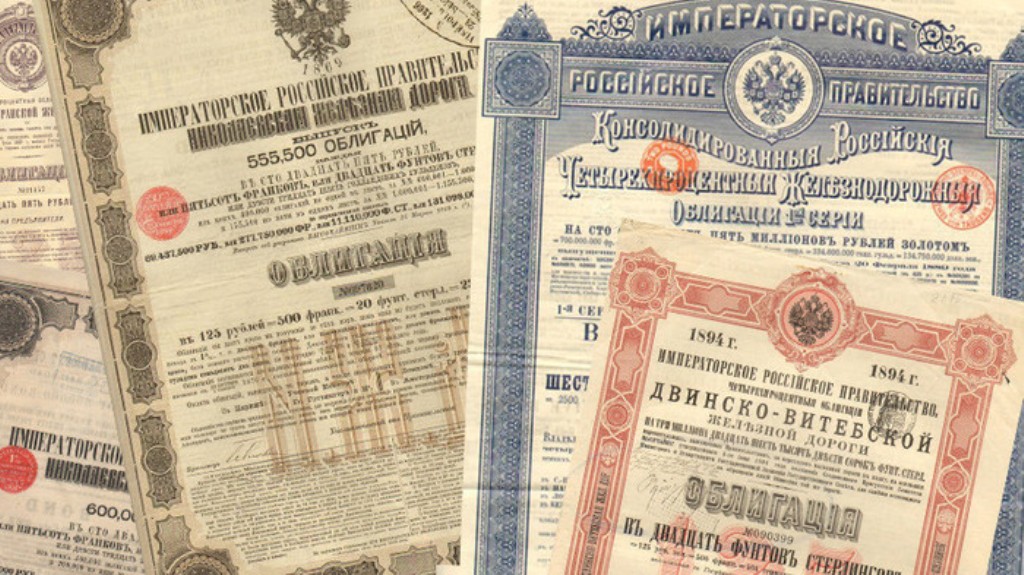
The sovereign bonds of the Russian Empire, were issued n December 1916 at 5.5% per annum for a period of 5 years, just two months before the fall of the Tsarist government, were then transferred to the management of the National City Bank of New York (which later changed its name to Citibank). The amount of the claim is $25 billion of fixed capital plus interest accrued over almost 110 years.
The defendants in the lawsuit are the Ministry of Finance of the Russian Federation, the Central Bank of the Russian Federation and the National Welfare Fund of Russia (NWF). They have until 30th January 2026, to file objections to the lawsuit of the Delaware-registered Noble Capital RSD.
Noble Capital’s lawsuit, strictly speaking, cannot even be accepted for consideration in court, since it is based on factually incorrect premises, notes Igor Semenovsky, associate professor of the Department of International and Public Law of the Faculty of Law at the Financial University under the Government of the Russian Federation:
“The lawsuit alleges that in February 1918, the Soviet Union refused to pay the debts of both the Tsarist and the Provisional Government, citing that the USSR was established only at the end of 1922. It is also argued that the recognition of the debts of the USSR by the Russian Federation is tantamount to its recognition of the debts of the Russian Empire, which is incorrect both historically (because the USSR did not recognize the Tsarist debts) and logically (the Russian Federation declared itself the successor of the Soviet Union only, but never declared itself the successor of the Russian Empire or the Provisional Government). Neither the RSFSR before 2022, nor the USSR after 2022 undertook such continuity, that is, the logical scheme of transitivity does not work here either.”
Nevertheless, the plaintiff insists that such succession exists. As a precedent (paragraphs 26 and 28 of the lawsuit), the agreements between the USSR and Great Britain of July 1986 and between the Russian Federation and France of November 1996 were mentioned.
There are indeed precedents when the USSR and the Russian Federation recognized Tsarist debts ad hoc (in particular cases), but this does not increase the chances of Noble Capital to win theie lawsuit, Vladimir Kanashevsky, head of the Department of Private International Law at the Kutafin Moscow State Law Academy, explained:
“Russia, like any sovereign country, has state immunity from the decisions of any national court. We may ask why Noble Capital did not present its claims in 1996, when the Russian Federation signed an agreement with the Paris Club on the payment of Tsarist debts. Even if the American court agrees with the plaintiff’s arguments, the Russian Federation has the right to ignore this decision. In this case, the plaintiff may try to enforce the judgment at the expense of Russian property that it can reach, for example, the frozen assets of the Central Bank of the Russian Federation.”
Probably, it is these frozen assets that are the goal of the authors of the lawsuit. Sooner or later, their fate will have to be decided, and the investment fund (or those who stand behind it) wants to create a legal basis for withdrawing this money in its favor. Albeit under the guise of imperial debts.
© Paul Gilbert. 1 February 2026
 Nicholas II
You must be logged in to post a comment.