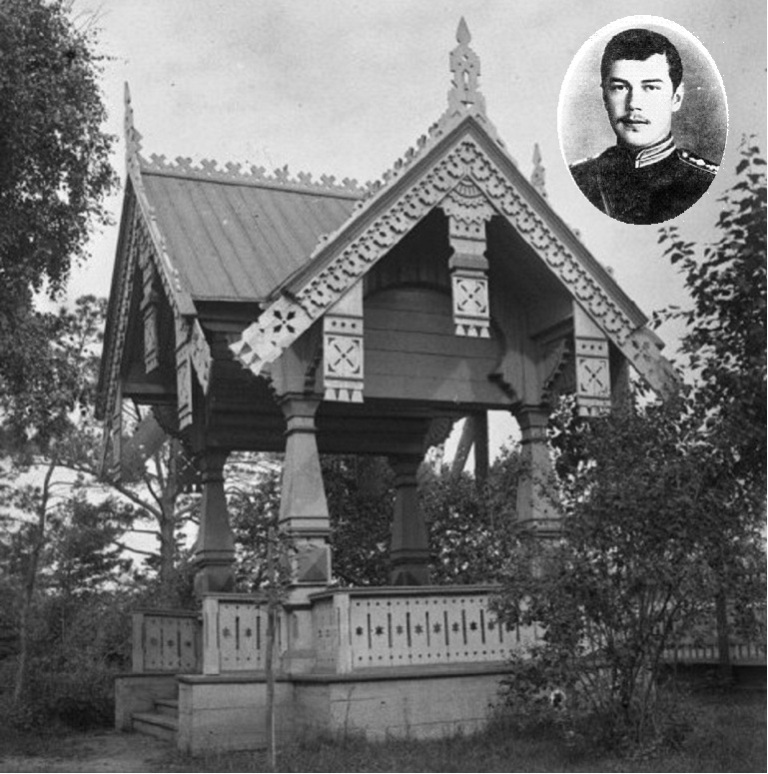
PHOTO: early 20th century image of the Tsar’s Gazebo in Krasnoyarsk
The restoration of the Tsar’s Gazebo, a significant historical object marking Nicholas II’s visit to the Siberian city n Krasnoyarsk in 1891, will soon begin. The gazebo once stood in the former City Garden Park (renamethe Gorky Central Park of Culture and Leisure in 1934). The work will take place during the current large-scale reconstruction and landscaping of the park.
The gazebo was erected in 1891 by a decision of the City Duma to mark Tsesarevich and Grand Duke Nikolai Alexandrovich, the future Emperor Nicholas II’s visit to Krasnoyarsk. The gazebo was constructed in the historical center of the city, on the left bank of the Yenisei.
The structure was built in the Neo-Russian style with rich folk carvings, colored tiles, hipped roofs[1] and turrets.
In 1913, the Norwegian polar explorer Fridtjof Nansen (1861-1930), who visited Krasnoyarsk, wrote: “We visited the city park, which is reputed to be the finest in all of Siberia. It was autumn time, and the flowers had already withered, but judging by the trees, coniferous and deciduous, one could imagine that in summer the park was a wonderful place for walking.”
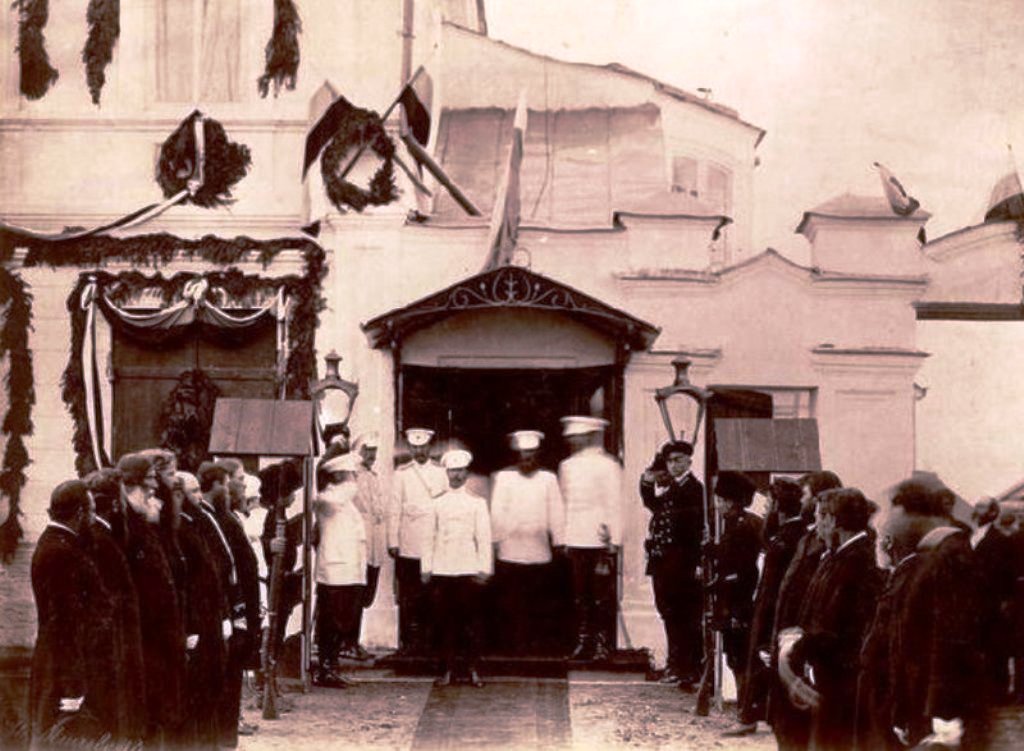
PHOTO: Tsesarevich Nikolai Alexandrovich in Krasnoyarsk on 1st July 1891
Tsesarevich Nikolai Alexandrovich arrived in Krasnoyarsk on 1st July 1891, on his return journey across the Russian Empire to St. Petersburg, following his historic Eastern Journey (1890-91). He arrived on the steamship St. Nicholas[2], and solemnly welcomed by city officials with the traditional bread and salt[3].
During his stay, Nicholas Alexandrovich attended a Divine Liturgy in the city’s main Orthodox church, followed by a review of a local regiment. He was even gifted with a horse, which he later sold, giving the money to charity.
At 7 o’clock in the evening, a gala evening which consisted of a dinner and musical accompaniment in honour of the future Emperor Nicholas II was organized by the city’s nobility, in one of the elegant new pavilions constructed in the park.
During dinner, a speech was made honouring the reigning Emperor Alexander III and his family, a special toast was made to Tsesarevich Nicholas Alexandrovich. Guests were served exquisite dishes, which included taimen [aka Siberian salmon], quails and local game, caviar and various varieties of Dutch cheese, French truffles and German sausages.
After the departure of the future emperor, the pavilion received the unofficial name “Tsarskaya”. It was then occupied by the Public Assembly Club. In 1909, the building was leased to firefighters, who were also responsible for maintaining order in the park. And in the pavilion itself, a major renovation was carried out making it an all-season building. The income from renting the building also went to the upkeep and maintenance of the City Garden Park.
In the first years of Soviet power, the building housed the Rykov Club, then the city trade union council, and even later it was occupied by the administration of the park.
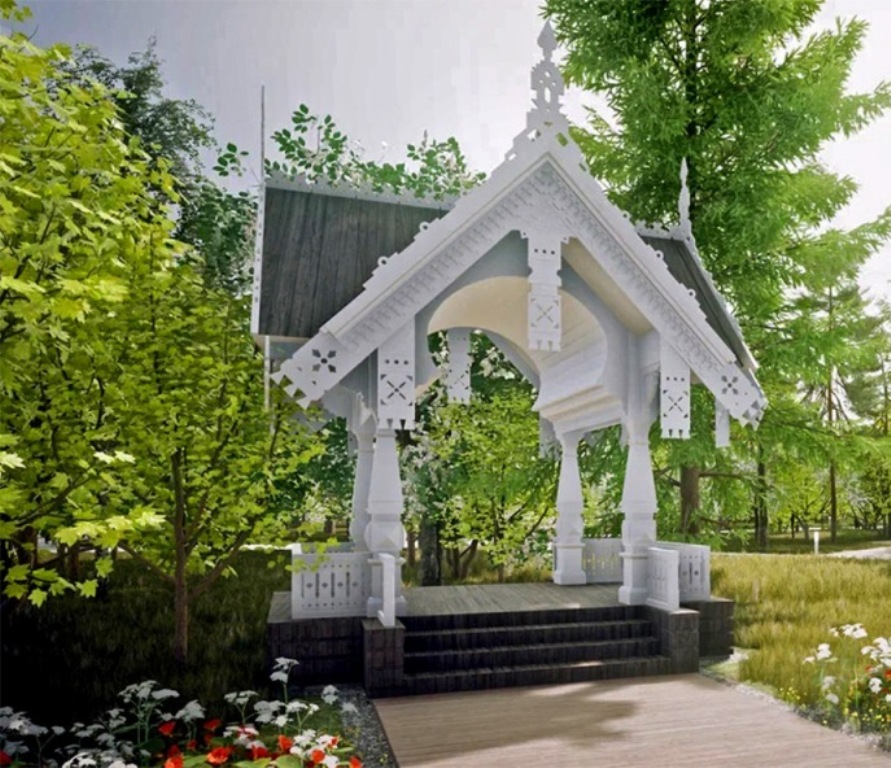
PHOTO: artist’s concept of the restored Tsar’s Gazebo in Krasnoyarsk
In a 1924 city plan, the gazebo is still visible among the greenery and from an aerial image from 1968. According to the State Protection of Cultural Heritage sites of the Krasnoyarsk Region, the gazebo was preserved on the city plans until 1968. It is generally believed that the gazebo was demolished during the reconstruction of the park and the expansion of the main alley around 1970. Sadly, by the end of the 20th century, neither the gazebo building no longer existed.
Reconstruction work on the new gazebo will include the installation of the foundation, basement and pavement, the installation of the roof, as well as interior finishing and electrical installation work.
The gazebo will be made of local timber. Particular attention will be paid to the quality of materials so that the new gazebo becomes an aesthetically attractive object that organically fits into the surrounding landscaped gardens. The project is expected to be completed by the summer of 2026.
NOTES
[1] A hipped roof, or hip roof, is a roof design where all sides slope downwards to the walls, creating a uniform and stable structure without gables.
[2] The steamship St. Nicholas decommissioned in 1927, and in 1960 was sent to the “ship’s graveyard. It was restored in 1970, and is today a museum, situated on the embankment of the Yenisei in Krasnoyarsk.
[3] When important, respected, or admired guests arrive, they are presented with a loaf of bread (usually a korovai) placed on a rushnyk (embroidered ritual cloth). A salt holder or a salt cellar is placed on top of the bread loaf or secured in a hole on the top of the loaf.
© Paul Gilbert. 9 February 2026
 Nicholas II
You must be logged in to post a comment.