The fate of four faithful retainers of the Imperial Family
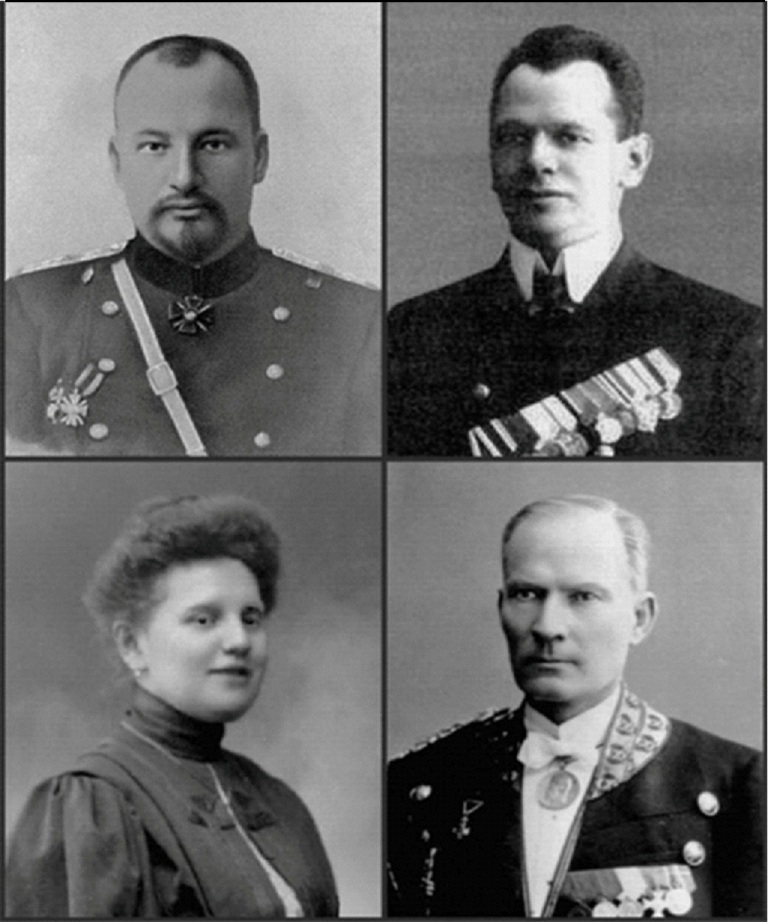
On the night of July 16/17, 1918, a tragic event took place in Ekaterinburg that marked the final fall of Russia into the hellish abyss of devastation and the ensuing Civil War. In the basement of the Ipatiev House, the last Russian Emperor Nicholas II, was shot dead by a gang of Bolshevik criminal thugs. His entire family and four faithful servants, who voluntarily followed the Imperial Family into exile and, later, shared the same fate.
While the lives of Emperor Nicholas II, Empress Alexandra Feodorovna and their five children have been studied in detail, but that of the four faithful retainers remain in the shadows of history. This article provides brief bios of the lives of the Imperial Family’s physician Dr. Eugene Botkin (1865-1918); the maid Anna Demidova (1878-1918); the valet Aloise (Alexei) Trupp (1856-1918); and the cook Ivan Kharitonov (1872-1918).
In 1981, the four faithful retainers, along with the Imperial Family, were canonized as a New Martyr by the Russian Orthodox Church Outside of Russia (ROCOR). In 2016, the Bishop’s Council of the Russian Orthodox Church (Moscow Patriarchate) canonized Dr. Botkin as a righteous passion bearer. They did not canonize the other three servants.
The Canonization Commission, headed by Metropolitan Yuvenaly, considering the issue of the canonization of the the other three faithful servants, noted that:
“… it is not possible to make a final decision on the existence of grounds for the canonization of this group of laymen, who, in accordance with the duty of their Court service, accompanied the Imperial Family during the period of their imprisonment and accepted a violent death. … the most appropriate form of veneration for the Christian podvig[1] of the faithful servants of the Imperial Family, who shared their tragic fate, today can be the perpetuation of this feat in the lives of the Royal Martyrs.”
Святы Царственные мученики, молите Бога о нас!
Holy Royal Martyrs, pray to God for us!
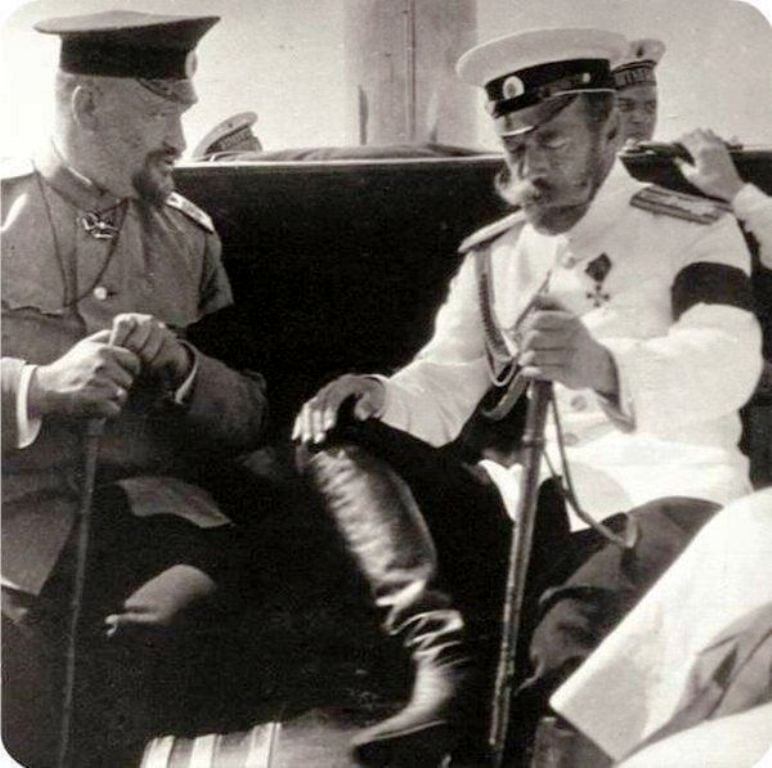
PHOTO: in happier times – Dr. Botkin with Emperor Nicholas II
Evgeny (Eugene) Botkin – Family Physician
Evgeny (Eugene) Sergeevich Botkin was the son of the famous physician Sergei Botkin (1832-1889), who served as one of the the Court physicians for Emperors Alexander II and Alexander III. Since childhood, Evgeny followed in his father’s footsteps and pursued a career as a doctor. At the beginning of the 20th century, he worked in a hospital for the poor and at the same time lectured to students of the Imperial Military Medical Academy in St. Petersburg. Despite the fact that his dissertation was devoted to the narrow topic of blood composition, in his lectures he covered the very broad aspects of the medical profession, in particular, paying special attention to the psychological aspects of a doctor’s work, instructing future doctors that the patient should be treated with respect and dignity.
In 1904, when the Russo-Japanese War began, Botkin rushed to the Front to head the medical unit of the Russian Red Cross Society. Later he said that he could not remain indifferent to the misfortune that befell his country. Despite the fact that he went to the Front with “the most bloodthirsty feelings”, the war taught him to treat all people, even his enemies: he was equally willing to help both the Russian and Japanese wounded. Evgeny Sergeevich was a deeply religious person, his faith helped and sustained him during this period. He returned home with six military awards, and the impressions of what he saw on the fronts of the Russo-Japanese War formed the basis of a book on the subject.
It was this book that became, perhaps, the main reason that Empress Alexandra Feodorovna chose him as a personal physician for the Imperial Family. In the autumn of 1908, Botkin and his family moved to Tsarskoye Selo. The doctor’s younger children became friends with the Tsesarevich and the Grand Duchesses, and often assisted their father in his work, carrying out simple tasks.
In August 1917, when Botkin went into exile with the Imperial Family, his son Gleb and daughter Tatyana followed their father, but only reached Tobolsk – they were not allowed to go to Ekaterinburg (later both emigrated). In exile, Botkin became a kind of intermediary between the Imperial Family, the guards and the inhabitants of the city: he arranged a visit by a priest to the Governor’s House, arranged hour and a half walks for the Imperial Family, petitioned for a tutor for the Tsesarevich, taught the Russian language and biology to the Tsar’s children, while providing medical services to the residents of Ekaterinburg. Evgeny Sergeyevich never complained either about his health (which was not good) or about the conditions of detention – his letters reflect a positive or at least stoic attitude to all the trials and tribulations that fell to his lot. Only in the last letter, which was never sent, did Botkin admit that he had already “… died, but not yet buried, or buried alive.”
On the fateful night of July 16/17 1918, the guards woke up Botkin and ordered him to wake up all the inhabitants of the Ipatiev House, saying that they were allegedly being transported to another place, since the city was restless. Having gathered everyone in the basement, the executioner-commandant Yakov Yurovsky announced their execution, to which the bewildered Botkin managed to answer only with a question: “So they aren’t taking us anywhere?” The doctor’s body was burned along with the bodies of the Imperial Family. During the excavations, his artificial jaw, a broken pince-nez and a brush for his beard and mustache were found.
Evgeny Sergeevich Botkin was the only person among the four faithful servants who was canonized by the Moscow Patriarchate of the Russian Orthodox Church. On 3rd February 2016, the Bishop’s Council of the Russian Orthodox Church canonized Botkin as Righteous Passion-Bearer Yevgeny the Physician.
On 16th October 2009, the Prosecutor General’s Office of the Russian Federation decided to rehabilitate 52 close associates of the Imperial Family who had been subjected to repression, including the four faithful servants who perished with the Imperial Family.
On 25th March 2016, on the grounds of the Moscow City Clinical Hospital No 57, Bishop Panteleimon of Orekhovo-Zuevo consecrated the first church in Russia in honor of Righteous Evgeny Botkin.

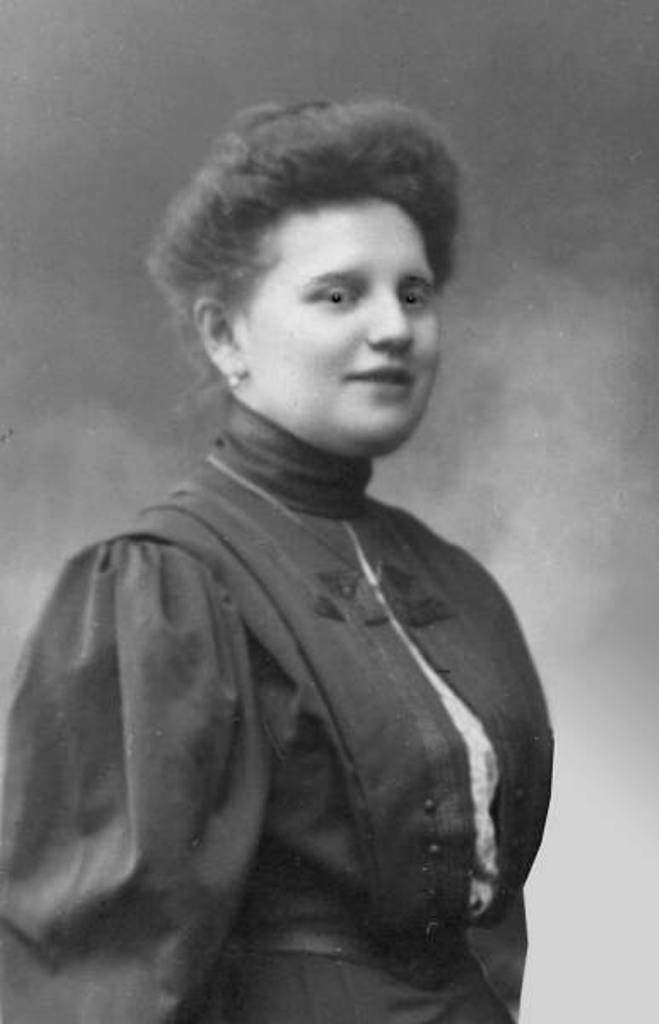
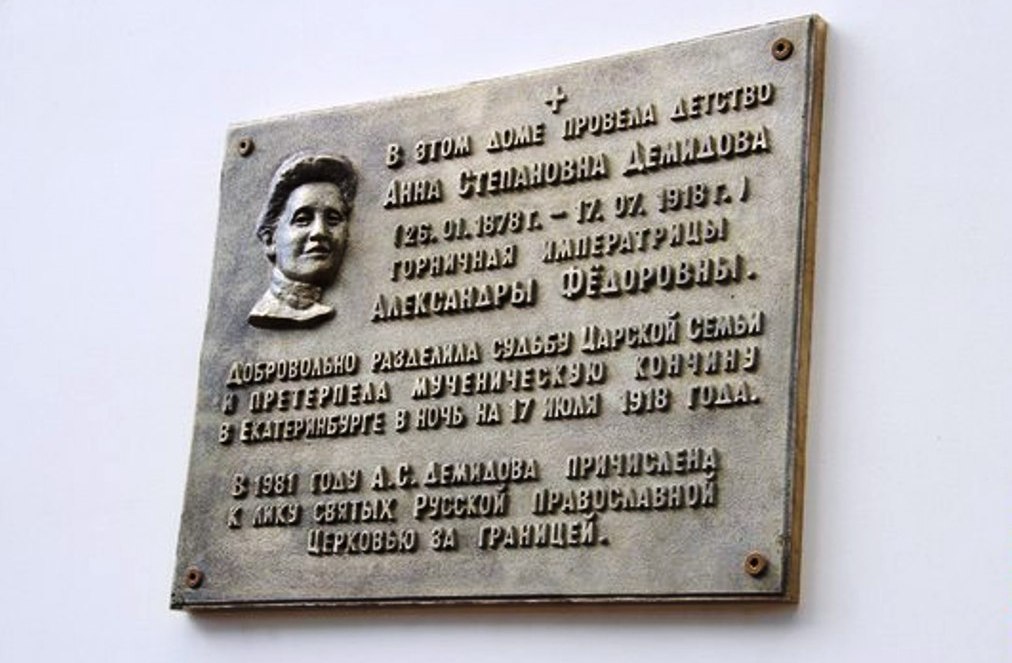
Anna Demidova – maid
Anna Stepanovna Demidova was born into a bourgeois family in Cherepovets. She learned several foreign languages, played the piano well, was well educated and erudite, but her strong point was always embroidery. In fact, this talent helped her find the main work of her life: the Empress admired Demidova’s embroidery so much that she invited her to serve in the Imperial Family as a maid. Usually, the “room girls” were mainly engaged in helping the Empress with her wardrobe and help her get dressed, but Anna’s main duty was to teach the Tsar’s daughters needlework. Anna Demidova won over the grand duchesses so much so that she became something like another nanny for them. Anastasia loved her most of all, calling her “dear Nyuta” in her letters. Demidova never had her own family and children, as the “room girls” were not supposed to get married. Once she was proposed to hand and heart, but Demidova refused, deciding to stay with the Imperial Family.
In Tobolsk, and later in Ekaterinburg, Demidova took care of the household: she repaired clothes and bed linen, sewed new things, helped the Empress to always look and dress like a lady, as much as possible in such straitened circumstances. On the night of the shooting, Demidova went down to the basement, carrying several pillows with her – everyone thought that they would really be taken somewhere, so they took the necessary things with them. These pillows, however, only prolonged Demidova’s horrific death – during the shooting, the bullets got stuck in the dense down of the pillows. Thinking that it was all over, the maid shouted, “Thank God! God saved me!” Unfortunately, her execution was just beginning. Realizing that the maid was still alive and not even wounded, the executioner Yakov Yermakov stabbed her several times in the chest with a bayonet. Demidova was one of the last to die, her final memories being witness to the violent and bloody deaths of those whom she loved most.
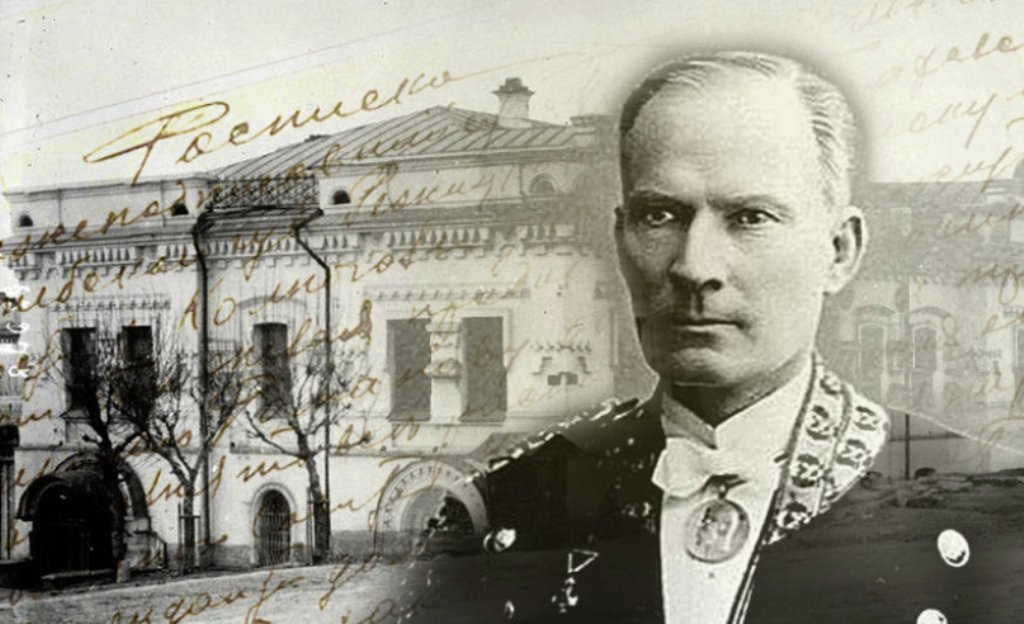
Aloise (Alexei) Trupp – valet
Aloise (Alexei) Trupp came from an ordinary Latvian peasant family. At the age of 18, young Aloise went to serve in the army, where the young handsome Latvian was enlisted in the Life Guards. There he rose to the rank of a non-commissioned officer and was retired on 23rd March 1883. It is believed that he was noticed by Empress Maria Feodorovna, who invited him into the service of the palace as a footman. Aloise enjoyed the trust of the Imperial Family, accompanied them on trips, and watched over the Emperor’s children as if they were his own (he never had children of his own). He also looked after the Emperor’s wardrobe and helped him get dressed. While in the service of Nicholas II, the Tsar had difficulty parting with old clothes, preferring darned to new, but he adored military uniforms – hundreds of different uniforms hung in his closets.
Trupp never forgot about his native land, always giving large sums to help the poor and those suffering from crop failures. He also donated money for the construction of a church in his homeland. While still imprisoned in Tsarskoye Selo, a drunken officer shouted to him and other servants: “You are our enemies. We are your enemies. You are all corrupt here.” In the last months of his life, the “corrupt” servant Trupp served the Emperor free of charge.
In the Ipatiev House, Trupp lived in the same room with the cook Ivan Kharitonov. Despite Trupp’s Catholic faith, he participated in Orthodox services: he sacrificialized[2], carried a candle, and lit and brought censers. One day, while among the guards of the “House of Special Purpose” was his nephew, with whom he spoke his native Latvian. Unlike some of his fellow Latvians, who took part in the execution of the Imperial Family, Trupp remained with the Master of the Russian Land until the very end. On the fateful night of 16/17 July, Trupp and Kharitonov were standing against the wall when the shooting began. “A woman’s squeals and moans… A footman leaning against the wall,” one of the killers would later say.
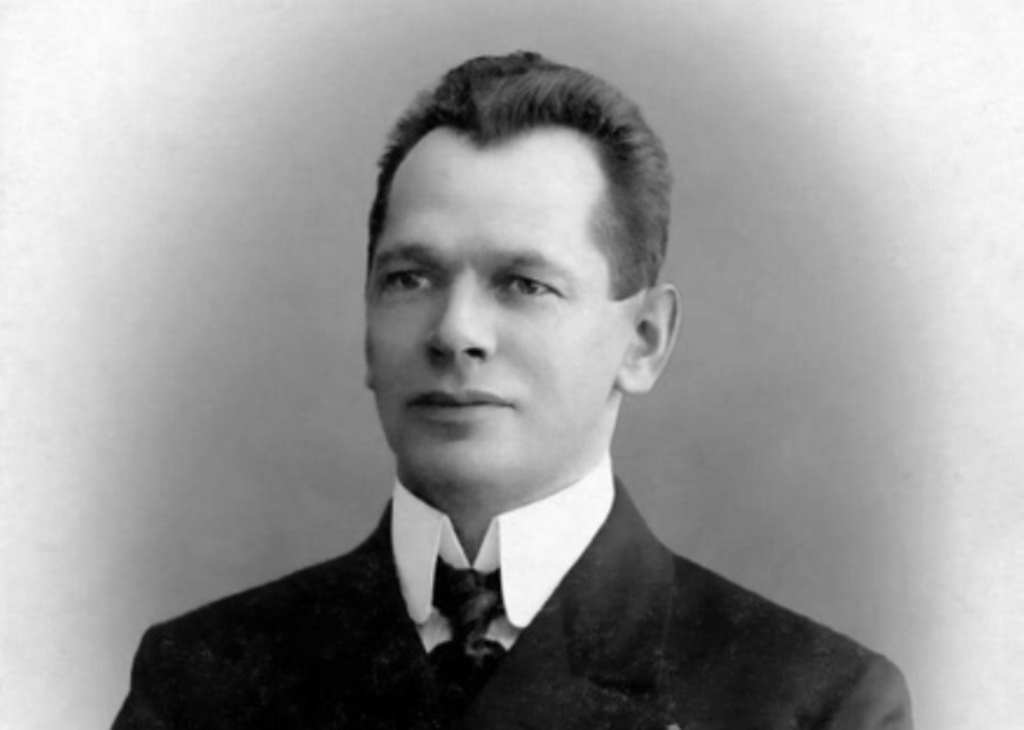
Ivan Kharitonov – cook
Ivan Mikhailovich Kharitonov was born on 14th June (O.S.) 1870 in St. Petersburg. In 1882, he was encouraged by his father to study cooking, and went to Paris in order to improve his skills, eventually becoming a soup specialist, he even invented a recipe for puree soup made from fresh cucumbers. Kharitonov knew the culinary traditions of different countries, understood Lenten cuisine, and came up with new recipes. In 1888, he was appointed to the Imperial Court as an apprentice cook, and then as a cook. In the period from 1891 to 1895, Kharitonov served in the Russian Imperial Navy. After his service ended, he returned to the Imperial Court, where he was appointed senior cook of the Imperial Kitchen. He had the title of Honourary Hereditary Citizen[3], a result of which he was awarded many orders and medals.
After the February 1917 Revolution, the head waiter Kuba left the service of the Imperial Family, he was replaced by Ivan Kharitonov. Previously, the Imperial Family loved picnics, Emperor Nicholas II would sometimes bake potatoes in ashes himself, but in exile they had to get used to simple food on a regular basis. Nevertheless, Ivan Kharitonov managed to cook exquisite dishes from affordable products, which were becoming more and more scarce. The commandant of the Ipatiev House, Yakov Yurovsky, suddenly “cut off” the supply of fresh food to the captives from sympathetic townspeople and the Ekaterinburg monasteries, saying that it was time for the Imperial Family to get used to eating like prisoners. Despite all the difficulties, Kharitonov managed to make delicious dishes from available products. Dishes such as rasstegai[4], pasta pie, potato dumplings, beetroot salad, and tangerine jelly were prepared, much “to the great joy of everyone”, as Nicholas II wrote in his diary. The last apprentice cooks for Kharitonov were the grand duchesses who helped him in the kitchen, and he taught them how to bake bread.
On the fateful night of 16/17 July, Kharitonov stood in the basement by the wall next to the valet Trupp. The cook was one of the first to die from the shots fired by the firing squad. Ivan Kharitonov was happily married and had 6 children. The family tried to follow their father into exile, but only reached Tobolsk, they were not allowed to join him in Ekaterinburg. This allowed them to survive during the Civil War and the establishment of Soviet power.
The great-grandson of Ivan Kharitonov, Candidate of Historical Sciences Pyotr Valentinovich Multatuli is recognized as one of Russia’s foremost authorities on the life and reign of Nicholas II. He has written numerous books on the subject and lectures in cities across the Russian Federation.
NOTES:
[1] Podvig is defined as an action taken not for one’s own sake, but for the sake of something greater, such as an idea or one’s homeland, often involving significant risks, including the potential for sacrifice. It is also described as a “spiritual struggle” within the context of Orthodoxy, serving as a means to draw closer to Christ on the path of salvation.
[2] In the Orthodox Christian tradition, the term “sacrificialized” refers to the concept of the Eucharist, which is often described as a “bloodless sacrifice.” This means that during the Eucharist, the bread and wine become the Body and Blood of Jesus Christ through the descent and operation of the Holy Spirit, rather than through the shedding of blood. The Eucharist is considered a propitiatory sacrifice offered on behalf of both the living and the dead, symbolizing Christ’s sacrifice for humanity. The Orthodox Church emphasizes that the Eucharist is a true sacrifice, not merely a symbol, and it represents the completion of all other sacraments and the source of all Church doctrines.
[3] The title of Honourary Hereditary Citizen in Russia was established by the Emperor Nicholas I in 1832. This title was granted to individuals who had made significant contributions to the state and society, such as merchants, professionals, and artists. The privileges associated with this title included exemption from corporal punishment, the ability to own gardens and country estates, and the right to ride in a carriage in pairs or quadruplets. The title was hereditary, and children of hereditary honoured citizens received the title from birth. The establishment of this title was part of the imperial state’s effort to create a middle class and stabilize the social structure of Russian towns.
[4] Rasstegai is a traditional Russian dish made from a pastry crust that is filled with a variety of ingredients, such as fish, meat, liver, rice, or mushrooms. The dish features a hole in the center, which is used to add broth to the filling. Rasstegai is known for its flaky pastry crust and has been a popular choice in Russian cuisine, especially during the Tsarist era.
© Paul Gilbert. 14 September 2025
***

I am committed to clearing the name of Russia’s much slandered Tsar. In exchange for this 18-page booklet, please consider making a small $5 or $10 donation in aid of my research. These donations are of great assistance in helping me offset the cost of obtaining and translating documents from Russian archival sources, which are often paid for out of my own pocket. It is these documents which help present new facts and information on the life and reign of Nicholas II. In addition, my research continues to debunking many of the myths and lies which exist more than a century after his death and martyrdom.
Please note, that there is NO obligation, thank you for your consideration!


 Nicholas II

You must be logged in to post a comment.