Search for Grand Duke Mikhail Alexandrovich’s remains resumes near Perm
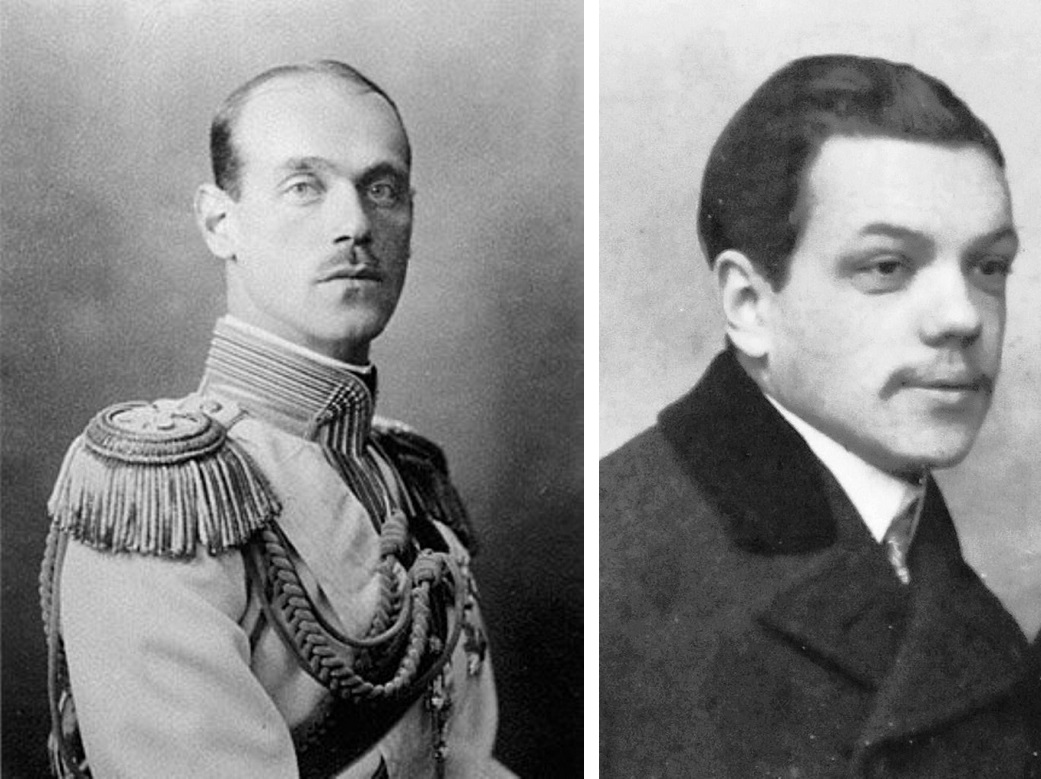
PHOTO: Grand Duke Mikhail Alexandrovich (1878-1918)
and his secretary Nikolai Nikolaevich Johnson (1878-1918)
On 18th September 2024, Russian media sources reported that the search for the remains of Grand Duke Mikhail Alexandrovich and his secretary Nikolai Johnson have resumed near Perm, where they were both murdered by the Bolsheviks on 13th June 1918. The circumstances surrounding the last days of their lives and their burial site remain unknown.
Recall that the search for the remains came to a halt in the summer of 2022, which resulted in the excavations having to to be postponed until the autumn of this year.
The new search-investigation has now shifted to a new location, to which the remains of Mikhail Alexandrovich and Nikolai Johnson could be buried at the confluence of the Gaiva and Kama Rivers, opposite the former village of Ust-Gaiva. It is noteworthy that wooden crosses which had been erected in 1918 at the grave site, have not survived to the present day.
The new site is based on information discovered by the search team while searching the State Archive of the Perm Region, which led them to the alleged burial site. The team acknowledged that the development of their investigation was aided by interviewing witnesses and local residents who had information about the installation of the crosses near Ust-Gaiva.
Following the murder of Grand Duke Mikhail Alexandrovich and Nikolai Johnson, the place of their burial turned out to be unknown. It was only until, a few years later, when the killers began to publish their memoirs, each of them describing the events of that night in their own words. One wrote that “after the murder we drove along the Solikamsk tract and turned right into the forest after 4 kilometers”, another wrote “they were shot either 200 or 300 meters from the road”. Neither killer provided any details about where the remains were buried.
The search for the grave of Mikhail Alexandrovich and Nikolai Johnson has been going on for more than a quarter of a century. At first, amateurs tried to find the burial place, which included Perm journalists and local historians. Then forensic investigators took up the case – as part of the investigation into the murder of Emperor Nicholas II and his family. For several years in a row, members of an international search expedition came to Perm, but their search yielded no results, because they were searching in the wrong place.
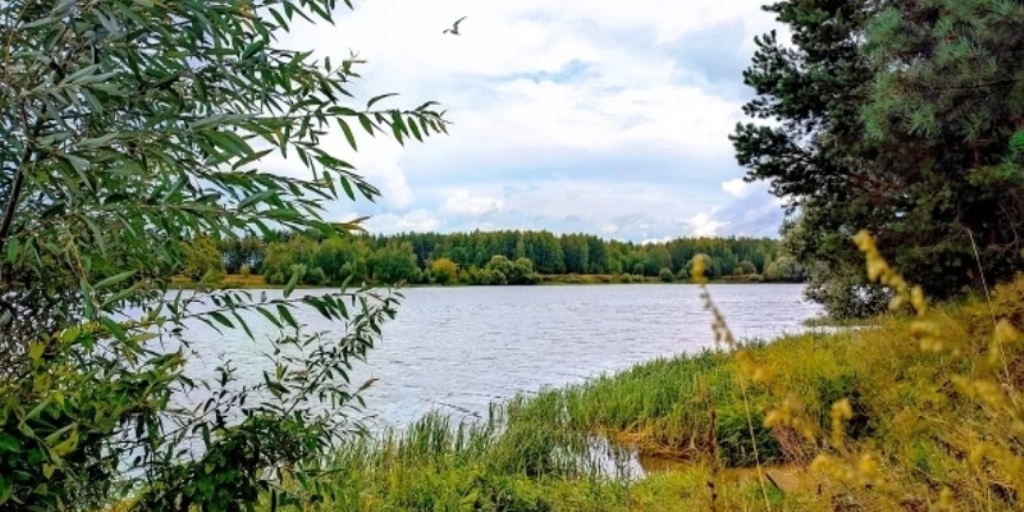
PHOTO: view of the confluence of the Gaiva River with the Kama, opposite the former village of Ust-Gaiva, where the remains of Grand Duke Mikhail and Nikolai Johnson are believed to be buried
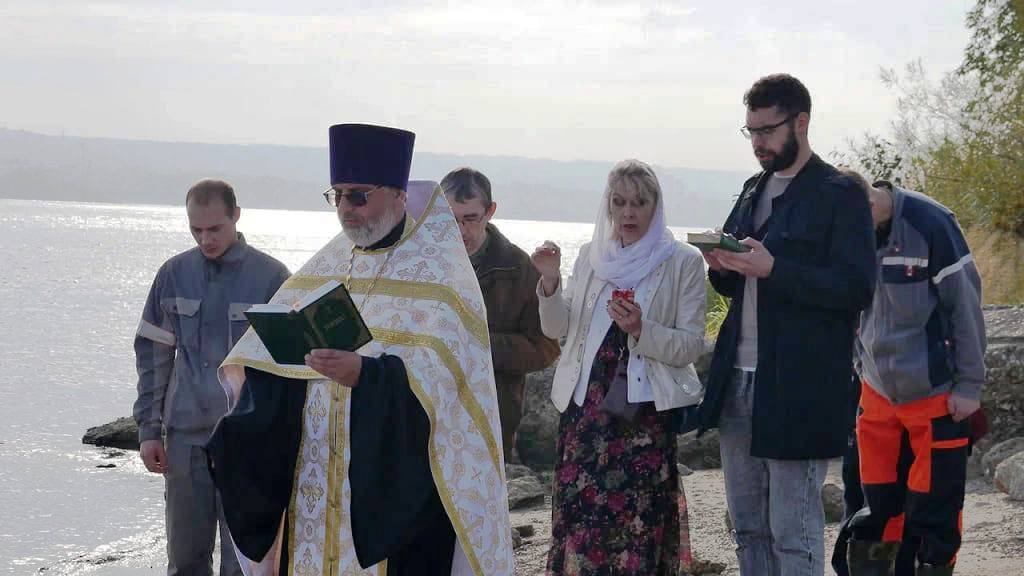
PHOTO: an Orthodox priest performs a panikhida [prayer for the dead] at the confluence of the Gaiva River with the Kama, opposite the former village of Ust-Gaiva, where the remains of Grand Duke Mikhail and Nikolai Johnson are believed to be buried
Gruesome eye-witness details
According to a member of the expedition, journalist Vyacheslav Degtyarnikov, the search team were contacted by “Natalia”, a resident of Ust-Gaiva. She said that in 1963, when she was 8 years old, her mother took her to the mouth of the Gaiva River [see photo above], to the place where it flows into the Kama, opposite the former village of Ust-Gaiva. There were two wooden crosses there. And her mother told Natalia that the brother of the last Russian tsar and his friend were buried here.
According to an eye-witness by the name of Trutnev, in June 1918, two phaetons arrived at his house, in one there were armed men, and in the other – two corpses. Trutnev claims that he recognized one of the bodies as that of the Grand Duke.
“Photos of Mikhail Alexandrovich were repeatedly published in Perm newspapers that year,” noted Vyacheslav Degtyarnikov. “The killers brought the corpses to Trutnev’s house, where they demanded a container to bury the remains. He showed them a large barrell-like container. Such containers were used at the Nobel factory, and the residents of Motovilikha took them home to ferment cabbages. Trutnev was forced to remove his cabbages and give the container to the killers. The corpses were dismembered and placed inside.
“Then Trutnev, accompanied by one of the killers, crossed the Kama River by a boat. At the mouth of the Gaiva there was already a grave dug, in which he buried the container with the remains. He returned to the site at a later date, and there he erected two wooden crosses and looked after the grave all his life. Before his death, he told Natalia’s grandfather about the site, and bequeathed him to take care of the grave and crosses”.
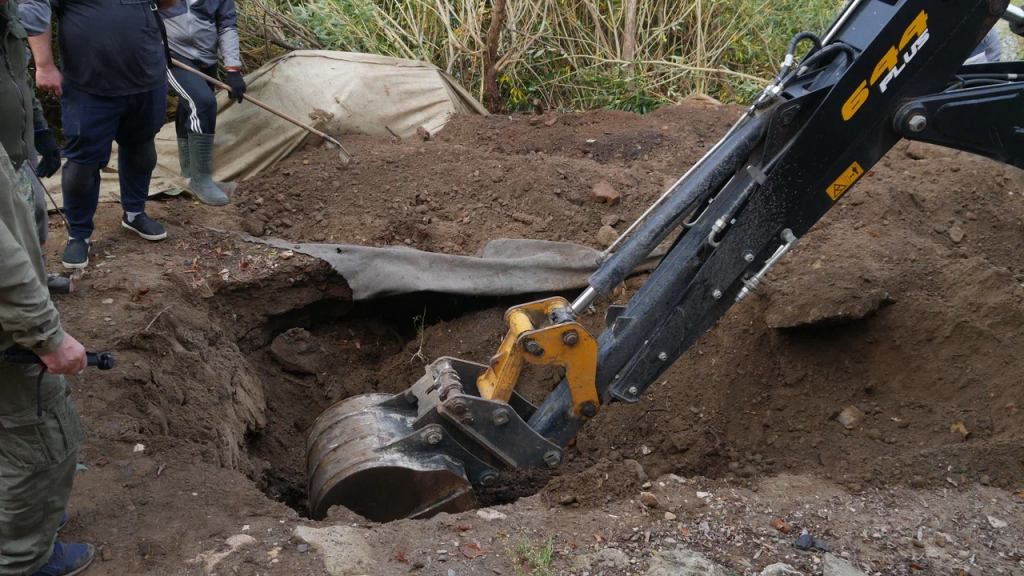
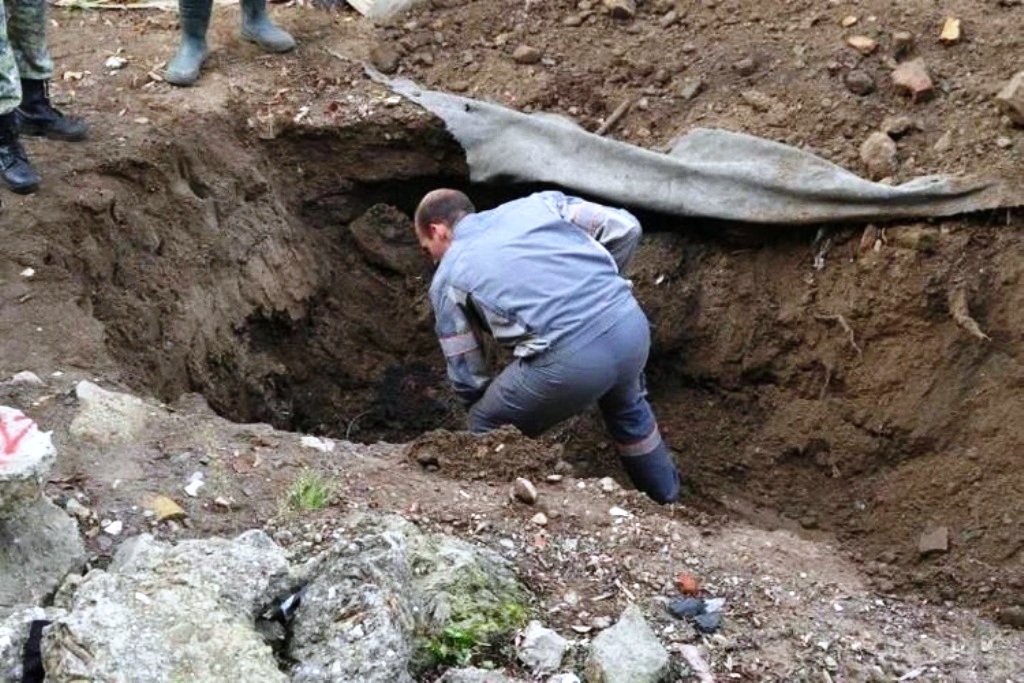
PHOTOS: excvations at the confluence of the Gaiva River with the Kama, opposite the former village of Ust-Gaiva, where the remains of Grand Duke Mikhail and Nikolai Johnson are believed to be buried
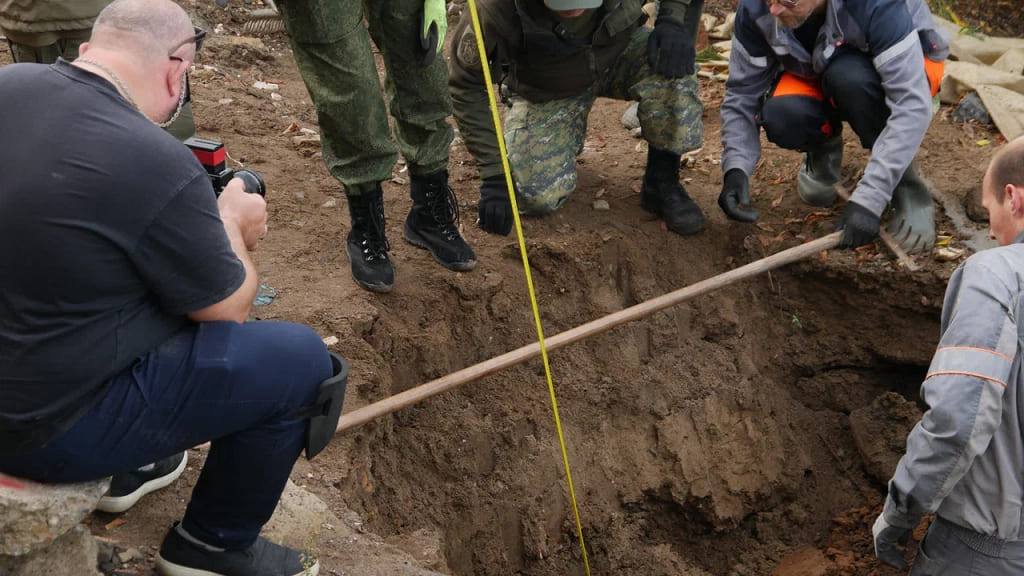
PHOTOS: excvations at the confluence of the Gaiva River with the Kama, opposite the former village of Ust-Gaiva, where the remains of Grand Duke Mikhail and Nikolai Johnson are believed to be buried
New information
As previously noted, the search for the remains of Grand Duke Mikhail and Nikolai Johnson, was supposed to begin in the summer of 2022. But the excavations had to be postponed. They resumed only in September of this year.
Previously, members of the Investigative Committee of the Russian Federation met with scientists and historians at the State Archive of the Perm Region, where they studied photographs with views of Perm and its environs, taken in the 1930s. But photo depicting the wooden crosses could not be found.
Excavations were carried out at the place calculated from the memories of the Perm woman. But the remains of the Grand Duke and his secretary could not be found. But a new eyewitness testimony has since come forward, which resulted in the search being shifted to a new site.
One of the oldest residents of Gaiva, 94-year-old Anna Ivanovna, recalled that she saw two wooden crosses. They were near the narrow-gauge railway running from the bridge over the Gaiva to the Kama. Now only sleepers remain from the old railway line. But where it ran is still clearly visible – a section 600 meters long along the riverbank. Unfortunately, the old woman could not recall the exact place where the crosses were located.
The existence of the wooden crosses near the Gaiva was also recalled at the end of the last century by the famous Perm scientist Georgy Chagin. Perm historian Lev Pereskokov also saw them more than once in his childhood.
“In the mid-1960s, my parents and I often drove by car from Zaprud, where we lived, through the Kama to Verkhnyaya Kurya,” he said. “At Sosnovy Bor there was a road covered with paving stones. I recall looking out of the window, and saw two old gray crosses in the gaps between the bushes. Once I even asked my father to stop the car, so that we could look at them, but there was no time”, he added.
“The search team are appealing to locals who perhaps remember exactly where the crosses were located opposite the old village of Ust-Gaiva, and any one who has preserved old photographs,” said Vyacheslav Degtyarnikov. “In any case, the search will continue”.
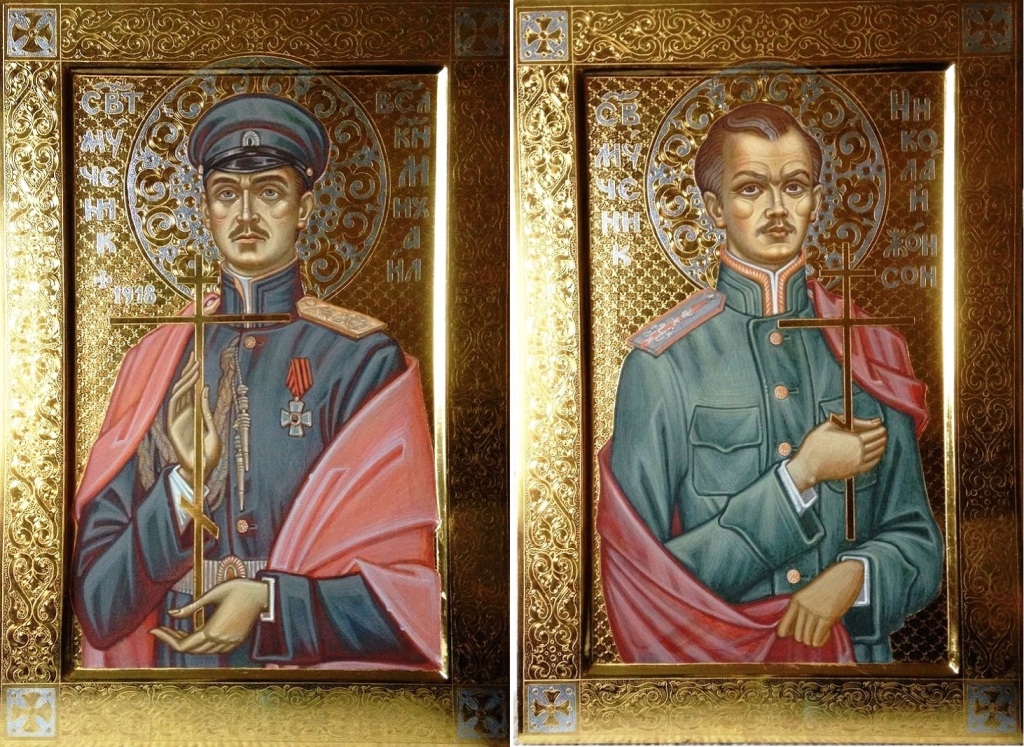
Icons depicting the Holy Royal Martyr Grand Duke Mikhail Alexandrovich (1878-1918) and Nicholas Nikolaevich Johnson (1878-1918). Canonized by the Russian Orthodox Church Outside of Russia (ROCOR) on 1st November 1981.
Memory Eternal! Вечная Память! ☦️
© Paul Gilbert. 28 September 2024
 Nicholas II
You must be logged in to post a comment.