The assassination of Grigorii Rasputin

On this day – 30th December [O.S. 17th] 1916 – Grigori Yefimovich Rasputin was assassinated in Petrograd [St. Petersburg].

Love him or hate him, he is best known as the holy man, who befriended the family of Russia’s last tsar Nicholas II, and as a healer for the Tsar’s only son and heir Alexei Nikolaevich, who suffered from haemophilia.

Rasputin was born on 21st January [O.S. 9th January] 1869, to a family of peasants in the Siberian village of Pokrovskoye, situated 93 km [58 miles] east of Tyumen or 162 km [100 miles] southwest of Tobolsk.

He had a religious conversion experience after embarking on a pilgrimage to a monastery in 1897, and has been described as a strannik (wanderer or pilgrim), though he held no official position in the Russian Orthodox Church.

In February 1887, Grigori married a peasant girl named Praskovya Dubrovina. His wife remained in Pokrovskoye throughout Rasputin’s later travels and rise to prominence and remained devoted to him until his death. The couple had seven children, though only three survived to adulthood: Dmitry (b. 1895), Maria (b. 1898), and Varvara (b. 1900).

In November 1905, Rasputin met Emperor Nicholas II and Empress Alexandra Feodorovna. It was Grand Duchess Anastasia and her sister Grand Duchess Militza (wife of Grand Duke Peter Nikolaevna), who introduced Rasputin to Empress Alexandra Feodorovna. Nicknamed jointly “The Black Peril”, in 1909, the sisters lost their influence with the Empress..

In the early morning of 30th December [O.S. 17th] 1916, Rasputin was assassinated by a group of conservative nobles led by Prince Felix Yusupov, Grand Duke Dmitri Pavlovich, and the right-wing politician Vladimir Purishkevich, all of whom opposed his influence over the Imperial couple.

His assailants threw the ’stranniks’ body into the Malaya Nevka River. Rasputin was buried on 2nd January [O.S. 21st December] at a small church that Anna Vyrubova had been building in the Alexander Park at Tsarskoye Selo. His body was exhumed and burned by a detachment of soldiers shortly after the Tsar abdicated the throne in March 1917.
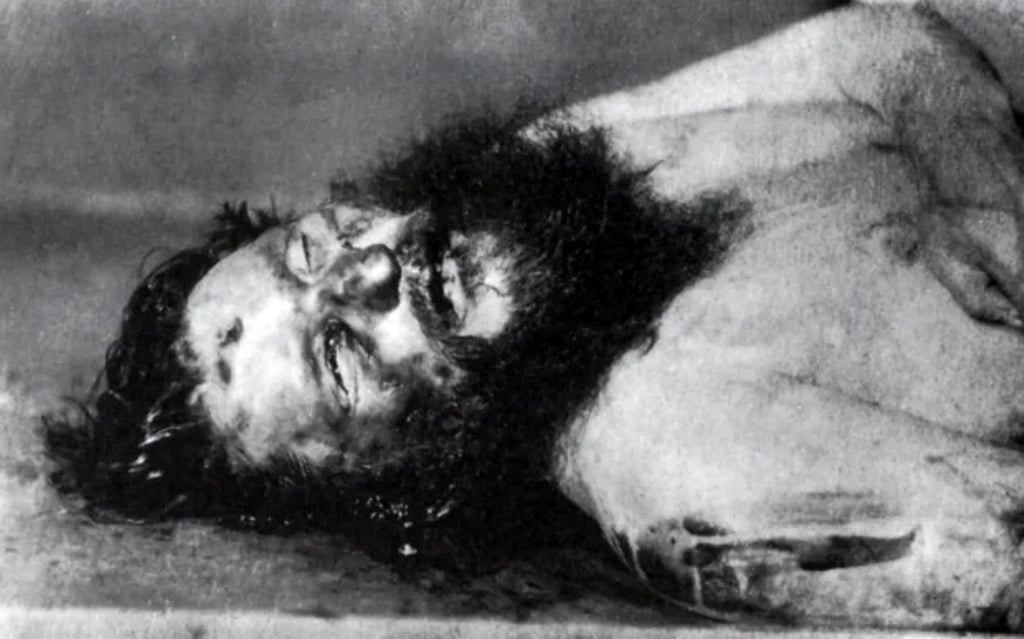
PHOTO: Rasputin’s body, after being pulled from the icy waters of the Malaya Nevka River

Following Rasputin’s assassination, Anna Alexandrovna Taneyeva-Vyrubova (1884-1964), wrote:

“The horror and shock caused by this lynching, for it can be called by no other name, completely shattered the nerves of the family. The Emperor was affected less by the deed itself than by the fact that it was the work of members of his own family. “Before all Russia,” he exclaimed, “I am filled with shame that the hands of my relatives are stained with the blood of a simple peasant.” Before this he had often shown disgust at the excesses of the Grand Dukes and their followers, but now he expressed himself as being entirely through with them all.”

Later, a letter blazing with anger and impudence, signed by nearly all the members of the Imperial Family, was rushed to the Emperor, but his only comment was a single sentence written on the margin: “Nobody has a right to commit murder.”

It was this “single sentence comment” which prompted Dowager Empress Maria Feodorovna to scold her son like a child. In a letter dates 17th February 1917, she wrote to Nicholas: “I am sure you are aware yourself how deeply you have offended all the family by your brusque reply . . . “

Some historians believe that Rasputin’s terrible reputation helped discredit the tsarist government, and thus helped precipitate the overthrow of the Romanov dynasty, which happened a few weeks after he was assassinated.

As Nicholas II said to his relatives with regard to Rasputin’s murder: “No one, has the right to kill!”
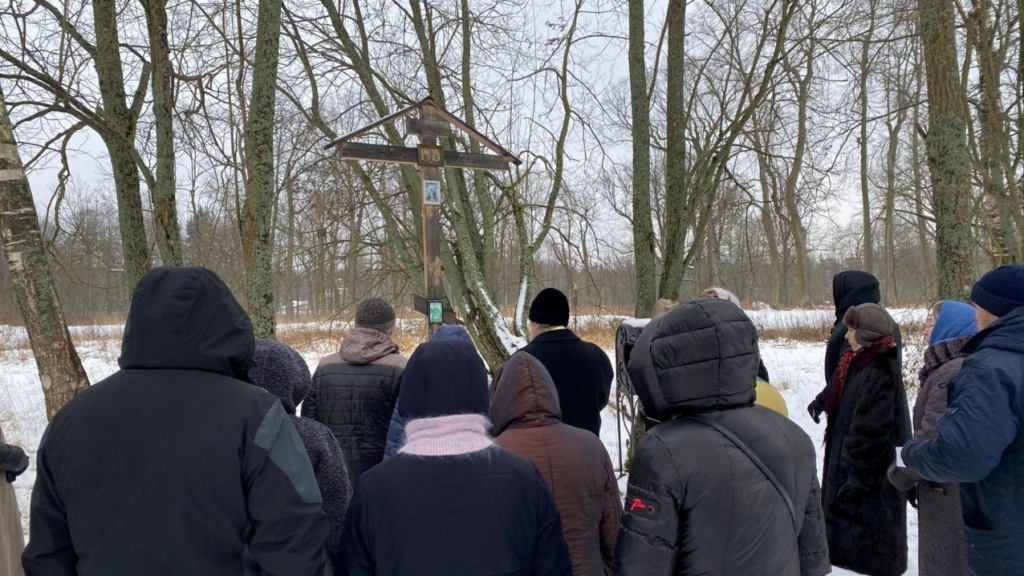
PHOTOS: the alleged first grave of Grigorii Rasputin
in the Alexander Park at Tsarskoye Selo
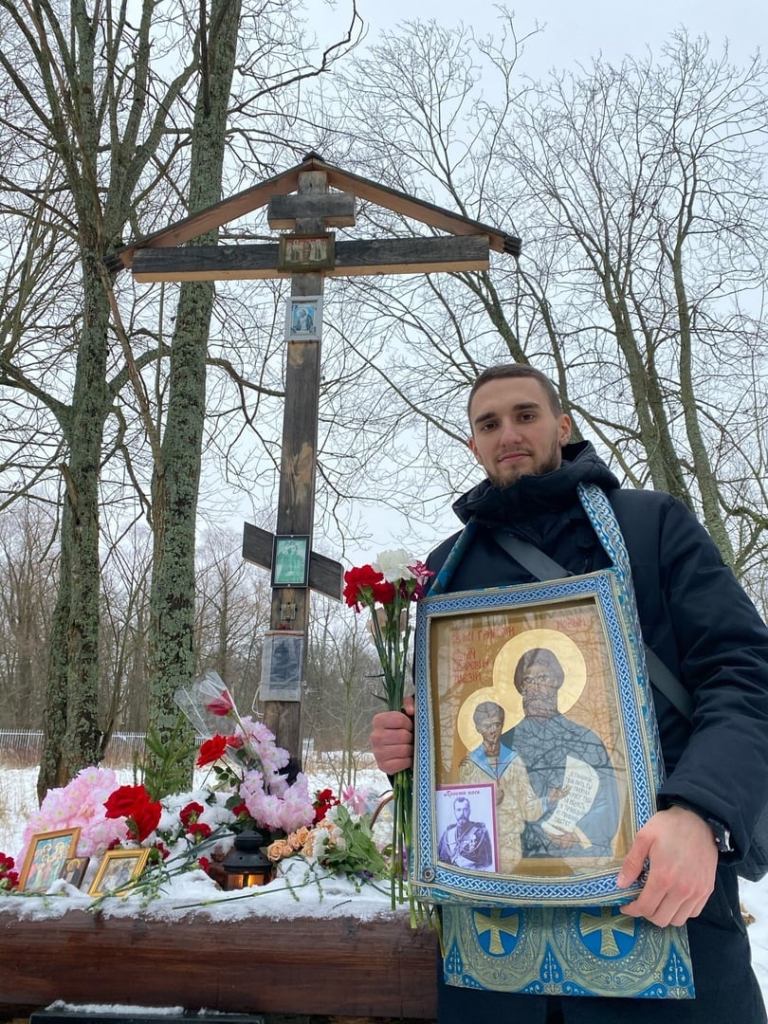
The alleged grave of Grigorii Rasputin at Tsarskoye Selo

In recent years, members and supporters of the Tsar’s Cross Movement gathered at the alleged first grave of Grigorii Rasputin. situated in the Alexander Park at Tsarskoye Selo.

Rasputin was buried here on 2nd January [O.S. 21st December] 1916, at a small church that Anna Vyrubova had been building. Shortly after the Tsar abdicated the throne in March 1917, Rasputin’s body was exhumed and burned by a detachment of soldiers.

The site has been repeatedly vandalized over the years, including September 2012, when vandals cut down the wooden cross, which was later found in the Alexander Park.

During my visits to Tsarskoye Selo over the years, the author of this article has made several attempts to locate the site, however, my efforts have been in vain.
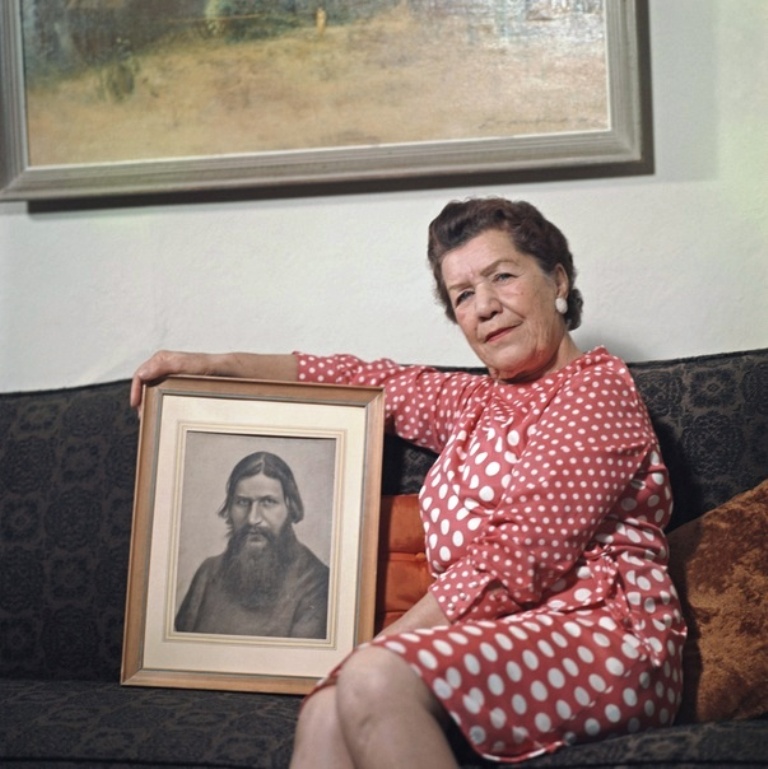
PHOTO: Maria Rasputina in exile, posting with a picture of her father Grigorii Rasputin

Rasputin’s daughter defends her father in exile

Born on 26th March 1898, Matryona (Maria) Grigorievna Rasputina, was the daughter of Grigorii Rasputin (1869-1916) and his wife Praskovya Fyodorovna Dubrovina (1865-1936).

After Prince Felix Yusupov published his memoir Lost Splendour (in 1928) detailing the gruesome death of her father, Maria sued Yusupov and Grand Duke Dmitri Pavlovich in a Paris court for damages of $800,000. She condemned both men as murderers, however, Maria’s claim was dismissed. The French court ruled that it had no jurisdiction over a political killing that took place in Russia.

Maria wrote two memoirs about her father, dealing with Emperor Nicholas II and Empress Alexandra Feodorovna, the attack by Khionia Guseva and her father’s murder on 30th December [O.S. 17th December] 1916. A third memoir, ‘The Man Behind the Myth,’ was published in 1977.

In her three memoirs, she painted an almost saintly picture of her father, insisting that most of the negative stories were based on slander and the misinterpretation of facts by his enemies.

During the last years of her life, Maria lived in Los Angeles, living on Social Security benefits. Her home was in Silver Lake, an area of northwest Los Angeles with a large Russian-American community.

Maria Rasputin died in Los Angeles, California, on 27th September 1977, aged 79. She was buried in Angelus-Rosedale Cemetery.
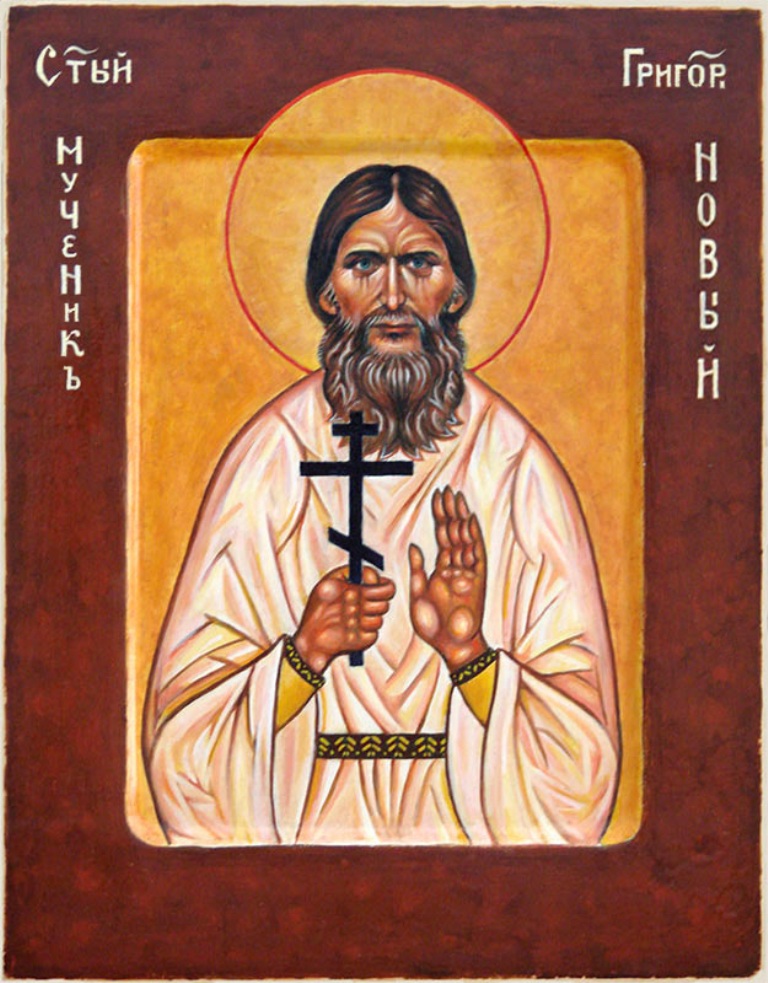
PHOTO: the above image depicts one of numerous non-canonical icons depicting Grigorii Rasputin, however, the strannik is not recognized as a saint by the Russian Orthodox Church Outside Russia (ROCOR) nor the Moscow Patriarchate

Movement to canonize Grigorii Rasputin

In recent years there has been growing support within and outside the Russian Orthodox Church (ROC) advocating for the canonization of Rasputin, viewing him as a genuine holy man and mystic, despite his scandalous reputation and association with the Romanov downfall, with some seeing him as a victim of slander and political intrigue, while the official Church remains hesitant due to his controversial life and negative historical perception. 

Proponents emphasize his spiritual influence on the Empress Alexandra Feodorovna, his healing abilities especially for Tsesarevich Alexei Nikolaevich, and his deep piety, suggesting his perceived debauchery was exaggerated or fabricated by enemies.

The Russian Orthodox Church has largely resisted these calls, viewing his lifestyle and scandalous involvement in court politics as disqualifying for sainthood, making him a highly contentious figure even today.

FURTHER READING:

The Prophesies of Grigory Rasputin

In 1912, Grigory Efimovich Rasputin (1869-1916) published a book, in which he writes his prophecies, some of which soon came true, while others have yet to happen.

Putting aside one’s personal views of Rasputin or beliefs in prophecies, let us hope and pray that the unfulfilled predictions of Grigory Efimovich will remain so, otherwise humanity will face truly terrible trials and tribulations.

“Nicholas II should have listened to Rasputin” – Metropolitan Hilarion

The head of the Synodal Department for External Church Relations, Metropolitan Hilarion, believes that Nicholas II should have followed the advice of Grigory Rasputin and not entered the First World War, and thus saved both the monarchy and Russia.

The Real Rasputin?: A Look at His Admirers’ Revisionist History

The editorship of Orthodox Life is troubled by recent signs, even among certain members and clergy of the Russian Orthodox Church Abroad, of a revisionist history taking hold regarding the tumultuous and tragic events of the early 20th century — namely, the controversial and enigmatic figure of Grigory Efimovich Rasputin. We therefore offer this thorough and sober investigation by a respected scholar and historian of the Russian Church. May the question of “the real Rasputin” be finally put to rest, so that without discord and tumult in the Church, we may worthily honor the life and sufferings of the Holy Royal Martyrs and all the New Martyrs and Confessors of Russia, especially in the current and upcoming anniversary years.

© Paul Gilbert. 30 December 2021
Rasputin’s alleged will hidden in KGB archives for 80 years

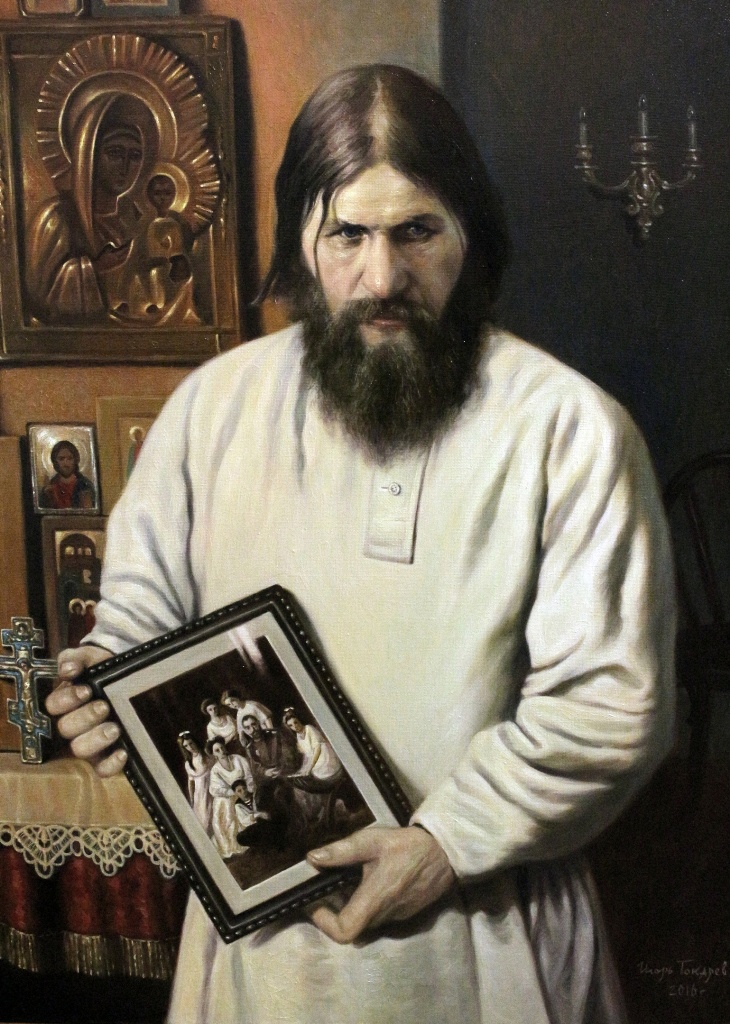
PHOTO: Rasputin holding a framed photo of the Imperial Family. Artist unknown.

DISCLAIMER: for the record, I do not support any of the conspiracy theories related to the Imperial Family and those close to them. During the past week, the subject of this post was discussed in the Russian media, and I thought that it would be of interest to some readers. Upon reading the article, you are free to draw your own conclusions – PG

At the end of the 20th century, reports appeared in the Russian press that the will of Grigorii Rasputin, had been discovered in the archives of the First Chief Directorate of the KGB of the USSR in Moscow.

Rasputin’s alleged will contained mysterious prophecies about the future of Russia and the world. The eleven-page document was kept secret for 80 years, as were the personal documents of Russia’s last Imperial Family. Recall that it was Stalin who had these documents sealed, they were even forbidden to Soviet historians, with the exception of course, for propaganda purposes. The archives were only unsealed in the 1990s, after the fall of the Soviet Union.

Grigorii Yefimovich Rasputin (1869-1916), was assassinated on 30th December [O.S. 17th] 1916, by a group of conservative nobles led by Prince Felix Yusupov (1887-1967), and whose death still attracts the attention of historians.

According to the memoirs of Aron Samuilovich Simanovich[1] (1872-1944), who became the strannik’s[2] personal secretary, Rasputin predicted his own demise and the future of Russia. Simanovich claims that shortly before his death, Rasputin summoned the lawyer Aronson to draw up a will, in which he described the fate awaiting the Imperial Family. Simanovich, finding himself in emigration, in 1921 published the text of the will, which according to him, was read by Nicholas II only after the death of Rasputin.

Rasputin predicted that he would meet a violent death before January 1917 and if he was killed by the nobles, then war would break out in Russia, and the Russian nobility would suffer greatly. This warning is especially relevant, because Grand Duke Dmitri Pavlovich (1891-1942), a cousin of Nicholas II, participated in the conspiracy.

In the 1990s, information appeared in the Western press that an American historian David Norwalk found the full text of the will in the KGB archives in Moscow. In his will, Rasputin further predicted not only the 1917 Revolution, but also the collapse of the Soviet system. Vasily Vedeneev, author of the book «100 великих тайн России ХХ века» (100 Great Secrets of Russia of the Twentieth Century), confirmed that the document had been sealed by Soviet authorities. The will spoke of the emergence of a “new empire” – the Soviet Union and its future collapse. Rasputin also predicted the war with Germany resulting in a victory for Russia.

Many believe question the authenticity of Norwalk’s claim, and with good reason. His discovery appeared in the dubious American tabloid Weekly World News, known for renowned for its outlandish cover stories and for spreading fake news. Some sources claimed that Rasputin’s will did not exist, lost or destroyed. In his notes, Grigorii Rasputin wrote more about his role in history and the fight against secular power, than about global catastrophes.

FURTHER READING:

The prophesies of Grigory Rasputin

NOTES:

[1] In emigration, Simanovich wrote the book «Распутин и евреи. Воспоминания личного секретаря Григория Распутина» (Rasputin and the Jews. Memoirs of Grigory Rasputin’s Personal Secretary), in which he writes about his relationship with Rasputin. It was first published in 1921 in Russian. Following the 1917 Revolution, Simanovich fled the Bolsheviks, first to the United States and then France. During the German occupation of France, he was interned in a camp for stateless persons, then deported to Auschwitz, where he died on 31st July 1944.

[2] Rasputin is often described as a monk, however, this is incorrect. He was a strannik (wanderer or pilgrim), though he held no official position in the Russian Orthodox Church. 

© Paul Gilbert. 27 February 2025

“Rasputin” – the ballet on tour in Russia + VIDEO

On 8th October 2022, the Russian premiere of the ballet “Rasputin” took place at the Oktyabrsky Concert Hall in St. Petersburg. During the past year, it has been staged in numerous cities across Russia, including Moscow, Yaroslavl, Penza, Nizhny Novgorod, Volgograd, Ekaterinburg, Perm, Rostov-on-Don, Kazan, Ufa, Chelyabinsk, Tyumen, Tomsk, Novosibirsk, among other cities. 

The ballet was created by free-lance choreographer Yuka Oishi. The dance drama explores the dark psychological depths of one of the most controversial figures in Russian history – Grigori Yefimovich Rasputin (1869-1916).

The world premiere of the ballet took place at the Palladium Theater in London, England in October 2019.

The role of Rasputin is performed by Sergei Vladimirovich Polunin (b. 1989). In addition, Xenia Ryzhova (Empress Alexandra), Alexei Lyubimov (Nicholas II), John Cook (Prince Felix Yusupov), and Platon Alekhine (Tsesarevich Alexei) among others. All costumes for the show were designed by the famous and scandalous fashion designer Ulyana Sergeenko.

CLICK on the IMAGE above to watch a short VIDEO clip of Sergei Polunin perform in the London premiere of “Rasputin” at The London Palladium on 15th October 2019. Duration: 6 minutes, 15 seconds

© Paul Gilbert. 9 October 2023

“Nicholas II should have listened to Rasputin” – Metropolitan Hilarion

PHOTO: Grigory Rasputin and Emperor Nicholas II

The head of the Synodal Department for External Church Relations, Metropolitan Hilarion, believes that Nicholas II should have followed the advice of Grigory Rasputin and not entered the First World War, and thus saved both the monarchy and Russia.

“Rasputin was an ardent opponent of Russia’s entry into the war, and he *warned the Tsar that if Russia entered the war, it would threaten the entire country with catastrophic consequences,” the metropolitan stated during an interview on the Church and Peace program, aired recently on the Russia-24 TV channel.

*In July 1914, while still lying in bed in Siberia recovering from stab wounds he received during an attempt on his life, he telegraphed, “Let Papa [Nicholas II] not plan war, for with the war will come the end of Russia and yourselves and you will lose to the last man.” Anna Vyrubova, who delivered the telegram to the Emperor, reported that he angrily tore it to pieces.

The hierarch recalled that Tsar did not listen to Rasputin’s stark warning, “Russia entered the war and had every chance of winning by military means, but other factors entered the course of history, and as a result, Russia lost not only part of it’s lands, but the collapse of the Russian Empire.”

“A new state, a totalitarian state, was formed in Russia, and nothing remains of that old great Russia, of that Holy Russia which survived for many centuries, except, of course, the Russian Orthodox Church,” the bishop said.

At the same time, Metropolitan Hilarion noted that he had an ambivalent attitude towards the figure of Rasputin. In particular, he admitted that Rasputin committed all sorts of inappropriate acts, including drunkenness, which took place in front of many witnesses. “All this is documented, it would be impossible, it seems to me, to represent this as some kind of slander against a holy man,” he added.

© Paul Gilbert. 21 March 2022

The Prophesies of Grigory Rasputin

PHOTO: Grigory Efimovich Rasputin (1869-1916)

Grigory Yefimovich Rasputin (1869-1916) was a Russian strannik [wanderer or pilgrim], and self-proclaimed holy man who befriended the family of Emperor Nicholas II, and is believed by many historians to have gained considerable influence in late Imperial Russia.

Historians often suggest that Rasputin’s scandalous and sinister reputation helped discredit the tsarist government and thus helped precipitate the overthrow of the Romanov dynasty a few weeks after he was assassinated. Accounts of his life and influence were often based on hearsay and rumour.

In 1912, Grigory Efimovich Rasputin (1869-1916) published the book Благочестивые размышления [Pious Reflections]. In it, he publishes prophecies, some of which soon came true, while others have yet to happen.

Which prophecies came to pass:

  1. The shooting of the Imperial Family

It is said that Rasputin foresaw the death of the Imperial Family long before the shooting in the basement of the Ipatiev House in Ekaterinburg, on the night of 16/17 July 1918,

“Whenever, I embrace the Tsar and the Tsarina, the girls, and the Tsesarevich, I shudder with horror, as if I embrace the dead. And then I pray for these people. I pray for the Imperial Family, because the shadow of a long Eclipse falls on them.”

  1. October revolution of 1917

Rasputin predicted the arrival of a new power in Russia and mountains of corpses, among which would be the bodies of the Grand Dukes, and the water in the Neva will be stained with their blood. He said,

“Darkness will descend on Petersburg. When it’s name is changed [Petrograd], then the Empire will end.”

  1. His own death:

Rasputin also foresaw the circumstances of his own death. He wrote “if I am killed by simple robbers of the Russian peasants,” he said, “Tsar Nicholas should not fear for his fate, and the descendants of the Romanovs will reign a hundred years and more. However,” Rasputin further added, “If the murder is committed by nobles – relatives of the Tsar – then the future of Russia and the Imperial Family will be terrible. The nobles will flee the country, and the relatives of the Tsar will not be alive in two years. Brothers will rise up against brothers, and will kill each other.” Rasputin was murdered by a group of nobles on 30th [O.S. 17th] December 1916.

PHOTO: Благочестивые размышления [Pious Reflections] by G.E. Rasputin (1912)

What prophecies have yet to pass:

  1. Global catastrophes

Rasputin predicted various troubles and catastrophes. As in the cases with other soothsayers, his prophecies are very vague, they do not contain any specific dates. But if you interpret them from the point of view of modern knowledge, then it becomes truly spine-chilling from the accuracy of his predictions.

Grigory Efimovich predicted more frequent earthquakes, rising sea levels.

“Earthquakes will become more frequent, lands and waters will open, and their damage will engulf people …”

“The seas, like thieves, will enter cities, into houses, and the lands will be drenched with salt …”

Sadly, Rasputin turns out to be right. Over the past 100 years, sea levels have risen by almost 20 centimeters.

Scientists at the Potsdam Climate Institute conducted computer simulations, according to which the current trend in climate change will lead to a rise in sea level by 3 meters or more over the next hundred of years. According to other studies, during the twenty-first century, the sea level will rise by 2 meters.

How could an illiterate peasant in 1912 even simply assume something like that?

  1. Loss of moral values

“When times draw near to the abyss, man’s love for man will turn into a dry plant …”

All one has to do is to turn on the television on any news channel to see proof of this on a daily basis.

  1. Development of genetic engineering

“Monsters will be born that will not be humans or animals….

“Irresponsible human alchemy, in the end, will turn ants into huge monsters that will destroy homes and entire countries …”

For example, let us recall the world’s most popular sheep – Dolly. On 5th July 1996, the first cloned mammal was “born”. The animal was produced from frozen genetic material from an already deceased donor. Dolly became a complete copy of her prototype and lived for almost 7 years. She gave birth to 6 lambs.

Nowadays, rumors about the cloning of a mammoth are already circulating. What is this if not the beginning of the implementation of the predictions of the “elder”?

  1. The third global conflict

In his prophecies, Rasputin mentions three world wars. Two of them have already passed.

“Three hungry snakes will crawl along the roads of Europe, leaving behind ash and smoke … The time of peace will come, but the world will be written in blood. And when two fires go out, the third fire will burn the ashes. “

Putting aside one’s personal views of Rasputin or beliefs in propecies, let us hope and pray that the unfulfilled predictions of Grigory Efimovich will remain so, otherwise humanity will face truly terrible trials and tribulations.

© Paul Gilbert. 24 November 2021

Monument to Rasputin proposed for St. Petersburg

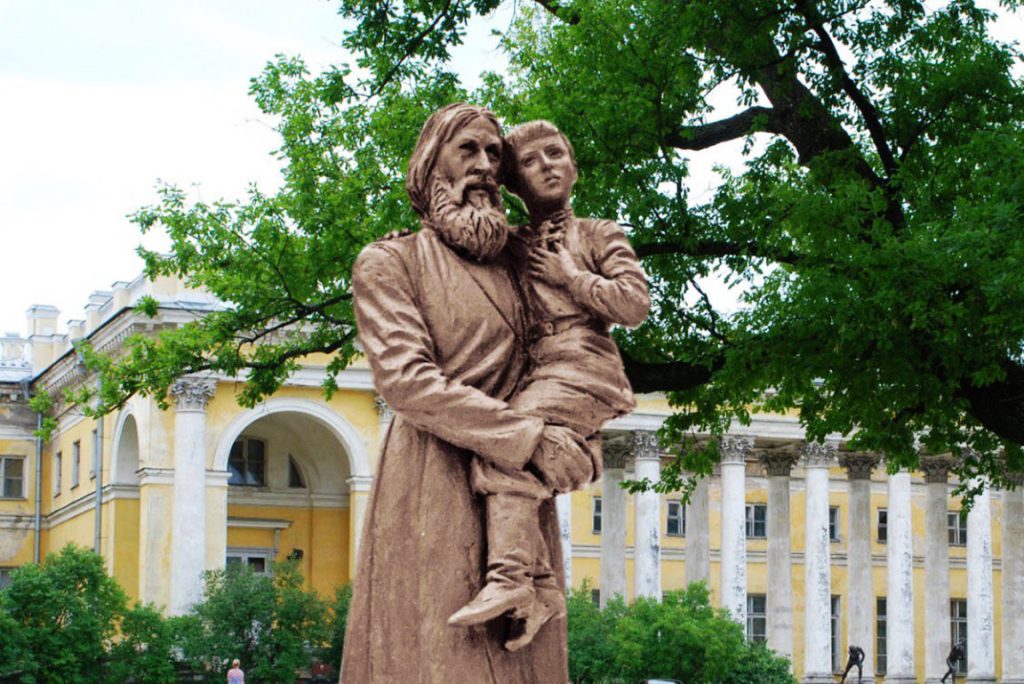
PHOTO: artist concept of the monument to Rasputin near the Alexander Palace

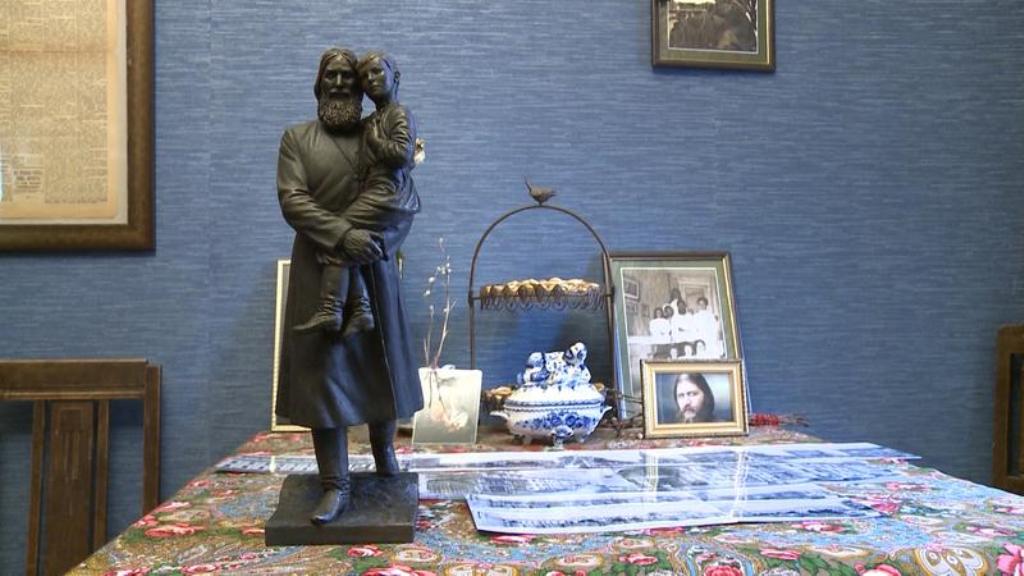
Earlier this week, a model of a proposed monument to Grigori Rasputin was shown to journalists, during a press conference held in St. Petersburg. The model – the fruit of five years of creative work by the artist – was displayed in Rasputin’s apartment on Gorokhovaya Street.

The monument is a project by the Artproekt sculptural workshop in Moscow, famous for its Orthodox patriotic sculptures. The studio’s most notable works include, Dmitry Donskoy, Alexander Nevsky, John of Kronstadt, Sergius of Radonezh, and Nicholas the Wonderworker.

Grigori Yefimovich Rasputin (1869-1916) remains one of the most controversial figures during the reign of Emperor Nicholas II. The head of the Artproekt workshop, Yevgeny Korolev, believes it is important to rethink the image of Rasputin: “All the claims against Rasputin are not confirmed by real documents, so what are the accusations against this man based on? One of the historians I spoke with wrote eight volumes in which he debunks these myths.”

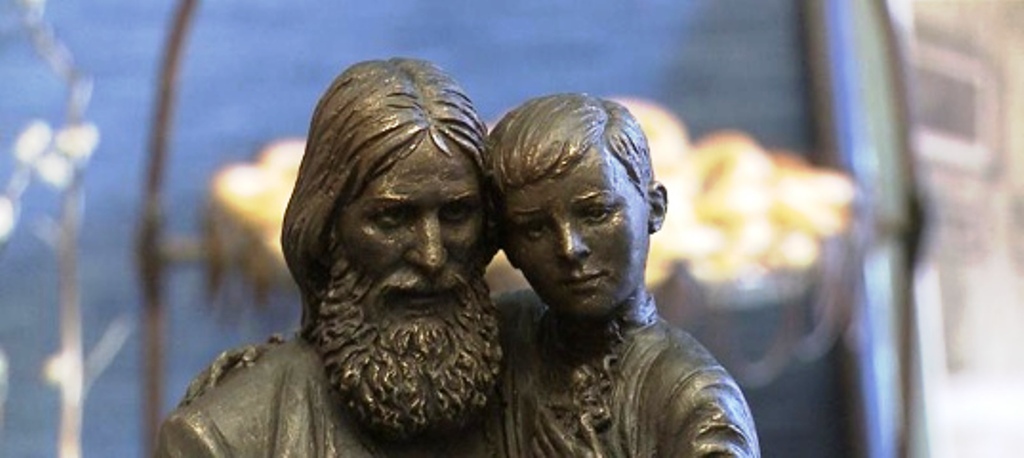
The project is surrounded by a veil of secrecy, even the sculptor remains unknown at this time. The 2.5 m [8.2 ft.] monument depicts Rasputin [who stood 1.93 m / 6.3 ft.] carrying the Tsesarevich Alexei Nikolaevich (1904-1918) in his arms.

PHOTO: model of the proposed monument on display in Rasputin’s apartment

The monument is almost ready – it only has to be cast in bronze, and the place for it’s installation has yet to be determined. The sculptor and his supporters believe that it should be installed in one of three places in or near St. Petersburg. For example, at Tsarskoye Selo, where Rasputin was originally buried in the Alexander Park; or next to the Petrovsky bridge, where his body was discovered in the Malaya Nevka; or in the garden of the Yusupov Palace, where he was murdered.

According to the the head of the restoration department Viktor Voronin, “It will be next to impossible to erect a monument in the garden of the palace. The Yusupov Palace is a cultural heritage site, where the installation, in principle, of new sculptural objects is prohibited by law.”

In late 1906, Rasputin began acting as a healer for Nicholas II’s only son and heir, Alexei, who suffered from haemophilia. He was a divisive figure at court, seen by some Russians as a mystic, visionary, and prophet, and by others as a religious charlatan. In the early morning of 30th December [O.S. 17th December] 1916, Rasputin was murdered by a group of conservative noblemen who opposed his alleged influence over Empress Alexandra Feodorovna and Emperor Nicholas II.

PHOTO: detail of the proposed monument depicting Rasputin carrying Alexei

Historians often suggest that Rasputin’s scandalous and sinister reputation helped discredit the tsarist government and thus helped precipitate the overthrow of the Romanov dynasty a few weeks after he was murdered. Accounts of his life and influence were often based on hearsay and rumour.

In recent years, the Russian Orthodox Church has expressed some concern over the growing movement by some Orthodox Christians, who are calling for the canonization of the controversial and enigmatic figure of Grigori Efimovich Rasputin. Meanwhile, many other Orthodox Christians consider such a move as blasphemy.

This will be the second monument to Rasputin installed in Russia, the first was installed in Tyumen in 2014.

© Paul Gilbert. 8 March 2021

The woman who photographed the Imperial Family in Tobolsk

232a

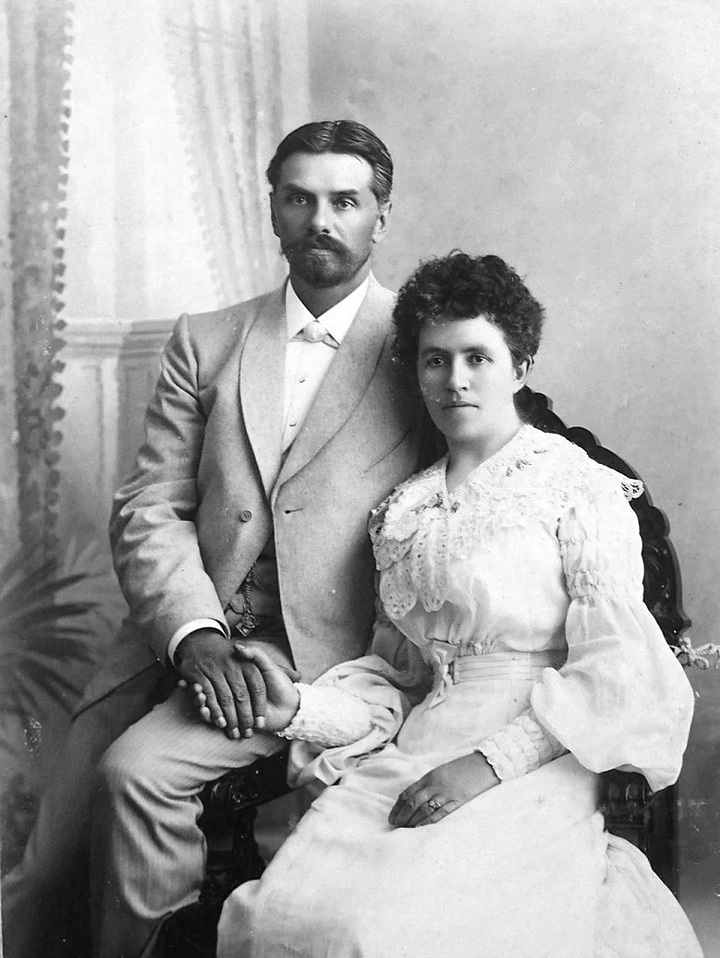
Maria Ussakovskaya, nee Petukhova with her husband Ivan Konstantinovich Ussakovsky

Few historians know about Maria Ussakovskaya the first woman photographer in Tobolsk. Through the lens of her camera, she photographed life in the provincial capital during one of the most dramatic periods of Russia’s history, leaving for posterity a noticeable mark in the biography of this Siberian city.

Incredible progress

Maria Mikhailovna Ussakovskaya, nee Petukhova, was born on 28th December 1871 (Old Style) in the family of a Tobolak native, state adviser M.M. Petukhov. She graduated from the Tobolsk girl’s school and, in 1893, married the official Ivan Konstantinovich Ussakovsky.

Ivan was also a great lover of photography – a hobby that was fashionable and modern in Russia at the time. On the basis of her husband’s home laboratory, as well as money received in a dowry from her father, Maria opened a photo salon, which quickly gained popularity among the townspeople. It should be noted that in 1897 in Tobolsk, with a population of 20 thousand people, there were no less than nine photo shops! 

Maria kept up with all the new developments in photography. She ordered expensive Bristol cardboard for passe-partout, used interchangeable backs with different scenes, offered costume shots, and even performed photo montages. This was incredible progress for Siberia at that time.

Photographs by Ussakovskaya were distinguished by their artistic taste and original composition. These were real photo portraits, which is especially significant, because photography at that time was essentially a step into eternity to become a memory for years to come.

Unlike other female owned photo salons, Ussakovskaya perfectly mastered the techniques of photography herself. Her photo salon also began to publish postcards, which were in great demand. It is known that the famous Russian chemist and inventor Dmitry Mendeleev (1834-1907), during his stay in Tobolsk in the summer of 1899, bought a collection of art postcards with views of his native city from Ussakovskaya’s salon.

Maria continued to work after the revolution, but the portraits of young ladies in silk dresses were replaced with photographing labor collectives, fur farms, bone carving masters and ordinary workers. At the same time, the house was formally confiscated by the local Soviet, leaving Maria to rent her own photo workshop from a local farm in Tobolsk. In 1929, Ussakovskaya was deprived of suffrage. The photo salon had to be closed. In 1938, the Ussakovskys left Tobolsk for Moscow for fear of reprisals. Maria Mikhailovna died in 1947 and is buried in the Don Cemetery.

232b

Photograph of Rasputin taken at Maria’s salon in Tobolsk

Witness of events

Maria was a witness to many historical events. Of particular interest in her biography are family traditions associated with the names of prominent people of that era and carefully preserved by subsequent generations of Ussakovsky. One of them is based on the visit by the famous strannik Grigori Rasputin.

The photograph of Grigory Rasputin made by Maria Ussakovskaya is today widely known. Moreover, the famous holy man, who was hunted by Russia’s finest photographers, presented himself at Maria’s salon. Maria’s great-grandson of Vadim Borisovich Khoziev, continues to tell the story of Rasputin’s visit to his great-grandmother’s salon in Tobolsk, as told to him by his grandmother Maria Ivanovna Ussakovskaya.

232e

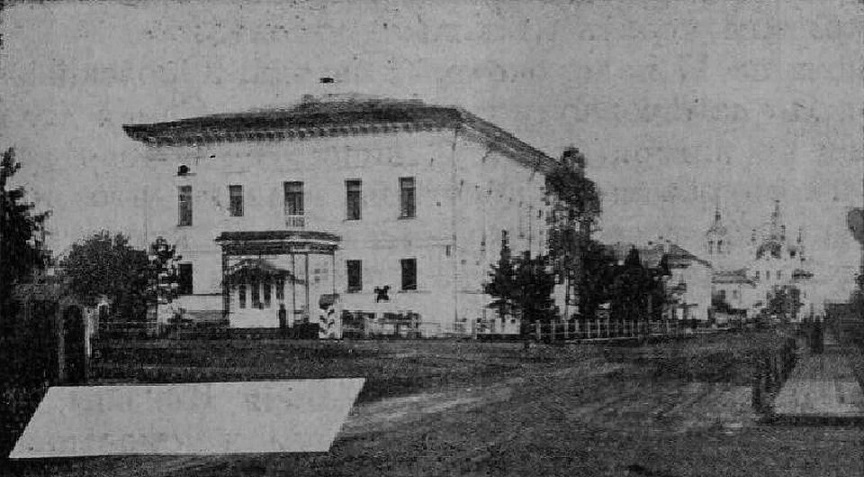
One of Maria’s photos of the Governors House, where the Imperial Family lived under house arrest

Photographer of the Romanov family?

It is also of great interest,  that according to the Ussakovsky family, Maria repeatedly photographed the family of Tsar Nicholas II during their house arrest in the former Governor’s Mansion in Tobolsk. Sadly, however, in 1938, her daughter Nina, fearing arrest, destroyed all the photographic plates. One can only speculate, as to what these lost plates depicted? How close did Maria get to the Imperial Family? What were they doing when she photographed them? How many photographs did she take, and later destroyed? Sadly, we will never know.

Only photos of the faithful servants of the Imperial Family have been preserved to this day. The original of this photo is now in the collection of the Tsarskoye Selo State Museum in Pushkin, a copy of which can be seen in the Museum of the Family of Emperor Nicholas II (opened in June 2018) in Tobolsk. It is interesting to add that members of their suite who enjoyed freedom to go about Tobolsk, made purchases of  postcards with views of Tobolsk, on behalf of the Imperial Family from Maria’s salon.

The fact that the Imperial Family used the services of the Ussakovskaya Salon was documented. In the financial report of Colonel Kobylinsky, security chief of the Romanovs, in addition to a few mentions of invoices for purchasing postcards, information is also provided on the account “for correcting negatives”. So Maria’s photos of the Imperial Family did in fact exist!.

The Imperial Family described their stay in Tobolsk in great detail in both their respective diaries and letters, however, there is no mention of an invitation of Maria Ussakovskaya nor the photographer in general. A visit by a female photographer would hardly go unnoticed. It is also not clear why the Romanovs would need to invite a photographer: they, as well as the tutor to Tsesarevich Alexei Pierre Gilliard, had their own cameras. Many photographs of the Imperial Family have been preserved, taken in Tobolsk by the Romanovs themselves or by members of their retinue.

Pierre Gilliard notes in his diary on 17th September 1917 that the Imperial Family were forced to have “ID cards with numbers, equipped with photographs.” Empress Alexandra Feodorovna made a similar note in her diary on 30th September 1917. Their respective entries may explain the photographer from the Ussakovskaya Salon, who was most likely Maria’s husband Ivan Konstantinovich Ussakovsky, who was invited for this compulsory photography for certificates. An invoice was issued by the salon.

Several passes to the “Freedom House” with photographs have been preserved, for example, the passes with a photograph of Dr. E. S. Botkin and maid A. S. Demidova. Their copies are also on display in the Museum of the Family of Emperor Nicholas II in Tobolsk.

232c

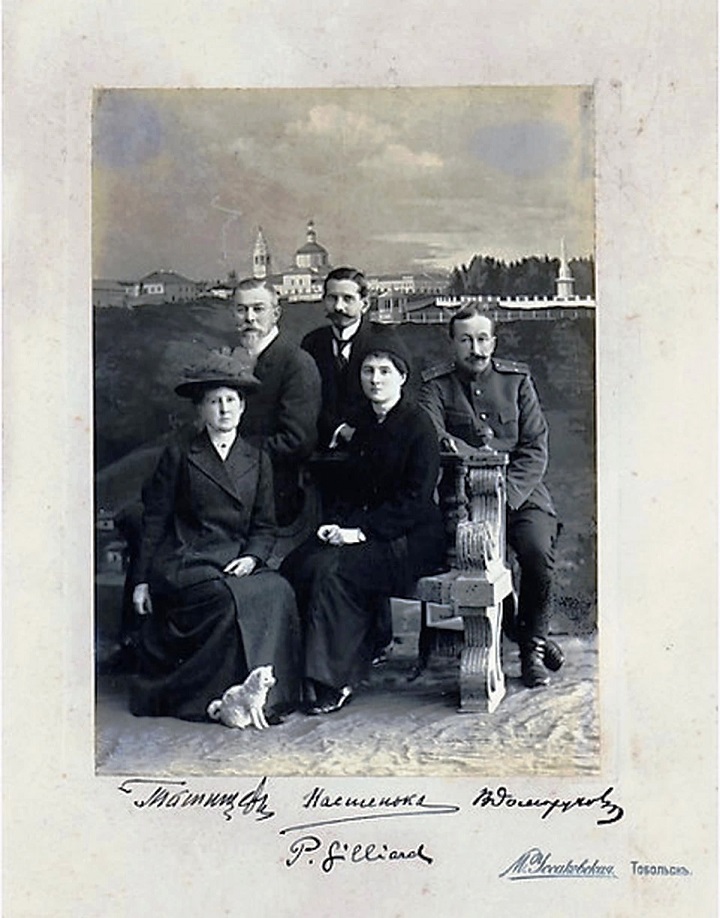
Photograph of the Imperial Family’s faithful servants taken at Maria’s salon in Tobolsk

“Faithful servants”

A wonderful photograph depicting *five faithful servants of the Imperial Family has been preserved to this day. The original of this photo is now in the collection of the Tsarskoye Selo State Museum in Pushkin, a copy of which can be seen in the Museum of the Family of Emperor Nicholas II (opened in June 2018) in Tobolsk.

The faithful servants of the Imperial Family, who had not lodged in the Governor’s House, but in the Kornilov House, located on the opposite side of the street and, obviously, enjoyed greater freedom of movement, could visit the Ussakovskaya Salon, which was located nearby. The famous photograph, called “Faithful Servants”, was clearly taken in the salon. Five members of the imperial retinue pose against a backdrop with a view of Tobolsk, printed or painted on canvas, This background can be seen in other photos from the Ussakovskaya Photo Salon.

*NOTE: the photo above depicts – the gentlemen: Count Ilya Tatishchev, Pierre Gilliard, Prince Vasily Dolgorukov; the ladies, Catherine Schneider, Anastasia Hendrikova. With the exception of Pierre Gilliard, the other four faithful retainers of the Imperial Family were murdered by the Bolsheviks in 1918.

232d

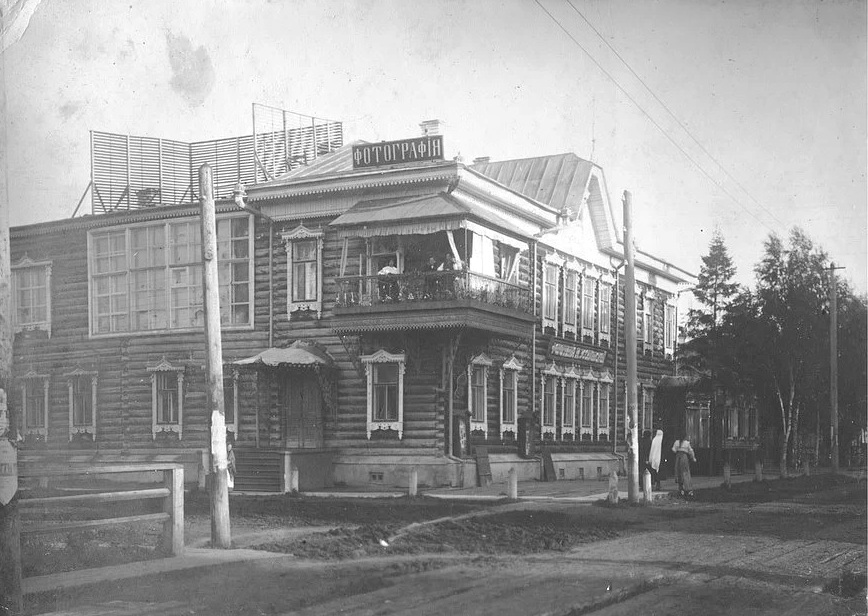
The home and salon of Maria Mikhailovna and Ivan Ussakovsky in Tobolsk

The home and salon of Maria Mikhailovna and Ivan Ussakovsky which was located at No. 19 Ulitsa Mira, was illegally demolished in 2006. Requests to local authorities by a group of local historians to restore the building has fallen on deaf ears in Tobolsk. 

© Paul Gilbert. 24 February 2020