Obituary: Maria Dmitrievna Ivanova-Tatishcheva (1930-2025)
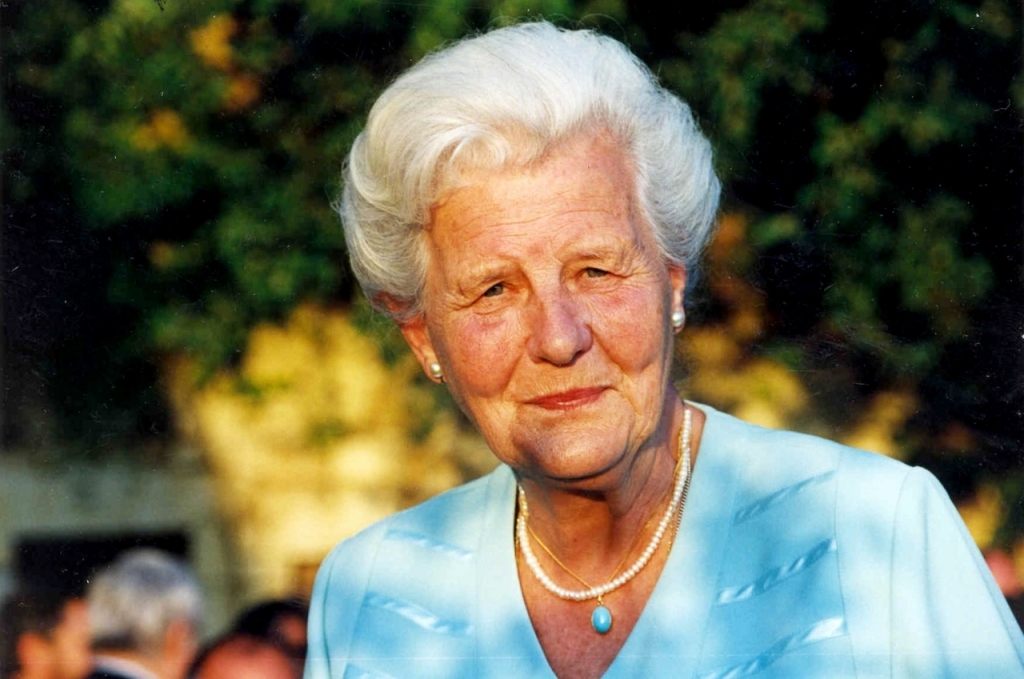
Maria Dmitrievna Ivanova-Tatishcheva (1930-2025)

On 27th May 2025, Maria Dmitrievna Ivanova [born Countess Tatishcheva], died in Paris, at the age of 96.

Born in Nice on 26th February 1930, Maria is a direct descendant of the founder of Ekaterinburg, the sixth generation great-granddaughter of Vasily Nikitich Tatishchev (1686-1750), and niece of Adjutant General Vasily Nikitich Tatishchev (1859-1918), a devoted and loyal subject of Emperor Nicholas II.

Maria recalled in her memories: “My father, Count Dmitry Sergeevich Tatishchev (1898-1972), graduated from the Corps of Pages, whereupon he was promoted as an ensign in the Preobrazhensky Life Guards Regiment, in which almost all the Tatishchevs served. He was 18 years old, and after a month of training in St. Petersburg, he was sent to the Front, where he was awarded the Order of St. Anna’s 4th Class for Bravery. But after 4 months the commander of the Preobrazhensky, General Kutepov, disbanded the regiment. . . . Following the Tsar’s abdication and the October Revolution, he joined the North-Western Army of General Yudenich, which fought against the Bolsheviks.”

In 1920, Maria’s father fled Bolshevik Russia. From 1921 he lived in Marseille, then in Nice, before finally setting in Paris. In exile, he dedicated his life to perpetuating the memory of the last Russian emperor. Dmitry Tatishchev served as vice-chairman of the Union of Adherents for the Memory of Emperor Nicholas II [ Союз ревнителей памяти Императора Николая II] an independent, voluntary educational and charitable association of White Russian emigrants and their descendants, who venerated the memory of Emperor Nicholas II and his Family. Dmitry also worked on a Russian-language documentary about Nicholas II. 

In 1929, Tatishchev married Countess Emilia Alekseevna Kapnist (1908-1996), the couple had one child, Maria Dmitrievna Tatishcheva.
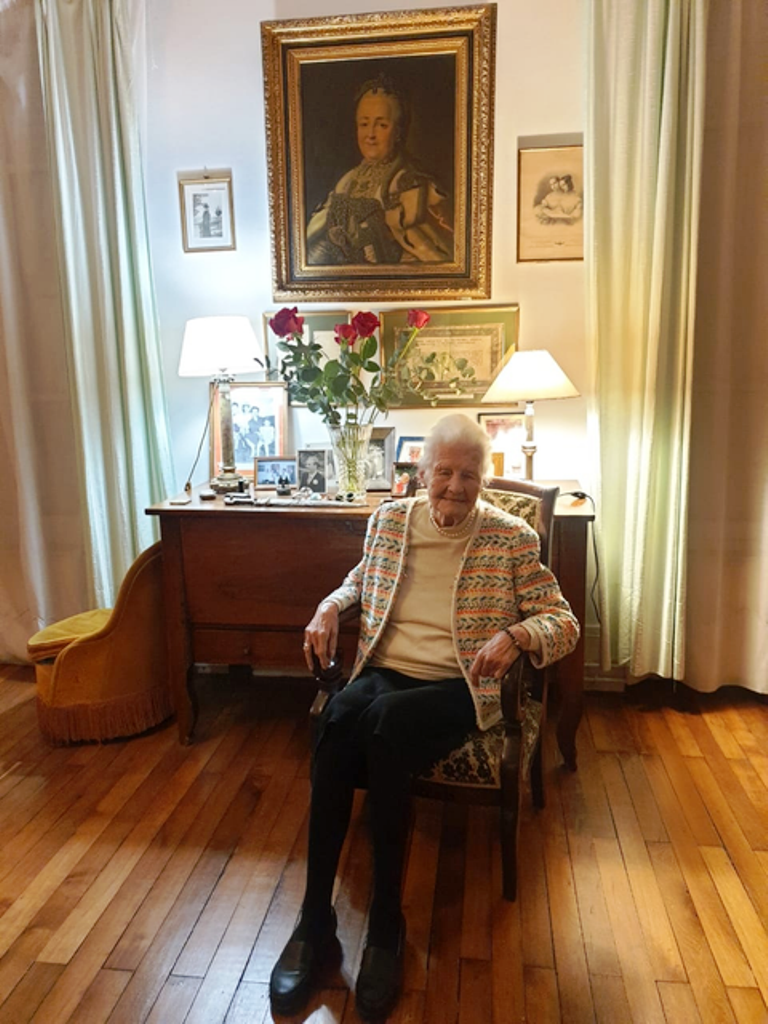
PHOTO: Maria Dmitrievna Ivanova [Born Countess Tatishcheva], at her home in Paris

Maria Dmitrievna Tatishcheva lived in Paris, where she devoted her entire life helping Russians who fled Bolshevik Russia after the Revolution, and emigrated to France. In 1948, she began working at the Help Center for Russian Emigrants. The center helped émigrés to find employment, housing, obtain documents and organized children’s shelters.

In 1949, Maria married Yuri Alexandrovich Ivanov (1923-1987). The couple had one son Sergei Yuryevich.

From 1964, Maria headed the Russian parish school at the Cathedral of St. Alexander Nevsky Church in Paris, for children, grandchildren and great-grandchildren of Russian emigrants living in France.

From 1987 to 2000, she was in charge of the Tolstoy Foundation, which helped Russian refugees who emigrated from the USSR.

Maria first went to Russia in 2003, visiting Ekaterinburg, when the city celebrated its 280th anniversary, as a descendant of the founder of the city. It was during this visit to the Ural capital that the head of the Yekaterinburg Metropolia informed Maria that the diocesan Commission for the Canonization of Saints was currently preparing documents for the canonization of her uncle Vasily Nikitich Tatishchev (1859-1918).

Maria Dmitrievna Ivanova-Tatishcheva died in Paris on 27th May 2025. A memorial service was held on Friday, 30th May in the Cathedral of Saint Alexander Nevsky in Paris. She was buried in the Sainte-Genevieve-des-Bois Russian Cemetery, situated 25 km south from Paris.

Memory Eternal! Вечная Память!

***
234b

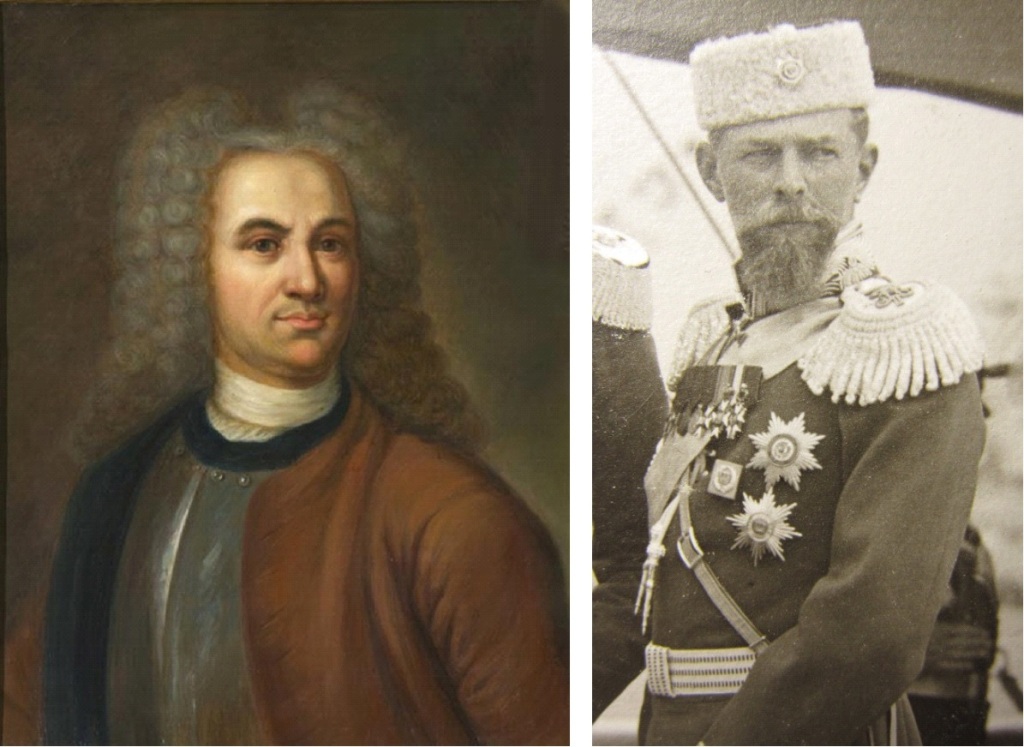
PHOTO: Vasily Nikitich Tatishchev (left) and Ilya Leonidovich Tatishchev (right)

At the invitation of Nicholas II, the devoted Adjutant General Vasily Nikitich Tatishchev followed the Tsar’s family into exile to Tobolsk, where, he played an important role, caring for the august family and offering spiritual support. When Nicholas II and the Empress Alexandra Feodorovna and her daughter Maria left Tobolsk for Ekaterinburg, Tatishchev remained with the Tsar’s children. On 23rd May 1918, upon arrival in Ekaterinburg with Tsesarevich Alexi and the Grand Duchesses Olga, Tatyana, Anastasia, the Adjutant General was separated from the Tsar’s family and imprisoned in Ekaterinburg.

On 10th June 1918 Ilya Leonidovich Tatishchev was shot by the Bolsheviks. According to church historians, he was buried in the cemetery of the Novo-Tikhvin Convent. [Note: Tatishchev’s grace was lost during the Soviet years – PG] 

The head of the Ekaterinburg Metropolis informed Maria Dmitrievna that the diocesan commission for the canonization of saints is currently preparing documents for the canonization of her uncle. [Note: Ilya Leonidovich Tatishchev was canonized by the Russian Orthodox Church Outside Russia (ROCOR) in 1981 – PG]

“It is known that not only did he know the gospel by heart, but lived the life a devout Orthodox Christian.

© Paul Gilbert. 1 June 2025
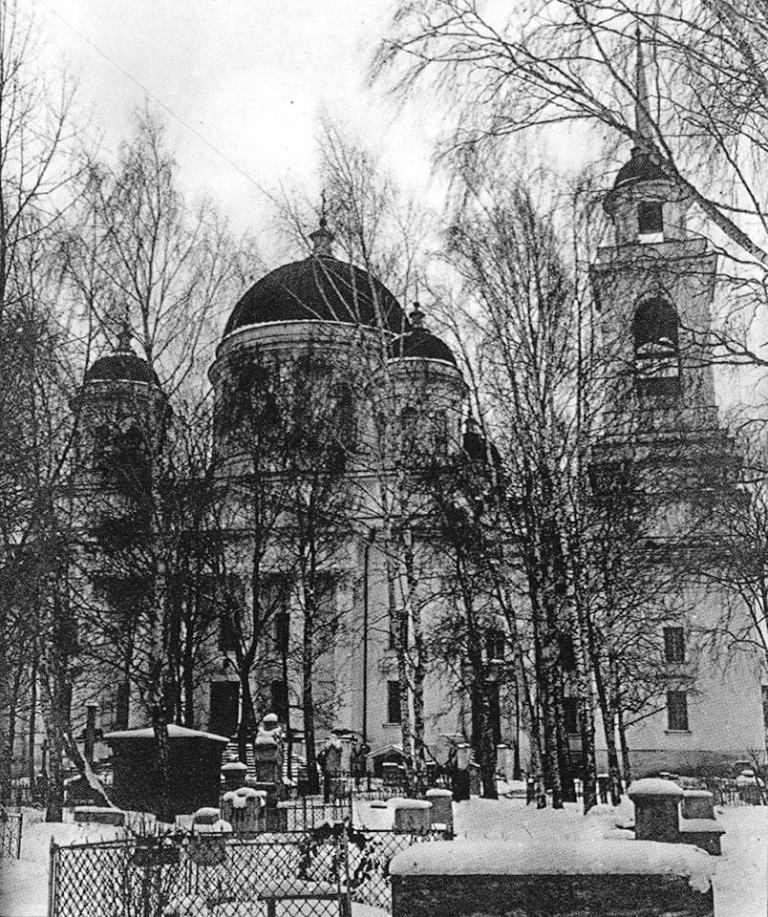
LOST IMPERIAL RUSSIA – Novo-Tikhvin Convent Cemetery, Ekaterinburg

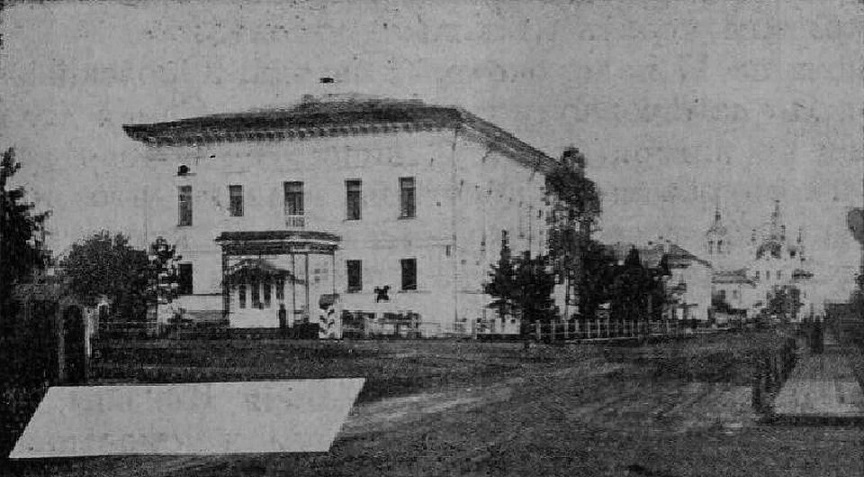
PHOTO: early 20th century view of the Novo-Tikhvin Convent Cemetery in Ekaterinburg

Among the many shameful acts committed by the Bolsheviks and later the Soviets, was the desecration and later destruction of the Novo-Tikhvin Convent Cemetery in Ekaterinburg during the 1920s and 1950s.

In the 1780s, an Orthodox churchyard was created in the south-western part of Ekaterinburg. During the 19th century it became part of the cemetery at the Novo-Tikhvin Convent. It consisted of a city cemetery (Green Grove), and a necropolis members of the nobility. The gravestones were works of stone-cutting and foundry art, thus making it the finest cemetery in the city at that time.

It is believed that the last burial in the Novo-Tikhvin Convent Cemetery took place in 1924. The local Soviet began to appropriate the land and began building on the grounds of the cemetery. In 1926 there was even talk about building the Sverdlovsk Zoo here! By 1929 nearly all the graves had been removed.

By 1930 the convent was closed. In 1932 the church archives, which included the burial records and other important information were ordered burned by the local Soviet. Bulldozers were used to demolish the last above ground grave stones and monuments in 1948-1950.

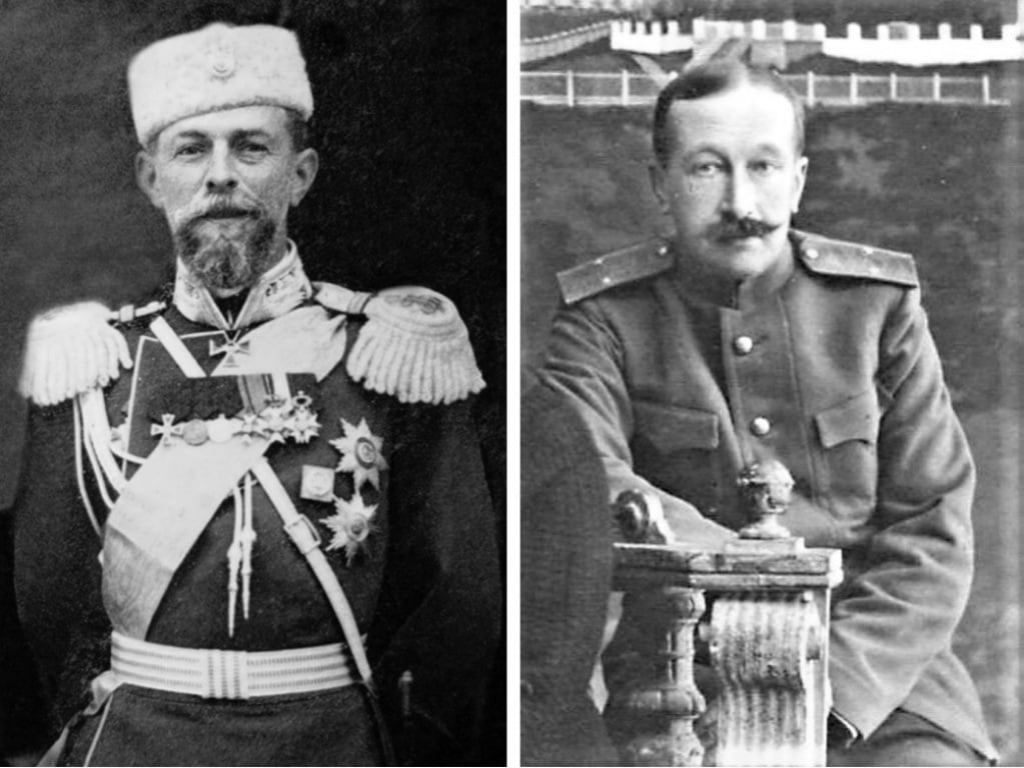
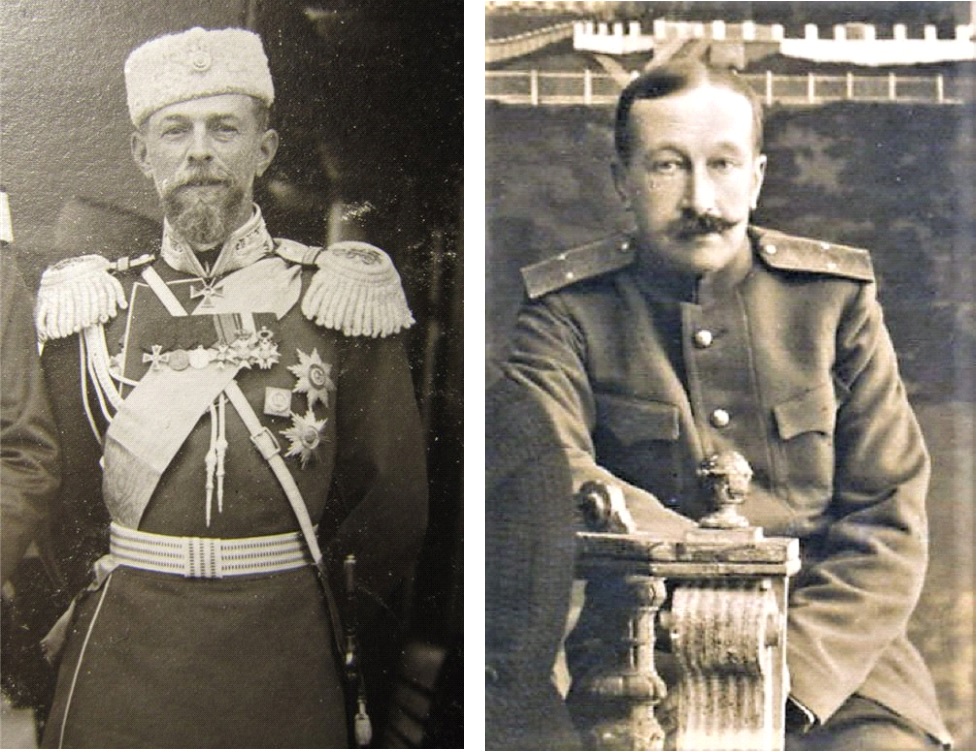
PHOTO: General Ilya Leonidovich Tatishchev (left) and Prince Vasili Alexandrovich Dolgorukov (right)

The local Soviet used some of the grave stone monuments to build foundations and roads, while iron and cast iron parts were used as scrap metal. The desecration of the cemetery did not stop there. Local military training units, which settled in the convent, dug a number of garbage pits, buried two large tanks for fuel and lubricants in the cemetery.

Most of the cemetery was transferred to the administration of the Ural Military District, who continued to build on the graves of those who died before the 1917 Revolution. The last house constructed on the cemetery, complete with a marble front staircase and a sauna was built for Soviet generals.

The convent was returned to the Russian Orthodox Church in the early 1990s. Restoration began and continues to this day. Excavations on the grounds of the Novo-Tikhvin Convent were carried out from 2002 to 2012, which resulted in the recovery of more than 400 graves (some were completely destroyed). Efforts were made to recover some of the graves, identify the remains, and rebury them in other cemeteries. Additional bodies have since been recovered, as recently as 2018.

It is interesting to note that two faithful servants to Emperor Nicholas II – General Ilya Leonidovich Tatishchev (1859 – 1918) and Prince Vasili Alexandrovich Dolgorukov (1868 – 1918), who followed the Imperial Family into exile, and murdered by the Bolsheviks were buried in this cemetery, however, their graves have not been found.

© Paul Gilbert. 21 November 2023

Loyal to the Tsar: General Tatishchev and Prince Dolgorukov

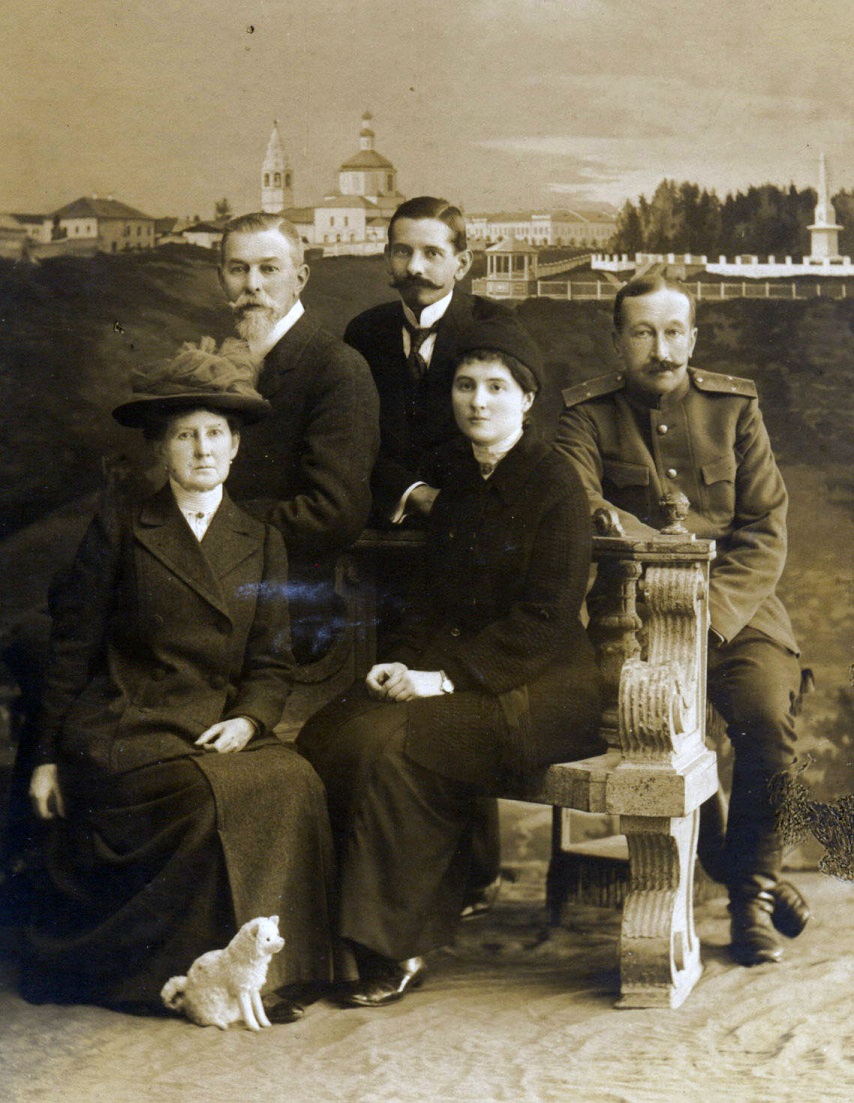
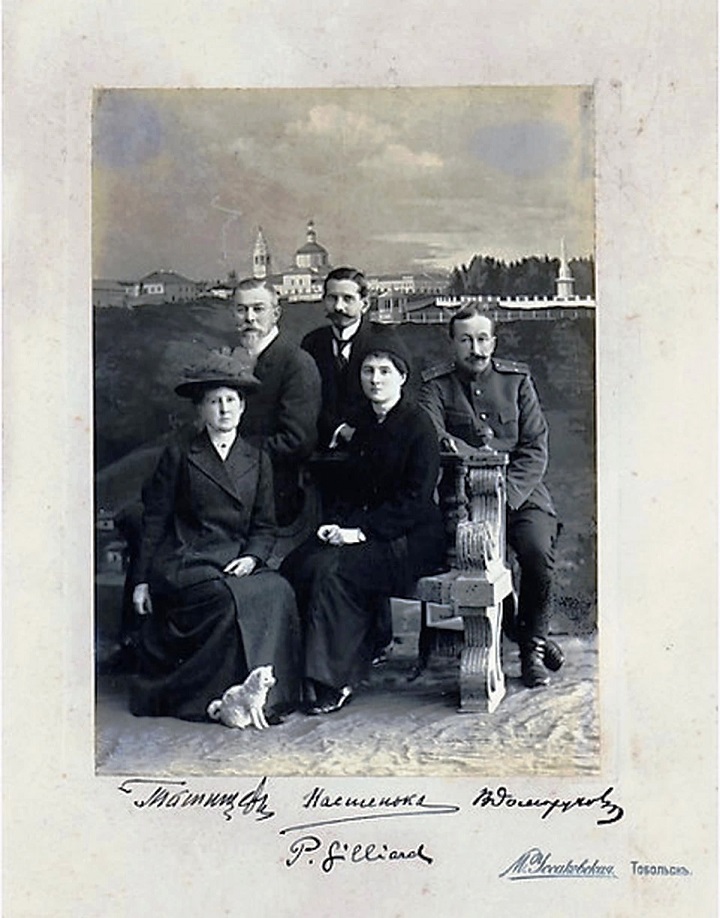
PHOTO: From left to right: Catherine Schneider, Ilya Tatishchev, Pierre Gilliard, Anastasia Hendrikova and Vasily Dolgorukov

On this day – 10th June 1918 – two faithful servants to Emperor Nicholas II – General Ilya Leonidovich Tatishchev and Prince Vasili Alexandrovich Dolgorukov – were murdered by the Bolsheviks.

General Tatishchev and Prince Dolgorukov, faithfully and selflessly served Emperor Nicholas II, for many years. With Christian courage and nobility, they remained faithful to the sovereign, voluntarily followed the Emperor and his family to Tobolsk, and then to Ekaterinburg.

It was on 10th June 1918, that they together took a martyr’s death at the hands of the Bolsheviks and were buried in the cemetery of the Novo-Tikhvin Convent.

Memory Eternal! Вечная Память!

PHOTO: General Ilya Leonidovich Tatishchev and Prince Vasili Alexandrovich Dolgorukov

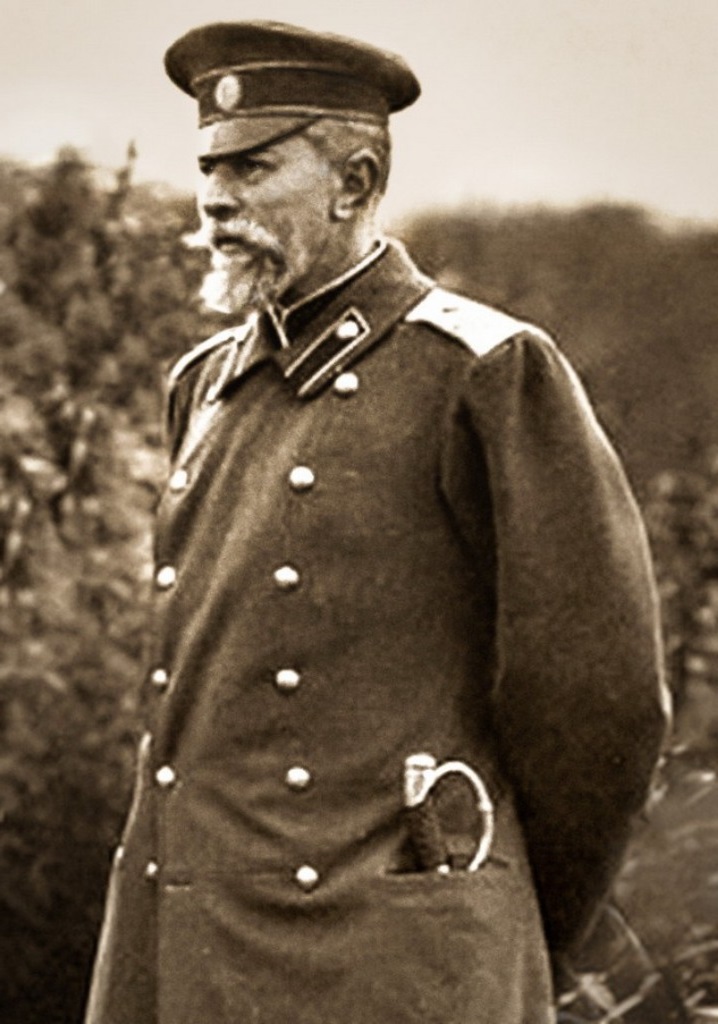
Ilya Leonidovich Tatishchev (1859 – 1918) – Adjutant-General of Emperor Nicholas II. The son of General Leonid Aleksandrovich Tatishchev (1827-1881) and Catherine Ilinishna (1835-1915), Ilya Tatishchev is one of the descendants of the founder of Ekaterinburg. He graduated from the Corps des Pages in St Petersburg, and later entered the service of the His Majesty’s Life Guard Hussar Regiment. He later served as adjutant to the Grand Duke Vladimir Alexandrovich (1847-1909). On 6th December 1895, he was promoted to colonel. From 1905 he served as Major-General of the Retinue of His Imperial Majesty. In 1910 he was promoted to Adjutant General. He was a member of the Holy Prince Vladimir Brotherhood. He faithfully followed Emperor Nicholas II and his family into exile. He was murdered by the Bolsheviks on 10th June1918. Ilya Tatishchev is buried in the cemetery (*lost during the Soviet years) of the Novo Tikhvinsky Convent in Ekaterinburg.

Prince Vasily Alexandrovich Dolgorukov ( 1868 – 1918) – Major-General, marshal of the Ministry of the Imperial Court and lands. The son of Prince Alexander Vasilyevich Dolgorukov (1839-1876) and Princess Mary Sergeyevna (1846-1936). He graduated from the Corps des Pages in St Petersburg, and then entered the service of the Life-Guards Horse-Grenadier Regiment. In 1907, he was promoted adjutant to His Imperial Majesty Emperor Nicholas II. From 1912-1914, he served as Regimental Commander of the Life-Guards Horse-Grenadier Regiment. During the First World War, he served at General Headquaters in Mogilev. Dolgorukov faithfully and selflessly served Emperor Nicholas II for 22 years. In March 1917, he voluntarily stayed with the Emperor during his house arrest in the Alexander Palace at Tsarskoye Selo. In August 1917, he then followed the Emperor and his family into exile to Tobolsk.

After his arrival in Ekaterinburg on 30th April 1918, Prince Dolgorukov was arrested “in order to protect public safety.” He was placed in the political department of the Ekaterinburg prison. The Chekists tried to accuse him of planning the escape of the Imperial family. Historians call these accusations groundless. On 10th June 1918, he was shot in a wooded area near the city’s Ivanovskoe Cemetery,. His body was later discovered by a unit of the White Army, and buried in the autumn of 1918 in the cemetery (*lost during the Soviet years) of the Novo-Tikhvinsky Convent in Ekaterinburg.

Tatishchev and Dolgorukov were canonized by the Russian Orthodox Church Outside Russia (ROCOR) in October 1981.

© Paul Gilbert. 10 June 2022

Monument to 4 faithful servants to Nicholas II installed in Ekaterinburg

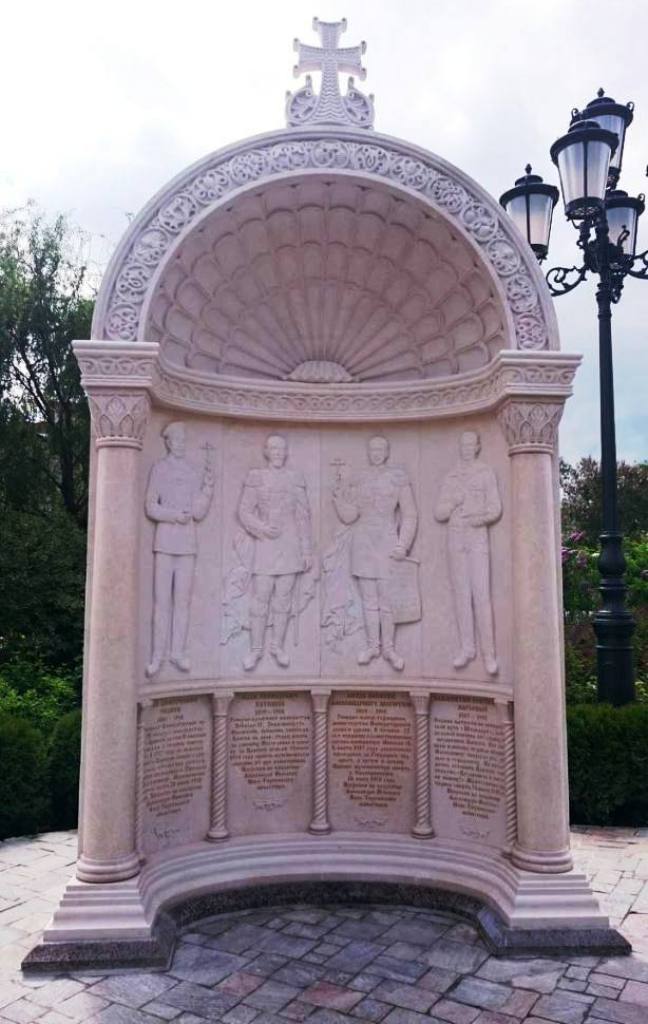
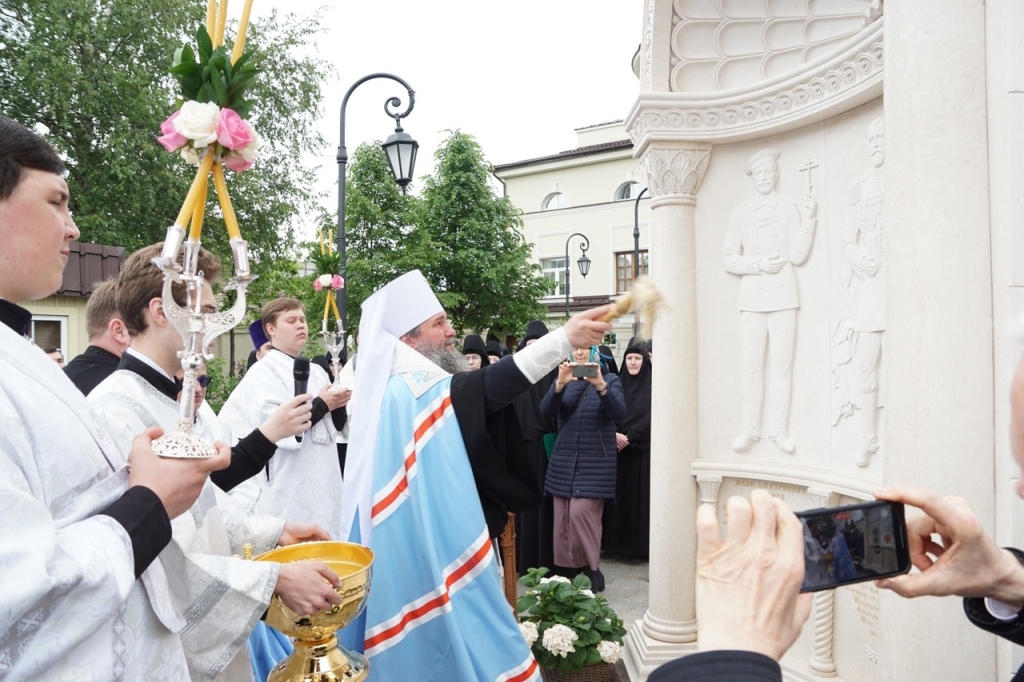
On 13th June, a new monument to four faithful servants of Emperor Nicholas II, was installed and consecrated on the grounds of Novo-Tikhvin Convent.

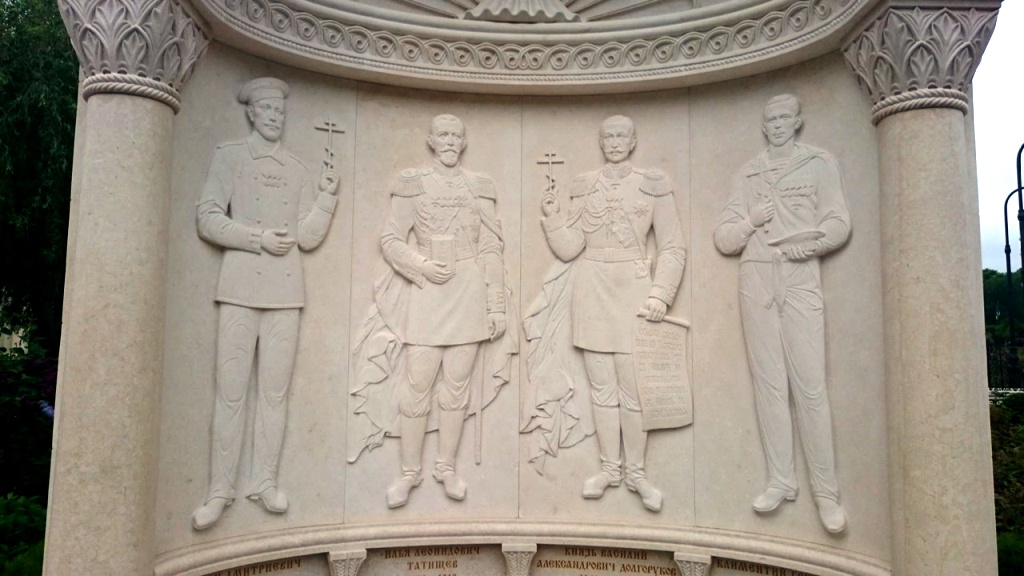
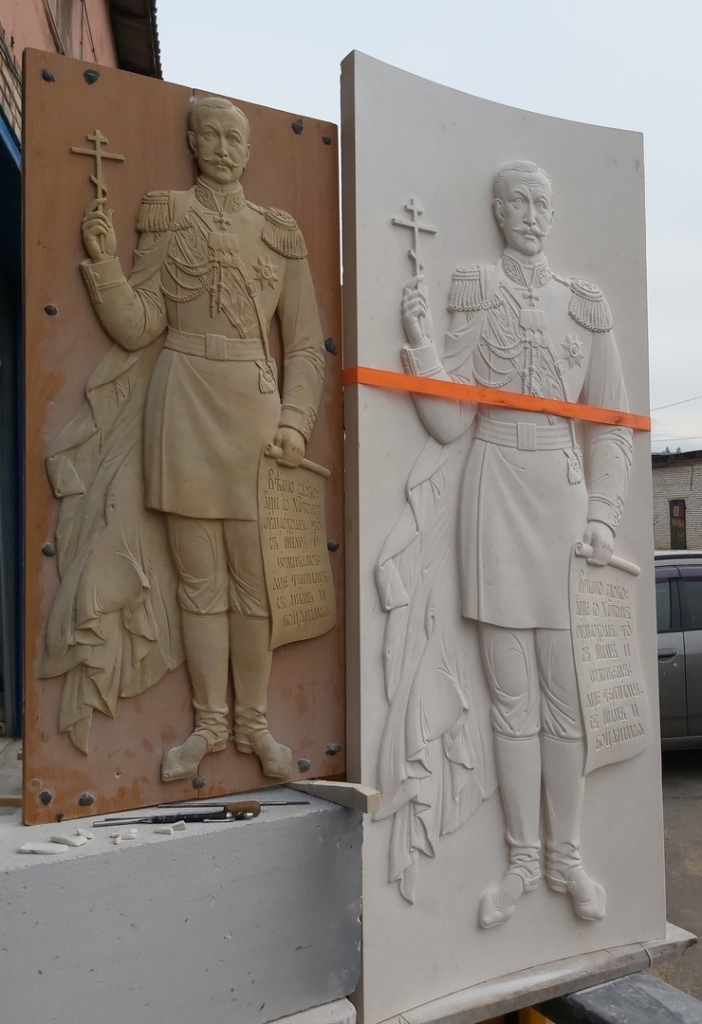
The monument featuring four bas-reliefs, honours Prince Vasili Alexandrovich Dolgorukov (1868-1918), Lieutenant General Ilya Tatishchev (1859-1918), Tsesarevich Alexei’s “nanny” sailor Klimenty Grigorievich Nagorny (1887-1918) and boatswain Ivan Dmitriyevich Sednev (1881-1918). It was installed in Zelenaya Grove, of the convent, and the solemn consecration was performed by Metropolitan of Yekaterinburg and Verkhoturye Evgeny.

PHOTO: Metropolitan of Yekaterinburg and Verkhoturye Evgeny performing the act of consecration

After the 1917 Revolution, with Christian courage and nobility, these four men remained faithful to the Emperor. They voluntarily followed the Imperial family into exile, first to Tobolsk, and then Ekaterinburg, were they were all murdered by the Bolsheviks in the summer of 1918: Dolgorukov and Tatishchev were shot on 10th July 1918, while Nagorny and Sednev were shot on 28th June 1918.

They were all eventually buried in the cemetery of the Novo-Tikhvin Convent, although their respective graves were lost during the Soviet years. The necropolis is gradually being restored, sadly, however, the burial place of these four faithful servants has not yet been found.

PHOTO: detail of the four bas-relief images, from left to right: Ivan Sednev, Lieutenant General Ilya Tatishchev, Prince Vasily Dolgorukov and Klimenty Nagorny

The four-meter stone stele with relief images of the Tsar’s four faithful servants was made at the St. Petersburg workshop of Mikhail Parfentiev, the sketches for the monument were prepared by the sisters of the Novo-Tikhvin Convent.

Tatishchev, Dolgorukov, Nagorny and Sednev were canonized by the Russian Orthodox Church Outside Russia (ROCOR) in 1981, and rehabilitated by the Prosecutor General’s Office of the Russian Federation on 16 October 2009. They have yet to be canonized by the Moscow Patriarchate. 

Memory Eternal! Вечная Память!

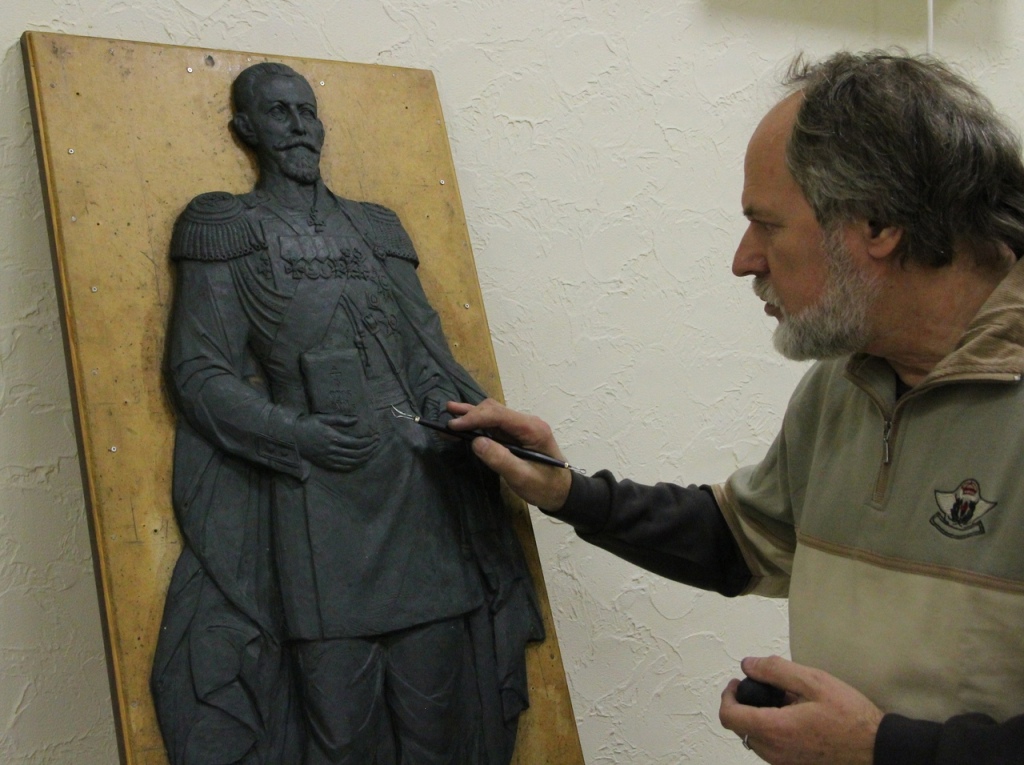
PHOTO: sculptor prepares bas-relief model of Lieutenant General Ilya Tatishchev

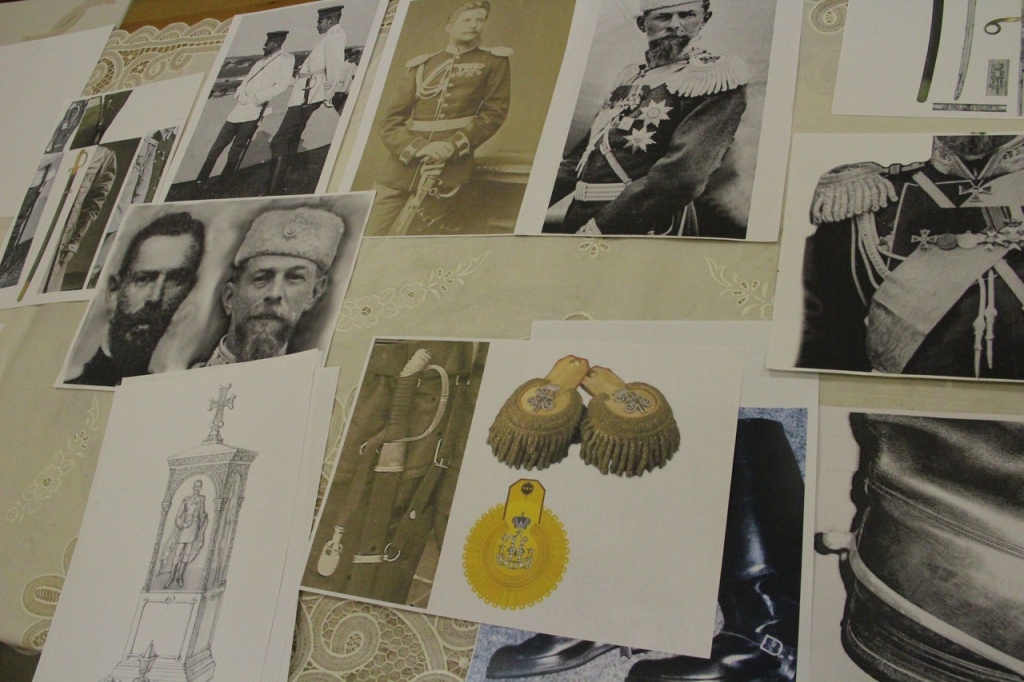
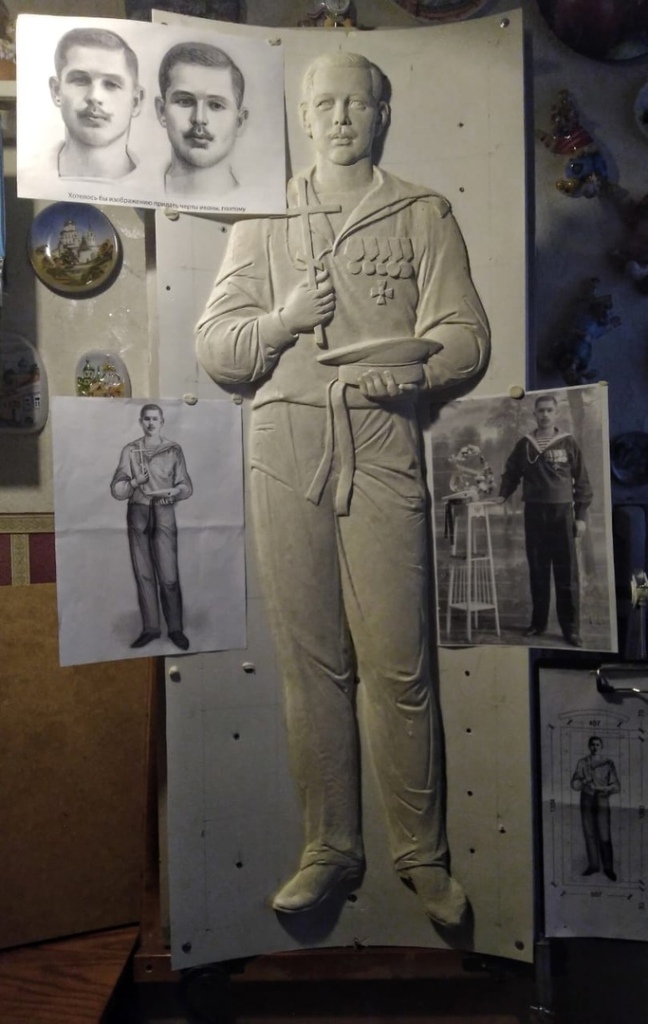
The sketches for the monument were prepared in the icon-painting workshop by the sisters of the Novo-Tikhvin Convent Striving for historical accuracy, the sisters consulted on archival documents and photographs of the uniforms and respective awards worn by Prince V. A. Dolgorukov, I. L. Tatishchev, K. G. Nagorny and I. D. Sednev. In addition, they consulted with historians and other experts on the history of the uniforms of the Russian Empire. At the same time, in order to show the height of the feat of the Tsar’s faithful subjects, who in fact were martyred, the sisters supplemented the images with details characteristic of icons: holding Orthodox crosses in their hands, and fluttering cloaks worn on their shoulders – this is customary for depicting Orthodox martyrs on icons. General Ilya Tatishchev is depicted holding the Gospel, which he knew by heart.

PHOTO: drawings and photos of Lieutenant General Ilya Tatishchev

PHOTO: plaster and stone bas-relief of Lieutenant General Ilya Tatishchev

When the sketches were ready, the sculptors got down to work. First, it was necessary to make models from plasticine – a putty-like modelling material made from calcium salts, petroleum jelly and aliphatic acids. In order to “turn” a drawing into a three-dimensional figure, the sculptor constantly checks it with photographs. From the plasticine model, an exact plaster copy is made, and from that, the stone carvers copy the image. The talented masters of the St. Petersburg workshop of Mikhail Parfentiev carefully worked on every detail of the four-meter stele with relief images of the Tsar’s subjects. Work on the monument took nearly three years to complete.

PHOTO: sketches, photos and stone bas-relief of Klimenty Grigorievich Nagorny

© Paul Gilbert. 13 June 2022

Ekaterinburg residents asked to help in glorifying General Tatishchev

0297

General Ilya Leonidovich Tatishchev (1859-1918) was glorified by the Russian Church Abroad in 1981 as the holy warrior martyr Elijah. The sisters of the Novo-Tikhvin Convent in Ekaterinburg now hope that he will canonized by the Moscow Patriarchate.

Residents of Ekaterinburg are invited to pray for General Ilya Leonidovich Tatishchev. Requiems will be performed every Tuesday after Vespers in the Novo-Tikhvin Convent.

Remembered as “a man of touching kindness,” Tatishchev was a noble and deeply pious man – he knew the entire Gospel by heart! For many years he selflessly served Emperor Nicholas II, and in 1917 voluntarily followed him into exile to Tobolsk and Ekaterinburg.

It was in Ekaterinburg that he was separated from the Tsar and his family and placed under house arrest. On 10th June 1918, he accepted a martyr’s death at the hands of the Bolsheviks together with Prince Vasily Dolgorukov. He was buried in the cemetery of the Novo-Tikhvin Convent. His grave has not survived, since during the Soviet years the convent’s cemetery was razed to the ground. And now, when we pray for the repose of the soldier Elijah, he prays for us before the throne of the Lord.

In an appeal to the citizens of Ekaterinburg, the sisters of the Novo-Tikhvin Convent said:

“Dear ones, now a lot depends on you and me! If we turn with prayer to the soldier Elijah, receive help and testify about this, then we can find in the saints another intercessor for our loved ones, our city, for the entire Ural region! Therefore, we ask you very much: report cases of miraculous help through the prayers of the soldier Elijah! Any information can serve to glorify him!”

Memory Eternal! Вечная Память!

Click HERE to read Divine Liturgy for Tatishchev and Dolgorukov Performed in Ekaterinburg, published on 10th June 2020

© Paul Gilbert. 10 August 2020

The woman who photographed the Imperial Family in Tobolsk

232a

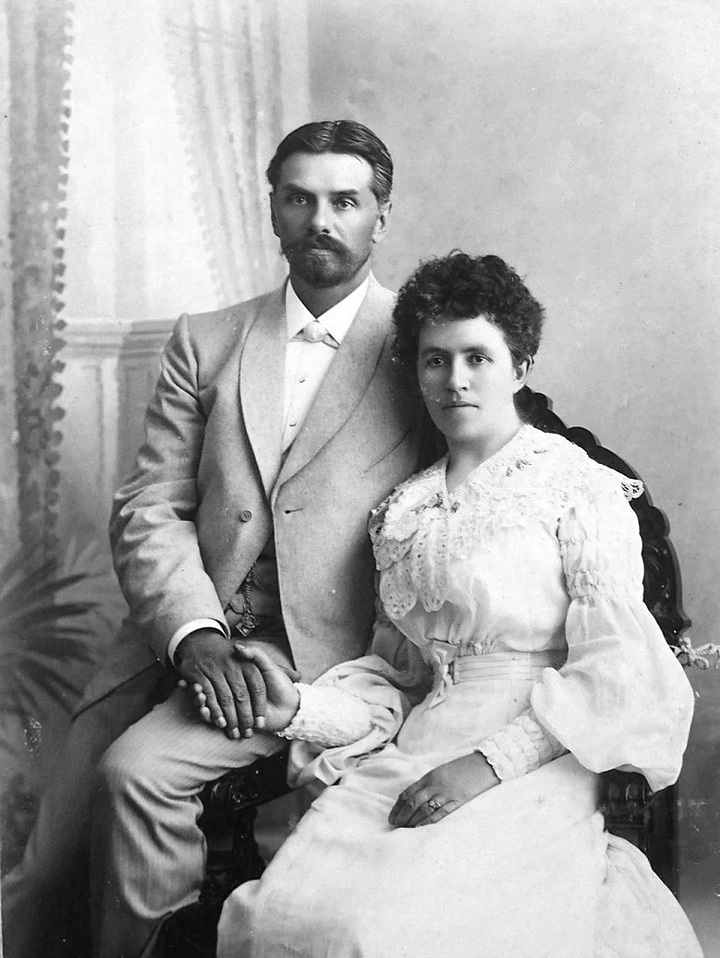
Maria Ussakovskaya, nee Petukhova with her husband Ivan Konstantinovich Ussakovsky

Few historians know about Maria Ussakovskaya the first woman photographer in Tobolsk. Through the lens of her camera, she photographed life in the provincial capital during one of the most dramatic periods of Russia’s history, leaving for posterity a noticeable mark in the biography of this Siberian city.

Incredible progress

Maria Mikhailovna Ussakovskaya, nee Petukhova, was born on 28th December 1871 (Old Style) in the family of a Tobolak native, state adviser M.M. Petukhov. She graduated from the Tobolsk girl’s school and, in 1893, married the official Ivan Konstantinovich Ussakovsky.

Ivan was also a great lover of photography – a hobby that was fashionable and modern in Russia at the time. On the basis of her husband’s home laboratory, as well as money received in a dowry from her father, Maria opened a photo salon, which quickly gained popularity among the townspeople. It should be noted that in 1897 in Tobolsk, with a population of 20 thousand people, there were no less than nine photo shops! 

Maria kept up with all the new developments in photography. She ordered expensive Bristol cardboard for passe-partout, used interchangeable backs with different scenes, offered costume shots, and even performed photo montages. This was incredible progress for Siberia at that time.

Photographs by Ussakovskaya were distinguished by their artistic taste and original composition. These were real photo portraits, which is especially significant, because photography at that time was essentially a step into eternity to become a memory for years to come.

Unlike other female owned photo salons, Ussakovskaya perfectly mastered the techniques of photography herself. Her photo salon also began to publish postcards, which were in great demand. It is known that the famous Russian chemist and inventor Dmitry Mendeleev (1834-1907), during his stay in Tobolsk in the summer of 1899, bought a collection of art postcards with views of his native city from Ussakovskaya’s salon.

Maria continued to work after the revolution, but the portraits of young ladies in silk dresses were replaced with photographing labor collectives, fur farms, bone carving masters and ordinary workers. At the same time, the house was formally confiscated by the local Soviet, leaving Maria to rent her own photo workshop from a local farm in Tobolsk. In 1929, Ussakovskaya was deprived of suffrage. The photo salon had to be closed. In 1938, the Ussakovskys left Tobolsk for Moscow for fear of reprisals. Maria Mikhailovna died in 1947 and is buried in the Don Cemetery.

232b

Photograph of Rasputin taken at Maria’s salon in Tobolsk

Witness of events

Maria was a witness to many historical events. Of particular interest in her biography are family traditions associated with the names of prominent people of that era and carefully preserved by subsequent generations of Ussakovsky. One of them is based on the visit by the famous strannik Grigori Rasputin.

The photograph of Grigory Rasputin made by Maria Ussakovskaya is today widely known. Moreover, the famous holy man, who was hunted by Russia’s finest photographers, presented himself at Maria’s salon. Maria’s great-grandson of Vadim Borisovich Khoziev, continues to tell the story of Rasputin’s visit to his great-grandmother’s salon in Tobolsk, as told to him by his grandmother Maria Ivanovna Ussakovskaya.

232e

One of Maria’s photos of the Governors House, where the Imperial Family lived under house arrest

Photographer of the Romanov family?

It is also of great interest,  that according to the Ussakovsky family, Maria repeatedly photographed the family of Tsar Nicholas II during their house arrest in the former Governor’s Mansion in Tobolsk. Sadly, however, in 1938, her daughter Nina, fearing arrest, destroyed all the photographic plates. One can only speculate, as to what these lost plates depicted? How close did Maria get to the Imperial Family? What were they doing when she photographed them? How many photographs did she take, and later destroyed? Sadly, we will never know.

Only photos of the faithful servants of the Imperial Family have been preserved to this day. The original of this photo is now in the collection of the Tsarskoye Selo State Museum in Pushkin, a copy of which can be seen in the Museum of the Family of Emperor Nicholas II (opened in June 2018) in Tobolsk. It is interesting to add that members of their suite who enjoyed freedom to go about Tobolsk, made purchases of  postcards with views of Tobolsk, on behalf of the Imperial Family from Maria’s salon.

The fact that the Imperial Family used the services of the Ussakovskaya Salon was documented. In the financial report of Colonel Kobylinsky, security chief of the Romanovs, in addition to a few mentions of invoices for purchasing postcards, information is also provided on the account “for correcting negatives”. So Maria’s photos of the Imperial Family did in fact exist!.

The Imperial Family described their stay in Tobolsk in great detail in both their respective diaries and letters, however, there is no mention of an invitation of Maria Ussakovskaya nor the photographer in general. A visit by a female photographer would hardly go unnoticed. It is also not clear why the Romanovs would need to invite a photographer: they, as well as the tutor to Tsesarevich Alexei Pierre Gilliard, had their own cameras. Many photographs of the Imperial Family have been preserved, taken in Tobolsk by the Romanovs themselves or by members of their retinue.

Pierre Gilliard notes in his diary on 17th September 1917 that the Imperial Family were forced to have “ID cards with numbers, equipped with photographs.” Empress Alexandra Feodorovna made a similar note in her diary on 30th September 1917. Their respective entries may explain the photographer from the Ussakovskaya Salon, who was most likely Maria’s husband Ivan Konstantinovich Ussakovsky, who was invited for this compulsory photography for certificates. An invoice was issued by the salon.

Several passes to the “Freedom House” with photographs have been preserved, for example, the passes with a photograph of Dr. E. S. Botkin and maid A. S. Demidova. Their copies are also on display in the Museum of the Family of Emperor Nicholas II in Tobolsk.

232c

Photograph of the Imperial Family’s faithful servants taken at Maria’s salon in Tobolsk

“Faithful servants”

A wonderful photograph depicting *five faithful servants of the Imperial Family has been preserved to this day. The original of this photo is now in the collection of the Tsarskoye Selo State Museum in Pushkin, a copy of which can be seen in the Museum of the Family of Emperor Nicholas II (opened in June 2018) in Tobolsk.

The faithful servants of the Imperial Family, who had not lodged in the Governor’s House, but in the Kornilov House, located on the opposite side of the street and, obviously, enjoyed greater freedom of movement, could visit the Ussakovskaya Salon, which was located nearby. The famous photograph, called “Faithful Servants”, was clearly taken in the salon. Five members of the imperial retinue pose against a backdrop with a view of Tobolsk, printed or painted on canvas, This background can be seen in other photos from the Ussakovskaya Photo Salon.

*NOTE: the photo above depicts – the gentlemen: Count Ilya Tatishchev, Pierre Gilliard, Prince Vasily Dolgorukov; the ladies, Catherine Schneider, Anastasia Hendrikova. With the exception of Pierre Gilliard, the other four faithful retainers of the Imperial Family were murdered by the Bolsheviks in 1918.

232d

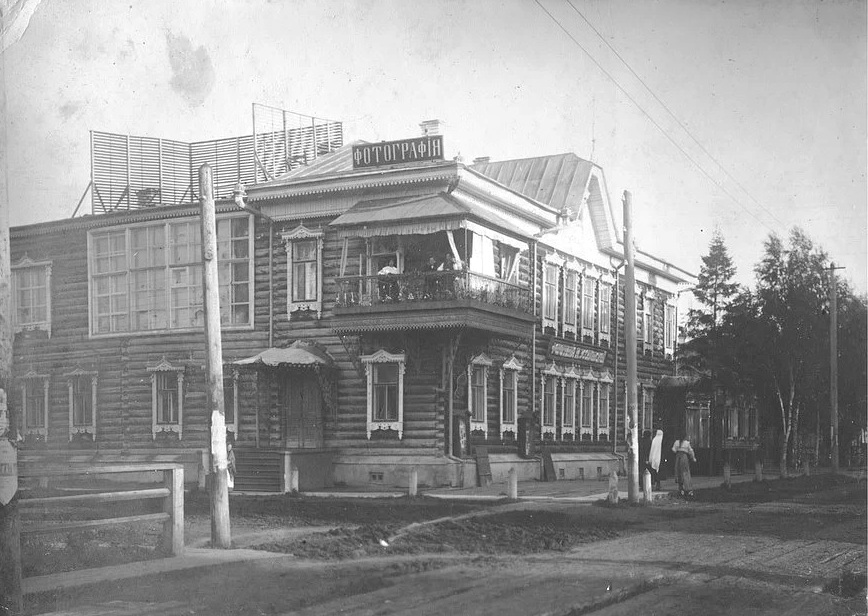
The home and salon of Maria Mikhailovna and Ivan Ussakovsky in Tobolsk

The home and salon of Maria Mikhailovna and Ivan Ussakovsky which was located at No. 19 Ulitsa Mira, was illegally demolished in 2006. Requests to local authorities by a group of local historians to restore the building has fallen on deaf ears in Tobolsk. 

© Paul Gilbert. 24 February 2020