Blood reappeared in the Ipatiev House for years after the regicide, claimed eyewitnesses

PHOTO: view of the murder room in the basement of the Ipatiev House, following the massacre of Emperor Nicholas II, his family, and four faithful retainers. The bullet holes can clearly be seen on the walls

On 17th July 1918, Emperor Nicholas II and his family were brutally murdered by a Bolshevik firing squad in the basement of the Ipatiev House in Ekaterinburg. In the spring of 1924, Professor Valentin Nikolaevich Speransky (1877-1957) visited the Ipatiev House, and later published his book La maison à destination speciale la tragedie d’ekaterinenbourg in French (1929) followed by Spanish and Italian editions.

Prof. Speransky was not permitted to enter the living quarters of the Ipatiev House, but thanks to one of the council employees he saw the scene of the terrible massacre – a room of the basement floor, where the regicide was carried out.

“It resembles a cellar, not more than 50 cubic meters in volume,” he wrote. “In the damp semi-darkness the room seemed very narrow… Even after six years there were still bloodstains on the floor. There were traces of bullets on the walls … On the wallpaper one could see traces of bloody hands.”

These protruding traces of the blood of the Holy Royal Martyrs on the walls were later confirmed by numerous testimonials:

“We had a girl from Sverdlovsk [Ekaterinburg]. Her mother told us that the wall of the house where the execution of the Imperial Family had been carried out had been stained with blood for many years. The authorities believed it was the antics of hooligans, put sentries to guard the room around the clock, painted over the wall with paint, and illuminated it with floodlights. But every day, fresh drops of blood would appear on the wall before the eyes of astonished eye-witnesses.

“In the 1950s,” recalls L.N. Kasyanova from Feodosia, “I studied in Sverdlovsk in the Urals, at the Pedagogical Institute. In Sverdlovsk, we went on excursions to the Ipatiev House, leading us into the basement where the Holy Royal Martyrs were shot. They say from time to time that blood appeared on the walls, and no matter how much it was washed off, it reappeared.”

“From my childhood”, Z.S. Grebenshchikova recalls, “my mother used to show us this house. When I met the watchman Bukharkin Fyodor Ivanovich, a great admirer of the Imperial Family, in St. John’s Church in Ekaterinburg, I began to learn more about it. To the watchman one boy – Tikhomirov Alexander Dmitrievich, born in 1956 was very attached. His father was a general and his mother worked as a general practitioner. His grandmother Olga took him to church when he was three years old and he already knew the prayers.

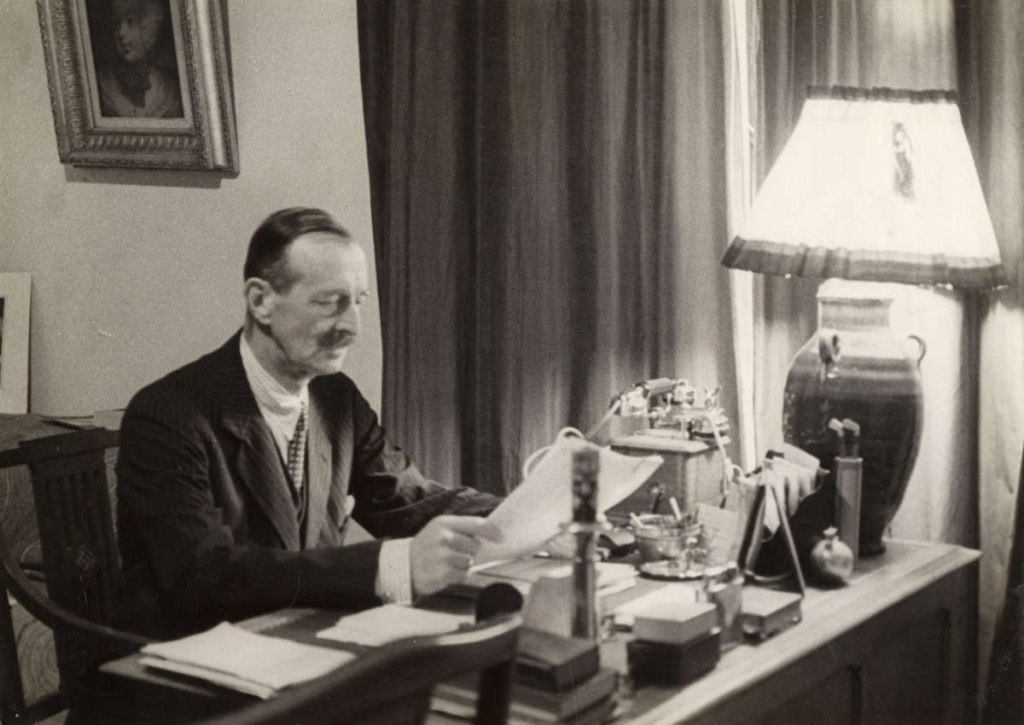
PHOTO: Valentin Nikolaevich Speransky (1877-1957), author of the book ‘La maison à destination speciale la tragedie d’ekaterinenbourg’, published in 1929

“All three of us – Fyodor Ivanovich, Sasha and I – started going to the house to pray: we also came at night before the holidays – in winter, in spring, at Easter, and on the night of 16th July [the night of the anniversary marking the death and martyrdom of the Imperial Family] and others. We took faithful old ladies with us. We took candles, placed them on the side porch, and sang ‘God rest the saints,’ ‘Eternal Memory,’ and say the names of the Holy Royal Martyrs.

“Sasha said that the wall against which the Imperial Family were shot had been whitewashed – but the blood still runs through the whitewash. They decided to paint it blue, a soft blue colour, like the sky, and again it comes out, the blood, through the holes that the bullets penetrated. . .”

Sasha’s grandmother Olga had a friend who worked as a janitor in the Ipatiev house, and she said that on the eve of holidays – before Easter and Pentecost, when she was on night duty – the sound of some angelic, very gentle singing could be heard from the basement.

One day Sasha brought a piece of plaster from that wall in his grandmother’s locket with a lid, filled with hot wax. Such a small piece in the shape of a trapezoid, and there, like a bouquet of flowers, was sprinkled – large, medium, smaller, maroon, orange, light orange droplets. Just like a bunch of flowers. I prayed and touched the shrine. I had the honour…”.

Over the years, local authorities were getting concerned that the Ipatiev House was becoming a shrine for Orthodox Christians and monarchists, who came in growing numbers, to light candles, pray and sing hymns. As a result, a decision was made to demolish the Ipatiev House, and in so doing, wipe any memory of the Holy Royal Martyrs from the Russian landscape.

The destruction of the Ipatiev House began on 22nd September 1977, that is, more than two years after a joint decision of the chairman of the State Security Committee, Yuri Andropov (1914-1984) and the Politburo.

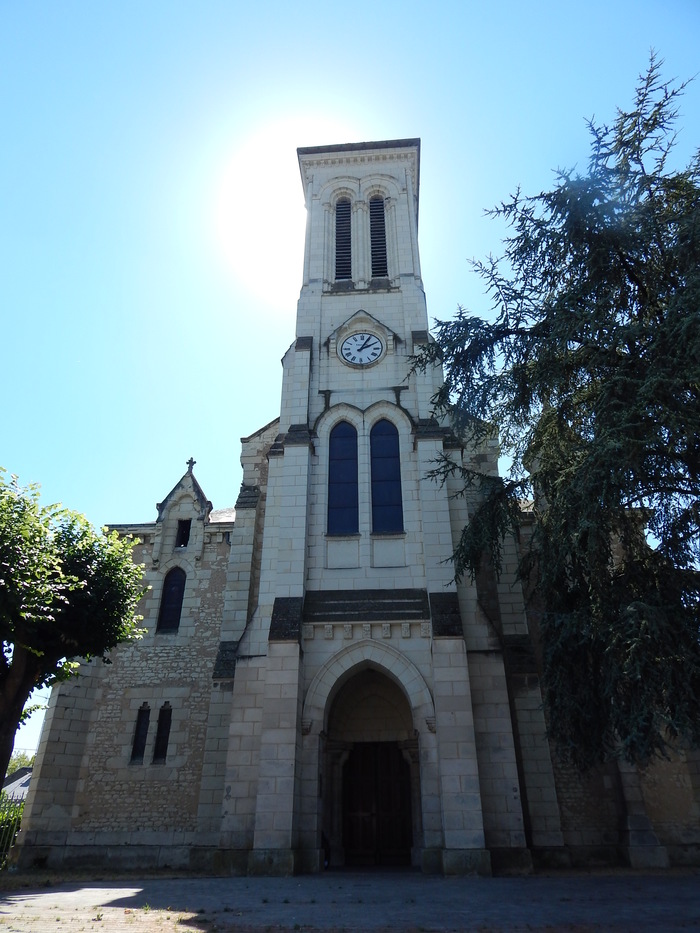
Today on this spot stands the Church on the Blood of the Holy Royal Martyrs. Construction began in 2000, and on 16th June  2003, 85 years after the death and martyrdom of Emperor Nicholas II and his family, the five-domed main church with a height of 60 meters, a building area of ​​966 m² and a total area of ​​3152 m², with an estimated capacity of 1910 people was consecrated.

© Paul Gilbert. 4 November 2021

Prominent Orthodox Bishop discusses the Bishops Council and the Ekaterinburg Remains

PHOTO: His Holiness Patriarch Kirill and Metropolitan Tikhon

The founder of the Russian online media outlet Daily Storm, Anastasia Kashevarova, recently interviewed Metropolitan of Pskov and Porkhov Tikhon (Shevkunov), who was asked about upcoming Bishops Council in May 2022 and the Ekaterinburg Remains.

Metropolitan Tikhon is a Bishop of the Moscow Patriarchate, and has been closely involved with the investigation into the deaths of Nicholas II and his family, which was initiated by the Russian Orthodox Church in 2015.

Tikhon is now the second prominent Bishop [known to this author] to hint that the Ekaterinburg Remains, are indeed those of Emperor Nicholas II and his family. See my article Metropolitan Hilarion hopeful ROC will recognize authenticity of Ekaterinburg remains, published on 20th June 2021.

AK: At the Bishops’ Council, which has now been postponed to the spring of 2022, will the issue of recognizing the remains of the Imperial Family be resolved?

MT: During the past five years, together with the Investigative Committee, we have collected all the documents and materials. In 2015, there was a new investigation, it was very interesting. We do not prejudge the outcome, of course, of the Council of Bishops, but we have provided them with all the documents that have been worked out by the investigation, the historical commission and our church commission. At the request of His Holiness Patriarch Kirill, we carried out genetic research. The remains of Nicholas II’s father, Alexander III were exhumed, genetic samples were taken and compared with the Ekaterinburg Remains. Everything coincided there. His Holiness Patriarch Kirill spoke about this, however, it will be the Council of Bishops who will make the final judgement.

AK: But do you have all the expertise?

MT: We have all the expertise. They quite satisfy me, because I observed them all very closely. However, the controversy continues.

AK: If the Council of Bishops makes a positive decision and recognizes that these are the remains of the Imperial Family, do they then become Holy Relics?

MT: Yes, we will then recognize them as the relics of saints. Some people will agree, some will not – I do not know how it will be, although for me it is quite obvious, I am not even going to be a hypocrite here. We have just published all three volumes of the case, and they are posted on the website of the Investigative Committee; anyone can read these documents in their entirety. Not only were there genetic examinations, there were about fifty different examinations carried out. Anyone can read them with an open mind. I did not trust the investigation that was conducted in the 1990s. There were many reasons for this, including procedural reasons – that is, they took samples from the remains of Nicholas II’s brother Grand Duke George Alexandrovich, compared them with the remains found near Ekaterinburg, but procedurally this was not properly formalized; and aroused mistrust. [Alexander Ivanovich] Bastrykin spoke about this in his report, even before being appointed head of the Investigative Committee.

AK: What has changed since the 1990s investigation?

MT: Yes, there were difficulties. All these bugs have now been fixed; procedurally everything is perfect; research carried out at the highest level. Professor Popov, one of Russia’s leading forensic experts, who, as a specialist, did not recognize these remains, based on these errors. As the heir, Nicholas Alexandrovich was in Japan, where an assassination attempt was carried out on his life: a Japanese policeman struck him on the head with a saber and seriously wounded him. In the1990s, tomography failed to show this injury. Thanks to modern-day tomography, however, Professor Popov, after analyzing this skull [skull No. 4, which, presumably, belonged to Nicholas II], found traces of an injury that coincide with the hat worn by Nicholas II during the incident and is now kept in the Hermitage. The blood-stained shirt of the last Russian tsar was also compared to the blood of his grandfather Alexander II, who was killed in 1881 by terrorists. The latter’s blood-stained shirt has also been preserved. The blood-stained shirts of Alexander II and Nicholas II are also kept in the Hermitage. We have provided every opportunity for every literate person to study the expertise. When we became experts, we signed a document stating that in the event of a knowingly false examination, we are subject to criminal liability with a sentence of up to five years.

AK: And if in the future the answer of the Council is positive, where will the relics be kept?

MT: This will be a joint decision made by His Holiness Patriarch Kirill and the Council of Bishops. Possibly in the Peter and Paul Fortress – in the same place where almost all members of the Romanov family are buried.

© Paul Gilbert. 3 November 2021

The Alexander Palace fed starving children in 1922

PHOTO: view of the Western Wing of the Alexander Palace (1922), which had been converted into an ARA kitchen, feeding more than 2000 local children a day

During the Russian Civil War (1917-1922), a terrible famine began in Bolshevik Russia. In an effort to stop it spreading throughout the former Russian Empire, the new Soviet government, led by Vladimir Lenin, invited the American Relief Administration (ARA), the brainchild of Herbert Hoover, to save communist Russia from ruin.

In 1921, to ease famine in Russia, the director of the American Relief Administration (ARA) in Europe, Walter Lyman Brown, began negotiating with the Soviet People’s Commissar for Foreign Affairs, Maxim Litvinov, in Riga, Latvia. An agreement was reached on 21st August 1921, and an additional implementation agreement was signed by Brown and People’s Commisar for Foreign Trade Leonid Krasin on 30th December 1921. The U.S. Congress appropriated $20,000,000 for relief under the Russian Famine Relief Act of late 1921.

It was the largest humanitarian operation in history, preventing countless deaths, riots and, quite possibly, the collapse of the communist state. Indeed, while the ARA’s efforts were admirable, it is one of those historical ironies that the United States not only helped fund the new Bolshevik order, but also helped save it from collapsing.

The Western Wing of the Alexander Palace in Tsarskoye Selo, the former residence of Emperor Nicholas II and his family, was turned into an ARA kitchen, which fed more than two thousand local children a day. The kitchen was run by one of the former tsarist chefs, who cooked boiled rice, beans and cocoa, assisted by several servants of the last Tsar.

American Relief Administration operations in Russia in 1922

At its peak, the ARA employed 300 Americans, more than 120,000 Russians and fed 10.5 million people daily. Its Russian operations were headed by Col. William N. Haskell. The Medical Division of the ARA functioned from November 1921 to June 1923 and helped overcome the typhus epidemic then ravaging Russia. The ARA’s famine relief operations ran in parallel with much smaller Mennonite, Jewish and Quaker famine relief operations in Russia. The ARA’s operations in Russia were shut down on 15th June 1923, after it was discovered that Russia renewed the export of grain

A hundred years later, few people remember these events. The Soviet government quickly erased the memory of American aid.

© Paul Gilbert. 1 November 2021

4 NEW Romanov Titles

I am pleased to offer 4 additional Romanov titles – published in October – available in PAPERBACK editions on AMAZON. Prices for paperback editions start at $12.99 USD. Each title offers a FREE “Look Inside” feature.

All of these titles are available from any AMAZON site in the world and are priced in local currencies [CLICK on any of the following links]: Canada, United Kingdom, Germany, France, Spain, Italy, Netherlands, Japan, India, Brazil, Mexico and Australia

Please refer to the links provided below to view this month’s selection – PG

VERA: Princess of the Imperial Blood Vera Konstantinovna
Compiled and Edited by Paul Gilbert

Includes more than 75 black and white photos!

CLICK HERE TO ORDER PAPERBACK EDITION

Princess of the Imperial Blood Vera Konstantinovna (1906-2001), was the youngest child and daughter of Grand Duke Konstantin Konstantinovich and Grand Duchess Elizabeth Mavrikievna.

Vera was a second cousin of Emperor Nicholas II, and a childhood playmate of his younger children. During World War I, she lost her father and brother, and during the Russian Revolution, three of her brothers were murdered by the Bolsheviks.

At age twelve, she escaped revolutionary Russia, fleeing with her mother and brother George to Sweden. She spent the rest of her long life in exile, first in Western Europe and from the 1950s in the United States.

In the last years of her life, the Supreme Monarchist Council considered her the Empress of Russia, after whose death there were no heirs to the Russian throne.

Vera was the only Romanov who remembered pre-revolutionary life and her legendary relatives. She was a living embodiment of the best traditions of the House of Romanov, enjoyed great respect and respect in the circles of the Russian emigration.

Princess Vera died on 11 January 2001, at the age of 95. She was buried next to her brother Prince George Konstantinovich at the cemetery of the Russian Orthodox Monastery of Novo-Diveevo in Nanuet, New York.

Petrograd: The City of Trouble, 1914-1918
by Meriel Buchanan

CLICK HERE TO ORDER PAPERBACK EDITION

A compelling first-person account by the daughter of the British Ambassador to Imperial Russia Sir George Buchanan. Meriel Buchanan writes in a colourful, highly readable style that keeps her subject fresh.

Her memories provide a lively and accurate account of the 1917 Revolution, and the terror and horror the new Bolshevik order had on the Russian people

This is an fascinating account of the tense, eventful months leading to the Revolution. As the war became a disaster for Russia, the author witnessed many of the harrowing scenes in St. Petersburg, often viewing them from the windows of the British Embassy facing the Neva River and bridges where so many of the most important events were played out.

As events unfolded, Buchanan recalls the Russian soldiers, the wounded in the hospital, the crowds on the street where public speakers held forth – to her, all were upstanding and sympathetic depending on their attitude toward Bolshevism. Those who favoured Bolshevism, she correctly identifies as surly and disreputable.

The author speaks of the Russian masses in the same way that foreigners always have. In her eyes, they were almost simple-minded — admirable when they were subservient, docile, and humble, but savage when they wanted freedom from the iron grip of tyranny and capitalism.

When they fought the Germans, she acknowledges that they fought bravely even though they lacked every essential for fighting, but when they were thrown back by the enemy and flooded into St. Petersburg, in her eyes they became slovenly, lazy, and dirty.

This book is well worth reading. It demonstrates how diplomats managed, though with difficulty and with the help of many servants, to keep up a privileged existence in a city in the grip of dire circumstances, a city torn apart by events of world-shaking consequence.

A great tool for anyone researching St. Petersburg in the final days before WWI and the collapse of the Romanov dynasty.

Romanov Relations: Volume I
Compiled and Edited by Paul Gilbert

CLICK HERE TO ORDER PAPERBACK EDITION

More than a century after the fall of the monarchy in Russia, the world’s fascination with the Romanov dynasty endures, as a whole new generation of Romanovphile pursues their fascination with Russia’s most famous family.

Romanov Relations is a multi-volume set of books, with each volume offering a collection of out-of-print articles, about the emperors, empresses, grand dukes and grand duchesses, as well as their descendants. Many of them dating back to the golden years of Imperial Russia have sat around collecting dust, mostly forgotten by time and neglected by researchers. Many of the authors, whom have long since passed from this world, personally knew their subjects and present them objectively to their reader in this volume. They offer both interesting anecdotes and insight into the private world of the Russian Imperial Court. Further, each volume is richly illustrated throughout, offering a selection of vintage photographs, many of which are drawn from Russian sources, and some of which may be new to readers.

Volume One includes 70 photographs, and 5 articles, some of which are divided into numerous sub-chapters:

(1) The Imperial Family of Russia by the Countess Marguerite Cunliffe-Owen

(2) H.I.H. The Grand Duchess Elisabeth Feodorovna of Russia by the Countess Alexandra Olsoufieff

(3) The Controversial Grand Duchess: An Intimate Biography of the Grand Duchess Marie Pavlovna, Senior by Christopher Heu

(4) The Russian Imperial Family in Olden Times by Princess Catherine Radziwill

(5) Flight from Russia by Louise Mountbatten, Queen of Sweden and includes Letters from the Russian Imperial Family. The letters written by the Grand Duchesses Olga and Tatiana to their cousin, Louise

Romanov Relations will be enjoyed by readers who have an interest in the Romanovs and their legacy, as well as providing a useful reference to writers and historians as they continue to unravel the mysteries and dispel many of the popular held myths surrounding the Romanov dynasty.

Emperor Nicholas II As I Knew Him
by Sir John Hanbury Williams

CLICK HERE TO ORDER PAPERBACK EDITION

In this compelling and intimate series of diary entries, originally published in 1922, Major-General Sir John Hanbury-Williams (1859-1946) depicts Tsar Nicholas II not as history knows him, but as he knew him.

The author claims that he probably saw the Tsar oftener and knew him more intimately than most others, outside his immediate entourage, during the period of his command in the field in 1916 to early 1917.

From a great personal friend of the Emperor and one of the last people to have received any kind of correspondence from him, a fresh perspective on the character of the man behind the title is available.

This is a powerful recollection from Hanbury-Williams, who includes touching and poignant details from his own life in an historical and historic diary.

Sir John Hanbury-Williams (1859-1946) was the Military Secretary to the Secretary of State for War and Brigadier-General in charge of Administration. During the First World War, he was head of the British military mission with the Russian Stavka with direct access to Tsar Nicholas II.

Click HERE to view 5 NEW Romanov titles published in September 2021

Click HERE to view 4 NEW Romanov titles published in August 2021

© Paul Gilbert. 31 October 2021

Rare portrait of Nicholas II on display at Bavaria exhibit

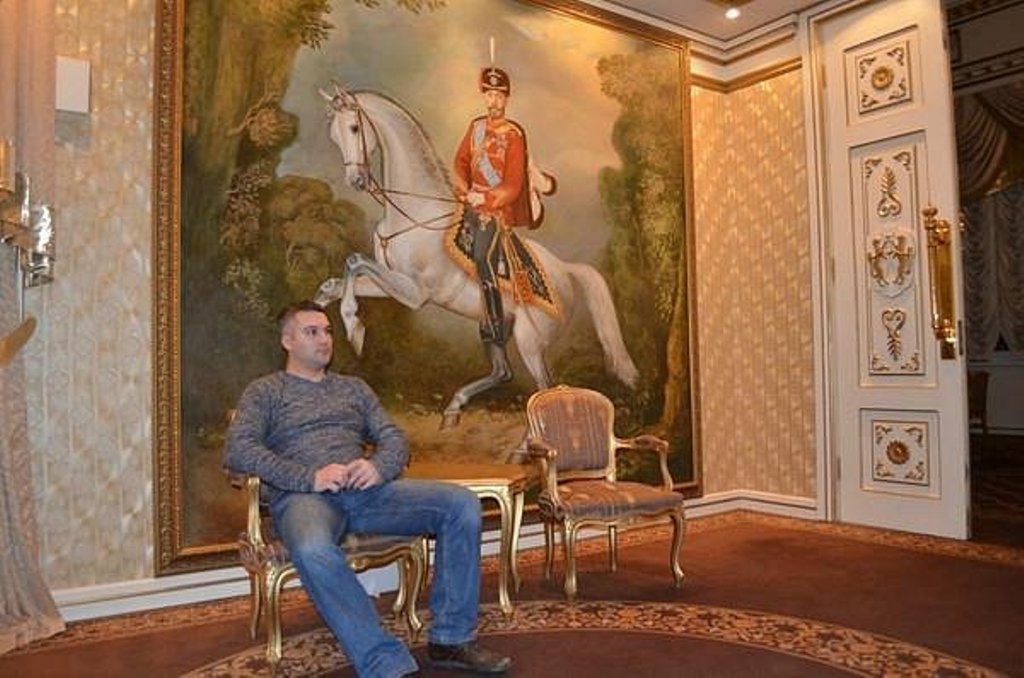
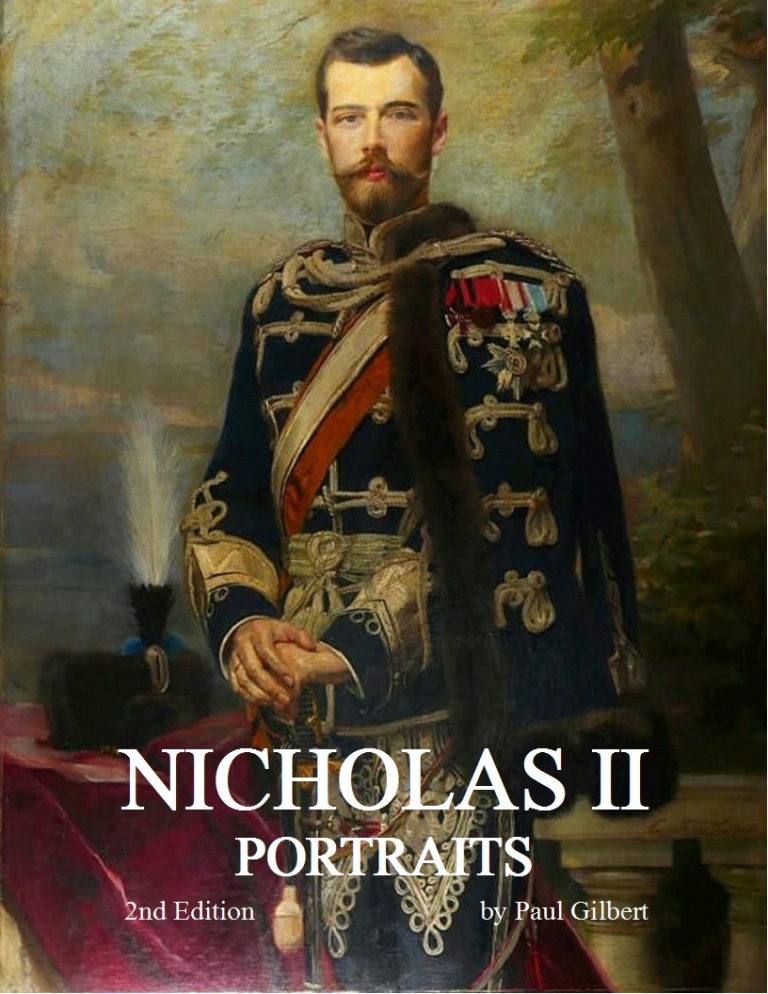
Portrait of Tsarevich and Grand Duke Nicholas Alexandrovich (1889), the future Emperor Nicholas II, by the artist Baron Ernst Friedrich von Liphart (1847-1932), Russified as Ernst Karlovich Lipgart. Lipgart painted at least six portraits of Russia’s last monarch, including several ceremonial portraits.

This magnificent portrait is currently on display in the Twilight of the Gods II – Last Monarchs in the House of History of Bavaria exhibition, at the Museum of the House of Bavarian History in Regensburg, Bavaria until 16th January 2022.

The Emperor is depicted in the uniform of the Prussian 8th Hussar Regiment, of which he was appointed an Honourary Chief in 1889, his cape is decorated with the Royal Prussian Order of the Black Eagle.

The painting hung from 1890 to 1995 in the former dining room of Neuhaus Castle, directly opposite the portrait of Elector Clemens August of Bavaria. The officers of the 8th Hussar Regiment established a club for their meetings here and in the adjacent premises. The Prussian regiment was stationed at Neuhaus and Paderborn castle from 1851 to 1919. Following the end of World War I, the regiment was disbanded.

After the exhibition ends in January of next year, the portrait will be returned to the Residenz Museum in Neuhaus Castle.

PHOTO: Ernst Karlovich Lipgart (1847-1932). Self-portrait, 1881.
From the Collection of the State Russian Museum, St. Petersburg

Ernst Karlovich Lipgart (1847-1932) was a Russian portraitist and decorator. He was born in Tartu, and after living for a time in Florence, where he studied at the Academy of Arts, he moved to France and then to Russia.

He arrived in St. Petersburg in 1886, where he painted portraits of members of the Imperial family, including a whole gallery of portraits of Nicholas II. He also decorated palaces and theatres in the capital, including the curtain in the Hermitage Theatre.

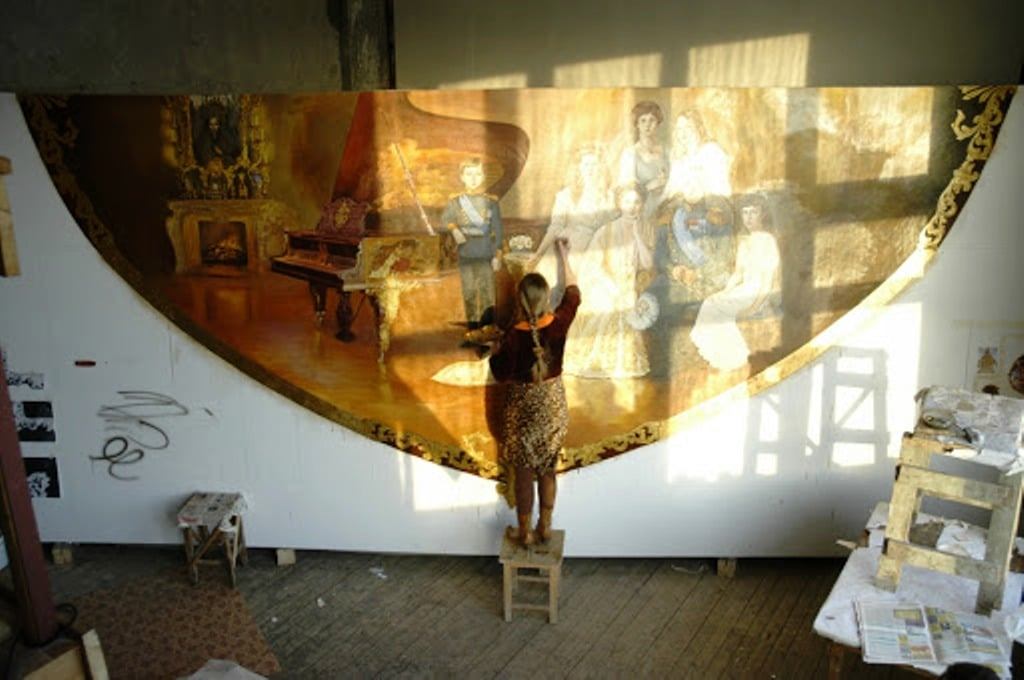
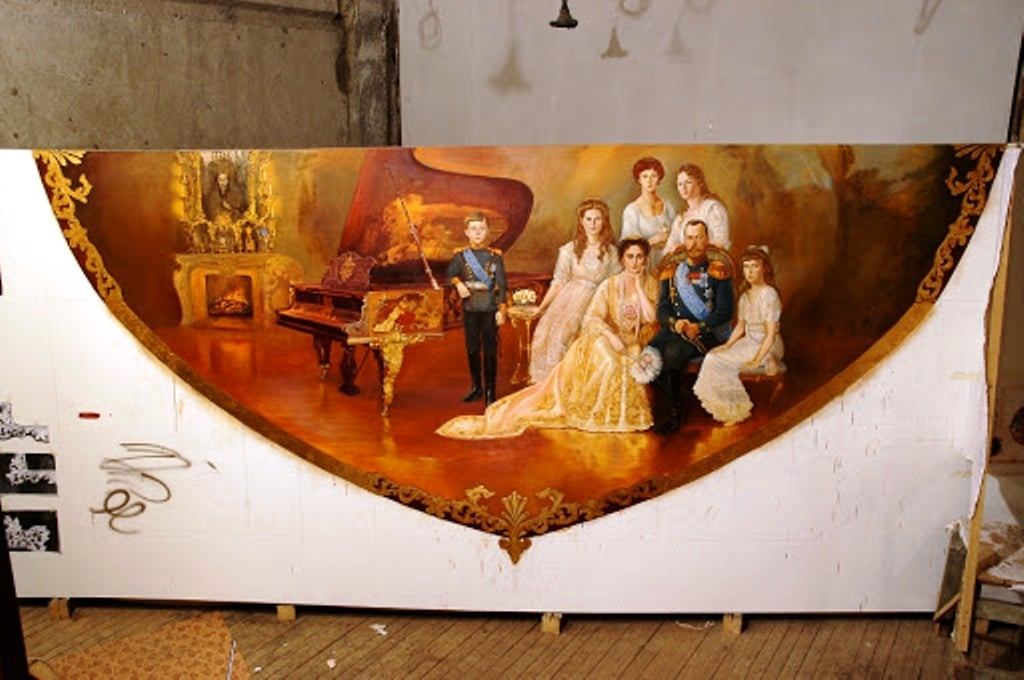
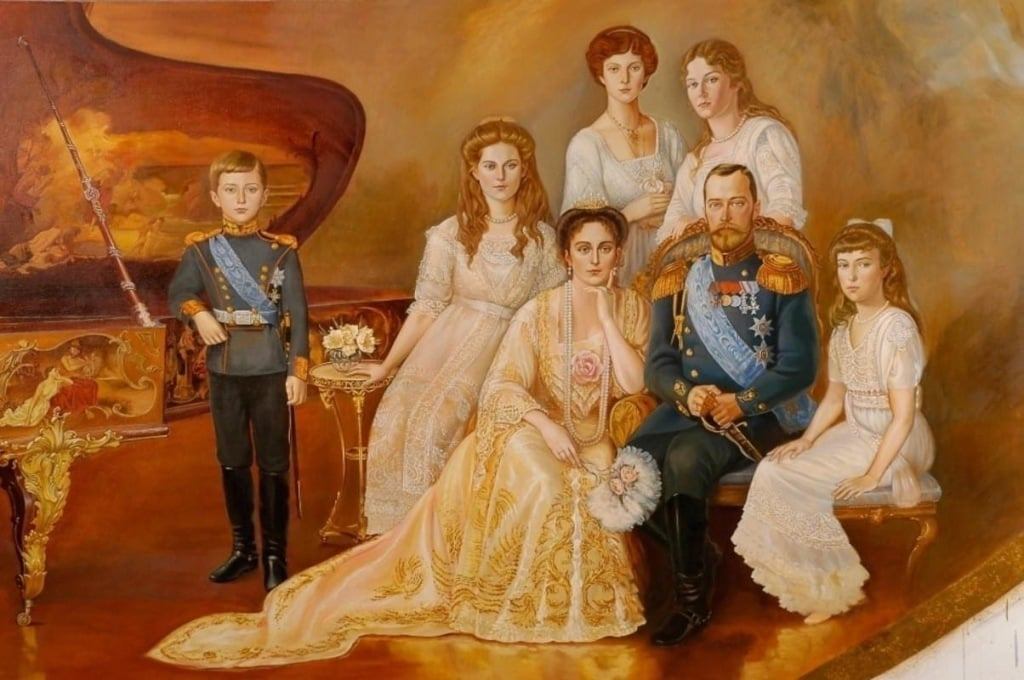
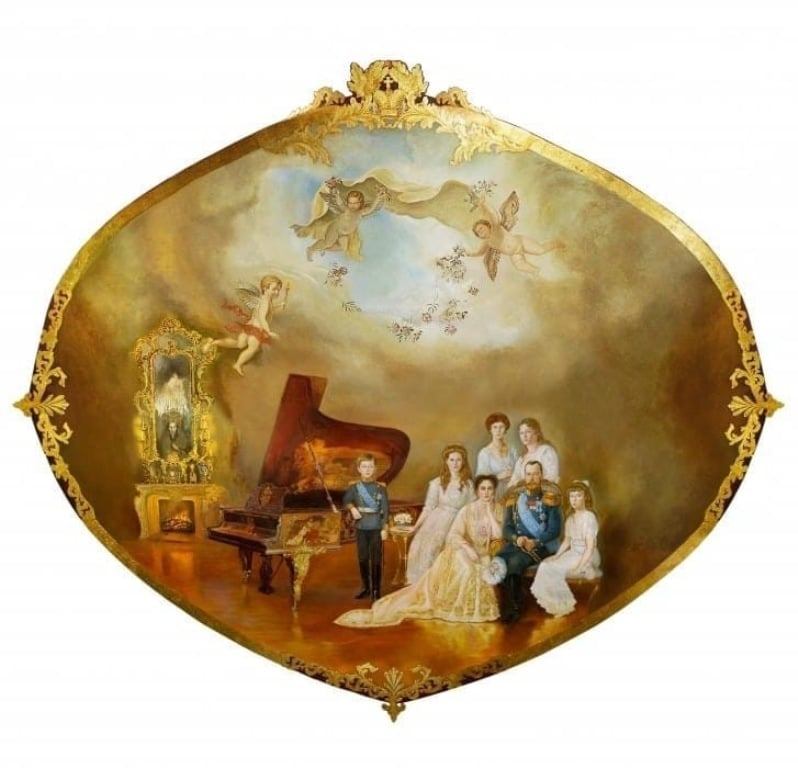
Lipgart also took on more unusual requests, including the menu for the Tsar’s coronation in 1896 and then painting 100 figures on a piano, telling the story of Orpheus. The piano was a present from the Tsar to Empress Alexandra Feodorovna.

Between 1906-1929 he served as the Main Curator of the Hermitage Art Gallery. His role in the acquisition of the Madonna with a Flower by Leonardo da Vinci, which belonged to the Benois family, became a sensation in 1914.

In 1921 he was evicted from his house and his daughter was executed for harbouring a White Army officer.

© Paul Gilbert. 24 October 2021

***

COLOUR Hard cover edition of ‘Nicholas II. Portraits’ now available!

This image has an empty alt attribute; its file name is 519-1.jpg

CLICK ON THE LINK BELOW TO ORDER FROM AMAZON

*HARD COVER EDITION @ $50 USD

PAPERBACK EDITION @ $40 USD

BOOK DESCRIPTION

Large format 8-1/2″ x 11″ hard cover and paperback editions, with 178 pages + 200 Colour and black & white photographs

SECOND EDITION, FEATURING 185 FULL COLOUR PHOTOS!

I am pleased to announce the publication of my latest book Nicholas II. Portraits, in both hard cover and paperback editions. This is my first hard cover book and my first book featuring full colour photographs.

Originally published in 2019, with 140 pages with 175 black and white photos, this new expanded edition features more pages and more photographs: 180 pages + more than 200 photos, including 185 FULL COLOUR and 30 black & white!

Nicholas II. Portraits explores a century of portraits of Russia’s last emperor and tsar, through the eyes of pre-revolutionary and contemporary Russian, and foreign artists.

This unique title – the first book of its kind ever published on the subject – features an introduction, as well as a series of short articles, and richly illustrated, including many full-page, with detailed and informative captions.

The cover features a portrait of Tsesarevich and Grand Duke Nicholas Alexandrovich (1889), the future Emperor Nicholas II, by the artist Baron Ernst Friedrich von *Lipgart (1847-1932).

* Lipgart painted a whole gallery of portraits of Nicholas II, my book features 10 of them – all in COLOUR!

The Emperor is depicted in the uniform of the Prussian 8th Hussar Regiment, of which he was appointed an Honourary Chief in 1889, his cape is decorated with the Royal Prussian Order of the Black Eagle.

The painting hung from 1890 to 1995 in the former dining room of Neuhaus Castle, directly opposite the portrait of Elector Clemens August of Bavaria. The officers of the 8th Hussar Regiment established a club for their meetings here and in the adjacent premises. The Prussian regiment was stationed at Neuhaus and Paderborn castle from 1851 to 1919. Following the end of World War I, the regiment was disbanded.

From the Collection of the Museum of the House of Bavarian History in Regensburg, Bavaria.

The articles include: Serov’s Unfinished 1900 Portrait of Nicholas II; A Nun’s Gift to Russia’s New Tsar. The Fate of a Portrait; Galkin’s Ceremonial Portrait of Nicholas II Discovered; among others!

Famous portraits and their respective artists are all represented, including Serov, Repin, Lipgart, Tuxen, Bakmanson, Becker, Bogdanov-Belsky, Kustodiev, and many others.

The last section of the book is dedicated to the works of contemporary Russian artists, who have painted outstanding portraits of Nicholas II since the fall of the Soviet Union in 1991.

AVAILABLE EXCLUSIVELY FROM AMAZON WORLDWIDE!

© Paul Gilbert. 10 December 2021

Third volume of the ‘Crime of the Century. Investigation Materials’, published in Russia

Click HERE to read the third volume [in Russian only]

On 18th October, the third volume of the book Преступление века. Материалы следствия [Crime of the Century. Investigation Materials], about the investigation into the murder of Emperor Nicholas II and his family was published [in Russian] on the website of the Investigative Committee of the Russian Federation.

The first volume was published in September of this year, the second volume was published earlier this month.

The third and final volume of the three-volume edition is a complete collection of materials from the investigation and historical documents related to the death of Emperor Nicholas II, his family and their four faithful retainers.

The book is based on documentary evidence, photographs, diaries, memoirs, audio recordings and reliable archival sources, including new, previously unpublished documents. The second and third volumes are devoted to investigative work almost a century ago (1918-1924), the beginning of the 1990s, when this fact was re-examined, as well as investigation at the present stage.

The book is the joint work of investigators, forensic scientists, archivists, historians, representatives of civil society, among others. It is the most accurate and complete source of information that has been published to date, based on the ROC investigation, which began in the autumn of 2015.

This book will be of great help to all those interested in establishing the truth on what many people consider the “crime of the century” and one of the darkest pages in 20th century Russian history. As with the previous two volumes, copies of the third volume will be sent to various government agencies and representatives of the Russian Orthodox Church.

It is important to note, that it is the contents of the this three-volume edition, which the Bishops’ Council of the Russian Orthodox Church, will review when they meet in Moscow from 26th to 29th May 2022 [postponed from 15th to 18th November 2021], during which they will review the findings of the Investigative Commission and deliver their verdict on the authenticity of the Ekaterinburg Remains.

© Paul Gilbert. 18 October 2021

ROC postpones Bishops Council to May 2022

PHOTO: Meeting of Bishops’ Council of the Russian Orthodox Church in 2017

The Holy Synod of the Russian Orthodox Church (ROC) have announced that the Bishops’ Council, which was scheduled to meet in Moscow next month, has been postponed until the Spring of 2022.

According to the Press Service of the Patriarch of Moscow and All Russia, the Bishops; Council will now meet 26th to 29th May, “due to the difficult COVID-19 situation.” The Bishops’ Council was scheduled to meet in Moscow 15th to 18th November.

The Press Service further added, that “the festive events on the occasion of the 75th anniversary of the birth of Patriarch Kirill of Moscow and All Russia will also be postponed”.

In September, the chairman of the Moscow Patriarchate’s Department for External Church Relations (DECR), Metropolitan Hilarion of Volokolamsk, announced that when the Bishops’ Council meet, they will review the findings of the Investigative Commission and deliver their verdict on the authenticity of the Ekaterinburg Remains.

The Bishops’ Council is the supreme governing body of the ROC. Only bishops can take part in it. According to the charter of the Russian Orthodox Church, the council is convened at least once every four years, as well as in “exceptional cases.” The previous Council of Bishops took place on 29th November – 2nd December 2017.

Holy Royal Martyrs, pray to God for us!
Святы Царственные мученики, молите Бога о нас!

© Paul Gilbert. 15 October 2021

Prince Michael of Kent visits the Alexander Palace

PHOTO: Prince Michael of Kent and Olga Taratynova in the Mauve Boudoir
© Tsarskoye Selo State Museum-Reserve

On 14th October, His Royal Highness Prince Michael of Kent, together with a delegation from Great Britain, visited Tsarskoye Selo, where they toured the interiors of the Alexander Palace.

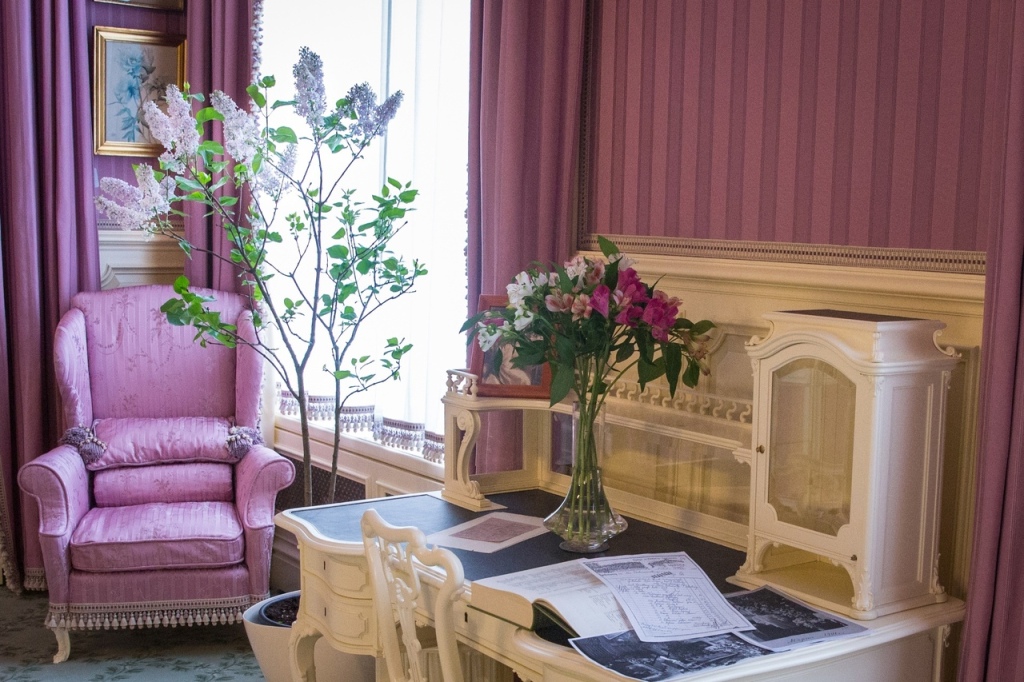
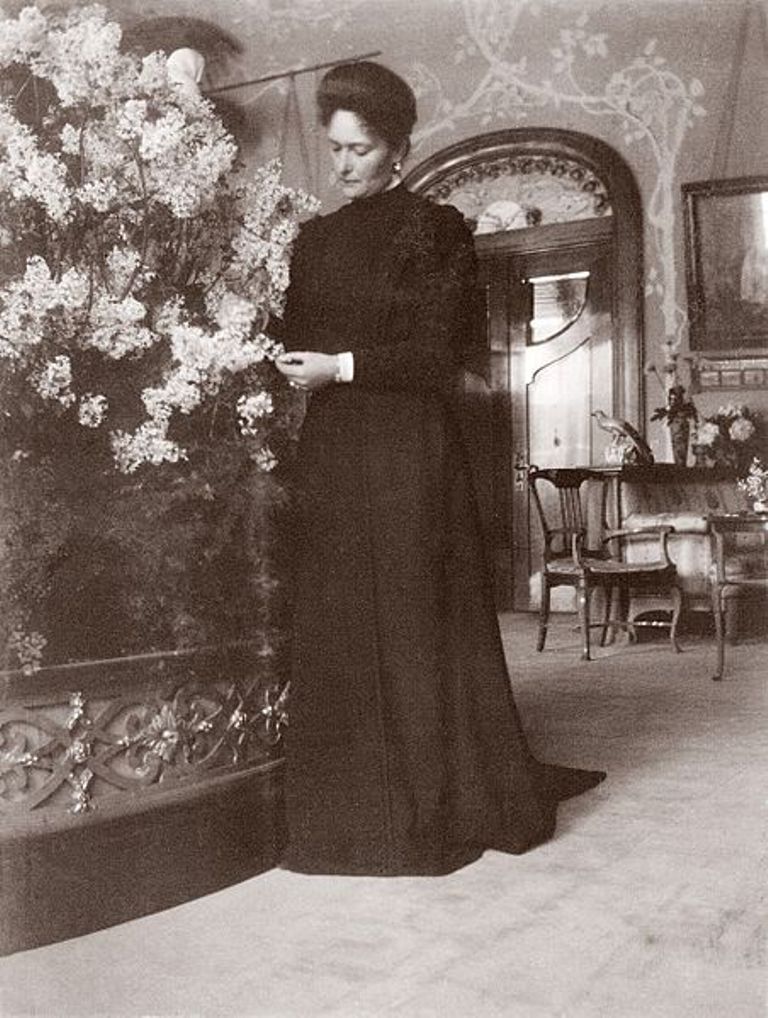
The director of the museum Olga Taratynova guided the delegation through the personal apartments of Emperor Nicholas II and his wife Alexandra Feodorovna, situated in the eastern wing of the palace, which included: the New Study of Nicholas II, Moorish Bathroom of Nicholas II, Working Study of Nicholas II, Reception Room of Nicholas II, the Valet’s Room, plus the Maple Drawing Room, Pallisander (Rosewood) Living Room, Mauve (Lilac) Boudoir, Alexandra’s Corner Reception Room, the Imperial Bedroom, the Small and Large Libraries.

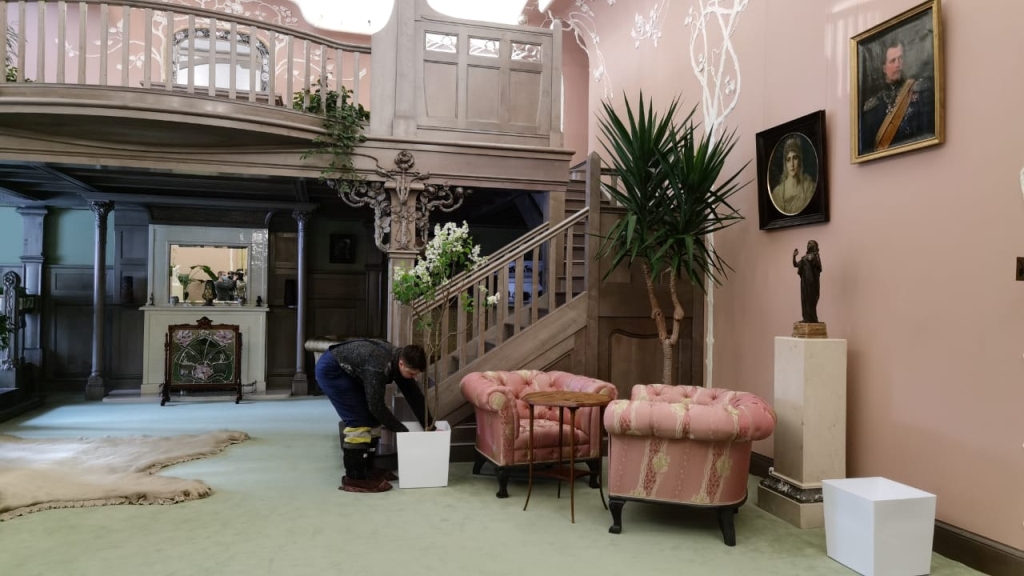
In addition, the delegation visited the Marble/Mountain Hall with a slide, where the craftsmen are currently working. Prince Michael was greatly impressed by the results of the restoration and reconstruction work by Russian specialists.

PHOTO: Prince Michael of Kent and Olga Taratynova in the Maple Drawing Room
© Tsarskoye Selo State Museum-Reserve

Prince Michael of Kent is the son of Princess Marina, a daughter of Prince Nicholas of Greece and Denmark and Grand Duchess Elena Vladimirovna of Russia.

Tsar Nicholas II was a first cousin of three of his grandparents: King George V, Prince Nicholas of Greece and Denmark, and Grand Duchess Elena Vladimirovna of Russia.

Prince Michael speaks fluent Russian and has a strong interest in Russia, where he is a well-known figure.

When the bodies of the Tsar and some of his family were recovered in 1991, the remains were later identified by DNA using, among others, a sample from Prince Michael for recognition. He attended the 1998 burial of the Tsar and his family in St Petersburg.

He is an Honorary Member of the Romanov Family Association. He is also the second cousin of Princess Maria Vladimirovna. They share the same great-grandfather, Grand Duke Vladimir Alexandrovich.

© Paul Gilbert. 14 October 2021

Second volume of the ‘Crime of the Century. Investigation Materials’, published in Russia

Click HERE to read the second volume [in Russian only]

On 12th October, the second volume of the book Преступление века. Материалы следствия [Crime of the Century. Investigation Materials], about the investigation into the murder of Emperor Nicholas II and his family was published [in Russian] on the website of the Investigative Committee of the Russian Federation.

The second volume describes the various stages of the investigation into the murder of the Imperial Family, which is based on scientific facts, historical and archival documents, reflecting on modern research, including recreated 3D models of the Ipatiev House.

The book consists of three volumes and is based on photographs, diaries, memoirs, audio recordings and archival sources, including previously unpublished material.

The first volume was published in September this year. The book discusses the decision to liquidate Emperor Nicholas II and his family, as well as the preparation of the murder.

Thanks to the painstaking work carried out using modern technologies, the Investigative Committee added that results of the investigation leave no doubts about the version of the death and the identity of the Ekaterinburg Remains. “The results of the investigation of this crime are recognized at the international level,” a spokesperson added.

This publishing project is the result of a joint effort of investigators of the Investigative Committee of the Russian Federation, which includes scientists, researchers, and other experts. It remains the most complete and up-to-date study into the investigation of a century-old crime, which remains one of the darkest pages in the history of 20th century Russia.

This book will be of great help to all those interested in establishing the truth in this matter. Copies of the second volume will be sent to various government agencies and representatives of the Russian Orthodox Church.

It is important to note, that it is the contents of the this book, which the Bishops’ Council of the Russian Orthodox Church (ROC), will review when they meet in Moscow from 15th to 18th November 2021, during which they will review the findings of the Investigative Commission and deliver their verdict on the authenticity of the Ekaterinburg Remains.

© Paul Gilbert. 13 October 2021

Russia’s Honour Guard ‘Punished’ for Servicing Romanov Wedding

PHOTO: Prince George Mikhailovich Romanov-Hohenzollern and his Italian fiancée Rebecca Virginia Bettarini were greeted on the steps of St. Isaac’s Cathedral in St. Petersburg, by a Russian military honour guard in full dress and sabres drawn

On 6th October, Russian Defence Minister Sergei Shoigu took disciplinary action against his subordinates in St. Petersburg for sending an honour guard to what was falsely reported as the country’s “first Romanov wedding in over a century”.

On 1st October, Prince George Mikhailovich Romanov-Hohenzollern and his Italian fiancée Rebecca Virginia Bettarini were greeted on the steps of St. Isaac’s Cathedral in St. Petersburg, by a Russian military honour guard in full dress and sabres drawn. Upon leaving the cathedral, the honour guard formed a sabre arch for the newly married couple.

Following the media publication of the wedding, journalists and social media users began to ask why military personnel were present at a private event.

According to the press service of the Western Military District, a separate rifle company “provides the guard of honour for important events, such as the greeting and departure ceremonies of official state, government and military delegations, garrison and other events with the participation of troops in St. Petersburg and the North-West region of the country.”

Other events, which the Guard of Honour are used: laying wreaths at the graves of soldiers who died in battle; rituals for paying military honours at the opening of monuments, memorials and funerals, and also participates in the military-patriotic education of young people and other socially significant events.

Citing unnamed Defence Ministry sources, the state-run TASS and RIA Novosti news agencies reported that the ministry’s Western Military District had violated regulations by sending honour guard personnel to the Romanov’s wedding.

“An official investigation established violations of governing documents by individual officials,” one of the sources was quoted as saying.

PHOTO: Russian Defence Minister Sergei Shoigu

The reports did not indicate what type of disciplinary action was brought against the Western Military District or who exactly was targeted. The district itself did not comment on the reprimand.

The so-called “Russian Imperial House” wasted little time in damage control, stressing that the honour guard’s participation was legally sanctioned.

“The wedding organizers agreed with every authority — state, church, military — in accordance with the procedure established by law,” said Maria Vladimirovna’s senior mouthpiece Alexander Zakatov, who serves as director of Maria’s “chancellery” in Moscow. This, however, is not true:

“On behalf of the Russian Defence Minister, disciplinary action has been taken against responsible persons, for violation of regulations and statutory documents governing the appointment of the guard of honour,” another source added.

“I have no doubt that those responsible will be held accountable. The commandant subdivision of the Russian Armed Forces is not a firm or a company catering to wedding banquets or other functions for individuals.

“Thank God that Russia’s Minister of Defence, Hero of Russia Sergei Shoigu is a man of honour and duty, one who teaches his subordinates to protect the honour of a serviceman and the honour of his uniform, and not to participate in a funny show of these impostors!”

PHOTO: Lyudmila Narusova (left), chatting on her mobile in St. Isaac’s Cathedral

The Kremlin played down the significance of the Romanov wedding. No Russian government officials were reported among the 1,500 guests at the St. Isaac’s Cathedral ceremony, with the exception of Foreign Ministry spokeswoman Maria Zakharova and senator Lyudmila Narusova, the widow of St. Petersburg’s ex-Mayor Anatoly Sobchak – who was photographed showing the utmost disrespect by talking on her mobile during the wedding ceremony in St. Isaac’s Cathedral.

11 October 2021