1896 Coronation uniform of Emperor Nicholas II


PHOTO: The 1896 Coronation uniform of Emperor Nicholas II 

During his coronation, which took place on 27th May (O.S. 14th) May, 1896, the last Russian emperor Nicholas II appeared before his subjects in the uniform of a colonel of the Preobrazhensky Life Guards Regiment – the first of the two oldest regiments of the Russian Imperial Guard, founded by Tsar Peter I in 1691.

Like his grandfather Alexander II (1818-1881) and great-grandfather Nicholas I (1796-1855), Nicholas II preferred the uniform of this regiment – in which he served in military service – to all others.

By the time of his accession to the throne, he served in the rank of colonel of the Preobrazhensky Regiment, and when he became emperor, he felt a special sense of pride from the fact that “he remained a simple colonel”.

His coronation uniform was made of dark green cashmere; with silk trimming, red collar with white piping and cuffs; embroidered with gilded threads with a pattern that is complex in composition and virtuoso in technique of execution, distinguishing the shape of the Preobrazhensky Regiment. The uniform is adorned with epaulettes bearing the monogram of his father Emperor Alexander III (1845-1894) and gilded aiguillettes, a flap on the chest, which the emperor himself unfastened during the coronation ceremony to perform the sacrament of Chrismation. Nordenstrem ordered the buttons for the uniform from a well-known supplier in the capital.
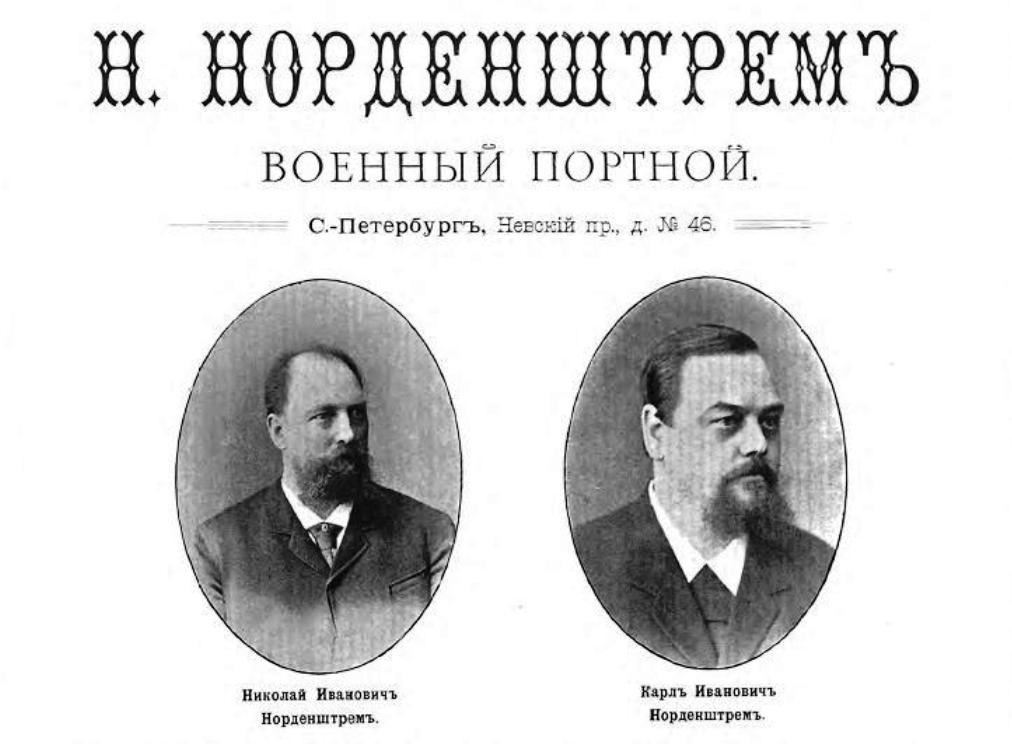
PHOTO: brothers Nikolai and Karl Nordenshtrem

It is known that the entire uniform for Nicholas II’s coronation was ordered from the workshop of N.I. Nordenstrem – the famous “king of Russian military tailors,” who specialized in military dress. Nikolai Ivanovich Nordenshtrem (1838-1903) was “a true artist in his field,” and the uniforms cut by him “bore the imprint of strict grace and good taste.” Nordenstrem was appointed Supplier to the Imperial Court, and for eighty years, he served four Russian emperors – Nicholas I, Alexander II, Alexander III and Nicholas II.

Nicholas II placed orders for all his military uniforms from Nordenstrem, whose shop was located at 46 Nevsky Prospect in St. Petersburg. The famous atelier also received orders from Their Imperial Highnesses the Grand Dukes Alexei, Sergei and Pavel Alexandrovich; Konstantin and Dmitry Konstavtinovich; Nikolai and Peter Nikolaevich; George and Alexander Mikhailovich; Kirill, Boris and Andrey Vladimirovich; Alexander and Konstantin Petrovich Oldenburgsky; Prince Peter Alexandrovich of Oldenburg; Duke Eugene Maximilianovich Leuchtenberg; as well as many Russian and foreign dignitaries.

PHOTO: Coronation uniform of Emperor Nicholas II and Coronation dress of Empress Alexandra, on display in the Armoury Chamber of the Moscow Kremlin

The Coronation regalia – the textiles, religious vestments and court livery – were preserved in the Moscow Armoury, they survived the upheaval of the Bolshevik Revolution in 1917. The Coronation uniform of Emperor Nicholas II is on permanent display in the Armoury Chamber of the Moscow Kremlin – Hall 6, Showcase 45.

FURTHER READING:
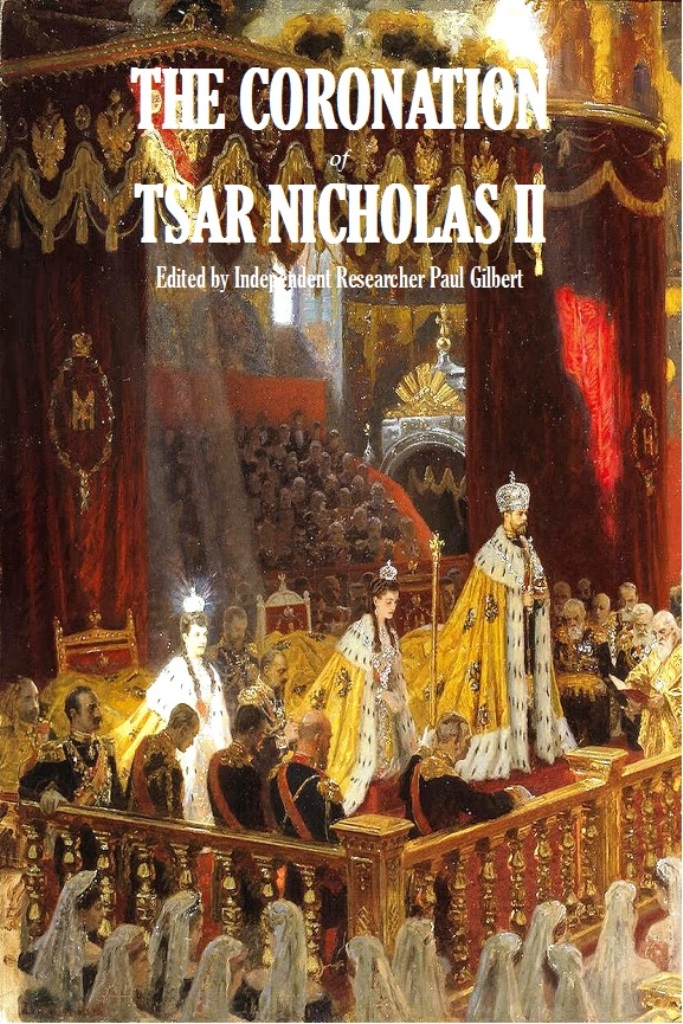
 

THE CORONATION OF TSAR NICHOLAS II
Compiled and Edited by Paul Gilbert

CLICK ON THE LINK BELOW TO ORDER FROM AMAZON

HARD COVER EDITION – PRICE $29.99

PAPERBACK EDITION – PRICE $18.99

BOOK DESCRIPTION

Six eyewitness accounts of the crowning of Russia’s last tsar with more than 200 rare vintage photographs & illustrations

The pomp and pageantry surrounding the Coronation of Nicholas II is told through the eye-witness accounts of six people who attended this historic event at Moscow, held over a three week period from 6th (O.S.) to 26th (O.S.) May 1896.

Hard cover and paperback editions, with 456 pages + more than 200 black & white photographs

© Paul Gilbert. 8 February 2021
On this day in 1919: Nikolai Sokolov launched his investigation into the deaths of the Imperial Family

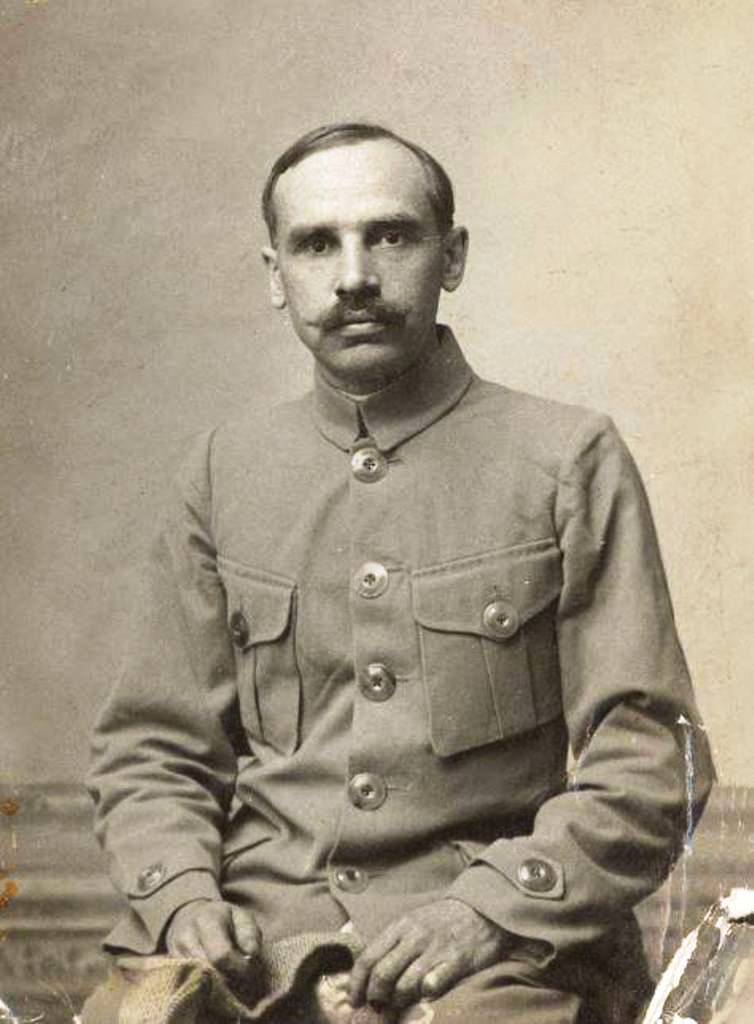
PHOTO: Nikolai Alekseevich Sokolov (1882-1924)

On this day – 7th February 1919 – Nikolai Alekseevich Sokolov (1882-1924) launched his investigation into the deaths of Emperor Nicholas II and his family in Ekaterinburg.

Sokolov was a lawyer, and investigator for important cases of the Omsk District Court. It was the Supreme Ruler Admiral Alexander Kolchak (1874-1920), who appointed Sokolov with the task of investigating the murder of members of the Russian Imperial Family in Ekaterinburg and Alapaevsk.

Sokolov loved Russia and would not accept the changes brought about by the Bolshevik Revolution in 1917. As a staunch Orthodox monarchist, he accepted his appointment with a deep sense of reverence and responsibility.

This image has an empty alt attribute; its file name is n.-a.-sokolov-and-gen.-m.-k.-dieterichs.-1919..jpg

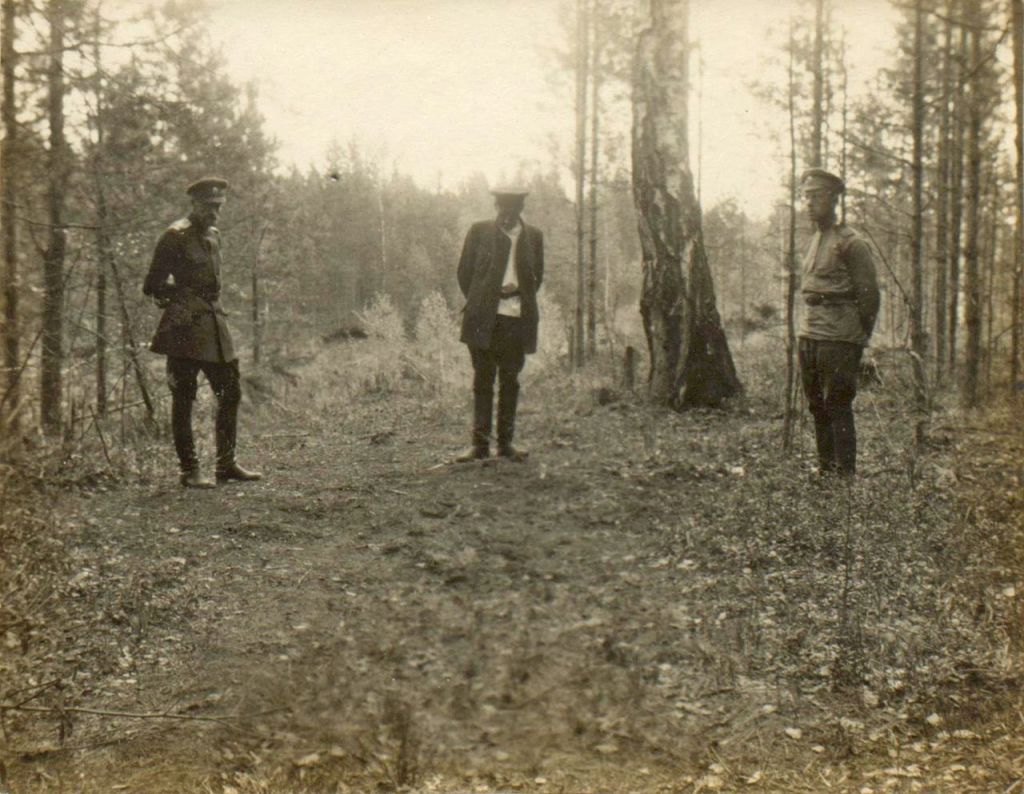
PHOTO: Nikolai Sokolov and General Mikhail Dieterichs searching for the remains of the Imperial Family near the Four Brothers Mine, near Ekaterinburg. 1919

Between May and July of 1919, working without rest from morning until late at night, Sokolov managed to collect a vast amount of material evidence, conducted dozens of examinations and interviewed hundreds of witnesses, including several members of the Romanov entourage in February 1919, notably the Swiss tutor, Pierre Gilliard (1879-1962), his wife and nanny to Grand Duchess Anastasia, Alexandra Tegleva (1884-1955) and the English tutor to the Tsesarevich Alexei, Charles Sydney Gibbes (1876-1963).

Sokolov discovered a large number of the Imperial Family’s’ belongings and valuables that were overlooked by the chief executioner of the Imperial Family Yakov Yurovsky (1878-1938) and his men in and around the mineshaft where the bodies were initially disposed of in the Four Brothers Mine, at what is today known as Ganina Yama.

The impending return of Bolshevik forces on 15th July 1919, forced Sokolov to abandon his investigation, thus failing to find the concealed second burial site on the Koptyaki Road. He evacuated Ekaterinburg, bringing with him the box containing the relics he recovered. Today, the box is stored in the Russian Orthodox Church of Saint Job in Uccle, Brussels.

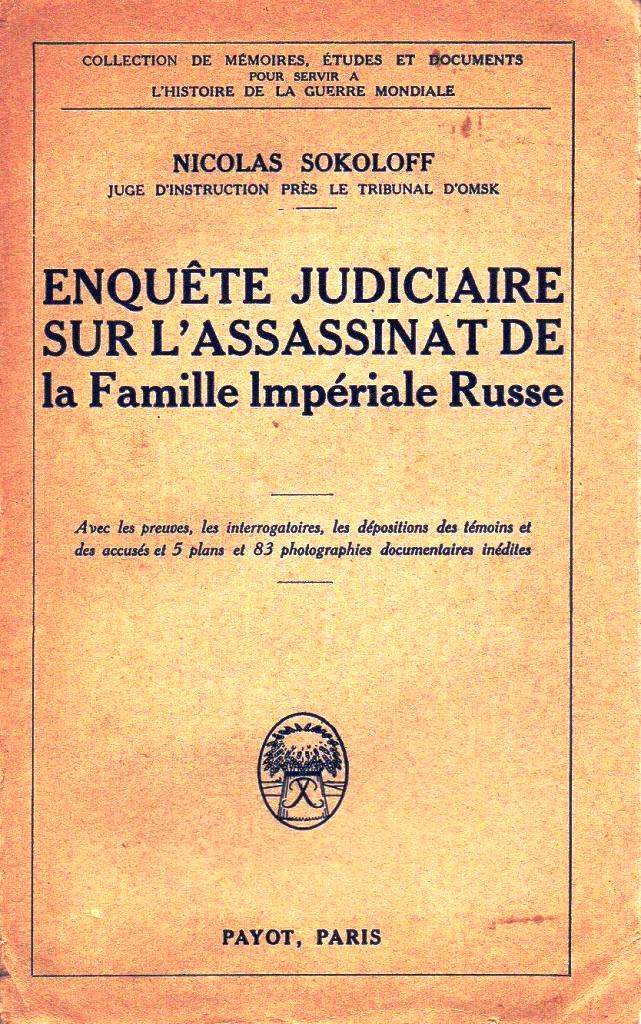
PHOTO: French edition of Sokolov’s investigation, published in 1924

Sokolov fled from Russia to Harbin, China, where in 1920, with the help of the head of the Commander of the Czechoslovak Legion, the French General Maurice Janin (1862-1946), Sokolov left Harbin for France, taking with him the material evidence and documents, which consisted of eight volumes of photographic and eyewitness accounts. Sokolov continued his work on interviewing witnesses and examining materials in exile, until his death.

The French edition of his investigation Enquête judiciaire sur l’assassinat de la famille impériale russe [Judicial investigation into the assassination of the Russian imperial family], was published by Payot (Paris) in 1924, and reissued in 1926 and 1929. It was published in Russian in 1998. No full English translation of Sokolov’s investigation has yet been published.

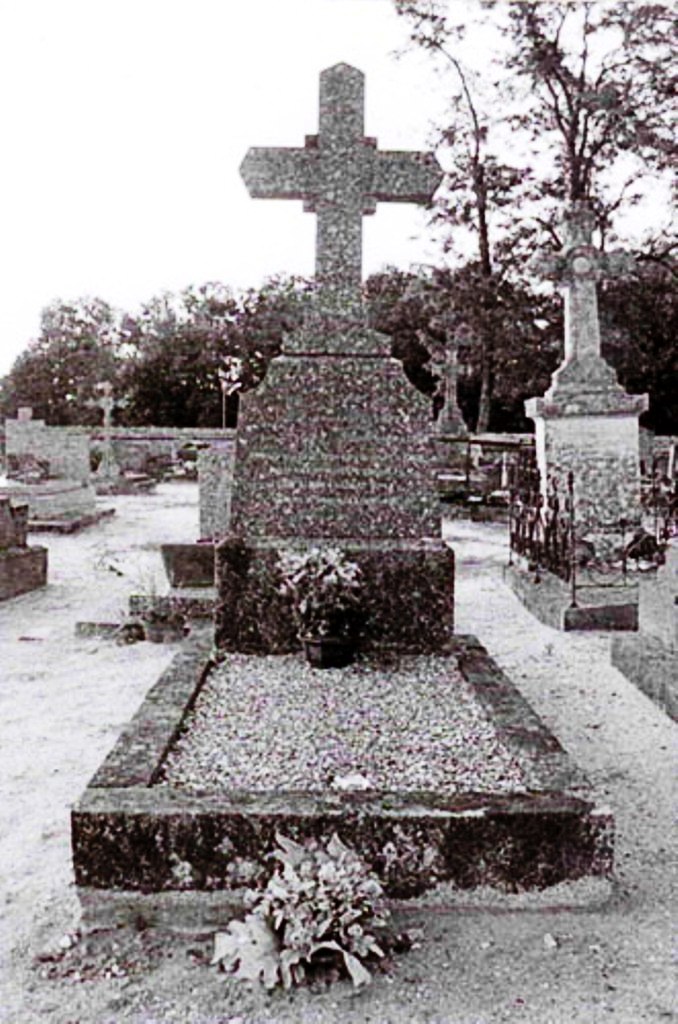
Sadly, Nikolai Sokolov did not live to bring his investigation to an end – he was found dead in the garden of his house on 23 November 1924, having suffered a heart attack at the age of 42. He died leaving a widow aged 23 and two young children, a daughter Nathalie (1920-2002) and a son Alexis (1923-1980). He is buried in the cemetery of Salbris, France.

PHOTO: Sokolov’s grave in the cemetery of Salbris, France

To this day, the Russian Orthodox Church still officially adheres to Sokolov’s theory that the bodies of the Imperial Family were completely destroyed at the Four Brothers Mine. A century later, we now know that this was not so.

Sokolov was a man who made an enormous contribution in gathering evidence about the last days of the Imperial Family in Ekaterinburg, and no one should belittle the significance of his works for history.

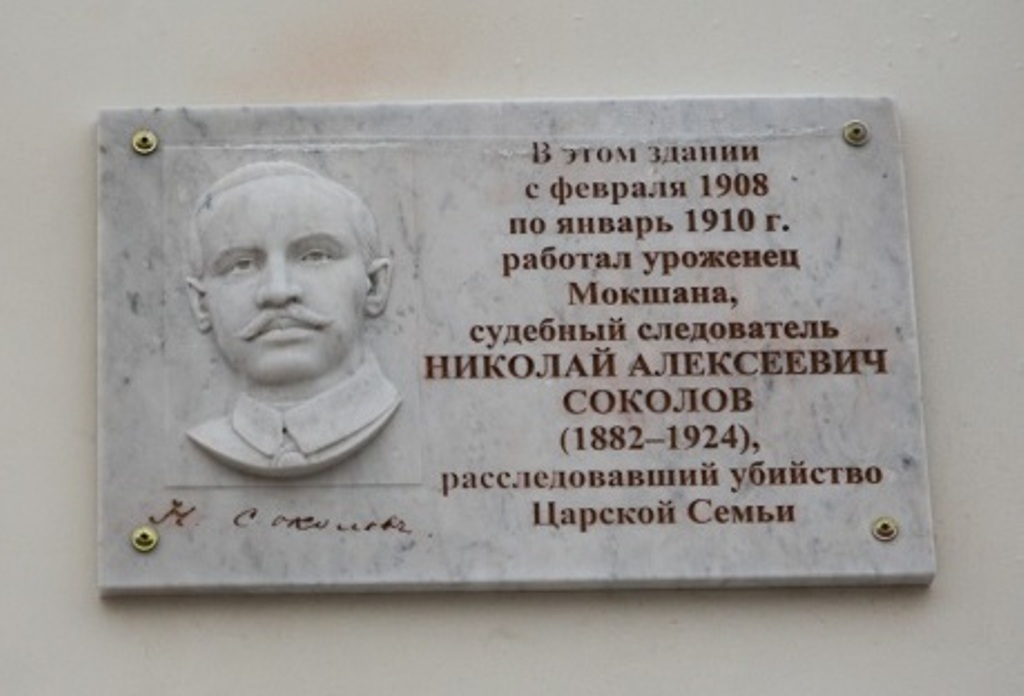
PHOTO: memorial plaque to Nikolai Sokolov in Mokshan, 2018

On 25th December 2018, a memorial plaque honouring Nikolai Sokolov was unveiled in Mokshan, the town where he was born on 21st May 1882.

The plaque was mounted on the wall of the Mokshan Administration Building. It was here – from 1908 to 1910 – that Sokolov worked as an investigator at the Mokshan District Court.

On 23rd November 2024. a bronze bust of Sokolov was consecrated at the Monastery of the Holy Royal Passion-Bearers at Ganina Yama. Click HERE to read my article ‘Nikolai Sokolov honoured at Ganina Yama‘ + PHOTOS and VIDEO.

© Paul Gilbert. 7 February 2021

Paul Gilbert cuts ties with Russian Imperial House

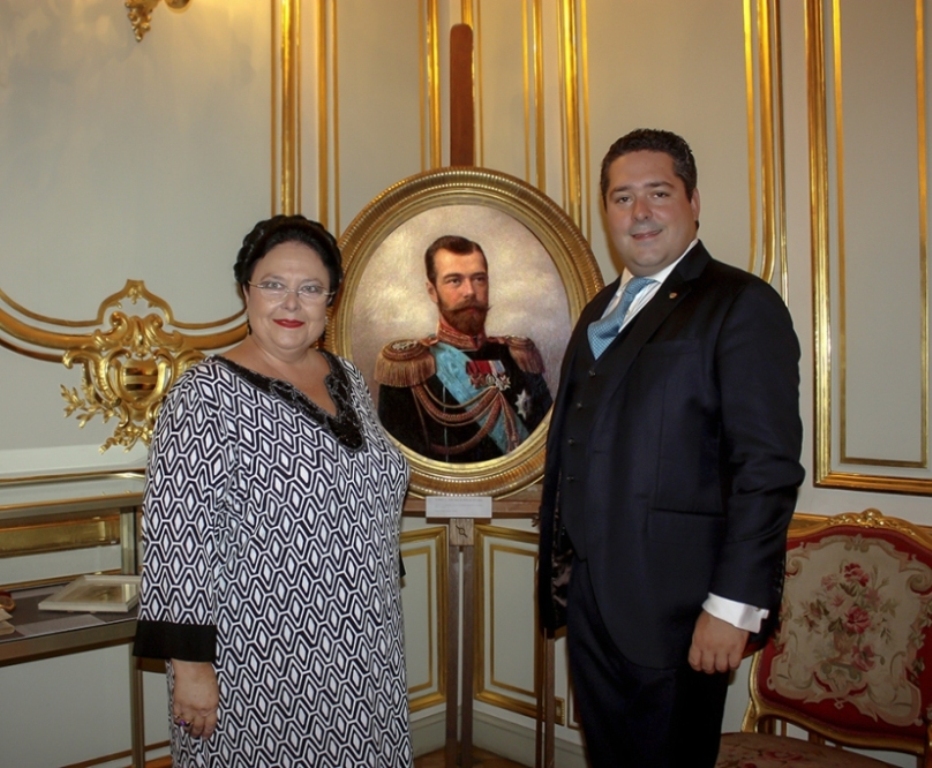
PHOTO: Maria Vladimirovna and her son George Mikhailovich

NOTE: this article was updated with additional information on 12th February 2021 – PG

For the record, I hereby announce that I am cutting all ties with the Russian Imperial House. I no longer support Maria Vladimirovna and her son George Mikhailovich. Further, I am severing all ties with the Russian Legitimists and their cause.

Today, I have returned by mail the Order of St. Stanislaus 3rd Class (2013), and the Order of St. Anna 3rd Class (2016), and also withdraw my oath of allegiance to Maria and her son, dated and signed 03/14/16.

During the February Revolution of 1917, Maria’s grandfather Grand Duke Kirill Vladimirovich (1876-1938), marched to the Tauride Palace in Petrograd at the head of the Naval Guards bearing a red armband and swore allegiance to the Russian Provisional Government. In 1926, Kirill proclaimed himself emperor-in-exile, but his claims were contested by a number of grand dukes, grand duchesses, princes and princesses of the Imperial Blood in exile, as well as monarchists in a division that continues to this day.

Many monarchists (including myself) and those faithful to the memory of Tsar-Martyr Nicholas II, believe that Kirill’s act of treason in 1917, should eliminate the Vladimir branch of the Russian Imperial Family from any further consideration.  

I no longer wish to involve myself in the dynastic squabbles which continue to this day between Legitimists and those monarchists who dispute Maria’s claim as Head of the Russian Imperial House.

While I am a devout monarchist, I do not recognize any person as the claimant to the now defunct throne of Russia. I believe that the Russian monarchy ceased to exist upon the abdication of the Sovereign Emperor Nicholas II on 15th (O.S. 2nd) March 1917 and the murder of both the Tsar and his family on 17th July 1918. If the monarchy is ever to be restored in 21st century Russia, it is up to the citizens of Russia to make that decision, no one else.

I will continue to devote my time to researching and writing about the life and reign of Nicholas II, and committing myself to clearing his much slandered name.

© Paul Gilbert. 5 February 2021

Paul Gilbert’s Royal Library for Sale

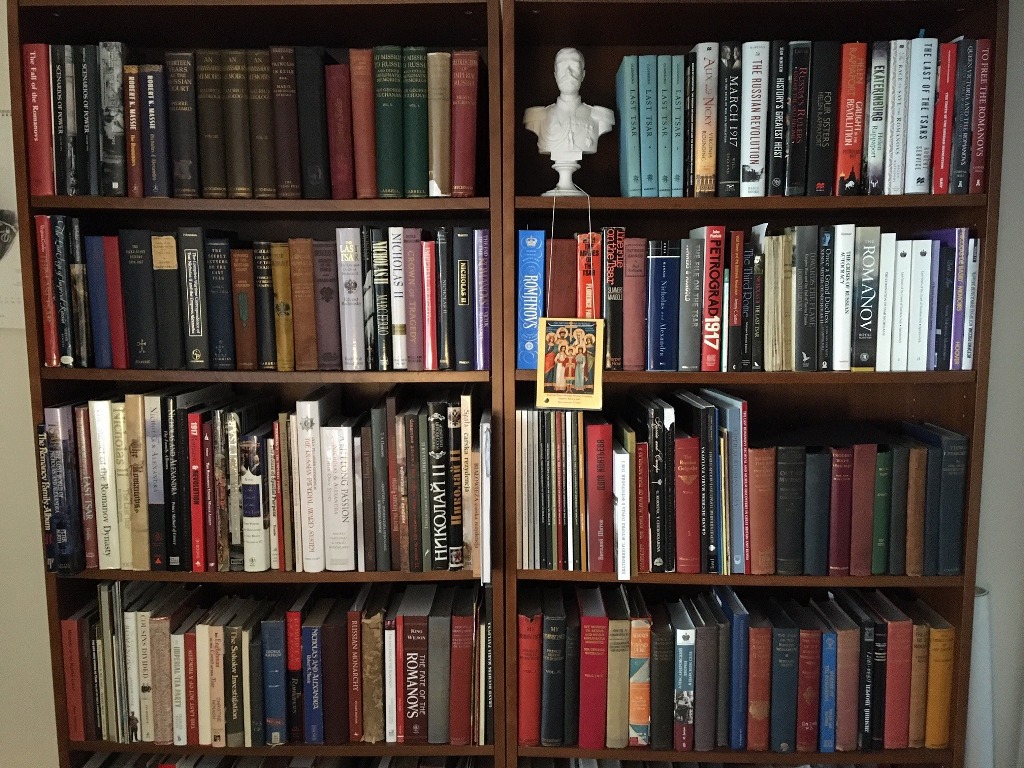
PHOTO: a partial view of my collection of books on the life, reign and era of Nicholas II

Four years ago, I decided that I would move back to England to take up permanent residence. Having been born in England, and lived and worked in London in the 1980s, my love for my homeland has never waned. I continue to go back “home” each year to explore new regions of this beautiful country. I recently received my new British passport, so that is one more item checked off my list of things to do before I retire in the UK..

Many of you have asked “when” I will be moving back to England, and “where” I will live once I get there. I just want to clarify that my move is still 3-4 years away, as I still have much that needs to be attended to here in Canada. I can, however, safely say that my move back home to England will be before the next US presidential election!

I will be making my new home in Northumberland, England’s most northern and least populated county, which lies on the Scottish border. This way, I have the best of two beautiful countries at my doorstep!

In preparation for my move, I am forced to sell the bulk of my personal library, which consists of more than 2,000 new, rare and second-hand titles on the royal houses of Britain, Europe and Russia, among other topics: history, art, biographies, travel, photography, etc.

The ONLY books that I will be taking with me to England, are my collection of titles on the life, reign and era of Nicholas II.

I have created a separate online bookshop for the sale of my collection. The titles listed are all one-of-a-kind, there are no duplicates! Books will be sold on a first come, first serve basis. The condition of each book varies and is noted with each listing. Titles are available in a variety of languages: English, French, German and Russian. Please check individual listings before ordering.

In addition, I will be selling off the remaining stock from my other online shop, which opened for business in 1994. These include books and back issues of Royal Russia and Sovereign, published by the publishing division of Royal Russia, published between 1994 to 2020. 

Please NOTE, that ALL prices are in US dollars! Payment can be made securely online with a credit card or PayPal. I will also accept payment by personal check or money order in USD. Shipping rates are for Canada and United States order ONLY. Please contact me by email – royalrussia@yahoo.com – for details about bulk shipping and ALL overseas orders. ALL sales are FINAL.

I have already begun listing the titles for sale, which include beautiful pictorials, biographies, historical studies, guidebooks, and much more. My collection is so vast that it is going to take me a couple of years to select, scan and list all of them.

New books will be added every week, so please bookmark or check back for new listings. If you have any questions or concerns, please do not hesitate to contact me by email – royalrussia@yahoo.com

© Paul Gilbert. 3 February 2021

The fate of Nicholas II’s favourite motorcar

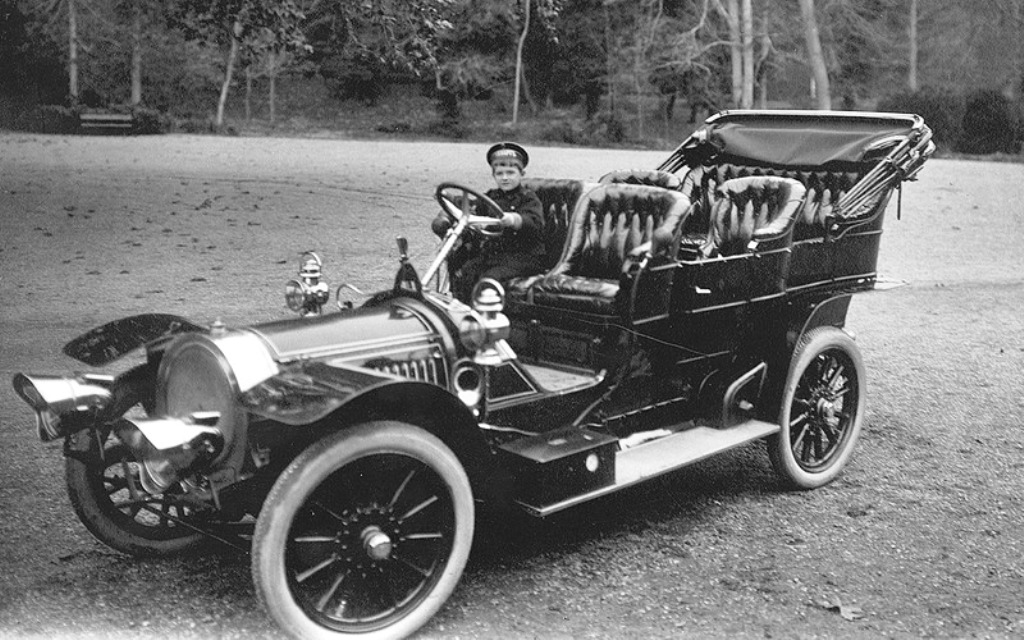
PHOTO: Tsesarevich Alexei Nikolaevich posing at the wheel of the Delaunay Belleville 40CV

Russia’s last emperor and tsar Nicholas II was the first (and, alas, the last) Russian monarch to have appreciated and enjoyed the use of the motorcar. The first motorcar in the Imperial Family, however, belonged to his mother – Empress Maria Feodorovna (1847-1928) – a phaeton with an electric motor of the American company Columbia – a gift from her sister – Queen Alexandra of Great Britain.

Thanks to his aide-de-camp, Prince Vladimir Nikolayevich Orlov (1868-1927), it was he who introduced the Emperor to this new mode of transport which was sweeping across Britain and Europe. An avid motorist himself, Orlov often drove the Tsar in his personal Delaunay Belleville. Nicholas II, impressed by the capabilities of this new technology, decided to exchange the horse and carriage for a motorcar.

In the fall of 1905, he ordered Orlov to buy him “two or three cars,” leaving the choice of models to the discretion of his trusted aide-de-camp. Orlov, without hesitation, ordered the Tsar a Delaunay Belleville:  a 40CV, six-seater phaeton with a convertible top was purchased for 13,416 rubles (about 20 million rubles in today’s money).

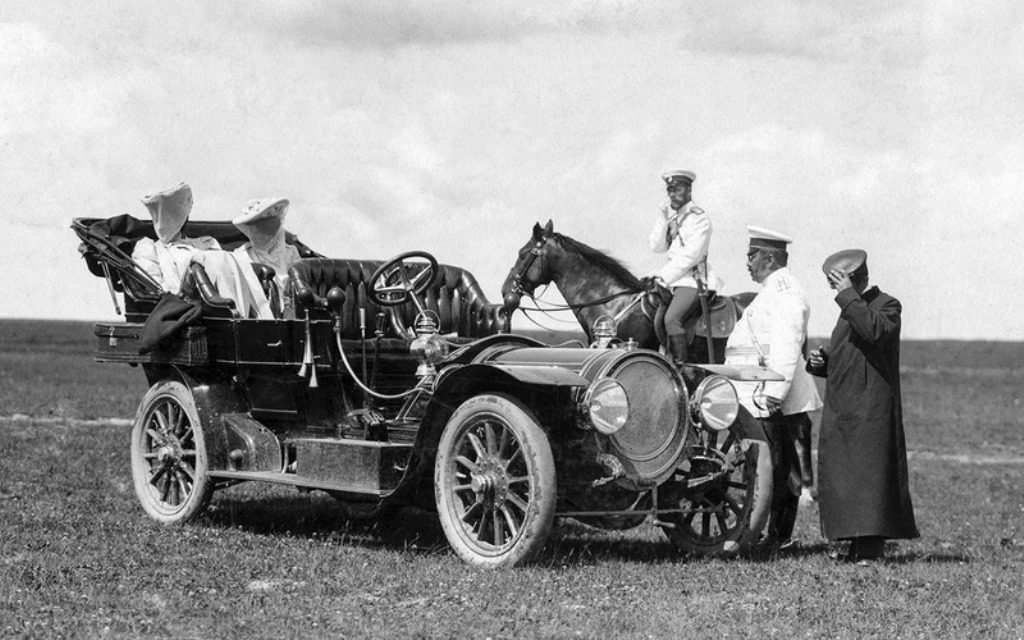
PHOTO: Emperor Nicholas II seated on horseback at at the side of his first “motor” – the Delaunay Belleville 40CV triple phaeton. In the back seat are the Montenegrin princesses Milica and Stana, in front of the car is Prince V.N. Orlov (in white) and chauffeur Adolphe Kégresse. Krasnoe Selo, Summer 1908

Today the name Delaunay Belleville is known only to auto enthusiasts. But at the beginning of the 20th century, it was a well-known name among those who could afford luxury. Initially, the French company produced ship steam boilers. Having become rich on orders from the British Admiralty, the owner of the company, Louis Belleville, decided to try his hand in the automotive business.

In 1903, he enlisted the services of the designer Maurice Barbara. He was only 28 years old, and already had experience in the Benz & Cie and Lorraine-Dietrich automobile companies. Maurice’s talent and diligence, coupled with solid start-up capital, quickly paid off.

The Delaunay Belleville debuted at the Paris Motor Show in December 1904 and became an instant sensation. Solid, well-built motorcars featured with a number of new innovations – for example, lubrication of camshafts under pressure and liquid-cooling brakes!

Almost instantly the steam boiler manufactory acquired a solid clientele, with Prince Orlov among the first buyers.

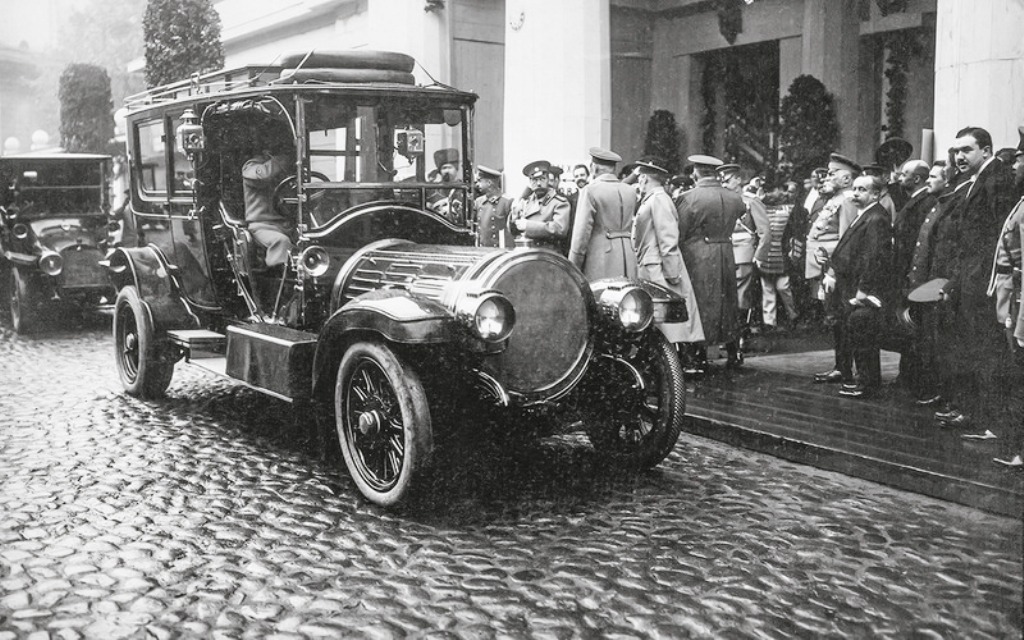
PHOTO: the arrival of Emperor Nicholas II in his Delaunay Belleville 70CV, at the Fourth
International Automobile Exhibition, held at the Mikhailovsky Manege. St. Petersburg, 1913

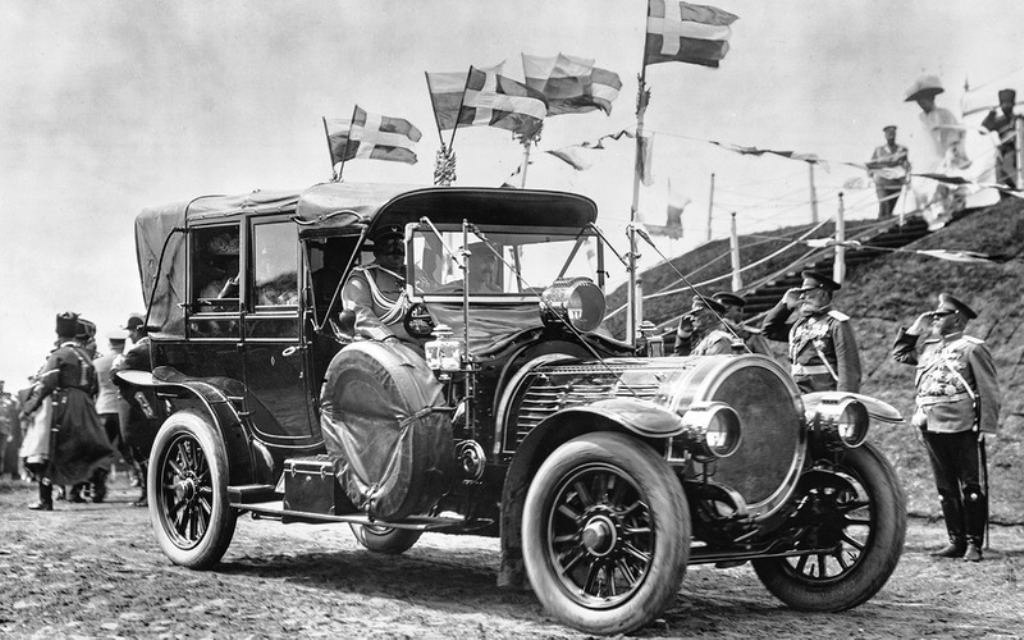
After the four-cylinder 40CV, Orlov ordered the more powerful six-cylinder Delaunay Belleville-70CV for His Imperial Majesty’s Own Garage. This motorcar, which is often called the SMT – Sa Majeste le Tsar, meaning “His Majesty the Tsar”, was ordered in 1909.

The Delaunay Belleville-70CV was one of the most sophisticated motorcars of its time. The level of its equipment was impressive. For example, the optional system for starting the engine was from the driver’s seat – without the driver having to make use of the handle of the curve starter. For this, an electric starter was not used, but a cunning pneumatic system. Starting off did not require ignition – the pistons and, accordingly, the crankshaft rotated under the action of compressed air, which was supplied directly to the engine. Once the motorcar had picked up speed, it was necessary to turn off the pneumatics, and activate the ignition and fuel supply. The Delaunay was now running on gasoline like that of a traditional internal combustion engine.

The pneumatic device – a clear reference to the steam past of the company – also provided remote pumping of the wheels, the operation of the pneumatic jack, as well as the engine braking function when decelerating. A miracle of technology!

The interior decoration of the Delaunay Belleville-70CV was a merit of Cologner & Sons. The French body shop craftsmen decorated the salon with rosewood, provided a locker for a travel kit, installed a glass roof and a double floor that completely eliminated vibrations from the exhaust system. The roof was so high that Nicholas II could stand inside at full height. Fortunately, he was not tall – according to various sources, he stood 170 cm (5′ 6″) to 174 cm (5′ 7″) in height.

While the Emperor’s first Delaunay Belleville 40CV cost a relatively modest 13.5 thousand rubles, the  Delaunay Belleville 70CV cost over 20 thousand rubles(more than 30 million rubles today). And this is not counting the modifications which were made during operation: dual tires were installed on the rear wheels, acetylene headlights were replaced with brighter electric ones from Bosch-Licht.


PHOTO: In addition to his Delaunay Belleville 40CV, the Emperor also had a Delaunay Belleville 70CV (SMT) with a Landaulet body. This photo was taken in Krasnoe Selo in 1909. Driving is Prince V.N. Orlov, next to him – Adolphe Kégresse (1879-1943).

The Tsar was very pleased with his Delaunay Belleville. Although he never felt the urge to master the intricacies of driving – with nine pedals, the motorcar was too difficult to handle – therefore, Nicholas II preferred to ride as a passenger, always occuping the rear left seat.

According to some reports, the Delaunay Belleville 70CV (SMT), could accelerate to 120 km / h. In the event of an emergency, such as a threat to the Tsar’s life, the motorcar would thus prove to be an effective getaway car.

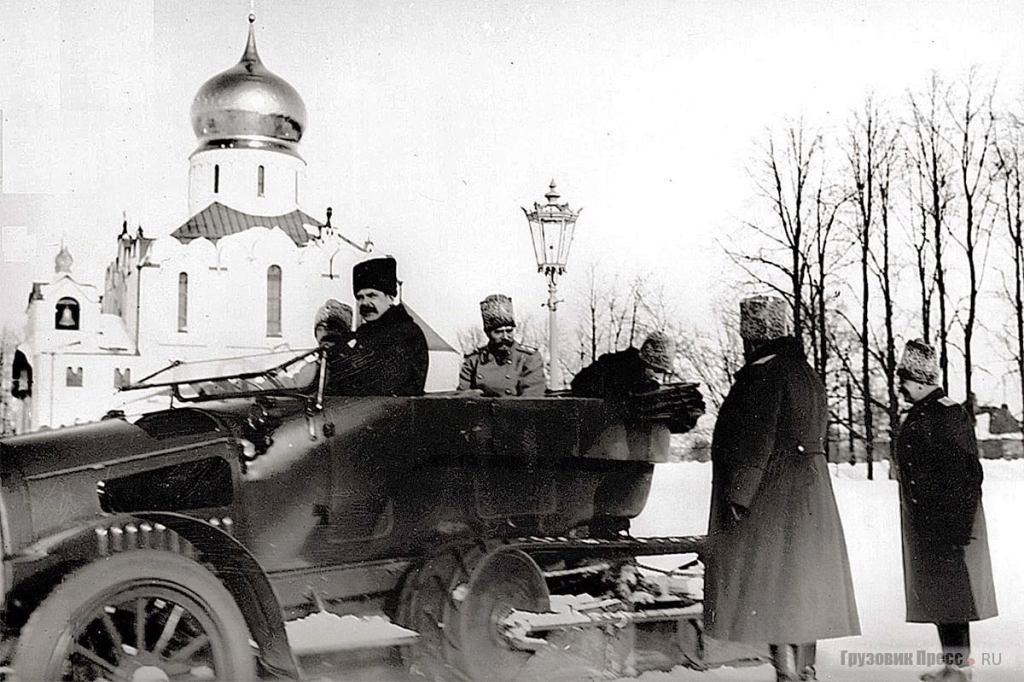
There were other motorcars in His Imperial Majesty’s Own Garage. Among the French models were German brands, such as the Mercedes-Simplex and the Daimler Motoren Gesellschaft. The garage also housed a Russo-Balt C 24/40 (seen below), a unique all-terrain vehicle, designed by Adolphe Kégresse, while working for Nicholas II between 1906 and 1916. He applied it to several cars in the imperial garage at Tsarskoye Selo, including Rolls-Royce cars and Packard trucks. 

PHOTO: Emperor Nicholas II (in the back seat), riding in a semi-tracked vehicle
Russo-Balt C 24/40. Adolphe Kégresse – the inventor, is the driver. 1915

After the February Revolution of 1917, the Tsar’s motorcars were seized, and transferred to the garage of the Provisional Government. After the tragic events of July 1918, and the murder of the Emperor and his family, Nicholas II’s motorcars ended up on the balance sheet of the “Automobile base of the workers ‘and peasants’ government.”

The structurally complex Delaunay Belleville’s required regular professional maintenance and high-quality spare parts, something which the Soviet government could ill afford at the time. In the early 1920s, the luxurious French motorcars which once transported the Tsar and his family around the Imperial capital sat idle, becoming a burden for the “government” garage. In 1928, the decision was made to scrap “His Majesty the Tsar SMT” favourite motorcar.

The fate of the Delaunay Belleville firm is also unfortunate. After a meteoric rise at the turn of the 20th century, the company faced an equally rapid decline after World War I. By the mid-1920s, only memories of Delaunay’s status as one of the most prestigious brands in the world remained. Based in Saint-Denis, France, the firm switched to the production of trucks and military equipment.

© Paul Gilbert. 3 February 2021