‘History Returned’ exhibition opens in Moscow
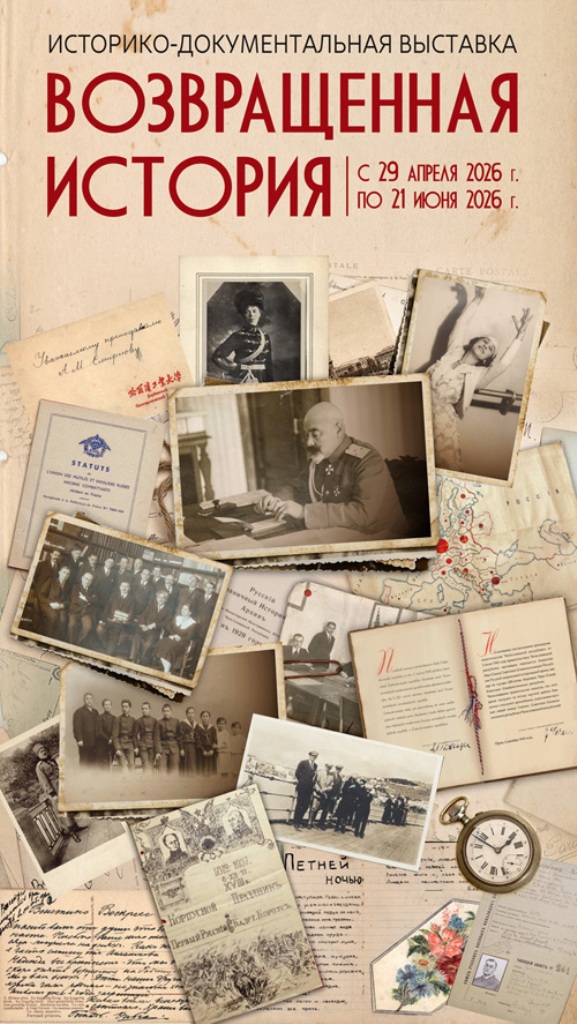
On 28th April 2026, a new exhibition History Returned opened in the Exhibition Hall of the State Archives of the Russian Federation (GARF) in Moscow. The exhibition is dedicated to the Russian diaspora during the aftermath of the Bolshevik Revolution and the Russian Civil War.
After the Great Patriotic War (1941-45), the Prague archive of the Russian Foreign Historical Archive (RZIA) was transferred to the Academy of Sciences of the USSR, and in 1946 it became part of the funds of the Central State Archive of the October Revolution, now the State Archive of the Russian Federation (GARF).
This is the largest of the archives of the Russian emigration in Europe of the interwar period, from 1923 to 1945. During the Nazi occupation of Bohemia and Moravia, employees of the RZIA, did not abandon their noble cause in those difficult years, by safeguarding the archives for the history of Russia.
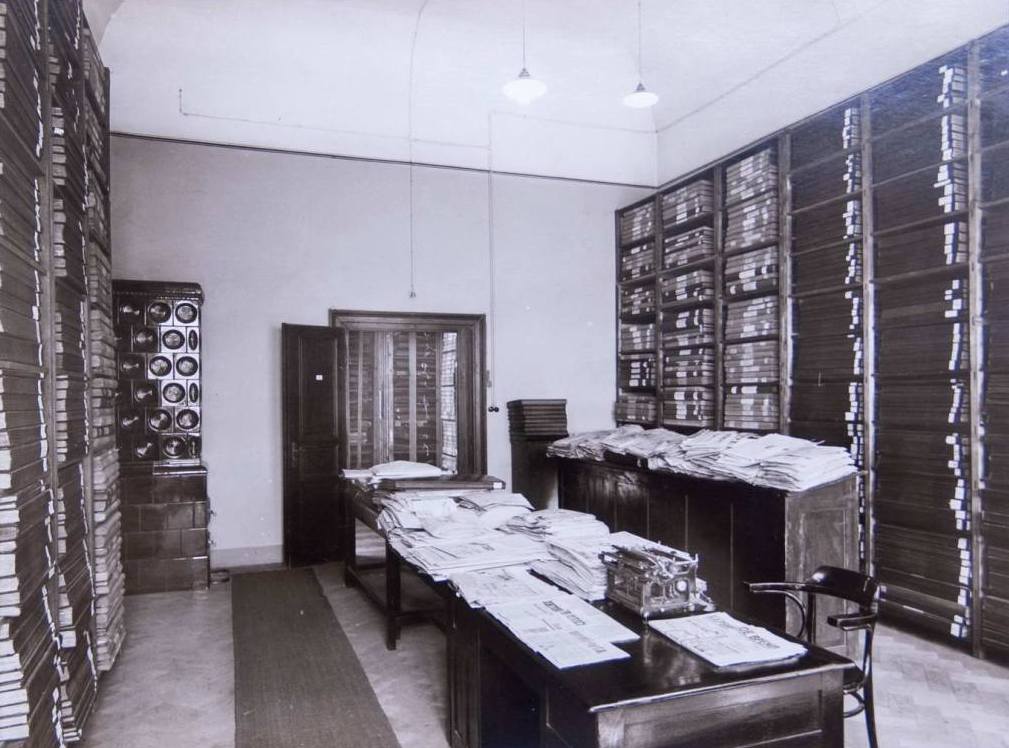
PHOTO: The premises of the Russian Foreign Historical Archives. Prague. 1924
The State Archive of the Russian Federation (GARF) stores a unique collection of documents on the Russian diaspora which followed the Bolshevik Revolution in October 1917 and Russian Civil War (1917-1922).
In addition are documents of political, public organizations and institutions of the Russian emigration, printed publications, drawings, photographs, leaflets, posters, maps, banknotes. The archive is further complemented by documents from the personal archives of prominent Russian state, political and military figures and well-known representatives of science and culture of the Russian emigration.
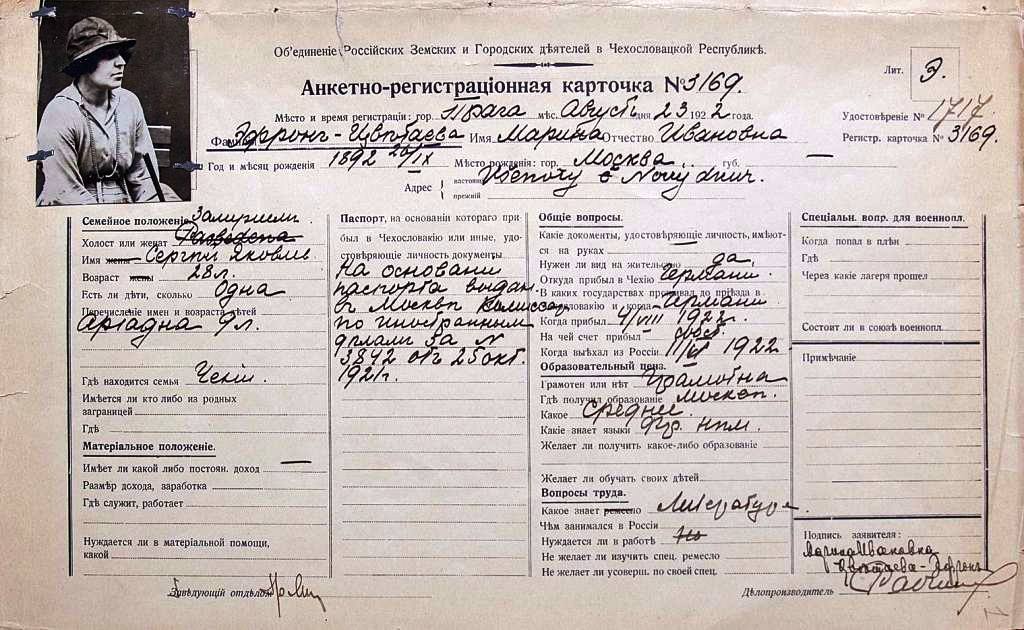
PHOTO: Registration form No. 3169 of Marina
Ivanovna Efron-Tsvetaeva, Prague, August 23, 1922
The first section of the exhibition displays documents that tell about the decades of work by the Prague Archive staff, who carried out “the collection, storage, systematization and scientific processing of materials on the history of Russia and its peoples.
Among the valuable exhibits: documents of the poetess Marina Tsvetaeva (1892-1941) and drawings of the artist Yuri Artsybushev (1877-1952), as well as documents of the First Russian Cadet Corps, the Union of Russian Military Invalide.
Of particular note are exhibits dedicated to the activities of the Russian Orthodox Church [today known as the Russian Orthodox Church Outside Russia (ROCOR), which united Russian emigrants in foreign lands. These document’s became part of the RZIA in 1934, and include the note-testament of Patriarch Tikhon of Moscow and All Russia (1865-1925) of 23rd November 1923, a medal and badges made in honour of the 950th anniversary of the baptism of Russia, which was celebrated by the Russian Orthodox diaspora in 1938, are presented. .
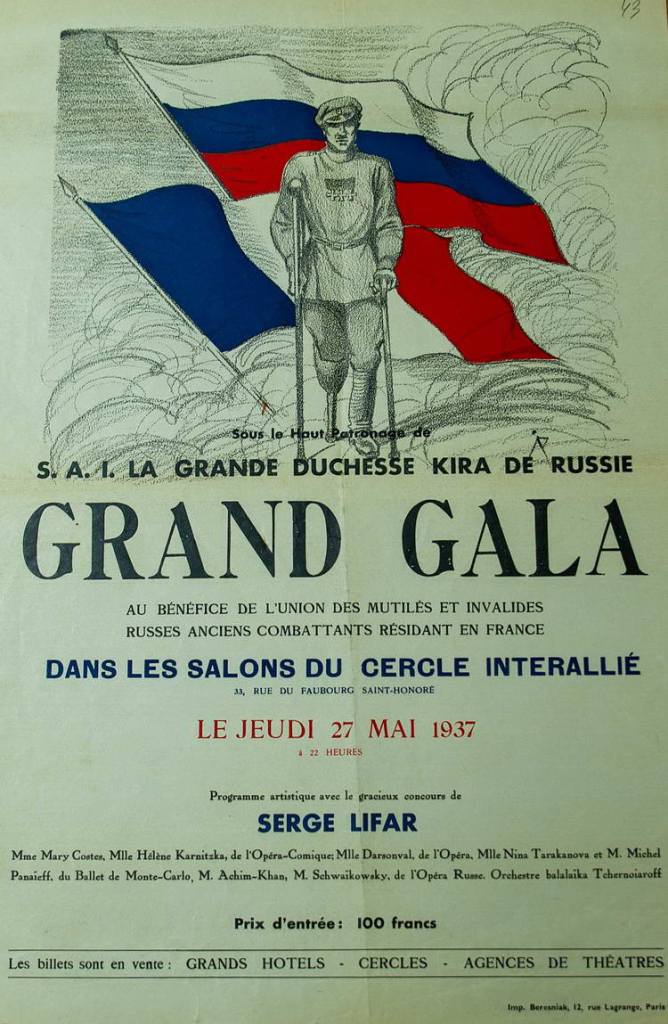
PHOTO: Poster for the grand ball organized by Grand Duchess Kira
Kirillovna to benefit Russian military invalids in France. May 7, 1937.
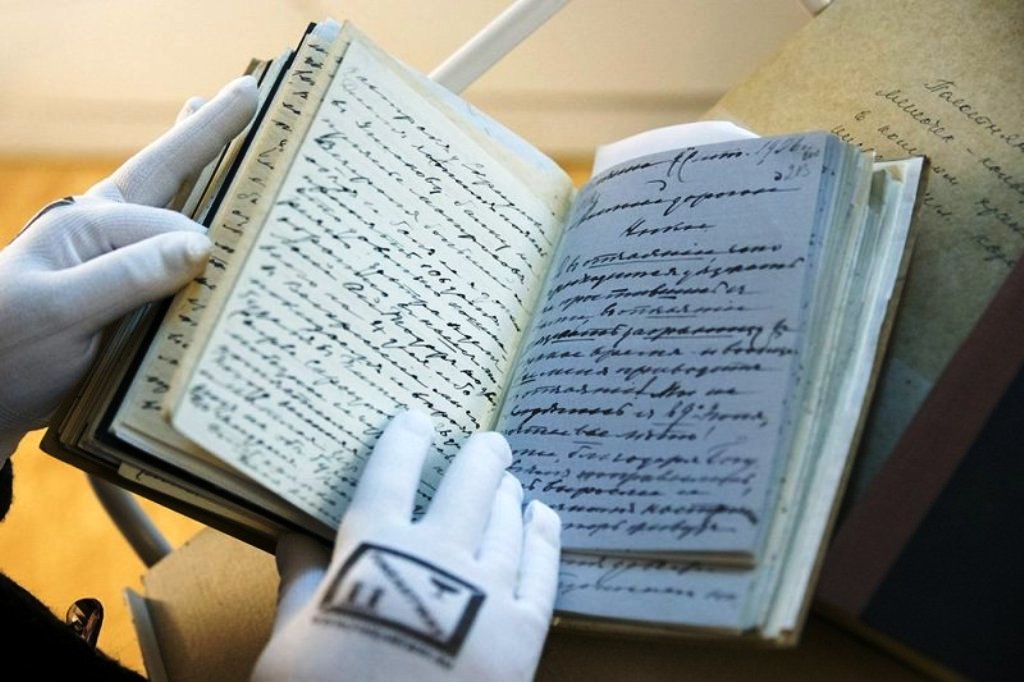
The exhibition is further complemented by documents, letters, diaries and photographs, gifted to GARF by the descendants of prominent members of the Russian diaspora.
On display are documents and personal items that belonged to General Anton Denikin (1872-1947), transferred in 1992-2000 by his daughter Marina Denikina-Gray (1919-2005), as well as materials from the family collection of Admiral Alexander Kolchak (1874-1920), which were preserved for many years Paris by his widow Sophia, and subsequently acquired for the Civil Aviation of the Russian Federation by a wealthy Russian entrepreneur Leonid Mikhelson. In the same section are documents of Anna Kniper-Timiryova (1893-1975), preserved in the family of her nephew I.K. Safonov and subsequently transferred to the Civil Aviation of the Russian Federation by his son V.I. Safonov and widow L.N. Zubareva.
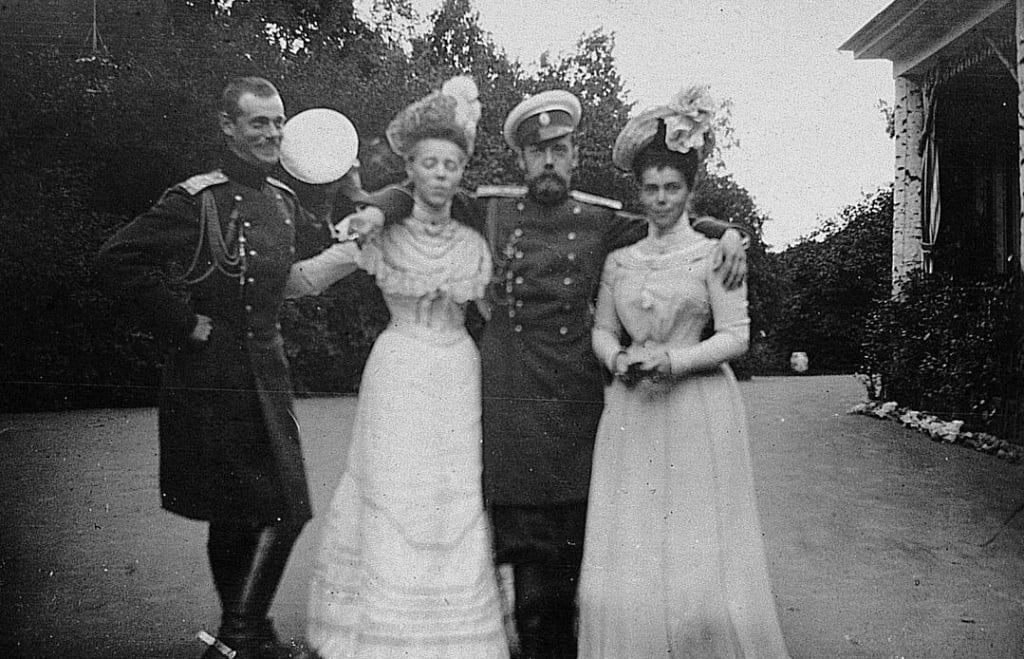
Exhibition documents reveal the fate of representatives of the Imperial House of Romanov, who were forced to leave Russia after 1917: photographs and other items from the archives of Grand Duke Andrei Vladimirovich (1879-1956) and collection of the Yusupov-Romanovs.
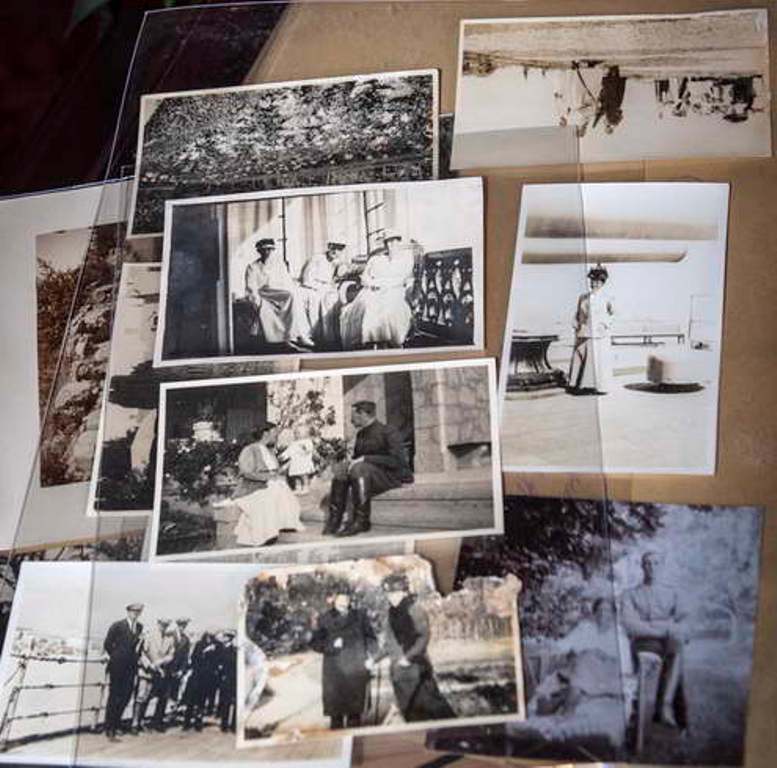
Among the key exhibits, vistors can see diaries and photographs taken onboard the British battleship HMS Marlborough, when some of the most prominent members of the Russian Imperial Family left Russia from the Crimea. Among them were Nicholas II’s mother the Dowager Empress Maria Feodorovna (see photo below) and her daughter Grand Duchess Xenia Alexandrovna.
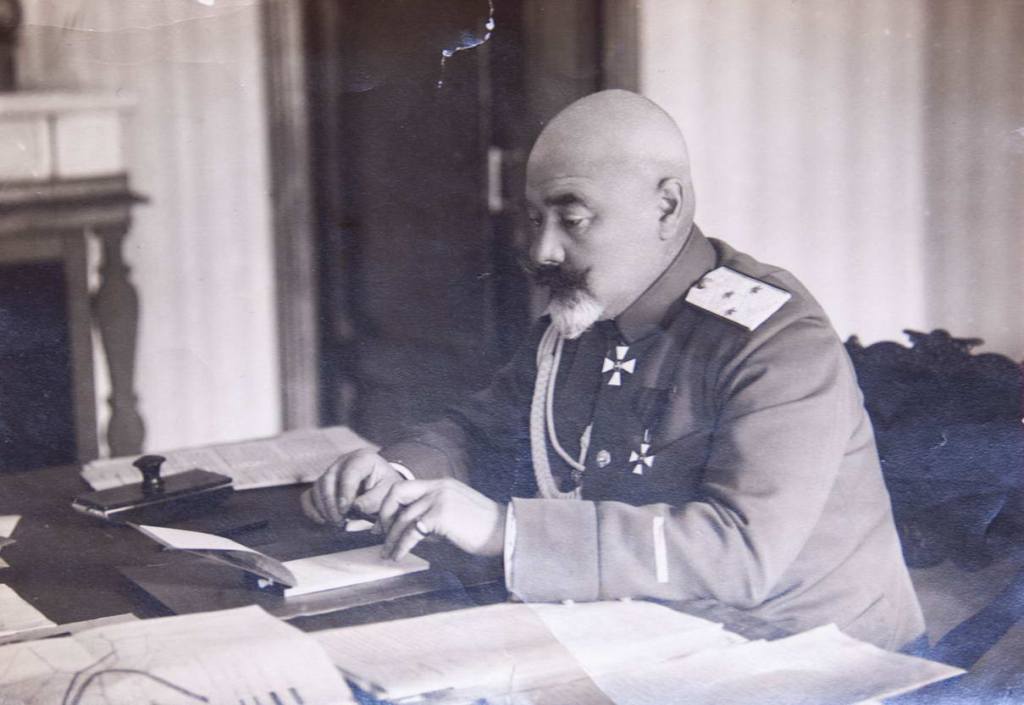
PHOTO: General Anton Ivanovich (1872-1947) Denikin
in his office at Stavka [Headquarters]. Mogilev, 1917.
The exhibition History Returned runs until 21st June 2026, in the Exhibition Hall of the State Archives of the Russian Federation (GARF) in Moscow.
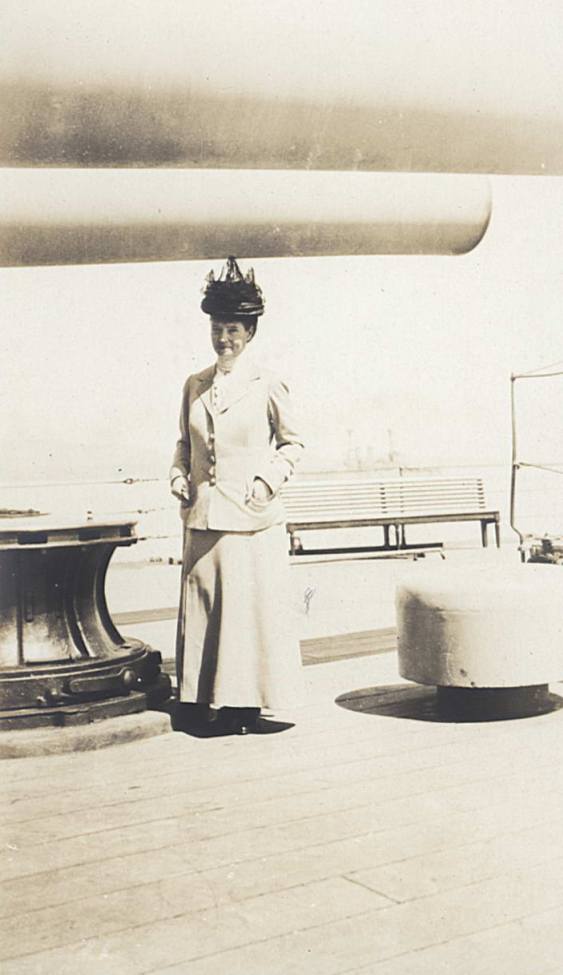
PHOTO: Dowager Empress Maria Feodorovna leaves Russia
onboard the battleship HMS Marlborough. 1919
© Paul Gilbert. 5 May 2026


You must be logged in to post a comment.