Obituary: German Yuryevich Lukyanov (1961-2022)

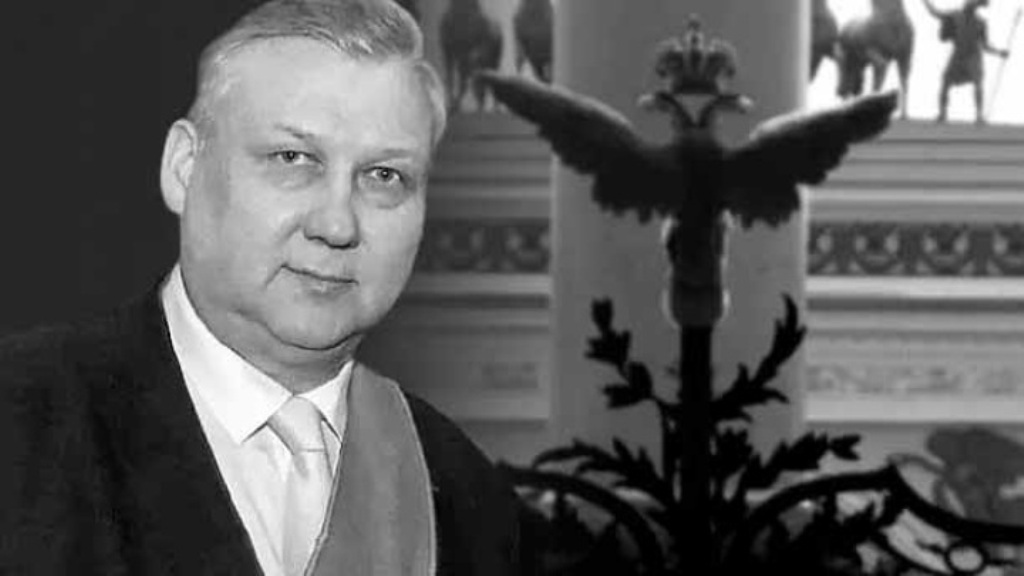
On 19th May, the prominent Russian lawyer German Yuryevich Lukyanov, died in Moscow at the age of 60.

Lukyanov was born on 30th October 1961 in Saratov. In 1984 he graduated from the Saratov Law Institute (forensic and prosecutorial department). In 1984-1986 he passed military service in the Armed Forces of the USSR. From 1987 to 1989 he served as an investigator of the Military Prosecutor’s Office of the Moscow Air Defense District (PVO). He retired from the reserve with the rank of Senior Lieutenant of Justice. In 1990 he began practicing law, and in 2001 became a member of the Moscow Bar Association.

In 1995, he was appointed legal representative for Princess Leonida Georgievna (1914-2010) and later her daughter Princess Maria Vladimirovna, the latter of whom he continued to serve to the present day.

Lukyanov’s legacy is worthy of honouring, because he worked for years to achieve the exoneration of Emperor Nicholas II, his family and their four faithful retainers, who were all brutally murdered by the Bolsheviks in 1918.

German Yuryevich Lukyanov died on 19th May 2022, the day marking the 154th anniversary of the birth of Russia’s last Emperor and Tsar. Some time ago Lukyanov had developed a severe form of COVID-19, recovered and returned to work.

It is symbolic that the Lord called German Lukyanov to Himself on the birthday of the Holy-Martyr Tsar Nicholas II, whose memory he sacredly honoured.

Memory Eternal! Вечная Память!

© Paul Gilbert. 4 June 2022

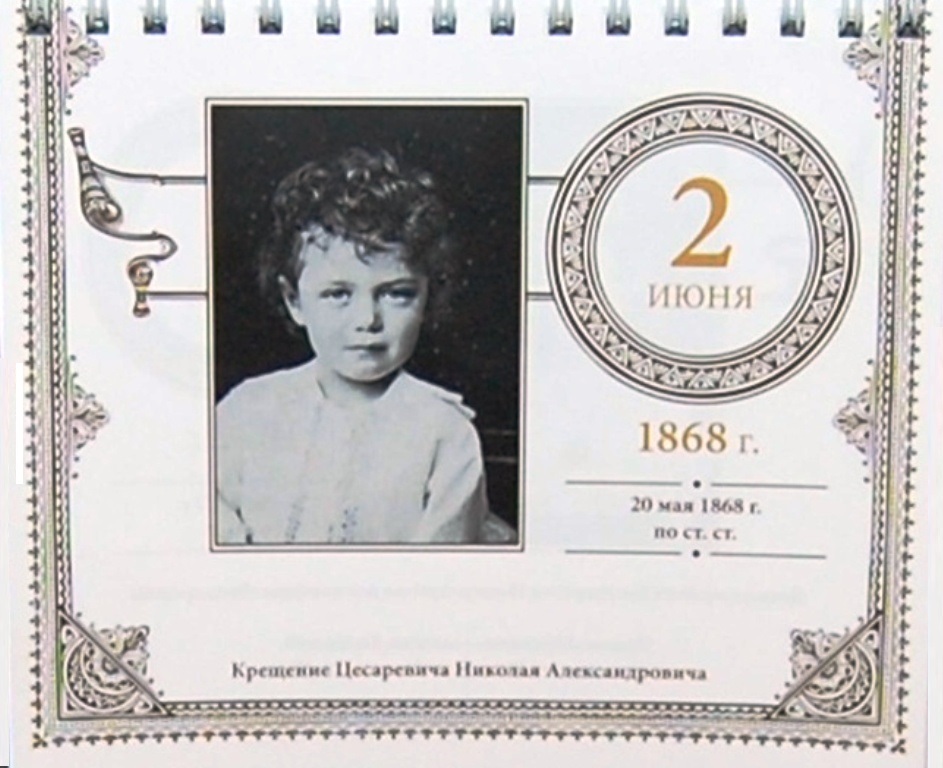
On this day – 2nd June 1868 – the future Emperor Nicholas II was baptised

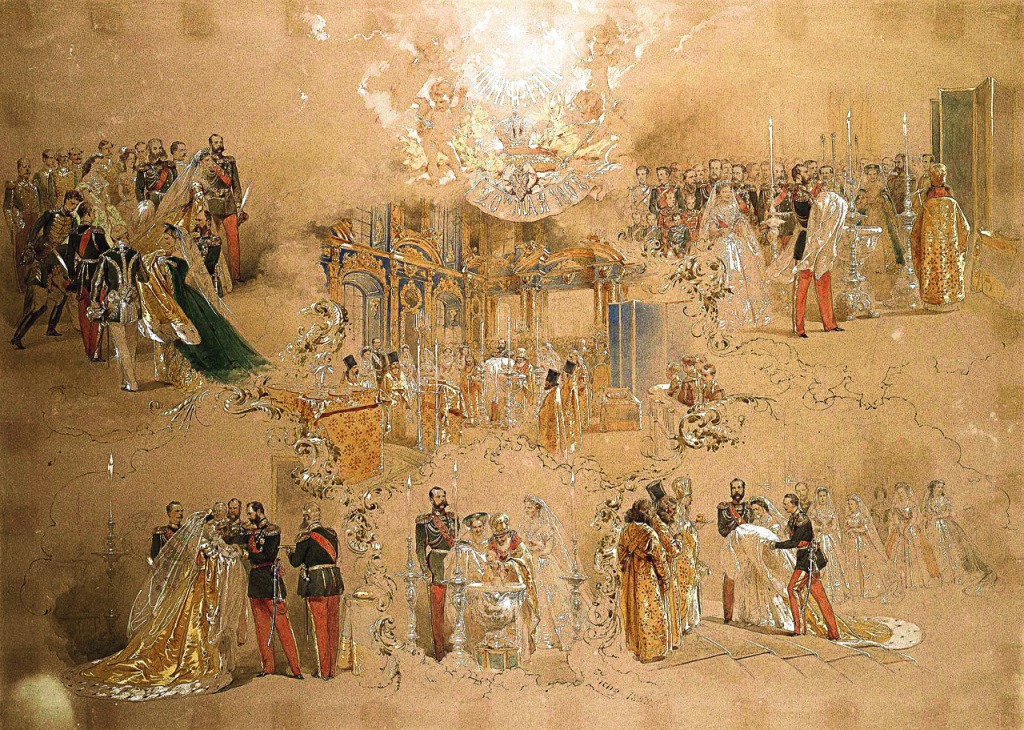
PHOTO: the baptism of Grand Duke Nicholas Alexandrovich [future Tsesarevich and Emperor] on 2nd June (O.S. 20th May) 1868, by Mihály Zichy (1827-1906). The watercolour depicts four baptismal scenes, and two of them show Alexander II holding his grandson in his arms.

Two weeks after his birth, on 19th (O.S. 6th) May 1868, His Imperial Highness Grand Duke Nicholas Alexandrovich was baptised in the Church of the Resurrection of Christ in the Catherine Palace at Tsarskoye Selo. The baptism was performed by the Imperial family’s confessor Protopresbyter Vasily Bazhanov (1800-1883).

The infant’s grandfather Emperor Alexander II, took a very active role in this historic ceremony. He clearly understood that not only was this his first grandson, but also that a future Emperor was being baptised. It is noteworthy that during the baptism, both Alexander II and his son, Grand Duke Alexander Alexandrovich [future Alexander III], acted as assistants to the lady of state. The fact that the father, breaking tradition, took an active part in the baptism[1], apparently, was due to its historic significance. Two emperors, current and future, held their successor in their arms, strengthening the foundation of the infant’s legitimacy.[2]

As for the mother [future Empress Maria Feodorovna], she did not have the right to be present at the baptism of her baby at all [in accordance with a tradition that originates in the Old Testament]. However, even if Maria Fedorovna wanted to break the custom, she could not do so, due to the fact that her doctors advised her not to walk following the birth of her son, and instructed her to rest on that eventful the day. [3]

It was Alexander II and Grand Duchess Elena Pavlovna, who carried the baby to the font for baptism. In addition, Nicholas Alexandrovich’s godparents, his Danish grandmother and uncle, Queen Louise and Crown Prince Friedrich took part.

Grand Duke Alexander Alexandrovich described the day’s events as follows: “The entrance was magnificent, and there were a lot of people in the palace and also in the garden. The little one was transported in a golden carriage with much pomp and ceremony, accompanied by an escort on horseback. During the ceremonial procession through the halls of the Grand Palace at Tsarskoye Selo, the newborn was carried to the palace church by the lady of state Princess [Alexandra Aleekseevna] Kurakina (1840-1919), supported on the one side by the State Chancellor Prince [Alexander Mikhailovich] Gorchakov (1798-1883), and on the other by Field Marshal Prince Alexander [Ivanovich] Baryatinsky (1815-1879) – both old and lame, but they endured excellently and helped as much as they could. The field marshal walks very decently, although with a cane. Tsarskoye Selo was unrecognizable that day; the streets were full of people and carriages, the whole city is celebrating. At 5 o’clock, a large banquet was held in the Great Hall, which was lit splendidly by the sun. It’s been a very tiring day, and poor Mama [Empress Maria Alexandrovna] is very tired. After the baptism, the entire family gathered at my place [the Alexander Palace] to congratulate Minnie [Grand Duchess Maria Feodorovna], and all little ones were there too. An excellent breakfast was served, and then everyone went home.”

Nearly 13 years later, in March 1881, Grand Duke Nicholas Alexandrovich became the Heir Tsesarevich, and in October 1894, he became Russia’s last Emperor and Tsar.

NOTES:

[1] According to Orthodox tradition at that time, the father was required to leave the church at the time of the baptism of his child, giving way to the godfather. Emperor Nicholas II was not in the church when his son Alexei was baptised in August 1904.

[2] Zimin, Igor Viktorovich. Children’s world of imperial residences. Life of monarchs and their environment. Baptism of children. 2010

[3] Ibid.

© Paul Gilbert. 2 June 2022
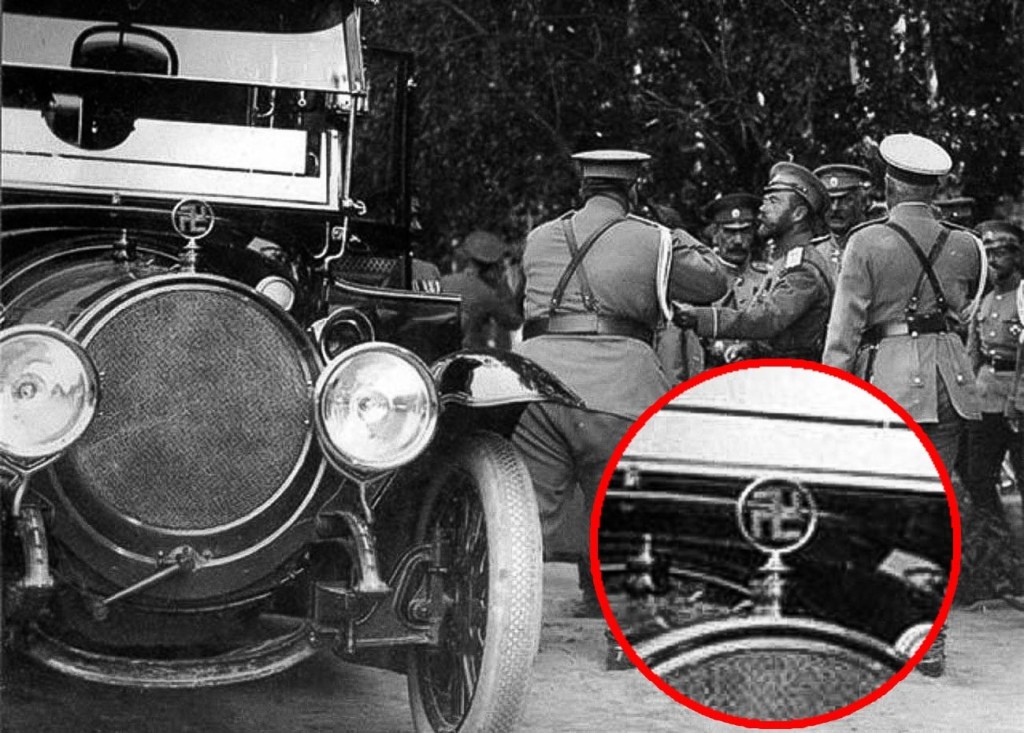
Why did Nicholas II’s favourite motorcar sport a swastika?

PHOTO: Emperor Nicholas II’s favourite Delaunay-Belleville motorcar, sporting a left-facing swastika (counter clockwise) on the hood. Tsarskoye Selo 1913

The swastika symbol is an ancient religious symbol in various Eurasian cultures, now also widely recognized for its appropriation by the Nazi Party and by neo-Nazis. It continues to be used as a symbol of divinity and spirituality in Indian religions, including Hinduism, Buddhism and Jainism. It generally takes the form of a cross, the arms of which are of equal length and perpendicular to the adjacent arms, each bent midway at a right angle.

In the 1930s the German Nazi Party adopted a right-facing (clockwise) form and used it as an emblem of the Aryan race. As a result of World War II and the Holocaust, in the West it continues to be strongly associated with Nazism, anti-Semitism, white supremacism, or simply evil.

In 19th century Russia, however, the swastika had a completely different meaning. The left-facing swastika (counter clockwise) swastika, best described as a “sacred solar cross”, was adopted as a symbol of the Russian Empire. In the years before the Russian Revolution, it was used on the facades of houses, depicted on icons, clothes and dinner plates, as well as Emperor Nicholas II’s favourite motorcar.

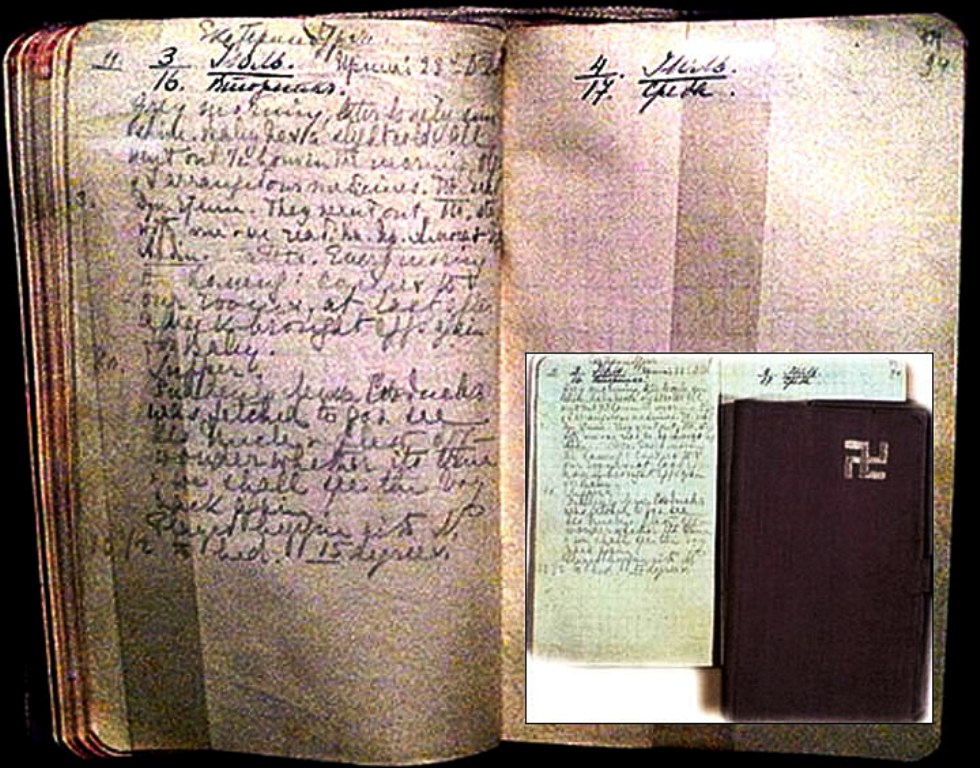
PHOTO: the last diary [1917] of Empress Alexandra Feodorovna, was embroidered with a left-facing swastika (counter clockwise)

In addition, the left-facing swastika (counter clockwise) was a favourite symbol of Empress Alexandra Feodorovna. She wore a talisman in the form of a swastika, wearing it everywhere for happiness, including on her letters from Tobolsk and Ekaterinburg. In a letter dated 16 December 1917 to Anna Vyrubova, she wrote: “Always to be recognized by my sign 卐.”

According to Vladimir Kozlov & Vladimir Krustalev, in her 1917 diary, Alexandra noted the anniversary of a person’s death with a swastika. In Sanskrit, svastika means “well-being”. When her daughter, Grand Duchess Tatiana Nikolaevna gave her mother the little notebook in which the diary was kept, she embroidered a swastika on the cloth cover [depicted in the photo above] she made for it.[1]

In settling in her room in the Ipatiev House at Ekaterinburg, Alexandra inscribed a swastika on a window frame, followed by the date 17 [N.S. 30] April 1917, and another swastika on the wall over her bed.

In addition, investigator Nikolai Sokolov , who investigated the murder of the Imperial family, suggested that persons from the Emperor’s entourage were part of a secret organization. According to him, in their correspondence, among other things, they used the swastika.

NOTES:

[1] Ed. Vladimir Kozlov & Vladimir Krustalev. The Last Diary of Tsarista Alexandra. Yale University Press, 1997

© Paul Gilbert. 2 June 2022