Beautiful winter views of the Novo-Tikvinsky Convent, Ekaterinburg
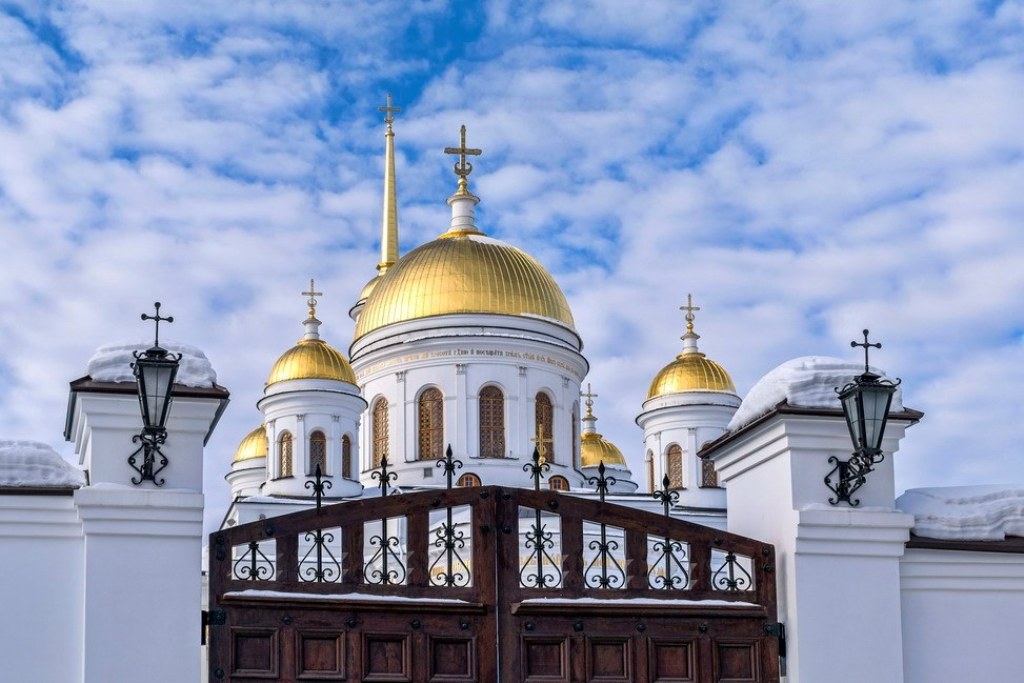
PHOTO: the Cathedral of St. Alexander Nevsky in the Novo-Tikvinsky Convent
© Ново-Тихвинский женский монастырь

Snow-covered paths, trees covered in hoarfrost, early evening twilight reflect the silent beauty of winter which surrounds the Cathedral of St. Alexander Nevsky, depicted in these beautiful photos.

The Novo-Tikhvin Monastery is a community of female monastics. It was founded in the late 18th century, growing out of an alms-house at the cemetery church in Ekaterinburg. It is the home of the icon of the Tikhvin Mother of God. Closed in 1920 by the Bolsheviks, monastic life at the monastery was restored in 1994.

In 1918, when Nicholas II and his family were being held under arrest in the Ipatiev House, the nuns of the Novo-Tikhvinsky Convent were praying for them, asking God to relieve their sufferings,and to give them the strength to bear everything with Christian humility.

The sisters’ help came not only through prayer but also through deeds: disregarding their own safety, they supported the Tsar and his family by bringing various foods to them through the guards. On 18th June 1918, a month before their murder, Empress Alexandra Feodorvna made the following entry in her diary: “The kind nuns are now sending milk and eggs for Alexei and for us, as well as cream.”

I have spent many hours praying in the Cathedral of St. Alexander Nevsky, during my visits to the Ural city in 2012, 2016 and 2018 respectively. It was during my visit to Ekaterinburg in the summer of 2016, that my hotel was situated behind the convent, and I had a clear view of the cathedral from my window. I went every morning to the cathedral to pray, and every afternoon in the beautifully landscaped gardens which surround the Cathedral.

Click HERE to read why Ekaterinburg is my favourite Russian city.
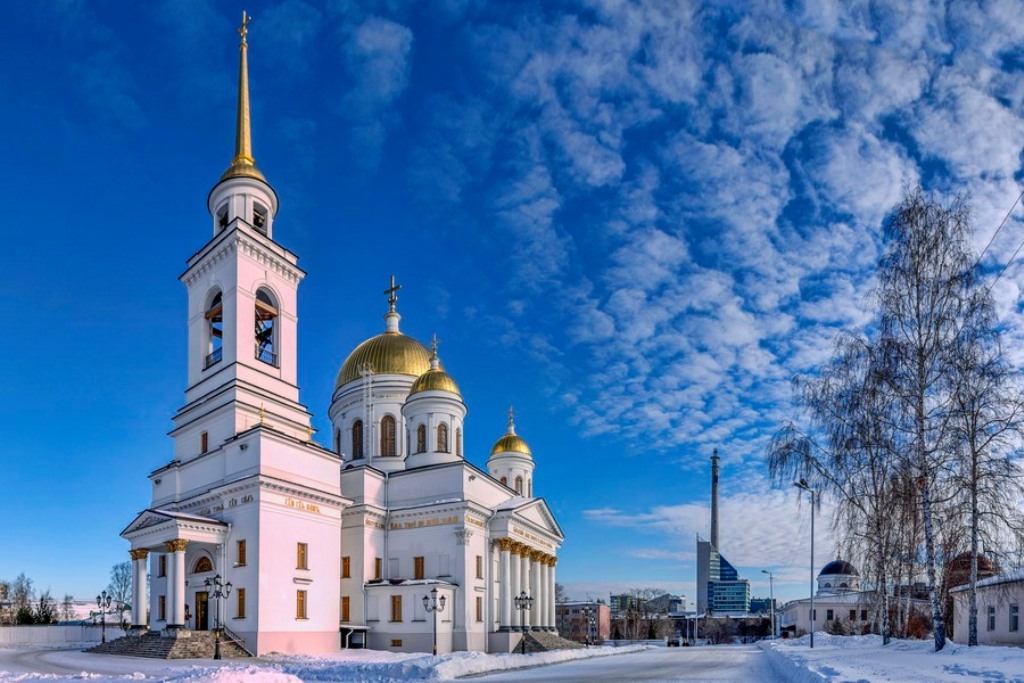
PHOTO: the Cathedral of St. Alexander Nevsky in the Novo-Tikvinsky Convent
© Ново-Тихвинский женский монастырь
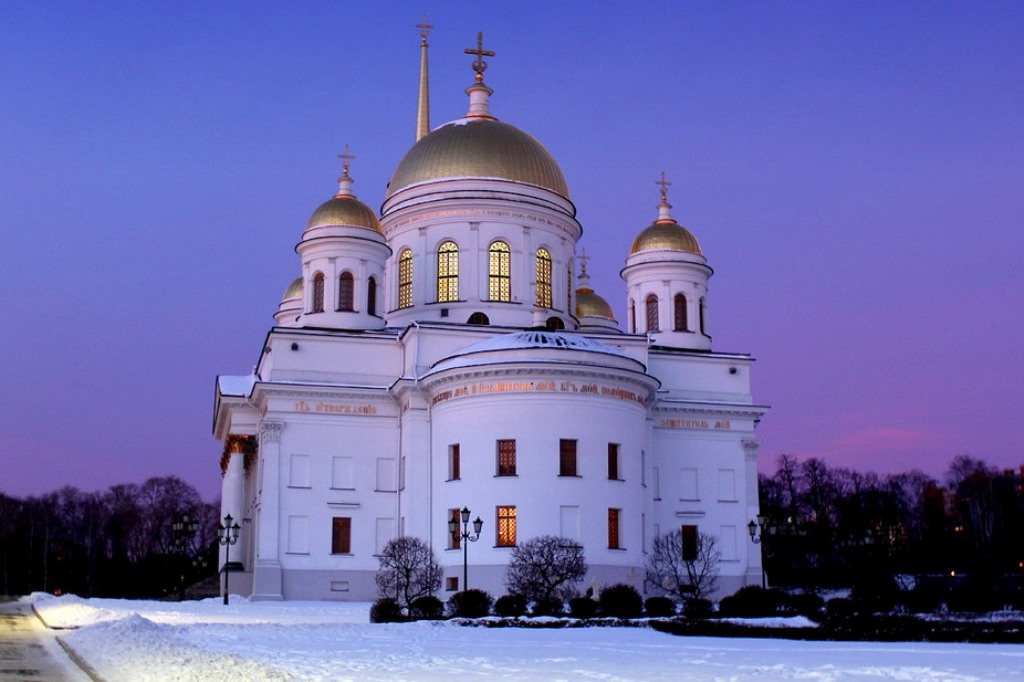
PHOTO: the Cathedral of St. Alexander Nevsky in the Novo-Tikvinsky Convent
© Ново-Тихвинский женский монастырь
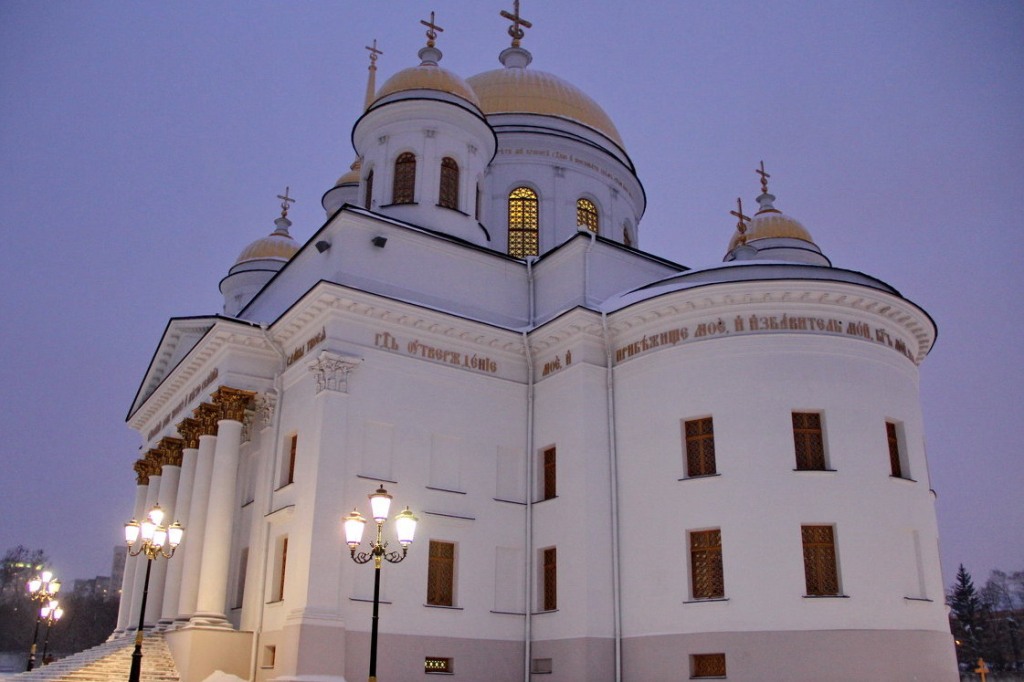
PHOTO: the Cathedral of St. Alexander Nevsky in the Novo-Tikvinsky Convent
© Ново-Тихвинский женский монастырь
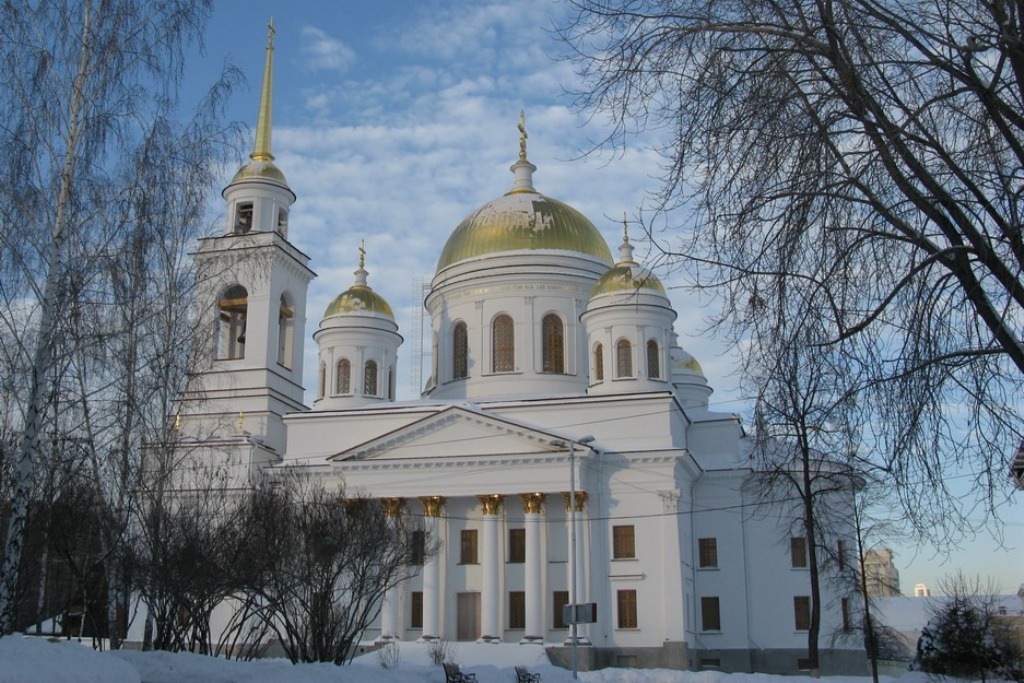
PHOTO: the Cathedral of St. Alexander Nevsky in the Novo-Tikvinsky Convent
© Ново-Тихвинский женский монастырь

PHOTO: the Cathedral of St. Alexander Nevsky in the Novo-Tikvinsky Convent
© Ново-Тихвинский женский монастырь
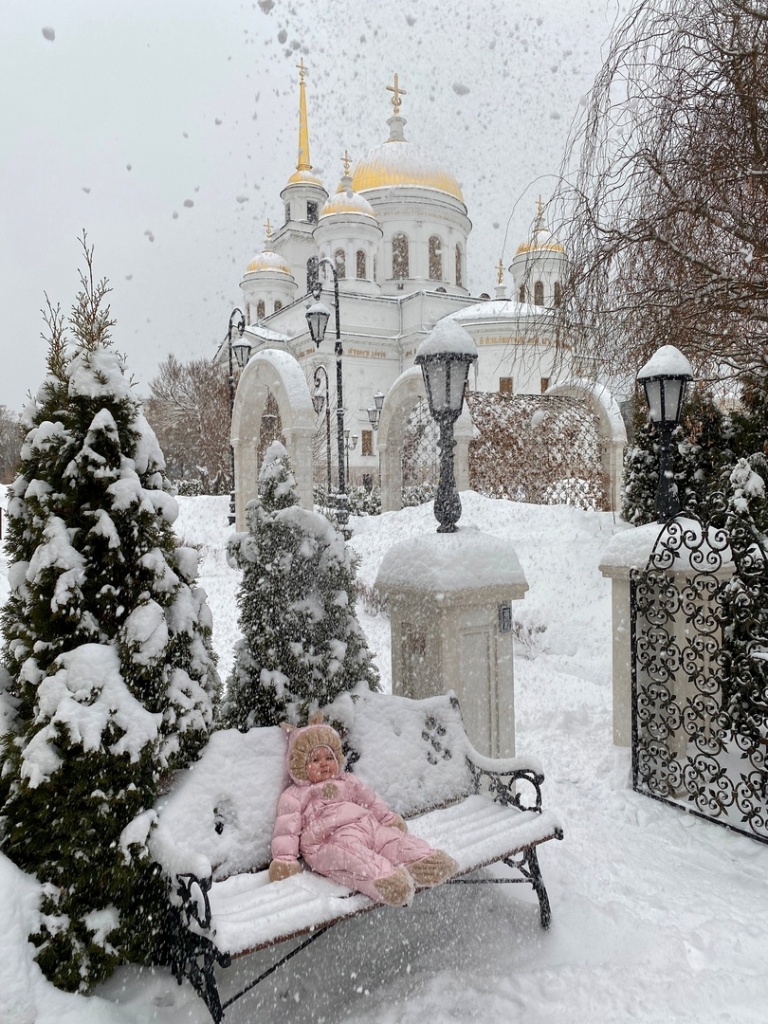
PHOTO: I simply could not resist sharing this photo . . . A mother takes a photo of her little one [who looks like a little angel] sitting on a bench in the garden of the Novo-Tikhvinsky Convent in Ekaterinburg. The magnificent Cathedral of St. Alexander Nevsky can be seen in the background. The snow simply enhances the beauty of this photo. © Ново-Тихвинский женский монастырь
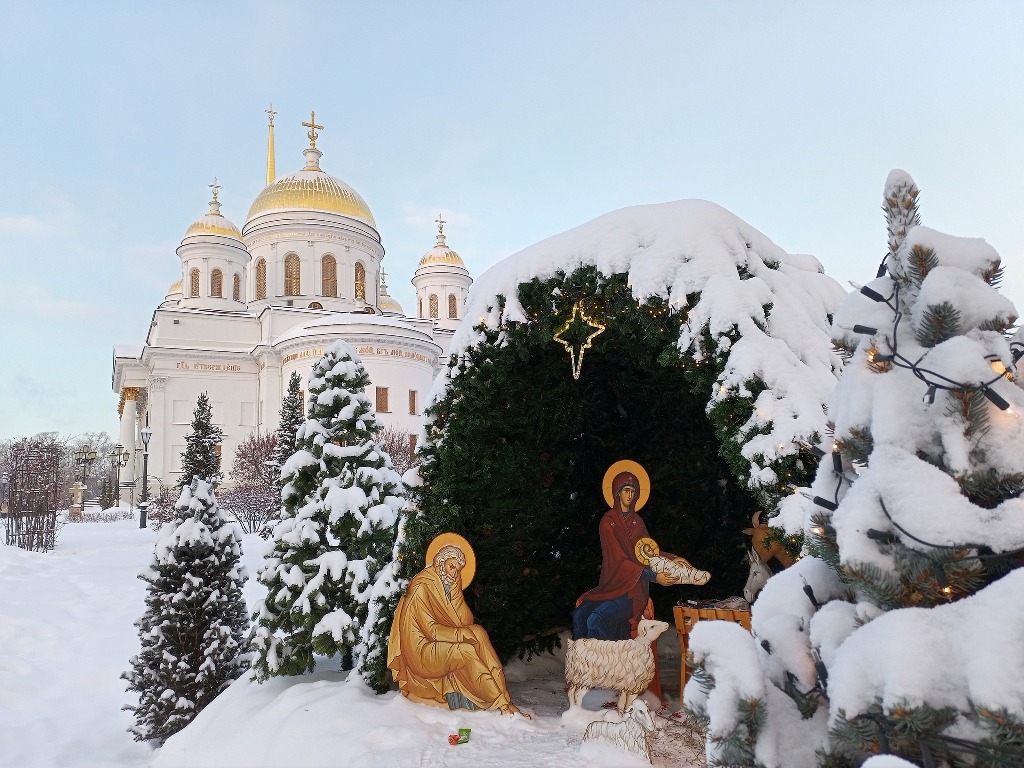
PHOTO: the Nativity set against the backdrop of the Cathedral of St. Alexander Nevsky at the Novo-Tikvinsky Convent, Ekaterinburg. © Ново-Тихвинский женский монастырь
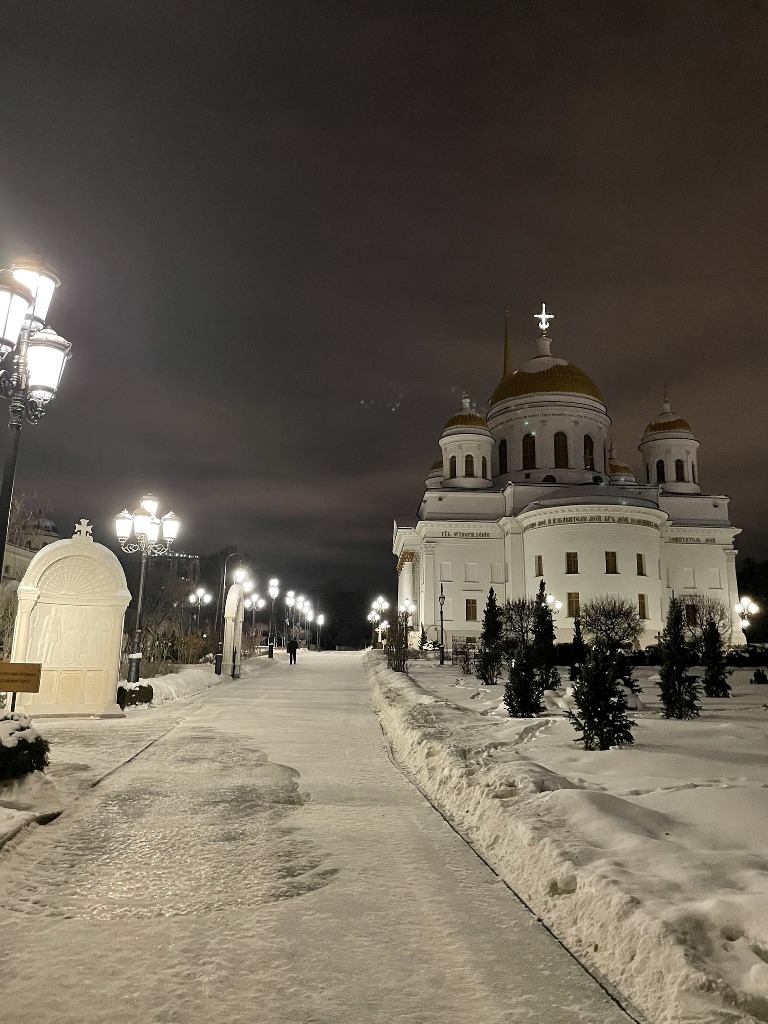
PHOTO: A lovely winters night view of St. Alexander Nevsky Cathedral at the Novo-Tikhvinsky Convent in Ekaterinburg. On the left, you can see the new monument to four faithful servants of Emperor Nicholas II, which was installed and consecrated this past summer, on the grounds of the Convent. © Ново-Тихвинский женский монастырь

© Paul Gilbert. 9 January 2023
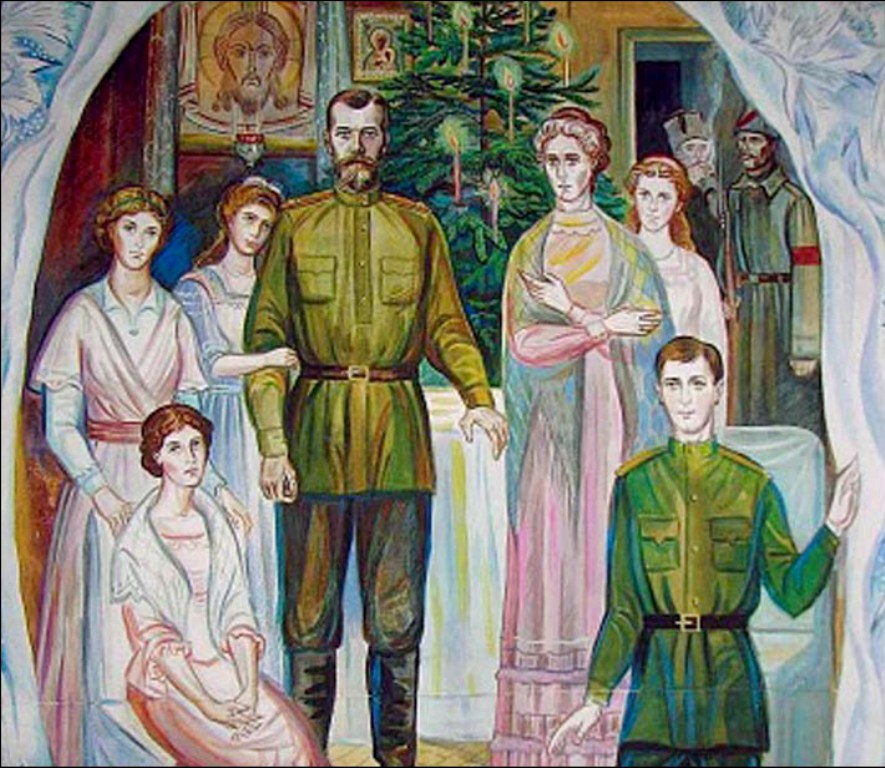
The Imperial Family’s last Christmas in 1917

This article was written by Kate Baklitskaya, and published in the 7th January 2014 edition of The Siberian Times. I have taken the liberty of making some corrections and adjustments to her text – PG

NOTE: The Russian Orthodox Church observes Christmas Day on 7th January according to the Old Style Julian calendar, which is 13 days behind the Gregorian calendar used in the West.

During the winter of 1917-18 Emperor Nicholas II and his family were being held under house arrest in Tobolsk, in western Siberia, before being moved in the spring of 1918 to Yekaterinburg where they were murdered in July 1918. Their last Christmas – since they used the Julian calendar, took place on what most of the world now knows as 6 and 7 January 1918, but for them it was 24 and 25 December 1917 – was still full of joy and hopes for a better future, even though 1917 was the year when the Romanovs were toppled.

In exile the Emperor and his family continued to live as normal life as their situation would allow them, although they were forbidden to go into town or attend church, they were only allowed to leave the house to walk and play in the yard.

The Tsar was not afraid of simple manual work, spending his time chopping wood with his son Alexey following his example. The former Tsesarevich, then 13, took care of the poultry. 

The children continued their studies and the Emperor taught them a course of Russian history. Their mother Alexandra taught German to the children, perhaps surprisingly since World War One was still underway. As Christmas approached, the former Tsesarevich and his four sisters – the Grand Duchesses – were given a break. 

This is how Grand Duchess Olga described this period: ‘Everything is peaceful and quiet, thank God. We are all healthy and not losing hope. Today my sisters’ and brother’s vacation begun.  There is still not a lot of snow, the frost reaches -20C, and the sun shines almost all the time, it rises and sets bright and beautiful. …It’s so nice to go for walks. Mama works all day or draws and paints, keeps herself busy all the time and the time flies quickly.’

Their hope at the time was to be allowed to go into exile abroad to Britain, but this plan was vetoed in London amid fears their presence would stoke revolutionary sentiments. Ekaterina Schneider, their Russian language teacher, described Christmas Eve in her letters: ‘In the evening today we will go for overnight prayer… After we came home and had breakfast. There I was decorating a Christmas tree with candles – there were no other decorations, so tonight a small Christmas tree will be lit’. 

‘The trees here have a completely different smell, the tree smells of oranges …  Now it’s 4pm, I’ll go into the yard to help to make a snow mountain – tonight there was a lot of snow . It’s -7C degrees. By local standards it’s hot’.

The Empress started preparations for Christmas well in advance. Despite their difficult financial situation she still managed to prepare presents for all the family members, friends and retainers. Most of these presents were handmade.

Alexandra described their Siberian Christmas in her diary: ‘December 24. Sunday. Tobolsk. Christmas Eve. Preparing gifts. Breakfast downstairs. Decorated Christmas tree, laid out the gifts. Tea. Then I went to the guards from the 4th Infantry Regiment, all together 20 people’.

‘I brought them a small Christmas tree and some food, and a Bible each with a bookmark that I hand painted. Sat there with them. 7.30 pm. Had  dinner downstairs with everyone. 9pm Christmas celebration for our servants – for all our people.

‘9.30 pm. Evening service at the church: a large choir sang. The soldiers came as well.’

The Empress did her best to support her family in the difficult times and bring the Christmas spirit into the family celebration. Perhaps thanks to her effort Romanov family enjoyed their last Christmas.

In a letter to her lady in waiting Sophia Karlovna Buxhoeveden, the Empress wrote that love, hope and patience were her guides through these difficult times.

‘I gently kiss you and wish you all the best. May God send you health and peace of mind, which is the greatest gift. We should pray to God for patience, because it is so important for us in this world of suffering (and the greatest madness), for comfort, strength and happiness.

‘Perhaps the word ‘joyful Christmas’ sounds like a joke now, but after all this joy of the birth of our Lord. …. He will manifest His mercy when the time comes, and before that we have to wait patiently. We cannot change what is happening – we can only believe, believe and pray and never lose love for Him.’

© The Siberian Times. 6 January 2023

The Alexander Palace: Then and Now

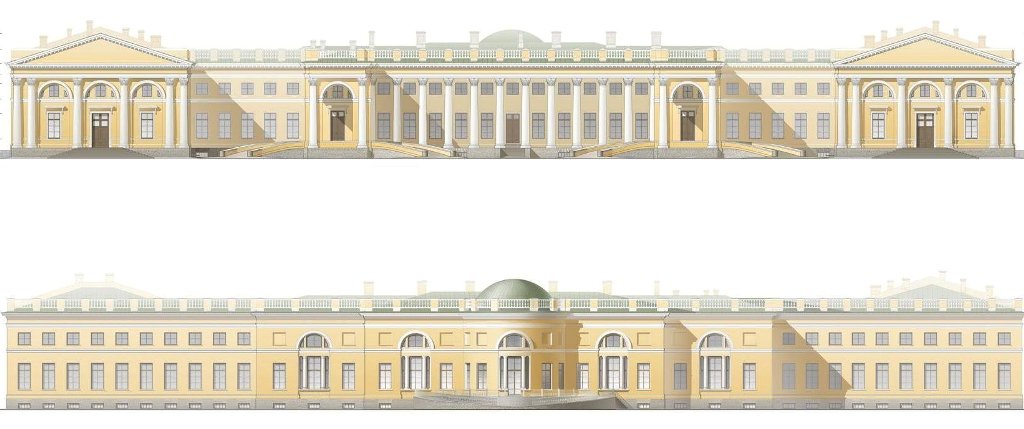
PHOTO: view of the front and rear facades of the Alexander Palace, Tsarskoye Selo

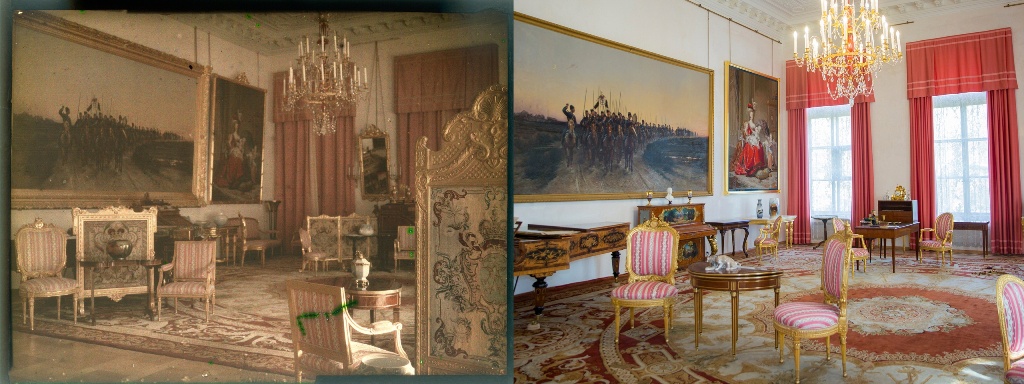
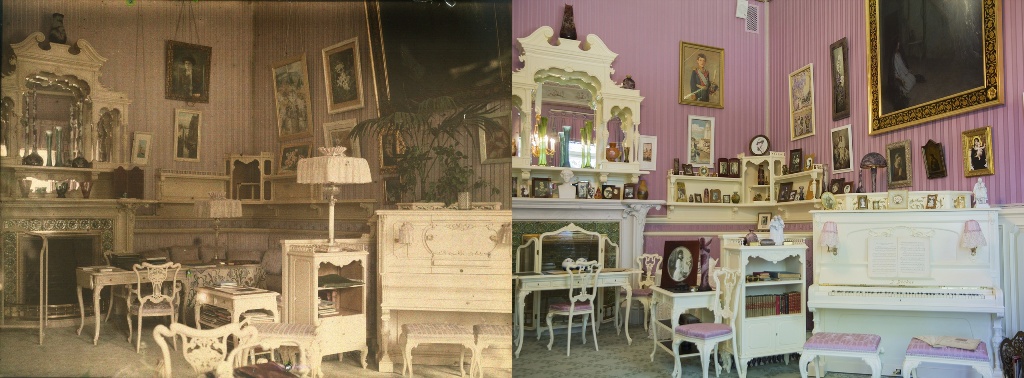
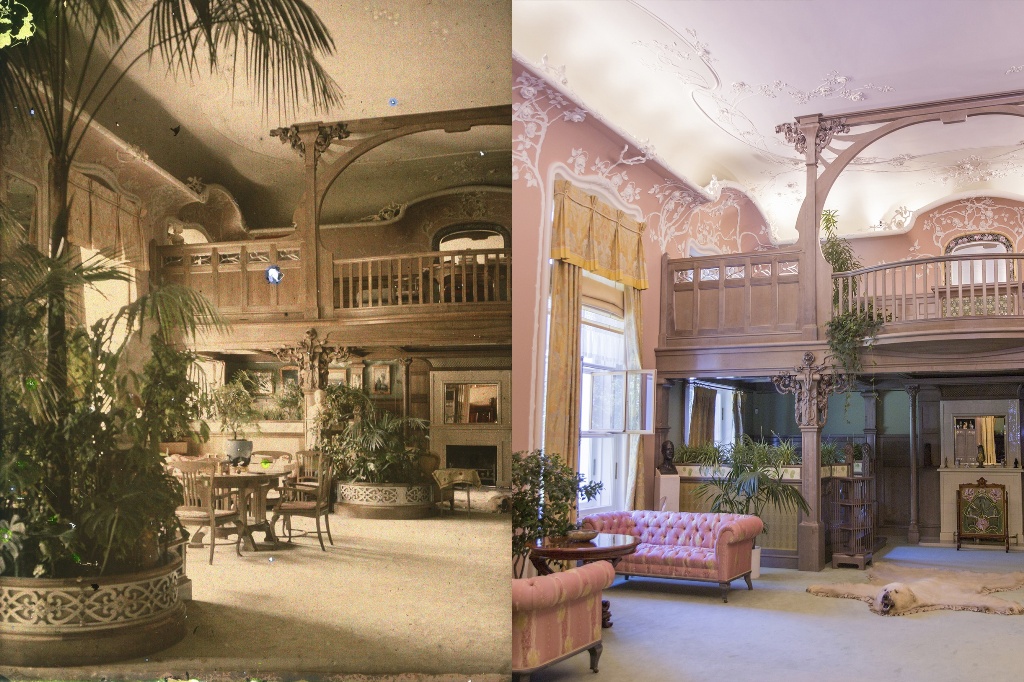
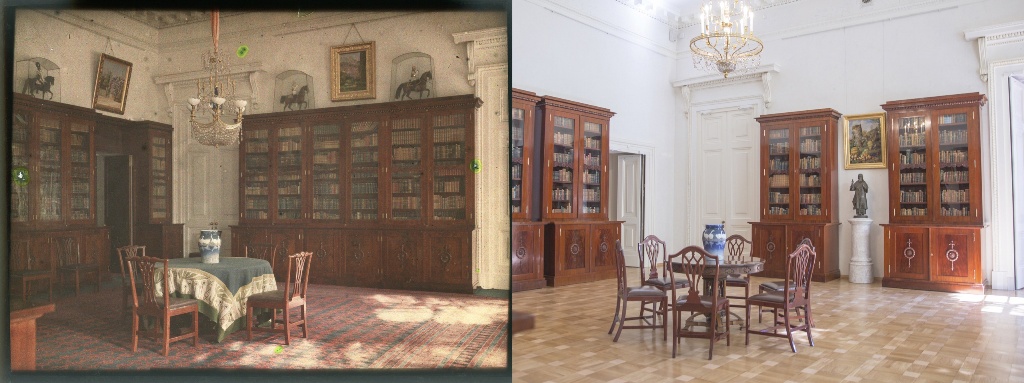
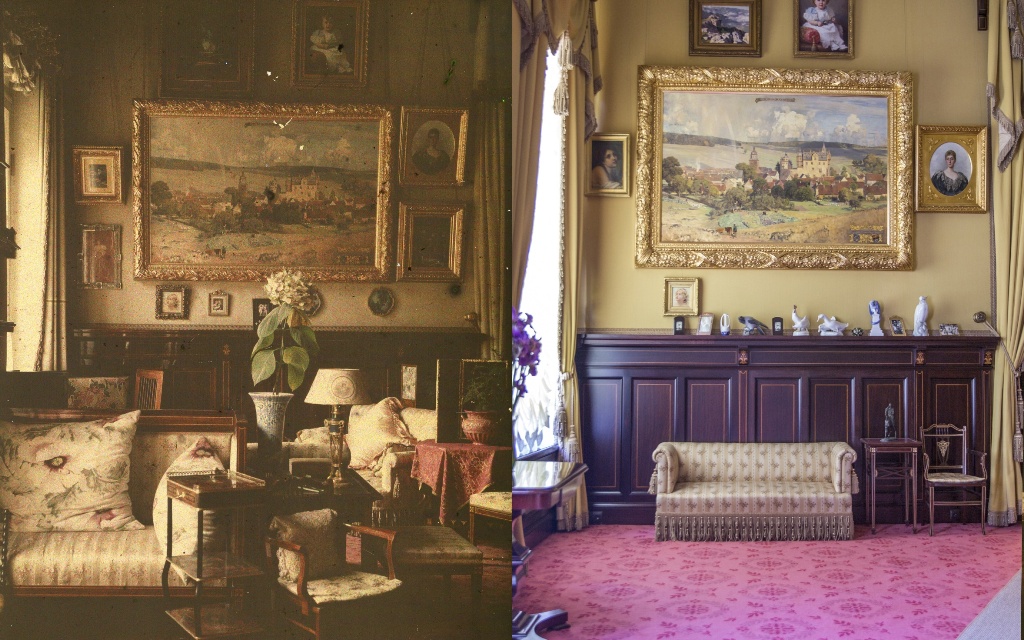
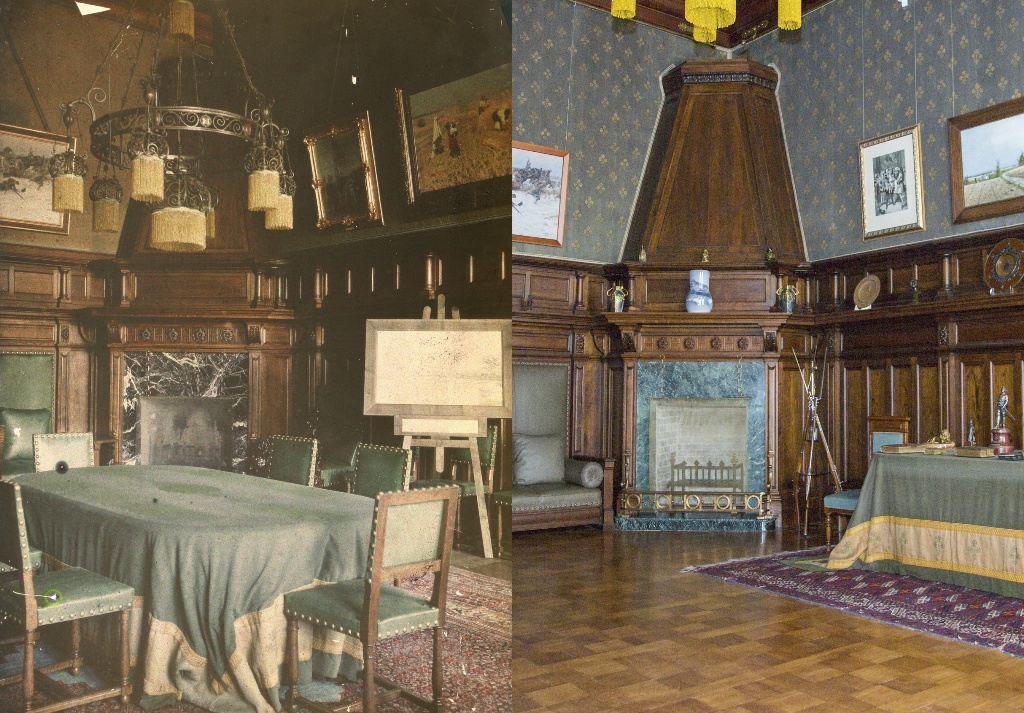
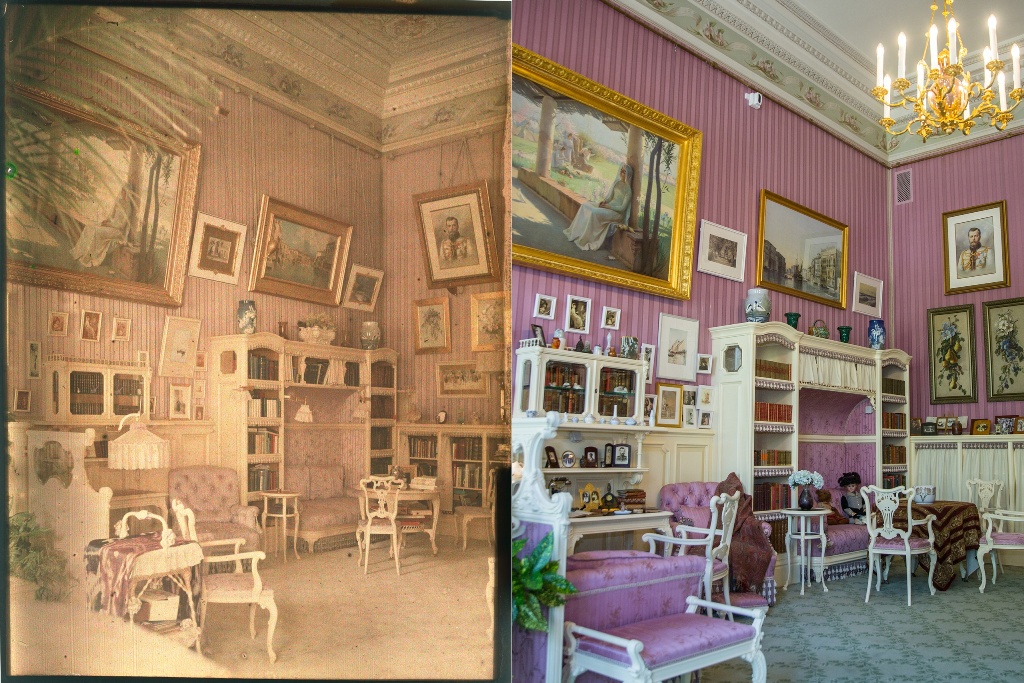
The Tsarskoye Selo State Museum Reserve have reissued a series of colour autochromes and photographs which allow us to compare some of the interiors of the Alexander Palace as they looked like in 1917 and how they look today, following a large-scale reconstruction and restoration project that began in the Autumn 2015.

Shortly after Emperor Nicholas II and his family were sent into exile to Tobolsk on 1st (O.S.) August 1917, George Kreskentievich Lukomsky (1884-1952), chairman of the Commission for the Acceptance and Registration of Property of the Tsarskoye Selo Palace Administration, arrived at the Alexander Palace, where he “methodically and consistently photographed” the interiors of the former Imperial residence.

Zehest had been commissioned by the art historian George Loukomski, Head of the Tsarskoye Selo Inventory Commission. A total of 140 colour auto-chromes were taken of the Alexander Palace. A collection of 48 auto-chromes, which were acquired at a Paris auction in 2012 have since proven to be of immense value with the restoration of the interiors of the Alexander Palace.

The Alexander Palace reopened to visitors on 14th (O.S. 1st) August 2021, marking the 104th anniversary since the Imperial Family left the palace for the last time. Visitors can now see thirteen reconstructed and restored interiors of the private apartments of Emperor Nicholas II and Empress Alexandra Feodorovna located in the eastern wing of the palace.

These include the New Study of Nicholas II, Moorish Bathroom of Nicholas II, Working Study of Nicholas II, Reception Room of Nicholas II, the Valet’s Room, PLUS the Maple Drawing Room, Pallisander (Rosewood) Living Room, Mauve (Lilac) Boudoir, Alexandra’s Corner Reception Room, the Imperial Bedroom, the Small and Large Libraries, and the Mountain Hall. In addition are the State Halls: the Portrait Hall, the Semi-Circular Hall and the Marble Drawing Room.

Please note that all the photos posted below are courtesy of the Tsarskoye Selo State Museum:

Empress Alexandra’s Corner Reception Room as it looked in 1917 and 2022.
Photo © Tsarskoye Selo State Museum

Pallisander (Rosewood) Living Room as it looked in 1917 and 2022.
Photo © Tsarskoye Selo State Museum

Mauve (Lilac) Boudoir as it looked in 1917 and 2022.
Photo © Tsarskoye Selo State Museum

Maple Drawing Room as it looked in 1917 and 2022.
Photo © Tsarskoye Selo State Museum

Small Library as it looked in 1917 and 2022.
Photo © Tsarskoye Selo State Museum

Pallisander (Rosewood) Living Room as it looked in 1917 and 2022.
Photo © Tsarskoye Selo State Museum

Reception Room of Emperor Nicholas II as it looked in 1917 and 2022.
Photo © Tsarskoye Selo State Museum

Mauve (Lilac) Boudoir as it looked in 1917 and 2022.
Photo © Tsarskoye Selo State Museum

The Western wing of the Alexander Palace is scheduled for completion no earlier than 2024. After the completion of the work, the Alexander Palace will become a multifunctional museum complex, which will include exhibition halls, halls for temporary exhibitions, halls for research work and conferences, as well as a library and a children’s center. The basement floor will house a ticket booth, a museum shop, a café, a cloakroom, a tour desk, as well as technical and ancillary facilities.

Please note that I have written more than 60 articles on the history and restoration of the Alexander Palace, which include 100s of photographs, illustrations and videos. Click HERE to review the articles in this category.

© Paul Gilbert. 4 January 2023

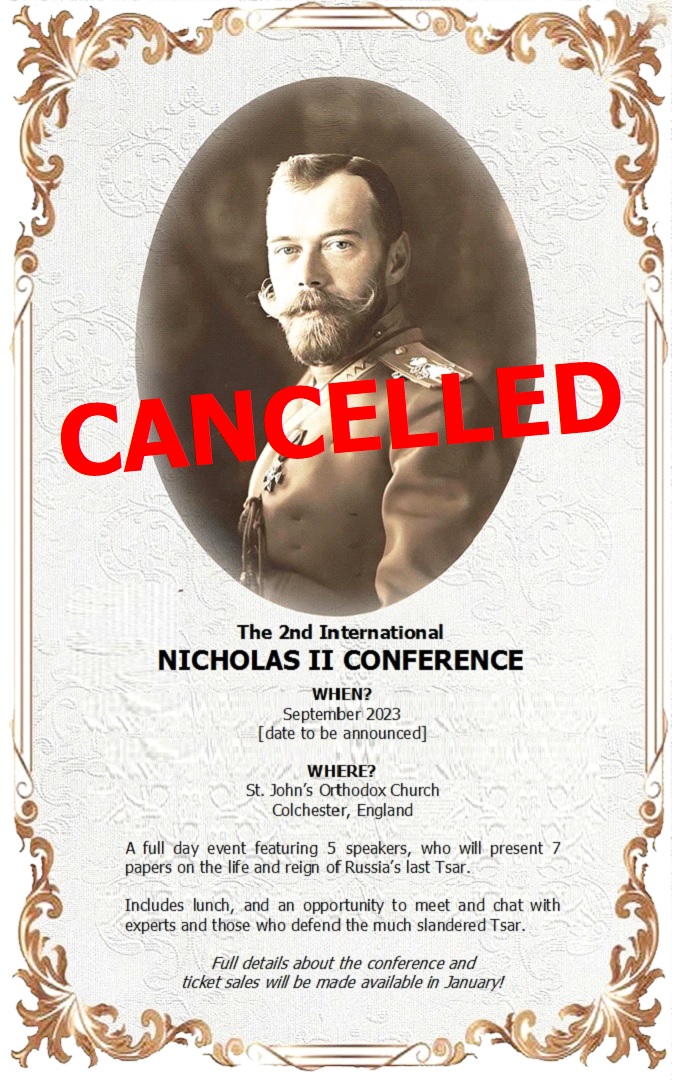
Nicholas II Conference cancelled . . . again!

How unfortunate that my first post for 2023 should be a negative one . . . it is with much disappointment that I find myself forced to cancel the Nicholas II Conference which I was planning for September of this year.

Shortly after announcing the event several months back, I began to receive hate-filled messages and emails from “Russophobes” in the UK, who threatened to “disrupt” the Conference. Most of these messages were generously peppered with profanity – which reflected their bigoted and hateful anti-Russian sentiment.

As if this wasn’t bad enough, the church – where the Conference was to be held – in Colchester, England had been targeted by anti-Russian thugs. The police even had to get involved!

The Conference had no political agenda, whatsoever, which begs the question “WHY” would thugs target an event dedicated to the study and appreciation of Russia’s last Tsar?

While I understand the anger towards Putin for ordering Russia’s invasion of Ukraine, I fail to understand any connection between Putin and Nicholas II, especially given that more than a century separates their lives.

After further discussion, Father Andrew Phillips and I have decided to postpone the September Conference for the time being. I was really looking forward to hosting this event, however, we will now have to be patient and wait until such time as it is deemed safe. What a sad world we live.

*Some readers may recall that I was planning a similar Conference to be held at the Holy Trinity Monastery in Jordanville, New York in 2020, however, I was forced to cancel this event due to COVID. Father Theophylact (Clapper-DeWell) and I both agreed that the health and safety of those planning to attend should be our priority.

© 3 January 2023