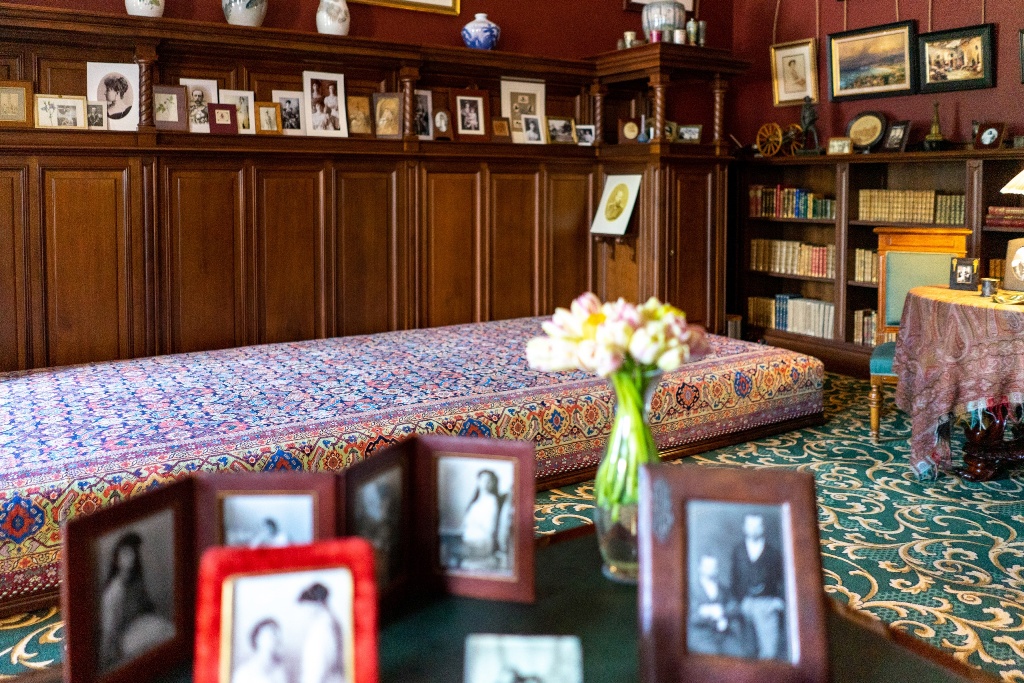
PHOTO: view of the ottoman recreated for the Working Study of Emperor Nicholas II in the Alexander Palace. Photo © Tsarskoye Selo State Museum Reserve
The Tsarskoye Selo State Museum continue to recreate items lost from the Alexander Palace during the Second World War . . . the latest addition is the beautiful ottoman, recreated for the Working Study of Emperor Nicholas II.
The large Persian Farahan carpet has been recreated by modern Iranian craftsmen using traditional technologies. The soft velvet upholstery features a variegated pattern of stylized plants on a dark blue background in the middle, and a border along the edge, with variegated figured medallions and stylized flowers on a light green background; edged along the plinth with a variegated cord. This description has been preserved in the museum’s inventory records.
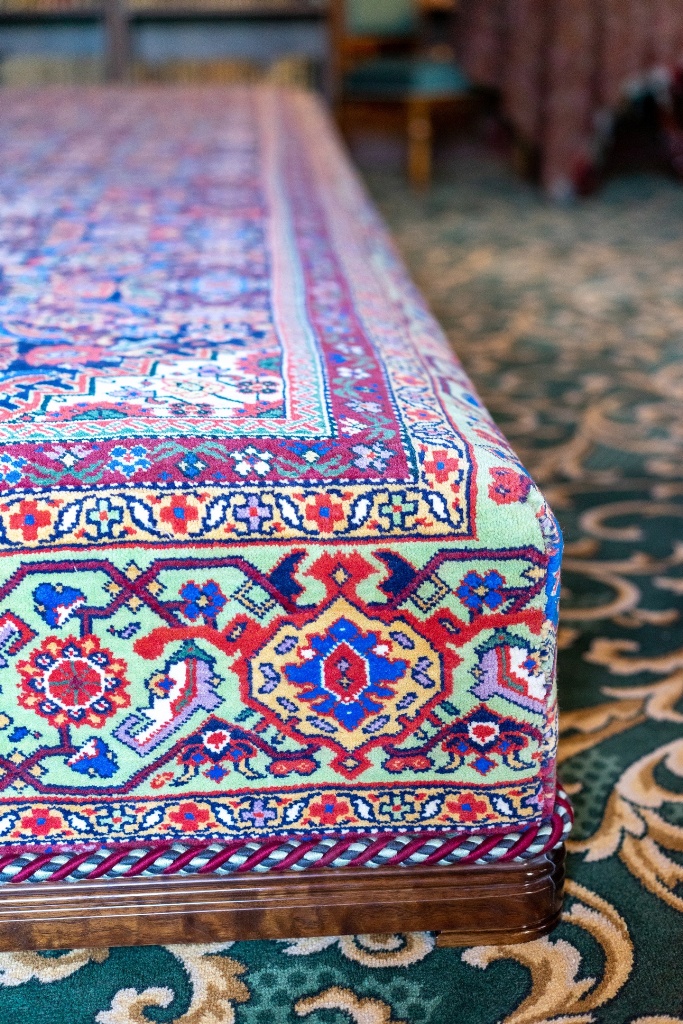
PHOTO: detail of the ottoman recreated for the Working Study of Emperor Nicholas II in the Alexander Palace. Photo © Tsarskoye Selo State Museum Reserve
The recreation of the ottoman was made possible by archival photographs dating back to the 1930s, when the Alexander Palace was a museum. In the photographs, however, the details of the pattern of the central part of the carpet are not clearly visible, which made it difficult to recreate. Anna Tarkhanova, a senior researcher at the Tsarskoye Selo State Museum, conducted a study, the result of which it became obvious that a Farahan carpet made in the 1880s was used to upholster the ottoman of Nicholas II in 1896. Thus, a historical analogue for making a copy was of a carpet from the collection of Muranovo, the country estate of the famous Russian poet and diplomat Fyodor Ivanovich Tyutchev (1803-1873).
According to this museum model, a copy for the Alexander Palace was made in accordance with the traditional Persian technology of hand weaving. The order of the Farahan carpet made in Iran, was organized by Janusz Szymaniak, General Director of the Renaissance Restoration Workshops for the Reconstruction of Ancient Monuments, a long-time partner of the Tsarskoye Selo State Museum.
Persian carpets, which were usually presented as diplomatic gifts, traditionally decorated the interiors of the Alexander Palace. In addition, Russian Oriental style carpets based on Caucasian and Turkmen designs, also decorated the palace.
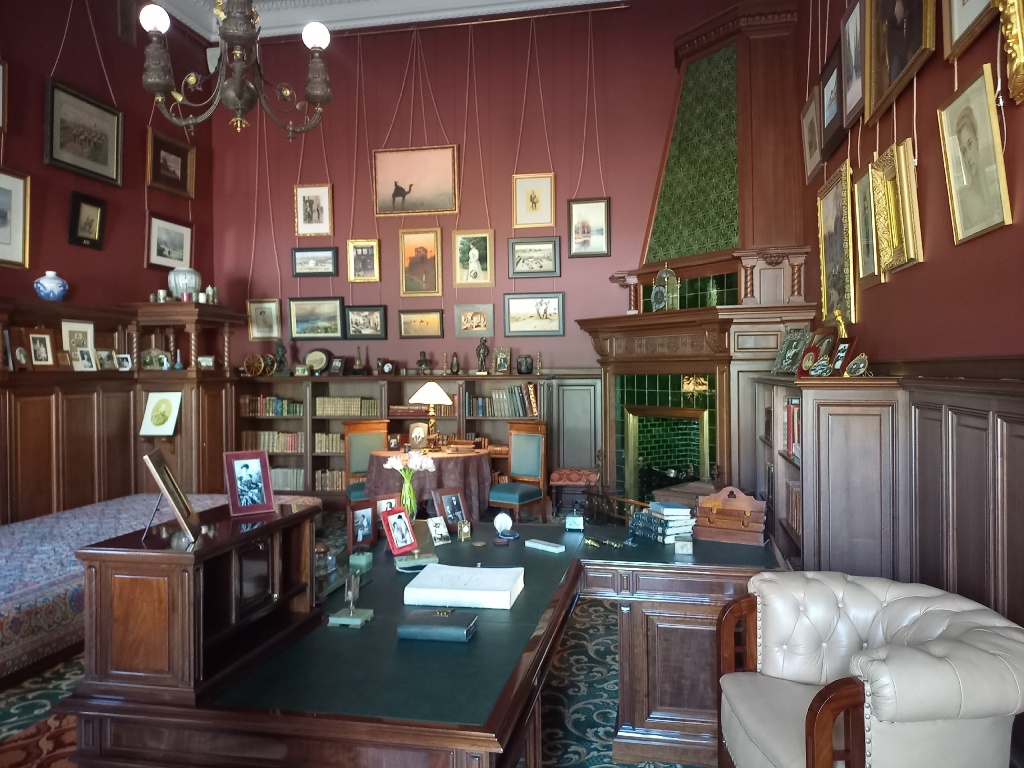
PHOTO: view of the Working Study of Emperor Nicholas II in the Alexander Palace as it looks today – the recreated ottoman can be seen on the left
The Farahan district of Persia, which has a long history of carpet weaving, is located in the central part of Iran, about 580 km south of Tehran. Active production of carpets was established in the region of Saruk, famous for its craftsmen. The export of Farahan carpets to Europe began in the 19th century. Similar Persian carpets are now represented in the largest Russian and foreign museum collections.
Until now, Farahan carpets are made by hand, by knotted weaving (160,000 knots per square meter) from woolen threads dyed with natural paints of mineral origin. This allows you to achieve identity when copying old samples.
When creating the carpet for the Alexander Palace, Iranian craftsmen used sheep wool with the addition of camel, from natural dyes – oak bark, fruit trees, lemon leaf, dates.
Among connoisseurs, such carpets are highly valued for their rich dark blue background and green shades of pattern elements resembling green copper. This colour is is represented in the carpet which has been recreated for the ottoman in the Working Study of Emperor Nicholas II.
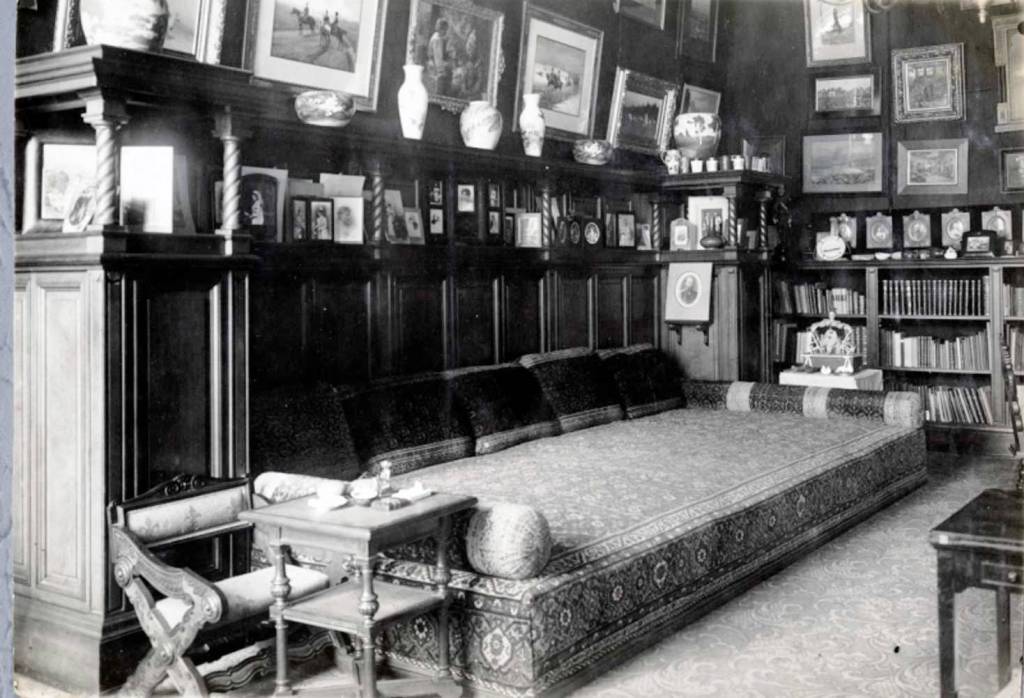
PHOTO: view of the original ottoman in the Working Study of Emperor Nicholas II in the Alexander Palace, c. 1930s
Nicholas II often used the ottoman to rest when his work dragged on until nightfall or when he returned to Tsarskoye Selo from St. Petersburg late and preferred not to disturb his family.
Click HERE to read my article The History and Restoration of the Working Study of Nicholas II in the Alexander Palace, published on 2nd December 2020
© Paul Gilbert. 28 June 2023
 Nicholas II
You must be logged in to post a comment.