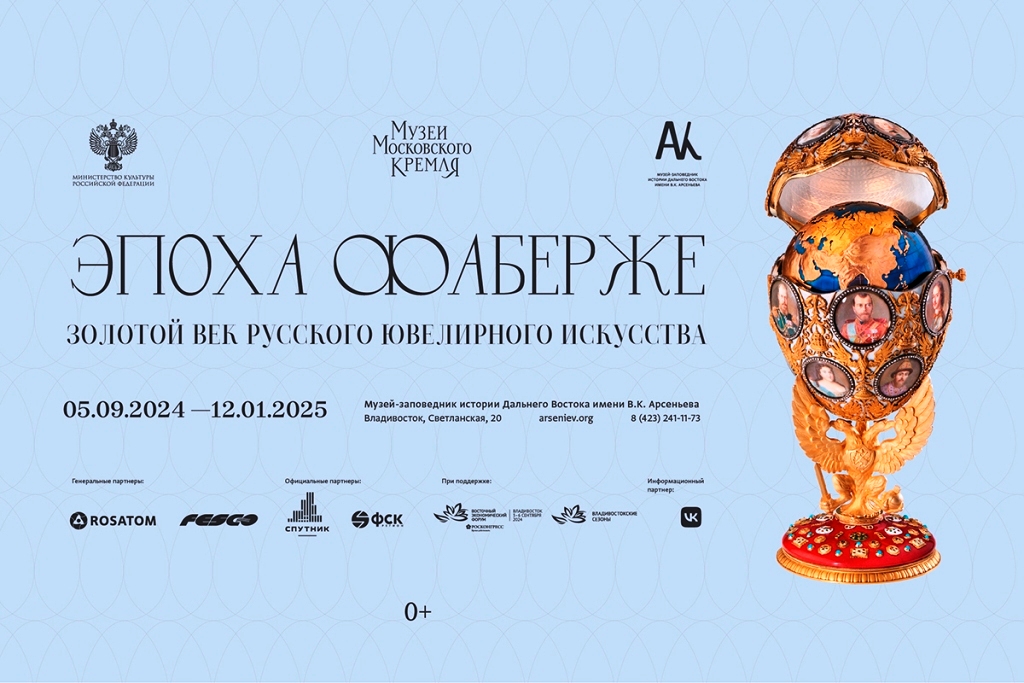
On 5th September 2024, a new exhibition The Age of Fabergé. The Golden Age of Russian Jewelry Art opened at the Arseniev Museum-Reserve of the History of the Far East, situated in Vladivostock. The exhibition is a joint project with the State Armoury Chamber Museum of the Moscow Kremlin.
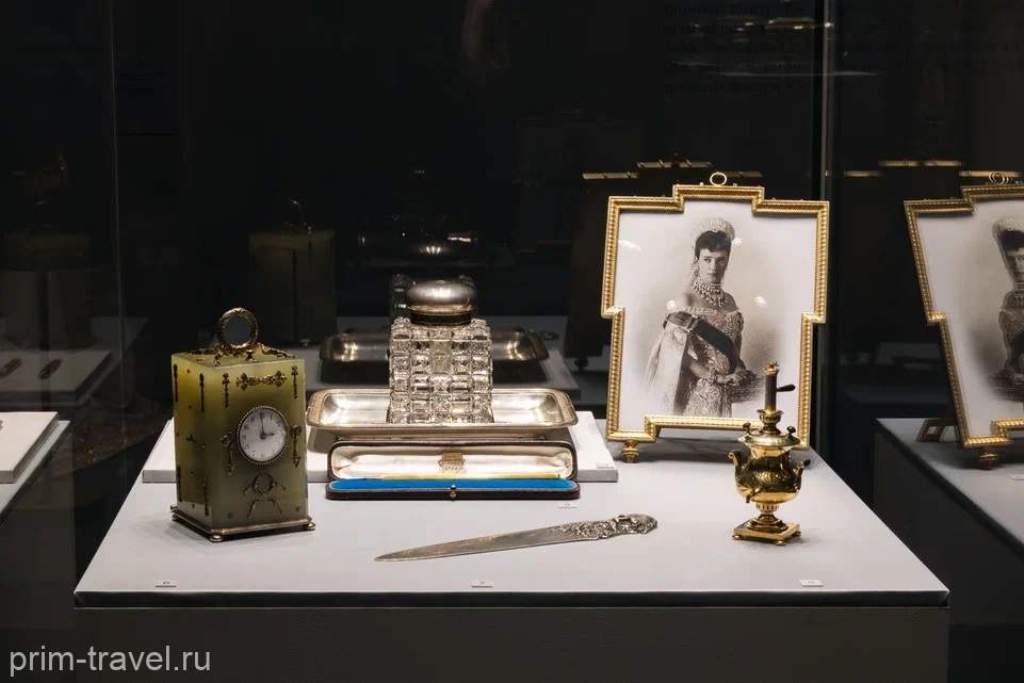
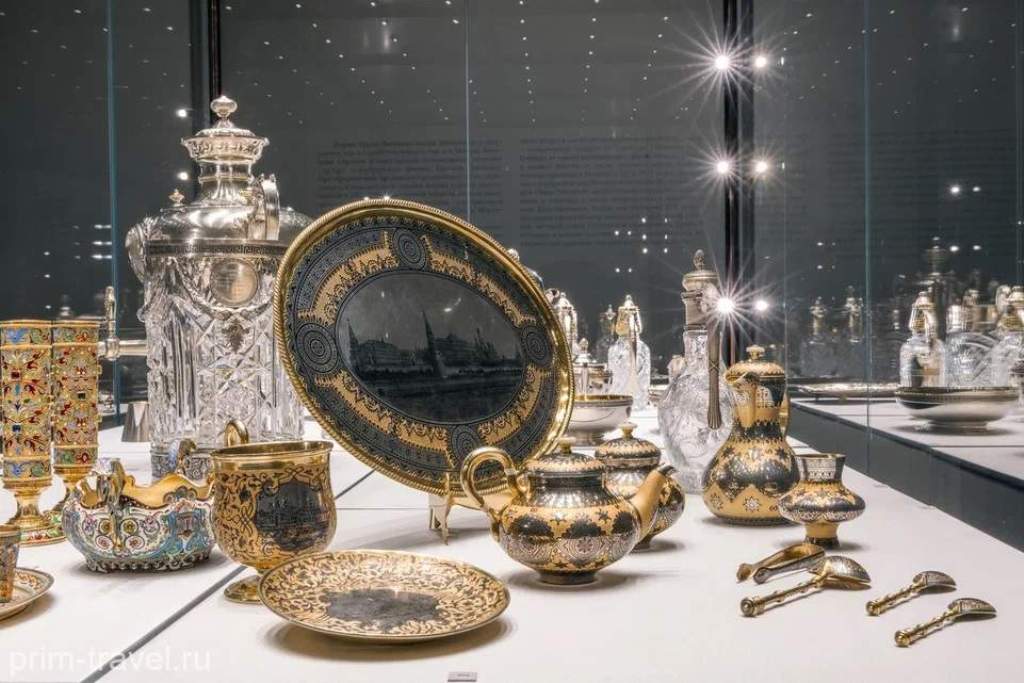
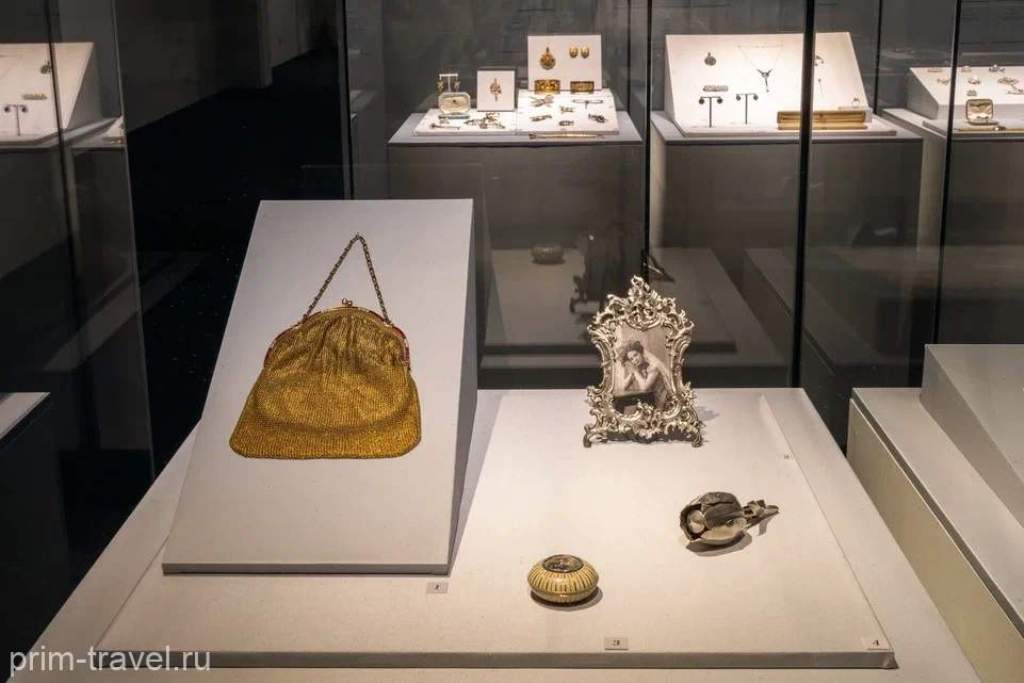
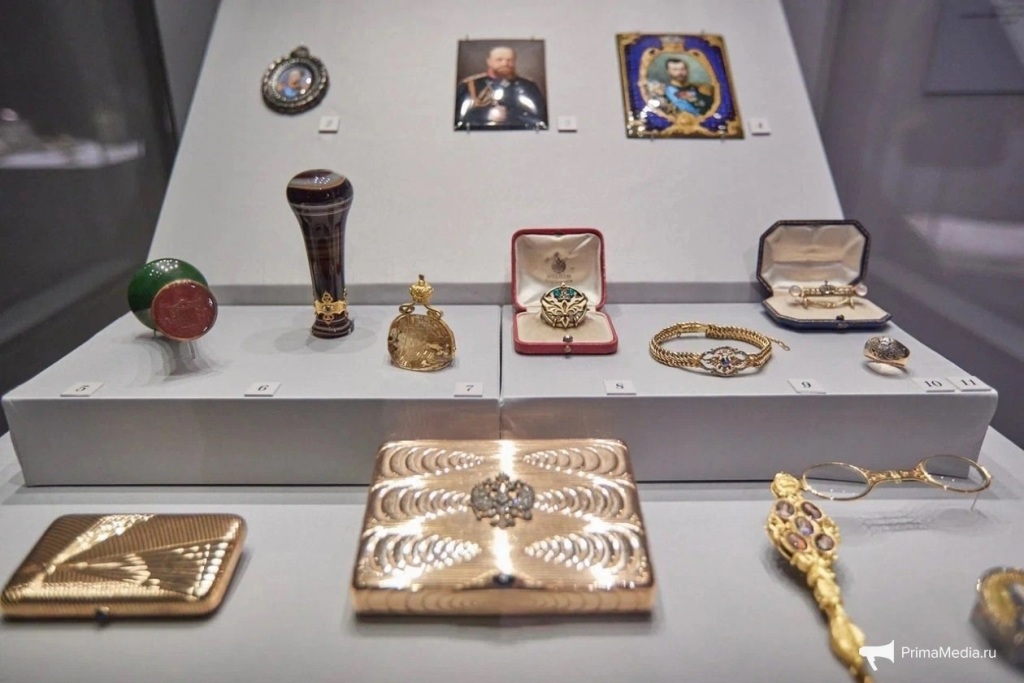
Grandiose in terms of the number of valuable exhibits from the funds of the Moscow Kremlin Museums, the exhibition showcases about 300 items, including three Fabergé Imperial Easter Eggs commissioned by Emperor Nicholas II for his wife Empress Alexandra Feodorovna, for Easter in 1908, 1913 and 1916 respectively.
The Imperial Easter Eggs held in the Moscow Kremlin Museums are only ten Imperial Fabergé eggs that were not sold by the Bolsheviks in the 1920s, and are now held in the funds of the State Armoury Chamber Museum of the Moscow Kremlin. The Armoury Museum will be moving to a massive new museum complex, located on Red Square in 2024.
The famous Imperial Easter Eggs with intricate surprises, commissioned by Emperor Nicholas II, occupy a central place at the exhibition: the Alexander Palace Egg, gifted to Empress Alexandra Feodorovna (Easter 1908) ; the Romanov Tercentenary Egg, gifted to Empress Alexandra Feodorovna (Easter 1913); and the Steel Military Egg, gifted to Empress Alexandra Feodorovna (Easter 1916).
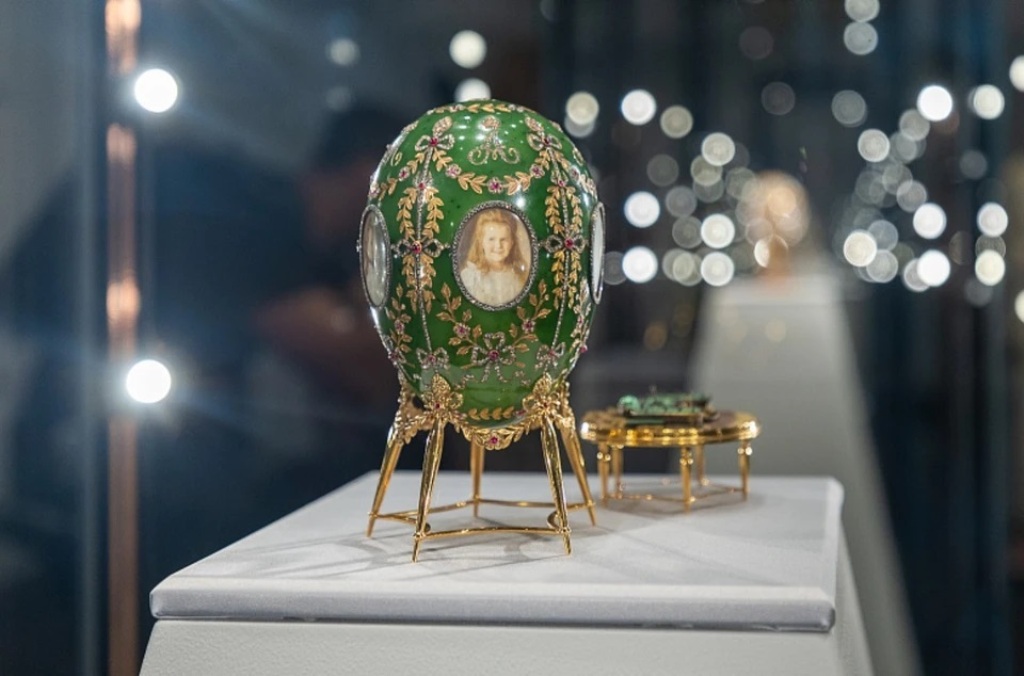
PHOTO: the Alexander Palace Egg (1908). Moscow Kremlin Museums
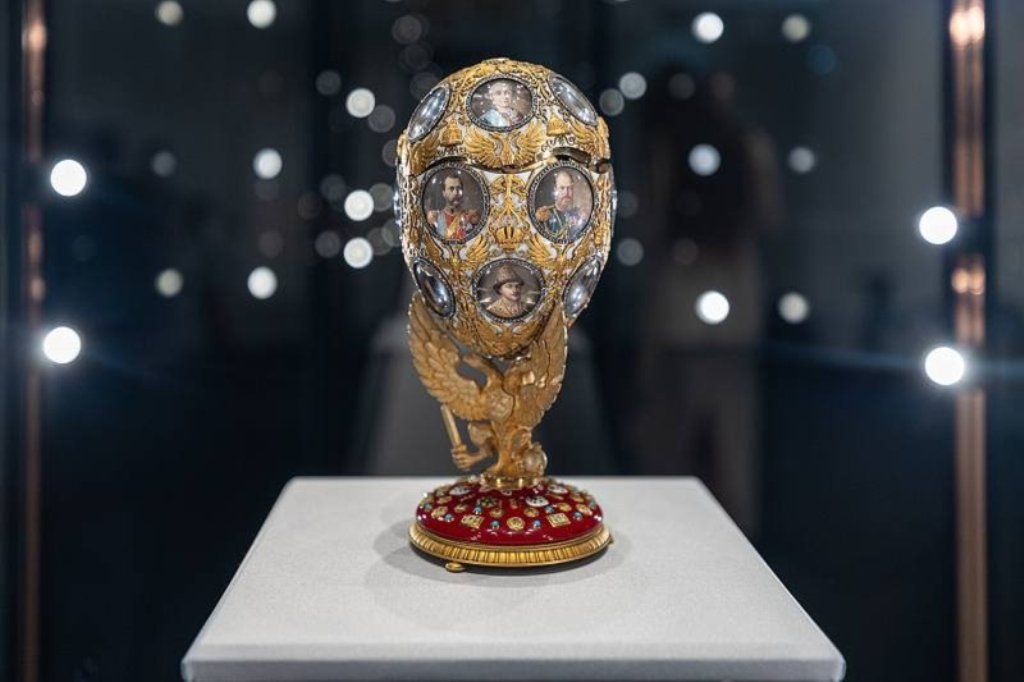
PHOTO: the Romanov Tercentenary egg (1913). Moscow Kremlin Museums
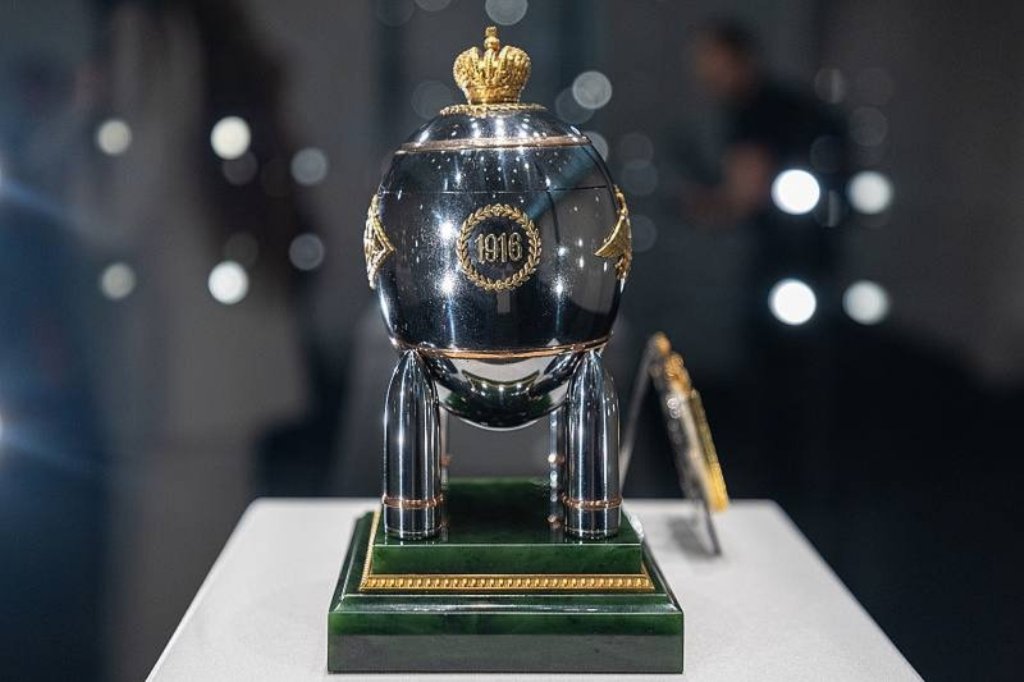
PHOTO: the Steel Military Egg (1916). Moscow Kremlin Museums
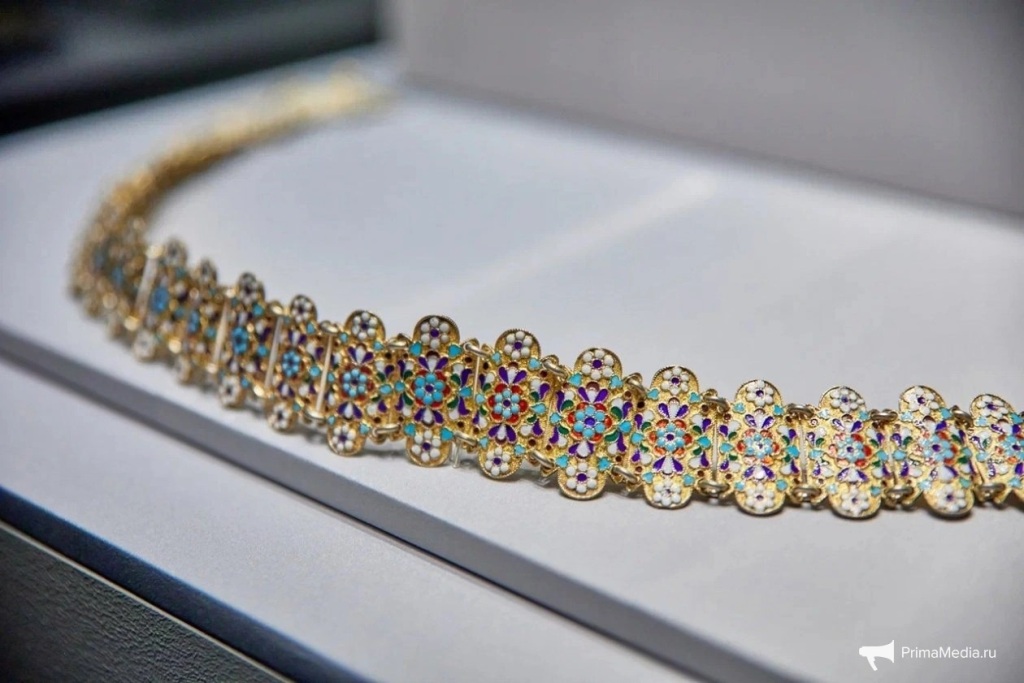
The exhibition showcases about 300 items, including masterpieces of the famous Russian firm of Carl Fabergé (1846-1920) as well as works of his contemporaries, including Suppliers of the Imperial Court I. Khlebnikov, P. Ovchinnikov, the Grachev brothers, F. Kechli, as well as other firms, factories, workshops and artels. The three Imperial Easter Eggs on display, were created by the chief jeweler of the Fabergé firm, Henrik Wigström (1862-1923).
In addition to exclusive and commissioned works, are gifts from the Guards to their august chiefs, seals with the coats of arms of members of the Romanov family, stone-cutting products of the Ekaterinburg Imperial Lapidary Factory bearing Imperial monograms, and precious church utensils for the Marfo-Mariinsky (Martha and Mary) Convent in Moscow, the abbess of which was Grand Duchess Elizabeth Feodorovna (1864-1918).
The Age of Fabergé. The Golden Age of Russian Jewelry Art exhibition runs until 12th January 2025 at the Arseniev Museum-Reserve of the History of the Far East in Vladivostock.
***
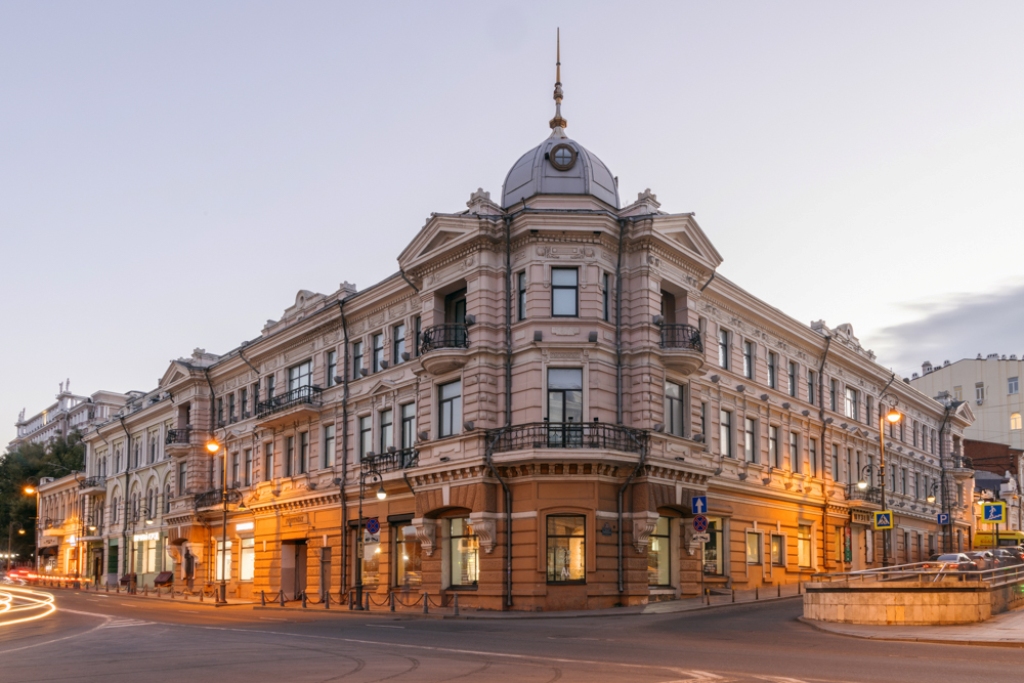
PHOTO: the Arseniev Museum-Reserve of the History of the Far East, situated in Vladivostock
The memorial house was built at the beginning of the 20th century. Vladimir Klavdievich Arsenyev (1872-1930) moved into apartment number 4 on the second floor in June 1929. He was a famous Russian traveler, geographer, ethnographer, local historian, writer, and explorer who made a significant contribution to the development of the Far East.
© Paul Gilbert. 5 September 2024
 Nicholas II
You must be logged in to post a comment.