Nicholas II’s stay at the Russian Embassy in Paris, 1896
NOTE: the following is an excerpt from the original full-length version (researched from Russian and French sources), which will be published in the No. 15 – Summer 2025 issue of my semi-annual periodical SOVEREIGN: The Life and Reign of Emperor Nicholas II. The full article will feature expanded text, with more facts and information, and illustrated with additional photos. This issue is scheduled to be released in June 2025 – PG

***

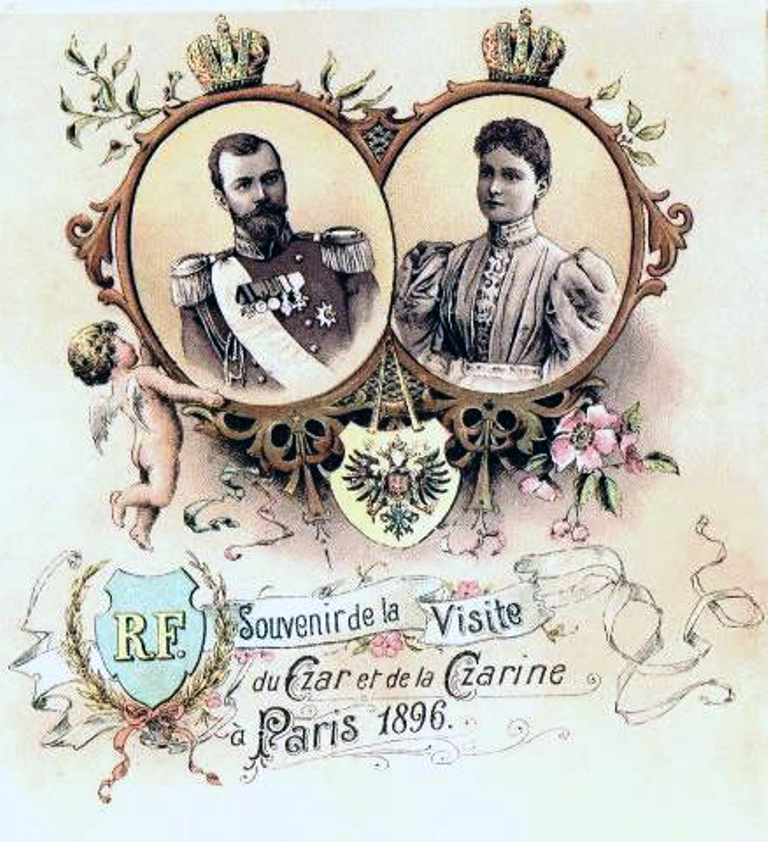
During the autumn of 1896, Emperor Nicholas II made a tour of Europe, which included visits to Denmark, Germany, Austria, France and Great Britain. He was accompanied by Empress Alexandra Feodorovna and their first child Grand Duchess Olga Nikolaevna, who was just shy of her first birthday.

The Imperial Family arrived in Paris on 5th October 1896 For the next three days, the Embassy of the Russian Empire served as their Imperial Residence. Russia’s ambassador to France at the time was Baron (since 1894) Arthur Freiherr von Mohrenheim (1824-1906), who held the post from 8 February 1884 – 18 November 1897.

In anticipation of the August visit, the ambassador, did everything he could to make the residence look like a palace. For three days, the house on the rue de Grenelle became the scene of the Franco-Russian Summit. The words of the revolutionary Marseillaise were sung, followed by those of the Russian Imperial Anthem God Save the Tsar!.
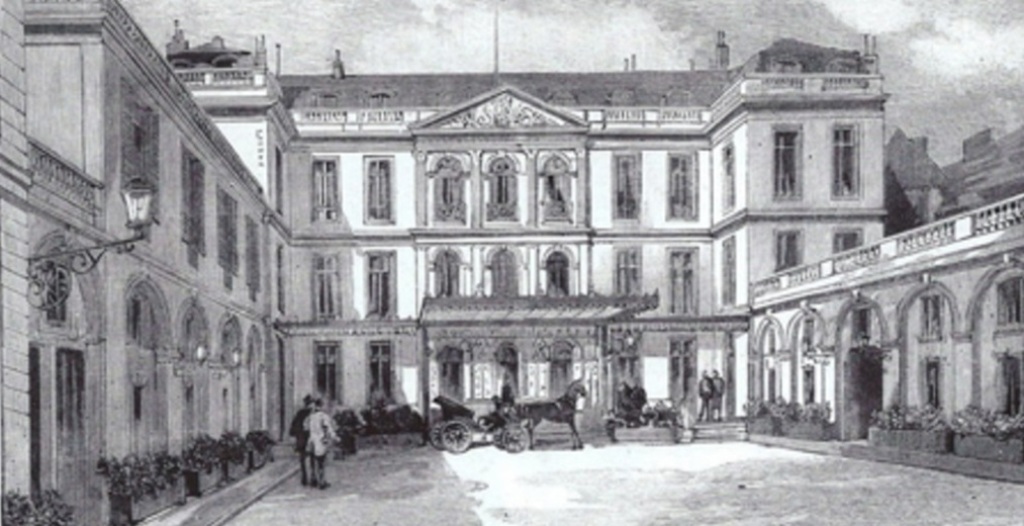
PHOTO: the Embassy of Russian Empire (as it looked in 1896)
situated at 79 rue de Grenelle in the 7th arrondissement, Paris

A lavish suite of rooms – which included a Throne Room – were decorated to the highest standards, all befitting the newly crowned Emperor and Empress of Russia.

Nicholas II’s and Alexandra Feodorovna’s apartments were located on the main floor of the Embassy. Next to the Small Salon, decorated with busts of Their Majesties, was the Empress’s Boudoir, decorated with magnificent carpets; then – the Emperor’s Study and the Reception Hall, decorated in green silk. The Imperial Bedroom’s were located on the right side of the main floor. The Empress’s Bedroom, was modestly and at the same time very elegantly furnished, decorated in white and gold; with mauve [her favourite colour] coloured furniture made of woven silk.

On the second floor was Grand Duchess Olga Nikolaevna’s bedroom, which contained a small crib with white curtains, next to an iron bed for the wet nurse; furnished with white lacquered furniture.

The following illustrations of the luxurious interiors of the Imperial Family in the Embassy of the Russian Empire, were originally published in the St. Petersburg newspaper Neva and World Illustration magazine, 1896.
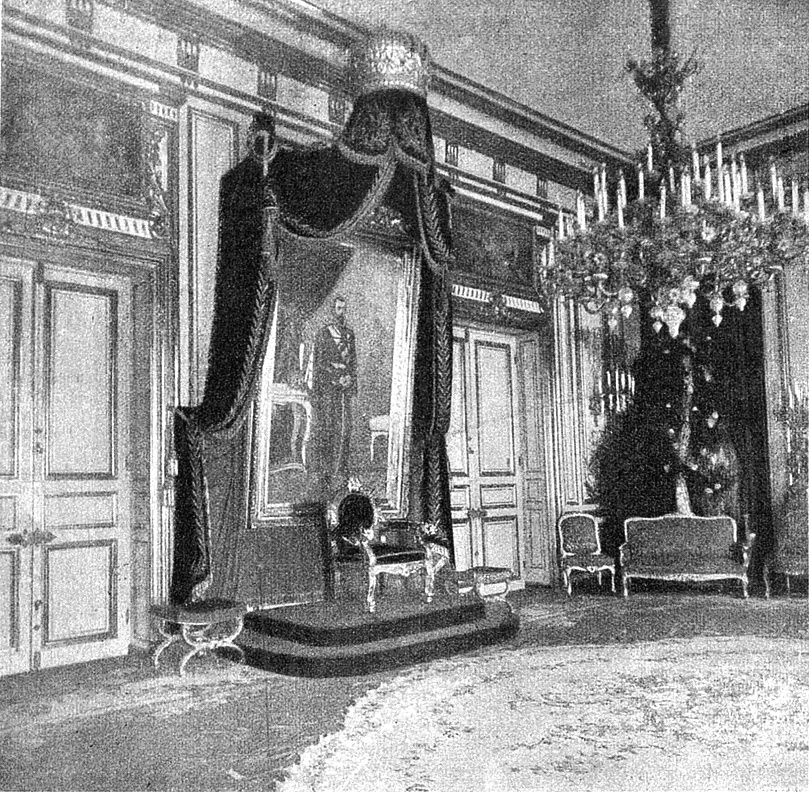
PHOTO: the throne Room, note the portrait of Nicholas II behind the throne
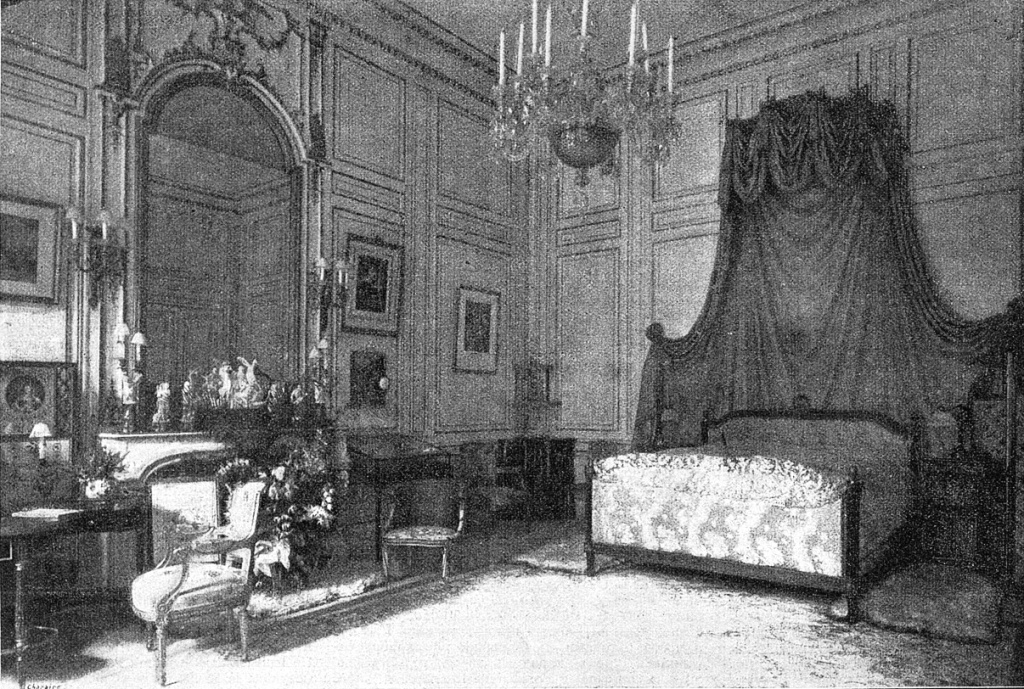
PHOTO: the Imperial Bedroom
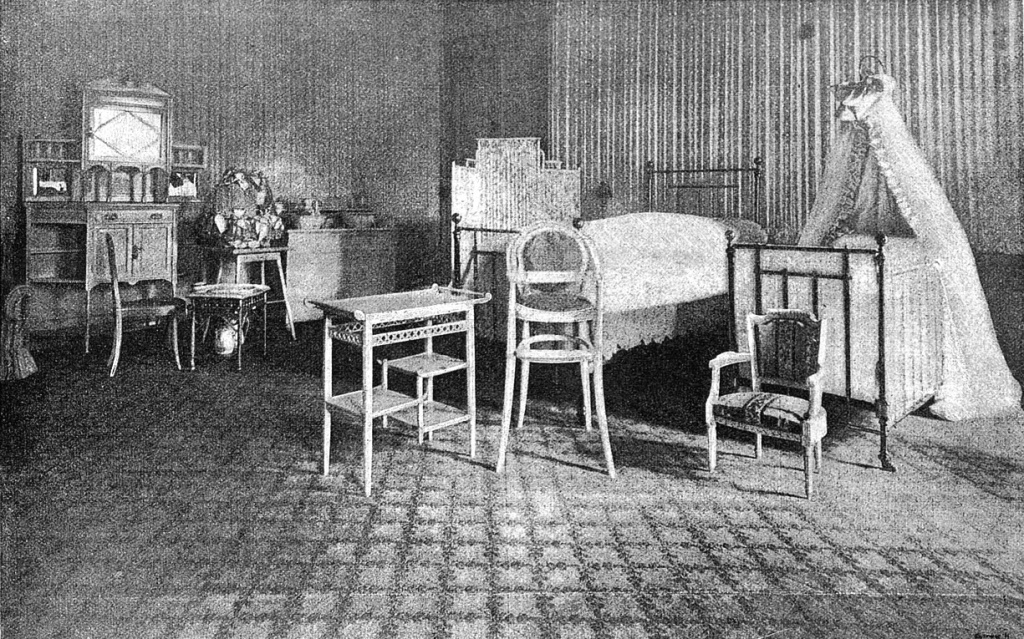
PHOTO: Grand Duchess Olga Nikolaevna’s bedroom
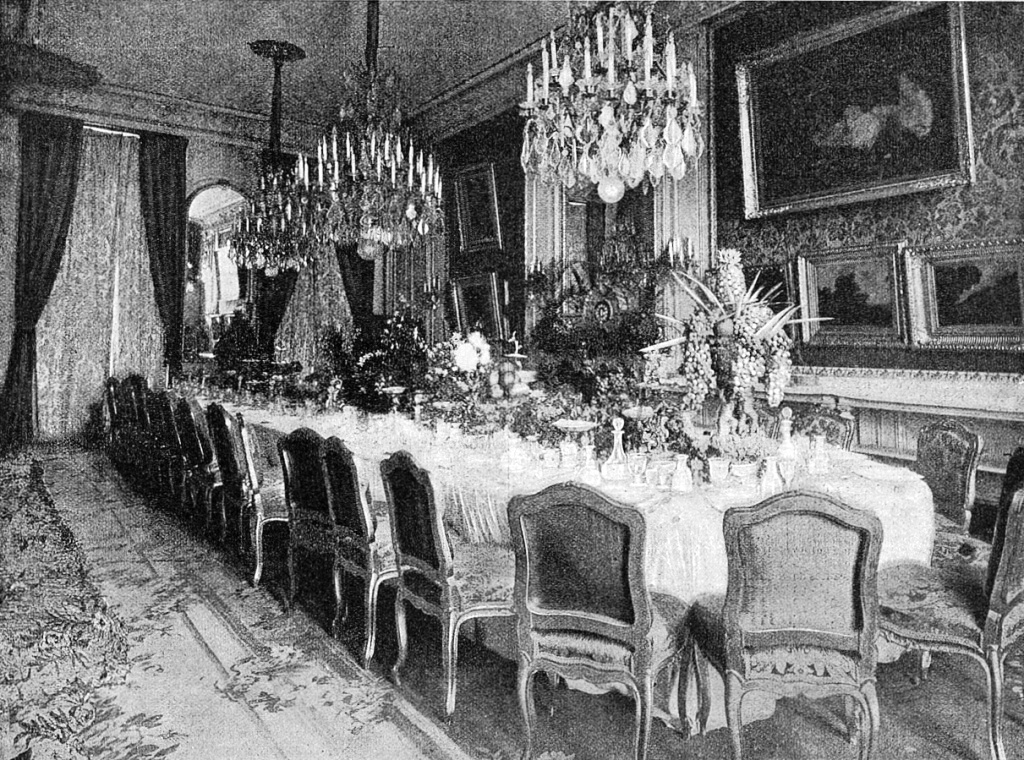
PHOTO: the Dinging Room

***

The building was designed by Robert de Cotte, architect of King Louis XIV, and built between 1711 and 1713 for Madeleine-Diane de Bautru de Vaubrun, the Duchesse d’Estrées (1668-1753). After belonging to several owners, it was purchased by the Russian Imperial Government in 1863 and became the Embassy of the Russian Empire in France.

Following the purchase, the Russian government made extensive changes to the former mansion and it’s interiors. Both Emperor Alexander II (1867) and his grandson, Nicholas II (1896), stayed in the residence when they visited Paris.

In 1977 the Russian Embassy was moved to another building, while the old embassy building became the residence of the Ambassador of the Russian Federation to France. Today, it is known as the Hôtel d’Estrées, and is classified as a historic monument of France.
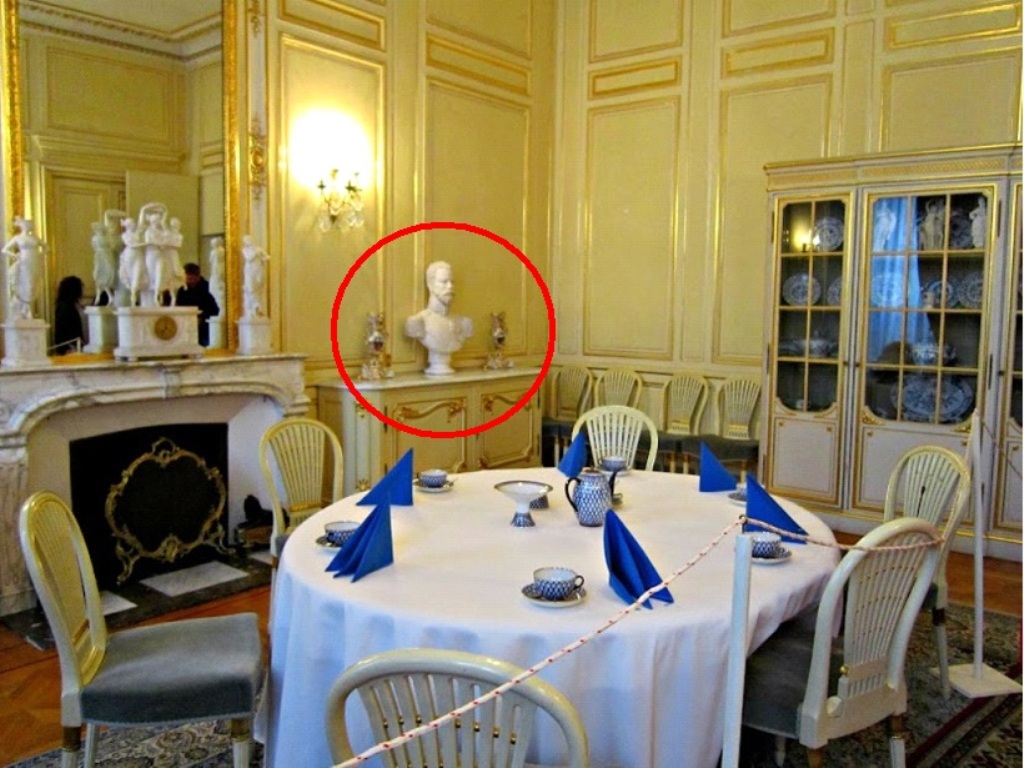
PHOTO: The White Salon, which served as the Imperial Bedroom.
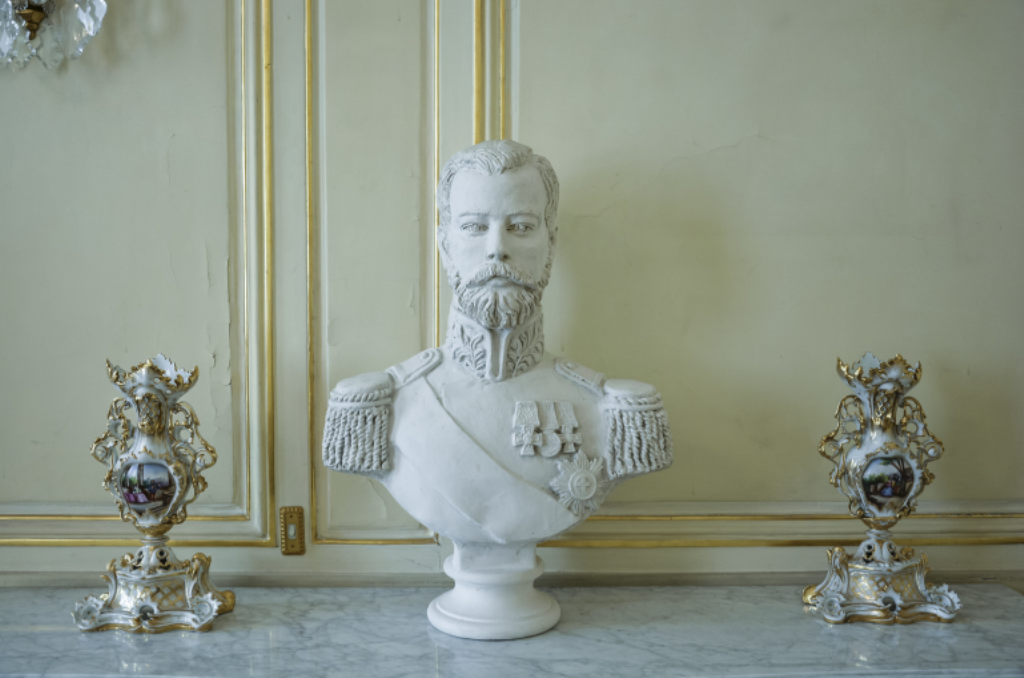
Note the bust of Nicholas II (circled in red), on a side-table, next to the fireplace
.

PHOTO: a bust of Emperor Nicholas II now rests on a side-table, next to the fireplace in the White Salon, formerly the Imperial Bedroom, during the Imperial Family’s visit in October 1896.

The interiors of the former Imperial Apartments of Emperor Nicholas II and Empress Alexandra Feodorovna have survived to the present day. Among the modern-day interiors of the Russian Ambassador’s residence, the Red Salon, which was used for official ceremonies, and was used as the Throne Room by Nicholas II, the Bleu (Blue) Salon  was used as his private study, while the White Salon served as the Imperial Bedroom during the August couple’s visit to Paris in 1896.

Today, the former Embassy is known as the Hôtel d’Estrées, and official residence of the Russian Ambassador. Over the years, the building has been the venue for receptions and exhibitions, hosted by the Ambassador. On 3rd September 2013, the Russian Ambassador officially opened an exhibition dedicated to the 400th anniversary of the house of Romanov

Click HERE for a VIRTUAL TOUR of the Residence of the Russian Ambassador

© Paul Gilbert. 30 November 2024

130th anniversary of the Wedding of Nicholas II and Alexandra Feodorovna, 1894

PHOTO: Wedding of Nicholas II and Alexandra Feodorovna
Painted in 1895 by the Danish artist Laurits Tuxen (1853-1927)
From the collection of the State Hermitage Museum, St. Petersburg

NOTE: the following is an excerpt from the original full-length version (researched from Russian sources), which will be published in the No. 14 – Winter 2025 issue of my semi-annual periodical SOVEREIGN: The Life and Reign of Emperor Nicholas II. The full article will feature expanded text, with more facts and information, and illustrated with additional photos. This issue is scheduled to be released in December 2024 – PG

***

Today 27th (O.S. 14th) November – marks the 130th anniversary of the wedding of Emperor Nicholas II and Grand Duchess Alexandra Feodorovna[1] in St. Petersburg.

It was on this day in 1894, that the ceremony took place in the Grand Church (the home church of the Imperial Family) of the Winter Palace in St. Petersburg.

Plans for the wedding, had originally been set for the spring of 1895, followed by a week of public celebrations. The death of Emperor Alexander III on 2nd November [O.S. 20th October], however, put an end to such plans. The date for the wedding was now scheduled to take place on the birthday of Nicholas II’s mother, Maria Feodorovna, which would allowed for court mourning to be somewhat relaxed.

To announce the historic occasion, a manifesto was issued, proclaiming “In the midst of deep sorrow, with which Our hearts and those of all the faithful sons of Russia are filled, may this day be a bright herald of the people’s hopes for the continuation of God’s mercy to Us in the new reign that has come.”

Invitations were sent out, the dress code was determined. Russian gentlemen had to appear in full regimental uniform, officials had to dress in uniforms, according to the Table of Ranks of Peter the Great. Russian ladies had to appear in ceremonial court dresses, and foreign women were invited to appear in evening dresses, with full awards and jewelry.

The wedding was attended by Nicholas’s mother, the recently widowed Dowager Empress Maria Feodorovna, as well as members of the Russian Imperial Family, which included 14 grand dukes, 6 grand duchesses. In addition, were Kings, Queens, Princes and Princesses from more than a dozen royal houses of Europe: Denmark, Greece, Great Britain, Roumania, Prussia, Oldenburg, Hesse and by Rhine, Saxe Coburg, Mecklenburg, Mecklenburg-Stelitz, Baden, Leuchtenberg, and Saxe-Altenburg.

As photography was not permitted during weddings, baptisms, funerals, etc., in Orthodox churches, we only have paintings and illustrations which depict the wedding. This restriction has been somewhat relaxed in more modern times.

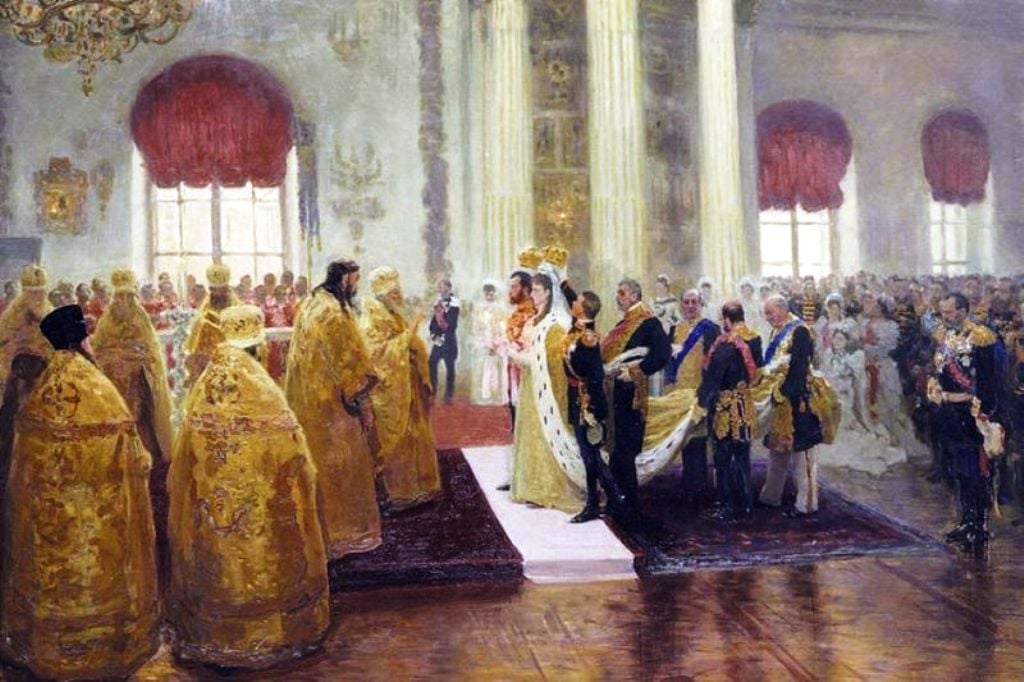
PHOTO: Wedding of Nicholas II and Alexandra Feodorovna
Painted in 1894 by the Russian artist Ilya Yefimovich Repin (1844-1930)
From the Collection of the State Russian Museum, St. Petersburg

On the day of the wedding, in the morning, the Emperor left the Anichkov Palace for the Winter Palace in an open landau, accompanied by his brother, Grand Duke Mikhail. The Dowager Empress went in a closed carriage to the Sergiev Palace – the St. Petersburg residence of Grand Duke Sergei and Grand Duchess Elizabeth, from where she escorted Alexandra Feodorovna to the Winter Palace.

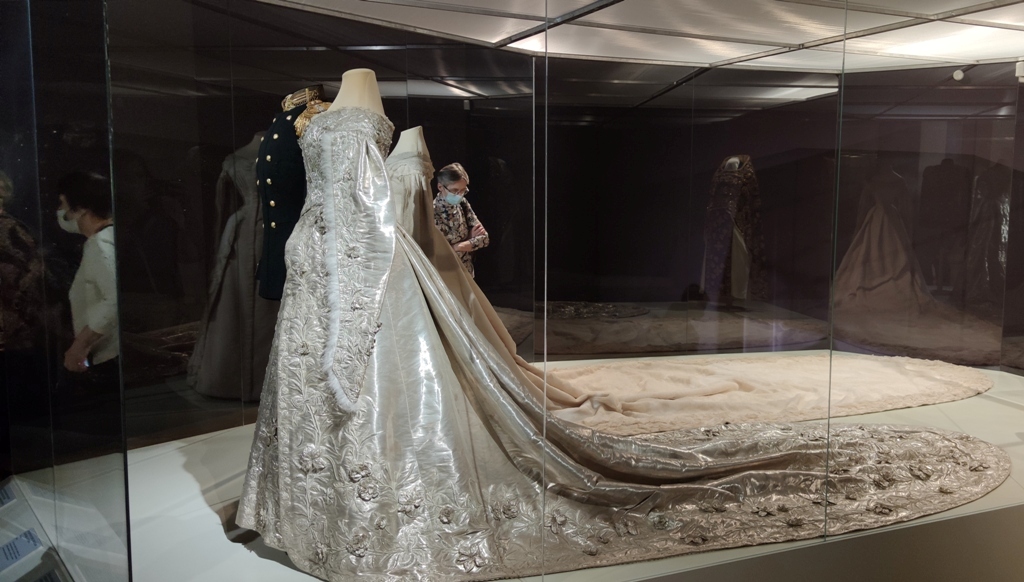
Nicholas Alexandrovich was dressed in the red uniform of a hussar colonel with orders and an orange sash of the Order of Hesse-and-by-Rhine. The bride wore a dress of white silk with silver flowers. Her English Honiton lace veil was created by her maternal grandfather, Prince Albert of Saxe-Coburg and Gotha (1819-1861). This veil was worn at the weddings of the brides mother Princess Alice (1843-1878) and her sisters. Alexandra Feodorovna also wore the traditional Romanov Imperial Wedding Crown, a 475-carat necklace and earrings, which belonged to Catherine the Great. Her ensemble was completed by a golden brocade robe with a long train, lined with ermine. Eyewitnesses at the wedding noted that “she shone with fragile and pure beauty.”

PHOTO: the wedding dress of Alexandra Feodorovna
From the Collection of the State Hermitage Museum in St. Petersburg

It is interesting to note, that the wedding dress of Empress Alexandra Feodorovna was based on a sketch made by her sister Grand Duchess Elizabeth Feodorovna. According to tradition, Romanov brides donated their wedding dresses to the church after their wedding. However, Alexandra Feodorovna, chose to keep hers, which is why her wedding dress has survived to this day, and now in the Collection of the State Hermitage Museum in St. Petersburg.

At noon, the procession of the cross to the Grand Church (the home church of the Imperial Family) began. The cannons of the Peter and Paul Fortress announced the beginning of the ceremony. The procession was led by Dowager Empress Maria Feodorovna, who accompanied her future daughter-in-law. Nicholas Alexandrovich followed behind.

The service was conducted by the imperial confessor and head of the palace clergy, Protopresbyter Ioann Yanyshev (1826-1910). Nicholas II stepped onto the platform, followed by Alexandra Feodorovna. The couple exchanged rings and wedding vows, walked around the lectern, and kissed the cross. After the prayer, Nicholas and Alexandra were declared husband and wife. Church bells rang all over St. Petersburg, while cannons roared from the Peter and Paul Fortress.

Nicholas II recalled that the wedding ceremony was a torment for both him and his young wife: “The thought that our dear, selflessly beloved Papa was not among us, did not leave me during the wedding; I had to exert all my strength not to burst into tears there in the church in front of everyone.”

Thus, the modest wedding ceremony took place in an atmosphere of deep mourning for the deceased Emperor Alexander III. Due to court mourning, there was no reception, nor honeymoon. During the 12 months in which the Imperial Court was in mourning, Nicholas II and Alexandra Feodorovna seldom appeared in public and did not make any journeys. The newly married couple settled together with Dowager Empress Maria Feodorovna in the Anichkov Palace on Nevsky Prospekt in St. Petersburg.

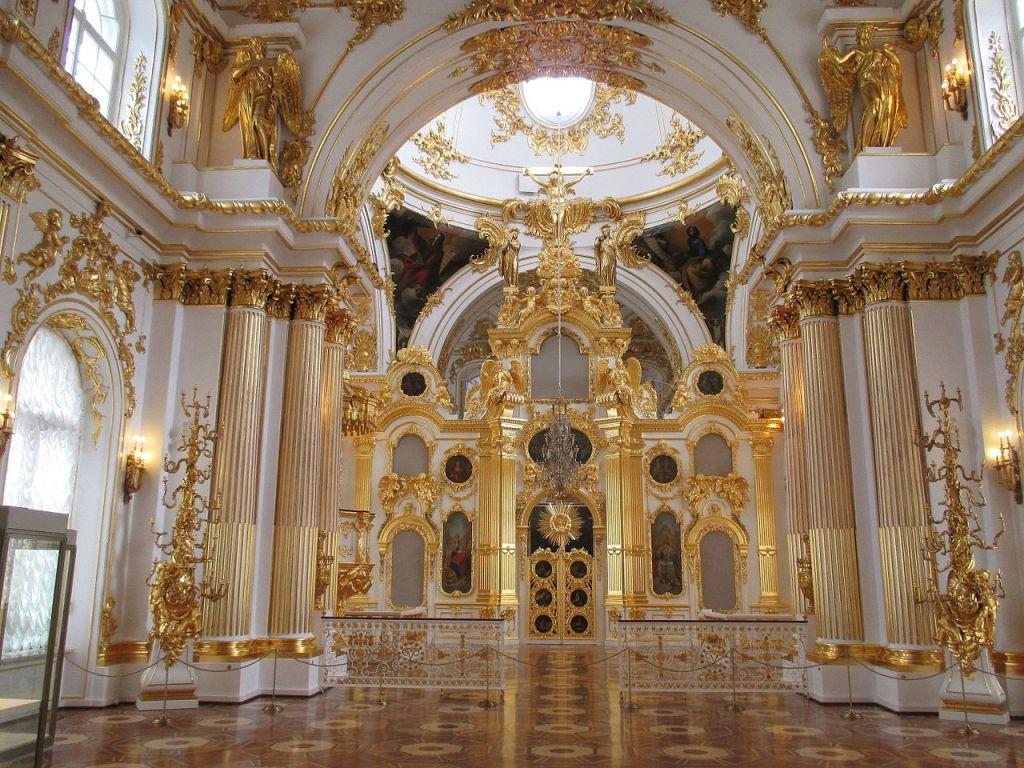
PHOTO: the Grand Church (the home church of the Imperial Family)
as it looks today, in the Winter Palace in St. Petersburg

NOTES:

[1] Following her conversion to Orthodoxy, Princess Alix of Hesse and by Rhine took the name Grand Duchess Alexandra Feodorovna, in honour of the Feodorovskaya Icon of the Mother of God, patroness of the Romanov dynasty. While her conversion was completely voluntary, it was required by her marriage to the Emperor as well as her future role as Empress.

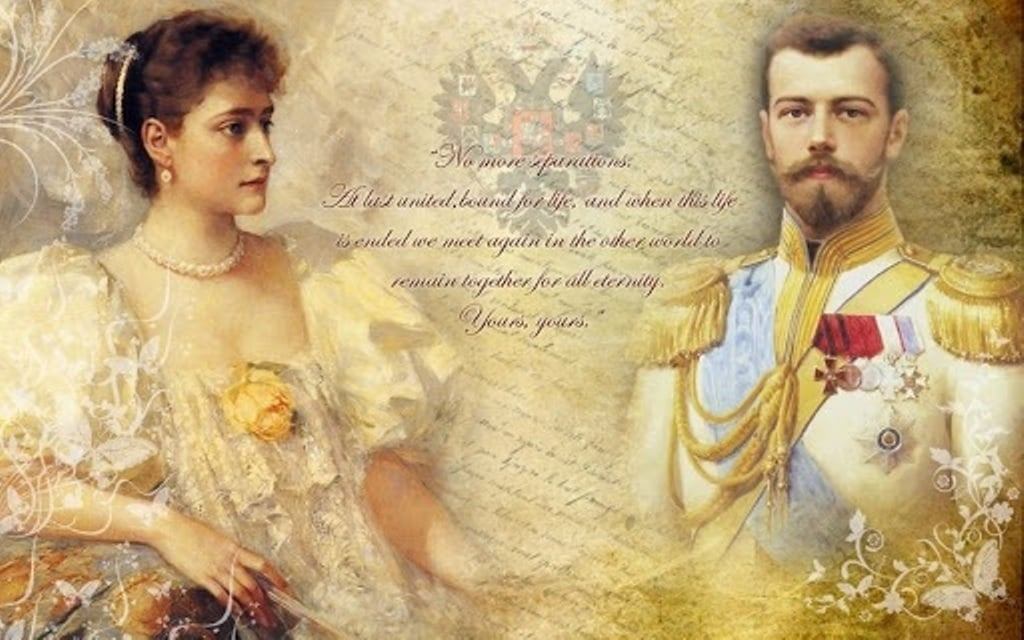
“No more separations. At last united, bound for life, and when this life is ended we
meet again in the other world to remain together for all eternity. Yours, yours.”

© Paul Gilbert. 27 November 2024
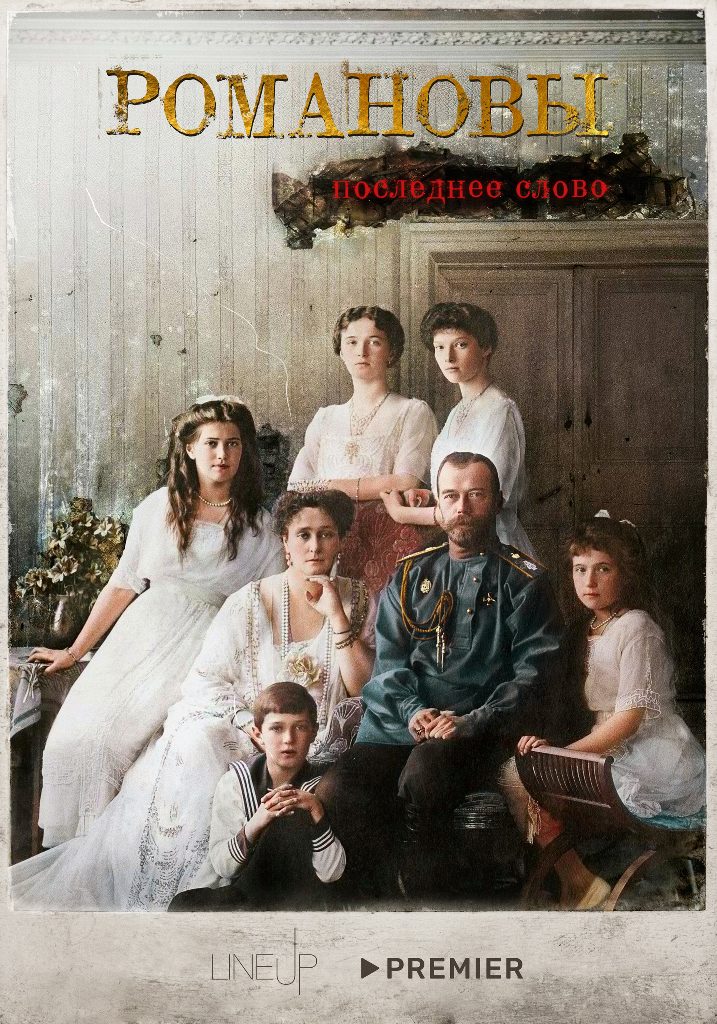
Watch all 5 episodes of ‘The Romanovs. The Final Word’ 

NOTE: this article has been updated from it’s original (published on 15th December 2023), with episode No. 5. All 5 episodes are now available in one video, the duration of which is 3 hours and 28 minutes. While the audio is in Russian, you can adjust the settings to translate in English (or other languages), and then turn on the close-captioning for English subtitles – PG (26 November 2024)

The 5-part series ‘The Romanovs. The Final Word‘, a new Russian-language documentary series is now available to watch on the Russian actor Danil Smirnov’s YouTube page.

In 1964, members of the firing squad Grigory Petrovich Nikulin (1894-1965) and Isai Radzinsky, on the orders of Nikita Khrushchev, recorded their memories of the execution of the Imperial Family in July 1918. These audio recordings were subsequently ordered sealed and stamped “SECRET” and placed in the archives. These important historical recordings are now made public for the first time in the documentary series ‘The Romanovs. The Last Word.’

For the first time, this documentary series reconstructs in detail one of one of the most notorious crimes in 20th century Russian history – the murders of Emperor Nicholas II and his family – based on the memories of the killers. as well as the circumstances of hiding the bodies by a team of executioners. The project was narrated by Sergey Minaev.

***

PLEASE NOTE that this series is currently only available in Russian. I do not know if or when an English language edition will be made available. In the meantime, I will continue to search for the series with English subtitles and update this post – PG

Episode 1 to 5. Duration: 3 hours, 28 minutes, 25 seconds

PLEASE NOTE that this series is currently only available in Russian. I do not know if or when an English language edition will be made available. I will continue to search for the series with English subtitles and update this post – PG

FURTHER READING:

“The Romanovs. The Final Word” viewed more than 1 million times!

The Romanovs. The Final Word + TRAILER

© Paul Gilbert. 15 December 2023

***

Paul Gilbert’s Romanov Bookshop on AMAZON

I have published nearly 30 titles to date through AMAZON – featuring one of the largest selections of books on Nicholas II, the Romanov dynasty and the history of Imperial Russia.

Please CLICK on the BANNER or LINK above to review my current selection of titles in hardcover, paperback and ebook editions. Listings provide a full description for each title, pricing and a Look inside feature.

Nikolai Sokolov honoured at Ganina Yama

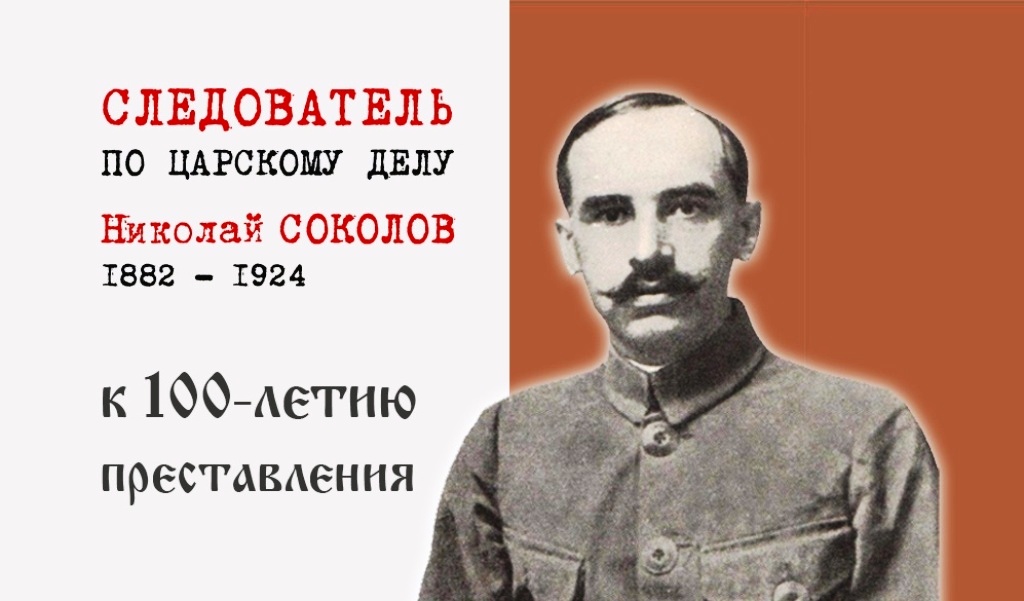
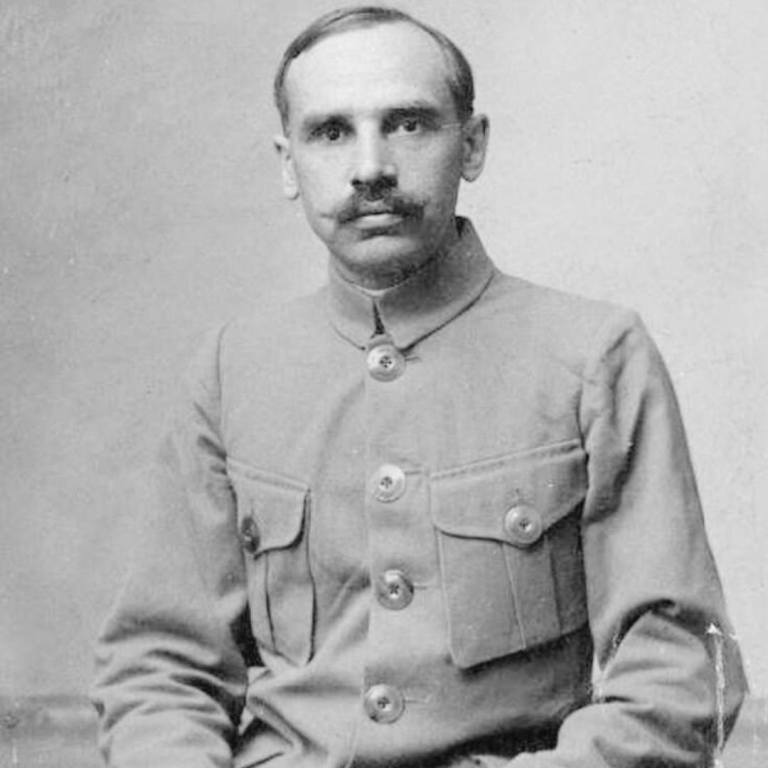
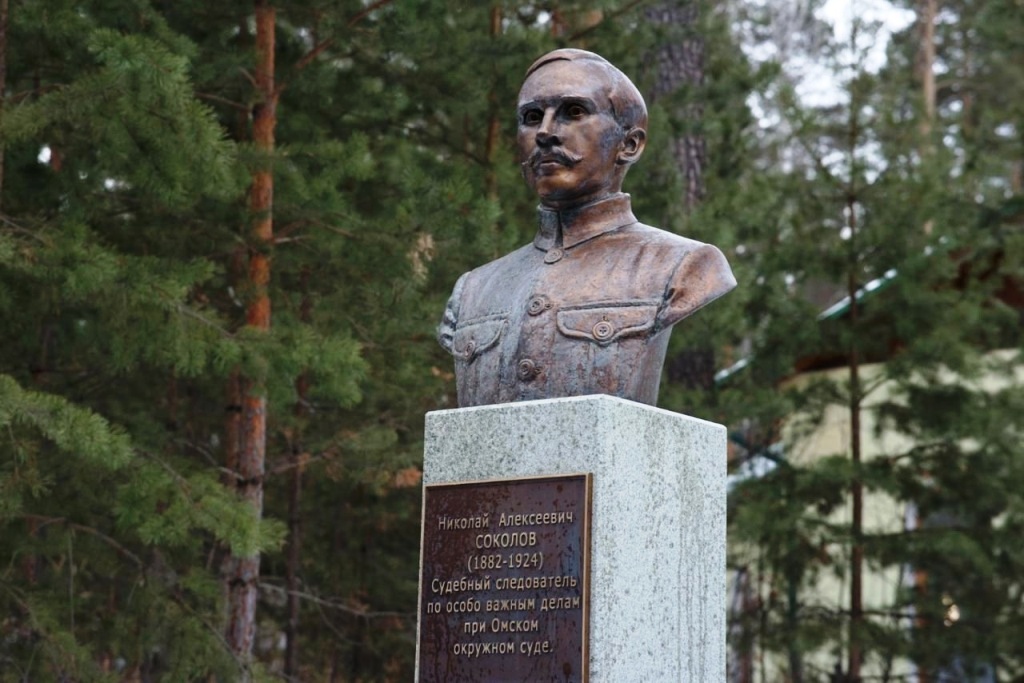
Today – 23rd November – marks the 100th anniversary of the death of Nikolai Alekseevich Sokolov (1882-1924).

Sokolov, a lawyer, and investigator for important cases of the Omsk District Court, was appointed by Admiral Alexander Kolchak (1874-1920) in February 1919, with the investigation into the murder of members of the Russian Imperial Family in Ekaterinburg and Alapaevsk.

As a staunch Orthodox monarchist, Sokolov accepted his appointment as investigator with a deep sense of reverence and responsibility. Within a short time, working without rest from morning until late at night, Sokolov managed to collect a vast amount of material evidence and interviewed hundreds of witnesses, which included several members of Nicholas II’s entourage, notably Pierre Gilliard, Alexandra Tegleva and Charles Sydney Gibbes.

Sokolov discovered a large number of the Imperial Familys’ belongings and valuables that were overlooked by Yurovsky and his men in and around the mineshaft where the bodies were initially disposed of in the Four Brothers Mine.

The impending return of Bolshevik forces in July 1919, forced Sokolov to abandon his investigation, thus failing to find the concealed second burial site on the Koptyaki Road.

He evacuated Ekaterinburg, bringing with him the box containing the relics he recovered. Sokolov accumulated eight volumes of photographic and eyewitness accounts. Today, the box is stored in the Russian Orthodox Church of Saint Job in Brussels.

Sokolov fled from Russia to France, where he continued his investigation, questioning additional witnesses who had managed to escape Bolshevik Russia.

Sadly, Sokolov did not live to bring his investigation to an end – he was found dead in the garden of his house on 23rd November 1924, having suffered a heart attack at the age of 42. He died leaving a widow aged 23 and two young children, a daughter Nathalie (1920-2002) and a son Alexis (1923-1980). He is buried in the cemetery of Salbris, France.

“On Wednesday, November 26, he [Sokolov] was buried literally by the entire town of Salbris with the mayor at the head. It was not a crowd of curious spectators, but sympathetic Frenchmen who came dressed in mourning to pay their last respects to the deceased.

When, after the burial, the Russians thanked the mayor for the touching sympathies to their compatriot, the mayor replied that he, could not remember when the whole town turned out for a funeral for someone in Salbris, and that they, the French, had come to pay their last respects to the representative of the Russia that was their ally and friend.

Thus, in France, Russian émigrés, together with the French, saw off, the judicial investigator for especially important cases, Nikolai Alekseevich Sokolov, on his final journey, who died in a foreign land on 23rd November 1924.

Nikolai Alekseevich Sokolov (1882-1924).
Memory Eternal! Вечная Память!
☦️

Click HERE to *watch a short 1-minute VIDEO of the event

*NOTE: for English subtitles, adjust the translation settings to the
language of your choice, and then click on the “CC” button – PG

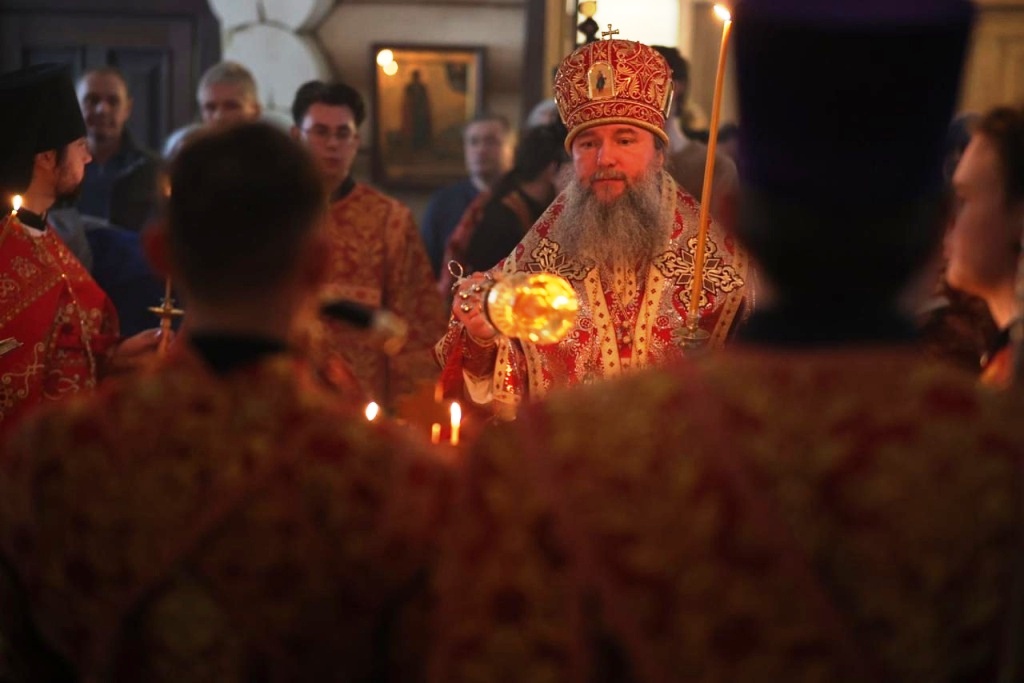
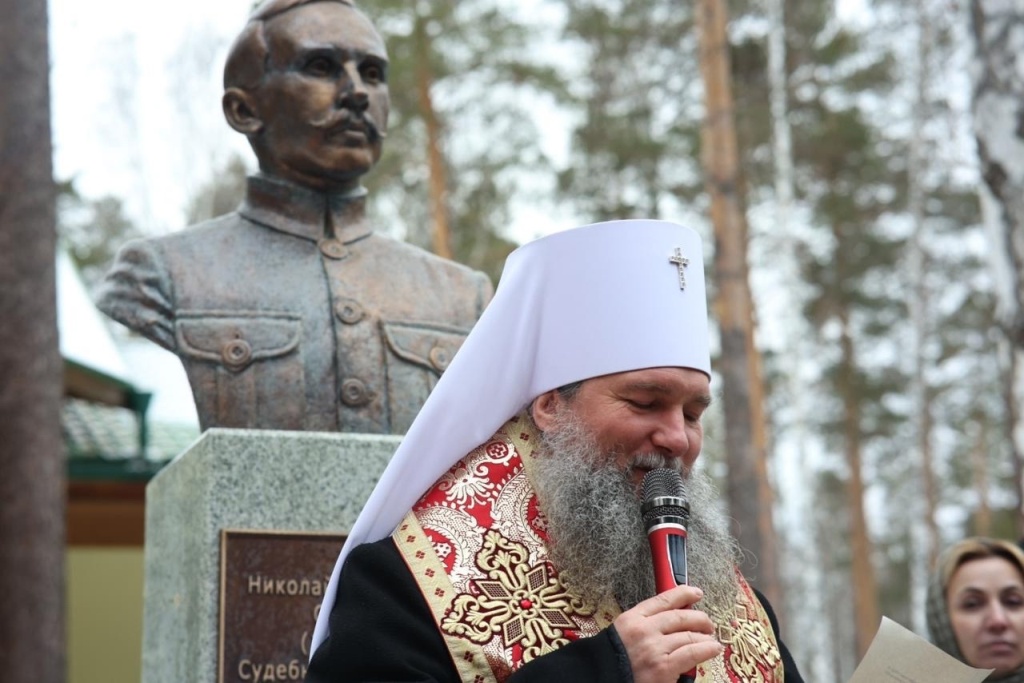
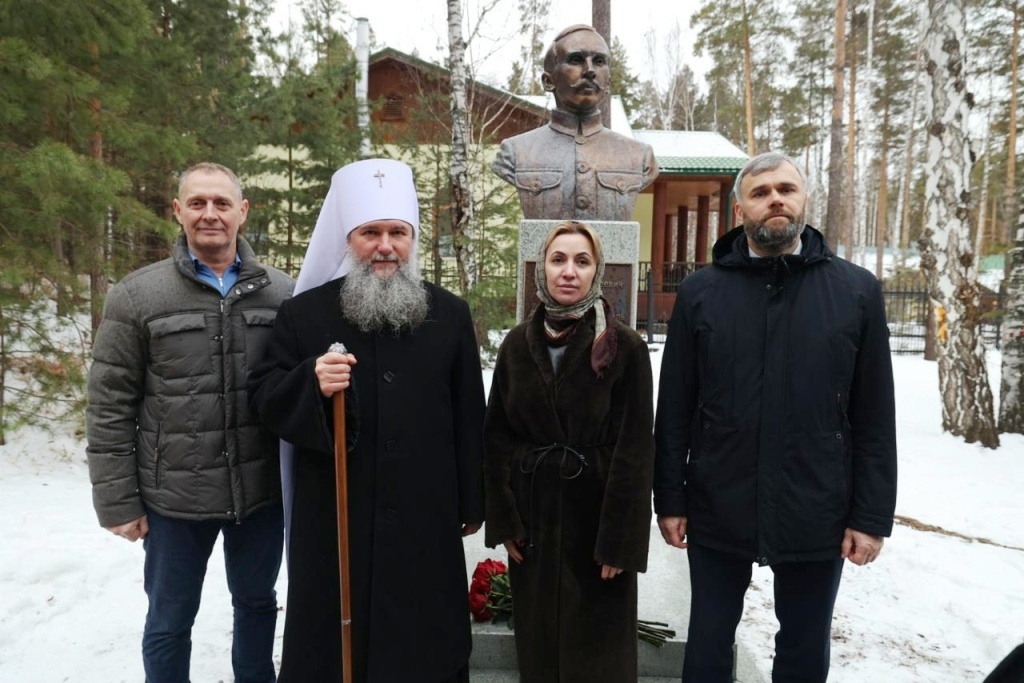
On the morning of 23rd November 2024, a Divine Liturgy was performed by Metroplitan Evgeny (Eurgene) of Ekaterinburg and Verkhotursky in the Church of the Holy Royal Passion-Bearers at the Monastery of the Holy Royal Passion-Bearers at Ganina Yama. At the end of the Divine Liturgy, Metropolitan Evgeny performed a pannikhida [Orthodox memorial service for the dead].

During the service, prayers were lifted up for the ever-memorable servant of God Nikolai Alekseevich Sokolov, investigator in the case of the murder of the Imperial Family.

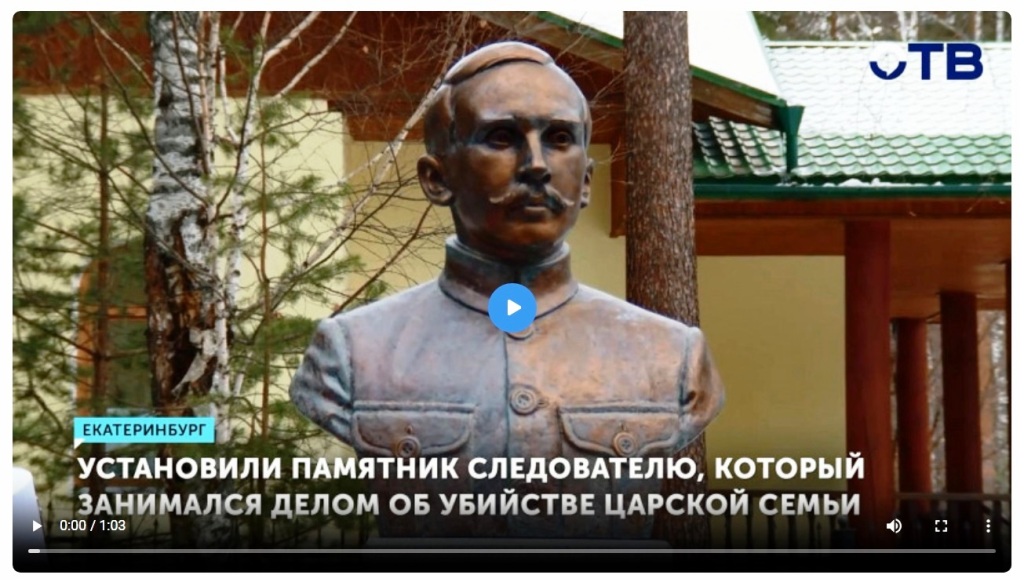
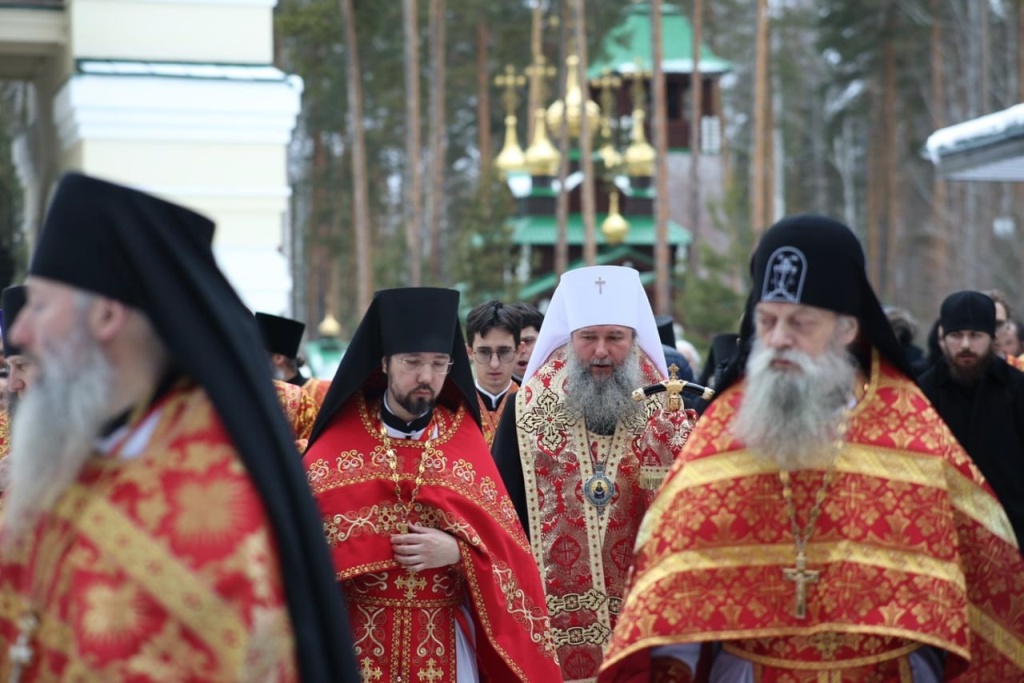
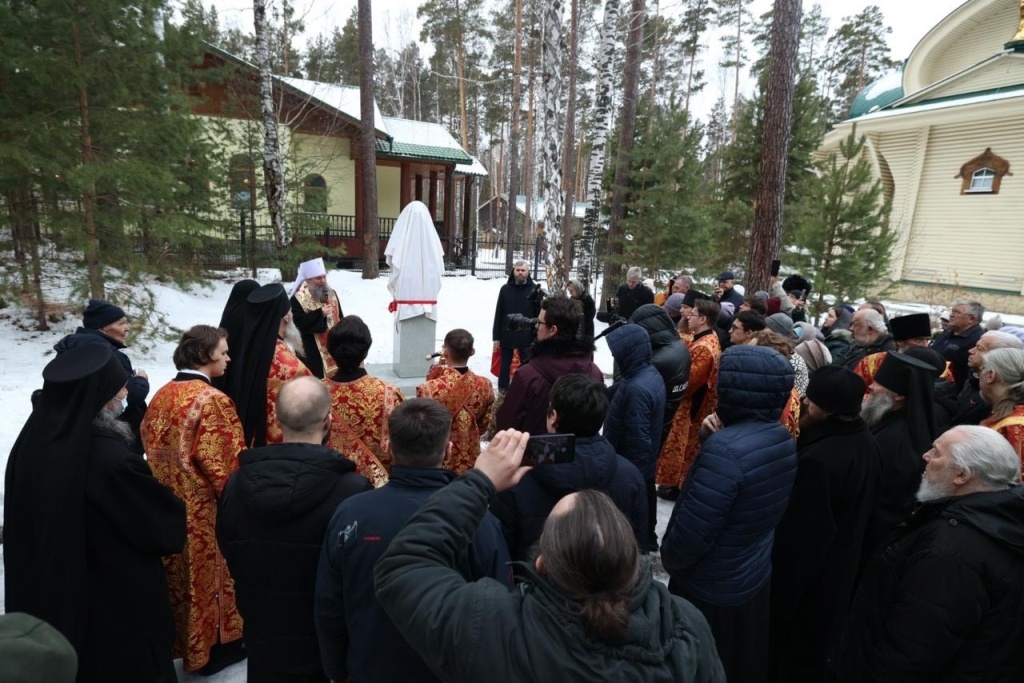
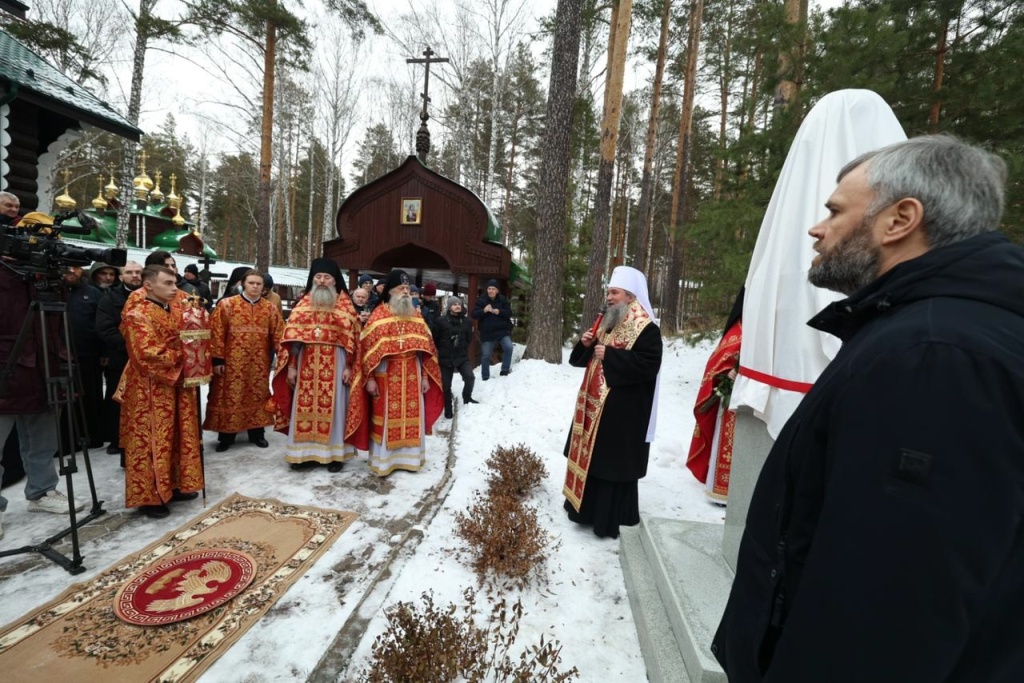
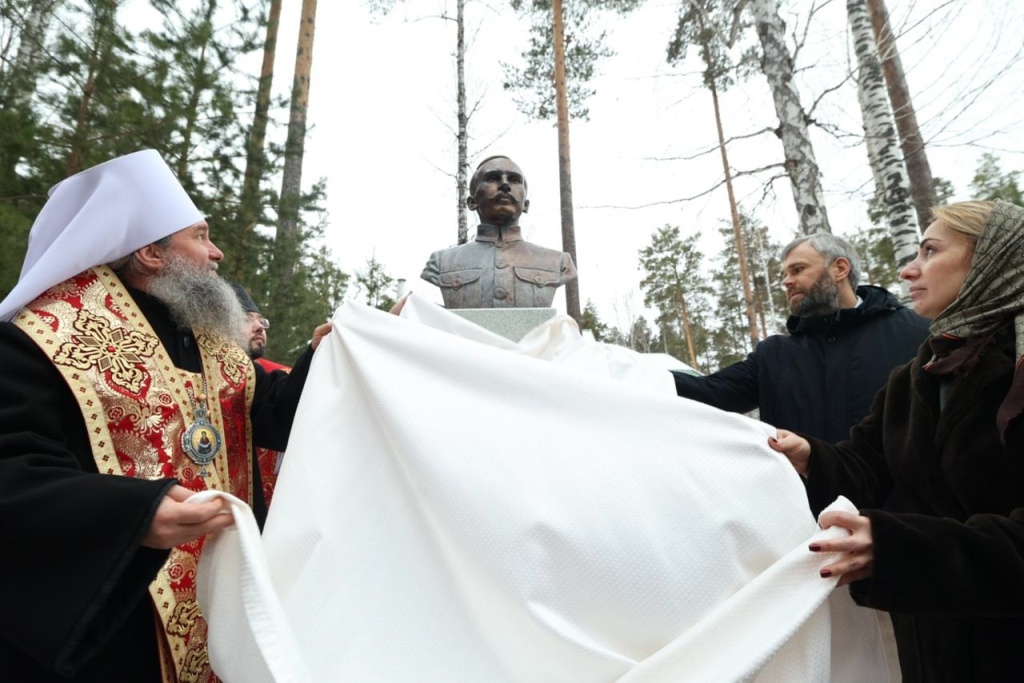
After the service for the departed, Vladyka Evgeny, along with the pastors, brethren and laity proceeded to the place where a pedestal and bronze bust of Nikolai Sokolov was installed last month to mark the 100th anniversary of the investigator’s death in 1924.

The bust-monument is located to the right of the RChurch of the Holy Royal Passion-Bearers, near the entrance to the gallery which encircles the Four Brothers mine (collapsed), where the regicides threw the bodies of the Imperial family and their four retainers into the mine.

PHOTO: Metroplitan Evgeny (Eurgene) of Ekaterinburg and Verkhotursky performs a pannikhida [Orthodox memorial service for the dead], on 23rd November 2024
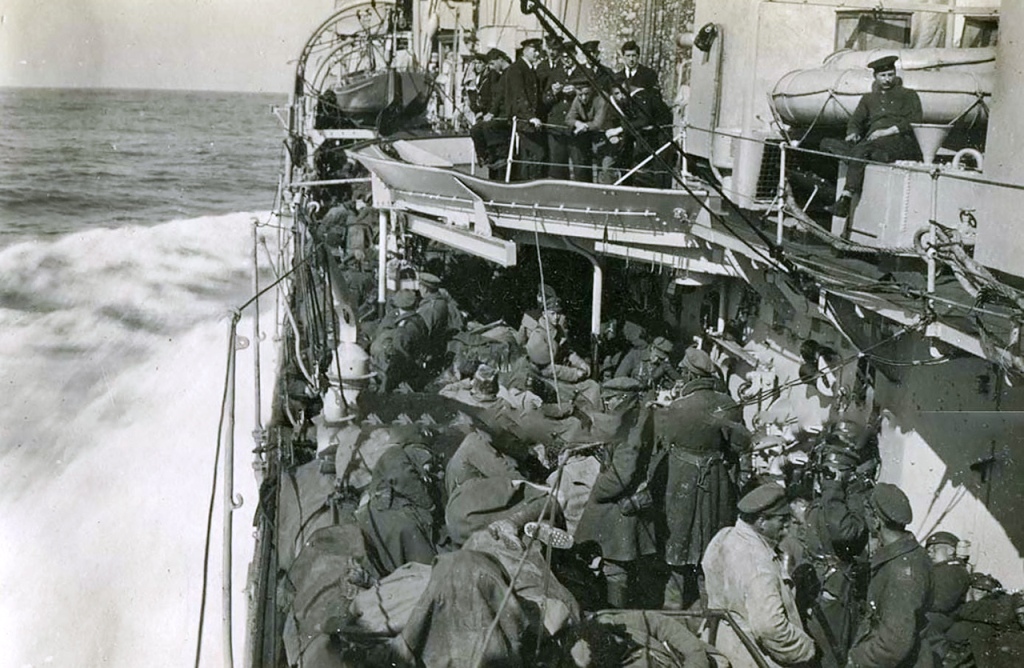
PHOTO: Metroplitan Evgeny (Eurgene) of Ekaterinburg and Verkhotursky with the sculptor Vladimir Vladimirovich Syreyshchikov, the General Director of Iriston PFC Raisa Soslanovna Kokoeva, and Andrey Viktorovich Zhukov Director of the Orthodox Christian Good Deeds Public Movement.

© Paul Gilbert. 23 November 2024
Wardrobe of Emperor Nicholas II in the Alexander Palace

NOTE: the following is an excerpt from the original full-length version (researched from Russian sources), which will be published in the No. 15 – Summer 2025 issue of my semi-annual periodical SOVEREIGN: The Life and Reign of Emperor Nicholas II. The full article will feature expanded text, with more facts and information, and illustrated with additional photos. This issue is scheduled to be released in June 2025 – PG

***

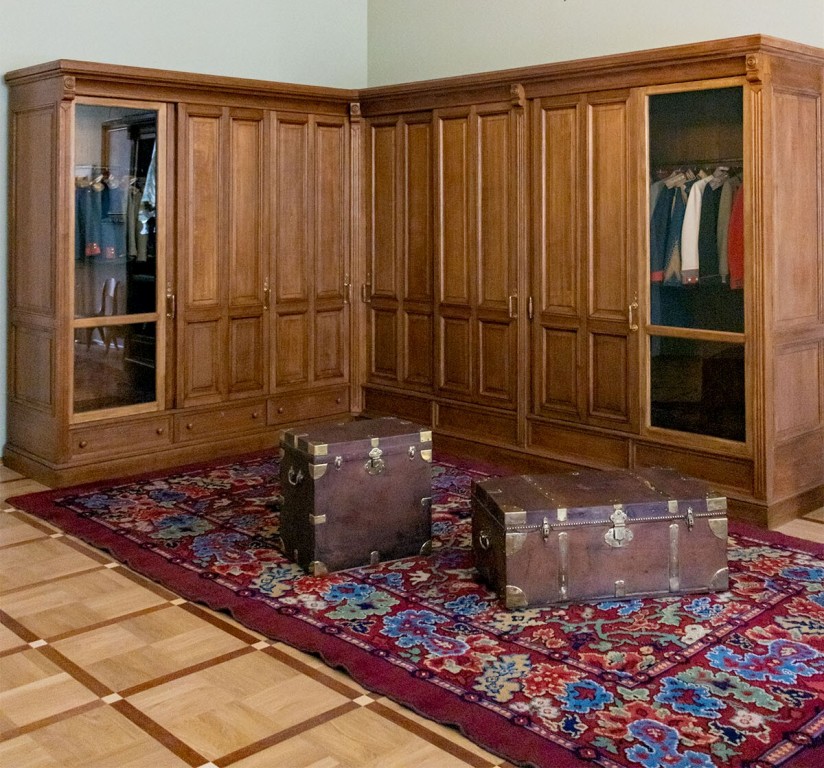
One of the smallest, yet most interesting interiors of the private apartments of Emperor Nicholas II in the Alexander Palace, is the Valet’s Room. During the reign of the last Tsar, the interior was separated by a large white partition. In the first half was the Emperor’s dressing room, while the second half was used by the valet on duty.

The Tsar’s dressing room was furnished with a large special built-in oak wardrobe with sliding doors and drawers, in which the Emperor’s clothes: uniforms, shoes, hats, underwear and various accessories were kept.

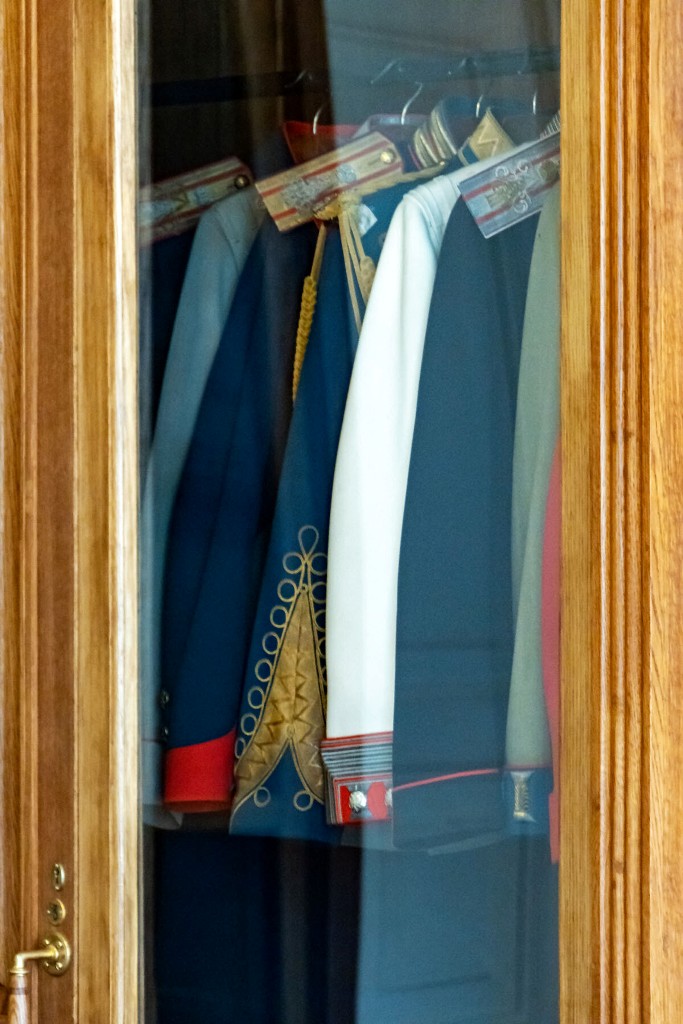
The clothes worn by Nicholas II were sewn by St. Petersburg’s finest craftsmen. One uniform benefited the experience of several generations of craftsmen. The Tsar’s uniforms, coats and hats embodied all the achievements of sewing technologies of the early 20th century. The Emperor’s uniforms were made of a wide variety of materials: leather, fur, feathers or horsehair, metals, wood, and so on.

The collection of the Tsarskoye Selo State Museum maintains a significant number of items that made up the military wardrobe of Emperor Nicholas II – almost 800 items that were made in the late 19th – early 20th centuries. Among these are the uniforms sewn for Nicholas II, when he was still the heir to the throne, have been preserved. The last Emperor of the Russian Empire wore the uniform (ceremonial and everyday) of military units of both the Russian Imperial Army and those of foreign states, of which he was an Honorary Colonel or Commander-in-Chief.

At the beginning of the 20th century, the cost of a standard uniform of the Guards infantry with lapel was 150 rubles. Traditionally, cloths of different colours were used for uniforms: green for infantry; red, blue, white, even brown for cavalry. The ceremonial uniforms were embroidered with gold or silver, which the last Emperor proudly wore.

Today, the Valet’s Room in the Alexander Palace presents several samples of authentic uniforms of various regiments of the Russian Imperial Army, worn by Nicholas II, in the original oak Imperial Wardrobe. In addition, other uniforms of Nicholas II from the wardrobe are on display in the nearby Sovereign’s Martial Chamber at Tsarskoye Selo.

By 1917, up to 1500 uniforms of the Emperor were stored in oak wardrobes in the dressing room of Nicholas II in the Alexander Palace. It is interesting to note, that during the 1930s, part of the collection of Nicholas II’s uniforms were transferred from the Alexander Palace to the Artillery Historical Museum in St. Petersburg, where they remain to this day.

In recent years, the uniforms of Nicholas II from the funds of the Alexander Palace, have been loaned out for exhibitions in such cities as St. Petersburg, Moscow, Tula [includes 21 colour photos], Novosibirsk and Minsk.

Click on above image to watch the video.
Language: Russian. Duration: 11 minutes

For ENGLISH SUBTITLES (or other language), CLICK on the “SETTINGS” located between the “CC” and “YouTube” buttons. CLICK on “Subtitles/CC”, then click “Auto-translate” link, then choose “ENGLISH” or other language. ENJOY!

© Paul Gilbert. 18 November 2024
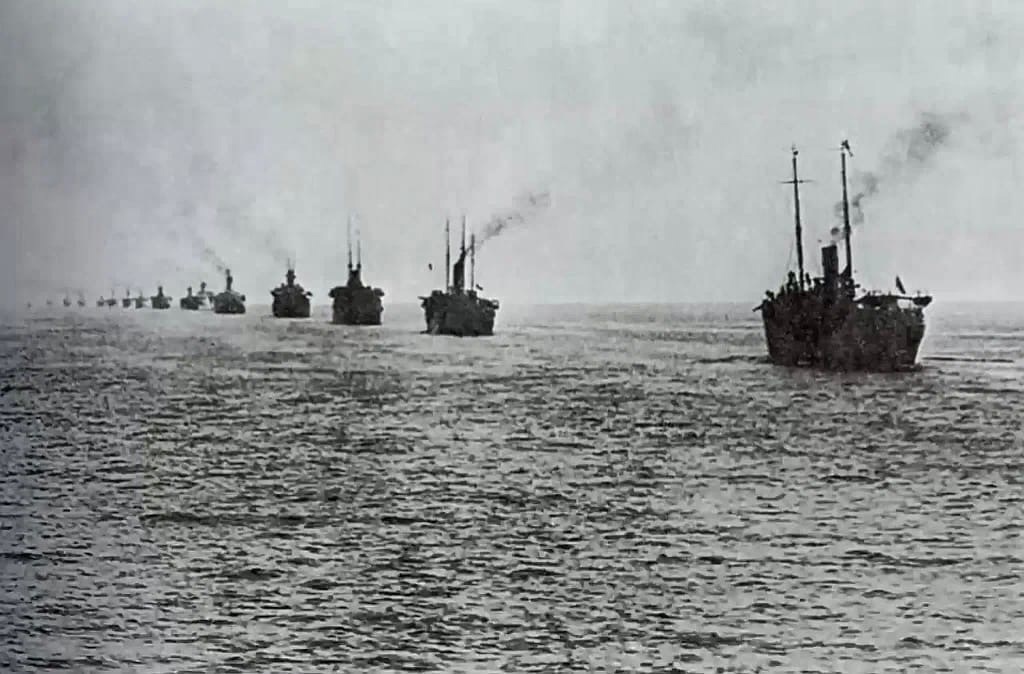
The Great Russian Exodus of 1920

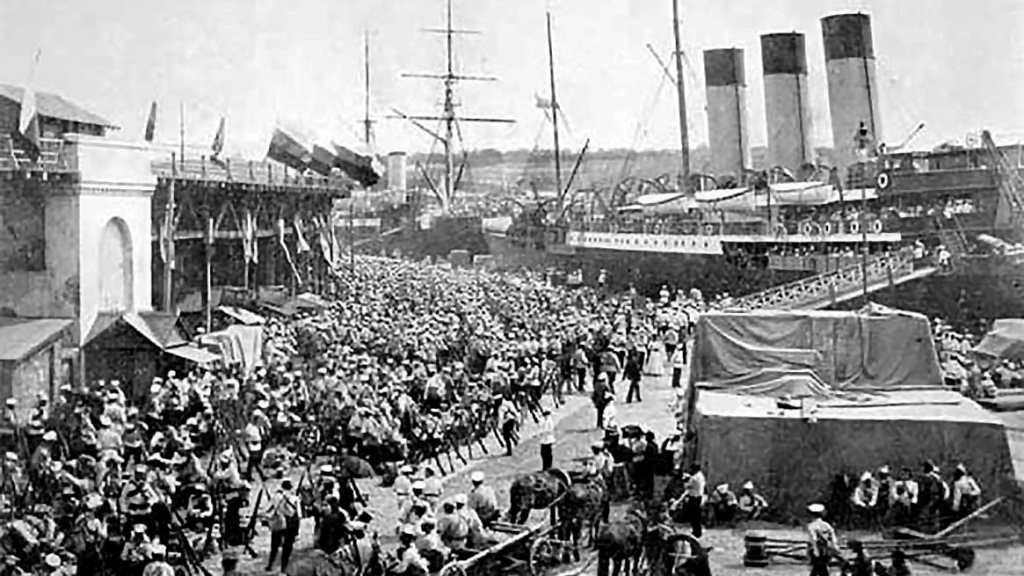
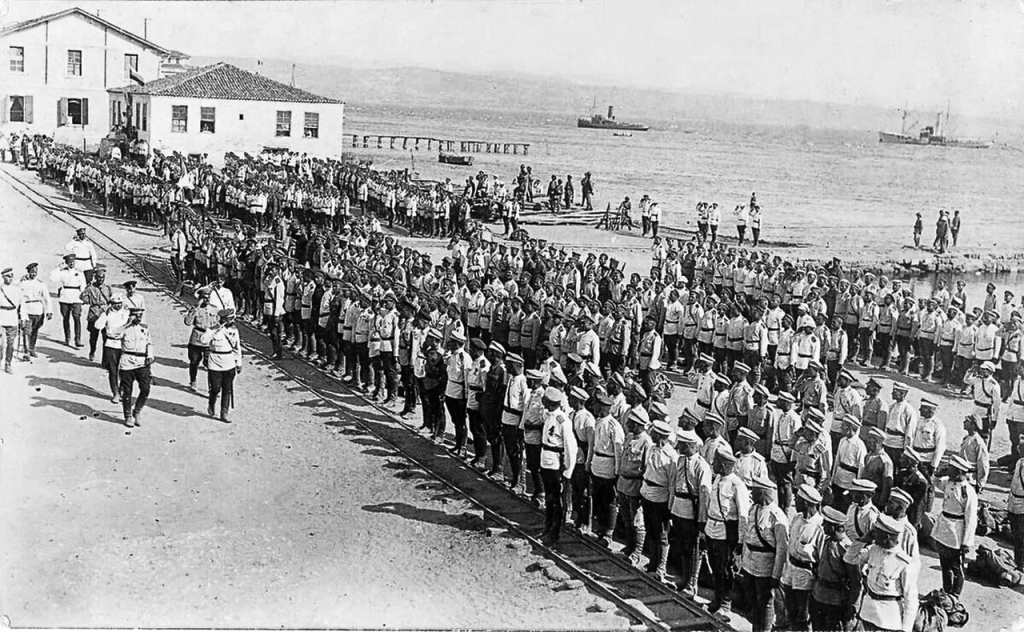
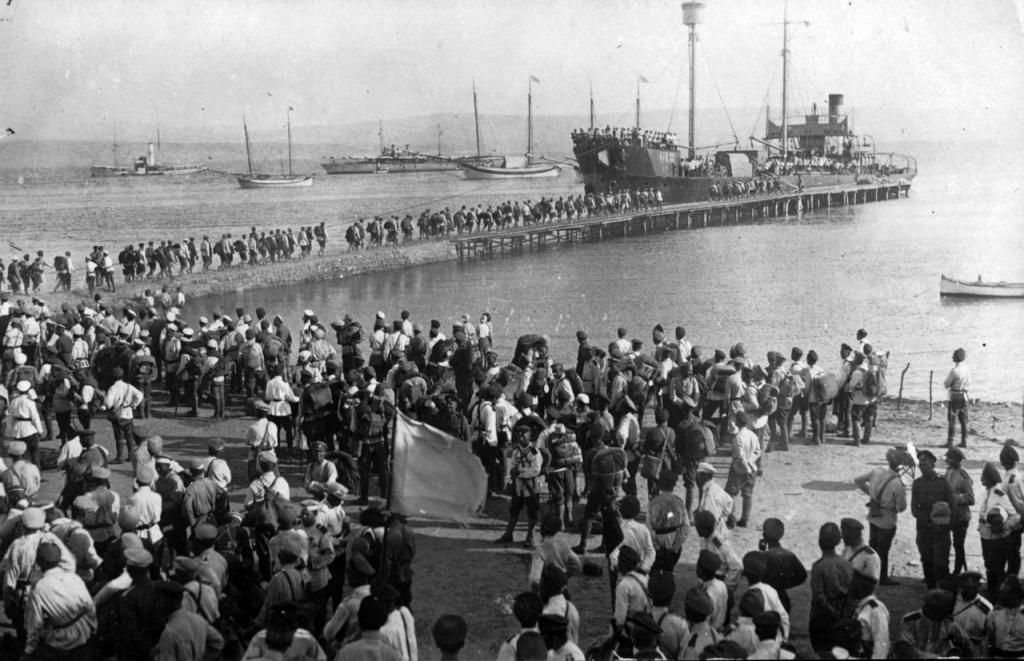
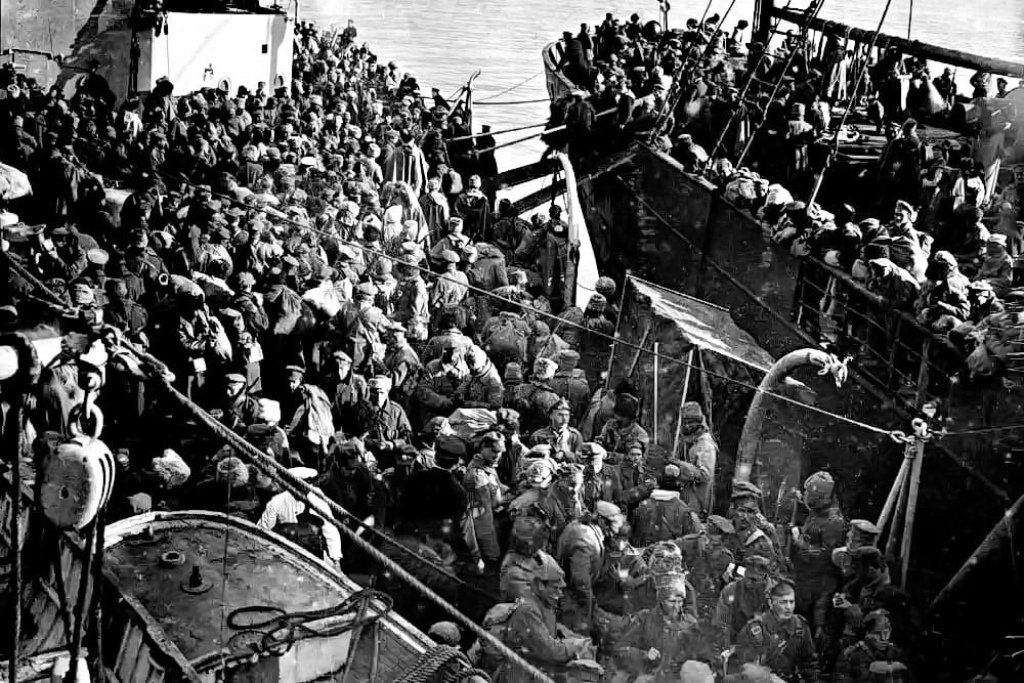
PHOTO: A total of 145,693 soldiers and civilians were evacuated from the ports of the Crimean peninsula: Sevastopol, Yevpatoria, Kerch, Feodosia and Yalta, during the Russian Exodus of November 1920

The days 13th to 16th November – mark one of the darkest days in early 20th century Russian history. It was during these days, that the Russian exodus of the White Movement [anti-Bolshevik forces] – troops of Lieutenant General Baron Pyotr Nikolayevich Wrangel (1878-1928) and civilians from Crimea took place.

After defeats by the Bolsheviks in which he lost half his standing army and, facing defeat in Northern Tavria and in the Crimea, Wrangel organised a mass evacuation on the shores of the Black Sea. Wrangel gave every officer, soldier, and civilian the choice to evacuate and go with him into exile, or to remain in Russia and face the wrath of the Red Army.

During the evacuation from the ports of the Crimean peninsula: Sevastopol, Yevpatoria, Kerch, Feodosia and Yalta, a total of 145,693 soldiers and civilians, not counting the crews, were taken on board 126 ships and “sudenosheks” (small boats and tugs).

This flotilla, known as “Wrangel’s fleet” and composed of ships of the Whites’ Black Sea fleet, foreign ships, and the temporarily mobilized ships of the Voluntary Fleet, first sailed to Entente-occupied Constantinople [Istanbul]. A significant number of the passengers left the ships here, replenishing the ranks of White Russian emigrees who had fled Bolshevik Russia prior.

The soldiers and civilians who were left behind in the Crimea suffered under the Red Terror authorised by Vladimir Lenin. The estimated number of executions vary from minimum 12,000 over 50,000 to 120,000.

PHOTO: Thousands of officers and soldiers of the White Army assemble for evacutation during the Russian Exodus from Crimea, November 1920

PHOTO: View of one of the ships taking on White Russian officers, soldiers and civilians during the Russian Exodus from Crimea in November 1920

PHOTO: Thousands of White Russian officers, soldiers and civilians cram two of 126 ships which took part in the Russian Exodus from Crimea in November 1920

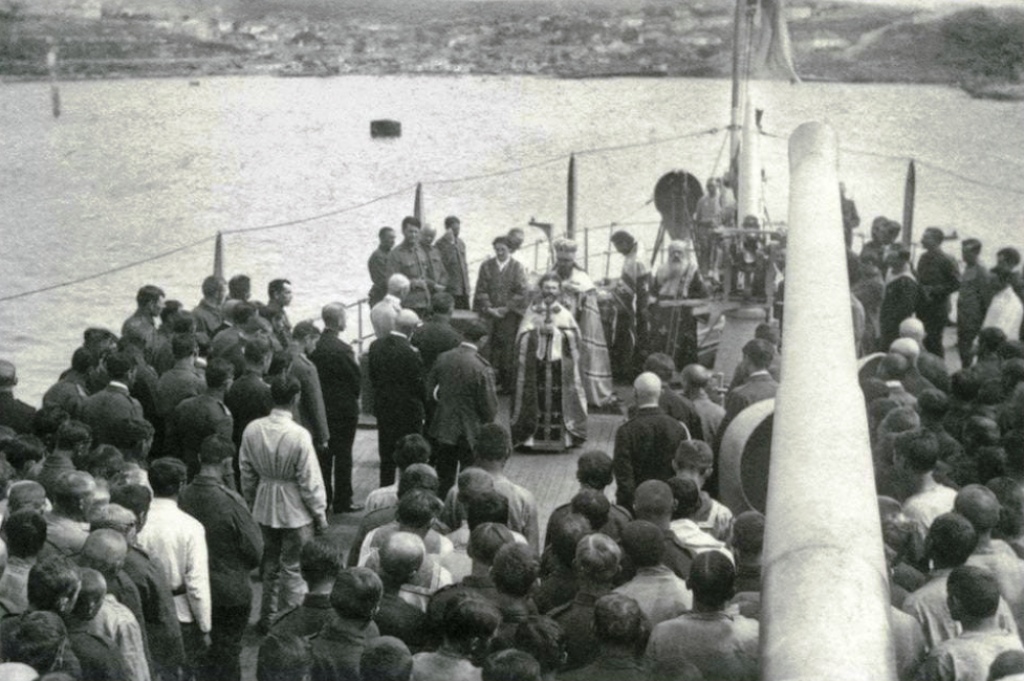
PHOTO: A priest offers prayers to comfort the White Russian refugees on the deck of the one of the ships. The Crimean shore can be seen in the background.

PHOTO: White Russian officers and soldiers are crammed onto the deck of one of the ships which took part in the Russian Exodus of Crimea in November 1920

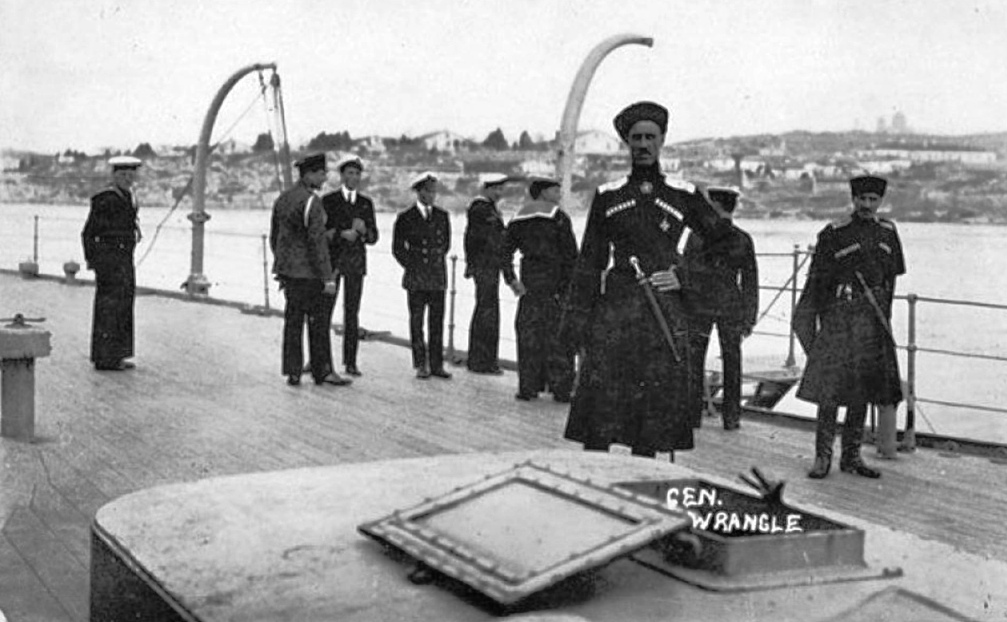
PHOTO: Lieutenant General Baron Pyotr Nikolayevich Wrangel (1878-1928) sailing into exile

PHOTO: View of just some of the 126 ships and “sudenosheks” (small boats and tugs), on their way to Constantinople [Istanbul], carrying a total of 145,693 soldiers and civilians.

On 16th November 2020, a wreath ceremony was held in Sevastopol, Crimea marking the 100th Anniversary of the Great Russian Exodus.

***

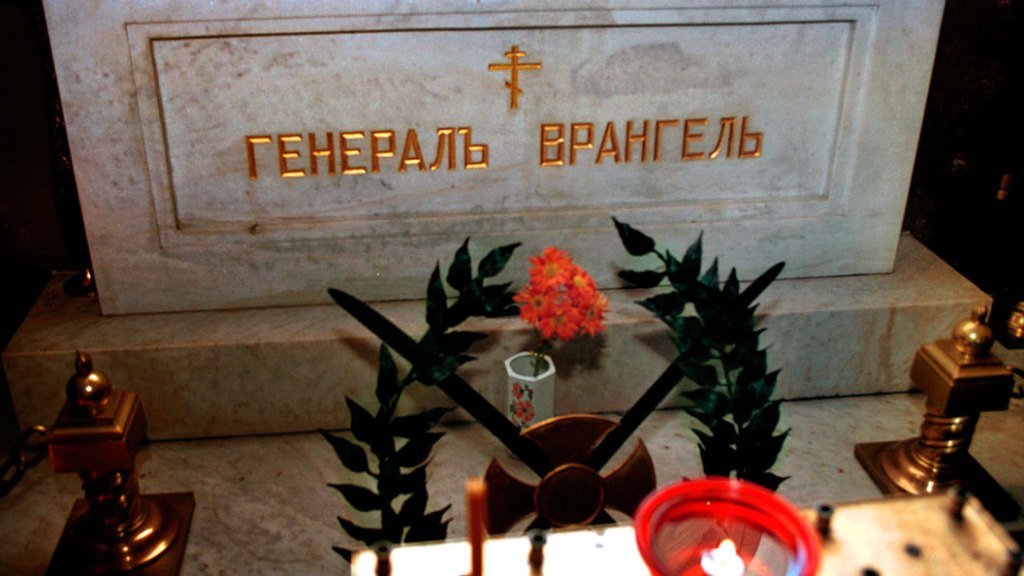
Lieutenant General Baron Pyotr Nikolayevich Wrangel died on 25th April 1928, after a sudden infection with tuberculosis. His family, however, believed that he had been poisoned by his butler’s brother, who briefly lived in the household in Brussels and was allegedly a Soviet agent.

He was first buried in Brussels. More than a year later, his remains were transported to Belgrade. On 6th October 1929, in a formal public ceremony, his body was reinterred in the Church of the Holy Trinity, Belgrade (photo above), the Russian church, according to his wishes.

Memory Eternal! Вечная Память!

© Paul Gilbert. 16 November 2024

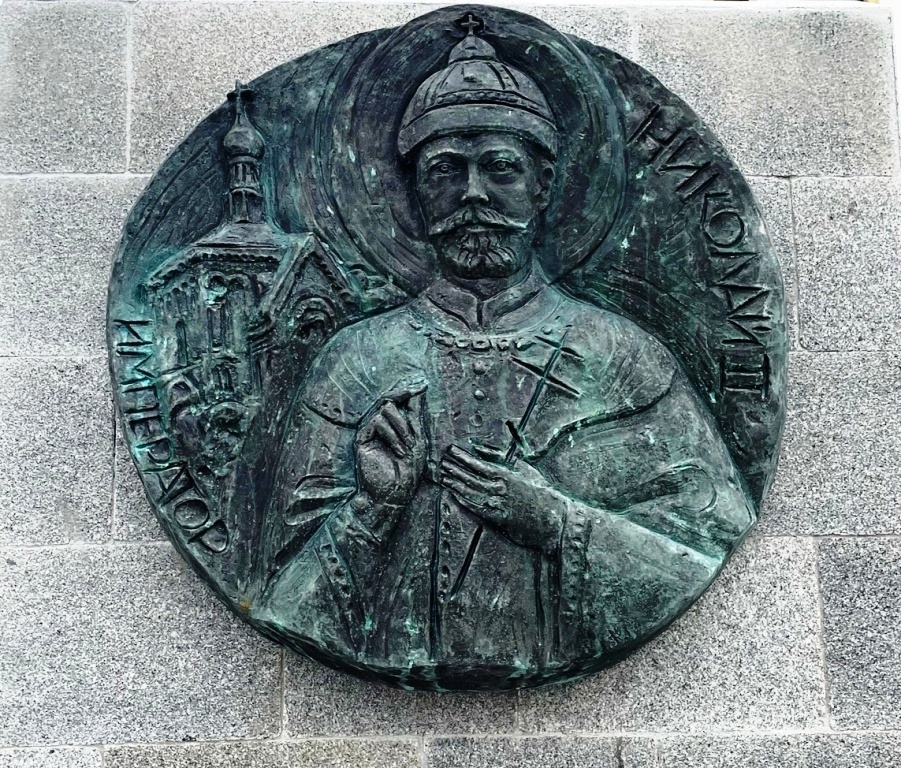
Bas-relief of Tsar-Martyr Nicholas II installed in Moscow

On 1st November 2024 – a monument to Grand Duke Sergei Alexandrovich (1857-1905) and Grand Duchess Elizabeth Feodorovna (1864–1918) was unveiled and consecrated on the square near the Tretyakovskaya metro station in Moscow.
The installation of the monument is timed to the 160th anniversary of the birth of Grand Duchess Elizabeth Feodorovna, born Princess Elisabeth of Hesse and by Rhine.

The sculptural composition was designed by the artist Georgy Frangulyan. The grand ducal couple are represented on the day of their wedding on 16th (O.S. 3rd) June 1884.

Behind the two bronze figures are four granite steles, one of which features a bas-relief depicting Emperor Nicholas II – seen in the photo above.

© Paul Gilbert. 16 November 2024
Nicholas II Bibliography – FREE 18-page booklet

Click HERE to download, print and/or save booklet
Please note that this file is only available in a PDF file

Russia’s last emperor and tsar remains one of the most documented persons in history. He has been the subject of countless books, and articles for scholarly periodicals, magazines and newspapers.

I have compiled a list of more than 125 English-language books on the life and reign of Nicholas II, in an 18-page booklet, which is now available to download, print and/or save. It’s FREE!

This bibliography provides a comprehensive list of both scholarly and popular works. Many are generally of limited value and even mislead readers, however, they have been included because they played a significant role in shaping Western opinion of the last Tsar. In some instances, these works have been responsible for the creation and perpetuation of widely subscribed to generalizations, stereotypical images, and myths. In a sense, then, the fact that many of these sources contain inaccuracies, exaggerations, and oversimplifications, and are sometimes guilty of tendentiousness, does not lessen but rather constitutes their historical value.

I trust that this booklet will be a useful research tool for scholars, historians, teachers, writers and the general reader. It includes titles which are current, out of print, as well as a number of titles which have yet to be published.

As new books are published, this booklet will be updated accordingly. If you know of any other titles which are not listed in this bibliography, please feel free to bring them to my attention. You can e-mail me at royalrussia@yahoo.com

PAUL GILBERT

***

I am committed to clearing the name of Russia’s much slandered Tsar. In exchange for this 18-page booklet, please consider making a small $5 or $10 donation in aid of my research. These donations are of great assistance in helping me offset the cost of obtaining and translating documents from Russian archival sources, which are often paid for out of my own pocket. It is these documents which help present new facts and information on the life and reign of Nicholas II. In addition, my research continues to debunking many of the myths and lies which exist more than a century after his death and martyrdom.

Please note, that there is NO obligation, the booklet is FREE to every one! ENJOY!

CLICK HERE TO MAKE A DONATION

© Paul Gilbert. 11 November 2024
Church of the Holy Royal Passion-Bearers consecrated near Khabarovsk

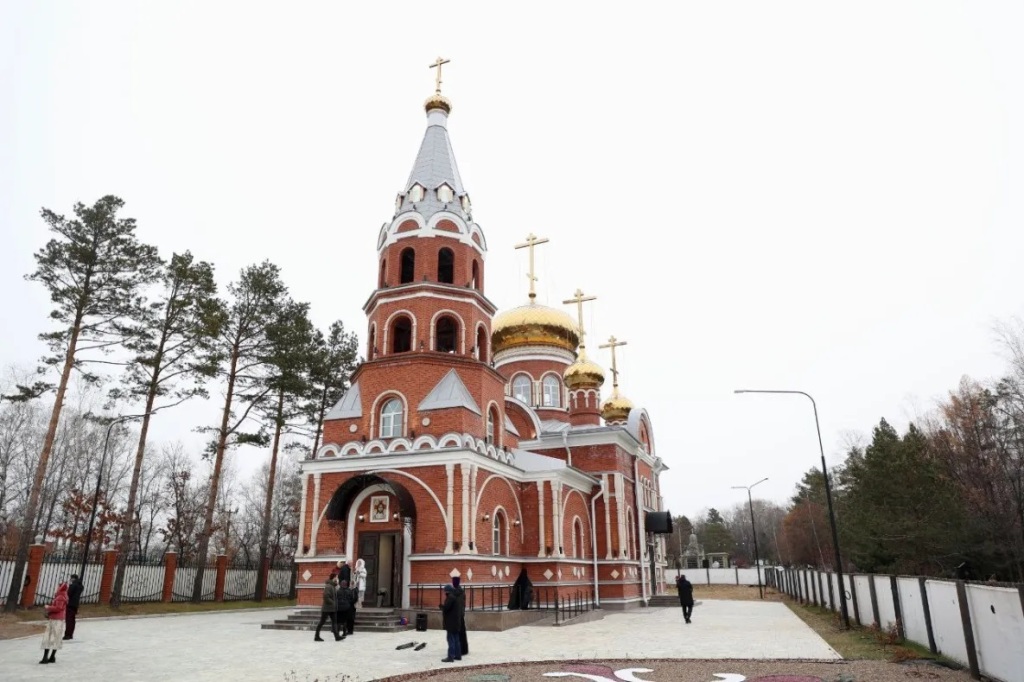
PHOTO: Church of the Holy Royal Passion-Bearers

On 4th November 2024, the Church of the Holy Royal Passion-Bearers was consecrated, in the Petropavlovsky (Peter and Paul) Convent – located 60 km from the city of Khabarovsk.

The new Russian Orthodox church is dedicated to the Holy Royal Passion-Bearers[1] – Emperor Nicholas II, Empress Alexandra Feodorovna, their five children and the family’s four faithful retainers, all of whom died a martyr’s death following their brutal murder by the Bolsheviks in Ekaterinburg, on the night of 16/17 July 1918.

The church was consecrated by Metropolitan Artemy of Khabarovsk and the Amur Region. The church is a metochion[2] of the Petropavlovsky (Peter and Paul) Convent.

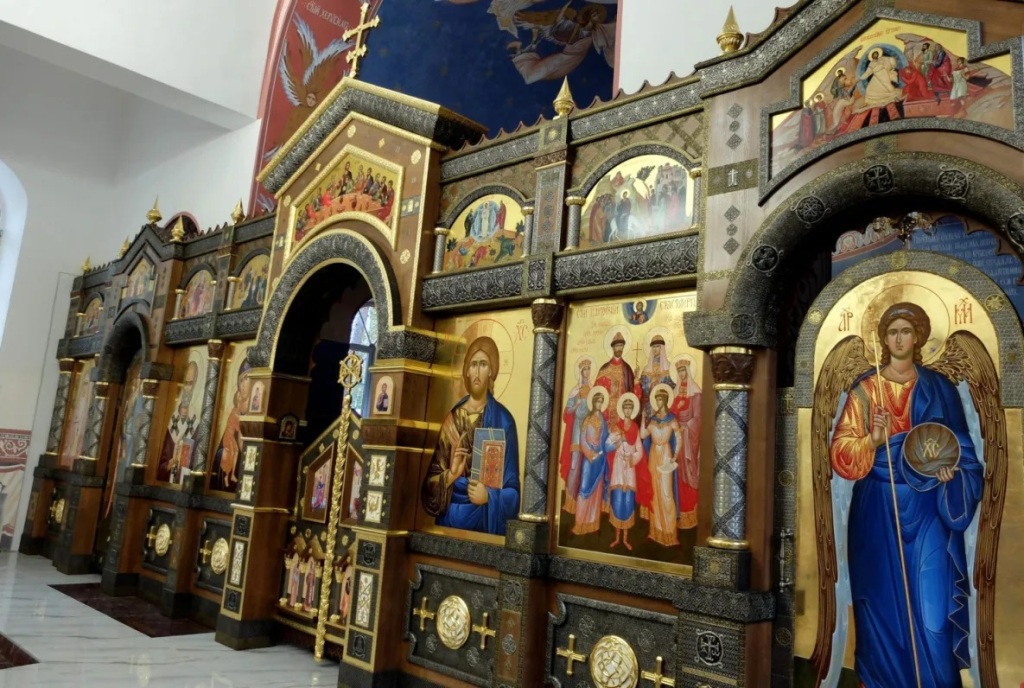
A two-tiered iconostasis was installed, made by Moscow craftsmen, in which a lot of gold leaf was used. The icons were painted by the sisters of the convent, as was the painting for the altar. The main icon in the iconostasis is a unique mosaic icon of the Imperial Family, also handmade by the nuns. Their work was highly praised by specialists of the All-Russian Art and Research Conservation Center, which is considered to be Russia’s foremost authority in the field of the restoration of historical and art monuments.

Construction of the six-domed Church of the Holy Royal Passion-Bearers began in 2018, and was financed thanks to donations of parishioners and local patrons.

PHOTO: the iconostasis features a mosaic icon of the Holy Royal Martyrs (sedond from right)

“From this day on, its doors will be open to everyone who asks for mutual love and respect in the family, raising children in faith and piety, overcoming life’s adversities with firm hope in God,” said Nikolai Shevtsov, Chairman of the Legislative Duma of the Khabarovsk Region. “Let the Church of the Holy Royal Passion-Bearers become such a place for Khabarovsk residents and guests of the capital,” he added.

In this church, many new and original elements have been created, which are not found in the Far East regions of the Russian Federation, in particular, bronze doors ordered from central Russia. The floor in the church is decorated with original mosaics of the Byzantine style. This monastic metochion is the first in the Khabarovsk Region. The abbess of the church is nun Antonia.

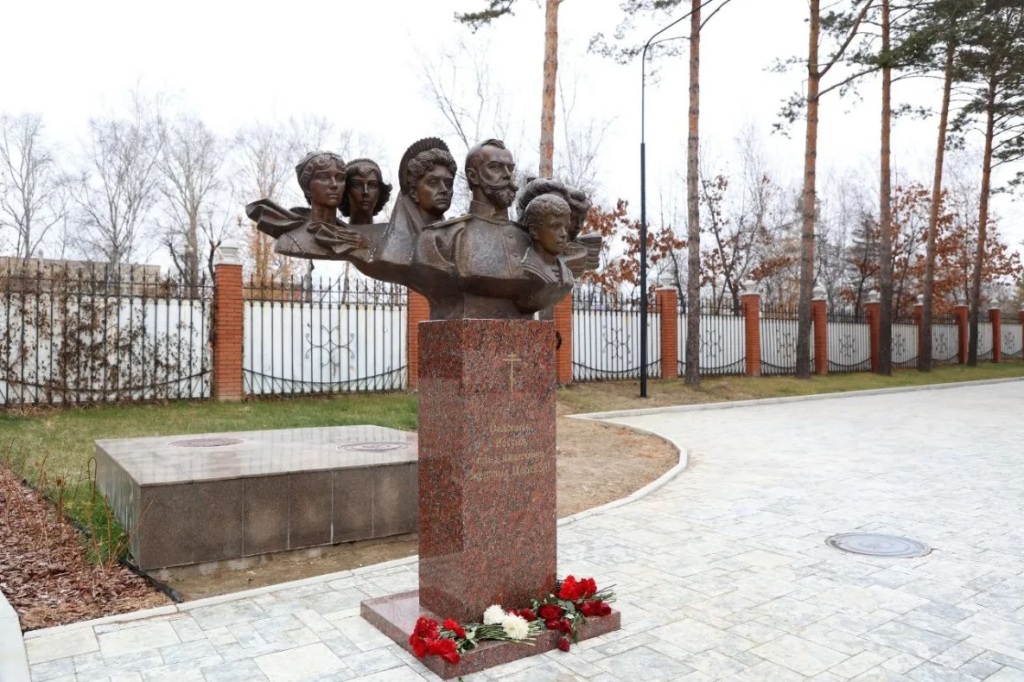
A monument of Nicholas II and his family was installed on the grounds of the church. It was made by the Moscow sculptor Vladimir Lepeshov, a member of the Union of Artists of Moscow and Russia, combining seven busts of members of the family of the last Russian Emperor Nicholas II.

PHOTO: monument to Nicholas II and his family, installed on the grounds of the church

NOTES:

[1] On 1st November 1981, the Imperial Family were canonized as new martyrs by the Russian Orthodox Church Outside Russia (ROCOR).

On 20th August 2000, the the Imperial Family were canonized as passion-bearers by the Moscow Patriarchate.

Passion-bearers are people who face death with resignation, in a Christ-like manner, as distinguished from martyrs, the latter historically killed for their faith. Proponents cited the piety of the Tsar and his family and reports that the Tsarina and her eldest daughter Olga prayed and attempted to make the sign of the cross immediately before they died.

Despite their official designation as “passion-bearers” by the Moscow Patriarchate, they are nevertheless spoken of as “saints” in Orthodox publications, icons, and in popular veneration by the people.

[2] A metochion is an ecclesiastical embassy church within Eastern Orthodox tradition.

© Paul Gilbert. 8 November 2024
‘The Tsar’s Family: Service, Love, Mercy’ photo exhibition opens in Kostroma

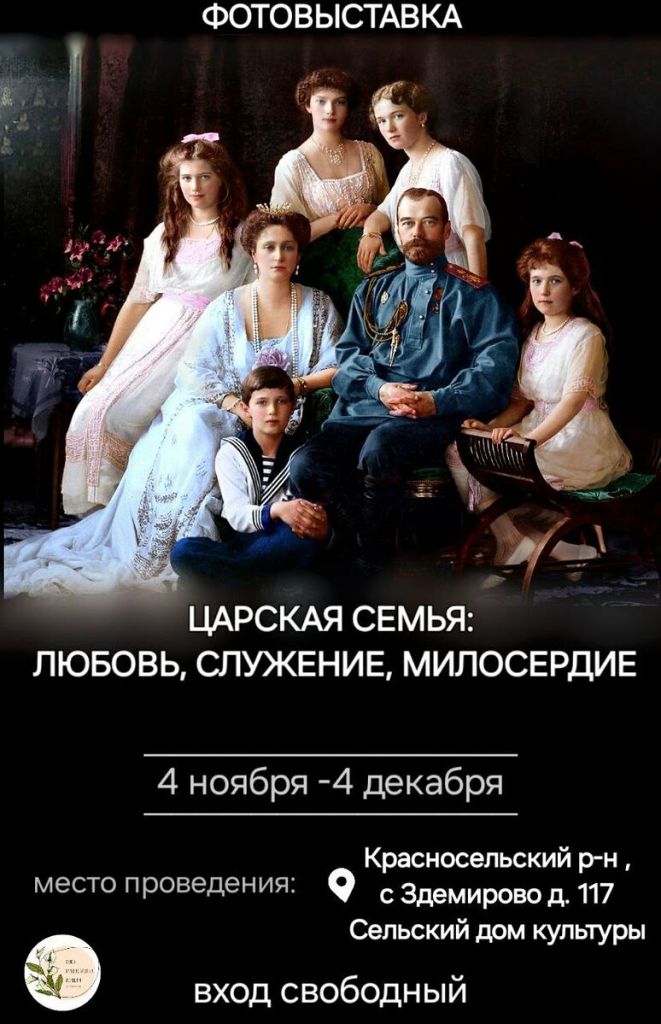
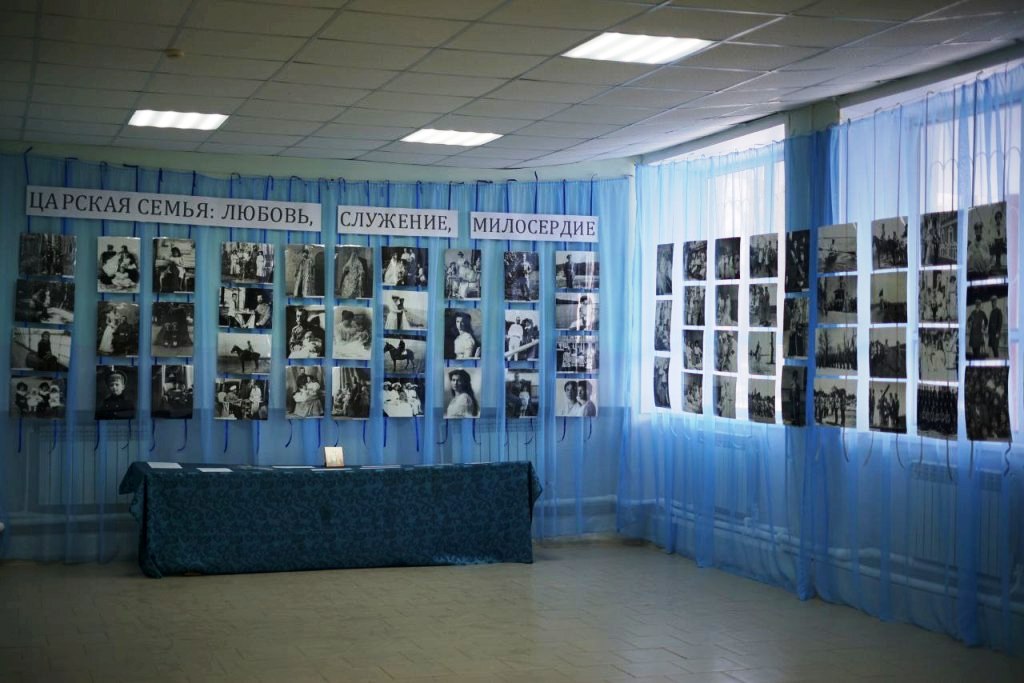
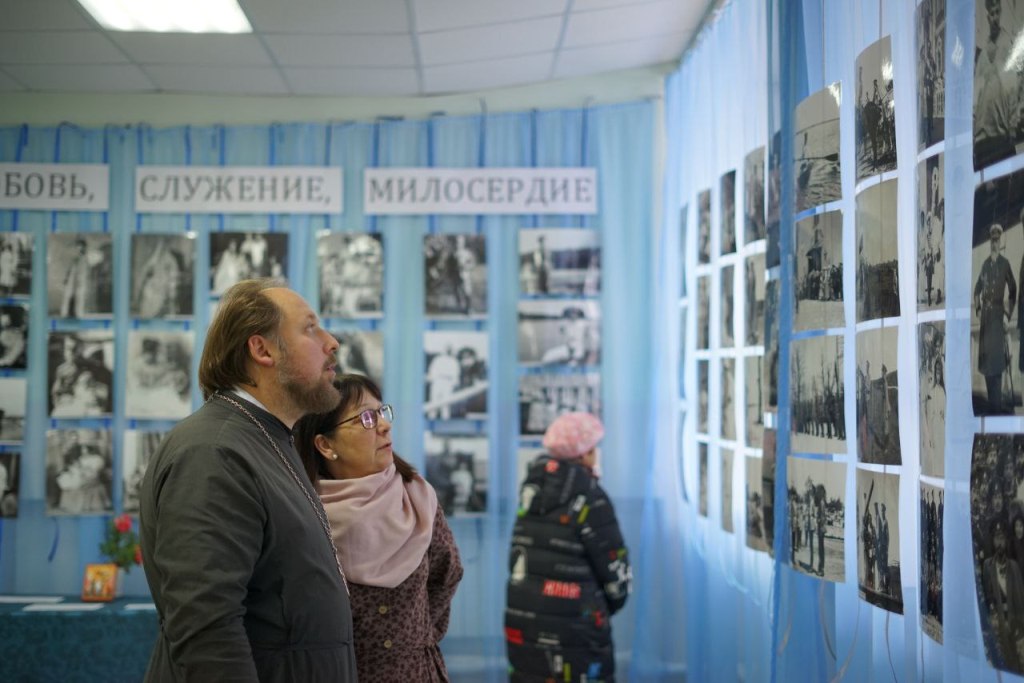
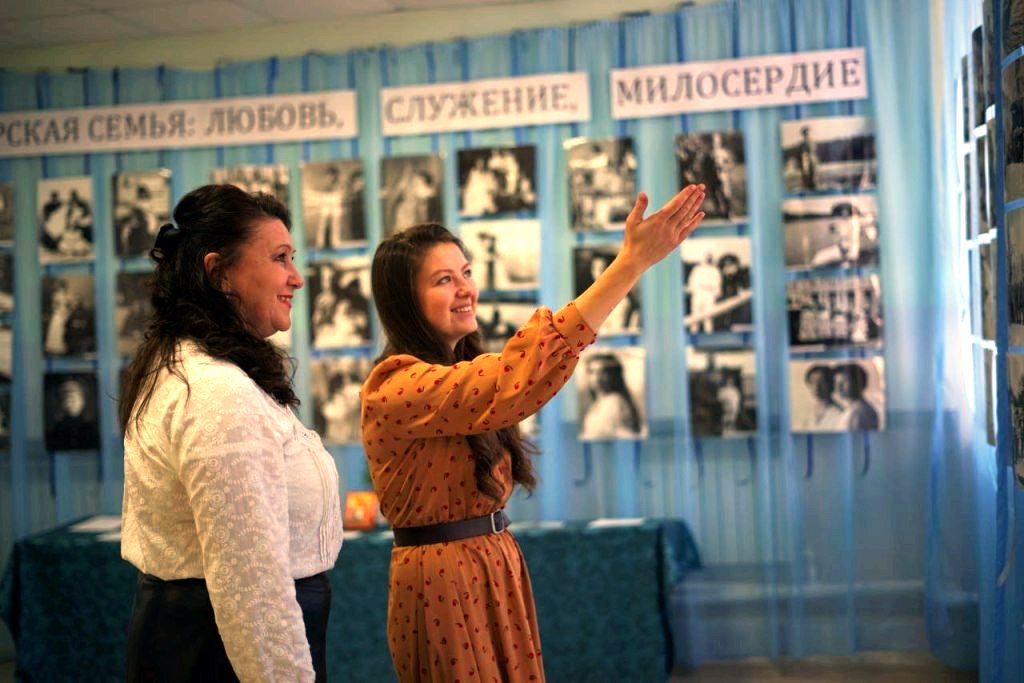
On 1st November 2024, the photo-exhibition The Tsar’s Family: Service, Love, Mercy opened in the Zdemirov Rural House of Culture, situated in the village Zdemirovo of the Kostroma region. The exhibition was organized by the Union of Orthodox Women of the Kostroma Region, with the assistance of the clergy and parishioners of the local Church of the Prophet Elijah.

Photographs for the exhibition were provided by the brethren of Sretensky Stauropegial Monastery in Moscow. The photographs reflect the warmth and love the Imperial Family shared with one another.

What is a true Christian family? In the eyes of the Russian Orthodox Church, that example was set by the family of Emperor Nicholas II.

How selflessly they helped people, their fellow citizens of the Russian Empire. Despite their August positions in life, they worked on an equal basis with others, they worked as nurses, bandaged the wounded and participated in operations. In spite of of everything, they remained a strong family, always supporting each other. They were aN example of true service to God, the Motherland and people.

The photo-exhibition is timed to the 130th anniversary of the ascension of Russia’s last Emperor and Tsar to the throne, on 2nd November (O.S. 20th October) 1894.

Tsesarevich and Grand Duke Nicholas Alexandrovich was 26 years old at that time. He was to stand at the head of the Russian Empire for more than 22 years, he marrued his fiancée, the Princess Alix of Hesse-Darmstadt, the future Empress Alexandra Feodorovna.

On 27th (O.S. 14th) November 1894, on the birthday of Dowager Empress Maria Feodorovna, the wedding of Emperor Nicholas Alexandrovich with Grand Duchess Alexandra Feodorovna took place in the Grand Church of the Winter Palace. The couple were blessed with 5 beautiful children: four daughters and a son.

The The Tsar’s Family: Service, Love, Mercy photo-exhibition runs until 4th December 2024. Admission is FREE!

***

As I have noted in similiar posts, I support any initiative – big or small – to help keep the memory of Nicholas II and his family alive in post-Soviet Russia – PG

© Paul Gilbert. 6 November 2024