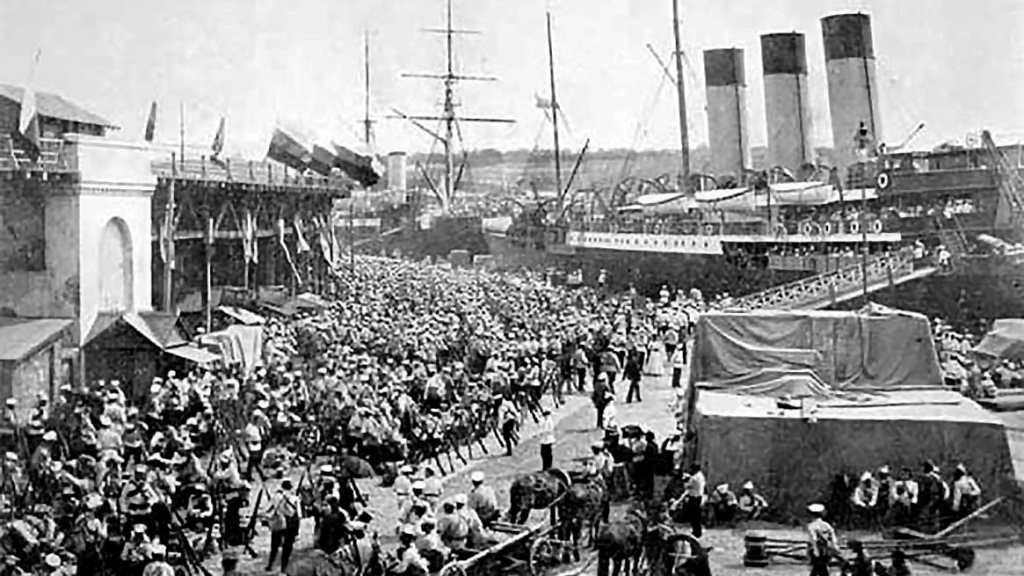
PHOTO: A total of 145,693 soldiers and civilians were evacuated from the ports of the Crimean peninsula: Sevastopol, Yevpatoria, Kerch, Feodosia and Yalta, during the Russian Exodus of November 1920
The days 13th to 16th November – mark one of the darkest periods in early 20th century Russian history. It was during these days, that the Russian exodus of the White Movement [anti-Bolshevik forces] – troops of Lieutenant General Baron Pyotr Nikolayevich Wrangel (1878-1928) and civilians from Crimea took place.
After defeats by the Bolsheviks in which he lost half his standing army and, facing defeat in Northern Tavria and in the Crimea, Wrangel organised a mass evacuation on the shores of the Black Sea. Wrangel gave every officer, soldier, and civilian the choice to evacuate and go with him into exile, or to remain in Russia and face the wrath of the Red Army.
During the evacuation from the ports of the Crimean peninsula: Sevastopol, Yevpatoria, Kerch, Feodosia and Yalta, a total of 145,693 soldiers and civilians, not counting the crews, were taken on board 126 ships and “sudenosheks” (small boats and tugs).
This flotilla, known as “Wrangel’s fleet” and composed of ships of the Whites’ Black Sea fleet, foreign ships, and the temporarily mobilized ships of the Voluntary Fleet, first sailed to Entente-occupied Constantinople [Istanbul]. A significant number of the passengers left the ships here, replenishing the ranks of White Russian emigrees who had fled Bolshevik Russia prior.
The soldiers and civilians who were left behind in the Crimea suffered under the Red Terror authorised by Vladimir Lenin. The estimated number of executions vary from minimum 12,000 over 50,000 to 120,000.
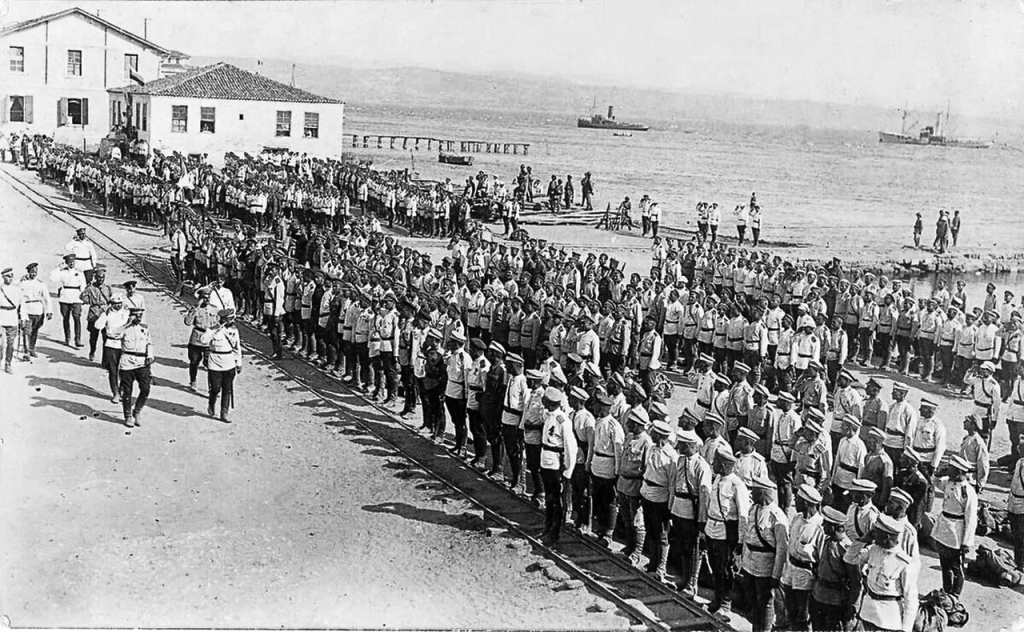
PHOTO: Thousands of officers and soldiers of the White Army assemble for evacutation during the Russian Exodus from Crimea, November 1920
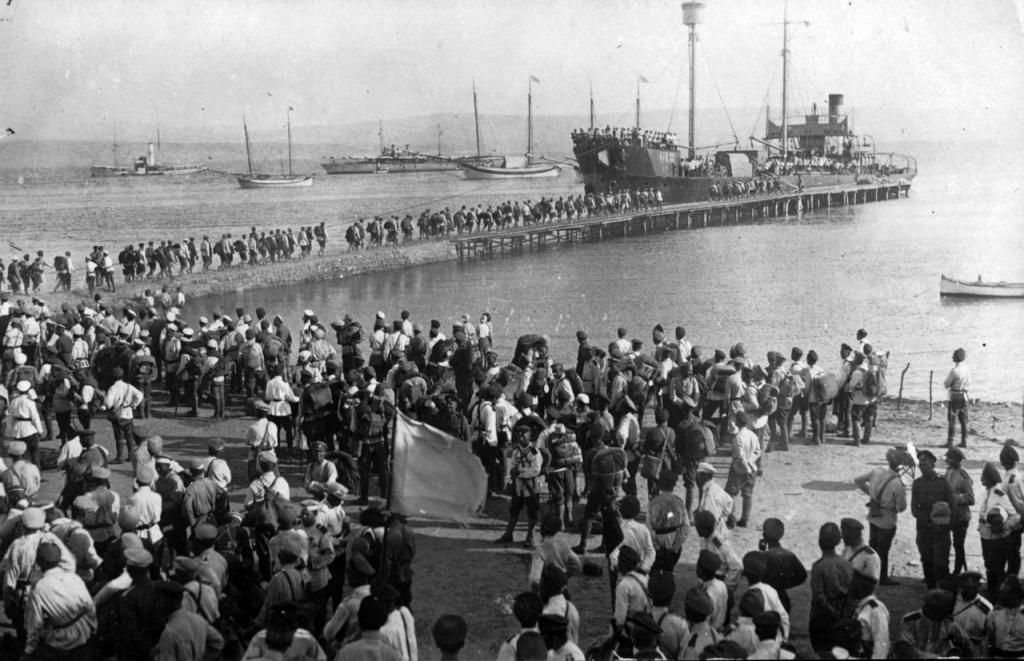
PHOTO: View of one of the ships taking on White Russian officers, soldiers and civilians during the Russian Exodus from Crimea in November 1920
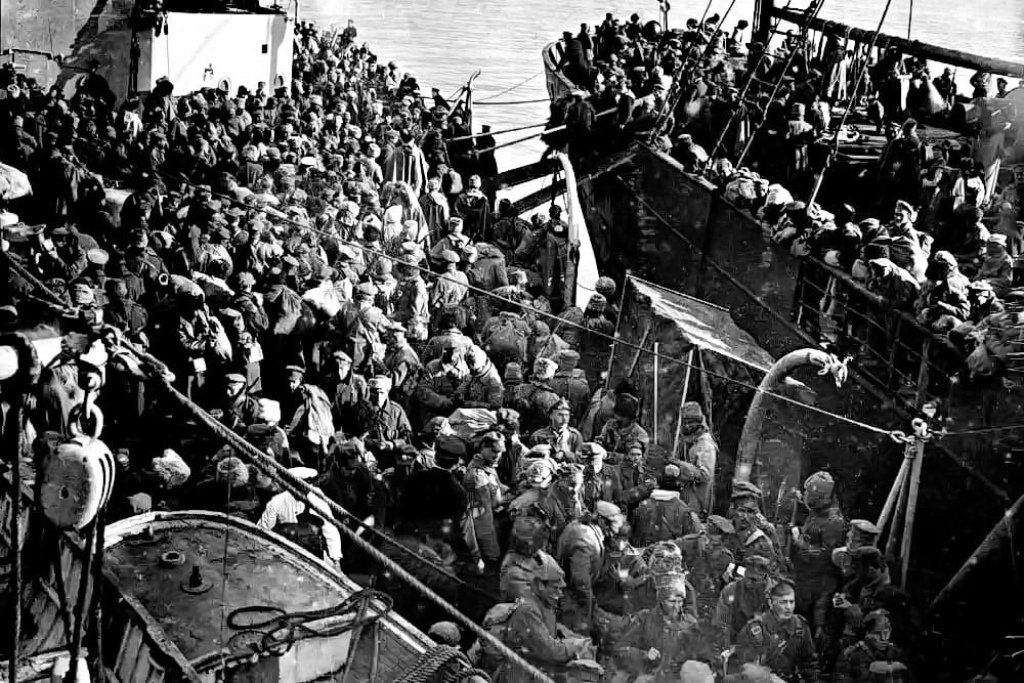
PHOTO: Thousands of White Russian officers, soldiers and civilians cram two of 126 ships which took part in the Russian Exodus from Crimea in November 1920
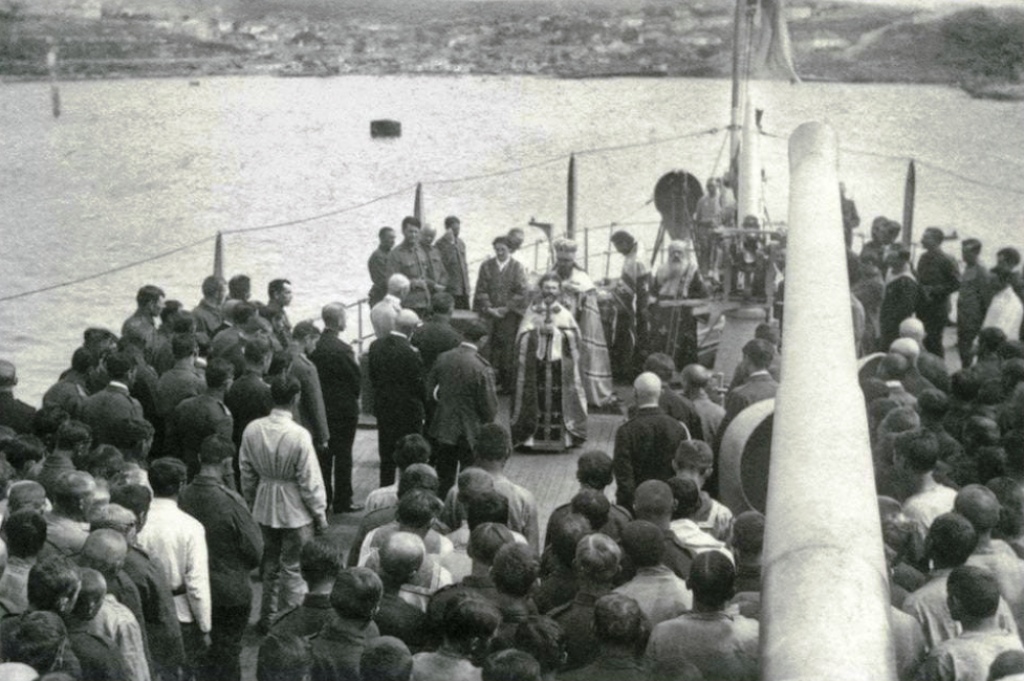
PHOTO: A priest offers prayers to comfort the White Russian refugees on the deck of the one of the ships. The Crimean shore can be seen in the background.
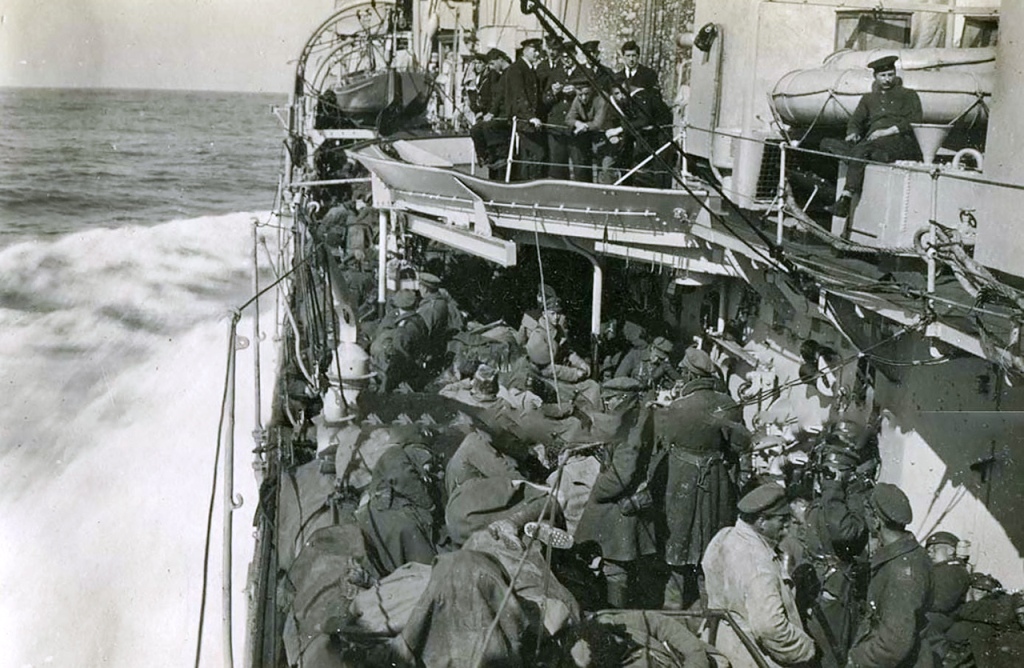
PHOTO: White Russian officers and soldiers are crammed onto the deck of one of the ships which took part in the Russian Exodus of Crimea in November 1920
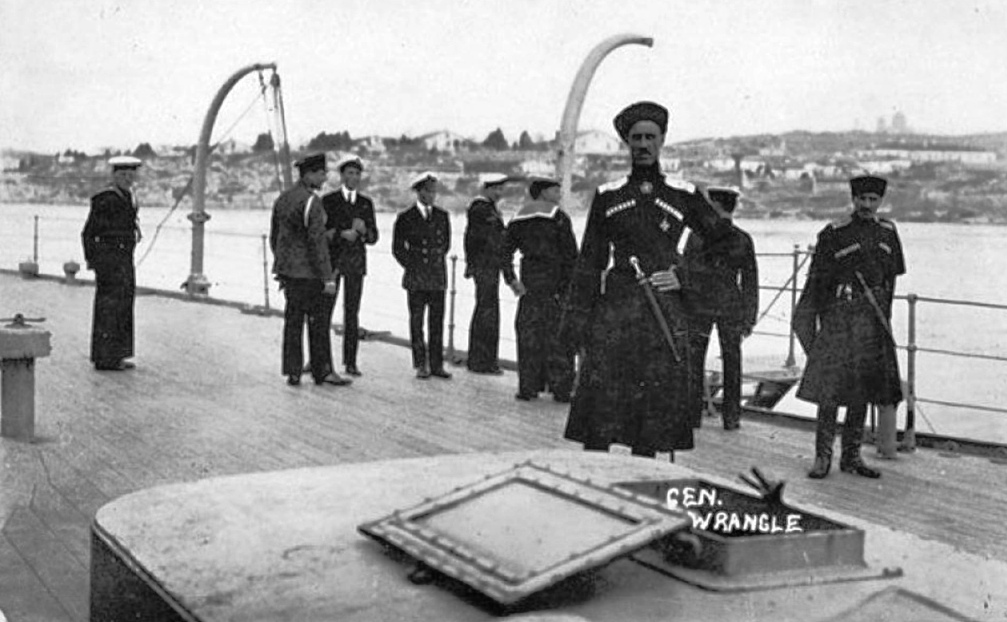
PHOTO: Lieutenant General Baron Pyotr Nikolayevich Wrangel (1878-1928) sailing into exile
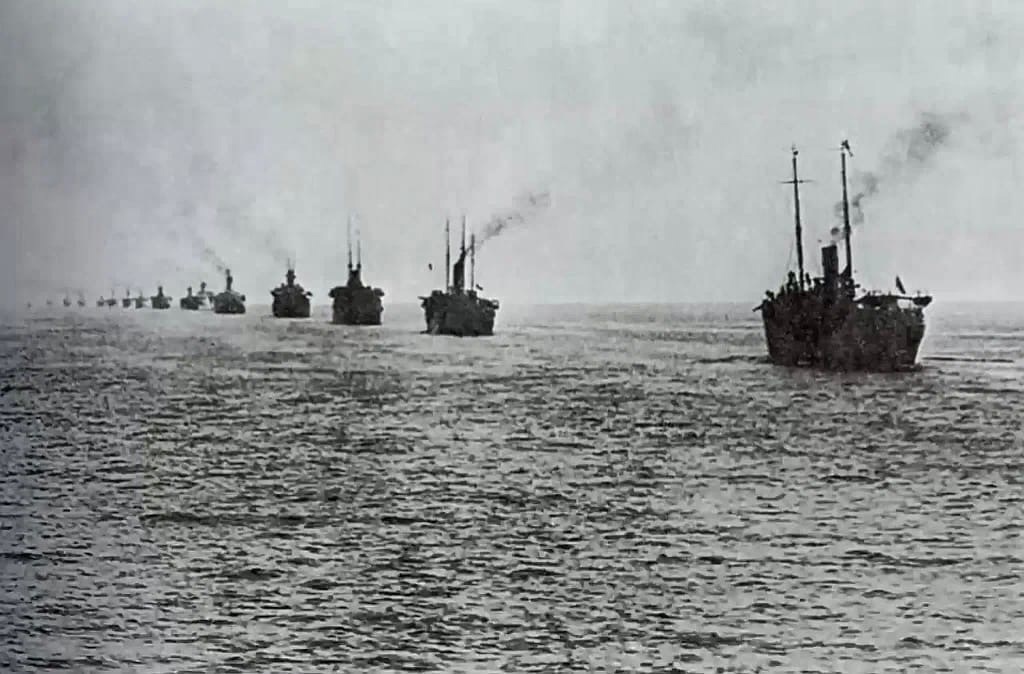
PHOTO: View of just some of the 126 ships and “sudenosheks” (small boats and tugs), on their way to Constantinople [Istanbul], carrying a total of 145,693 soldiers and civilians.

On 16th November 2020, a wreath ceremony was held in Sevastopol, Crimea marking the 100th Anniversary of the Great Russian Exodus.
***
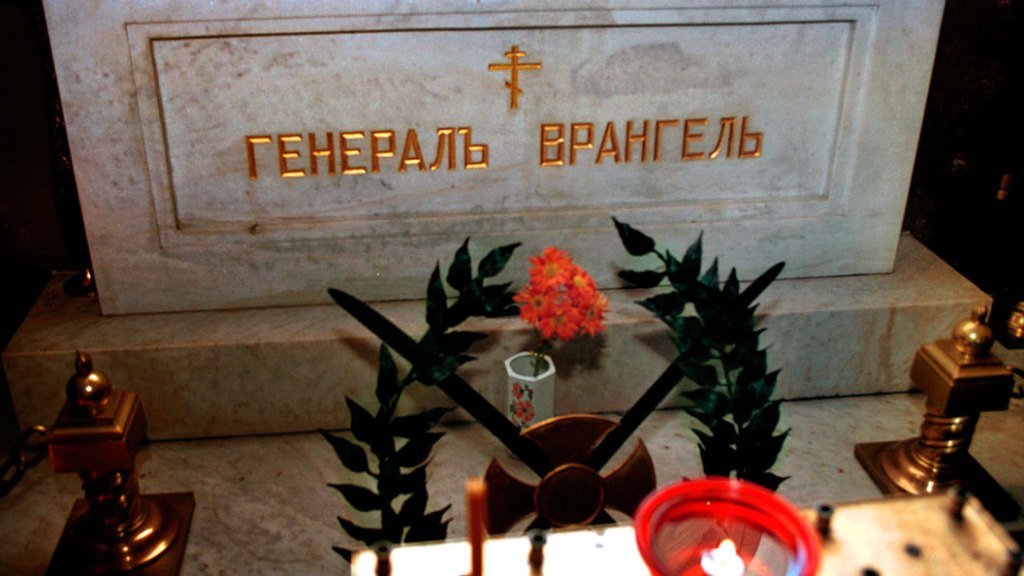
Lieutenant General Baron Pyotr Nikolayevich Wrangel died on 25th April 1928, after a sudden infection with tuberculosis. His family, however, believed that he had been poisoned by his butler’s brother, who briefly lived in the household in Brussels and was allegedly a Soviet agent.
He was first buried in Brussels. More than a year later, his remains were transported to Belgrade. On 6th October 1929, in a formal public ceremony, his body was reinterred in the Church of the Holy Trinity, Belgrade (photo above), the Russian church, according to his wishes.
Memory Eternal! Вечная Память!
© Paul Gilbert. 16 November 2024
 Nicholas II
You must be logged in to post a comment.