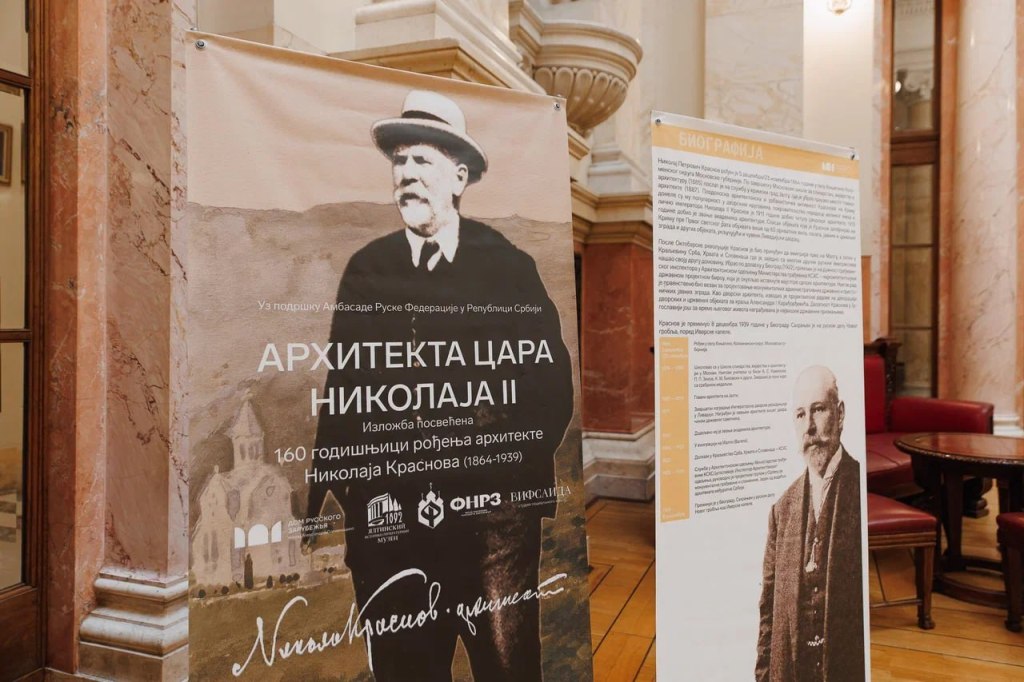
On 6th December 2024, a new exhibition dedicated to Nikolai Petrovich Krasnov (1864-1939), opened at Livadia Palace in Crimea. The exhibition is timed to the 160th anniversary of the birth of the outstanding Russian-Serbian architect and painter.
Krasnov is best known as the architect who planned and constructed many of the Romanov estates which dotted the southern coast of Crimea, during the late 19th and early 20th centuries. His masterpiece, of course, is the white Italian-style palace at Livadia, the Imperial Residence of Emperor Nicholas II and his family, during their stay in Crimea.
NOTE: click on the images below to enlarge and view each photo in greater detail.
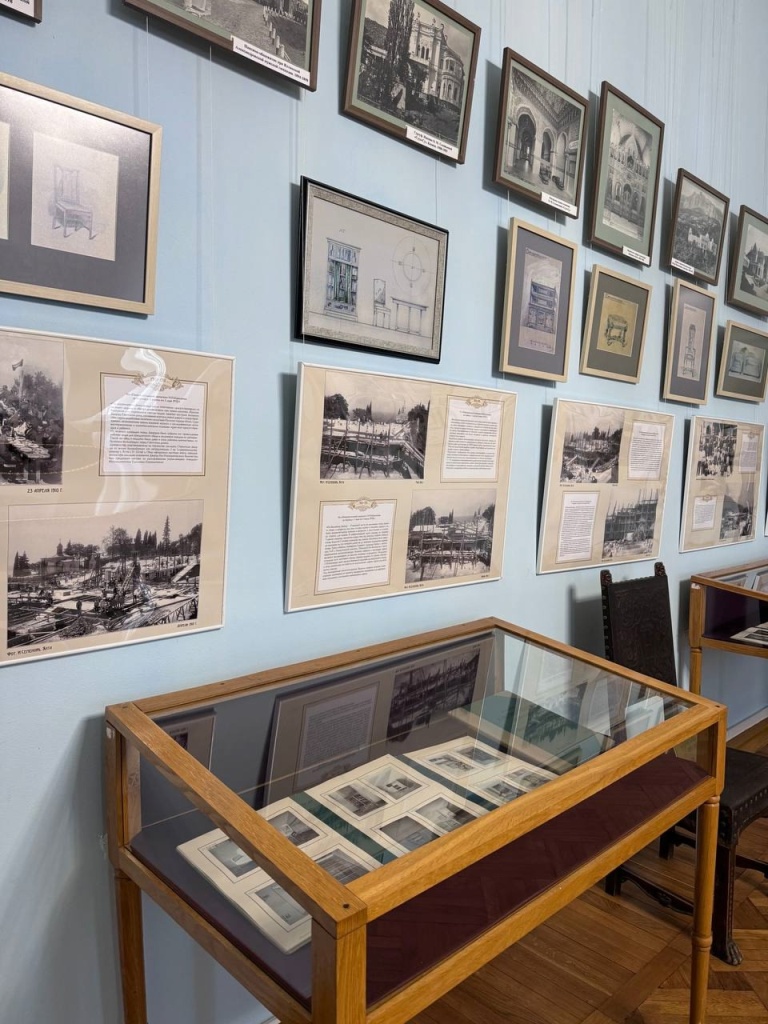
The exhibition features photographs by the famous Yalta photographer and Supplier to the Imperial Court Ivan Ivanovich Semyonov, which depict the stages of the construction of the Livadia Palace. In total, Semenov took about 500 such photos.
Each photo on display in the exhibition includes an explanatory note, outlining the progress of construction, of which Krasnov regularly sent to St. Petersburg to the Ministry of the Imperial Court and Appanages for subsequent approval by the Emperor.
Some of these photos were placed in a special album “Construction of ‘Livadia’ the New Grand Palace in the Name of His Imperial Majesty 1910-1911“, which was presented to the Imperial Family. Fortunately the album has survived to the present day, and is now in the collection of the Livadia Palace Museum.
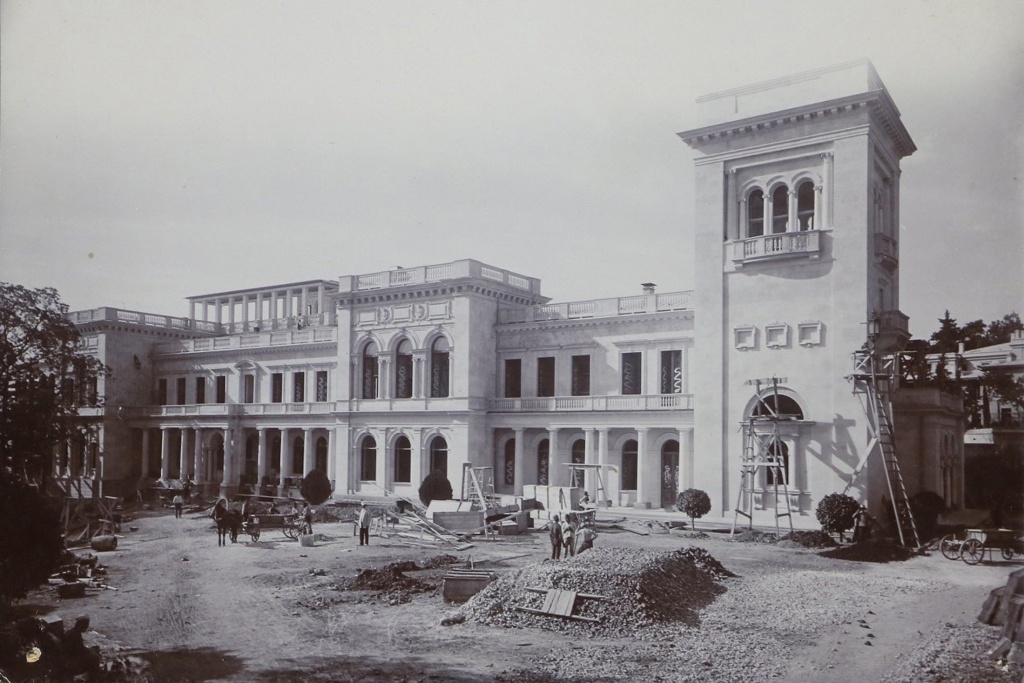
PHOTO from the exhibition: Livadia Palace under construction. 1911.
Photo: Ivan Ivanovich Semyonov
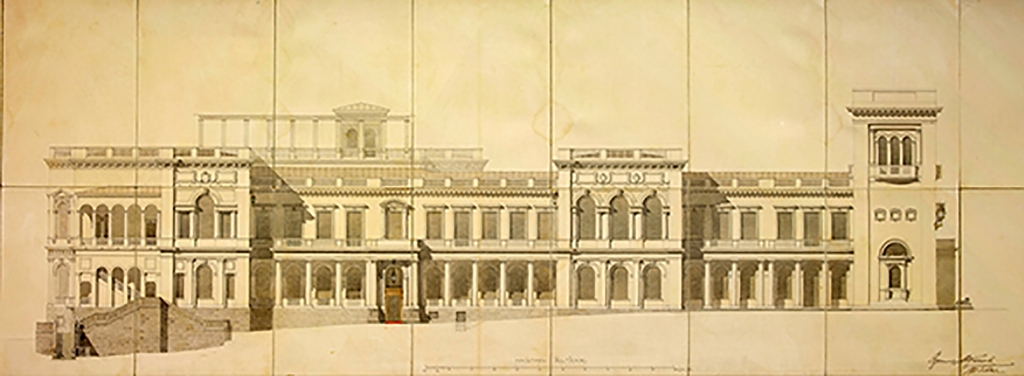
PHOTO: Nikolai Krasnov’s drawing of the Livadia Palace (1910)
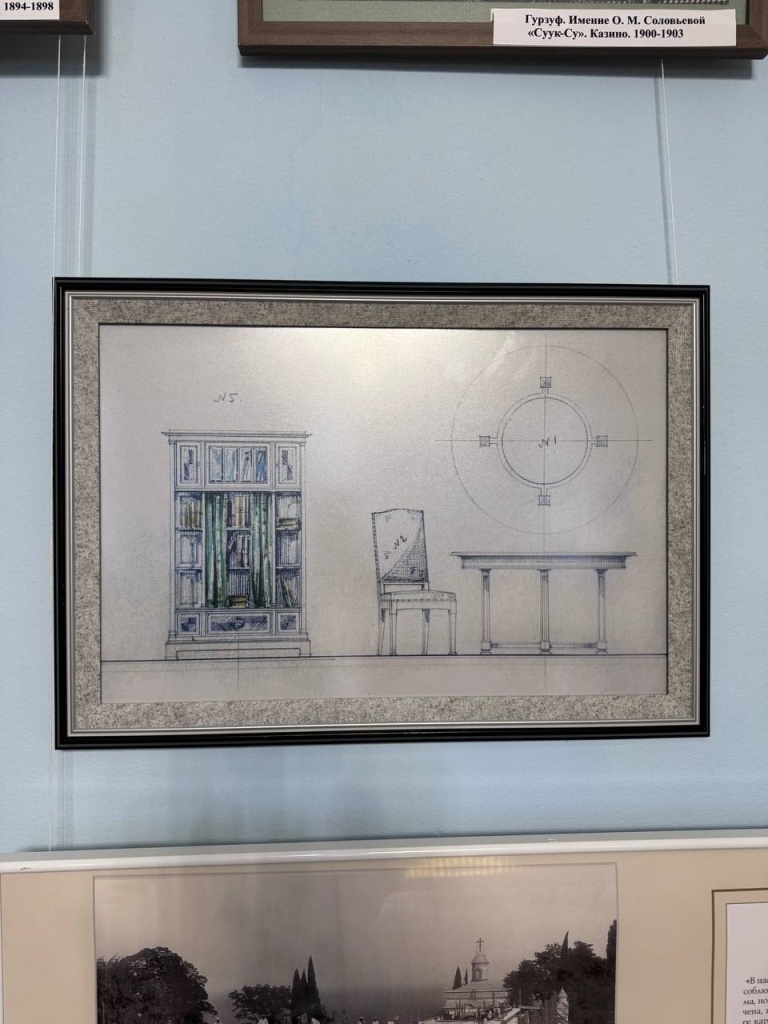
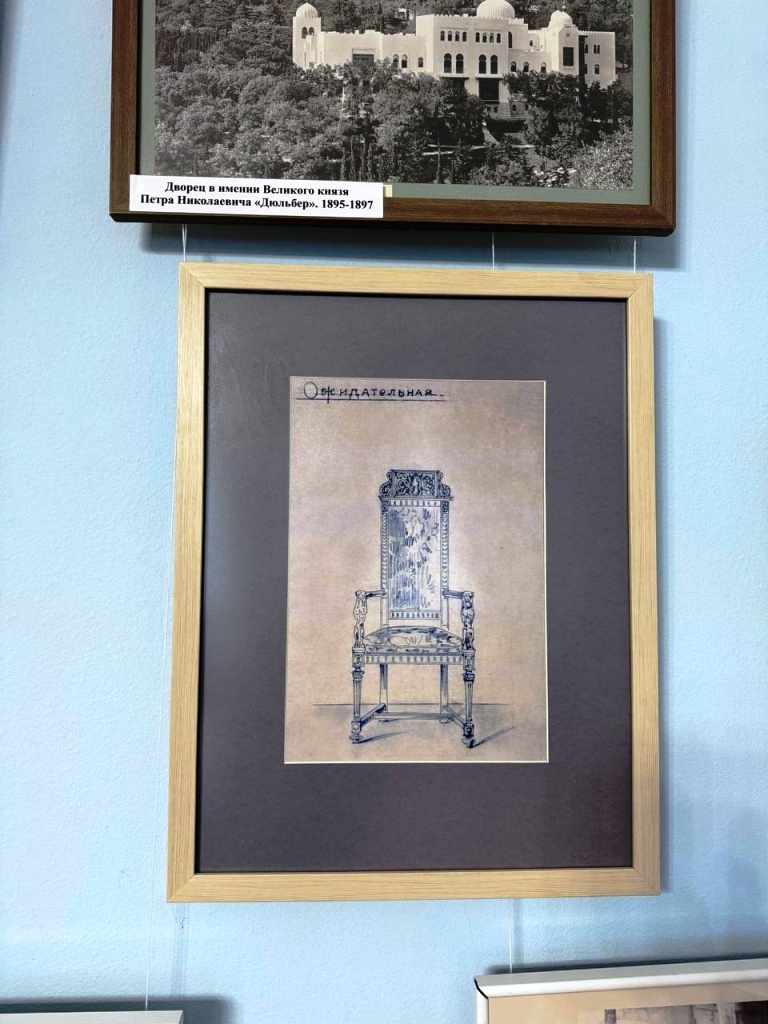
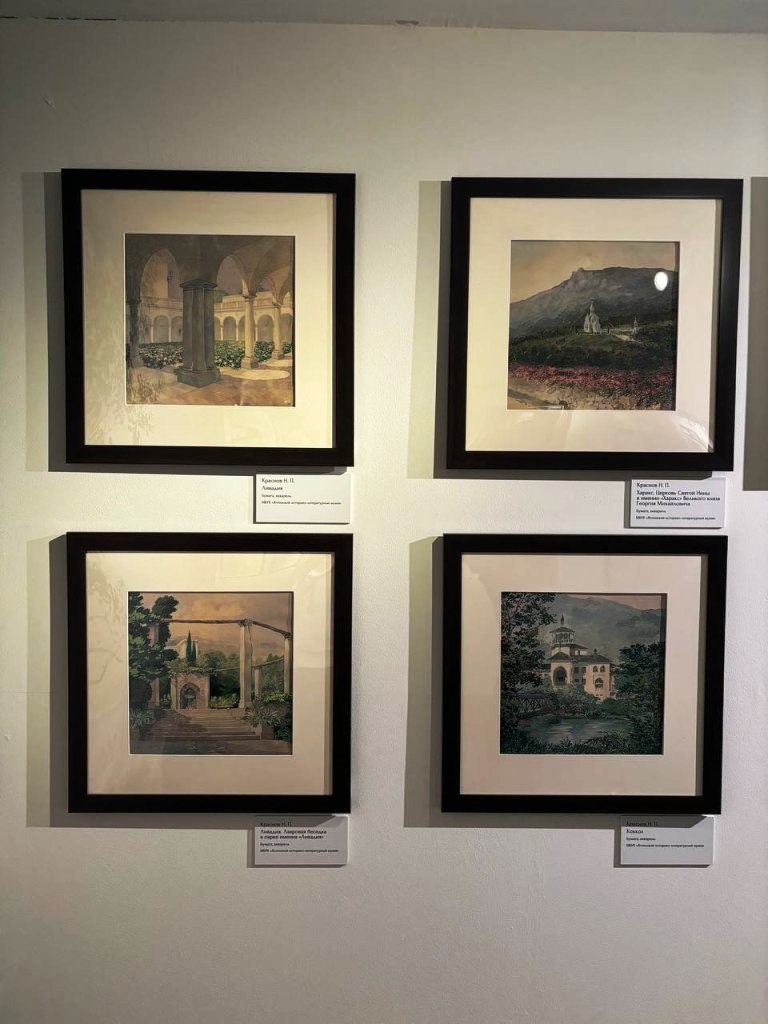
In addition to the photographs are a materials related to the life and work of the architect, including his drawings of his projects, and a collection of beautiful watercolours of the Livadia Palace and gardens, painted by Nikolai Krasnov – NOTE: click on the link to view 10 of Krasnov’s watercolours – PG.
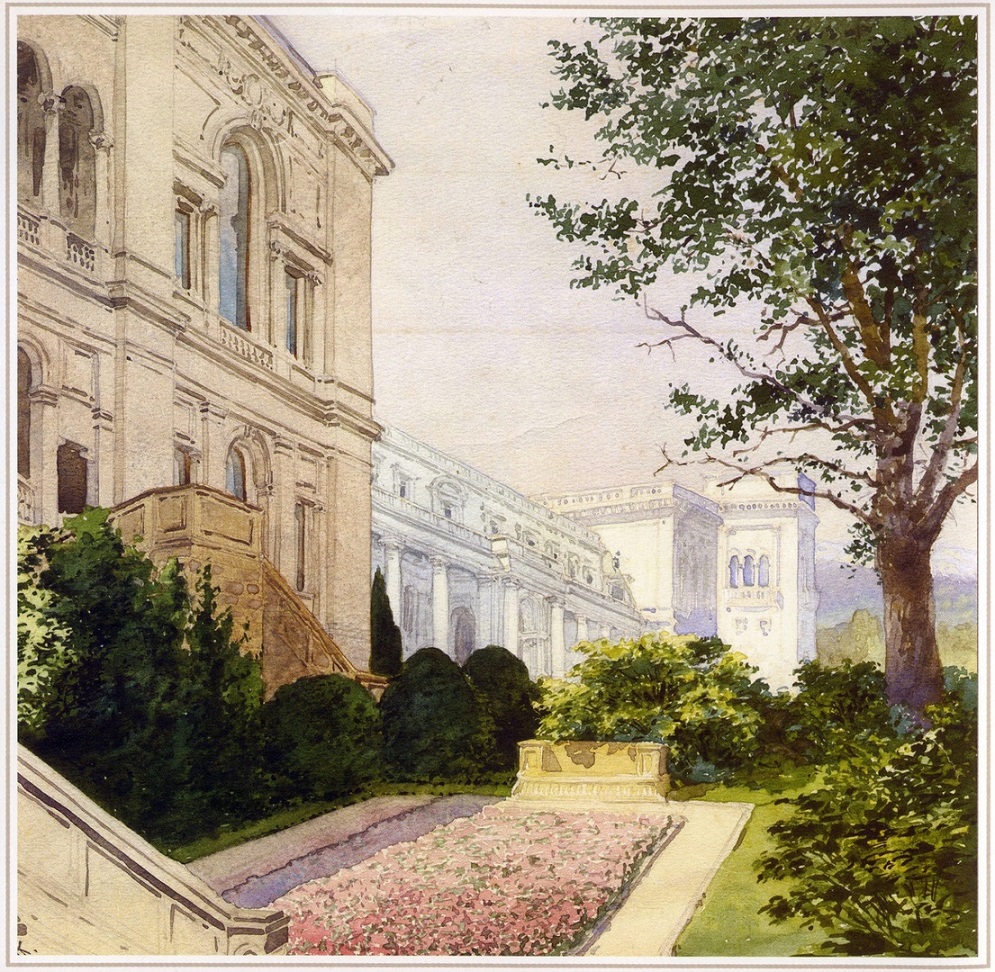
PHOTO: Northern facade of the Livadia Palace
Watercolour by Nikolai Petrovich Krasnov (1864-1939)
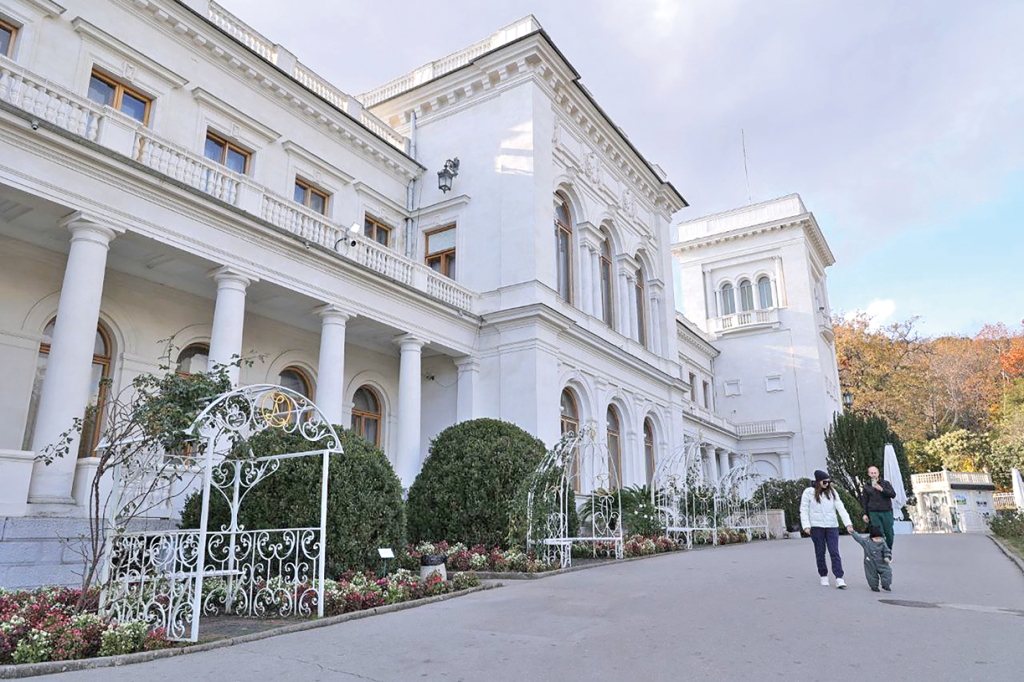
PHOTO: view of the Livadia Palace as it looks today
Livadia must have been beautiful before the First World War and the Russian Revolution. Krasnov had begun working on the project since the autumn of 1909. The new palace was built on the site of the old Large (Bolshoi) wooden Palace. Construction on the new white limestone palace began on 21st January 1910, and after 17 months of construction.
The palace was built in the Italian Renaissance style, and consisted of 116 rooms, with interiors furnished in different styles, . Emperor Nicholas II spent about 4 million gold rubles on the palace. Livadia Palace was inaugurated on 11th September 1911.
In November 1911 Grand Duchess Olga Nikolaevna celebrated her 16th birthday at Livadia. The Imperial family visited and stayed in their new Livadia Palace on only four occasions: in the autumn of 1911 and 1913 and in the spring of 1912 and 1914, where they took up residence for several months at a time. The Tsar even considered moving the capital of the Russian Empire to Yalta.
On 30th April, 1918, German troops entered Livadia and immediately began to plunder the palace. In 1993 the Livadia Palace received the status of a museum. In July 2022, Livadia Palace celebrated it’s 100th anniversary as a museum – NOTE: the link features 18 colour photos of the palace and it’s interiors, as they look today – PG.
***
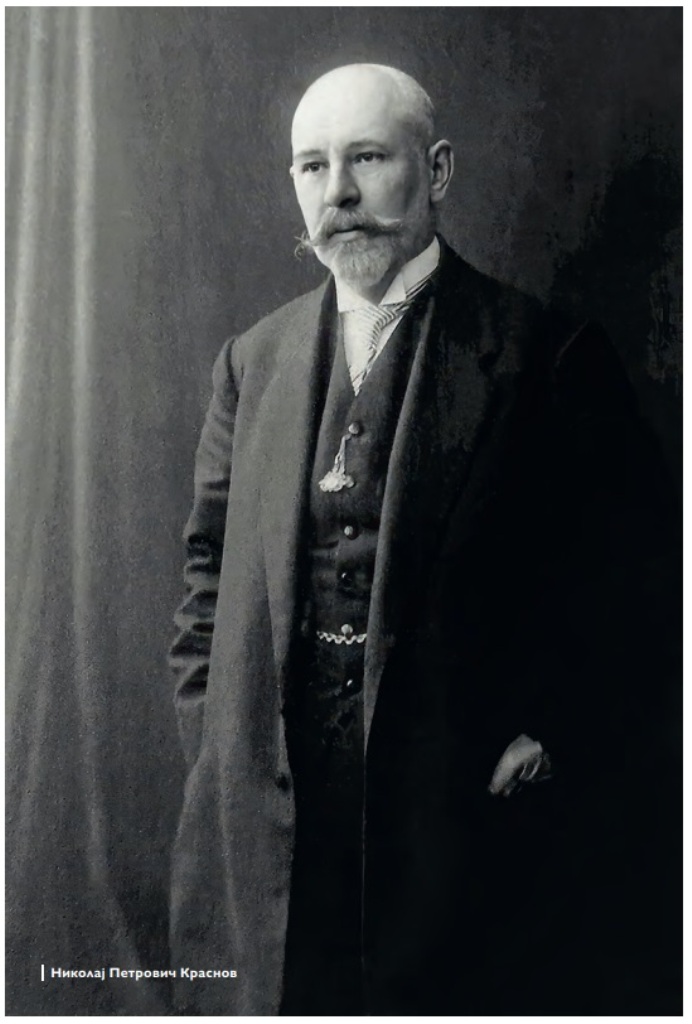
PHOTO: Nikolai Petrovich Krasnov (1864-1939)
Nikolai Petrovich Krasnov was born on 5th December (O.S. 23rd November) 1864, in the village of Khonyatino, situated in the Kolomna district.
In 1876, at the age of 12, Nikolai entered the School of Painting, Sculpture and Architecture in Moscow, where he studied for 10 years. From 1887 to 1899 he served as the chief architect of Yalta. From 1889 to 1911 he ran his own architecture firm. The young architect was fully responsible for solving a wide range of issues related to the rapid development of Yalta as an all-Russian resort city.
In recognition for his work on Livadia Palace, on 5th October 1911, Krasnov was granted the title of Architect of the Highest Court and awarded the Order of St. Vladimir. On 6th December of the same year, he was assigned to the Main Directorate of Appanages of the Imperial Court, with the assignment of technical supervision of all construction and furniture and wallpaper work in the palaces and adjacent buildings, which were planned in the following years in Livadia.
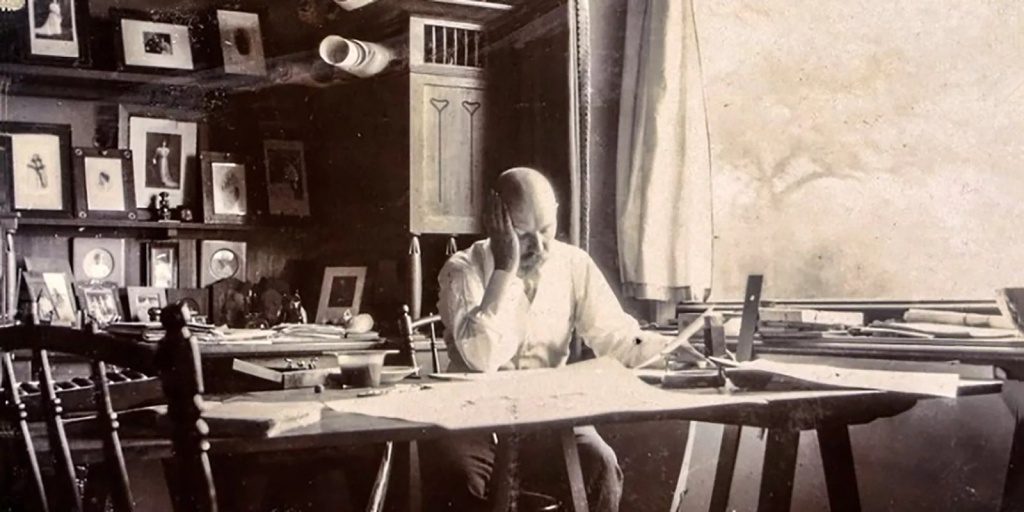
PHOTO: Nikolai Krasnov in his office in Yalta
Following the Bolshevik Revolution in 1917, in 1919, Nikolai Krasnov emigrated with his wife and daughter. They first lived in Malta for several years, before settling in Belgrade, Serbia in 1922. For the next seventeen years, Krasnov served as an inspector for the Architectural Division. He left a significant mark in the architecture of present-day Serbia.
Nikolai Krasnov died on 8th December 1939 in Belgrade, Serbia. He was buried in the Russian sector of the New Cemetery in Belgrade.
To this day, the Serbian people deeply revere the memory of the Yalta architect, most famous for Livadia Palace, the Crimea residence of Nicholas II and his family.
© Paul Gilbert. 7 December 2024
 Nicholas II
You must be logged in to post a comment.