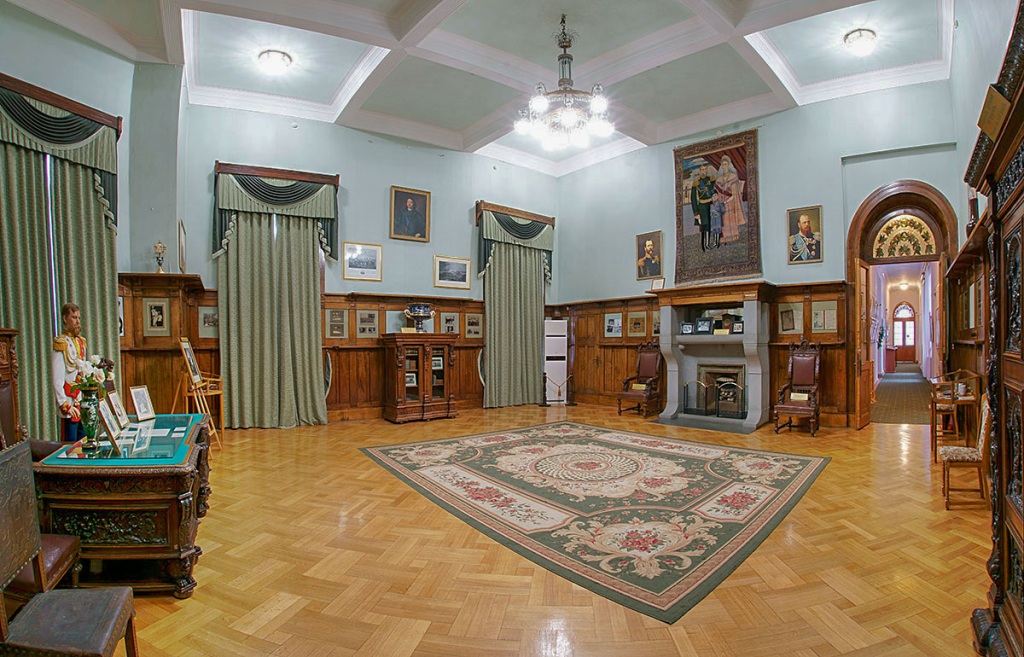
PHOTO: the Emperor’s Study in Livadia Palace, as it looks today
According to Natella Sheremeteva, one of the founders of the Foundation for the Preservation of Historical Cultural Heritage, the Study of Emperor Nicholas II in the Livadia Palace, Crimea will be recreated in 2025.
“The Foundation’s projects will provide close cooperation with Crimean museums. The expositions of the Crimean palace-museums should be improved and replenished with antiques from private collections. Assistance in this will be provided by the Foundation . . . One of the immediate priorities is to assist the Livadia Palace in recreating the Study of Emperor Nicholas II”, she said during a cultural event held in Yalta over the weekend.
Sheremeteva, who is also curator of the Antique Art Gallery, added: “We have been operating for more than 20 years. We are quite well known and respected in St. Petersburg. This year, a decision was made to relocate to Yalta, our services are needed here more.”
“In 2025 we will begin to recreate the historic interior of the Study of Emperor Nicholas II in the Livadia Palace,” said Sheremeteva.
In turn, Alexander Balinchenko, Director of the Alupka Palace and Park Museum, who was present at the event, thanked the Foundation for the Preservation of Historical Cultural Heritage, for its philanthropic activities and wished fruitful cooperation: “This is a very important event for all of us!”
It is not clear if the furniture will be recreated for the Emperor’s Study, as was done with the New Study and Working Study of Nicholas II in the Alexander Palace at Tsarskoye Selo. It is important to note that the desk which is currently on display in this interior is not the original, it is merely a replacement. The cost to recreate furniture for this interior would be costly, and only possible with the financial assistance of a large Russian corporation of wealthy oligarch.
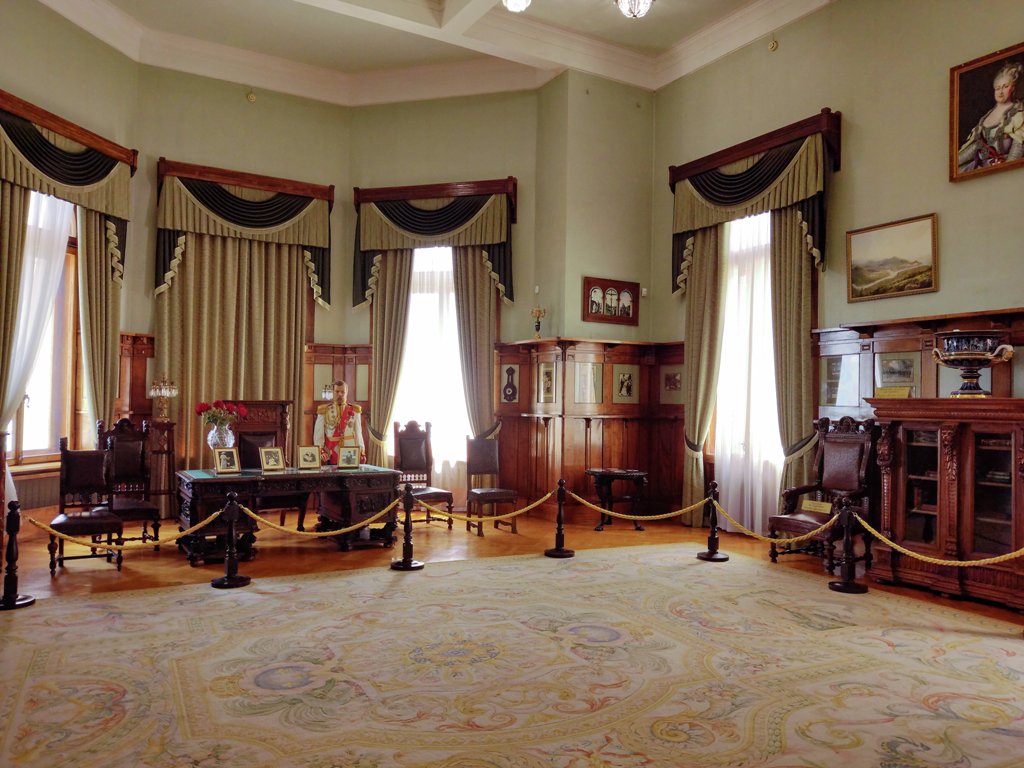
PHOTO: the Emperor’s Study in Livadia Palace, as it looks today
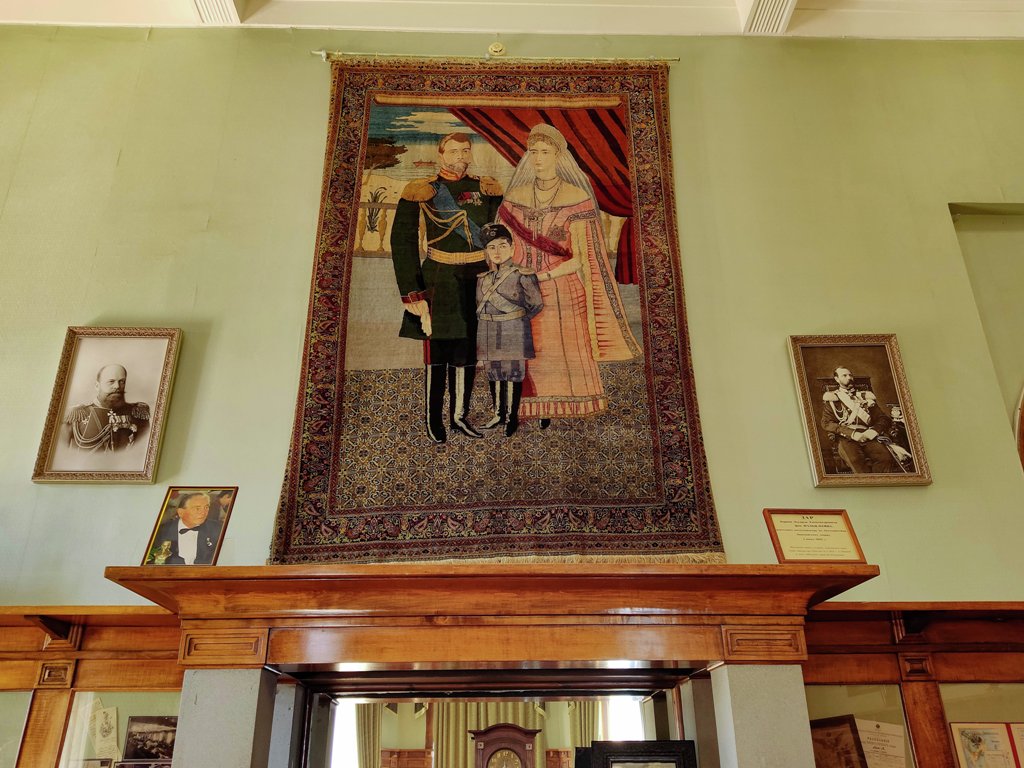
In 1913, the unique carpet – seen on above photo – was gifted by Ahmad Shah Qajar Shah of Persia to the family of Emperor Nicholas II on the occasion of the celebration of the 300th anniversary of the Romanov dynasty. After the Revolution, the carpet among other items came into the possession of *Baron Eduard von Falz-Fein.
After the fall of the Soviet Union in 1991, von Falz-Fein dedicated a significant part of his life to the return of historical and cultural monuments to Russia, including the priceless carpet, which he gifted to Livadia Palace, where it remains on display to this day. It is one of the few original items from the Study of Emperor Nicholas II to have survived to the present day.
*Baron Eduard Oleg Alexandrowitsch von Falz-Fein (14 September 1912 – 17 November 2018) was born in Imperial Russia, and fled with his parent to Germany in 1918. He lived for most of his life in Liechtenstein, where he became a successful athlete, businessman and philanthropist. It is interesting to note that Falz-Fein funded much of the research on the identification of the Romanov family remains. He died in Vaduz on 17 November 2018, at the age of 106!
History of the Studay of Emperor Nicholas II in Livadia Palace
One of the most beautiful interiors of the Livadia Palace was the Emperor’s Study, which was located on the second floor. In 1911, Nicholas II wrote in his diary: “I am delighted with my upper study.”
Despite his abscence from the northern capital, the Emperor faithfully carried out his duties during his stays in Crimea. Couriers arrived by train from St. Petersburg, with “piles of papers and documents”, which were delivered to the imperial residence at Livadia. Nicholas II diligently read the documents, often writing notes and signed them in his Study daily. He regularly met with officials (ambassadors, political and state figures), whom Nicholas II received, always in uniform.
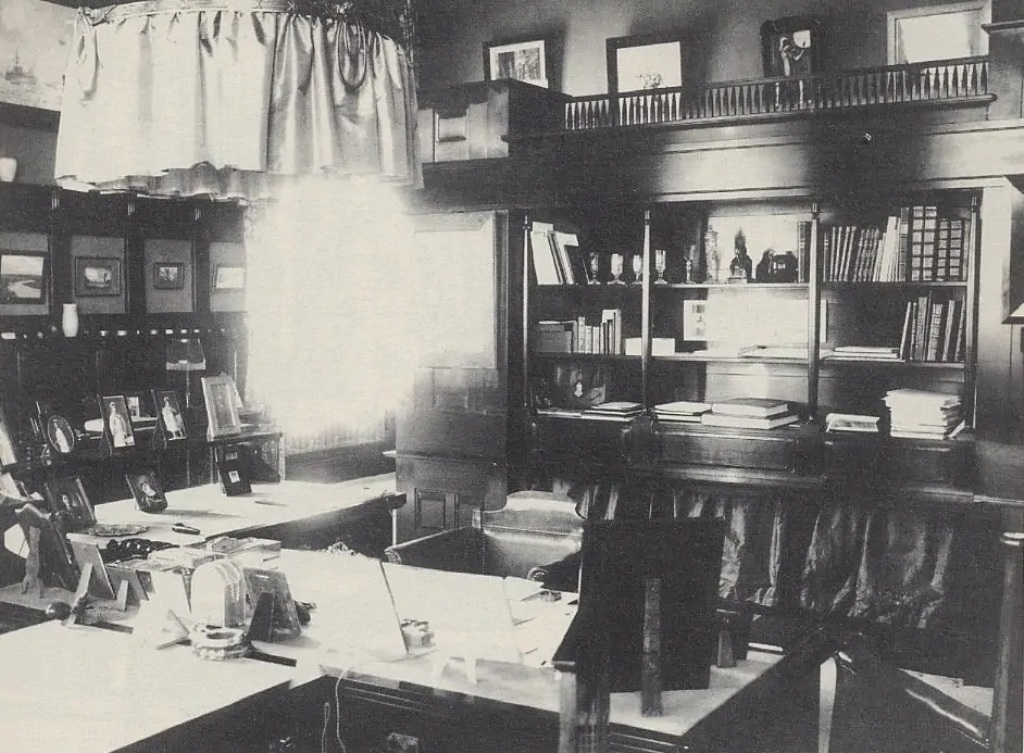
PHOTOS: the Study of Emperor Nicholas II in Livadia Palace as it looked in 1912-1914
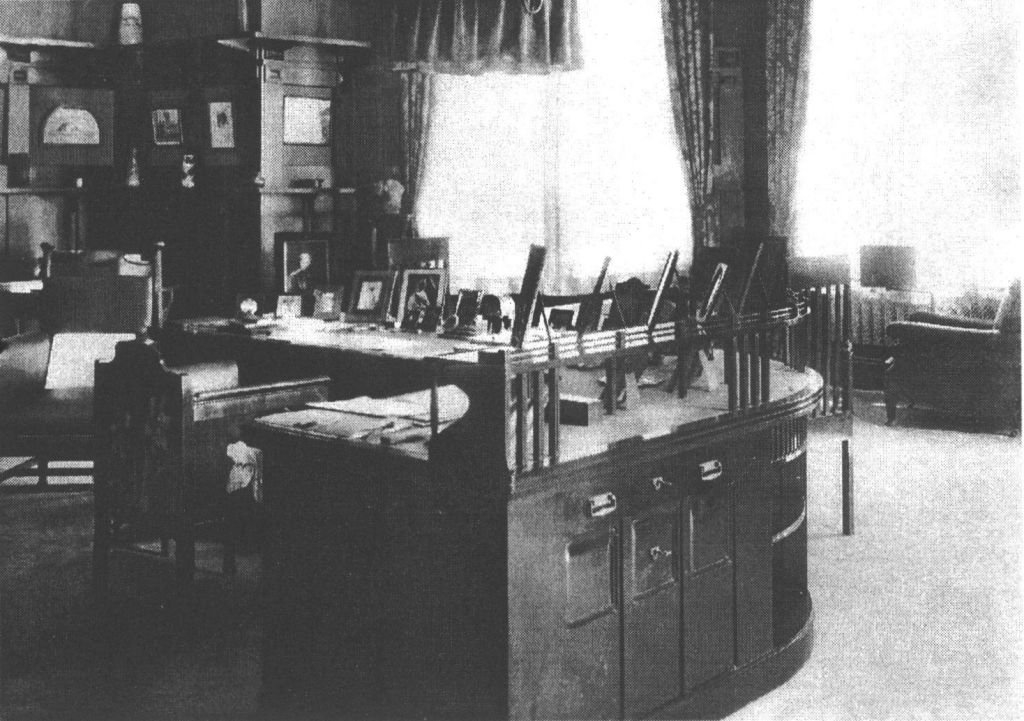
The furniture and the wall panels with shelves in the Emperor’s Study were made by the craftsmen of the F.F. Tarasov Furniture Factory in St. Petersburg and the K.V. Zibrecht Factory in Moscow.
The furniture was made from ash wood with baitsovka in a dark greenish-brown tone. They were complemented with green Moroccan leather chairs and armchairs, embossed with the image of the iris flower in the Art Nouveau style.
The furniture was composed in such a way that the natural light, which flooded the spacious interior, gave the impression that the Emperor’s Study was divided into two parts – a working part, a business one, facing the windows of the bay window, and a corner part, in which Nicholas would relax while smoking a cigarette in front of a massive fireplace made of gray-green diorite.
While the original wall panels and fireplace have survived, none of the furniture – including the Emperor’s desk – has not survived to the present day. On 30th April, 1918, German troops entered Livadia and immediately began to plunder the palace. Any remaining items of furniture and decoration were transferred to other museums. Livadia Palace then became a sanitorium. In 1993 the Livadia Palace received the status of a museum.
© Paul Gilbert. 29 December 2024
 Nicholas II
You must be logged in to post a comment.