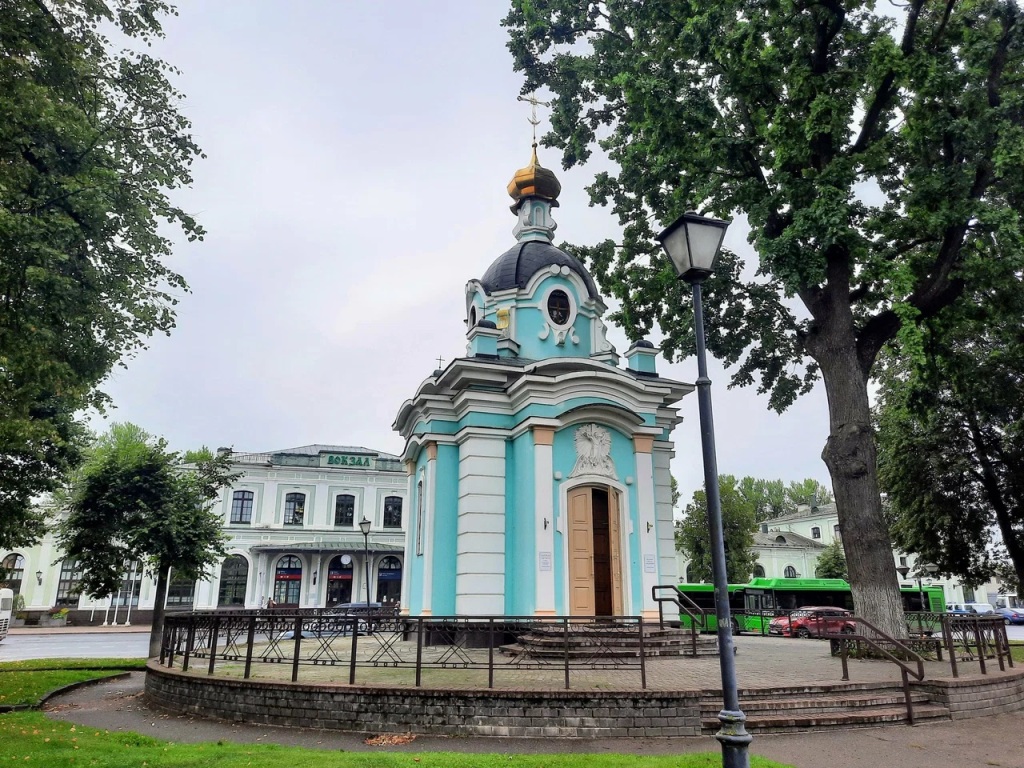
In 2003, a memorial chapel in memory of the abdication of Emperor Nicholas II was constructed on the square in front of the modern-day railway station in Pskov. The Chapel of the Resurrection of Christ was officially opened and consecrated on 17th July 2003.
Recall that on the night of 14/15 (O.S 2/3) March 1917, in a carriage of the Imperial Train, which was detained at the Varshavsky Railway Station in Pskov, the last Russian autocrat signed the act of abdication from the throne. The monarchy and the Russian Empire ceased to exist.
The Varshavsky Railway Station was built 140 years ago (on 9th September 1863) in connection with the opening of the St. Petersburg – Warsaw Railway. The two-storey station building, was restored anew for the 1100th anniversary of the city in 2003.
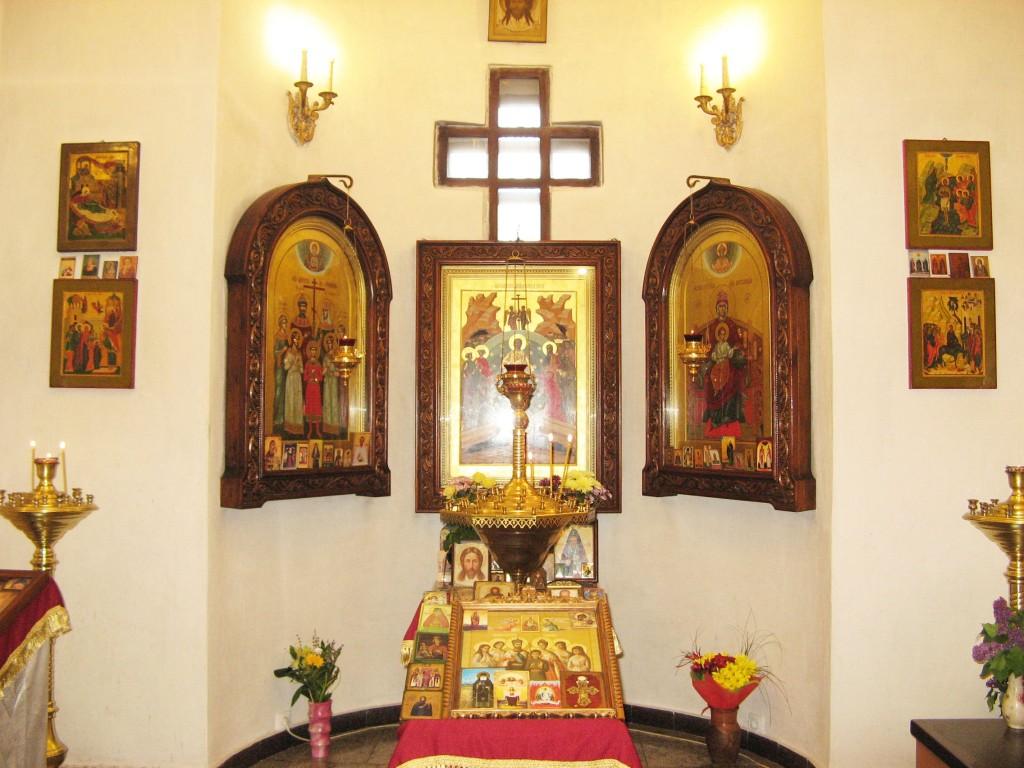
The chapel’s architect Sergei Nikolaevich Kondratiev, wanted to construct the chapel to correspond with the station building. He chose the architectural style of Imperial Russia, based on the famous examples of St. Petersburg, Oranienbaum and Peterhof.
The tiny chapel stands 17 meters [56 ft.] in height, it is crowned with a dome and a small cupola on which a gilded cross is installed. The dome is covered with sheet copper, the dome and the cross are made of a special alloy made at one of the defense plants in Chelyabinsk. The single colour scheme of the chapel’s facade is a combination of golden-brown, green and white.
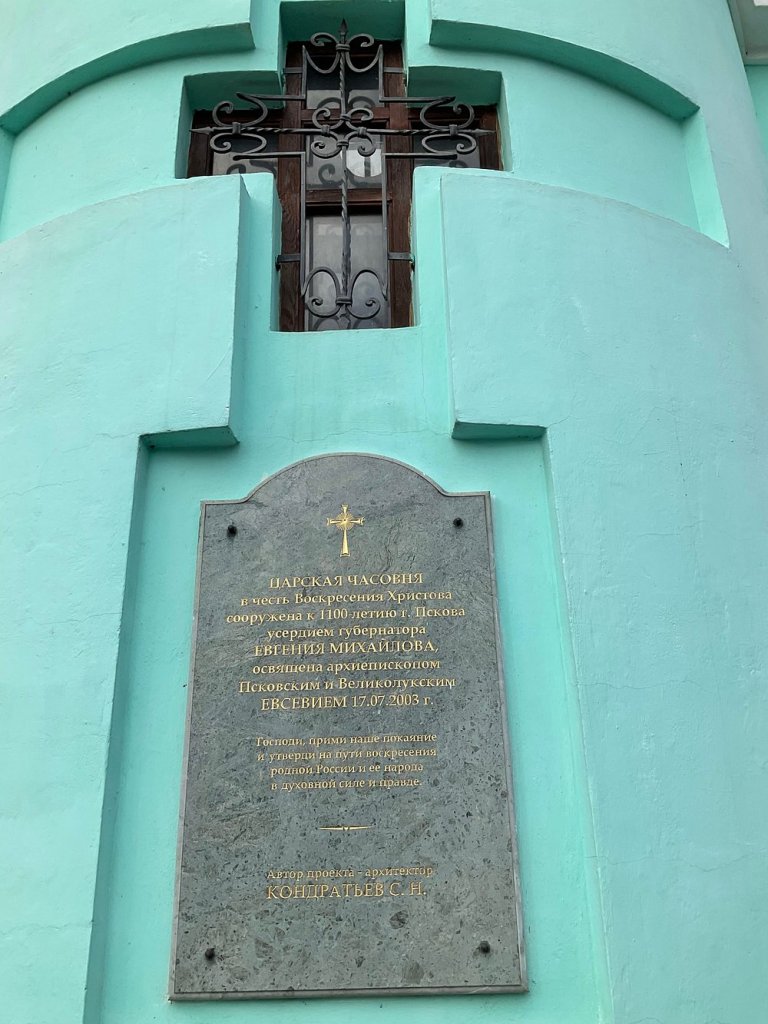
A marble plaque was installed on the side of the chapel, on which the inscription is engraved: “The Tsar’s Chapel was built in the year of the 1100th anniversary of Pskov as a repentance and deep sorrow of the people of Pskov over the tragic death of the last Russian Emperor Nikolai Alexandrovich Romanov.”
© Paul Gilbert. 23 January 2025
 Nicholas II
You must be logged in to post a comment.