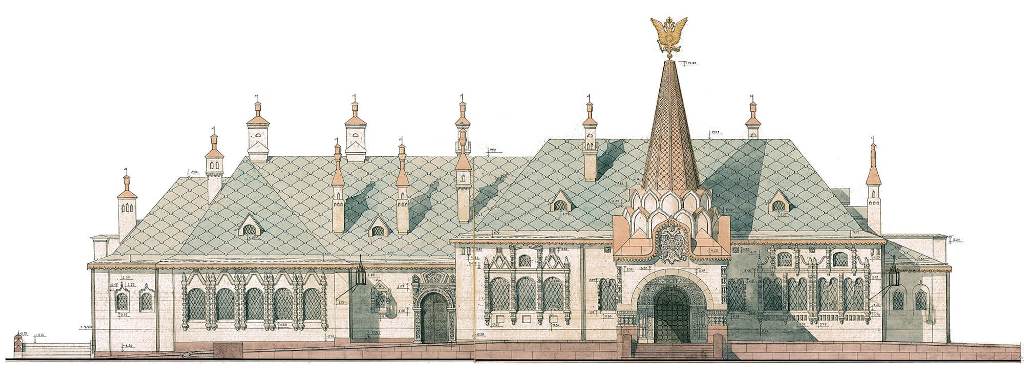
PHOTO: historical look of the Imperial Railway Pavilion at Tsarskoye Selo
The Imperial Railway Pavilion in Tsarskoye Selo was built according to the project of the architect Vladimir Aleksandrovich Pokrovsky (1871-1931). It was constructed in the Neo-Russian style, beloved by Nicholas II. The station became the main terminus for the Imperial Train.
The building was located on the third branch of the Imperial Railway, which connected the Vitebsky Railway Station in St. Petersburg with Tsarskoye Selo. This special branch was built for the purpose of transporting the Emperor, members of the Imperial Family, government ministers and foreign delegations to and from the capital. During the First World War, the Imperial Train transported Nicholas II to the headquarters of the Russian Imperial Army, in Mogilev.
Many historians note that it was from the Imperial Railway Station at Tsarskoye Selo, that the Imperial Family departed for their last journey to Tobolsk in August 1917. This is incorrect. The Imperial Family were sent into exile from the Alexandrovskaya Station – Tsarskoye Selo’s third railway station on 14th (O.S. 1st) August 1917.
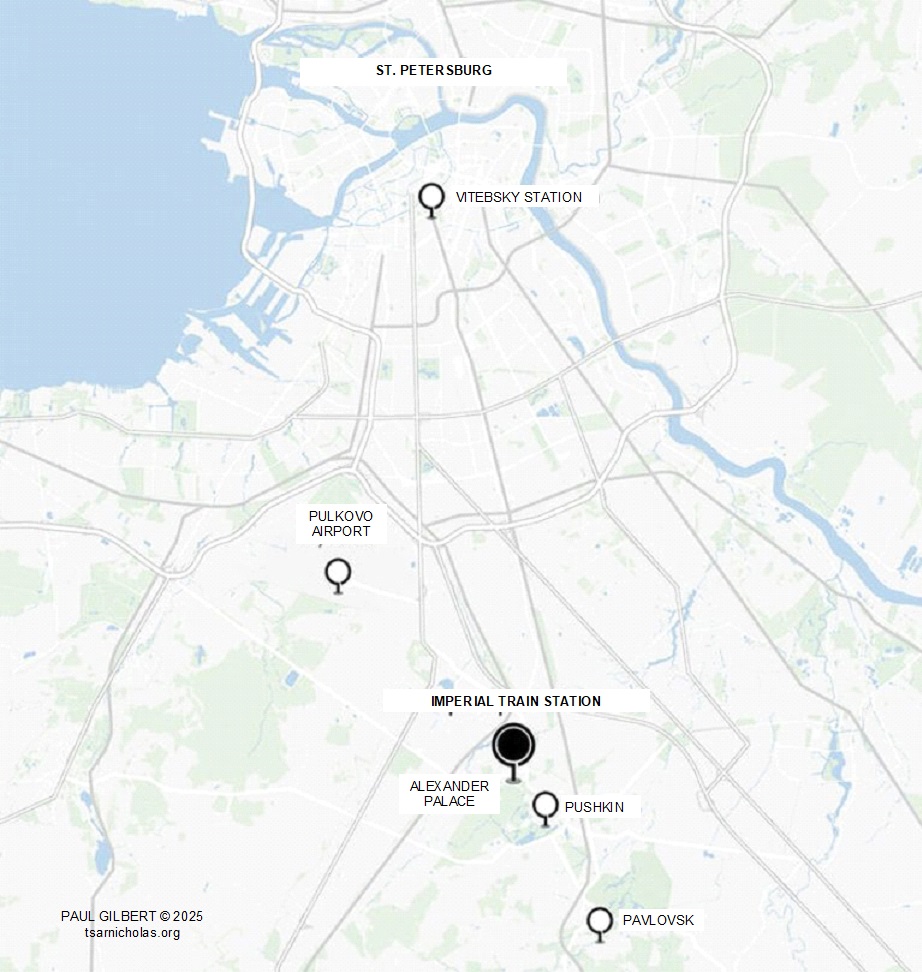
PHOTO: contemporary map showing the location of the Imperial Train Station and it’s proximity to the Alexander Palace in Tsarskoye Selo.
On 25th January 1911, the original wooden pavilion was lost as a result of a fire, only the platform and part of the canopy survived. On the site of the lost pavilion, a new stone building, according to Pokrovsky’s plan was erected in 1912. A special road – which has survived to this day – was laid through the Fermsky [Farm] Park leading to the Alexander Palace.
The architectural style of the Imperial Pavilion – asymmetry, window design, “checkerboard” roof with steep slopes, tented porch) makes it akin to the buildings of the nearby Feodorovsky Gorodok [Town], the Feodorovsky Sovereign Cathedral, the Sovereign Military Chamber and the barracks of His Imperial Majesty’s Own Convoy. Together, they formed an architectural ensemble in which motifs of ancient Russian architecture were widely used. The original red-brick façade was plastered and painted white by order of the Emperor. It was decorated with relief white-stone double-headed eagles above the arches and on the façade walls, ornamental carvings are made at the portals, figured columns are made on the outer corners of the porch.
The main part of the building included three halls: in the center there was a square vestibule with a front porch, the halls on the sides of the vestibule were intended for the Emperor and his retinue: on the south side was the Tsar’s Hall, on the north – the Retinue’s Hall. A metal canopy above the platforms and tracks, adjacent to the eastern façade of the pavilion, served to receive trains. A ramp was added to the main entrance, allowing motorcars and carriages to drive directly under the arched opening of the front porch.
The paintings on the walls and ceilings in the halls are made in the tempera-glue technique on plaster. Polychrome ornamental painting is a stylized borrowing of elements of the pictorial décor of the interior design of the palace of Tsar Alexei Mikhailovich (1629-1676) in Kolomenskoye, near Moscow. The unique painting, which has partially survived to this day, is an integral part of Pokrovsky’s design. The vaults of the inner chambers were painted by the artist Mikhail Ivanovich Kurilko (1880-1969).
During the First World War of 1914-1917, the Imperial Railway Station served to transport wounded Russian soldiers to the hospital set up in Feodorovsky Gorodok.
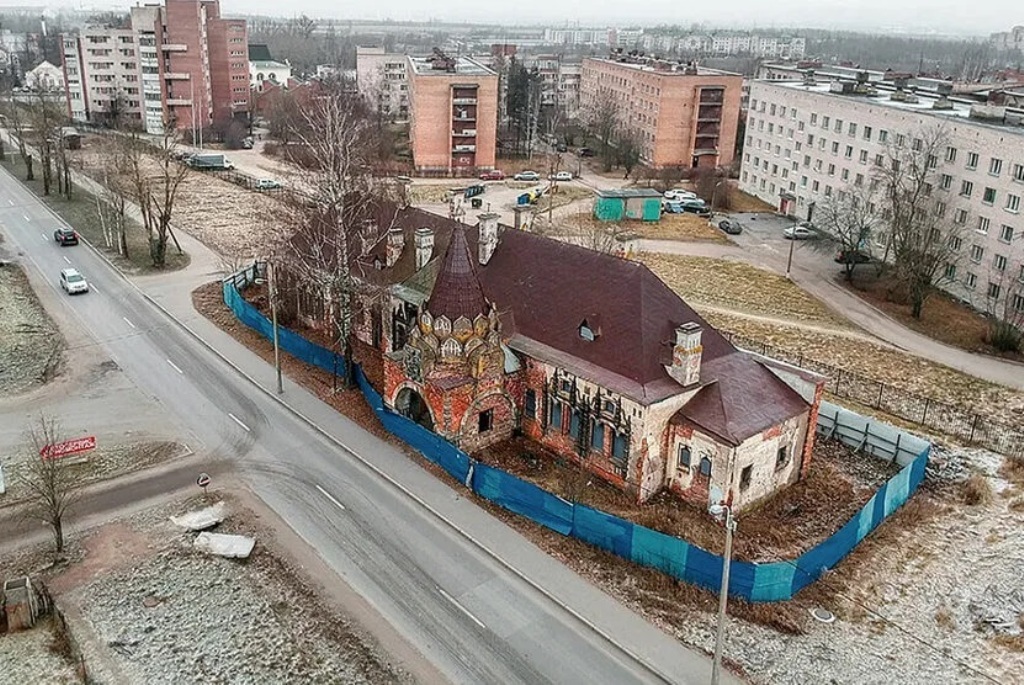
PHOTOS: for decades, the Imperial Railway Pavilion at Tsarskoye Selo
has been left in a shocking state of neglect and disrepair
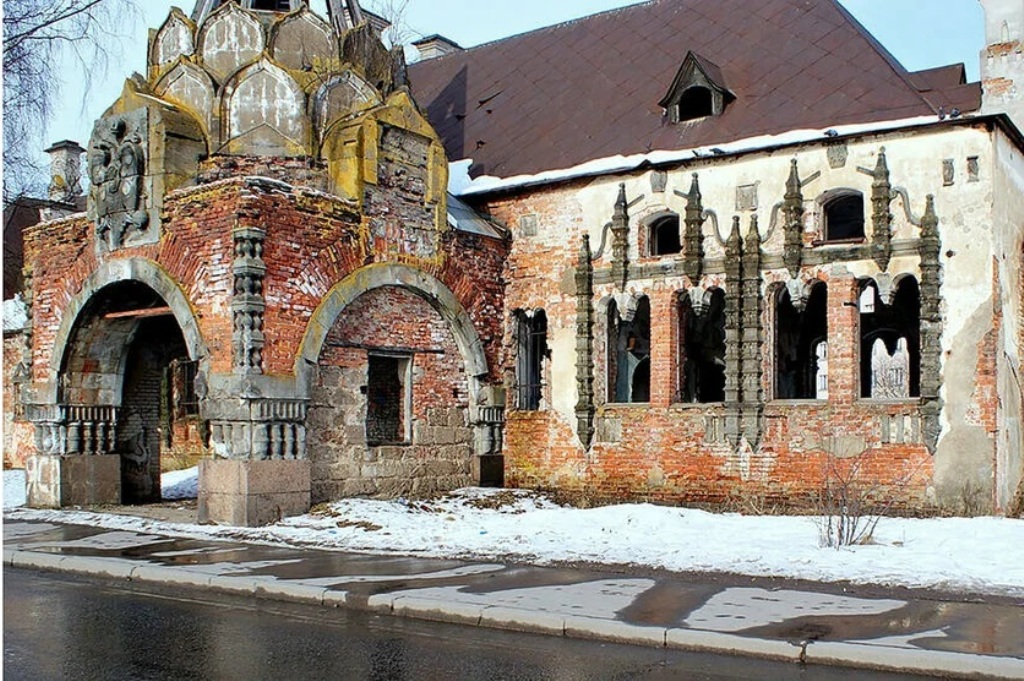
In 1918, the station was renamed the Uritsky Pavilion [after Moisey Solomonovich Uritsky (1873-1918), a prominent Bolshevik and chairman of the Petrograd Extraordinary Commission]. Initially, it was used as a dormitory for workers of the Track Repair Mechanical Plant. The Tsarist emblems were removed from the tent above the wing, the ceremonial halls were divided by makeshift walls, the porch was adapted for use as a kitchen. The Imperial Pavilion’s furniture, lamps, objects of decorative and applied art were all lost. The hundred-meter landing stage was dismantled in the 1930s.
In the summer of 2023, work began on on the restoration of the Imperial Railway Pavilion to it’s historic original, under the direction of the Tsarskoye Selo Station Foundation. Below are the artist concepts of what the Imperial Railway Pavilion will look like following it’s restoration:
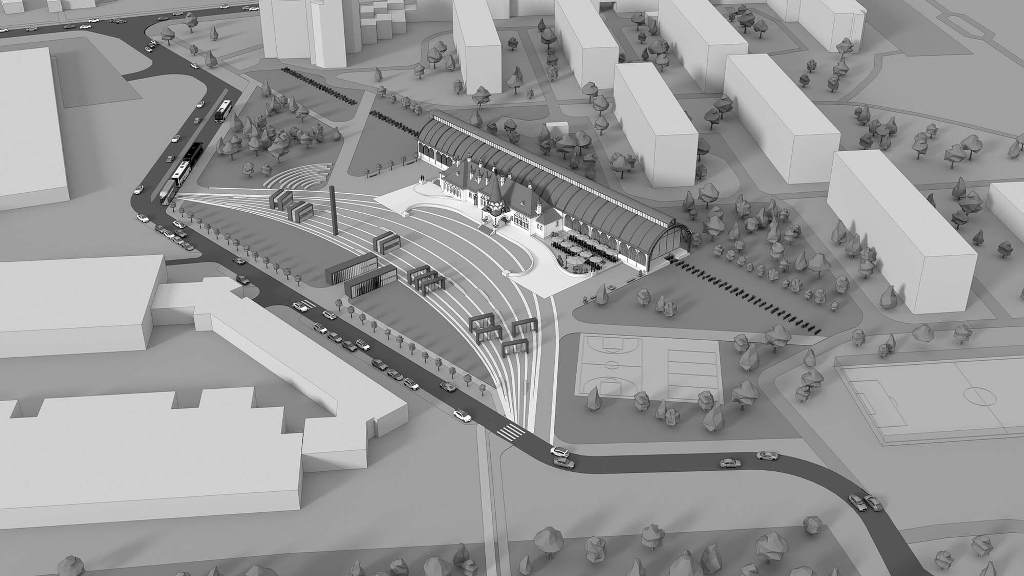
© 2024 First Design Institute
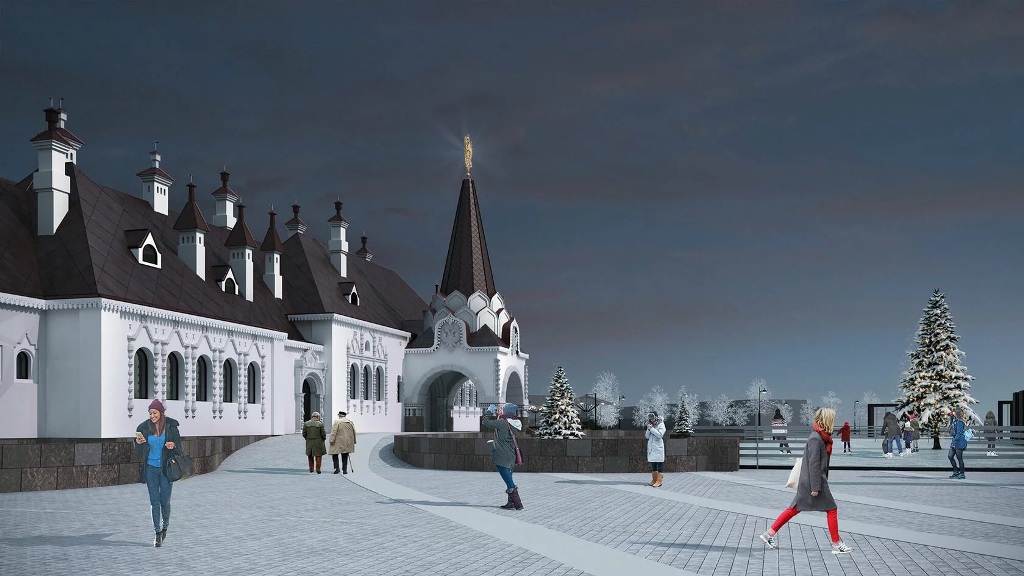
© 2024 First Design Institute
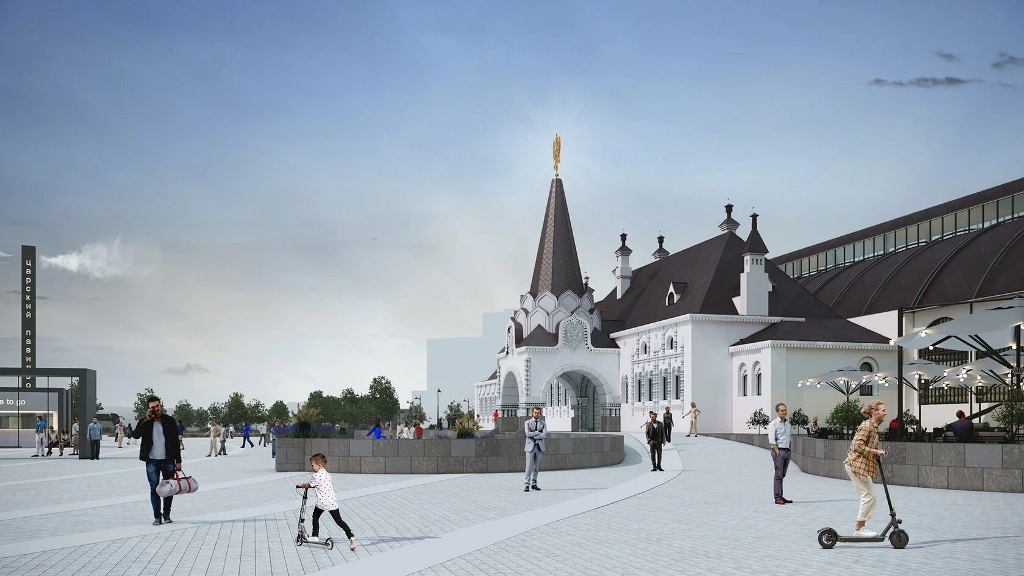
© 2024 First Design Institute
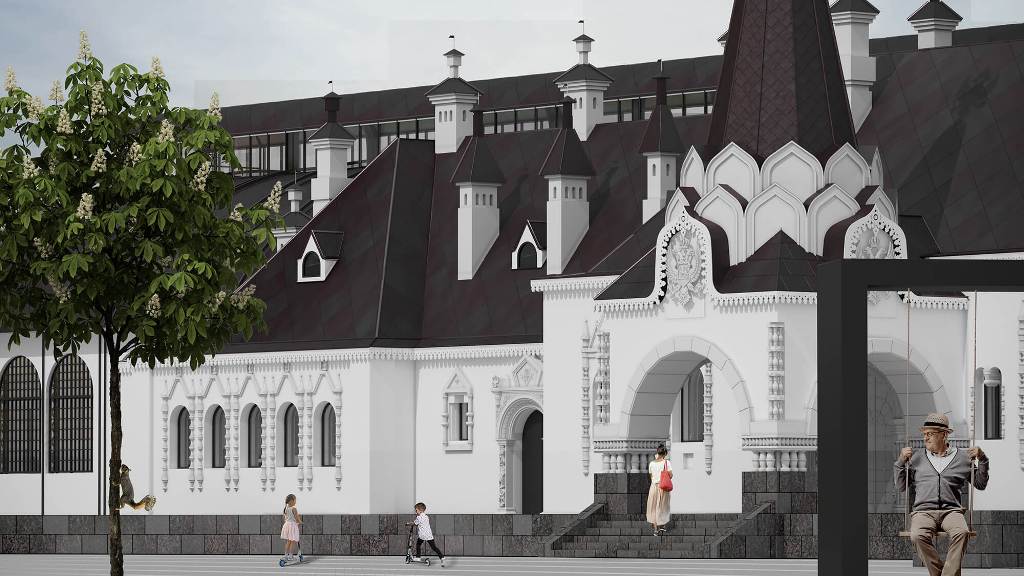
© 2024 First Design Institute
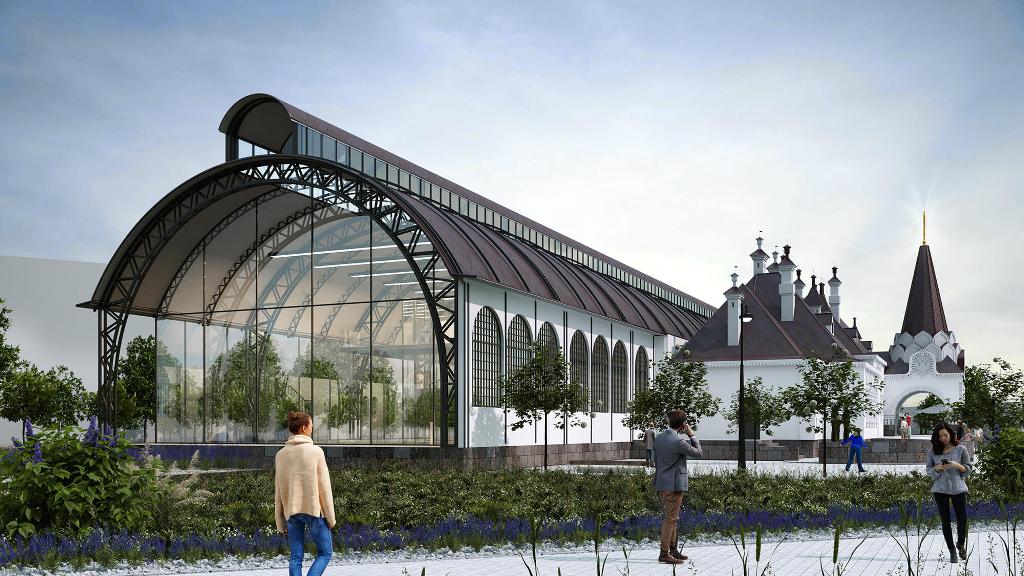
© 2024 First Design Institute
Aside from being a museum, there are plans to use the restored Imperial Pavilion for other purposes, including a Wedding Palace. In addition, the façade of the building, it’s rich interiors and painted vaults will be offered as an ideal place for celebrations and photo shoots.
FURTHER READING:
This author has been closely following the progress of this project since August 2023. Below are my articles which provide details on the restoration of this historic building, among others on the Imperial Train of the last Russian Emperor . . . .
Imperial Railway Pavilion in Tsarskoye Selo is being restored – features 13 photos of the initial restoration work
Update on the restoration of the Imperial Railway Pavilion at Tsarskoye Selo
Artist concept of Imperial Railway Pavilion restoration project at Tsarskoye Selo – features VIDEO
The sad state of the Imperial Railway Pavilion at Tsarskoye Selo – features 20 photos!
Imperial Railway Pavilions during the reign of Nicholas II
The fate of Nicholas II’s Imperial Train – features 8 historic photos
© Paul Gilbert. 19 February 2025
 Nicholas II
You must be logged in to post a comment.