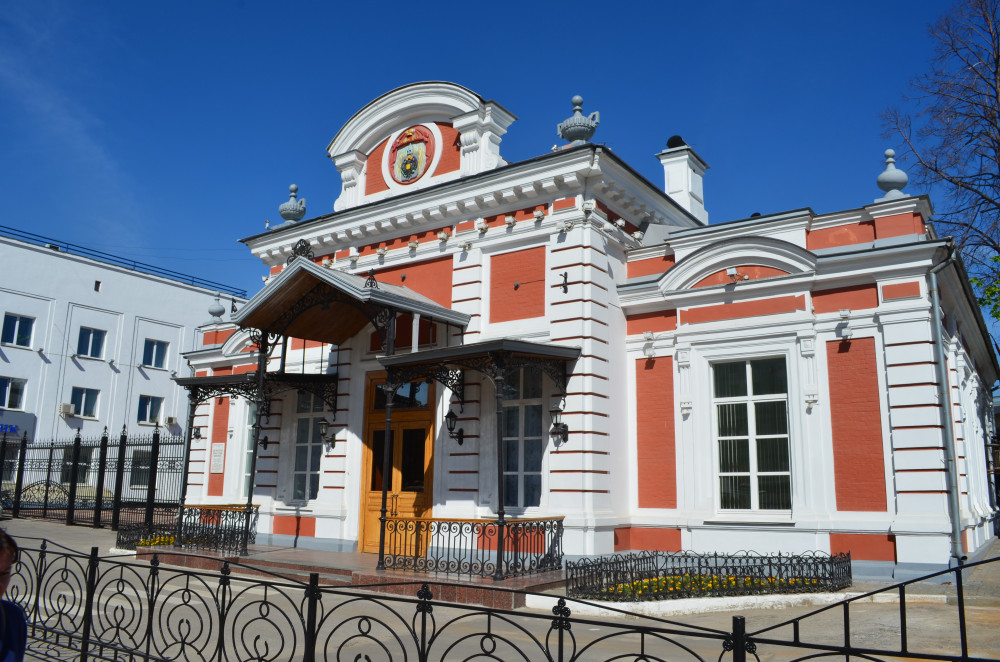
On 17th May 2025, the Tsar’s Railway Pavilion in Nizhni Novgorod opened it’s doors to visitors for a rare glimpse inside to view the building’s historic interiors. The pavilion, which dates back to Tsarist times, has survived to the present day, with many of it’s original elements preserved.
The Pavilion is rarely open to visitors, however, the Gorky Railway opted to take part in this years’ Night of Museums[1]. The Pavilion was only open for four hours, from 19:00 to 23:00. Admission was free. Visitors were admitted in groups of 15 persons at a time. As they entered, they were warmly greeted by harpsichord and harp music, performed by local musicians in the main hall of the building.
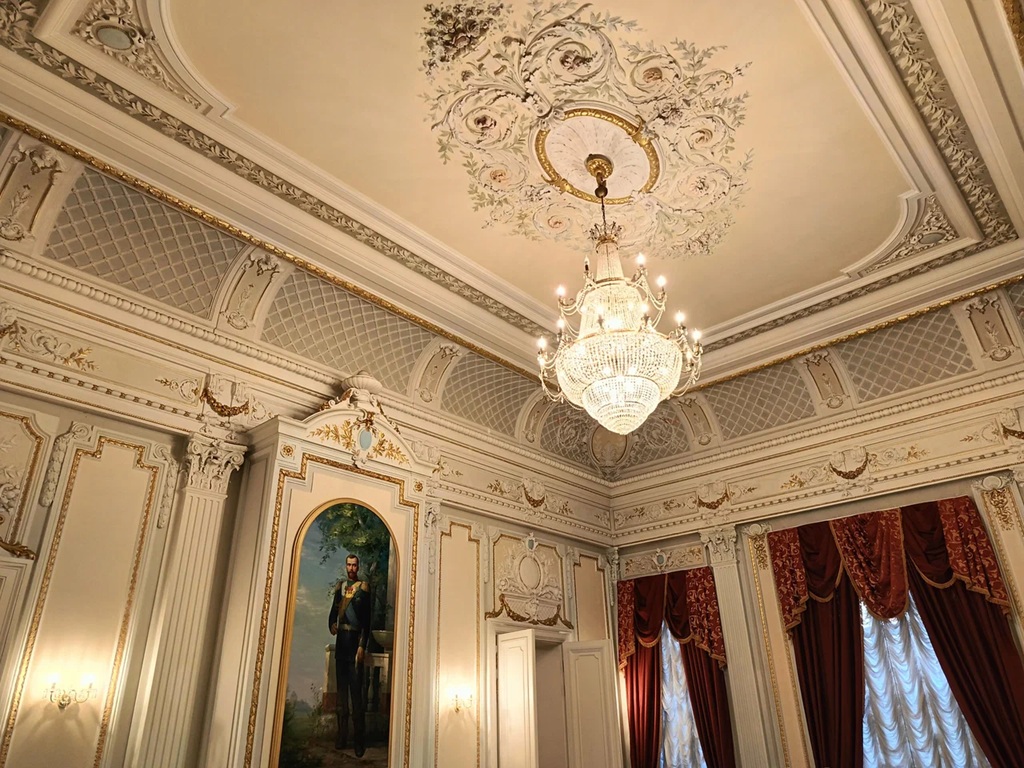
PHOTO: the Main Hall of Tsar’s Railway Pavilion in Nizhni Novgorod
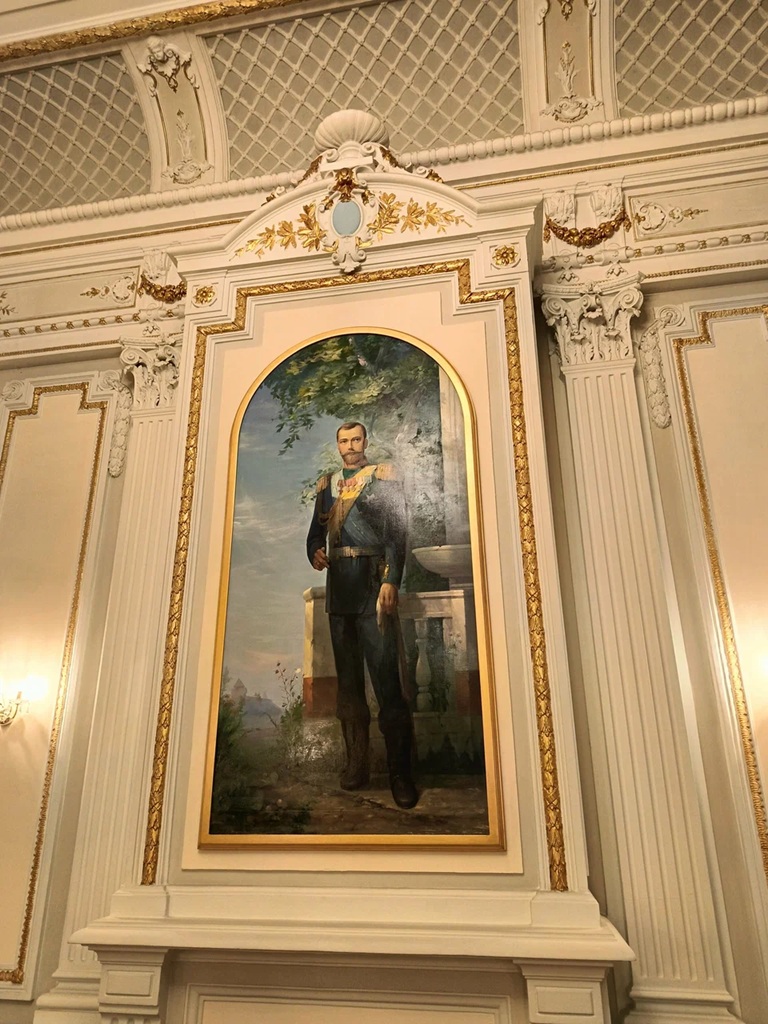
is dominated by a portrait of Emperor Nicholas II (artist unknown)
The elegant one-story building is located on Vokzalnaya Square [renamed Revolution Square in 1967] next to the Nizhny Novgorod railway station. It was constructed between 1891-94, by the Russian architect Dmitry Chichagov (1835-1894) on the initiative of merchants of the All-Russia Industrial and Art Exhibition, an event which showcased the achievements of the industrial development in Russia.
The pavilion offered a place to rest for members of the Imperial Family and the reception of honoured guests, who arrived in Nizhny Novgorod by rail to attend the famous fair. The All-Russia Industrial and Art Exhibition was held from 9th June (O.S. 28th May) to 13th (O.S. 1st) October 1896. The 1896 exhibition was the largest pre-revolution exhibition held in the Russian Empire and was organized with money allotted by Emperor Nicholas II.
During his 22+ year reign, the Tsar’s Railway Pavilion in Nizhny Novgorod welcomed Emperor Nicholas II on two occasions: on 17th July 1896, during the All-Russia Exhibition, he was met by Governor Nikolai Mikhailovich Baranov and Mayor Dmitry Nikolaevich Delvig. His second visit was on 17th May 1913, to mark the events associated with the 300th anniversary of the Romanov dynasty.
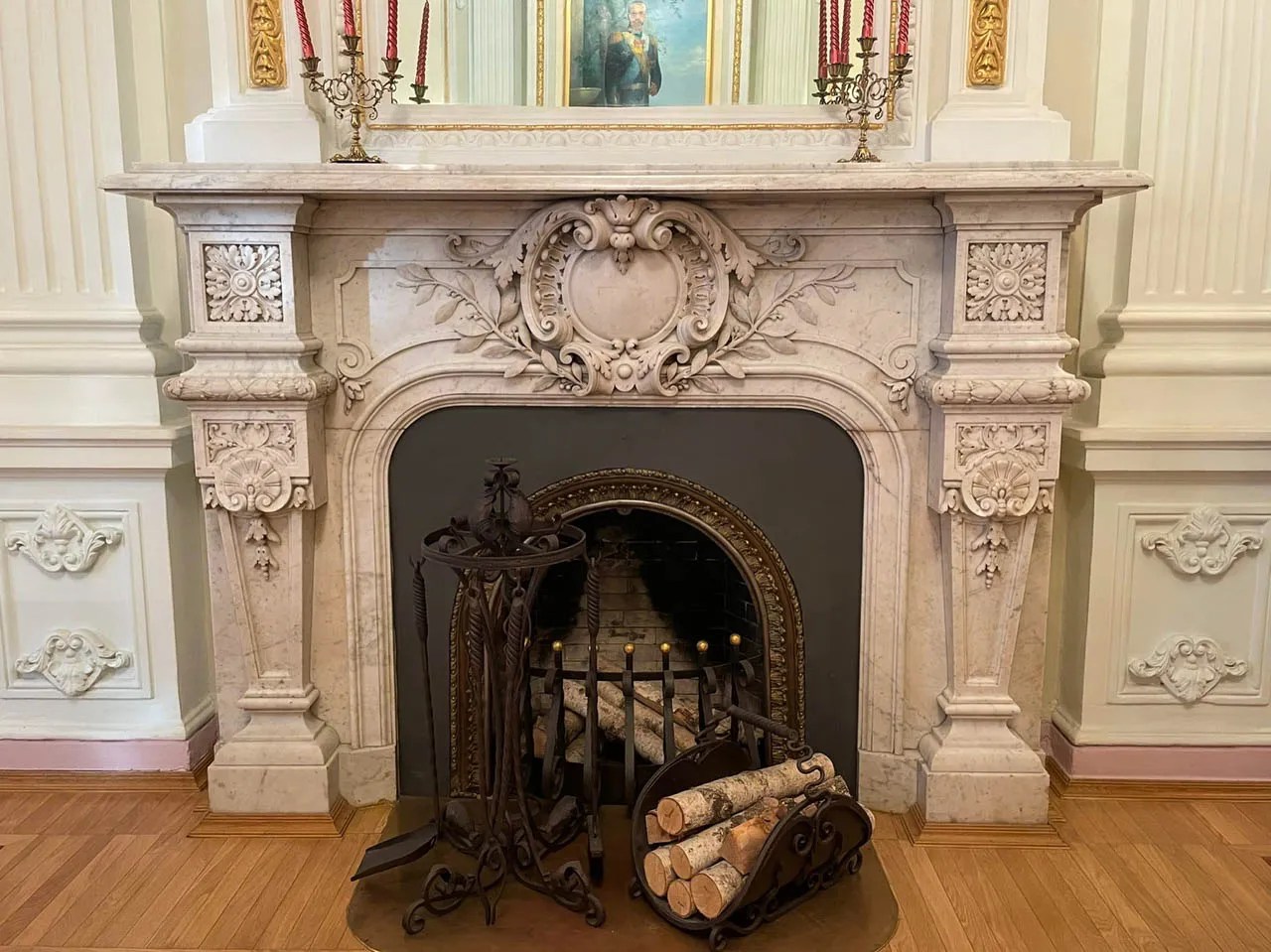
PHOTO: the original carved fireplace made of white Italian marble in the Main Hall
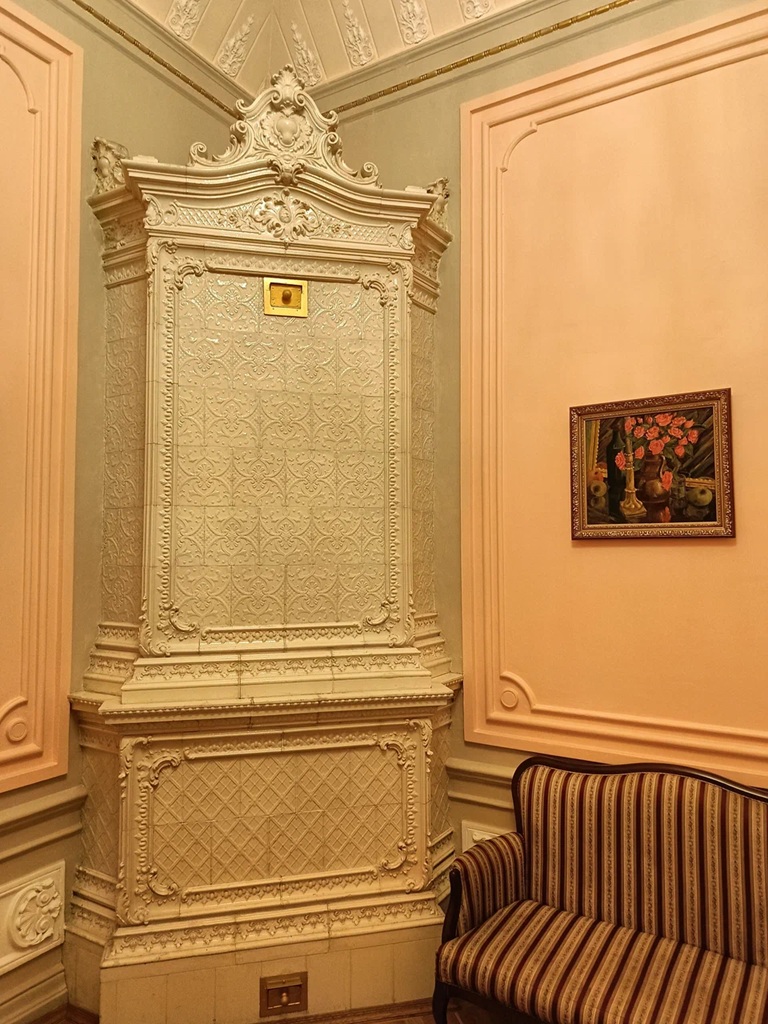
PHOTO: late 19th century tiled stoves heated the interiors of the Pavilion
The pavilion was divided into eight rooms: a heated vestibule and a spacious central hall, which was decorated with a carved fireplace made of white Italian marble, a mirror in a plaster frame and a large portrait of Nicholas II (artist unknown).
Separate studies for the Emperor and Empress were decorated with Renaissance and the Louis XV style furniture, made by the Moscow workshop of Mikhail Kutyrin. The walls of the Emperor’s Study were upholstered with silk fabric, which was chosen by the architect D.N. Chichagov. Unfortunately, this element of the interior has not been preserved. In the center of Study was a large table, whereby the Emperor listened to the reports of Nizhny Novgorod officials on the state of affairs in the province. A telephone was installed in this room.
The ceilings and walls of the eight interiors were decorated with stucco Renaissance style elements, the rooms were heated by stoves lined with majolica tiles. In addition, were rooms for the suite and separate water closets were designed for His and Her Imperial Majesties, decorated in mahogany.
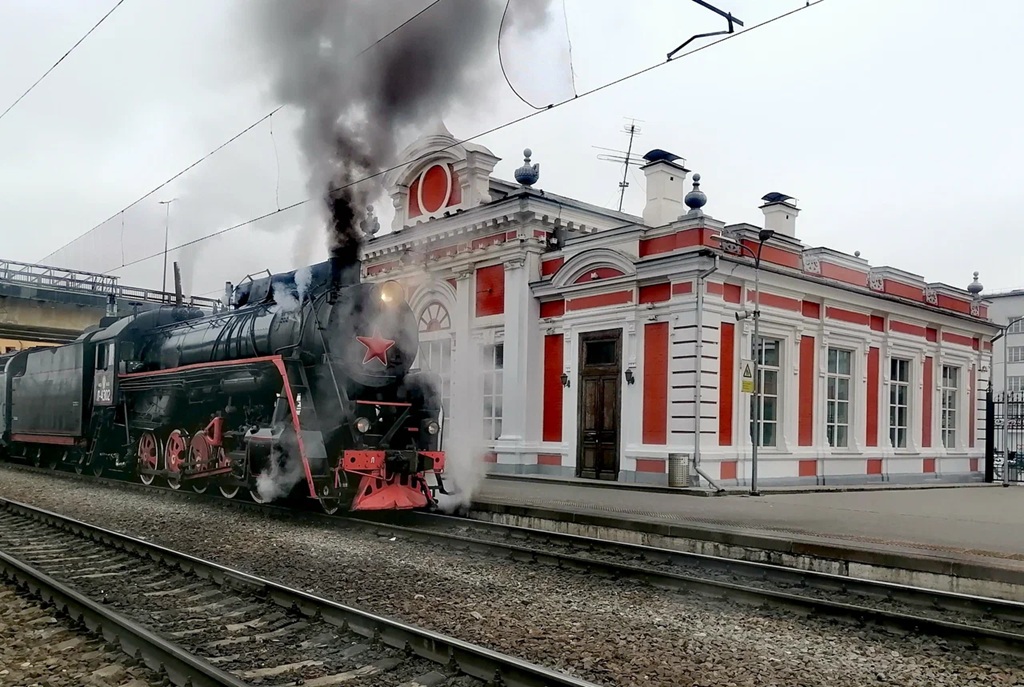
PHOTO: an old Soviet-era steam engine at the Tsar’s Railway Pavilion, this is the track where the Imperial Train would have stopped when bringing Nicholas II to Nizhny Novgorod in 1896 and 1913
Despite its century-old history, the building itself has never been rebuilt and has retained almost all of its historic appearance to this day. What happened to the original interiors is not known for sure, however, some local historians believe that they suffered during the December 1905 armed uprising, when workers seized and held the station building.
In 2005, on the initiative of the Gorky Railway, restoration work was carried out in some rooms of the Tsar’s Pavilion. These include the vestibule, central hall with a fireplace, the Emperor and Empress’s Study’s, and a water closet have been restore to their historical original.
NOTES:
[1] The Night of Museums is an annual event that takes place on the night of 17/18 May, coinciding with the International Museum Day. This event is organized by the Ministry of Culture of Russia and the portal Culture.RF and aims to make art more accessible and popular among the public. Russia’s museums offer guided tours, lectures, workshops and other events. Visitors can enjoy free entry to museums, art galleries, art spaces, and libraries, making it a great opportunity to explore and learn about various cultural and historical aspects of Russia
© Paul Gilbert. 27 May 2025
 Nicholas II
You must be logged in to post a comment.