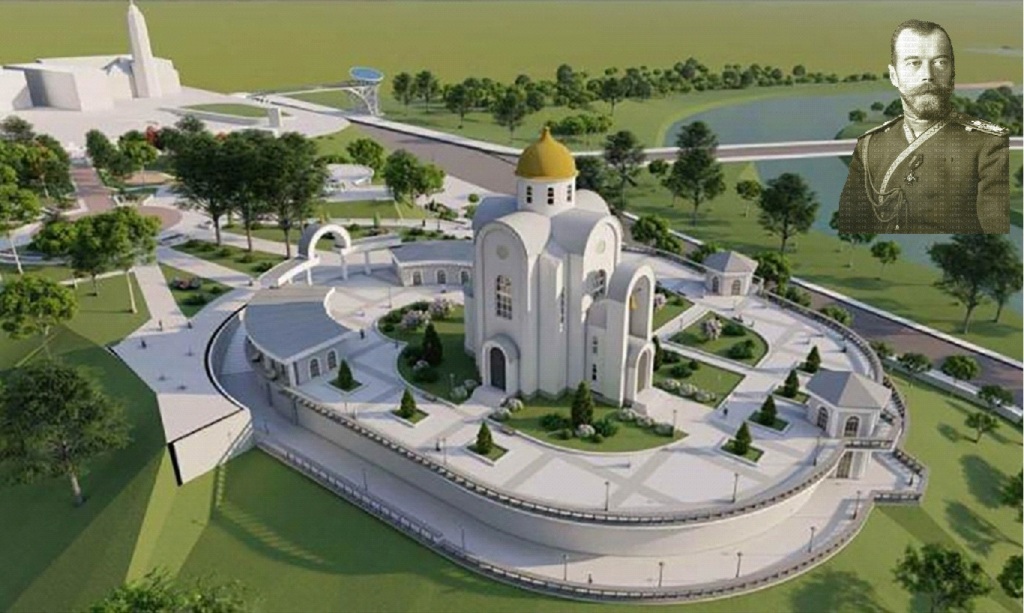
PHOTO: artist’s concept for the Emperor Nicholas II
museum complex proposed for Mogliev
On 3rd July 2024, I reported that a new museum complex dedicated to Emperor Nicholas II was being planned for Mogliev in Belarus. The complex was to be constructed on a hill in Gorky Park, next to the Church of the Holy Royal Passion-Bearers. Unfortunately, the proposal was met with protests from locals, who were opposed to the demolition of a 16th-century castle to make way for the new museum complex.
A new place for the museum complex was chosen in the historical heart of Mogliev. As specified in the OJSC “Institute “Mogilevgrazhdanproekt”, the museum complex will be located on the Square of Glory[1], on the site of the former building of the General Headquarters of Emperor Nicholas II, situated in the southwestern part of the adjacent Gorky Park. The museum complex will form a single architectural ensemble within the framework of the Church of the Holy Royal Passion-Bearers.
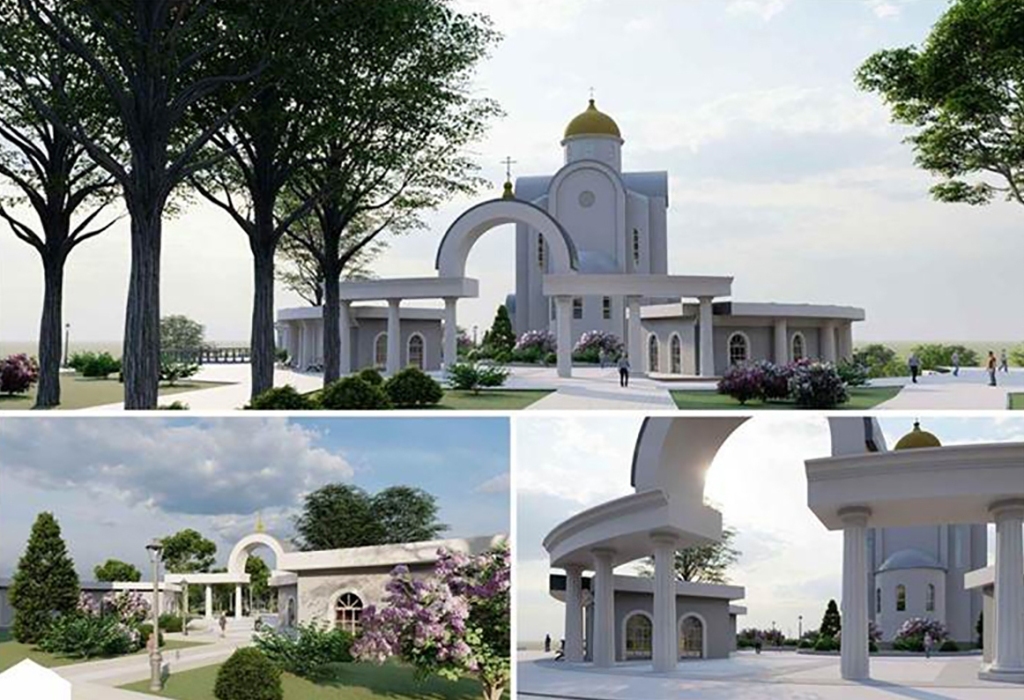
PHOTO: artists concept for the proposed Emperor Nicholas II museum complex in Mogliev (above), and map showing it’s location in the in the southwestern part of the adjacent Gorky Park
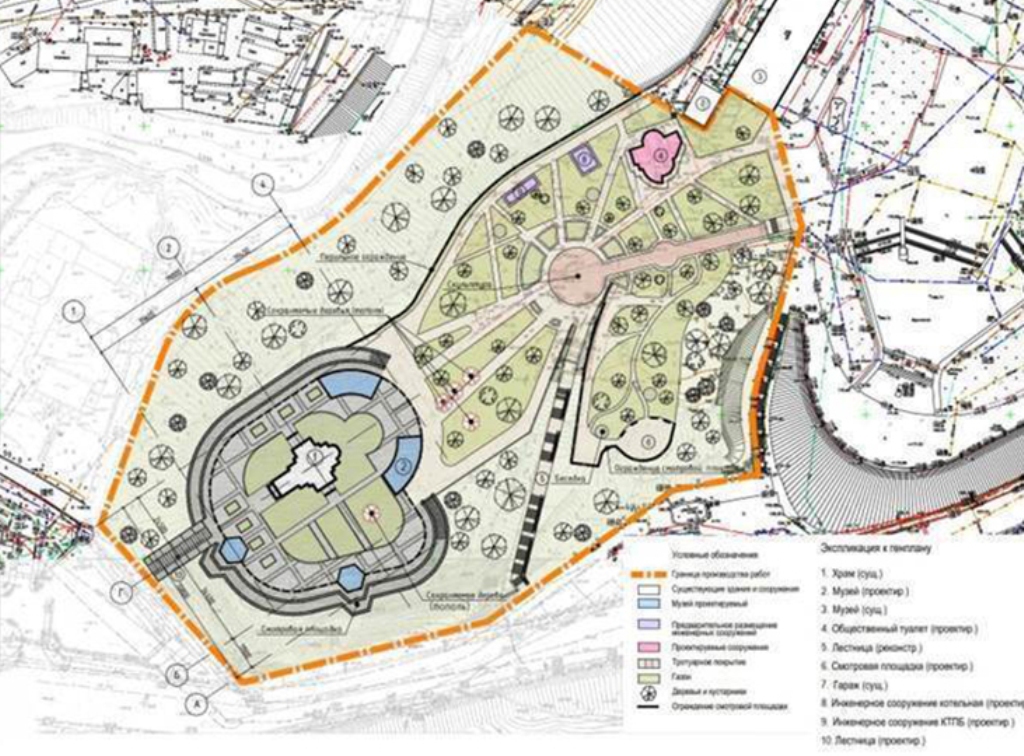
The new museum will be dedicated to the events of the early 20th century: the First World War, the Headquarters of the Supreme Commander-in-Chief of the Russian Imperial Army, the stay of of Emperor Nicholas II in Mogliev, the Knights of St. George, and the February Revolution of 1917.
Walking paths will stretch throughout the park, observation decks, sculptural compositions, small architectural follies, and beautifully landscaped flower beds. The concept of the project provides for the improvement of Gorky Park from the central entrance group of the museum complex to the existing Regional Museum of Local Lore.
The realization of the proposed Nicholas II museum complex is of course is pending approval. Town hall meetings will be held in Mogliev, in which citizens will have an opportunity to have their say.
***
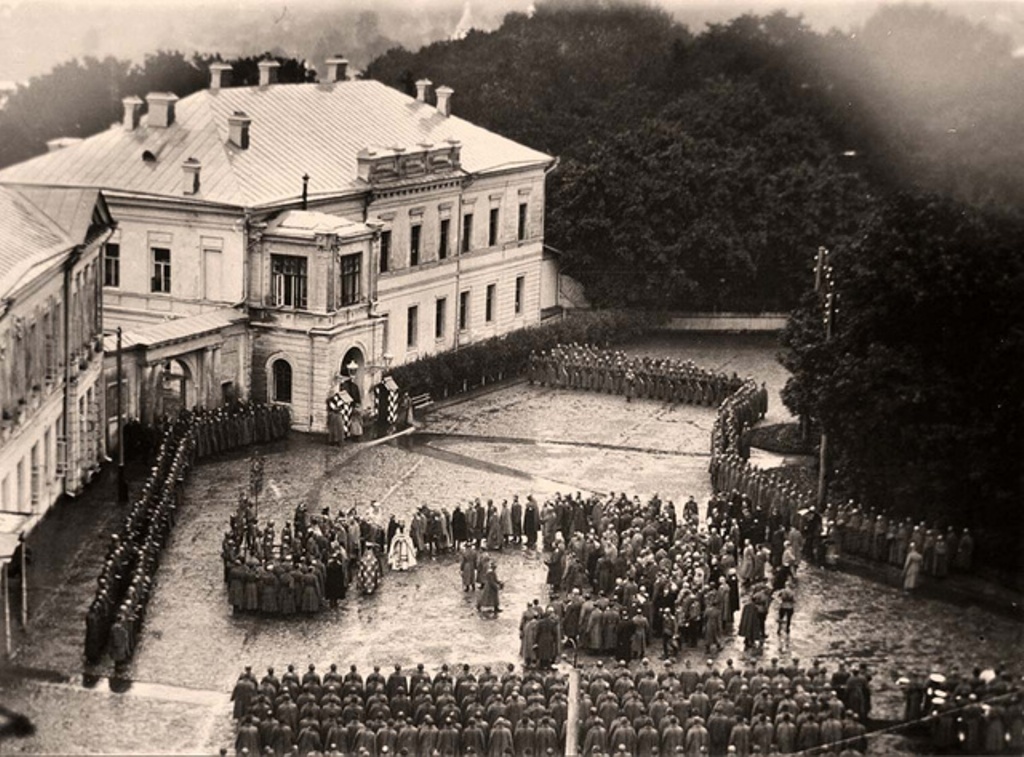
PHOTO: the former Governor’s House and
later General Headquarters in Mogilev. 1915
On 8th August 1915, the Headquarters (Stavka) of the Supreme Commander-in-Chief of the Armed Forces of the Russian Empire was transferred from Baranovichi to Mogilev. From August 1915 to March 1917, Emperor Nicholas II, served as Commander-in-Chief[2], and the city assumed the role of Military Capital of the Russian Empire.
The Tsar travelled back and forth on the Imperial Train, from Tsarskoye Selo to Mogilev, where he settled in the Governor’s House, situated on Governor’s Square. He was often accompanied by his son and heir Tsesarevich Alexei Nikolaevich.
The official historiographer in the retinue of Nicholas II, Dmitry Dubensky, describes the Emperor’s quarters as follows:
“The Emperor’s rooms were located on the 2nd floor of the Governor’s House. His Majesty’s office had two windows overlooking the square. It was decorated modestly furnished with simple provincial furniture, a sofa and a small desk, which the Tsar kept some of his papers. Adjacent to this room was the bedroom of His Majesty and Heir with iron camp beds, a washbasin, a dressing table, and several chairs. On the walls over the beds, there were many Orthodox crosses, many of which were gifts from family members.
“From the hall to the left is a dining room, quite large, decorated with simple ordinary furniture. There are two additional rooms for the Minister of the Imperial Court Count Vladimir Borisovich Frederiks (1838-1927) and one for Major-GeneralVladimir Nikolaevich Voeikov (1868-1947).
“In addition, there were small rooms for five or six servants, the Tsar’s valet, cooks, and others.”
Sadly, the former Governor’s House, which housed the General Headquarters was destroyed during the Nazi invasion of 1941-45. In the years following the Great Patriotic War, the Soviets showed no interest in reconstructing the historic building. The only building which survived to the present is the former District Court House, which today houses the Mogilev Regional Museum of Local Lore, which features permanent exhibition rooms dedicated to the stay of Nicholas II in Mogilev, from 1915 to 1917.
NOTES:
[1] The 16th century square, originally named as Torgovaya Square, was situated on a high hill at the confluence of the Dubrovenka and Dnieper rivers. After the annexation of Mogilev to Russia in 1772, Torgovaya Square was named Governor’s Square. In 1919, the square was named Sovetskaya, and in 2014, the year marking the 70th anniversary of the liberation of Belarus from the Nazi invaders, it was renamed Square of Glory.
[2] On 5th September (O.S. 23rd August) 1915, Emperor Nicholas II assumed personal command of the Russian Imperial Army, after dismissing his cousin, Grand Duke Nicholas Nikolaevich (1856-1929) from the post.
© Paul Gilbert. 14 September 2025
 Nicholas II
You must be logged in to post a comment.