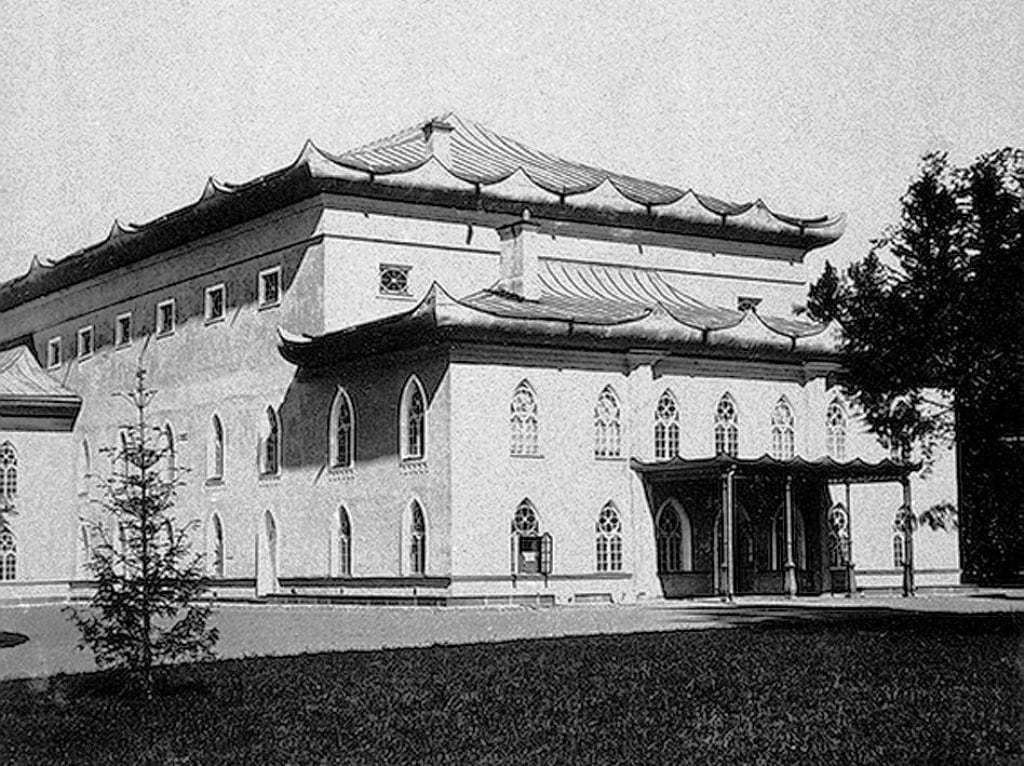
PHOTO: Early 20th century view of the Chinese Theater of Catherine the Great, situated in the Alexander Park at Tsarskoye Selo
More exciting news from Tsarskoye Selo . . .
On 12th September 2025, the Tsarskoye Selo State Museum and Gazprom’s Cultural Initiatives Support Foundation signed an agreement for the restoration of the 18th-century Chinese Theater and its adaptation for modern use. The theater is situated in the New Garden of the Alexander Park at Tsarskoye Selo.
The restoration of the architectural monument will require at least three billion rubles ($39 millions USD), and take at least eight years to complete. In the next two years, the ruins which have survived to this day will be mothballed, whereupon, specialists will begin reconstruction.
The building is planned to have a large exhibition hall with an area of about 600 square meters, which will host exhibitions and theatrical performances. In addition, the depository of the Tsarskoye Selo State Museum-Reserve will be located here.
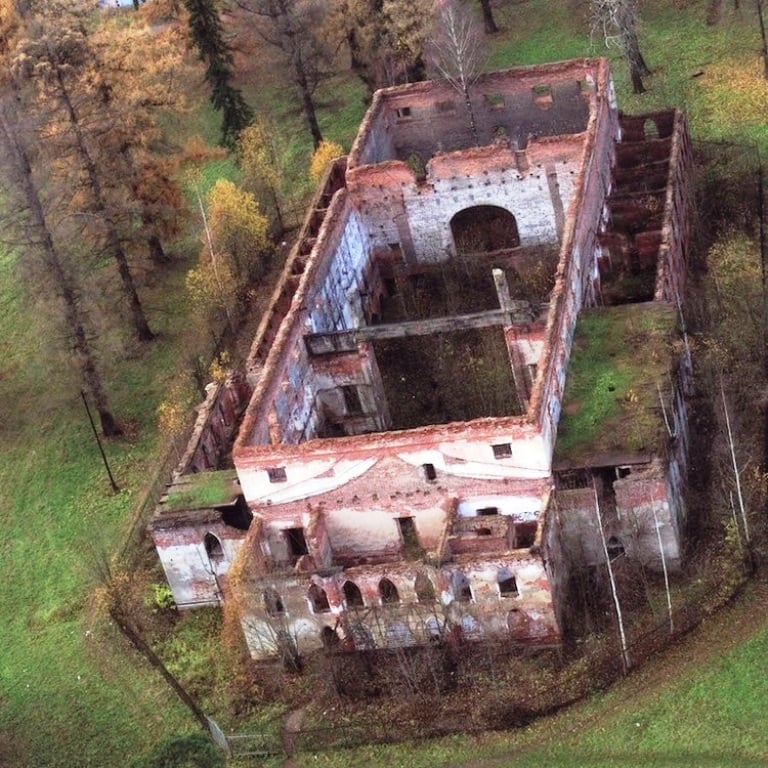
PHOTO: A current view of the burned out ruins of the Chinese Theater in the Alexander Park at Tsarskoye Selo
The Chinese Theater was constructed in 1778 by the famous architect Antonio Rinaldi (1709-1794). The first performance was given in the Chinese Theater on 13th June 1779, when the composer Giovanni Paisiello presented his opera ‘Demetrios’ for Empress Catherine II.
In 1892, the premiere of Leo Tolstoy’s play ‘The Fruits of Enlightenment’ was staged here. In the early 20th century, the famous parody ‘Crooked Mirror’ by Alexander Izmailov (1873-1921), was performed here for Emperor Nicholas II and his family.
In 1908-1909, the building was overhauled: the stage was re-equipped with the latest technology for staging large opera and ballet performances. With the outbreak of the First World War, the activities of the Chinese Theater ceased for a long time, the performances resumed only in the summer of 1930.
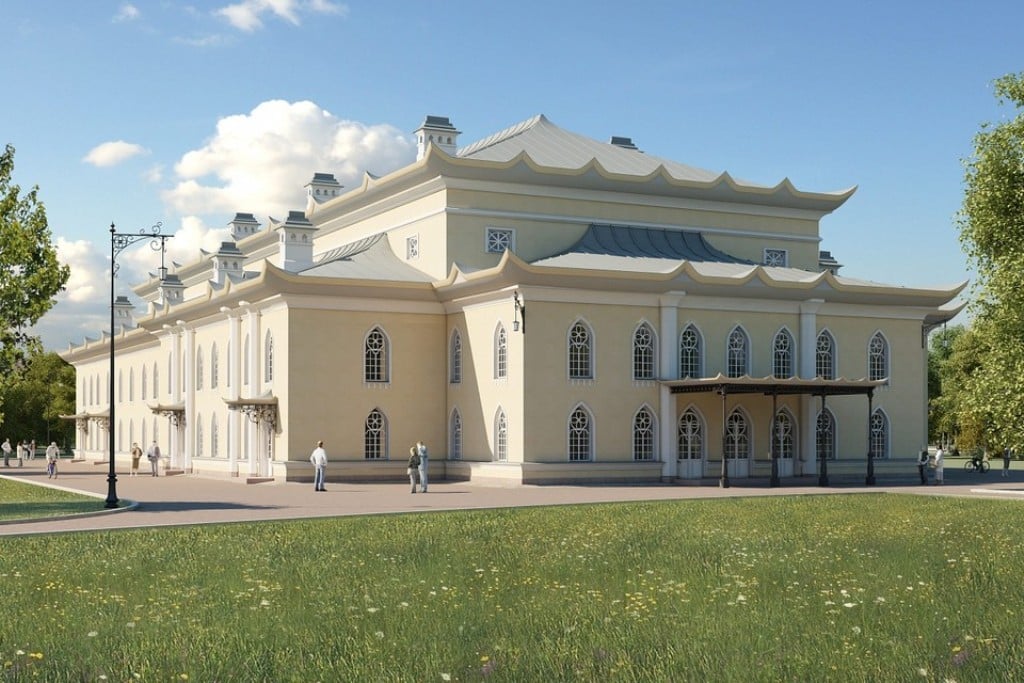
PHOTO: Artist concept of what the the Chinese Theater in the Alexander Park at Tsarskoye Selo, will look like after the reconstruction, which will begin in 2022, and last about eight years.
On 15th September 1941, when the city of Pushkin (Tsarskoye Selo) was being shelled by the Nazis, the Chinese Theater was completely burnt out. It has remained in a terrible state of neglect and disrepair since – see photo on this page.
Recall that in March 2021, the museum announced plans for the reconstruction of the Chinese Theater, however, the project was put on hold due to lack of financing. Now that financing is in place – thanks to Gazprom – the revival of this beautiful building will once again be the venue for theatrical performances.
© Paul Gilbert. 19 September 2025
 Nicholas II
You must be logged in to post a comment.