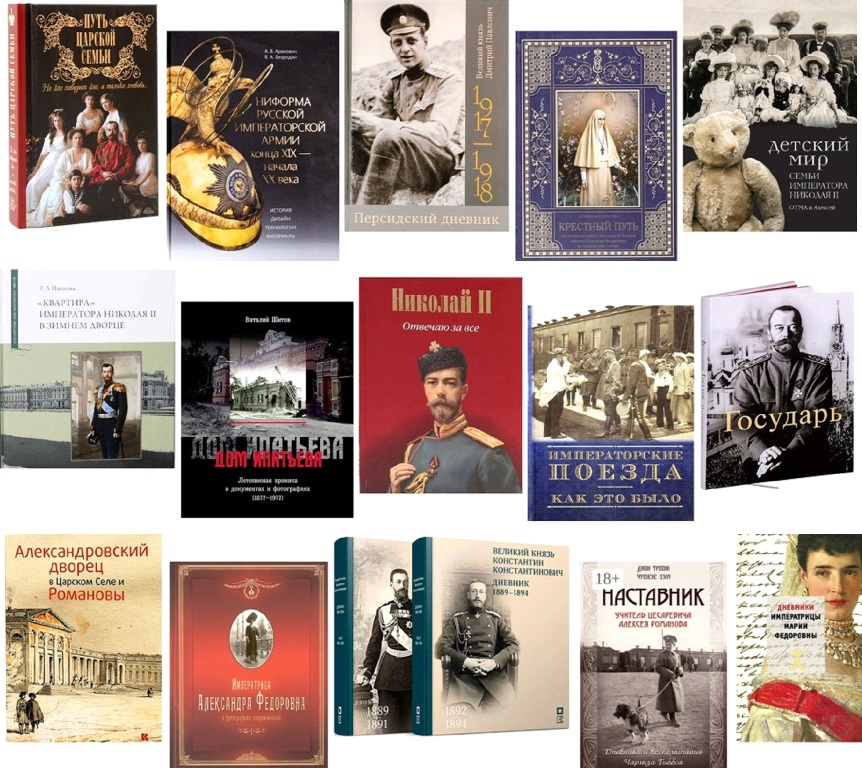
Earlier this month, a new book Персидский дневник. 1917–1918 / Persian Diary. 1917–1918, was published in Russia. The 688-page, Russian language title presents the diaries of Grand Duke Dmitri Pavlovich (1891-1942), who was exiled to Persia as punishment for his involvement in the murder of Grigorii Rasputin in November 1916. Ironically, the Tsar’s punishment, actually saved Dmitri from sharing the same fate as that of many of his relatives.
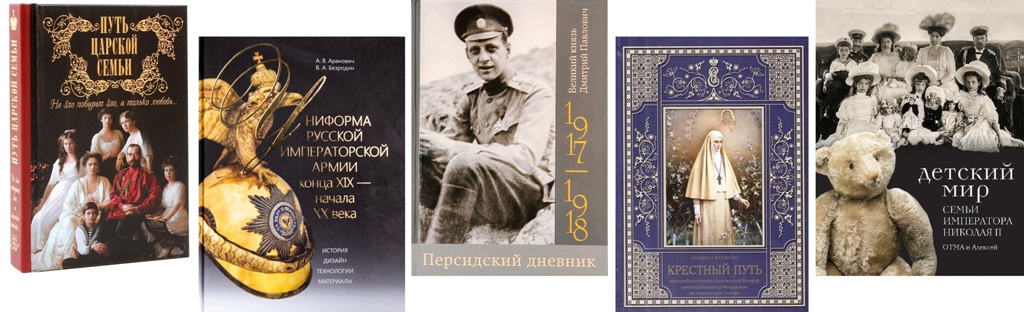
The publication of Grand Duke Dmitri Pavlovich’s Persian diaries, is just the latest in a plethora of books about Nicholas II, the Romanovs and Imperial Russia, which Russian publishers have issued over the past 30+ years. These titles are prominently displayed in bookshops, such as Dom Knigi (House of Books) in Mosocw and St. Petersburg. Sadly, none of these books will ever be translated into English.
These include biographies and studies, collections of letters, diaries, exhibition catalogues and high-quality coffee table books, many of them richly illustrated with vintage black and white or full colour photographs.
Since the fall of the Soviet Union in 1991, the publication of books on the Romanovs by Russian publishers has resulted in hundreds of new titles. These books are based primarily on research made by a new generation of Russian historian, who now have access to the Romanov Archives, which were sealed during the Soviet years.
But, why are none of these books translated into English? Well, there are currently two main reasons, that I will address in this post . . . .
Foreign rights and translation costs
First, and probably most importantly, are the translation and production costs, but also a limited readership in the West. Despite the success of Robert K. Massie‘s classic bestseller Nicholas and Alexandra in 1967, books on the Romanov’s has a very limited audience in the West, particularly with books on the more obscure members of the Imperial Family.
In the first few decades after the murder of Russia’s last Tsar in 1918, Western publishers were anxious to publish the first English-lanaguage translations, written by members of the Imperial Family, their retinue, and others, who escaped Bolshevik Russia. These days, however, are long gone, I am afraid.
The publishing world has changed dramatically over the past few decades. Having worked in the publishing industry in both Canada and the UK, for many years, I have been witness to these changes, and the interest and demand for books on the Romanov’s and Imperial Russia. During my years in the industry, I have seen many of the old traditional publishing houses fold, or swallowed up by competitors.
Academic publishing houses, i.e. university presses, publish new titles on the Romanov’s and Imperial Russia, especially historical, social and political studies during the era of Emperor Nicholas II, during the late 19th to early 20th centuries. These titles, usually have limited print runs of several hundred or several thousand copies, which is one of the reasons why, they are so expensive to purchase.
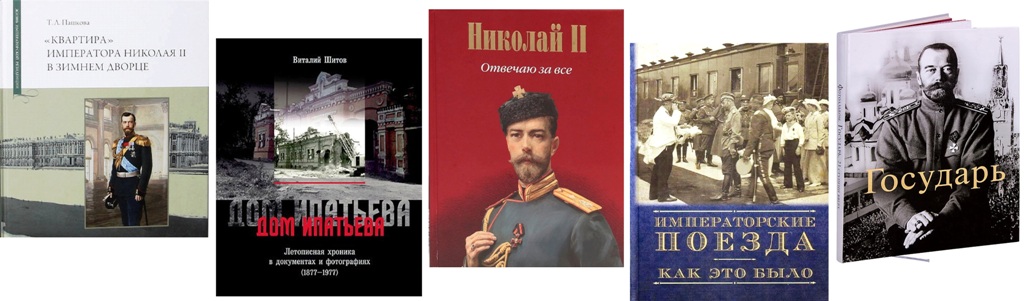
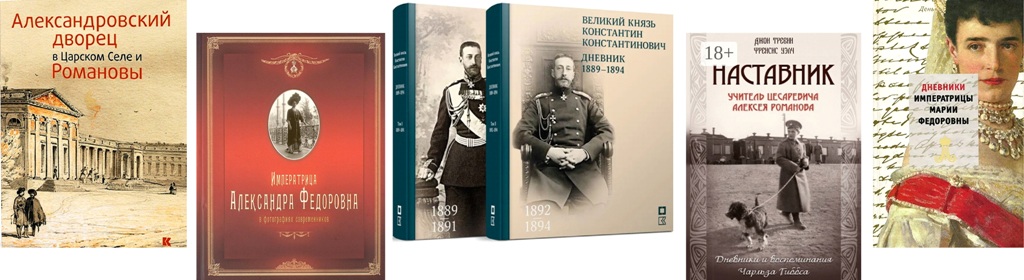
If we are to see any of the books (seen on this page) ever published in English, it is going to take one of the larger, more established publishing houses, such as Weidenfeld & Nicolson (UK) – who translated and published A Lifelong Passion (1996), to step up to the plate, and take the risk of offering the small, but demanding readership, who are hungry for anything new on the subject’s.
Probably the number one reason is simply the translation costs involved, the diaries and letters in particular. First of all, the author would have to receive an advance, then legal fees would have to be dispensed, then the actual translation itself – we are talking thousands of dollars. All these combined, make such projects economically prohibitive.
Given the current economic sanctions imposed by the West against Russia, there could be no financial transactions, such as royalties to the author, etc., whatsoever.
Western economic and cultural sanctions
Secondly, following Russia’s invasion of neighbouring Ukraine in February 2022, Russia was hit with sweeping sanctions from the European Union, Great Britain, the United States, Canada, Australia, among other countries. While these sanctions have had little impact on Russia’s economy, they have dealt a heavy blow to the exchange of cultural events.
These sanctions have had a devastating effect on cultural events, which we have enjoyed over the years, including ballet, opera, symphonies, exhibitions, films and even the publishing industry. At the present moment, no Western publisher would dare enter into negotiation with a Russian publisher for foreign rights and translation of a book, written by a Russian author.
In addition, the cost to import books from Russia has become more expensive, this in part is due to former President Joe Biden, who in June 2022, imposed a 35% U.S. tariff rate on certain Russian imports, which include book.
© Paul Gilbert. 20 October 2025
 Nicholas II
You must be logged in to post a comment.