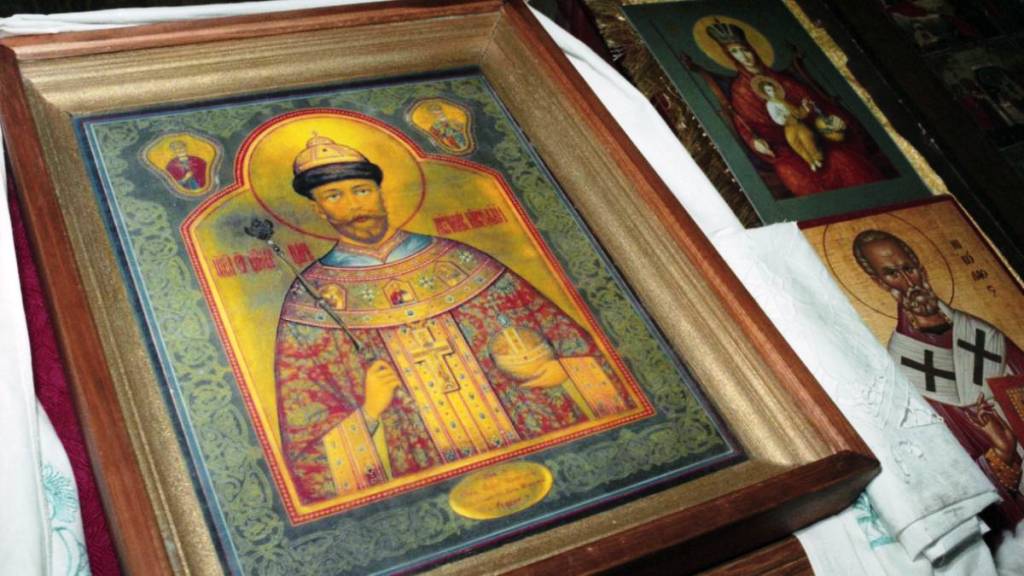
Whether you are a believer or not, the following is just one of many miracles reported since the regicide in Ekaterinburg in July 1918 . . .
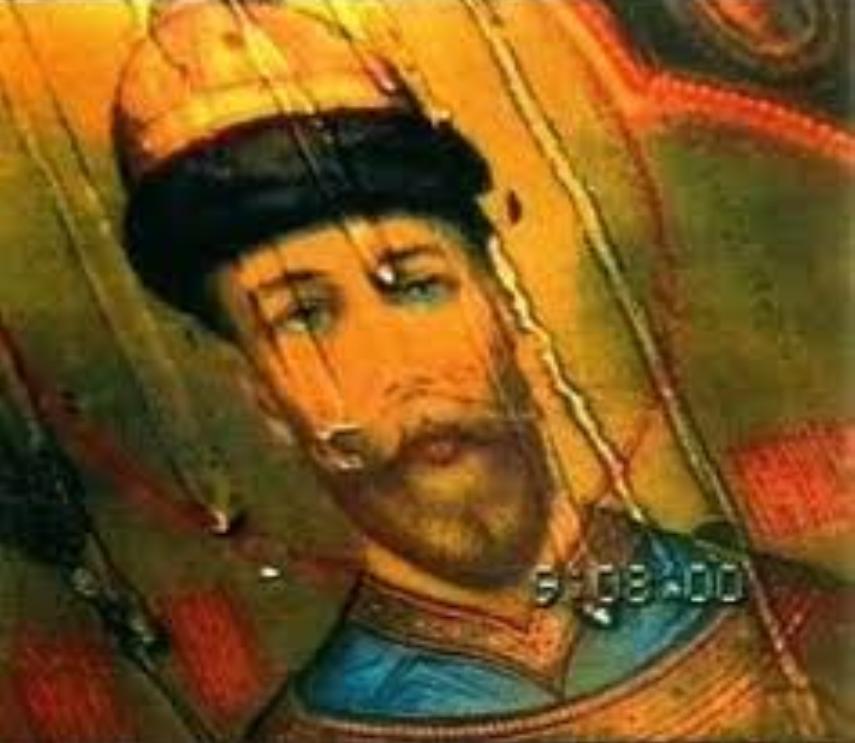
Last week, a case of myrrh streaming[1] from the icon of the Tsar-Passion-Bearer Nicholas II was recorded in the Church of the Nine Martyrs of Kizichesky in Moscow. The Orthodox community is now discussing the event which many believers and clergy interpret as an alarming omen.
Archpriest Anthony Serov commented on the event, “fragrant oil, myrrh, appeared on the surface of the icon, which is in a special, hermetically sealed case.” According to him, the design of the kiot[2] completely excludes any possibility of external influence or forgery. The myrrh-streaming of the icon has been confirmed by Life.ru[3].
“The icon is placed in a protected case, which excludes any outside interference,” Archpriest Anthony Serov emphasized. “Nevertheless, we have witnessed myrrh streaming from the icon. This, in my opinion, is of great spiritual importance.”
In the Orthodox tradition, the streaming of myrrh from icons is considered a miracle and a special sign of grace. However, myrhh streaming from the face of the saint [Nicholas II] which is enclosed in a protective case, is another matter.
Archpriest Serov regards the incident as a warning addressed not only to Orthodox believers, but to Russian society as a whole. He drew parallels with historical events when such phenomena preceded significant changes and upheavals, such as the 1917 Revolution and the First World War.
“The history of our country [Russia] has experienced examples of the streaming of myrrh from icons became a harbinger of revolutionary events, military conflicts and other difficult trials and tribulations,” the rector of the church explained. “It is necessary to comprehend what happened and learn from them.”
Over the centuries, such cases have been repeatedly recorded in Orthodox monasteries and churches in Russia. As a rule, believers see this as a call to repentance and prayer, especially when the images of the Royal Passion-Bearers “weep”.
Earlier, journalists turned to religious scholar Konstantin Mikhailov for comment of the recent myrrh-streaming incident near Moscow. The confessor said that such events are not uncommon and in most cases have a natural explanation. According to the expert, scientists have always found logical reasons for the appearance of moisture on icons.
In the meantime, parishioners and believers from all over Moscow are coming to the Church of the Nine Martyrs of Kizichesky to personally see the myrrh-streaming icon and pray.
NOTES:
[1] In the Orthodox tradition, myrrh-streaming is one of the most mysterious and controversial phenomena. On the one hand, the Church recognizes the fact of the outflow of fragrant myrrh from icons, relics and crosses as one of the manifestations of God’s grace. On the other hand, each such case is carefully checked by church commissions in order to exclude any possibility of forgery or natural causes.
[2] A kiot is a decorated case or frame used in Orthodox Christianity to protect and display religious icons. It serves to safeguard the icon from environmental factors such as temperature fluctuations, dust, and humidity, ensuring the icon’s preservation over time.
[3] A prominent Russian information portal and news agency.
FURTHER READING:
‘Myrrh-streaming icon of Tsar Nicholas II brought to Ekaterinburg for Tsar’s Days’ + PHOTOS and VIDEO
‘My [Paul Gilbert’s] cancer journey and prayers for the intercession of Tsar-Martyr Nicholas II’
© Paul Gilbert. 23 November 2025
 Nicholas II
You must be logged in to post a comment.