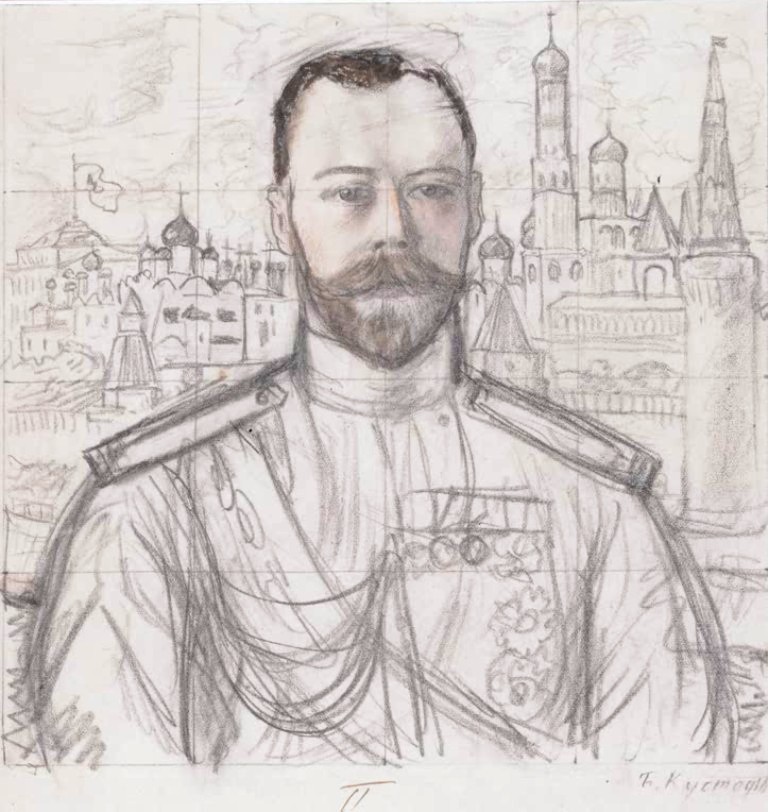
Drawing of Emperor Nicholas II (1914) Artisit: Boris Mikhailovich Kustodiev (1878-1927)
Please note that the articles provided (by links) are for information purposes only, they do not reflect the opinion of the administrator of this blog – PG
Russia’s last Emperor and Tsar Nicholas II, his family, the Romanov dynasty and the history of Imperial Russia, continue to be the subject of books, exhibitions and documentaries. In addition, they continue to generate headlines in the media.
The following articles were published by American and British media services, in the Summer: July, August, and Autumn: September, October, November and December 2025. Click on the title [highlighted in red] below and follow the link to read each respective article:
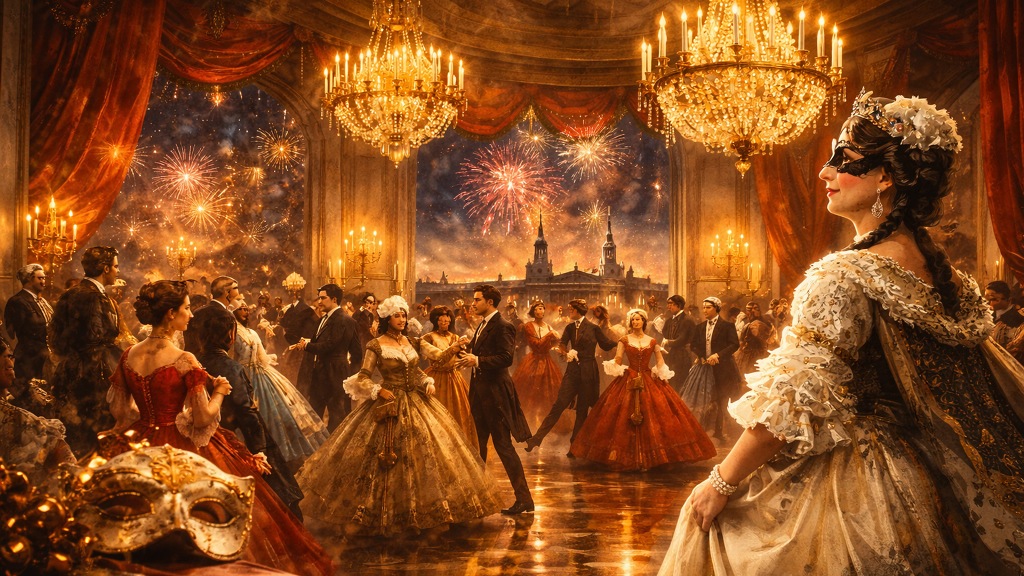
What kind of holiday would it be without cannons? Without masquerades and music?! Here’s how the holidays were celebrated in Tsarist Russia, by the Empresses Anna Ioannovna, Elizabeth Petrovna and Catherine II.
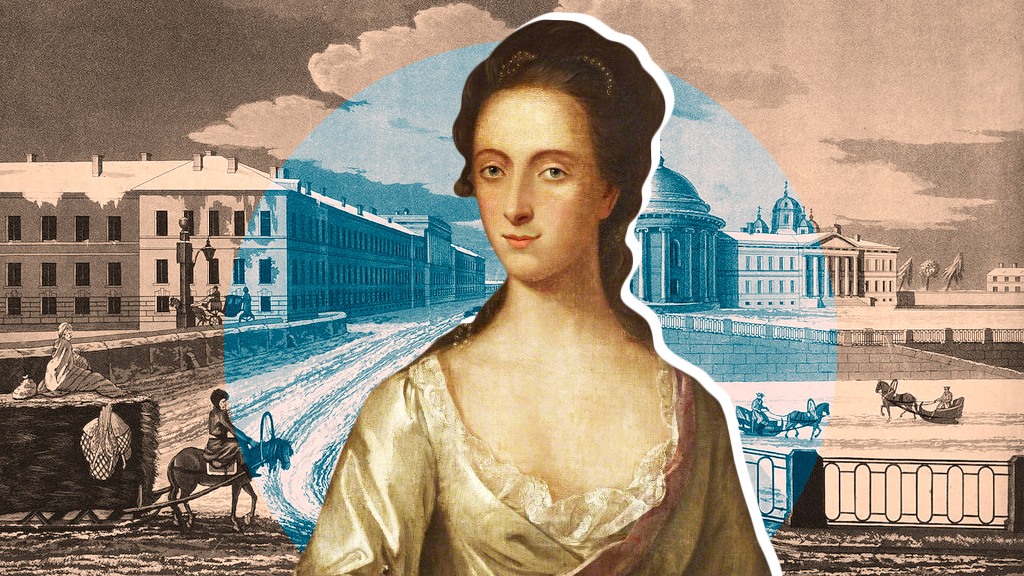
Historians, describing the life of Duchess Elizabeth Pierrepoint Kingston, call it “rich in adventure”. This euphemism conceals a real adventure, complete with bigamy, an escape to Russia and a ship full of treasure.
Elena Molokhovets’s book ‘Gift to Young Housewives’ went through 29 editions from 1861 until the 1917 Bolshevik Revolution. The “culinary bible” of the Russian Empire taught women left without servants the art of managing a household. We’ve selected some tips from it that are still relevant today.
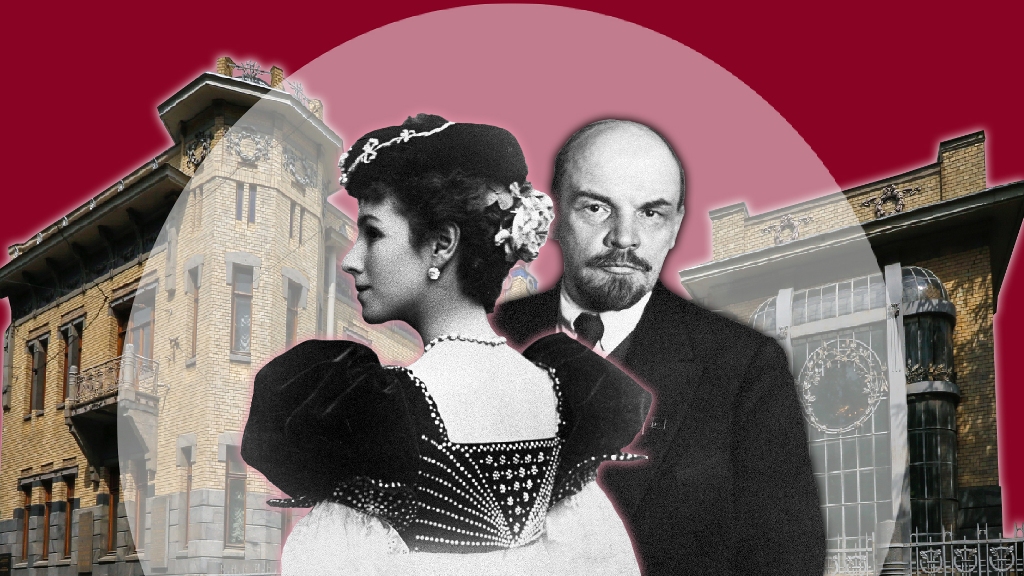
Ballerina Mathilde Kschessinska was not only the prima ballerina of the Mariinsky Theater, but also a socialite, known for her affairs with several Romanov grand dukes.
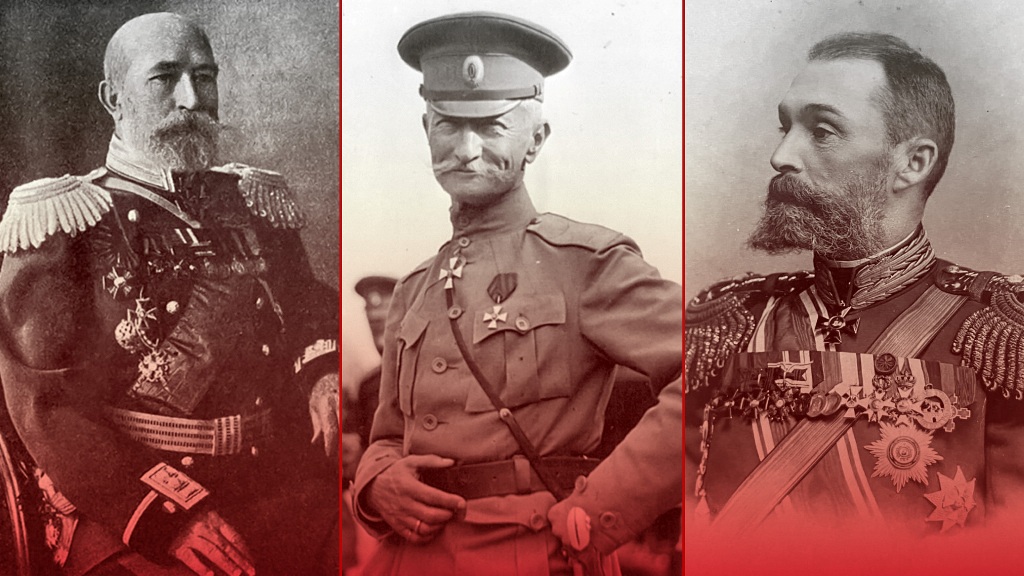
The Soviet government was deeply suspicious of any high-ranking commanders of the Imperial Army and considered them ideological opponents. This meant they had to work extra hard to earn its trust.
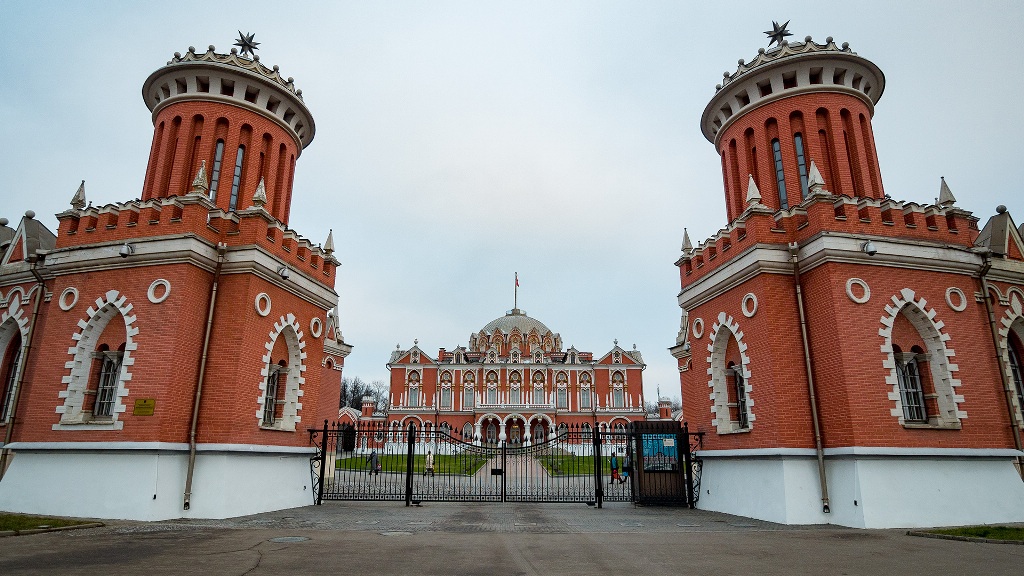
In tsarist times, a trip from point ‘A’ to point ‘B’ was a real adventure that could stretch on for weeks or even months. Of course, there were already roadside inns for travelers, but these were not up to the standard required for emperors and their entourage. Therefore, “travel” palaces had to be specially built – luxurious mansions where one could rest, spend the night and continue the journey with renewed energy. Anna Sorokina takes a look at 8 of these “Travelling Palaces”.
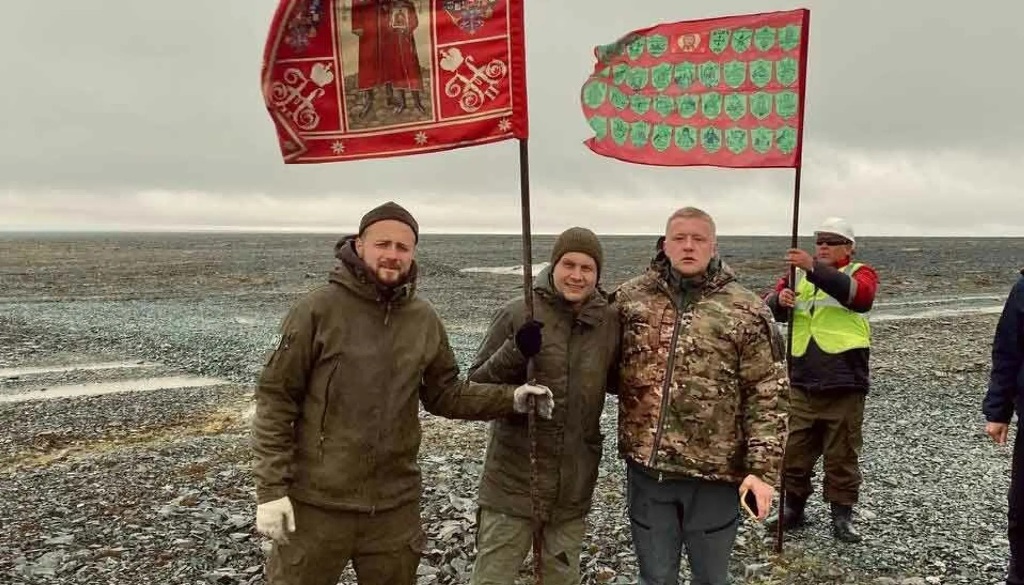
Two representatives of the ultra-conservative TV channel Spas brought a flag depicting emperor Nicholas II from the occupied Ukrainian city of Vuhledar to the archipelago of Severnaya Zemlya.
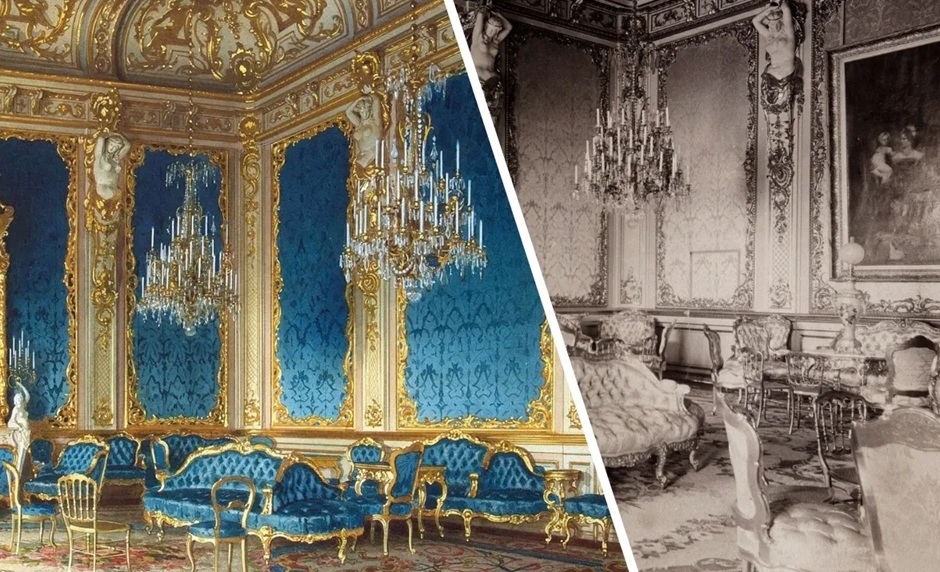
Every now and then, a quiet object in the museum’s collection reveals an extraordinary story. For decades, a heavy leather-bound album, its cover elegantly embossed in gold with the words “Views of His Own Palace and Rooms, St. Petersburg” lay, largely unnoticed, in the Russian History Museum’s archives. According to old museum records, it showed the interiors of the Anichkov Palace, home of Emperor Alexander III.
Please CLICK on the BANNER or LINK above to review my current selection of titles in hardcover, paperback and ebook editions. Listings provide a full description for each title, pricing and a Look inside feature.
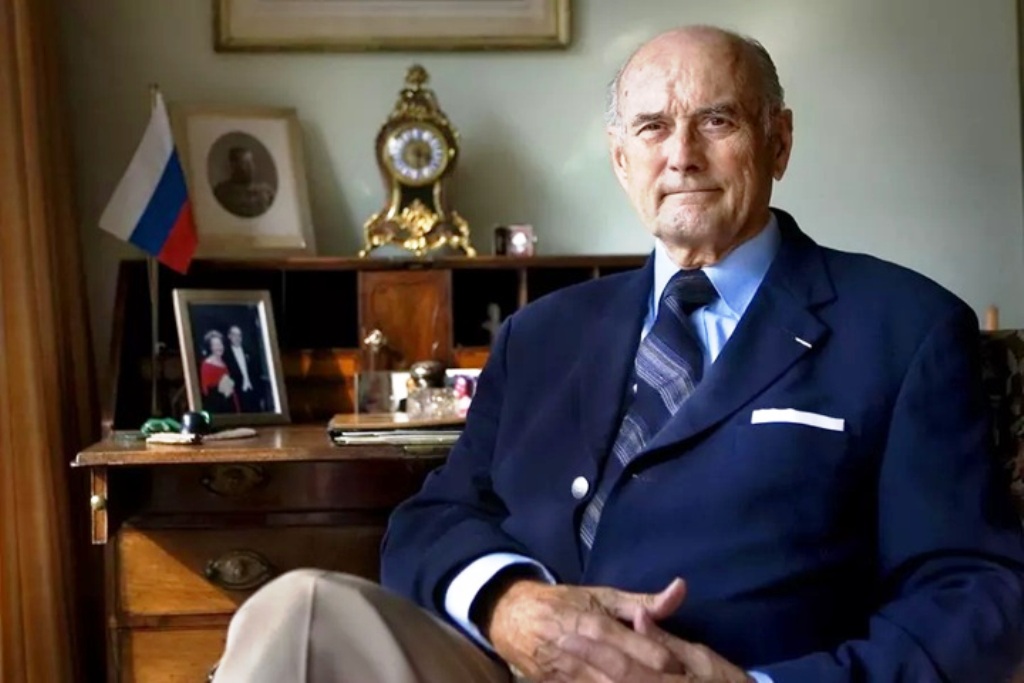
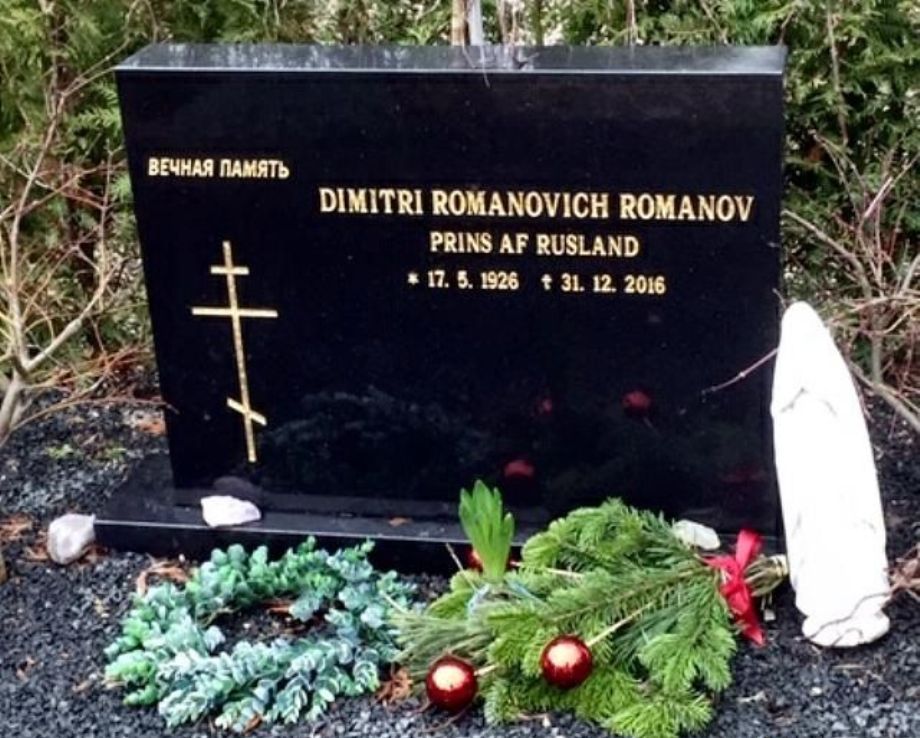
On this day – 31st December 2016 – Prince Dmitri Romanovich Romanov died in Copenhagen, Denmark at the age of 90. Following the death of his brother Prince Nicholas Romanovich in 2014, Dmitri became his rightful successor as Head of the House of Romanov.
Through his paternal lineage, Prince Dmitri was a great-great-grandson of Emperor Nicholas I of Russia (1796–1855) and his consort, Princess Charlotte of Prussia (1798-1860), who founded the Nikolaevichi branch of the Russian Imperial Family. He is a second cousin of the last Russian Emperor Nicholas II.
Dmitri was born on 17th May 1926 in in the villa of his grandfather, Grand Duke Peter Nikolaevich (1864-1931), in Cap d’Antibes on the French Riviera. He was the youngest son of Prince of the Imperial Blood Roman Petrovich (1896-1978) and his wife Princess Praskovia Dmitrievna (née Countess Sheremeteva, 1901-1980). In connection with the birth of their son, a congratulatory telegram addressed to Dmitri’s parents was sent from Denmark to France by the Dowager Empress Maria Feodorovna (1847-1928).
Prince Dmitri spent the first ten years of his life in France. He was brought up entirely in the Russian spirit under the guidance of his paternal grandmother, Grand Duchess Militsa Nikolaevna (1866-1951). Dimitri Romanovich’s teachers were graduates of the Smolny Institute in St. Petersburg [established by Catherine the Great in 1765]. Every Sunday, the family visited the home church, where young Dimitri served in the altar.
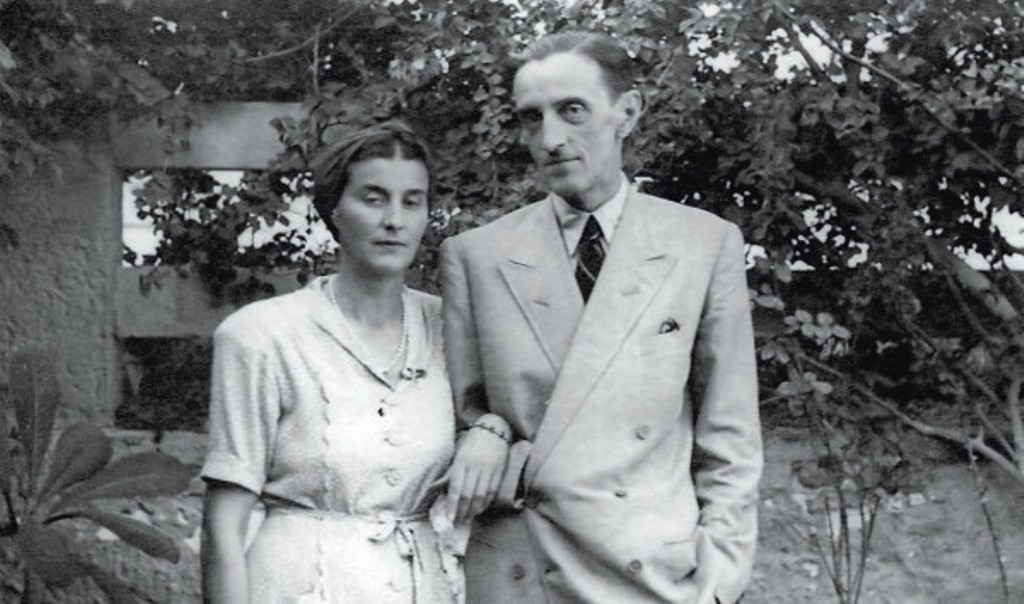
PHOTO: Prince of the Imperial Blood Roman Petrovich and his wife Princess Praskovia Dmitrievna (née Countess Sheremeteva. Egypt. Circa early 1950s
Early life – France, Italy, Egypt
After the victory of the Socialists in the French parliamentary elections in 1936, Dmitri moved with his parents to Italy, where the queen was Helena of Savoy [born Princess Jelena of Montenegro, 1873-1952] the sister of his paternal grandmother Grand Duchess Militsa Nikolaevna. For a short time, the family lived in the Quirinal Palace in Rome, the official residence of the king of Italy.
Dmitri studied at a private Italian school, where he was taught Latin and classical Greek. When Italy withdrew from the war in 1943 and Germany occupied Rome, Dimitri and his family hid from the Germans for nine months, changing apartments and addresses, as the Nazis announced a hunt for all relatives of the Italian king Victor Emmanuel III.
In May 1946, Dmitri and his family sailed from Naples to Cairo on the Italian ship Obruzzi. Initially, the family planned to stay in Egypt for only two months and then return to Europe, but their forced exile lasted until 1952. Soon after arriving in Egypt at the age of 19, Dimitri Romanovich, with the consent of his parents, began working as a simple mechanic at the Ford repair plant in Alexandria, where he earned a mechanic’s certificate. Dimitri Romanovich worked at the plant for three years, and then worked as a car sales manager.
In 1960 Prince Dmitri moved to Denmark, where he worked for a number of banks including the Danske Bank, where he was an executive until his retirement in 1993.[2] He was fluent in Russian, French, English, Danish and Italian. Dmitri became a Danish citizen in 1979
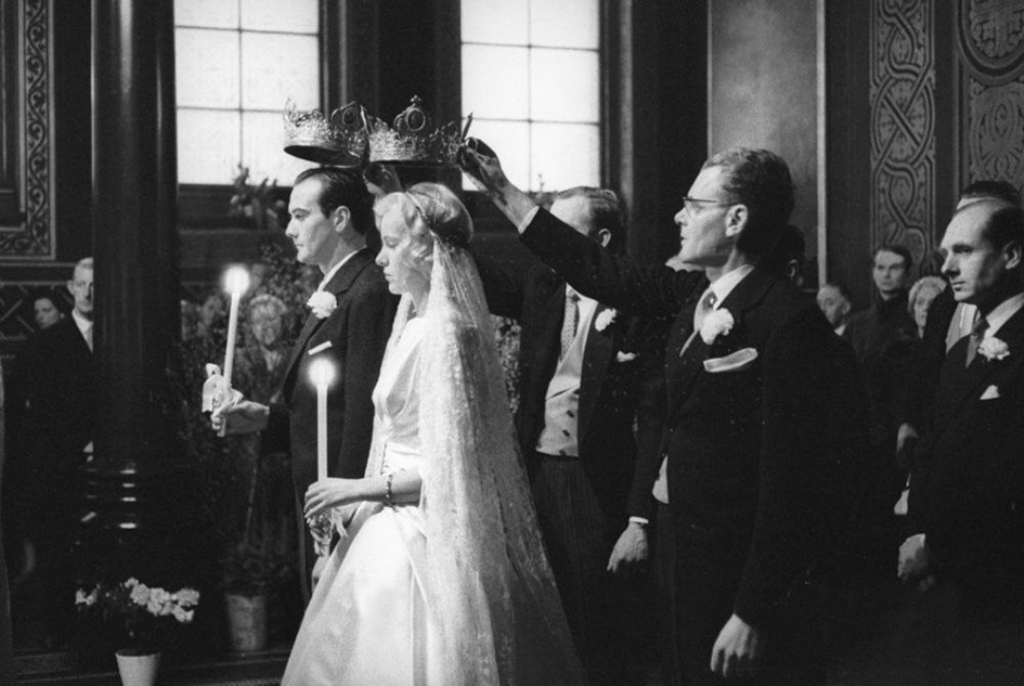
PHOTO: the wedding of Prince Dmitri Romanovich and Johanna von Kaufmann, 1959
Marriages
Prince Dmitri Romanovich was married twice.
In 1958, Dimitri and his friends went on a trip to Scandinavia by car. In Helsinki, he met a young girl named Johanna von Kauffmann (1936–1989). In 1959, the young couple married, settling in the suburbs of Copenhagen. Johanna died of cancer on 13th 1989, at the age of 52. The couple had no children.
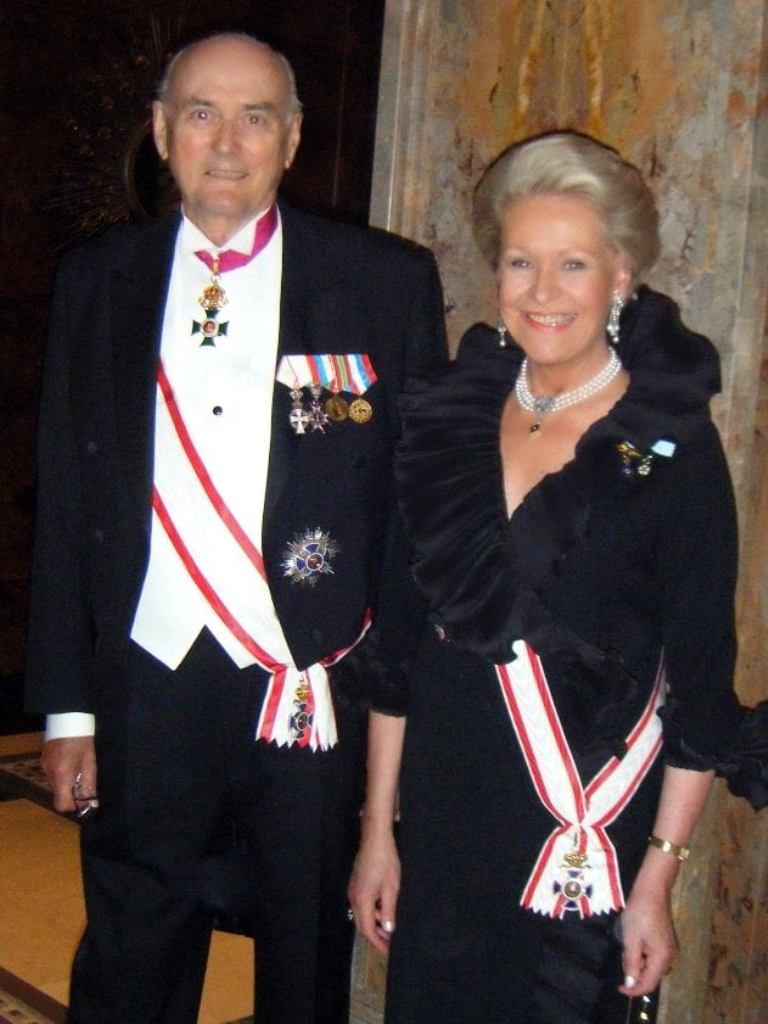
In 1989, Prince Dimitri Romanovich married Dorrit Reventlow (born 1942) on 28th July 1993, at the Trinity Cathedral of the Ipatiev Monastery in Kostroma. His second marriage was the “FIRST” time a Romanov had been married in Russia since the fall of the dynasty in 1917. Before the wedding, Princess Dorrit converted to Orthodoxy taking the name Feodora Alexeevna. The couple had no children.
PHOTO: Prince Dimitri Romanovich and his second wife Princess Feodora Alexeevna
Dynastic status
From birth, Dmitri Romanovich was titled by His Highness Prince of the Imperial Blood, which, however, was never recognized by the descendants of Grand Duke Kirill Vladimirovich (1876-1938).
Since the creation of the Romanov Family Association in 1979, which today unites most of the male and female descendants of Emperor Nicholas I (1796-1855). Dmitri Romanovich did not recognize Prince Vladimir Kirillovich (1917-1992) as the head of the House of Romanov. After the death of the latter in April 1992, Dmitri recognized his brother Prince Nicholas Romanovich as the rightful head of the House of Romanov. Together with other representatives of the House of Romanov, he repeatedly declared the illegitimacy of the claims to the Russian throne of Vladimir Kirillovich and his daughter Maria Vladimirovna. From 1989 to 2014, Prince Dmitri served as an adviser to the head of the Romanov Family Association.
After the death of his brother in September 2014, Dmitri Romanovich headed the Romanov Family Association. All descendants of the Russian Imperial House (except Maria Vladimirovna and her son George Mikhailovich) recognized him as the head of the House of Romanov. The successor of Dimitri Romanovich was Prince Andrei Andreevich (1923-2021), who was the oldest living representative of the House of Romanov at the time.
Dimitri Romanovich was the last male representative of the Nikolaevichi branch of the House of Romanov, which originated from Grand Duke Nicholas Nikolaevich, Sr. (1831-1891) and his wife, Grand Duchess Alexandra Petrovna (born Duchess Alexandra of Oldenburg, 1838-1900). Dimitri Romanovich had no children, and his elder brother Nikolai Romanovich had only daughters. As a result, upon the death of Prince Dimitri Romanovich on 31st December 2016, the male line of the Nicholaevich branch of the Romanov family died out.
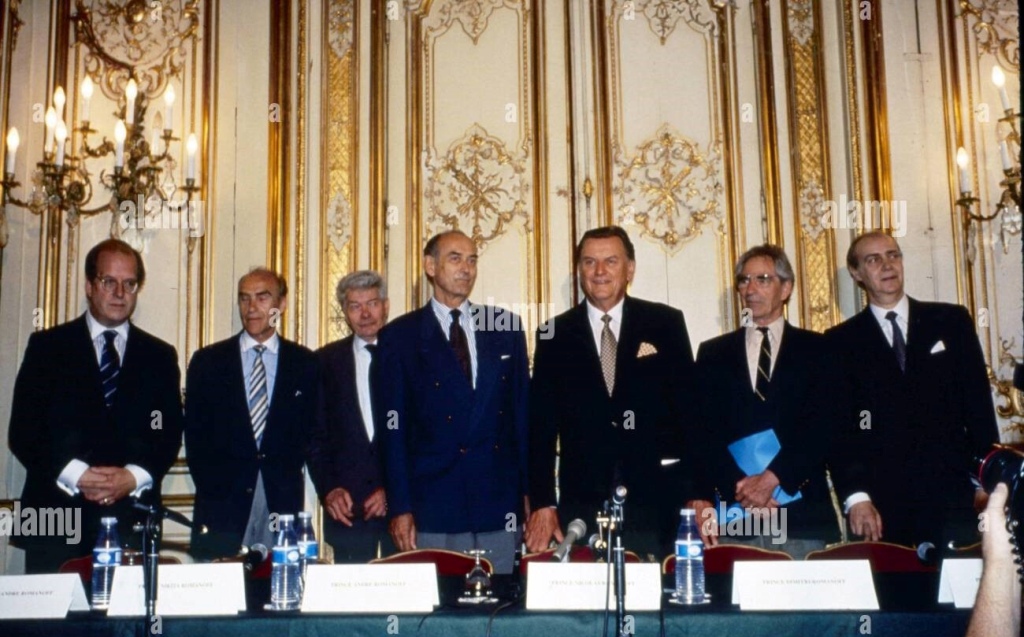
PHOTO: seven Romanov princes gather in Paris in June 1992
Social activities
On 29th June 1992, seven Romanov princes met in Paris: Nikolai Romanovich (1922-2014), Dimitri Romanovich (1926-2016), Andrei Andreevich (1923-2021), Mikhail Feodorovich (1924-2008), Nikita Nikitich (1923-2007), Alexander Nikitich (1929-2002) and Rostislav Rostislavovich (1938-1999).
The male descendants of the House of Romanov declared that none of them had any claims to the Russian throne, and that their activities in Russia would only be educational and charitable. Prince Dmitri was an opponent of the restoration of the monarchy. He believed that in Russia “there should be a democratically elected president.
It was during this meeting, that the princes decided to create a charitable foundation to help Russia. The foundation was established in 1994 and registered in London. The Romanov Fund for Russia was headed by Dimitri Romanovich.
As part of its humanitarian activities, the foundation provides charitable assistance and support to those in need in the field of medicine, education and social welfare, and promotes activities in the field of culture, art and enlightenment. The foundation takes care of hospitals for hearing-impaired children, boarding schools and nursing homes.
In July 1992, Prince Dmitri visited Russia for the first time, visiting St. Petersburg and Moscow. In the first years of its activity, the foundation faced difficulties of various nature associated with the collapse of the Russian state economy and the critical state of the social security system. In the period from 1993 to 1995, Dimitri Romanovich headed five humanitarian visits to Russia on behalf of the Romanov Fund for Russia.
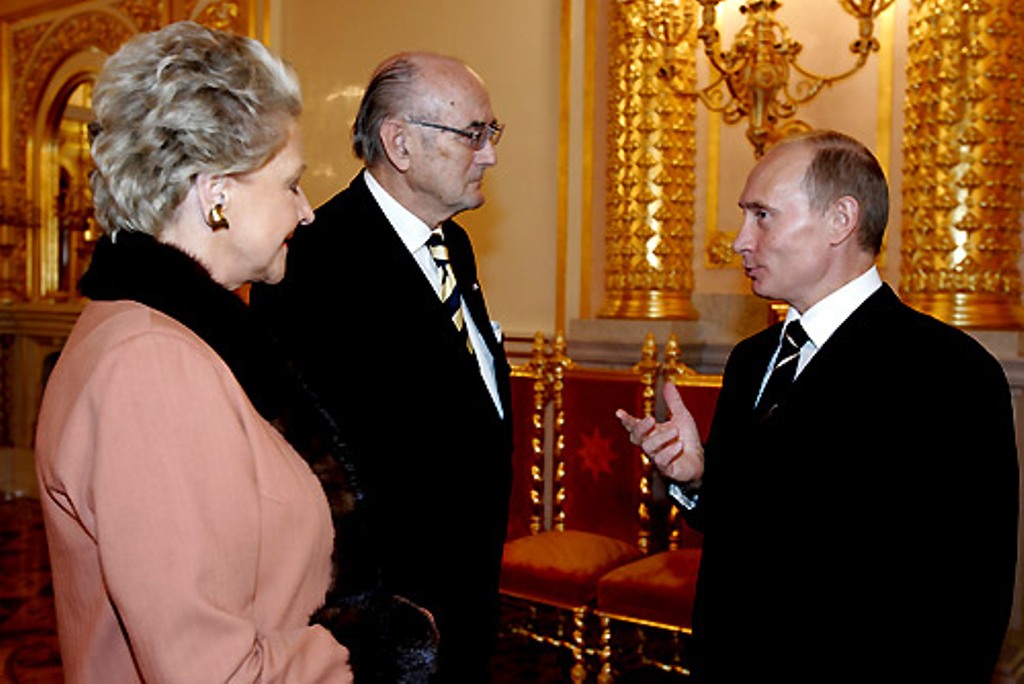
PHOTO: Russian president Vladimir Putin with Prince Dmitri Romanovich and his wife Princess Feodora Alexeevna, during an official reception held in the Grand Kremlin Palace in Moscow. 2006
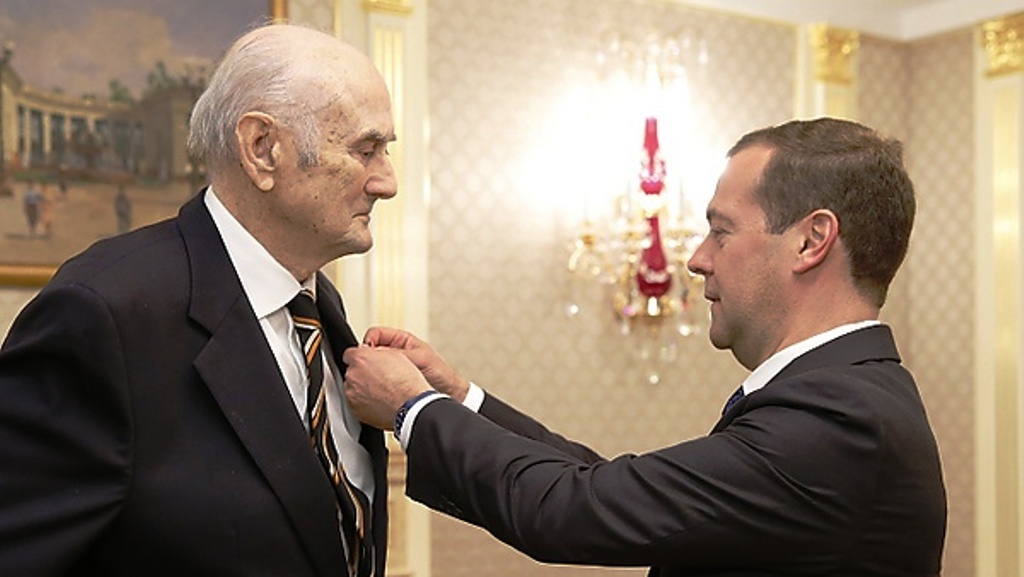
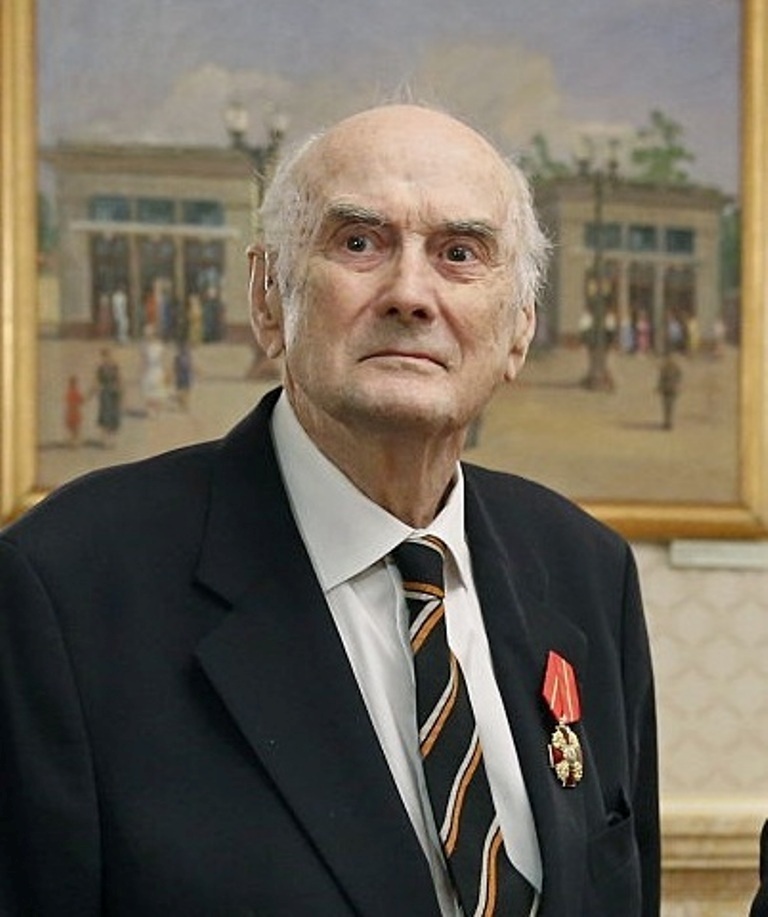
PHOTO: Prime Minister Dmitri Medvedev awarding Prince Dmitri Romanovich with the Order of Alexander Nevsky, 6th October 2016
Awards and honours
In 2006, Prince Dmitri Romanovich met with Russian President Vladimir Putin in Moscow. The meeting took place during a state reception devoted to National Unity Day in St. George’s Hall of the Grand Kremlin Palace.
This meeting occurred in the context of the reburial of the Dowager Empress Maria Feodorovna (Emperor Nicholas II’s mother). Maria Feodorovna had died in exile in Denmark, and her dying wish was to be buried next to her husband, Emperor Alexander III, in Russia.
In June 2011, the then President of the Russian Federation Dmitri Medvedev awarded Prince Dmitri the “Order of Friendship” for “great achievements in strengthening friendship and cultural cooperation between Russia and the Kingdom of Denmark and for his achievements as chairman of the Romanov Fund for Russia.” The award ceremony took place in Moscow.
In May 2016, Dimitri Romanovich was awarded a certificate of honour from the Government of the Russian Federation “for his great contribution to the dissemination of knowledge about the historical and cultural heritage of Russia abroad, and assistance in strengthening international humanitarian ties.”
In August 2016, by decree of the President of the Russian Federation Vladimir Putin, Prince Dmitri was awarded the Order of Alexander Nevsky. The Chairman of the Government of the Russian Federation Dmitri Medvedev, headed the award ceremony in the building of the Government of the Russian Federation, on 6th October 2016. Prince Dmitri receive the award “for his great contribution to spreading abroad the knowledge of Russia’s historical and cultural heritage and efforts to promote international humanitarian ties.”
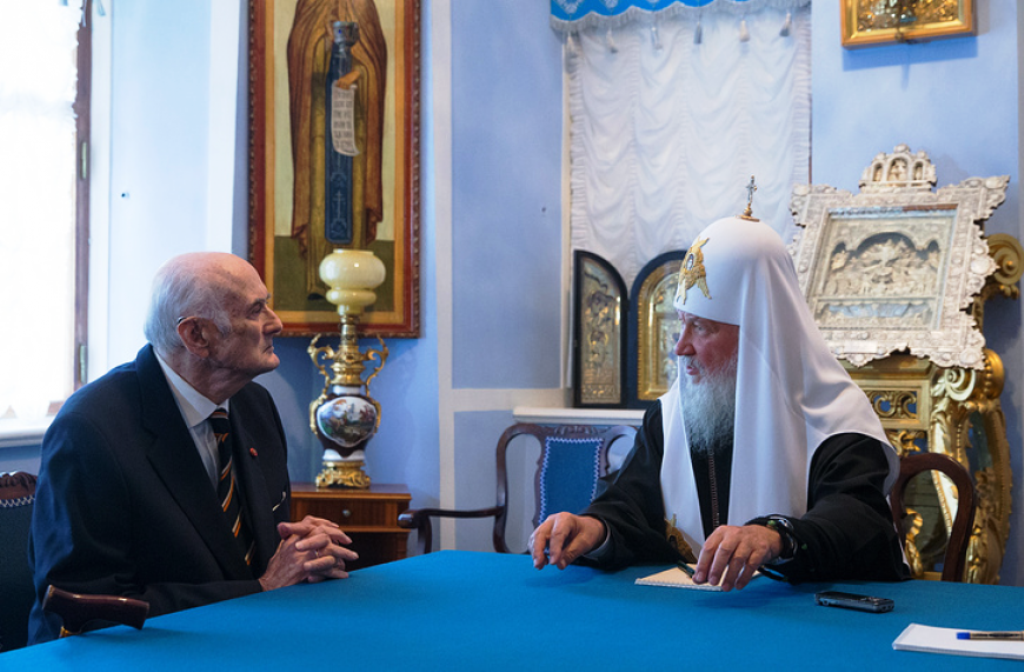
PHOTO: Prince Dmitir Romanovich with His Holiness Patriarch Kirill of Moscow and All Russia, at the Trinity Lavra of St. Sergius. October 2016
In October 2016, Prince Dmitri also met with His Holiness Patriarch Kirill of Moscow and All Russia at the Trinity Lavra of St. Sergius. During the meeting, His Holiness said: “Thank you for your love for our common Motherland, for preserving the wonderful traditions of the House of Romanov, for your participation in the delivery of the remains of both [Empress] Maria Feodorovna and [Grand Duke] Nicholas Nikolaevich. Your work unites history. This is the uniqueness of your personality and the uniqueness of the House of Romanov in general. Living people united in their family tradition of honouring our national history, torn apart by the tragic events of the early 20th century.”
Patron of the Arts
Dimitri Romanovich was also known as a patron of the arts. In December 2000, he donated the sabre of his great-grandfather, Grand Duke Nikolai Nikolaevich, Sr (1831-1891), as well as the Shipka battle banner, to the State Hermitage Museum in St. Petersburg.
In July 2004, he donated the family icon of the Saviour, which once belonged to his paternal grandmother Grand Duchess Militsa Nikolaevna (1866-1951) to the Novodevichy Convent in St. Petersburg.
In July 2005, he donated an icon of the Saviour to the restored Church of the Bright Resurrection of Christ on the Smolenka River in St. Petersburg. This 19th-century icon was kept in the Romanov family and passed down from generation to generation.
In July 2009, together with his wife, he donated the family icon of Saints Mitrophan and Tikhon of Voronezh to the restored Feoodorovsky Cathedral in St. Petersburg. According to Dimitri Romanovich, he was blessed with this icon. in Rome in 1944 by his spiritual mentor, Hieromonk Zosima,
Dmitri Romanovich has appeared in the media and documentaries, giving interviews about the history of the Romanov. For example: in 2003 in the Danish documentary “En Kongelig familie“, in 2007 on France 3 in the film “Un nom en héritage, les Romanov“, in 2008 on NTV in the film “Ghosts of the House of Romanov“, as well as in 2014 in the ZDF documentary “Royal Dynasties: The Romanovs” and in 2015 in the documentary “The Crown of the Russian Empire” produced by Russia-24.
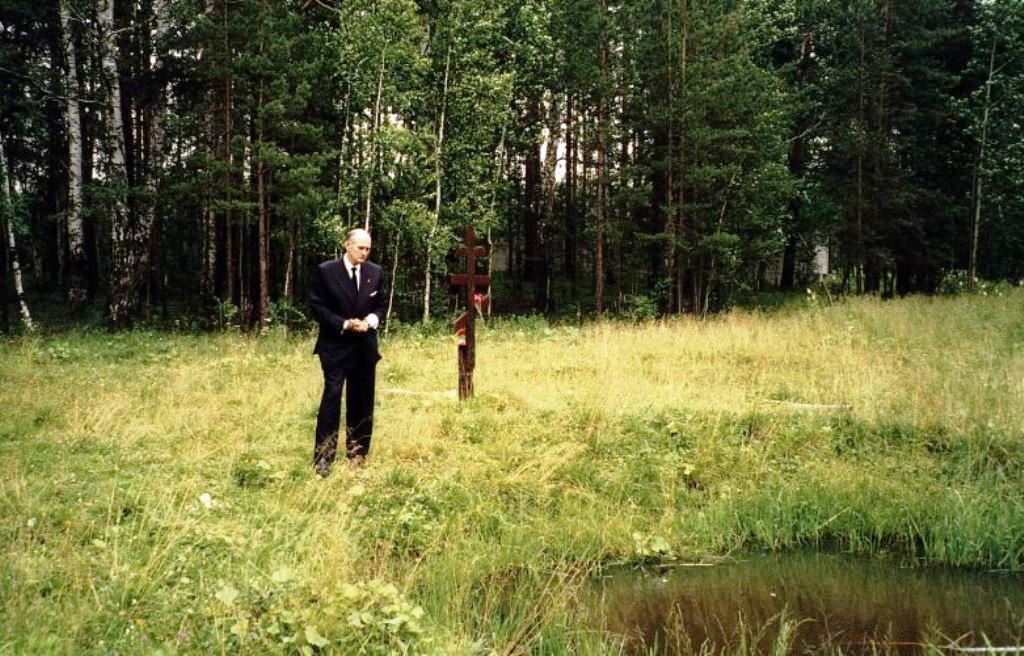
PHOTO: Dmitri Romanovich at the place where the remains of the Imperial Family were found on the Old Koptyaki Road, near Ekaterinburg
Reburial of the Imperial Family
After the discovery of the remains of Emperor Nicholas II, Empress Alexandra Feodorovna, three daughters and four faithful retainers near Ekaterinburg in July 1991, Prince Dmitri Romanovich actively assisted the government commission and the investigation in identifying the remains.
Dmitri Romanovich was one of the first members of the House of Romanov to visit the place where the remains were found on the Old Koptyakovskaya Road, near Ekaterinburg. He was the only one of the Romanovs who took part in the mourning events that took place in Ekaterinburg before the remains were sent to St. Petersburg.
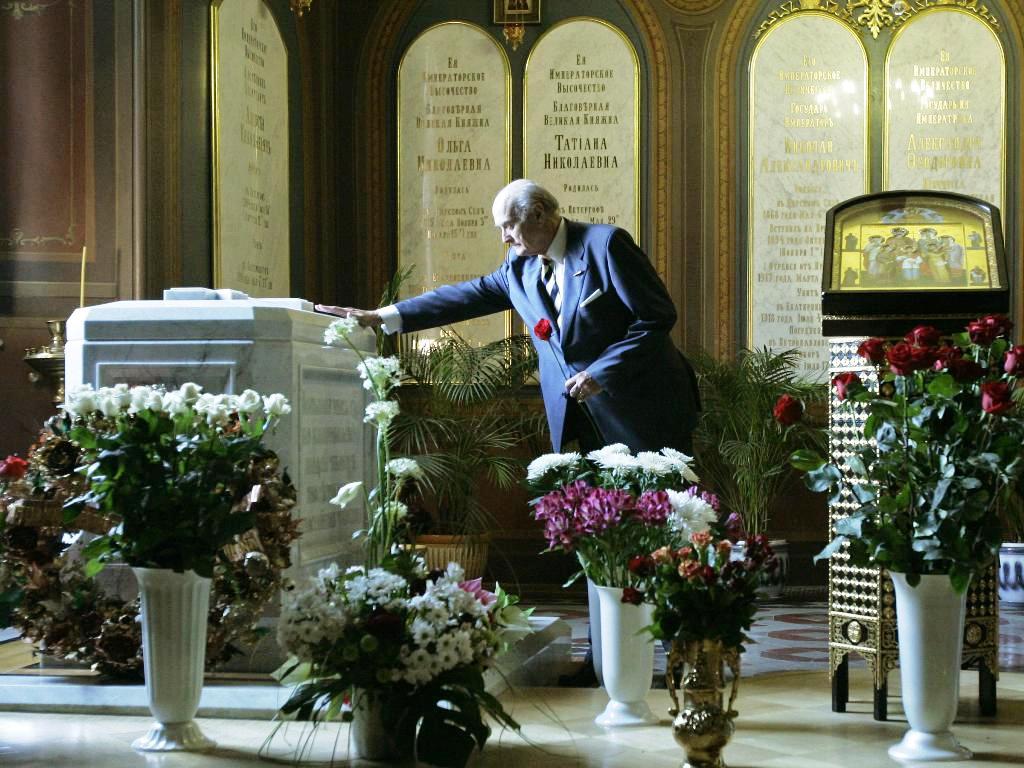
On 17th July 1998, together with other representatives of the House of Romanov, he participated in the funeral ceremony for the reburial of the remains of Emperor Nicholas II, members of his family and servants, which took place in the SS Peter and Paul Cathedral in St. Petersburg.
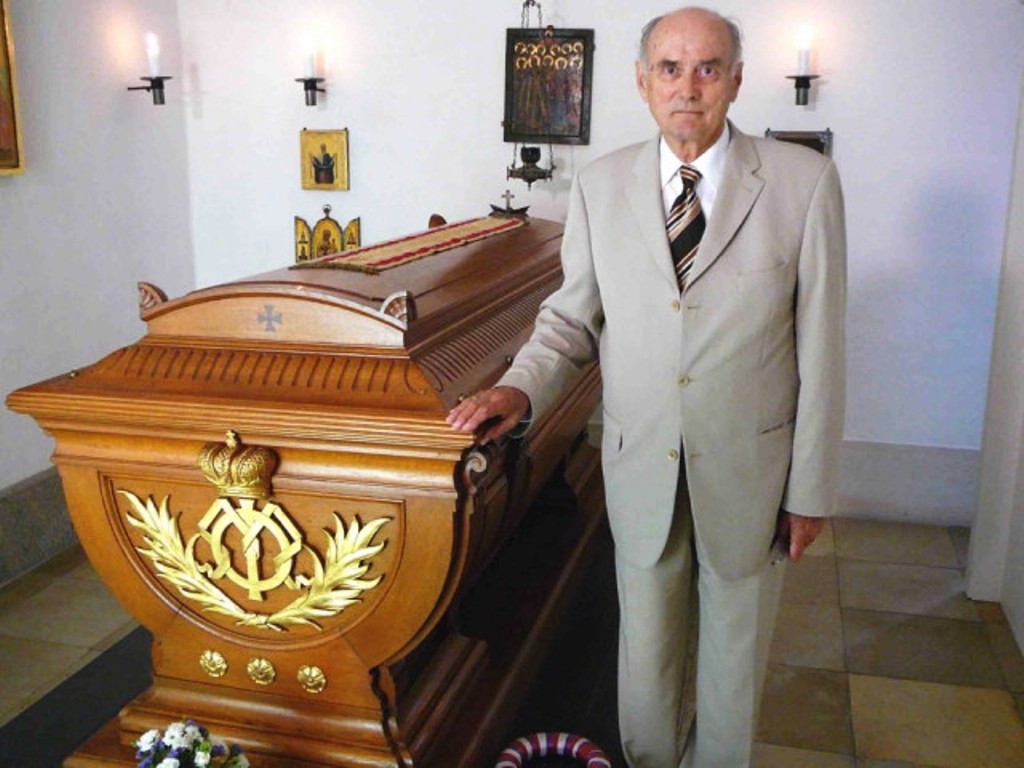
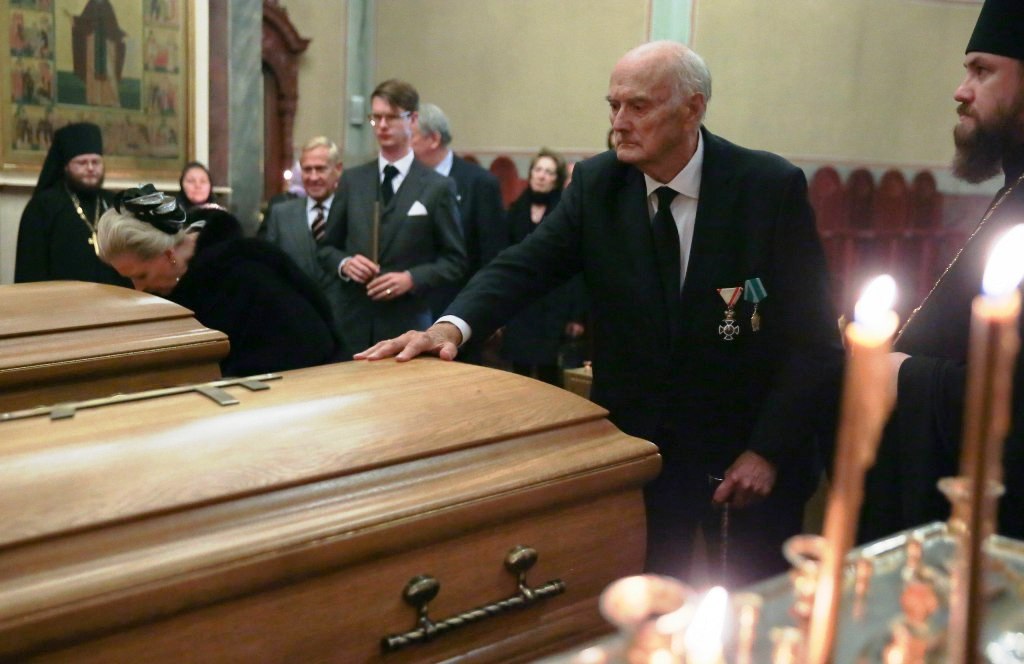
PHOTO: Dmitry Romanovich pays his respects at the tomb holding the remains of Emperor Nicholas II, Empress Alexandra and their three daughters in St. Petersburg’s St. Peter and Paul Cathedra. 2008
Russian president Boris Yeltsin (1931-2007) attends the funeral on 17th July 1998. Addressing the funeral ceremony, Yeltsin described the murder of the Russian Imperial Family as “one of the most shameful pages in Russian history”, and urged Russians to close a “bloody century” with repentance.
He said: “Today is a historic day for Russia. For many years, we kept quiet about this monstrous crime, but the truth has to be spoken.”
Yeltsin said he had no choice but to attend this funeral in consideration of the fact that the funeral presented a historical opportunity for the Russian people to exculpate themselves from the sins of their fathers, and the sins of the murder of their Romanov family.
More than 50 Romanov descendants attended the historic burial. The only family members who did NOT attend were Princess Maria Vladimirovna, her mother Princess Leonida Georgievna, and Maria’s son Prince George Mikhailovich.
The author of this article was invited to attend the events marking the burial of Nicholas II and members of his family. On the morning of 17th July 1998, I met many descendants of the House of Romanov in the lobby of the Astoria Hotel. I was invited to ride in one of the special buses provided for the more than 50 Romanov descendants, from the Astoria Hotel to the Peter and Paul Fortress. This was the one and only time that I met Princes Nicholas (1922-2014) and Dimitri Romanovich (1926-2016) in person.
After the discovery in July 2007 of the remains of Tsarevich Alexei Nikolaevich and Grand Duchess Maria Nikolaevna, Dmitri Romanovich actively assisted the investigation in identifying the remains. He advocated the speedy burial of the Tsesarevich and his sister in the SS Peter and Paul Cathedral.
In December 2015, Alexei and Maria’s remains were transferred from the State Archives of the Russian Federation to the Lower Church of the Transfiguration Cathedral of the Novospassky Monastery in Moscow, where they remain to this day.
PHOTO: Prince Dimitri Romanovich at the coffin of Empress Maria Feodorovna in the Rosskile Cathedral, Denmark. August 2006.
Reburial of Empress Maria Feodorovna
In 2001 Prince Dmitri together with his brother Prince Nikolai Romanovich and Prince Mikhail Andreevich (1920-2008), who lived in Australia, initiated the reburial to Russia of the Dowager Empress Maria Feodorovna [born Princess Dagmar of Denmark, 1847-1928].
Prince Dmitri acted as an intermediary during negotiations between the government of the Russian Federation and the Danish royal court. Together with his wife, Princess Feodora Alexeevna, he accompanied the coffin with the remains of the Empress from Copenhagen to St. Petersburg.
From 25th to 29th September 2006, Prince Dmitri and his wife, together with other members of the Romanov Family Association, took part in the events for the reburial of the Dowager Empress, next to those of her husband Emperor Alexander III in the SS Peter and Paul Cathedral in St. Petersburg.
PHOTO: Prince Dmitri Romanvich at the coffins of his uncle Grand Duke Nicholas Nikolaevich and aunt Grand Duchess Anastasia Nikolaevna, in the Donskoy Monastery, Moscow
Reburial of Grand Duke Nicholas Nikolaevich
In December 2013, Prince Dmitir and his brother Prince Nicholas Romanovich, appealed to the Russian government with a request to rebury the remains of their paternal uncle Grand Duke Nikolai Nikolaevich (1856-1929) and aunt Grand Duchess Anastasia Nikolaevna (born Princess Anastasia of Montenegro, 1867-1935) in Moscow.
In April 2015, Prince Dmitri Romanovich participated in the reburial ceremony of Grand Duke Nikolai Nikolaevich and his wife, Grand Duchess Anastasia Nikolaevna, in in the chapel in honour of the Transfiguration of the Lord at the the World War I memorial military cemetery in Moscow.
PHOTO: Prince Dmitri Romanovich and his wife admire a portrait of Empress Alexandra Feodorovna in the Livadia Palace, during their visit to Crimea in 2015
Visit to Crimea
Together with his brother, Prince Dmitri supported the annexation of Crimea by the Russian Federation in 2014. He was the first of the Romanov family to visit Crimea after the Russian annexation. On 25th August 2015, Dimitri Romanovich and his wife Princess Feodora Alekseevna arrived in Sevastopol, where during a press conference they announced their readiness to move from Denmark to Crimea for permanent residence.
The following day, Dmitri and Princess Feodora Alekseevna visited the Livadia Palace, where they laid flowers at the monument to Emperor Nicholas II, erected in the spring of 2015. Dimitri Romanovich also visited the Djulber (aka Dulber) Palace, the family estate of the Nikolaevichs in the Crimea, which was built by Dmitri’s grandfather Grand Duke Peter Nikolaevich.
On 27th August, Dimitri Romanovich visited the museum-panorama of the defense of Sevastopol. On the same day, he visited the flagship of the Black Sea Fleet, the Guards missile cruiser Moskva. He was told about the history of the ship, its combat characteristics and the life of sailors and officers. At parting, the crew of the cruiser presented Dimitri Romanovich with two commemorative coins with a face value of 10 rubles, minted in honor of the annexation of Crimea by Russia. On the final day of the visit, 28th August, Dimitri Romanovich visited the Massandra Palace of Emperor Alexander III.
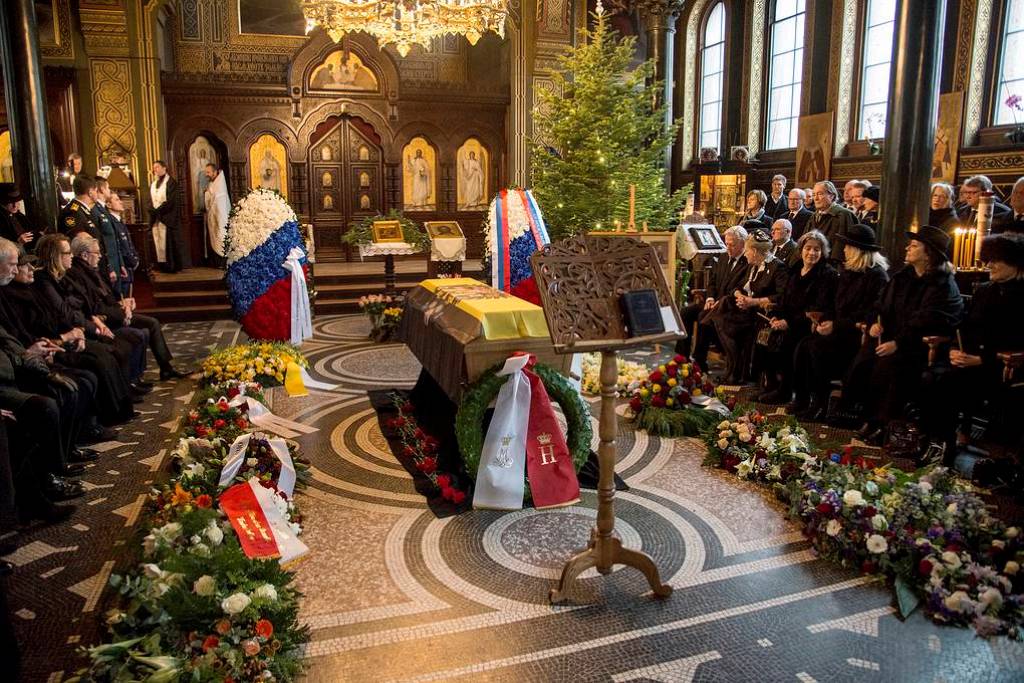
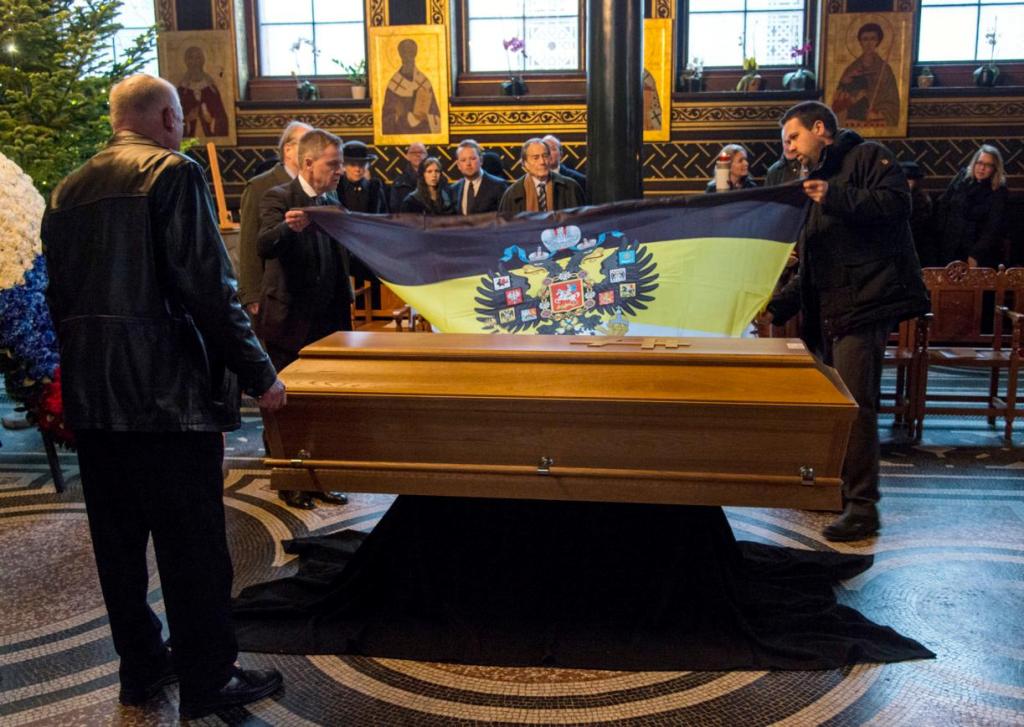
PHOTO: Prince Dmitri’s funeral was held on 10th January 2017, at the Alexander Nevsky Russian Orthodox Cathedral in Copenjagen, Denmark.
Death and funeral
At the end of December 2016, Prince Dmitri ‘s health deteriorated and he was subsequently hospitalized. He died on 31st December 2016 in a hospital in Copenhagen, Denmark.
The funeral service was held on 10th January 2017, in the Church of Alexander Nevsky in Copenhagen, performed by Archpriest Sergei Plekho
The prince’s coffin, covered with the Romanov tri-colour flag – black, yellow, white with a double-headed eagle, was surrounded with flowers and wreaths, among which two stood out – from Queen Margrethe II of Denmark and President of the Russian Federation Vladimir Putin.
Russia’s Ambassador to Denmark Mikhail Vanin, who was present at the funeral service, read out a message from Russian President Vladimir Putin, expressing his condolences on the death of Prince Dimitri Romanov.
“Dimitri Romanovich was a “true patriot of Russia,” said Putin. “Throughout his life, the chairman of the Romanov Family Association kept the indissoluble spiritual connection with the motherland and made a great contribution to the dissemination of knowledge about the history and culture of our country abroad and about the heritage and traditions of the Russian Imperial House,” the Russian president added.
Numerous representatives of the foreign Russian diaspora attended his funeral, as well as Marshal of the Royal Court of Denmark Michael Eyrinreich, Chief Herald of the Russian Federation Georgy Vilinbakhov, and numerous Danish and Russian officials.
On 11th January 2017, a pannikhida [memorial service for the dead] was performed for the newly-departed Dimitri Romanovich, which was conducted by Archpriest Sergius Plekhov In the small chapel, at the Wedbeck Cemetery, situated about 20 km north of Copenhagen.
Then the coffin was transferred to the final resting place next to his first wife, Princess Joanna, née von Kauffmann, who died in 1989. After lowering the coffin into the grave, those present took turns throwing a handful of earth and Dimitri Romanovich’s favorite flowers, red roses.
PHOTO: grave of Prince Dmitri Romanovich Romanov (1926-2016) in Vedbaek Cemetery
Upon the death of his brother Nicholas in 2014, Dimitri assumed the Headship of the Imperial House of Russia. When Prince Dimitri Romanovich died on 31st December 2016, the male line of the Nicholaevich branch of the Romanov family died out.
Prince Dmitri Romanovich Romanov with the Order of Alexander Nevsky (1926-2016) Memory Eternal! Вечная Память! ☦️
On this day – 30th December [O.S. 17th] 1916 – Grigori Yefimovich Rasputin was assassinated in Petrograd [St. Petersburg].
Love him or hate him, he is best known as the holy man, who befriended the family of Russia’s last tsar Nicholas II, and as a healer for the Tsar’s only son and heir Alexei Nikolaevich, who suffered from haemophilia.
Rasputin was born on 21st January [O.S. 9th January] 1869, to a family of peasants in the Siberian village of Pokrovskoye, situated 93 km [58 miles] east of Tyumen or 162 km [100 miles] southwest of Tobolsk.
He had a religious conversion experience after embarking on a pilgrimage to a monastery in 1897, and has been described as a strannik (wanderer or pilgrim), though he held no official position in the Russian Orthodox Church.
In February 1887, Grigori married a peasant girl named Praskovya Dubrovina. His wife remained in Pokrovskoye throughout Rasputin’s later travels and rise to prominence and remained devoted to him until his death. The couple had seven children, though only three survived to adulthood: Dmitry (b. 1895), Maria (b. 1898), and Varvara (b. 1900).
In November 1905, Rasputin met Emperor Nicholas II and Empress Alexandra Feodorovna. It was Grand Duchess Anastasia and her sister Grand Duchess Militza (wife of Grand Duke Peter Nikolaevna), who introduced Rasputin to Empress Alexandra Feodorovna. Nicknamed jointly “The Black Peril”, in 1909, the sisters lost their influence with the Empress..
In the early morning of 30th December [O.S. 17th] 1916, Rasputin was assassinated by a group of conservative nobles led by Prince Felix Yusupov, Grand Duke Dmitri Pavlovich, and the right-wing politician Vladimir Purishkevich, all of whom opposed his influence over the Imperial couple.
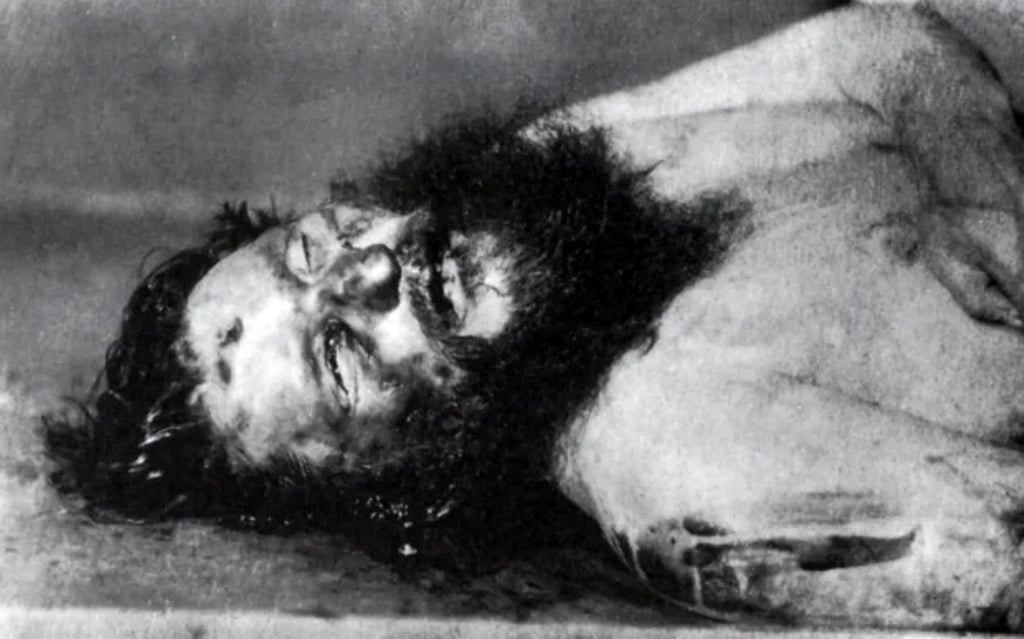
His assailants threw the ’stranniks’ body into the Malaya Nevka River. Rasputin was buried on 2nd January [O.S. 21st December] at a small church that Anna Vyrubova had been building in the Alexander Park at Tsarskoye Selo. His body was exhumed and burned by a detachment of soldiers shortly after the Tsar abdicated the throne in March 1917.
PHOTO: Rasputin’s body, after being pulled from the icy waters of the Malaya Nevka River
“The horror and shock caused by this lynching, for it can be called by no other name, completely shattered the nerves of the family. The Emperor was affected less by the deed itself than by the fact that it was the work of members of his own family. “Before all Russia,” he exclaimed, “I am filled with shame that the hands of my relatives are stained with the blood of a simple peasant.” Before this he had often shown disgust at the excesses of the Grand Dukes and their followers, but now he expressed himself as being entirely through with them all.”
Later, a letter blazing with anger and impudence, signed by nearly all the members of the Imperial Family, was rushed to the Emperor, but his only comment was a single sentence written on the margin: “Nobody has a right to commit murder.”
It was this “single sentence comment” which prompted Dowager Empress Maria Feodorovna to scold her son like a child. In a letter dates 17th February 1917, she wrote to Nicholas: “I am sure you are aware yourself how deeply you have offended all the family by your brusque reply . . . “
Some historians believe that Rasputin’s terrible reputation helped discredit the tsarist government, and thus helped precipitate the overthrow of the Romanov dynasty, which happened a few weeks after he was assassinated.
As Nicholas II said to his relatives with regard to Rasputin’s murder: “No one, has the right to kill!”
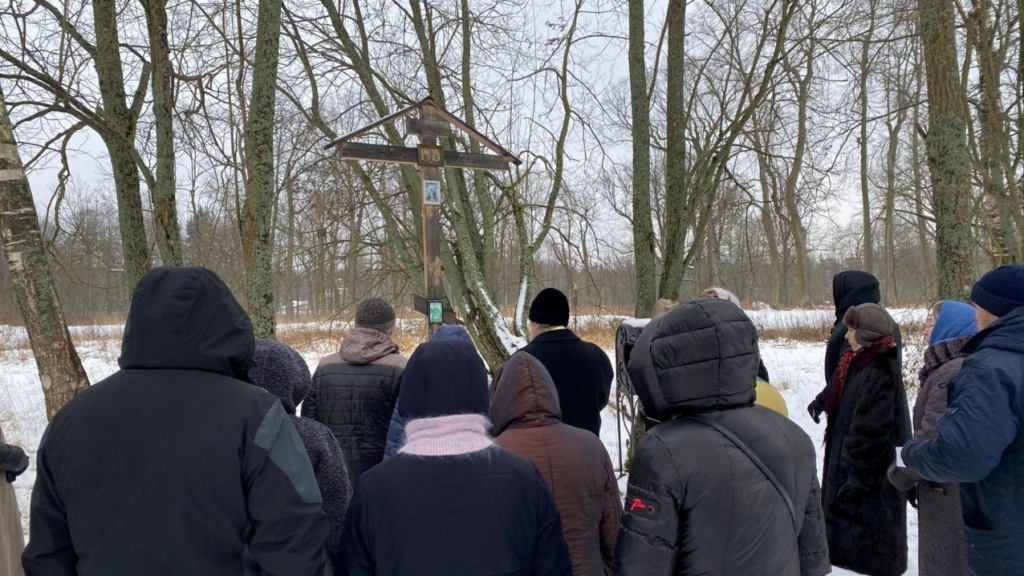
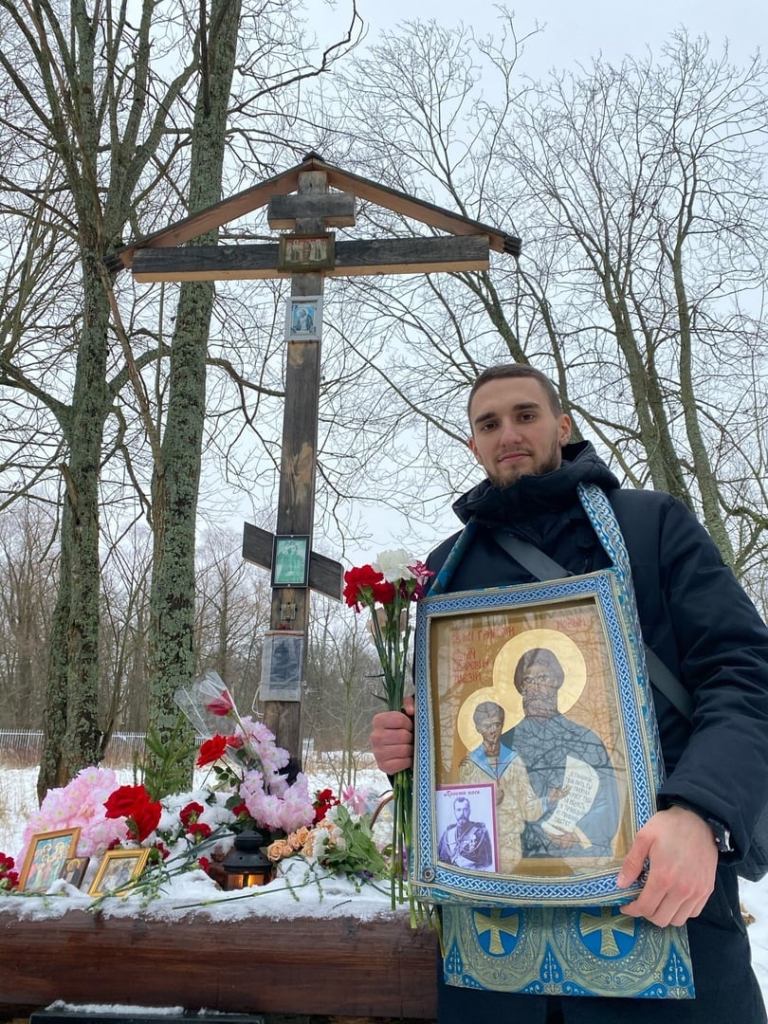
PHOTOS: the alleged first grave of Grigorii Rasputin in the Alexander Park at Tsarskoye Selo
The alleged grave of Grigorii Rasputin at Tsarskoye Selo
In recent years, members and supporters of the Tsar’s Cross Movement gathered at the alleged first grave of Grigorii Rasputin. situated in the Alexander Park at Tsarskoye Selo.
Rasputin was buried here on 2nd January [O.S. 21st December] 1916, at a small church that Anna Vyrubova had been building. Shortly after the Tsar abdicated the throne in March 1917, Rasputin’s body was exhumed and burned by a detachment of soldiers.
The site has been repeatedly vandalized over the years, including September 2012, when vandals cut down the wooden cross, which was later found in the Alexander Park.
During my visits to Tsarskoye Selo over the years, the author of this article has made several attempts to locate the site, however, my efforts have been in vain.
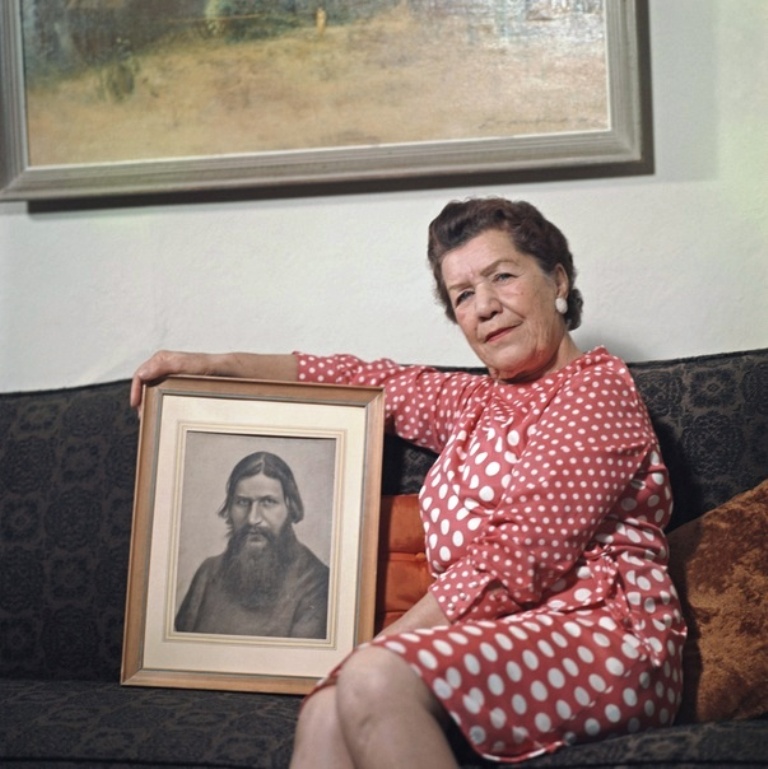
PHOTO: Maria Rasputina in exile, posting with a picture of her father Grigorii Rasputin
Rasputin’s daughter defends her father in exile
Born on 26th March 1898, Matryona (Maria) Grigorievna Rasputina, was the daughter of Grigorii Rasputin (1869-1916) and his wife Praskovya Fyodorovna Dubrovina (1865-1936).
After Prince Felix Yusupov published his memoir Lost Splendour (in 1928) detailing the gruesome death of her father, Maria sued Yusupov and Grand Duke Dmitri Pavlovich in a Paris court for damages of $800,000. She condemned both men as murderers, however, Maria’s claim was dismissed. The French court ruled that it had no jurisdiction over a political killing that took place in Russia.
Maria wrote two memoirs about her father, dealing with Emperor Nicholas II and Empress Alexandra Feodorovna, the attack by Khionia Guseva and her father’s murder on 30th December [O.S. 17th December] 1916. A third memoir, ‘The Man Behind the Myth,’ was published in 1977.
In her three memoirs, she painted an almost saintly picture of her father, insisting that most of the negative stories were based on slander and the misinterpretation of facts by his enemies.
During the last years of her life, Maria lived in Los Angeles, living on Social Security benefits. Her home was in Silver Lake, an area of northwest Los Angeles with a large Russian-American community.
Maria Rasputin died in Los Angeles, California, on 27th September 1977, aged 79. She was buried in Angelus-Rosedale Cemetery.
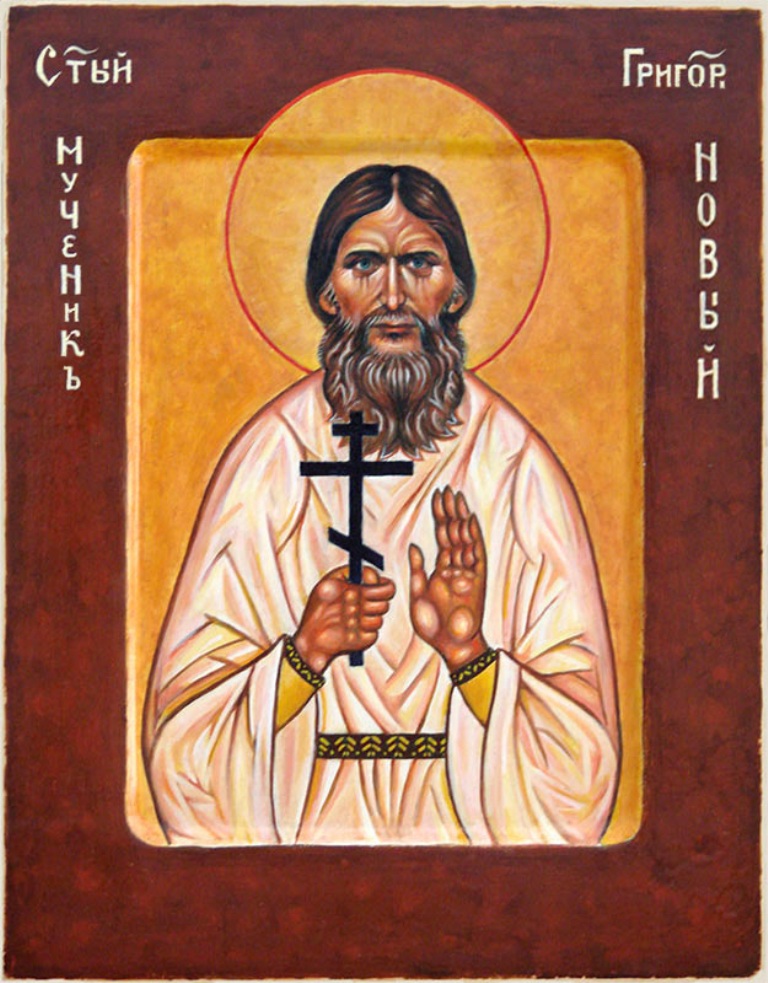
PHOTO: the above image depicts one of numerous non-canonical icons depicting Grigorii Rasputin, however, the strannik is not recognized as a saint by the Russian Orthodox ChurchOutside Russia (ROCOR) nor the Moscow Patriarchate
Movement to canonize Grigorii Rasputin
In recent years there has been growing support within and outside the Russian Orthodox Church (ROC) advocating for the canonization of Rasputin, viewing him as a genuine holy man and mystic, despite his scandalous reputation and association with the Romanov downfall, with some seeing him as a victim of slander and political intrigue, while the official Church remains hesitant due to his controversial life and negative historical perception.
Proponents emphasize his spiritual influence on the Empress Alexandra Feodorovna, his healing abilities especially for Tsesarevich Alexei Nikolaevich, and his deep piety, suggesting his perceived debauchery was exaggerated or fabricated by enemies.
The Russian Orthodox Church has largely resisted these calls, viewing his lifestyle and scandalous involvement in court politics as disqualifying for sainthood, making him a highly contentious figure even today.
In 1912, Grigory Efimovich Rasputin (1869-1916) published a book, in which he writes his prophecies, some of which soon came true, while others have yet to happen.
Putting aside one’s personal views of Rasputin or beliefs in prophecies, let us hope and pray that the unfulfilled predictions of Grigory Efimovich will remain so, otherwise humanity will face truly terrible trials and tribulations.
The head of the Synodal Department for External Church Relations, Metropolitan Hilarion, believes that Nicholas II should have followed the advice of Grigory Rasputin and not entered the First World War, and thus saved both the monarchy and Russia.
The editorship of Orthodox Life is troubled by recent signs, even among certain members and clergy of the Russian Orthodox Church Abroad, of a revisionist history taking hold regarding the tumultuous and tragic events of the early 20th century — namely, the controversial and enigmatic figure of Grigory Efimovich Rasputin. We therefore offer this thorough and sober investigation by a respected scholar and historian of the Russian Church. May the question of “the real Rasputin” be finally put to rest, so that without discord and tumult in the Church, we may worthily honor the life and sufferings of the Holy Royal Martyrs and all the New Martyrs and Confessors of Russia, especially in the current and upcoming anniversary years.
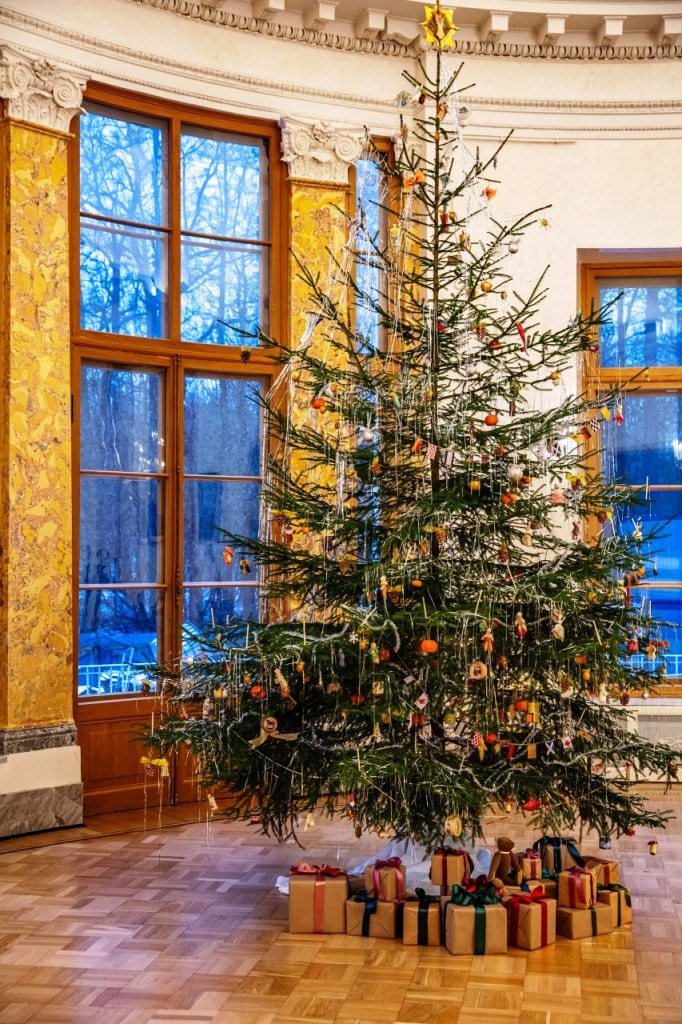
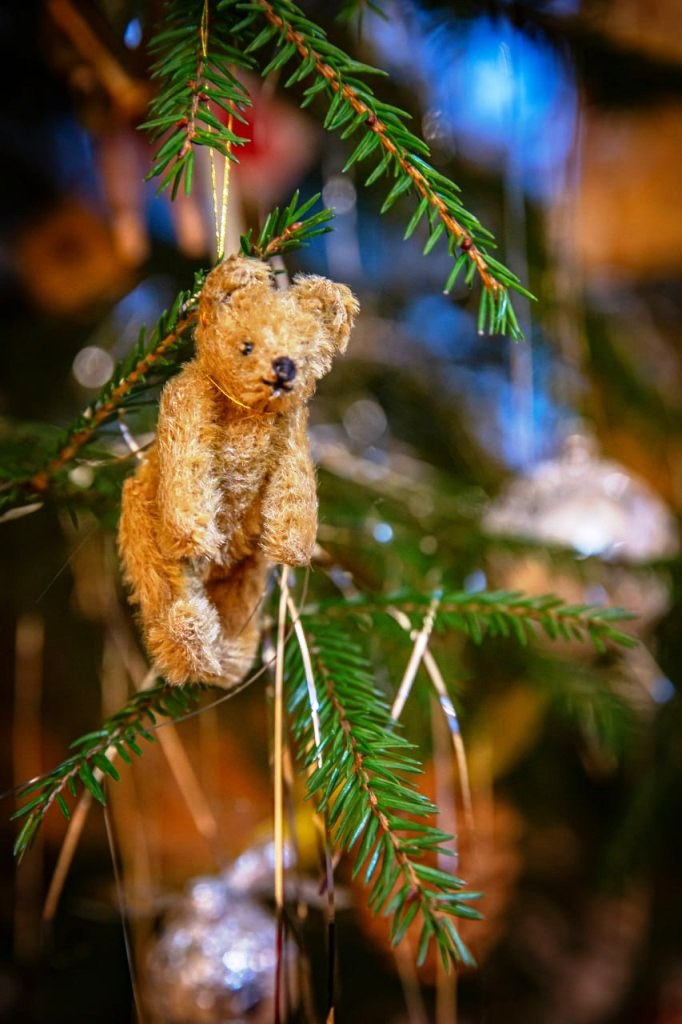
A live fir tree has been installed in the Semi-Circular Hall[1] of the Alexander Palace at Tsarskoye Selo. This is the fifth year in a row (since 2021) that the tradition of Emperor Nicholas II and his family has been revived.
The tree has been decorated with antique toys from the museum’s collection. The Christmas tree will stand until the end of the New Year holidays.
From 1905 to 1917, the Alexander Palace was the preferred residence of Nicholas II, Alexandra Feodorovna and their children. All members of the Imperial Family and their entourage took part in the preparations for Christmas[2]. A Christmas tree for the children was placed on the second floor, while the main family tree was on the first (ground) floor.
Several other Christmas trees for servants and guards stood in the ceremonial halls, and a Christmas tree for the Emperor and the Empress was placed in the private rooms of Alexandra Feodorovna. The last time a Christmas tree was decorated in the Alexander Palace was in December 1916.
Visitors were reminded that the Alexander Palace is open from 26th December to 30th December 2025 and from 2nd January to 11th January 2026. The museum’s opening hours are from 10:00 to 18:00.
NOTES:
H[1] It was from the Semi-Circular hall, that the Imperial Family went into exile to Siberia on 14th (O.S. st) August 1917.
[2] As Orthodox Christians, Nicholas II and his family celebrated Christmas according to the Old Style Julian Calendar on 7th January
PHOTO: Charles Sydney Gibbes / Father Nicholas Gibbes(1876-1963)
Romanov historian and author Helen Rappaport has announced that she plans on writing a new book about Charles Sydney Gibbes (1876-1963). This is indeed welcome news, as a fresh and more comprehensive study of the British academic, who from 1908 to 1917 served as the English tutor to the children of Emperor Nicholas II, is long overdue.
In early December, Rappaport wrote on social media:
“I’ve been very focused for the last few months or so in filling in the complete void of Sydney Gibbes’s early life in Rotherham and Cambridge pre 1900 – about which he said virtually nothing and Benagh[1], Trewin[2] and Welch[3] added very little. You have to dig very hard to get to things but I have had a few lucky breaks and some info from helpful Rotherham locals. I have now written chapter 1 about those lost years. One thing I can confirm – alas – is that the Blue Plaque on the Old Bank in Rotherham is wrong. Sydney Gibbes did NOT attend Rotherham Grammar School …..
“Now that I have the bit between my teeth, I am going to write this book, do or die, deal or no deal. The Sydney Gibbes of Welch[1], Benagh[2], Trewin[3] and chocolate-box Romanov legend is but one side of the story and of the complex and elusive personality at the heart of it. But it needs a publisher!!!”
While Helen Rappaport and I do not see eye to eye on Nicholas II, I believe that she will do an admirable job at telling Gibbes story. She lives in the UK, and will have access to Gibbes’ surviving archive of letters, photos and other memorabilia relating to the last Imperial family of Russia which are now kept in Oxford University: Bodleian Library, Special Collections.
It is generally believed that Gibbes did not write his memoirs, however, it is now known that among the documents stored at the University of Leeds Special Collections, is his typescript Ten Years with the Russian Imperial Family (unpublished). I regret that I do not know the number of pages, nor can I confirm if it was ever completed.
In the early 1990s, I had the pleasure of corresponding with George Gibbs [1906-1993] in whose letters he shared numerous anecdotes about his father [while it is only a few letters, I have preserved them to this day]. The regular exchange of letters came to a stop, and it was only after making enquiries that I learned of George’s death on 11th May 1993.
In April 2023, I visited Headington Cemetery in Oxford, to lay flowers and offer prayers at the grave of Charles Sydney Gibbes (later Father Nikolai).
Given Helen Rappaport’s enormous popularity, I have no doubt that she will find a publisher for her book. I look forward to reading it, and will most certainly be writing a book review for this blog. In the meantime, I will keep readers posted on any new developments with this exciting new publishing project.
NOTES:
[1] Benagh, Christine (2000) An Englishman in the Court of the Tsar. Ben Lomond, California: Conciliar Press.
[2] Trewin, J. C. (1975) Tutor to the Tsarecvich – An Intimate Portrait of the Last Days of the Russian Imperial Family compiled from the papers of Charles Sydney Gibbes. London: Macmillan
[3] Welch, Frances (2005) The Romanovs & Mr Gibbes: The Story of the Englishman Who Taught the Children of the Last Tsar. UK: Short Books
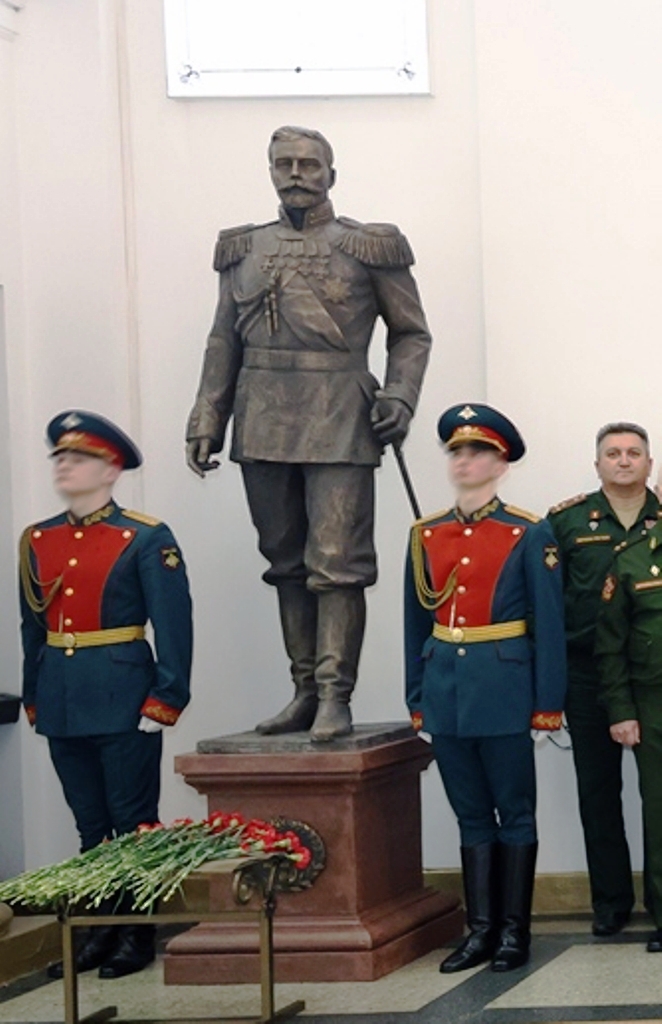
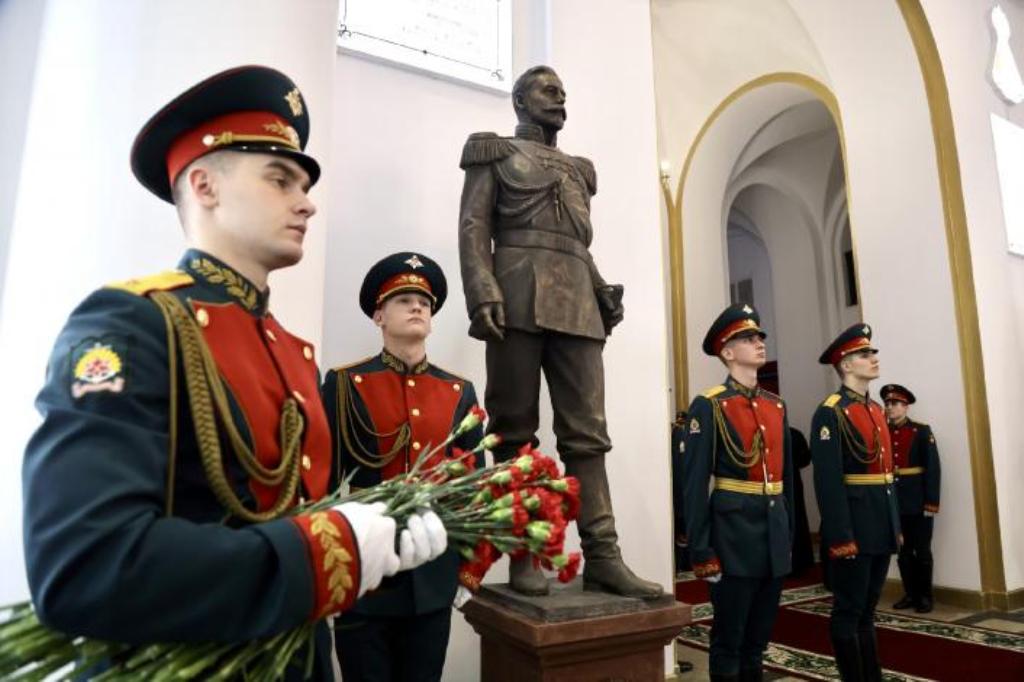
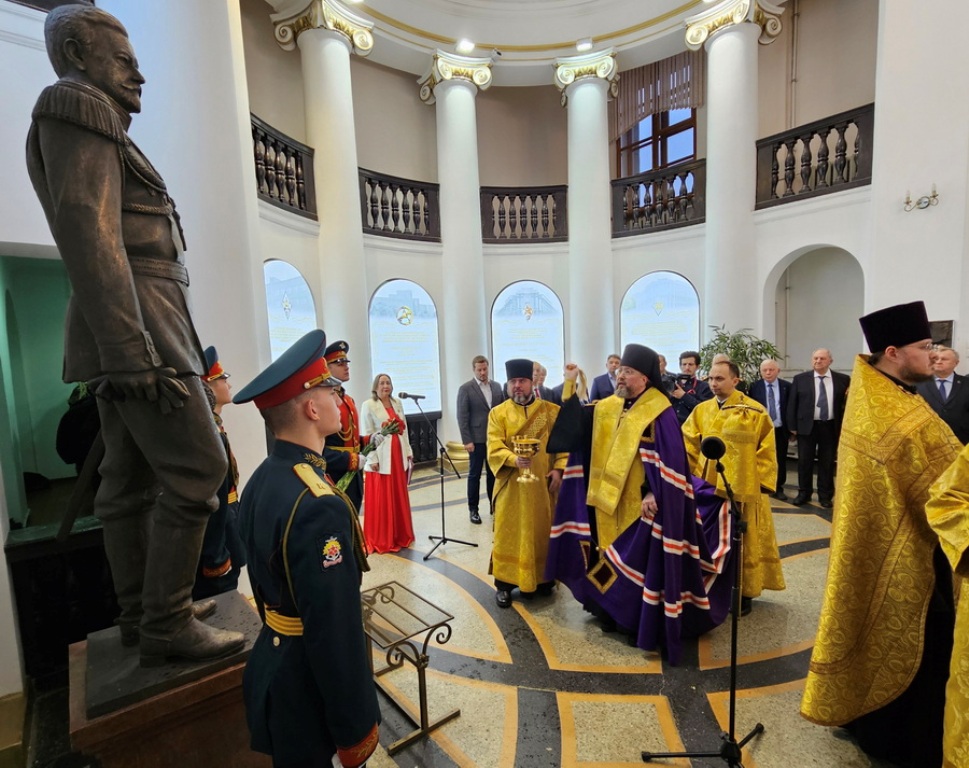
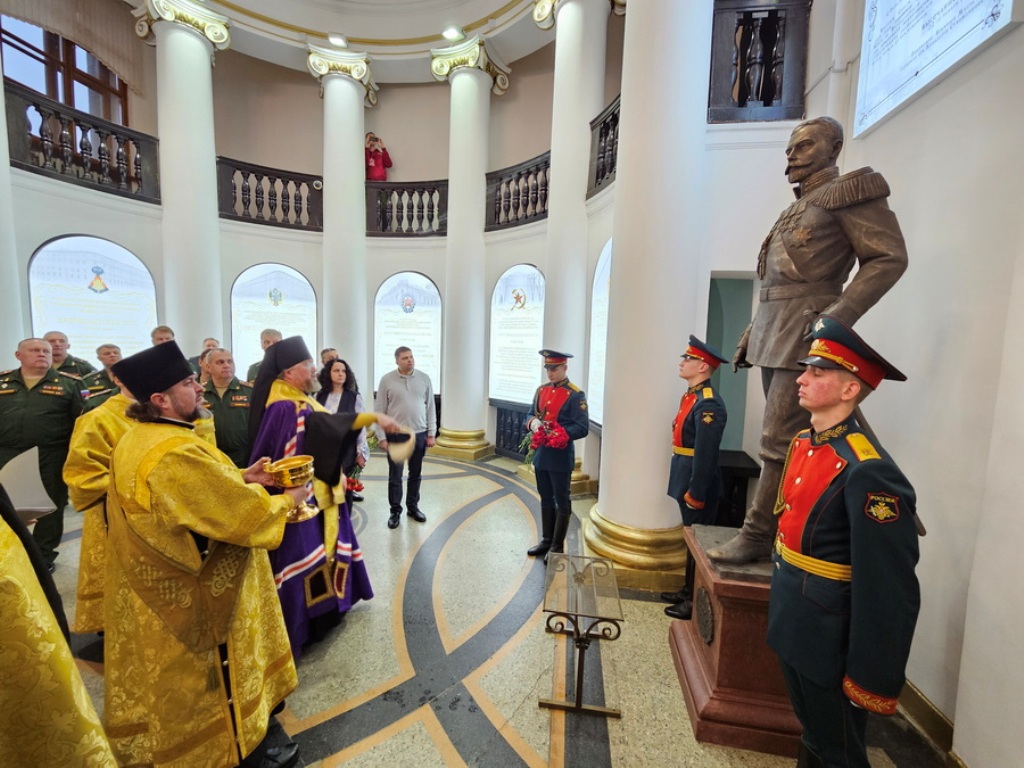
On 19th December 2025, a new monument to the Holy Royal Passion-Bearer Emperor Nicholas II, was unveiled and consecrated in the rotunda of the Khrulev Military Academy of Logistics in St. Petersburg. The event was timed to coincide with the feast day of St. Nicholas the Wonderworker.
Bishop Veniamin of Kronstadt, abbot of the Holy Trinity Alexander Nevsky Lavra, addressed the audience with a welcoming speech, in which, in particular, he drew attention to the aspect of sacrificial service for the good of the Fatherland and the contribution to the history of Russia of Russia’s last Tsar. Let this monument inspire the superiors, teachers and students of the Military Academy to imitate the Holy Emperor.
In addition, the Head of the Academy Ilgar Marish oglu Kahramanov, Deputy Head of the Administration of the Governor of St. Petersburg Olga Ivanovna Arishina and others addressed with welcoming words.
The final part of the ceremony was the rite of consecration, which was performed by Bishop Veniamin of Kronstadt. The deacon was headed by Senior Hierodeacon Elias (Vasiliev). The liturgical hymns were sung by the fraternal choir consisting of Hieromonk Tikhon (Voronov) and Hierodeacon Alexander (Urbanovich).
In 1900, the Holy Royal Passion-Bearer, Emperor Nicholas II, ordered the opening of the Quartermaster Course, which in the future was transformed into the Quartermaster Academy, the forerunner of the modern Khrulev Military Academy of Logistics.
On 17th April 1896, General of Infantry Nikolai Ivanovich Solovyov (1850-1907), was appointed the first head of the Quartermaster Course.
Since the fall of the Soviet Union in 1991, more than 100 monuments, sculptures, busts and memorial plaques to Nicholas II have been installed in cities and towns across the Russian Federation.
On 14th March 2017, Dmitri Gorokhov of the Russian media news agency TASS, interviewed Prince Rostislav Romanov [b. 1985], great-grandson of Nicholas II’s sister, Grand Duchess Xenia Alexandrovna. His Highness answered questions on the 100th anniversary of the abdication of Russia’s last emperor.
Although this interview was recorded more than a decade ago, it remains an interesting read nonetheless. Below is the first English language translation.
– How do you, Your Highness, a descendant of the Romanovs, look at the events that took place on 15th (O.S. 2nd) March 1917?
“On this day a hundred years ago, with the abdication of Emperor Nicholas II from the throne on his own behalf and on behalf of his son, the history of the Romanov dynasty in Russia ended. And even with the passing of time, it is difficult for me to think about this dramatic event without feeling sadness.
“If we turn to the past, we see that history has always consisted of stages. Previously, they were much longer than in the new era. Events in certain countries often served as indicators of general development in the regions. If we look at the events of the early 20th century, we will see the abolition of many monarchies long before 1917.
“For many decades, there were currents that aimed at such changes. In many countries, the end of dynasties took place in different forms. But in Russia it was extraordinarily tragic, and not only for our family. The upheavals caused by it made the whole of Russia suffer.”
“The Emperor could have saved his family by moving to England. But the Romanovs did not receive such an invitation from London…
” I believe that Nicholas II would never have left Russia. He loved her, was faithful to her. Russia was also a family to him, and he could never leave it.
“Let us now return to the trends of the early twentieth century, when many monarchies faced problems. Perhaps this explains London’s instruction to the British ambassador to Russia, George Buchanan: “His Majesty’s Government will not insist on the Emperor and his family coming to England . . . ” At that moment in England, neither the royal family nor the British government could have foreseen the consequences.
“Part of the Romanov family managed to avoid reprisals and gradually started a new life in other countries. But they were never able to return to their homeland and were forced to end their lives in exile, scattered around the world.”
– What image of Nicholas II did your relatives preserve?
“The older generations of our branch of the Romanovs were very close to the Tsar. My great-grandmother, Grand Duchess Xenia Alexandrovna, was the Tsar’s sister. My great-grandfather, the creator of the Russian Air Force, Grand Duke Alexander Mikhailovich, was his brother-in-law.
“My father, Prince of the Imperial Blood Rostislav Rostislavovich (Senior), tried to raise my brother and me and our sister in the traditions of the dynasty, following its values. Nothing was more important to him than family, and in this he was very much like the late sovereign.
“One of the traits of the Tsar’s character was attention to other people. He never lost his composure, always remained steady, calm. This was a great gift.”
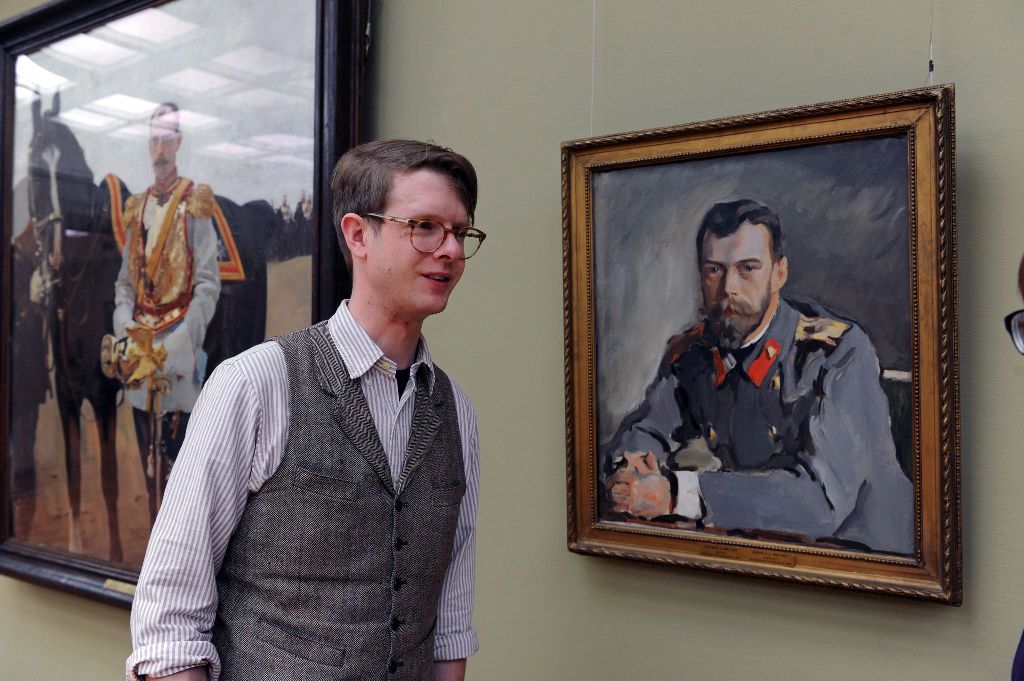
PHOTO: Prince Rostislav Romanov admires a portrait of Nicholas II, painted in 1900 by Valentin Alexandrovich Serov (1865-1911), in the State Tretyakov Gallery, Moscow
The eldest among the descendants of the Romanovs, Prince Dimitri Romanovich (1926-2016), did a lot to bring closer the dignified burial of Tsesarevich Alexei Nikolaevich and his sister Grand Duchess Maria. How does the family feel about these plans today?
“In January, together with other relatives, I participated in the farewell ceremony for Prince Dimitri Romanovich in Copenhagen. At the same time, we decided to continue the work to which the head of the Russian Imperial House gave so much of his strength.
“The eldest in our family, Prince of the Imperial Blood Dimitri Romanovich, believed that the Emperor’s children [Alexei and Maria] should be buried with their parents and sisters. And then the Tsar’s family will finally be able to rest in peace after so many difficult years.
“Christian duty is one of the reasons why the family calls for the burial of the Tsar’s children with their parents. Dimitri Romanovich hoped that this sad page of Russian history would be turned during his lifetime. Unfortunately, he did not live to see this moment. But we believe that he will see it from heaven.”
– You are a representative of the younger generation of the Romanovs. What does it mean to you to belong to this family?
“I often think about it, I have discussed it many times with my family. I think it is very important to preserve the legacy of the family, represented by the Romanov Family Association and the charitable Romanov Fund for Russia.
“We, the Romanovs, are proud of the contribution of our dynasty, which it left to the legacy of eternal Russia. The role of the dynasty has not been consigned to oblivion.
“That is why our association is so dear to us. It helps to maintain family ties, serves as a guide in our attitude to the roots and values of the family, which should never be forgotten. It defines our main goal at this moment, our commitment to the cause that was sacred for the late head of our family, Dimitri Romanovich: the burial in the cathedral of the Peter and Paul Fortress of Tsesarevich Alexei Nikolaevich and his sister Grand Duchess Maria Nikolaevna.
“We must always remember what trials Russia has gone through. It is also very important to help those who need it. I will always be grateful to the late Dimitri Romanovich for creating the Romanov Fund for Russia to come to the aid of those who need such support.
“At a January meeting in Copenhagen with Princess Feodora Alexeevna, who had been with Dimitri Romanovich all these years and shared his concerns, the relatives decided to continue the activities of the Romanov Family Association and the work of the Romanov Fund for Russia.”
You first visited Russia when you were twelve years old. How do you feel today in Moscow and St. Petersburg?
“Coming to both Russian capitals, I feel at home. Russia went through great trials, but retained its soul. And no matter what I do, the Russian soul leads me everywhere,” concluded His Highness.
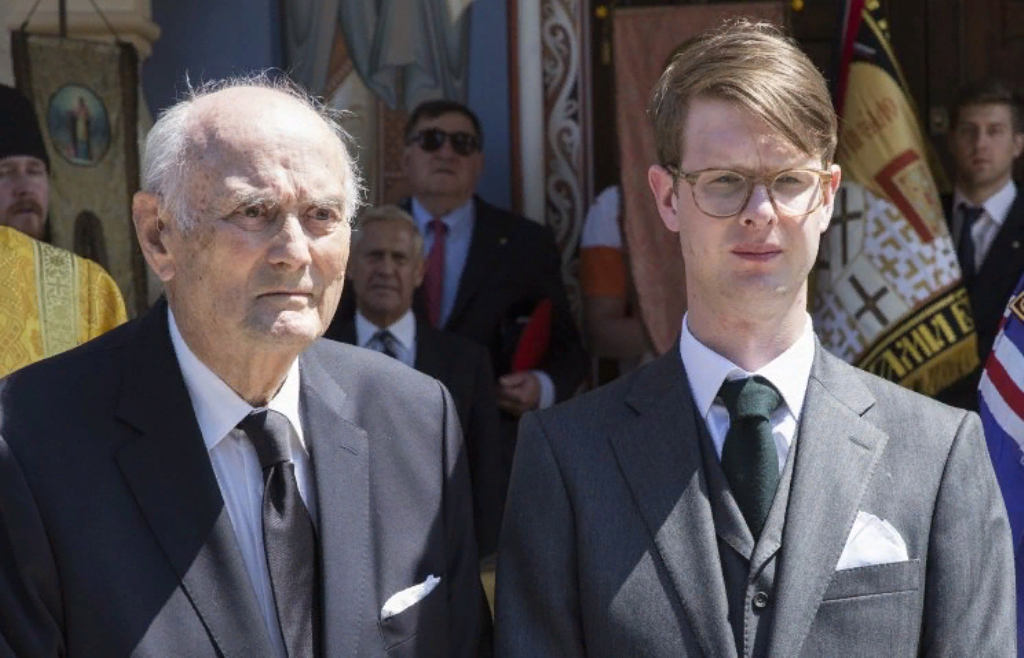
PHOTO: Prince Dimitri Romanovich (left) and Prince Rostislav Rostislavovich. April 2015. Cannes, France
***
Prince Rostislav Rostislavovich Romanov was born on 21st May 1985 in in Lake Forest, Illinois (USA). He is the second child and eldest son of Prince Rostislav Rostislavovich Romanov (1938–1999) and his wife, Christia Ipsen(b. 1949).
Prince Rostislav belongs to the Mihailovichi branch of the Romanov family as a male line descendant of Grand Duke Michael Nikolaevich of Russia, the youngest son of Emperor Nicholas I. He is also a descendant of Emperors Alexander II and Alexander III, being the great-grandson of Grand Duchess Xenia Alexandrovna of Russia (sister of the last Emperor Nicholas II) and her husband Grand Duke Alexander Mikhailovich of Russia. Rostislav has been a member of the Romanov Family Association since 1985 and was a committee member between 2007 and 2013.
In September 2021, Prince Rostislav married Foteini Georganta, married in the Alexander Nevsky Orthodox Cathedral in Paris.[17] The wedding reception took place in the Cercle de l’Union Interalliée, a building that briefly housed the Russian Embassy in Paris after the Napoleonic Wars. The couple have one son, Prince Rostislav (born 2013).
In 2009, Prince Rostislav became the first Romanov to move back to Russia, where he lived for two years and studied Russian. He currently splits his time between the United Kingdom and Russia.
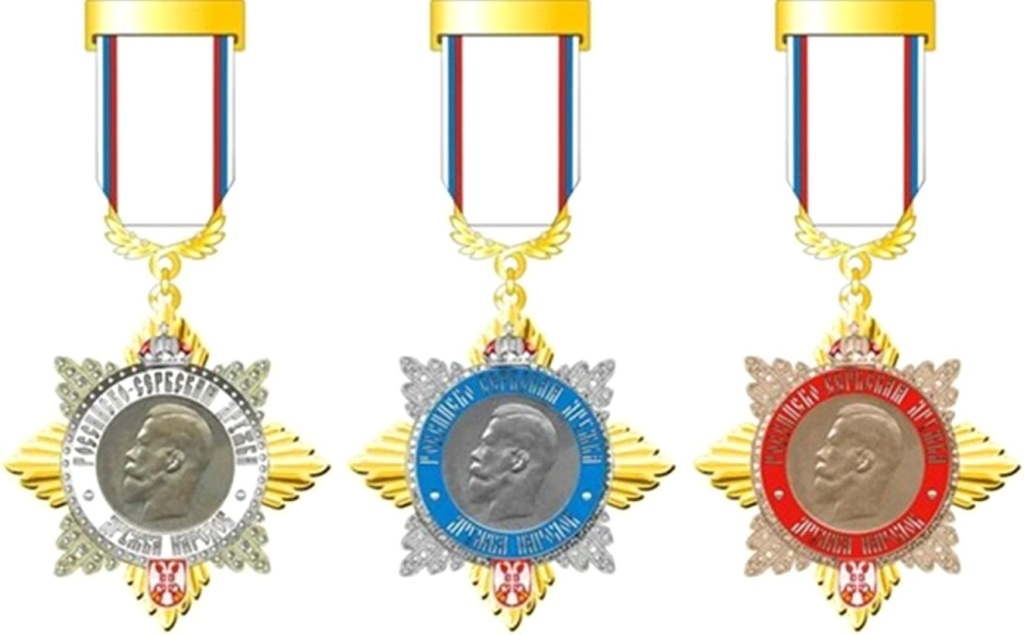
PHOTO: Orders of the Holy Tsar Nicholas II – 1st, 2nd and 3rd Class
Tsar Nicholas II (1868-1918) was canonized by the Serbian Orthodox Church in 1938, then by the Russian Orthodox Church Outside of Russia (in 1981), and only in 2000 was he canonized by the Moscow Patriarchate of the Russian Orthodox Church.
The Order of the Holy Tsar Nicholas II is a contemporary Order. The historical prerequisites for the use of the image of Nicholas II in the Order for merits in the development of Russian-Serbian friendship and co-operation.
“In 1914, the very existence of Serbia as a state was at stake. On 11th July, Austria presented the Serbian government with an ultimatum that was completely unacceptable for an independent state.
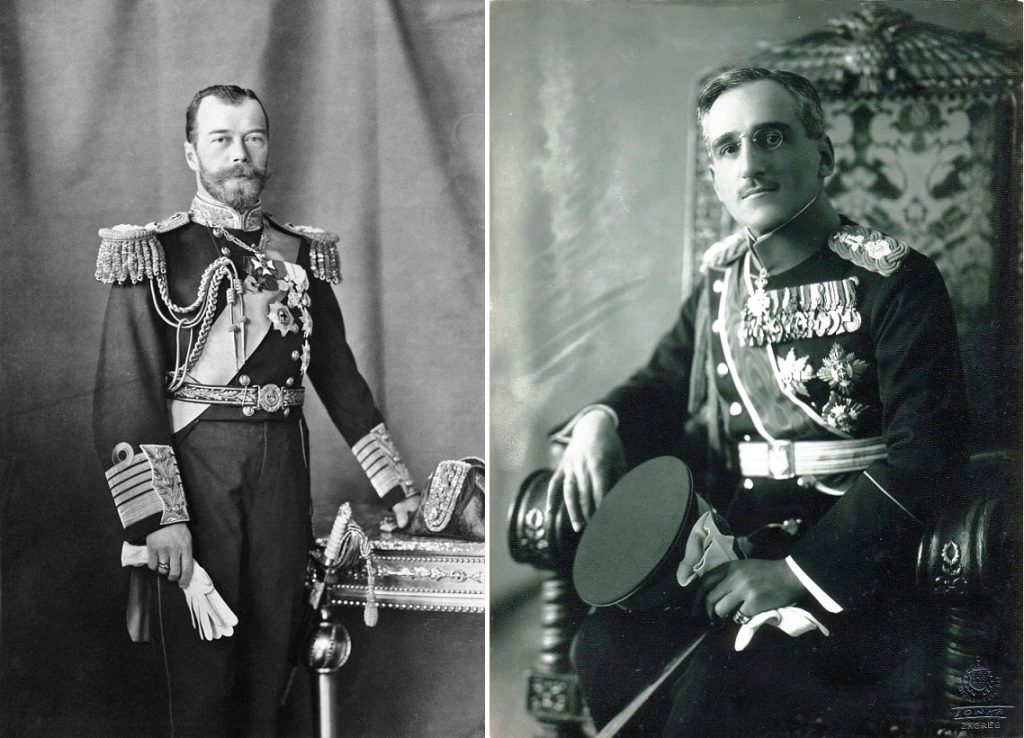
On the same day, Emperor Nicholas II received a telegram from the Prince Regent of Serbia Alexander Karađorđević. It said: “We cannot defend ourselves. Therefore, we beg Your Majesty to help us as soon as possible… We firmly hope that this call will resonate in your Slavic and noble heart.”[1]
Three days later, the Russian Emperor sent a reply to Serbia. “As long as there is the slightest hope of avoiding bloodshed,” he wrote, “all our efforts must be directed towards this goal. If, contrary to our sincere wishes, we do not succeed in this, Your Highness can be sure that in no case will Russia remain indifferent to the fate of Serbia.”
In a reply telegram, Prince Alexander wrote: “Difficult times cannot but seal the bonds of deep affection by which Serbia is bound to Holy Slavic Russia, and the feelings of eternal gratitude for Your Majesty’s help and protection will be sacred in the hearts of all Serbs.”
On 15th July, Austria declared war on Serbia. It subjected Belgrade to artillery shelling, which killed many civilians. In response, Russia carried out a partial mobilization, a few days later – a general mobilization was carried out. Austria had to transfer most of its troops to the eastern front, and thus Serbia was saved. The Serbian people call Emperor Nicholas II their savior”.
PHOTO: Emperor Nicholas II and Prince Regent Alexander
***
The Order of the Holt Tsar Nicholas II has three classes. The highest class of the Order is the First Class. The order is made of precious metal, as well as non-ferrous metal. Diameter 52 mm.
The main colour of the Order is white, a symbol of peace, truth and goodness, divinity and sacrifice. It is no coincidence that the Order has the shape of an eight-pointed star. This form is the most common for the insignia of Orders in all European Christian states.
The eight-pointed star is, in fact, two four-pointed stars (two crossed crosses), which symbolizes the religious and spiritual community of the Serbian and Russian peoples: “Perhaps of all the peoples living on earth, the closest and dearest to us Russians is the Serbian people. We are united by a living faith in Christ, prayer for each other and a community of destinies. Remembering the tragic similarity of the history of Serbia and Russia, one begins to understand well the depth of the innermost spiritual ties that unite our brotherly peoples”.
1st Class
The badge of the Order is made of 585 yellow and white gold with diamond inserts. The Order is an octagonal star in the form of rays diverging from the center with rounded angular endings. The octagonal star is made up of two quadrangular stars, the rays of the smaller of which are decorated with diamonds.
In the center of the Order is a large circle framed by diamonds. In the center of the large circle is a small circle made of metal, which depicts a bas-relief of Tsar Nicholas II in profile. Between the large and small circles against the background of white enamel is the inscription “RUSSIAN-SERBIAN FRIENDSHIP”. “FRIENDSHIP OF PEOPLES”.
In the upper part of the Order is the Great Imperial Crown of the Russian Empire. In the lower part of the Order is the national symbol of Serbia – a double-headed eagle against the background of a shield filled with red enamel. On the reverse of the Order is its serial number, the manufacturer’s hallmark, the class (1st class) and a pin.
2nd Class
The badge of the Order is made of silver with cubic zirconia inserts. The Order is an octagonal star in the form of rays diverging from the center with rounded angular endings. The octagonal star is made up of two quadrangular stars, the rays of the smaller of them are decorated with inserts of white cubic zirconia.
In the center of the Order is a large circle framed by cubic zirconia. In the center of the large circle there is a small circle made of metal, which depicts a bas-relief of Tsar Nicholas II in profile. Between the large and small circles against the background of blue enamel is the inscription “RUSSIAN-SERBIAN FRIENDSHIP”. “FRIENDSHIP OF PEOPLES”.
In the upper part of the Order is the Great Imperial Crown of the Russian Empire. In the lower part of the Order is the national symbol of Serbia – a double-headed eagle against the background of a shield filled with red enamel. On the reverse of the Order is its serial number, the manufacturer’s mark, the class (2nd Class) and a pin (screw).
3rd Class
The badge of the Order is made of non-ferrous metal with cubic zirconia inserts. The Order is a double octagonal star in the form of rays diverging from the center with rounded angular ends. The octagonal star is made up of two quadrangular stars, the rays of the smaller of them are decorated with inserts of white cubic zirconia.
In the center of the Order is a large circle framed by cubic zirconia. In the center of the large circle there is a small circle made of metal, which depicts a bas-relief of Tsar Nicholas II in profile. Between the large and small circles against the background of red enamel is the inscription “RUSSIAN-SERBIAN FRIENDSHIP”. “FRIENDSHIP OF PEOPLES”.
In the upper part of the Order is the Great Imperial Crown of the Russian Empire. In the lower part of the Order is the national symbol of Serbia – a double-headed eagle against the background of a shield filled with red enamel. On the reverse of the Order is its serial number, the manufacturer’s hallmark, the class (3rd Class) and a pin (screw).
NOTES:
[1] Emperor Nicholas II embodied the traditional role of the Tsar as the first among believers and God’s chosen ruler. as a “Supreme Defender” and patron of the Russian Orthodox Church.
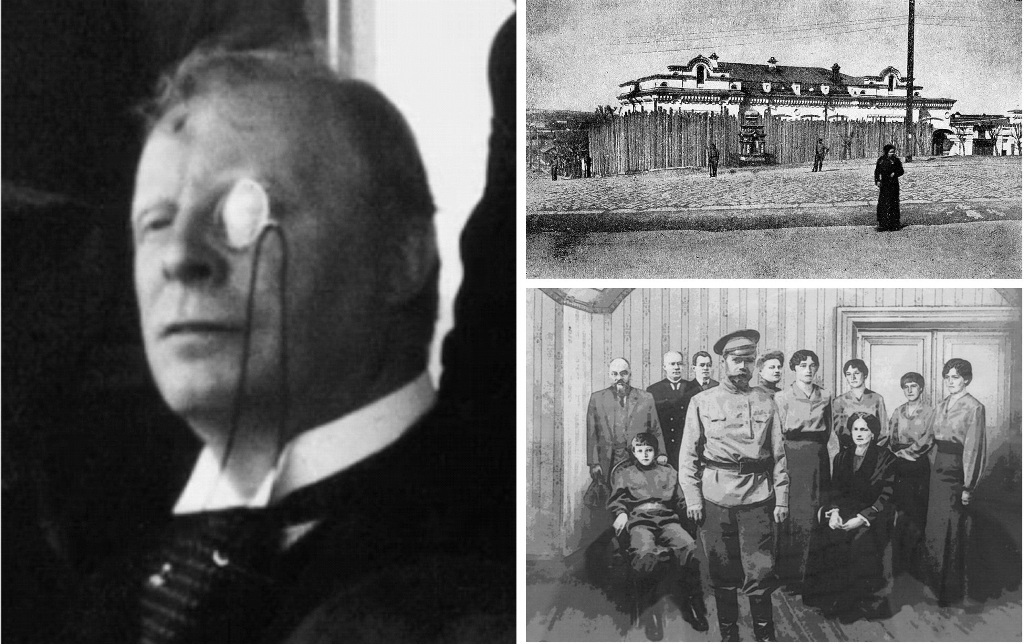
PHOTO: Sir Thomas Hildebrand Preston (1886-1976); the Ipatiev House; Emperor Nicholas II, his family and four faithful retainers
Sir Thomas Hildebrand Preston, 6th Baronet (1886-1976), was a British diplomat who joined the United Kingdom Diplomatic Service around 1910. In 1916 he served as Consul in Perm. On 23rd May 1913, he was appointed British Vice-Consul in Ekaterinburg, and later British Consul in the Ural city.
Preston’s position in Ekaterinburg during 1917 and 1918 was extremely difficult. Operating during the final stages of World War I and the ensuing Russian Civil War, Preston faced immense difficulties. The local Bolshevik authorities in Ekaterinburg refused to recognize his diplomatic status, and his life was frequently threatened.
He was in Ekaterinburg in July 1918 at the time of the murder of Emperor Nicholas II and his family. He made efforts to make representations to the government regarding their situation, but his ability to act was severely limited by the chaos and the Bolsheviks’ hostility. Preston was haunted later by the idea that he might have been able to save the Imperial Family.
At a telegraph office on 18th July, he attempted to send a message to the British Foreign Secretary Arthur Balfour in London, which read: “The Tsar Nicholas the Second was shot last night”. The telegram was intercepted by Bolshevik military commissar Philip Goloshchekin, who struck out Preston’s text, rewriting: “The hangman Tsar Nicholas was shot last night – a fate he richly deserved.”
***
Below is a letter written by Preston and published in the weekly British political and cultural news magazine The Spectator, on 11th Marc h 1972. It is a poignant account of his experiences during the Bolshevik coup d’état. He attended a soiree at Ekaterinburg just before the coup, where he witnessed the last bourgeois evening party in Russia. Preston was later awakened by his servant to the fact that the Bolsheviks had seized the town the following morning. He was accompanied by several Consular colleagues to make contact with the new government and learn what was happening. Preston’s recollection is a testament to his bravery and dedication to his role as a diplomat during a tumultuous period in Russian history.
Sir: I have read with great interest the report published in The Spectator on February 5, 1972, by Tibor Szamuely (page 193) dealing with the television programme The File on the Tsar, which was transmitted on BBC-1 on Sunday, January 23, 1972.
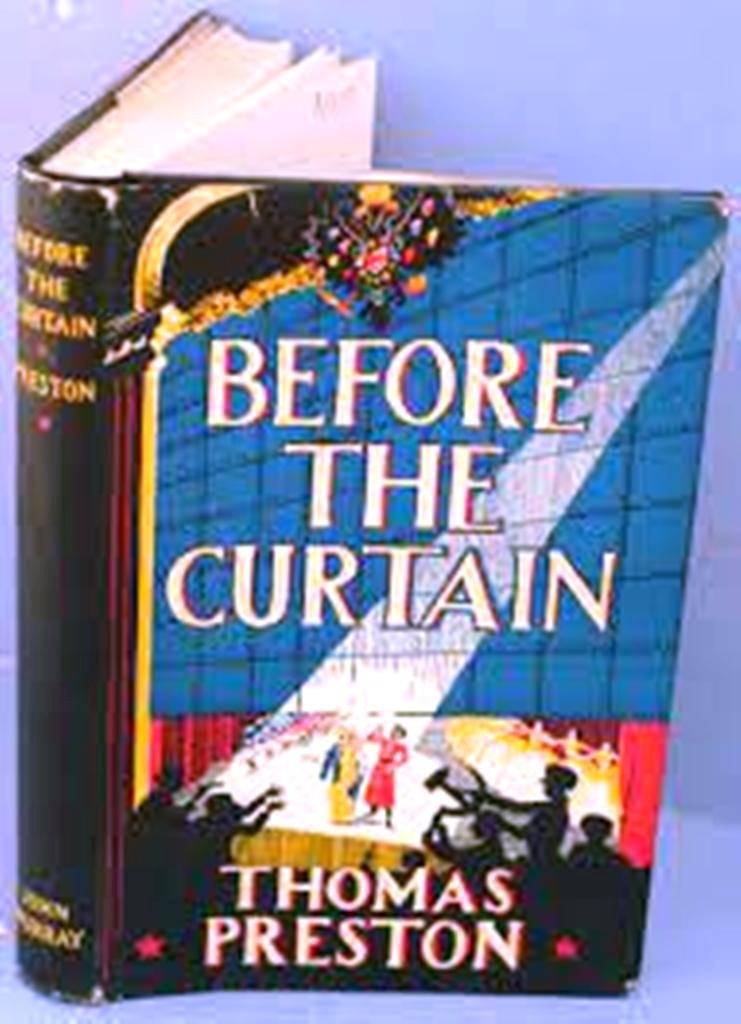
With reference to Mr Szamuely’s remarks about the role I played in this tragedy, I kept a diary of the development of events which was embodied in my book entitled Before the Curtain, published by John Murray, London.
In July, 1917, just before the Bolshevik coup d’etat, I attended a soiree, given at Ekaterinburg, by the representative a of the Provisional Government. It was a gathering not easily forgotten. It was, in fact, the last occasion in Russia that I was to see Russian officers in Tsarist uniform, officials in their civilian uniforms and all civilians in evening dress. Whilst the Governor’s guests were revelling in dancing, card playing, music and champagne, the railway workers at Ekaterinburg were preparing the coup d’6tat which was to take place the following morning. Pessimism, however, was the predominant feature of this last bourgeois evening party. Many of my Russian friends were strong in their condemnation of the behaviour of the Government officials at Petrograd, amongst whom bribery and corruption were rife, which was, to a large degree, responsible for the defeat of the armies in the field.
The following morning I was awakened by my servant who told me that the Bolsheviks had seized the town (Ekaterinburg) during the night and were actually holding a meeting at the railway station. After a scanty breakfast I proceeded, accompanied by several of my Consular colleagues, to the station in order to make contact with what was presumably to be our future Government as well as to learn what was happening. On arrival at the station we found a local Soviet in session in the stationmaster’s room. This was my first acquaintance with the Bolsheviks and a more awe-inspiring and cut-throat crowd it would be hard to imagine . . . The Soviet consisted mostly of youths of between nineteen and twenty-five, attired in leather jackets (the usual dress of the GPU). All were armed to the teeth. Hand-grenades were on the writing-table; in the corner of the room was a bundle of rifles to which people kept on coming in and helping themselves.
I informed the Soviet that we had come to present ourselves and requested information as to what had occurred. Comrade Tchoutskaeff, the leader of the Soviet, with whom I was to have frequent interviews during the eleven months I was under their regime, replied that the Bolshevik party was in power. On learning that I was the British Consul he added: your comrade Ambassador (Buchanan) has left Russia and you have no official status or protection. In fact we don’t know whether to treat with you or to shoot you. At any rate if you and your compatriots don’t behave yourselves you will find yourselves in gaol if not worse.”
In view of the rapid advance of the Czechs and the White Army, the Ural Soviet asked Yakov Sverdlov (Secretary of the Moscow Soviet) what they should do. The reply came “Act as you consider necessary “; whereupon the Ural Soviet passed a resolution to do away with the Tsar and his family.
From the window of my Consulate, I saw the Tsar being driven in a car from the station to the House Epatiev, which was the scene of the assassination. It was the boast of the Ural Soviet that they would exterminate the whole of the Romanov family, and twenty-four hours after the murder of the Royal Family at Ekaterinburg they murdered at Alapaevsk (some thirty miles from Ekaterinburg) by throwing them in a mining shaft and throwing rocks and boulders on top of them, Prince Igor, husband of the Crown Princess Helene of Serbia, the Grand Duke Serge Mihailovitch, the Grand Duchess Elizabeth, Prince John and Count Paley. The Ural Soviet also murdered the Grand Duke Michael (brother of the ex-Tsar) and his English Secretary, Mr Johnstone.
Ever since then I have been haunted by the idea that had I been able to argue with the Ural Soviet for a longer period I might have been able to save the Russian Royal Family.
Incidentally, I was told by Dr Fisher, the Swiss Consul, that I had been condemned to death by the Ural Soviet for my representations on behalf of the Russian Royal Family. Dr Fisher suggested that I should hide in the forest outside Ekaterinburg until the Czechs and the White Army came in. I decided, however, to stay at my house and wait. Sometime later a huge crowd gathered outside the house and said they were coming in to search it. I said that they could not do this as the Consulate enjoyed diplomatic immunity. They replied “come out yourself,” and this I did armed with several tins of Virginian cigarettes (which they had not seen for months) and engaged them in conversation—I hoped to carry on the conversation until the Czechs and the White Army came in. (I was in contact by messenger with the Czechs and the Siberian Army.) This conversation lasted for some time when one of the crowd said that the Czechs and Siberian Army were on the outskirts of the town and the crowd dispersed.
Actually, the Czechs and the Siberian Army only occupied the town on July 26, 1918. The Ural Soviet, many of whom were killed by the Czechs and the Siberian Army, left in panic, but before doing so they sent a telegram (a copy of which was found in the Ekaterinburg Telegraph Office) stating that “All the members of the Royal Family had suffered the same fate as the Tsar.” A copy of this telegram is to be found in the British Museum.
I have just received a letter from an old friend of mine, Trefor Evans, who was my colleague in Cairo and is now a Professor at the University College of Wales, and he quotes from his old chief’s (Lord Killearn) Diary as follows: “In the general talk which followed I discovered that Roberts (Brigadier) had been with the White Russians (General Denikin) when I was in Siberia in 1919. We exchanged notes regarding incidents at that time and he was particularly interested and I told him that it had fallen to my lot to bring out from Siberia all that was left of the mortal remains of the unfortunate Imperial Family!”
Incidentally, these remains reached Buckingham Palace. When I was received in audience by HM King George V in February, 1921, we discussed the matter and His Majesty said that the relics were in such a state that they had to be fumigated before they could be touched.
Thomas Preston The Hall, Beeston St. Lawrence, Neatishead, Norfolk.
***
Before the Curtain by Thomas Hildebrand Preston, 6th Baronet (1886-1976), was published by John Murray (London) in 1950. Hard cover, 313 pages.
Preston’s memoirs record the period in which Nicholas II and his family were held under house arrest between April-July 1918.
The book includes some interesting tidbits of information, for instance: ” . . . the Alexander Palace contained a life-sized portrait of Queen Victoria . . .”, I wonder what happened to it?
It has been out of print for many years now, with secondhand copies still being highly sought after by collectors.






 Nicholas II
You must be logged in to post a comment.