What would have happened to Russia if Nicholas II had remained on the throne?
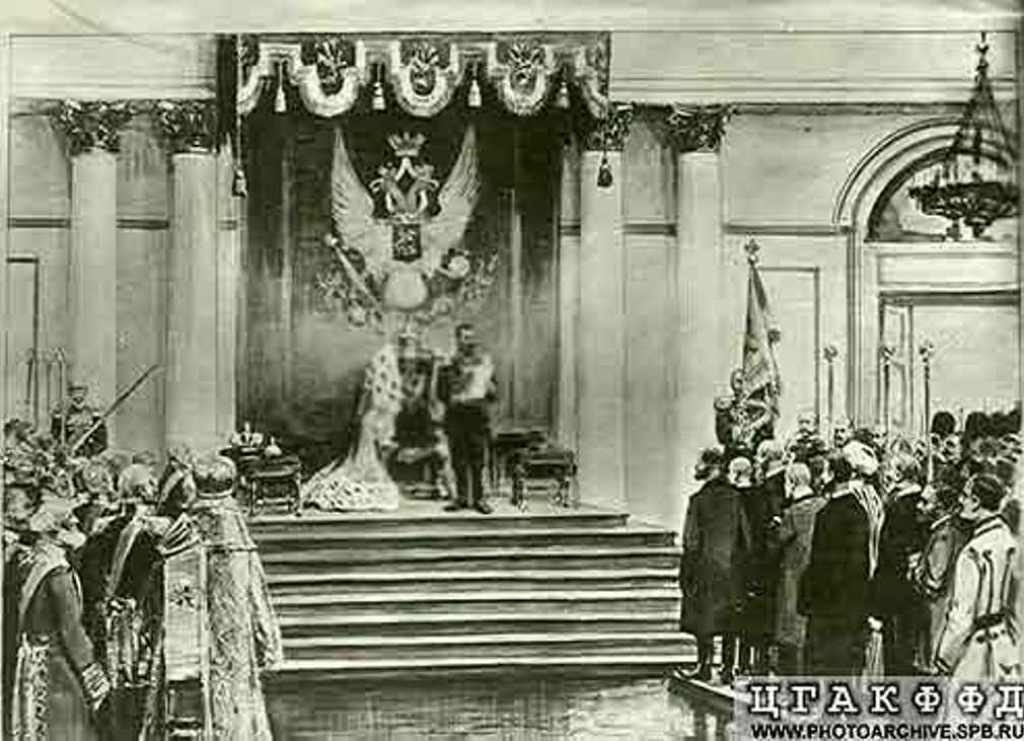
PHOTO: Emperor Nicholas II set against the backdrop of symbols of the Russian Empire and monarchy: the regalia, the throne and the double-headed eagle
Any one who shares an interest in the life and reign of Russia’s last Tsar, has more than likely asked themselves, “what if there was no revolution?”, “what if Russia had won the war against Germany?”, and more importantly, “what if Nicholas II remained on the throne?”. What would have happened to Russia?
This article shares the opinions of three prominent Russians: a journalist, a highly respected historian, and a publicist. Below, they share very different opinions about the successes and failures of Nicholas II and speculate what would have happened to Russia if he had remained on the throne, after the Great War ended – war which Russia was on the verge of victory.
***
More than a century after his tragic death, the last Emperor of Russia, continues to fascinate historians and the general public alike. Historians and writers in particular, tend to focus and debate Nicholas II’s failures as a ruler, while often ignoring his many achievements.
Academically lazy historians and writers overlook (or ignore) the fact that the reign of Nicholas II witnessed a vivacious and in some cases, unprecedented bourgeoning of political, social, economic and cultural activity whose diversity and richness are today being uncovered by specialized post-Soviet studies of the period. It is a credit to the diverse achievements of Nicholas II which resulted the advances of Imperial Russia in industry, agriculture, education, labour, and the creation of responsible, educated citizens who were gradually becoming constructive contributors to the government’s political activity.
Nicholas II was associated with several epithets reflecting the wide range of opinions about his reign, from extremely negative to revered. These labels were primarily used by his political adversaries and critics, particularly during and after the Russian Revolution.
Critical epithets, such as “Nicholas the Bloody” or “Bloody Nicholas”, were the most common and enduring negative epithets. They arose after the Khodynka Tragedy at his coronation festivities in May 1896 and, more significantly, after the Bloody Sunday massacre in 1905.
To this day, Nicholas II’s detractors describe him as an “indecisive, weak-willed, and out-of-touch ruler”. Russian President Vladimir Putin described Nicholas II as an “erroneous and absurd ruler”, while Metropolitan Tikhon (1865-1925) remembered Nicholas as “one of the most successful and yet most tragic leaders of the Russian state”.
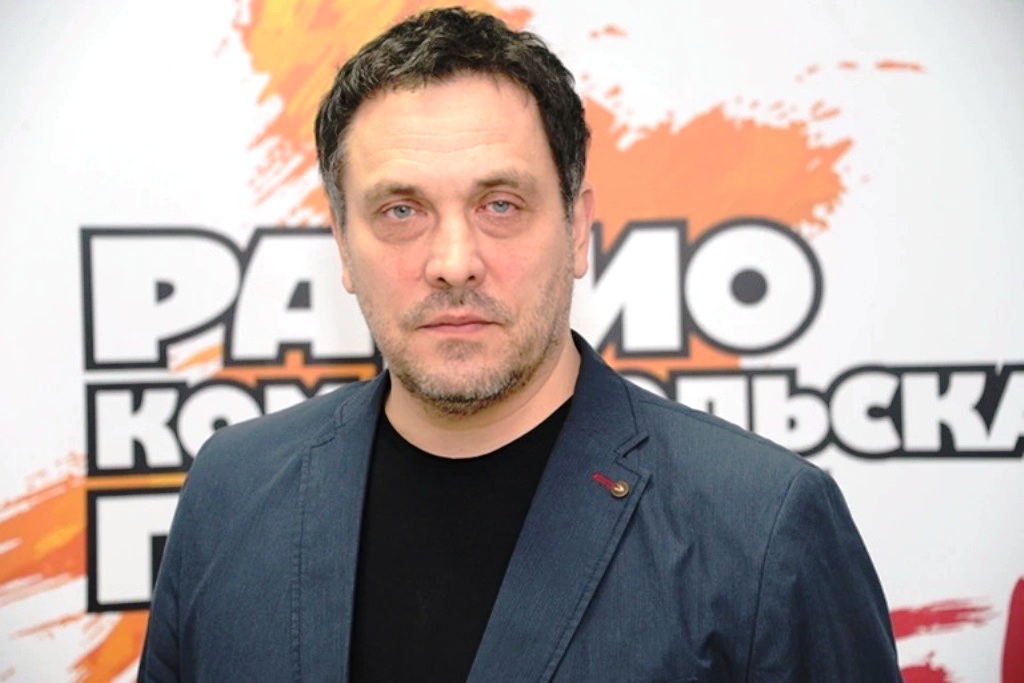
PHOTO: journalist and politician Maxim Shevchenko
During a recent Russian-language interview, journalist and politician[1] Maxim Shevchenko [b. 1966] referred to Nicholas II as “the worst ruler in the history of the country”. According to Shevchenko, for decades, a “lulling mythology” has been created around the Russian Empire: the film Адмиралъ / Admiral (2008) about Alexander Kolchak, the transfer of Anton Denikin’s ashes to the Donskoy Monastery in Moscow (2005), and the opening of a memorial plaque to Carl Gustaf Mannerheim in St. Petersburg (2016), as examples. The journalist believes that all these are nothing more than “beautiful fairy tales” about persons “allegedly close to Emperor Nicholas II. Each of whom was actually defeated,” rants Shevchenko, and they were swept away with hatred by their own people.”
In Shevchenko’s opinion, the last Russian Tsar was not worthy of canonization by the Moscow Patriachate in 2000. The journalist called Nicholas II “a criminal” for the fact that on his order a peaceful demonstration was brutally suppressed on 9th January 1905. He further accuses NIcholas II of the disaster of the Russian fleet near Tsushima and in general of the defeat of Russia in the war with Japan (1904-05). According to Shevchenko, the Romanov dynasty “drowned Russia in blood, the revolution and civil war are the consequences of the inept management of Russia by Nicholas II.”
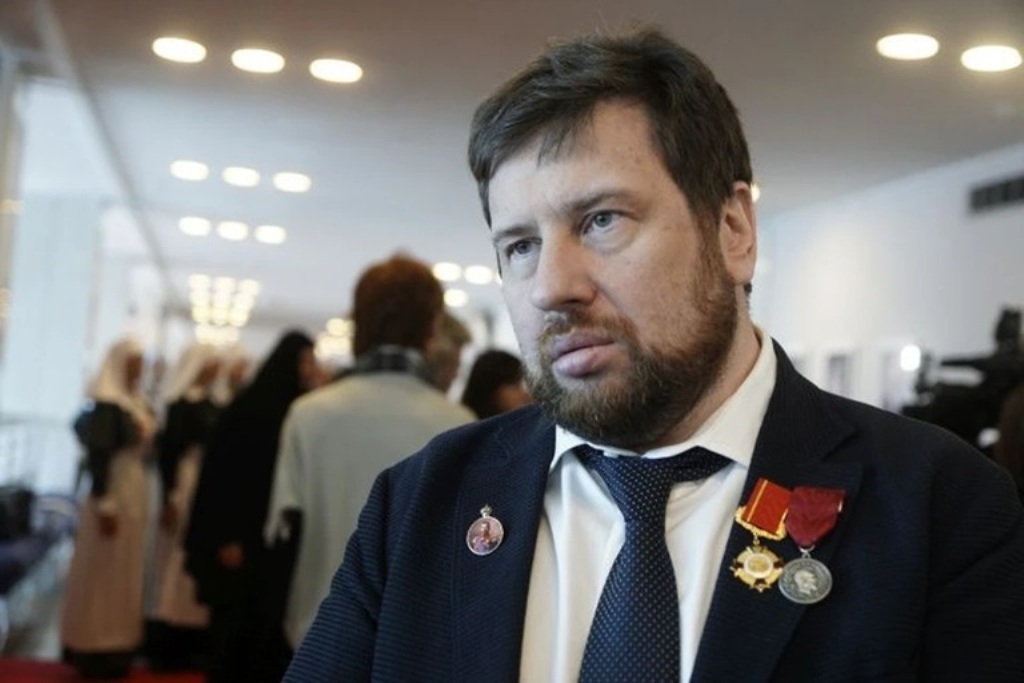
PHOTO: historian and author Pyotr (Peter) Multatuli
Russian Historian and author Pyotr Multatuli [b. 1969] fundamentally disagrees with Shevchenko. In his opinion, Nicholas II is a holy Tsar-martyr and a great reformer. According to Multatuli, more reforms were carried out under Russia’s last Tsar than under any of his predecessors. Under the last Emperor, 80% of the railways were laid, including the Trans-Siberian Railway. The historian believes that if this railway had not existed at that time, the consequences of the Russo-Japanese War would have been completely catastrophic, the Japanese could easily have reached Krasnoyarsk.
*CLICK on the following link, to read more about the reforms and accomplishments made during the 22+ year reign of Nicholas II – 70 facts about Emperor Nicholas II and his reign
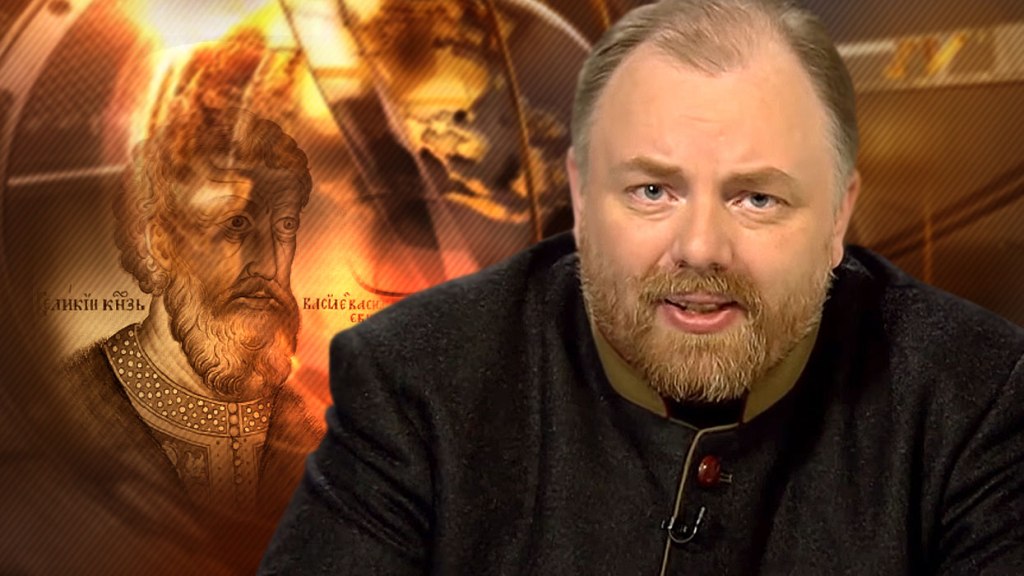
PHOTO: politician and publicist Yegor Kholmogorov
Russian politician and publicist Yegor Kholmogorov [b. 1975] drew attention to just two of the merits of Nicholas II. First were Nicholas II’s efforts and reforms to end hunger. Under Nicholas II, not a single crop failure led to the deaths of millions, as compared, for example to the famine in the Volga region in the first years of Soviet power.
Secondly, the industrialization of the country. Stalinist propaganda hushed up this undoubted merit of Alexander III and Nicholas II. Bolshevik and Western propaganda painted pre-revolutionary Russia as a backward agrarian country. The truth is that Russia at that time was pursuing a path of industrialization at an unprecedented pace, ahead of almost all developing nations, with the possible exception of the United States.
According to Kholmogorov, if the Emperor had remained on the throne, “Russia would have experienced significant prosperity”. Without revolutions and social upheavals, the country would experience an economic boom. Kholmogorov also believes that Nicholas II was not at all a weak and mediocre Tsar, as he is often presented. He was a smart ruler who understood the tasks of the country and knew how to bet on outstanding politicians, such as Pyotr Stolypin (1862-1911).
According to Kholmogorov, World War II could have been avoided, since in 1918 Germany would have been finally defeated. World War II is a consequence of the chain of events launched by the February 1917 Revolution and the overthrow of Nicholas II. That is, “all the victims of the first half of the 20th century are on the conscience of those who started and who carried out this revolution”, he concluded.
NOTES:
[1] Maxim Shevchenko s a Russian journalist, politician, public figure, publicist, human rights activist, radio host, TV presenter, and video blogger. He has served as leader of the Russian Party of Freedom and Justice since March 2021.
The Russian Party of Freedom and Justice (RPSS) is a Russian center-left political party. It was created as the Communist Party of Social Justice (CPSU) at the founding congress on April 8, 2012 and officially registered on May 28, 2012. According to the party charter, it declared the construction of a socialist state.
© Paul Gilbert. 15 December 2025
***

While my research is dedicated to clearing the name of Russia’s much slandered Tsar, I am also actively looking for articles and news stories on the Romanovs, from Russian archival and media sources, which may be of interest to my readers.
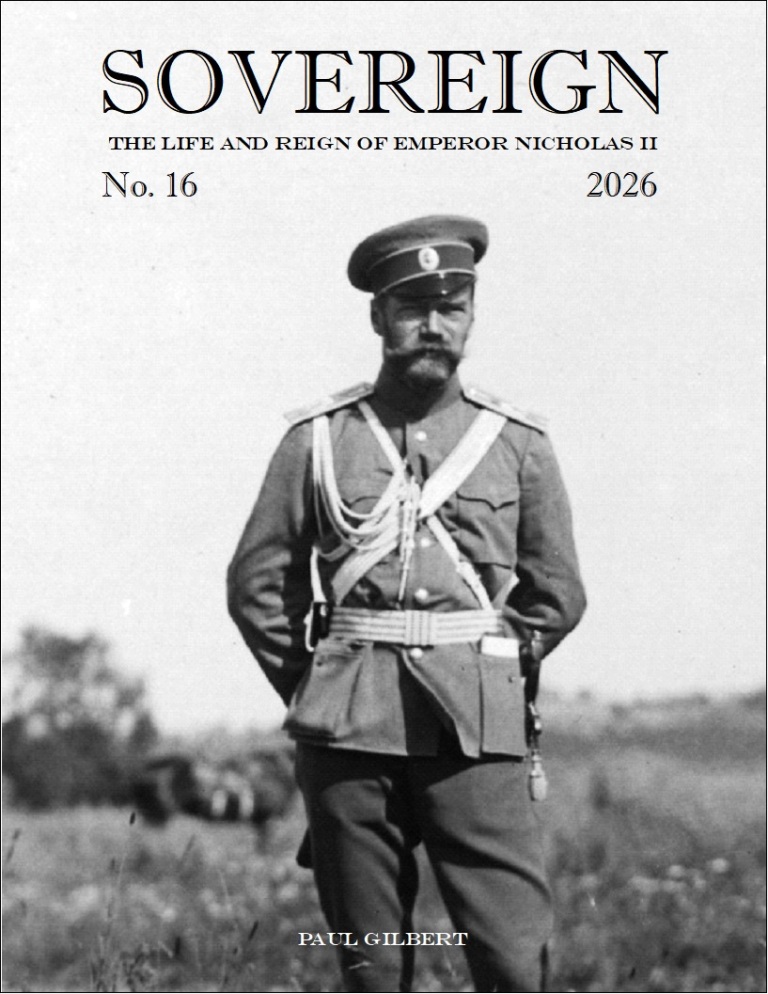
In exchange for this 18-page booklet, please consider making a small $5 or $10 donation in aid of my research. These donations are of great assistance in helping me offset the cost of obtaining and translating documents from Russian archival sources, which are often paid for out of my own pocket. It is these documents which help present new facts and information on the life and reign of Nicholas II. In addition, my research continues to debunking many of the myths and lies which exist more than a century after his death and martyrdom.
Please note, that there is NO obligation, thank you for your consideration!
 Nicholas II
You must be logged in to post a comment.