Monument to Nicholas II proposed for Murmansk
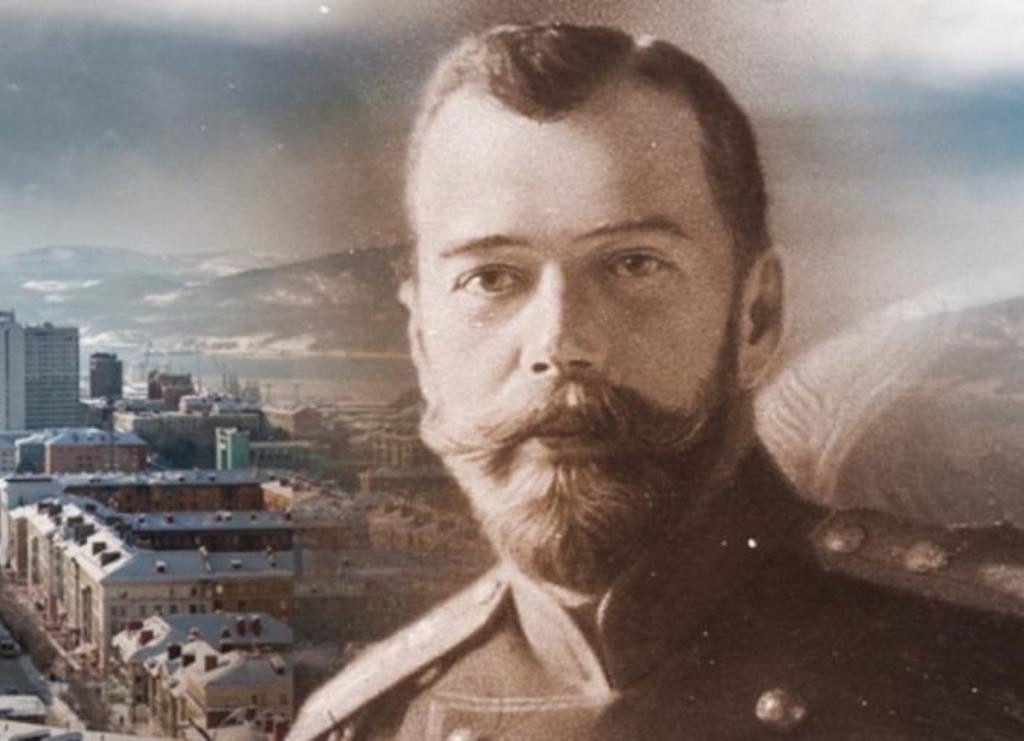
On 22nd December 2023, the Day of the Murmansk Region was held at VDNH in Moscow, during which a proposal was made to the Governor of Murmansk Region Andrei Vladimirovich Chibis, for the installation of a monument to Emperor Nicholas II in the center of Murmansk.

Historical memory must be observed, and in accordance with the initiatives of the residents and the blessing of His Holiness Patriarch Kirill, a decision was made to build a cathedral [Preobrazhensky St. Nicholas Naval Cathedral] in Murmansk. The cathedral will be dedicated to the heroes of the First and Second World Wars. In addition, the installation of a monument to Emperor Nicholas II on the grounds of the cathedral is already being considered, however, the proposal must be approved by the residents of Murmansk,” the governor said.

The decision to build a cathedral in Murmansk was proposed 106 years ago, by Russia’s last Tsar, who approved the project. According to project manager Archpriest Vladimir Semenov, the completion of the cathedral “will fulfill the last will of the Russian Emperor Nicholas II, who is the founder of our city and the governing synod until February 1917”. Construction on the cathedral began earlier this year and is expected to be completed in 2028.
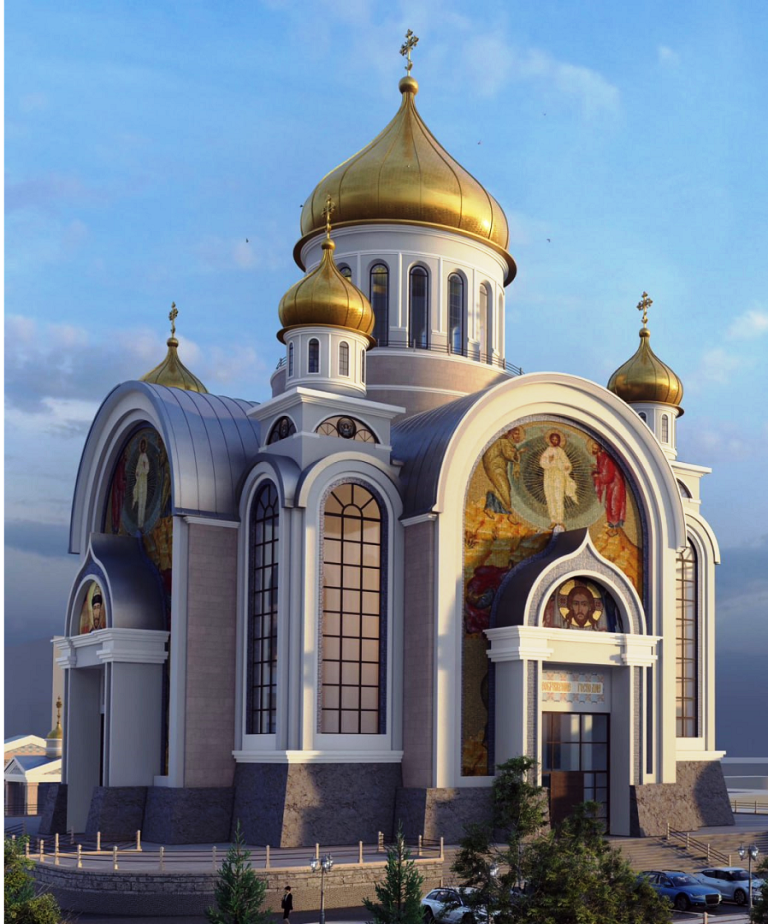
PHOTO: artist concept of Preobrazhensky St. Nicholas Naval Cathedral in Murmansk, to be completed in 2028

***

Recall that Murmansk was the last city founded in the Russian Empire. Russia’s first ice free port was founded here in 1916 by Nicholas II and named Romanov-on-Murman. It was officially named Murmansk during the Soviet years.

In recent years, Emperor Nicholas II has been commemorated in a number of projects in Murmansk and the surrounding region:

  • In June 2019, Murmansk Airport was reamed Nicholas II-Murmansk Airport
  • In July 2019, plans were announced for a bust-monument to Nicholas II, to be installed in front of the main terminal at Nicholas II-Murmansk Airport
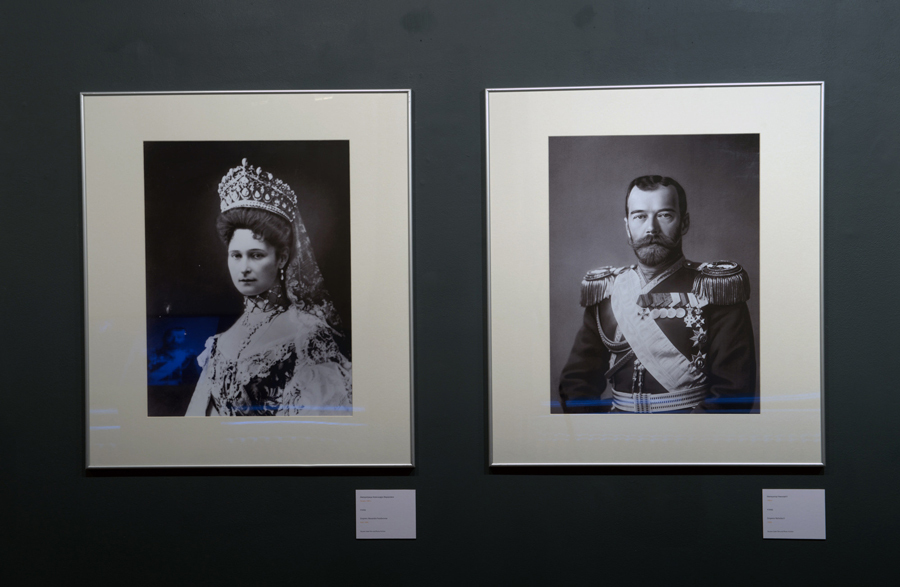
  • In November 2020, a permanent photo-exhibition dedicated to Nicholas II opened in the terminal building at Nicholas II-Murmansk Airport
  • In  December 2020, a bust-monument to Nicholas II was installed on the grounds of the Church of the Assumption of the Blessed Virgin Mary in the city of Kovdor
  • In January 2023, plans were announced for the installment of  sculptural composition of the last Russian Imperial Family, in front of Nicholas II-Murmansk Airport

© Paul Gilbert. 22 December 2023

“Nicholas II is the most slandered personality in the history of Russia” – Metropolitan Tikhon

PHOTO: Metropolitan Tikhon (Shevkunov) of Simferopol and Crimea, reading from his new book “Гибель империи. Российский урок” – “The Death of the Empire. The Russian Lesson

On 7th December 2023, *Metropolitan Tikhon (Shevkunov) of Simferopol and Crimea, held a press conference in Moscow, to promote his new book *“Гибель империи. Российский урок” – “The Death of the Empire. The Russian Lesson“, from which he read aloud excerpts.

Reading from his book, Tikhon’s said: “Our wonderful publicist Ivan Solonevich said that Russia was ruined by gossip. He is absolutely right, it was in the salons of St. Petersburg society in which false testimonies were being made of Russia’s last tsar. Nicholas II, is perhaps the most slandered personality in the history of Russia. Such slander that was spewed at him, from the West and from Japan, from the East, and from inside Russia, was unthinkable.”

In particular, the Russian nobility of that time, Metropolitan Tikhon said, “refused to conform to the rules of decency, and instead spread malicious gossip, in an effort “to despise the sovereign and his entire family.”

At the same time, he noted: “before the revolution, Russia was a prosperous country, the achievements were enormous. Thus, in terms of GDP, the Russian Empire was among the leading countries in the world, and in terms of industrial growth rates, it was in first place. By 1913, Russia was harvesting more grain than Canada, Argentina, and the United States combined. In the first 15 years of the reign of Nicholas II, many educational institutions were created in the history of the country.”

“Yes, the Soviet Union did a lot, but it inherited much of it from the economics and industrial achievements made during the reign of Nicholas II. An incomparable gigantic legacy fell on the heads of the Bolsheviks. <… >The potential that was already laid down from that pre-revolutionary time worked for many, many years,” the bishop of the Russian Orthodox Church said.

Tikhon notes that his new book, using the events of 1917, reveals the mechanisms that were used to fan the flames of revolution in Russia, the mistakes its government and society made during the ensuing 70+ years, and the Soviet Union’s eventual collapse in 1991. Research for the publication is based on nearly 300 scientific works and archival documents.

*NOTE: this title is only available in Russian. I regret. that I do not know how to obtain copies, or if we will ever see an English edition published – PG

***

* Tikhon is one of two Bishops in the Moscow Patriarchate, who believe that the Ekaterinburg Remains are those of Emperor Nicholas II, his family and their four retainers. It is no longer a question of “IF” but “WHEN” the Bishops Council will convene to bring closure to this issue.

© Paul Gilbert. 14 December 2023
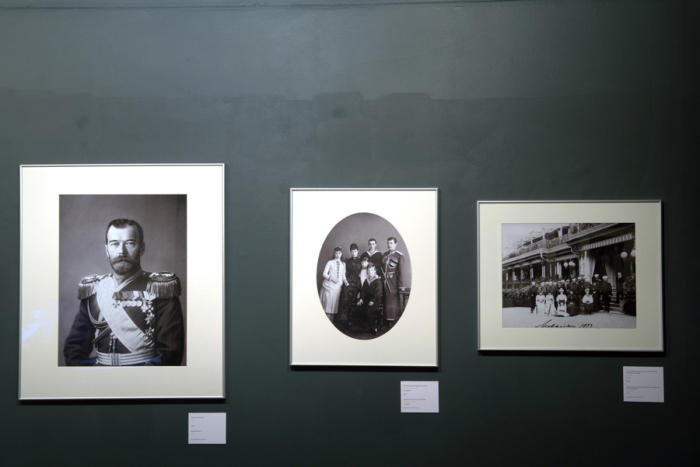
“Becoming a Romanov” exhibition opens in Moscow

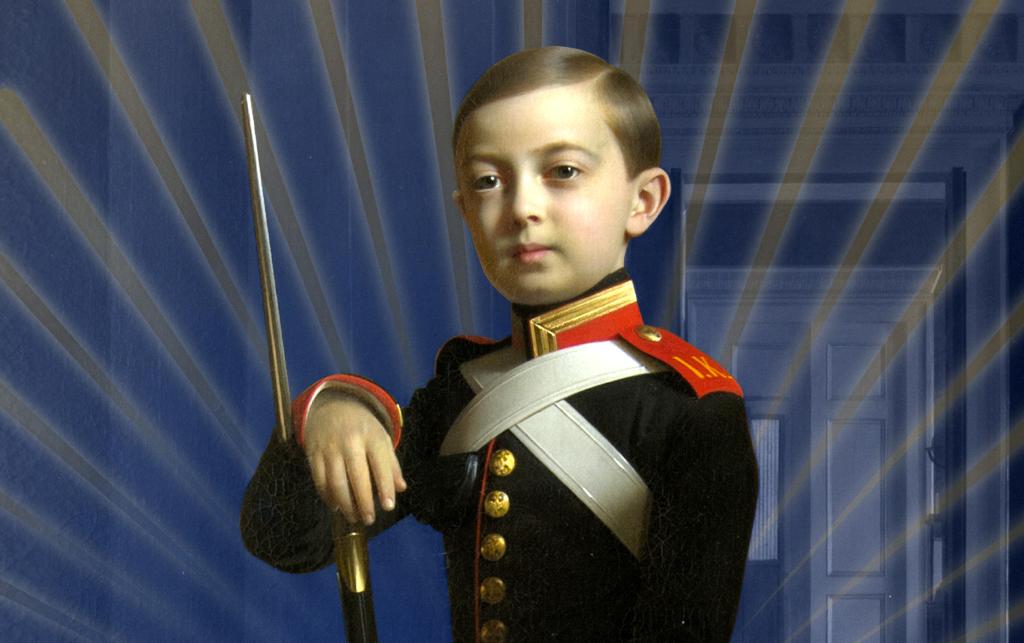
On 9th December 2023, a new exhibition “Becoming a Romanov” opened in the Grand Palace at Tsaritsyno State Museum, near Moscow. The exhibit explores the upbringing and education of grand dukes and grand duchesses of the Russian Imperial Family.

The exposition includes more than 500 exhibits, including a globe owned by Emperor Paul I, notebooks of Alexander I, a report card of Alexander III, as well as diaries, letters, contour maps, sketchbooks, board games, tin soldiers, toy cannons and a 17th century silver rattle, which belonged to Peter the Great.

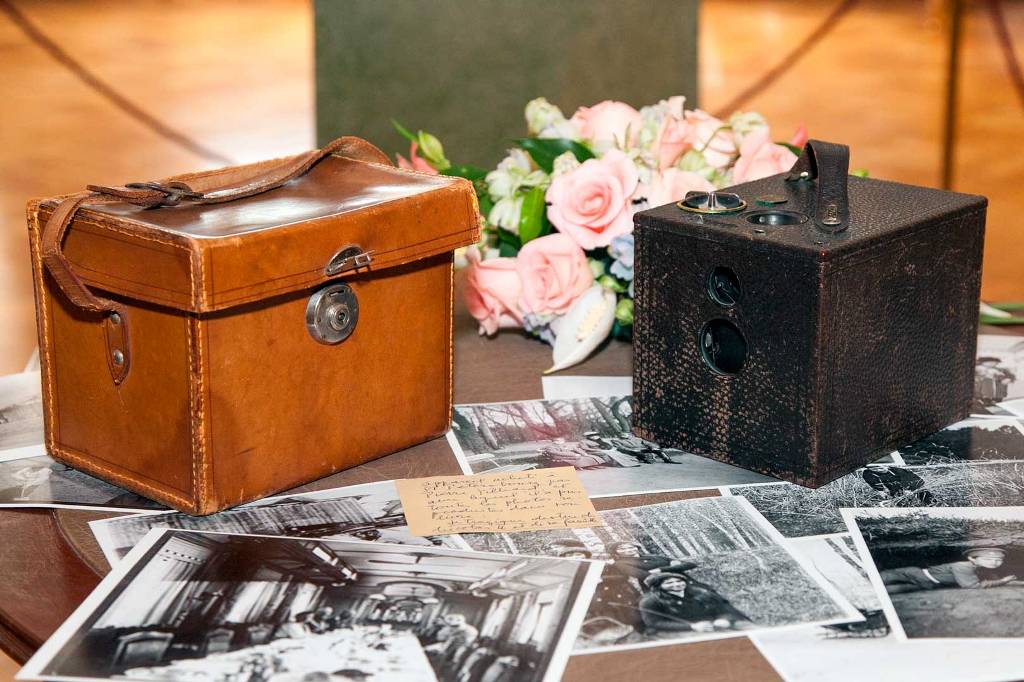
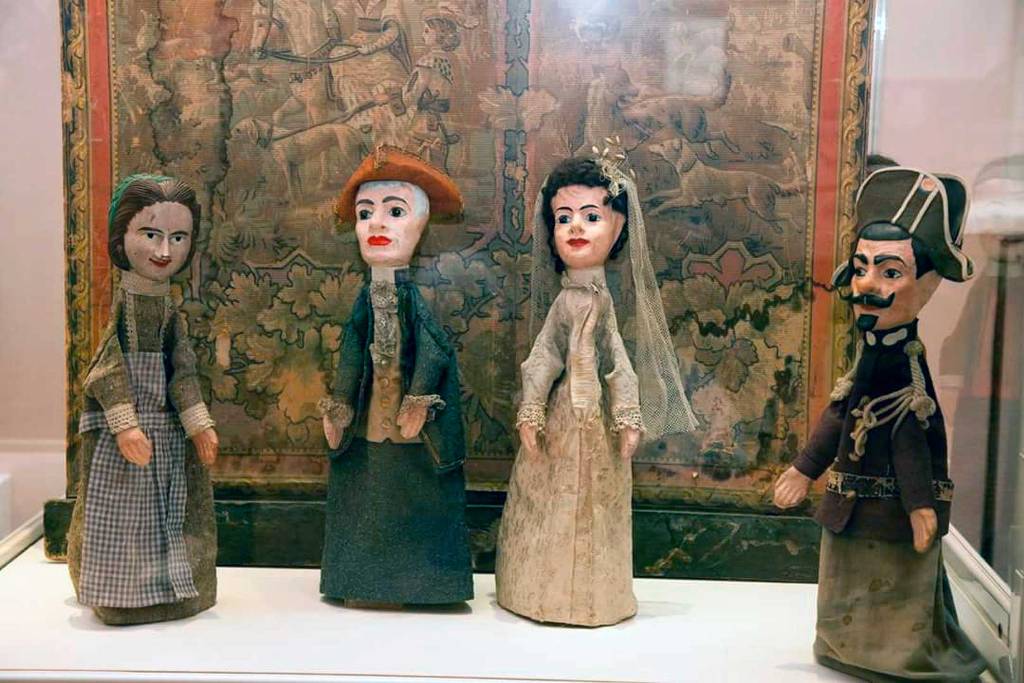
The Tsarskoye Selo State Museum presented more than 50 items for the exhibition, including children’s single-seater sleighs, the Guignol Theater, which was presented by Dowager Empress Maria Feodorovna to her grandson Tsesarevich Alexei Nikolaevich, a Kodak camera that belonged to the tutor of Emperor Nicholas II’s children, Pierre Gilliard, a baptismal set of Tsesarevich Alexei, portraits and uniforms of Grand Dukes, pieces of furniture, clocks, books and toys.

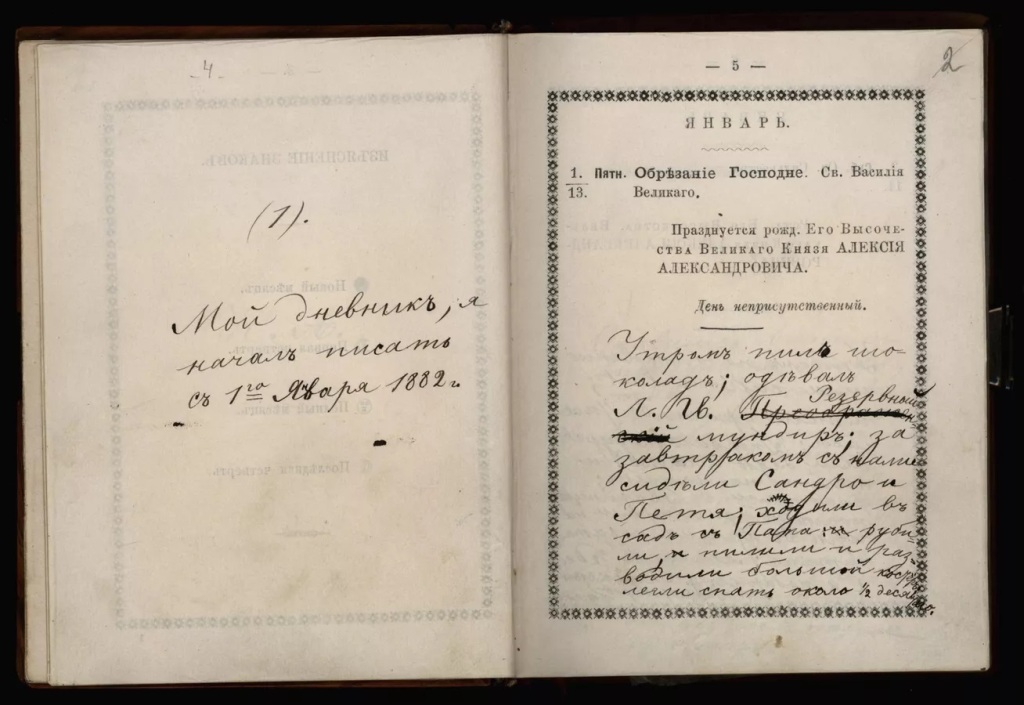
PHOTO: diary (1882) of Tsesarevich Nikolai Alexandrovich – future Tsar Nicholas II

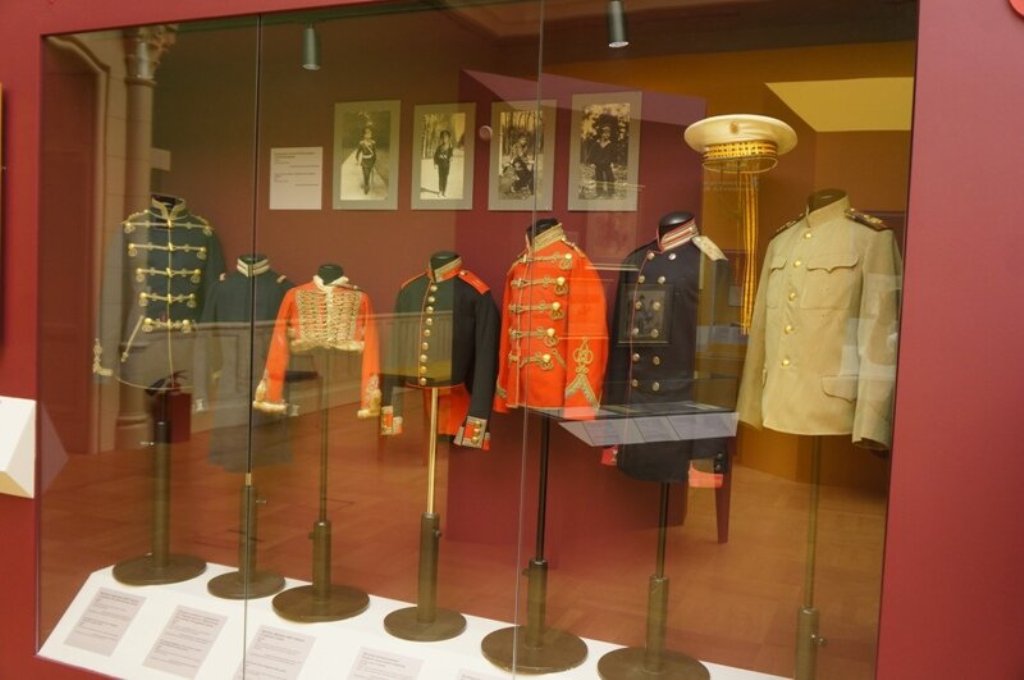
PHOTO: regiment uniforms belonging to Tsesarevich Alexei Nikolaevich

PHOTO: Pierre Gilliard’s  Eastman Kodak Bulls Eye camera

PHOTO: the Guignol Theater, presented by Dowager Empress Maria Feodorovna to her grandson Tsesarevich Alexei Nikolaevich

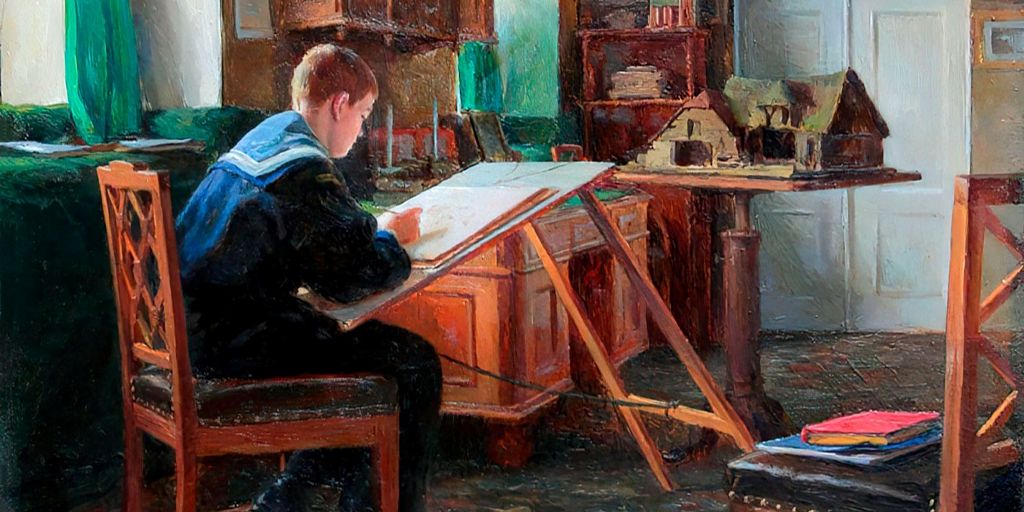
Portrait of Grand Duke Mikhail Alexandrovich in the Classroom at Gatchina. Artist Kirill Vikentievich Lemokh (1841-1910). 1890s

The exhibition is a joint project of the Tsaritsyno State Museum, the State Archives of Russian Documents and materials from the collections of the State Historical Museum (Moscow), the Moscow Kremlin Museums, the State Hermitage Museum (St. Petersburg), the State Museum of Russian History, the Russian State Library (St. Petersburg), the A.S. Pushkin State Museum (Moscow), the Scientific Research Museum at the Russian Academy of Arts, the A.E. Fersman Mineralogical Museum, the Russian Academy of Sciences, Ostankino Museum-Reserve, Kuskovo, Tsarskoye Selo State Museum, Pavlovsk State Museum and the Gatchina State Museum.The exhibition runs until 7th April 2024.

© Paul Gilbert. 11 December 2023
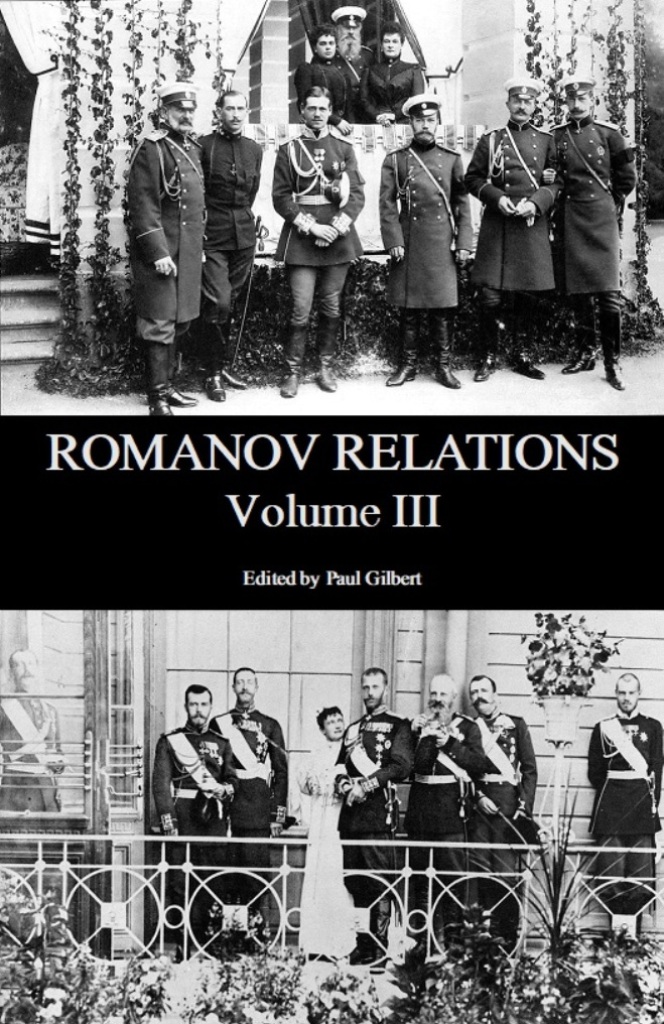
NEW BOOK – Romanov Relations. Volume III

*You can order this title from most AMAZON outlets, including
the United States, United Kingdom, Canada, Australia,
France, Germany, Spain, Italy, Netherlands, Poland, Sweden and Japan
*Note: prices are quoted in local currencies

CLICK HERE TO ORDER THE PAPERBACK EDITION @ $14.99 USD

English. 5-1/2″ x 8-1/2″ format. 214 pages. Illustrated

Romanov Relations is a popular multi-volume set of books, each volume offering a collection of both new and out-of-print articles, about the Romanov emperors, empresses, grand dukes and grand duchesses, as well as their descendants.

Volume Three features the following 4 chapters:

(1) The Romanovs in the Caucasus by Marie Tegulle

The bulk of this article focuses on the life and death of Grand Duke George Alexandrovich (1871-1899), the younger brother of Emperor Nicholas II, who – due to health reasons – was forced to live in the Caucasus region of the Russian Empire. He died at the age of 28, at Abbas-Tumani.

(2) Grand Duke Nicholas Alexandrovich: Life and Death of the Tsesarevich (1843-1865) by Emmanuel Fricero

This article (written in 1951) explores the life and death of the eldest son and heir to Emperor Alexander II and Empress Maria Feodorovna. Nicknamed “Nixa”, he was engaged to Princess Dagmar of Denmark (future Empress Maria Feodorovna). During a tour of southern Europe in 1865, he contracted cerebro-spinal meningitis. His health rapidly deteriorated, and he was sent to southern France, where he died on 24th April 1865, at the Villa Bermond in Nice.

(3) Emperor Paul I: Neither Demon nor Saint by Andrew M. Cooperman

For most of the three hundred years since his assassination, Emperor Paul I has either been demonized or canonized by historians. In truth, Paul I was neither demon nor saint, but rather a remarkable man who lived and reigned during an important time in Russia’s history.

(4) The Fate of the Romanovs: The Survivors by Professor Kent Sole and Paul Gilbert

The fate of Russia’s last Imperial Family is well known throughout the world. But what ever became of the other members of the Imperial House of Russia after the Empire was swallowed up by the Bolshevik Revolution? This examination explores the fate of the 53 members of the Russian Imperial Family, who were still alive when Nicholas II abdicated in March 1917.

Romanov Relations will be enjoyed by readers who have an interest in the Romanovs and their legacy, as well as providing a useful reference to writers and historians as they continue to unravel the mysteries and dispel many of the popular held myths surrounding the Romanov dynasty.

NOTE: Romanov Relations Volume I and Volume II are still in print, and available from my Romanov Bookshop.

© Paul Gilbert. 7 December 2023
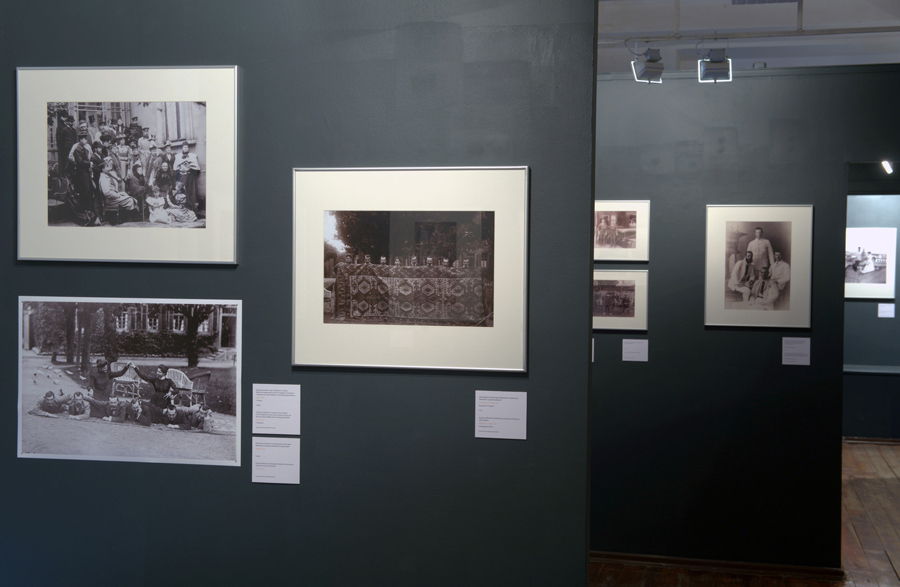
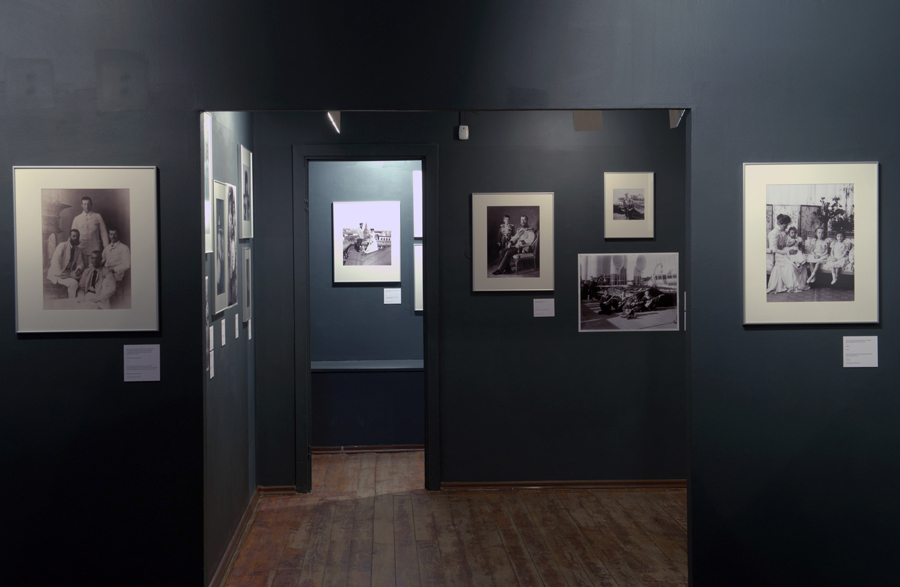
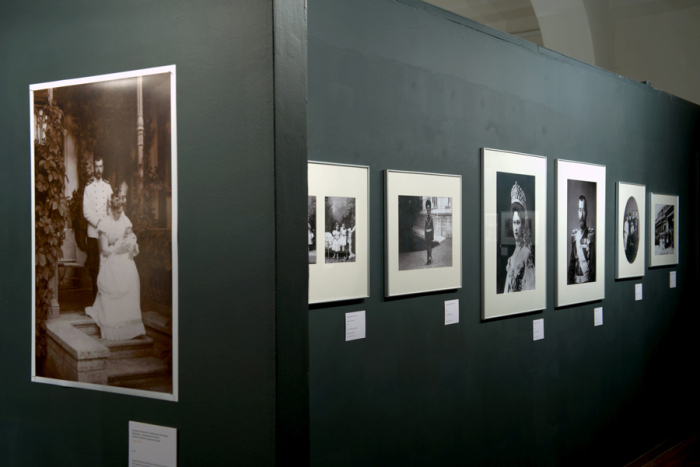
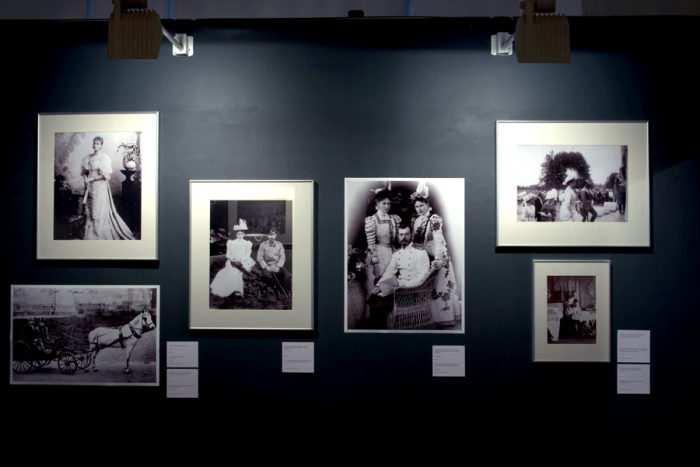
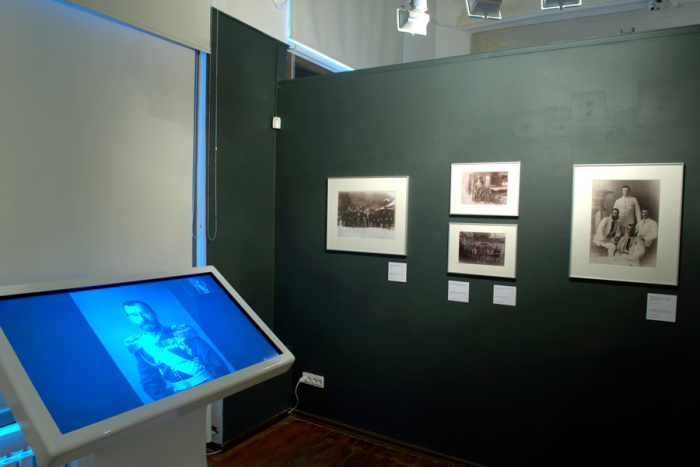
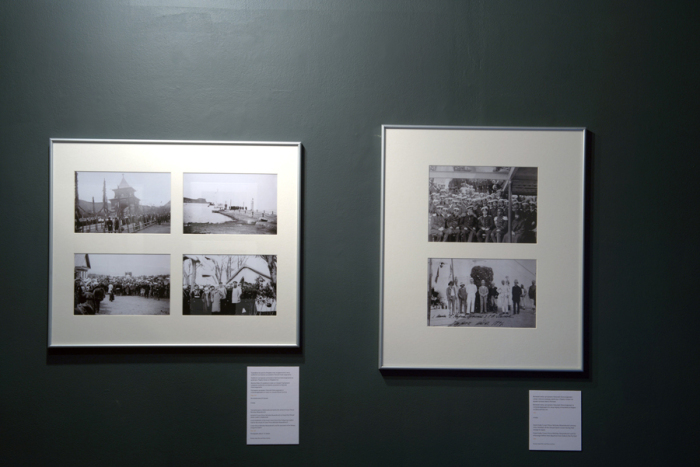
Photo Exhibition in St Petersburg Marks 150th Anniversary of Birth of Emperor Nicholas II

NOTE: this article was originally posted on 6th July 2018, it has
Been updated with the video below on 6th December 2023 – PG
CLICK on the IMAGE above to watch the grand opening of the photo-exhibition.
Language: Russian. Duration: 2 minutes, 27 seconds

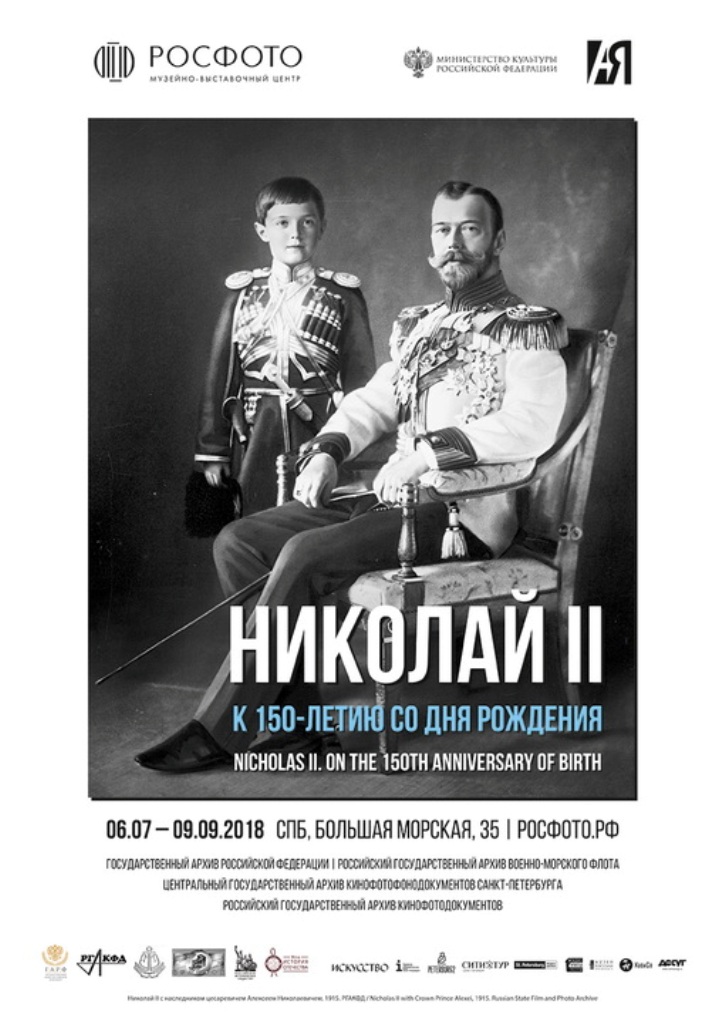
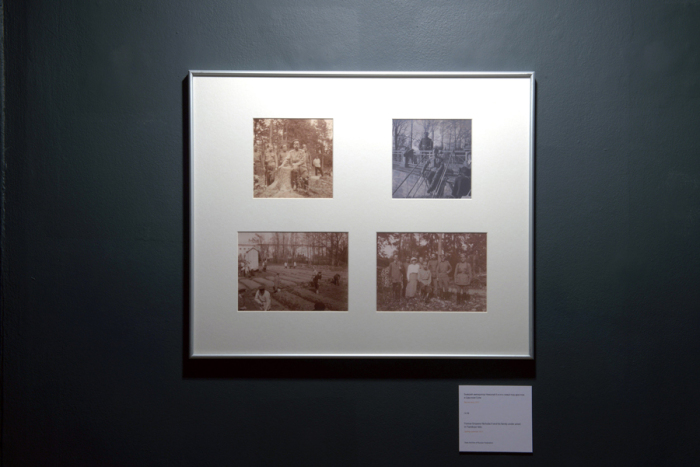
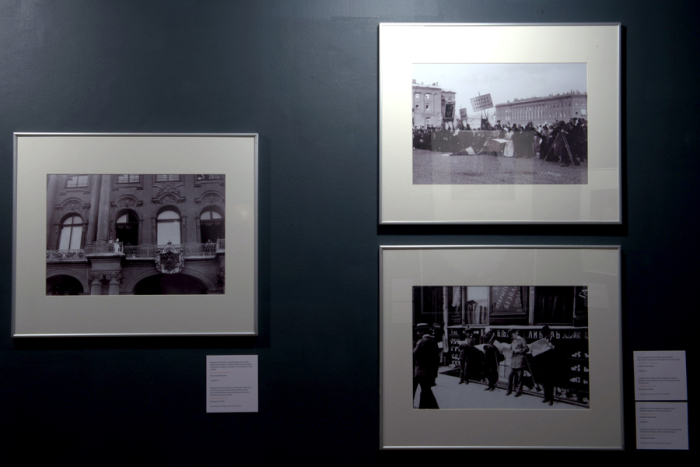
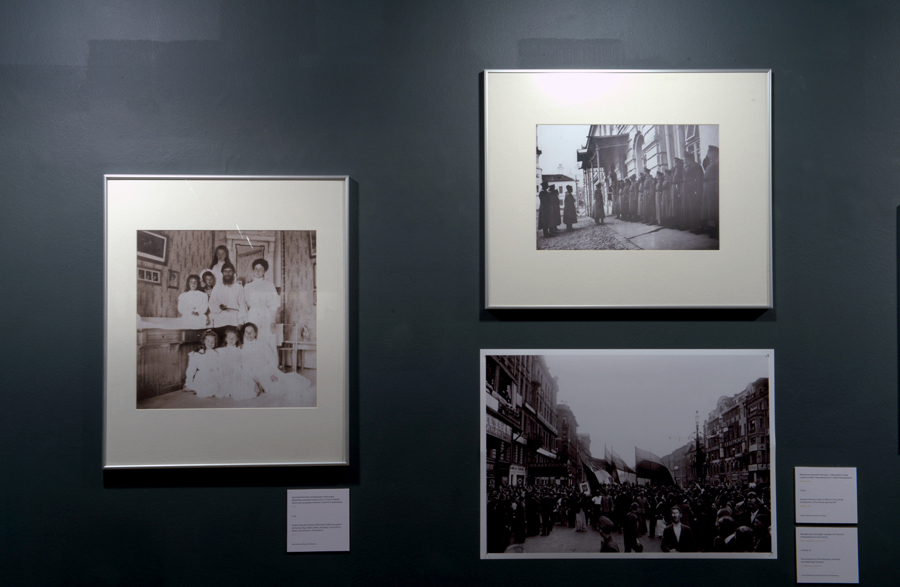
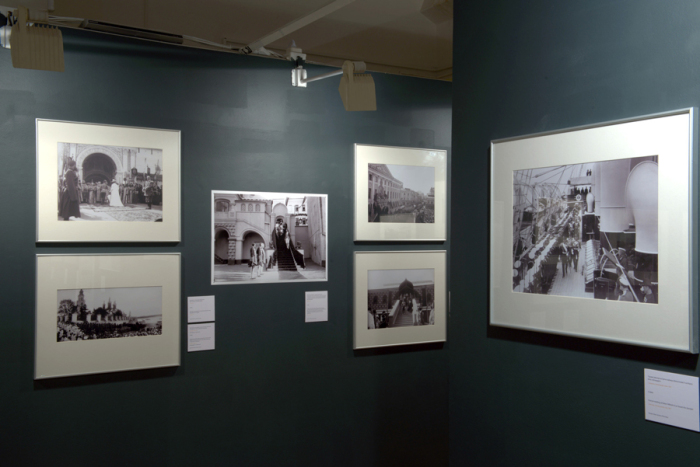
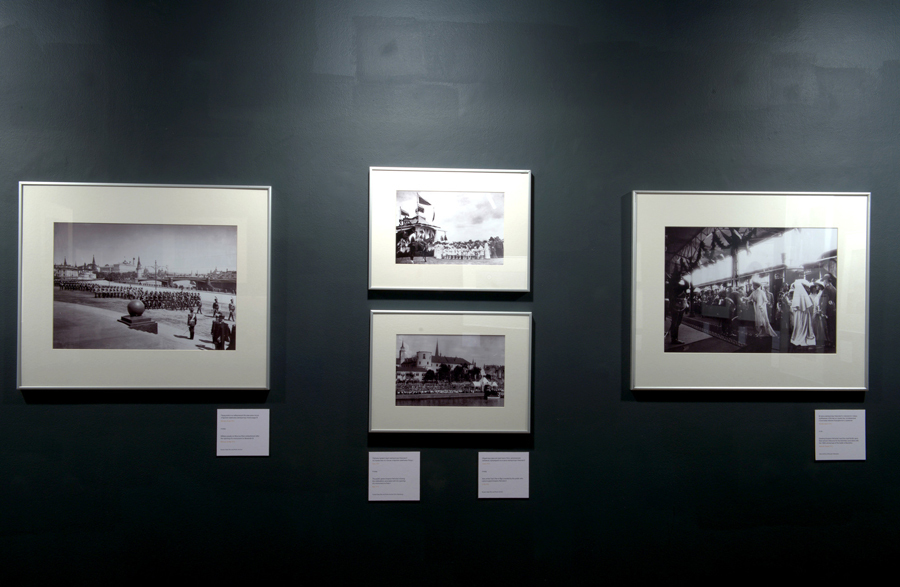
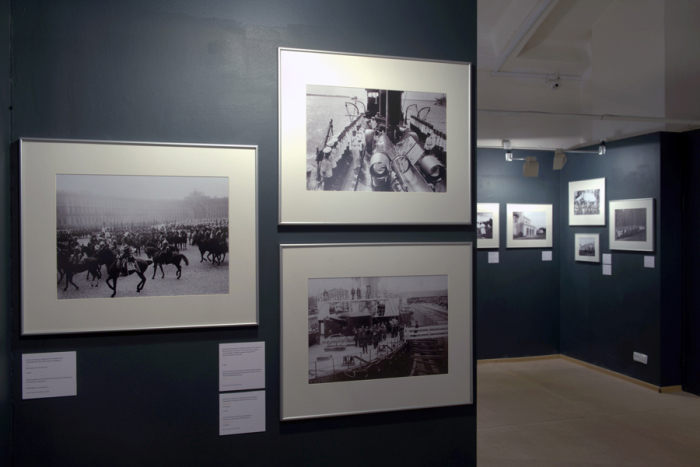
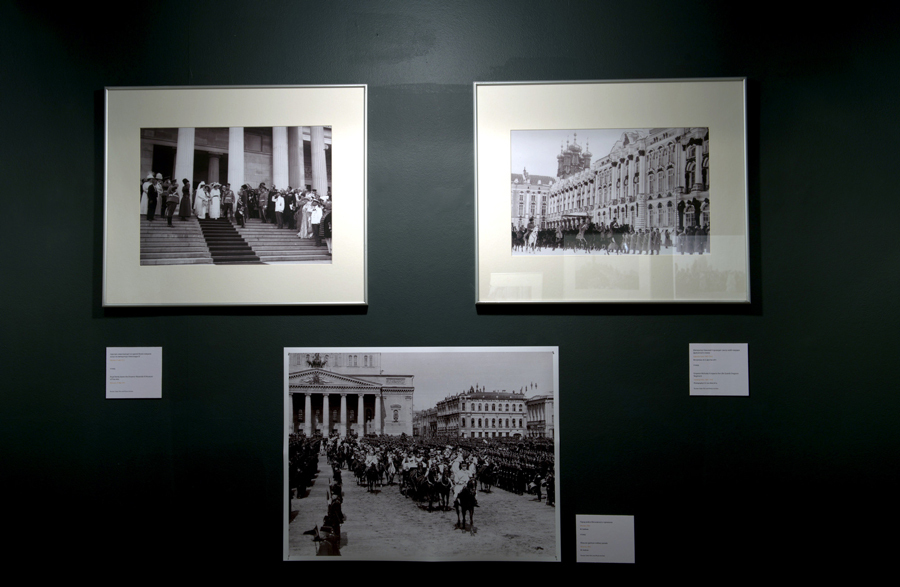
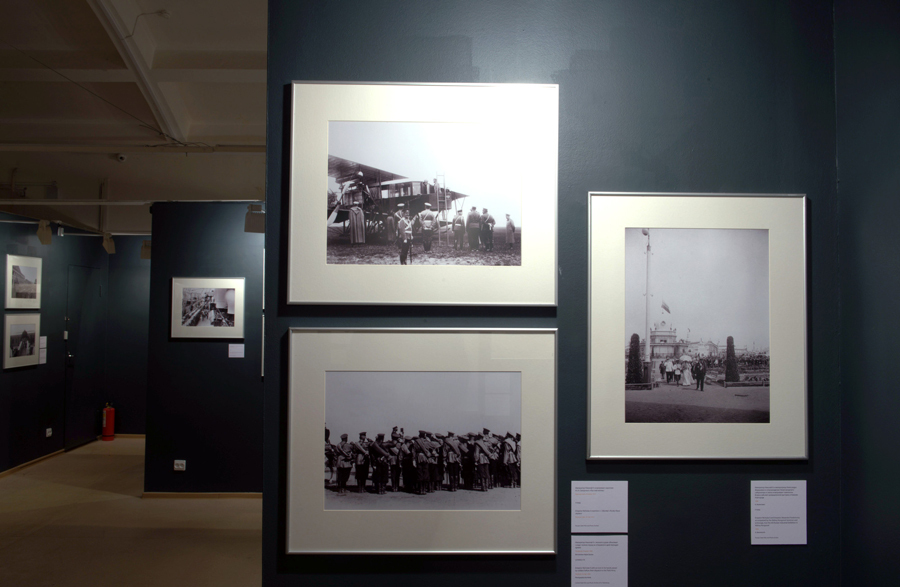
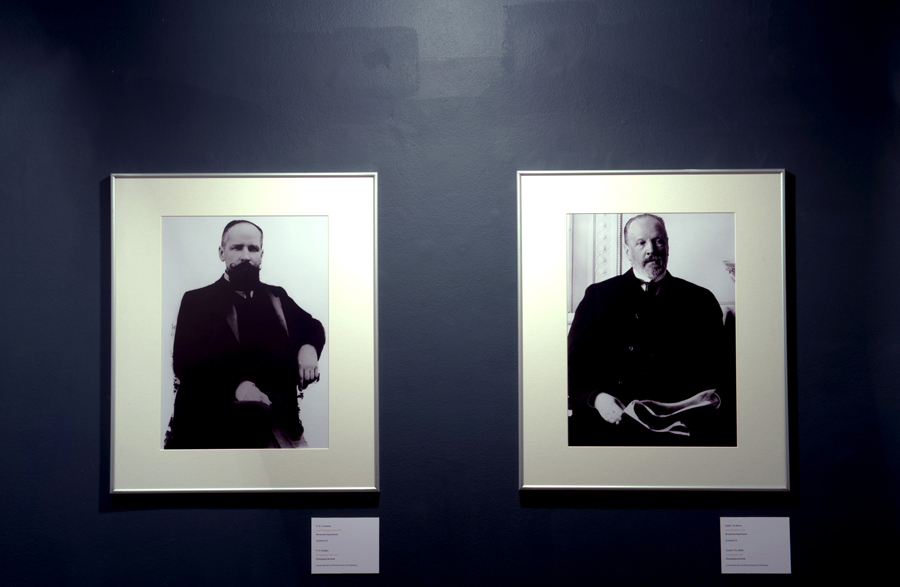
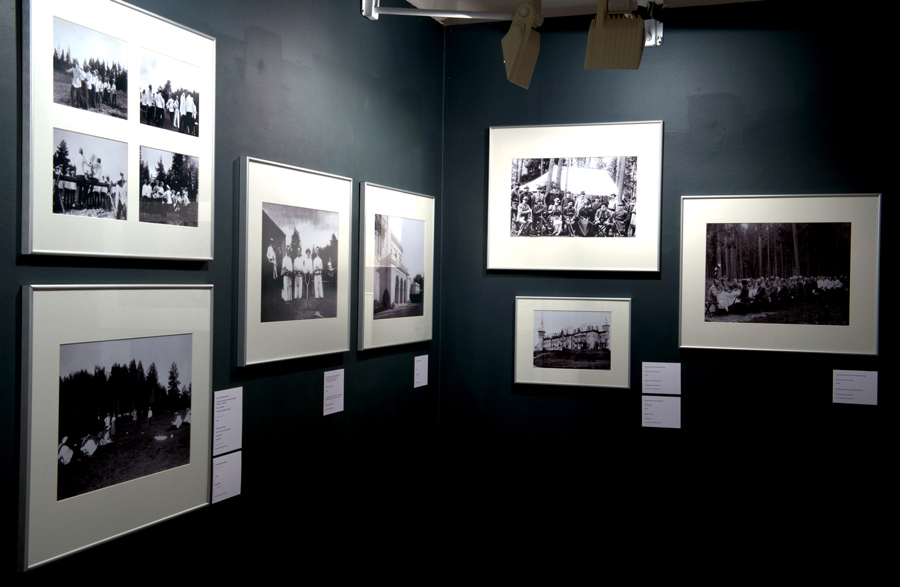
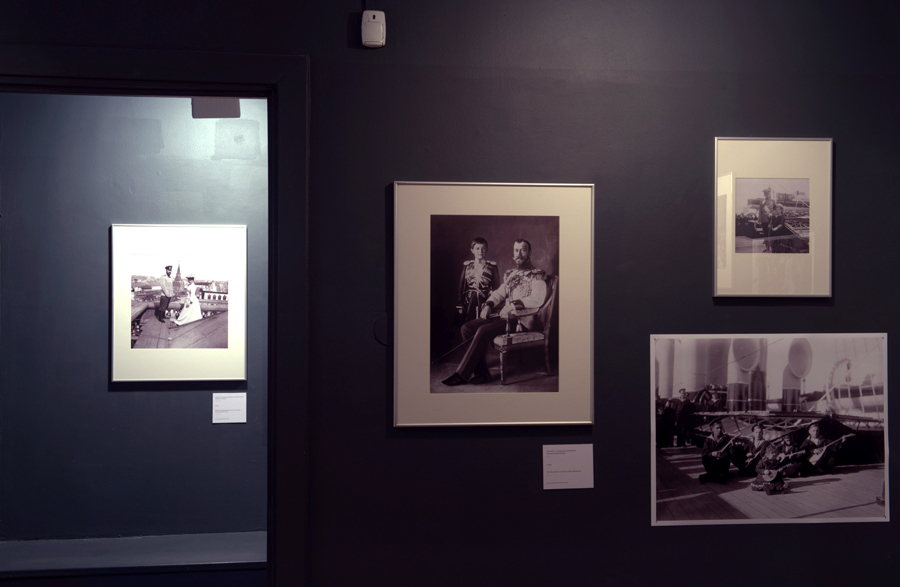
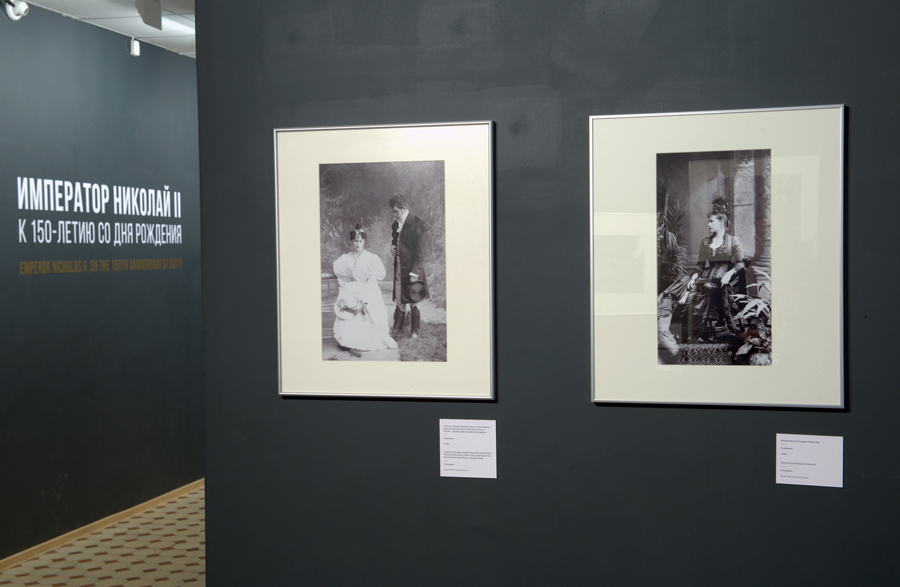
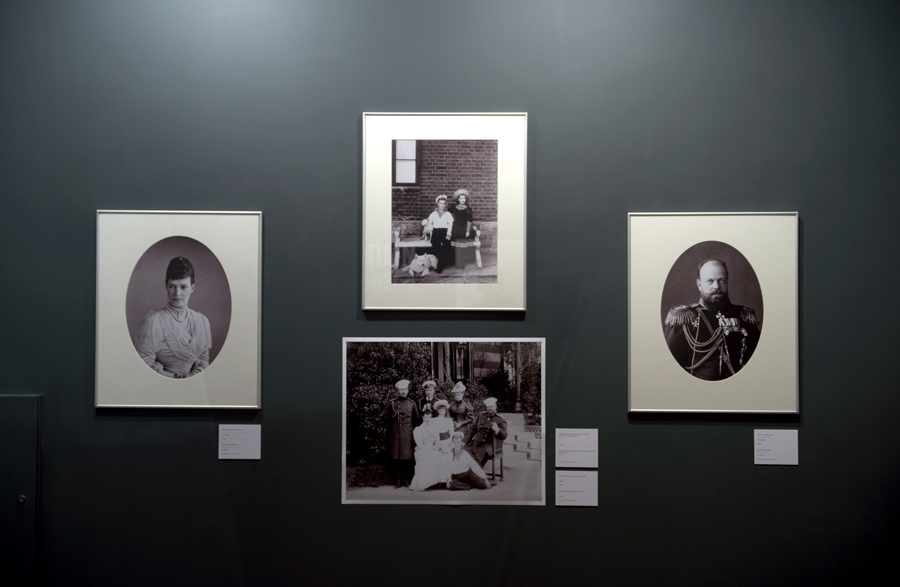
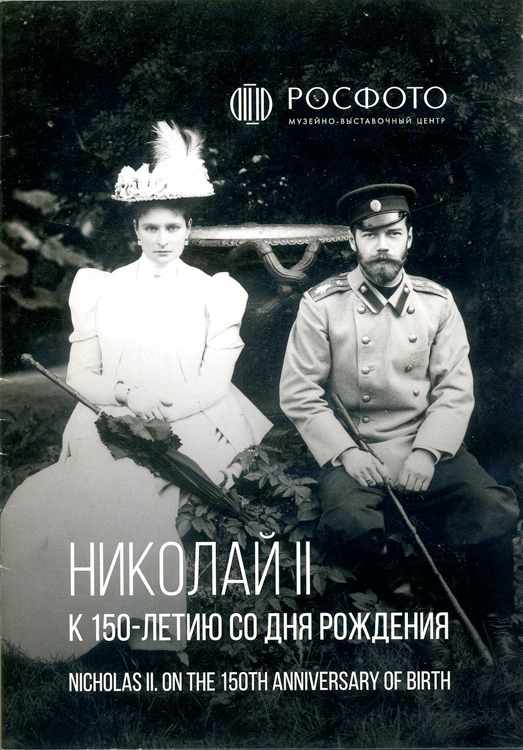
On 6th July 2018 a new exhibition Emperor Nicholas II. To the 150th Anniversary of his Birth, opened in the ROSPHOTO Museum and Exhibition Center in St. Petersburg.

The photo-exhibition is a joint project between the Russian State Archive of Cinema and Photo Documents, the State Archive of the Russian Federation (Moscow), the Russian State Archive of the Navy (St. Petersburg), and the Central State Archive of Film and Photo Documents (St. Petersburg).

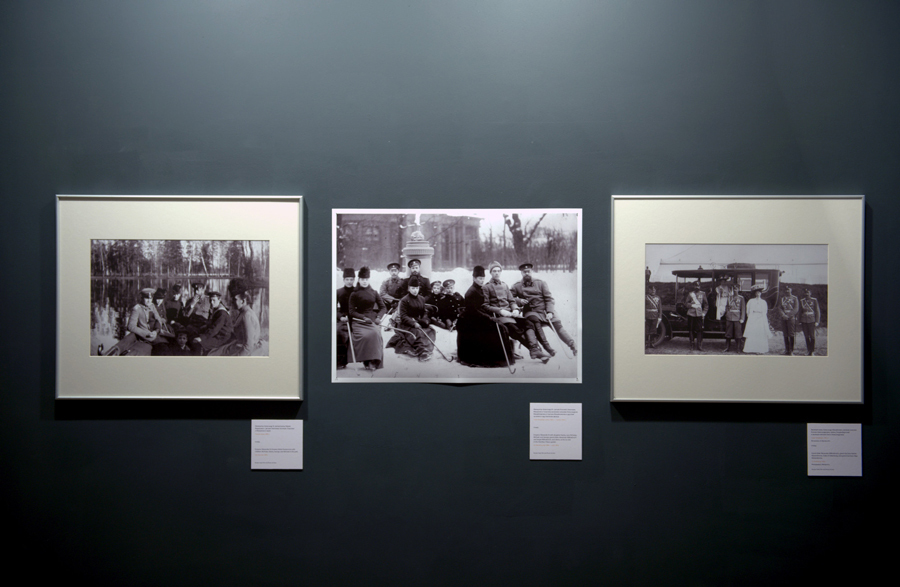
The exposition presents 150 photographs and 30 minutes of vintage newsreels related to the life and public activities of Nicholas II. The exhibition ran from 6 July to 9 September 2018

PHOTOS © ROSPHOTO / Click on each image to enlarge

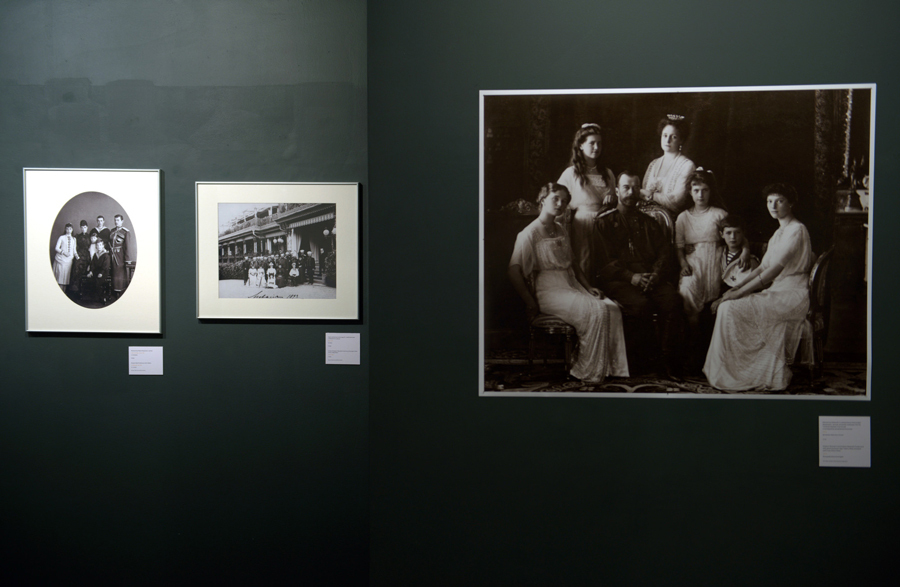
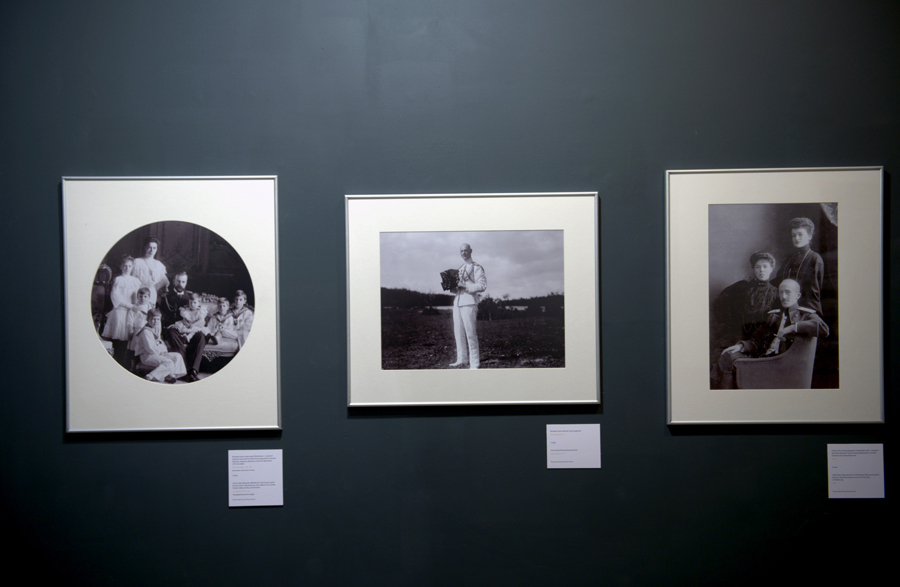
The Imperial Family were photographed by the best photographers of the Russian Empire. In addition, the Romanovs were photographed by the best foreign photographed when they travelled abroad. The exhibition presents family photos of the emperors Alexander III and Nicholas II, taken by outstanding Russian and foreign photographers of the day.

The greatest number of photographs which have been preserved to this day were taken by the co-owner of the photographic studio “K.E. von Gan and Co., the famous Russian photographer AK. Yagelsky, who was appointed “photographer of His Imperial Majesty.” He photographed Nicholas II not only at court, but also in his day-to-day life, on trips around the country, and during diplomatic visits. The exhibition features numerous other photographs of the K.E. Von Gan and Co. Studio marking the state activities and private life of the last Russian emperor.

PHOTOS © ROSPHOTO / Click on each image to enlarge

The project further presents photographic images taken by the famous photographer K.K. Bulla. In 1904, he received permission to photograph views of the capital and important celebrations. Bulla received certificate of permission from the General Staff of the War Department, “to make photographic surveys on maneuvers and exercises of the Guard troops and the St. Petersburg Military District”, as well as a special certificate from the Main Naval Staff permitting photography “during maneuvers, reviews, exercises, and all events relating to naval life.” The exhibition includes K.K. Bullas photos from various jubilee celebrations, military reviews, launching of the ships of the Russian Navy, all of which were attended by Nicholas II.

PHOTOS © ROSPHOTO / Click on each image to enlarge

A separate part of the exhibition features photographs taken by Nicholas II himself and his family members. The Emperor, along with Empress Alexandra Feodorovna, Dowager Empress Maria Feodorovna, their five children, were all passionate amateur photographers. From 1896, when Nicholas II had his first camera, he hardly ever parted with it. Every year the emperor personally prepared family photo albums, placing and identifying each of them. The photos taken by the emperor and his family are sincere and warm; they were not intended for the general public, and therefore imbued with warm human feelings and true love that reigned in the family of the last Russian emperor.

163z

Exhibition catalogue

The exhibition Emperor Nicholas II. To the 150th Anniversary of his Birth, ran from 6th July until 9th September 2018, at the ROSPHOTO Museum and Exhibition Center, which is situated at Bolshaya Morskaya Ulitsa 35, near St. Issac’s Cathedral.

© Paul Gilbert. 6 December 2023
“The Romanovs. The Final Word” viewed more than 1 million times!

PHOTO: scenes from the final days of the Imperial Family in the Ipatiev House were recreated for the 5-part documentary ‘The Romanovs. The Final Word’

The historical series ‘The Romanovs. The Final Word‘ has become one of the most popular documentary projects ever made for Russian online cinema. The 5-part series premiered on 4th November 2023, and in less than a month has been viewed more than 1 million times.

The Romanovs. The Last Word‘ is a detailed historical study of one of the most notorious crimes in 20th century Russian history – the murders of Emperor Nicholas II and his family, based on the memories of the klliers themselves. The series was created by journalist and historian Sergey Minaev together with producer Danila Sharapov.

In 1964, members of the firing squad Grigory Petrovich Nikulin (1894-1965) and Isai Radzinsky, on the orders of Nikita Khrushchev, recorded their memories of the execution of the Imperial Family in July 1918. These audio recordings were subsequently ordered sealed and stamped “SECRET” and placed in the archives. These important historical recordings are now made public for the first time in the documentary series ‘The Romanovs. The Last Word.’

The conversation between Nikulin and Radzinsky at the USSR Radiocomet was recreated specifically for this documentary project. In addition, the Ipatiev House, in which the Imperial Family were murdered, was reconstructed for the documentary, based on original plans, drawings, photographs and memoirs of eyewitnesses.

The actors for the roles of Nikulin and Radzinsky, members of the Imperial Family, and their faithful retainers, based on their likeness to the historical figures they were portraying in the documentary.

The best historical consultants, artists and restorers were involved in the project. Thanks to their participation, it was possible to recreate the events and circumstances of the final months of house arrest, and subsequent murders of the last Russian Tsar and his family, with accuracy through a previously unknown source, and an important historical record.

For the first time, this documentary series shows in detail the last days of the family of Emperor Nicholas II, their execution, as well as the circumstances of hiding the bodies by a team of executioners. The project was narrated by Sergey Minaev.

Click HERE to watch the trailer for ‘The Romanovs. The Final Word

FURTHER READING:

The Romanovs. The Final Word + TRAILER

Watch all 5 episodes of ‘The Romanovs. The Final Word’ + VIDEO

© Paul Gilbert. 1 December 2023
The Romanovs. The Final Word 

On 4th November 2023, ‘The Romanovs. The Final Word‘, a new Russian-language documentary series premiered on the Russian YouTube channel ‘Premier’, who have also released a trailer for the documentary – see below. .

The 5-part series – produced and narrated by Sergei Minaev – records the last months of the Imperial Family, while they were under house arrest at the Ipatiev House in Ekaterinburg.

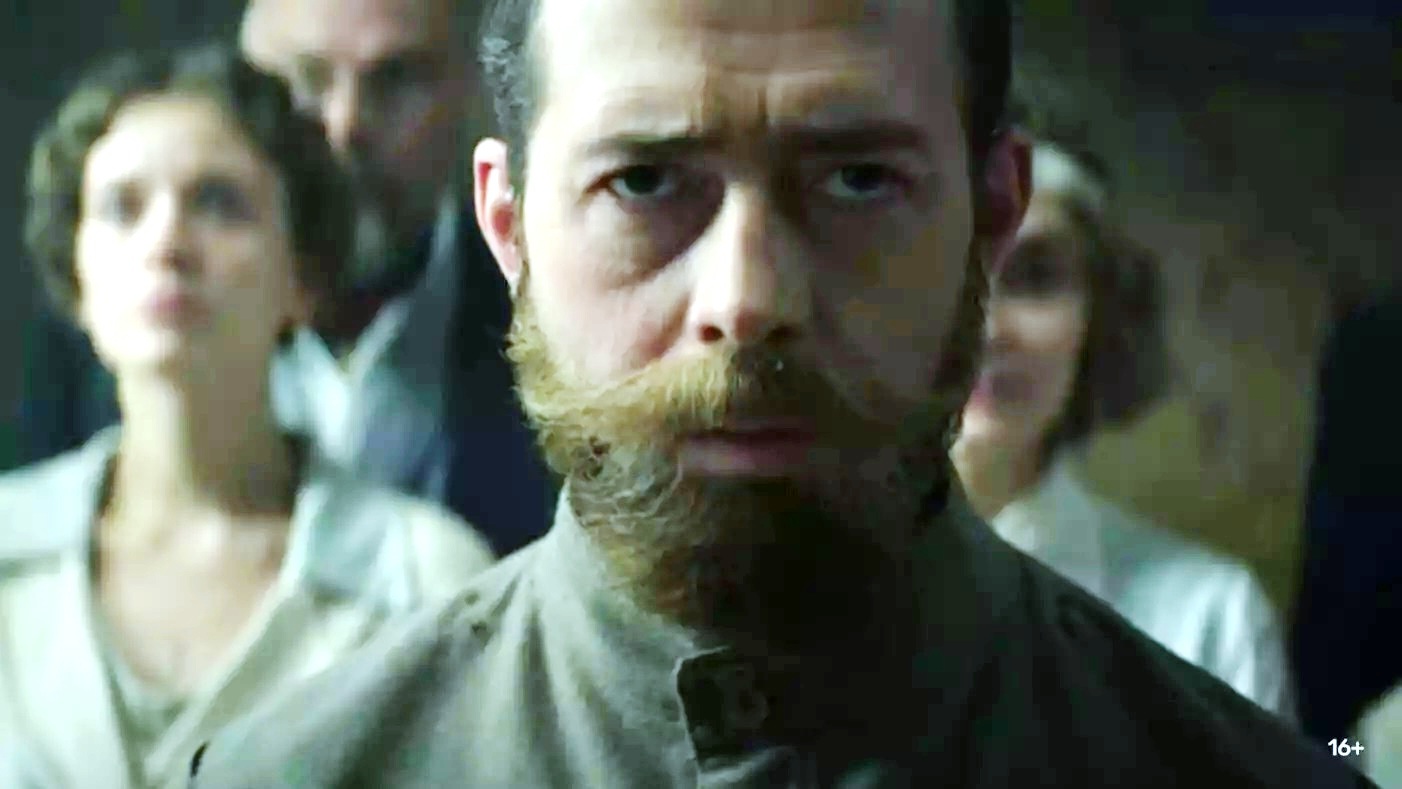
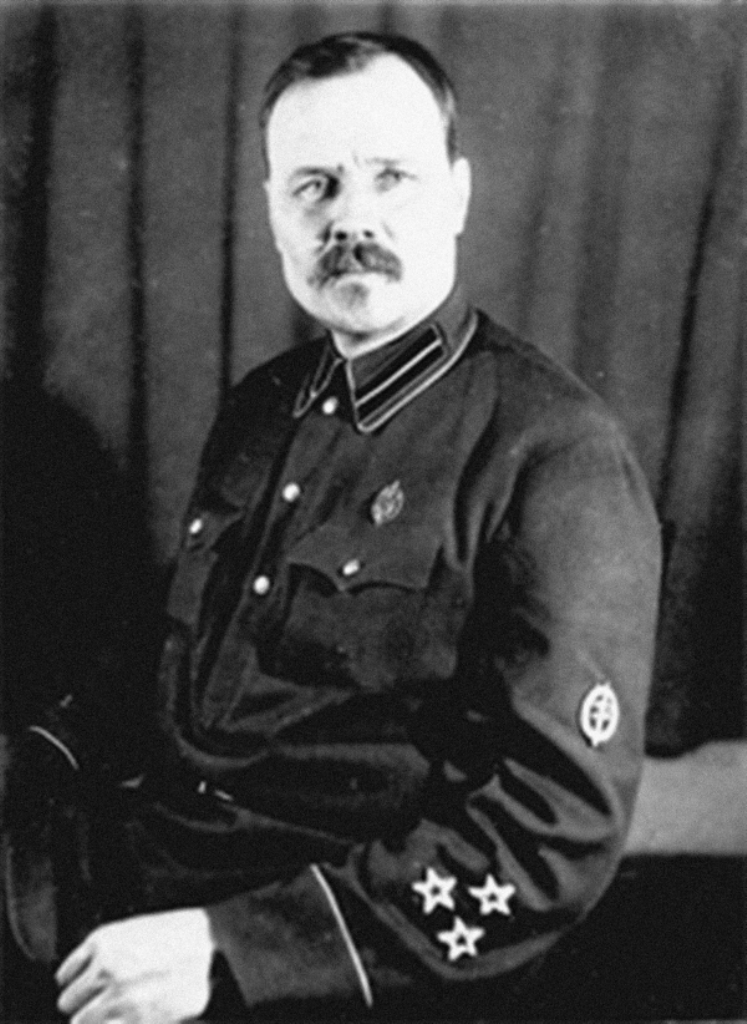
What is different about this documentary, is that the fate of Russia’s last Tsar, his family and four faithful retainers, is told by their killers, notably by Mikhail Aleksandrovich Medvedev (Kudrin) (1891-1964), a devout Bolshevik and one of the executioners of the Imperial Family.

Kudrin died on 13th January 1964, he was buried with military honours at the Novodevichy Cemetery in Moscow. In his will, he asked his son Mikhail to give Nikita Khrushchev (1894-1971) the Browning pistol with which he alleges he had killed the Tsar with. It was following his death, that Krushchev ordered Kusrin’s son Mikhail Mikhailovich Medvedev, to carry out an investigation to the Tsar’s murder.

PHOTO: Mikhail Aleksandrovich Medvedev (Kudrin) (1891-1964)

Not only did Mikhail research his father’s diaries, letters, documents and photographs, he also searched for his father’s old friends to interview. Mikhail attempts to reconstruct the events of the murders of the Imperial Family, through the stories of witnesses and participants in the regicide at Ekaterinburg in 1918. Many testimonies and materials of the investigation are now being made public for the first time. The producers of the documentary series claim that the audio recordings of these interviews were kept secret for decades.

The documentary reconstructs the events of 1918, including the final months of the life of Nicholas II, his family and their retainers during their house arrest in Ekaterinburg, the details of the execution and attempts to hide the bodies. Some scenes were recreated – using actors – from the memories of eyewitnesses in order to show viewers the most reliable picture of the events.

NOTE: the 5-part series is available to view on a pay-per-view only. The current economic sanctions imposed by the West on Russia, make impossible to use a credit card for payment. Should the entire series be made available to view online for free at some point in the future, I will update this article – PG

***

WATCH THE TRAILER

CLICK on the PHOTO above to watch the trailer for ‘The Romanovs. The Final Word’
Language: Russian. Duration: 2 minutes

NOTE:  the trailer above is in Russian, however, do not allow that to stop you from watching the trailer. You can still follow the gist of the audio in English, by doing the following:

[1] click on the red arrow in the YouTube image above

[2] turn on Google Translator, which will translate the text only

[3] click on the close captioning option [CC] option, located in the banner at the bottom of the video

[4] click START

The closed captioning will appear in English on the video, allowing you a better understanding of the people, places and events presented in the trailer.

FURTHER READING:

“The Romanovs. The Final Word” viewed more than 1 million times!

Watch all 5 episodes of ‘The Romanovs. The Final Word’ + VIDEO

© Paul Gilbert. 25 November 2023
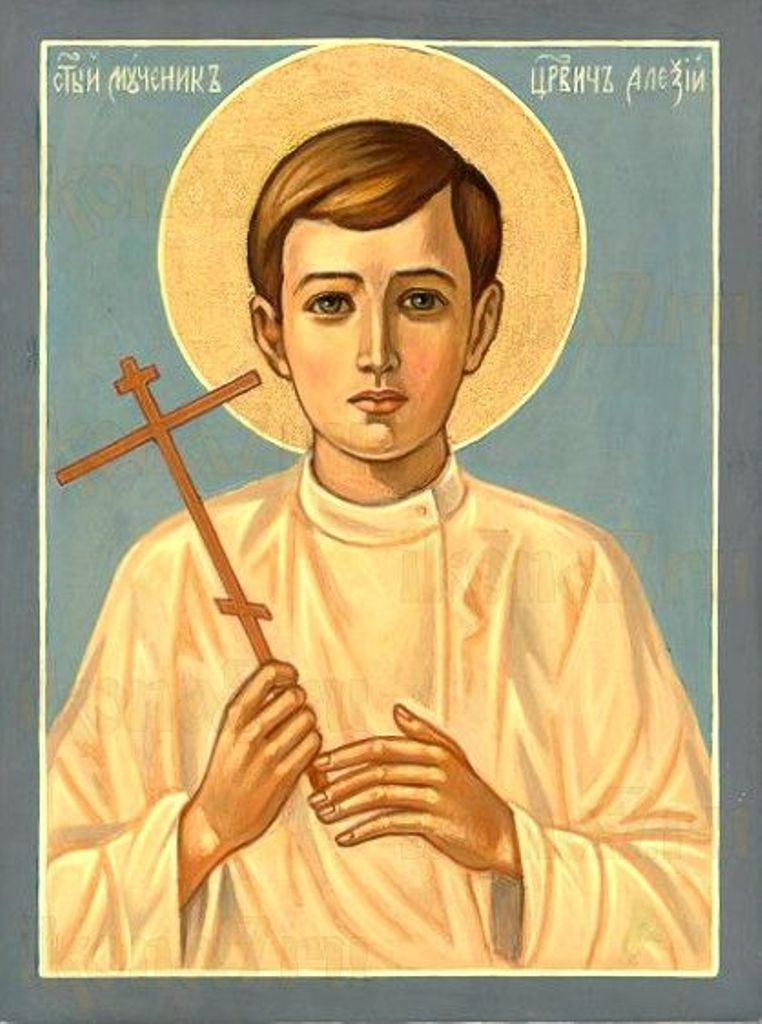
Prayer Room in Honour of Tsesarevich Alexei opens in Kazan

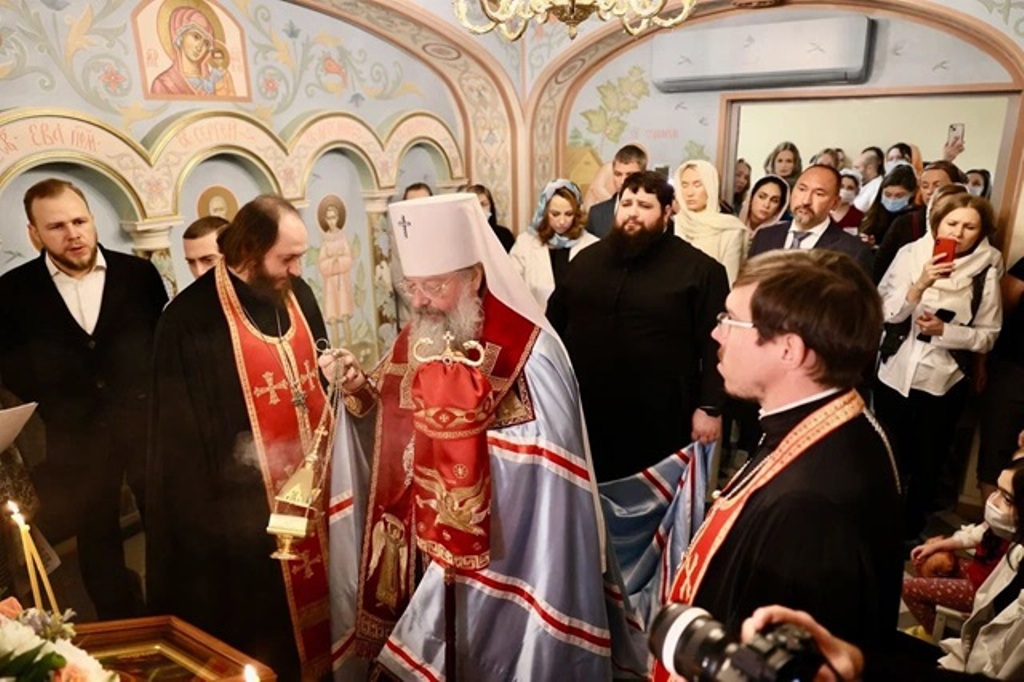
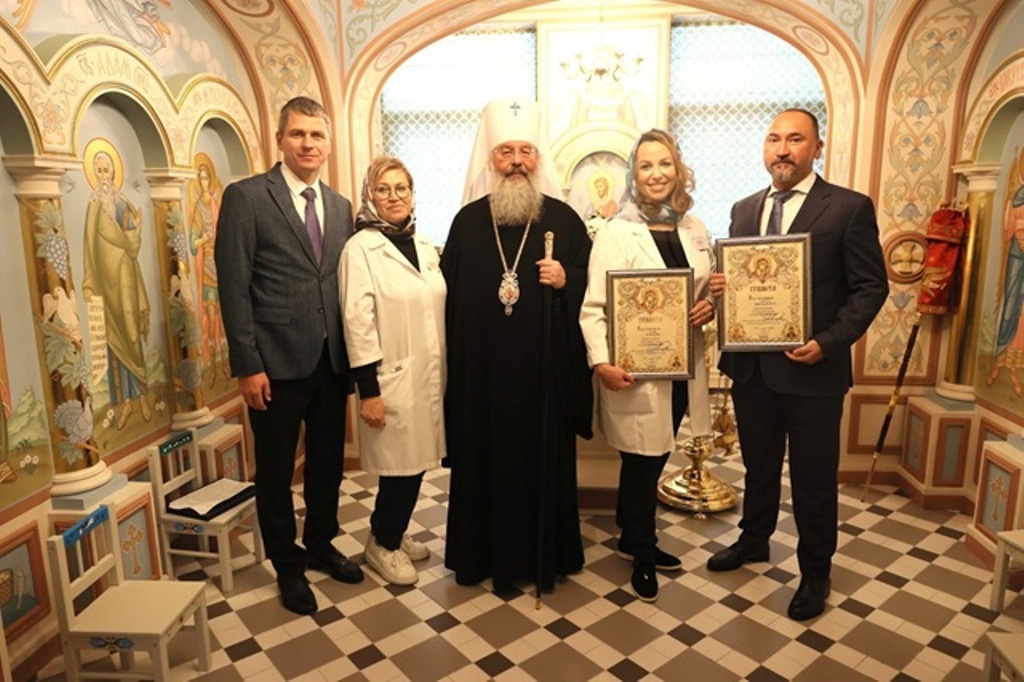
On 22nd November 2023, an Orthodox prayer room in honour of the Holy Royal Martyr Tsesarevich Alexei Nikolaevich, was opened at the At the Center for Pediatric Oncology, Hematology and Surgery of the Children’s Republican Clinical Hospital (DRKB) in Kazan.

In honor of the opening, Metropolitan Kirill of Kazan and Tatarstan performed a Divine Liturgy service and consecrated the room, which is located in a quiet place on the fifth floor of the Center.

Medical staff, parents whose children are undergoing long-term treatment, and their relatives will be able to request assistance and prayers from the Holy Royal Martyrs at any time.


The Metropolitan addressed all those present with wishes and prayers for a speedy recovery, and the doctors with fortitude for the healing of their young patients.

“There is no such thing as too much happiness, just as there is no such thing as too much health and success. There is always a need to turn for help to each other, to our loved ones, to our elders, for help to our Creator and the Saints to whom we can pray,” Metropolitan Kirill said.

“Here, in this prayer room, children, their parents and staff can find such comfort. You can come here and pray to God for health, for salvation, for help for all of us, and for those sorrows that weigh heavily on our hearts. Most of all, we would all like our children to be healed, their health restored, and to bring joy to their parents,” the head of the Tatarstan Metropolia added.

Holy Royal Martyr Alexei Nikolaevich .
please pray to God for us!

© Paul Gilbert. 21 November 2023
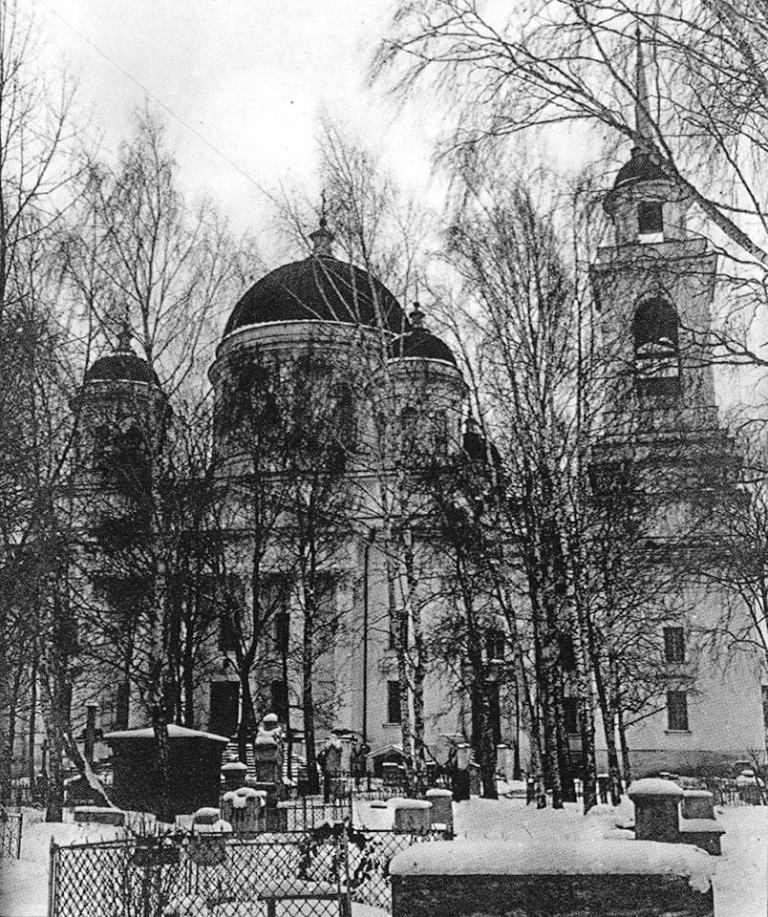
LOST IMPERIAL RUSSIA – Novo-Tikhvin Convent Cemetery, Ekaterinburg

PHOTO: early 20th century view of the Novo-Tikhvin Convent Cemetery in Ekaterinburg

Among the many shameful acts committed by the Bolsheviks and later the Soviets, was the desecration and later destruction of the Novo-Tikhvin Convent Cemetery in Ekaterinburg during the 1920s and 1950s.

In the 1780s, an Orthodox churchyard was created in the south-western part of Ekaterinburg. During the 19th century it became part of the cemetery at the Novo-Tikhvin Convent. It consisted of a city cemetery (Green Grove), and a necropolis members of the nobility. The gravestones were works of stone-cutting and foundry art, thus making it the finest cemetery in the city at that time.

It is believed that the last burial in the Novo-Tikhvin Convent Cemetery took place in 1924. The local Soviet began to appropriate the land and began building on the grounds of the cemetery. In 1926 there was even talk about building the Sverdlovsk Zoo here! By 1929 nearly all the graves had been removed.

By 1930 the convent was closed. In 1932 the church archives, which included the burial records and other important information were ordered burned by the local Soviet. Bulldozers were used to demolish the last above ground grave stones and monuments in 1948-1950.

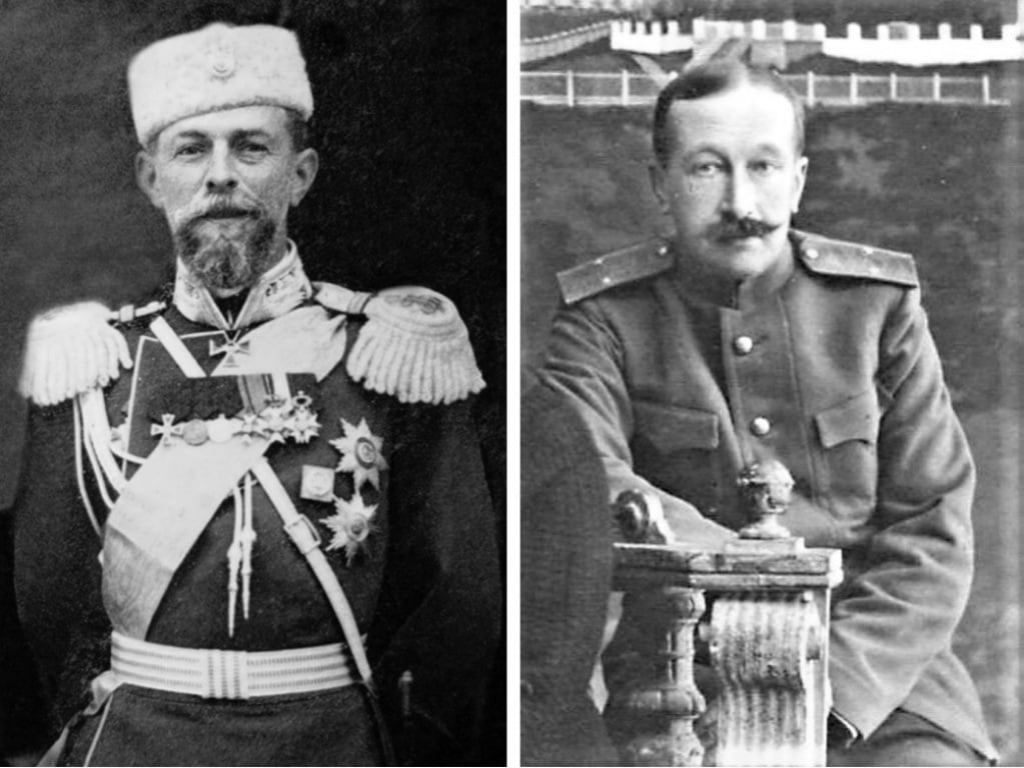
PHOTO: General Ilya Leonidovich Tatishchev (left) and Prince Vasili Alexandrovich Dolgorukov (right)

The local Soviet used some of the grave stone monuments to build foundations and roads, while iron and cast iron parts were used as scrap metal. The desecration of the cemetery did not stop there. Local military training units, which settled in the convent, dug a number of garbage pits, buried two large tanks for fuel and lubricants in the cemetery.

Most of the cemetery was transferred to the administration of the Ural Military District, who continued to build on the graves of those who died before the 1917 Revolution. The last house constructed on the cemetery, complete with a marble front staircase and a sauna was built for Soviet generals.

The convent was returned to the Russian Orthodox Church in the early 1990s. Restoration began and continues to this day. Excavations on the grounds of the Novo-Tikhvin Convent were carried out from 2002 to 2012, which resulted in the recovery of more than 400 graves (some were completely destroyed). Efforts were made to recover some of the graves, identify the remains, and rebury them in other cemeteries. Additional bodies have since been recovered, as recently as 2018.

It is interesting to note that two faithful servants to Emperor Nicholas II – General Ilya Leonidovich Tatishchev (1859 – 1918) and Prince Vasili Alexandrovich Dolgorukov (1868 – 1918), who followed the Imperial Family into exile, and murdered by the Bolsheviks were buried in this cemetery, however, their graves have not been found.

© Paul Gilbert. 21 November 2023
180 watercolours by Grand Duchess Olga Alexandrovna donated to Russian State Museum

PHOTO: Grand Duchess Olga Alexandrovna standing in front of her works at a charity exhibition, held in her palace on Artilleriyskaya str. 46-48 [renamed Tchaikovsky st., in 1923] in St. Petersburg. Photographer: I. N. Alexandrov. (1914).]

On 16th November 2023, a collection of 180 watercolours by Grand Duchess Olga Alexandrovna (1882-1960) have been donated to the Russian State Museum in St. Petersburg. The donation was made possible thanks to the St. Catherine’s Charitable Foundation and the Ministry of Culture of the Russian Federation.

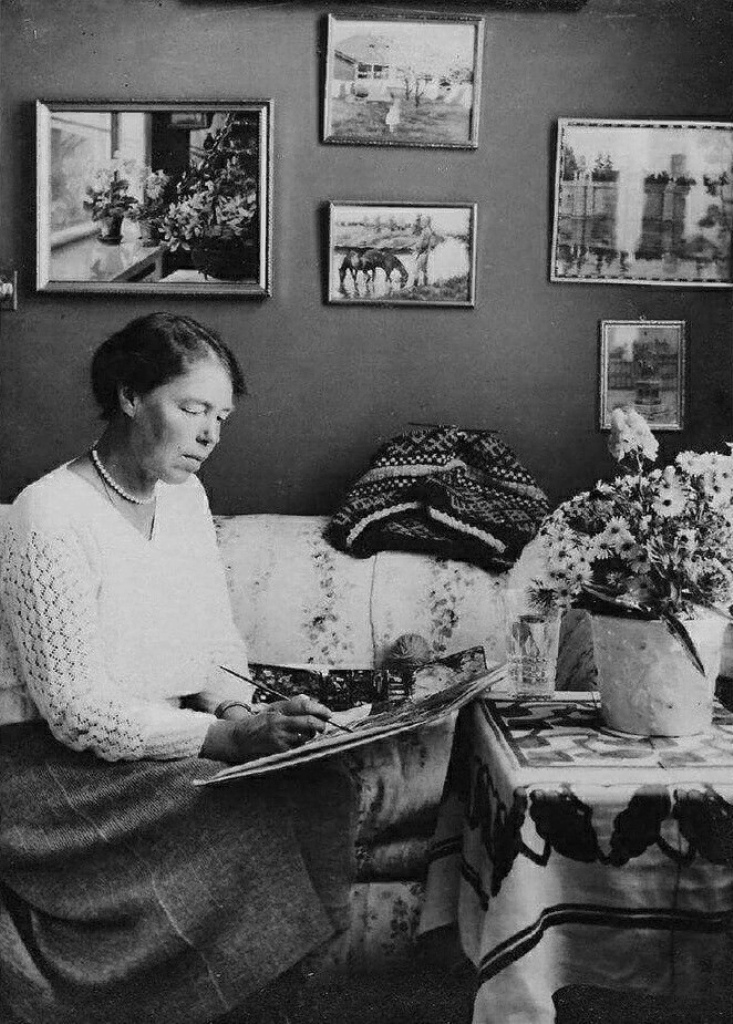
The collection of 180 works were in the possession of Olga Nikolaevna Kulikovsky-Romanov (1926-2020), the third wife of Grand Duchess Olga’s eldest son, Tikhon Nicholaevich Kulikovsky (1917-1993). Upon the grand duchess’s death in 1960, a large number of her watercolours were acquisitioned by Tikhon. When Tikhon died in 1993, his wife Olga Kulikovsky decorated her Toronto apartment with the watercolours. [*I visited Mrs Kulikovsky;s apartment on several occasions in the 1990s, and bore witness to the vast collection of the grand duchess’s works decorating the walls – PG] During the 1990s, Olga Kulikovsky travelled to Russia, taking the watercolours with her. She toured the country, hosting numerous exhibits of her mother-in-laws paintings to Russians for the first time.

“It’s a miracle that such a collection has returned to Russia,” said the Minister of Culture Olga Lyubimova. “The return of these paintings to their homeland is a unique event. This is an opportunity for the specialists of the Russian Museum to study them. I am sure that these works will decorate the exposition and attract the attention of a variety of audiences: from the scientific community to schoolchildren studying history.” The Minister of Culture thanked the St. Catherine’s Foundation for the wonderful gift.

PHOTO: Grand Duchess Olga produced over 2,000 paintings during her lifetime

“This collection is a contribution to the important process of preserving the historical and cultural heritage of our country,” said Alexander Andreev, General Director of the St. Catherine’s Charitable Foundation. “We are very pleased that the collection is in Russia, and soon everyone will be able to see these paintings on display in the Russian Museum.”

“We have received a very valuable gift today,” said Alla Manilova, Director of the State State Russian Museum. “Philanthropists play an outstanding role in the life of the museum, and the donation of a collection is always a landmark event. Especially in this case, when the collection of Grand Duchess Olga Alexandrovna, the daughter of Emperor Alexander III and the younger sister of Emperor Nicholas II, is donated to our museum.”

Alexander Andreev also personally thanked Olga Lyubimova and her colleagues for the great work they did together with the foundation to return Grand Duchess Olga Alexandrovna’s works of art to Russia.

During her life, it is known that the youngest sister of Russia’s last Tsar, painted more than 2,000 watercolours during her lifetime – in Russia, Denmark and Canada. Grand Duchess Olga’s works are today in the private collections of HM Queen Elizabeth II, HRH the Duke of Edinburgh, HM King Harald of Norway, the Ballerup Museum, Denmark, and private collections in the United States, Canada, and Europe. The Russian State Museum’s collection, however, is now the largest in the world.

© Paul Gilbert. 18 November 2023