Bloody Sunday 1905: who is to blame?

On this day – 22nd (O.S. 9th) January 1905 – a peaceful procession of workers through the streets of St Petersburg would go down in history as Bloody Sunday.

“In 1905, workers marched to the Winter Palace with a peaceful petition demanding broader rights. Instead, they were met with gunfire, which completely destroyed Nicholas’s reputation and sent the Russian monarchy hurtling toward its eventual demise,” writes Oleg Yegorov in the July 15th 2019 edition of ‘Russia Beyond’

– Click HERE to read the article How Russia’s own Bloody Sunday turned Nicholas II into a public enemy. My personal comments are below – PG

***

There is no question, that “Bloody Sunday” was a tragic event, which sadly resulted in the deaths and injuries of innocent men, women and children. It is a tragedy which continues to haunt the legacy of Russia’s last tsar to this very day. Russian President Vladimir Putin has on more than one occasion, publicly referred to Nicholas II as “Nicholas the Bloody.” 

There are a couple of interesting facts which I would like to add to Oleg Yegorov’s article, on the events of Sunday, 22 January [O.S. 9 January] 1905, which are often overlooked or simply ignored by many academically lazy Western historians.

Despite the fact that the Winter Palace was the Tsar’s official residence, even during the early years of Nicholas II’s reign, the palace became little more than an administrative office block and a place of rare official entertaining. As Yegorov rightly points out, the Tsar was neither in residence nor was he present in St Petersburg on the day of the demonstration, which was organized by Father Georgy Gapon (see below).

Many modern-day historians and “experts” continue to falsely accuse Nicholas II of ordering his troops to open fire on the workers, however, there is no truth to support this theory.

This particular theory is the result of provocative rumours spread by the Bolsheviks and later the Soviets, who claimed that “Tsarist troops shot workers on the orders of Nicholas II” (which for obvious reasons later became the official point of view in Soviet historiography, and was never researched or even discussed by Soviet historians). Even more outrageous, was the claim that the Tsar “personally participated in the shootings, allegedly shooting at the demonstrators with a machine gun”.

In addition it is important to add, that upon finding out about the idea of ​​submitting the petition to the Tsar, members of three revolutionary party organizations: the Social Democrats (Mensheviks ), the Social Democrats ( Bolsheviks ), and the Social Revolutionaries, decided to swell the ranks of the “peaceful demonstrators,” on that fateful day. According to new documents discovered in the Russian Archives, it was these revolutionaries – who were both armed and dangerous – that agitated the situation by opening fire on the troops.
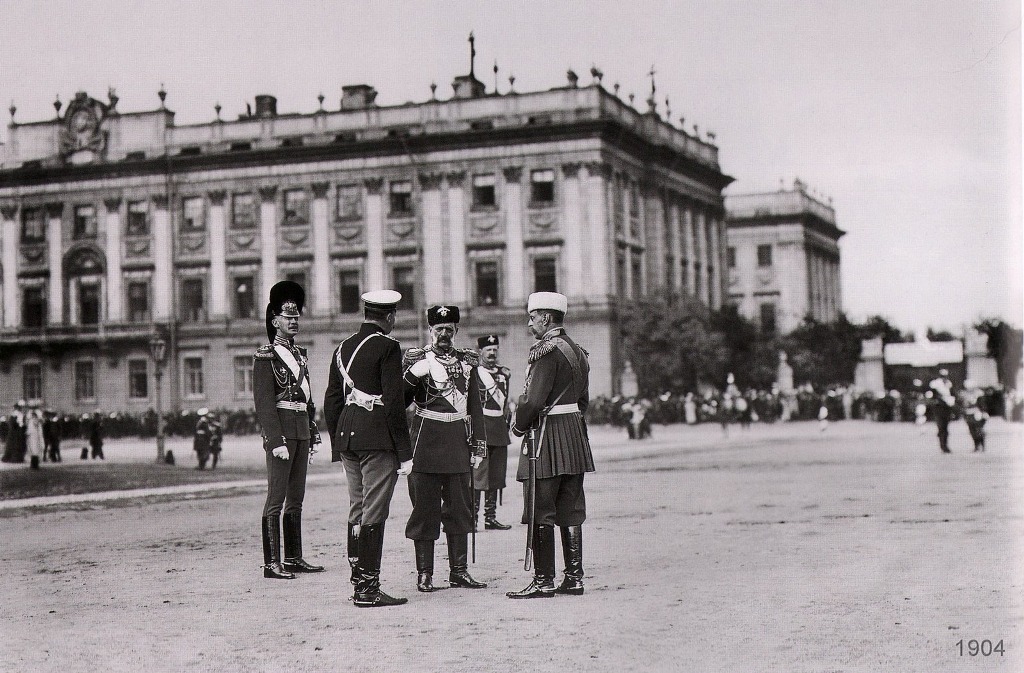
PHOTO: Commander-in-Chief of the Guards and the St. Petersburg Military District Grand Duke Vladimir Alexandrovich (center), talking with Grand Duke Dmitri Konstantinovich (left) and officers, before the parade of the Pavlovsky Life Guard Regiment, on the Field of Mars, St. Petersburg. 30th August 1904

It was St Petersburg Governor General Ivan Aleksandrovich Fullon (1844-1920), who provided comprehensive support to the “Assembly of Russian Factory Workers of St. Petersburg”, with the priest Georgy Gapon leading the way. 

However, it was Guards Commander Prince Sergei Illarionovych Vasilchikov (1849-1926) who developed a plan of action for the police and troops to prevent the procession from even taking place.

It is interesting to note that Prince Vasilchikov was under the command of the Tsar’s uncle Grand Duke Vladimir Alexandrovich (1847-1909), who served as Commander-in-Chief of the Guards and the St. Petersburg Military District. 

On the eve of of the procession 21st (O.S. 8th) January, Grand Duke Vladimir Alexandrovich ordered his subordinate to use military force to prevent the procession from taking place. Vasilchikov obeyed his superior, and the following day when a large group of workers reached Winter Palace Square, troops acting on direct orders from Vasilchikov opened fire upon the demonstrators. 

Although Grand Duke Vladimir claimed no direct responsibility for the tragedy, since he was also away from the city, his reputation was tarnished. General Fullon was discharged after the events of Bloody Sunday.

The number of victims is greatly exaggerated by many historians. According to the Tsar’s official records: 130 dead and 299 injured; while anti-government sources claimed any where from 1,000 to 4,000 dead.

That evening, the events in St. Petersburg were reported to Nicholas II. The emperor was distressed and wrote in his diary:

“A terrible day! There were serious disturbance in Petersburg as a result of the workers wishing to reach the Winter Palace. The troops were forced to open fire in several parts of the town, there were many killed and wounded. Lord, how painful and how sad!” 
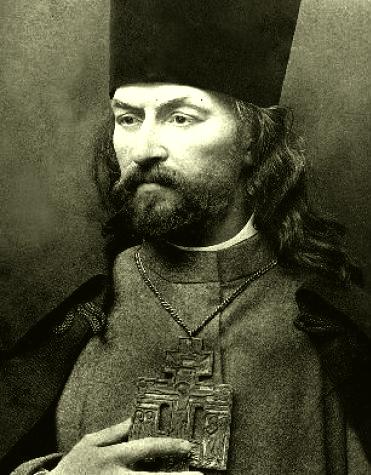
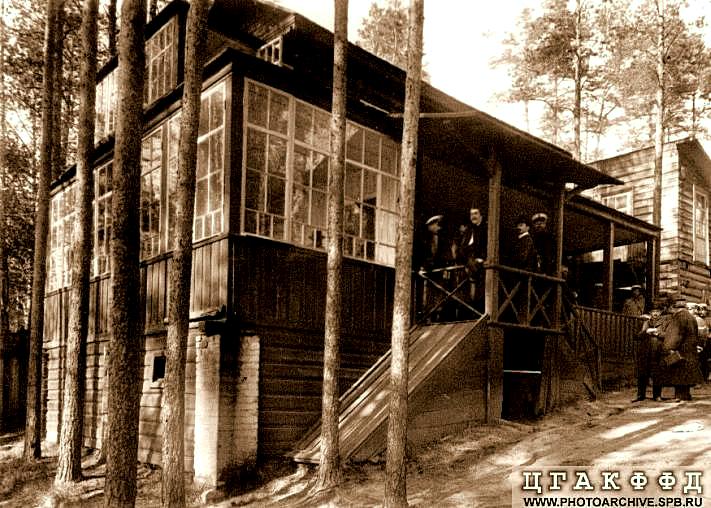
Photos: Father Georgy Gapon (1870-1906) ; the house in Ozerki, where Gapon was killed

Father Georgy Gapon (1870-1906) – the organizer of the procession – was a charismatic speaker and effective organizer who took an interest in the working and lower classes of the Russian cities. However, Fr. Gapon also had a hidden dark side, which has been proven by post-Soviet scholars – the priest was a police informant. 

After Bloody Sunday, Gapon fled to Europe, but returned by the end of 1905, and resumed contact with the Okhrana. On 26 March 1906, Gapon arrived for a meeting at a rented cottage outside St. Petersburg. A month later, his body was found hanged. Gapon had been murdered by three members of the Socialist Revolutionary Party, after they had discovered that Gapon was a police informant.

* * *

FURTHER READING:

Click HERE to read Bloody Sunday 1905. What is the truth? [includes VIDEO in English] originally published on 21st October 2020

© Paul Gilbert. 22 January 2023
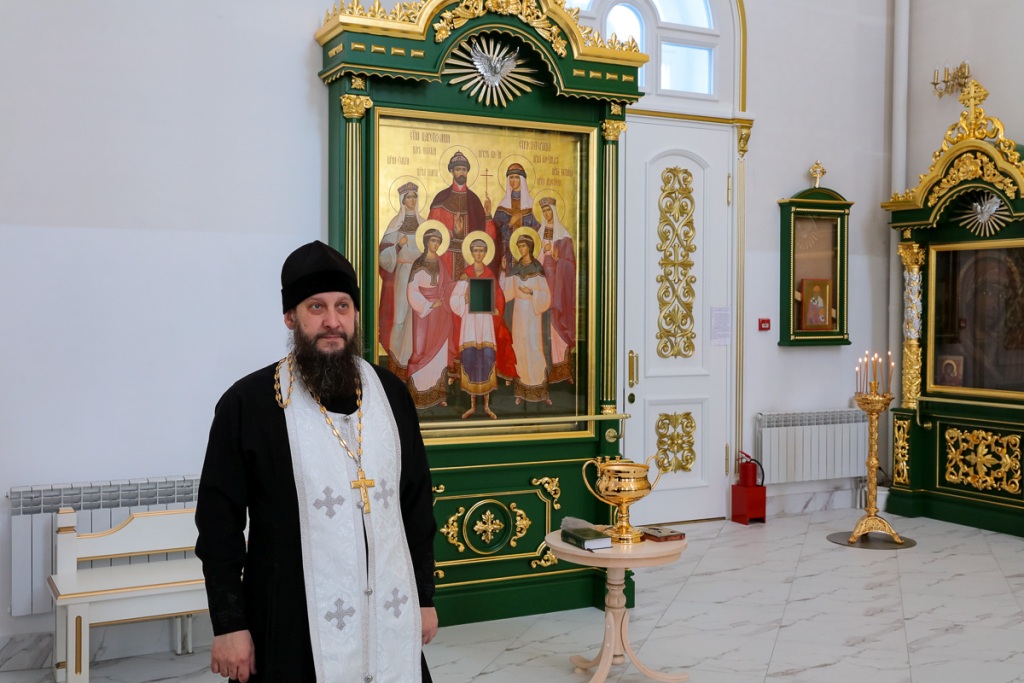
Unique icon of the Holy Royal Martyrs consecrated in the Urals

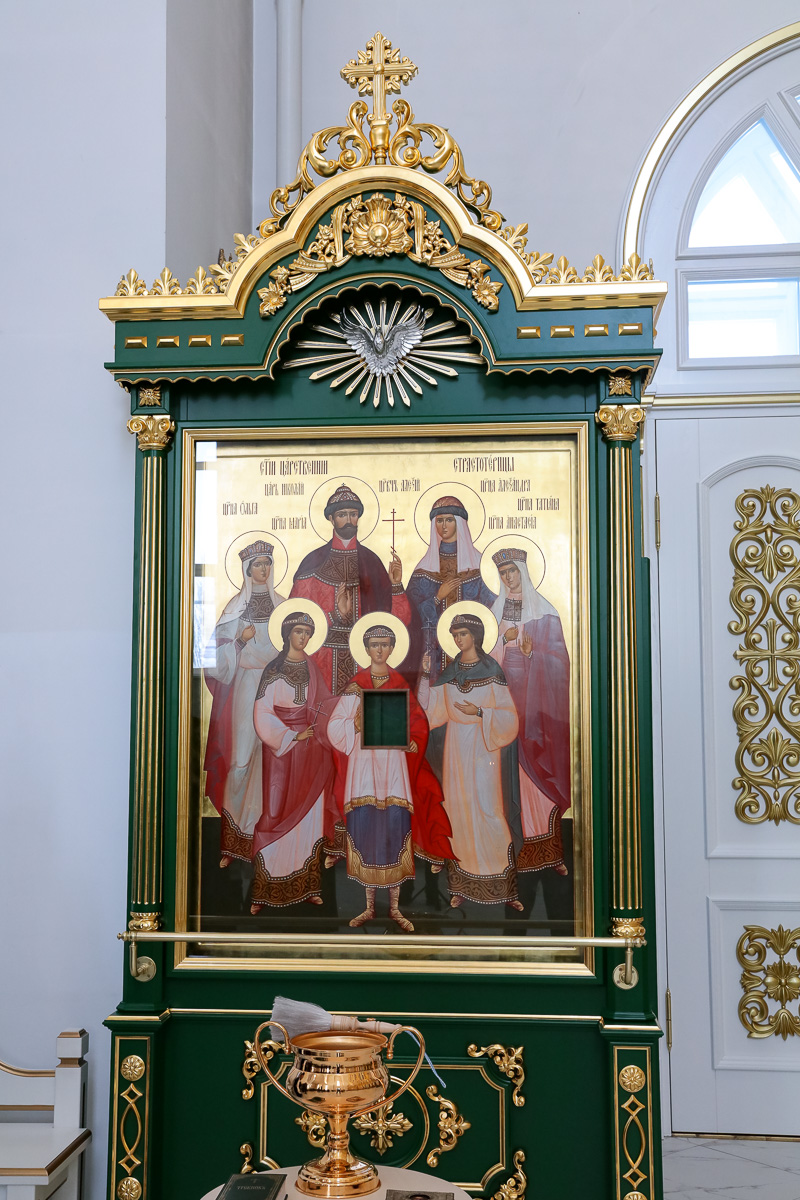
PHOTO: the new icon of the Holy Royal Martyrs in the Holy Trinity Cathedral on 6th January 2023

On 6th January 2023, Metropolitan Daniel of Kurgan and Belozersky visited the Holy Trinity Cathedral[1] in the Ural city of Kurgan[2], where he performed a Divine Liturgy followed by the rite of consecration of a new icon of the Holy Royal Martyrs.

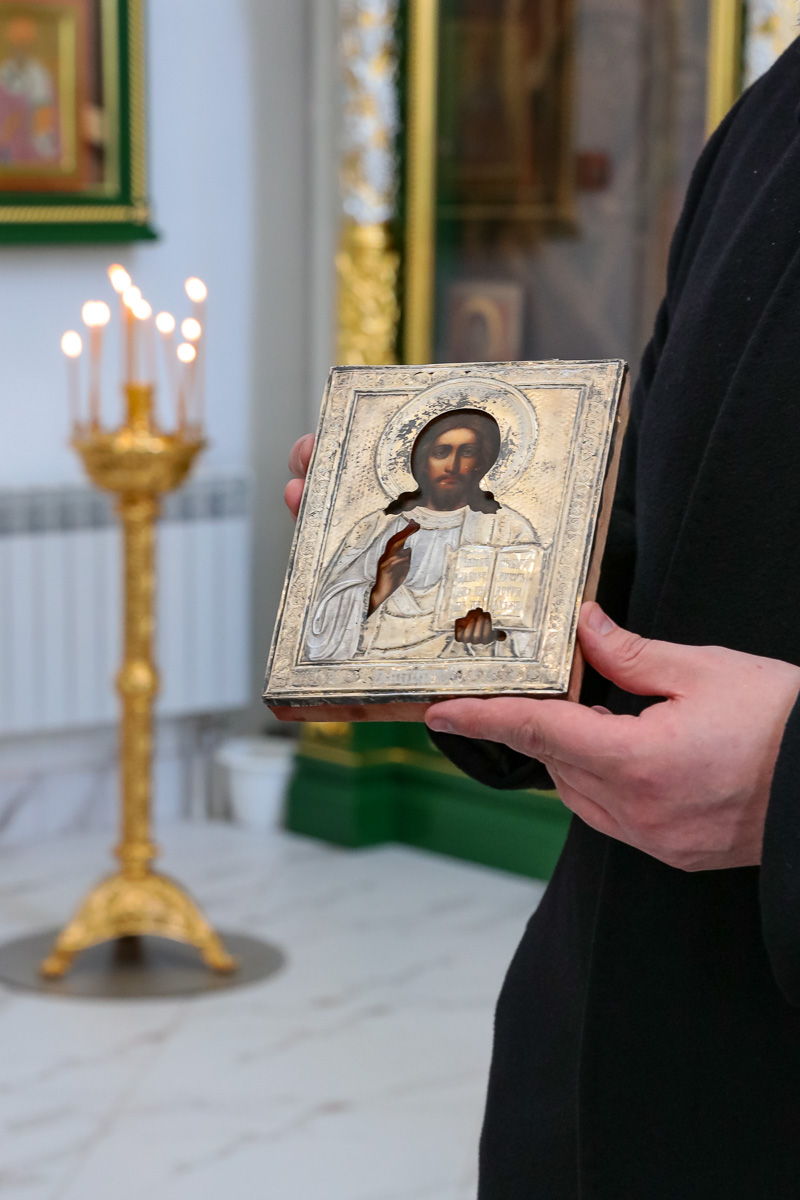
What is unique about this particular icon is that it features a small antique icon of Our Saviour mounted into the larger icon. This icon belonged to Tsesarevich Alexei Nikolaevich, and accompanied Emperor Nicholas II and his family when they were sent into exile in August 1917. The icon was discovered among the items not pilfered or destroyed by the Bolsheviks in the Ipatiev House in Ekaterinburg after the family’s murders in July 1918.

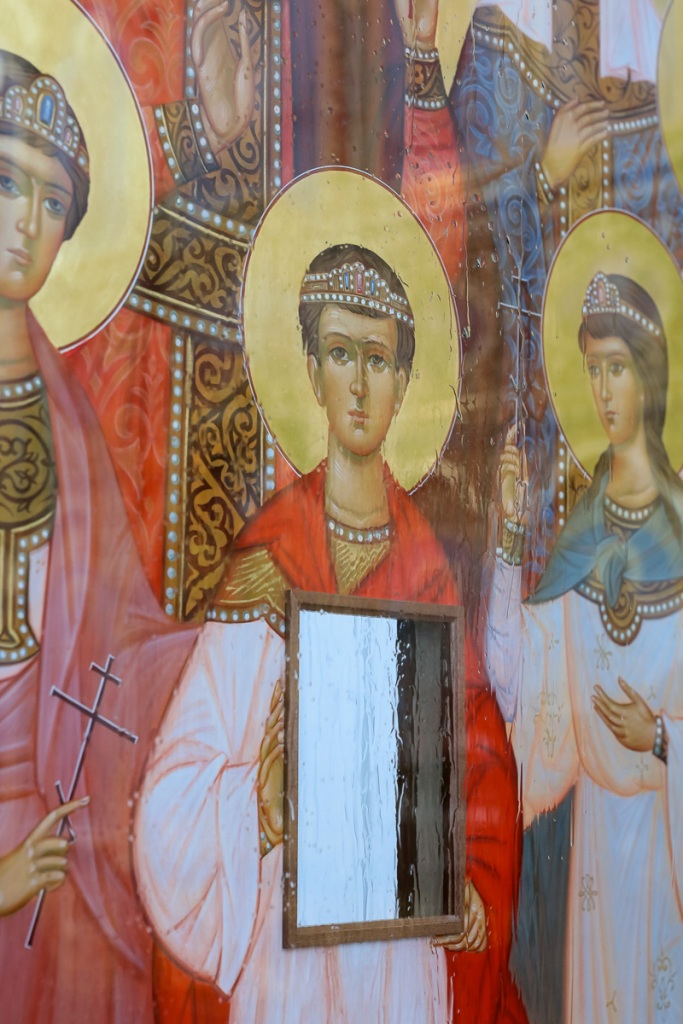
PHOTO: Tsesarevich Alexei’s small icon of Our Saviour (above) has now been mounted into Alexei’s hands in the larger icon of the Holy Royal Martyrs (below)

Metropolitan Daniel thanked the family of Russian Senator, member of the Federation Council Committee on Defense and Security Sergei Nikolaevich Muratov, through whose efforts and generosity that the Holy Trinity Cathedral was rebuilt in Kurgan[1], and this new icon of the Holy Royal Martyrs was presented to the cathedral.

“I am sure that the faithful will come from near and far to venerate this small icon of Our Savior, mounted in the larger icon of the Holy Royal Martyrs. They will come to pray to receive help, because each member of the Imperial Family held the icon in their hands and prayed in front of it,” Vladyka Daniel said at the end of the ceremony.

Russian Senator Sergey Muratov told the story of how he managed to acquire this miraculously preserved icon, how he showed the image to the former Head of the Kurgan Metropolis, Metropolitan Joseph: “It was five years ago that Vladyka Joseph wisely proposed that the icon not be sold to a private collector or museum, but to be made public so that Orthodox Christians could come to the church and pray before it. He noted that this icon with such a significant provenance should be venerated according to the traditions of Russian icon painting. He suggested that the icon of the Holy Royal Martyrs should depict Tsesarevich Alexei holding the icon of Our Savior in his hands. “

PHOTO: full view of the icon of the Holy Royal Martyrs shows an empty box giving the impression that Tsesarevich Alexei is holding the icon of Our Saviour in his hands

Metropolitan Joseph’s wishes were honoured. As time passed, and already with the blessing of Metropolitan Daniel, the large icon of the Holy Royal Martyrs was created, in which Tsesarevich Alexei’s icon of Our Saviour was mounted into it. As planned, the work was completed by the feast of the Nativity of Christ, which is observed on 19th (O.S. 6th) January.

NOTES:

[1] The original Holy Trinity Cathedral was built on Trinity Square in Kurgan. Construction began on 16th (O.S. 5th) June 1763, the central altar was consecrated in 1805. On the night of 17/18 (O.S. 5/6) 1837, the heir to the throne Tsesarevich and Grand Duke Alexander Nikolaevich – the future Emperor Alexander II – attended a Divine Liturgy in the new cathedral. 

During the Soviet years, the cathedral was closed on 25th May 1937. Some twenty years later on 25th May 1957, the cathedral was blown up.

On 26th August 2017, construction began on a new Holy Trinity Cathedral just south of the original cathedral, on the bank of the Tobol River. The patron of the construction of the new cathedral was Russian Senator Sergey Nikolaevich Muratov. On 27th November 2021, Metropolitan Daniel performed the rite of consecration of the Holy Trinity Cathedral.

[2] Kurgan is situated 370 km [229 miles] southeast of Ekaterinburg

© Paul Gilbert. 21 January 2023

The fate of the Kornilov House in Tobolsk

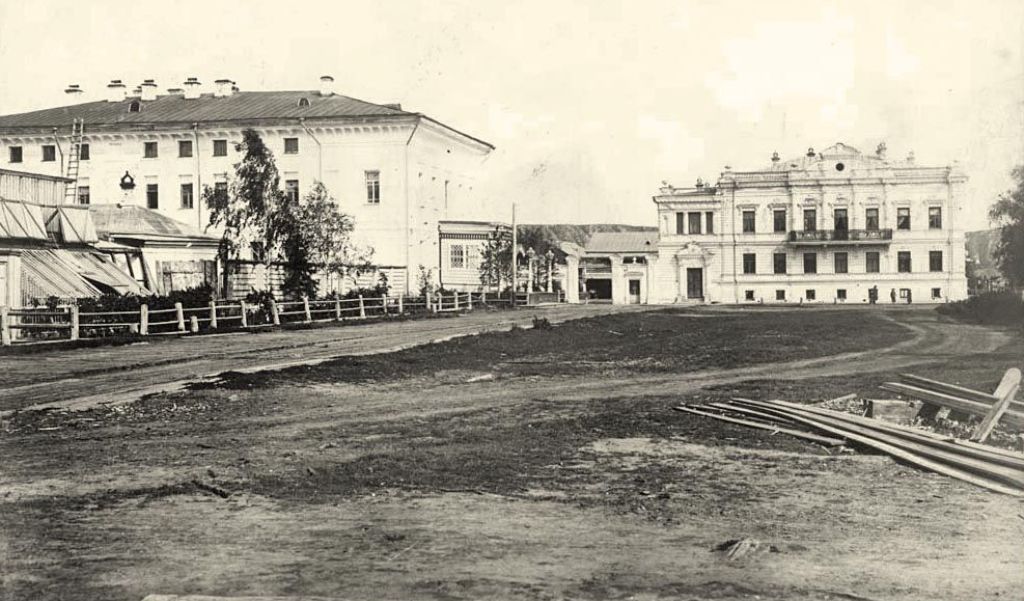
PHOTO: early 20th century view of the Governor’s House (left) where the Imperial Family were held under house arrest from August 1917 to April 1918, and the Kornilov House (right) where their servants and retainers were housed in Tobolsk

When Emperor Nicholas II and his family were sent into exile from Tsarskoye Selo on the morning of 14th August (O.S. 1st) 1917, they were not alone. They were accompanied by an enormous entourage of servants and retainers, all of whom followed the Imperial Family voluntarily into an unknown future.

The two trains[1] carrying the Imperial Family, their entourage of nearly 40 servants and retainers[2], plus trunks, suitcases and other personal belongings – all under the watchful eyes of Colonel Eugene Kobylinsky[3] and 330 soldiers – arrived four days later in Tyumen, where they boarded the steamer Rus, which transported them a further 200 miles northeast, a two day journey on the Tura and Tobol rivers arriving in the historic capital of Siberia: Tobolsk.

According to the diary of Nicholas II, after a delay of several days, the Imperial Family were moved into the former Governor’s Mansion[4] on 13th August (O.S.). The family occupied the second floor of the building, the first floor included a dining room and rooms for servants. According to Russian historian Peter Multatuli, the following servants also lived in the Governor’s Mansion: Terentiy Chemodurov, Anna Demidova, Alexandra Tegleva, Elizaveta Ersberg and Maria Tutelberg. Despite being the largest residence in Tobolsk, it was not large enough to house the Imperial Family’s entourage.

The former house of a merchant named Ivan Nikolaevich Kornilov, situated on the opposite side of the square, housed the remaining retainers of the Imperial Family, as well as some of the Guards. Each day the servants and retainers walked across the road to perform their services to the Imperial Family. No one was allowed to enter the Kornilov House without a special permit. 

Persons accompanying the Imperial Family – source: Russian historian Pyotr Multatuli:

1 – Adjutant General Count Ilya Tatishchev
2 – Marshal of the Imperial Court Prince Vasily Dolgorukov
3 – Lady in Waiting Countess Anastasia Hendrikova
4 – Court physician Dr. Evgeny Botkin
5 – French language tutor Pierre Gilliard
6 – Russian language tutor Catherine Schneider
7 – Tutor of Countess Hendrikova Victoria Nikolaeva
8 – Nursemaid Alexandra Tegleva
9 – Assistant to A. Tegleva Elizaveta Ersberg
10 – Kamer-Jungfer[5] Maria Tutelberg
11 – Lady in Waiting Anna Demidova
12 – Nicholas II’s valet Terentiy Chemodurov
13 – Chemodurov’s assistant Stepan Makarov
14 – Valet Alexei Volkov
15 – Footman of the Tsesarevich Sergey Ivanov
16 – Children’s footman Ivan Sednev
17 – Sailor-nanny of the Tsesarevich Klimenty Nagorny
18 – Valet Aloysius Troup
19 – Footman Tyutin
20 – Footman Dormidon
21 – Footman Kiselev
22 – Footman Ermolai Gusev
23 – Waiter Franz Zhuravsky
24 – Senior Cook Ivan Kharitonov
25 – Assistant cook Kokichev
26 – Assistant cook Ivan Vereshchagin
27 – Assistant cook Leonid Sednev
28 – Minister Mikhail Karpov
29 – Kitchen attendant Sergey Mikhailov
30 – Kitchen attendant Franz Purkovsky
31 – Kitchen attendant Terekhov
32 – Servant Smirnov
33 – Clerk Alexander Kirpichnikov
34 – Hairdresser Alexey Dmitriev
35 – Wardrobe Stupel
36 – Head of the Wine Cellar Rozhkov
37 – Servant of Countess Hendrikova Paulina Mezhants
38 – Servant of Catherine Schneider Ekaterina Zhivaya
39 – Servant of Catherine Schneider Maria

Later arrivals included source: Russian historian Pyotr Multatuli:

40 – English language tutor Charles Sydney Gibbs
41 – Doctor of Medicine Vladimir Derevenko
42 – Lady-in-waiting Baroness Sophie Buxhoeveden
43 – Kamer-Jungfer[5] Magdalene Zanotti
44 – Room girl Anna Utkina
45 – Room girl Anna Romanova

Sophie Buxhoeveden: “Though I was allowed to stay at the Kornilov house with the other members of the Household for some weeks, I had ultimately to lodge in the town, though I could see the members of the suite every day; and while I lived in the Kornilov house, I was never once allowed to go out for a walk.”

On 26th (O.S. 13th) April 1918, Emperor Nicholas II, Empress Alexandra Feodorovna, Grand Duchess Maria Nikolaevna, Dr. Eugene Botkin were transferred from Tobolsk to Ekaterinburg. The following month, on 20th May, the four remaining children: Grand Duchesses Olga, Tatiana and Anastasia, along with Tsesarevich Alexei Nikolaevich joined their parents and sister in the Ipatiev House in Ekaterinburg.

The Imperial Family and four faithful retainers were held under house arrest in the Ipatiev House, where they were subsequently murdered by the Ural Soviet on the night of 16/17 July 1918.

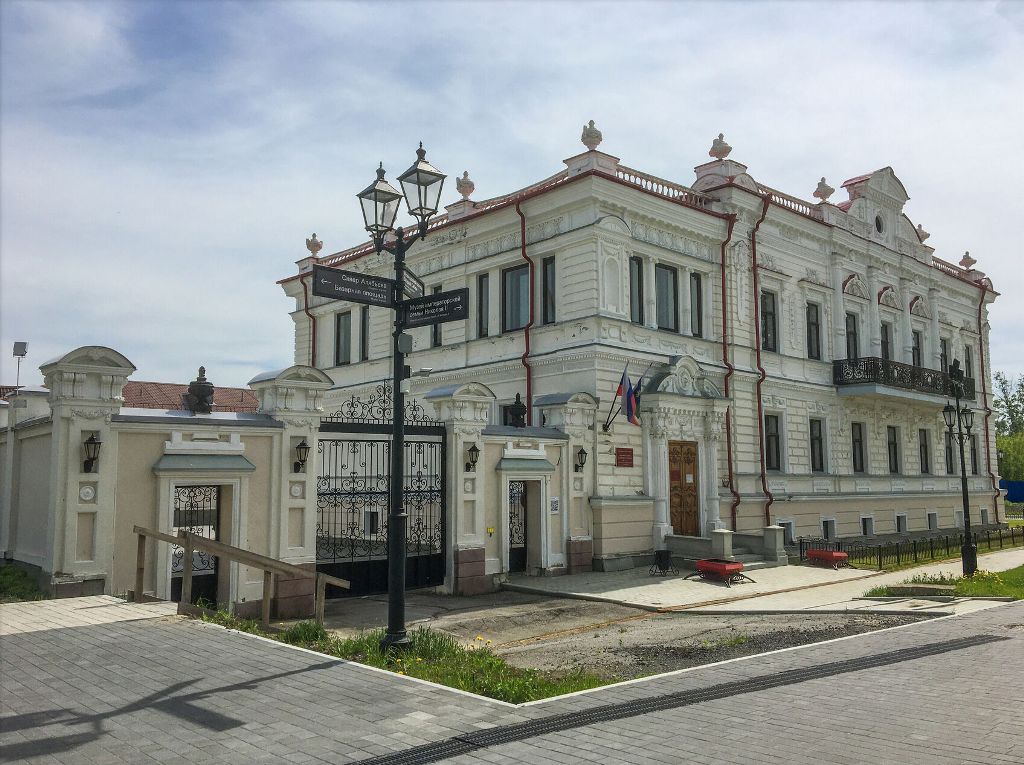
PHOTO: main façade of the Kornilov House as it looks today

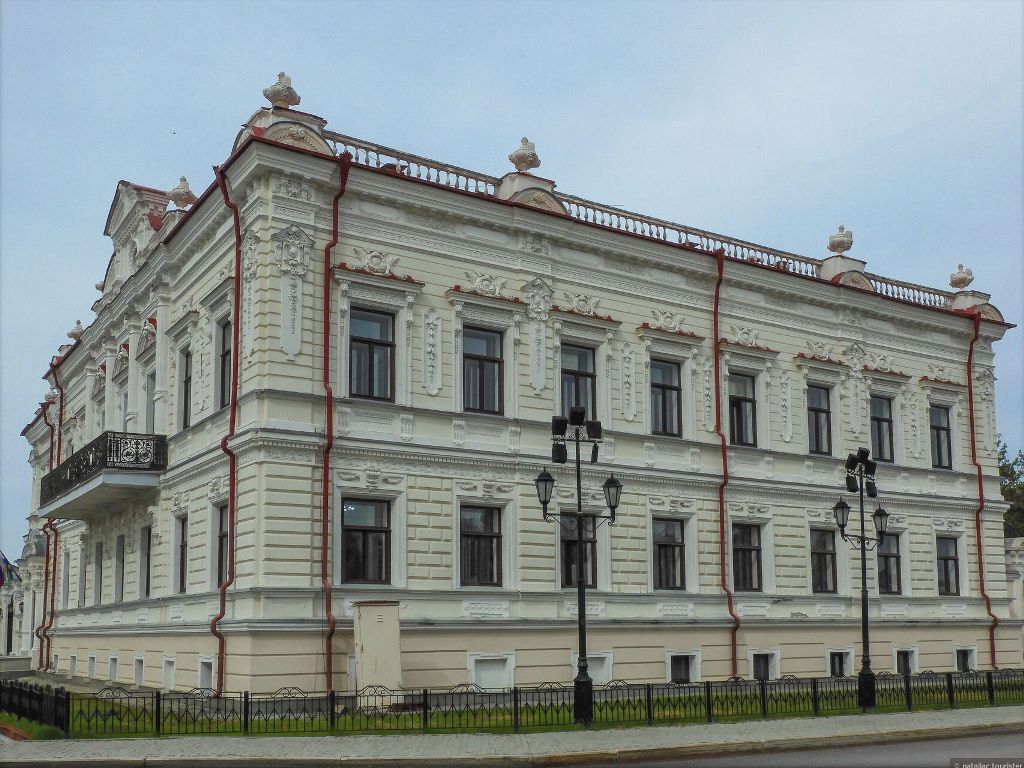
PHOTO: side view of the façade of the Kornilov House as it looks today

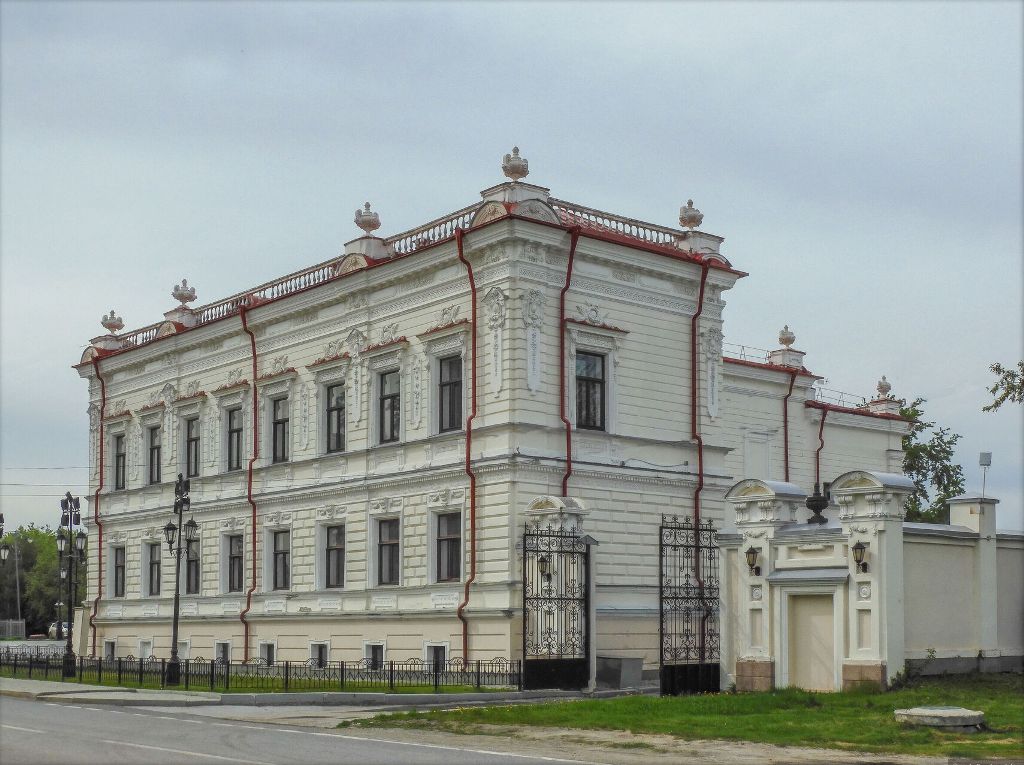
PHOTO: rear view of the façade and entrance to the courtyard of the Kornilov House as it looks today

Following the transfer of the Imperial Family to Ekaterinburg, the remaining servants and retainers in the Kornilov House were free to leave. Many of them returned to their homes or started new lives in Tobolsk or elsewhere. A number of them, however, wanted to make the journey to Ekaterinburg with the hope of reuniting with the Tsar and his family. Their captives warned them that any one who went with the four Romanov children to Ekaterinburg would remain at liberty, at worse, they would not even be permitted to live in the same house with the Imperial Family but tossed in the local jail.

Despite the warning, a few of them made the journey to the Ural capital, and, sure enough were imprisoned and later murdered by the Bolsheviks. Among them were Prince Vasily Dolgorukov, Ilya Tatishchev, Ekaterina Schneider, Anastasia Hendrikova, Klimenty Nagorny and Ivan Sednev. 

As foreign nationals, Pierre Giliard and Sydney Gibbes were both set free. So were a number of others with no explanation and amid rumours that they had abandoned the Imperial Family, sold a few secrets and begged for their lives.

Baroness Sophie Buxhoeveden attributed her unexpected release by the Bolsheviks to her “foreign” surname – it was Danish by origin – however, the even more foreign name of “Catherine Schneider” did not prevent the poor woman from being shot.

During the Russian Civil War, the Kornilov House became the headquarters of Vasily Blyukher’s 51st Division. Later, the building housed the State Bank. In 1993, the Center for Russian Culture occupied the former mansion. In November 2010, the Kornilov House underwent an extensive restoration, and today houses the justices of the peace and the Museum of the History of the Judicial System of Western Siberia.

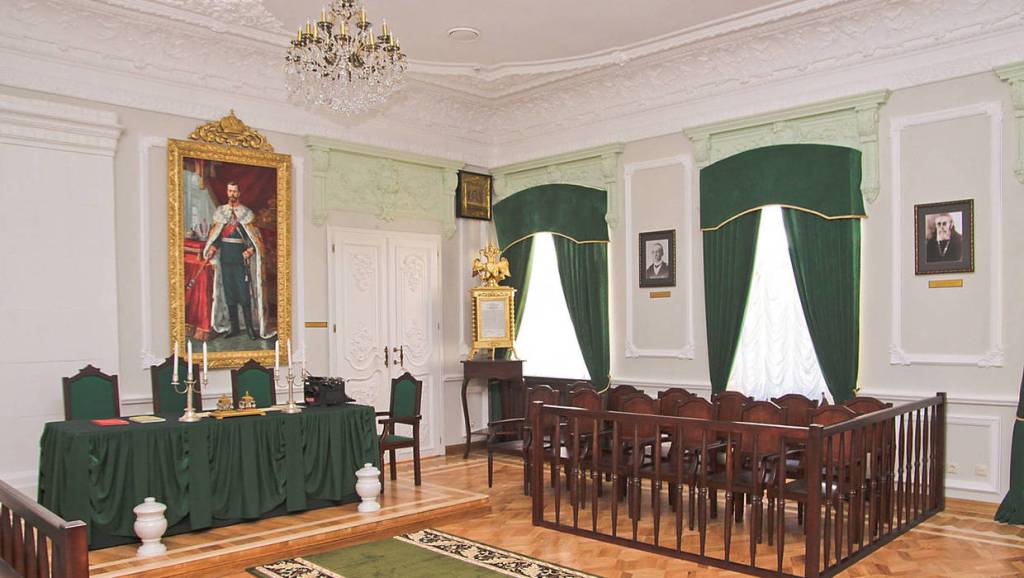
PHOTO: a portrait of Emperor Nicholas II today hangs in the History of the Judicial System of Western Siberia Museum, housed in the former Kornilov House

NOTES:

[1] The trains in which the Imperial Family and their entourage travelled were disguised for security purposes as a Red Cross Train and flew a Japanese flag. The train made regular stops which allowed the August prisoners to roam the woods in search of flowers and berries, always taking their two dogs with them. As the train approached stations and large towns, the curtains of their private wagon were always drawn shut.

The train were considered a “luxurious vehicle for transporting prisoners”. The first train carrying the Tsar and his family was a comfortable wagon-lits of the International Sleeping Car, and including a restaurant car stocked with wines from the Alexander Palace’s wine cellar.

[2] Some sources claim that 45 servants and retainers went into exile with the Imperial Family, however, this author could only identify 39 persons. If we include the 6 persons who later joined them after their arrival in Tobolsk, then this number is correct.

[3] Eugene Stepanovich Kobylinsky (1875-1927) was born into a noble family in Kiev. In 1909 he became a lieutenant in the St. Petersburg Imperial Guard regiment. After Nicholas II abdicated the throne in February 1917, Kobylinsky became an employee of the Provisional Government. On 14th March [O.S. 1st March] 1917, he was appointed commandant of the Alexander Palace, where the Tsar and his family were being held under house arrest at Tsarskoye Selo.

[4] The Governor’s Mansion was an extensive two-storey house built in the Empire Style facing Platzparadnaya Square. It was one of the first houses in Tobolsk to have electricity and fresh water supply installed. The last governor who lived in the house was Nikolai Alexandrovich Ordovsky (1863-1950), who held the post from November 1915 until the October 1917 Revolution. 

Not only was Ordovsky a devout Orthodox Christian, he was also a monarchist who was dedicated to Nicholas II. Following the Tsar’s abdication he refused to accept it nor the new Provisional Government. Upon leaving the city for Petrograd, he said to one of his escorts: “I will not go to any of the members of the Provisional Government, because I served the Emperor, I fulfilled his will. I will not serve any other government” 

In 1918 he was arrested and imprisoned in the Peter and Paul Fortress. As a former officer, he was included in the “Officer’s List” of those to be executed. Despite his poor health, he managed to escape both the prison and Petrograd. How he managed his miraculous escape remains unclear.

At the end of 1918 he managed to emigrate to Europe. In 1923, in Germany, he was ordained a priest and received a parish in Hamburg; later, having disagreed on some issues with the leadership of the Russian Orthodox Church Abroad, he came under the jurisdiction of the Serbian Patriarchate. Already in Germany he was tonsured a monk with the name Nikon, then in Serbia he received the rank of hegumen and archimandrite. In 1945, he cared for Orthodox believers in displaced persons’ camps and was tonsured by Metropolitan Seraphim in the great schema with the name Nicodemus.

In 1948, while in Germany, he began to write voluminous memoirs about his life in pre-revolutionary Russia. Life in exile was full of wanderings, deprivations, loneliness. Nikolai Alexandrovich Ordovsky died in a hospital in Bavaria in 1950.

NOTE: The former Governor’s Mansion has survived to the present time and today houses the Museum of the Family of Emperor Nicholas II, which opened on 26th April 2018.

[5] In two cases – Nos. 10 and 43 – I have been unable to find the correct English translation of the positions of Kamer-Jungfer, therefore, I have left it in the original in italics.

© Paul Gilbert. 20 January 2023

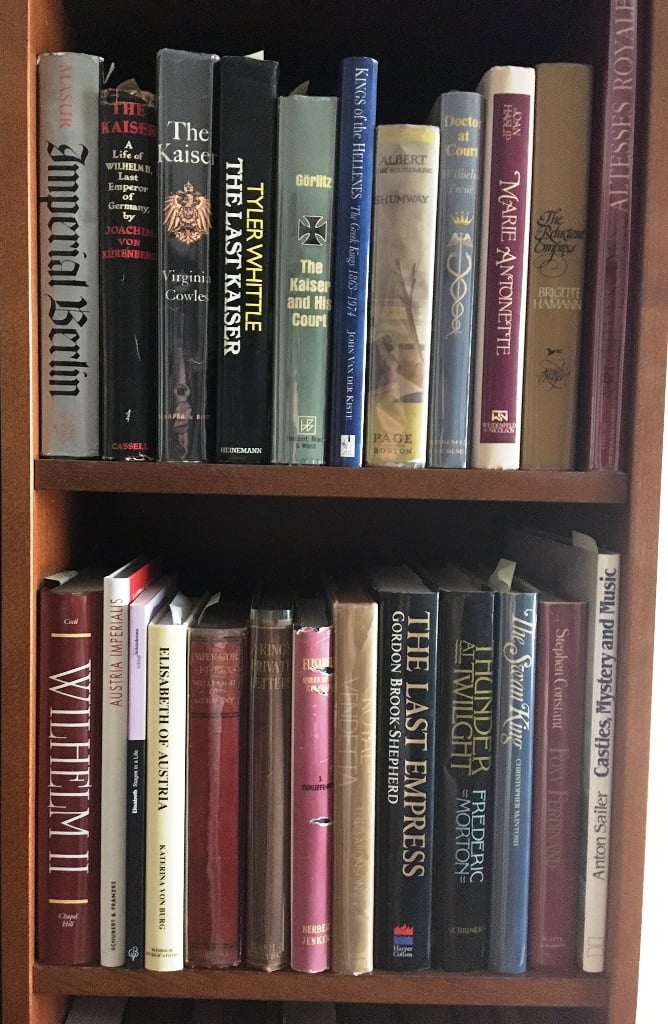
Paul Gilbert resumes sale of personal royal library

Now that my chemo is over and done with, I can now resume the sale of the remaining books from my personal library. I have about 300+ titles remaining in my collection on Russian, European and British royalty – some titles of which are very rare and/or in mint or very good condition.

In preparation for my planned move back to England in the summer of 2025, I have been forced to sell the bulk of my personal library, which originally consisted of more than 2,000 new, rare and second-hand titles on the royal houses of Russia, Europe and Britain.

The ONLY books that I will be taking with me to England, are my collection of titles on the life, reign and era of Nicholas II.

I have created a special online bookshop for the sale of my collection [see link below]. The titles listed are all one-of-a-kind, there are no duplicates! Books will be sold on a first come, first serve basis. The condition of each book varies and is noted with each listing. Titles are available in a variety of languages: English, French, German and Russian. Please check individual listings before ordering.

ALL prices are in US dollars! Payment can be made securely online with a credit card or PayPal. I will also accept payment by personal check or money order in USD. Shipping rates are for Canada and United States orders ONLY. ALL sales are FINAL!

Please take a moment to review my current catalogue, bearing in mind that I still have many additional titles on European and British royalty to add over the coming weeks ahead.

Additional titles will be added on a regular basis, so please bookmark or check back for new listings. If you have any questions or concerns, please do not hesitate to contact me by email – royalrussia@yahoo.com

© Paul Gilbert. 20 January 2023

Monument to Nicholas II consecrated in Bijeljina

On 4th January 2023, a new monument to the Holy Royal Martyrs was installed and consecrated on the grounds of the Monastery of St. Petka in Bijeljina in Republika Srpska [one of the two entities of Bosnia and Herzegovina, the other being the Federation of Bosnia and Herzegovina].

The monument was made in bronze in the Russian style, by the Serbian sculptor from Belgrade, Milos Komad, and financed by the retired Bishop of Zvornik-Tuzla Vasilije.

The marble pedestal, and placement is the work of academician Drago Mirković, an artist, a great humanist and church benefactor. Mirkovic chose the inscriptions which appear on all four sides of the pedestal quotes by Sergei Bektayev, the Russian national poet, the texts of St. Peter of Cetinsky, Dostoevsky, Pushkin and Emperor Nicholas II’s words of support to the Serbs.

The combined height of the bronze monument and marble pedestal is almost 5 meters [16 ft.] high.

PHOTO: view of the bronze monument before it being mounted on the marble pedestal

PHOTO: full front and rear view of the Holy Royal Martyrs monument

© Paul Gilbert. 19 January 2023

‘You reap what you sow’ – Monarchists take revenge on the regicide Peter Ermakov

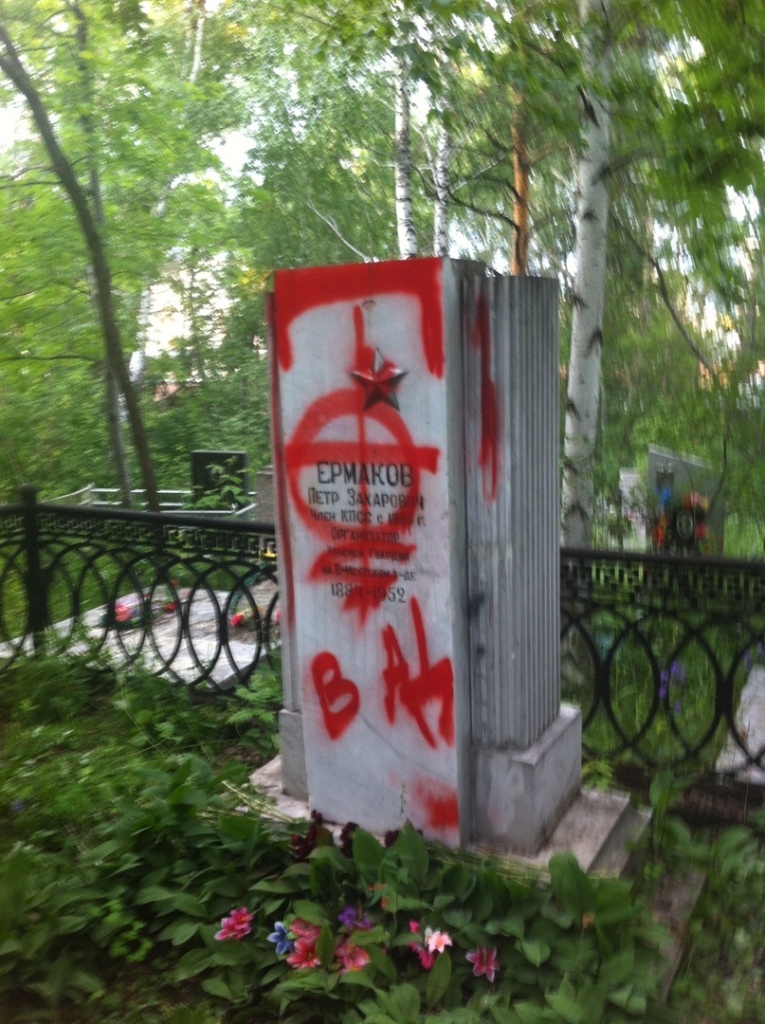
PHOTO: the desecrated grave of the regicide Peter Ermakov in Ivanovo Cemetery in Ekaterinburg

Every year on 17th July – the day marking the anniversary of the murder of Emperor Nicholas II and his family – the grave of the Bolshevik revolutionary Peter Ermakov, has been vandalized by local monarchists, who douse his gravestone with red paint.

This annual protest began shortly after the fall of the Soviet Union in the early 1990s. The red paint symbolizes the blood which this evil man spilled, and his involvement in the regicide.

Pyotr (Peter) Zakharovich Ermakov (1884–1952), was one of several men responsible for the murder of Emperor Nicholas II, his wife, their five children, and their four faithful retainers in the basement of the Ipatiev House in Ekaterinburg.

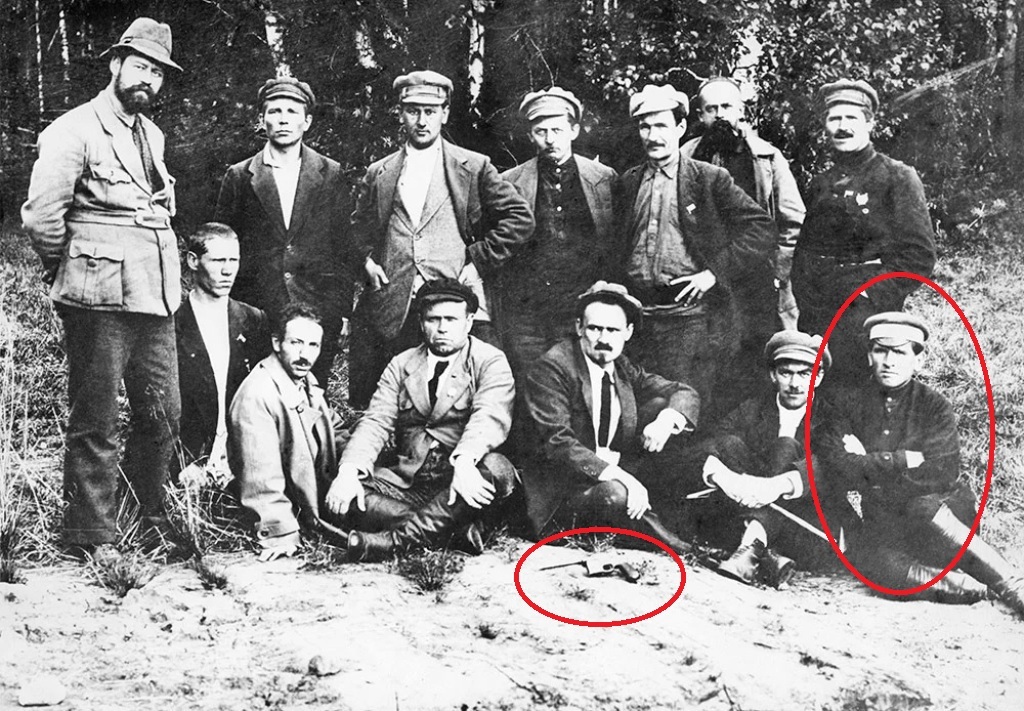
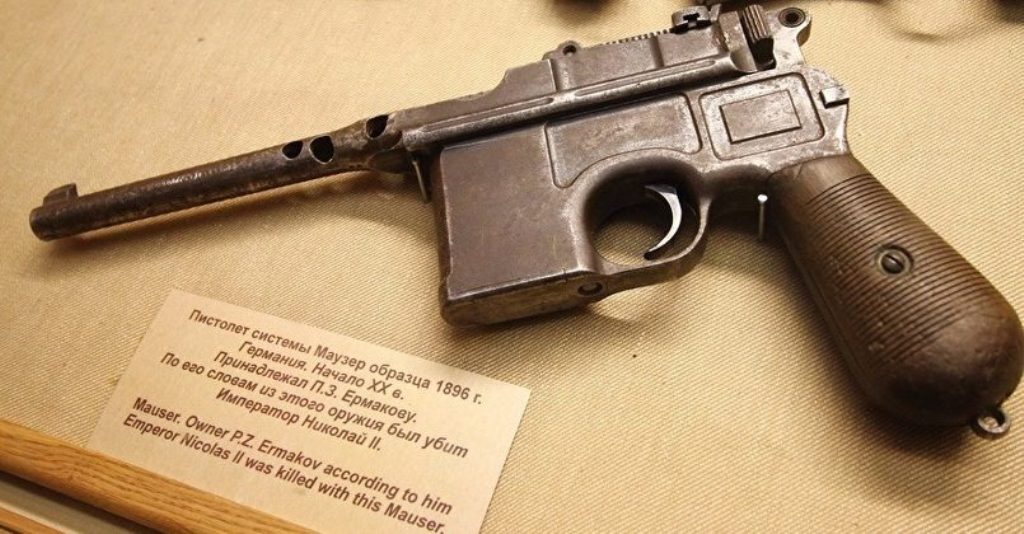
He was also among the men in the firing squad, and considered to be the most bloodthirsty of the executioners. His Mauser revolver, which he alleges fired the fatal shot which ended the life of the Tsar is preserved today in the permanent exhibition The Romanovs in the Urals opened at the Poklevsky-Kozell House Museum in Ekaterinburg.

According to his own recollections, it was he who also murdered the Empress Alexandra Feodorovna, the cook Ivan Kharitonov and the doctor Eugene Botkin. He often boasted of his crime, without feeling any sense of remorse: “I shot the Tsarina who was seated only six feet away, I could not miss. My bullet hit her right in the mouth, two seconds later she was dead. Then I shot Dr. Botkin. He threw up his hands and half turned away. The bullet hit him in the neck. He fell backwards. Yurovsky’s shot knocked the Tsesarevich to the floor, where he lay and groaned. The cook Kharitonov was huddled over in the corner. I shot him first in the torso and then in the head. The footman Troupe also fell, I don’t know who shot him … ”

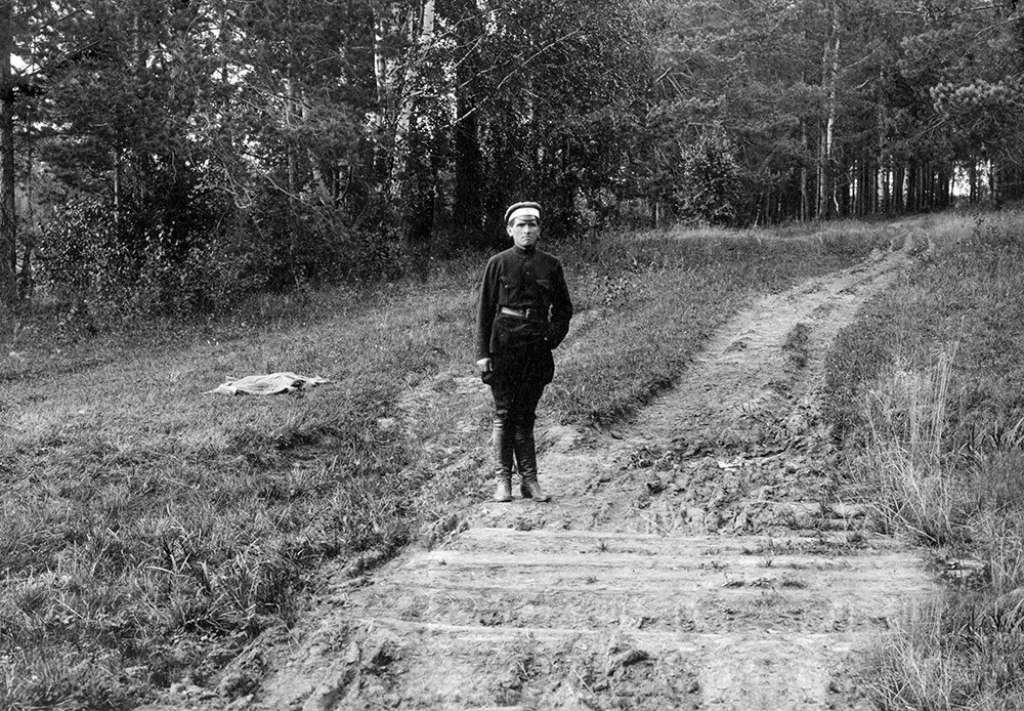
PHOTOS: (above) Ermakov standing on the grave of members of the Imperial Family and their retainers at Porosenkov Log in the 1920s; (below) Ermakov (far right) posing with a group of prominent Ural Bolsheviks on the Tsar’s grave, his Mauser pistol can be seen in the foreground in front of P.M. Bykov, author of The Last Days of Tsardom (1934)

In the 1920s, Yermakov returned to Porosenkov Log where he had his photograph taken standing on the railway ties which concealed the second grave of the Imperial Family. On the reverse of this photo, he wrote: “I am standing on the grave of the Tsar”.

In 1951, at a reception, which gathered all the local Party elite in Sverdlovsk [Ekaterinburg], Peter Ermakov approached Soviet Red Army General Georgy Zhukov (1896-1974) and held out his hand. Frowning in disgust Zhukov looked Ermakov in the eye, and muttered, “I do not shake the hands of the murderers.”

Ermakov died in Sverdlovsk on 22 May 1952 from cancer at the age of 67, he was buried in Ivanovo Cemetery in Ekaterinburg.

In January 2022, the famous Russian sculptor Konstantin Vasilievich Grunberg has proposed replacing monuments of the Bolshevik leaders Vladimir Ulyanov (Lenin) and Yakov Sverdlov in Ekaterinburg.

Grunberg also called for debunking the image of the revolutionary “hero” Pyotr Yermakov. “People still bring flowers to his grave. We need to destroy this regicide’s grave!” the sculptor said.

PHOTO: Ermakov’s Mauser revolver, which he alleges fired the fatal shot which ended the life of Russia’s last Tsar is preserved today in the new permanent exhibition The Romanovs in the Urals opened at the Poklevsky-Kozell House Museum  in Ekaterinburg

Click HERE to read my article Yakov Yurovskys’ ashes remain hidden from vandals in Moscow, originally published on 23rd November 2019

Click HERE to read my article The fate of the regicides who murdered Nicholas II and his family, originally published on 28th October 2020

© Paul Gilbert. 17 January 2023

***

The following NEW title was compiled and edited by independent researchers and Romanov historian Paul Gilbert was published in August 2024. 

This fascinating new study features 14 chapters on this tragic event, which include the memoirs of a British intelligence officer and journalist, and two First-English translations. In addition, 11 chapters were written by Paul Gilbert, based on new documents sourced from Russian archival and media sources over the past decade.

Please refer to the link provided for further details about the content of this new title . . .

CLICK HERE TO READ MORE ABOUT THIS TITLE

Lost architectural monuments of the Moscow Kremlin

During the Soviet years, numerous architectural monuments of the Moscow Kremlin were lost. Churches, monasteries, and palaces were destroyed because they reminded the Soviet regime under Stalin of Holy Russia and the glorious history of the Russian Empire.

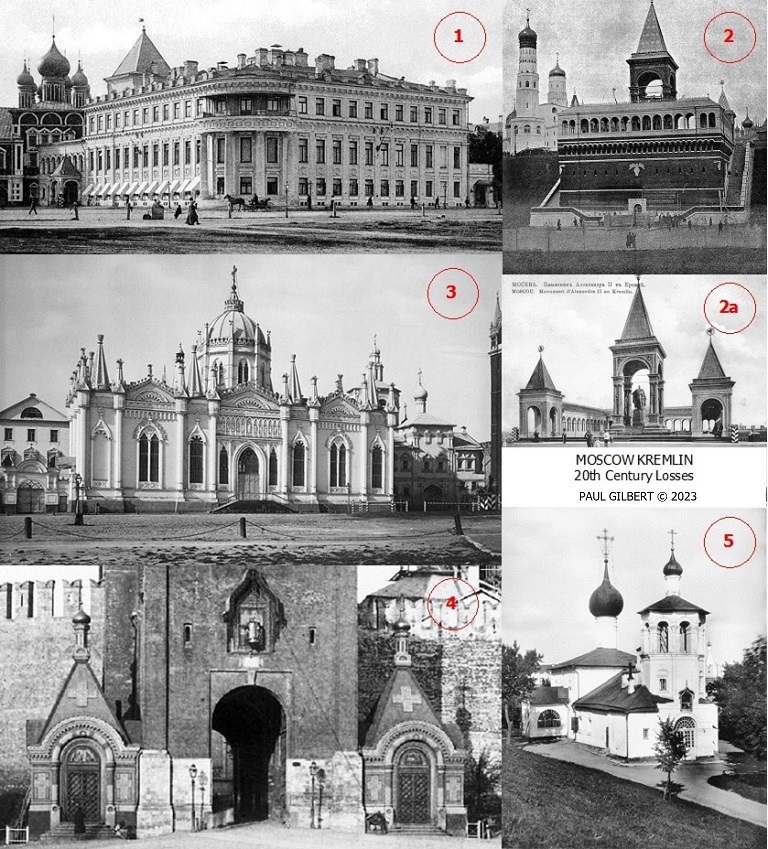
The early 20th century postcard (above) reflects some of the greatest architectural losses in the Moscow Kremlin during the late 1920s to early 1930s – please refer to the numbers and the accompanying images below for additional information about each respective monument . .

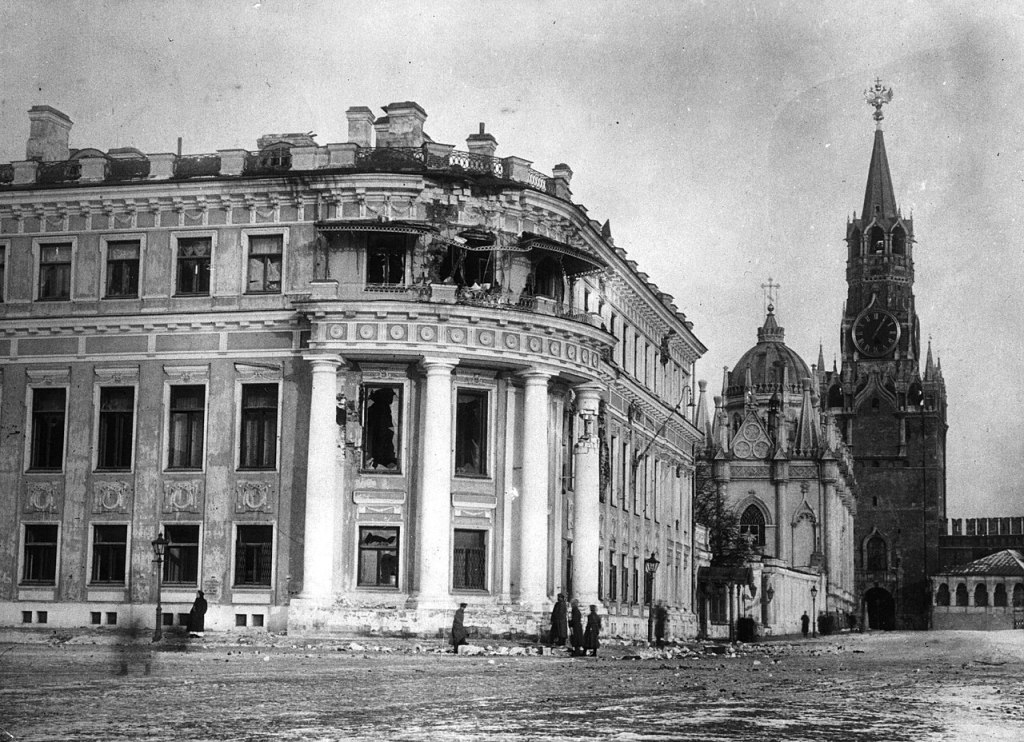
1 – The Maly Nikolayevsky Palace or Small Nicholas Palace was a three-storey building located in the Kremlin on the corner of Ivanovskaya Square. Originally built in 1775, it served as the official Moscow residence of Imperial Family up until the construction of the Grand Kremlin Palace in 1838-1849. The palace was a favourite residence of Grand Duke Nicholas Pavlovich (future Emperor Nicholas I). On 29th (O.S. 17th) April 1818, his son, the future Alexander II, was born in the palace, who considered it the home of his childhood. Between 1891 and 1905, the palace became a residence of Grand Duke Sergei Alexandrovich during his years as Governor-General of Moscow.

During the October armed uprising of 1917 in Moscow, the Small Nicholas Palace became the headquarters of the Junkers [a military rank in the Russian Guard and Army, until 1918] who were supporting the Committee of Public Security. As a result, the building served as a target for the Red Guards and suffered more than other Kremlin buildings.

According to Metropolitan Nestor (1885-1962): “The Small Nicholas Palace… suffered greatly from gunfire. Huge holes in the building’s’ façade are visible from the outside. Inside, too, everything is destroyed, and when I walked around the rooms, I saw a picture of complete destruction. Huge mirrors and other furnishings were barbarously broken and destroyed. The cabinets are broken, books, files and papers are scattered throughout the rooms… The palace church was hit by a shell and destroyed. The iconostasis was broken, the royal gates were forced open by explosions, and the veil of the church was torn in two. Hence, many valuable icons were stolen.”

In 1929, the palace was demolished together with the adjacent Chudov and Ascension monasteries. In 1932-1934 the Kremlin Presidium (aka Building No. 14) was built on the site. It housed, first, the Supreme Soviet, i. e. the supreme legislative body of the Soviet Union until its dissolution in 1991, and, second, the offices of the Presidential Administration of Russia until 2011. The Kremlin Presidium was demolished in 2016.

PHOTO: Small Nicholas Palace after the shelling of the Kremlin, 1917

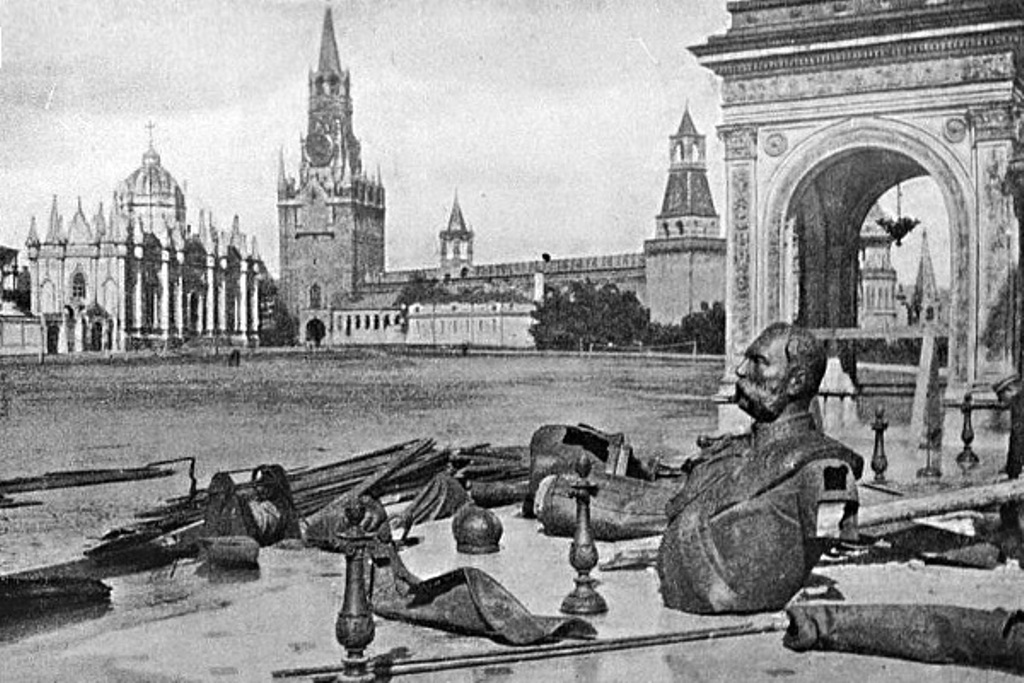
2 – The first Monument to Emperor Alexander II stood above the Kremlin’s Taynitsky Gardens facing the Moskva River. Work on the monuments was begun under Emperor Alexander III in 1893, and was completed five years later under Emperor Nicholas II in 1898.

The monument was the work of sculptor Alexander Opekushin (1838-1923), artist Peter Zhukovsky (1845-1912) and architect Nicholas V. Sultanov (1850-1908). The memorial consisted of a life-size bronze sculpture of Alexander II, set on a square pedestal with the words “To Emperor Alexander II by the love of the people” engraved on it. The sculpture was shaded by a canopy of polished dark red Karelian granite. The top of the canopy was made of specially fitted gilded bronze sheets with green enamel. On three sides, the monument was surrounded by a gallery with arches and openwork. Thirty-three mosaic portraits of Russia’s rulers from Prince Vladimir to Emperor Nicholas II based on sketches by artist Peter Zhukovsky were placed in the gallery’s vaults.

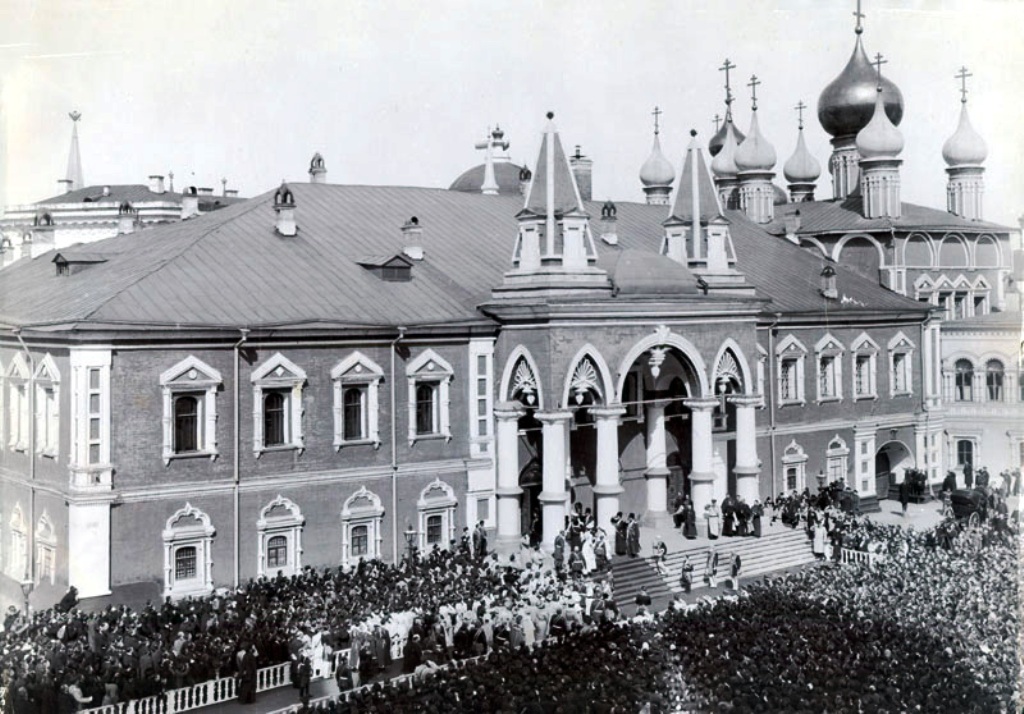
The solemn opening and consecration of the Monument to Emperor Alexander II took place on 16th August 1898. At eight in the morning, five cannon shots were fired from the Tainitskaya Tower. The opening ceremony began at two o’clock in the afternoon with a procession from the Chudov Monastery. After Metropolitan Vladimir of Moscow served a prayer service, the “Transfiguration March” was played and cannons were fired 360 times. The ceremony was closed by a parade of troops commanded by Emperor Nicholas II..

2a –  The decree of the Council of People’s Commissars of the Russian Soviet Federative Socialist Republic [supported by Lenin] dated 12th April 1918 called for all monuments of Russia’s monarchs to be demolished and replaced with statues honouring the leaders of the revolution. The monument of Alexander II was to be one of the first monuments destroyed in this campaign. Lenin planned to install a monument to the writer Leo Tolstoy on the site, however, his plan never came to fruition.

The monument to Alexander II was demolished by the Bolsheviks in the summer of 1918. In June 1918, Russian art historian Nikolai Okunev described this event in his diary: “I saw in the cinema a newsreel on the removal of the monument to Alexander II in the Kremlin. It was terrible to watch! It’s as if they were cutting a living person into pieces, and saying “Look, this is is how it’s done!” It’s not enough to show the shootings on the cinema screen.” The remaining columns and gallery were demolished in 1928.

PHOTO: the dismantled fragments of the monument to Alexander II in the Kremlin after its destruction in 1918. To the left of the Spassky Tower is the Church of St. Catherine of the Ascension Monastery, blown up in 1929

3 – The Voznesensky (Ascension) Convent known as the Starodevichy Convent or Old Maidens’ Convent until 1817, was an Orthodox nunnery in the Moscow Kremlin which contained the tombs of grand princesses, tsarinas, and other noble ladies from the Muscovite royal court. The convent was founded at the beginning of the 15th century near the Kremlin’s Spassky (Saviour’s) Gate.

The convent was also used as a residence for royal fiancée’s prior to their wedding. In 1721, the convent was renovated on behest of Peter the Great. In 1808, by order of Emperor Alexander I, the famous Italian architect Carlo Rossi (1775-1849) began construction of the Church of Saint Catherine, built in the Neo-Gothic design. During Napoleon’s invasion of Moscow in 1812, the French army looted the monastery and expelled the nuns. Most of the property was preserved thanks to Abbess Athanasia, who managed to take the wealth from the sacristy to Vologda. 

By 1907, the monastery had a mother superior, 62 nuns and 45 lay sisters. It was also in 1907, that the monastery celebrated the 500th anniversary of the death of the founder of the monastery St. Euphrosyne of Moscow (1353–1407). After the service, a procession took place, in which Grand Duchess Elizabeth Feodorovna participated, and placed a golden lamp and flower garlands on the founder’s tomb.

During the October 1917 Revolution, the ancient buildings were damaged by artillery fire. In 1929, the convent complex – including the majestic 16th-century cathedral – was demolished by the Soviets in order to make room for the Red Commanders School, named after the All-Russian Central Executive Committee.

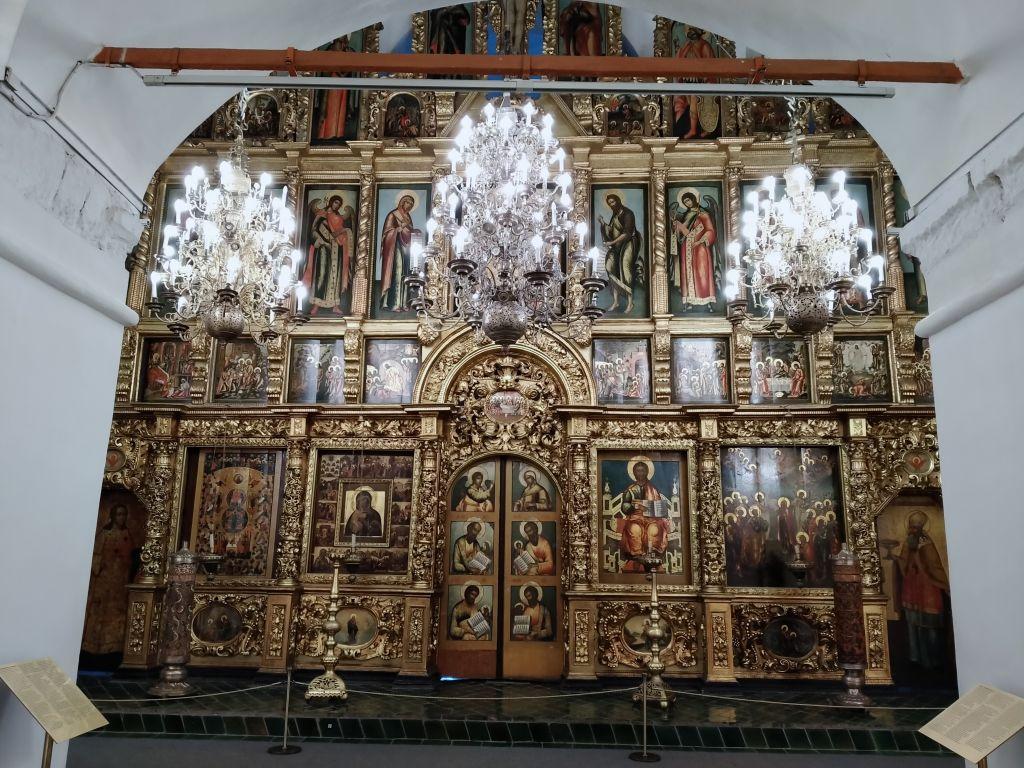
Some of the icons of Ascension Convent were transferred to the State Tretyakov Gallery and State museums of the Moscow Kremlin. The iconostasis of the Ascension Cathedral (see below) was moved into the Cathedral of Twelve Apostles (also in the Kremlin), while the tombs of the Muscovite royalty were transferred into an annex of the Archangel Cathedral, where they reside to this day.

PHOTO: in 1930 the iconostasis of the Ascension Cathedral was moved into the Cathedral of Twelve Apostles (also in the Kremlin), where it remains to this day

4 – The two chapels at the Spassky Gates (facing Red Square) were built in the “Russian style” in 1866. Both belonged to St Basil’s Cathedral. The left houses the sacred image of Our Lady of Smolensk as a reminder of the city’s return to the Russian lands in the 16th century. The right is renowned for its sacred image of Christ the Saviour, an exact replica of the icon over Spassky Gates. They were both demolished in 1929.

The 16th-century icon was bricked over during the 1930s, and restored to its original in 2010.

5 – The Church of Konstantin and Elena in the lower section of the Kremlin Garden was built in 1692 by Tsarina Natalia Naryshkina, mother of Peter I. It was demolished in 1928. It became the first church demolished on the territory of the Kremlin since the Bolsheviks came to power and the first in a large series of losses of architectural monuments of the Moscow Kremlin in 1928-1930. Today the site is home to government buildings and a helipad for Russian president Vladimir Putin.

In addition, were the Chudov Monastery and the Monument to Grand Duke Sergei Alexandrovich:

6 – The Chudov Monastery (more formally known as Alexius’ Archangel Michael Monastery) was founded in 1358 by Metropolitan Alexius of Moscow. The monastery was dedicated to the miracle of the Archangel Michael at Chonae on 19th September (O.S. 6th September). It was traditionally used for baptising the royal children, including future Tsars Feodor I, Aleksey I and Peter the Great.

The Chudov Monastery was demolished by the Bolsheviks in 1928, and the Presidium of the Supreme Soviet was built on the site. Grand Duke Sergei Alexandrovich’s body was buried in a crypt of the Chudov Monastery. The burial crypt was located underneath a courtyard of that building, which was later used as a parking lot during the Soviet years. In 1990, building workers in the Kremlin discovered the blocked up entrance of the burial vault. The coffin was examined and found to contain the Grand Duke’s remains, covered with the military greatcoat of the Kiev regiment, decorations, and an icon. He had left written instructions that he was to be buried in the Preobrazhensky Lifeguard regiment uniform, but as his body was so badly mutilated this proved impossible.

In 1995, the coffin was officially exhumed, and after a Panikhida in the Kremlin Cathedral of the Archangel, it was reburied in a vault of the Novospassky Monastery in Moscow on 17 September 1995.

7 – The Memorial Cross to Grand Duke Sergei Alexandrovich was consecrated on 2nd April 1908 on the spot where Grand Duke Sergei Alexandrovich was assassinated. The original bronze monument, set on a stepped pedestal of dark green labrador marble, was an example of ‘Church Art Nouveau’. After the October 1917 Revolution, the cross was destroyed on 1st May 1918 by Bolshevik thugs with the personal participation of Vladimir Lenin.

On 4th May 2017, the memorial cross was restored in a ceremony that was attended by President Vladimir Putin and Patriarch Kirill of Moscow.

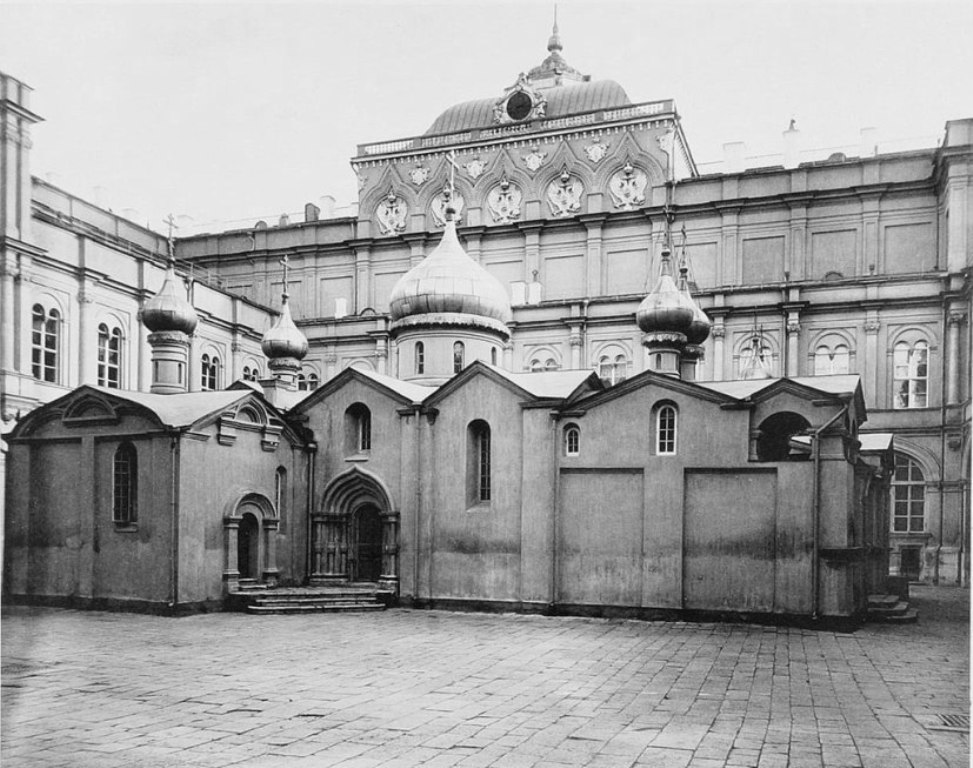
8 – The Church of the Transfiguration of Christ the Saviour on Boru was located in the courtyard of the Grand Kremlin Palace [seen in behind the church in the photo above]. The name “on Boru” came from the coniferous forests which once surrounded the church, that once stood on Borovitsky Hill.

In 1767, when Catherine II began the reconstruction of the Kremlin, the church was revived in brick and required major repairs.

The Church of the Savior-on-Boru was demolished on 1st May 1933 by order of the Politburo of the Central Committee of the CPSU, despite the protests of prominent restorers. The church’s ancient bells were transferred to the funds of the Moscow Kremlin Museums. Upon demolition of the church, a 5-storey service building was built on the site of the cathedral. Plans to restore one of the oldest churches in Moscow have not yet been considered.

In 2014 President Vladimir Putin proposed the restoration of the former Chudov Monastery, Ascension Convent, and Small Nicholas Palace. Opposition from UNESCO ended any hope of reconstructing these architectural gems. The proposal, had it been approved, would have restored the historical vista of Ivanovskaya Square. Instead, it has become park space for tourists visiting the Kremlin museums and churches.

© Paul Gilbert. 12 January 2023
Toys of Nicholas II’s children transferred to museum in Sergiev Posad in 1930s

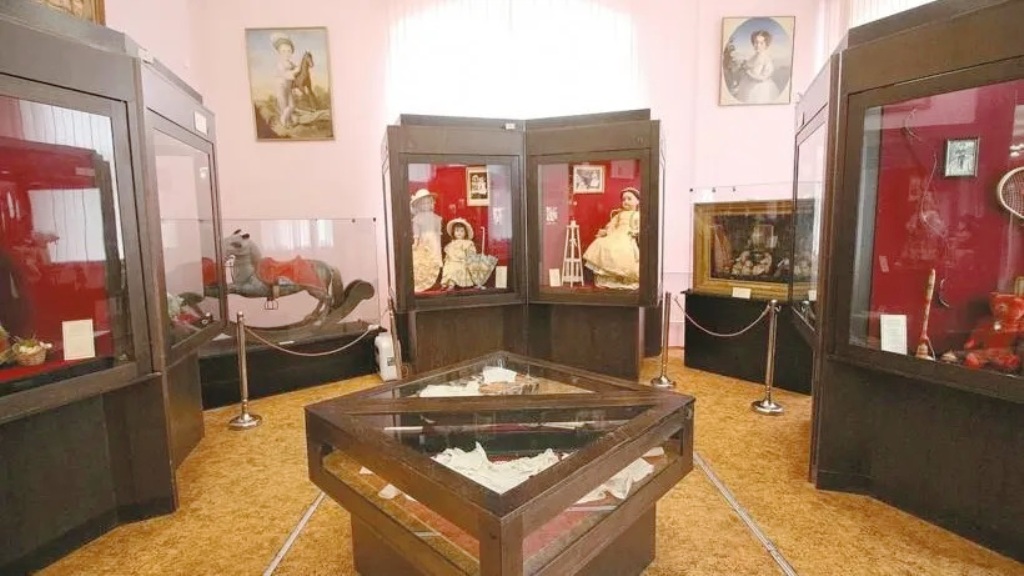
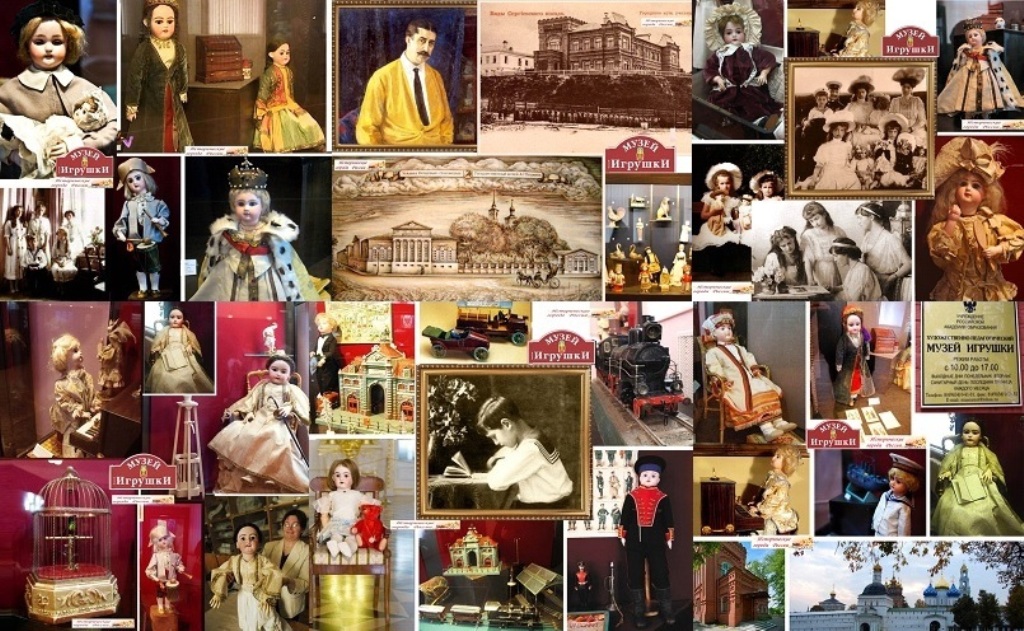
PHOTO: Overview of some of the Imperial Children’s toys from the collection of the Art and Pedagogical Toy Museum in Sergiev Posad, including a collection of porcelain dolls, once owned by the grand duchesses.

Situated 74 km [45 miles] northeast of Moscow is Sergiev Posad[1] the spiritual centre of Russia with its famous Holy Trinity St. Sergius Lavra[2], and home to over 300 monks. In 1993, the Trinity-Sergius Lavra which comprises a unique ensemble of more than 50 buildings was inscribed on the UN World Heritage List. In 2002 the monastery was recognized as a Cultural Heritage Site of the Russian Federation.

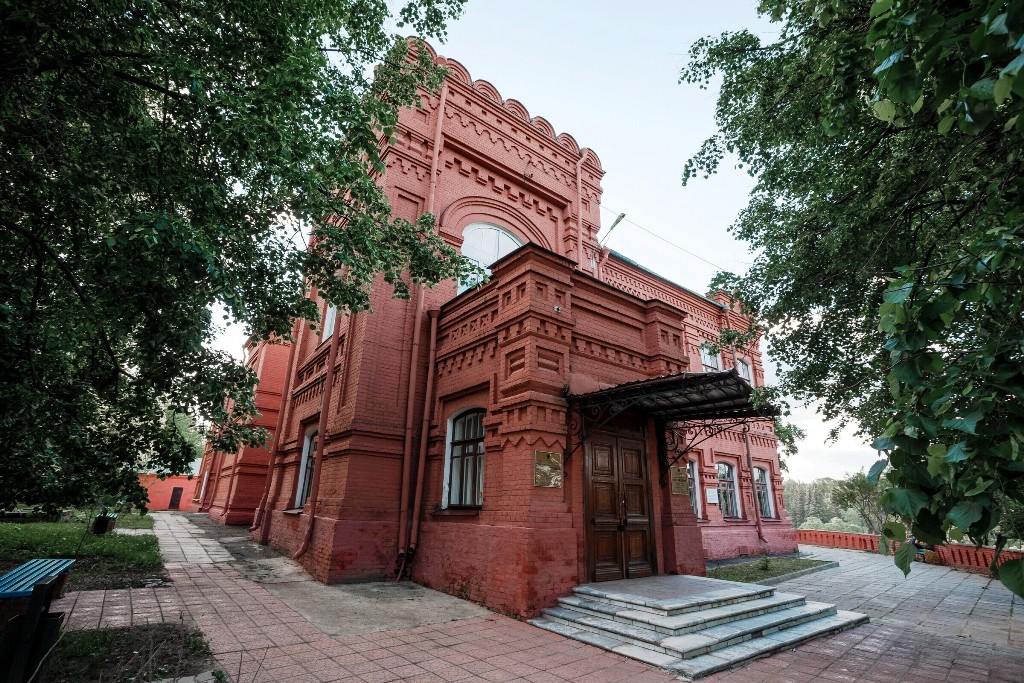
Sergiev Posad also has a long history of toy-making, the matryoshka doll known all over the world was born here. It seems only fitting that the town should claim to its fame the Art and Pedagogical Toy Museum, which is situated opposite the Trinity-Sergius Lavra. The museum is a unique repository of more than 150 thousand toys from Russia, Europe, Asia and America. The museum was founded in 1918 by Nikolai Dmitrievich Bartram (1873-1931)[3].

Bertram was a Russian illustrator, poster designer, art historian, and collector, who also studied the history of toys in Russia. From 1900 to 1903, he travelled throughout Europe; visiting toy shops and returning with suitcases of dolls, toy soldiers, and toy animals.

In 1912, he married the artist and collector, Yevdokia Ivanovna Loseva (1880-1936), who shared his interest in toys. In October 1918, as World War I was winding down, he and Yevdokia founded the Moscow Toy Museum, comprising of toys from his own private collection; although it was not opened to the general public until 1921. 

His collection was further enriched with toys from the Stroganov School in Moscow, as well as those from the noble estates, private collections and specialty shops, all of which had been nationalized by the Bolsheviks.

In the early 1930s toys that once belonged to the children of Emperor Nicholas II from the Alexander Palace in Tsarskoye Selo and the Livadia Palace in Crimea, were transferred to the museum’s collection.

The museum was first located in Bartram’s four-room apartment on Smolensky Boulevard in Moscow The one-storey mansion with a mezzanine, consisted of 250 square meters, 200 meters of which was allocated for his toy collection.

PHOTO: view of the Toy Museum (above), situated opposite the Holy Trinity St. Sergius Lavra in Sergiev Posad. The glass showcases (below) contain toys transferred from the Alexander Palace and Livadia Palace in the 1930s.

Officially founded on 17th October 1918, the museum was opened to visitors only in 1921, and three years later, in 1924, it moved to a new location – the former Khrushchev-Seleznevs mansion[4] on Kropotkinskaya Street in Moscow. It was here, that the Toy Museum was opened on 5th January 1921, expanding its exhibition space to 5 halls and 600 square meters to accommodate Bartram’s growing collection. Today the building is occupied by the Literary Museum of A. S. Pushkin.

In terms of attendance, the Museum of Toys was surpassed only by the Tretyakov Gallery. Nikolai Bartram remained at the head of the museum until his death in 1931.

In 1931, the Toy Museum was transferred from Moscow to Zagorsk[1] opposite – the Holy Trinity St. Sergius Lavra.

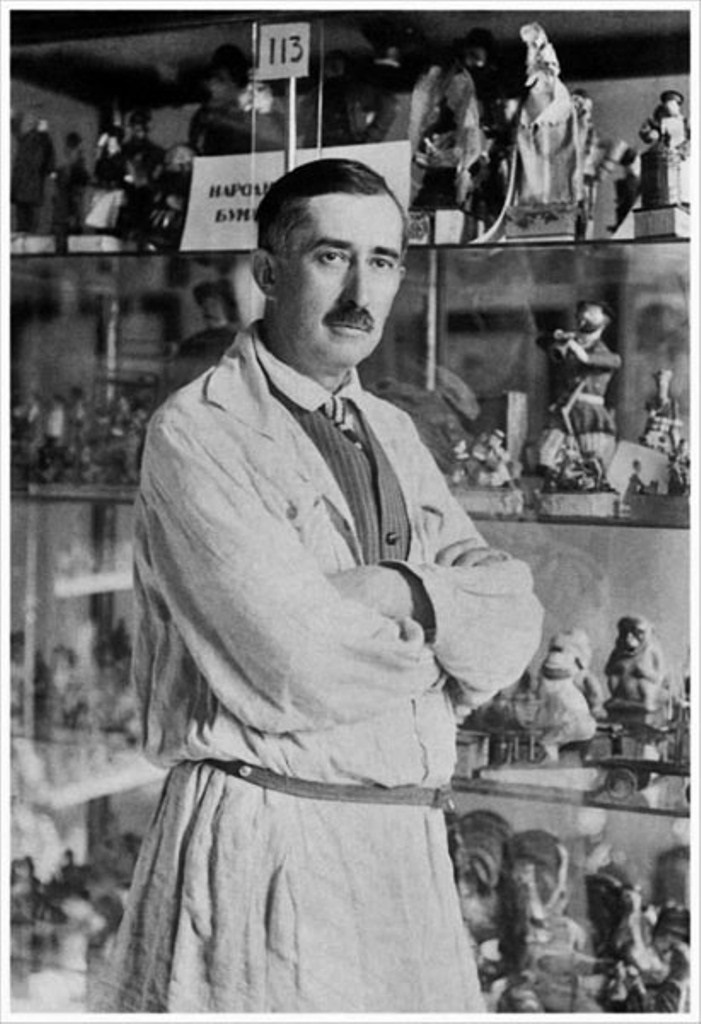
PHOTO: Toy Museum founder Nikolai Dmitrievich Bartram among his collection

The current Chief Curator of the Toy Museum Tamara Atyusheva explains the fate of the toys of the Tsar’s children, and how some of them came into the hands of the museum:

-“From 1918 to 1931 the Alexander Palace in Tsarskoye Selo was a museum, which included a permanent exhibition dedicated to the “Children’s Half”, which included the rooms of the Grand Duchesses and the Tsesarevich. These rooms were filled with the Imperial Children’s toys which were left after the Tsar and his family were sent into exile in August 1917.

“After 1931, the subject of everything Tsarist became a bone of contention among the Stalinists, one which did not fit into Soviet life. As a result the “Children’s Half” exhibition in the Alexander Palace was closed. Many of the toys and personal items of the Tsar’s children were distributed to orphanages and shelters. No records were kept of where the toys were distributed, and all traces of these toys have since been lost. The toys which were not lost, were transferred to our museum in in 1932. They were stored in the storerooms of the Research Institute of Toys in Zagorsk[1] located in the museum of the Lavra. They were stored without any indication that these items had any special significance. For instance, the Grand Duchesses collection of porcelain dolls were simply labeled “Nineteenth Century Dolls” and that’s it.

“It was during holidays – birthdays, name days, and Christmas – that the Imperial Children received expensive toys, many of which had been imported from Europe and Britain as gifts. In addition they received board games, which also acted as learning aids: for studying languages, geography, and royal dynasties, including one with “portraits of the Sovereigns of the Russian Land”.

“Interesting among the toys were those of Tsesarevich Alexei, who was brought up primarily as the future heir to the throne, and head of the Russian Imperial Army. He had everything a little warrior should have: a toy three-line Mosin rifle, toy sabers, a toy ship (“Battleship Sevastopol”), signal flags, a triangular red pennant with a white cross, and a collection of toy soldiers.

In addition the Heir had an electric train, which consisted of a huge steam locomotive, complete with stations and tunnels.

One of the highlights of the Imperial Children’s toys, was a collection of European made dolls of the Grand Duchesses Olga, Tatiana, Maria and Anastasia in national costumes, in addition to children’s furniture, dishes, books, sporting goods and portraits.

Today the Art and Pedagogical Toy Museum welcomes more than 30,000 visitors each year. Exhibits from their collection are routinely loaned out to other museums throughout Russia, the toys of the children of Emperor Nicholas II being the most popular. In 2011, some of the toys from the museum’s collection were put on display in former Children’s Half located on the second floor of the Alexander Palace at Tsarskoye Selo.

© Paul Gilbert. 10 January 2023
NOTES:

[1] Sergiev Posad was founded on 22nd March 1782, by decree of Empress Catherine II. The name is associated with the name of Sergius of Radonezh (1314-1392), the founder of the Trinity-Sergius Lavra, around which the posad was formed. In 1919, Sergiev Posad was renamed Sergiev. On 6th March 1930, the city was renamed Zagorsk, in honor of the Bolshevik revolutionary Vladimir Mikhailovich Zagorsky, who died in 1919.

On 23rd September 1991, by the decree of the Presidium of the Supreme Soviet of the RSFSR, the historical name was returned to the city – Sergiev Posad. At the walls of the Lavra was erected a monument to Sergius of Radonezh, made of bronze, the work of the sculptor Valentin Chukharkin. The monument was consecrated on 18th March 2000 by Patriarch Alexy II (1929-2008).

[2] After the 1917 Russian Revolution, the Soviet government closed the Lavra in 1920. Its buildings were assigned to different civic institutions or declared museums. In 1930, monastery bells, including the Tsar-Bell of 65 tons, were destroyed. Father Pavel Florensky (1882-1937) and his followers prevented the authorities from stealing and selling the sacristy collection but overall many valuables were lost or transferred to other collections.

In 1945, following Joseph Stalin’s temporary tolerance of the church during World War II, the Lavra was returned to the Russian Orthodox Church. On 16th April 1946 divine service was renewed at the Assumption Cathedral. The Lavra continued as the seat of the Moscow Patriarchate until 1983, when the patriarch was allowed to settle at the Danilov Monastery in Moscow.

[3] Nikolai Dmitrievich Bartram died on 13th July 1931. He was buried at the Novodevichy Cemetery in Moscow.

[4] Today the former Khrushchev-Seleznevs mansion houses the A. S. Pushkin State Museum (not to be confused with the Pushkin State Museum of Fine Arts).

Beautiful winter views of the Novo-Tikvinsky Convent, Ekaterinburg

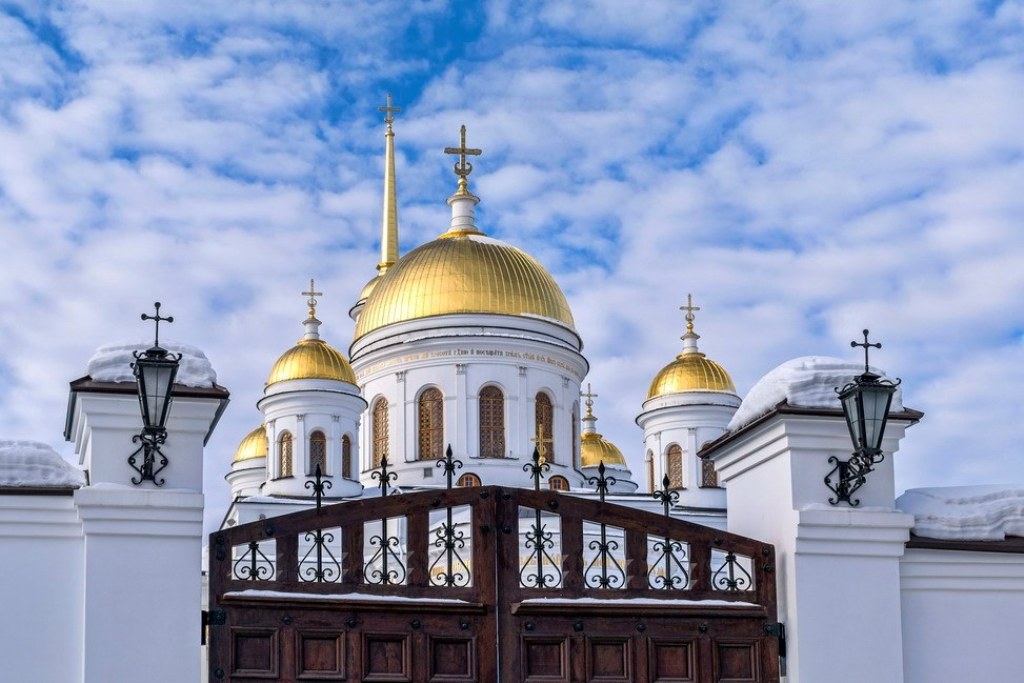
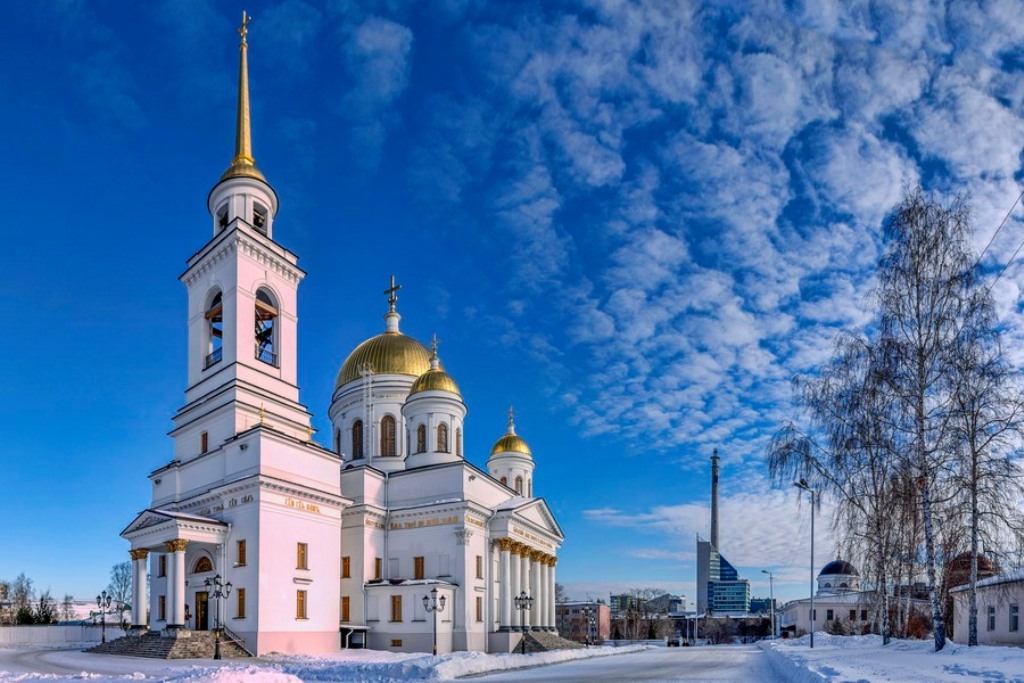
PHOTO: the Cathedral of St. Alexander Nevsky in the Novo-Tikvinsky Convent
© Ново-Тихвинский женский монастырь

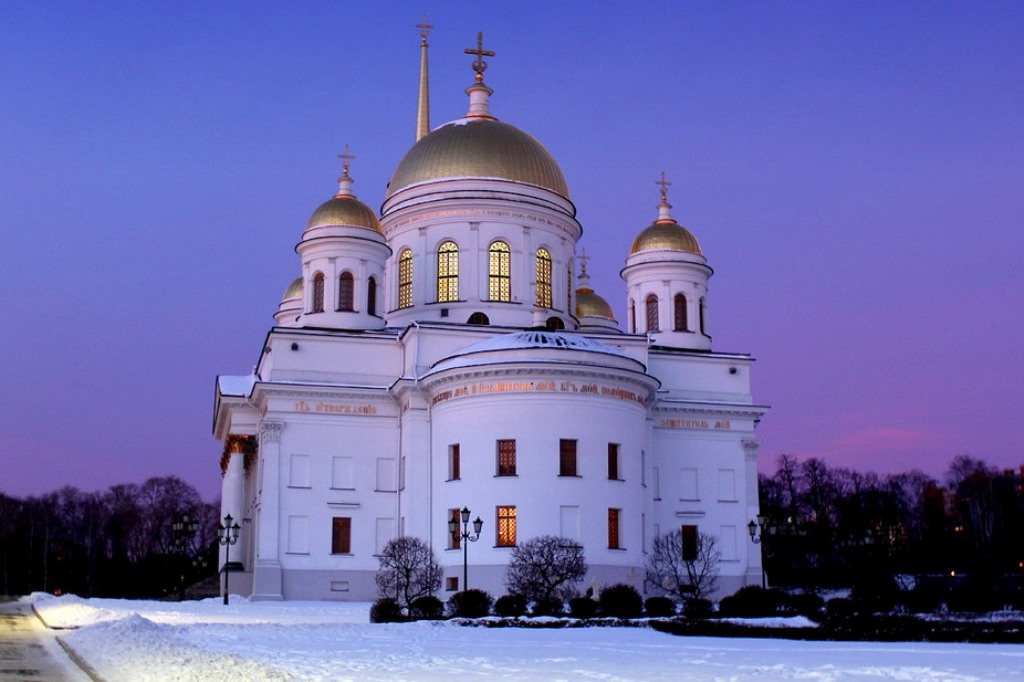
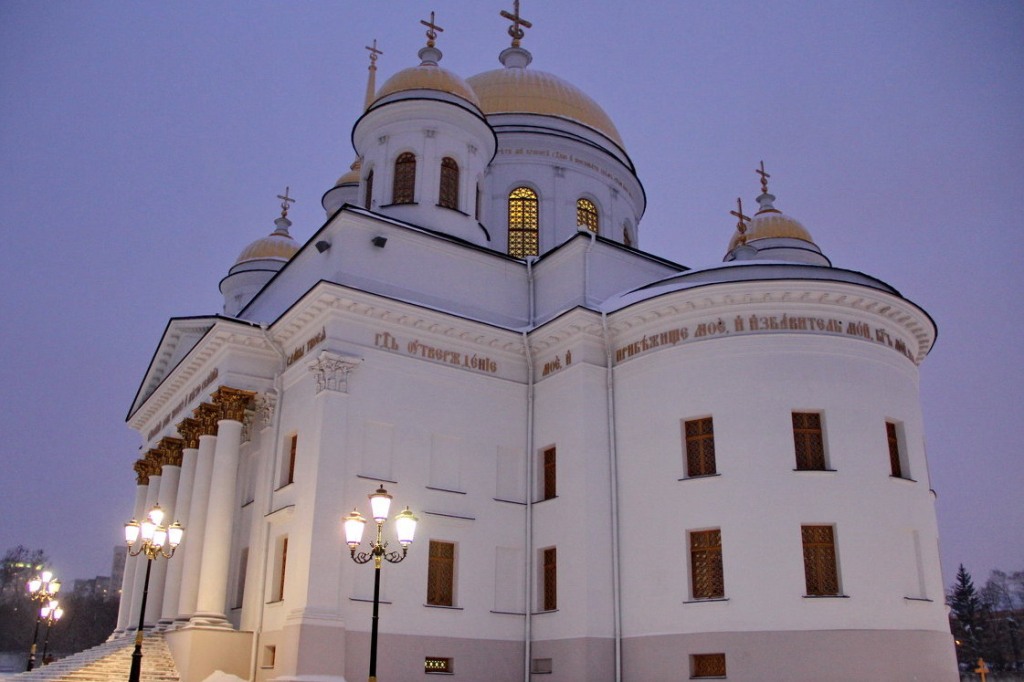
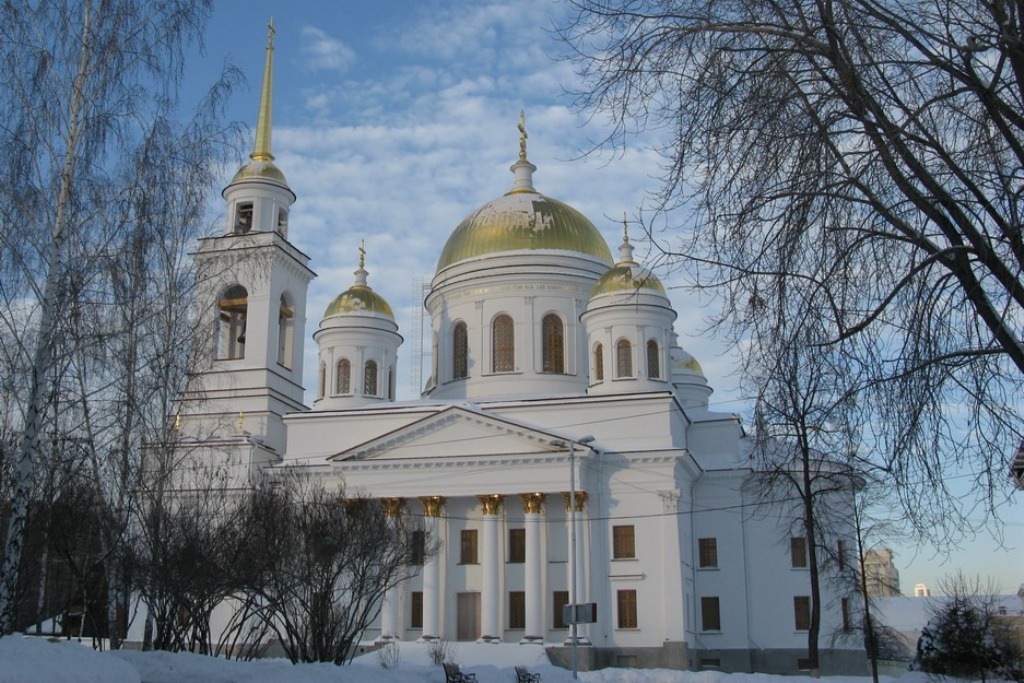
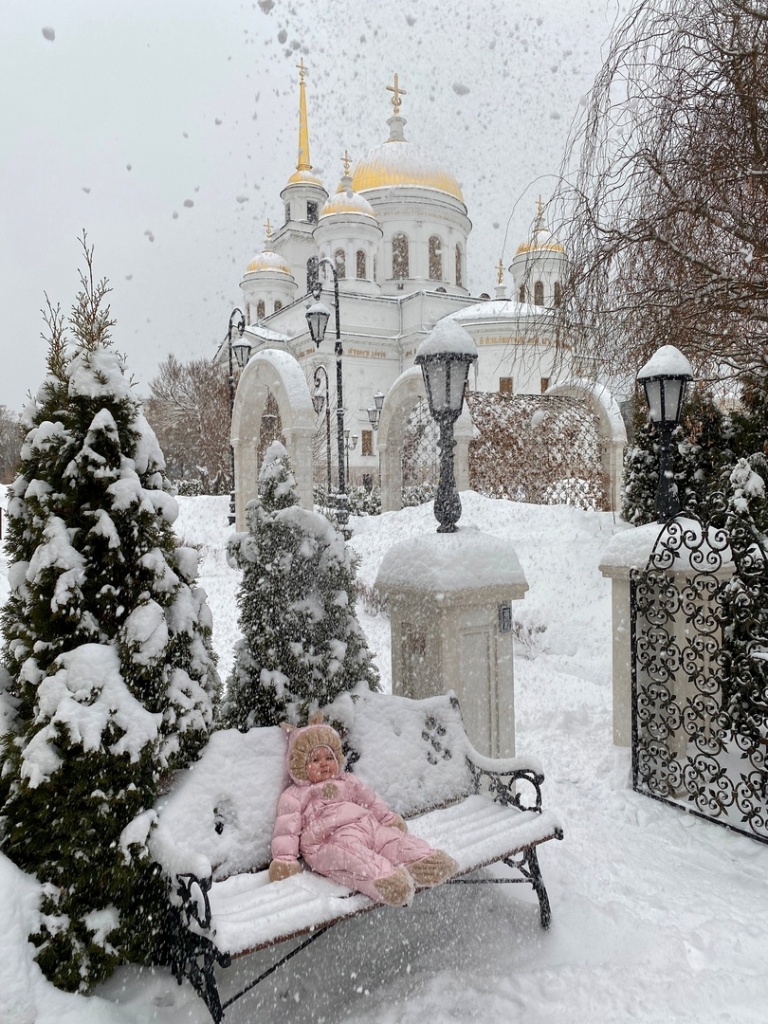
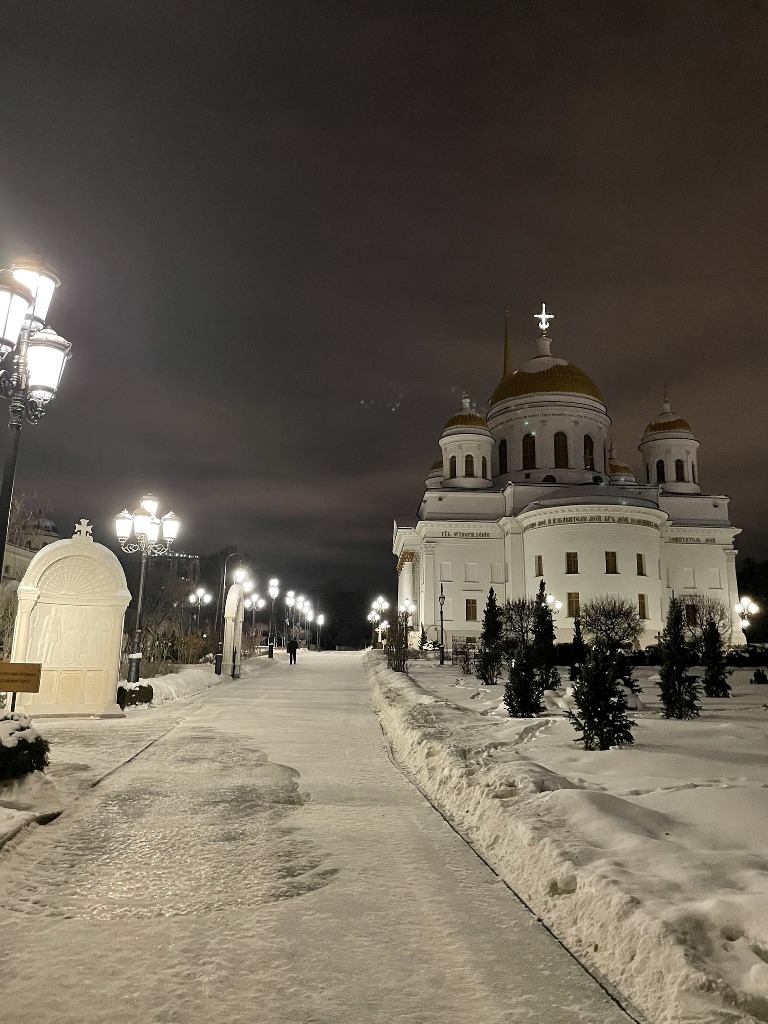
Snow-covered paths, trees covered in hoarfrost, early evening twilight reflect the silent beauty of winter which surrounds the Cathedral of St. Alexander Nevsky, depicted in these beautiful photos.

The Novo-Tikhvin Monastery is a community of female monastics. It was founded in the late 18th century, growing out of an alms-house at the cemetery church in Ekaterinburg. It is the home of the icon of the Tikhvin Mother of God. Closed in 1920 by the Bolsheviks, monastic life at the monastery was restored in 1994.

In 1918, when Nicholas II and his family were being held under arrest in the Ipatiev House, the nuns of the Novo-Tikhvinsky Convent were praying for them, asking God to relieve their sufferings,and to give them the strength to bear everything with Christian humility.

The sisters’ help came not only through prayer but also through deeds: disregarding their own safety, they supported the Tsar and his family by bringing various foods to them through the guards. On 18th June 1918, a month before their murder, Empress Alexandra Feodorvna made the following entry in her diary: “The kind nuns are now sending milk and eggs for Alexei and for us, as well as cream.”

I have spent many hours praying in the Cathedral of St. Alexander Nevsky, during my visits to the Ural city in 2012, 2016 and 2018 respectively. It was during my visit to Ekaterinburg in the summer of 2016, that my hotel was situated behind the convent, and I had a clear view of the cathedral from my window. I went every morning to the cathedral to pray, and every afternoon in the beautifully landscaped gardens which surround the Cathedral.

Click HERE to read why Ekaterinburg is my favourite Russian city.

PHOTO: the Cathedral of St. Alexander Nevsky in the Novo-Tikvinsky Convent
© Ново-Тихвинский женский монастырь

PHOTO: the Cathedral of St. Alexander Nevsky in the Novo-Tikvinsky Convent
© Ново-Тихвинский женский монастырь

PHOTO: the Cathedral of St. Alexander Nevsky in the Novo-Tikvinsky Convent
© Ново-Тихвинский женский монастырь

PHOTO: the Cathedral of St. Alexander Nevsky in the Novo-Tikvinsky Convent
© Ново-Тихвинский женский монастырь

PHOTO: the Cathedral of St. Alexander Nevsky in the Novo-Tikvinsky Convent
© Ново-Тихвинский женский монастырь

PHOTO: I simply could not resist sharing this photo . . . A mother takes a photo of her little one [who looks like a little angel] sitting on a bench in the garden of the Novo-Tikhvinsky Convent in Ekaterinburg. The magnificent Cathedral of St. Alexander Nevsky can be seen in the background. The snow simply enhances the beauty of this photo. © Ново-Тихвинский женский монастырь

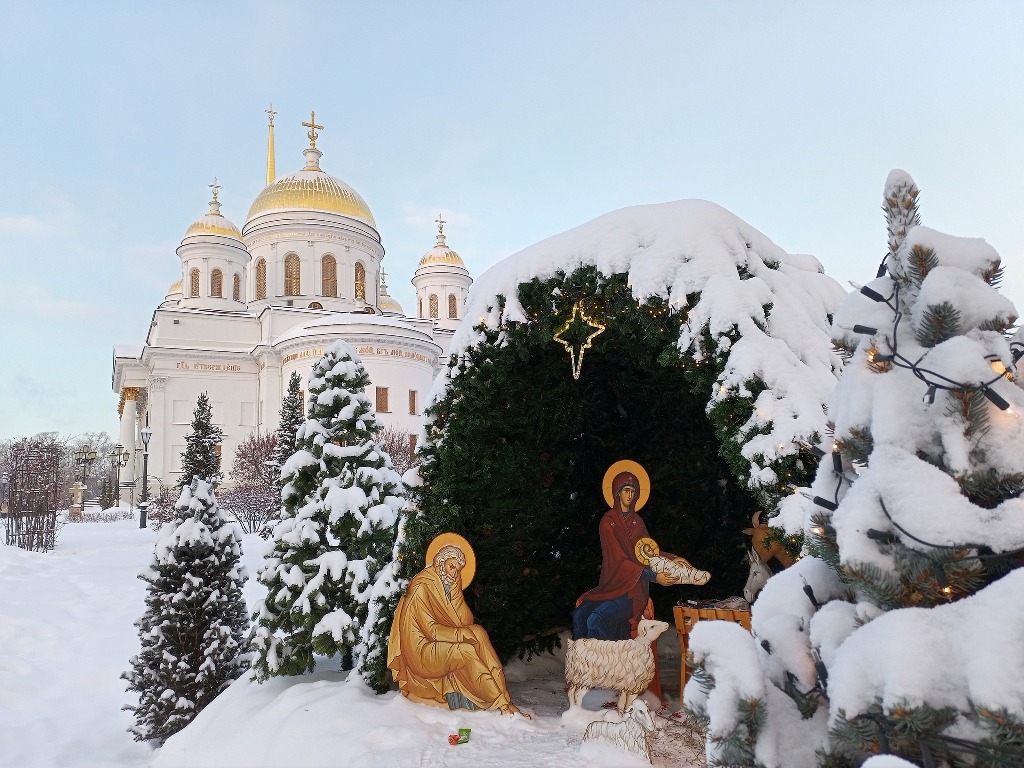
PHOTO: the Nativity set against the backdrop of the Cathedral of St. Alexander Nevsky at the Novo-Tikvinsky Convent, Ekaterinburg. © Ново-Тихвинский женский монастырь

PHOTO: A lovely winters night view of St. Alexander Nevsky Cathedral at the Novo-Tikhvinsky Convent in Ekaterinburg. On the left, you can see the new monument to four faithful servants of Emperor Nicholas II, which was installed and consecrated this past summer, on the grounds of the Convent. © Ново-Тихвинский женский монастырь

© Paul Gilbert. 9 January 2023
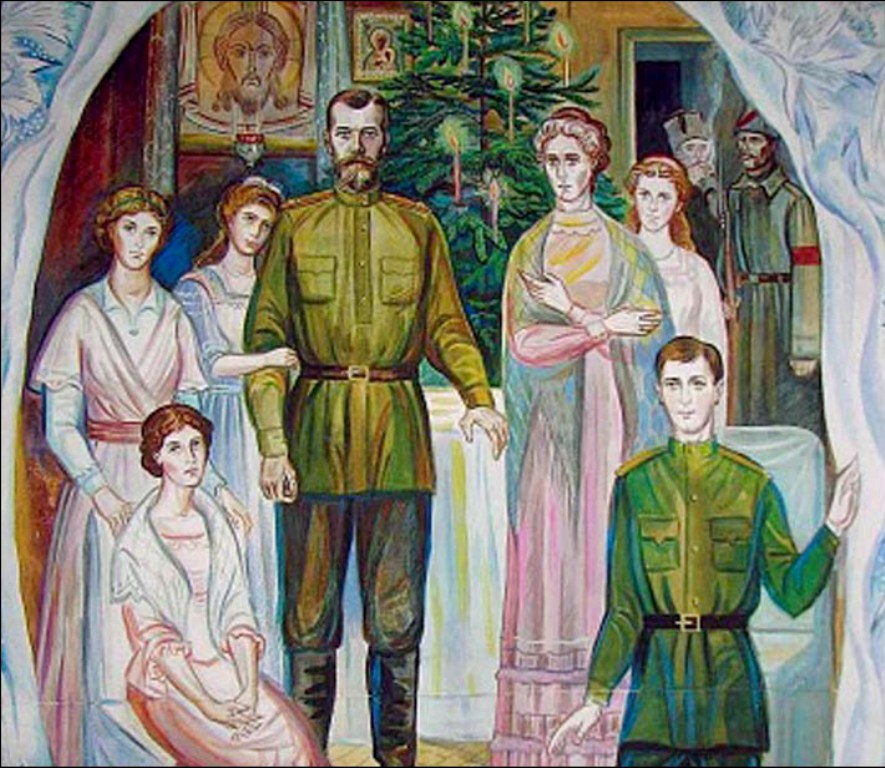
The Imperial Family’s last Christmas in 1918

This article was written by Kate Baklitskaya, and published in the 7th January 2014 edition of The Siberian Times. I have taken the liberty of making some corrections and adjustments to her text – PG

NOTE: The Russian Orthodox Church observes Christmas Day on 7th January according to the Old Style Julian calendar, which is 13 days behind the Gregorian calendar used in the West.
During the winter of 1917-18 Emperor Nicholas II and his family were being held under house arrest in the former Governor’s Mansion in Tobolsk, in western Siberia, before being moved in the spring of 1918 to Yekaterinburg where they were murdered in July 1918. Their last Christmas – as they used the Julian calendar, took place on 7th January 1918 – was still full of joy and hopes for a better future, even though 1917 was the year when the Romanovs were toppled.

In exile the Emperor and his family continued to live as normal life as their situation would allow them, although they were forbidden to go into town or attend church, they were only allowed to leave the house to walk and play in the yard.

The Tsar was not afraid of simple manual work, spending his time chopping wood with his son Alexey following his example. The former Tsesarevich, then 13, took care of the poultry. 

The children continued their studies and the Emperor taught them a course of Russian history. Their mother Alexandra taught German to the children, perhaps surprisingly since World War One was still underway. As Christmas approached, the former Tsesarevich and his four sisters – the Grand Duchesses – were given a break. 

This is how Grand Duchess Olga described this period: ‘Everything is peaceful and quiet, thank God. We are all healthy and not losing hope. Today my sisters’ and brother’s vacation begun.  There is still not a lot of snow, the frost reaches -20C, and the sun shines almost all the time, it rises and sets bright and beautiful. …It’s so nice to go for walks. Mama works all day or draws and paints, keeps herself busy all the time and the time flies quickly.’

Their hope at the time was to be allowed to go into exile abroad to Britain, but this plan was vetoed in London amid fears their presence would stoke revolutionary sentiments. Ekaterina Schneider, their Russian language teacher, described Christmas Eve in her letters: ‘In the evening today we will go for overnight prayer… After we came home and had breakfast. There I was decorating a Christmas tree with candles – there were no other decorations, so tonight a small Christmas tree will be lit’. 

‘The trees here have a completely different smell, the tree smells of oranges …  Now it’s 4pm, I’ll go into the yard to help to make a snow mountain – tonight there was a lot of snow . It’s -7C degrees. By local standards it’s hot’.

The Empress started preparations for Christmas well in advance. Despite their difficult financial situation she still managed to prepare presents for all the family members, friends and retainers. Most of these presents were handmade.

Alexandra described their Siberian Christmas in her diary: ‘December 24. Sunday. Tobolsk. Christmas Eve. Preparing gifts. Breakfast downstairs. Decorated Christmas tree, laid out the gifts. Tea. Then I went to the guards from the 4th Infantry Regiment, all together 20 people’.

‘I brought them a small Christmas tree and some food, and a Bible each with a bookmark that I hand painted. Sat there with them. 7.30 pm. Had  dinner downstairs with everyone. 9pm Christmas celebration for our servants – for all our people.

‘9.30 pm. Evening service at the church: a large choir sang. The soldiers came as well.’

The Empress did her best to support her family in the difficult times and bring the Christmas spirit into the family celebration. Perhaps thanks to her effort Romanov family enjoyed their last Christmas.

In a letter to her lady in waiting Sophia Karlovna Buxhoeveden, the Empress wrote that love, hope and patience were her guides through these difficult times.

‘I gently kiss you and wish you all the best. May God send you health and peace of mind, which is the greatest gift. We should pray to God for patience, because it is so important for us in this world of suffering (and the greatest madness), for comfort, strength and happiness.

‘Perhaps the word ‘joyful Christmas’ sounds like a joke now, but after all this joy of the birth of our Lord. …. He will manifest His mercy when the time comes, and before that we have to wait patiently. We cannot change what is happening – we can only believe, believe and pray and never lose love for Him.’

© The Siberian Times. 6 January 2023