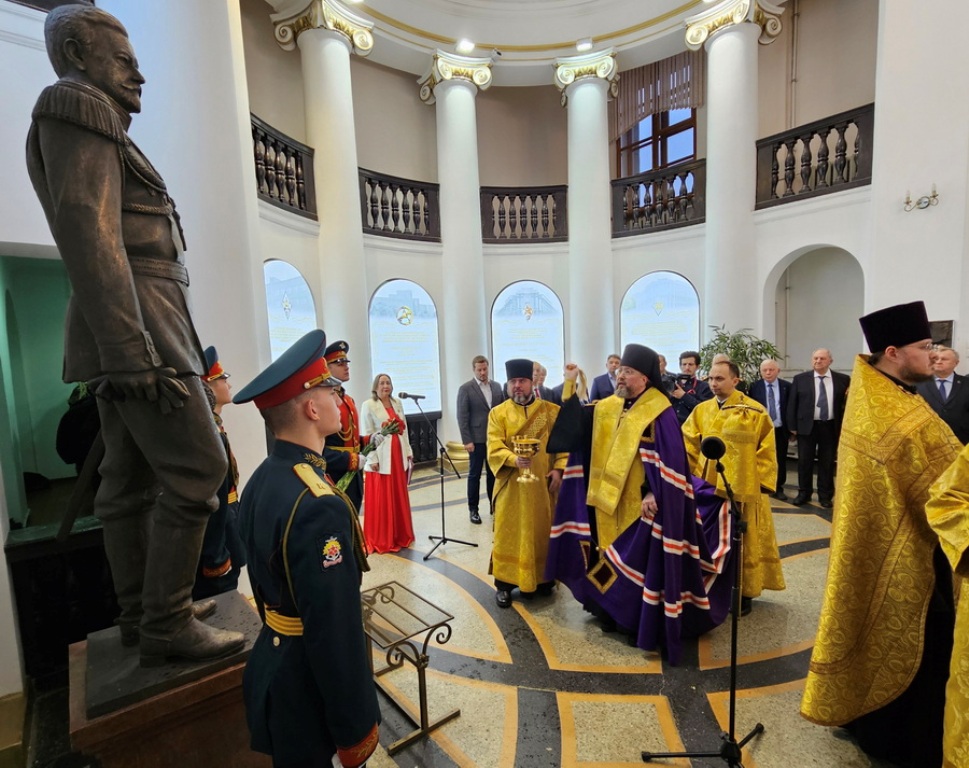
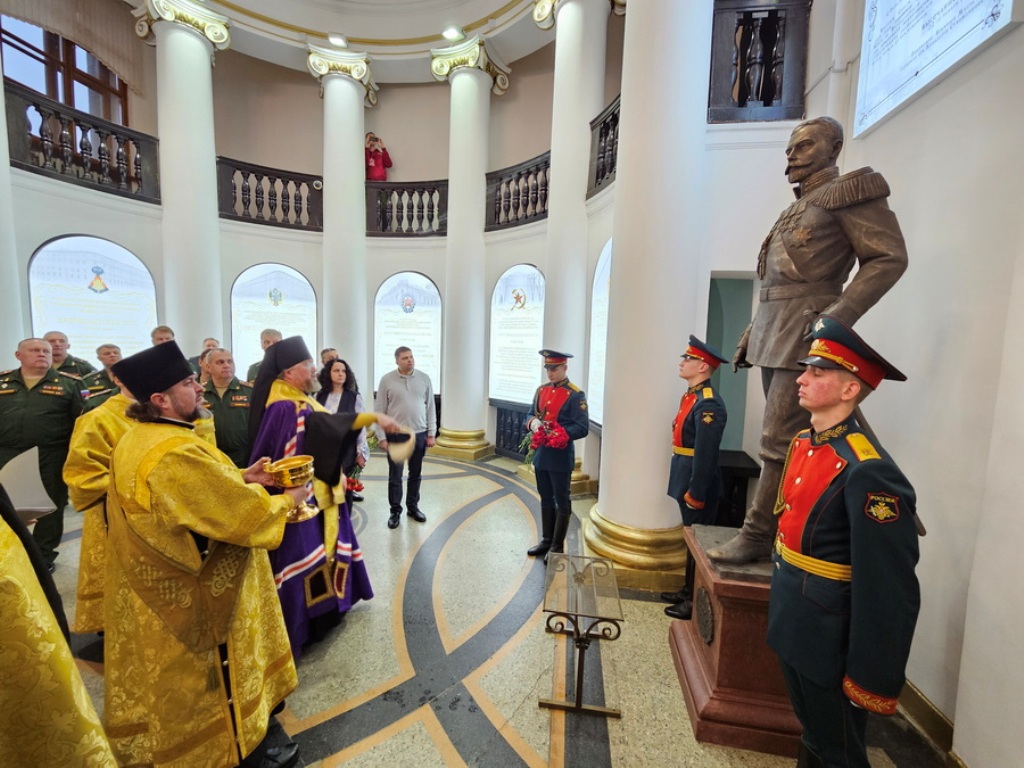
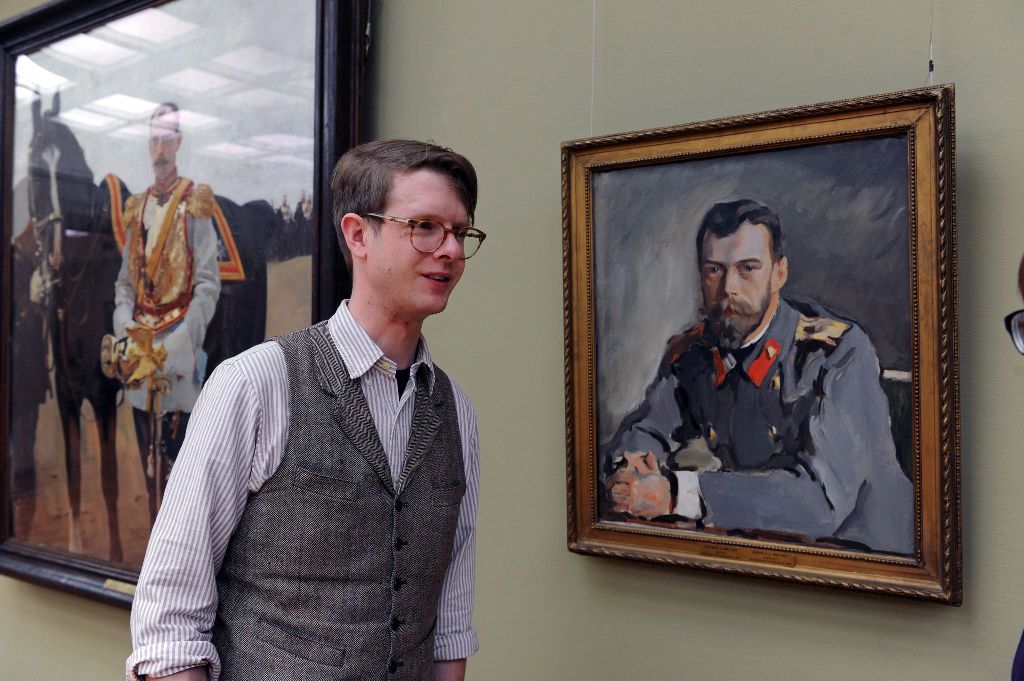
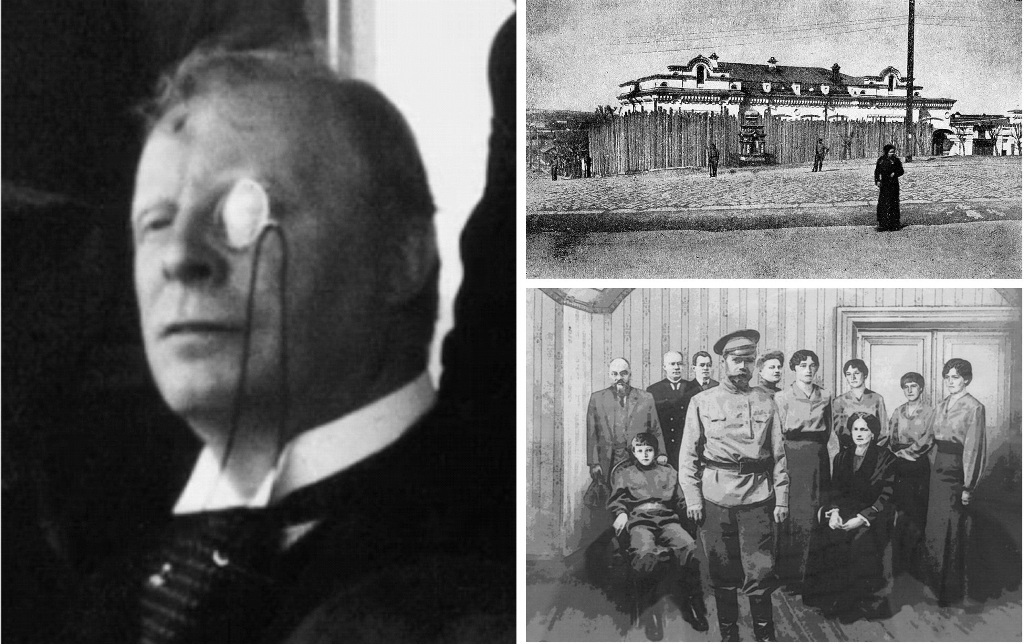
Why are so few Russian language books on the Romanovs not available in English?

Earlier this month, a new book Персидский дневник. 1917–1918 / Persian Diary. 1917–1918, was published in Russia. The 688-page, Russian language title presents the diaries of Grand Duke Dmitri Pavlovich (1891-1942), who was exiled to Persia as punishment for his involvement in the murder of Grigorii Rasputin in November 1916. Ironically, the Tsar’s punishment, actually saved Dmitri from sharing the same fate as that of many of his relatives.

The publication of Grand Duke Dmitri Pavlovich’s Persian diaries, is just the latest in a plethora of books about Nicholas II, the Romanovs and Imperial Russia, which Russian publishers have issued over the past 30+ years. These titles are prominently displayed in bookshops, such as Dom Knigi (House of Books) in Mosocw and St. Petersburg. Sadly, none of these books will ever be translated into English.

These include biographies and studies, collections of letters, diaries, exhibition catalogues and high-quality coffee table books, many of them richly illustrated with vintage black and white or full colour photographs.

Since the fall of the Soviet Union in 1991, the publication of books on the Romanovs by Russian publishers has resulted in hundreds of new titles. These books are based primarily on research made by a new generation of Russian historian, who now have access to the Romanov Archives, which were sealed during the Soviet years.

But, why are none of these books translated into English? Well, there are currently two main reasons, that I will address in this post . . . .

Foreign rights and translation costs

First, and probably most importantly, are the translation and production costs, but also a limited readership in the West. Despite the success of Robert K. Massie‘s classic bestseller Nicholas and Alexandra in 1967, books on the Romanov’s has a very limited audience in the West, particularly with books on the more obscure members of the Imperial Family.

In the first few decades after the murder of Russia’s last Tsar in 1918, Western publishers were anxious to publish the first English-lanaguage translations, written by members of the Imperial Family, their retinue, and others, who escaped Bolshevik Russia. These days, however, are long gone, I am afraid.

The publishing world has changed dramatically over the past few decades. Having worked in the publishing industry in both Canada and the UK, for many years, I have been witness to these changes, and the interest and demand for books on the Romanov’s and Imperial Russia. During my years in the industry, I have seen many of the old traditional publishing houses fold, or swallowed up by competitors.

Academic publishing houses, i.e. university presses, publish new titles on the Romanov’s and Imperial Russia, especially historical, social and political studies during the era of Emperor Nicholas II, during the late 19th to early 20th centuries. These titles, usually have limited print runs of several hundred or several thousand copies, which is one of the reasons why, they are so expensive to purchase.

If we are to see any of the books (seen on this page) ever published in English, it is going to take one of the larger, more established publishing houses, such as Weidenfeld & Nicolson (UK) – who translated and published A Lifelong Passion (1996), to step up to the plate, and take the risk of offering the small, but demanding readership, who are hungry for anything new on the subject’s.

Probably the number one reason is simply the translation costs involved, the diaries and letters in particular. First of all, the author would have to receive an advance, then legal fees would have to be dispensed, then the actual translation itself – we are talking thousands of dollars. All these combined, make such projects economically prohibitive.

Given the current economic sanctions imposed by the West against Russia, there could be no financial transactions, such as royalties to the author, etc., whatsoever.

Western economic and cultural sanctions

Secondly, following Russia’s invasion of neighbouring Ukraine in February 2022, Russia was hit with sweeping sanctions from the European Union, Great Britain, the United States, Canada, Australia, among other countries. While these sanctions have had little impact on Russia’s economy, they have dealt a heavy blow to the exchange of cultural events.

These sanctions have had a devastating effect on cultural events, which we have enjoyed over the years, including ballet, opera, symphonies, exhibitions, films and even the publishing industry. At the present moment, no Western publisher would dare enter into negotiation with a Russian publisher for foreign rights and translation of a book, written by a Russian author.

In addition, the cost to import books from Russia has become more expensive, this in part is due to former President Joe Biden, who in June 2022, imposed a 35% U.S. tariff rate on certain Russian imports, which include book.

© Paul Gilbert. 20 October 2025

Vintage train from Ekaterinburg, tells the story of Nicholas II’s last days

PHOTO: a pin – depicting the image of Nicholas II
– worn by conductors on the vintage train from Ekaterinburg.

In December 2022, a vintage train journey was initiated from Ekaterinburg, which tells passengers, the story of the last days of Nicholas II and his family in the Urals. The train runs from Ekaterinburg to the Shuvakish station and back, on Friday evenings, and also on Saturday and Sunday mornings.

The locomotive (see photo below) is not from the Imperial times, but a 1963 steam engine, made in Czechoslovakia. The interiors, however, have been remodeled to resemble that of an early 20th century Russian train.

Passengers travelling on the vintage train are greeted on the platform by hospitable conductors wearing uniforms of early 20th century Imperial Russia-style, and white gloves (see photo below).

The train has four wagons: First Class, Economy Class, a dining car (see photo below) and a sightseeing car, which operates during the summer months. One compartment is decorated with framed photographs of the Imperial Family.

During the 3-hour train journey, passengers can sit back, relax and enjoy the view, while listening to an audio-guide, which tells the story of the last days of Russia’s last Tsar, his family and their four faithful retainers.

The audio begins with the Imperial Family’s train journey from Tsarskoye Selo to Tyumen, then by boat to Tobolsk, where they were held under house arrest in the former Governor’s House, from August 1917 to March 1918.

The story continues, with the transfer of the Imperial Family to Ekaterinburg, where they were held under house arrest in the Ipatiev House, from March to July 1918. The audio-guide further tells of their fate, their burial at what is today known as Ganina Yama, and the discovery of their remains, almost 100 years later on the Old Koptyaki Road.

Tea is served to passengers from a traditional samovar. Conductors bring the tea in beautiful faceted glasses in iron cup holders, on which the Double-Headed Eagle of the Russian Empire is depicted.

The train stops at Shuvakish Station (Zheleznodorozhny district), where passengers are free to disembark the train to a wooden platform, decorated with benches, a bell and a manual semaphore signal. The stop lasts a little more than an hour.

Inside the wooden pavilion, passengers can enjoy music, which includes a variety of waltzes and melodies from the repertoire of Alexander Serov.

Passengers can also try on the uniforms of the White Guards, take photos, and enjoy a cup of hot tea, bagels and local berries.

PHOTO: tea is served at Shuvakish Station

***

*As I have noted in previous posts, I support any initiative – big or small – to help keep the memory of Nicholas II and his family alive in 21st century Russia – PG

© Paul Gilbert. 19 October 2025

State visit by Elizabeth II to Russia, 17-20 October 1994

PHOTO: Queen Elizabeth II being warmly greeted by Muscovites,
during her visit to Moscow in October 1994

On 17th October 1994, Her Majesty Queen Elizabeth II of the United Kingdom of Great Britain and Northern Ireland, her husband Prince Philip, Duke of Edinburgh arrived in Moscow, marking the first and so far only visit by a reigning British monarch on Russian soil.

The only previous visit by a British monarch to Russia was made by King Edward VII in 1908. The King never stepped ashore, and met Nicholas II on royal yachts off the Baltic port of what is now Tallinn, Estonia

Queen Elizabeth II’s four-day visit to Russia, from 17th to 20th October 1994, hosted by the President of Russia, Boris Yeltsin (1931-2007), is considered one of the most important foreign trips of the Queen’s 70-yeaar reign.

PHOTO: Emperor Nicholas II and Queen Elizabeth II

Queen Elizabeth II and Tsar Nicholas II of Russia are related through their shared ancestry. Her Majesty is a first cousin twice removed to Nicholas II. This connection is a result of their marriages to each other’s relatives, with Princess Alix of Hesse and by Rhine, the future Empress Alexandra Fedorovna, Nicholas II’s wife, being the granddaughter of Queen Victoria.

The brutal murders of Emperor Nicholas II and his family in 1918, prevented royal trips from being made to Russia and the former Soviet Union. In 1967, when Prince Philip was asked if he would go to Moscow to help ease Cold War tensions, he said:

“I’d very much like to go to Russia – although the bastards murdered half my family”.

In September 1973, Prince Philip attended the European Eventing Championships in Kiev as president of the International Equestrian Federation with his daughter, Princess Anne. They became the first British royal family members to visit the Soviet Union since Nicholas II’s murder.

PHOTO: Boris Yeltsin and Queen Elizabeth II touring the Kremlin Museums in Moscow

In 1989, Mikhail Gorbachev made an official visit to the United Kingdom in which he met Queen Elizabeth II. The Queen and Gorbachev met again in July 1991 at the 17th G7 summit in London. Despite this the Queen declined an invitation by Gorbachev to visit the Soviet Union. Following the dissolution of the Soviet Union in 1991, Prince Charles visited St Petersburg in May 1994 and the Queen accepted an invitation by President Boris Yeltsin to visit the country in October 1994.

During her visit to Russia, Russian media focused on the Queen and her popularity in the United Kingdom with newspaper and television coverage of the visit continuing for several days. It was during and after her visit, that the subject of restoring the monarchy in Russia was openly discussed, Some polls showing 18% of Russians favoured a return to monarchy. In a similar poll, taken in 2019, more than 27% of Russians support the restoration of the monarchy. Following the visit, a Russian monarchist party announced that it had amassed 800,000 signatures in support of a referendum on whether a constitutional monarchy should be established in Russia.

Prince Philip said monarchy had thrived in Britain due to it being apolitical while the Tsar “was, by constitution, the autocrat.” Philip was not convinced that people in Russia would want to return to monarchy, despite the presence of monarchist parties.

It is interesting to note, that in 1998, President Boris Yeltsin had considered restoring the monarchy in Russia, but was later dissuaded from the idea.

FURTHER READING: Russia after Putin – would he restore the monarchy?

In the photo above, President Boris Yeltsin makes the official presentation of a copy of The Romanovs, Love, Power & Tragedy to Her Majesty Queen Elizabeth II in Moscow.

PHOTO: Queen Elizabeth II and Prince Philip arrive at
Vnukovo International Airport in Moscow on 17th October 1994

EVENTS

Queen Elizabeth II was greeted at Vnukovo International Airport in Moscow by First Deputy Prime Minister Oleg Soskovets and a guard of honour. Yeltsin and his wife, Naina, formally welcomed the royal couple at St. George’s Hall in the Grand Kremlin Palace, in Moscow. The royal couple stayed in the Grand Kremlin Palace – the former Moscow residence of Emperor Nicholas II – as Yeltsin’s guests. The Queen attended a performance of Giselle at the Bolshoi Ballet, sitting in the Tsar’s Box underneath the State Emblem of the Soviet Union [this has since been replaced by the Russian Double-Headed Eagle]. Her Majesty wore a tiara she had acquired herself instead of one of her tiaras she had acquired elsewhere such as the Grand Duchess Vladimir Tiara to not cause offence.

PHOTO: Queen Elizabeth II and President Boris Yeltsin in
the Tsar’s Box at the Bolshoi Theatre in Moscow

The following day, the Queen toured the Kremlin Museums and Red Square and laid a wreath at the Tomb of the Unknown Soldier near the Kremlin Wall commemorating World War II casualties. Elizabeth II met the mayor of Moscow Yury Luzhkov (1936-2019) outside of St Basil’s Cathedral and she also met His Holiness Patriarch Alexi II (1929-2008), the primate of the Russian Orthodox Church.

PHOTO: Patriarch Alexei II and Queen Elizabeth II. Moscow, 18th October 1994

Later that everning, the royal couple attended a state banquet hosted by President Boris Yeltsin. At the banquet, the Queen addressed Yeltsin and said:

You and I have spent most of our lives believing that this evening could never happen. I hope that you are as delighted as I am to be proved wrong“.

Boris Yeltsin said the visit was to Russia was the “utmost recognition that our country is on the road to democracy” and his chief spokesman Vyacheslav Kostikov said the Queen’s visit was evidence of Russia’s break with its totalitarian past. Kostikov added they were aware that the British queen would never have visited a Communist country. 

The Queen flew to St Petersburg on 19th October, where she visited the Peter and Paul Fortress and the State Hermitage Museum.

PHOTO: Queen Elizabeth II admires the gilded Coronation carriage of Empress Catherine the Great in the State Hermitage Museum, St Petersburg

Queen Elizabeth II and Prince Philip, departed Russia aboard the royal yacht, HMY Britannia on 20th October 1994.[11] Before returning to the United Kingdom, she made an official visit to Finland.

PHOTO: the royal yacht, HMY Britannia, docked
on the Neva in St Petersburg

In her 1994 Christmas Message, the Queen reflected on how times had changed, noting she “never thought it would be possible in [her] lifetime” to attend a service in St Basil’s Cathedral in Moscow Prince Philip made a solo visit to Russia in July 1995 as president of the World Wildlife Fund. In 2003, the Queen hosted President Vladimir Putin’s state visit to the United Kingdom and in 2014 they both met again during an event commemorating D-Day in France.

© Paul Gilbert. 17 October 2025

Photo album belonging to Russia’s last Empress to be auctioned in St. Petersburg

On 23rd October 2025, a unique photo album of the last Russian Empress Alexandra Feodorovna (1872-1918), the wife of Nicholas II, will be put up for auction at the Literary Fund Auction House (Litfond) in St. Petersburg. The starting bid is set at 10 million rubles [$127,000 USD], although it is expected to sell for much more.

The album includes 12 pages with 26 photographs of the Imperial Family taken by the Empress herself, using her Kodak Brownie Box camera. The photos were taken in 1913-1914 in the Crimea and Tsarskoye Selo.  The size of the album is 24.5×20 cm, the photographs are from 8.5×5.3 to 11.8×9.3 cm. All the photos were personally pasted into the album by Alexandra Feodorovna and Emperor Nicholas II.

The lilac-coloured cover of the album is decorated with a metal coat of arms of the Russian Empire, inlaid with five precious stones – ruby, turquoise, pearls, demantoid and chrysolite, each of which symbolizes one of the five children of the August Couple.

The Empress purchased the album at a charity bazaar in Yalta in 1913, a record of which is recorded in her own handwritting has been preserved on the inside front cover. Until 1917, the album was in the Alexander Palace in Tsarskoye Selo, and then was taken by Alexandra Feodorovna into exile to Tobolsk.

In the autumn of 1917, Alexandra presented the album to the dentist of the Imperial Family, Sergei Sergeievich Kostritsky (1875-1944). After the 1917 Russian Revolution, Kostritsky found himself abroad, in Nice, France, where he befriended members of the His Majesties Life Guards Cavalry Regiment. In 2003, the photo album was returned to Russia by Nikita Tuchkov, and three years later it was acquired by a private collector.

This album is one of only two of the Imperial Family’s photo albums, known to the author of this article, that was not included in the state archival funds. The other photo album belonging to Emperor Nicholas II in the Museum of Local Lore in Zlatoust, which is situated 270 kilometers (168 mi) south of Ekaterinburg. 

Below, are six pages from the album, featuring just some of the 26 photos:

Sergey Burmistrov, who serves as General Director of Litfond, noted: “The starting price is high, but this album has probably generated the most interest in this auction, one of great historial significance. We have informed both the state archives and museums in St. Petersburg, Moscow and Crimea, and we do not rule out that they may be interested in bidding on this album.”

Let us all hope, that this photo album, which has such a close personal connection to Empress Alexandra Feodorovna, does not end up in another private collection, but instead, is purchased by or for one of the museums or palaces, where it will be put on display for visitors to see and researchers to study.

AUCTION RESULTS – 23rd October 2025

Empress Alexandra Feodorovna’s photo album sells for 13 million rubles at auction

© Paul Gilbert. 15 October 2025

***

While my research is dedicated to clearing the name of Russia’s much slandered Tsar, I am also actively looking for articles and news stories on the Romanovs, from Russian archival and media sources, which may be of interest to my readers.

In exchange for this 18-page booklet, please consider making a small $5 or $10 donation in aid of my research. These donations are of great assistance in helping me offset the cost of obtaining and translating documents from Russian archival sources, which are often paid for out of my own pocket. It is these documents which help present new facts and information on the life and reign of Nicholas II. In addition, my research continues to debunking many of the myths and lies which exist more than a century after his death and martyrdom.

Please note, that there is NO obligation, thank you for your consideration!

CLICK HERE TO MAKE A DONATION

Nicholas II monuments in and around Ekaterinburg

Since the fall of the Soviet Union in 1991, more than 100 monuments, busts and memorials have been installed in cities and towns across in Russia – six of which have been installed in Ekaterinburg. Recall that it was here, in the Ural capital, where the last Tsar and his family were held under house arrest and subsequently murdered.

Once a bastion of Bolshevism, Ekaterinburg has slowly shed its status as the “capital of atheism”. Since the fall of the Soviet Union in 1991, the Urals has experienced a revival of faith, with Ekaterinburg as the center of Orthodox Russia in the region.

It is important to add, that Ekaterinburg has done more to honour Russia’s last Tsar and his family than any other city in Russia. It is home to the Church on the Blood [built on the site of the Ipatiev House, where the Imperial Family were murdered]; the Monastery of the Holy Royal Martyrs at Ganina Yama; the Romanov Memorial at Porosenkov Log; three museums and no less than six monuments, dedicated to the Imperial Family.

Church on the Blood, Ekaterinburg

The Church on the Blood in Ekaterinburg, was built in 2000-2003m on the site of the Ipatiev House, where the Imperial family and their faithful retainers were all brutally murdered by members of the Ural Soviet on 17th July 1918.

The monument to Emperor Nicholas II and his family, created by the sculptor Konstantin Vasilievich Grunberg was installed in 2003 on the grounds of the Church on the Blood in Ekaterinburg. The Tsar is depicted carrying the invalid Tsesarevich Alexei in his arms.

The staircase on the left represents the 23 steps the Imperial Family and their four faithful retainers descended to their death and martyrdom in the Ipatiev House in the early morning hours of 17th July 1918.

The door seen in the lower right is the entrance to the Lower Church, sanctified in honour of the Holy Royal Martyrs in the Church, where the Imperial Room – built on the site of the murder room.

PHOTOS: two views (above and below) of the bust-monument to Emperor Nicholas II, in the Patriarchal Compound of the Church on the Blood

Several years back, a bronze bust on a marble pedestal of Emperor Nicholas II was installed at the top of the staircase leading to the Museum of the Holy Royal Family in the Tsarsky Cultural and Educational Center, situated in the Patriarchal Compound of the Church on the Blood.

In July 2023, the bust was replaced with a similar bust of the Tsar’s son and heir Tsesarevich Alexei Nikolaevich. The bust of the Emperor was temporarily moved to the new permanent exhibition The Romanovs in the Urals, located at the Poklevsky-Kozell House Museum of the Sverdlovsk Regional Museum of Local Lore in Ekaterinburg.

PHOTO: the bust-monument to Tsesarevich Alexei Nikolaevich, in the Patriarchal Compound of the Church on the Blood

Ekaterinburg museums

PHOTO: Bust of Emperor Nicholas II on display at the Hermitage-Ural Museum in Ekaterinburg – a branch of the State Hermitage (St. Petersburg)

PHOTO: a copy of the “The Night at the Ipatiev House” sculptural composition by Russian sculptor Zurab Tsereteli (1934-2025), greets visitors to the permanent exhibition ‘The Romanovs in the Urals‘ located in the Poklevsky-Kozell House Museum in Ekaterinburg.

***

Monastery of the Holy Royal Martyrs, Ganina Yama

Ganina Yama is the site of the Four Brothers mine situated near the village of Koptyaki, 15 km north from Ekaterinburg. It was here that in the early morning hours of 17th July 1918 the bodies of Tsar Nicholas II, his family and four servants were secretly transported to Ganina Yama and thrown into a 9′ deep pit. The murderers returned the following day, exhumed the remains and reburied them in two unmarked graves at Porosenkov Log, which is situated 3.8 km away.

In 2001, the Russian Orthodox Church constructed the Monastery of the Holy Royal Martyrs at the site in 2001. Between 2008-2011, three monuments to the Holy Royal Martyrs were installed on the grounds of the monastery:

The bronze bust (above) of Emperor Nicholas II was installed and consecrated on 19th (O.S. 6th) May 2008, the day marking the sovereign’s 90th birthday. A bas-relief (below) depicting Empress Alexandra Feodorovna and her five children, is located on the lower section of the monument to Emperor Nicholas II

The bronze monument (above) to Empress Alexandra Feodorovna was installed and consecrated in 2011.

The bronze monument (above) of Grand Duchesses Olga, Tatiana, Maria, Anastasia and Tsesarevich Alexei, was installed and consecrated on the grounds of the Monastery of the Holy Royal Martyrs at Ganina Yama in 2011.

Sredneuralsk, Sverdlovsk Oblast

The Sredneuralsky Convent in Honour of the Icon of the Mother of God “The Conqueror of Bread”, is an Orthodox convent located on the outskirts of the city of Sredneuralsk, 15 km northwest of Ekaterinburg.

In 2014, the Trinity Church was consecrated in the monastery, which was built based on the ancient Russian architecture of the era of the formation of the Moscow kingdom. It is dedicated to the family of the last Russian Tsar Nicholas II. The basement of the Ipatiev House – where the Imperial Family were shot – was recreated in the lower part of the church. A large Poklonny cross dedicated to the Imperial Family, and a bust of Tsar Nicholas II were installed on the grounds of the monastery.

© Paul Gilbert. 13 October 2025

Russian President honors the memory of the Emperors of All Russia

On 7th October 2025, the President of the Russian Federation, Vladimir Vladimirovich Putin, marked his 73rd birthday, with a visit to the SS Peter and Paul Cathedral in St. Petersburg, where he paid homage to the Emperors and Empresses of All Russia.

The President, who was on a working trip to the Northwestern Federal District, was accompanied by the Minister of Defense of the Russian Federation, Active State Counselor of the Russian Federation 1st Class A.R. Belousov, Chief of the General Staff of the Armed Forces of the Russian Federation, Army General V.V. Gerasimov, Director of the Federal Security Service of the Russian Federation, Army General A.V. Bortnikov and a number of other high-ranking military officials.

The rector of the cathedral, Archimandrite Alexander (Fedorov), served a moleben [a liturgical service of supplication or thanksgiving] at the tomb of the Most Pious Right-Believing Emperor Peter I Alexeevich (1672-1725).

President Putin laid a bouquet of red roses on the tombstone of Emperor Peter I the Great, whose death on 10th February (O.S. 28th January 2025, marked the 300th anniversary of his death. Note: Peter the Great was only 52 years of age, when he died of uremia or azotemia. An autopsy revealed his bladder to be infected with gangrene.

“I decided to begin this working visit to the region today from here, because this is the burial vault of those people who, in fact, made modern Russia,” said Putin.

Putin and the Romanovs

Vladimir Putin is the first Russian leader to honour the Romanov Emperors and Emperors. While his predecessor Boris Yeltsin attended the burial of Emperor Nicholas II on 17th July 1998, Yeltsin was also the one responsible for the demolition of the Ipatiev House in September 1977.

Since taking office, Putin has touched on the subject of the Romanovs, who ruled Russia for more than 300 years, on numerous occasions, during speaking engagements or honouring them during the installation of monuments.

On 25th January 2016, while speaking at an inter-regional forum of the All-Russia People’s Front, Vladimir Putin denounced Bolshevik leader Vladimir Lenin, for “brutally executing Russia’s last Tsar along with all his family and servants”. Putin further criticized Lenin, accusing him of placing a “time bomb” under the state, and sharply denouncing brutal repressions by the Bolshevik government, murdering thousands of priests and innocent civilians.

On 4th May 2017, the memorial cross marking the spot where Grand Duke Sergei Alexandrovich was assassinated in 1905, was restored in a ceremony that was attended by President Vladimir Putin. Recall that the original memorial cross was installed in 1908 by his wife Grand Duchess Elizabeth Feodorovna at the place were her husband was assassinated on 17th February (O.S. 4th February) 1905. T

On 18th November 2017, Putin unveiled a monument to Emperor Alexander III on the site of the Small (wooden) Palace at Livadia, Crimea.

On 5th June 2021, a new monument to Emperor Alexander III (1845-1894) was unveiled on Arsenal Square in front of Gatchina Palace. Russian President Vladimir Putin personally took part in the unveiling and dedication of the monument.

In May 2025, while this author was watching an interview, a framed portrait of Emperor Alexander III on the mantlepiece caught my eye. It is interesting to note that Alexander III is one of the few Russian Tsars in which he most admires.

Sadly, Putin holds a negative assessment of the 22+ year reign of Emperor Nicholas II, one which reflects that of the old Bolshevik and Soviet history books, which is based on propaganda and lies.

In addition, Putin has visited and toured the former Romanov palaces at Tsarskoye Selo, including the Alexander Palace. Not only has he supported the restoration of the Alexander Palace, he was instrumental in securing funding for the project.

FURTHER READING:

Putin, the Church and the last Tsar

Russia after Putin: would he restore the monarchy? + PHOTOS

The unholy alliance of Maria and Vlad

Putin’s Russia and the ghost of the Romanovs + VIDEO

© Paul Gilbert. 10 October 2025

The marriage that shocked the Russian Empire

PHOTO: Grand Duke Kirill Vladimirovich and Grand Duchess Victoria Feodorovna

On 8th October (O.S. 25th September) 1905, Grand Duke Kirill Vladimirovich of Russia (1876-1938) married his paternal first cousin Princess Victoria Melita of Edinburgh (1876-1936).

Princess Victoria Melita was raised in the Anglican faith but was later confirmed in the German Lutheran church by her mother. This means she was raised as a Protestant and later formally associated with the Lutheran branch of Protestantism. 

Despite Princess Victoria Melita’s faith, the secret and incestuous marriage [forbidden by the Russian Orthodox Church and the Civil Law of the Russian Empire] took place in the Russian Orthodox chapel at the home of Count Adlerberg in Tegernsee, Bavaria.

The bride had no intentions of accept the Orthodox faith at the conclusion of the marriage, which was required when a foreign princess married a Romanov grand duke. She did not convert to Orthodoxy until nearly two years later, on 30th (O.S 17th) January 1907.

Grand Duke Kirill Vladimirovich was fourth in line to the Russian throne, after Nicholas II, Tsesarevich Alexei Nikolaevich and the Tsar’s younger brother Grand Duke Mikhail Alexandrovich.

It was a simple ceremony, attended by Victoria’s mother [Grand Duchess Maria Alexandrovna], her sister Beatrice, Count Adlerburg, Herr Vinion, along with servants, which included a gentleman-in-waiting, two ladies-in-waiting, and Count Adlerburg’s housekeeper.

Emperor Alexander III’s younger brother and womanizer, Grand Duke Alexei Alexandrovich (1850-1908) attended the wedding, placing the wedding crown over Kirill’s head during the ceremony.

In a letter to her daughter Marie [Queen of Roumania], Grand Duchess Maria Alexandrovna, noted that Victoria “looked very handsome in a very becoming light grey dress and a yellow hat.  She was calmly beaming, very touching to see, very somber. Kirill was “calmly nervous” but also calmly pleased. He shows so little outward feeling, but one saw that he was emotional.

Grand Duke Kirill noted in his memoirs [My Life on Russia’s Service, Then and Now] , that during the wedding feast, “there was a buzzard raging outside . . . ” Was this an omen?

The marriage shocked, not just the members of the Russian Imperial Family, but the Russian Empire. Further, it caused a scandal in the royal courts of of Great Britain and Europe. The bride, Princess Victoria was divorced from her first husband, Grand Duke Ernst Ludwig of Hesse. Not only was the Hessian grand duke Victoria’s first cousin, he was also Empress Alexandra Feodorovna’s brother.

The Empress already disliked her former sister-in-law and first cousin, and defended her brother from rumours about his alleged homosexual orientation, which were being “actively spread” by his wife. Alexandra was not alone in her opposition, her mother-in-law, Dowager Empress Maria Feodorovna was also “appalled at the effrontery of Kirill’s marriage.”

The Emperor’s reaction to this forbidden marriage was immediate: he declared that he would not recognize the marriage, and that the children born in this union would receive the surname of the princes of Kirilovsky, with the title of Serene Highness.

Shortly after Kirill’s return to Russia [from Tegernsee, the Tsar stripped him of his imperial allowance of 100,000 rubles (paid annually) and title of Imperial Highness, his honours and decorations, as well as his position in the Russian Imperial Navy and then banished him from the Russian Empire.

PHOTO: Grand Duchess Maria Alexandrovna [daughter of Emperor Alexander II], later Duchess of Edinburgh and Duchess of Saxe-Coburg and Gotha, with her daughter Princess Victoria Melita (right) and her son-in-law Grand Duke Kirill Vladimirovich.

Kirill’s marriage to Victoria was in open defiance of the Russian Orthodox Church, which ruled that marriage between first cousins were forbidden. Kirill knew that the Tsar’s younger brother Grand Duke Mikhail Alexandrovich had been forbidden to marry his first cousin, Princess Beatrice of Edinburgh and Saxe-Coburg-Gotha, but defied both the Church and the Emperor nevertheless.

It should also be noted, that being the daughter of a British prince [her father was Alfred, Duke of Edinburgh (1844-1900)], Princess Victoria was a member of the British Royal Family, and thus required the formal approval of Britain’s King Edward VII to marry Kirill, as required by the Royal Marriages Act of 1772. Victoria openly defied the British King.

In addition, the couple defied the the Civil Law of the Russian Empire, which forbid such a marriage. The couple: both Grand Duke Kirill Vladimirovich and Princess Victoria Melita were both, completely lacking in morals!

Victoria’s mother, Grand Duchess Maria Alexandrovna [daughter of Emperor Alexander II of Russia] later wrote to Empress Alexandra Feodorovna, that she felt “responsible for having arranged the marriage of Ducky and Kirill,” a decision she regretted.

In 1908, after the death of Grand Duke Alexei Alexandrovich and Victoria’s conversion to Orthodoxy the year prior, Nicholas II restored Kirill to his rank of captain in the Imperial Russian Navy and his position as aide de camp to the Emperor. He was given the title Grand Duke of Russia and from then on his wife was styled as Her Imperial Highness Grand Duchess Victoria Feodorovna. 

Grand Duchess Victoria Feodorovna died on 2nd March 1936; Grand Duke Kirill Vladimirovich died on 12th October 1938.

The couple defied both Emperor Nicholas II, King Edward VII of Great Britain, as well as the Russian Orthodox Church and the Civil Law of the Russian Empire . The couple’s great-granddaughter Maria Vladimirovna, believes that she is “Empress de jure of Russia,” which she most certainly is NOT!!

While this author seldom criticize Nicholas II, it is regrettable that he did not stand firm on upholding the the Pauline Laws, which forbid morganatic marriages by members of the Imperial Family, without the consent of the reigning Emperor. During Nicholas II’s reign, three grand dukes openly defied their Emperor by entering into morganatic marriages: Grand Duke Paul Alexandrovich in 1902, his cousin Grand Duke Kirill Vladimirovich in 1905 and his brother Grand Duke Mikhail Alexandrovich in 1912.

Had he done so, these three grand dukes would have rightfully, been stripped of their imperial allowance of 100,000 rubles, paid annually from the State budget, their title of Imperial Highness, their honours and decorations, and their permanent banishment from the Russian Empire.

© Paul Gilbert. 8 October 2025

Christie’s to auction Fabergé’s legendary “Winter Egg” – again!

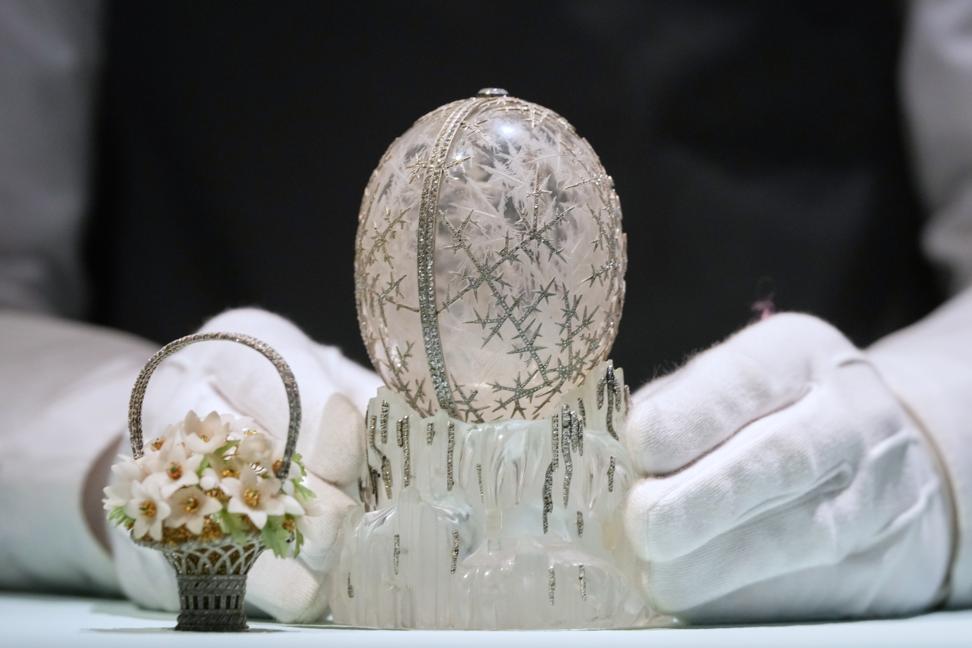
PHOTO: Fabergé’s “Winter Egg (1913)

On 2nd December 2025, one of Carl Fabergé‘s Imperial Easter Eggs, will be auctioned – yet again – at Christie’s in London. The legendary Winter Egg, is expected to sell for more than £20 million [$27 million USD].

Recall that the Winter Egg was presented to the Dowager Empress Maria Feodorovna by her son, Emperor Nicholas II as an Easter gift in 1913, the same year which also marked the 300th anniversary of the Romanov Dynasty. This exquisite piece is considered one of the most elegant of the 50 Imperial Easter Eggs created by the Fabergé firm.

For the first time in the history of the Imperial Easter Eggs, the design for the Winter Egg was created by a woman: Alma Theresia Pihl-Klee (1888-1976), the niece of the master August Wilhelm Holmström (1829-1903), who brought this project to life.

The egg measured 142 x 102 x 82 mm and cost 24,600 rubles. Pihl-Klee’s design depicts a block of melting ice. It was carved from a single piece of rock crystal and consists of two transparent halves, decorated with the finest engraving on the inside, imitating frost on the window. The exterior of the egg is decorated with engraving and platinum patterns with diamonds in the form of snowflakes and “streams” of platinum and diamonds.

The top of the egg is crowned with a moonstone in the form of a cabochon, with the date “1913”. The bezel of each half is made of platinum and decorated with 1,308 small diamonds and 360 medium-sized diamonds.

PHOTO: Fabergé’s “Winter Egg (1913)

The surprise inside the Winter Egg is a platinum basket with snowdrops. The flowers rest on a bed of golden moss, each flower is carved from a single white quartz. The stems and stamens are made of gold, the leaves are made of jade, and the flower buds are made of pomegranate.

At the bottom of the basket, studded with 1,378 diamonds, there is an engraving of “Fabergé 1913”.

After the 1917 Revolution, the Winter Egg was confiscated along with all the other possessions of the Romanov Family, as well as those of the families of the Russian nobility. During the 1920s, a number of Fabergé’s Imperial Easter Eggs were sold by the Bolsheviks to foreign buyers.

During the past century, the Winter Egg has been sold numerous times . . .

In 1927 it was sold to the Wartski Gallery in London for £450. In 1934 it was resold to Lord Alington for £1,500. In 1948, the egg was purchased by British tycoon Bernard Eckstein, but he died shortly thereafter, and the Fabergé egg, along with his other possessions, was put up for auction at Sotheby’s in London. For £1,870, it was bought by Arthur Brian Ledbrook. After his death in 1975, the trace of the egg was lost.

In 1993, the Winter Egg was found in a shoebox under a bed in the suburbs of London. The following year, it was put up for auction at Christie’s in Geneva. An anonymous buyer from the United States paid 7.263 million Swiss francs [$5.587 million USD] for it by phone.

In 2002, the Winter Egg reappeared at a Christie’s auction in New York. It was purchased for $9.579 million by the Qatari prince, Saud bin Muhammed Al Thani (1966-2014). The Qatari prince served as the country’s Minister of Culture, Arts and Heritage. By the turn of the 21st century, he had established an international reputation as an avid art collector, both for his own collection as well as those of several state-owned museums he oversaw in Qatar. His descendants have made the decision to offer the Winter Egg for sale at Christie’s in London.

Margo Oganesian, Head of Christie’s Department, Fabergé and Russian Works of Art, said: “With only six other Imperial Easter Eggs remaining in private collections, this is an extraordinary opportunity for collectors to acquire what is arguably one of Fabergé’s finest creations, both technically and artistically.”

© Paul Gilbert. 2 October 2025

New Book – Thirteen Years at the Russian Court

*This title is available from AMAZON in the USA, UK, Canada, Australia,
France, Germany, Spain, Italy, Netherlands, Poland, Sweden and Japan

CLICK HERE TO ORDER THE HARD COVER EDITION @ $25.00 USD

CLICK HERE TO ORDER THE PAPERBACK EDITION @ $20.00 USD

Available in Hard cover and Paperback edtions.
294 pages. With photographs and Notes

Originally published in 1921, this new edition of ‘Thirteen Years at the Russian Court’, features a new 32-page introduction by Romanov historian Paul Gilbert

A Personal Record of the Last Years and Death
of the Emperor Nicholas II. and his Family

Thirteen Years at the Russian Court is a personal record by Pierre Gilliard, a Swiss author and academic who served as the French language tutor to Russian Emperor Nicholas II’s five children.

The book, first published in 1921, offers a unique perspective on the final years of the Romanov dynasty through Gilliard’s personal experiences as a tutor to the August children of Russia’s last Tsar.

The memoir blends historical narrative with personal eye-witness anecdotes, providing an intimate look into the opulence and decline of Imperial Russia. Gilliard’s recollections are not merely memoirs but vital historical documents that bridge the gap between the glamour of Court life and the impending doom of a centuries-old regime.

Gilliard’s memoir serves as an invaluable resource for anyone interested in Russia’s last Tsar, Russian history, monarchy, or the complexities of life at the Russian Imperial Court during the early 20th century.

PIERRE GILLIARD (1879-1962)

Pierre Gilliard was a Swiss academic and author, best known as the French language tutor to the five children of Emperor Nicholas II of Russia from 1905 to 1918. In 1920, he returned to his native Switzerland, where he wrote his memoirs, Thirteen Years at the Russian Court, about his time with the Russian Imperial Family.

© Paul Gilbert. 29 September 2025

The Imperial legacy of Carl Fabergé (1846-1920)

Peter Carl Fabergé (1846-1920)

Today – 24th September 2025 – marks the 105th anniversary of the death of Peter Carl Fabergé. He died on 24th September 1920, in Pully, near Lausanne, Switzerland, aged 74. This article is a tribute to his life and the Imperial legacy of his work.

Peter Carl Fabergé was born in St. Petersburg, Russia on 30th (O.S. 18th) May 1846. Carl was one of four children born into the family of the Baltic German jeweller, Gustav Fabergé (1814-1893) and his wife Charlotte Maria Jungstedt (1820-1903).

In 1842, Gustav Fabergé opened a jewelry store on at 24 Bolshaya Morskaya Street (see photo below), in St. Petersburg. In 1899-1900, the building was rebuilt by the architect and cousin of the jeweller Carl Schmidt.

In 1860, Carl’s family moved to Dresden, leaving the family business in the hands of trusted managers. In Dresden, Carl took courses at the city’s University of Fine Arts. In 1864, he set off on a Grand Tour of Europe. He completed his training with respected goldsmiths in Germany, France, Italy and England, while spending his free time exploring Europe’s finest galleries and museums. He continued his Grand Tour of Europe until 1872, when, at the age of 26, he returned to St. Petersburg. For the next ten years, the craftsman Hiskias Pendin, employed by his father, became his mentor and tutor.

It was also in 1872, that Carl married Augusta Julia Jacobs (1851-1925). The couple had five sons, four of whom lived to adulthood: Eugène (1874–1960), Agathon (1876–1951), Alexander (1877–1952), Nikolai (1881-1883), and Nicholas (1884–1939). Descendants of Peter Carl Fabergé live in mainland Europe, Scandinavia and South America.

PHOTO: Gustav Fabergé and his wife Charlotte Maria Jungstedt

In 1882, Carl Fabergé took sole responsibility for running the company. He was awarded the title Master Goldsmith, which permitted him to use his own hallmark in addition to that of the firm.

In 1882, Carl and his brother Agathon caused a sensation at the All-Russian Exhibition held in Moscow. Carl received the gold medal of the Exhibition and the medal of Saint-Stanislaus. It was during this exhibition, that Fabergé was first noticed by Emperor Alexander III (1845-1894). The Emperor was so impressed with the objects of the House of Fabergé, that he ordered such to be presented at the Hermitage as superb examples of contemporary Russian craftsmanship.

In 1884, Alexander III granted the House of Fabergé the privilege of being the supplier to the Imperial Court, placing the Russian jeweller in direct competition with the Swedish jeweller Bolin. It remained so under Nicholas II. He was also recognized by the courts of the United Kingdom, Thailand, Sweden and Norway.

While Carl Fabergé was best known for the famous Imperial Easter Eggs, he also gained fame for many more objects ranging from silver tableware to fine jewelry which were also of exceptional quality and beauty.

At the turn of the 19th-early 20th century the Fabergé firm employed more than 500 people. Up until 1917, Fabergé’s company became the largest jewelry business in Russia. In 1916, the House of Fabergé became a joint-stock company with a capital of 3-million rubles. Between 1882 until 1917, the firm produced some 150,000 to 200,000 objects.

PHOTO: the main building of the Karl Fabergé firm in was located at Ulitsa Bolshaya Morskaya, 24., in St. Petersburg, and has survived to this day.

In order to cope with such volumes and manage not only the headquarters in the capital, but also branches within the Russian Empire and abroad, the company had rules for which workers must abide: Men were obliged to be respectful to women and girls working at the firm; All employees were forbidden to swear during working hours and conduct indecent conversations among themselves; Apprentices were forbidden to shout, swear, quarrel, fight and make any noise; Smoking was not permitted on the premises of the firm; All employees were forbidden to tell jokes during working hours; It was forbidden to gather in groups and talk about abstract topics.

The main building of the Carl Fabergé firm in was located at Ulitsa (Street) Bolshaya Morskaya, 24., in St. Petersburg, and has survived to this day. The firm also maintained branches in Moscow, Odessa, Kiev and London.

PHOTO: Carl Fabergé hands the Winter Imperial Easter Egg (1913) to Nicholas II, in the presence of the Empress Alexandra Feodorovna and their son Tsesarevich Alexei Nikolaevich. Painted in 2001, by the artist: Anatoly Ivanovich Perevyshko [b.1952]

Fabergé’s Imperial Easter Eggs

Carl Fabergé is perhaps best known for his Imperial Easter Eggs. They are at once exquisite works of art and fascinating relics of a vanished era. Some of the most valuable and prized treasures on earth, the jewelled eggs created by Peter Carl Fabergé for Emperors Alexander III and Nicholas II represent the zenith of the jeweller’s art. They helped secure Fabergé a monumental reputation and embody an era of opulence that came to a sudden, horrific end.

A total of 50 Imperial Easter Eggs were created: 10 for Alexander III and 40 for Nicholas II, as Easter gifts for Alexander’s wife and Nicholas’s mother Empress Maria Feodorovna, and Nicholas’s wife Empress Alexandra Feodorovna. After the death of his father in 1894, Nicholas II gifted one of Fabergé’s Imperial Easter Eggs to his mother as well.

Two more of Imperial Easter Eggs (bringing the total to 52) were designed but were unable to be delivered. One egg known as the Karelian Birch Egg, has confirmed sketches but is not confirmed to have actually been made, and the other, the Blue Tsesarevich Constellation Egg, only partially completed due to the Russian Revolution of 1917.

Of the 52 known Imperial Easter Eggs, 46 have survived to the present day. Ten of the imperial Easter Eggs are displayed at Moscow’s Kremlin Armoury Museum.

In 1918 The House of Fabergé was seized by the Bolsheviks. In early October the stock was confiscated. The House of Fabergé was no more.

After the nationalization of his business, Carl Fabergé left St. Petersburg on the last diplomatic train for Riga. In mid-November, the Revolution having reached Latvia, he fled to Germany and first settled in Bad Homburg and then in Wiesbaden. In June 1920, he went to Switzerland where other members of his family had taken refuge at the Bellevue Hotel in Pully, near Lausanne.

PHOTO: Grave of Peter Carl Fabergé

Peter Carl Fabergé never recovered from the shock of the Russian Revolution. He died in Switzerland on 24th September 1920. His family believed he died of a broken heart. His wife, Augusta, died in 1925. The two were reunited in 1929 when the couple’s son Eugène Fabergé took his father’s ashes from Lausanne and buried them in his mother’s grave at the Cimetière du Grand Jas in Cannes, France.

Memory Eternal! Вечная Память!

***

More than a century after his death, the legacy of Carl Fabergé prevails. His works have been the subject of countless exhibitions, books, documentaries and conferences, while auction houses continue to sell his jewels, objets d’art, and Imperial Easter Eggs at record breaking sums from buyers all over the world.

Fabergé family archive transferred to the Moscow Kremlin Museum

PHOTO: an archive of the Fabergé family, which include documents, jewellery sketches, and other various items was transferred to the Moscow Kremlin Museum

In October 2020, the Moscow Kremlin Museum received an archive of the Fabergé family, which included documents, jewellery sketches, and other various items.

According to Elena Gagarina, who heads the museum, “it is gratifying that such a collection ended up not in a private collection, but in a state museum. Now scientists can study it.”

The archive was transferred to the museum under the bequest of Tatiana Fabergé (1930-2020), the great-granddaughter of Carl Fabergé. ce. Culture Minister Olga Lyubimova is sure that the transfer of the archive is a sign of great trust. The archive will allow scientists to learn more about the family of the jeweller and his descendants.

The archive reflects the life of the Fabergé family over a century. Historical materials cover the period that begin even before the October Revolution. Among the documents are photographs, auction catalogues, business papers and personal documents of the descendants of Fabergé. The museum was also given a bust of Carl Fabergé, made during the life of the founder of the famous jewellery house. The archive also includes materials related to the Sheremetev family, the maternal relatives of Tatiana Fabergé.

After the emigration of the founders of the company, the history of Fabergé was not studied closely enough. The archive will open new pages in the life of the old family.

Fabergé Museum in St. Petersburg

PHOTO: Main entrance to the Fabergé Museum located in the former Shuvalov Palace on the Fontanka River Embankment. in St. Petersburg

On 19th November 2013, the Fabergé Museum in St. Petersburg opened its doors.

The Fabergé Museum is a privately owned museum which was established by Viktor Vekselberg and his Link of Times Foundation in order to repatriate lost cultural valuables to Russia. The museum, located in the former Shuvalov Palace on the Fontanka River Embankment. Today, it houses the world’s largest collection of pieces made by the famous Russian jeweller Peter Carl Fabergé (1846-1920).

The museum’s collection contains more than 4,000 works (including the former collection of Malcolm Forbes ) of decorative applied and fine arts, including gold and silver items, paintings, porcelain and bronze. The highlight of the museum’s collection is the group of nine Imperial Easter eggs created by Fabergé for the last two Russian Emperors Alexander III and Nicholas II.

PHOTO: The Fabergé Museum’s collection contains more than 4,000 works including the former collection of Malcolm Forbes

The handsome portrait of Emperor Nicholas II seen in the glass display case in the Fabergé Mseum, depicts Russia’s last Tsar in the uniform of the His Majesty’s Life-Guards Hussar Regiment.

The frame created by Fabergé was a gift to the Empress Maria Feodorovna. It is made of rock crystal, gold-rimmed with green guilloche enamel. Along the perimeter there is an ornament of intertwining laurel branches. Along the side there are pink guilloche-enamel medallions with images of the coat of arms, fittings, crowns, and in the central upper part – the monogram of Maria Feodorovna.

The frame was made by the chief craftsman of the company Mikhail Perkhin between 1898-1903.

Over the past seven years, the Fabergé Museum has become one of the most popular tourist sites in St. Petersburg. The author of this article, had visited the Fabergé Museum on two occasions and consider it one of the city’s finest museums – PG

Kremlin Fabergé collection to get new home in Moscow

In July 2023, the Moscow Kremlin Museums announced that the museum’s Fabergé Collection, which is part of the Collection of the State Armoury Chamber Museum will be moved to a massive new museum complex located on Red Square.

The new K5 museum – which has been under construction for nearly a decade – will feature a “large Fabergé Hall” to showcase the 10 Imperial Easter Eggs and other Fabergé items from the museum’s collection. The new complex was scheduled to open in 2024, however, sanctions imposed by the EU have halted delivery of large glass display cases needed for the new museum.

Monuments to Peter Carol Fabergé

On the left, is a bust-monument to Carl Fabergé in St. Petersburg. The memorial was installed on Carl Fabergé Square, situated in he Krasnogvardeisky district of the former capital of the Russian Empire. The square remained nameless for years, and in the autumn of 1998, that it was named after the famous St. Petersburg jeweller.

Work began on the six-meter bust-monument in May 1996, by the St. Petersburg sculptors Valentin Ivanov and Leonid Aristov. The design and layout were carried out by architect Boris Grishko.

The bust of the jeweller is carved from the black gabbro stone. The base of the monument consists of three square slabs arranged in steps. They are decorated with a pattern and spherical lamps. A three-meter column of gray-pink granite is installed on the pedestal. On it there is a laconic inscription “Carl Fabergé”, decorated with axelbants, a wreath of roses and a double-headed eagle.

On 19th December 1997, Tatiana Feodorovna Fabergé (1930-2020), arrived from Geneva for the opening of the commemorative monument. The event was timed to coincide with the 150th anniversary of the founder of the jewellry dynasty, but took place one year later.

Two years after the solemn installation of the monument, thanks to the petition of the Russian Gems enterprise, the nameless square acquired its name. Since 7th September 1998, the square has proudly borne the name of Carl Fabergé.

On the right is a bronze memorial bas-relief plaque to Carl Fabergé, which was installed on 6th December 2011, on the façade of the building on Khreshchatyk Street, which during early 20th century housed the former Fabergé shop/workshop was located.

Given the current state of Russian-Ukranian relations, it is very likely that this plaque has been removed (or destroyed), like all other monuments, etc. related to the Russian tsars and Imperial Russian history.

Fabergé endures . . .

In the above photo, a group of Russian schoolchildren surround a glass display case containing the Lilies of the Valley Imperial Easter Egg, at the Fabergé Museum in St. Petersburg . . . their facial expressions says it all.

© Paul Gilbert. 24 September 2025

***

CLICK HERE TO VIEW THE CATALOGUE OF BOOKS