How British intelligence tried to get Nicholas II out of Russia

PHOTO: King George V and Emperor Nicholas II
In 1917, British intelligence officers developed several options for evacuating Tsar Nicholas II from Russia without delay, but the British government and King George V did not have enough resolve to carry out this operation. An article published by the BBC News русская служба [Russian Service], by Russian journalist Olga Ivshina, revealed some interesting new details from recently declassified secret service documents and the Royal Archives,
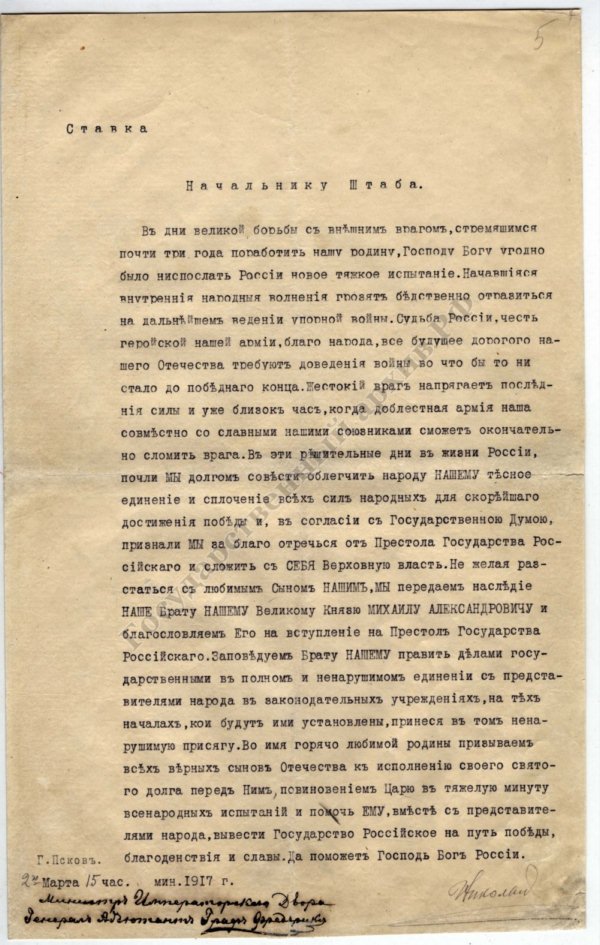
Discussions on the possible evacuation of Nicholas II from Russia began almost immediately after the Tsar’s abdication from the throne on 2nd March 1917. Already on 19th March, British General Sir John Hanbury-Williams met with Nicholas II’s mother, Dowager Empress Maria Feodorovna.
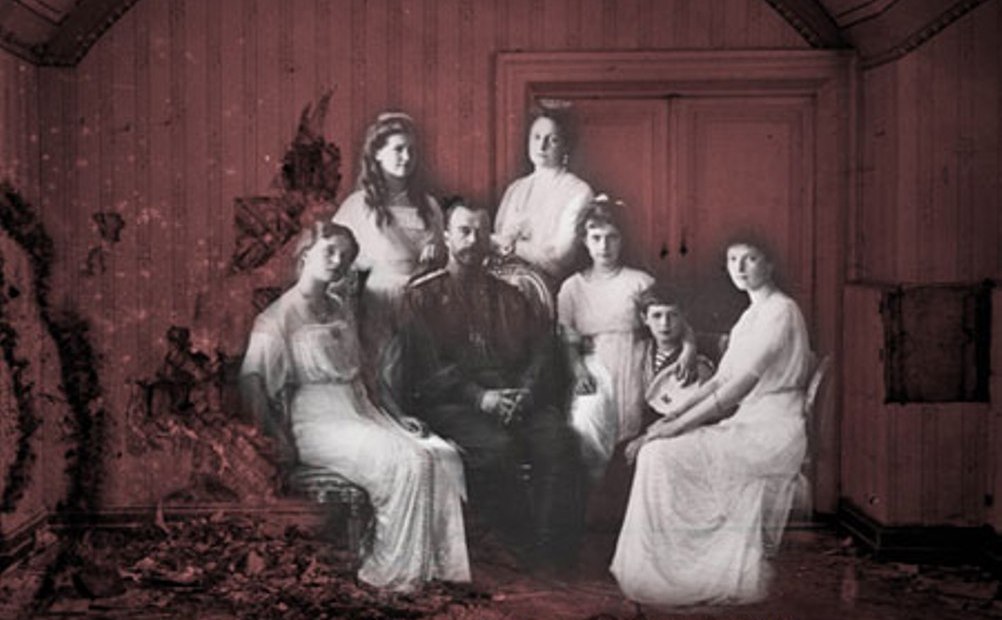
Britain’s concerns for the Romanov family is explained by the fact that King George V was a cousin of both Nicholas II and his wife Alexandra. The two monarchs were close and often corresponded, calling each other ‘old Nicky’ and ‘dear Georgie’. In addition, Britain and Russia were allies in the First World War.
The British general and the dowager empress agreed that the abdicated tsar should leave Russia as soon as possible. Maria Feodorovna – born in Copenhagen and holding the title of Danish princess before marriage – advocated that her son be evacuated to Denmark. She expressed concern that in the event of a longer sea voyage, that the ship carrying her son could be sunk by a German submarine. The British general assured Maria Feodorovna that he could ensure the safety of the Tsar. He even offered to personally accompany the Imperial Family out of Russia to England. Maria Fedorovna agreed. The British Ambassador to Russia Sir George Buchanan began negotiations with representatives of the Russian interim government on possible evacuation routes.
Several obstacles remained. First, it was necessary to convince Nicholas II of the need to leave, who, judging by his diary entries, still wanted to stay and dreamed of spending the rest of his days in Crimea with some kind of special honourary status. Secondly, it was necessary to obtain the final confirmation of the operation from London. And thirdly, it was necessary to figure out how to get the Romanovs out of Russia by passing the armed detachments of the Bolsheviks.
The fact is that at that moment the Provisional Government did not fully control the volatile situation in the country. It was strongly opposed by the influential Petrograd Soviet of Workers ‘and Soldiers’ Deputies, which were against the departure of Nicholas II and demanded that he be tried.
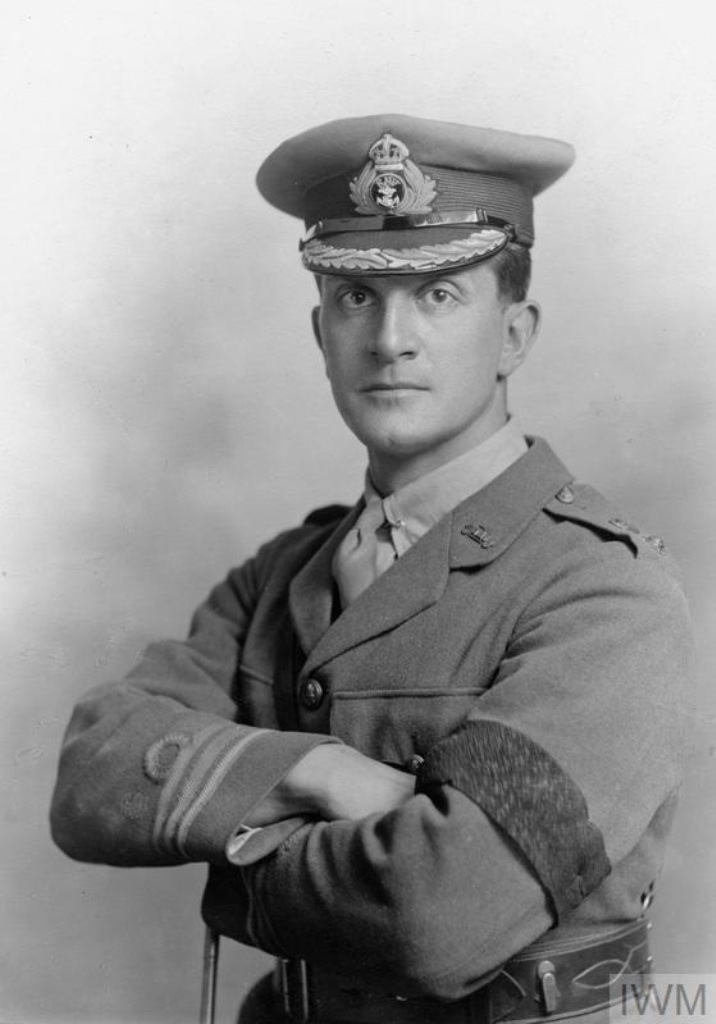
PHOTO: Oliver Locker-Lampson (1880-1954)
© Imperial War Museum
Plan one – creative
While the politicians were negotiating, intelligence scouts got to work. Some of the documents shedding light on the events of those days remain classified. Researchers Richard Aldrich, Rory Cormac and Andrew Cook managed to piece together the details of several plans.
One of them was proposed by Oliver Locker-Lampson (1880-1954), an officer of the Royal Navy. He was simultaneously the commander of a division of machine-gun armoured vehicles and a member of the British Parliament.
In 1916, the Locker-Lampson[1] division was transferred to Russia, where he immediately took action. According to his memoirs, in 1917 he was instructed to develop a plan for the rescue of Nicholas II.
By this time, Locker-Lampson managed to recruit one of the servants who worked in the Alexander Palace – it was there that the Imperial Family were being held under arrest after the Tsar’s abdication. According to the intelligence plan, on the designated day, the servant was supposed to come, shave off Nicholas II’s beard, change clothes with him and attach himself a false beard, similar to that of the emperor.
Nicholas II then had to calmly leave the palace and walk to the place where British intelligence officers would be waiting for him in a motorcar. Then the Tsar would be transferred to an armoured vehicle, then taken to Arkhangelsk under the protection of the British military and sent to London.
At first glance, the plan looked naive. But, as subsequent events showed, Locker-Lampson had previous experience of evacuation operations. In 1933, he helped Albert Einstein escape from Nazi persecution, and in 1936 he transported Emperor Haile Selassie of Ethiopia to England so that he would not fall into the hands of Italian dictator Benito Mussolini. During World War II, Locker-Lampson evacuated dozens of Jewish families from Germany.
The officer’s plan had one weak point – it meant the salvation of only Nicholas II himself. A devout husband and father, the forsaken Emperor had made it very clear, that he would not leave Russia without his beloved wife and children.
There was still one other obstacle to Lampson’s plan: it was necessary to get the approval of London and send a warship to Russia to evacuate the Romanovs. Time was quickly running out for both the Imperial Family and the scouts. General Hanbury-Williams sent an urgent telegram after telegram to Britain, but there was still no answer.
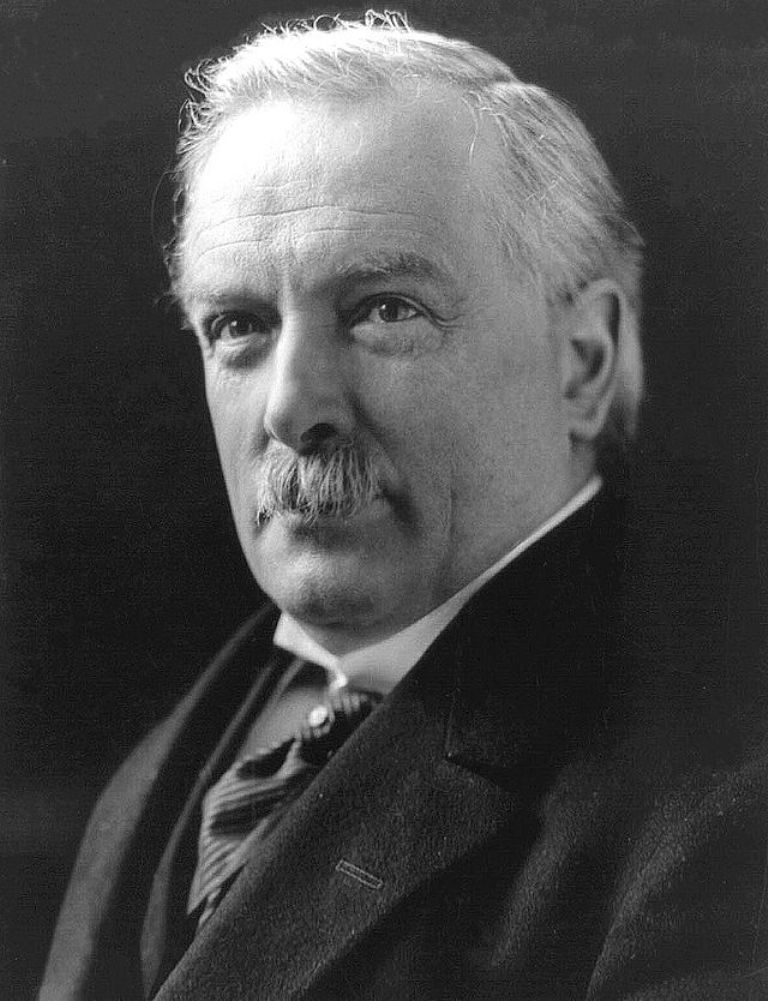
PHOTO: Prime Minister David Lloyd George
Wasteful and bloody
The General’s telegrams reached Downing Street, but the government was in no hurry to make a decision. So, in a note from the King’s secretary, Lord Stamfordham, for example, it is mentioned that Prime Minister David Lloyd George was very interested in the question of how much money Nicholas II would need to live in England. The First World War drained Britain’s budget and the prime minister did not seem to be pleased with the prospect of any additional burden on the treasury.
“Can you find out what private savings the emperor has?” – the prime minister asked the British ambassador to Russia, George Buchanan.
At that time, there were legends in London about the extravagant wealth of the Russian Imperial Family in British and other foreign banks. The British negative perception of the Romanovs was influenced by stories about the adventures of their “friend” Grigory Rasputin.
Lloyd George also expressed concerns about the presence of the Romanovs in Britain. At that time, the socialist movement was gaining popularity in Britain. After the dispersal of the procession of St. Petersburg workers in 1905, left-wing politicians spoke of Nicholas II only in a negative way, often referring to him as “Nikolai the Bloody”. Lloyd George – among others – feared that the arrival of the Tsar would provoke an increase in revolutionary sentiments in Britain itself.
The Provisional Government in Petrograd repeatedly asked London to provide the Tsar and his family with asylum, at least for the duration of the war. Lloyd George paused for a long time, but Petrograd continued to be Britain’s ally in the First World War. As a result, the government still officially invited Nicholas II and his family to London.
By now, King George V was against any plan to bring his cousin to Britain. The monarch’s secretary in his papers notes that when he heard about the government’s decision, the king “fell into a panic.” The fact is that George began to receive more and more information from his personal secretary and acquaintances that the possible evacuation of the Romanov family to Britain is being widely discussed by workers, Labour MPs, and even members of the British nobility in a negative way.
Not only were people worried about Nicholas II, but also by his wife Alexandra Feodorovna, a German by birth. Having married Nicholas, the German princess converted to Orthodoxy and, as far as can be judged, imbued with love and respect for her adopted Russia. However, rumours continued to circulate in society that she secretly sympathized with Germany, her detractors often claiming that she was a Germn spy.
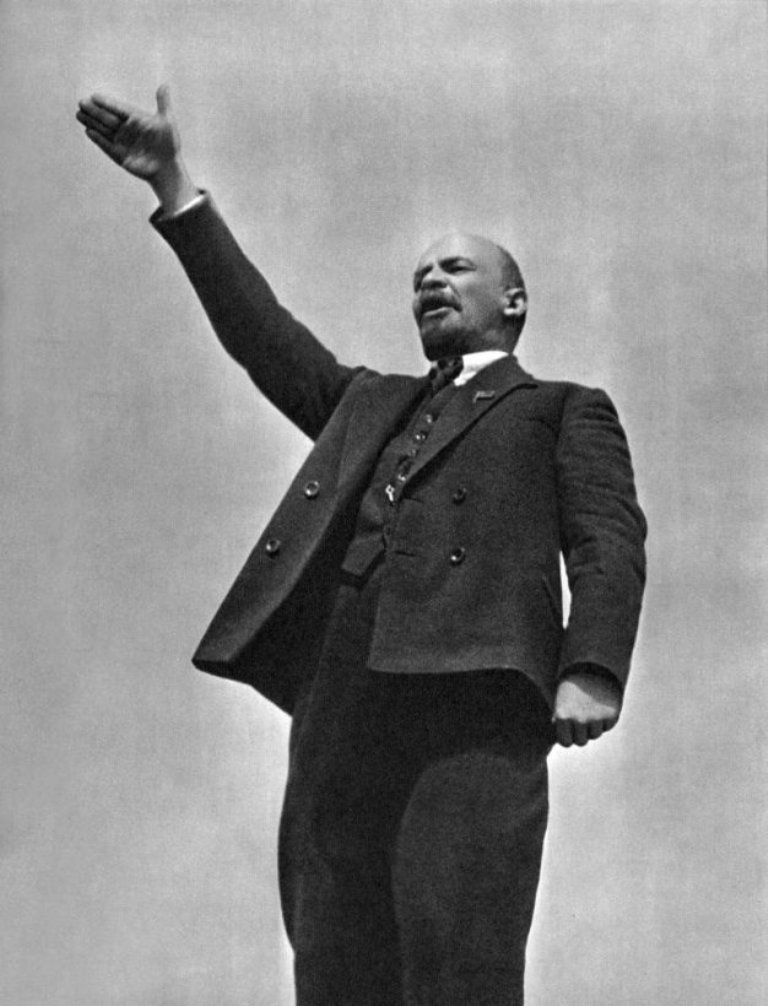
PHOTO: Bolshevik leader Vladimir Lenin
The second plan was ambitious
In parallel with the development of plans for the evacuation of the Romanov family, British intelligence officers also worked to undermine or overthrow the new Bolshevik order.
“A large scale invasion is the only thing that can save the situation and Russia,” the cavalier of military orders, the captain of the Royal Navy, Francis Cromie, telegraphed to London.
Together with the legendary British intelligence officer Sidney Reilly, they drew up plans for the landing of the Entente military formations in Russia. The head of the British diplomatic mission under the Soviet government, Robert Bruce Lockhart, at first was against such a plan, but later, realizing the inevitability of intervention, agreed.
In parallel, British intelligence officers tried to help the Socialist-Revolutionaries and monarchists organize an uprising against the Bolsheviks in Arkhangelsk [2]. There is one version which claims that the British were secretly organizing the assassination of Lenin, however, despite years of research, any evidence of such a plot has never been found.
Soviet historians write that diplomat Lockhart called the assassination of Lenin “the primary and most important task.” To this they added that the ambassadors of France and the United States were also involved in the conspiracy. However, Lockhart’s own reports say nothing of the kind, only about the arrest, but not the murder of the Bolshevik leader.

PHOTO: polar explorer Fridtjof Nansen (1861-1930)
The third plan was desperate
By August 1917, any opportunity to rescue the Imperial Family was looking more and more dismal. The provisional government, trying to somehow ensure the safety of the Tsar and his family, sent them away from radical revolutionaries in Petrograd into exile to Tobolsk in Siberia. This significantly complicated the task for British military and intelligence officers. Now they not only had to devise a plan to take Nicholas out from under the noses of the Bolsheviks, but to also overcome thousands of kilometres with him along the vast expanse of the Russian land. However, the officers did not give up.
The head of the Secret Service, Mansfield Cumming, began developing a new plan to rescue the Romanovs. This time the stake was made on Norwegian businessmen and travelers.
It is known that the British turned to the Norwegian polar explorer Fridtjof Nansen (1861-1930) for help. This scientist attracted the attention of British intelligence because he knew well not only the main Siberian roads, but the waterways along the Yenisei, which could be very useful in the evacuation of the Tsar. The British also brought in the merchant Jonas Leed to develop the new plan. He often traveled to Siberia, representing the interests of Norwegian companies in the wood and coal mining industries.
Very little is known about the details of the plan involving Leed and Nansen. All that is known for certain is that Leed dined several times with representatives of the Secret Service, as well as with the head of intelligence of the British Navy.
Captain Stefan Ellie may also have been one of the participants in this new plan to save the Tsar. He spoke Russian fluently, since his family had lived in Russia since the 1870s. Ellie is one of the few British people who stayed to work in Russia even after the evacuation of the British embassy in late 1917.
Many details of Ellie’s mission remain unknown. But in 2006, his relatives found a notebook among his belongings. One of the spreads showed a hand-drawn map of the area in and around the Ipatiev house in Ekaterinburg, where Nicholas II was transferred in April of 1918, and a description of the house.
According to declassified data, on 24th May 1918, Ellie reported to London about his readiness to carry out an operation, during which “seven important persons” would be taken to Murmansk[3]. In the report, he listed the names of six people who were supposed to take part in the operation. Ellie noted that they were all fluent in Russian and could impersonate local residents. The scout also asked for £1,000[4] “due to increased operating costs.”
Researchers agree that this plan could not have been worked out without the prior approval of the British government and King George V.
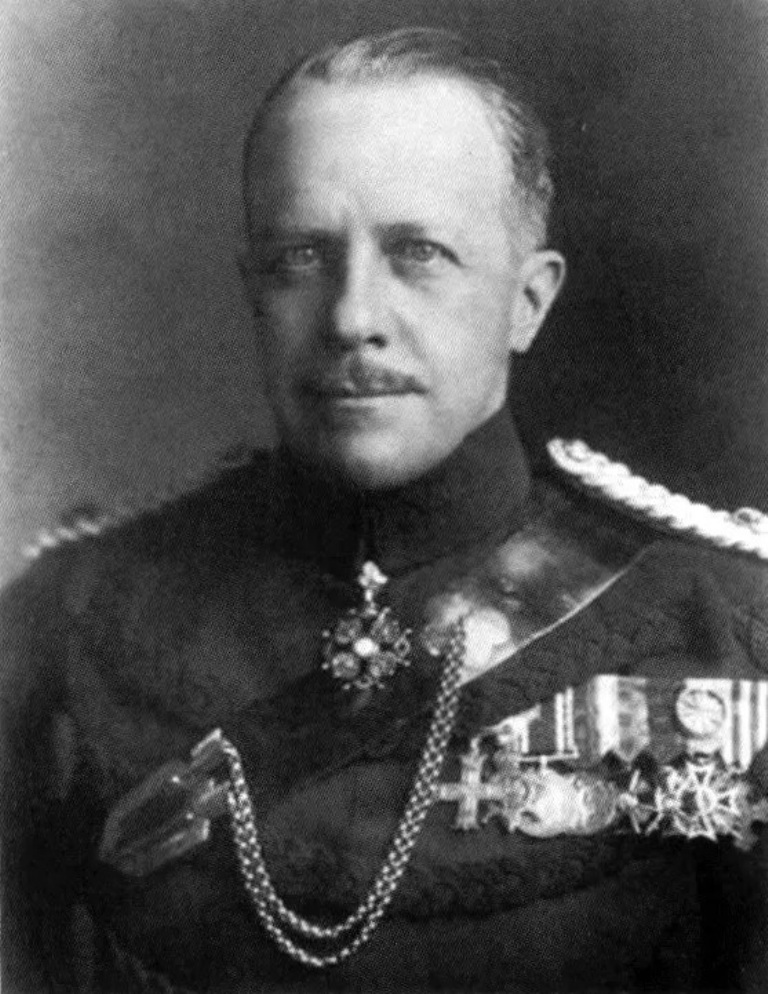
PHOTO: Captain Stefan Ellie’s notebook helped learn details of MI6’s latest plan to rescue the Imperial Family
From recently declassified documents, it becomes clear that British intelligence had evidence that Germany was also preparing a plan to take the Imperial Family out of Russia. Technically, the Germans had a chance to do this, since a significant number of their military and equipment were already in Russian territories due to their participation in the First World War.
European royal historian and researcher Karina Urbach, who has access to German archives, confirms that there was a plan to “kidnap Nikolai Romanov” from the German special services. Information about this plan was gradually leaked to British intelligence officers.
Despite the fact that Kaiser Wilhelm II was at war with Russia, but was also the godfather of Tsesarevich Alexei and sincerely wanted to save him. Urbach notes that after the Bolsheviks seized power in Russia, it was Germany that objectively had the best opportunity to rescue the Tsar and his family.
Berlin could have done this with the help of its own spies or, with much more success, through diplomatic negotiations. Researchers believe that Germany could have raised the issue of the “extradition” of the Romanovs as one of the conditions for signing a peace treaty with the Bolsheviks.
Judging by the declassified correspondence of the British Foreign Office, on 28th May 1918, diplomats discussed for the last time whether they should raise the issue of evacuating Nicholas II’s five children during negotiations with Leon Trotsky, who at that time was chairman of the Supreme Military Council. During the discussion, they came to the conclusion that even if Trotsky agrees, the Romanovs will need to be guarded on the way to Murmansk. However, the Bolshevik guard was unreliable, and it was feared that the presence of a British guard could provoke attacks on the Imperial Family along the way. As a result, the British found themselves in a vicious circle – their intervention would only further harm those whom they were trying to save.
Historian Andrew Cook believes that telegrams with details of the evacuation plan for Nicholas II, sent by Major Ellie to London, could have been intercepted by the Bolsheviks. Perhaps this was the reason for the increased security of the Ipatiev House and the Imperial Family in the summer of 1918.
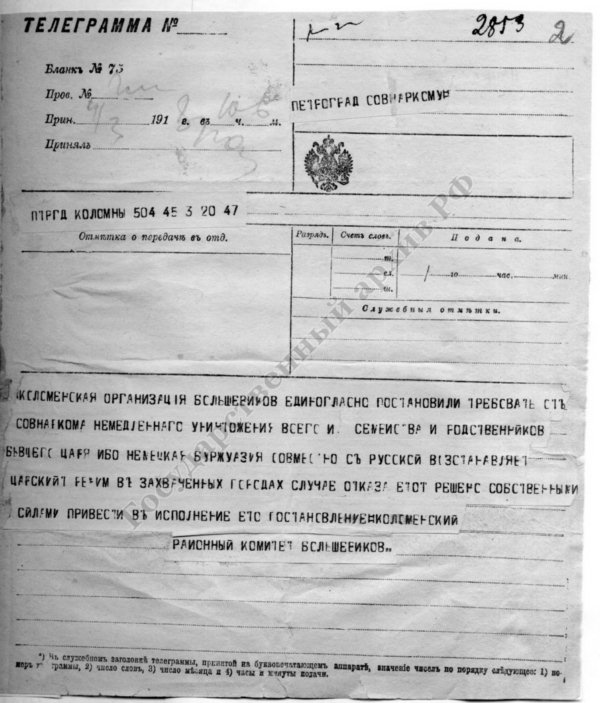
On 17th July 1918, Nicholas II with his wife, their five children and four faithful servants were all brutally murdered in Ekaterinburg—there were no survivors.
Less than a year later, the British battleship Marlborough rescued Dowager Empress Maria Feodorovna, along with other Romanovs with their families to the British naval base in Malta.
NOTES:
[1] Locker-Lampson became somewhat entangled in Russian politics at this time. He said later that he had been asked to participate in the 1916 assassination of Rasputin. It is also alleged that in September 1917 he was involved in Kornilov’s attempted coup against the provisional government of Alexander Kerensky.
[2] The city resisted Bolshevik rule from 1918 to 1920 and was a stronghold of the anti-Bolshevik White Army supported by the military intervention of British-led Entente forces.
[3] Murmansk, Russia’s first ice free port was founded in 1916 by Nicholas II and named Romanov-on-Murman.
[4] In terms of today’s money, this is approximately 50 thousand British pounds (66 thousand US dollars or 4.9 million rubles).
© Paul Gilbert. 18 December 2021









 Nicholas II
You must be logged in to post a comment.