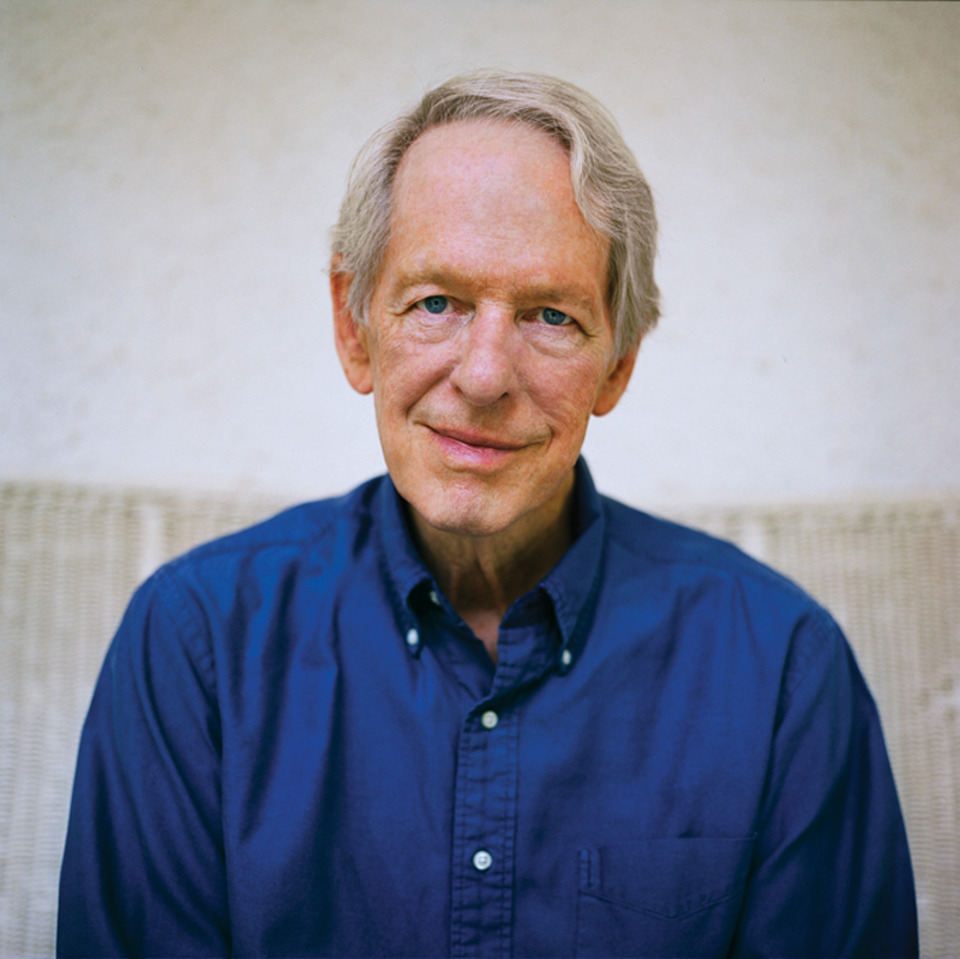
On 2nd December 2019, Robert K. Massie, best known as author and historian of pre-Revolutionary Russia, passed away at his home in Irvington, New York at the age of 90. The cause of death was complications associated with Alzheimer’s Disease.
Life, Education and Career
Robert Kinloch Massie III was born in Versailles, Kentucky on 5 January 1929. He later grew up in Nashville, Tennessee, graduated from Yale University, and was a Rhodes Scholar at Oxford University where he read Modern History. For four years, he served as an air intelligence officer aboard aircraft carriers in the Mediterranean and the Pacific.
Mr. Massie was on the staff of Newsweek from 1959 to 1962, where he was a book reviewer, foreign news writer, and United Nations Bureau Chief. His writing has also appeared in The New Yorker, Vanity Fair, The New York Times, Architectural Digest, and other publications. Over the years, he worked as an historical adviser to, and has made frequent appearances on, a number of national television programs and documentaries.
Massie was married twice. His first wife, Suzanne Rohrback (from 1954 to 1990), an author whose books about Russian culture (Land of the Firebird: The Beauty of Old Russia in 1980 and Pavlovsk: The Life of a Russian Palace in 1990), brought her to the attention of Ronald Reagan and into international politics. The couple had a son and two daughters. In 1992, Massie remarried his literary agent Deborah Karl. The couple had a son and two daughters.
Books: Nicholas and Alexandra
Robert K. Massie, spent almost half a century studying Tsarist Russia, his personal interest in the last Imperial family was triggered by the birth of his eldest son Robert Jr., who was born with hemophilia, a hereditary disease that also afflicted Tsar Nicholas II’s son, Alexei.
His first book, Nicholas and Alexandra (1967), which remained on the New York Times Bestseller List for 46 weeks, was translated into seventeen languages, and made into a film that was nominated for numerous Academy Awards. Though nearly 1,000 pages long, it sold more than 4.5 million copies and is regarded as one of the most popular historical studies ever published. Praised in The New York Times as a long-needed and balanced account of the last tsar and his family. In his study, Nicholas comes across not as the “stupid, weak or bloodthirsty” monarch, as he is often been portrayed by his Western counterparts.
Nicholas and Alexandra made Massie a celebrity, phoned by strangers who invited him for lunch, and a magnet for relatives and alleged relatives of the Romanovs. He discussed hemophilia with the Duke and Duchess of Windsor, and with Earl Mountbatten of Burma, a grandson of Queen Victoria.
It was Massie’s now classic study of Emperor Nicholas II and Empress Alexandra Feodorovna, which presented the most comprehensive study of Russia’s last Imperial family in a whole new light, but it was far from perfect.
During his research for Nicholas and Alexandra, Massie did not have complete information because the Soviet government would not permit him access to the Romanov archives. During the Soviet years, access to these files were restricted solely for propaganda purposes only. It was only in 1991, when the Soviet Union was dissolved and the Romanov archives were open, did Massie complete their story, writing a continuation, The Romanovs: The Final Chapter (1995)
Film: Nicholas and Alexandra (1971)
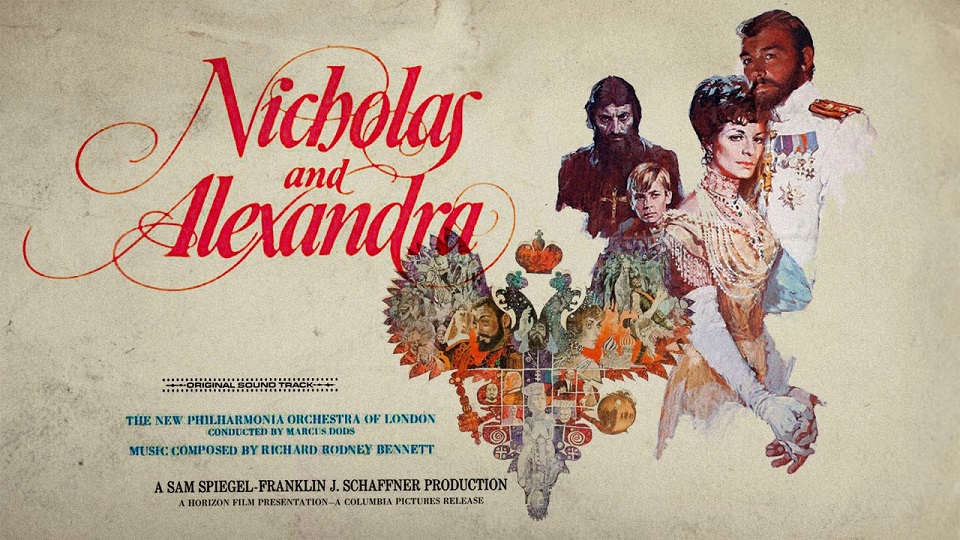
In 1971, Massie’s bestseller was made into a British biographical film directed by Franklin J. Schaffner, written by James Goldman, and starring Michael Jayston as Emperor Nicholas II and Janet Suzman as Empress Alexandra Feodorovna.
The film won Academy Awards for Best Art Direction-Set Decoration and Best Costume Design and was nominated for Best Actress in a Leading Role (Janet Suzman), Best Cinematography, Best Music, Original Dramatic Score and Best Picture.
Despite the detailed production design, photography and strong performances from the cast, Nicholas and Alexandra failed to find the large audience it needed to be a financial success.
It is interesting to note that aside from its historical inaccuracies, not a single scene was filmed in Russia. This of course is due to the fact that in 1971 Russia was still the Soviet Union, and the discussion or promotion of the last tsar was still taboo. Instead, the film was shot entirely in Spain and Yugoslavia.
Other Books
Massie penned two additional books on the Romanov dynasty: Peter the Great: His Life and World (1981), which won a Pulitzer Prize. His biography led to the production of Peter the Great (1986) which became a major network miniseries, winning three Emmy Awards.
Two decades later he wrote, Catherine the Great (2011), which was awarded the Andrew Carnegie Medal for Excellence in Nonfiction by the American Library Association.
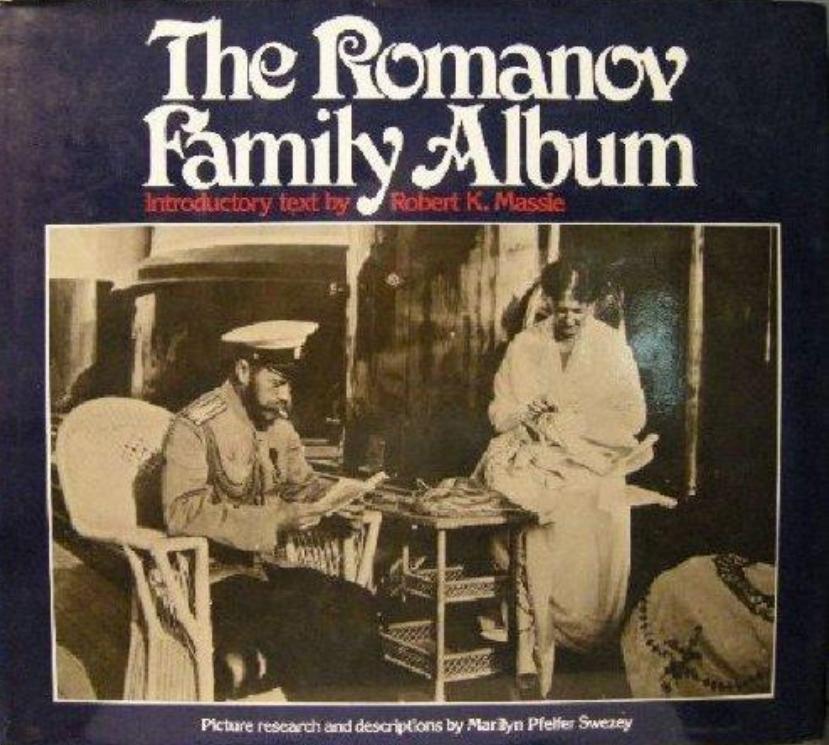
And we cannot forget two additional pictorials for which Massie wrote the introductory text: Last Courts of Europe: Royal Family Album, 1860–1914 (Vendome Press, 1981) and The Romanov Family Album (Vendome Press, 1982), the latter of which is highly sought after by collectors to this day.
His other works include Journey (1975), Dreadnought: Britain, Germany and the Coming of the Great War (1991), and Castles of Steel: Britain, Germany and the Winning of the Great War at Sea (2004), among others.
While Massie’s books have sold more than 6 million copies, however, he will always be remembered for Nicholas and Alexandra, which captivated a whole new generation with detailed accounts of Nicholas II and his family. For many it was Massie’s now classic study which launched their personal interest in the Imperial family, leading them on a quest for for accurate and truthful information. For that alone, we owe Robert Massie an immense debt of gratitude.
Robert K. Massie is survived by his second wife Deborah Karl, their son, Christopher, and two daughters Sophia and Nora Massie; and his son Bob Jr., and two daughters, Susanna Thomas and Elizabeth Massie, from his first marriage; as well as seven grandchildren and one great-grandson.
NOTE: All of the articles pertaining to Nicholas II and his family which were originally published in my Royal Russia News blog, have been moved to this Nicholas II blog. This article was originally posted on 5 September 2018 in my Royal Russia News blog – PG
I have had the pleasure of visiting the Ural city of Ekaterinburg on three occasions over the past six years: 2012, 2016, and most recently in July 2018. Out of all the Russian cities which I have visited since 1986, Ekaterinburg has become my favourite.
It is a city rich in history, and the setting for one of the darkest pages in 20th century Russian history: the final days and murder of Russia’s last tsar Nicholas II and his family in the Ipatiev House on the night of 16/17 July 1918.
Sadly, the city is overlooked by most visitors to Russia. It is seldom included in group tours, relying mainly on foreigners travelling on the Trans-Siberian Express. Many of them stay for only one or two nights, which really is not enough time to explore and appreciate what Ekaterinburg has to offer. Having said this, however, Ekaterinburg is becoming increasingly popular with Chinese tourists, and the FIFA World Cup matches held in the city in June 2018 have helped spread the word to foreigners, that Ekaterinburg is indeed worth visiting.
As a devout book collector, I have always been on the hunt for pictorials, which offer vintage photographs of what life was like in Russia before the 1917 Revolution. During my most recent visit to Ekaterinburg, my book hunting skills produced a couple of gems to add to my personal home/office library.
Дом Ипатьева: летописная хроника в документах и фотографиях
Дом Ипатьева: летописная хроника в документах и фотографиях (Ipatiev House. Documentary and Photographic Annals. 1877-1977) by photojournalist and historian Vitaly Shytov. Published in 2013 in a hard cover edition in Chelyabinsk by the Auto-Count Publishing House, the book features more than 700 pages and more than 1,000 photographs. Only available in Russian. Shytov has dedicated 40 years of study to the tragic history of the Ipatiev House in Ekaterinburg. There were only 500 copies printed, and it remains the the most comprehensive study of the Ipatiev House to date. Sadly, Shytov’s research has been virtually ignored by Western historians, who have written on the last days of the Imperial family in the ‘House of Special Purpose’.
Екатеринбург: История города в фотографии
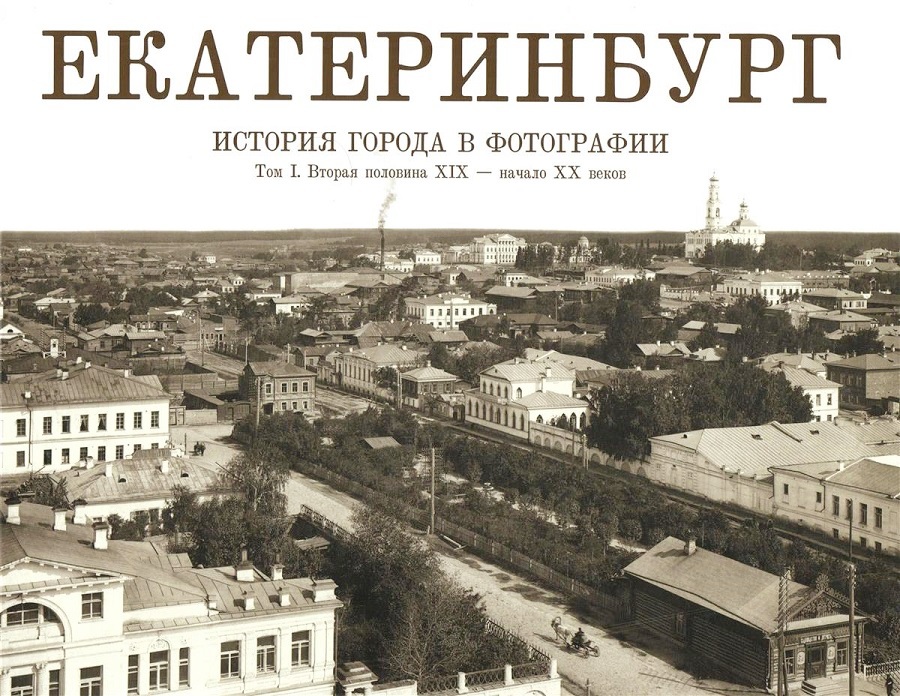
Екатеринбург: История города в фотографии. Том 1: Вторая половина XIX – начало XX веков (Ekaterinburg: History of the City in Photographs. Volume I. Second half of 19th – early 20th century) by A.V. Berkovich and O. A. Bukharkina. Second edition published in 2015 by the Ekaterinburg City Administration. Published in a hardcover edition, the book features 208 pages, and more than 200 vintage photographs. Despite the Cyrillic text on the book’s cover, the contents are in both Russian and English.
The latter presents a very different view of Ekaterinburg, in that it presents for the first time, a selection of historic photos from the most famous photographer of old Ekaterinburg Veniamin Leontiyevich Metenkov (1857-1933).
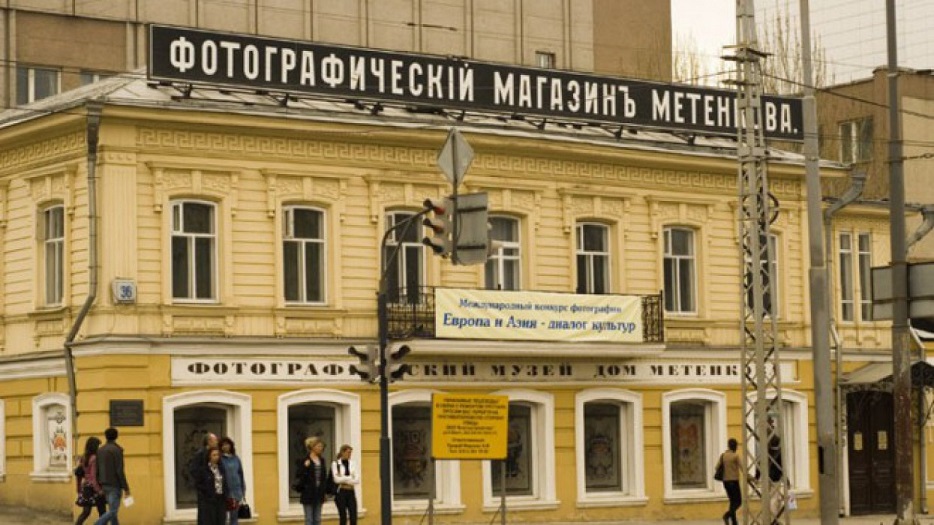
The Metenkov House and Photographic Museum is situated near the Church on the Blood in Ekaterinburg
Sadly, the Revolution destroyed the photography business which Metenkov created. He died in obscurity in 1933, his name forgotten for more than half a century. After the fall of the Soviet Union in the early 1990s, the house where Metenkov lived and worked was turned into a museum named after him. Until recently Metenkov’s archive was believed to be lost, however, a persistent search for the photographers’ legacy yielded the discovery of more than 200 negatives in the funds of the Sverdlovsk Oblast State Archive.
Another noteworthy Ekaterinburg photographer was the city doctor Vladimir Alexandrovich Paduchev (1859-1919). The Paduchev family archive of more than 500 negatives focus on the private world of the city middle class, taken during the first decade of the 20th century. The collection lay hidden in an old barn for more than a century, before their discovery.
ALL colour photographs below are courtesy of the Ekaterinburg City Administration
Photo: Sergey Mikhaylovich Prokudin-Gorsky
Photo: Sergey Mikhaylovich Prokudin-Gorsky
Photo: Sergey Mikhaylovich Prokudin-Gorsky
Photo: Sergey Mikhaylovich Prokudin-Gorsky
Photo: Sergey Mikhaylovich Prokudin-Gorsky
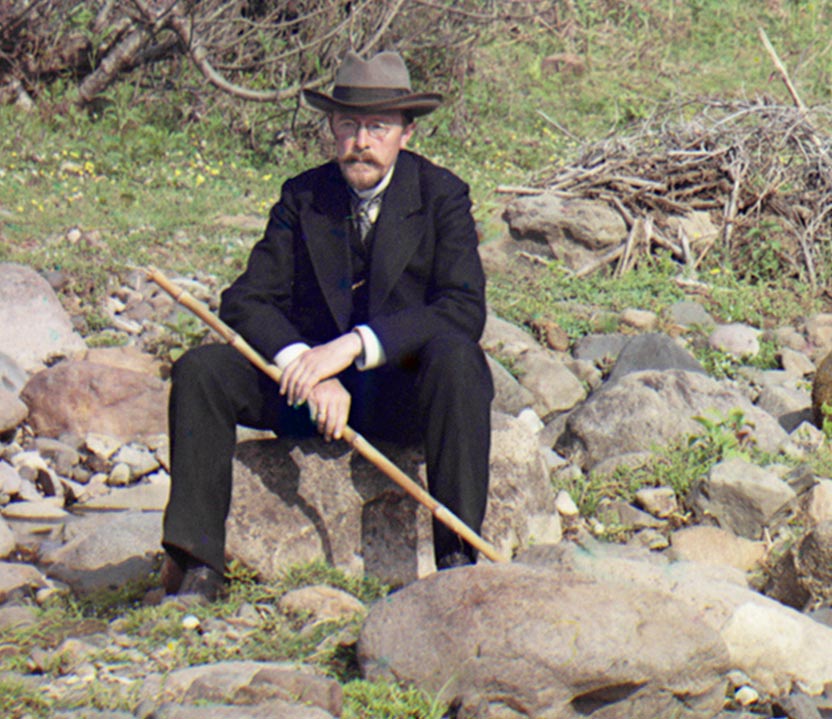
The unique photographic view of Pre-Revolutionary Russia and Ekaterinburg, however, belong to the pioneer of colour photography Sergey Mikhaylovich Prokudin-Gorsky (1863-1944).
His photos of Russia’s nature and monuments earned him invitations to show his work to the Grand Duke Mikhail Alexandrovich and the Dowager Empress Maria Feodorovna in 1908, and to Tsar Nicholas II and his family in 1909. The Tsar enjoyed the demonstration, and, with his blessing, Prokudin-Gorsky got the permission and funding to document Russia in colour. In the course of ten years, he was to make a collection of 10,000 photos.
Photo: Sergey Mikhaylovich Prokudin-Gorsky
Photo: Sergey Mikhaylovich Prokudin-Gorsky
Photo: Sergey Mikhaylovich Prokudin-Gorsky
Photo: Sergey Mikhaylovich Prokudin-Gorsky
Photo: Sergey Mikhaylovich Prokudin-Gorsky
Using a railroad-car darkroom provided by Tsar Nicholas II, Prokudin-Gorsky traveled the Russian Empire from 1905 to 1915, using his three-image colour photography to record its many aspects. He arrived in Ekaterinburg in 1909, where he gave lectures and visited Veniamin Metenkov at his home. Metenkov accompanied Prokudin-Gorsky on his trips in and around the city, suggesting interesting locations to be photographed.
Photo: Sergey Mikhaylovich Prokudin-Gorsky
Photo: Sergey Mikhaylovich Prokudin-Gorsky
Photo: Sergey Mikhaylovich Prokudin-Gorsky
Photo: Sergey Mikhaylovich Prokudin-Gorsky
Photo: Sergey Mikhaylovich Prokudin-Gorsky
Photo: Sergey Mikhaylovich Prokudin-Gorsky
Photo: Sergey Mikhaylovich Prokudin-Gorsky
Photo: Sergey Mikhaylovich Prokudin-Gorsky
Prokudin-Gorskii left Russia in 1918, after the Russian Revolution, and eventually settled in Paris, where he died in 1944. While some of his negatives were lost, Library of Congress purchased a collection of more than 2,600 images from the photographer’s sons in 1948.
All three photographers are represented in this handsome volume. Their legacies transcend a century, allowing the reader to look back to a unique and beautiful city, far removed from the ancient Russian capital of Moscow, and the glittering Imperial capital of St. Petersburg. These images document daily life in the Ural city, which has changed beyond recognition, many historic landmarks lost forever, and only the photographs preserve the flow of a lost world.
***
Why Ekaterinburg is my favourite Russian city
O have visited Ekaterinburg three times during the past decade: 2012, 2016 and 2018. It is a city which I have fallen in love with for many reasons. It is filled with history, as well as many architectural monuments associated the Tsarist period, including cathedrals, churches, mansions and museums.
People often ask me “Why, Ekaterinburg?” as opposed to the former Imperial capital of St. Petersburg, especially given that “Ekaterinburg has such a dark history.”
Once a bastion of Bolshevism, Ekaterinburg has slowly shed its status as the “capital of atheism”. Since the fall of the Soviet Union in 1991, the Urals has experienced a revival of faith, with Ekaterinburg as the center of Orthodox Russia in the region.
It is important to add, that Ekaterinburg has done more to honour Nicholas II and his family than any other city in Russia. Thanks to my visits to Ekaterinburg in 2012, 2016 and 2018, it is a city which I have grown to admire and love.
NOTE: All of the articles pertaining to Nicholas II and his family which were originally published in my Royal Russia News blog, have been moved to this Nicholas II blog. This article was originally published on 19 September 2018 in my Royal Russia News blog – PG
In this day and age, when children are exposed to more and more violence on television, distracted by video games and texting on their mobiles, it is still a blessing that we have books to enlighten them.
Holy Trinity Publications, the publishing arm of Holy Trinity Monastery of the Russian Orthodox Church Outside of Russia (ROCOR) in Jordanville, New York, have released a new publication in honor of the Royal Martyrs, for children aged 7-12, or for parents to read to their children of younger age.
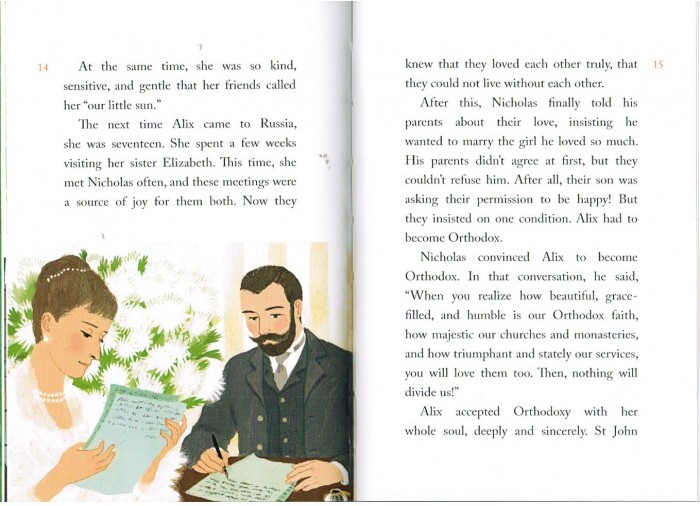
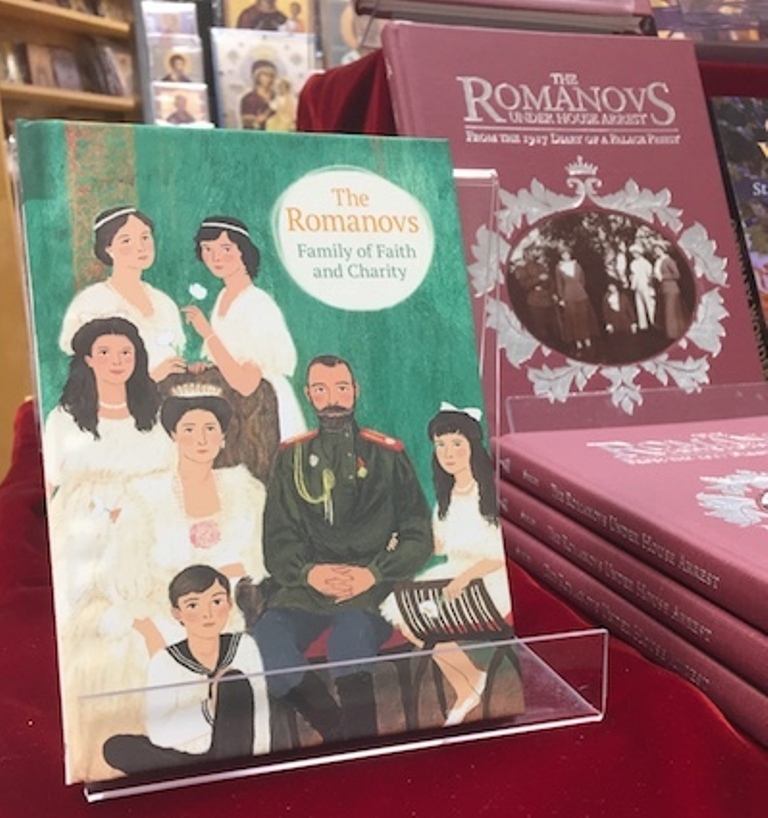
The Romanovs: Family of Faith and Charity by Maria Maximova, shares the story of the last Russian emperor and his family. Their life was not necessarily what one would expect; there was much more than fancy clothes and delicious food. They shared happy memories but also great hardships. They nursed the sick, ate porridge, kayaked along the Finnish coastline, and cared for chickens. Today we know them as the Royal Martyrs — deeply pious Orthodox Christians who laid down their lives for the Faith and role models of Christian virtue who showed kindness even to the guards who taunted them.
Beautiful colour illustrations by Victoria Kitavina
The author Maria Maximova is an expert on the history of Russian literary culture. She has authored a number of books retelling the lives of Orthodox Christian saints for children.
This thought provoking, hard cover book features 56 pages, with beautiful colour illustrations by Victoria Kitavina. Translated from Russian into English by Nicholas Kotar. The price is $9.95 USD.
The Romanovs: Family of Faith and Charity is one of two new titles published by Holy Trinity Publications, in time for the 100th anniversary of the martyrdom of the Tsar Nicholas II and his holy family, on July 17, 2018. The other title The Romanovs Under House Arrest: from the 1917 Diary of a Palace Priest by Archpriest Afanasy Belyaev, rector of the Tsar’s Feodorovsky Cathedral at Tsarskoye Selo, and subsequently the father confessor of the Russian Imperial family during their first five months of confinement following Nicholas II’s abdication in early 1917.
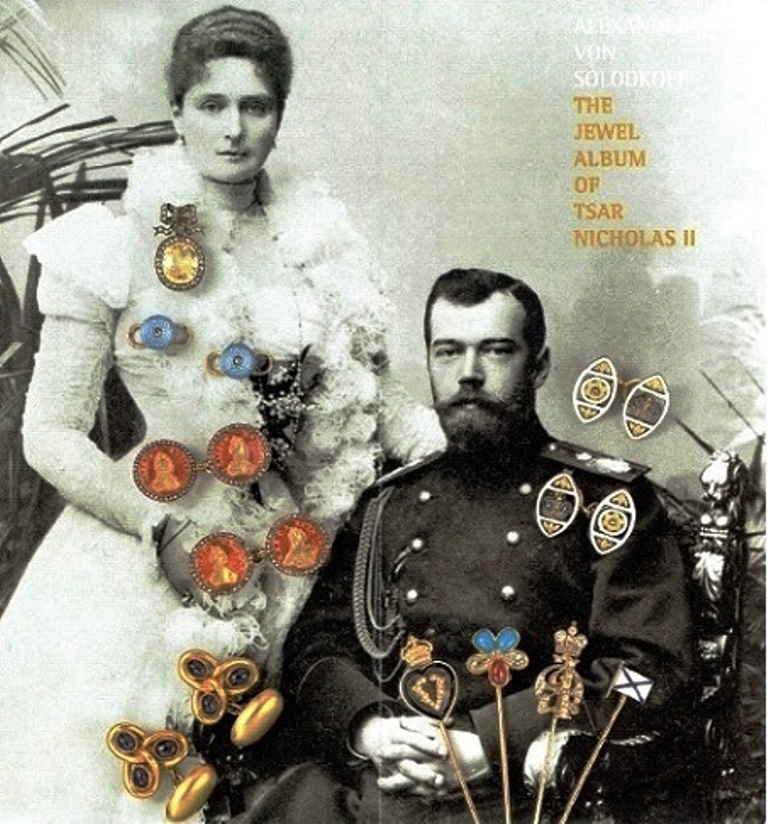
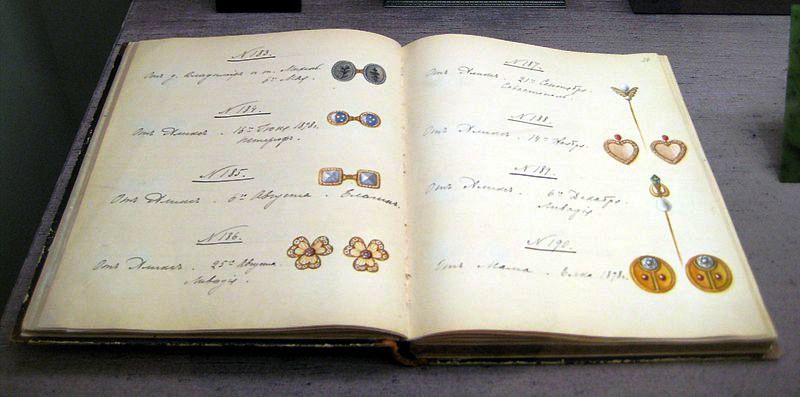
Between 1889 and 1913 Nicholas II, Grand Duke, Tsesarevich and Emperor of Russia, painted his jewellery in a small album as a private record of his collection. His watercolours of more than 300 items – some of which were created by jewellers such as Fabergé and Cartier – give a realistic picture of what the tsar was wearing as jewellery. His handwritten notes also comprise dates and names of those who presented him with each item, a record of the small circle of those who were near to him.
The drawings of his personal jewellery were made by him not to record valuables such as precious stones or gold but as a personal record of family souvenirs with memorable dates. The album is an encyclopedia of men’s fashion ornaments of the turn of the century full of crowned monograms and symbols as well as surprisingly modern jewellery designs.
The jewel album of Tsar Nicholas II was re-discovered in the 1990s in the archives of the Moscow Kremlin Museum. It consisted of 82 pages and a total of 305 watercolour drawings of his personal collection of men’s jewellery. The date of receipt of gifts from loved ones connected with holidays and memorable events were noted by Nicholas II in his own handwriting: his birthday, name day, days of engagement and wedding, the day of the coronation, birth, christening, and on major Christian holidays, such as Easter and Christmas.
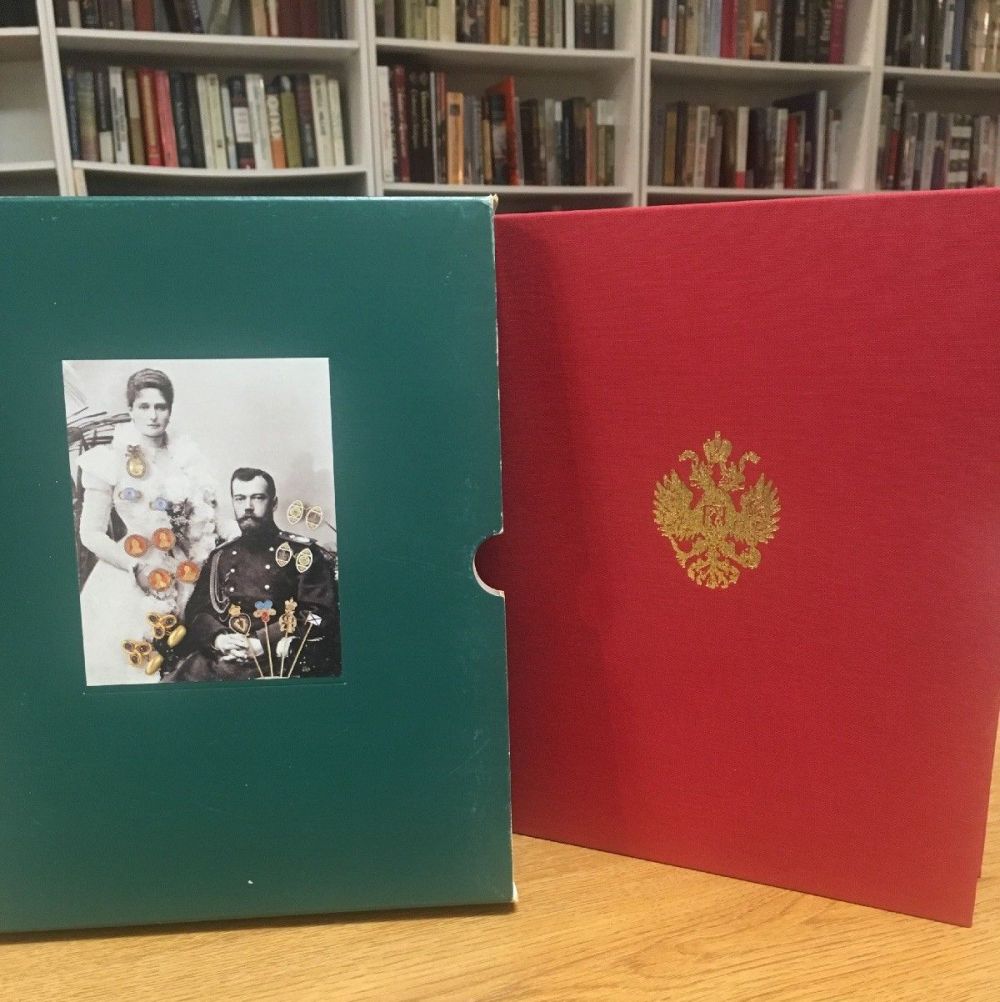
In 1997, the publishing firm Ermitage issued a facsimile of the album, entitled The Jewel Album of Nicholas II and a Collection Private Photographs of the Russian Imperial Family. It was published in a high quality cloth-bound edition with 216 pages, enclosed in a handsome green-board slipcase. The accompanying text on the jewellery was written by Alexander von Solodkoff, an authority on Russian and Fabergé art. It is supplemented with an article on the history of the album by Irina A. Bogatskaya, curator of the Moscow Kremlin Museum Archives.
In addition to the more than 300 watercolours of Nicholas II’s jewellery, the book also includes 95 illustrations from the original, unpublished private photographs of the Russian Imperial Family. This rare collection offers an authentic glimpse of their private life with evocative scenes of private visits, fashion and interiors of the time. The material was discovered by von Solodkoff in the archive of Hemmelmark, formerly the home of Princess Irene of Prussia, sister of Empress Alexandra Feodorovna.
Alexander von Solodkoff has studied the history and art of Russia specializing in goldsmith work and jewellery. Among his publications are books such as Russian Gold and Silver (1981), Fabergé (1988) and numerous articles in exhibition catalogues and art historical publications. He served as director of Ermitage Ltd. London.
The facsimile edition (pictured above) was distributed through Christie’s of London in the late 1990s, and sold out very quickly. This beautiful book is now long out of print, however, second-hand copies which sell for hundreds of dollars, continue to be highly sought after by Romanov enthusiasts and lovers of Imperial Russian history.
NOTE: All of the articles pertaining to Nicholas II and his family which were originally published in my Royal Russia News blog, have been moved to this Nicholas II blog. This article was originally published on 13 April 2019 in my Royal Russia News blog – PG
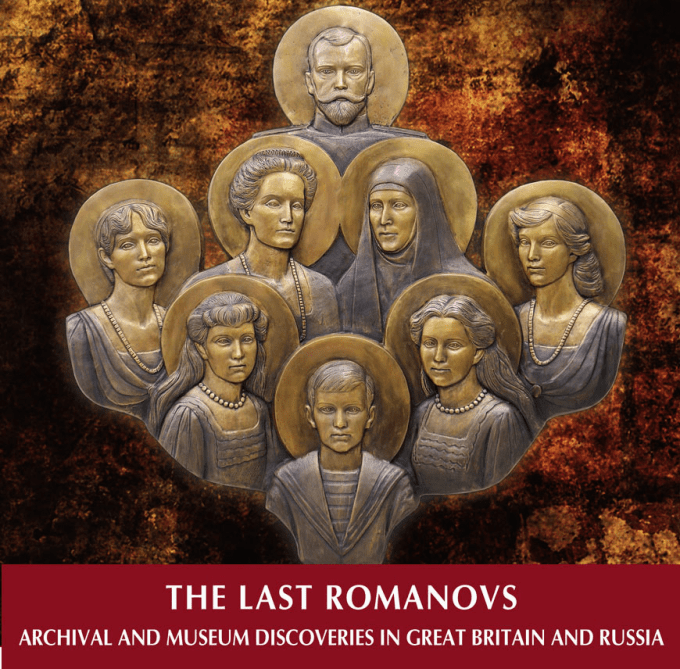
The Grand Duchess Elizabeth Romanov Society (UK) have published a high quality book The Last Romanovs – Archival and Museum Discoveries in Great Britain and Russia.
This English language publication is an illustrated collection of contributions to the British-Russian Symposium, held in Windsor in June 2017 and organised by the Grand Duchess Elizabeth Romanov Society. The articles cover various aspects of the lives of the last members of the Imperial House of Romanov and also present new information about documents and exhibits from various collections in Russia and the United Kingdom.
The book (edited by Dr Maria Harwood) was released by the prestigious British publishing house PINDAR PRESS. The Foreword has been written by the President of the Romanov Family Association Princess Olga Andreevna, and Introduction by the Chairman of the Grand Duchess Elizabeth Romanov Society (UK) Dr. Maria Harwood.
Below, is a list of the articles and their respective authors:
PART I – CORONATIONS
The Decoration of the Kremlin as a Sacred Space for the Last Coronation in 1896: Tradition and Innovation by Dr. Inessa Slyunkova
Rare Photographs of the Romanovs’ Russia During the Time of the Coronation, 1856 by Stephen Patterson
PART II – THE ROMANOVS AND THE BRITISH ROYAL FAMILY
The Romanovs at Osbourne by Michael Hunter
The Rescue of the Dowager Empress Marie Feodorovna from the Crimea by Coryne Hall
The Letters of Grand Duchess Maria Alexandrovna of Russia, Duchess of Edinburgh and of Saxe-Coburg-Gotha, in the National Archives of Romania in Bucharest by Charlotte Zeepvat
PART III – BIOGRAPHICAL RESEARCH
The Art Collection of Grand Duke Sergei Alexandrovich and Grand Duchess Elizabeth Feodorovna: New Discoveries by Dmitry Grishin
New Documents for the Biography of Grand Duchess Elizabeth: Police Reports 1909-1917 by Olga Kopylova
The Question of Giving the Title of Deaconess to the Sisters of Saints Martha and Mary Convent: Discoveries in St. Petersburg’s Archives by Priest Andrei Posternak and Elena Kozlovseva
Journey to the East of Grand Duke Sergei Alexandrovich and Grand Duchess Elizabeth Feodorovna (Letters to Princess S.N. Golitsyna, 1888) by Olga Trofimova
The Collection of the ‘Tsar Nicholas II Museum’ in Belgrade Within the State Historical Museum, Moscow by Nikolai Misko and Marina Falaleeva
Father Nicholas Gibbes: Teacher to the Royal Children and Orthodox Monk. The Romanov Collection and the Issue of Creating a Romanov Museum in Oxford by Archpriest Stephen Platt
During the past three years, the work of the Grand Duchess Elizabeth Romanov Society has included pilgrimages to Russia by Orthodox Christians, holding historical exhibitions and educational events in the UK – including the Nicholas II Conference held in Colchester, England on 27th October 2018 – as well as the unveiling of the memorial Cross to the Holy Royal Passion-bearers and Grand Duchess Elizabeth Feodorovna, on the Isle of Wight near the Palace of Queen Victoria.
This English language title is a large soft-cover (9½” x 12″), with 120 pages, richly illustrated with more than 140 colour and black & white photographs and illustrations. Price: £25 + postage.
For information on how to order your copy, please contact Mr David Gilchrist at the following email djgilx@btinternet.com
My personal choice for Romanov Book of the Year! – Paul Gilbert
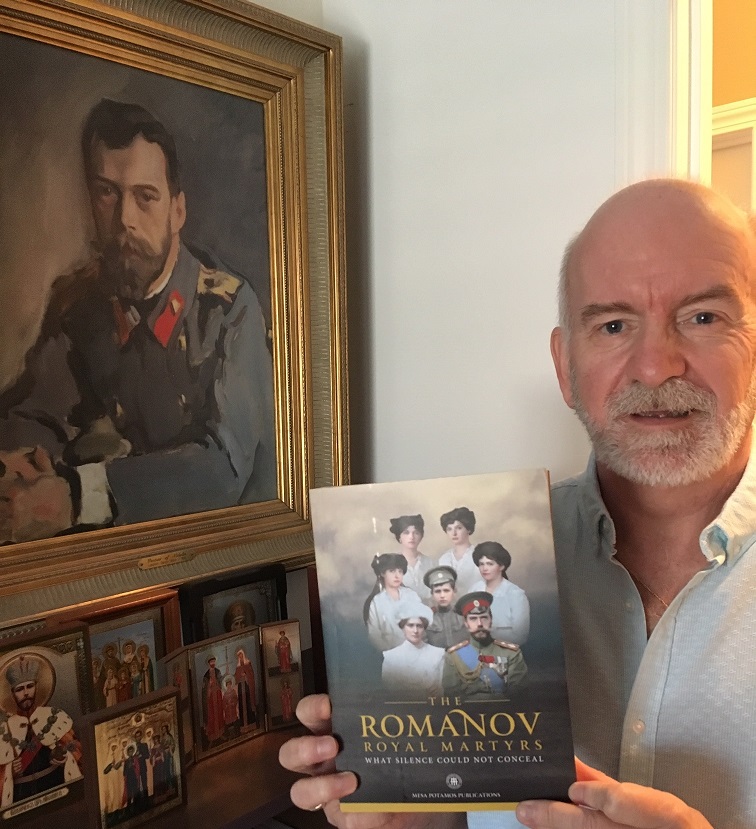
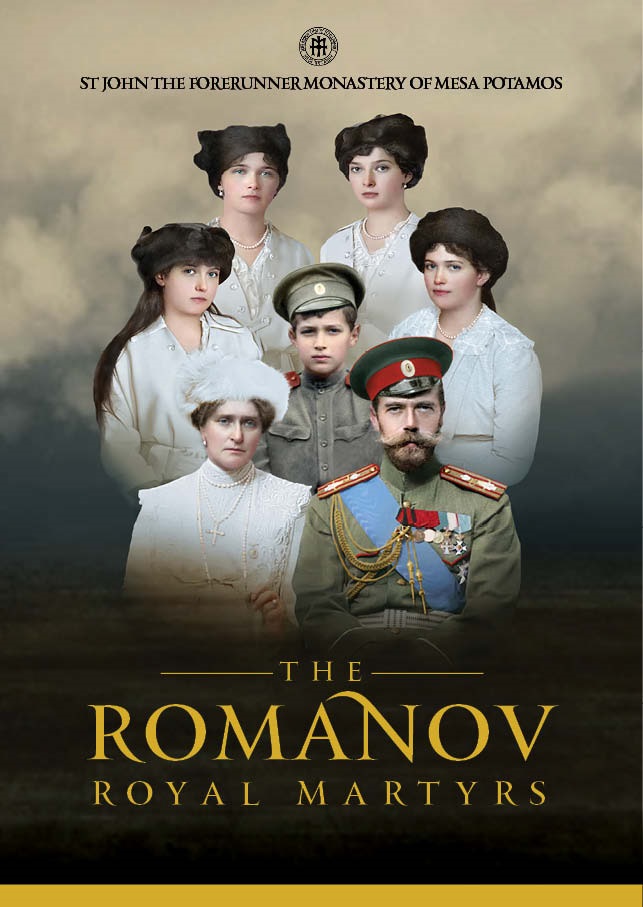
Based on its comprehensive research and new information, The Romanov Royal Martyrs: What Silence Could Not Conceal is my personal choice for the Romanov Book of the Year for 2019. If you read just ONE book on Nicholas II and his family, make sure it is this one! – Paul Gilbert
NOTE: The book is set to arrive in North America at the end of November, and distributed to readers throughout the United States and Canada. As a result, I have had to exercise great care in writing this review. As a courtesy to those who have not yet read the book, I did not want to give anything away, or publish any spoilers, therefore, I have used material from the publishers web page and added my own additional comments and notes to this review- PG
* * *
The publication of the English edition of The Romanov Royal Martyrs: What Silence Could Not Conceal is the crowning glory of a unique and comprehensive project of the Holy Monastery of St. John the Forerunner of Mesa Potamos in Cyprus. Originally published in Greek in February 2018, the long awaited English edition was published in September of this year.
The book draws on letters, testimonies, diaries, memoirs, and other materials never before published in English to present an honest and unique new study of Nicholas II and his family.
The work aims to present Nicholas II and his family through the prism of their spiritual grandeur and the purity of their souls. A lively portrait of the Imperial family emerges from their own personal writings and in the writings of those who lived very close to them. The result is a psychographic biography which explores the essential character of the Imperial family in a deeper and inspiring way.
Furthermore, the work brings to light a multitude of unknown and unrevealed facts, aspects and elements of history, which evince that many truths in regard to the life and martyrdom of the Imperial family remain silenced or distorted to this day. The book presents unvarnished factually sourced events, deriving all its material stringently from primary sources, which allow no grounds for questioning their legitimacy, gravity, and validity.
Thus, many major historical events, such as the 1905 revolution and Bloody Sunday, Russia’s involvement in World War I, the myth of the “Bread Revolution”, the February coup d’état of 1917, the plots and conspiracies to overthrow Nicholas II from his throne. the treachery, cowardice and deceit of the tsar’s ministers, generals and even members of his own family, the events relating to Nicholas’ II abdication, among others are set in their true proportions and presented through a proper perspective.
Since the publication of Robert K. Massie’s classic Nicholas and Alexandra in 1967, other Western historians have published their own assessments of Nicholas II, some of whom arrogantly arguing that their work is the “final word” – they were WRONG! Sadly, many people have blindly accepted these often negative assessments of Russia’s last tsar as the truth. With the publication of The Romanov Royal Martyrs, readers may be surprised by the facts surrounding the historical events noted above, because as noted, up to now these events have been presented in an inaccurate light.
In addition, this book presents the most accurate account of the murder of the Romanovs ever presented in a book. No fictional additions. The information used in The Chapter of Blooddraws exclusively from the memoirs and depositions of the murderers and the guards, as well as from the official forensic investigations and studies of the remains. The chapter also includes unpublished material relating to the family’s imprisonment in Ekaterinburg. Of particular note are excerpts from the testimonies of the nuns of the Novo-Tikhvinsky Convent in Ekaterinburg, who were taking provisions to the Imperial Family at the Ipatiev house, and from the testimonies of Ipatiev guards.
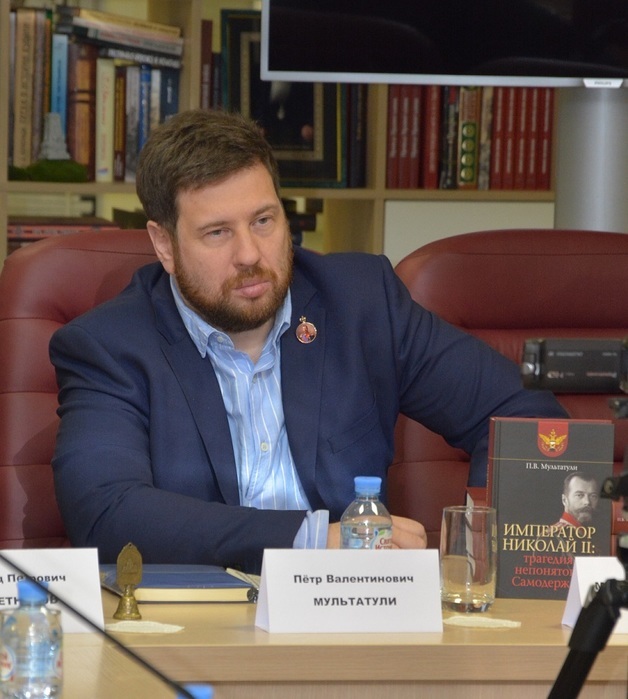
Dr. Pytor Multatuli, Russia’s foremost expert on Nicholas II
Among the historians who worked in the research team together with the fathers of the Mesa Potamos Monastery are Nicholas B.A. Nicholson, Helen Azar, Helen Rappaport, Sophie Law, and George Hawkins, all noted specialists in Romanov history.
A very significant member of the project team is Dr. Pytor Multatuli, and one whose contribution adds credibility to this publishing project. Multatuli is a renowned Russian author, journalist, historian, and Professor at the Moscow State Institute for Culture and Arts. He is recognized as Russia’s foremost authority on the life and reign of Nicholas II. His works on these subjects are unparalleled, yet sadly overlooked or ignored by his Western counterparts.
I was delighted to read numerous quotes from the memoirs of General Alexander Spiridovitch (2 Vols.) and Semyon S. Fabritsky are included in this book. I am very proud to note that the first English translations of both were published by the publishing division of Royal Russia during the last decade. Both Spiridovitch and Fabritsky knew Nicholas II personally, their memoirs reflect their honest, eye-witness assessments of the last tsar and his family.
The Romanov Royal Martyrs is an impressive 508-page book is in three parts: Part I:In the Path of Love (4 chapters); Part II:In the Path of Blood (2 chapters); and Part III:In the Words of the Saints.
It includes nearly 200 black and white photographs, and also features a 56-page photo insert, of more than 80 high-quality images of the tsar and his family, all of which have been colourised by the acclaimed Russian artist Olga Shirnina (aka Klimbim), and appear here in print for the first time.
The only criticism I have of the book are a number of errors which I found in the book. Many readers may not even recognize them, however, those who are familiar (particularly the purists) with Nicholas II and his family are sure to note. Perhaps some of the meanings were simply lost in translation?
For instance, the use of some of the titles throughout the book, such as “crown prince” or “tsarevich”[1] when referring to Nicholas Alexandrovich and Alexei Nikolaevich, instead of the correct “tsesarevich”[1] * Please see my notes at the bottom of this review – PG
The widowed wife of Alexander III is referred to as the “widowed Queen Mother” instead of the correct “Dowager Empress.” Maria Feodorovna was never “Queen” of Russia, she was Empress!
Even referring to Nicholas II and his family as “royal,” instead of “imperial” is incorrect. I have to confess that I am also guilty of using “Royal Family” instead of the correct “Imperial Family”, and have been criticized over the past 25 years for naming my web site “Royal Russia” instead of “Imperial Russia”.
On page 78, the translation of “Tsarskoye Selo” is incorrect. “Tsarskoye Selo was essentially a village, as it’s very name implied, which means “Royal Village.” The correct translation of the Russian spelling Ца́рское Село́ is in fact “Tsar’s Village”. The Russian word “Ца́рское” is quite often mistranslated and misused by Westerners as “royal”.
Another word that I would like to point out is on pg. 64: ” . . . Nicholas and Alexandra, under an imperial canopy . . .” The proper term for this “canopy” is baldachin. [2] * Please see my notes at the bottom of this review – PG
On page 136, I was distressed to read “Nicholas named his son in honor of his beloved ancestor, Tsar Alexis.” Sadly, this is an error often noted by many Western historians.
It was Robert K. Massie (among others), who have led us to believe that the only son of Emperor Nicholas II and Empress Alexandra Feodorovna, was named after Tsar Alexei Mikhailovich (1629-1676) . . . this is incorrect.
The long-awaited son and heir to the Russian throne was named Alexei, in honour of St. Alexei of Moscow.
Saint Alexius (1296–1378) was Metropolitan of Kiev and all Russia (from 1354). He was canonized by the Russian Orthodox Church in 1448 and is revered as one of the patron saints of Moscow.
Also on page 136, “From Nicholas’ diary six weeks after the birth of Alexis . . . Alix and I were very concerned about the bleeding of little Alexei from his umbilical cord . . .”. It has generally been accepted that Alexei began bleeding from his navel at the age of six weeks . . . this is also incorrect.
Two noted Romanov historians Margarita Nelipa and Helen Rappaport both tell us otherwise, that Alexei’s bleeding was noted the day following his birth. Their claim is based on two separate, yet reliable sources.[3] * Please see my notes at the bottom of this review – PG
On page 151, Rasputin is referred to as a muzhik (a Russian peasant), when in fact he was a Strannik (a holy wanderer, or pilgrim).
On page 279, ” . . . they set out by boat from the village of Pokrovskoye . . .” this is also incorrect. The Imperial family arrived by train from St. Petersburg in Tyumen, where they continued their journey to Tobolsk by boat, passing Pokrovskoye. [4] * Please see my notes at the bottom of this review – PG
Despite my criticisms above, this should not in any way deter any one from reading this book, nor should they in any way diminish the extensive research that went into it, which at long last presents the TRUTH!
I personally applaud the monumental efforts that went into this book. It presents much new material which dispels the many myths and lies about Nicholas II. Finally, the reader learns the truth about the tragedies which befell the tsar during his 22+ year reign, and the evil gossip which flowed freely in the salons of the capital, not to mention the vitriol distributed by the revolutionaries, whose propaganda turned the Russian people against their sovereign.
I am often asked to recommend a book, which tells the true story of Nicholas II, Alexandra Feodorovna and their five children. My answer was always the same, “It has yet to be written” – up until now!
‘The Romanov Royal Martyrs: What Nature Could Not Conceal‘ can now be considered the definitive work on the Imperial Family. It puts to rest so many of the negative myths, held for more than a century, and rehashed over and over again in the last 50 years by so many so-called Western experts. At long last the truth has been told! If you read just ONE book on Nicholas II and his family, make sure it is this one!
I think so highly of this book, that it will be placed on a special shelf of books in my home library, books which inspire and guide me, and include the Holy BibleKing James Version, The Orthodox Study Bible, Russian Golgotha and Last Tsar. Nicholas II, His Reign & His Russia.
Based on its comprehensive research and new information, I do not hesitate in naming The Romanov Royal Martyrs: What Silence Could Not Conceal as my personal choice for the Romanov Book of the Year for 2019!
I pray that this review will inspire many others to buy this book, read it, and keep it’s words close to their heart. Click HEREto order your copy.
Click HERE to review the Holy Royal Martyrs web site, which includes excerpts from the book, photos, videos, articles and more
[1] English sources often confused the terms Tsarevich and Tsesarevich, both distinct words with different meanings. Tsarevich (Russian: Царевич) is a Slavic title given to tsars’ sons. Under the 1797 Pauline house law, the title was discontinued and replaced with Tsesarevich (Russian: Цесаревич) for the heir apparent alone.
[2] “The procession of Emperor Nicholas II from the Assumption Cathedral on 26 May (Old Style 14 May, 1896), “was rich and imposing beyond the reach of exaggeration. The baldachin under which the Emperor walked was richly covered with velvet and cloth of gold, surmounted by plumes of ostrich feathers in three colours—–black, white, and yellow. This was supported at intervals by lances of ebony and mother of pearl, and held firmly by golden cords. The baldachin and cords were carried and held respectively by sixteen aides-de-camp generals of the highest rank in the imperial service.”
Source: Gilbert, Paul (Editor). The Coronation of Tsar Nicholas II. Published by Gilbert’s Books. 2012 (see page 36)
[3] “One day after Alexei’s birth, Grand Duke Peter Nikolaevich (1854-1931) came to congratulate the sovereign and stayed for lunch. Upon his departure, the sovereign mentioned the presence of “blood on the diapers”. Returning to his Znamenka estate (in Alexandria), he repeated this detail to his wife who telephoned Nikolai II (before visiting Alix later that evening). During their conversation, he said that the doctors had confirmed that the atypical bleeding was indeed due to haemophilia.”
Source: ‘Alexei. Russia’s Last Imperial Heir: A Chronicle of Tragedy’ by Margarita Nelipa. Published by Gilbert’s Books in 2015
[3] Grand Duke Peter Nikolaevich and his wife Grand Duchess Militza Nikolaevna (1866-1951) had driven over to the Lower Dacha the day Alexei was born . . . as their son Prince Roman Petrovich (1896-1978) later recalled in his memoirs [published in Danish].
‘When they returned in the evening to Znamenka, my father remembered that . . . the Tsar had told him . . . That the doctors were concerned about the frequent splatters of blood in his swaddling clothes. . . .”
Grand Duke Peter telephoned the palace, “When the Tsar answered that they had hoped that the bleeding would soon stop, my mother took the receiver and asked if the doctors could explain the cause of the bleeding. When the Tsar could not give her a clear answer, she asked him with the calmest of voices she could manage: ‘I beg you, ask them if there is any sign of haemophilia’ . . . The Tsar fell silent on the phone for a long time and then started to question my mother and ended by quietly repeating the word that had staggered him: haemophilia.”
Source: ‘Four Sisters. The Lost Lives of the Romanov Grand Duchesses’ by Helen Rappaport. Published in 2014
[4] From the diary of Nicholas II, 4th August 1917. We got over the Ural Mountains and felt the cold air. The train passed Yekaterinburg in the small hours of morning. It dragged on and on incredibly slowly, so that we arrived in Tyumen only at 11:30 pm.
The train pulled in almost to the quay and the only thing we had to do was to board a ship.
Then the reloading of cargo began and it went on all through the early morning. We departed from Tyumen by the river at around 6 am.
Pierre Gilliard noted in his memoirs: “We passed the native village of Rasputin, and the family, gathered on the deck, were able to observe the house of the staretz . . . “
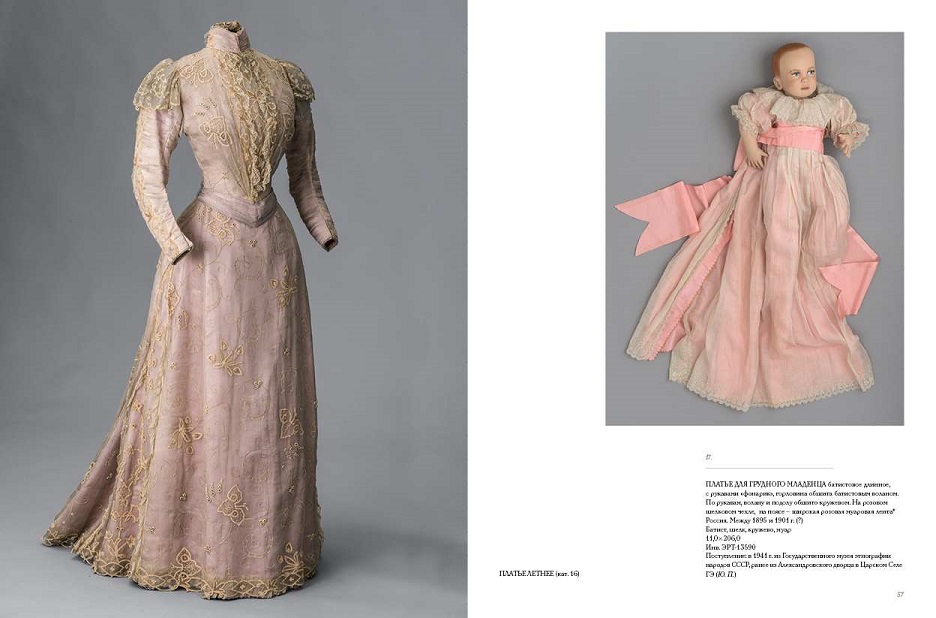
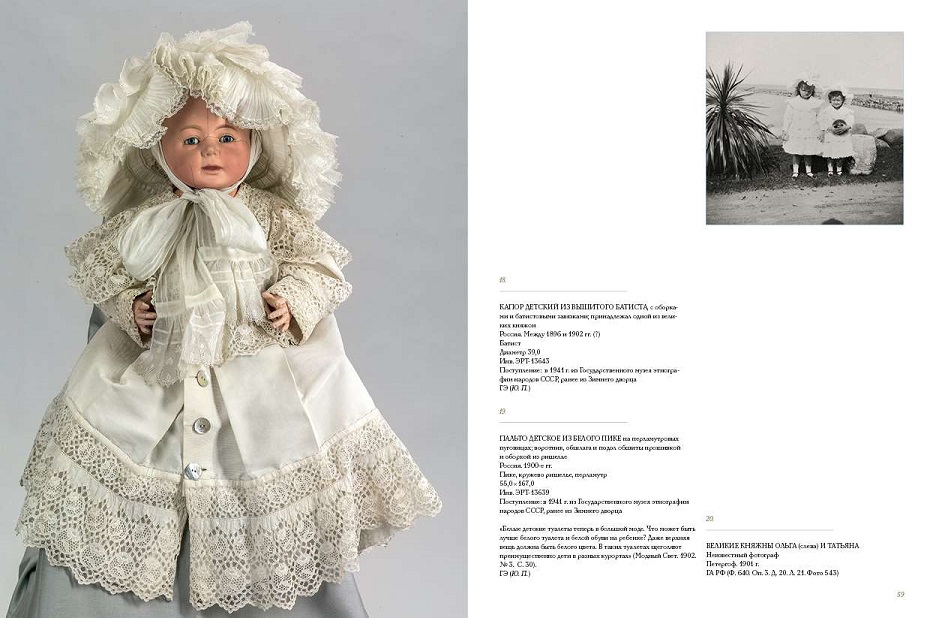
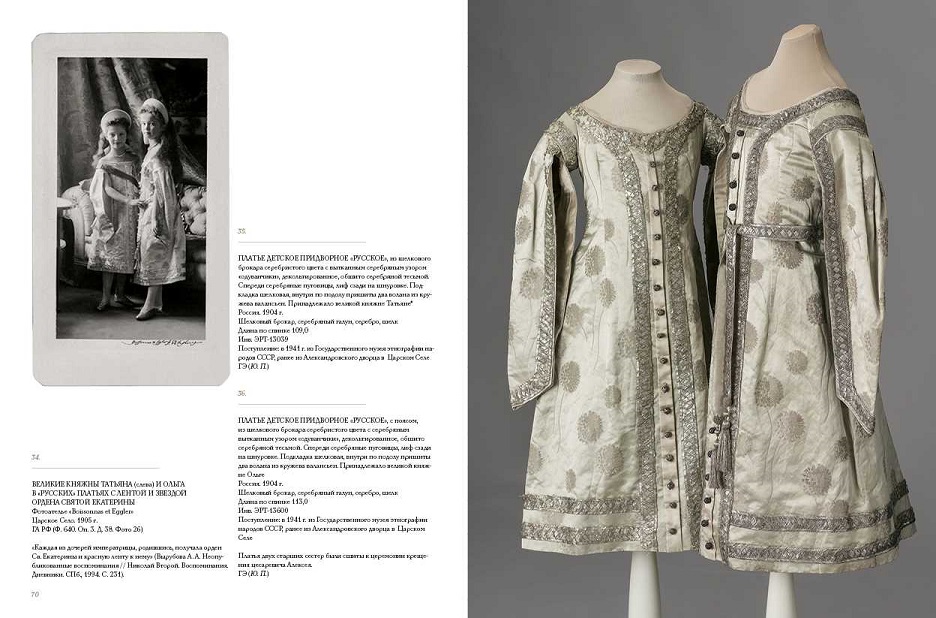
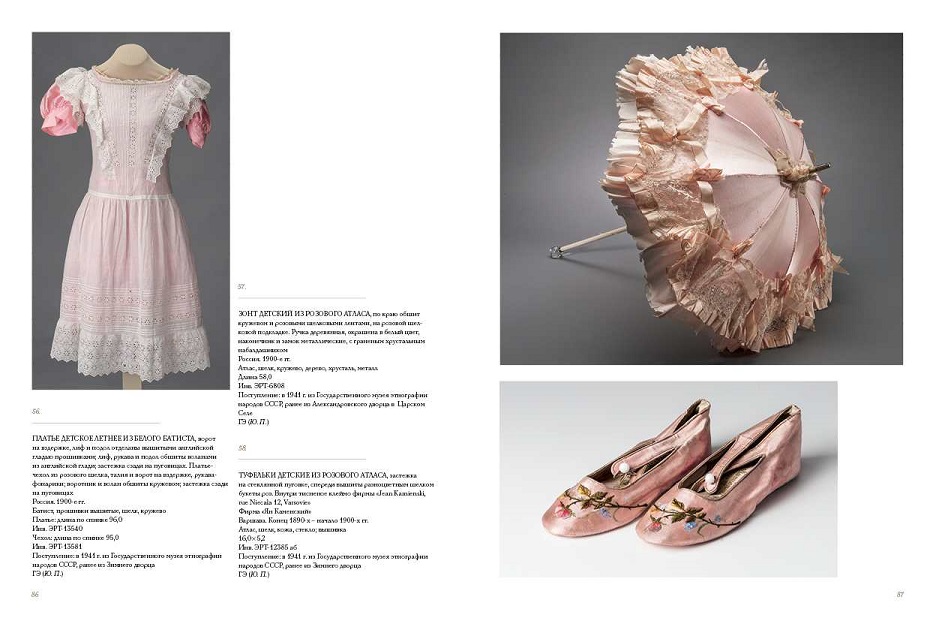
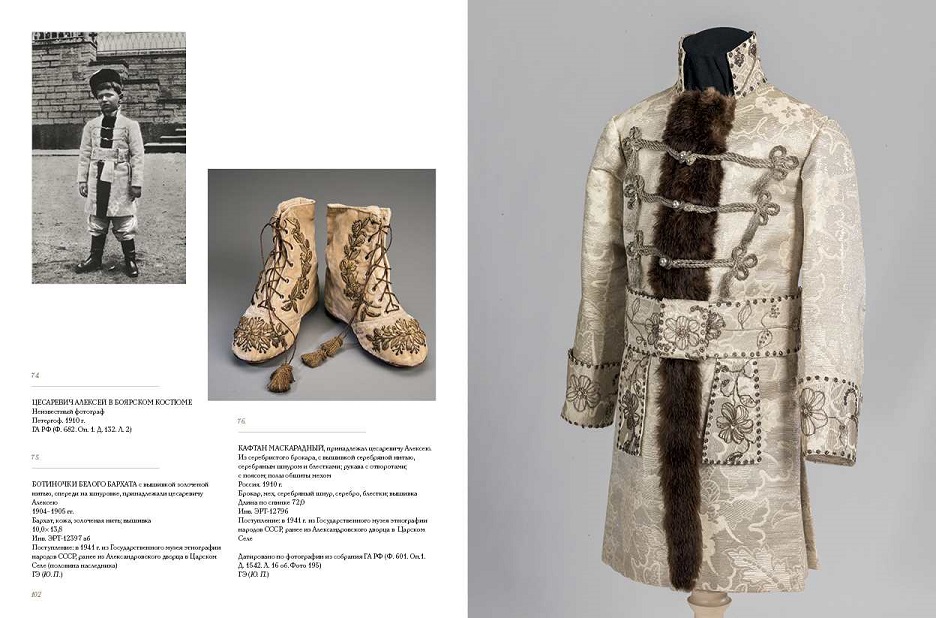
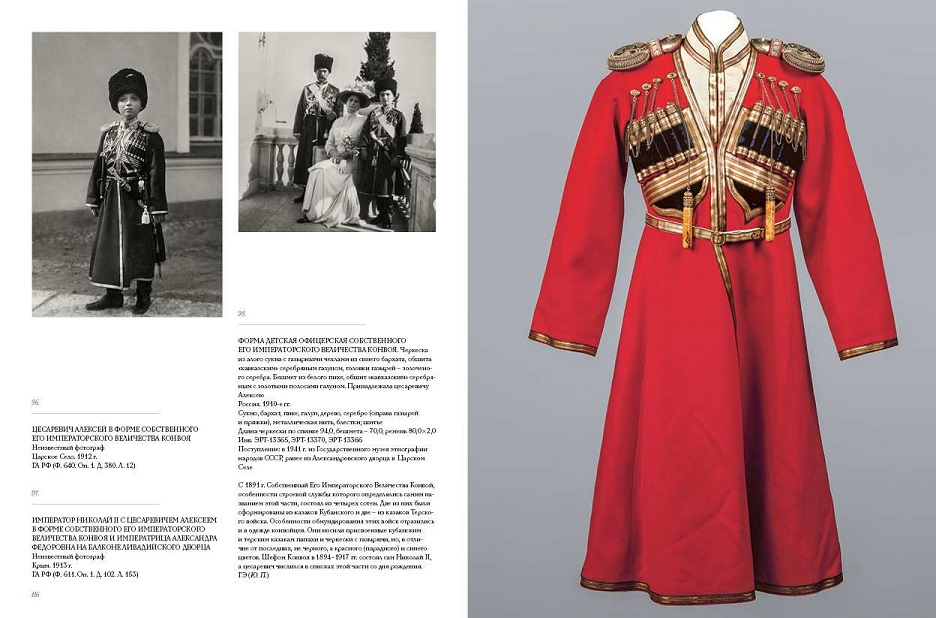
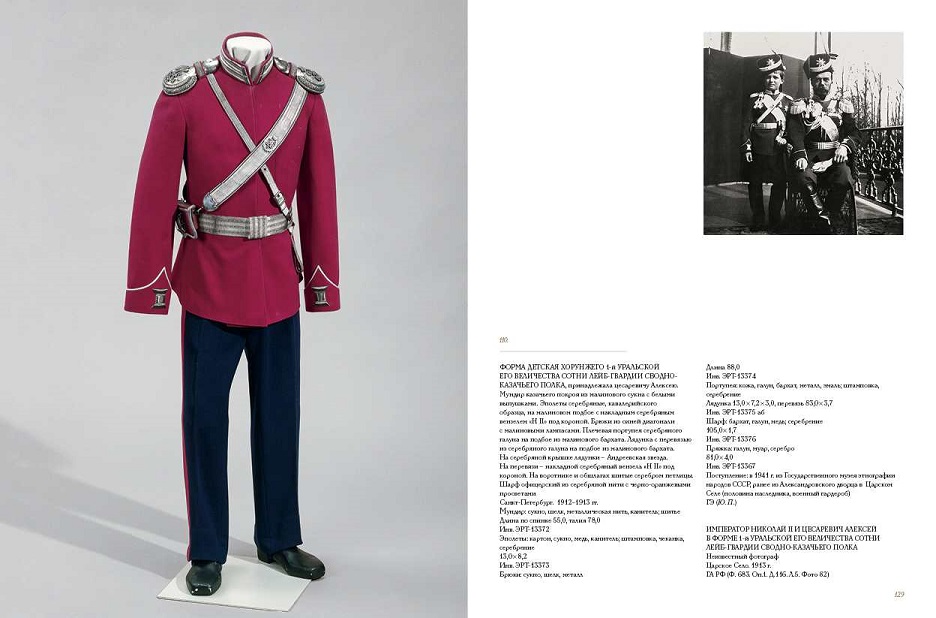
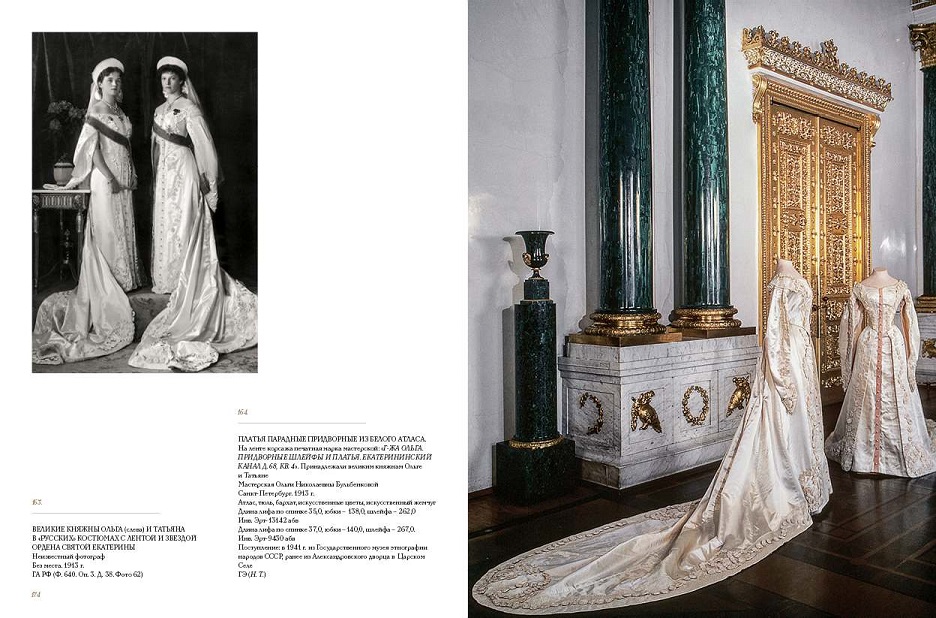
A richly illustrated catalogue Детский мир семьи императора Николая II. ОТМА и Алексей (The Children’s World of the Family of Emperor Nicholas II. OTMA and Alexei), has been published to coincide with forthcoming exhibition to be held in Moscow later this year.
The catalogue, prepared by the Moscow State United Museum-Reserve and the State Hermitage Museum, publishes (for the first time) photographs of the personal items – costumes, accessories, toys – that belonged to the children of Emperor Nicholas II. These items from the collection of the State Hermitage Museum in St. Petersburg, will be presented at the exhibition, which will be held in the Kolomenskoye Museum-Reserve in Moscow from 13th November 2019 to 16th February 2020.
In addition, many archival documents will be displayed – including excerpts from letters, diaries, notebooks, memoirs and photographs provided by the State Archive of the Russian Federation (GARF), the Tsarskoye Selo State Museum Reserve, the Peterhof State Museum Reserve, and the Pereslavl Museum.
The catalogue features articles researched and written by the exhibition curators Yu. V. Plotnikova (GE) and A. V. Sabenina (MGOMZ). Based on memoirs and archival documents, their works take a look at the education and upbringing of the August children, including the personalities, the growing and development of each of the five children.
The catalogue contains 200 pages, and richly illustrated with colour and black & white photographs. ISBN: 978-5-91353-059-2. RUSSIAN TEXT ONLY!
The price of the catalogue is 1300 rubles ($20 USD) and can be purchased in Kolomenskoye Museum-Reserve in Moscow, or through a Russian bookseller online.
Since the fall of the Soviet Union nearly 30 years ago, there have been hundreds of new Russian language books published on the life, reign and era of Emperor Nicholas II.
Sadly, very few of these titles will ever be translated into English. The reasons are many, but most importantly are the cost of translations (which can cost thousands of dollars), and a limited English language market. These two factors alone make such publishing endeavours economically unfeasible.
One interesting fact about the Russian publishing, is that the number of copies printed is indicated in each book. For instance, only 3000 copies of the title listed below were published in Russian. This is also an indication of the limited market such books have even in Russia.
In the years leading up to the 400th anniversary of the Romanov Dynasty in 2013, and the 100th anniversary of the death of Nicholas II and his family, a plethora of new titles were published in English. Sadly, the number of new titles are becoming fewer and fewer, and it may be the specialty publishers such as my own publishing business – which celebrates its 25th anniversary this year – who will be left to carry on the tradition.
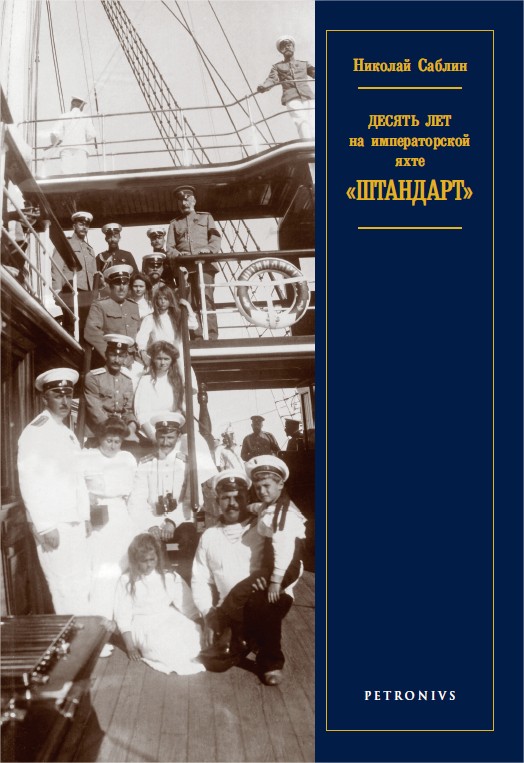
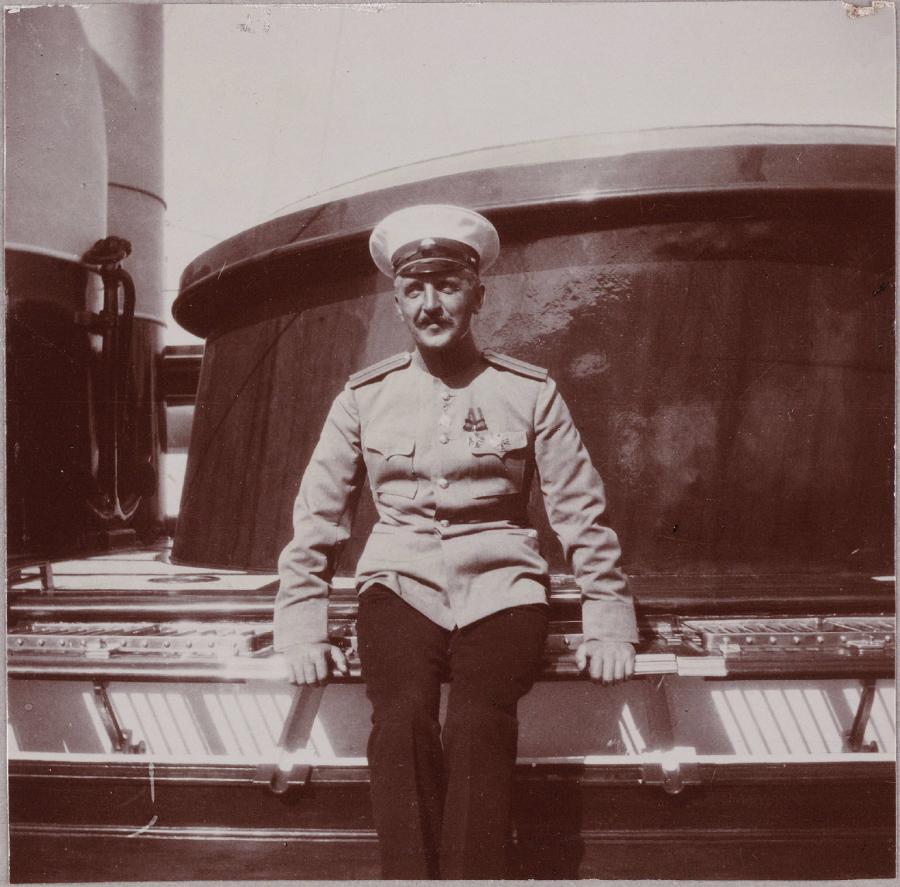
Commander of the Imperial yacht ‘Standart’ Nikolai Pavlovich Sablin (1880-1937)
One of the many books which I would like to see an English edition is ‘Десять лет на императорской яхте Штандарт‘ (Trans. ‘Ten years in the imperial yacht Standart’) by Nikolai Sablin
These are the memoirs of Nikolai Pavlovich Sablin (1880-1937), who served as commander of the Imperial yacht ‘Standart’ of Emperor Nicholas II. The author describes events between 1906-1914, of which he was a direct witness and participant. His memoirs reflect the last decade, not yet overshadowed by the horrors of the First World War and revolutionary upheavals, which also became the last years of the prosperity of the Russian Empire.
The memoirs of N.V. Sablin acquaints the readers with details of the private life of the imperial family and their immediate environment, as well as little-known aspects of state affairs. The book contains interesting information about the official visits of Nicholas II while sailing on the ‘Standart,’ meetings with the heads of state and representatives of the reigning houses of Europe, gala receptions hosted on board the imperial yacht, and the important political decisions made during these voyages.
The episodes of yachting life, the mood of the officers of the fleet and society in general, subtly noticed by Sablin, convey a bygone era. His observations and humour make his personal memoirs a very interesting story, yet another page from the life and reign of Nicholas II, which has been sadly neglected by Western historians. The 382 pages of text is accompanied by more than 200 photographs, many of which were taken by Sablin himself and are published for the first time in this book.
One of the perks of my job over the past 25 years, is that I receive a copy of each new book published on the Romanovs and Imperial Russia. This is just one reason why my personal library is as large as it is – over 2,000 volumes.
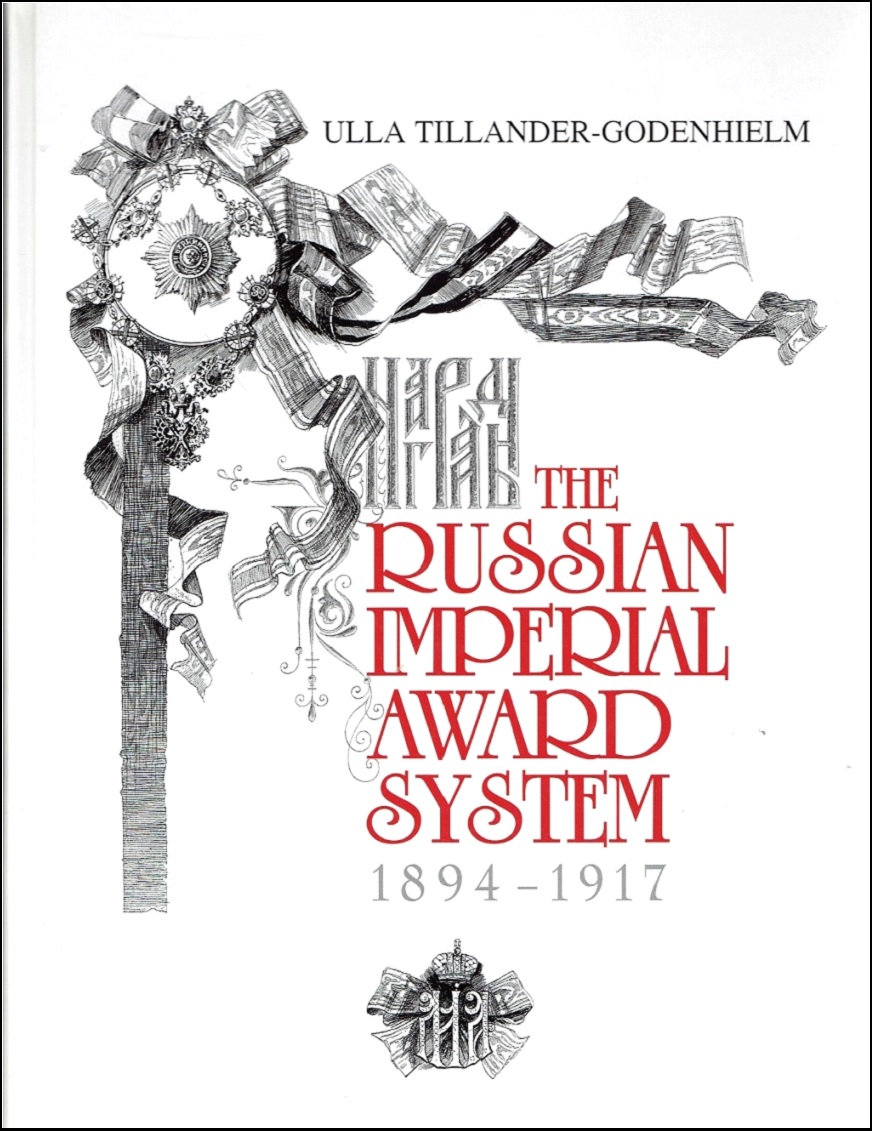
One of the gems of my collection is The Russian Imperial Award System 1894-1917 by Ulla Tillander-Godenhielm, published by the Finnish Antiquarian Society in Helsinki (2005)
It is a massive heavy book: it measures 8-1/2” x 11″ x 1-1/2” in diameter, weighs over 2 kg., 566 pages, more than 160 colour and black & white photos, with extensive notes and bibliography. Text is in ENGLISH!
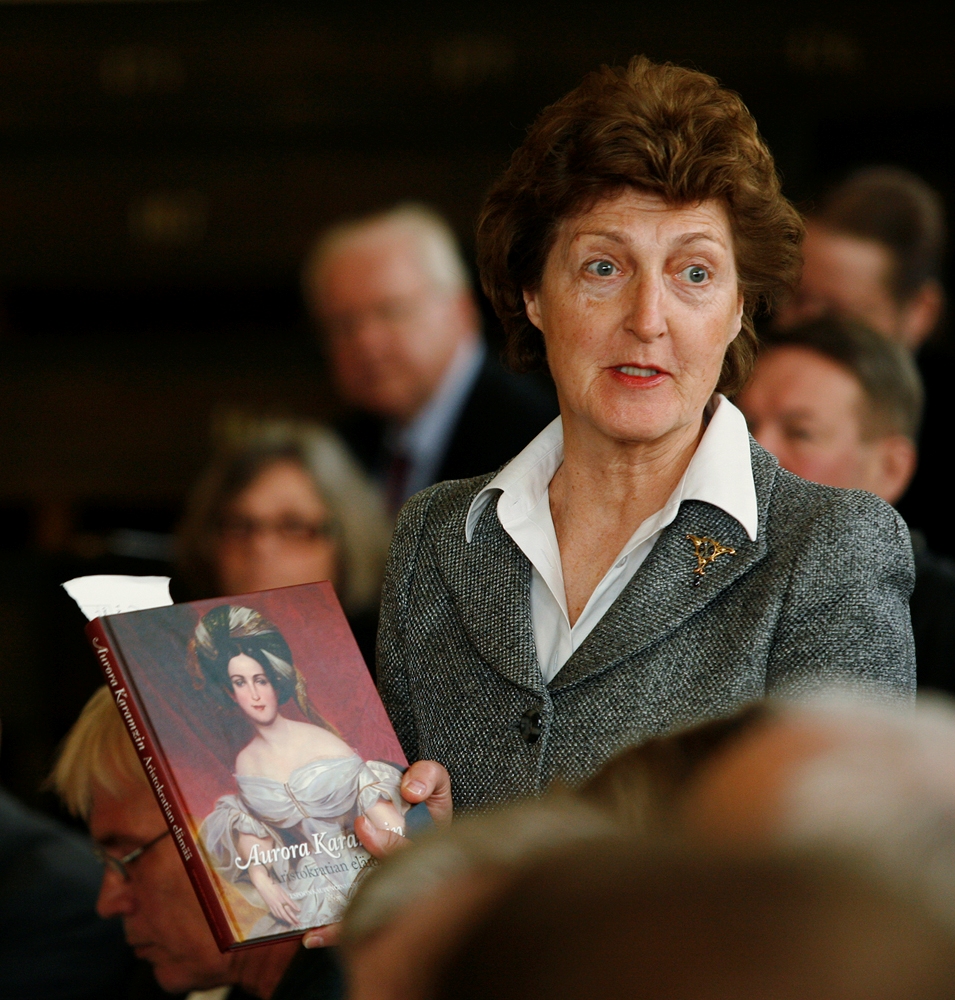
Ulla Tillander-Godenhielm
Ulla Tillander-Godenhielm, Ph.D., is the great-granddaughter of the St. Petersburg goldsmith Alexander Tillander, a leading supplier to the Imperial Russian Court of Nicholas II. She has been researching the oeuvre of Russian jewellers for many years. Her doctoral dissertation was on the labrinthe and intriguing award system of Imperial Russia. Her work takes her around the world: lecturing, consulting for art exhibitions and writing in exhibition catalogues and for art publications. She has published several books on her speciality, the art of the jewellers of Imperial St. Petersburg.
* * *
Arja-Leena Paavola offers the following review of this book in the Spring 2006 issue of Universitas Helsingiensis the quarterly of the University of Helsinki:
The practice of rewarding citizens for good work and loyalty proved an efficient way of strengthening the bonds between subject and monarch. In many respects the system was defined by the service hierarchy created by Peter the Great known as the Table of Ranks. Ulla Tillander-Godenhielm, Ph.D., who defended her doctoral dissertation in the field of art history in October, examined the Russian imperial award system during the reign of Russia’s last tsar, Nicholas II.
“A decree of 1898 defined twelve award categories, over half of which were decorations, titles, expression of the emperor’s favour, grants of money, and gifts made of precious materials. For over one hundred years, the system was also in use in the Grand Duchy of Finland, whose subjects were entitled to the same honours as any other individual in the service of the empire,” says Tillander-Godenhielm.
Subsequent generations have often created an image of a system of unsurpassed luxury and opulence that catered exclusively to the elite of the country. In reality, the value of an award could not exceed an individual’s yearly salary. In addition, there were many awards designed specifically for the lower echelons, including factory workers. Each of the twelve categories had an internal hierarchy. A young man who started his career at the lowest rung of the hierarchical ladder, through diligent service, could earn for himself the highest honours the empire had to offer.
Tillander-Godenhielm points out that the gift items bestowed were not merely symbolic tokens but were in fact a subtle means of remuneration. These gifts were luxurious and often quite elaborate. While they did speak of one’s importance and position within Russia’s service hierarchy – which consisted of fourteen classes, or ranks – they also were a means of augmenting an individual’s wages, which were frequently low. A general, for example, could not always support the lifestyle his position demanded on his official salary. If this was the case, he had the option of returning his gift to the Cabinet of His Imperial Majesty for its full value in cash. In fact, over sixty percent of gifts presented to ranks five and lower were sold back in this way. The widows or children of the original recipients could also return them; thus, they served as a kind of pension or life insurance.
“A fine silver or gold pocket watch was a typical gift. When travelling by sea to Finland, the Russian emperors would present watches to the pilot boat captains, and when travelling by train, every station manager along the way would receive one, as would the policemen responsible for the safety of the imperial family.”
Tillander-Godenhielm is herself a fourth generation member of a goldsmith family with Russian connections. Several Finnish goldsmiths were employed as suppliers by the Cabinet of His Imperial Majesty, and Tillander-Godenhielm’s grandfather was one of them. While working in the family business, she became interested in Russian gold and silver objects, many of which have remained in Finland, some still in the possession of the original recipient’s family.
Sometimes orders for multiples of the same gift item were placed. “Archival research has revealed account books showing requests for ten silver cigarette cases decorated with a double-headed eagle of a specific design, or twelve rings set with specific gemstones. This type of gift was destined for lower-ranking servitors. The more valuable gifts intended for higher ranking officials were all unique in design.”
PHOTO: Cabinet of His Imperial Majesty, St. Petersburg
Coveted investments
The Cabinet of His Imperial Majesty had inspectors to ensure that the gold and silver objects it received were of the highest quality. Many of these items were bestowed upon foreign dignitaries and thus served as a means of showcasing the skill of Russian craftsmen. During state visits, these valuable gifts were written about in papers and put on public display.
These award items – especially those with a known provenance – have increased steadily in value since the Revolution and nowadays can fetch astronomical sums. For example, a table portrait of Nicholas II presented to the French prime minister René Viviani in 1914 sold at Sotheby’s last year for £350,000. As a result, however, they have become the object of numerous forgeries.
A substantial number of the surviving objects made for the Russian imperial award system are today in museums or in the private collections of various European monarchs and American millionaires. In the 1930s, Stalin had many of these items sold in the West in order to obtain much needed foreign currency.
Ulla Tillander-Godenhielm has had the privilege of personally handling many of the items she discusses in her dissertation. “You cannot really study objects such as these without examining them up close.
A known provenance of course greatly in-creases the interest of an object. Those pieces really make my heart skip a beat. Fortunately, Russian archives have now been opened up to researchers and it has become possible to trace the origins of many of these items.”
The real story uncovered
In the 1930s, all kinds of stories were concocted in order to increase the value of these objects and boost sales. “The empress gave her obstetrician, Professor Ott, a monogrammed snuffbox for every child he helped deliver. Many of these have been sold in the United States as gifts from the emperor to the empress. “But who would seriously believe that a man would give a snuffbox to his wife for giving birth to their baby?” Tillander-Godenhielm chuckles. “I think true stories about the real officials and servitors of the time are much more interesting.”
It is not, after all, that long ago. While in St Petersburg, Tillander-Godenhielm discovered that a hospital built by Dr. Ott was still in operation. “When visiting the hospital, I was asked if I would like to meet the great-granddaughter of the good doctor, who as chance would have it works as an obstetrician there. I met this young woman who told me a great deal about her great-grandfather. The family no longer possessed any of the awards he had been given, so she was delighted when I showed her pictures of two of the thirteen snuffboxes Dr. Ott had received for his services.”
Tillander-Godenhielm’s study has raised interest all over the world, and for once, a dissertation has proved to be a “best seller”, but only 1,200 copies of her book were published.
“A great deal has been written about the Russian nobility and Russian orders and decorations in isolation. My study examines these subjects within the context of the larger system of which they were but one part.”
I am pleased to offer copies of my 2020 calendar, dedicated to Emperor, Tsar and Saint Nicholas II, with a limited printing of only 200 copies!
Each month features an iconic full-page black and white photograph of Russia’s last monarch, printed on quality glossy stock.
Nearly 70 major holidays in the United States, Canada, Great Britain, Australia and Russia are featured, with room to write in your own special dates and events.
ALL net proceeds from the sale of each calendar will go into my research, including the cost of translating articles and news from Russian archival and media sources.
The price of each calendar is $10 + postage (rates are noted on the order page, link below). I can ship to any country by Canada Post
NOTE: the postage rates quoted are for SINGLE copies ONLY! If you want to order more than one calendar, then please contact me by email at royalrussia@yahoo.com
Payment can be made securely online with a credit card or PayPal or by personal check, money order or cash – click HERE to download and print a mail order form
Thank you for your support of my research and dedication to clearing the name of Russia’s much slandered tsar









 Nicholas II
You must be logged in to post a comment.