New film dedicated to the Imperial Family premieres in Nizhny Novgorod

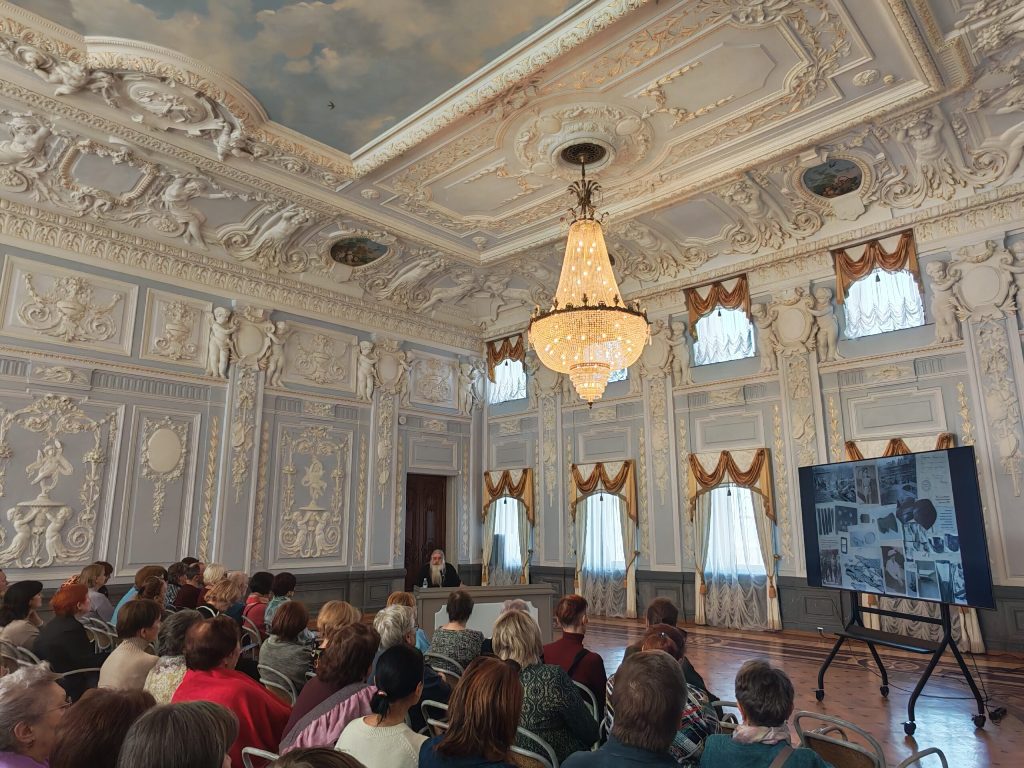
On 11th August 2025, the premiere of the documentary-film, based on the book Романовы: убийство, поиск, обретение [Romanovs: murder, search, acquisition] by the abbot of the Nizhny Novgorod Ascension Pechersk Monastery, Archimandrite Tikhon (Zatekin), took place at the Record Cultural Center, in Nizhny Novgorod.

The documentary-film is timed to coincide with the 25th anniversary of the glorification of the last Russian Emperor Nicholas II and his family as Royal Passion-Bearers by the Moscow Patriarchate of the Russian Orthodox Church on 14th (O.S. 1st) August 2000.

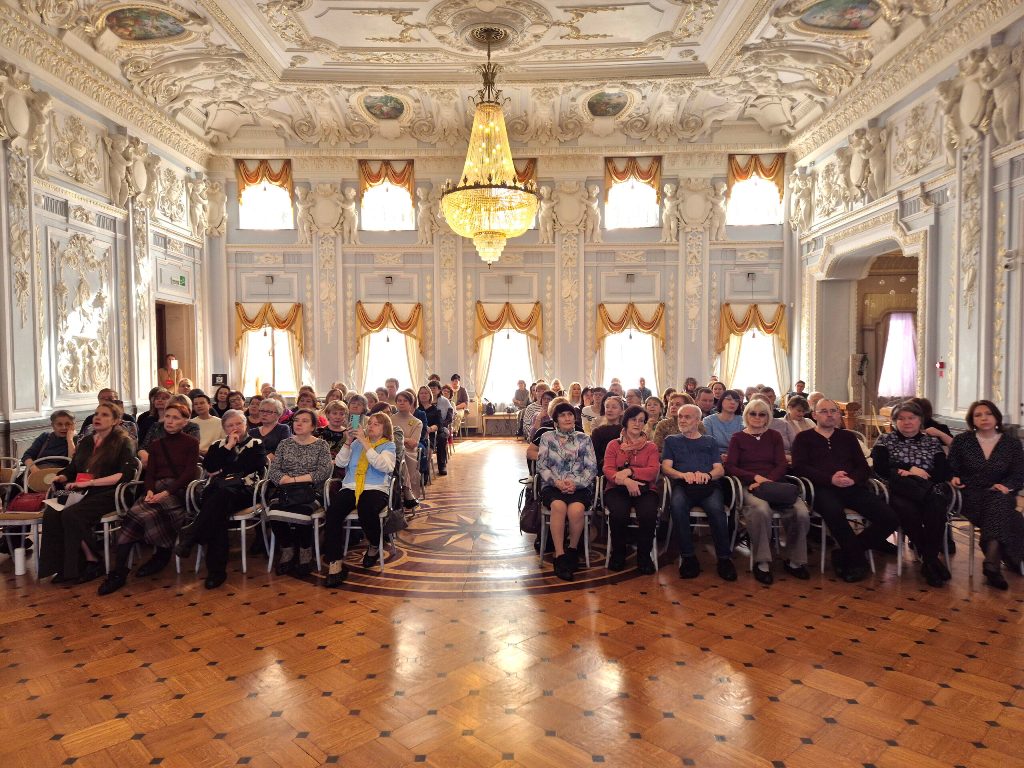
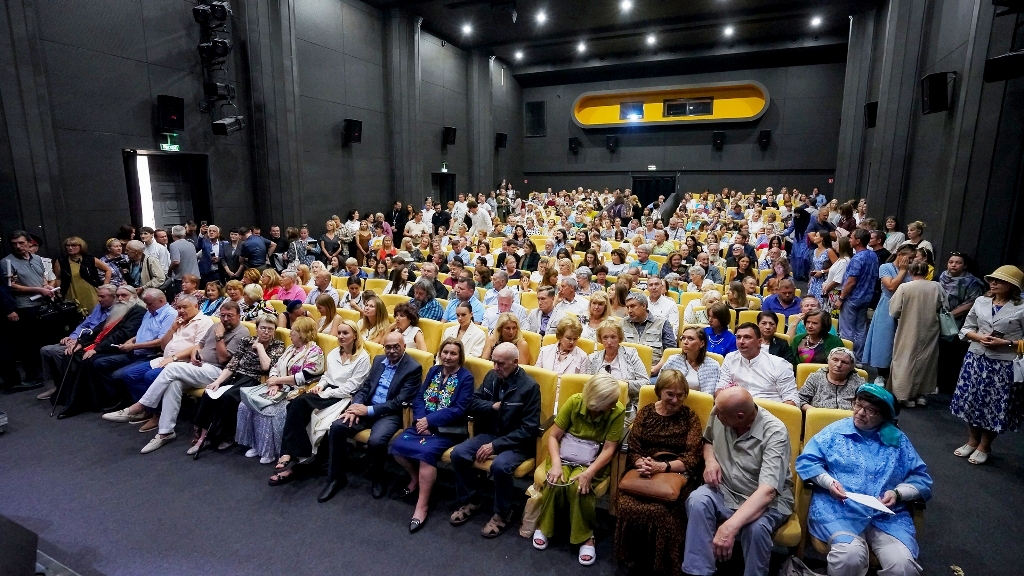
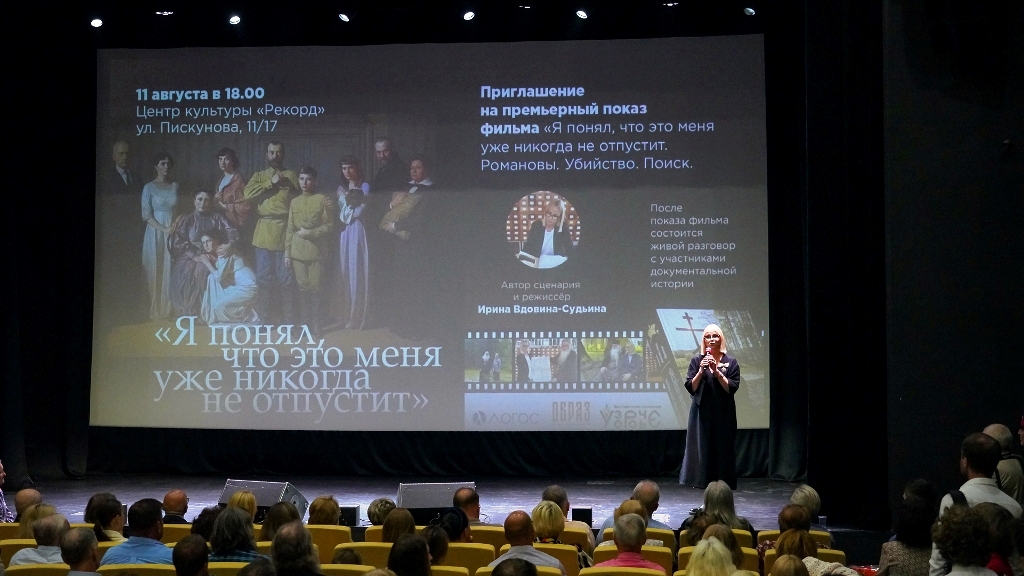
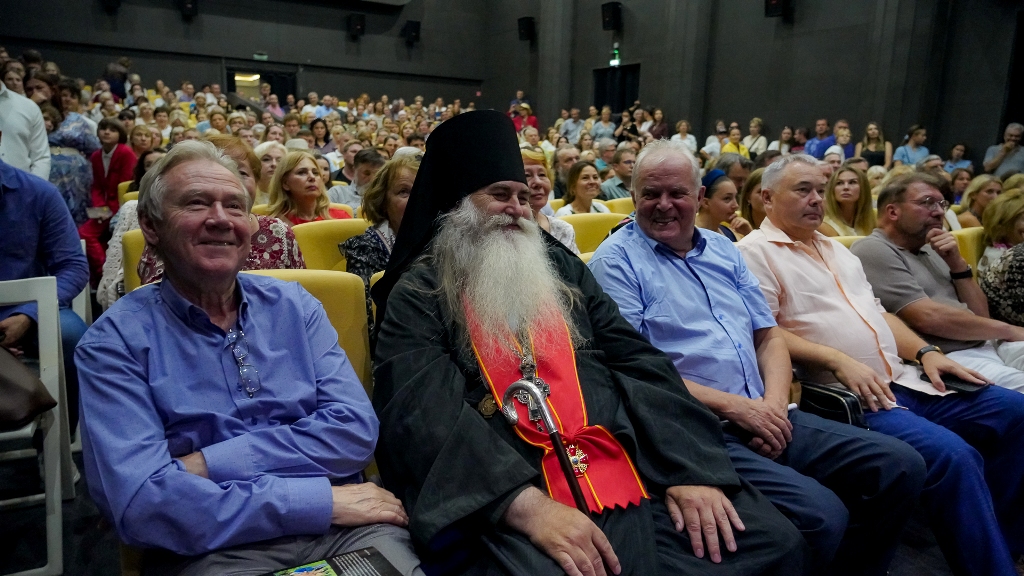
PHOTO: it was “standing room only” at the Nizhni Novgorod premiere

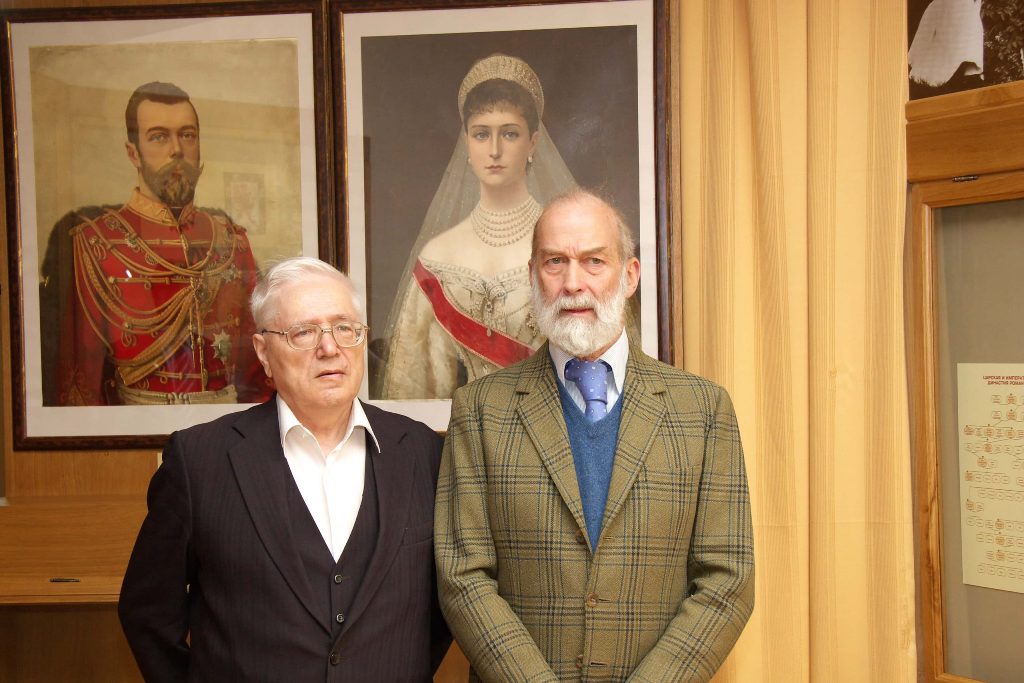
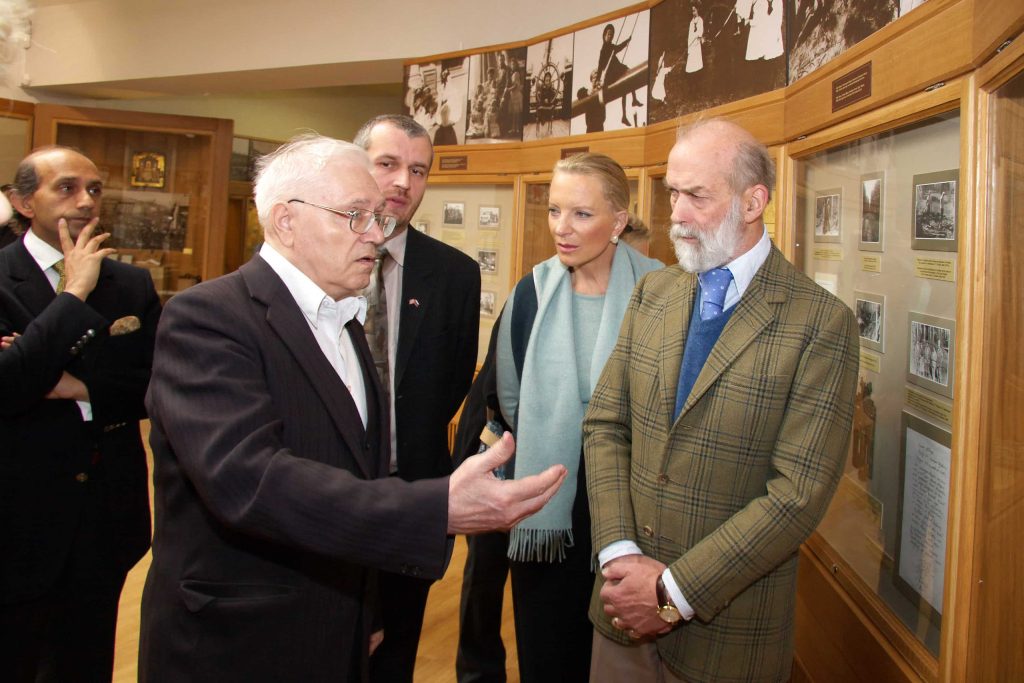
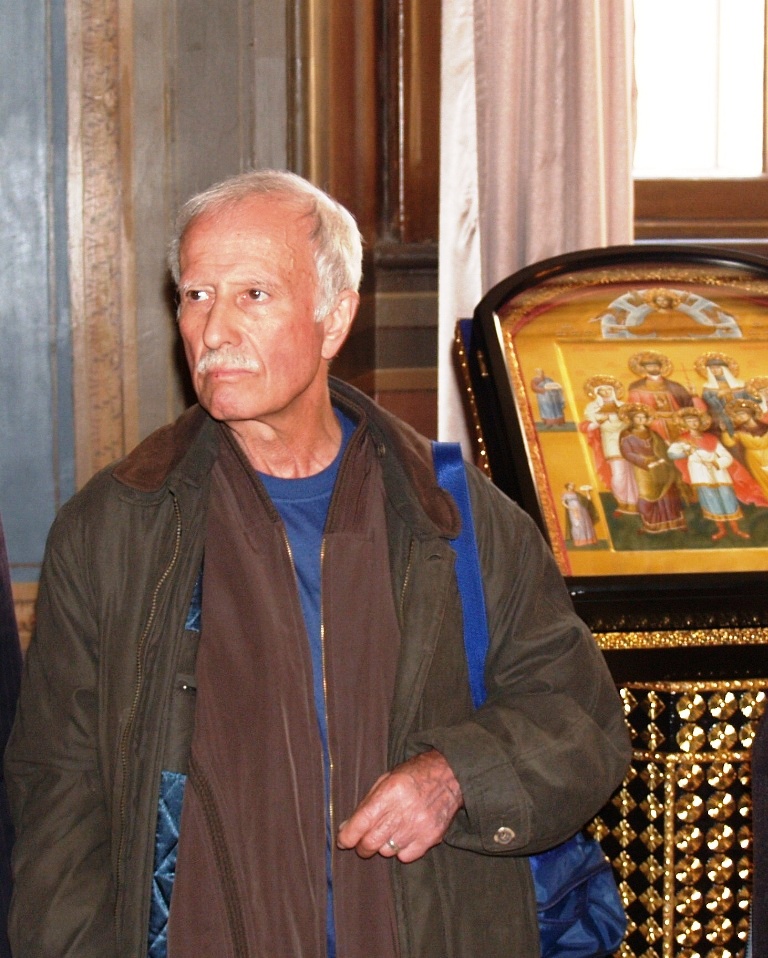
The event was attended by Archimandrite Tikhon (Zatekin), the scriptwriter and director of the film Irina Vdovina-Sudina, Doctor of Historical Sciences and leading specialist of the Russian State Archive of Socio-Political History Lyudmila Lykova, participant in the search for the remains of Tsesarevich Alexei and Grand Duchess Maria in 2007 Leonid Vokhmyakov, participant in the search for the remains of the Imperial Family in 1979 Gennady Vasiliev, retired Senior investigator of the Investigative Committee of the Russian Federation Vladimir Solovyov, who headed the investigation into the “Ekaterinburg Remains”, Olga Ryabova, the widow of screenwriter Geliy Ryabov (1932-2015), who led an expedition in 1979 to search for the remains of the Imperial Family, among other guests.

Before the screening, Irina Vdovina-Sudina addressed the audience: “We have all gathered today for the premiere of this documentary-film. Our apologies, we did not expect that there would be more spectators than seats in the hall. This year marks the 25th anniversary of the glorification of Nicholas II and his family, and the creation of the film is timed to coincide with this date. I did not immediately want to take on such a complex topic, which causes so many contradictory opinions, but having immersed myself in it, I began to embrace it wholeheartedly. The film is not only about the mystery of finding the Ekaterinburg remains, it is also about mistakes, redemption and repentance.”

PHOTO: Irina Vdovina-Sudina addressed the audience

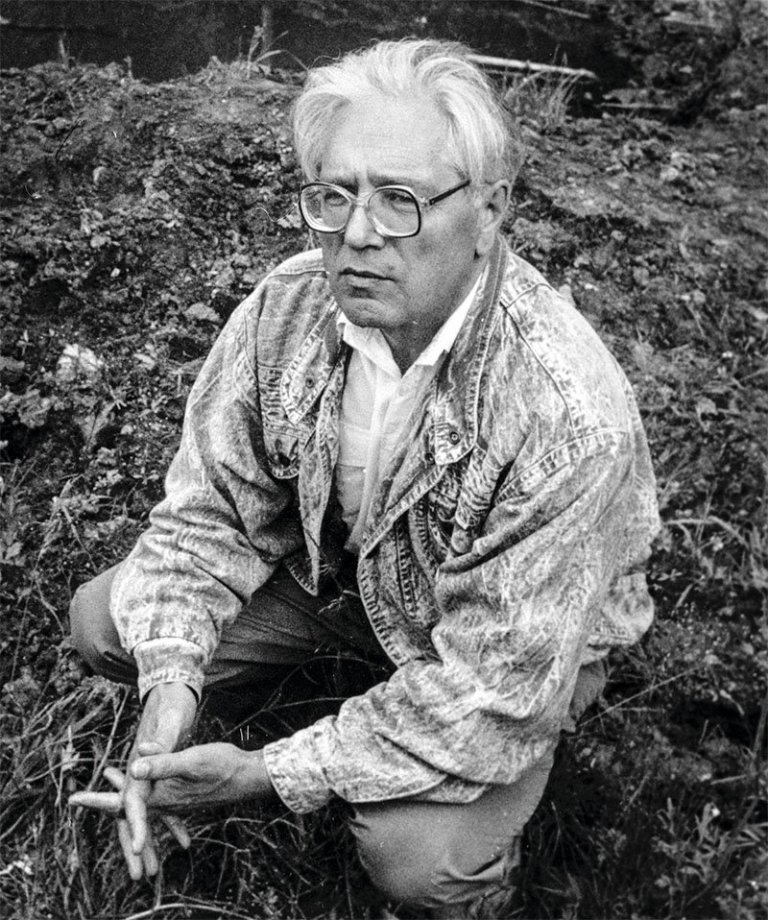
The film explores how for many decades Archimandrite Tikhon (Zatekin) collected information about the fate of the Imperial Family’s remains, following their execution on the night of 16-17 July, 1918. As a youth, Nikolai Zatekin (the secular name of Archimandrite Tikhon) worked with a team of plasterers in Moscow’s St. Daniel’s Monastery. It was during a conversation with a colleague, that the subject of the fate of the remains of the Tsar and his family piqued the interest of Zatekin for the first time. After moving to Sverdlovsk (renamed Ekaterinburg in 1991), he began to collect materials about the history of the family of the last Russian emperor.

PHOTO: Archimandrite Tikhon (Zatekin)

In 1985, Zatekin met the film director and writer Geliy Ryabov (1932-2015). Recall that in 1979, it was Ryabov along with geologist and local historian Alexander Avdonin, who discovered the burial place of the remains of the Imperial Family on the Old Koptyaki Road, near Sverdlovsk [Ekaterinburg]. This event was preceded by a long and painstaking collection of information, on the basis of which the researchers concluded that the remains of the Imperial Family, contrary to the widespread version, were not destroyed, but transferred from mine No7 at Ganina Yama and buried in the forest on the territory of the Porosenkov Log tract.

The remains were exhumed from the ground only in 1991. In 2007, another excavation was carried out at Porosenkov Log, a result of which the remains of Tsesarevich Alexei Nikolaevich and Grand Duchess Maria Nikolaevna were found and identified. This find became a counterargument for those who were against the recognition of the remains as those of Nicholas II and his family. More than once in disputes, opponents pointed out that 11 people were murdered in the Ipatiev House, and the remains of nine were found in Porosenkov Log by Geliy Ryabov and Alexander Avdonin. The second grave, containing the two additional remains settled the argument, at least for some.

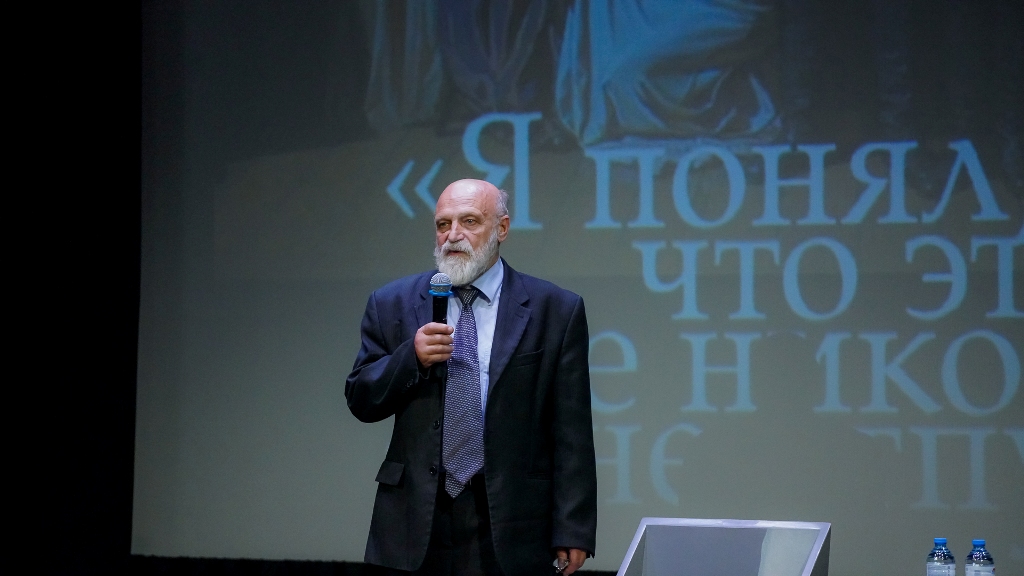
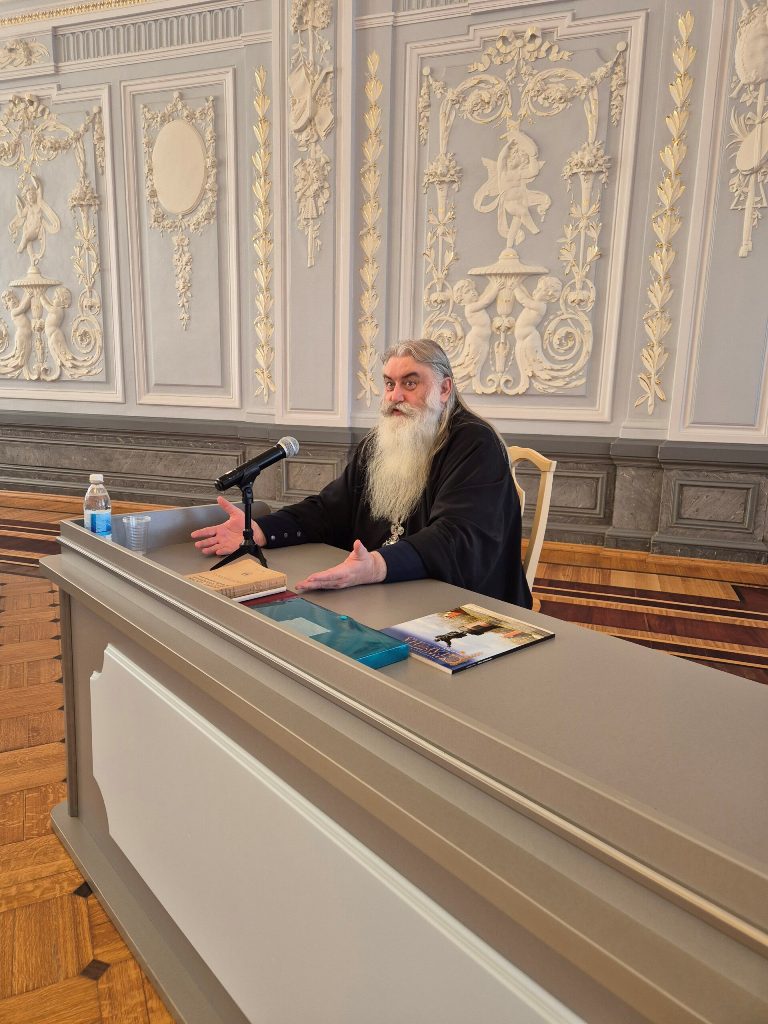
PHOTO: following the end of the documentary-film, retired senior investigator of the Investigative Committee of the Russian Federation Vladimir Solovyov, took part in a question and answer period

After a series of studies and examinations were carried out, the remains of 9 people were buried on 18th July 1998, in the St. Catherine Chapel of the SS Peter and Paul Cathedral in St. Petersburg. The remains of Alexei and Maria were transferred to the Lower Church of the Transfiguration Cathedral of the Novospassky Monastery in Moscow in December 2015, and remain there until the present – pending the decision by the Council of Bishops.

In 2015, the Investigative Committee of Russia resumed the investigation into the death of the Romanovs. During the investigation, the remains found near Ekaterinburg in 1991 were re-examined.

“In 2022, a meeting of the Holy Synod was held, where representatives of the state commission, which had studied the remains since 2015, and members of the church commission headed by Metropolitan Varsonofy of St. Petersburg and Ladoga. The conclusions of the first investigation confirmed, that the found remains belonged to Emperor Nicholas II and his family. It was decided to submit the issue of the remains to the Council of Bishops for approval,” said Archimandrite Tikhon (Zatekin).

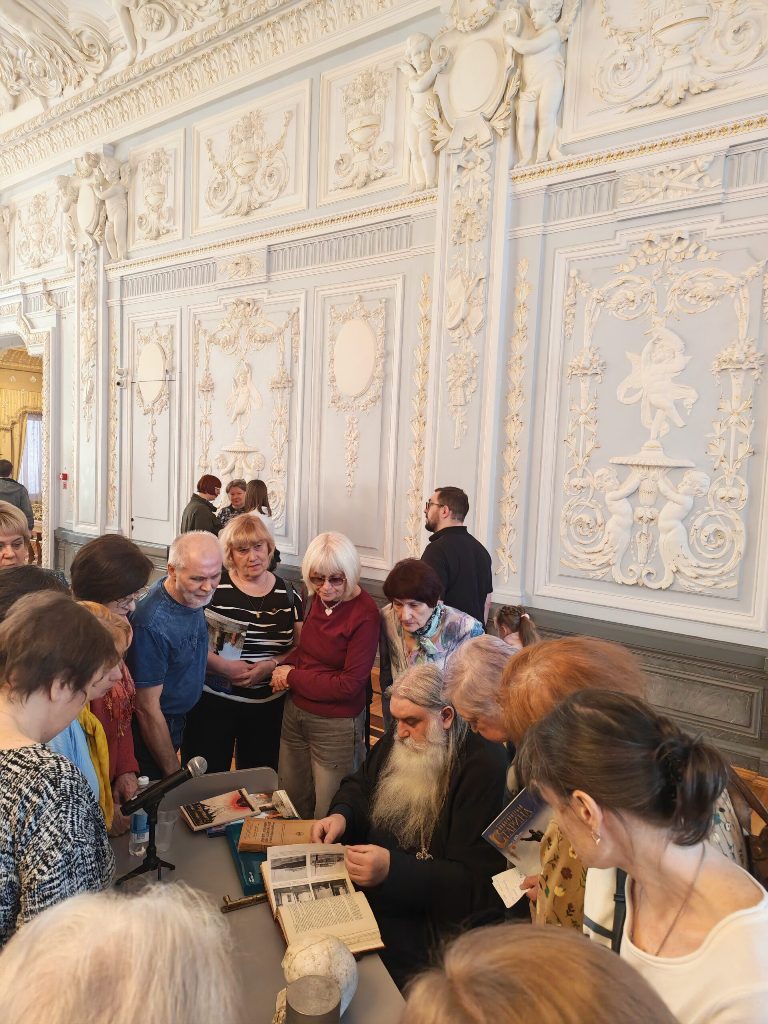
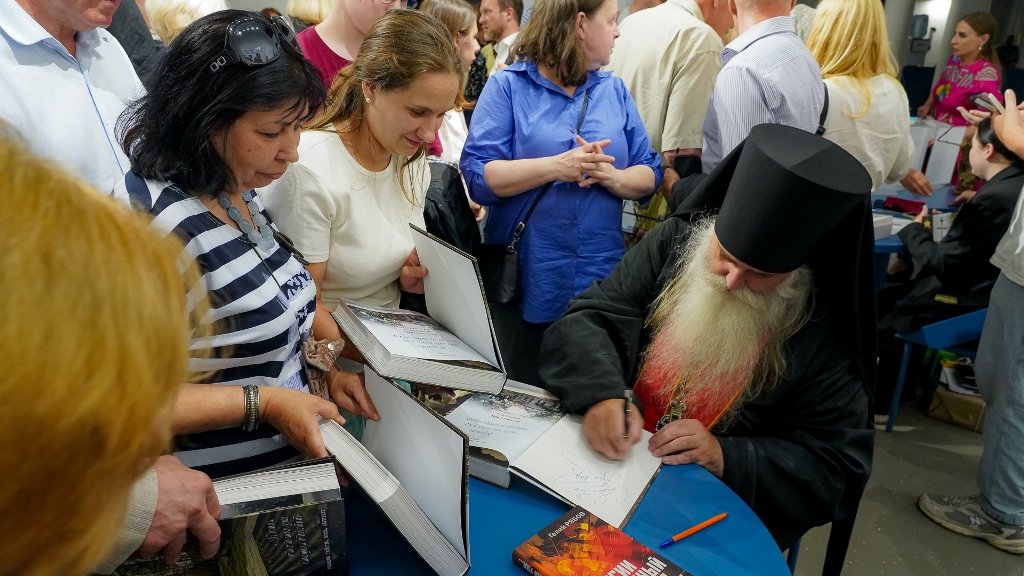
PHOTO: following the premiere, Archimandrite Tikhon (Zatekin) took the time to sign copies of his book Романовы: убийство, поиск, обретение [Romanovs: murder, search, acquisition]

Following the documentary-film’s premiere, the audience were invited to ask questions to the panel of experts who participated in the making of the film, including Vladimir Solovyov, Lyudmila Lykova, Olga Ryabova and Archimandrite Tikhon (Zatekin). The latter, then took the time to sign copies of his book Романовы: убийство, поиск, обретение [Romanovs: murder, search, acquisition]

© Paul Gilbert. 13 August 2025

Russian court rules on the fate of Tsar’s family grave near Ekaterinburg

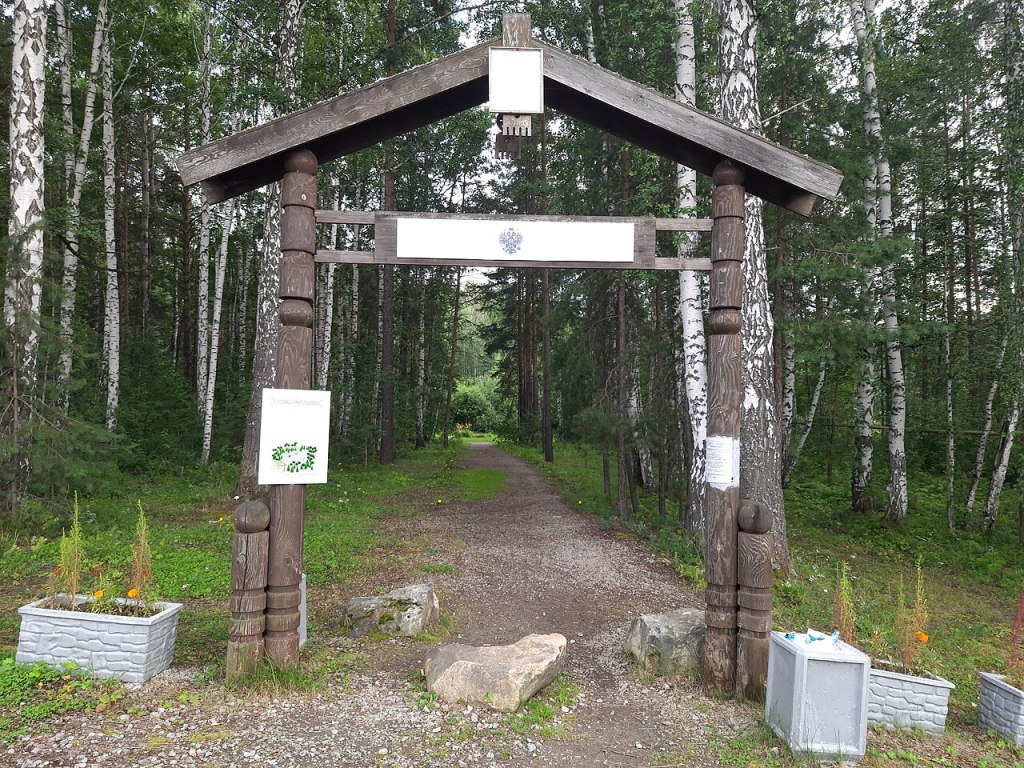
PHOTO: the entrance to the Romanov Memorial at Porosenkov Log

On Monday, 2nd June 2025, the Sverdlovsk Regional Court ruled on the fate of Porosenkov Log, situated on the old Koptyaki Road near Ekaterinburg. The Court’s ruling ensures that the place where the remains of Russia’s last Tsar, his family and their four faithful retainers were found is protected from developers.

Recall that in 2014, the Department of State Protection of Cultural Heritage Sites of the Sverdlovsk Region (UGOOKN) included the Romanov Memorial at Porosenkov Log on the list of protected monuments. However, 10 years later, in September 2024, the state security department removed the memorial’s protective status.

After the decree was issued, workers came to the memorial in Porosenkov Log and removed the information steles. In addition, workers began to remove part of the soil layer around the main grave, without even carrying out any digs to ensure that there were no remaining fragments of the bodies of members of the Imperial Family that have not yet been found. At the same time, no one coordinated the work with the Romanov Memorial Charitable Foundation and it’s founder Ilya Korovin, who has preserved the memorial since July 1999.

To avoid any further destruction of the Romanov Memorial, Korovin was forced to file a lawsuit in the Regional Court. In the lawsuit, Korovin noted that the removal of the protected status jeopardizes the damage or destruction of religious objects. He requested that the Court cancel the order.

The judge of the Sverdlovsk Regional Court, Maxim Rudakov, sided with the charitable foundation and declared the disputed order invalid. The department has a month to appeal. Despite the Court’s ruling, however, Ilya Korovin believes that it is too early to celebrate, since the department can appeal the court’s decision.

Since 2021, the Romanov Memorial Foundation has been fighting against development which threaten Porosenkov Log. Korovin claims that the Russian Orthodox Church wants to build a monastery in Porosenkov Log similar to that in Ganina Yama – the Monastery of the Holy Royal Martyrs.

© Paul Gilbert. 15 June 2025

Efforts to locate the remains of Nicholas II and his family during the Brezhnev era

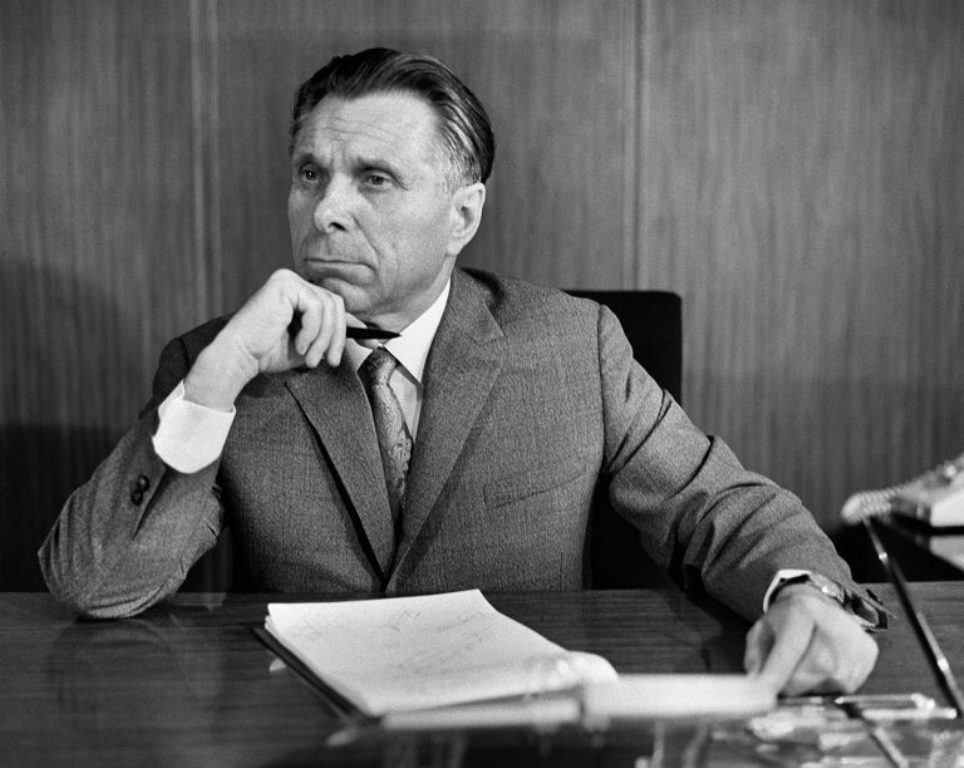
PHOTO: Nikolai Anisimovich Shchelokov (1910-1984)

Nikolai Anisimovich Shchelokov (1910-1984) was a Soviet statesman. From 1966 to 1982 he served as Minister of Internal Affairs of the USSR. He was a member of the Communist Party of the Soviet Union (CPSU) from 1931 to 1984, and member of the Central Committee of the CPSU from 1968 to 1983.

Shchelokov was the first person who began the search for the remains of Emperor Nicholas II and his family. When asked about the initiative, Shchelokov told the film director, screenwriter, acclaimed author Geliy Trofimovich Ryabov (1932-2015): “We, as Russian people, must fulfill our duty and find the remains of the Tsar”. Shchelokov ordered the head of the Sverdlovsk Internal Affairs Directorate for their full cooperation in the search.

What made the representative of the highest echelon of Soviet power, who had been building communism all his life, deviate so radically from the general line of the party and make every effort to resurrect one of the darkest pages of early 20th century Russian history?

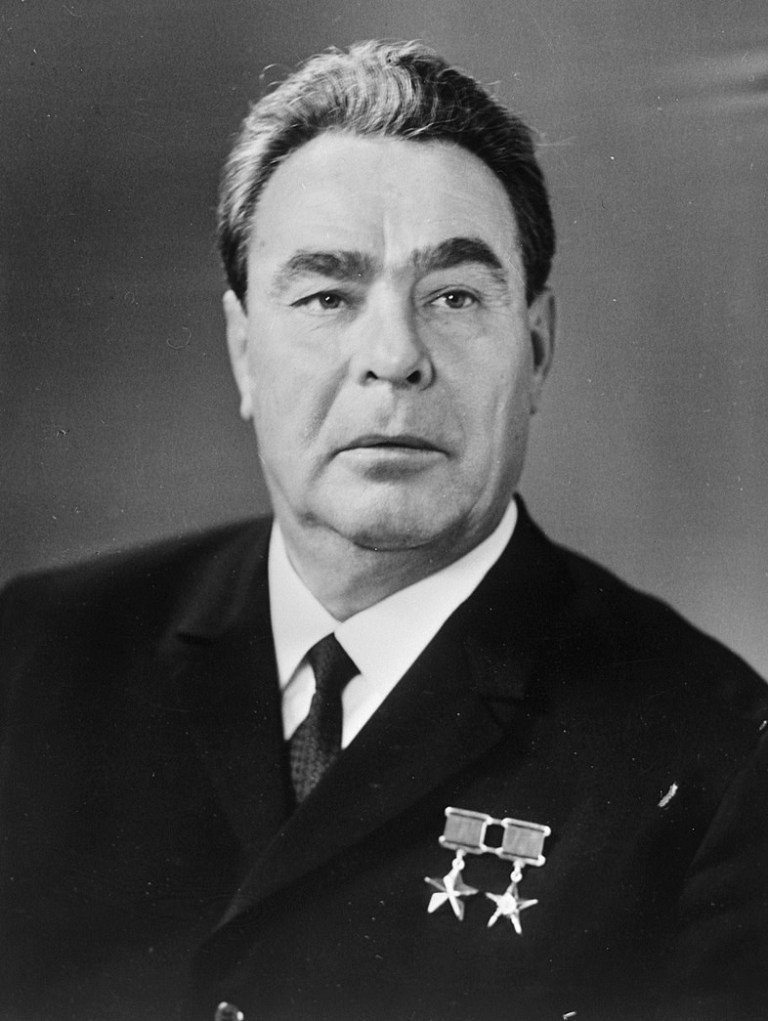
PHOTO: Leonid Ilyich Brezhnev (1906-1982)

Acquaintance with Leonid Brezhnev

Born on 13th November 1910 in the family of a metallurgist, Nikolay Shchelokov got his first job as a horseman in a mine at the age of 16, and at the same time received a higher education at the Dnepropetrovsk Metallurgical Institute.

After spending a year at the Dnepropetrovsk Metallurgical Plant, Nikolay Shchelokov was elected 1st Secretary of the Krasnogvardeysky District Committee of the Communist Party (Bolsheviks) of Ukraine in Dnepropetrovsk. It was during the years 1938-39 that he first met with Leonid Ilyich Brezhnev (1906-1982), who later took the post of General Secretary of the Central Committee of the CPSU, and persuaded his old acquaintance to move to Moscow and head the Ministry of Internal Affairs.

Nikolai Anisimovich received this offer in 1966, and before that he managed to become a participant in the Great Patriotic War (1941-45), after which he was appointed to the post of executive secretary of the party commission at the political department of the Carpathian Military District, where Leonid Brezhnev served as the head.

From August 1946, Shchelokov held a position in the Ministry of Industry of the Ukrainian ASSR, worked in the apparatus of the Communist Party of the same republic, and in 1951 he was sent to the Moldavian ASSR, where he rose to the post of second secretary of the Central Committee of the Communist Party.

In Moscow

Having lured the energetic leader to Moscow, Brezhnev set him the task of reviving the Ministry of Internal Affairs abolished in 1960 by Nikita Sergeyevich Khrushchev (1894-1971).

His mandate was to restore the fallen authority of the police in Soviet society To do this, among other things, he used the power of art. It was during this period that many detective stories appeared in bookshelves, where law enforcement officers where depicted to the reader in a positive light, and films about the daily exploits of ordinary employees of the Ministry of Internal Affairs were released on cinema screens.

Shchelokov coped with the duties assigned to him brilliantly, for which he was awarded the title of Hero of Socialist Labor of the USSR.

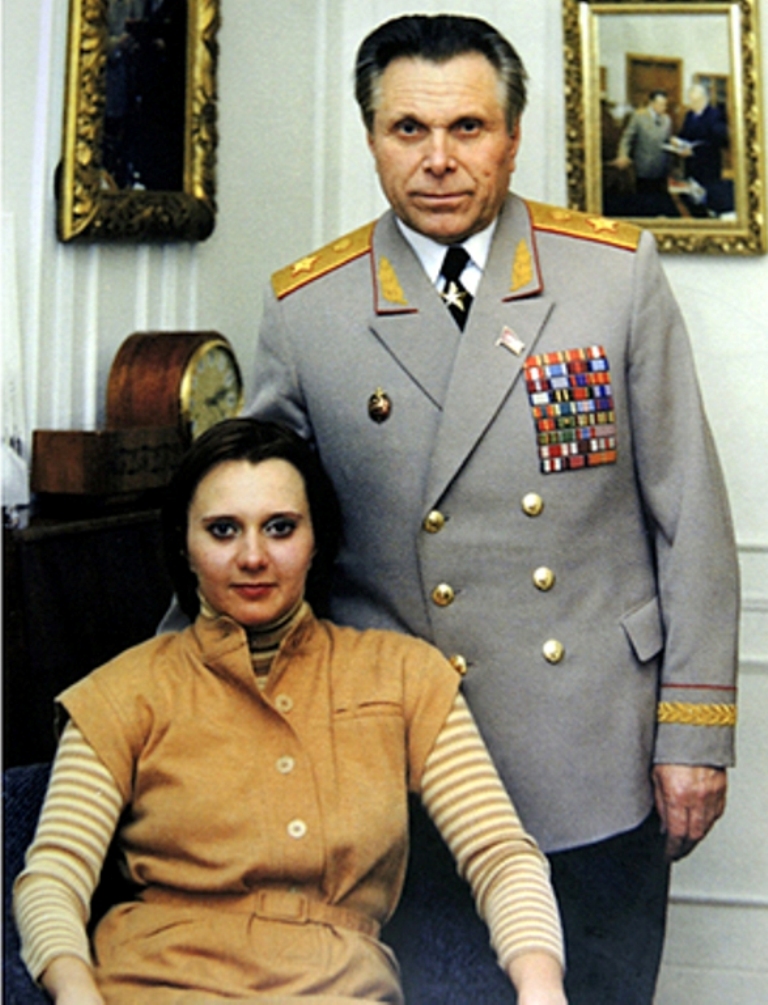
PHOTO: Nikolai Shchelokov with his daughter Irina Shchelokova

Friendship with dissidents

An interesting fact about Nikolai Anisimovich was his open friendship with dissidents who had liberal and monarchist views.

Among the disgraced personalities with whom he had warm relations were the musician Mstislav Rostropovich, the singer Galina Vishnevskaya, the writer Alexander Solzhenitsyn, the artist Ilya Glazunov, and Archbishop Pimen of Saratov and Volsk.

Perhaps it was after communicating with them that Shchelokov had the idea to find the remains of the murdered Imperial Family and bury them according to the Christian rite.

According to the memoirs of Irina Shchelokova (d. 2021), the daughter of the Minister of Internal Affairs, her father could not be convicted of dissent. She explained his interest in the last Tsar and his family by his high level of erudition, a keen sense of justice, as well as the fact that her father got hold of materials -which were classified at the time – regarding the investigation of the circumstances of the death of Nicholas II and his family.

At the same time, Boris Konstantinovich Golikov, an assistant to Shchelokov, believed that his boss became obsessed with the idea of finding the remains of the Romanovs after a meeting with a former NKVD officer, a certain “Snegov”. The latter was taken into custody in the 1930s and sat in the same cell with a prisoner who participated in the burial of the bodies of the Imperial Family in July 1918. Subsequently, this man was shot, but he managed to tell “Snegov” about the burial place of the remains, which the latter later told Shchelokov, and even handed him a hand-drawn map.

PHOTO: Geliy Trofimovich Ryabov (1932-2015)

Help for filmmakers

To implement his plan to find the remains of the Romanovs, Nikolai Anisimovich sought the help of Geliy Ryabov, co-author of the book “Born by the Revolution”.

According to Ryabov’s memoirs, who held the position of consultant of the Ministry of Internal Affairs on cultural issues, in 1976, he was supposed to visit Sverdlovsk (now Ekaterinburg) on a working trip. Before embarking on his journey, he was summoned by Shchelokov and casually told that not so long ago he had visited the Ipatiev House, where the Imperial Family had been murdered by the Ural Soviet (Bolsheviks) on 17th July 1918. He communicated this information to Ryabov in the hope of getting him interested in the case and was not mistaken.

The writer, having arrived in the capital of the Urals, also wanted to visit the site where the Tsar and his family had been murdered, and somehow without any problems received the appropriate permission. After making a tour of the house, Ryabov was inspired by the idea of finding the remains of Nicholas II and his family.

Returning to Moscow, Ryabov turned to Shchelokov with a request for assistance in this dangerous assignment. The delighted Minister of Internal Affairs contacted Leonid Brezhnev and asked him to provide Ryabov with access to the “Tsar’s Archive”.

A month later, the Secretary General gave his go-ahead, and Ryabov plunged headlong into the study of classified documents, trying to find at least some clue.

As a result, his efforts were crowned with success aftern he discovered the “Yurovsky Note” – written by the commandant of the Ipatiev House and chief executioner of the the Imperial Family, which contained the coordinates of the burial place of the bodies of the Tsar and his family.

Having provided Ryabov with accurate topographic maps of the area, and having organized his protection and unhindered work, Shchelokov began to wait for news of the investigation. On 1st June 1979, Geliy Trofimovich and geologist Alexander Avdonin, who helped him in the search, found the sought-after remains.

However, Shchelokov did not manage to organize a dignified reburial of the Imperial Family’s remains, he was forced to abandon his search by a discrediting campaign that began against him.

Alternate versions

At was at this time, that several more interpretations of why the Minister of Internal Affairs abandoned the search for the remains of the Imperial Family.

Some researchers argued that he did not act on his own, but carried out the order of higher authorities who wanted to find and destroy the bones of the murdered Imperial Family.

Other theories included an outrageous claim insisting that Shchelokov wanted a royal burial in order to find and remove any jewelry from the gravesite.

Even more ridiculous was from Igor Bunich’s work of fiction “The Tale of Lawlessness, or the Syndrome of Nicholas II” a hypothesis is put forward that Shchelokov launched a search for the remains of the Romanovs in order to secretly sell them to the West. The buyer was allegedly a certain monarchical structure associated with the British Royal Family. For the deal, the Home Secretary was allegedly offered £200,000, of which £30,000 was given to him as an advance and spent by him on the organization of the search operations.

It was not until 1991, that the remains of Emperor Nicholas II and his family were exhumed and later buried in the SS Peter and Paul Cathedral in St. Petersburg on 17th July 1998.

© Paul Gilbert. 9 July 2024
June 1st marks 45th anniversary of discovery of the “Ekaterinburg remains”

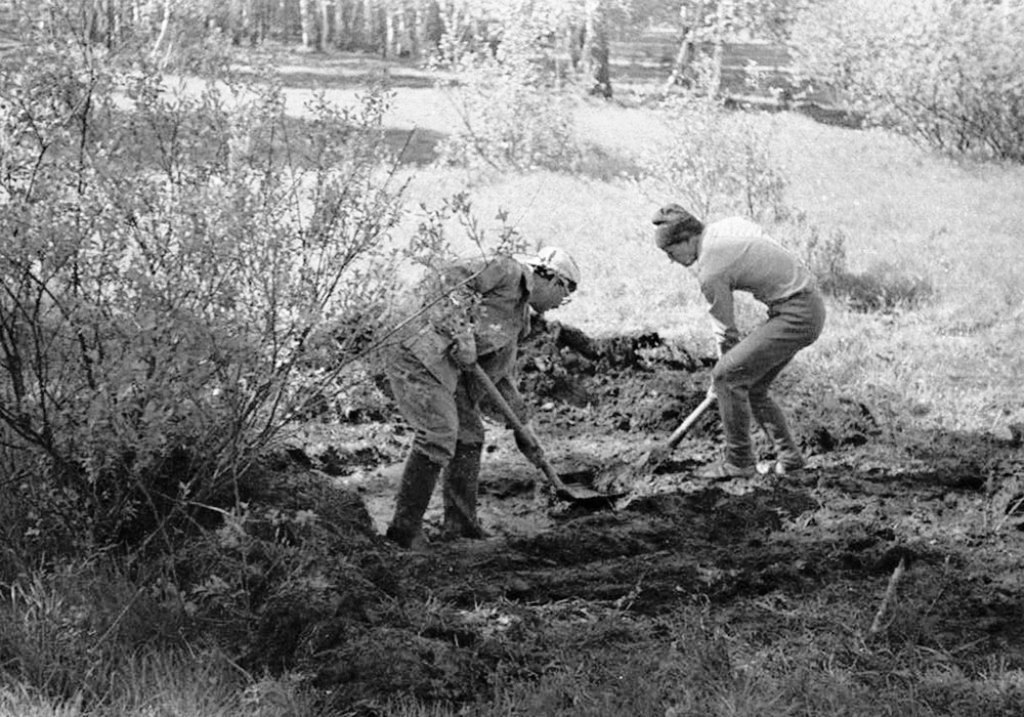
PHOTO: Geliy Ryabov (left) and Gennady Vasiliev (right) remove the wooden sleepers from the unmarked grave. 1st June 1979

NOTE: I have provided links (below) to other interesting articles + photos – PG

June 1st marked the 45th anniversary of the discovery of what would come to be known as the “Ekaterinburg remains”. It was on this day, that Geliy Trofimovich Ryabov (1932-2015) and Alexander Nikolaevich Avdonin (born 1932), discovered a shallow grave marked with railway ties on the Old Koptaki Road, situated about 22 km [13.7 m.] northeast of Sverdlovsk [Ekaterinburg], and 3.8 km from Ganina Yama.

Avdonin and Ryabov who were accompanied by their wives and colleagues V.A. Pesotsky and G.P. Vasiliev, found the second burial site containing the remains of Emperor Nicholas II, members of his family and their four faithful servants, all of whom were all murdered in the basement of the Ipatiev House in the Ural capitl in the early morning hours of 17th July 1918. This was preceded by many years of work in various archives and libraries, as well as the study of the area of Ganina Yama and Porosyonkov Log.

Further reading: Nicholas II’s grave was an “open secret” in Soviet Russia during the 1920s

Due to the political climate of the time, they were forced to close the grave until after the fall of the Soviet Union. It was not until July 1991, that Avdonin and a team of experts returned to the Old Koptyaki Road, where they exumed the remains of nine bodies. The remains were sent for forensic tests which identified the remains as those of Emperor Nicholas II, his wife Empress Alexandra Feodorovna, three of their daughters Grand Duchesses Olga, Tatiana, Anastasia Nikolaevna, as well as those of their four retainers. It was not until 2007, that the remains of Tsesarevich Alexei Nikolaevich and Grand Duchess Maria Nikolaevna were discovered in a separate grave, situated just meters from the main grave.

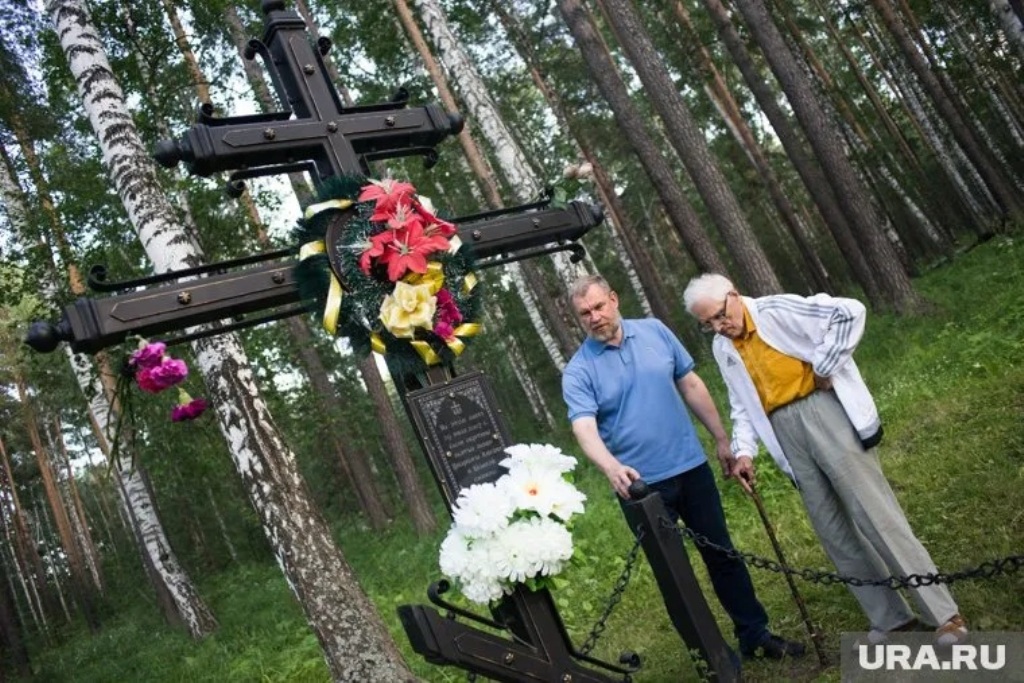
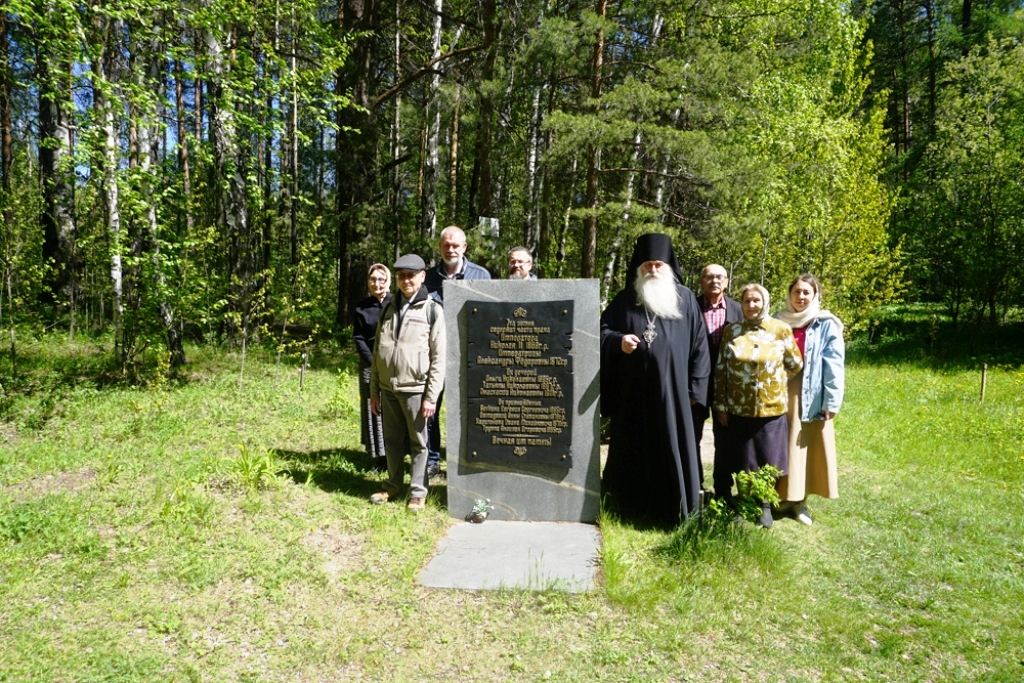
On 16th July 1999, the Romanov Memorial was opened on the site of the graves. The main grave is modestly decorated with wooden railway ties – a large metal Orthodox cross was erected above it. There is also a memorial stone (see last photo on this post) on which is written: “Here the remains of the Tsar’s Family and persons loyal to Them, murdered on 17th July 1918 in Ekaterinburg, were hidden.” A metal Orthodox cross was also erected at the second grave, where the remains of Alexei and Maria were found The Romanov Memorial is maintained at the expense of the Romanov Memorial in Porosenkov Log Charitable Foundation.

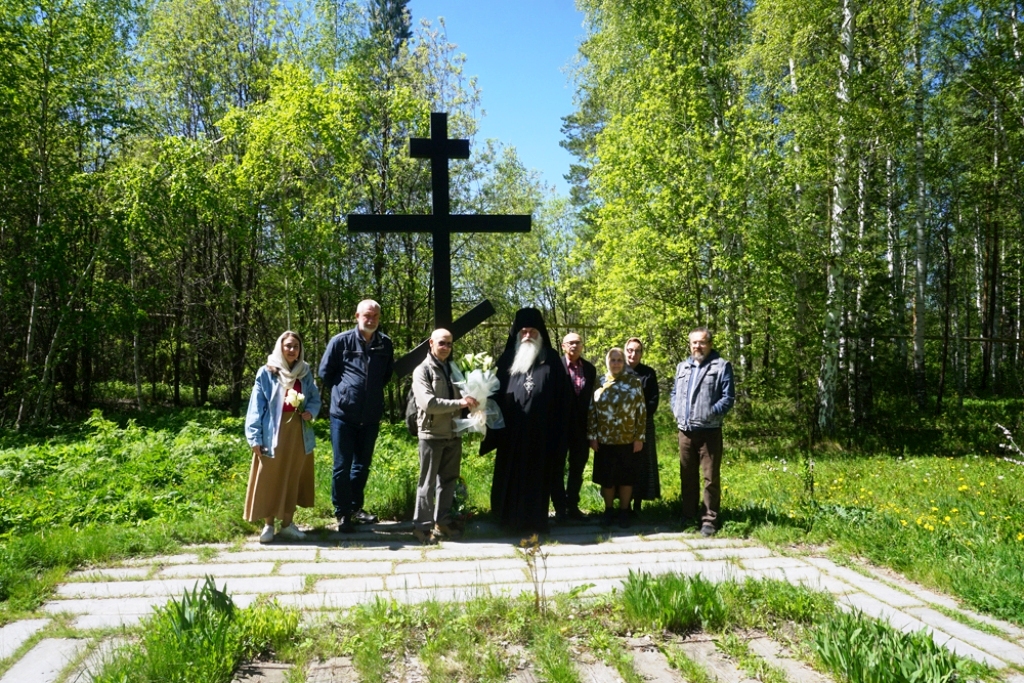
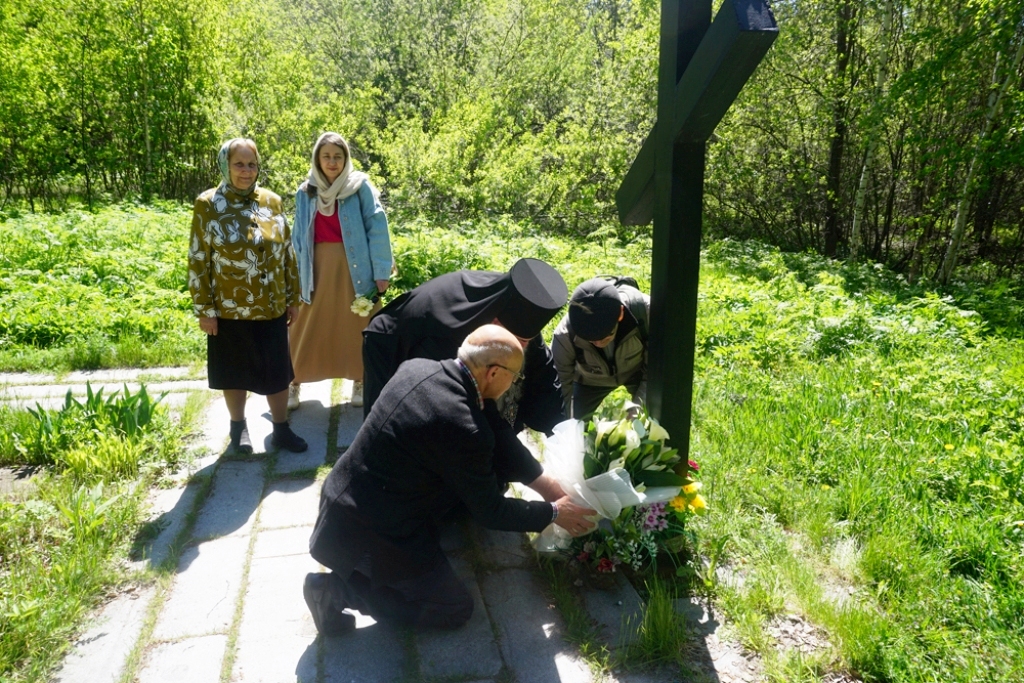
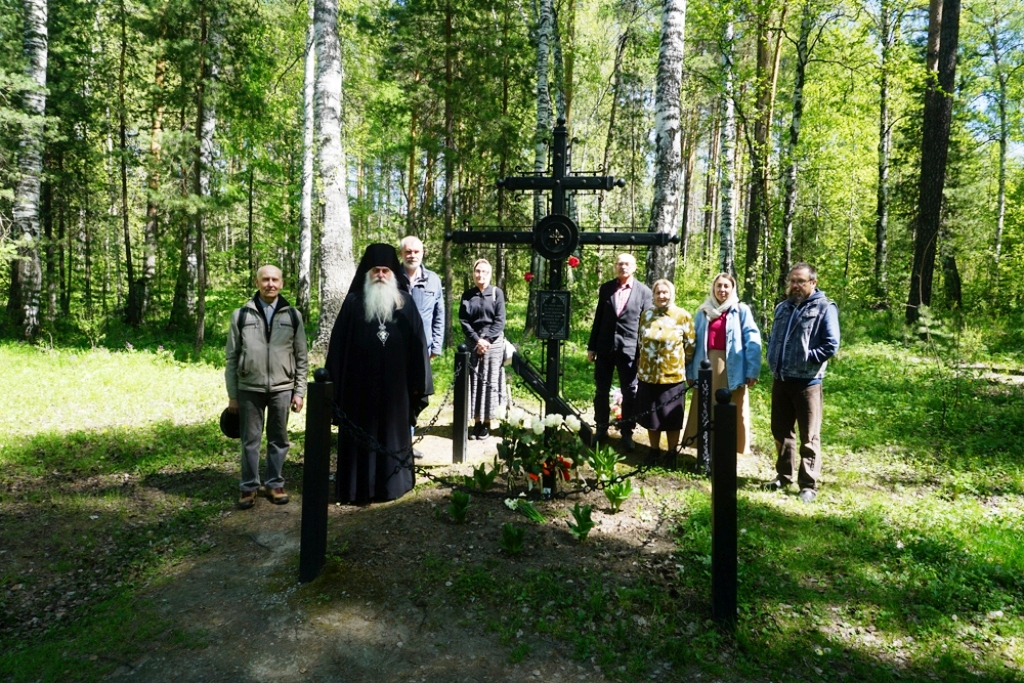
PHOTO: Archimandrite Tikhon (Zatekin) and participants standing at the main grave at Porosenkov Log:

On 1st June 2024, a small group of Orthodox Christians and adherents to the memory of the Holy Royal Martyrs, gathered on the Old Koptyaki Road, where the Romanov Memorial is now located, at Porosenkov Log. Among those present, were participants who took part in the search for the remains of the Imperial Family and their servants – geophysicist G.P. Vasiliev, as well as participants in the search in 2007 for the remains of Tsesarevich Alexei and Grand Duchess Maria: L.G. Vokhmyakov, S.M. Vokhmyakova, N.B. Neuymin, A. Bobrov among others.

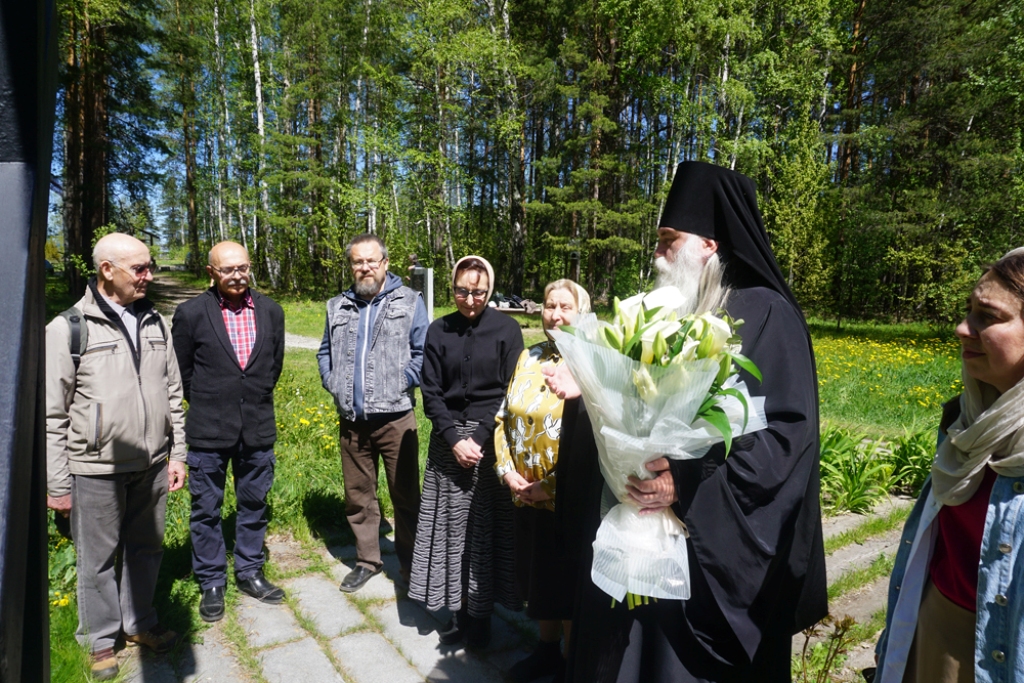
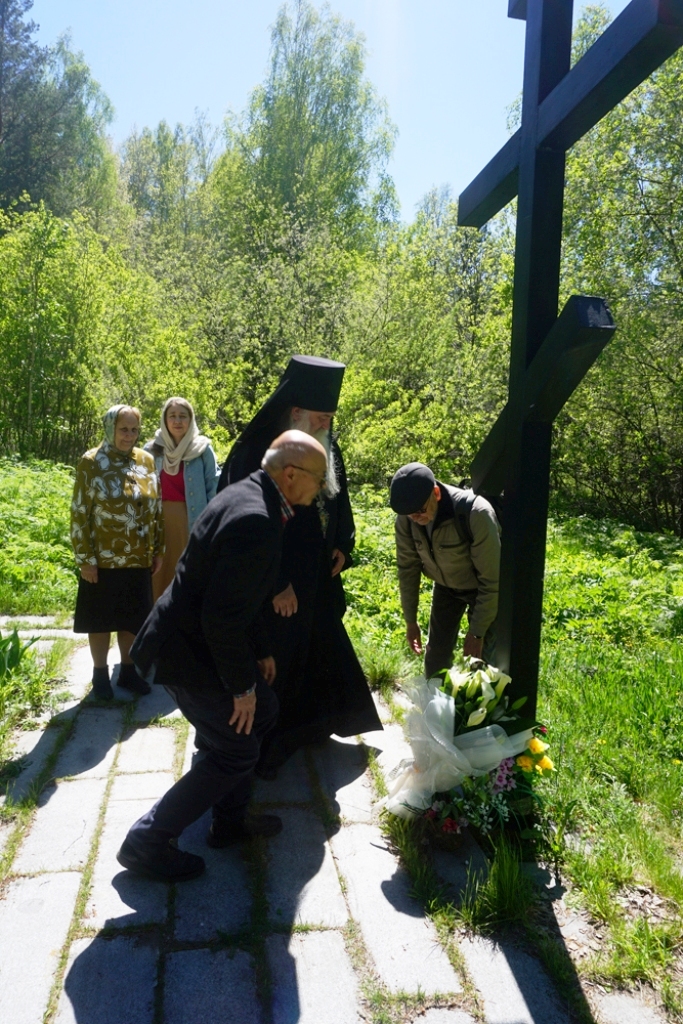
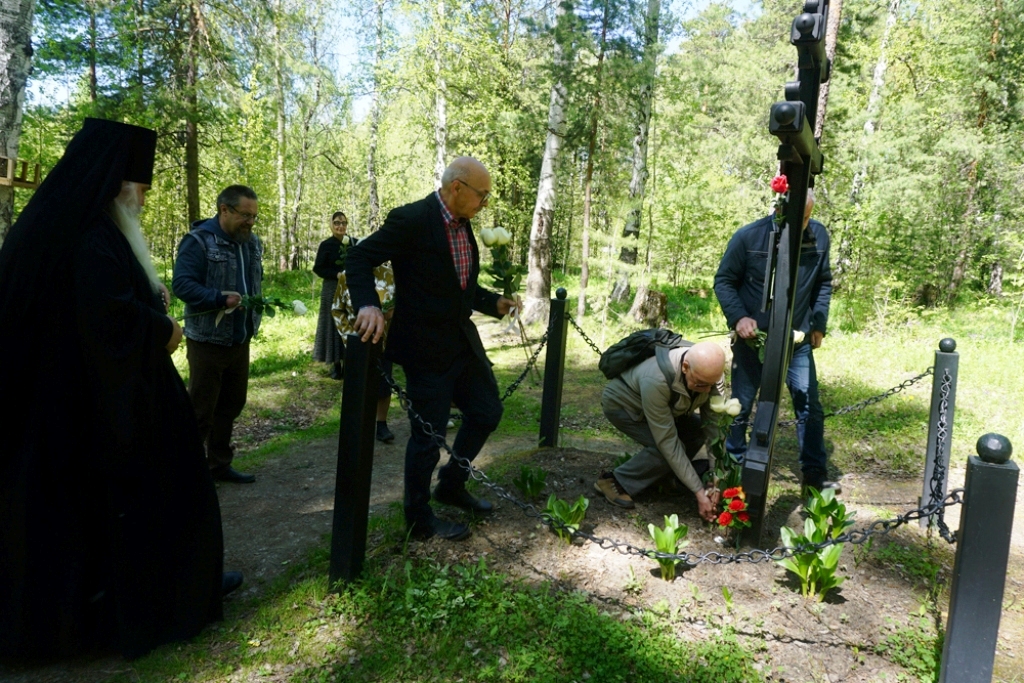
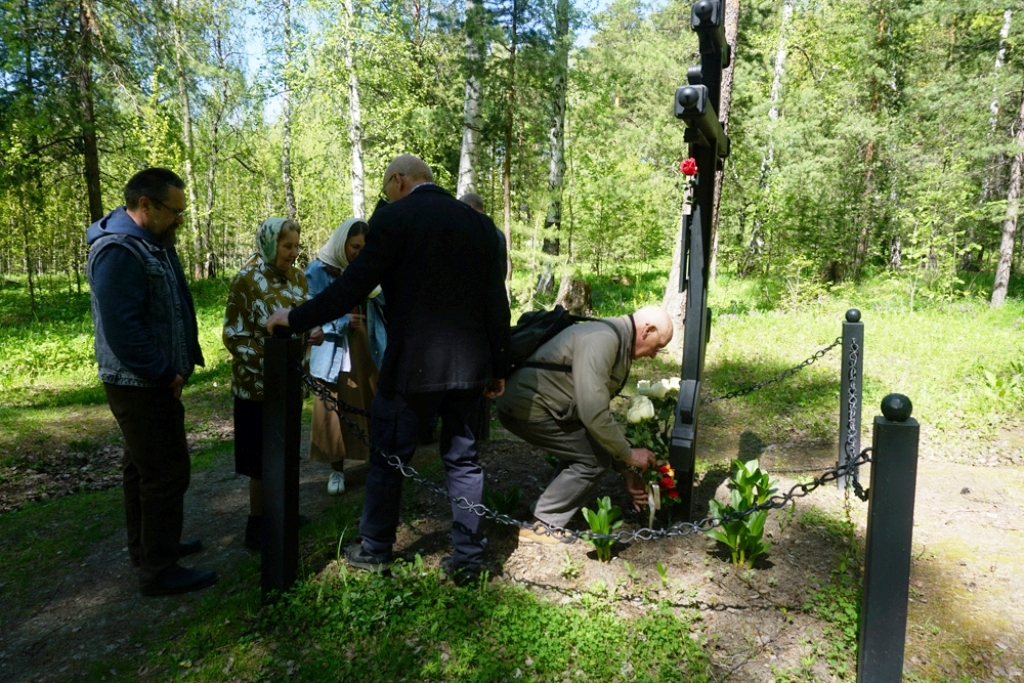
Archimandrite Tikhon (Zatekin), G.P. Vasiliev and L.G. Vokhmyakov laid a bouquet of white lilies[1] at the cross erected at the site where the Tsar’s remains were discovered in 1979, after which roses were laid at the cross, where the remains of Tsarevich Alexei and Grand Duchess Maria were found in 2007.

NOTE: The Moscow Patriachate of the Russian Orthodox Church believes that the Ekaterinburg remains found at Porosenkov Log are false relics, and that the bodies of the Imperial Family were completely destroyed at Ganina Yama by the regicides in 1918. The Church has not yet made a final decision on the question of whether these Ekaterinburg remains are genuine or not. The final decision rests with the Council of Bishops of the Russian Orthodox Church, who have been forced to postpone their convening to discuss the matter “indefinitely”, citing the current situation with Ukraine.

The members of the Romanov Family Association (which includes most of the living descendants) have all recognized the Ekaterinburg remains as those of Emperor Nicholas II, his family and their four retainers. The ONLY descendants who do NOT recognize the authenticiy of the Ekaterinburg are Princess Maria Vladimirovna and her son George.

PHOTOS (below) depict Archimandrite Tikhon (Zatekin) laying a bouquet of white lilies at the main grave at Porosenkov Log:

PHOTOS (below) depict L.G. Vokhmyakov laying a bouquet of roses at the second grave at Porosenkov Log:

PHOTOS (below) depict Archimandrite Tikhon (Zatekin) at the memorial stone at Porosenkov Log:

NOTES:

[1] The white lilies symbolize the unfading flower of virginity and purity of the Mother of God, to whom the Church sings: “You are the root of virginity and the Unfading Flower of purity.”

© Paul Gilbert. 6 June 2024
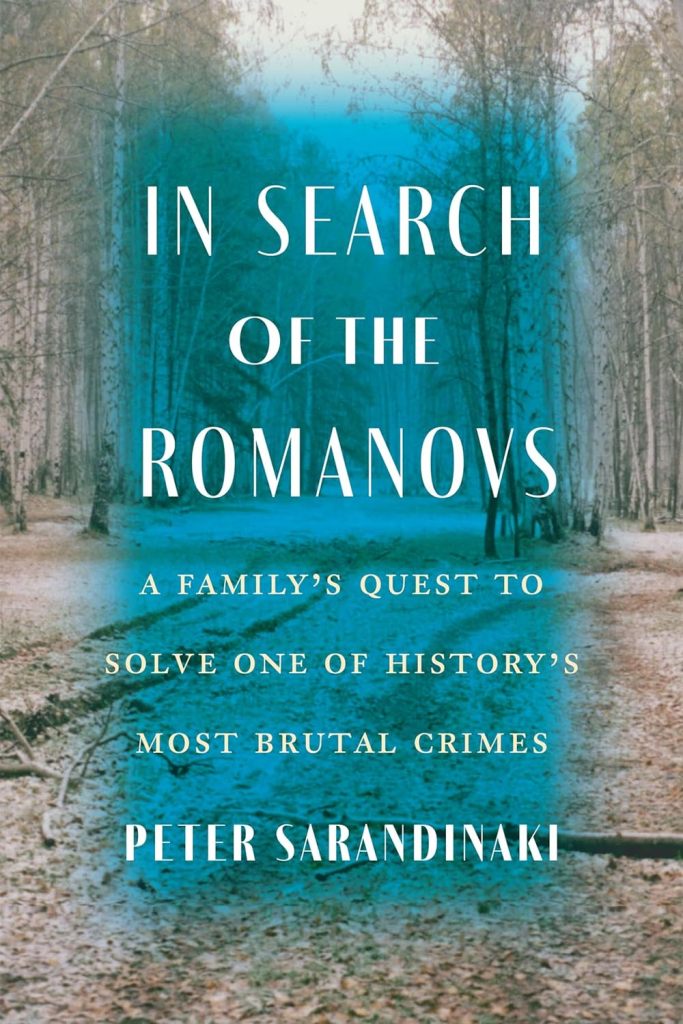
In Search of the Romanovs: A Family’s Quest to Solve One of History’s Most Brutal Crimes

On 1st July 2024, a new book by the President and founder of the SEARCH Foundation Peter Sarandinaki will be published. Sarandinaki is best known as one of the participants who discovered the remains of Tsesarevich Alexei Nikolaevich and Grand Duchess Maria Nikolaevna in 2007. He has spent many years searching for the remains of Grand Duke Mikhail Alexandrovich and his secretary Nikolai Johnson.

His new book In Search of the Romanovs: A Family’s Quest to Solve One of History’s Most Brutal Crimes will no doubt become one of the most highly anticipated books for Romanovophiles to be published in many years!

***

In 1918 a famed general of the Russian White Army battled through the Red Army to save Emperor Nicholas II—but he arrived too late. The Romanovs had already been murdered.

In this thrilling true-life detective story, we follow Anna, the general’s courageous young daughter, who fled across the continent and boarded a ship with her husband to escape the bloodshed. Beneath her bunk was a box, and in this box lay grisly evidence of what had become of Russia’s royal family, the Romanovs. Generations later, Anna’s grandson Peter Sarandinaki set out to finish his great-grandfather’s mission to find the Romanovs’ remains, enlisting searchers and scientists to finally piece together the answers to some of history’s most perplexing questions: What really happened to Tsar Nicholas, Empress Alexandra, and their children? And what about the tsar’s brother, Michael, who simply disappeared?

Set against the disparate backdrops of the Russian Revolution and the twenty-first century’s leading DNA laboratories, In Search of the Romanovs weaves together historical records, forensic science, and the diaries, recollections, and experiences of Sarandinaki’s own family. Follow Sarandinaki as he fits together the final fragments of the mystery: a piece of topaz jewelry, a blood-stained shirt once worn by Tsar Nicholas II, the fabled Solokov box, and his team finding clandestine initials carved into a tree. A riveting and deeply personal story, In Search of the Romanovs reveals hidden truths in the legends about the murder and disappearance of Russia’s most famous royal family.

© Paul Gilbert. 31 October 2023

On this day – 17th July 1998 – Nicholas II was buried in St Petersburg

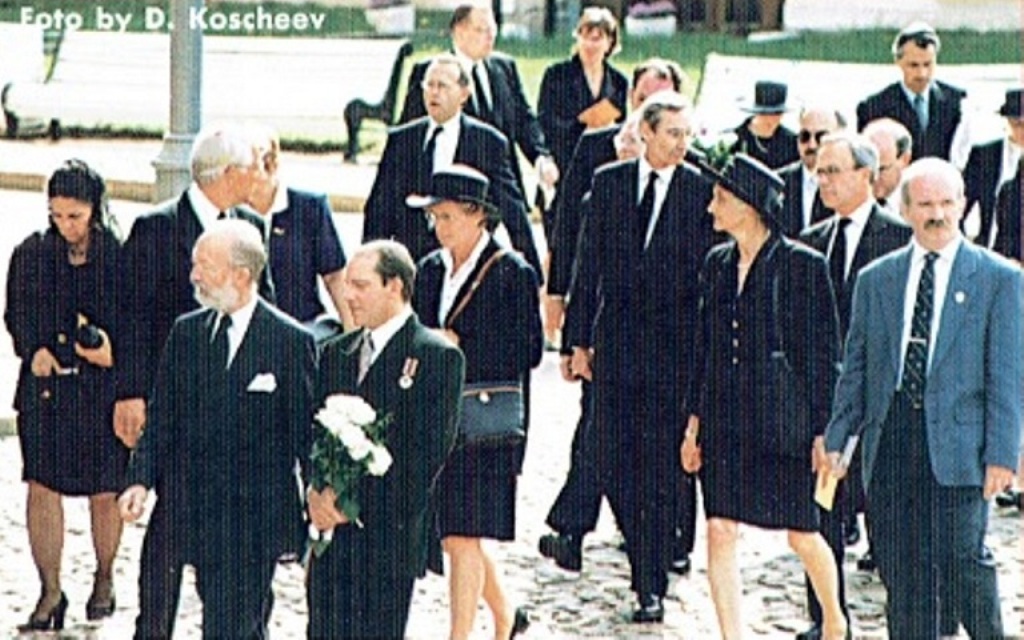
PHOTO: Paul Gilbert (far right) joins 50 Romanov descendants, at the funeral of Nicholas II, in St. Petersburg on 17th July 1998. Photo by D. Koscheev, from the book The Last Bow (1999)

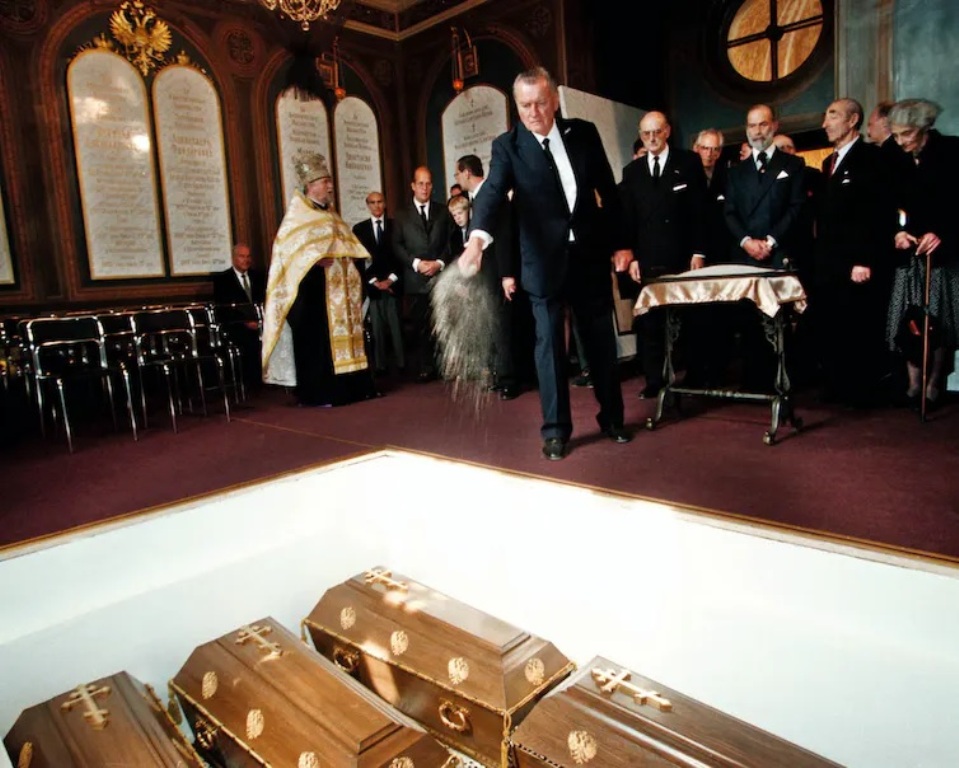
It was 25 years ago today – 17th July 1998 – that the earthly remains of Emperor Nicholas II, his wife, three of their five children and their four faithful retainers were buried in St. Catherine’s Chapel – a side chapel of the SS Peter and Paul Cathedral in St. Petersburg.

I was honoured to attend this historic event, thanks to the kindness of a descendant of Grand Duke Konstantin Konstantinovich, who was living in New York at the time. It was through her efforts that she arranged for me to attend the funeral in St. Petersburg, through the Director of the Romanov Family Association in Russia Ivan Artsishevsky (1950-2021), who served as head of the working group on the reburial of Emperor Nicholas II, his family and servants.

It is interesting to note that the only Romanov descendants who did not attend the burial were Princess Maria Vladimirovna, her son Prince George Mikhailovich-Hohenzollern, and her mother Princess Leonida Georgievna (1914-2010). To this day, Maria and her son do not recognize the Ekaterinburg Remains as those of Emperor Nicholas II and members of his family.

Just prior to the funeral on the 17th, I was invited to join more than 50 Romanov descendants in the lobby of the Astoria Hotel. It was here that I met Princes Nicholas (1922-2014) and Dimitri (1926-2016) Romanovich Romanov. From here, I travelled on a special coach with the Romanov’s to the Peter and Paul Fortress. I recall the coach driving along the Embankment which was lined on both sides by thousands of people who had gathered to watch the drive past. Many of them held icons of the Holy Royal Martyrs, others kneeled on the street, making the sign of the cross as the coach passed.

By the time the coach arrived at the Fortress, hundreds of people had assembled on the square in front of SS Peter and Paul Cathedral. The Romanov family descendants walked in silence along the path into the Cathedral. Bells tolled from the SS Peter and Paul Cathedral and soldiers gave a 19-gun salute.

Yeltsin attends, calls for repentance

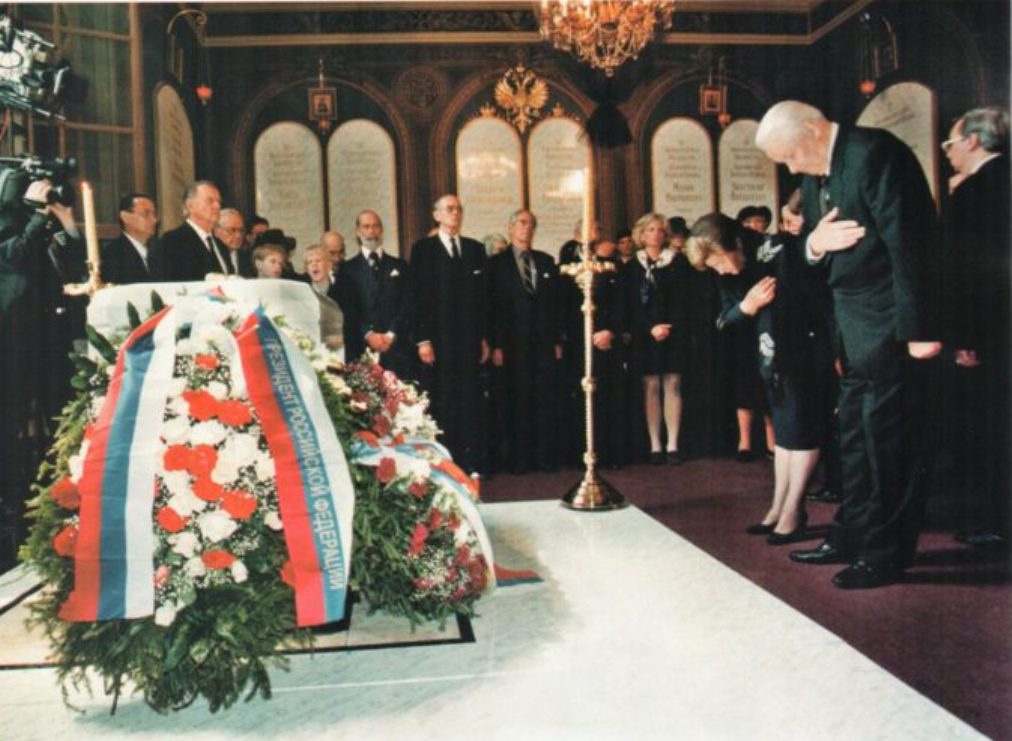
PHOTO: Russian president Boris Yeltsin (1931-2007) and his wife Anastasia Iosifovna Yeltsina bow their heads at the crypt of the last Russian Emperor and his family

The Romanov family members were joined by Russian president Boris Yeltsin, Prince Michael of Kent of Great Britain, family members of the Oldenburg dynasty from Germany and diplomats from more than 50 countries.

Addressing the funeral ceremony, Yeltsin described the murder of the Russian Imperial family as one of the most shameful pages in Russian history, and urged Russians to close a “bloody century” with repentance. “Today is a historic day for Russia. For many years, we kept quiet about this monstrous crime, but the truth has to be spoken,” he added.

Yeltsin said he had no choice but to attend this funeral in consideration of the fact that the funeral presented a historical chance for the Russian people to exculpate themselves from the sins of their fathers, and the sins of the murder of their Romanov family

St. Catherine’s Chapel

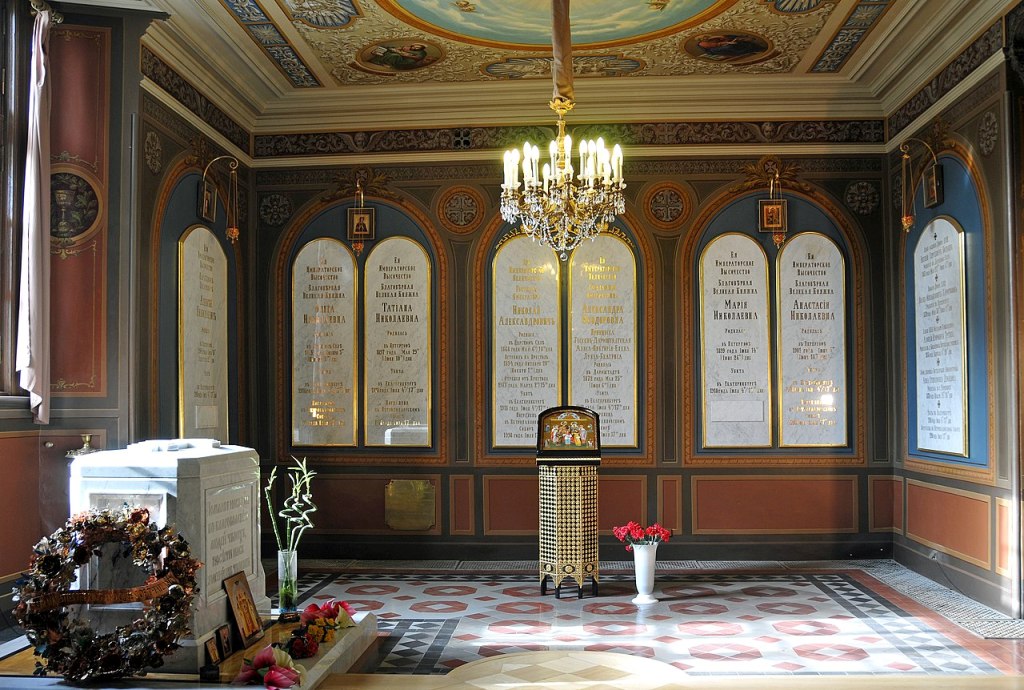
PHOTO: view of St. Catherine’s Chapel, the current resting place for Emperor Nicholas II and his family

In the weeks leading up to the burial, a complete reconstruction of St. Catherine’s Chapel was carried out. In 1997, specialists from the Restorer and Olko firms carried out the work, which included painting the walls and plafond of the chapel. A two-tiered crypt (depth 1 m 66 cm, length 2 m 70 cm, width 1 m 70 cm) was built near the only window in the southern part of the chapel. The seal-tight crypt was waterproofed, thus providing ideal conditions for the preservation of the remains.

On the lower tier are the coffins of the family’s four faithful retainers, and on the upper tier are the coffins of the Emperor, Empress and their three daughters Grand Duchesses Olga, Tatiana and Anastasia. An openwork lattice divides the crypt into two parts. The coffins were made of Caucasian oak, their surface is covered with a wax-turpentine mixture. Inside, the coffins are upholstered with copper sheet, and on top – a cover of white velour on silk white cords. On the lid of the coffin of Emperor Nicholas II there is a cypress cross (grown in the garden of the Livadia Palace in Crimea) and a model of a sword based on a 1909 model. The rest of the coffins of members of the Imperial Family have lids decorated with bronze, gilded, crosses. The coffins of the servants are decorated with silver-plated eight-point Orthodox crosses. As the valet Aloysius Trupp was a Catholic, a four-point cross decorates his coffin. The side decoration of the coffins consisted of: a brass board engraved (on which the names, title, place of birth and place of death (according to the Julian calendar) and the date of burial are embossed), as well as double-headed eagles for the seven coffins of members of the Imperial Family. Each coffin was secured with brass (non-oxidizing) screws. Lead plates were laid in the lid and in the coffin itself along the perimeter at the place of their connection, making them airtight after closing the coffin.

The coffins were made in strict accordance with the historical traditions of the burial rites of Russian monarchs. After the burial, the crypt was covered with reinforced concrete slabs, through the rings of which a steel chain closed on the lock was threaded. A temporary wooden tombstone was erected over the grave, and later replaced by a marble one. Memorial plaques with epitaphs were placed on the walls of the chapel. Later, the historical coating of the aisle, Mettlach tiles – was also restored.

PHOTO: the Head of the Russian Imperial House Prince Nicholas Romanovich (1922-2014) throws a handful of earth into the grave

At the present time, the crypt in the Catherine Chapel holds a total of 9 coffins:

  1. Emperor Nicholas II Alexandrovich (burial of remains on 17th July 1998)
  2. Empress Alexandra Feodorovna (burial of the remains on 17th July 1998)
  3. Grand Duchess Olga Nikolaevna (burial of the remains on 17th July 1998)
  4. Grand Duchess Tatiana Nikolaevna (burial of the remains on 17th July 1998)
  5. Grand Duchess Anastasia Nikolaevna (burial of the remains on 17th July 1998)
  6. family-physician Dr. Eugene Botkin (burial of remains on 17th July 1998)
  7. maid Anna Demidova (burial of remains on 17th July 1998)
  8. valet Aloysius Trupp (burial of remains on 17th July 1998)
  9. cook Ivan Kharitonov (burial of remains on 17th July 1998)

It was not until 2007, that the remains of Tsesarevich Alexei Nikolaevich and Grand Duchess Maria Nikolaevna, which consisted of 44 bone fragments, were discovered in a second grave at Porosenkov Log, near Ekaterinburg. In December 2015, their remains were transferred from the State Archives of the Russian Federation to the Lower Church of the Transfiguration Cathedral of the Novospassky Monastery in Moscow, where they remain to this day.
The fate of the Ekaterinburg Remains currently rests with the Bishops’ Council of the Russian Orthodox Church. Once the members of the Council have confirmed the authenticity of the Ekaterinburg Remains as those of the Imperial Family, it is then that the entire family’s remains will be buried together.

The question of whether or not the Imperial Family’s remains are buried together in St. Catherine’s Chapel remain a mystery. The chapel is part of SS Peter and Paul Cathedral, which is a museum, whereby an admission must be paid to enter. No person should ever have to buy a ticket to enter a House of God! So, will the Imperial Family be reburied with great pomp and ceremony in another location? There has been numerous suggestions of reburying their remains in a newly built cathedral in Ekaterinburg or the Feodorovsky Sovereign Cathedral – Nicholas II’s favourite church at Tsarskoye Selo. Please click HERE to read my article The Fate of the Ekaterinburg Remains, in which I discuss this further.

The Burial of the Romanovs | 17 July 1998 VIDEO – duration: 26 minutes

© Paul Gilbert. 17 July 2023

ROC hierarchs to discuss Ekaterinburg Remains this summer

On 19th July 2023, a bishops’ conference of hierarchs – not to be confused with the Bishops Council – will be held at the Christ the Saviour Cathedral in Moscow on 19th July 2023. Among the topics for discussion will be the Ekaterinburg Remains.

According to the permanent member of the Holy Synod of the Russian Orthodox Church, and head of the Central Asian Metropolitan District, Metropolitan Vincent (Morari) of Tashkent and Uzbekistan, bishops from across Russia and other countries (who will be able to arrive in the Russian Federation) will meet to discuss further the authenticity of the Ekaterinburg Remains. Metropolitan Vincent emphasized, however, that the final decision on the official recognition of the Ekaterinburg Remains by the ROC will be made by the Bishops Council at a later date.

The Bishops’ Council was originally scheduled to meet in Moscow from 15th to 18th November 2021, however, this was delayed “due to the difficult COVID-19 situation.” The meeting was thus rescheduled for 26th to 29th May 2022, but this to was postponed due to Russia’s invasion of Ukraine. Finally, on 25th August 2022, the Holy Synod announced that the Bishops’ Council meeting had been postponed “indefinitely”, citing the “current situation in the world”.

Recall that the Chairman of the Investigative Committee of Russia Alexander Bastrykin reported that the Investigative Committee on the criminal case on the murder of the Imperial Family, which resumed in 2015 conducted 40 new examinations to eliminate any possible gaps and doubts about the remains found near Ekaterinburg. For the first time, the investigation studied materials located in archival funds which had been previously closed to investigators.

New DNA tests were conducted on a hair of Empress Alexandra Feodorovna and the maternal grandmother of Nicholas II, Queen of Denmark Louise of Hesse-Kassel, found by a collector abroad, the results of the examinations became known in January of last year.

In addition, a comparison by geneticists of the remains of Nicholas II and samples from the tomb of his father Emperor Alexander III in the Saints Peter and Paul Cathedral in St. Petersburg by 99.99% showed the probability of their family relationship as that of a son and father. As Bastrykin confirmed, DNA examinations and other studies established that the remains belonged to Emperor Nicholas II and his family.

In January 2022, the head of the Synodal Department for External Church Relations, Metropolitan Hilarion, stated that “Nothing prevents the ROC from recognizing the authenticity of the Ekaterinburg Remains”.

As previously noted, it is only after members of the Bishops’ Council have reviewed the findings of the Investigative Commission, that they will deliver their verdict on the authenticity of the Ekaterinburg Remains.

Sadly, whatever decision the Bishops’ Council makes, it is sure to cause a schism among Believers who are divided on the authenticity of the remains. Many still adhere to Nikolai Alekseevich Sokolov’s (1882-1924) theory that the bodies of the Imperial Family were completely destroyed with fire and acid at the Four Brothers Mine.

***

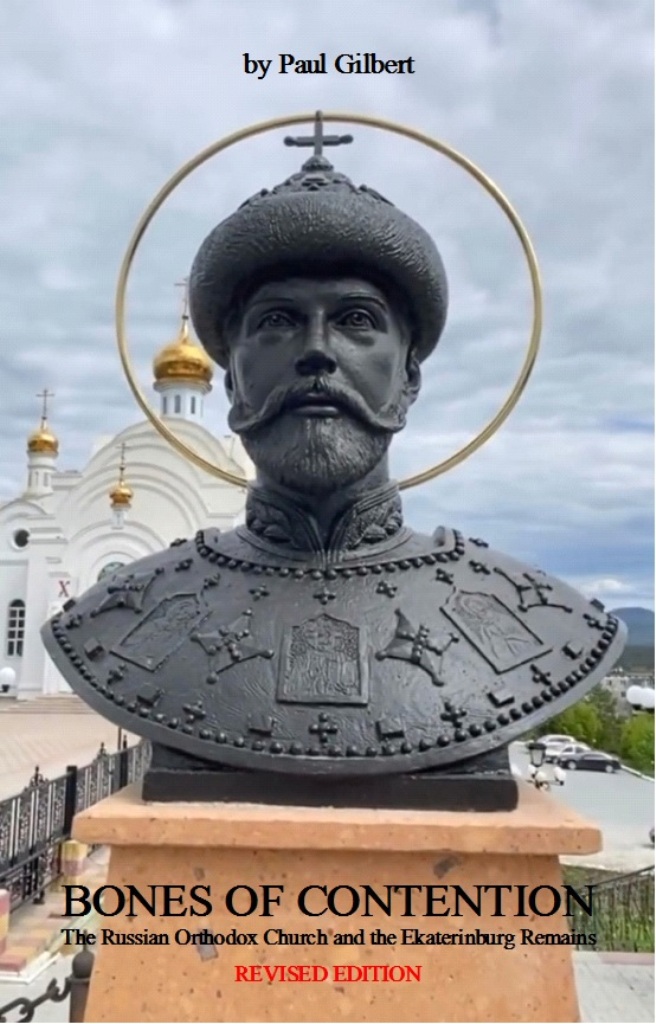
BONES OF CONTENTION (Revised Edition)
The Russian Orthodox Church and the Ekaterinburg Remains
by Paul Gilbert

CLICK HERE TO ORDER FROM AMAZON

Full-colour covers, 206 pages + 90 black & white photographs

Originally published in 2020, this NEW REVISED & EXPANDED 2021 EDITION features an additional 40+pages, new chapters and 90 black and white photos. It is the most up-to-date source on the highly contentious issue of the Russian Orthodox Church and their position on the Ekaterinburg Remains.

The world awaits a decision by the Bishops’ Council of the Russian Orthodox Church, who will meet in Moscow at some point, during which they will review the findings of the Investigative Commission and deliver their verdict on the authenticity of the Ekaterinburg Remains.

The reopening of the investigation into the death of Nicholas II and his family in 2015, caused a wave of indignation against the Russian Orthodox Church. This book presents the position of both the Moscow Patriarchate and the Investigation Committee.

This is the first English language title to explore the position of the Orthodox Church in Russia with regard to the Ekaterinburg remains. The author’s research for this book is based exclusively on documents from Russian media and archival sources.

This unique title features an expanded introduction by the author, and eight chapters, on such topics as the grounds for the canonization of Nicholas II and his family by the Moscow Patriarchate in 2000; comparative details of the Sokolov investigation in 1919, and the investigations carried out in the 1990s to the present; reluctance of the Moscow Patriarchate to officially recognize the remains as authentic; interesting findings of Russian journalist, producer and screenwriter Elena Chavchavadze in her documentary Regicide. A Century of Investigation; and the author’s own attempt to provide some answers to this ongoing and long drawn-out investigation for example: “Will Alexei and Maria be buried with the rest of their family?” and “Will the Imperial Family remains be reinterred in a new cathedral in Ekaterinburg?”.

This new revised and expanded edition also includes two NEW chapters!

Interviews with Vladimir Soloviev, Chief Major Crimes Investigator for the Central Investigate Department of the Public Prosecution Office of the Russian Federation and Archpriest Oleg Mitrov, a member of the Synodal Commission for the Canonization of Saints – BOTH key players in the Ekaterinburg remains case, reveal the political undertones of this to this ongoing and long drawn-out investigation.

ABOUT THE AUTHOR

Independent researcher Paul Gilbert has spent more than 25+ years researching and writing about the Russian Imperial Family. His primary research is focused on the life, reign and era of Nicholas II. On 17th July 1998, he attended the tsar’s interment ceremony at the SS Peter and Paul Cathedral in St. Petersburg. Twenty years later, he attended the Patriarchal Liturgy on the night of 16/17 July 2018, held at the Church on the Blood in Ekaterinburg. Since his first visit to the Urals in 2012, he has brought prayers and flowers to both Ganina Yama and Porosenkov Log on numerous occasions.

© Paul Gilbert. 5 February 2023

Archimandrite Tikhon (Zatekin) on the Ekaterinburg remains

PHOTO: Archimandrite Tikhon (Zatekin) at the tomb of Emperor Nicholas II and his family, located in St. Catherine’s Chapel – a side chapel in SS Peter and Paul Cathedral – St. Petersburg

Archimandrite Tikhon (Zatekin) is the abbot of the Pechersky Ascension Monastery, and deputy head of the Nizhny Novgorod branch of the Imperial Orthodox Palestine Society (IOPS). He is the author of a new Russian language book on the Ekaterinburg remains ‘Романовы: убийство, поиск, обретение’ [Romanovs: Murder, Search, Acquisition].

Earlier this year, Georgy Kamensky spoke with Archimandrite Tikhon (Zatekin) about the Ekaterinburg remains, published in the Russian language Orthodox site Pravoslavie.ru.

Father Tikhon, what is your opinion on the remains found on the Koptyaki Road, near Ekaterinburg, in 1979 and 2007?

— I regard them as the remains of the last Russian Emperor Nicholas Alexandrovich, his August family and devoted servants.

You have finished writing your new book, dedicated to the search for the remains of the Imperial Family. What is it called?

— Indeed, I have finished the layout of my new book. Since 1985, I have been familiar with the researchers who discovered the remains of the Imperial Family – Geliy Trofimovich Ryabov (1932-2015) and Alexander Nikolaevich Avdonin (born 1932). The name of my book is Романовы: убийство, поиск, обретение’ [Romanovs: Murder, Search, Acquisition]. It will be a richly illustrated album, including documents, correspondence and photographs which have never been published anywhere before.

PHOTO: Archimandrite Tikhon (Zatekin) holding a copy of his new book ‘Романовы: убийство, поиск, обретение’ [Romanovs: murder, search, acquisition].

Is it true that Geliy Ryabov and Alexander Avdonin told you back in the 1980s that they had found the remains?

— Yes, for the first time these wonderful men confidentially revealed to me a secret which they swore not to disclose to anyone. In 1986, Geliy Ryabov and Alexander Avdonin took me to Ganina Yama, where they described in detail about the events that took place there in July 1918. In conversations with Geliy Ryabov, I saw how he grieved that no one could read or sing a Panikhida [memorial service for the dead] over the hidden remains of the Imperial Family.

But, it was generally assumed that that Ryabov was an unbeliever, is this true?

— Unfortunately, such assumptions have been made, but this is not true. I have known Geliy Trofimovich personally since the mid-1980s, he was a deeply religious person. Both he and Alexander Nikolaevich Avdonin are intellectuals of incredible erudition and decency. I remember how in 1985, I went with Geliy Trofimovich and his wife Olga Alexandrovna to pray at the Trinity-Sergius Lavra [near Moscow]. There were many pilgrims there that day. Having patiently stood in line, we venerated the holy relics of St. Sergius. It was very touching to see Geliy Trofimovich write a prayer note for “Nikolai, Alexandra, Olga, Tatiana, Maria, Anastasia and Alexei.” I placed the note in the hands of an old monk in the Assumption Church.

— In addition, have at my disposal the vast correspondence of Geliy Ryabov with various people, many of his letters reflect the deep, penetrating words of his faith.

There is a rumour that G. T. Ryabov and A. N. Avdonin “discovered” the remains on the instructions of the KGB, and they were planted once by employees of this very organization.

— This alleged report does not stand up to scrutiny. People who adhere to this “rumour”, apart from words, those who adhere to it have failed to produce a single shred of evidence to support such a claim. From the period of the history of “developed socialism” we know about the confrontation between the two giants of the Soviet era – the KGB and the Ministry of Internal Affairs. Ryabov was an adviser to the Minister of Internal Affairs N.A. Shchelokov, and not Yu.V. Andropov, who headed the State Security Committee.

— Moreover, the KGB, on the contrary, kept an eye on Ryabov and his activities, and Ryabov himself was well aware of this.

— The correspondence between Ryabov and Avdonin, during their search for the remains of the Imperial Family from 1976-1991, is published for the first time in my book. They had to encrypt their activities, just in case their letters were intercepted and read by the KGB. Therefore, the allegations that Geliy Ryabov and Alexander Avdonin were KGB officers have no basis.

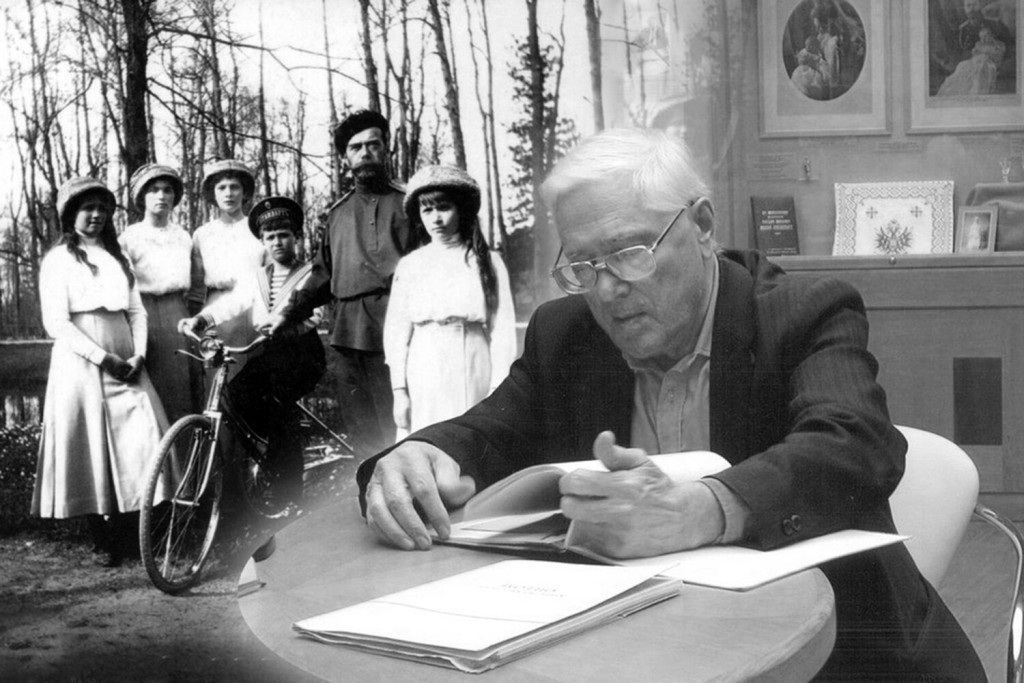
PHOTO: Geliy Trofimovich Ryabov (1932-2015)

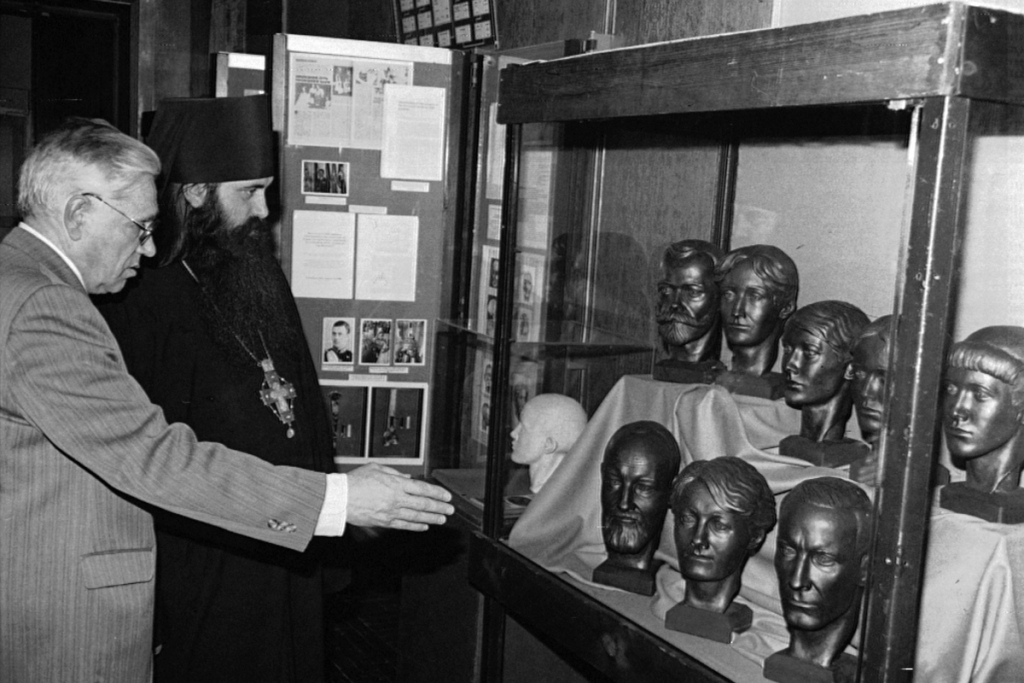
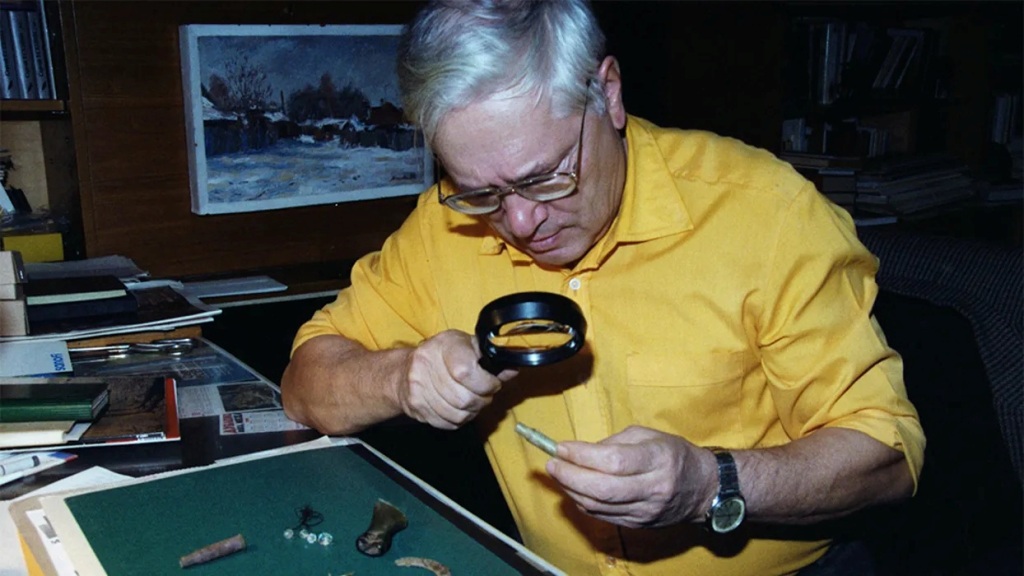
PHOTO: Alexander Nikolaevich Avdonin at the Romanov Memorial Hall, Museum of History and Archaeology of the Urals, Ekaterinburg

Can you recommend any books to those who want to learn the truth about the Ekaterinburg remains?

— The three-volume book “The Crime of the Century. Investigation Materials”, explores in detail the murder of the Imperial Family, and the investigation into their death, one which has lasted more than a century. I recommend that you take a look at this work. This is a serious long-term study of the first and second investigations. Experts were involved in this three-volume collection, each of whom performed their work at the highest professional level. These books contain undeniable evidence of the authenticity of the remains found in 1979 and 2007 at Porosenkov Log. In my opinion, the comparison of the documents of the investigation file of Nikolai Sokolov and his book “The Murder of the Royal Family” are of particular importance.

— Millions of people who read Sokolov’s book believe it to be the infallible evidence of the truth. However, one should not forget that a book is a book. Moreover, it was published after the books by Mikhail Diterikhs (1874-1937) and Robert Wilton (1868-1925), who, for some reason, without waiting for the end of the investigative process, hurried to release their books without Sokolov’s consent.

— Recently, a television documentary “The Romanov Case: Investigation has been Established” has also been released. Not everyone was able to read the book published on the website of the Investigative Committee of the Russian Federation, but the documentary, I am sure, was watched by millions of Russians. The documentary was able to convey the conclusion that the tasks set by His Holiness Patriarch Kirill of Moscow and All Rus’ before the new investigation in 2015 were completed, and the last Holy Synod in 2021 came to the conclusion that the investigation left no doubts about the authenticity of the remains of Emperor Nicholas II and his family found near Yekaterinburg. For me, the most important thing is that since 2015, the Church has admitted to the investigative process, which had the opportunity to exercise full control over all research,

PHOTO: the three-volume set of books Crime of the Century has only been published in Russian

The book Crime of the Century you mentioned says that it was you who showed Mine No. 7 to Anatoly Verkhovsky. And yet, there are many who consider him the discoverer of Ganina Yama. What can you tell us about this?

— In 1989, Geliy Ryabov published an article about the discovery of the secret burial place of the Romanovs in the Moskovskiye Novosti newspaper, At the time, Anatoly Verkhovsky was working for me at the parish in the city of Artemovsky, Sverdlovsk Region. After the publication of the article, I told everyone who was present that day in the parish refectory about this secret and my participation in it. Verkhovsky was intrigued by my announcement. I presented him with a copy of Pavel Bykov’s book “The Last Days of the Romanovs“, and also showed him my albums with photographs of the Imperial Family. I also had one special album with photographs from Nikolai Sokolov‘s book The Murder of the Tsar’s Family, which contained a map of the area…

— Verkhovsky was literally shocked by my story that Ryabov and Avdonin had allegedly discovered the Tsar’s remains. It was I who took him to Ganina Yama, where I told him in detail everything that Geliy Ryabov had told me in 1986, and showed him Mine Number 7. Therefore, Anatoly Verkhovsky cannot be recognized as the discoverer of Ganina Yama, because it was Ryabov and Avdonin who discovered the place in 1977-1979, whereupon they created a large-scale map of the area. It is interesting to add, that by the time I showed the mine to Verkhovsky, the Archbishop of Yekaterinburg and Verkhoturye Melkhizedek (Lebedev) had already been made aware of the location of the remains of the Imperial Family by me, and with his blessing, we were making plans to rebury them under the throne of our church in Artyomovsk.

Some people continue to doubt the authenticity of the remains of the Imperial Family, claiming that these remains have not produced any miracles. How do you respond to their claims?

— Archpriest Alexander Shargunov has written about the miracles performed through the prayerful intercession of the Holy Royal Martyrs. The publishing house of the Nizhny Novgorod Caves Monastery is currently preparing the book “Holy Royal Relics. History, Signs, Miracles”, which will tell in detail about the miracles from the relics of the Imperial Family.

— When I visit St. Petersburg, I go to the Russian State Historical Archive (RGIA), where I carry out research for my books. I always stop by the Saints Peter and Paul Cathedral, where I pray near the tomb holding the relics of the Holy Royal Martyrs. There is a candlestick and an icon next to the tomb, but there is no way to approach the tomb: a red velvet rope barrier hangs in the doors leading to the chapel. Several times I asked the museum workers who were on duty there to let me in to pray, light a candle, put flowers, and I always receive a categorical refusal. Not only do they refuse me, a clergyman in a cassock and klobuk, but Orthodox pilgrims and tourists as well.

Those who dispute the authenticity of the Ekaterinburg Remains predict a new church schism, if they are recognized as Holy Relics by the Council of Bishops of the Russian Orthodox Church. What are your thoughts on their claim?

— These people are also trying to find the truth, but the fact that some of them claim that they speak “on behalf of Orthodox people”, focusing on a “possible schism”, is truly terrible. By doing this, they have already separated themselves from the Holy Mother of the Church. Recently, some people have been holding their own conferences, at which they express their opinions and evidence “about the falsification of the Tsar’s remains”, and at the same time they report in the media that they are doing this allegedly “in pursuance of the decision of the Council of Bishops.” I doubt that they received an official blessing at these conferences from His Holiness Patriarch Kirill of Moscow and All Rus’.

— I can tell you, that during the last two thousand years, the Holy Church has experienced numerous schisms and disorders, but one thing is unshakable – these are the words of Christ the Saviour spoken to the Apostle Peter: “And I say also unto thee, That thou art Peter, and upon this rock I will build my church; and the gates of hell shall not prevail against it.” (Matt. 16:18). Saint Cyprian of Carthage said, accessible to the human mind and heart, very simple words: “He who does not have the church as his mother, does not have God as his father.”

— If the Council of Bishops recognizes the “Ekaterinburg remains” as those of the Holy Royal Martyrs, then the entire Plenitude of the Russian Orthodox Church should accept this holy news with reverence and joy. When the relics of the Holy Royal Martyrs are placed in shrines, and due honours are given to them, and numerous pilgrims and pilgrims come to them, then, by the inexpressible mercy of God, they will show us sinners their help, miracles and healings. And then Russia will shine in even greater glory.

‘Романовы: убийство, поиск, обретение’ [Romanovs: murder, search, acquisition]

A new historical work has recently been published Романовы: убийство, поиск, обретение, written by the by the abbot of the Pechersky Ascension Monastery, and deputy head of the Nizhny Novgorod branch of the Imperial Orthodox Palestine Society (IOPS), Archimandrite Tikhon (Zatekin).

The work of Archimandrite Tikhon is a colossal study of the murder of the Russian Imperial Family, and the century long investigation. It includes documents, letters and testimonies which have never been published anywhere before. The book is supplement with about 1,500 photographs, many of which are published for the first time.

The memories of all witnesses, as well as archival and photographic materials are placed in chronological order, which cover the entire history of searches and excavations at Porosenkov Log in 1979 and 2007. The author has used photographs, manuscripts, letters and documents from the archive of G. T. Ryabov, kept by his widow Olga Alexandrovna.

The unique correspondence between Ryabov and Avdonin in the 1970-1980s, which was previously completely inaccessible to historians and researchers, is interesting. The author presents evidence, which allows the reader to thoroughly understand how the search was carried out. This was not an easy task, it required courage, bold creative thinking, and analysis from Ryabov and Avdonin.

***

The number of new books published in Russia about Nicholas II and his family each year is simply staggering! Clearly there is a demand for such books, or publishers would not waste their resources on such projects. The fact that so many new titles are being published is a clear indication of public demand. It is encouraging that a new generation of Russian readers have taken an interest in learning about their country’s history, something denied to them during the Soviet years.

© Paul Gilbert. 28 November 2022

ROC delays decision on Ekaterinburg Remains “INDEFINITELY!”

PHOTO: His Holiness Patriarch Kirill of Moscow and All Russia presides over the meeting of Bishops’ Council of the Russian Orthodox Church in Moscow, 2017

On 25th August 2022, the Holy Synod of the Russian Orthodox Church announced that it has once again postponed the dates for the Bishops’ Council meeting – which was scheduled to meet in Moscow next month – and has now been postponed “indefinitely”, citing the “current situation in the world”.

“Since the international situation continues to make it difficult for many members of the Bishops’ Council to arrive in Moscow [from foreign countries], a decision has been made to postpone the meeting indefinitely . . . ” the Synod’s resolution states (Journal No. 66) dated 25th August 2022.

Bishops of the Russian Orthodox Church (Moscow Patrairchate) from more than 70 countries cannot travel to Moscow, due to Western sanctions, which have banned air travel to Russia from many countries around the world.

The Bishops’ Council was originally scheduled to meet in Moscow from 15th to 18th November 2021, however, this was delayed “due to the difficult COVID-19 situation.” The meeting was thus rescheduled for 26th to 29th May 2022. This meeting was also delayed due to the Russian-Ukranian conflict, and postponed until the end of 2022.

A key item on the agenda of the Bishops’ Council meeting is a definitive decision of the Church on the authenticity of the Ekaterinburg remains.

The Council of Bishops is the highest body of the hierarchical administration of the Russian Orthodox Church. The Council reviews and approves church dogmas, determines the position of the Russian Orthodox Church on important issues of public life. Thus, at the council of 2000, a decision was made to canonize more than a thousand new martyrs – which included Emperor Nicholas II and his family.

According to the charter of the Russian Orthodox Church, the Council of Bishops is convened at least once every four years. The previous council took place in Moscow, from 29th November to 2nd December 2017. Between councils, issues of church life are decided by the Holy Synod, which meets every four months.

PHOTO: on 29th November 2017, some 347 bishops from across Russia and around the world, took part in the Bishops’ Council of the Russian Orthodox Church in Moscow

As of 2019, the Russian Orthodox Church was present in 77 countries – including Russia; with 309 dioceses (of which 19 are in foreign countries); 382 bishops; 40,514 clerics (35,677 presbyters, 4,837 deacons); 38,649 churches or other places of worship where Divine Liturgy is served, not including 977 parishes abroad; 1012 monasteries (972 monasteries in the canonical territory (474 ​​male, 498 female) and 40 in other countries); 5,883 monks and 9,687 nuns (including cassocks) live in monasteries; 5 academies and 50 seminaries in which, at the beginning of the 2018-2019 academic year, approx. 14 thousand students; OK. 11,000 Sunday schools with over 175,000 pupils; 145 Orthodox educational organizations; almost 150 maternity protection centers; there are 70 rehabilitation centers, 18 resocialization centers, 67 counseling centers for drug addicts; over 90 shelters for the homeless; there are 10 mercy buses (mobile points for helping the homeless); over 450 charity canteens; more than 160 church humanitarian centers; more than 450 sisterhoods of mercy; over 500 volunteer charity groups; more than 250 charitable voluntary associations of various profiles.

According to the Press Service of the Patriarch of Moscow and All Russia, the Bishops, members of the Holy Synod of the Russian Orthodox Church will return to this issue, when they meet again in December.

Sadly, whatever decision the Bishops’ Council makes, it is sure to cause a schism among Believers who are divided on the authenticity of the remains. Many still adhere to Nikolai Alekseevich Sokolov’s (1882-1924) theory that the bodies of the Imperial Family were completely destroyed with fire and acid at the Four Brothers Mine.

***

BONES OF CONTENTION (Revised Edition)
The Russian Orthodox Church and the Ekaterinburg Remains
By Paul Gilbert

CLICK HERE TO ORDER FROM AMAZON

Full-colour covers, 206 pages + 90 black & white photographs

Originally published in 2020, this NEW REVISED & EXPANDED 2021 EDITION features an additional 40+pages, new chapters and 90 black and white photos. It is the most up-to-date source on the highly contentious issue of the Russian Orthodox Church and their position on the Ekaterinburg Remains.

The world awaits a decision by the Bishops’ Council of the Russian Orthodox Church, who will meet in Moscow at some point, during which they will review the findings of the Investigative Commission and deliver their verdict on the authenticity of the Ekaterinburg Remains.

The reopening of the investigation into the death of Nicholas II and his family in 2015, caused a wave of indignation against the Russian Orthodox Church. This book presents the position of both the Moscow Patriarchate and the Investigation Committee.

This is the first English language title to explore the position of the Orthodox Church in Russia with regard to the Ekaterinburg remains. The author’s research for this book is based exclusively on documents from Russian media and archival sources.

This unique title features an expanded introduction by the author, and eight chapters, on such topics as the grounds for the canonization of Nicholas II and his family by the Moscow Patriarchate in 2000; comparative details of the Sokolov investigation in 1919, and the investigations carried out in the 1990s to the present; reluctance of the Moscow Patriarchate to officially recognize the remains as authentic; interesting findings of Russian journalist, producer and screenwriter Elena Chavchavadze in her documentary Regicide. A Century of Investigation; and the author’s own attempt to provide some answers to this ongoing and long drawn-out investigation for example: “Will Alexei and Maria be buried with the rest of their family?” and “Will the Imperial Family remains be reinterred in a new cathedral in Ekaterinburg?”.

This new revised and expanded edition also includes two NEW chapters!

Interviews with Vladimir Soloviev, Chief Major Crimes Investigator for the Central Investigate Department of the Public Prosecution Office of the Russian Federation and Archpriest Oleg Mitrov, a member of the Synodal Commission for the Canonization of Saints – BOTH key players in the Ekaterinburg remains case, reveal the political undertones of this to this ongoing and long drawn-out investigation.

ABOUT THE AUTHOR

Independent researcher Paul Gilbert has spent more than 25+ years researching and writing about the Russian Imperial Family. His primary research is focused on the life, reign and era of Nicholas II. On 17th July 1998, he attended the tsar’s interment ceremony at the SS Peter and Paul Cathedral in St. Petersburg. Twenty years later, he attended the Patriarchal Liturgy on the night of 16/17 July 2018, held at the Church on the Blood in Ekaterinburg. Since his first visit to the Urals in 2012, he has brought prayers and flowers to both Ganina Yama and Porosenkov Log on numerous occasions.

© Paul Gilbert. 20 October 2022

Program for the XXII Tsar’s Days in the Urals – 2022

From 12th to 20th July, the 22nd annual Tsar’s Days will be held in the Urals [Ekaterinburg and Alapaevsk], which includes a series of solemn events [16th to 18th July] dedicated to Emperor Nicholas II and his family, who met their death and martyrdom in Ekaterinburg 104 years ago, on 17th July 1918.

The main events are the night Divine Liturgy, which is performed on the square in front of the Church on the Blood, built on the site of the Ipatiev House, where members of the Imperial Family and their faithful subjects ended their earthly days, and the 21-km [13 miles] Cross Procession to the Monastery of the Holy Royal Martyrs at Ganina Yama, on the site of which the regicides first disposed of the Imperial family’s remains, before returning the following day to exum thre remains and bury them in two separate graves at *Porosenkov Log.

On 18th July, similar events will be held in Alapaevsk, where 8 additonal members of the Romanov dynasty and their faithful servants [see below] met their death and martydom.

The Ekaterinburg Martyrs – 11 victims

Emperor Nicholas II, Empress Alexandra Feodorovna, Grand Duchesses Olga, Tatiana, Maria, Anastasia, Tsesarevich Alexei Nikolaevich, and their four faithful retainers Dr. Eugene Botkin (court physician), Alexei Trupp (footman), Ivan Kharitonov (cook), and Anna Demidova (Alexandra’s maid).

The Alapaevsk Martyrs – 8 victims

Grand Duchess Elizabeth Feodorovna, Grand Duke Sergei Mikhailovich, Princes of the Imperial Blood Ioann, Konstantin and Igor Konstantinovich, Prince Vladimir Paley (son of Grand Duke Paul Alexandrovich), and two faithful servants: sister of the Marfo-Mariinsky Convent Varvara Alekseevna (Yakovleva), and Fyodor Semyonovich (Mikhailovich) Remez, secretary of the Grand Duke Sergei Mikhailovich.

In addition, the XXI International Festival of Orthodox Culture will be held in Ekaterinburg from 12th-20th July. The festival features many events in honour of the Holy Royal Martyrs, including divine services, religious processions, exhibitions, concerts, conferences and other events.

PHOTO: icon depicting the Ekaterinburg and Alapaevsk Martyrs

SERVICE CALENDAR

July 16, Saturday

09:00 – Divine Liturgy at the altar of the Holy Royal Martyrs, situated in the Lower Church of the Church on the Blood in Ekaterinburg.

13:00 — Cross procession along the route in which the Holy Royal Martyrs travelled upon arriving in Ekaterinburg [from Tobolsk] on 30th April 1918, from the Shartash Train Station [Kuibysheva street, 149-a] to the Church on the Blood. Route: [Tsarskaya street, 10] along the route: railway station Shartash – Kuibyshev street – Vostochnaya street – Chelyuskintsev street – Sverdlov street – K. Liebknecht street).

15:00 – Small Vespers with Akathist to the Holy Royal Martyrs. Confession. In the Lower Church of the Church on the Blood.

16:30-20:00 – All-night vigil, on the square in front of the Church on the Blood.

17:00-20:00 – All-night vigil, at the Monastery of the Holy Royal Martyrs at Ganina Yama.

23:30-02:00 – Divine Liturgy, on the square in front of the Church on the Blood.

July 17, Sunday

~ 02:30 – Traditional 21-km [13 miles] Cross Procession from the Church on the Blood to the Monastery of the Holy Royal Martyrs at Ganina Yama Route: Tsarskaya street, 10 – st. Tolmacheva – Lenin Ave. – V. Isetsky Boulevard – st. Kirov – st. Bebel – st. Technical – st. Reshetskaya – Railway forest park – pos. Shuvakish – Ganina Yama.

Upon the arrival of the procession, a Liturgy to the Holy Royal Martyrs will be performed at the Field kitchen.

06:00 – Divine Liturgy (early). Church on the Blood. In the Lower Church, altar at the site of the martyrdom of the Holy Royal Martyrs aka the Imperial Room [built on the site of the murder room, located in the basement of the Ipatiev House].

09:00 – Divine Liturgy (late). Church on the Blood, Upper Church

09:00 – Divine Liturgy. Monastery of the Holy Royal Martyrs at Ganina Yama.

17.00 – All-night vigil. Church of St. Sergius of Radonezh, at Ganina Yama.

17.00 – All-night vigil. Monastery in the Name of the Holy New Martyrs and Confessors of the Russian Church, Alapaevsk.

July 18, Monday

00:00 – Divine Liturgy. Holy Trinity Archbishop’s Compound, Alapaevsk.

02:30 – Small Vespers with Akathist to the Holy Royal Martyrs Grand Duchess Elizabeth Feodorovna and nun Varvara. Holy Trinity Archbishop’s Compound, Alapaevsk.

03:30 – Procession from the Holy Trinity Bishops’ Metochion to the Napolnaya School [where Grand Duchess Elizabeth along with other members of the Imperial family and their servants were held under arrest] and further to the Monastery in the Name of the Holy New Martyrs and Confessors of the Russian Church, Alapaevsk.

05:30 – Divine Liturgy (early). Monastery in the Name of the Holy New Martyrs and Confessors of the Russian Church, Alapaevsk.

09:00 – Divine Liturgy (late). Monastery in the Name of the Holy New Martyrs and Confessors of the Russian Church, Alapaevsk.

Tsar’s Days in the 21st century

The first procession in memory of the Holy Royal Martyrs, headed by Metropolitan of Ekaterinburg and Verkhoturye Kirill, took place in 2002, in which more than 2 thousand pilgrims and about 100 clerics participated. In 2012, for the first time since the construction of the Church on the Blood in Ekaterinburg, an all-night vigil and Divine Liturgy were performed in the open air.

In 2017 an estimated 60,000 people took part; in 2019, 60 thousand participated; in 2020, 10 thousand people [due to COVID], and in 2021, 3 thousand people [once again, due to COVID]. In addition, up to 2 thousand people gathered an alternative religious procession of the schismatic and tsarist monk Sergius (Romanov) in the Sredneuralsk Convent in Honour of the Icon of the Blessed Virgin Mary.

In 2018, more than 100,000 Orthodox Christians, monarchists, among others from across Russia and around the world took part in the Patriarchal Liturgy and procession of the cross from the Church on the Blood to the Ganina Yama.

Click HERE to read my article What is Tsar’s Days? – published on 15th May 2021

*NOTE: due to the fact the Moscow Patriachate does not yet recognize the Ekaterinburg Remains as authentic, the Cross Procession does not stop at Porosenkov Log, where the remains of the Imperial family were unearthed in two separate graves in the late 1970s and 2007.

The Holy Synod of the Russian Orthodox Church (ROC) have confirmed that the Bishops’ Council, will meet in Moscow at the end of 2022, during which they will review the findings of the Investigative Commission and deliver their verdict on the authenticity of the Ekaterinburg Remains.

Summer 2022 Appeal

If you enjoy my articles, news stories and translations, then please help support my research by making a donation in US dollars to my project The Truth About Nicholas II – please note that donations can be made by PayPal or credit card. Thank you for your consideration – PG

© Paul Gilbert. 5 July 2022