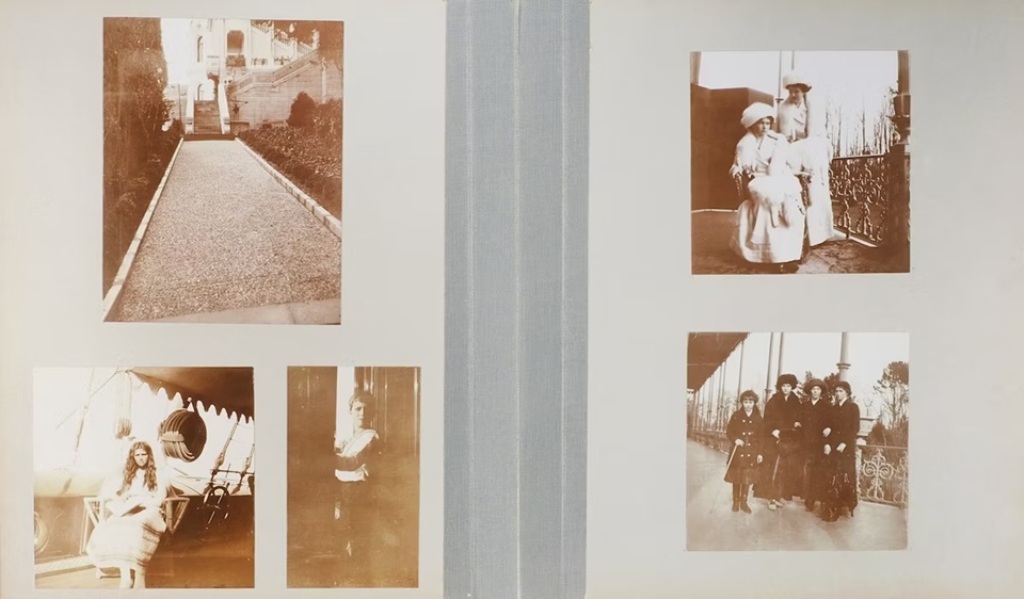
Empress Alexandra Feodorovna’s photo album sells for 13 million rubles at auction

On 15th October 2025, I reported that a rare photo album belonging to Empress Alexandra Feodorovna (1872-1918) was being auctioned on 23rd October 2025, at the Literary Fund Auction House (Litfond) in St. Petersburg.

The opening bid for the album was 10 million rubles [$125,600 USD], but collectors bidding against one another, managed to drive the price even higher. The photo album sold for 13 million rubles [$163,000 USD], to an unknown Russian bidder.

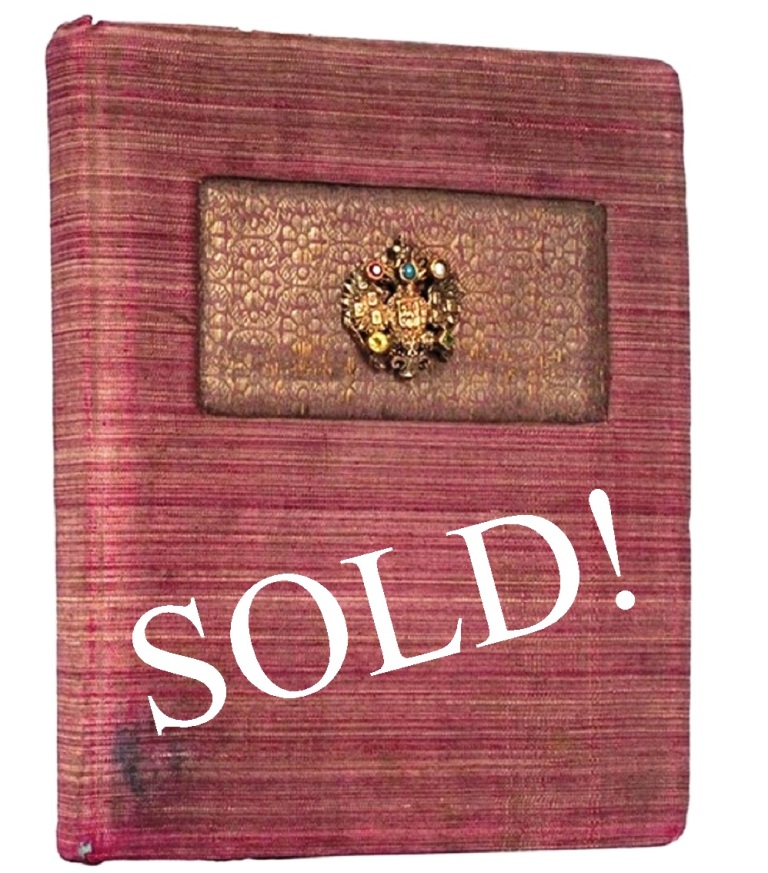
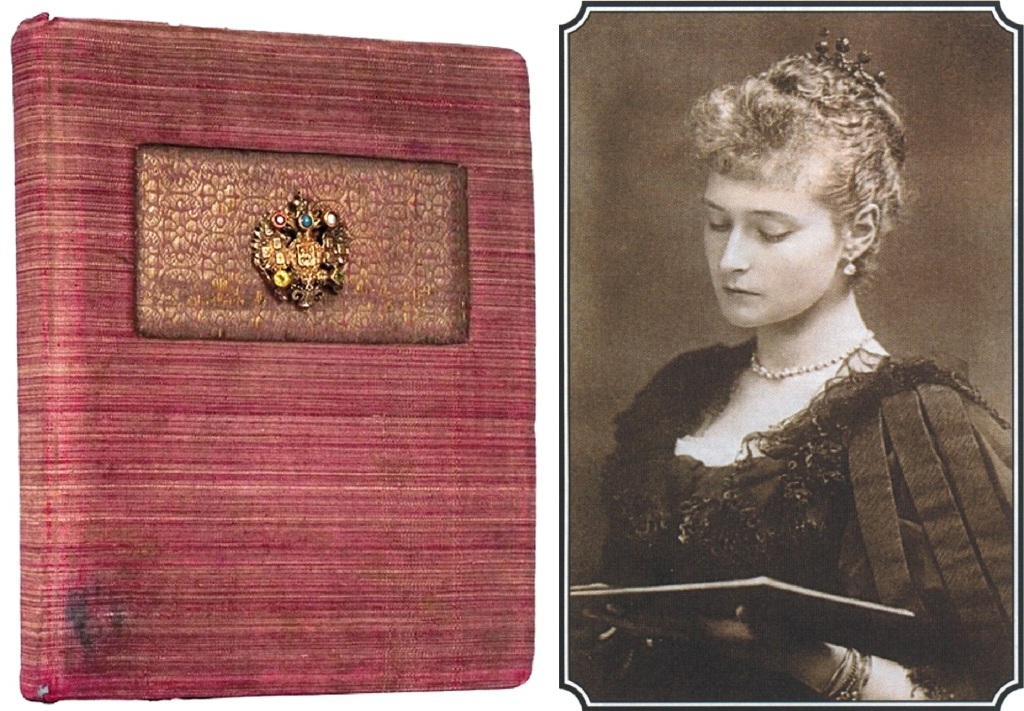
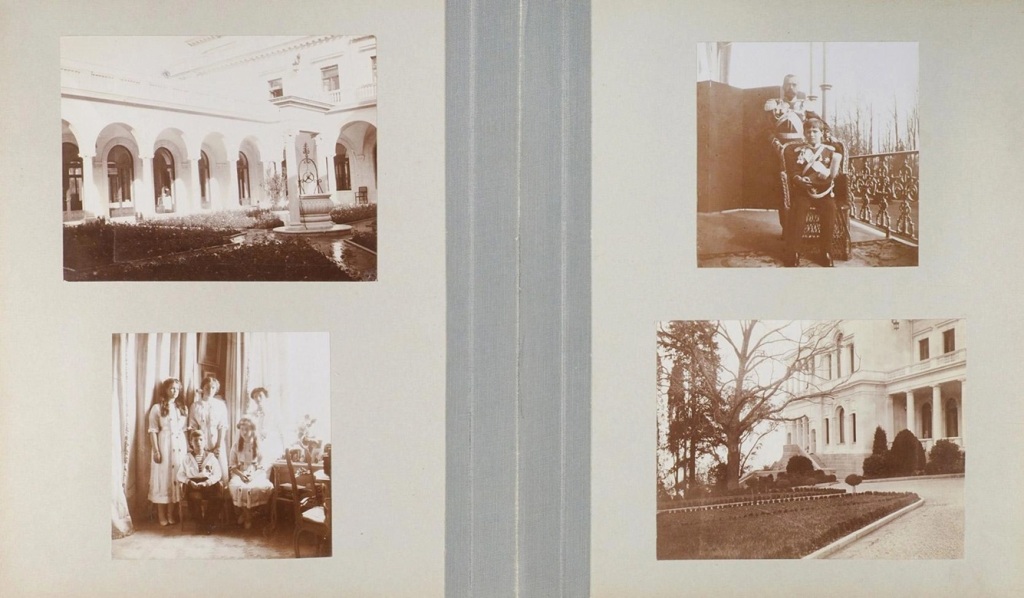
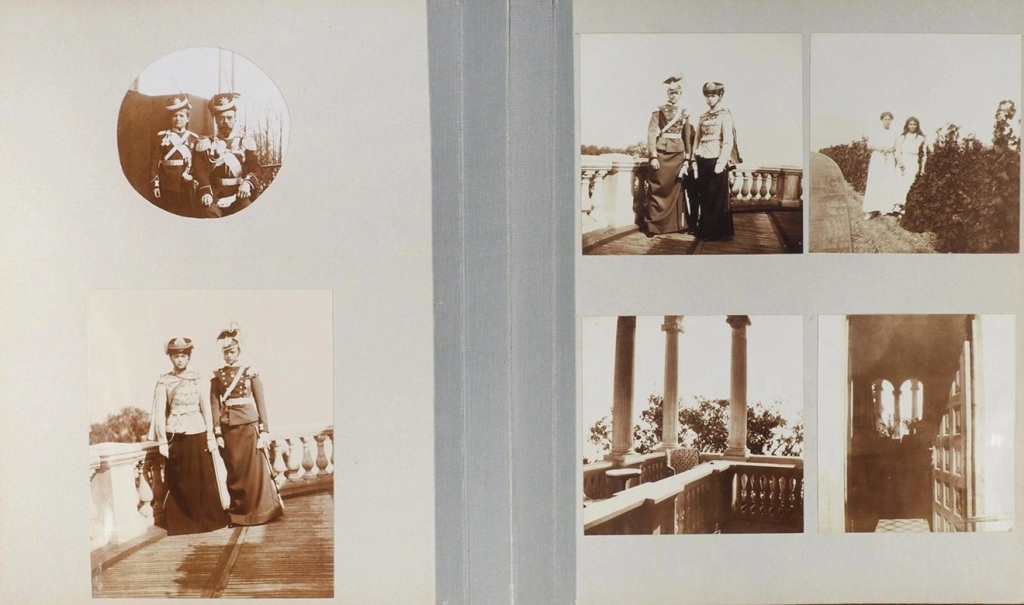
The lilac-coloured album includes 12 pages with 26 photographs of the Imperial Family taken by the Empress herself, using her Kodak Brownie Box camera. The photos were taken in 1913-1914 in the Crimea and Tsarskoye Selo.  The size of the album is 24.5×20 cm, the photographs are from 8.5×5.3 to 11.8×9.3 cm. All the photos were personally pasted into the album by Alexandra Feodorovna and Emperor Nicholas II.

This album is one of only two of the Imperial Family’s photo albums, known to the author of this article, that was not included in the state archival funds. The other photo album belonging to Emperor Nicholas II in the Museum of Local Lore in Zlatoust, which is situated 270 kilometers (168 mi) south of Ekaterinburg. 

On a personal note, I am happy that the photo album was purchased by a Russian buyer, rather than sold abroad to a foreign collector. Let us hope, that the album will be gifted to a museum – preferably the Alexander Palace, from where it was taken in August 1917, when the Imperial Family were sent into exile.

FURTHER READING:

Photo album belonging to Russia’s last Empress to be auctioned in St. Petersburg + PHOTOS

© Paul Gilbert. 29 October 2025

Photo album belonging to Russia’s last Empress to be auctioned in St. Petersburg

On 23rd October 2025, a unique photo album of the last Russian Empress Alexandra Feodorovna (1872-1918), the wife of Nicholas II, will be put up for auction at the Literary Fund Auction House (Litfond) in St. Petersburg. The starting bid is set at 10 million rubles [$127,000 USD], although it is expected to sell for much more.

The album includes 12 pages with 26 photographs of the Imperial Family taken by the Empress herself, using her Kodak Brownie Box camera. The photos were taken in 1913-1914 in the Crimea and Tsarskoye Selo.  The size of the album is 24.5×20 cm, the photographs are from 8.5×5.3 to 11.8×9.3 cm. All the photos were personally pasted into the album by Alexandra Feodorovna and Emperor Nicholas II.

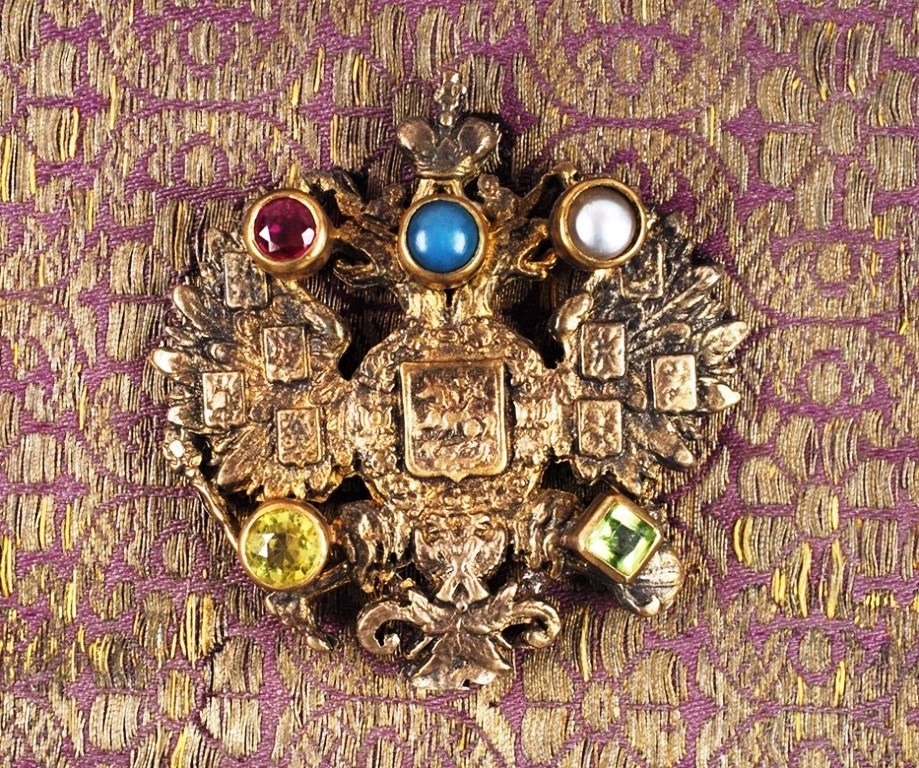
The lilac-coloured cover of the album is decorated with a metal coat of arms of the Russian Empire, inlaid with five precious stones – ruby, turquoise, pearls, demantoid and chrysolite, each of which symbolizes one of the five children of the August Couple.

The Empress purchased the album at a charity bazaar in Yalta in 1913, a record of which is recorded in her own handwritting has been preserved on the inside front cover. Until 1917, the album was in the Alexander Palace in Tsarskoye Selo, and then was taken by Alexandra Feodorovna into exile to Tobolsk.

In the autumn of 1917, Alexandra presented the album to the dentist of the Imperial Family, Sergei Sergeievich Kostritsky (1875-1944). After the 1917 Russian Revolution, Kostritsky found himself abroad, in Nice, France, where he befriended members of the His Majesties Life Guards Cavalry Regiment. In 2003, the photo album was returned to Russia by Nikita Tuchkov, and three years later it was acquired by a private collector.

This album is one of only two of the Imperial Family’s photo albums, known to the author of this article, that was not included in the state archival funds. The other photo album belonging to Emperor Nicholas II in the Museum of Local Lore in Zlatoust, which is situated 270 kilometers (168 mi) south of Ekaterinburg. 

Below, are six pages from the album, featuring just some of the 26 photos:

Sergey Burmistrov, who serves as General Director of Litfond, noted: “The starting price is high, but this album has probably generated the most interest in this auction, one of great historial significance. We have informed both the state archives and museums in St. Petersburg, Moscow and Crimea, and we do not rule out that they may be interested in bidding on this album.”

Let us all hope, that this photo album, which has such a close personal connection to Empress Alexandra Feodorovna, does not end up in another private collection, but instead, is purchased by or for one of the museums or palaces, where it will be put on display for visitors to see and researchers to study.

AUCTION RESULTS – 23rd October 2025

Empress Alexandra Feodorovna’s photo album sells for 13 million rubles at auction

© Paul Gilbert. 15 October 2025

***

While my research is dedicated to clearing the name of Russia’s much slandered Tsar, I am also actively looking for articles and news stories on the Romanovs, from Russian archival and media sources, which may be of interest to my readers.

In exchange for this 18-page booklet, please consider making a small $5 or $10 donation in aid of my research. These donations are of great assistance in helping me offset the cost of obtaining and translating documents from Russian archival sources, which are often paid for out of my own pocket. It is these documents which help present new facts and information on the life and reign of Nicholas II. In addition, my research continues to debunking many of the myths and lies which exist more than a century after his death and martyrdom.

Please note, that there is NO obligation, thank you for your consideration!

CLICK HERE TO MAKE A DONATION

The favourite tunes of Nicholas II and his Family – Part 3

This third video features another tune, which was apparently a favourite of Emperor Nicholas II and his Family. Click on the image above to listen to Осенний сон / Autumn Dream, a waltz. [Duration: 3 minutes, 27 seconds].

The music of the waltz “Autumn Dream” was written by the English pianist and composer Archibald Joyce (1873-1963) in 1908, who wrote a whole series of waltzes loved by listeners and even received the unspoken title of “King of Waltzes”.

In 1909, he came to Russia where he performed concerts, after which “Autumn Dream” immediately gained popularity. A few years later, records were released in huge editions, and “Autumn Dream”, along with other popular works by Joyce, began to be referred to as “old Russian waltzes”.

Several attempts were made to write lyrics to this music. The first to do this was Prince Feodor Nikolaevich Kasatkin-Rostovsky (1875-1940), who dedicated poems to Baroness Olga Nikolaevna Taube. But they did not receive recognition among the public. In the pre-war years, other poets tried to write lyrics to this opera, but the most popular was the version of Vasily Ivanovich Lebedev-Kumach (1898-1949).

NOTE: the translation is not perfect, but it will give you the gist of the lyrics – ENJOY!

The autumn wind blows off the leaves,
All nature is full of sadness.
Only hope does not die —
The heart knows: spring will come.

And sorrows, and bad weather —
Everything will pass like autumn rain.
There will be joy, there will be happiness,
And the warm sun will rise!

You have had enough of crying, maples, birches,
You can’t collect old leaves.
It’s enough to shed big tears for you,
The spring day will come again.

Soon the autumn of separation will pass,
The green leaf will grow again,
Dear hands will embrace us again,
There will be joy, love will come.

Set against the background of this opera are a number of images (some of which have been photoshopped) depicting Emperor Nicholas II and Empress Alexandra Feodorovna set against the autumn colours of the Alexander Park at Tsarskoye Selo. In addition are vintage newsreels and photos of the Imperial Family.

The vocals of this waltz is performed by the famous Russian soloist Irina Krutova, who perform Russian romances and classical music, accompanied by soloists of the State Academic Russian Concert Orchestra. The video was created by Irina Koroteeva (Moscow).

NOTE: Stay tuned for additional videos, featuring more favourite tunes of Nicholas II and his family.

More favourite tunes of Nicholas II and his family:

Part 2 – Я ехала домой / I was on my way home

Part 1 – Утро туманное (Misty Morning)

© Paul Gilbert. 4 March 2025

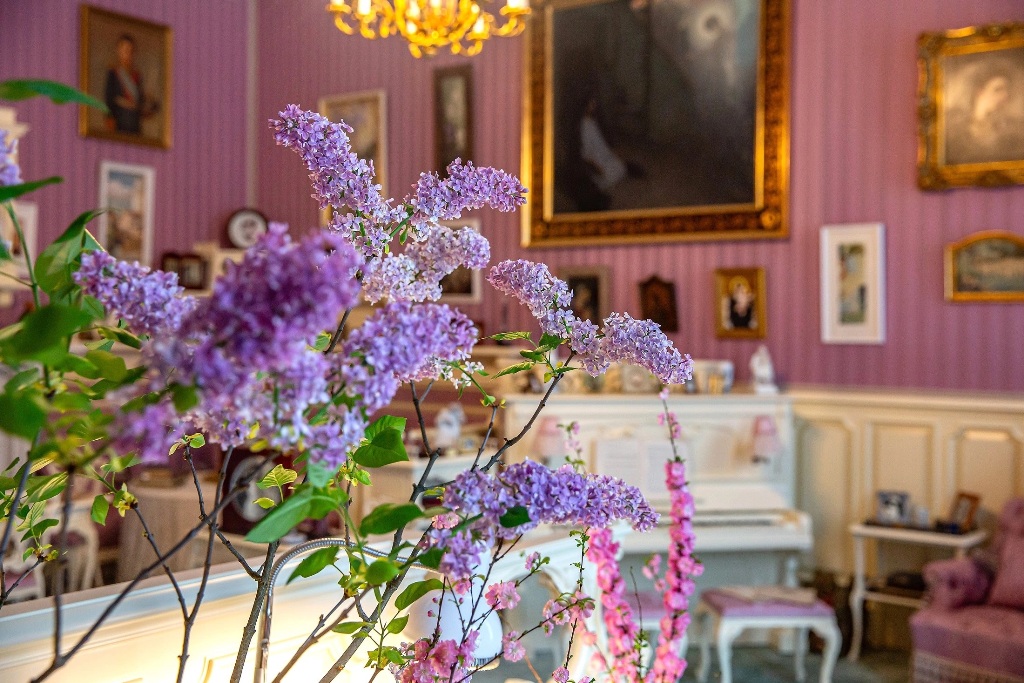
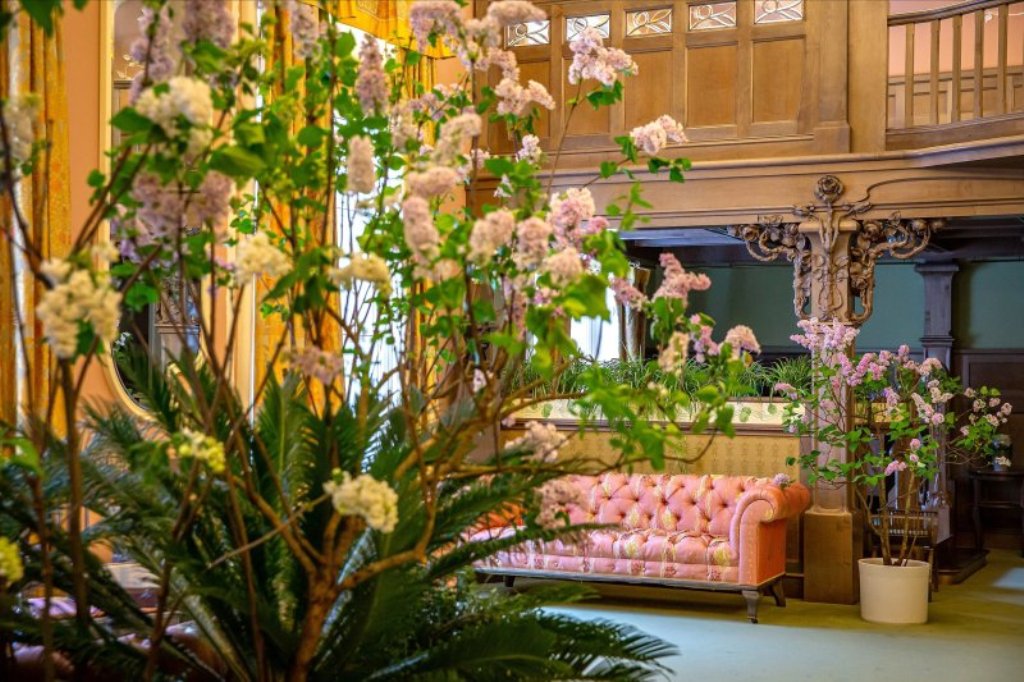
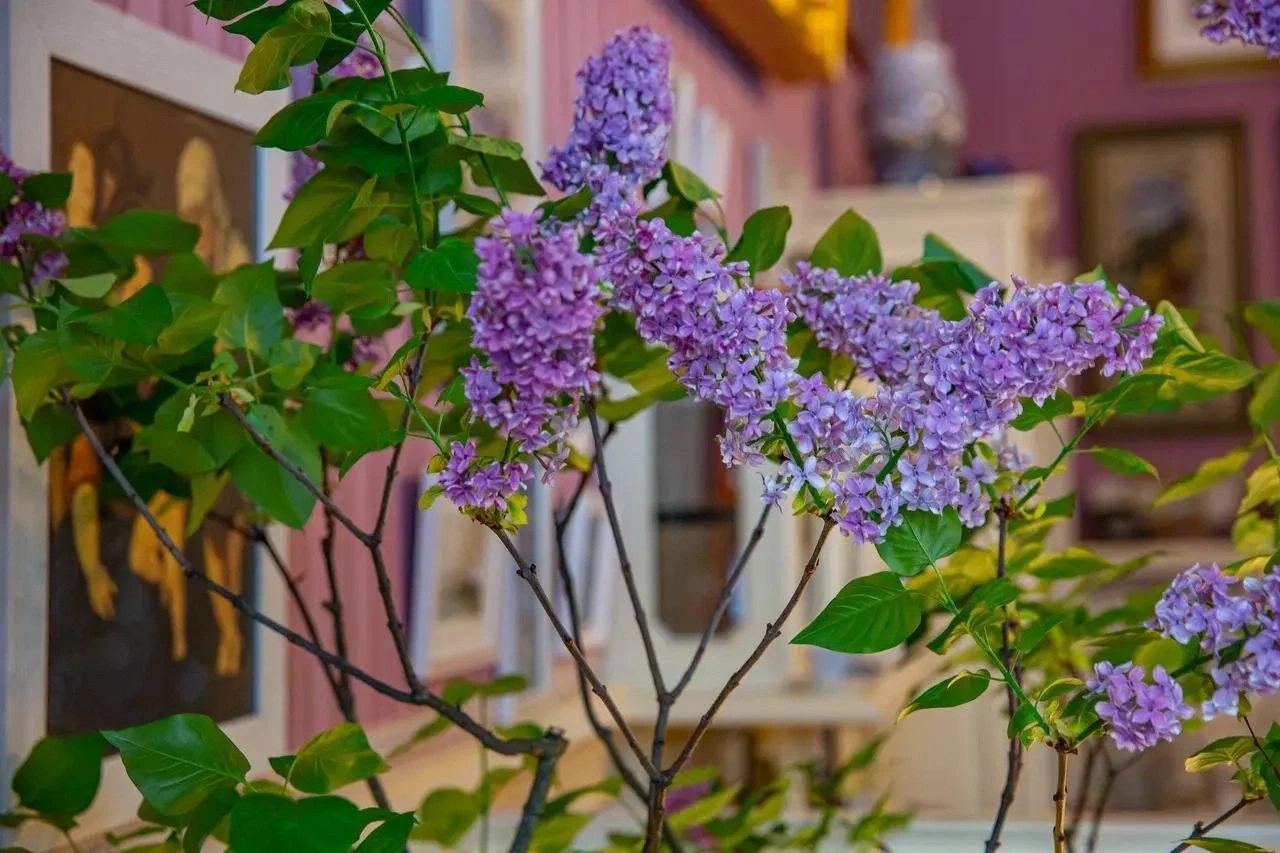
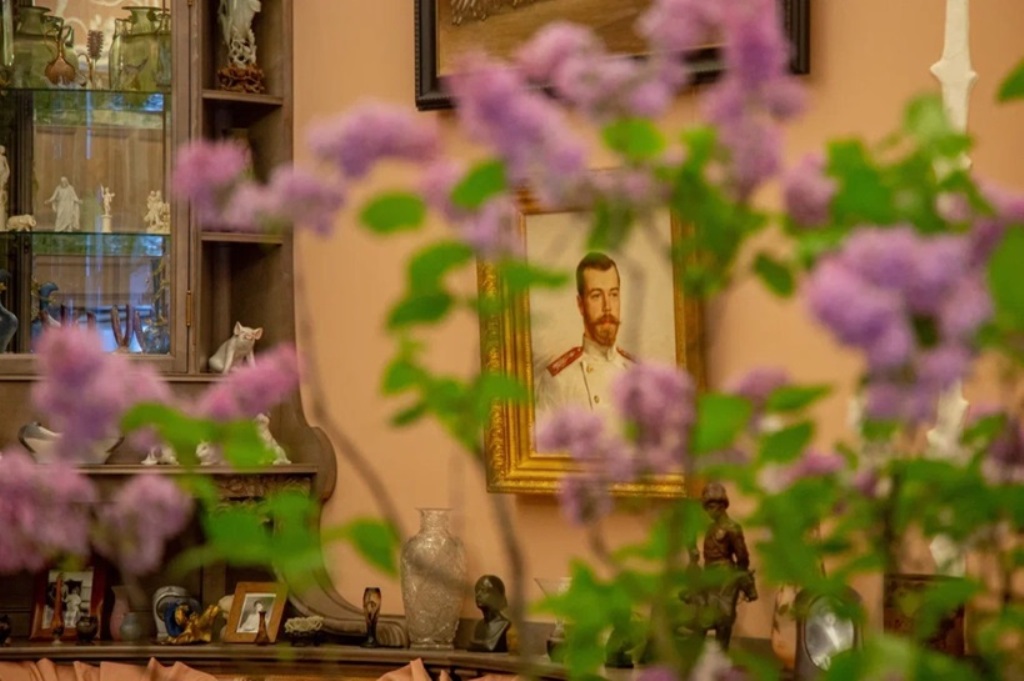
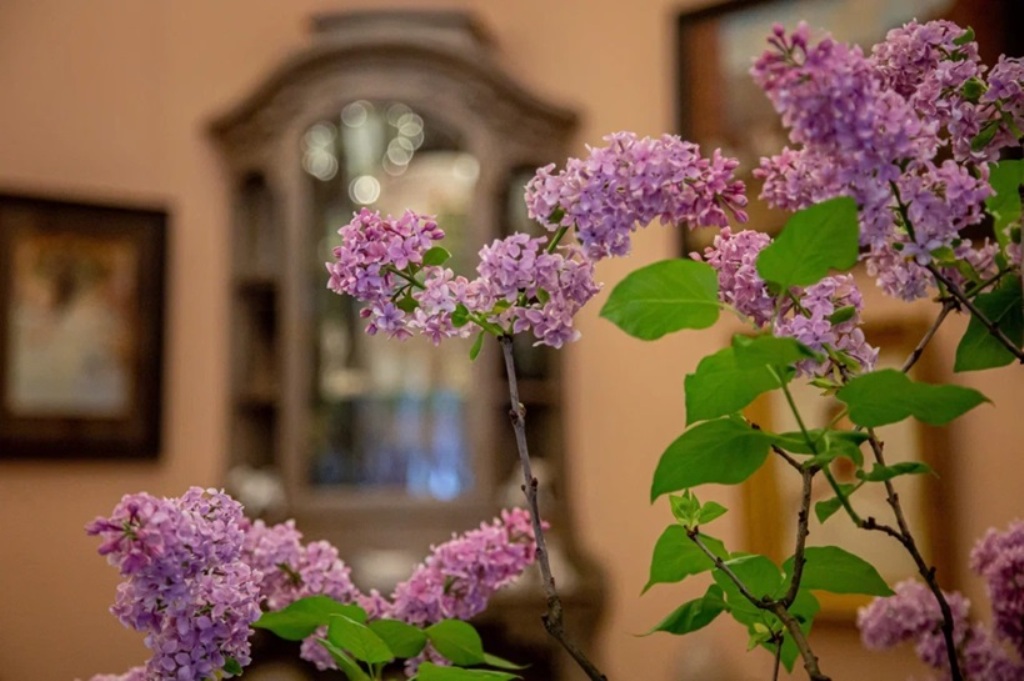
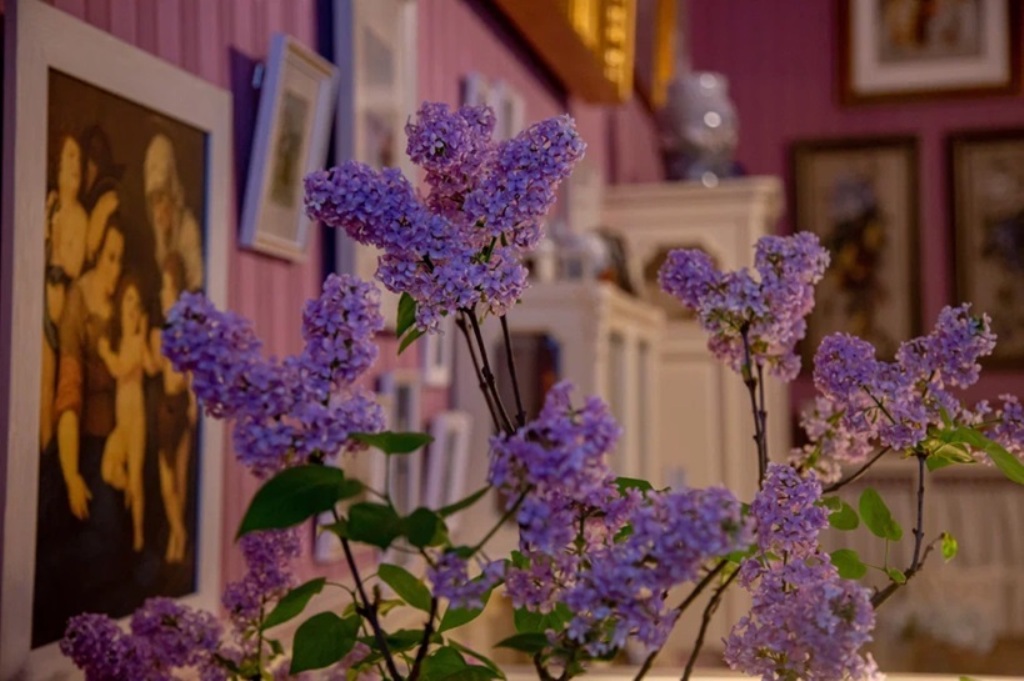
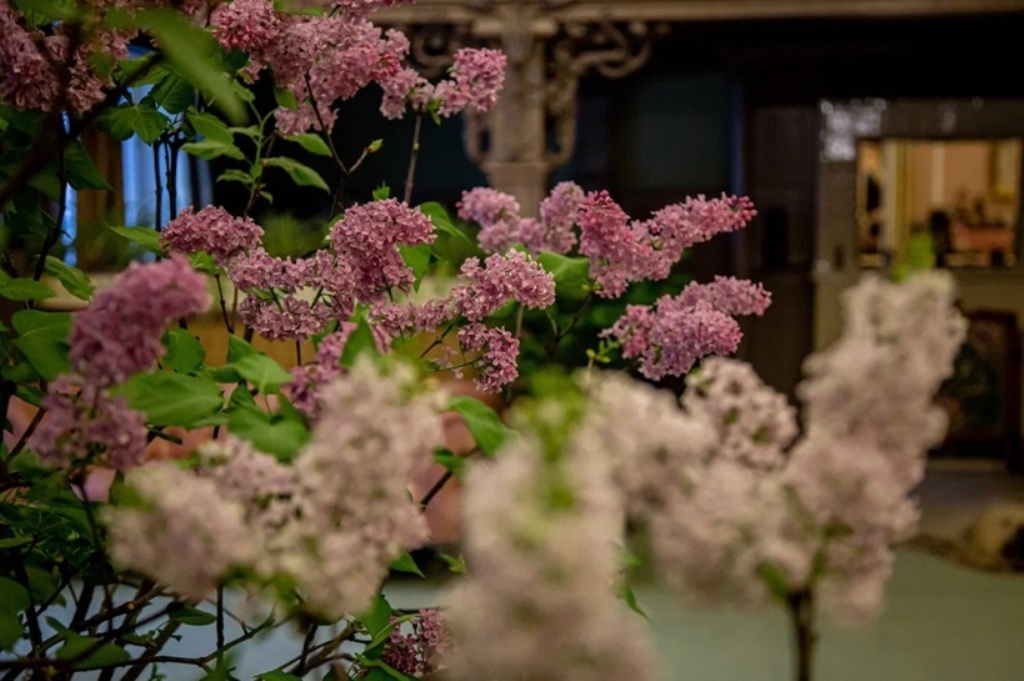
Alexander Palace filled with the scent of lilacs

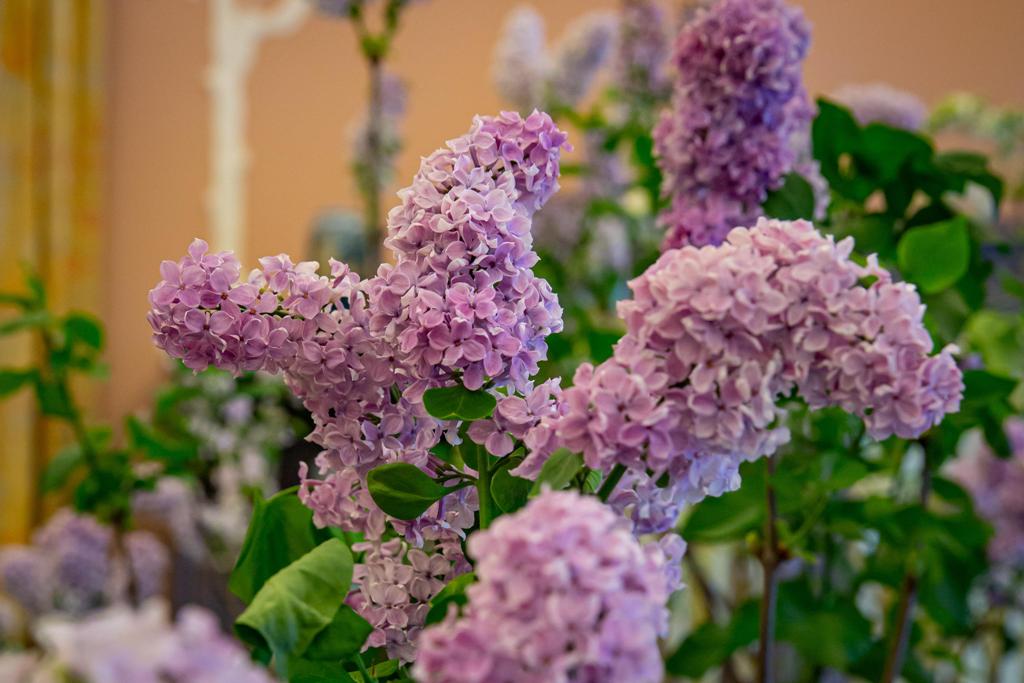
Lilacs in the Maple Drawing Room of the Alexander Palace
Photo © Tsarskoye Selo State Museum

In the middle of winter, the Alexander Palace at Tsarskoye Selo is again decorated with blooming lilacs. Their fragrant aroma fill the former interiors of Empress Alexandra Feodorovna, a beautiful reminder of the Imperial Family and their favourite Imperial Residence.

On 23rd January 2025, of the 16 lilac bushes in the greenhouses near the Alexander Palace, six were moved to the palace halls, the rest will be moved from the greenhouses in stages, as they bloom. The tradition of placing lilacs in the former rooms of the last Russian Empress began in 2022, the first time the aroma of her favourite flowers filled the interiors of the palace in more than 100 years.

Lilacs of the historical varieties, such as “Memories of Ludwig Späth” and “Sensation” are exhibited in the Mauve Boudoir and Corner Drawing Rooms. Five bushes form a luxurious “lilac cloud” with delicate pink and purple flowers. Lilacs were exposed at the peak of flowering, this year so their distinctive aroma is especially noticeable. Visitors can admire lilacs in the interiors of the Alexander Palace until April.

Lilacs in the Maple Drawing Room of the Alexander Palace
Photo © Tsarskoye Selo State Museum

“Documents have been preserved indicating that the Tsarskoye Selo greenhouses diligently carried out the task of creating a spring atmosphere during the gloomy winter months. In 1898, by order of the gardener Zort, lilacs, double-cherries, hydrangeas and lilies of the valley arrived in Tsarskoye Selo for the winter decoration of the palace. So flowers in the Alexander Palace are an integral part of the interior, and we are talking not only about the rich floral decoration of the walls – roses, orchids, dandelions, but also about the blooming flowers as well,” said Olga Filippova, the chief curator of the parks of the Tsarskoye Selo State Museum-Reserve.

Lilacs in the Mauve Boudoir of the Alexander Palace
Photo © Tsarskoye Selo State Museum

The process of preparing lilacs for “premature” flowering begins in the fall. In accordance with the methods from gardening books of the 19th century, the employees of the greenhouse complex plant bushes in special boxes, and in December they set the plants up for awakening. The care process is extremely painstaking: every forty minutes during the working day, staff need to perform the necessary manipulation. One of the main conditions is strict compliance with the temperature and humidity.

Lilacs in the Maple Drawing Room of the Alexander Palace
Photo © Tsarskoye Selo State Museum

Empress Alexandra Feodorovna loved flowers – the rooms in her private half were decorated with fresh flowers all year round. Floral themes were also present in the upholstery of the walls, furniture, as well as the stucco reliefs on the walls and ceilings. The Empress was especially fond of lilacs. It is no coincidence that in her Mauve Boudoir [aka Lilac Study] the furniture and walls were decorated with silk of lilac shades, Alexandra Feodorovna also preferred lilac tones in her clothes, and perfume with the aroma of lilac.

Recall that the first 13 interiors of the Alexander Palace – the private rooms of Nicholas II and Alexandra Feodorovna – opened to the public after restoration in August 2021, in February 2023 the restoration of the Marble Hall with a slide was completed. The interiors of the palace-museum are complemented all year round with decorative indoor plants and cut flowers.

© Paul Gilbert. 23 January 2025

The favourite tunes of Nicholas II and his family – Part 2

This second video features another tune, which was apparently a favourite of Emperor Nicholas II and his Family. Click on the image above to listen to Я ехала домой / I was on my way home, a romanice, which tells us a short story through the eyes of Empress Alexandra Feodorovna’s heart. [Duration: 3 minutes, 11 seconds]

The romance “I Was on my way home”, composed by Marie Poiret in 1901 or 1905, is about the love and tenderness of a woman’s heart. The romance became very famous and was part of the repertoire of many performers of the time, including Alexander Vertinsky, Keto Dzhaparidze, Rada Volshaninova, Alla Bayanova among others.

Maria Yakovlevna Poiret (1864-1933) was a Russian dramatic actress, journalist, poet, writer and composer. Her fame has reached our time as the author of several romances, including “I was on my way home”. She also wrote the lyrics to such tunes as “Swan Song”, “I Don’t Want to Die”, as well as to the music of other composers.

NOTE: the translation is not perfect, but it will give you the gist of the lyrics – ENJOY!

I was going home, my soul was full

Unclear for myself, some kind of new happiness.

It seemed to me that everyone with such a fate,

They looked at me with such affection.

I was on my way home… Two-horned moon

I looked out of the windows of the boring car.

The distant annunciation of the morning bells

He sang in the air like a gentle string…

I was driving home, I was thinking about you,

My thought was anxiously both confused and torn.

A sweet slumber touched my eyes.

Oh, if only I had never woken up again…

Set against the background of this romance are a number of images depicting Empress Alexandra Feodorovna riding on the Imperial Train [these images have been photoshopped]. In addition are vintage photos of Nicholas and Alexandra. The vocals of this haunting romance is performed by the popular contemporary Russian singer Irina Krutova. The video was created by Irina Koroteeva (Moscow).

NOTE: Stay tuned for additional videos, featuring more favourite tunes of Nicholas II and his family.

More favourite tunes of Nicholas II and his family:

Part 1 – “Утро туманное” (Misty Morning)

© Paul Gilbert. 19 January 2025

Nicholas II’s stay at the Russian Embassy in Paris, 1896

NOTE: the following is an excerpt from the original full-length version (researched from Russian and French sources), which will be published in the No. 15 – Summer 2025 issue of my semi-annual periodical SOVEREIGN: The Life and Reign of Emperor Nicholas II. The full article will feature expanded text, with more facts and information, and illustrated with additional photos. This issue is scheduled to be released in June 2025 – PG

***

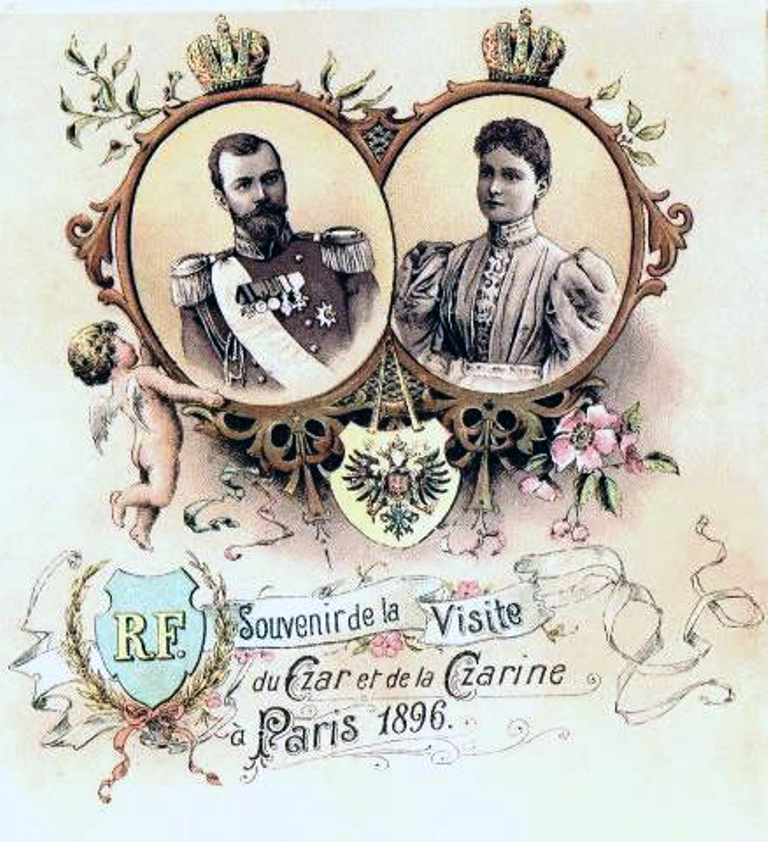
During the autumn of 1896, Emperor Nicholas II made a tour of Europe, which included visits to Denmark, Germany, Austria, France and Great Britain. He was accompanied by Empress Alexandra Feodorovna and their first child Grand Duchess Olga Nikolaevna, who was just shy of her first birthday.

The Imperial Family arrived in Paris on 5th October 1896 For the next three days, the Embassy of the Russian Empire served as their Imperial Residence. Russia’s ambassador to France at the time was Baron (since 1894) Arthur Freiherr von Mohrenheim (1824-1906), who held the post from 8 February 1884 – 18 November 1897.

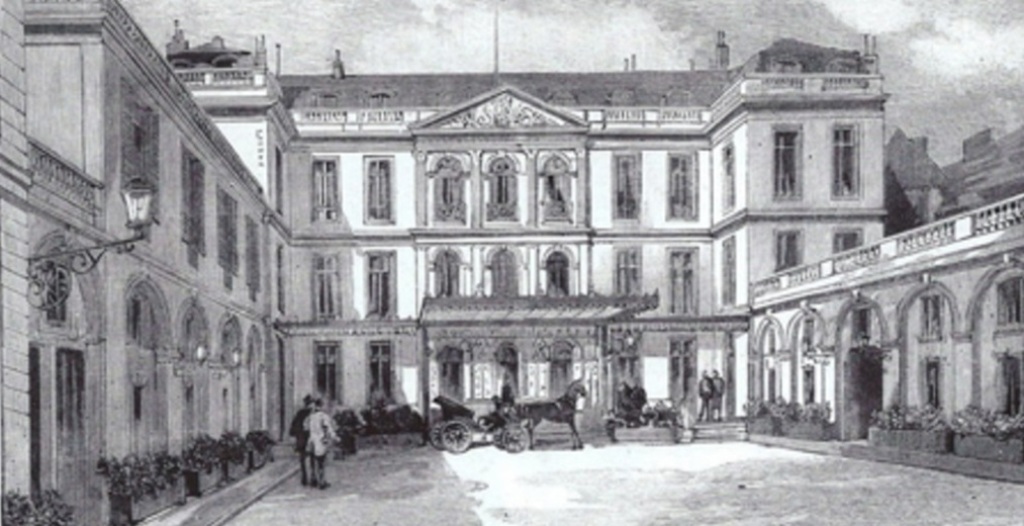
In anticipation of the August visit, the ambassador, did everything he could to make the residence look like a palace. For three days, the house on the rue de Grenelle became the scene of the Franco-Russian Summit. The words of the revolutionary Marseillaise were sung, followed by those of the Russian Imperial Anthem God Save the Tsar!.

PHOTO: the Embassy of Russian Empire (as it looked in 1896)
situated at 79 rue de Grenelle in the 7th arrondissement, Paris

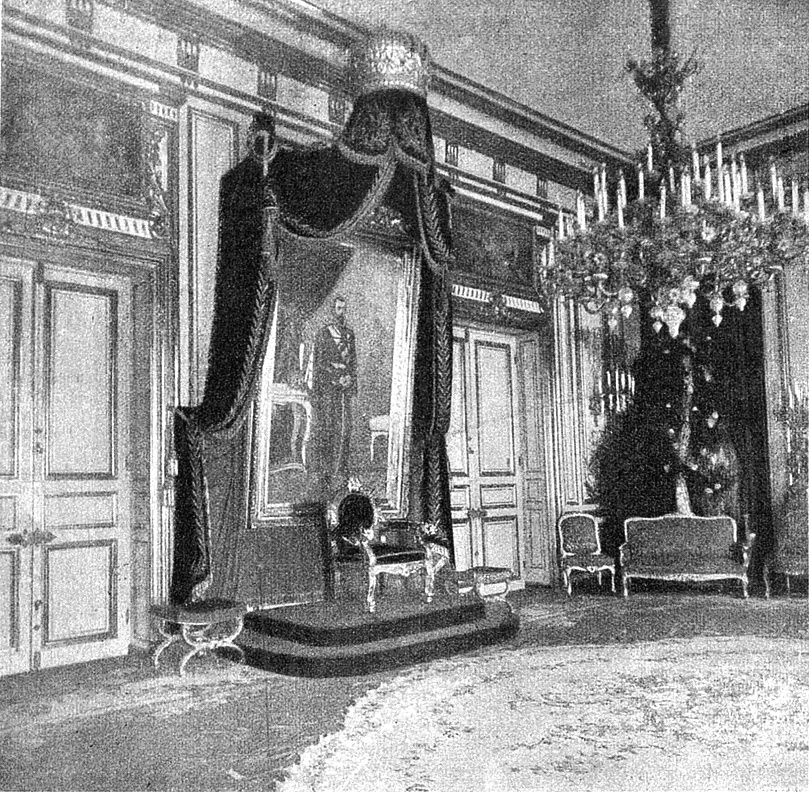
A lavish suite of rooms – which included a Throne Room – were decorated to the highest standards, all befitting the newly crowned Emperor and Empress of Russia.

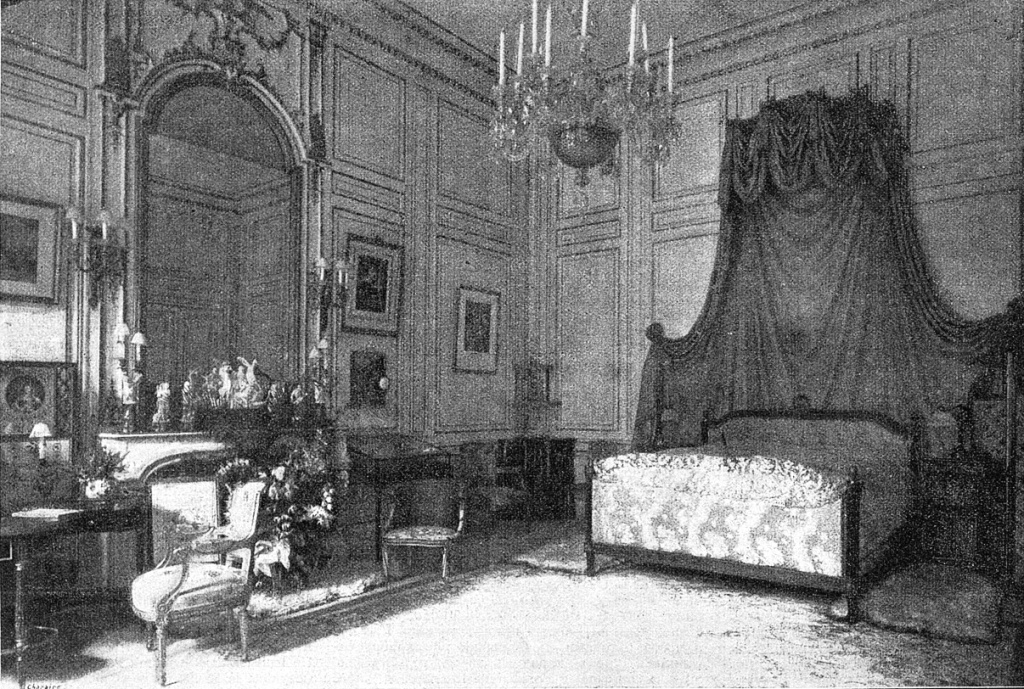
Nicholas II’s and Alexandra Feodorovna’s apartments were located on the main floor of the Embassy. Next to the Small Salon, decorated with busts of Their Majesties, was the Empress’s Boudoir, decorated with magnificent carpets; then – the Emperor’s Study and the Reception Hall, decorated in green silk. The Imperial Bedroom’s were located on the right side of the main floor. The Empress’s Bedroom, was modestly and at the same time very elegantly furnished, decorated in white and gold; with mauve [her favourite colour] coloured furniture made of woven silk.

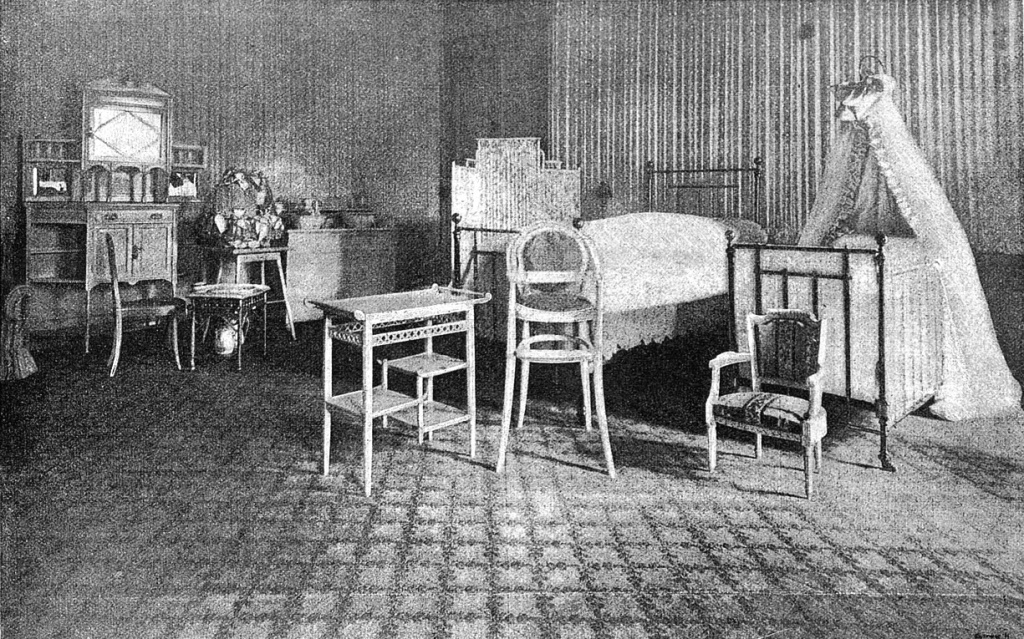
On the second floor was Grand Duchess Olga Nikolaevna’s bedroom, which contained a small crib with white curtains, next to an iron bed for the wet nurse; furnished with white lacquered furniture.

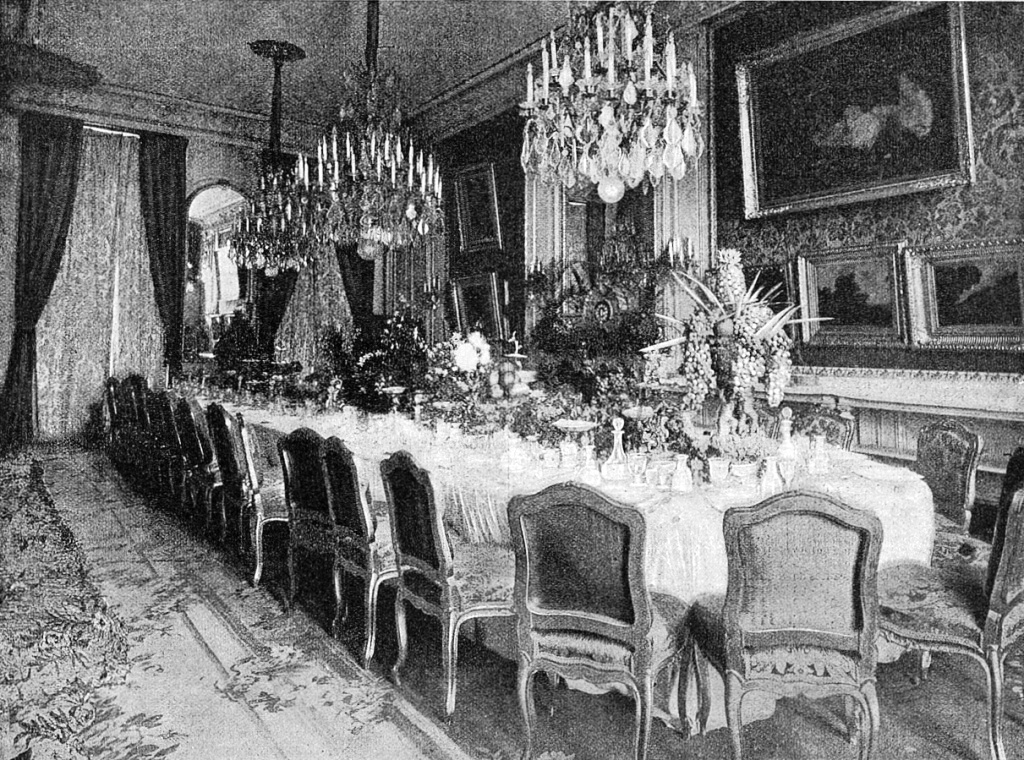
The following illustrations of the luxurious interiors of the Imperial Family in the Embassy of the Russian Empire, were originally published in the St. Petersburg newspaper Neva and World Illustration magazine, 1896.

PHOTO: the throne Room, note the portrait of Nicholas II behind the throne

PHOTO: the Imperial Bedroom

PHOTO: Grand Duchess Olga Nikolaevna’s bedroom

PHOTO: the Dinging Room

***

The building was designed by Robert de Cotte, architect of King Louis XIV, and built between 1711 and 1713 for Madeleine-Diane de Bautru de Vaubrun, the Duchesse d’Estrées (1668-1753). After belonging to several owners, it was purchased by the Russian Imperial Government in 1863 and became the Embassy of the Russian Empire in France.

Following the purchase, the Russian government made extensive changes to the former mansion and it’s interiors. Both Emperor Alexander II (1867) and his grandson, Nicholas II (1896), stayed in the residence when they visited Paris.

In 1977 the Russian Embassy was moved to another building, while the old embassy building became the residence of the Ambassador of the Russian Federation to France. Today, it is known as the Hôtel d’Estrées, and is classified as a historic monument of France.

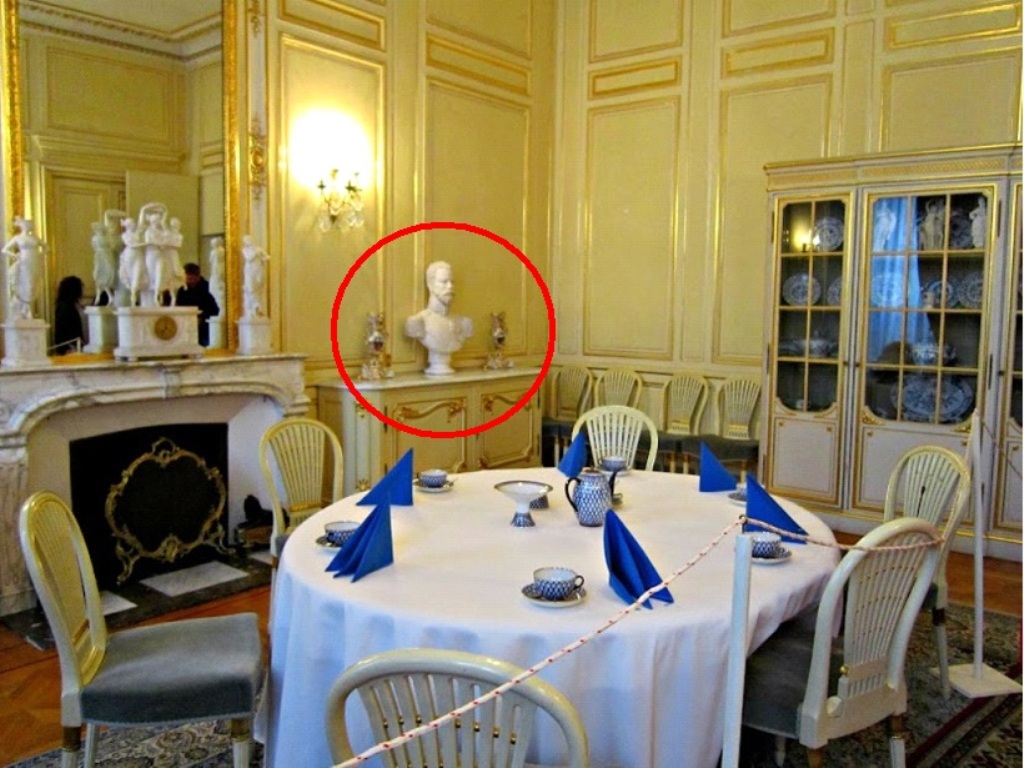
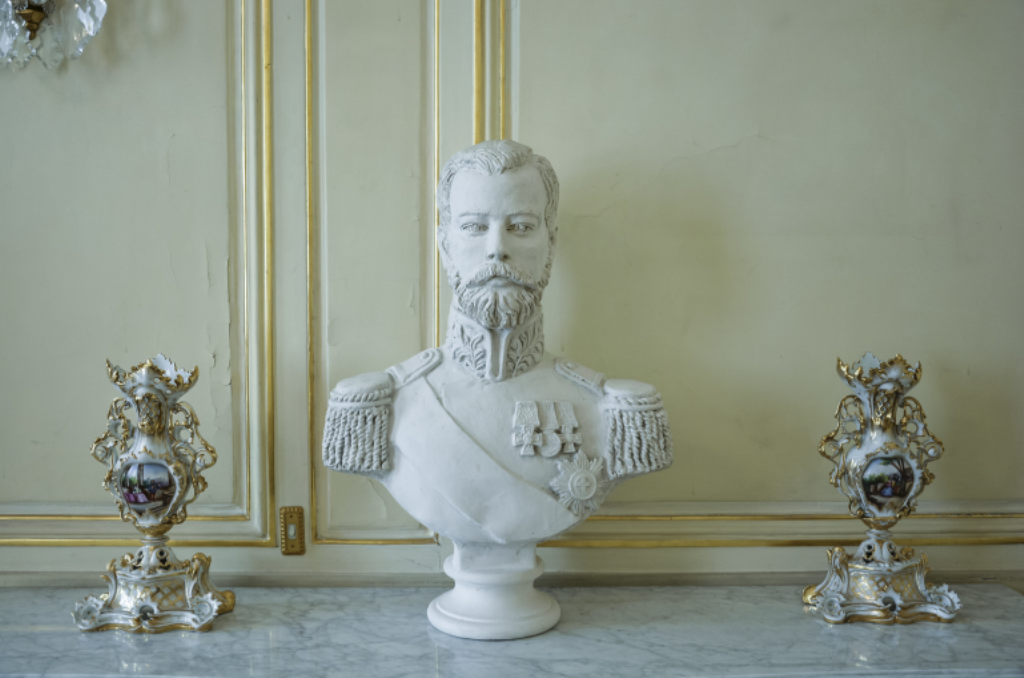
PHOTO: The White Salon, which served as the Imperial Bedroom.
Note the bust of Nicholas II (circled in red), on a side-table, next to the fireplace
.

PHOTO: a bust of Emperor Nicholas II now rests on a side-table, next to the fireplace in the White Salon, formerly the Imperial Bedroom, during the Imperial Family’s visit in October 1896.

The interiors of the former Imperial Apartments of Emperor Nicholas II and Empress Alexandra Feodorovna have survived to the present day. Among the modern-day interiors of the Russian Ambassador’s residence, the Red Salon, which was used for official ceremonies, and was used as the Throne Room by Nicholas II, the Bleu (Blue) Salon  was used as his private study, while the White Salon served as the Imperial Bedroom during the August couple’s visit to Paris in 1896.

Today, the former Embassy is known as the Hôtel d’Estrées, and official residence of the Russian Ambassador. Over the years, the building has been the venue for receptions and exhibitions, hosted by the Ambassador. On 3rd September 2013, the Russian Ambassador officially opened an exhibition dedicated to the 400th anniversary of the house of Romanov

Click HERE for a VIRTUAL TOUR of the Residence of the Russian Ambassador

© Paul Gilbert. 30 November 2024

130th anniversary of the Wedding of Nicholas II and Alexandra Feodorovna, 1894

PHOTO: Wedding of Nicholas II and Alexandra Feodorovna
Painted in 1895 by the Danish artist Laurits Tuxen (1853-1927)
From the collection of the State Hermitage Museum, St. Petersburg

NOTE: the following is an excerpt from the original full-length version (researched from Russian sources), which will be published in the No. 14 – Winter 2025 issue of my semi-annual periodical SOVEREIGN: The Life and Reign of Emperor Nicholas II. The full article will feature expanded text, with more facts and information, and illustrated with additional photos. This issue is scheduled to be released in December 2024 – PG

***

Today 27th (O.S. 14th) November – marks the 130th anniversary of the wedding of Emperor Nicholas II and Grand Duchess Alexandra Feodorovna[1] in St. Petersburg.

It was on this day in 1894, that the ceremony took place in the Grand Church (the home church of the Imperial Family) of the Winter Palace in St. Petersburg.

Plans for the wedding, had originally been set for the spring of 1895, followed by a week of public celebrations. The death of Emperor Alexander III on 2nd November [O.S. 20th October], however, put an end to such plans. The date for the wedding was now scheduled to take place on the birthday of Nicholas II’s mother, Maria Feodorovna, which would allowed for court mourning to be somewhat relaxed.

To announce the historic occasion, a manifesto was issued, proclaiming “In the midst of deep sorrow, with which Our hearts and those of all the faithful sons of Russia are filled, may this day be a bright herald of the people’s hopes for the continuation of God’s mercy to Us in the new reign that has come.”

Invitations were sent out, the dress code was determined. Russian gentlemen had to appear in full regimental uniform, officials had to dress in uniforms, according to the Table of Ranks of Peter the Great. Russian ladies had to appear in ceremonial court dresses, and foreign women were invited to appear in evening dresses, with full awards and jewelry.

The wedding was attended by Nicholas’s mother, the recently widowed Dowager Empress Maria Feodorovna, as well as members of the Russian Imperial Family, which included 14 grand dukes, 6 grand duchesses. In addition, were Kings, Queens, Princes and Princesses from more than a dozen royal houses of Europe: Denmark, Greece, Great Britain, Roumania, Prussia, Oldenburg, Hesse and by Rhine, Saxe Coburg, Mecklenburg, Mecklenburg-Stelitz, Baden, Leuchtenberg, and Saxe-Altenburg.

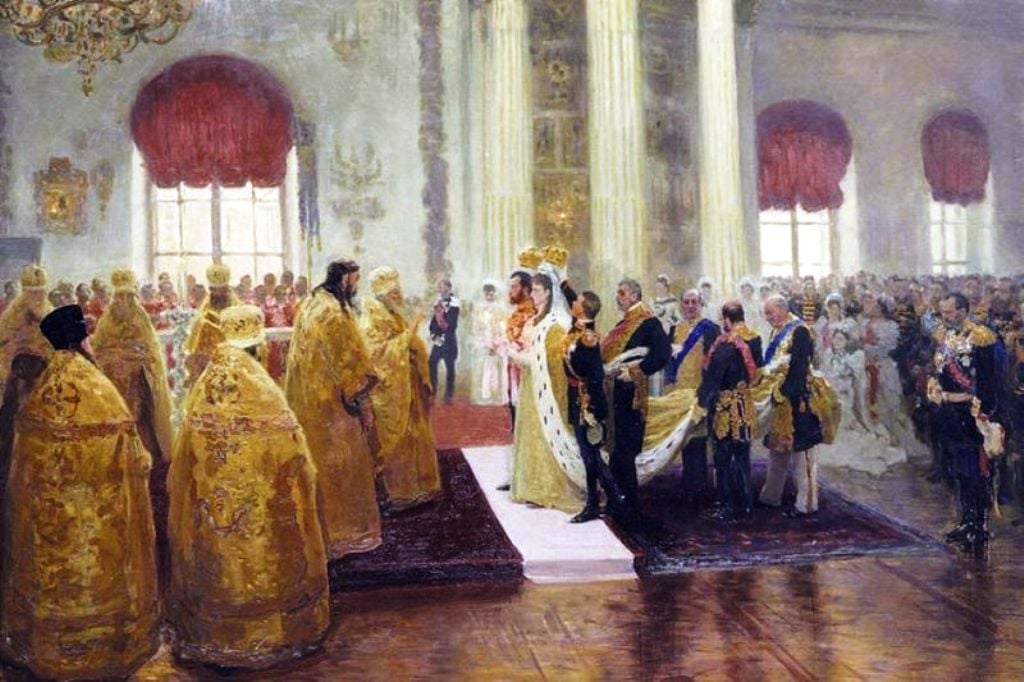
As photography was not permitted during weddings, baptisms, funerals, etc., in Orthodox churches, we only have paintings and illustrations which depict the wedding. This restriction has been somewhat relaxed in more modern times.

PHOTO: Wedding of Nicholas II and Alexandra Feodorovna
Painted in 1894 by the Russian artist Ilya Yefimovich Repin (1844-1930)
From the Collection of the State Russian Museum, St. Petersburg

On the day of the wedding, in the morning, the Emperor left the Anichkov Palace for the Winter Palace in an open landau, accompanied by his brother, Grand Duke Mikhail. The Dowager Empress went in a closed carriage to the Sergiev Palace – the St. Petersburg residence of Grand Duke Sergei and Grand Duchess Elizabeth, from where she escorted Alexandra Feodorovna to the Winter Palace.

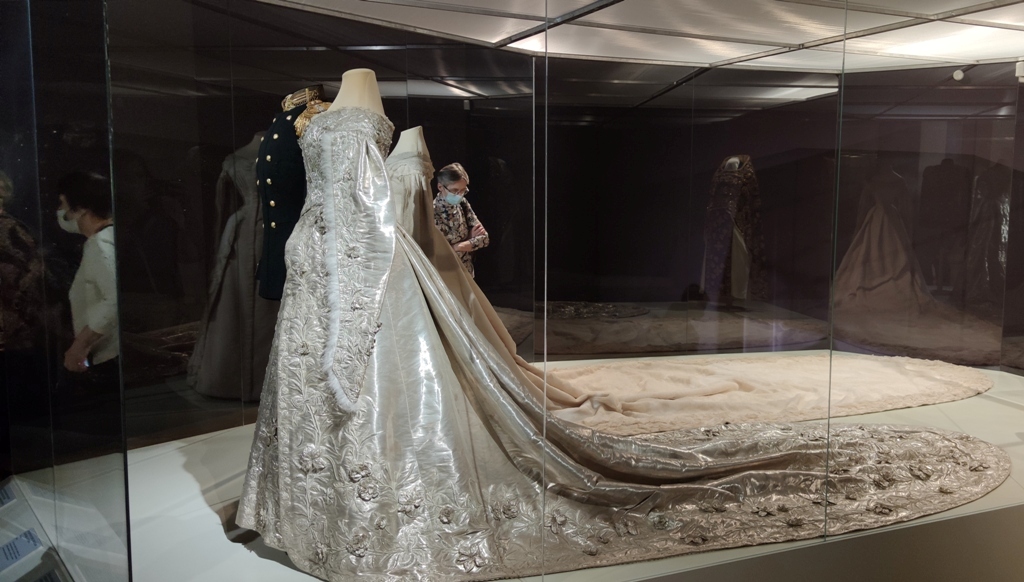
Nicholas Alexandrovich was dressed in the red uniform of a hussar colonel with orders and an orange sash of the Order of Hesse-and-by-Rhine. The bride wore a dress of white silk with silver flowers. Her English Honiton lace veil was created by her maternal grandfather, Prince Albert of Saxe-Coburg and Gotha (1819-1861). This veil was worn at the weddings of the brides mother Princess Alice (1843-1878) and her sisters. Alexandra Feodorovna also wore the traditional Romanov Imperial Wedding Crown, a 475-carat necklace and earrings, which belonged to Catherine the Great. Her ensemble was completed by a golden brocade robe with a long train, lined with ermine. Eyewitnesses at the wedding noted that “she shone with fragile and pure beauty.”

PHOTO: the wedding dress of Alexandra Feodorovna
From the Collection of the State Hermitage Museum in St. Petersburg

It is interesting to note, that the wedding dress of Empress Alexandra Feodorovna was based on a sketch made by her sister Grand Duchess Elizabeth Feodorovna. According to tradition, Romanov brides donated their wedding dresses to the church after their wedding. However, Alexandra Feodorovna, chose to keep hers, which is why her wedding dress has survived to this day, and now in the Collection of the State Hermitage Museum in St. Petersburg.

At noon, the procession of the cross to the Grand Church (the home church of the Imperial Family) began. The cannons of the Peter and Paul Fortress announced the beginning of the ceremony. The procession was led by Dowager Empress Maria Feodorovna, who accompanied her future daughter-in-law. Nicholas Alexandrovich followed behind.

The service was conducted by the imperial confessor and head of the palace clergy, Protopresbyter Ioann Yanyshev (1826-1910). Nicholas II stepped onto the platform, followed by Alexandra Feodorovna. The couple exchanged rings and wedding vows, walked around the lectern, and kissed the cross. After the prayer, Nicholas and Alexandra were declared husband and wife. Church bells rang all over St. Petersburg, while cannons roared from the Peter and Paul Fortress.

Nicholas II recalled that the wedding ceremony was a torment for both him and his young wife: “The thought that our dear, selflessly beloved Papa was not among us, did not leave me during the wedding; I had to exert all my strength not to burst into tears there in the church in front of everyone.”

Thus, the modest wedding ceremony took place in an atmosphere of deep mourning for the deceased Emperor Alexander III. Due to court mourning, there was no reception, nor honeymoon. During the 12 months in which the Imperial Court was in mourning, Nicholas II and Alexandra Feodorovna seldom appeared in public and did not make any journeys. The newly married couple settled together with Dowager Empress Maria Feodorovna in the Anichkov Palace on Nevsky Prospekt in St. Petersburg.

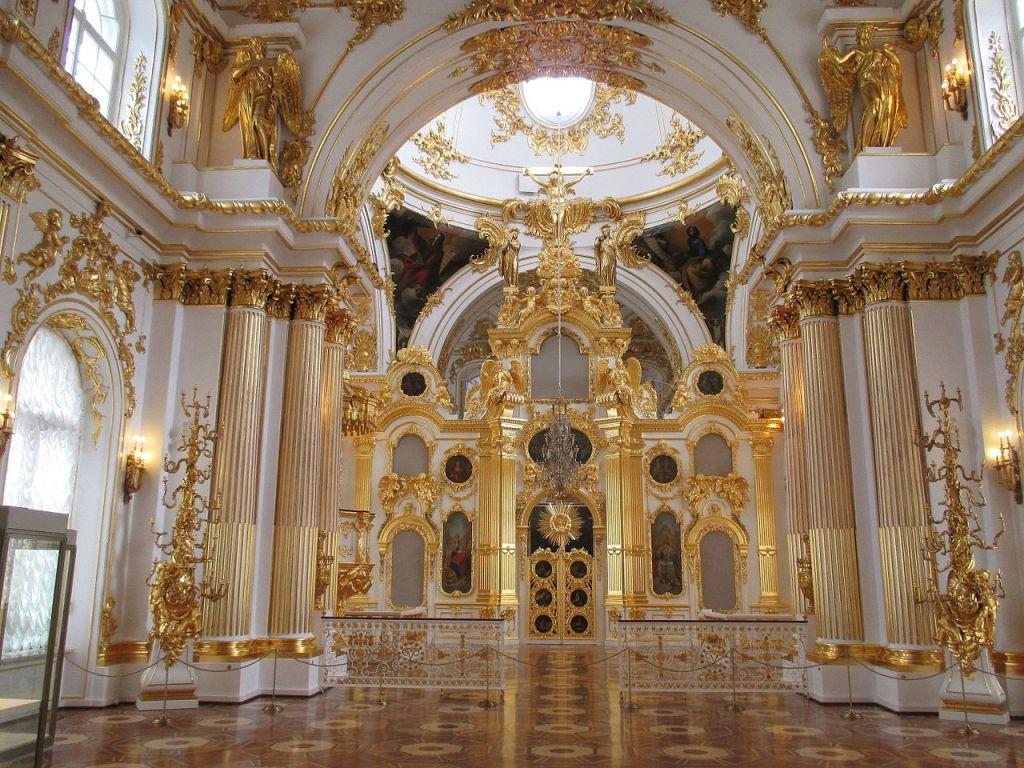
PHOTO: the Grand Church (the home church of the Imperial Family)
as it looks today, in the Winter Palace in St. Petersburg

NOTES:

[1] Following her conversion to Orthodoxy, Princess Alix of Hesse and by Rhine took the name Grand Duchess Alexandra Feodorovna, in honour of the Feodorovskaya Icon of the Mother of God, patroness of the Romanov dynasty. While her conversion was completely voluntary, it was required by her marriage to the Emperor as well as her future role as Empress.

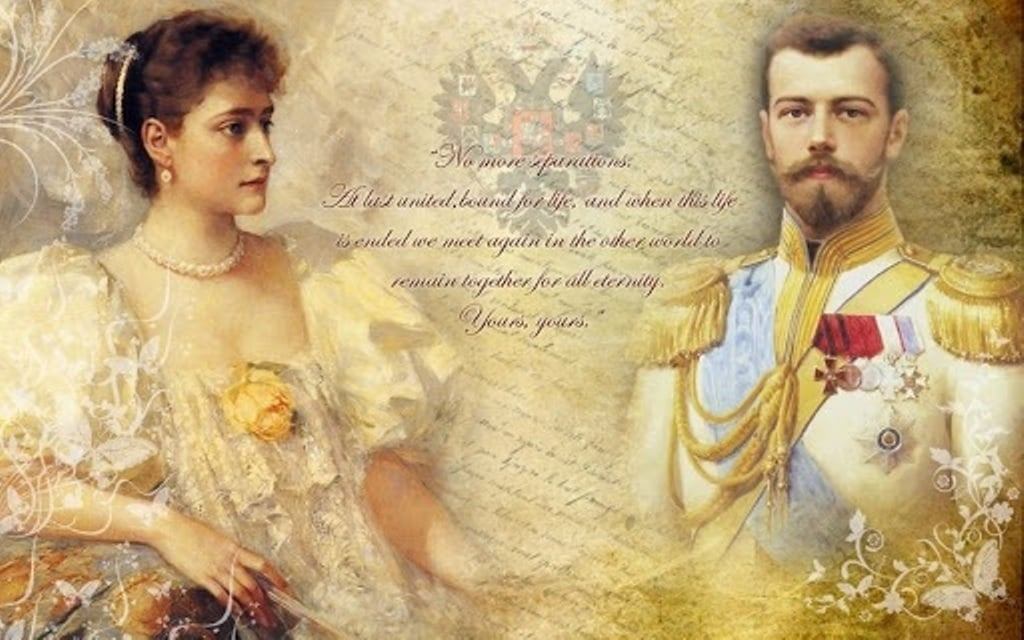
“No more separations. At last united, bound for life, and when this life is ended we
meet again in the other world to remain together for all eternity. Yours, yours.”

© Paul Gilbert. 27 November 2024

Russian jeweller recreates Fabergé brooch – a gift from Nicholas II to Alexandra Feodorovna

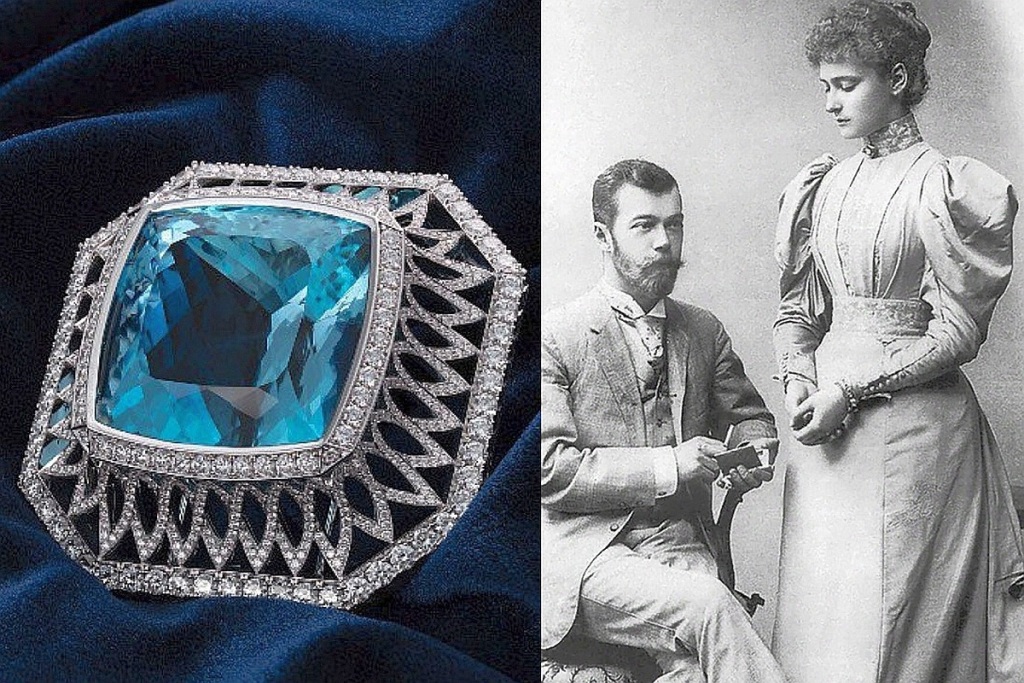
On 18th October 2024, a diamond aquamarine brooch originally created by Carl Fabergé, and recently recreated by the Russian jewelery firm CHAMOVSKIKH, was presented at the Investing in Jewelry Art and Collectibles exhibit at the Moscow Financial Forum. The brooch is dedicated to the 130th anniversary of the wedding of Nicholas II and Alexandra Feodorovna in 1894.

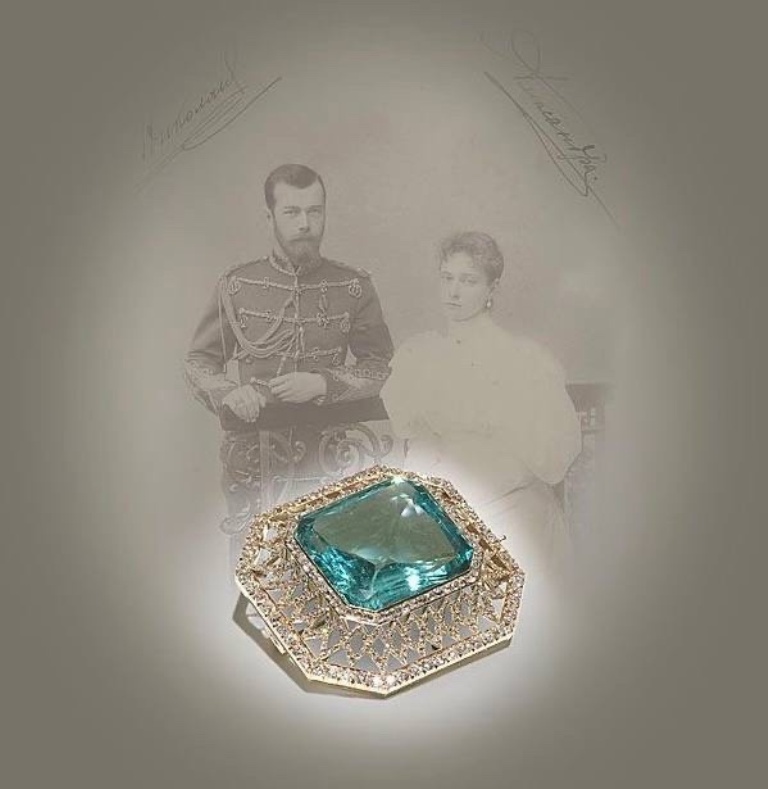
The famous Russian jeweler has recreated a historical piece of jewelry — a brooch with a 114-carat Siberian aquamarine with a trellis border of rose diamonds, that Tsesarevich Nicholas Alexandrovich (future Emperor Nicholas II) purchased from Carl Fabergé as a wedding gift for his bride Grand Duchess Alexandra Feodorovna (née Princess Alix of Hesse and by Rhine, future Empress Alexandra Feodorovna).

The receipt and the date of purchase have been preserved – 10 August, 1894, (three months before their wedding), for 1100 rubles. The receipt was signed by Henrich Wigström (1862-1923), one of Fabergé’s most important workmasters.

The brooch was presented to Princess Alix on 10th August 1894. The wedding was held on 27th (O.S. 14th) November 1894. The ceremony took place in the Grand Church (the home church of the Imperial Family) of the Winter Palace in St. Petersburg, the service was presided over by the Archpriest Ioann Yanyshev (1826-1910).

Plans for the wedding, had originally been set for the spring of 1895, however, the death of Emperor Alexander III put an end to such plans. Due to court mourning, there was no reception, nor honeymoon.

During the Soviet years, the Empress’s favourite brooch was sold to a foreign buyer (see below), repeating the fate of many other Russian-made jewelry masterpieces.

The following video explores the history of Fabergé’s diamond brooch with Siberian aquamarine and it’s recreation by modern-day masters of the CHAMOVSKIKH Jewelery House.

CLICK on the above image to watch the VIDEO
Duration: 3 minutes, 4 seconds. Language: Русский / Russian

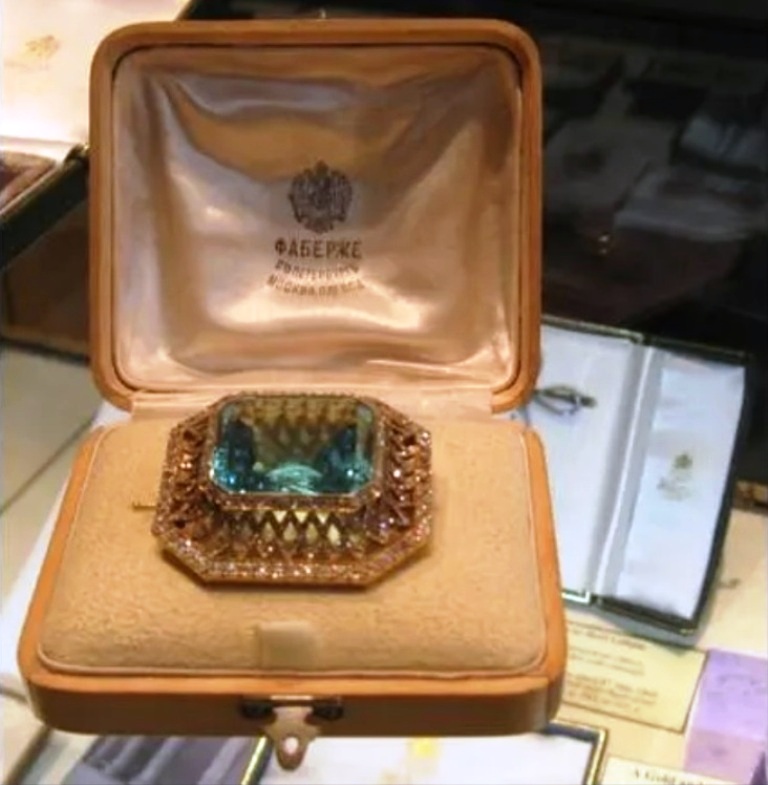
PHOTO: the real Fabergé Siberian aquamarine and diamond brooch
on display at Wartski (London) in December 2014. © Forbes Magazine

The brooch was later purchased by the famous British jeweller Emanuel Snowman (1886-1970) during a trip to Moscow during the Soviet years, and it is among the Tsars’ confiscated treasures. Apparently sewn into clothing, it accompanied the Tsar and his family when they were sent to Yekaterinburg. After the murder of the Romanovs, the brooch, along with pieces of jewelry, was on the list of personal effects found with the bodies.

For a long time, nothing was known about Alexandra Feodorovna’s aquamarines. But in 2014, the Empress’s aquamarine tiara surfaced at Christie’s closed auction. The organizers of the auction kept the names of the seller and the buyer secret, it was only indicated that the jewelry was the property of one of the European noble families. And the original brooch was bought and stored in the British Wartski Gallery.

Following the jewelry exhibition in Moscow, the brooch with a 114-carat Siberian aquamarine with a trellis border of rose diamonds was handed over to the Gokhran of the Russian Federation.

© Paul Gilbert. 27 October 2024

Bust-monuments of Nicholas and Alexamdra unveiled in Irkutsk

PHOTO: close up view of the bronze busts of Emperor Nicholas II and Empress Alexandra Feodorovna in the courtyard of St. Michael’s Archangel Kharlampievsky Church, Irkutsk

On 15th September 2024, a pair of bust-monuments of Emperor Nicholas II and Empress Alexandra Feodorovna were installed in the Siberian city of Irkutsk.

The monuments were installed in the courtyard of St. Michael’s Archangel Kharlampievsky Church, one of the oldest churches in the city. It was here in 1904, that the future Admiral Alexander Vasilyevich Kolchak (1874-1920) married Sofia Omirova (1876-1956).

The organizer of the installation of the busts is Irkutsk resident Mikhail Vladimirovich Arsentyev. The bust of Nicholas II, is based on the original – or what was left of it – which was found in the Crimea. It was restored by the famous Russian sculptor Vyacheslav Mikhailovich Klykov (1938-2006), who restored the parts which had been broken off by Bolshevik vandals following the October 1917 Revolution. It is believed that the original bust was made from life, around 1905.

he sculptor of the current busts of Nicholas II and Alexandra Feodorovna is the modern master Pavel Zhuravlev. Both busts are made of bronze, each weighing 100 kg, they were cast in a workshop in Moscow, where Vyacheslav Klykov worked during his lifetime.

PHOTO: Metropolitan Maximilian of Irkutsk and Angarsk performed the act of consecration of the bust-monuments in the courtyard of St. Michael’s Archangel Kharlampievsky Church, Irkutsk

Before the unveiling of the monuments, a Divine Liturgy was performed in the church, by three bishops (in the photo above from left to right): Bishop Alexy of Sitka and Alaska, Metropolitan Maximilian of Irkutsk and Angarsk and Bishop Konstantin of Bratsk and Ust-Ilimsk. Divine services were conducted in four languages: Church Slavonic, Greek, English and Aleut, which emphasized the atmosphere of unity of peoples.

The act of consecration of the busts was performed in the courtyard of the church by Metropolitan Maximilian of Irkutsk and Angarsk. It must be noted that there are few monuments to holy people in Irkutsk, and these bust-monuments of the Holy Royal Martyrs is one of the ways to teach residents and guests of the city about the last Russian tsar and his family.

PHOTO: view of the bronze bust-monuments of Emperor Nicholas II and Empress Alexandra Feodorovna in the courtyard of St. Michael’s Archangel Kharlampievsky Church, Irkutsk

© Paul Gilbert. 27 September 2024

Mobile exhibit dedicated to Empress Alexandra Feodorovna opens in Ekaterinburg

On 15th July 2024, a mobile exhibition dedicated to Empress Alexandra Feodorovna opened at the Tsarsky Cultural and Educational Center, which is situated in the Patriarchal Compound of the Church on the Blood in Ekaterinburg.

The exhibit titled “I feel like the mother of this country…” The Christian Feat of the Holy Royal Passion-Bearer Empress Alexandra Feodorovna, was organized by the Elizabeth-Sergius Educational Society Foundation (ESPO), in cooperation with the Institute of World History of the Russian Academy of Sciences.

For the first time, the exhibit gives a detailed story about the large-scale charitable activities of Empress Alexandra Feodorovna, which include her participation in the establishment and work of the Guardianship of the Houses of Industry; the School of Nannies in Tsarskoye Selo; the development of medical institutions specializing in pediatric medicine, orthopedics, surgery and women’s health; as well as her feat of mercy during the First World War; her patronage of science, medicine; and the education of her children.

The opening ceremony of the exhibition in Ekaterinburg was attended by Deputy Governor of the Sverdlovsk Region Pavel Krekov, Chairman of the Elizabeth-Sergius Educational Society Foundation (ESPO) Anna Gromova and Metropolitan of Yekaterinburg and Verkhoturye Evgeny.

The travelling exhibition was created in 2022, the year marking the 150th anniversary of the birth of Empress Alexandra Feodorovna. For the past two years, the exhibition has been presented in cities and towns across Russia.

In an interview with journalists, Anna Gromova, Head of the ESPO Foundation, said that while the exhibition had been traveling around Russia, that it arouses great interest, since the theme of the exhibition reveals unknown facets of the charitable and selfless activities of Empress Alexandra Feodorovna. Pavel Krekov, Deputy Governor of the Sverdlovsk Region, emphasized the extreme relevance of the exhibition, especially during this years Tsar’s Days events in the Ural capital.

Already on the first day of its work, the exhibition of the ESPO Foundation “I Feel Like the Mother of This Country…” The Christian Feat of the Holy Royal Passion-Bearer Empress Alexandra Feodorovna” was met with great interest by the residents and visitors, who arrived in the Ural capital for Tsar’s Days. Specialists of the ESPO Foundation have prepared a leaflet and a guide to the exhibition.

© Paul Gilbert. 18 July 2024