Nicholas II’s stay at the Russian Embassy in Paris, 1896

During the autumn of 1896, Emperor Nicholas II made a tour of Europe, which included visits to Denmark, Germany, Austria, France and Great Britain. He was accompanied by Empress Alexandra Feodorovna and their first child Grand Duchess Olga Nikolaevna, who was just shy of her first birthday.

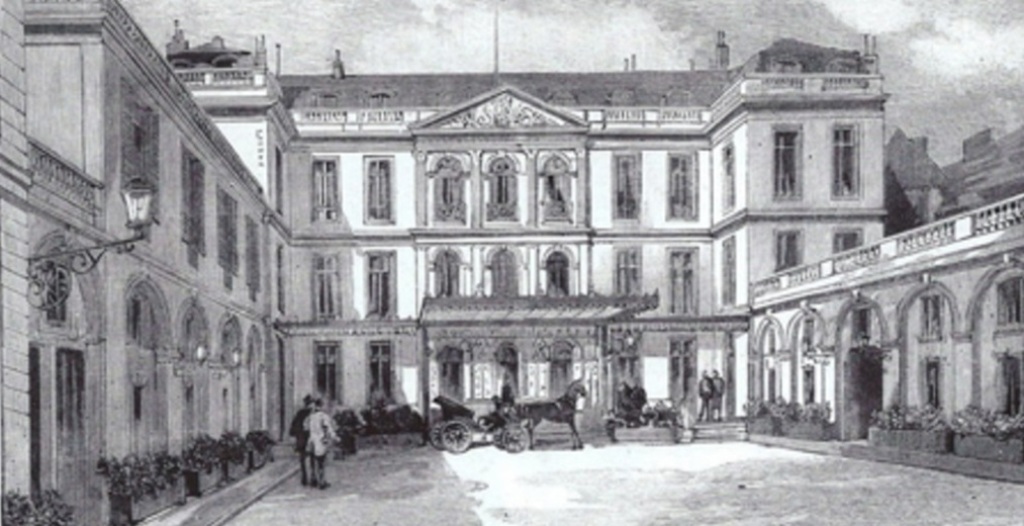
The Imperial Family arrived in Paris on 5th October 1896 For the next three days, the Embassy of the Russian Empire served as their Imperial Residence. Russia’s ambassador to France at the time was Baron (since 1894) Arthur Freiherr von Mohrenheim (1824-1906), who held the post from 8 February 1884 – 18 November 1897.

In anticipation of the August visit, the ambassador, did everything he could to make the residence look like a palace. For three days, the house on the rue de Grenelle became the scene of the Franco-Russian Summit. The words of the revolutionary Marseillaise were sung, followed by those of the Russian Imperial Anthem God Save the Tsar!.

PHOTO: the Embassy of Russian Empire (as it looked in 1896)
situated at 79 rue de Grenelle in the 7th arrondissement, Paris

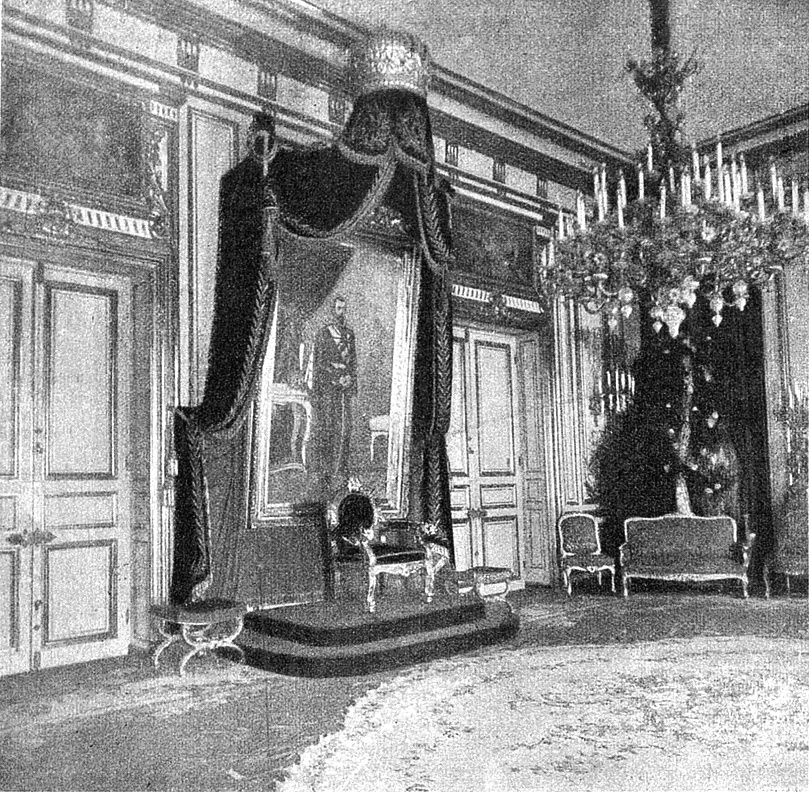
A lavish suite of rooms – which included a Throne Room – were decorated to the highest standards, all befitting the newly crowned Emperor and Empress of Russia.

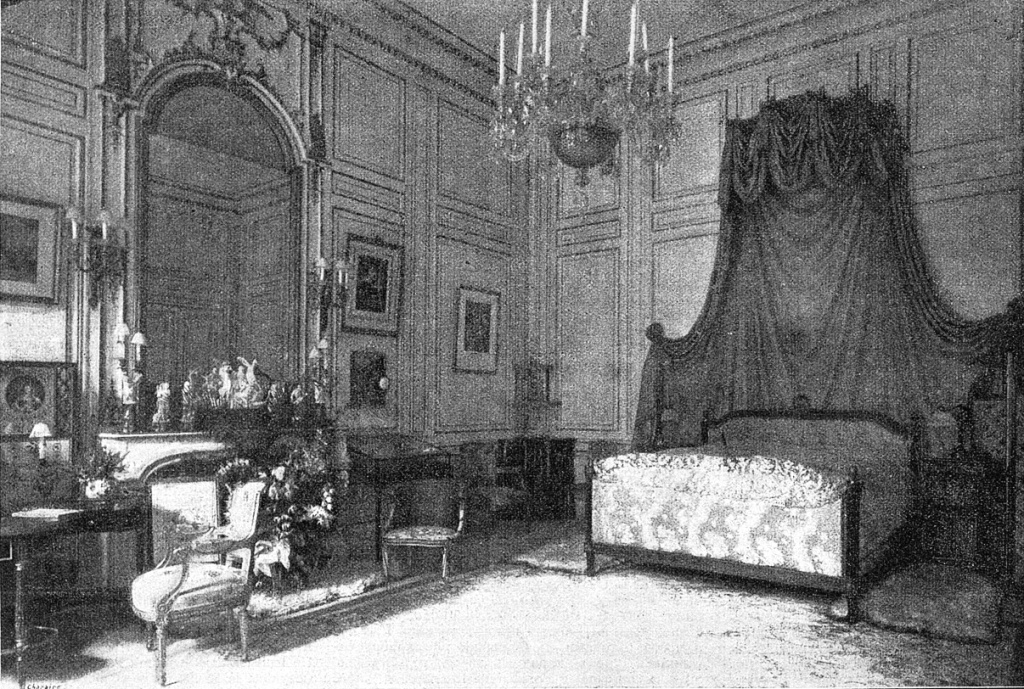
Nicholas II’s and Alexandra Feodorovna’s apartments were located on the main floor of the Embassy. Next to the Small Salon, decorated with busts of Their Majesties, was the Empress’s Boudoir, decorated with magnificent carpets; then – the Emperor’s Study and the Reception Hall, decorated in green silk. The Imperial Bedroom’s were located on the right side of the main floor. The Empress’s Bedroom, was modestly and at the same time very elegantly furnished, decorated in white and gold; with mauve [her favourite colour] coloured furniture made of woven silk.

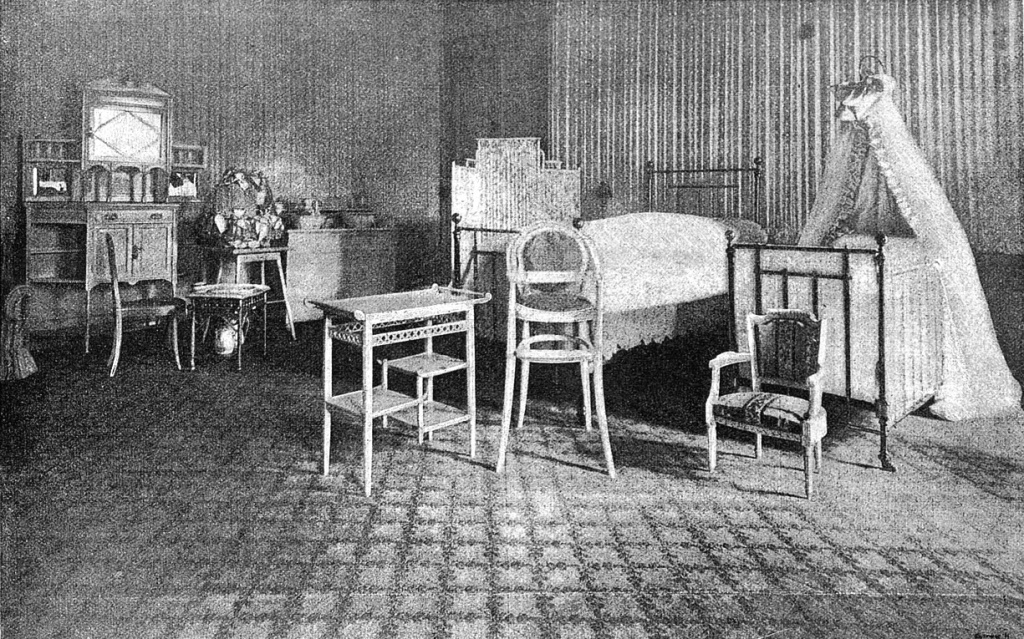
On the second floor was Grand Duchess Olga Nikolaevna’s bedroom, which contained a small crib with white curtains, next to an iron bed for the wet nurse; furnished with white lacquered furniture.

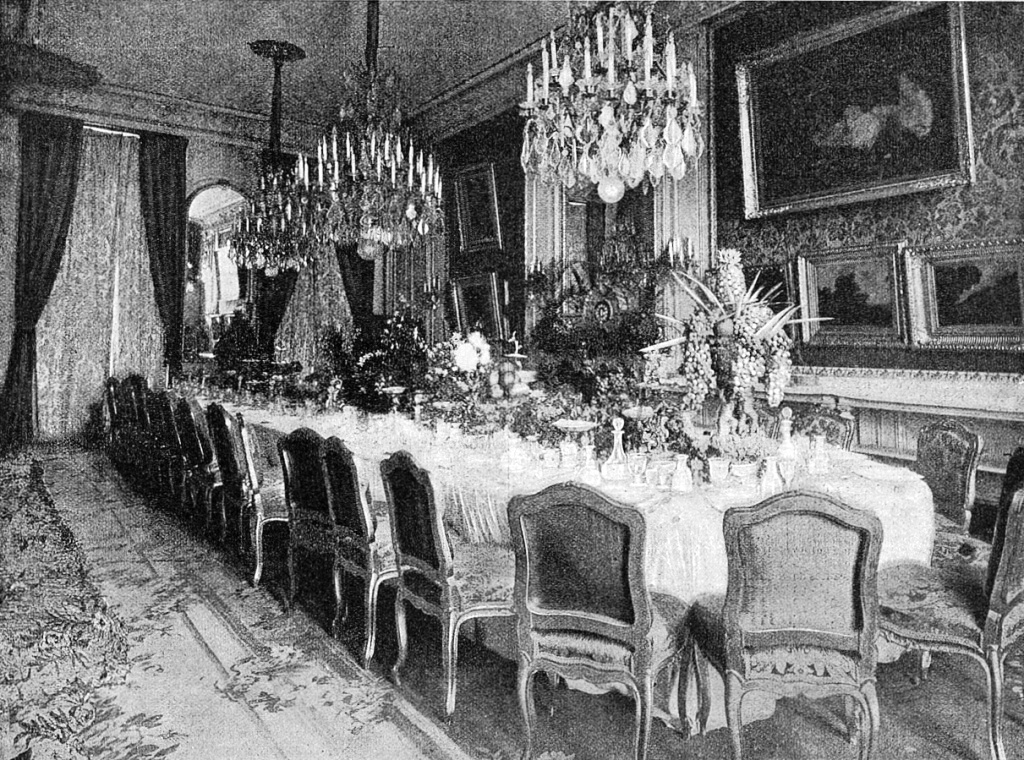
The following illustrations of the luxurious interiors of the Imperial Family in the Embassy of the Russian Empire, were originally published in the St. Petersburg newspaper Neva and World Illustration magazine, 1896.

PHOTO: the throne Room, note the portrait of Nicholas II behind the throne

PHOTO: the Imperial Bedroom

PHOTO: Grand Duchess Olga Nikolaevna’s bedroom

PHOTO: the Dinging Room

***

The building was designed by Robert de Cotte, architect of King Louis XIV, and built between 1711 and 1713 for Madeleine-Diane de Bautru de Vaubrun, the Duchesse d’Estrées (1668-1753). After belonging to several owners, it was purchased by the Russian Imperial Government in 1863 and became the Embassy of the Russian Empire in France.

Following the purchase, the Russian government made extensive changes to the former mansion and it’s interiors. Both Emperor Alexander II (1867) and his grandson, Nicholas II (1896), stayed in the residence when they visited Paris.

In 1977 the Russian Embassy was moved to another building, while the old embassy building became the residence of the Ambassador of the Russian Federation to France. Today, it is known as the Hôtel d’Estrées, and is classified as a historic monument of France.

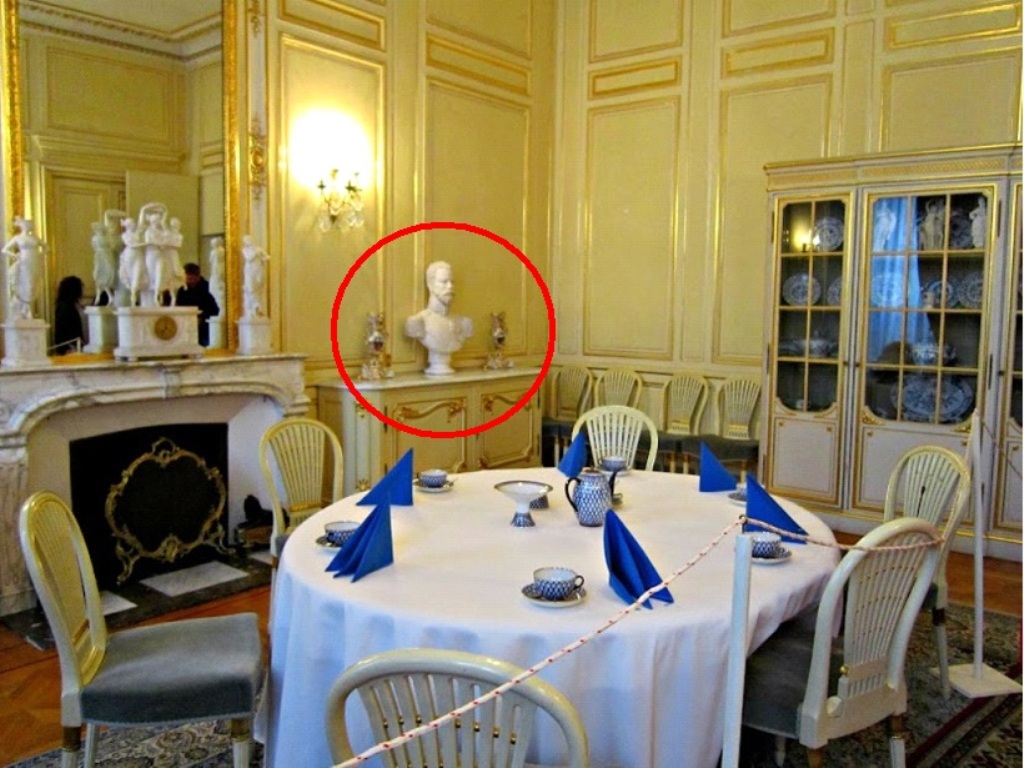
PHOTO: The White Salon, which served as the Imperial Bedroom.
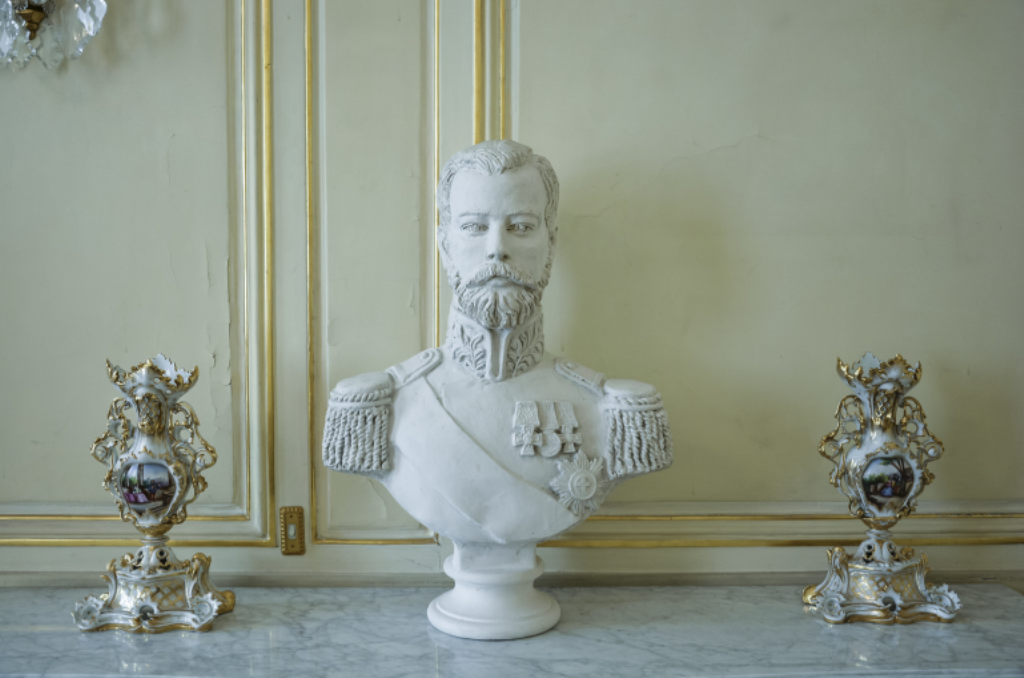
Note the bust of Nicholas II (circled in red), on a side-table, next to the fireplace
.

PHOTO: a bust of Emperor Nicholas II now rests on a side-table, next to the fireplace in the White Salon, formerly the Imperial Bedroom, during the Imperial Family’s visit in October 1896.

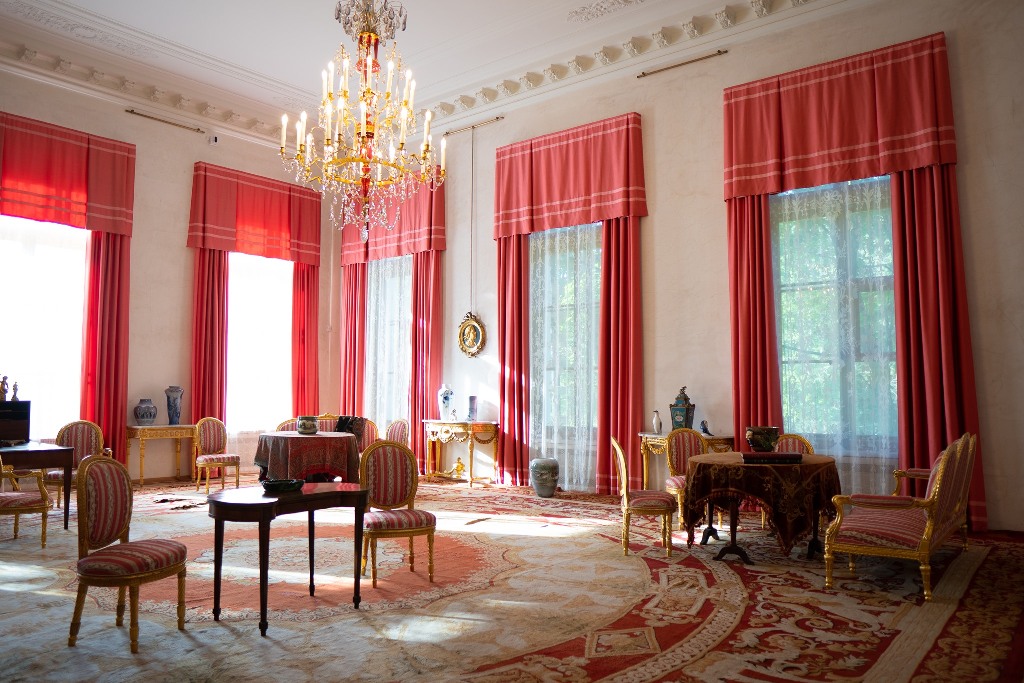
The interiors of the former Imperial Apartments of Emperor Nicholas II and Empress Alexandra Feodorovna have survived to the present day. Among the modern-day interiors of the Russian Ambassador’s residence, the Red Salon, which was used for official ceremonies, and was used as the Throne Room by Nicholas II, the Bleu (Blue) Salon  was used as his private study, while the White Salon served as the Imperial Bedroom during the August couple’s visit to Paris in 1896.

Today, the former Embassy is known as the Hôtel d’Estrées, and official residence of the Russian Ambassador. Over the years, the building has been the venue for receptions and exhibitions, hosted by the Ambassador. On 3rd September 2013, the Russian Ambassador officially opened an exhibition dedicated to the 400th anniversary of the house of Romanov

Click HERE for a VIRTUAL TOUR of the Residence of the Russian Ambassador

© Paul Gilbert. 30 November 2024

130th anniversary of the Wedding of Nicholas II and Alexandra Feodorovna, 1894

PHOTO: Wedding of Nicholas II and Alexandra Feodorovna
Painted in 1895 by the Danish artist Laurits Tuxen (1853-1927)
From the collection of the State Hermitage Museum, St. Petersburg

NOTE: the following is an excerpt from the original full-length version (researched from Russian sources), which will be published in the No. 14 – Winter 2025 issue of my semi-annual periodical SOVEREIGN: The Life and Reign of Emperor Nicholas II. The full article will feature expanded text, with more facts and information, and illustrated with additional photos. This issue is scheduled to be released in December 2024 – PG

***

Today 27th (O.S. 14th) November – marks the 130th anniversary of the wedding of Emperor Nicholas II and Grand Duchess Alexandra Feodorovna[1] in St. Petersburg.

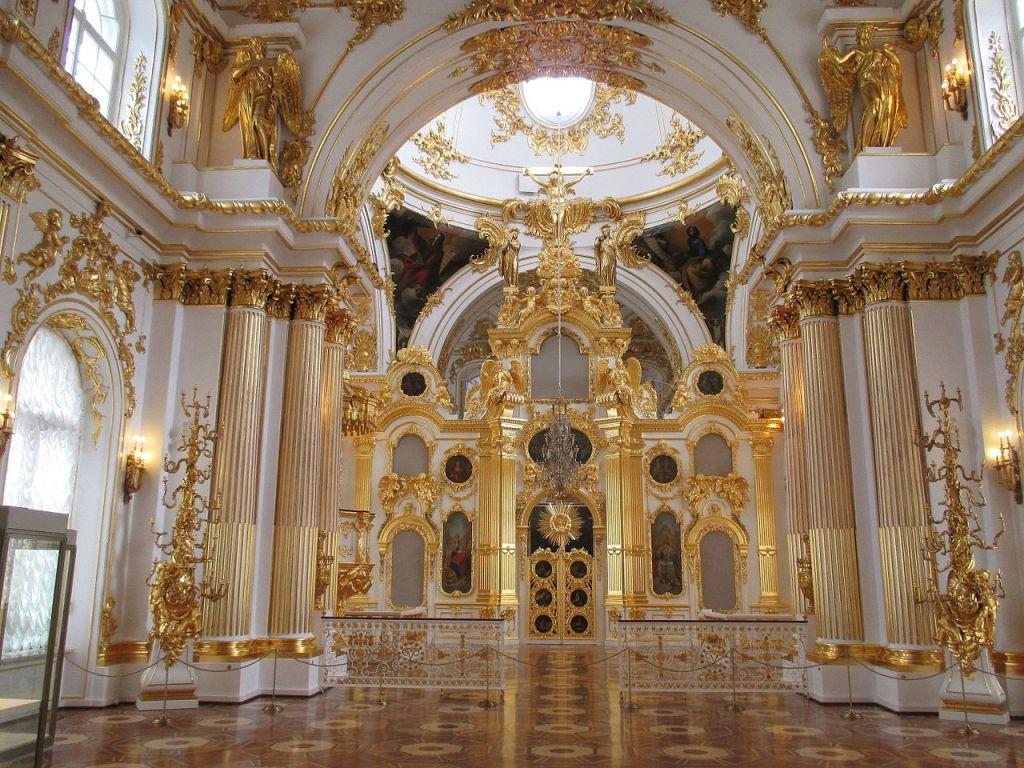
It was on this day in 1894, that the ceremony took place in the Church of the Saviour Not Made by Hands (the home church of the Imperial Family) of the Winter Palace in St. Petersburg.

Plans for the wedding, had originally been set for the spring of 1895, followed by a week of public celebrations. The death of Emperor Alexander III on 2nd November [O.S. 20th October], however, put an end to such plans. The date for the wedding was now scheduled to take place on the birthday of Nicholas II’s mother, Maria Feodorovna, which would allowed for court mourning to be somewhat relaxed.

To announce the historic occasion, a manifesto was issued, proclaiming “In the midst of deep sorrow, with which Our hearts and those of all the faithful sons of Russia are filled, may this day be a bright herald of the people’s hopes for the continuation of God’s mercy to Us in the new reign that has come.”

Invitations were sent out, the dress code was determined. Russian gentlemen had to appear in full regimental uniform, officials had to dress in uniforms, according to the Table of Ranks of Peter the Great. Russian ladies had to appear in ceremonial court dresses, and foreign women were invited to appear in evening dresses, with full awards and jewelry.

The wedding was attended by Nicholas’s mother, the recently widowed Dowager Empress Maria Feodorovna, as well as members of the Russian Imperial Family, which included 14 grand dukes, 6 grand duchesses. In addition, were Kings, Queens, Princes and Princesses from more than a dozen royal houses of Europe: Denmark, Greece, Great Britain, Roumania, Prussia, Oldenburg, Hesse and by Rhine, Saxe Coburg, Mecklenburg, Mecklenburg-Stelitz, Baden, Leuchtenberg, and Saxe-Altenburg.

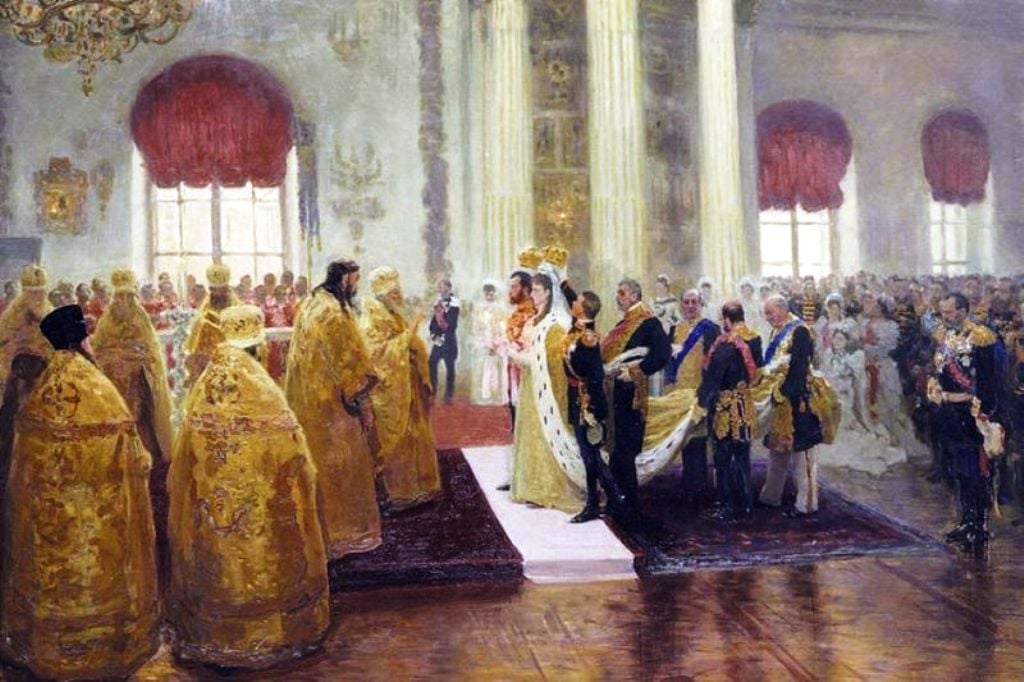
As photography was not permitted during weddings, baptisms, funerals, etc., in Orthodox churches, we only have paintings and illustrations which depict the wedding. This restriction has been somewhat relaxed in more modern times.

PHOTO: Wedding of Nicholas II and Alexandra Feodorovna
Painted in 1894 by the Russian artist Ilya Yefimovich Repin (1844-1930)
From the Collection of the State Russian Museum, St. Petersburg

On the day of the wedding, in the morning, the Emperor left the Anichkov Palace for the Winter Palace in an open landau, accompanied by his brother, Grand Duke Mikhail. The Dowager Empress went in a closed carriage to the Sergiev Palace – the St. Petersburg residence of Grand Duke Sergei and Grand Duchess Elizabeth, from where she escorted Alexandra Feodorovna to the Winter Palace.

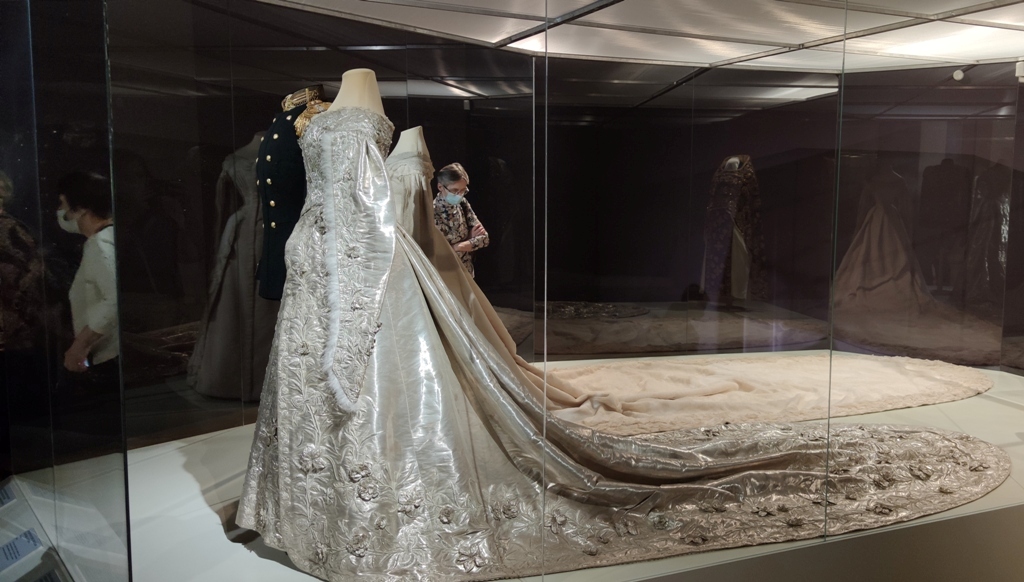
Nicholas Alexandrovich was dressed in the red uniform of a hussar colonel with orders and an orange sash of the Order of Hesse-and-by-Rhine. The bride wore a dress of white silk with silver flowers. Her English Honiton lace veil was created by her maternal grandfather, Prince Albert of Saxe-Coburg and Gotha (1819-1861). This veil was worn at the weddings of the brides mother Princess Alice (1843-1878) and her sisters. Alexandra Feodorovna also wore the traditional Romanov Imperial Wedding Crown, a 475-carat necklace and earrings, which belonged to Catherine the Great. Her ensemble was completed by a golden brocade robe with a long train, lined with ermine. Eyewitnesses at the wedding noted that “she shone with fragile and pure beauty.”

PHOTO: the wedding dress of Alexandra Feodorovna
From the Collection of the State Hermitage Museum in St. Petersburg

It is interesting to note, that the wedding dress of Empress Alexandra Feodorovna was based on a sketch made by her sister Grand Duchess Elizabeth Feodorovna. According to tradition, Romanov brides donated their wedding dresses to the church after their wedding. However, Alexandra Feodorovna, chose to keep hers, which is why her wedding dress has survived to this day, and now in the Collection of the State Hermitage Museum in St. Petersburg.

At noon, the procession of the cross to the Church of the Saviour Not Made by Hands, which served as the home church of the Imperial Family began. The cannons of the Peter and Paul Fortress announced the beginning of the ceremony. The procession was led by Dowager Empress Maria Feodorovna, who accompanied her future daughter-in-law. Nicholas Alexandrovich followed behind.

The service was conducted by the imperial confessor and head of the palace clergy, Protopresbyter Ioann Yanyshev (1826-1910). Nicholas II stepped onto the platform, followed by Alexandra Feodorovna. The couple exchanged rings and wedding vows, walked around the lectern, and kissed the cross. After the prayer, Nicholas and Alexandra were declared husband and wife. Church bells rang all over St. Petersburg, while cannons roared from the Peter and Paul Fortress.

Nicholas II recalled that the wedding ceremony was a torment for both him and his young wife: “The thought that our dear, selflessly beloved Papa was not among us, did not leave me during the wedding; I had to exert all my strength not to burst into tears there in the church in front of everyone.”

Thus, the modest wedding ceremony took place in an atmosphere of deep mourning for the deceased Emperor Alexander III. Due to court mourning, there was no reception, nor honeymoon. During the 12 months in which the Imperial Court was in mourning, Nicholas II and Alexandra Feodorovna seldom appeared in public and did not make any journeys. The newly married couple settled together with Dowager Empress Maria Feodorovna in the Anichkov Palace on Nevsky Prospekt in St. Petersburg.

PHOTO: the Church of the Saviour Not Made by Hands 0 the home church of the Imperial Family
as it looks today, in the Winter Palace in St. Petersburg

NOTES:

[1] Following her conversion to Orthodoxy, Princess Alix of Hesse and by Rhine took the name Grand Duchess Alexandra Feodorovna, in honour of the Feodorovskaya Icon of the Mother of God, patroness of the Romanov dynasty. While her conversion was completely voluntary, it was required by her marriage to the Emperor as well as her future role as Empress.

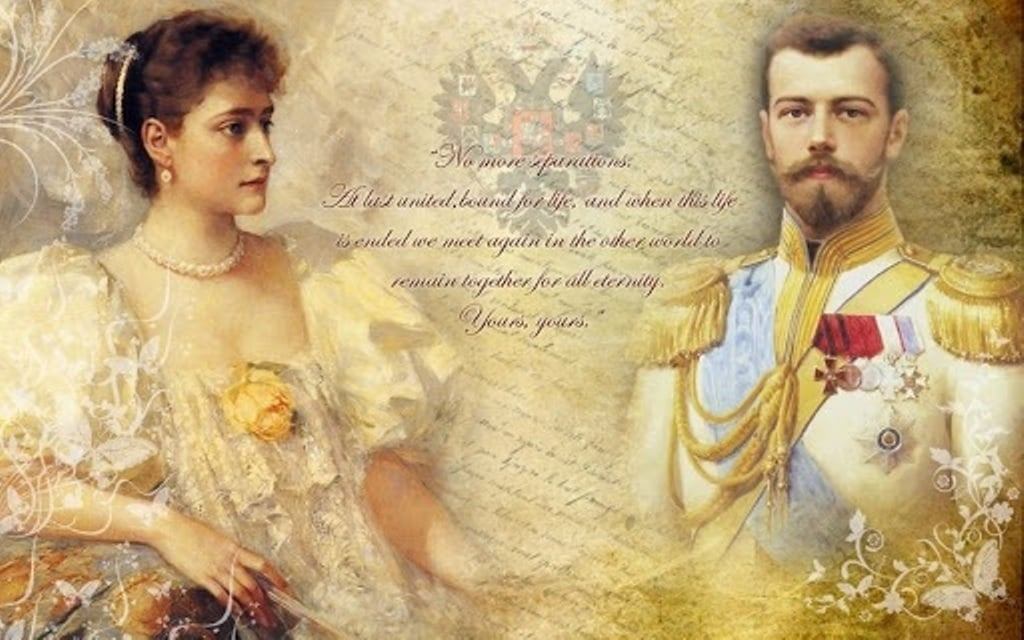
“No more separations. At last united, bound for life, and when this life is ended we
meet again in the other world to remain together for all eternity. Yours, yours.”

© Paul Gilbert. 27 November 2024
Russian jeweller recreates Fabergé brooch – a gift from Nicholas II to Alexandra Feodorovna

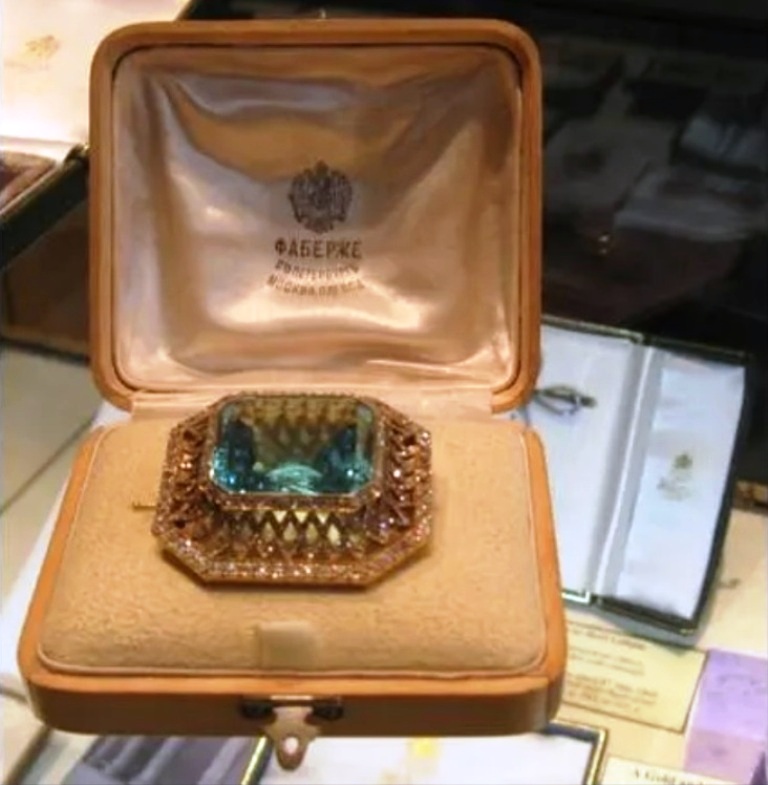
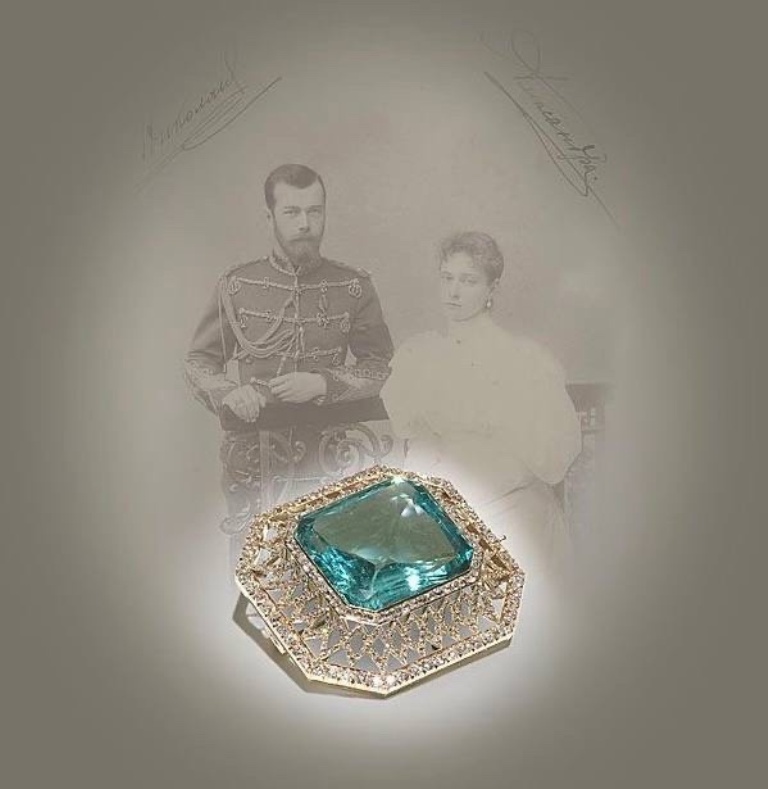
On 18th October 2024, a diamond aquamarine brooch originally created by Carl Fabergé, and recently recreated by the Russian jewelery firm CHAMOVSKIKH, was presented at the Investing in Jewelry Art and Collectibles exhibit at the Moscow Financial Forum. The brooch is dedicated to the 130th anniversary of the wedding of Nicholas II and Alexandra Feodorovna in 1894.

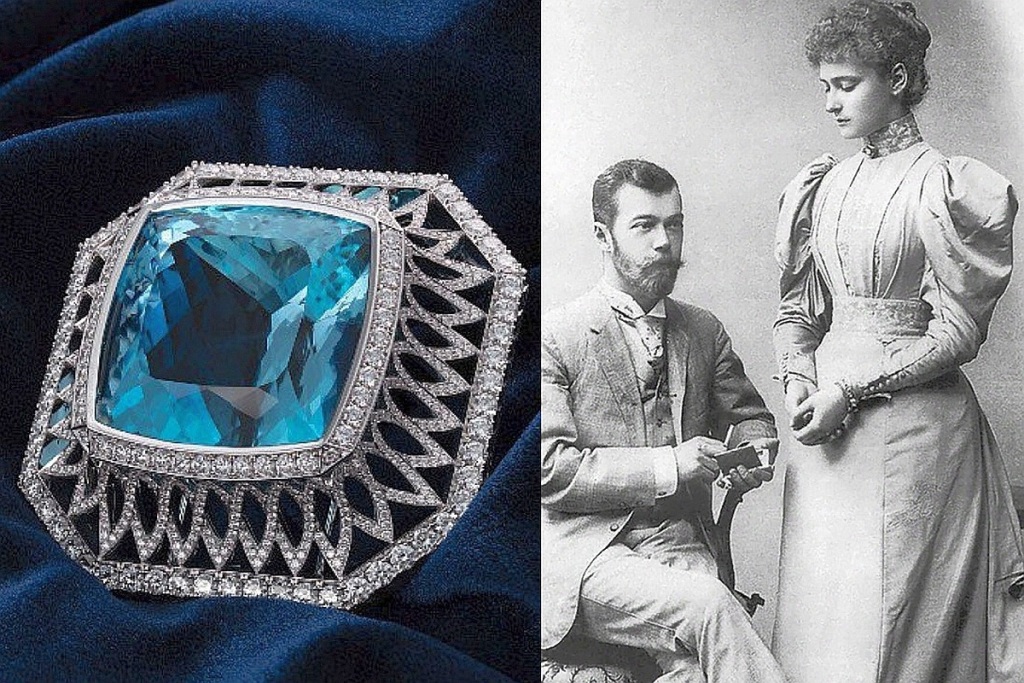
The famous Russian jeweler has recreated a historical piece of jewelry — a brooch with a 114-carat Siberian aquamarine with a trellis border of rose diamonds, that Tsesarevich Nicholas Alexandrovich (future Emperor Nicholas II) purchased from Carl Fabergé as a wedding gift for his bride Grand Duchess Alexandra Feodorovna (née Princess Alix of Hesse and by Rhine, future Empress Alexandra Feodorovna).

The receipt and the date of purchase have been preserved – 10 August, 1894, (three months before their wedding), for 1100 rubles. The receipt was signed by Henrich Wigström (1862-1923), one of Fabergé’s most important workmasters.

The brooch was presented to Princess Alix on 10th August 1894. The wedding was held on 27th (O.S. 14th) November 1894. The ceremony took place in the Grand Church (the home church of the Imperial Family) of the Winter Palace in St. Petersburg, the service was presided over by the Archpriest Ioann Yanyshev (1826-1910).

Plans for the wedding, had originally been set for the spring of 1895, however, the death of Emperor Alexander III put an end to such plans. Due to court mourning, there was no reception, nor honeymoon.

During the Soviet years, the Empress’s favourite brooch was sold to a foreign buyer (see below), repeating the fate of many other Russian-made jewelry masterpieces.

The following video explores the history of Fabergé’s diamond brooch with Siberian aquamarine and it’s recreation by modern-day masters of the CHAMOVSKIKH Jewelery House.

CLICK on the above image to watch the VIDEO
Duration: 3 minutes, 4 seconds. Language: Русский / Russian

PHOTO: the real Fabergé Siberian aquamarine and diamond brooch
on display at Wartski (London) in December 2014. © Forbes Magazine

The brooch was later purchased by the famous British jeweller Emanuel Snowman (1886-1970) during a trip to Moscow during the Soviet years, and it is among the Tsars’ confiscated treasures. Apparently sewn into clothing, it accompanied the Tsar and his family when they were sent to Yekaterinburg. After the murder of the Romanovs, the brooch, along with pieces of jewelry, was on the list of personal effects found with the bodies.

For a long time, nothing was known about Alexandra Feodorovna’s aquamarines. But in 2014, the Empress’s aquamarine tiara surfaced at Christie’s closed auction. The organizers of the auction kept the names of the seller and the buyer secret, it was only indicated that the jewelry was the property of one of the European noble families. And the original brooch was bought and stored in the British Wartski Gallery.

Following the jewelry exhibition in Moscow, the brooch with a 114-carat Siberian aquamarine with a trellis border of rose diamonds was handed over to the Gokhran of the Russian Federation.

© Paul Gilbert. 27 October 2024

Bust-monuments of Nicholas and Alexamdra unveiled in Irkutsk

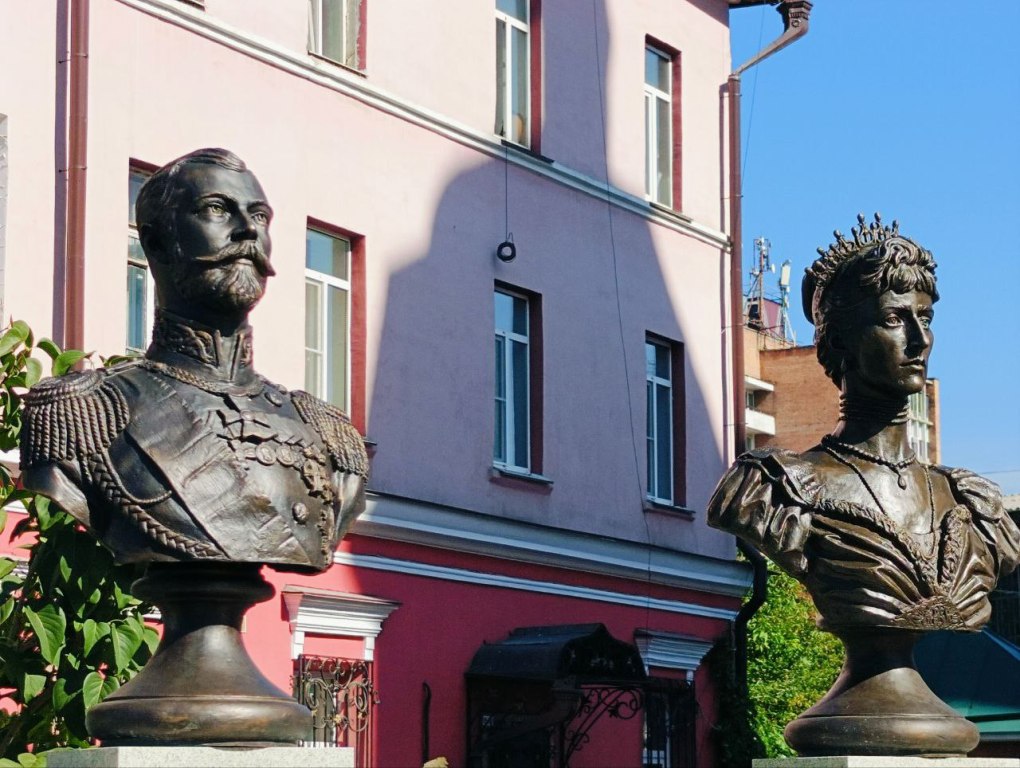
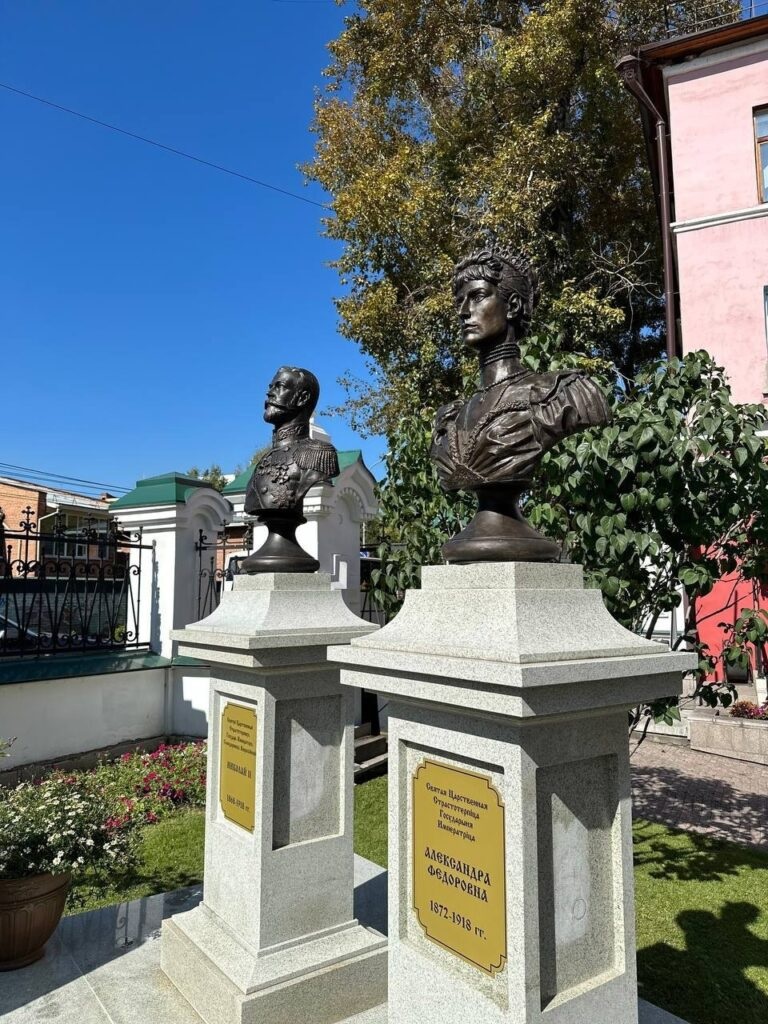
PHOTO: close up view of the bronze busts of Emperor Nicholas II and Empress Alexandra Feodorovna in the courtyard of St. Michael’s Archangel Kharlampievsky Church, Irkutsk

On 15th September 2024, a pair of bust-monuments of Emperor Nicholas II and Empress Alexandra Feodorovna were installed in the Siberian city of Irkutsk.

The monuments were installed in the courtyard of St. Michael’s Archangel Kharlampievsky Church, one of the oldest churches in the city. It was here in 1904, that the future Admiral Alexander Vasilyevich Kolchak (1874-1920) married Sofia Omirova (1876-1956).

The organizer of the installation of the busts is Irkutsk resident Mikhail Vladimirovich Arsentyev. The bust of Nicholas II, is based on the original – or what was left of it – which was found in the Crimea. It was restored by the famous Russian sculptor Vyacheslav Mikhailovich Klykov (1938-2006), who restored the parts which had been broken off by Bolshevik vandals following the October 1917 Revolution. It is believed that the original bust was made from life, around 1905.

he sculptor of the current busts of Nicholas II and Alexandra Feodorovna is the modern master Pavel Zhuravlev. Both busts are made of bronze, each weighing 100 kg, they were cast in a workshop in Moscow, where Vyacheslav Klykov worked during his lifetime.

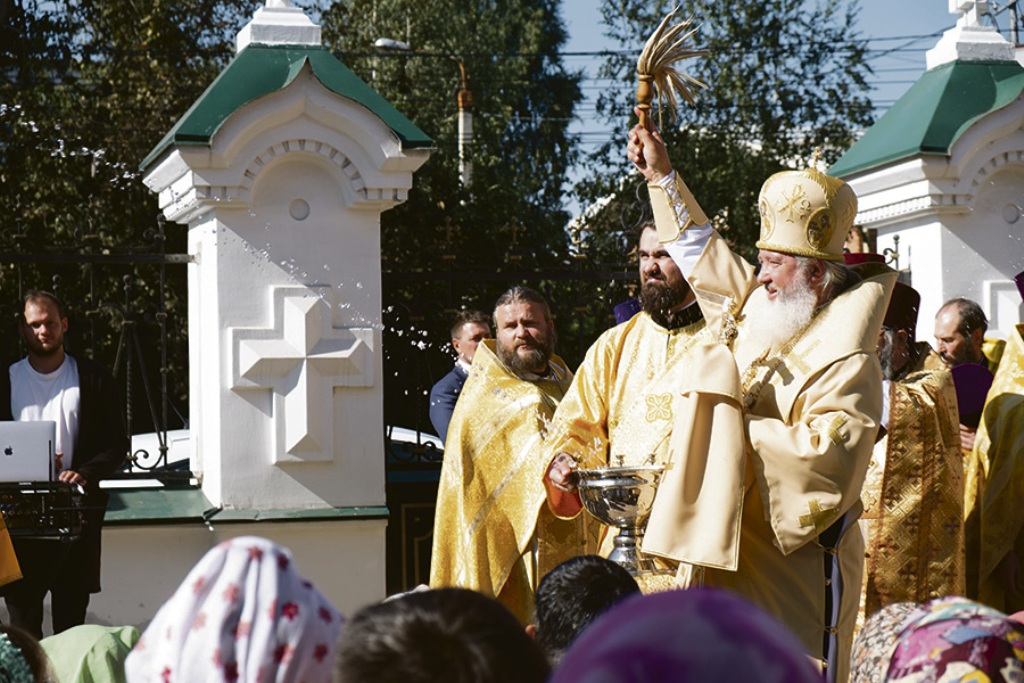
PHOTO: Metropolitan Maximilian of Irkutsk and Angarsk performed the act of consecration of the bust-monuments in the courtyard of St. Michael’s Archangel Kharlampievsky Church, Irkutsk

Before the unveiling of the monuments, a Divine Liturgy was performed in the church, by three bishops (in the photo above from left to right): Bishop Alexy of Sitka and Alaska, Metropolitan Maximilian of Irkutsk and Angarsk and Bishop Konstantin of Bratsk and Ust-Ilimsk. Divine services were conducted in four languages: Church Slavonic, Greek, English and Aleut, which emphasized the atmosphere of unity of peoples.

The act of consecration of the busts was performed in the courtyard of the church by Metropolitan Maximilian of Irkutsk and Angarsk. It must be noted that there are few monuments to holy people in Irkutsk, and these bust-monuments of the Holy Royal Martyrs is one of the ways to teach residents and guests of the city about the last Russian tsar and his family.

PHOTO: view of the bronze bust-monuments of Emperor Nicholas II and Empress Alexandra Feodorovna in the courtyard of St. Michael’s Archangel Kharlampievsky Church, Irkutsk

© Paul Gilbert. 27 September 2024
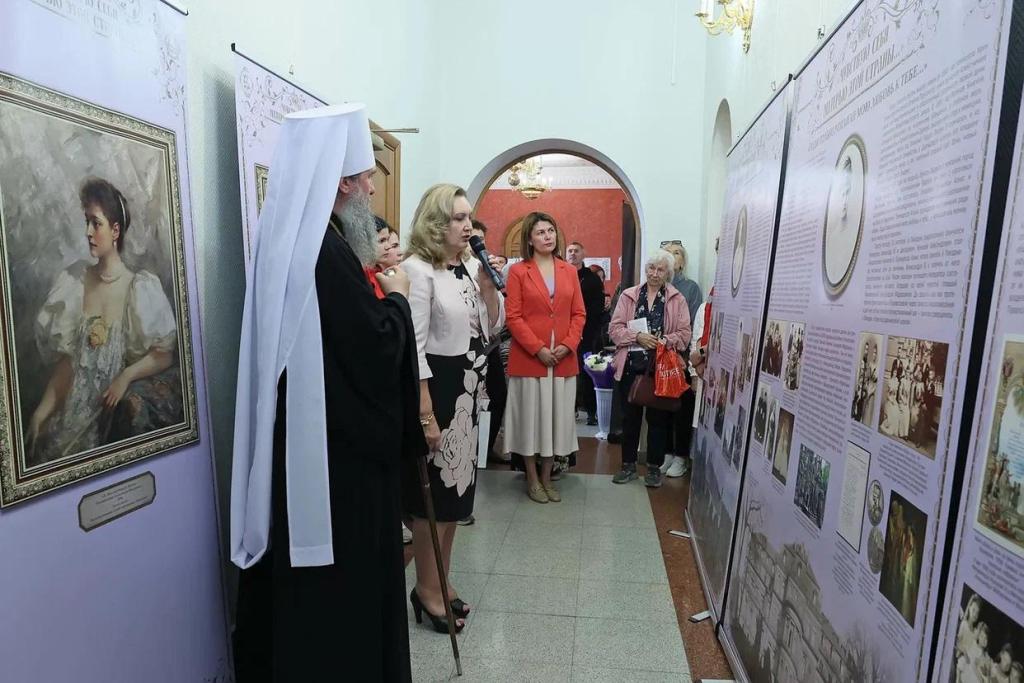
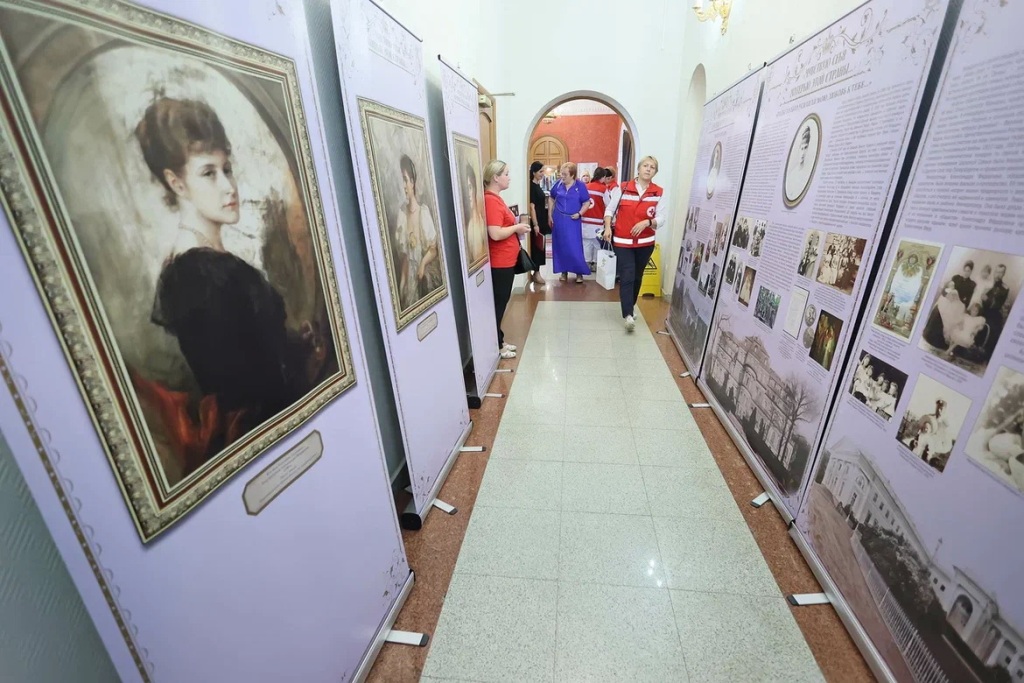
Mobile exhibit dedicated to Empress Alexandra Feodorovna opens in Ekaterinburg

On 15th July 2024, a mobile exhibition dedicated to Empress Alexandra Feodorovna opened at the Tsarsky Cultural and Educational Center, which is situated in the Patriarchal Compound of the Church on the Blood in Ekaterinburg.

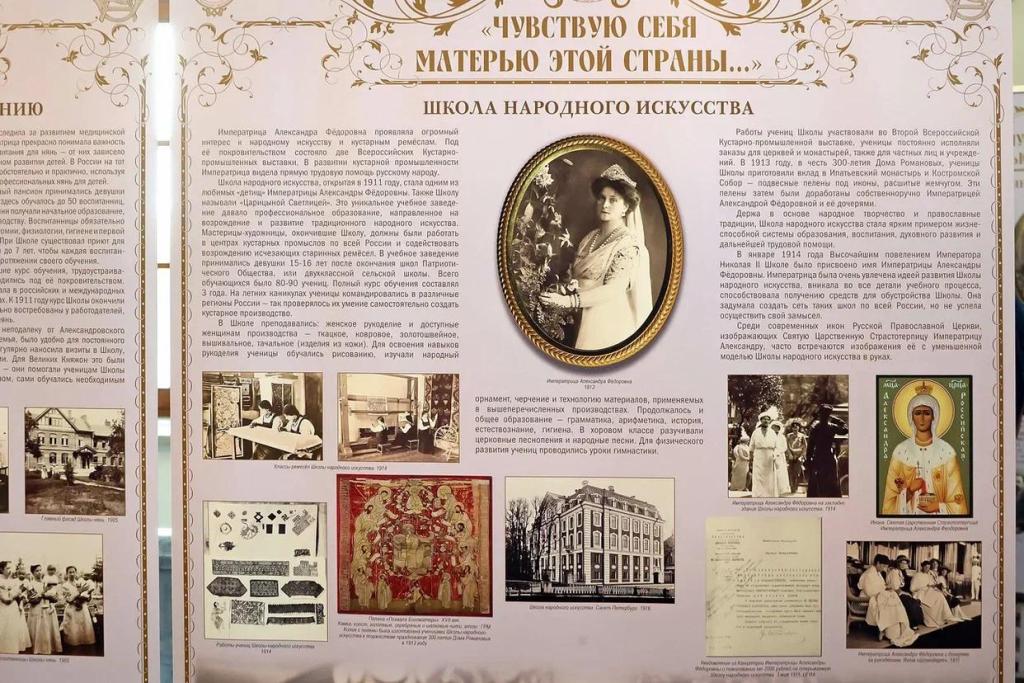
The exhibit titled “I feel like the mother of this country…” The Christian Feat of the Holy Royal Passion-Bearer Empress Alexandra Feodorovna, was organized by the Elizabeth-Sergius Educational Society Foundation (ESPO), in cooperation with the Institute of World History of the Russian Academy of Sciences.

For the first time, the exhibit gives a detailed story about the large-scale charitable activities of Empress Alexandra Feodorovna, which include her participation in the establishment and work of the Guardianship of the Houses of Industry; the School of Nannies in Tsarskoye Selo; the development of medical institutions specializing in pediatric medicine, orthopedics, surgery and women’s health; as well as her feat of mercy during the First World War; her patronage of science, medicine; and the education of her children.

The opening ceremony of the exhibition in Ekaterinburg was attended by Deputy Governor of the Sverdlovsk Region Pavel Krekov, Chairman of the Elizabeth-Sergius Educational Society Foundation (ESPO) Anna Gromova and Metropolitan of Yekaterinburg and Verkhoturye Evgeny.

The travelling exhibition was created in 2022, the year marking the 150th anniversary of the birth of Empress Alexandra Feodorovna. For the past two years, the exhibition has been presented in cities and towns across Russia.

In an interview with journalists, Anna Gromova, Head of the ESPO Foundation, said that while the exhibition had been traveling around Russia, that it arouses great interest, since the theme of the exhibition reveals unknown facets of the charitable and selfless activities of Empress Alexandra Feodorovna. Pavel Krekov, Deputy Governor of the Sverdlovsk Region, emphasized the extreme relevance of the exhibition, especially during this years Tsar’s Days events in the Ural capital.

Already on the first day of its work, the exhibition of the ESPO Foundation “I Feel Like the Mother of This Country…” The Christian Feat of the Holy Royal Passion-Bearer Empress Alexandra Feodorovna” was met with great interest by the residents and visitors, who arrived in the Ural capital for Tsar’s Days. Specialists of the ESPO Foundation have prepared a leaflet and a guide to the exhibition.

© Paul Gilbert. 18 July 2024
The fate of an icon gifted by the last Russian empress to Anastasia Hendrikova in October 1917

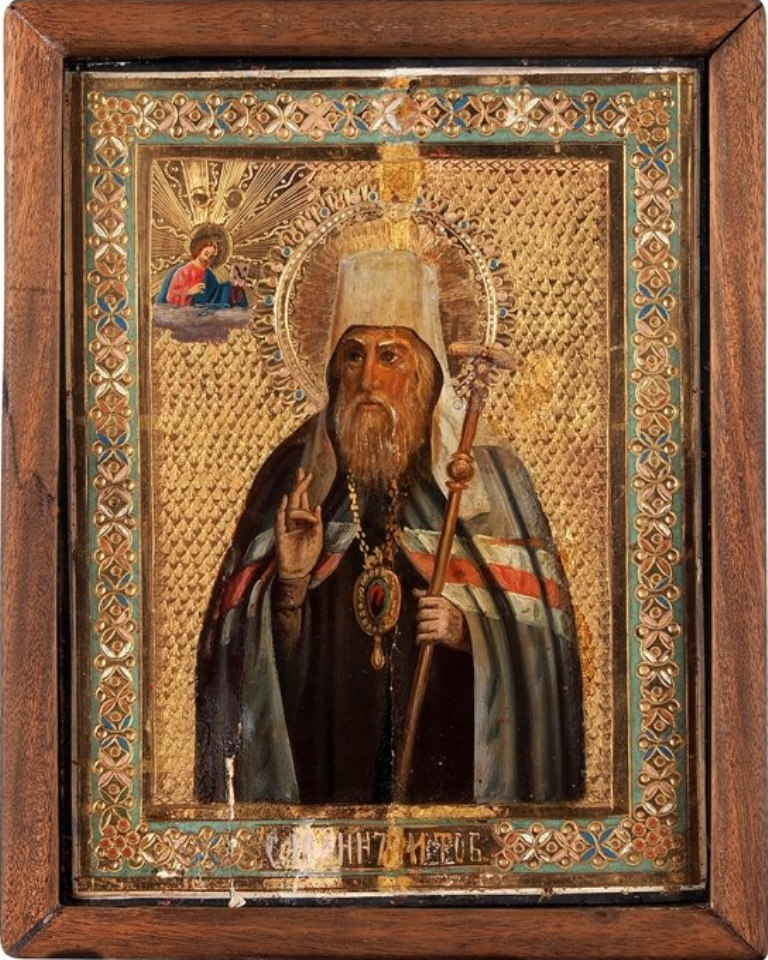
PHOTO: an icon depicting St. John of Tobolsk, gifted by Empress Alexandra Feodorovna to Anastasia Hendrikova in 1918, sold at a Paris auction to a private collector in 2021

The former lady in waiting to Empress Alexandra Feodorovna, Countess Anastasia Hendrikova (1888-1918) has been very much in the news of late. On 30th May 2024, the Perm Diocese announced that a forensic study confirmed the identity of Hendrikova’s remains, along with those of Ekaterina Schdeider, On 9th June 2024, a Funeral (Memorial) Litany was served in a Perm church. In recent days, yet another story about Hendrikova appeared in the Russian mdeia which deserves mention.

In August 1917, Anastasia Hendrikova voluntarily followed Emperor Nicholas II and his family into exile to Siberia, where they were held under house arrest for 8 months. During those difficult days, Hendrikova proved to be a great source of comfort to Empress Alexandra Feodorovna, to whom she was devoted. She helped the Empress endure the hardships of exile and imprisonment.

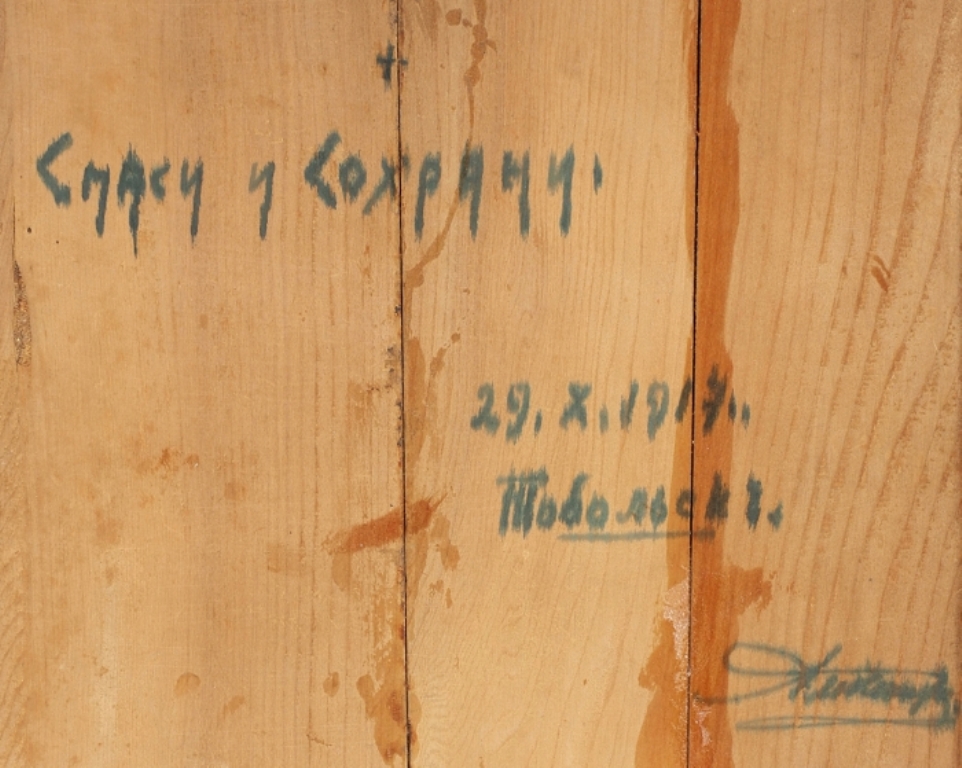
On 29th October 1917, the Empress presented her devoted maid of honour with an icon depicting the image of St. John (Maximovich) of Tobolsk[1]. On the back of the icon the Empress had written the inscription «Спаси и сохрани / 29.X.1917 / Тобольск / Александра» [“Save and Protect. 29.10.1917 / Tobolsk / Alexandra”]. The size of the icon measured 22.3×17.3 cm. In a wooden case — 25.3 × 20.3 cm. 

On the reverse of the icon case, there is a bronze engraved plate with the inscription “This icon was given by H.I.M. Alexandra Feodorovna, to maid of honour Countess Anastasia Vasilievna Hendrikova during the stay of the Imperial Family in Tobolsk.”

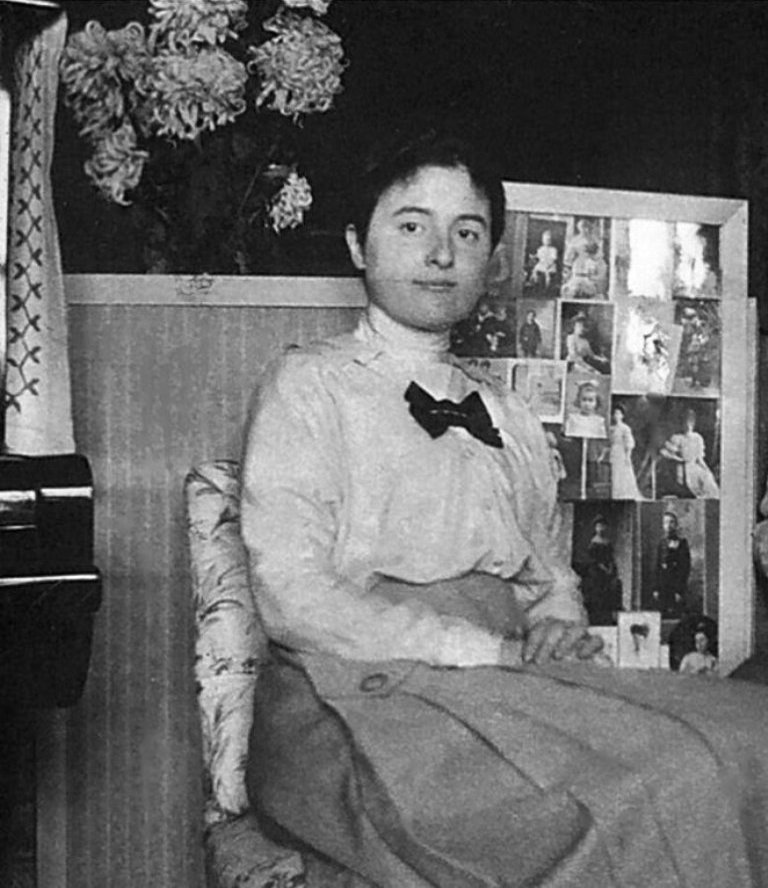
PHOTO: Countess Anastasia Hendrikova (1888-1918) 

On the part of the Empress, it was indeed a gift of great value and affection, a testimony of deep friendship in sharing the suffering of imprisonment. Countess Hendrikova was then 29 years old.

After her imprisonment in Perm and the murder of the Imperial Family, Countess Anastasia Hendrikova was taken from prison to the Cheka on 21st August 1918, where she was interrogated. One of the investigators asked her whether “she voluntarily followed the Romanovs to Tobolsk. She replied that she went voluntarily.

“Well,” he replied “since you are so devoted to them, tell us: if we were to let you go now, would you return to them again and continue to serve them?”

“Yes, until the last day of my life,” she replied. A few weeks later, Anastasia Hendrikova was shot by the Bolsheviks on the night of 3/4 September 1918 in Perm.

PHOTOS: (above) on the back of the icon Empress Alexandra wrote an inscription “Save and preserve / 29.X.1917”; (below) a bronze engraved plate with an inscription dedicated to Anastasia Hendrikova from the Empress.

After Hendrikova’s murder, the icon found it’s way into the hands of her brother Count Pyotr (Peter) Hendrikov[2]. For many years, he kept the icon as a family shrine and took it with him when he went to live in France. In his old age, he donated the icon to the orphanage church of the Russian Military Invalids situated near Paris.

But in 2001, the unexpected happened – the church and the orphanage were destroyed by fire. The ancient icon could have been lost forever, had it not for the priest Mikhail Gudkov, who found the precious relic among the burned out ruins of the church.

Father Mikhail cherished the historical value of the icon, and before his death he passed it on to his son.

In the autumn of 2021, the ancient icon, which has become a symbol of boundless love and loyalty, went under the hammer at a Moscow’s famous Litfond Auction House[3], as part of their “Relics of the House of Romanov” sale. The auction was held on 30th September 2021. The icon of St. John of Tobolsk was listed at 1.6 million rubles [$18,400 USD] and sold for 2.6 million rubles [$30,000 USD] to a private collector in Russia.

NOTES:

[1] In August 1915, Emperor Nicholas II sanctioned the canonization of St. John (Maximovich) of Tobolsk (1651-1715). The solemn glorification of John of Tobolsk took place the following year, on 10th June 1916. He was the last saint to be canonized during the reign of Russia’s last Tsar.

[2] Pyotr (Peter) Vasilyevich Hendrikov (1883-1942) died in Paris on 13th February 1942.

[3] The Litfond auction house is the undisputed leader among auction houses in Russia, occupying about 60% of the market. About 100 auctions are organized in Moscow and St. Petersburg each year.

© Paul Gilbert. 18 June 2024

‘The Empress’s Balcony’ and ‘The Empress’s Chair’ become bestsellers on AMAZON

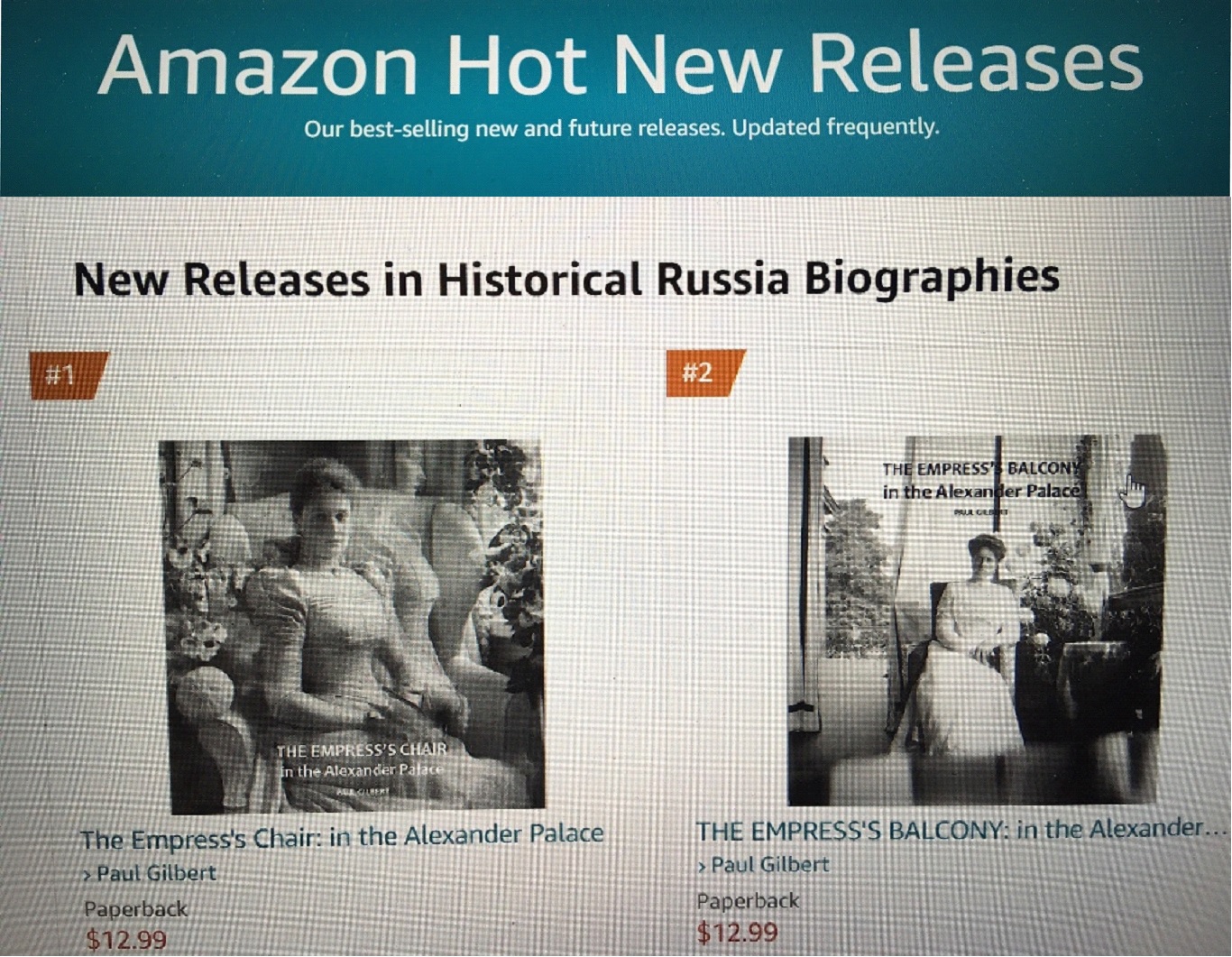
On 16th June 2023, ‘The Empress’s Balcony in the Alexander Palace‘ and ‘The Empress’s Chair in the Alexander Palace‘ claimed the No. 1 and No. 2 positions on Amazon’s ‘New Releases in Historical Russia Biographies’ Bestseller list. My two latest books held these spots for 10 consecutive days in a row – setting a new record for any of my previously published books.

Based on the number of posts on my Facebook page, both titles have been well received and enjoyed by readers from all over the world. One Australian reader wrote: “Who would have thought a chair and balcony could be the subject of a book, but you did it!”

Each richly illustrated pictorial features a new 8-1/2″ x 8-1/2″ paperback format with glossy cover. The price is $12.99 USD, both titles are available from AMAZON in the United States, Canada, Great Britain, Australia, France, Germany, Italy, Spain, Netherlands, Sweden, Poland and Japan.

The Empress’s Balcony – 110 pages – is a unique pictorial dedicated to the famous balcony where the Imperial Family spent so much time together and a favourite spot for family photographs.

The text on pages 3 to 14 explores the history and restoration of the Maple Drawing Room, which led out onto the balcony. It explains the construction of the iron grille balcony in 1896, and why it was dismantled between 1947-49 by the Alexander Palace’s new Soviet caretakers. The selection of nearly 100 vintage photographs presented in this album, are all we have left of this once happy and peaceful sanctuary for the Imperial Family while they were in residence at Tsarskoye Selo. Click HERE to order.

The Empress’s Chair – 120 pages – explores yet another iconic spot found in Empress Alexandra Feodorovna’s favourite room: the Mauve Boudoir.

The text on pages 3 to 14 explores the history and restoration of the Mauve Boudoir. More than 100 black and white photographs record nearly 30 members of the Imperial Family, their relatives and guests, all posing in the iconic corner chair. Neither the Mauve Boudoir of the Empress’s chair survived, however, both have recently been recreated. Click HERE to order.

© Paul Gilbert. 28 June 2023

Memorial plaque to Empress Alexandra Feodorovna installed in Istra

PHOTO: view of the bronze memorial bas-relief of Empress Alexandra Feodorovna

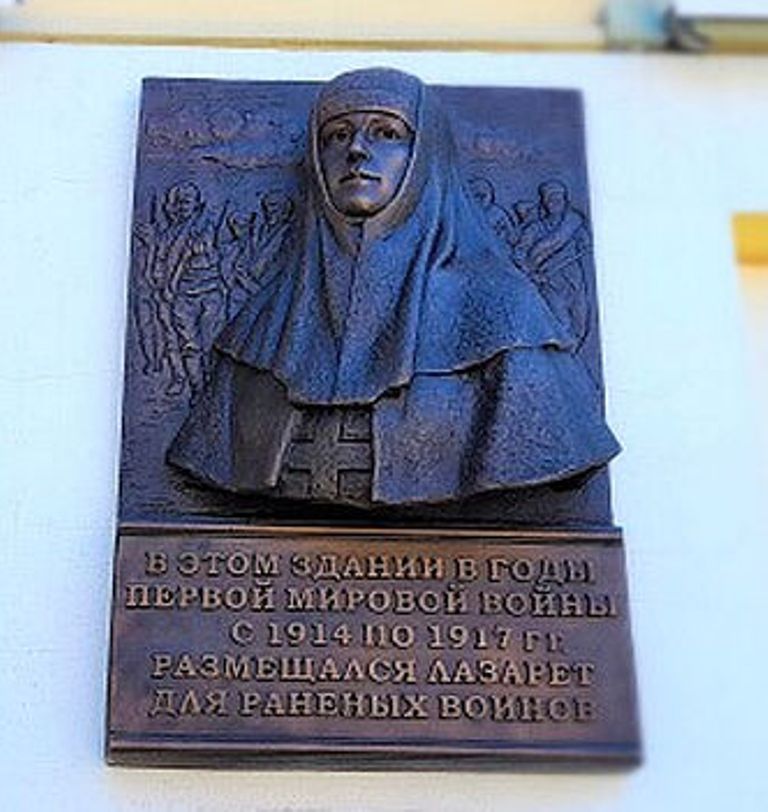
On 25th May 2023, a bas-relief plaque depicting Empress Alexandra Feodorovna was installed on the façade of the Drama Theatre, in Istra, situated 40 km northwest of Moscow.

During the First World War, the building served as an infirmary for wounded Russian soldiers, from September 1914 to the end of 1917.

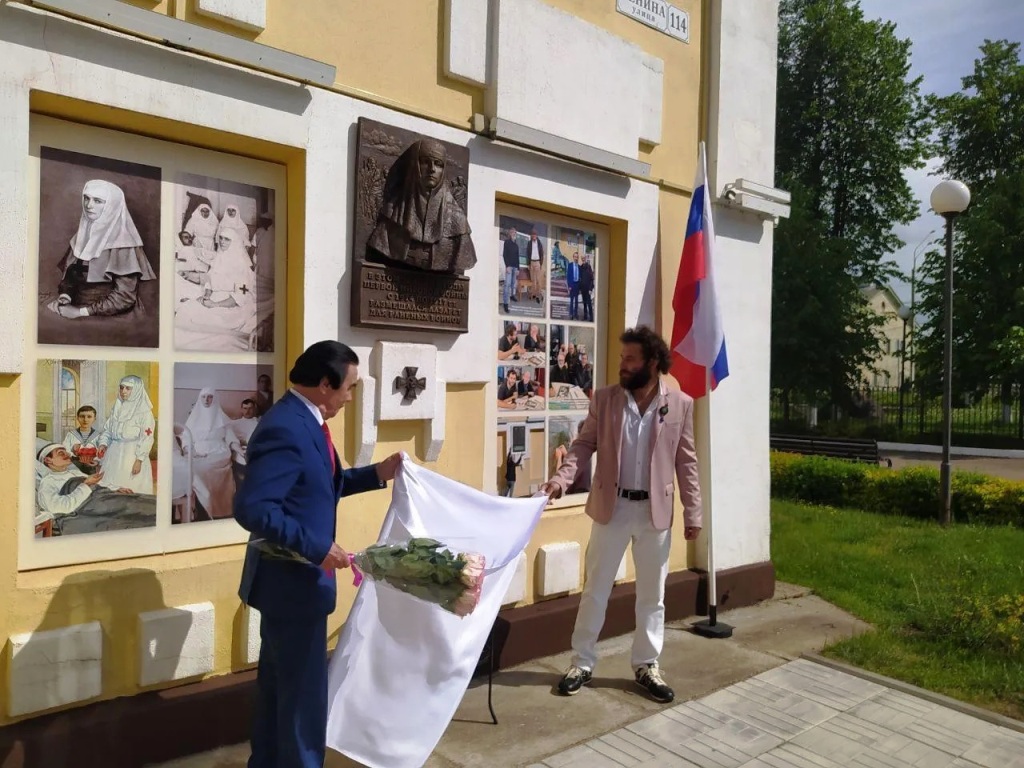
The bronze bas-relief was made by Moscow sculptor Philip Trushin, and financed by the academician and philanthropist Vladimir Yatsuk.

PHOTO: Moscow sculptor Philip Trushin (right) unveils his bas-relief of Empress Alexandra Feodorovna

The rite of consecration of the memorial plaque was performed by the clergyman of the Resurrection New Jerusalem Stavropegic Monastery, Father Paisius.

The memorial plaque, depicts Empress Alexandra Feodorovna, dressed in the uniform of a sister of mercy, set against the background of soldiers of the Russian Imperial Army.

During the First World War, Alexandra Feodorovna organized a whole network of infirmaries, which included 85 institutions for wounded soldiers in Tsarskoye Selo, Pavlovsk, Peterhof, Sablin and other places. Many of the infirmaries were built at the Empress’s own expense.

PHOTO: view of the former infirmary for wounded Russian soldiers in Istra

© Paul Gilbert. 12 June 2023

French Savonnerie carpet in the Corner Reception Room of the Alexander Palace

View of Empress Alexandra’s Corner Reception Room, in the Alexander Palace
PHOTO © Tsarskoye Selo State Museum

The Tsarskoye Selo State Museum have released some beautiful new photos of the Empress Alexandra’s Corner Reception Room, situated in the eastern wing of the Alexander Palace.

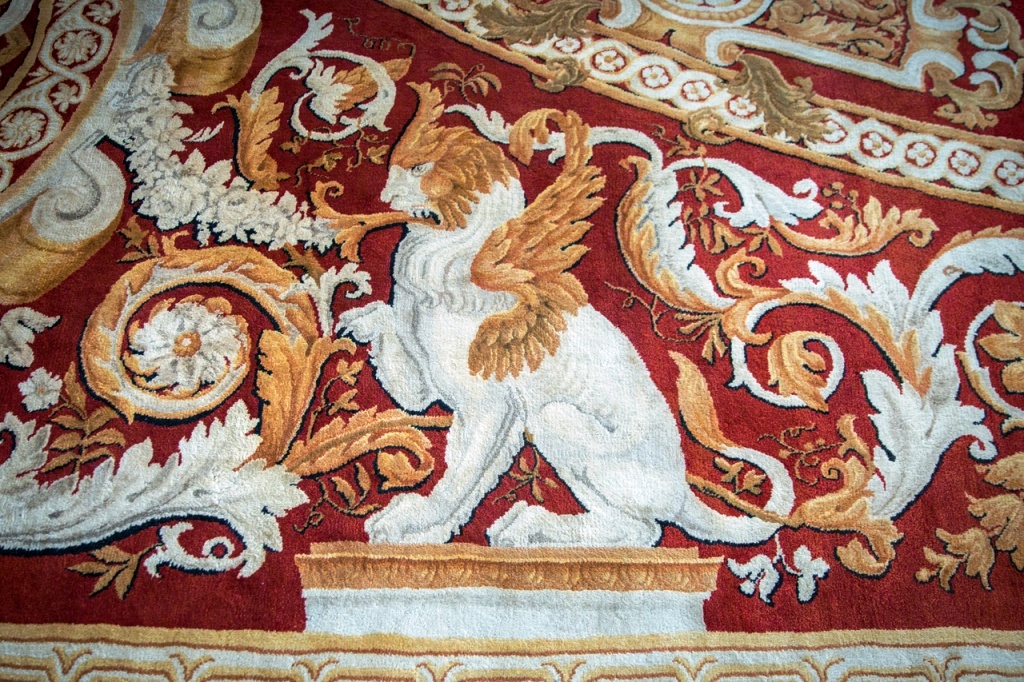
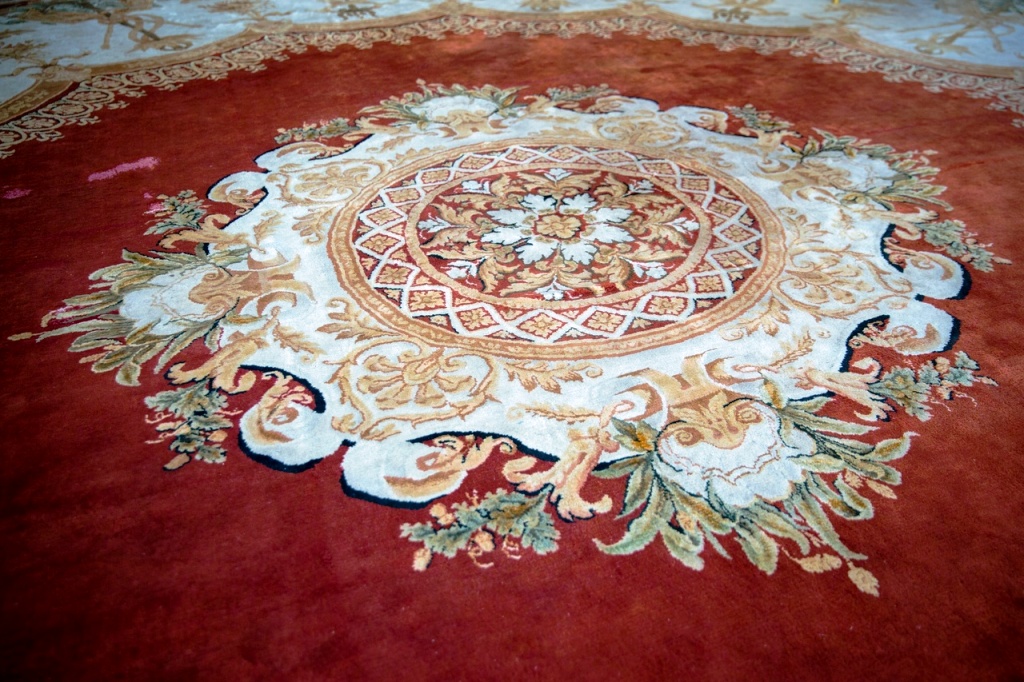
The room is decorated with a luxurious 100 square meter woolen carpet. The central includes griffins, dolphins, masks, and cartouches. The carpet was made at the French Savonnerie manufactory at the beginning of the 19th century and purchased specifically for the Billiard Room (later the Corner Reception Room) of the Alexander Palace. At that time, the carpet was spread out only during the Highest Presence of Emperor Nicholas II and Empress Alexandra Feodorovna. The room was sometimes used for family breakfasts and lunches, at which a “waterproof canvas” was placed over the carpet, in order to protect it from spillage.

The pre-history of the Savonnerie manufactory lay in the concerns of King Henri IV to revive the French luxury arts. When Savonnerie appeared in France in the 17th century, it was considered the most prestigious European manufactory of knotted-pile carpets of its time. It was established in a former soap factory (French savon) on the Quai de Chaillot district of Paris in 1615. Under an eighteen year patent, a monopoly was granted by Louis XIII in 1627 to Pierre DuPont and his former apprentice Simon Lourdet, makers of Turkish-style carpets. Until 1768, the products of the manufactory remained exclusively the property of the Crown. Not only did Savonnerie carpets adorn the rooms of the Louvre and Versailles, they were also among the grandest of French diplomatic gifts.

Detail of the Savonnerie carpet in Empress Alexandra’s Corner Reception Room
PHOTO © Tsarskoye Selo State Museum

Detail of the Savonnerie carpet in Empress Alexandra’s Corner Reception Room
PHOTO © Tsarskoye Selo State Museum

The formation of the individual style of the manufactory was influenced by classical oriental patterns and ornaments, to which elements of European art of different eras were added: luxurious baroque, exquisite rococo, and sophisticated classicism. Drawings of carpet products produced by Savonnerie manufactory are full of various floral ornaments, compositions of vignettes, bouquets and wreaths, decorated with images of heraldic medallions, and zoomorphic motifs.

Carpets were made mainly of wool with the addition of natural silk, which emphasized the beauty of a complex, detailed pattern. It took several months to create a sketch, from which some two hundred to four hundred colours and shades were used in the production of a single carpet.

By the end of the 18th century, the Savonnerie manufactory was producing not only carpets, but also screen panels and tapestries. The decline of the manufactory began during the years of the French Revolution. In 1825, the company experienced financial difficulties and became part of the Manufactory of Tapestries (later the Manufactory of National Furnishings), which resulted in the loss of its once privileged status at the French Court and the aristocracy.

View of Empress Alexandra’s Corner Reception Room, in the Alexander Palace
PHOTO © Tsarskoye Selo State Museum

It is nothing short of a miracle, that the luxurious woollen carpet in the Corner Reception Room of the Alexander Palace, survived the ravages of 20th century Russia, which included two revolutions, a civil war, two world wars, and more than seventy years of Soviet dogma. We are indeed fortunate, that it is once again on display, for all to see, in the reconstructed and restored interiors of the private apartments of Nicholas II and Alexandra Feodorovna, in the eastern wing of the palace.

© Paul Gilbert. 30 September 2022

Why did Nicholas II’s favourite motorcar sport a swastika?

PHOTO: Emperor Nicholas II’s favourite Delaunay-Belleville motorcar, sporting a left-facing swastika (counter clockwise) on the hood. Tsarskoye Selo 1913

The swastika symbol is an ancient religious symbol in various Eurasian cultures, now also widely recognized for its appropriation by the Nazi Party and by neo-Nazis. It continues to be used as a symbol of divinity and spirituality in Indian religions, including Hinduism, Buddhism and Jainism. It generally takes the form of a cross, the arms of which are of equal length and perpendicular to the adjacent arms, each bent midway at a right angle.

In the 1930s the German Nazi Party adopted a right-facing (clockwise) form and used it as an emblem of the Aryan race. As a result of World War II and the Holocaust, in the West it continues to be strongly associated with Nazism, anti-Semitism, white supremacism, or simply evil.

In 19th century Russia, however, the swastika had a completely different meaning. The left-facing swastika (counter clockwise) swastika, best described as a “sacred solar cross”, was adopted as a symbol of the Russian Empire. In the years before the Russian Revolution, it was used on the facades of houses, depicted on icons, clothes and dinner plates, as well as Emperor Nicholas II’s favourite motorcar.

PHOTO: the last diary [1917] of Empress Alexandra Feodorovna, was embroidered with a left-facing swastika (counter clockwise)

In addition, the left-facing swastika (counter clockwise) was a favourite symbol of Empress Alexandra Feodorovna. She wore a talisman in the form of a swastika, wearing it everywhere for happiness, including on her letters from Tobolsk and Ekaterinburg. In a letter dated 16 December 1917 to Anna Vyrubova, she wrote: “Always to be recognized by my sign 卐.”

According to Vladimir Kozlov & Vladimir Krustalev, in her 1917 diary, Alexandra noted the anniversary of a person’s death with a swastika. In Sanskrit, svastika means “well-being”. When her daughter, Grand Duchess Tatiana Nikolaevna gave her mother the little notebook in which the diary was kept, she embroidered a swastika on the cloth cover [depicted in the photo above] she made for it.[1]

In settling in her room in the Ipatiev House at Ekaterinburg, Alexandra inscribed a swastika on a window frame, followed by the date 17 [N.S. 30] April 1917, and another swastika on the wall over her bed.

In addition, investigator Nikolai Sokolov , who investigated the murder of the Imperial family, suggested that persons from the Emperor’s entourage were part of a secret organization. According to him, in their correspondence, among other things, they used the swastika.

NOTES:

[1] Ed. Vladimir Kozlov & Vladimir Krustalev. The Last Diary of Tsarista Alexandra. Yale University Press, 1997

© Paul Gilbert. 2 June 2022