State Russian Musuem receives collection of 180 watercolours by Grand Duchess Olga Alexandrovna

PHOTO: Grand Duchess Olga Alexandrovna, self portrait. 1920
from the Collection of the State Russian Museum, St. Petersburg

On 2nd April 2024, the State Russian Museum[1] in St. Petersburg, added 180 watercolours, painted by Grand Duchess Olga Alexandrovna (1882-1960) to their funds. The collection was handed over to the museum, by the Ministry of Culture of the Russian Federation, during a press conference, held at the Mikhailovsky Palace[1].

The paintings were donated to the museum in November of last year. The generous donation included an additional 46 items from the family of Emperor Alexander III, including drawings, icons, photographs, personal items and jewelry, all of which will be carefully studied by professional art historians of the State Russian Museum.

The collection was in the possession of Olga Nikolaevna Kulikovsky-Romanov (1926-2020), the third wife of Grand Duchess Olga’s eldest son, Tikhon Nicholaevich Kulikovsky (1917-1993). The donation to the museum was made possible thanks to the St. Catherine’s Charitable Foundation and the Ministry of Culture of the Russian Federation.
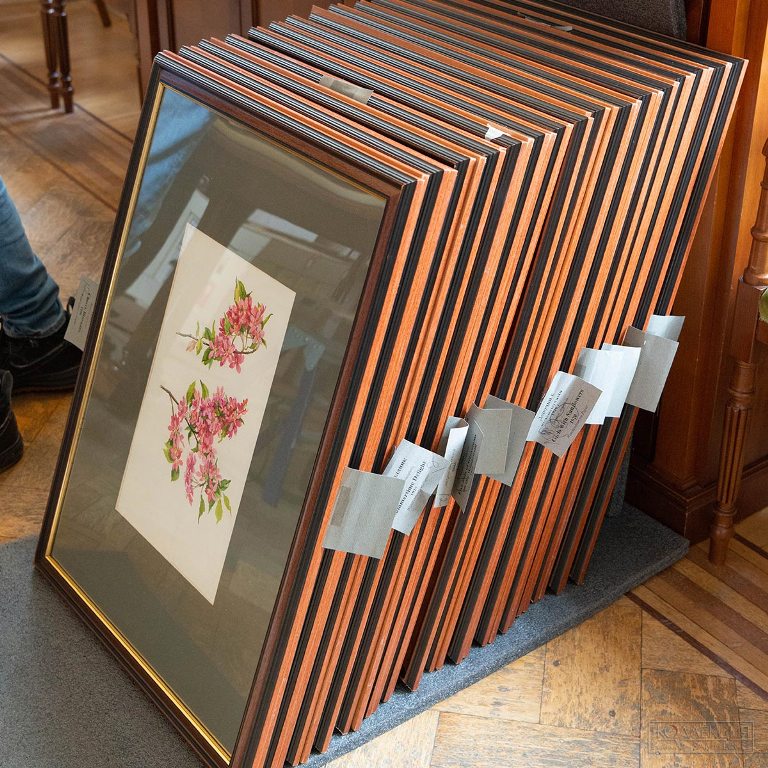
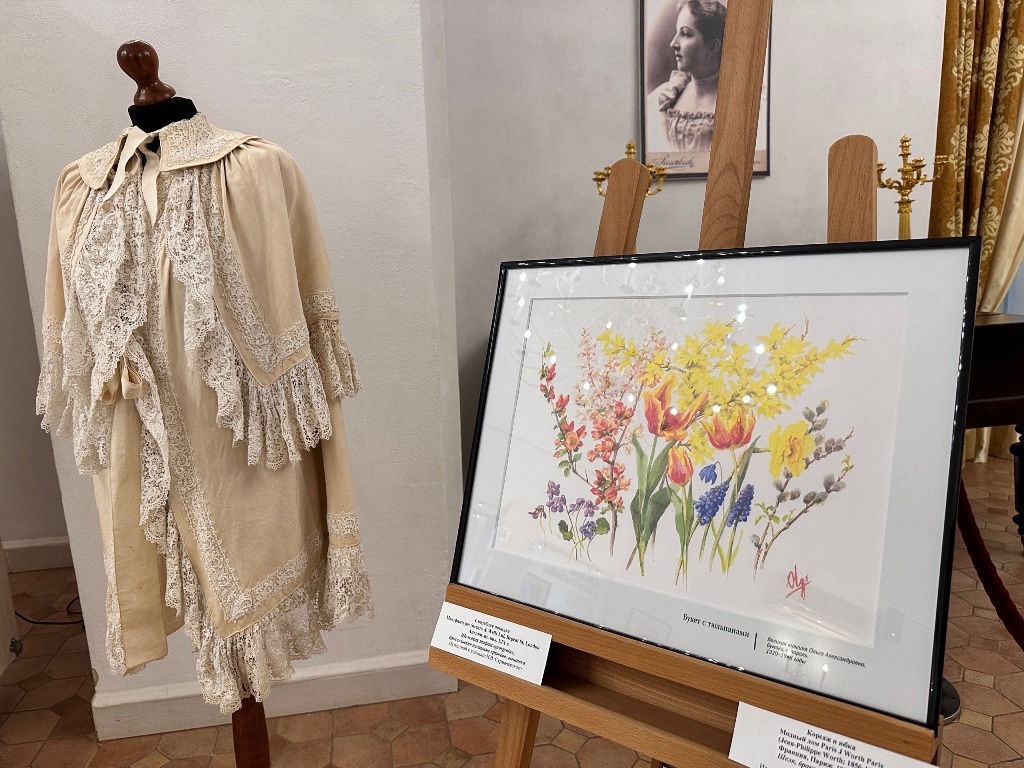
The priceless collection by the youngest daughter of Emperor Alexander III and Empress Maria Feodorovna, and the younger sister of Emperor Nicholas II, included watercolours created in different years of the Grand Duchess’s life: Russian landscapes, family sketches, everyday scenes, bright still lifes and views of the places in which Olga Alexandrovna lived. Her works are represented on both canvas, as well as watercolour sketches in albums.

During her years in Russia, the Grand Duchess patronized the Imperial Society of Russian Watercolorists. Her watercolours were represented in exhibitions organized by the Kuindzhi Society of Artists, who helped to organize exhibitions of the works of young Russian artists.

During the First World War, Olga Alexandrovna opened the First Evgenievsky Hospital at her own expense, which was under the auspices of the Russian Red Cross. It was here, where she worked as a nurse, bandaging wounds, and cared for the wounded soldiers. Even at the front, the Grand Duchess devoted her free time to painting – her watercolors depict scenes in the hospital and portraits of officers. Selected sketches from this period are also included in the collection.
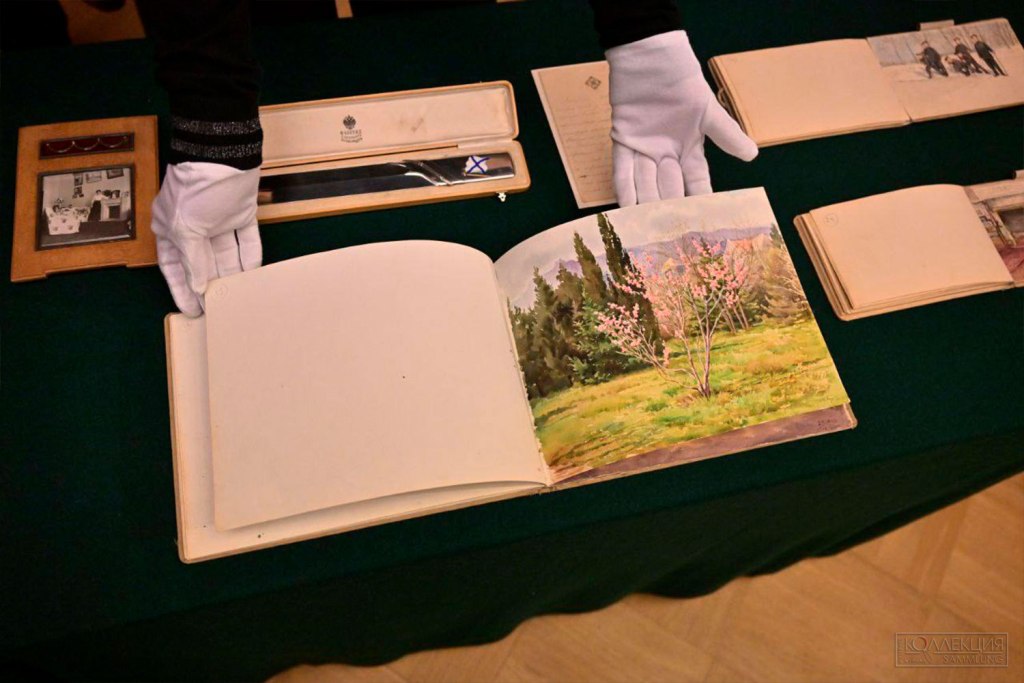
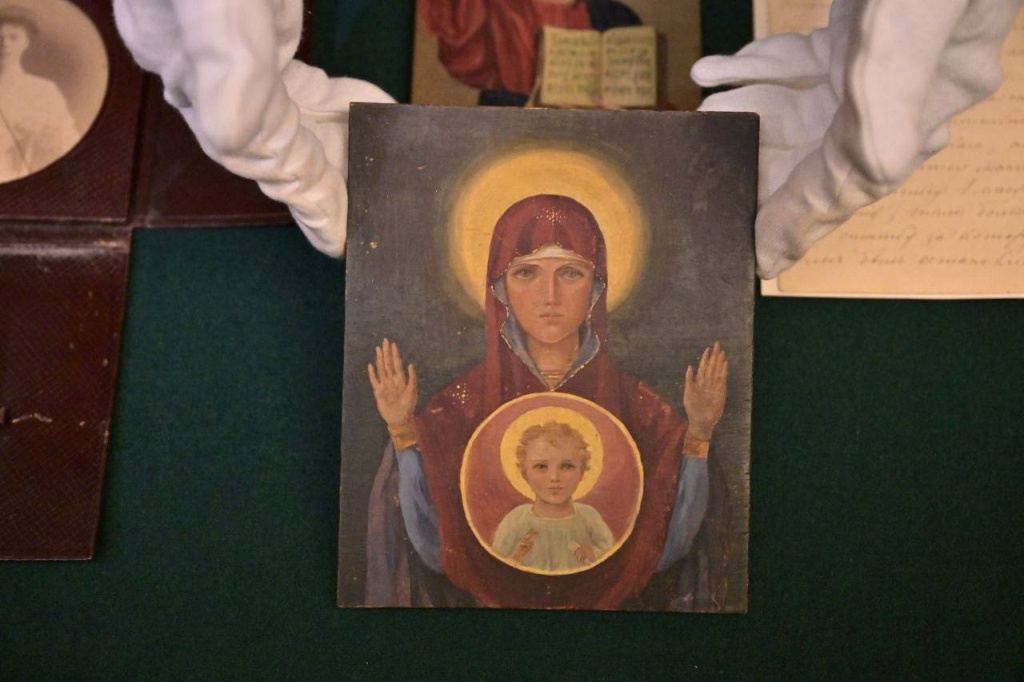
The art collection also includes photo albums of the Romanov family, personal objects and icons. Two of the icons were painted by the Grand Duchess for her son Tikhon, who later created the Foundation of Her Imperial Highness Grand Duchess Olga Alexandrovna, which provided humanitarian aid to Russia. His portrait by the Grand Duchess is also included in the collection.

For the first time in the history of the museum, the collection will be kept entirely in the custody of one specialist, rather than divided into specialized departments. The indivisibility of the collection is necessary for the study of the objects and their connection to in the Russian Imperial Family.

The State Russian Museum are already making plans to host an exhibition showcasing the collection of 180 watercolour by Grand Duchess Olga Alexandrovna, plus the additional 46 items from the family of Emperor Alexander III. A date for the exhibition has yet to be announced.
NOTES”

[1] The State Russian Museum was officially opened on 19th [O.S. 7th] March 1898, as the Russian Museum of His Imperial Majesty Alexander III, who was a connoisseur of Russian art. The museum was established in the Mikhailovsky Palace, a splendid Neoclassical residence of Grand Duke Michael Pavlovich (1798-1849).

The museum was established on 13th April 1895, by order of Emperor Nicholas II to commemorate his father, Alexander III. Its original collection was composed of artworks taken from the Hermitage Museum, the Alexander Palace, and the Imperial Academy of Arts.

After the Russian Revolution of 1917, the museum and its collection were nationalized and renamed the State Russian Museum. Today, the museum is the world’s largest depository of Russian art with more than 400,000 items.

© Paul Gilbert. 9 April 2024
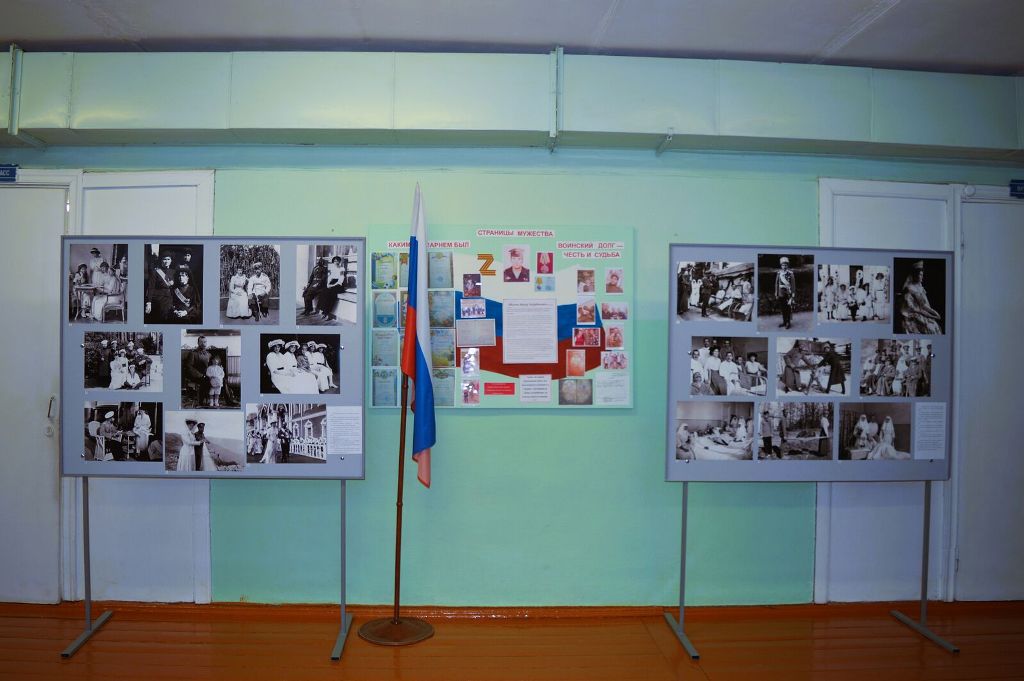
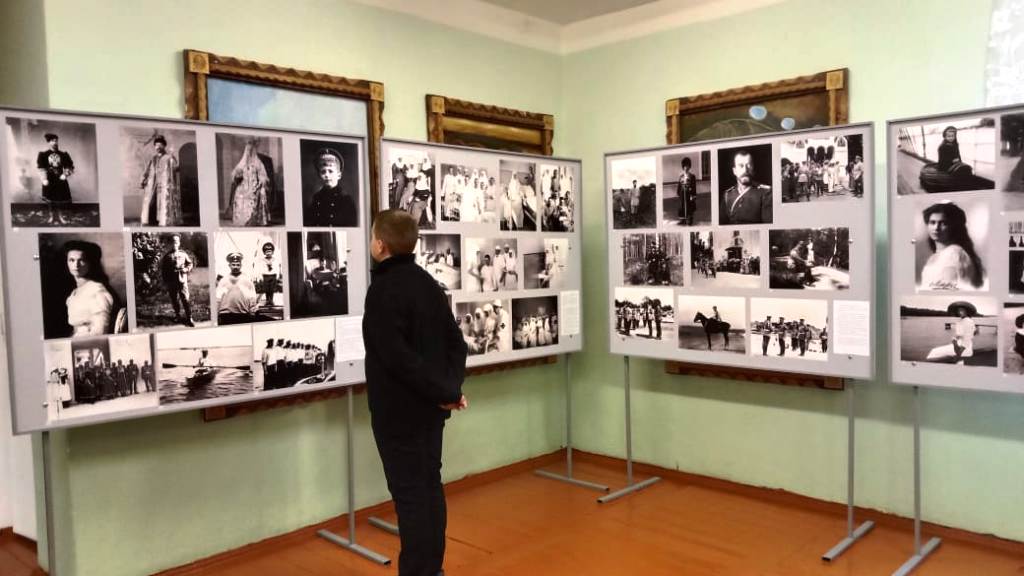
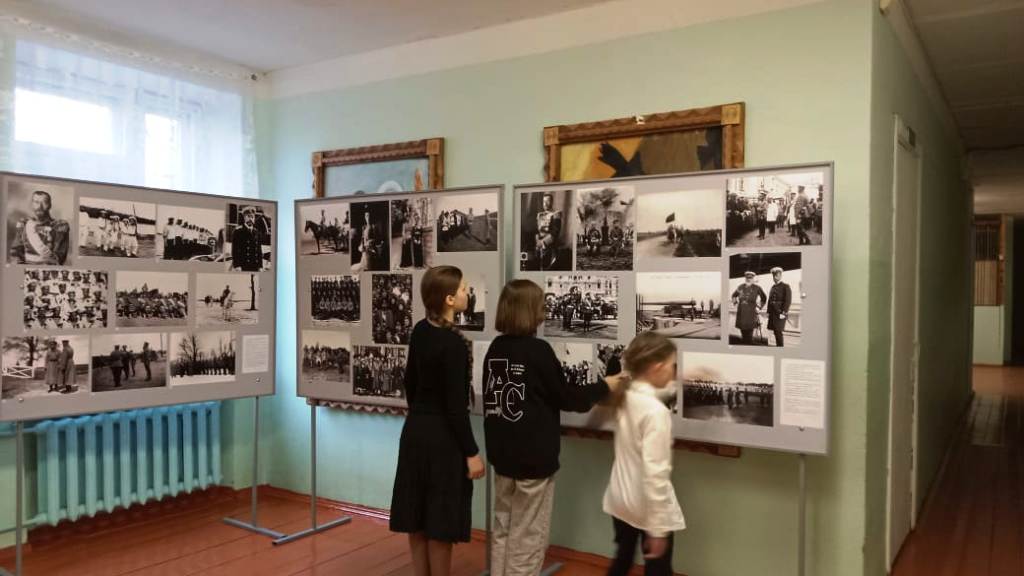
Photo-exhibition teaches Russian schoolchildren about Nicholas II and his family

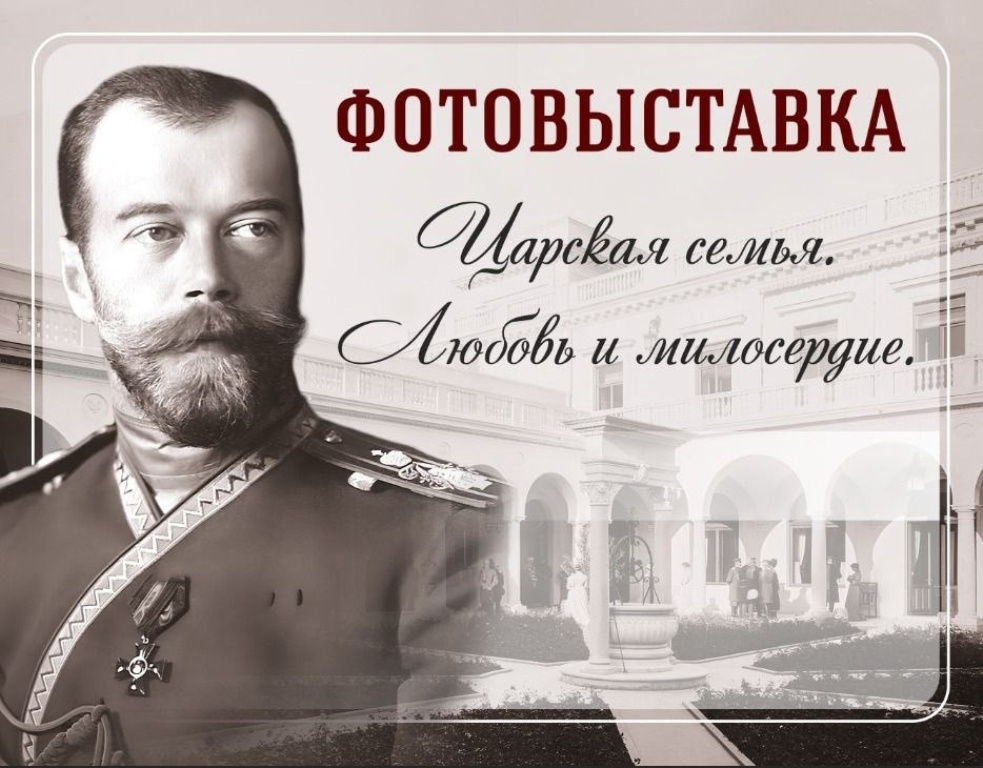
On the day of the Reigning Icon of the Mother of God, 15th March, the monks of the Nikandrova Hermitage opened the photo-exhibition The Tsar’s Family. Love and Mercy, in the secondary school of the village of Dubrovno, Porkhov District, Pskov Region.

The exhibition presents more than 100 vintage photographs that tell about the close relationship within the family of the last Russian emperor Nicholas II. The photographs reflect many aspects of the life of the Tsar’s family during the late 19th and early 20th centuries, including the upbringing of the children, and the warm and loving relationship, which they shared with both their parents and each other.

The brethren of the Nikandrova Hermitage made stands for the exhibition, on which the photographs were displayed. The photographs were provided by the Sretensky Monastery in Moscow.

Hierodeacon Spyridon (Drygailo), a resident of the Nikandrova Hermitage, conducted a special lesson with the schoolchildren and teachers dedicated to the Imperial Family.

The exhibition was open to all residents of the village of Dubrovno, admission was free.

The photo project The Tsar’s Family: Love and Mercy was created in 2016 by the Sretensky Monastery in Moscow. The travelling exhibition has already been presented in Serbia, Germany, Italy, Canada, Argentina, New Zealand, South Africa, Romania, Croatia, Montenegro, Bosnia and Herzegovina, Macedonia, and the Czech Republic. The exhibition has also been presented in many cities of Russia: Moscow, Voronezh, Kursk, Ryazan, Penza, Krasnodar, Belgorod, Velikiye Luki, etc.

*As I have noted in similiar posts, I support any initiative – big or small – to help keep the memory of Nicholas II and his family alive in post-Soviet Russia – PG

© Paul Gilbert. 5 April 2024

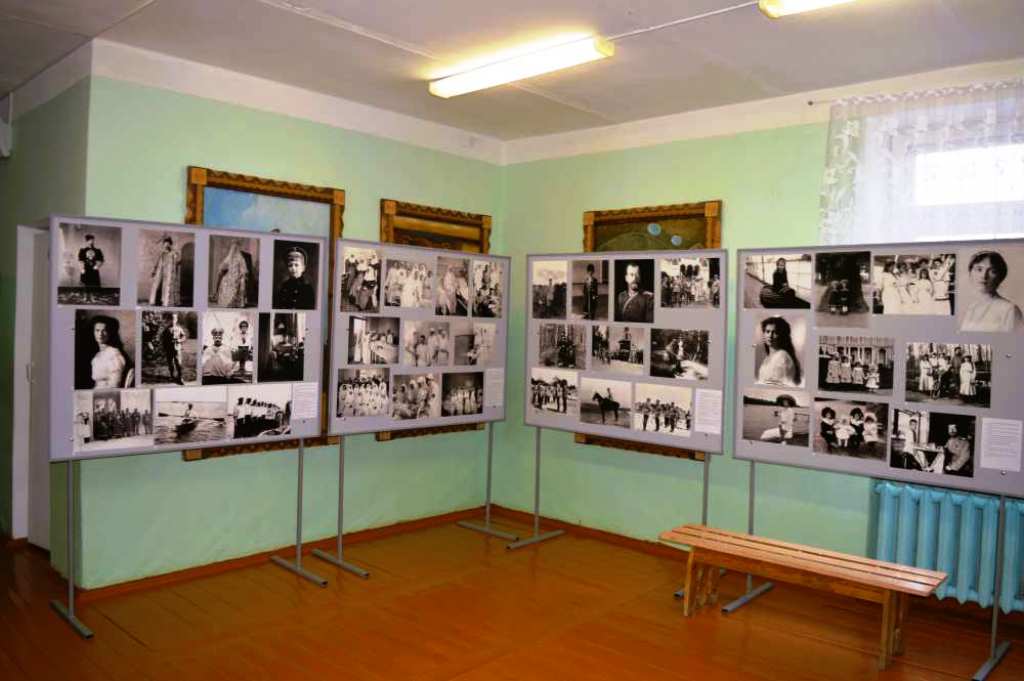
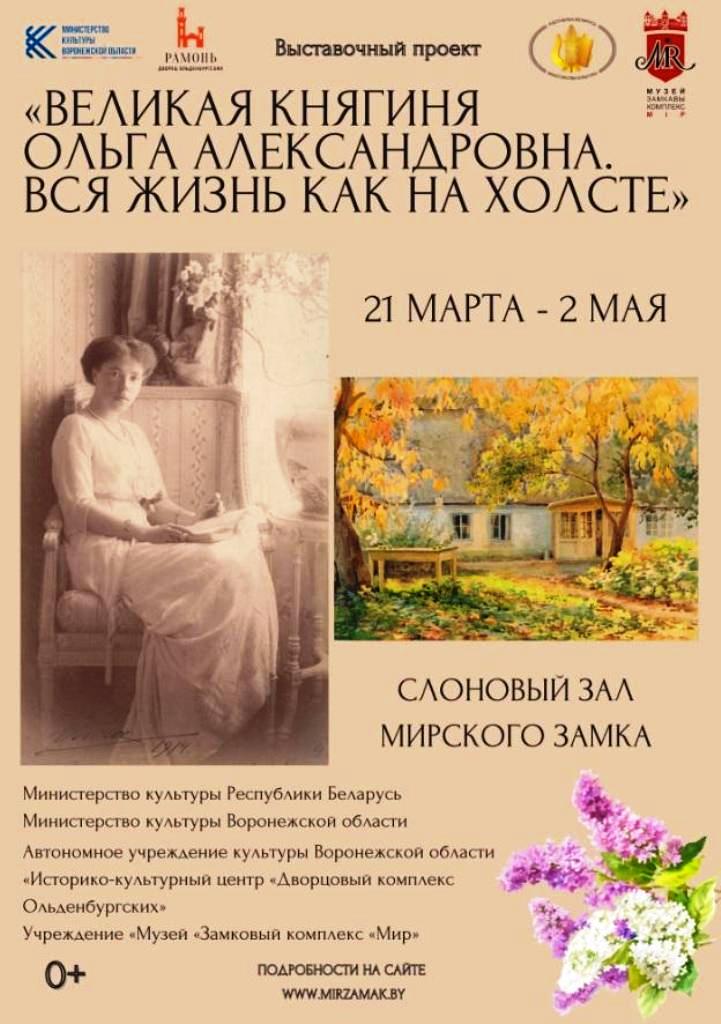
Grand Duchess Olga Alexandrovna exhibit opens in Belarus

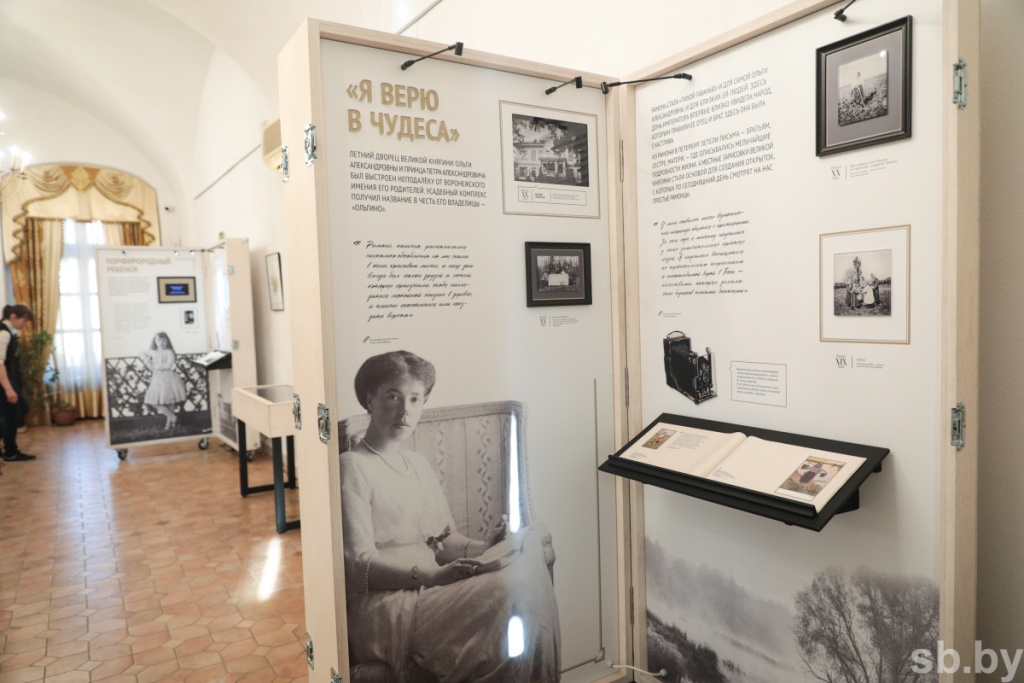
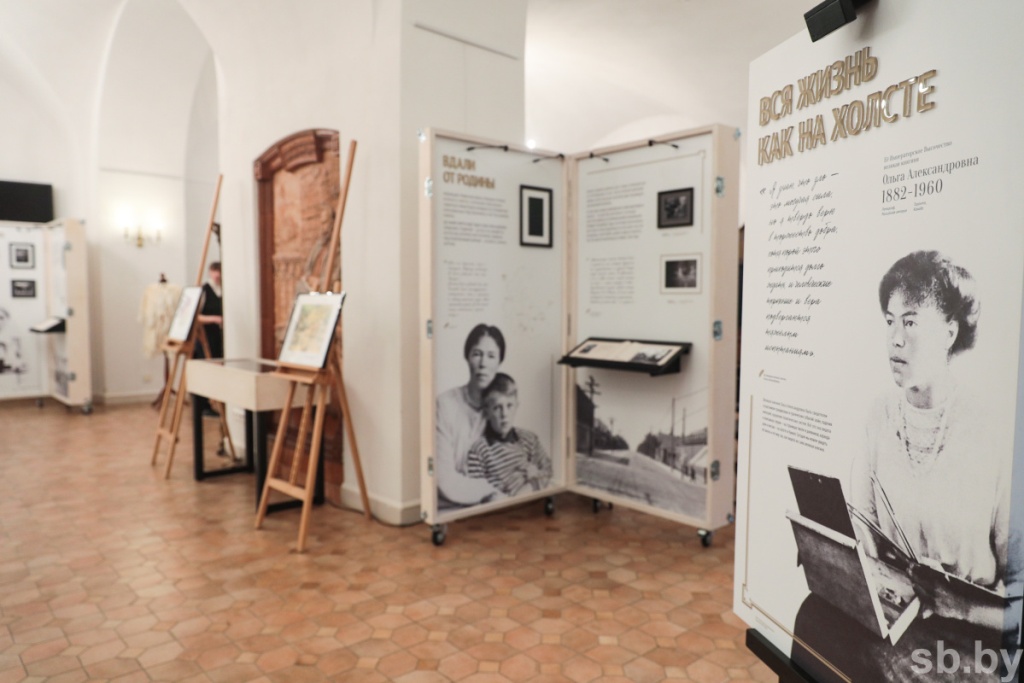
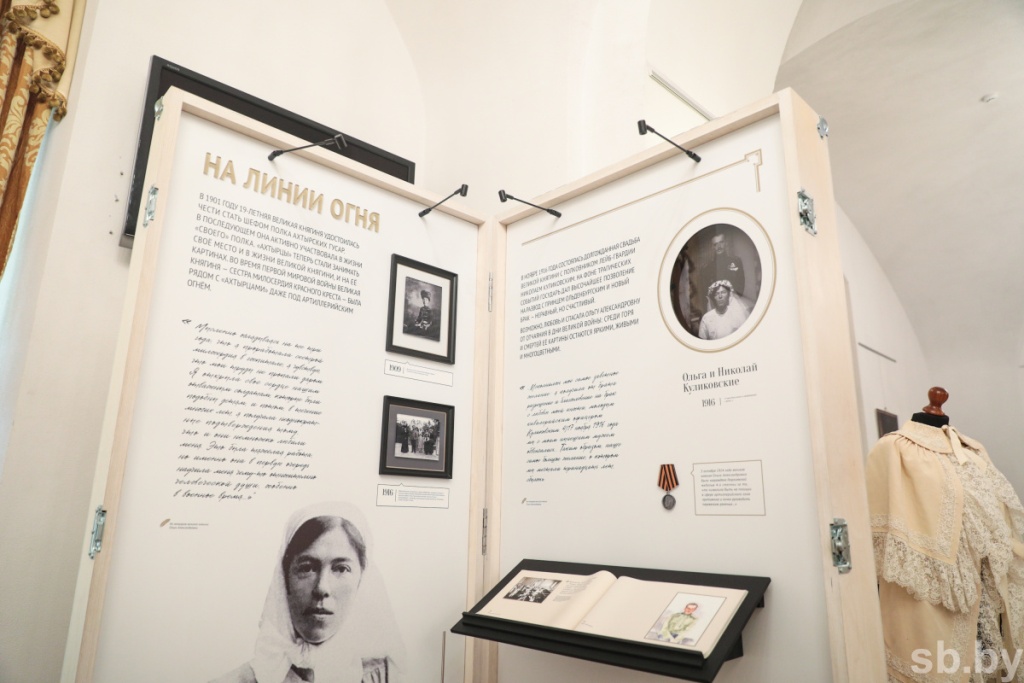
On 21st March 2024, the Grand Duchess Olga Alexandrovna. Life on a Canvas exhibition, opened in Mir Castle, situated in the village of Ramon[1], near Voronezh, Belarus.

According to the Oldenburg Palace Museum, the venue for the exhibition was chosen due to the close family ties between members of the Imperial Family and the Svyatopolk-Mirsky family, the last owners of Mir Castle. For example, the great-niece of Prince Nikolai Svyatopolk-Mirsky, was Princess Sofia Ivanovna Orbeliani (1874-1915), who served as a lady-in-waiting and close friend of Empress Alexandra Feodorovna.

The exhibit presents the Russian years of Grand Duchess Olga Alexandrovna through letters to her brother Emperor Nicholas II, and her nieces: Grand Duchesses Olga, Tatiana, Maria and Anastasia Nikolaevna.

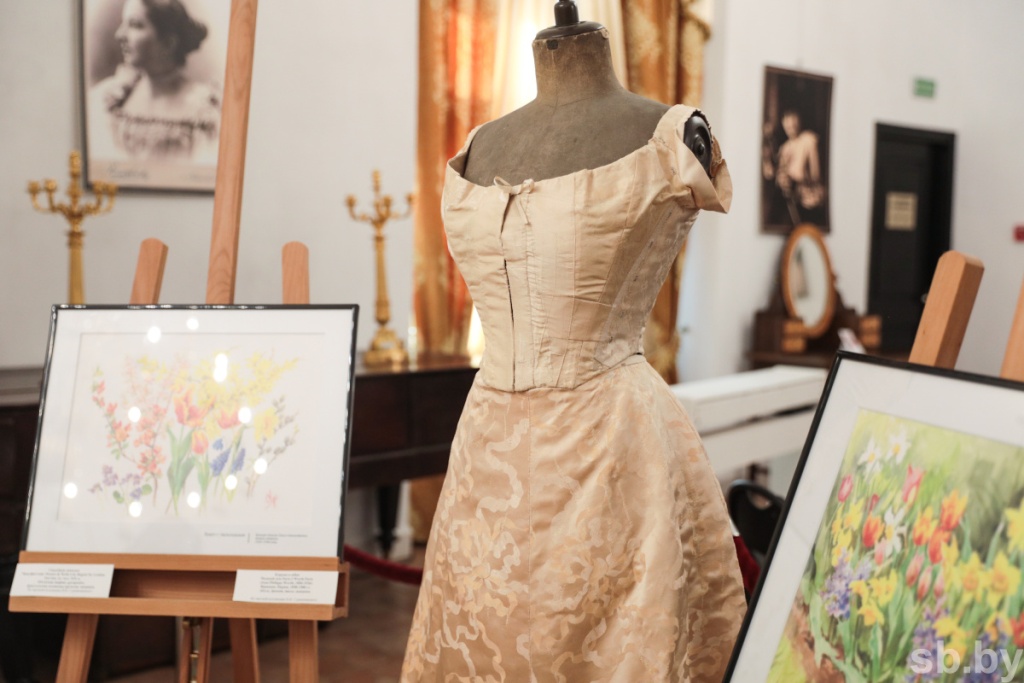
The exhibition is supplemented with items from the funds of the the personal archive of Her Imperial Highness, stored in the Oldenburg Palace: photographs from Olga’s albums, drawings and paintings created in subsequent years, entries from her private diaries, and watercolours.

These exhibits which reflect the heritage of the Grand Duchess before the 1917 Revolution, afford visitors with an opportunity to acquaint themselves with the events of her long and often difficult life.

The life of Olga Alexandrovna, the last Russian Grand Duchess, was filled with trials that rarely fall to the lot of man. But with her kindness, modesty, and courage, she managed to overcome the horrors prepared for her by the 20th century. She was a benefactor of numerous schools, hospitals, almshouses, societies, and during the First World War she became a simple Red Cross nurse.

Interested in painting from her early childhood, Olga Alexandrovna never stopped painting throughout her life. Her works are real and lively, reflecting the happy moments of happy times with family, and the beauty of landscapes, nature, and the elegance of floral compositions.

Never discouraged, Olga was able to see beauty in everything, she was grateful for every new day, simple, humble and bright – this is how she is reflected in her works. In emigration, Olga Alexandrovna’s house became a center for all those who shared the bitter fate of exile. The Grand Duchess continued her charitable activities: her watercolours were exhibited in several European capitals, and the proceeds from the sale went to help Russian emigrants who found themselves in difficult financial situations.

The more one learns about Grand Duchess Olga Alexandrovna, her kindness, her charitably work, her piety, etc., one can truly understand why she remains one of the most beloved and respected members of the Russian Imperial Family and the Romanov Dynasty.

The Grand Duchess Olga Alexandrovna. Life on a Canvas exhibition runs at the Mir Castle until 2nd May 2024.

NOTES:

[1] On 27th July 1901, Grand Duchess Olga married Duke Peter Alexandrovich of Oldenburg (1868-1924). In 1906, the couple settled into ‘Olgino’, their home situated on the Oldenburg estate, in the village of Ramon, near, Voronezh.

In 1915, the couple separated; Olga had no children from her first marriage. On 27th August 1916, Emperor Nicholas II approved the definition of the Holy Synod, which recognized her marriage to Prince of Oldenburg dissolved

© Paul Gilbert. 3 April 2024

‘The Tsar’s Family. Ascent’ exhibition opens in Novocherkassk

On 10th March 2024, The Tsar’s Family. Ascent exhibition, opened in the Ascension Military All-Cossack Patriarchal Cathedral in Novocherkassk, situated in the Rostov district. The cathedral serves as the main church of the Don Cossacks.

The exhibition explores the life, service and spiritual path of Emperor Nicholas II and his family.

On display, are more than 100 photographs, 23 reproductions of famous paintings and portraits, archival documents, military banners from various regiments of the Russian Imperial Army and more.

The project was organized by the press secretary of the Mogilev diocese, Ilya Sidorovich. Exhibits were collected from the funds of the State Archives of the Russian Federation (GARF), the Russian State of Film and Photo Archive (RGAKFD), museums and private collections in Moscow, Tsarskoye Selo, and Mogilev. exhibition

PHOTOS: the exhibition was attended by the Governor of the Rostov Region

The rector of the Ascension Cathedral, Archpriest Georgy Smorkalov, noted that it was no coincidence that Novocherkassk was selected to host the exhibition. Emperor Nicholas II visited Novocherkassk on several occasions and visited the Cathedral Church of the Don Army. It is interesting to note, that one of the few lifetime portraits of Emperor Nicholas II – not held in any museum fund – today, hangs in the “Royal Chambers” of the cathedral.

The travelling exhibition is currently touring Russia and Belarus, and has been held in a number of cities, including Mogilev, where from 1915 to 1917, served as the Headquarters of the Supreme Commander-in-Chief, under Emperor Nicholas II.

The grand opening of the exhibition was attended by the Governor of the Rostov Region, Vasily Golubev, the Minister of Culture of the region Anna Dmitrieva, and local government other officials.

The Tsar’s Family. Ascent exhibition runs until 5th May 2024.

© Paul Gilbert. 13 March 2024
Livadia hosts new exhibition dedicated to the Romanovs in Crimea

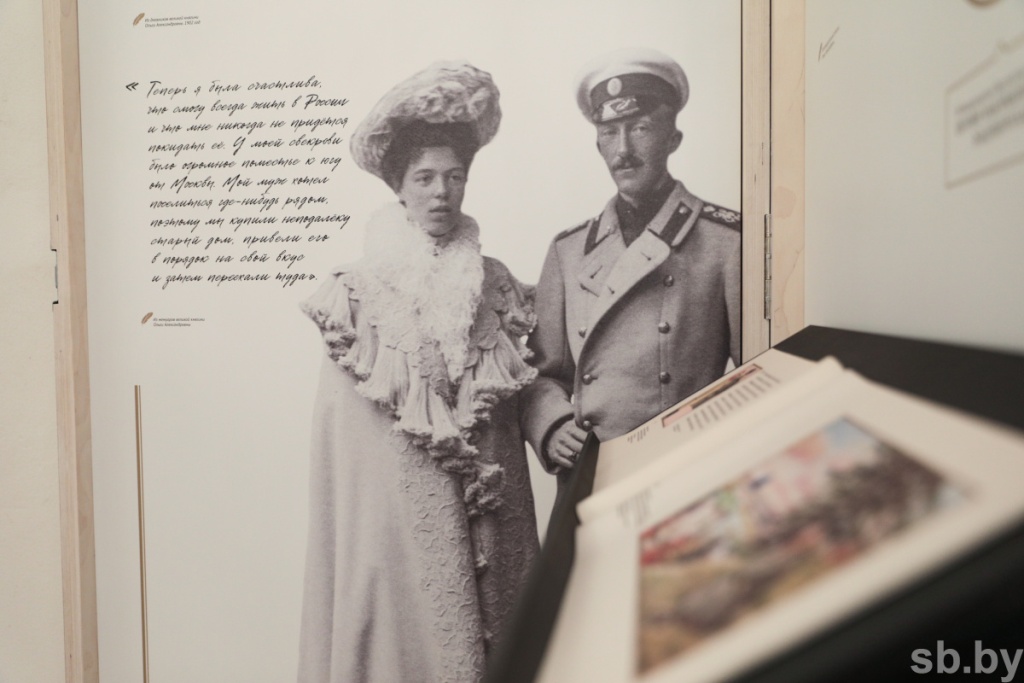
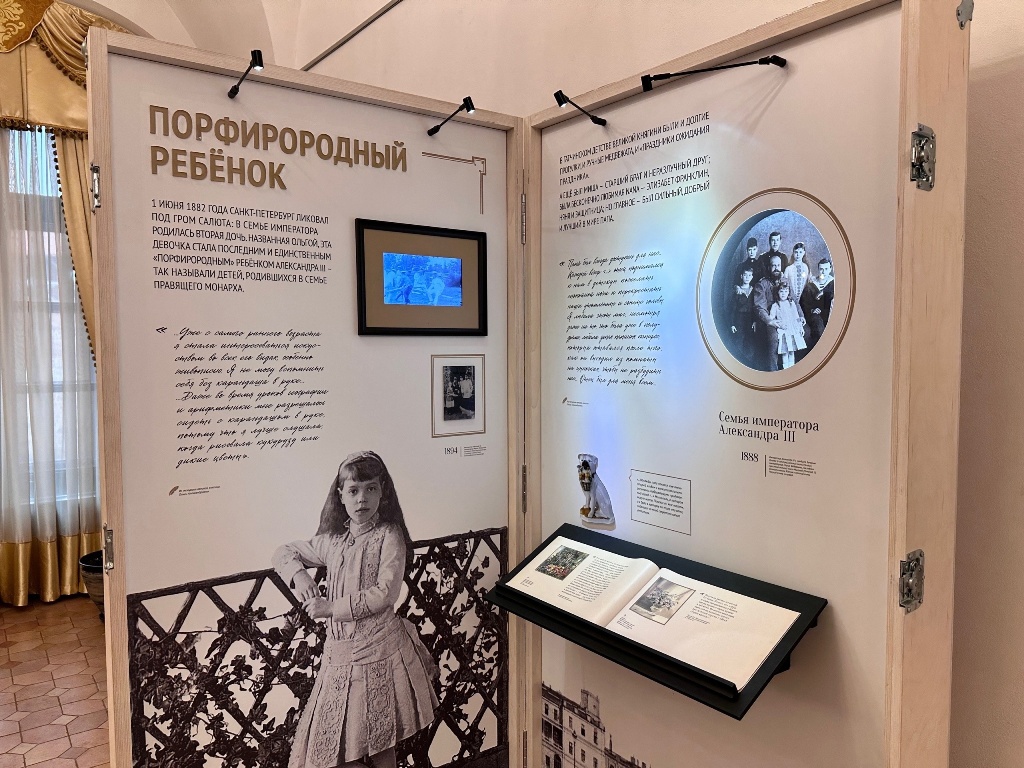
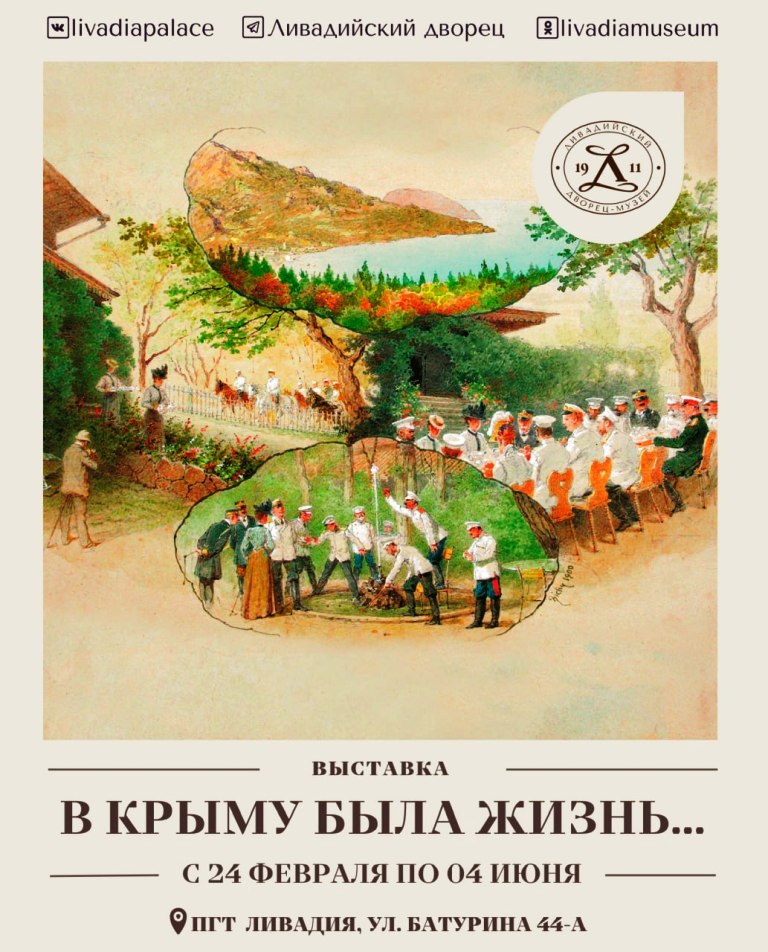
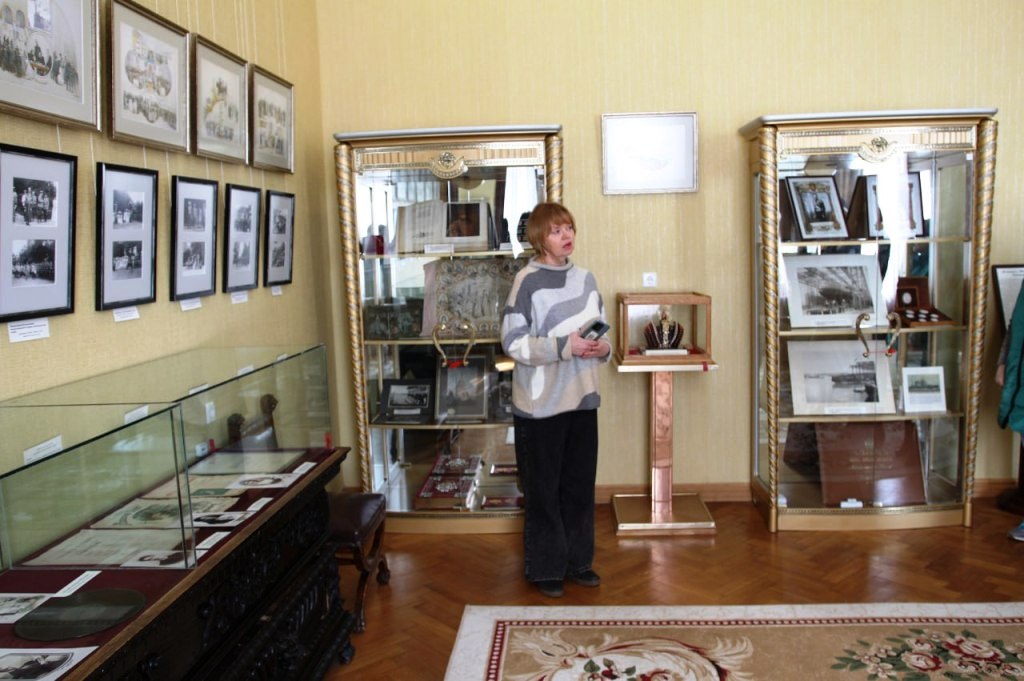
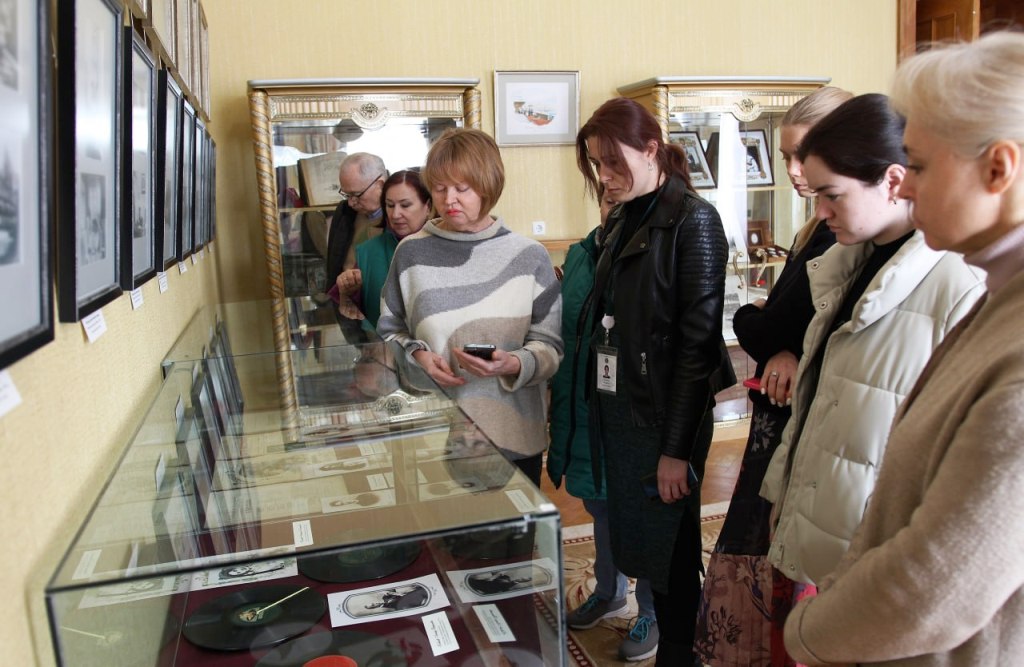
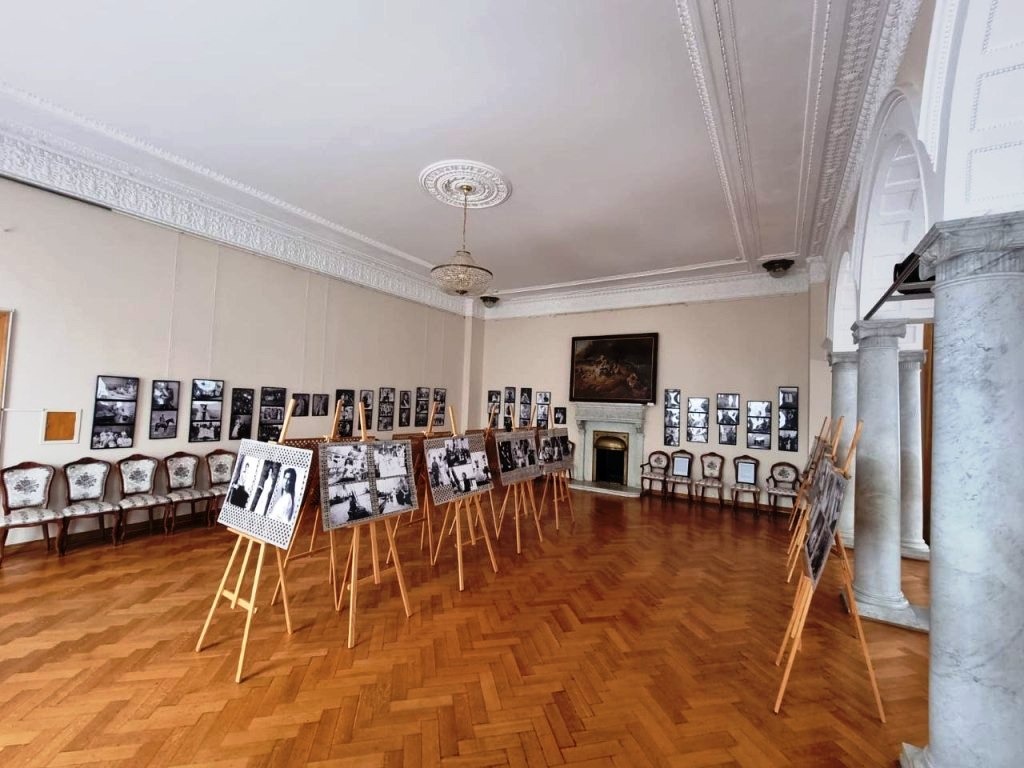
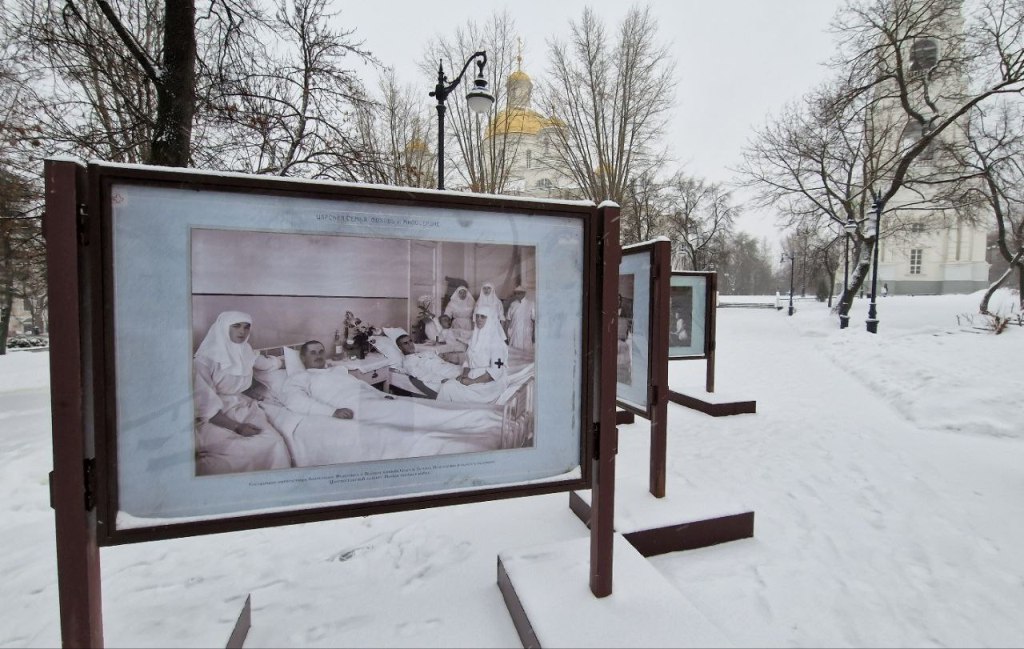
On 24th February 2024, the exhibition There was life in the Crimea…, opened in the Exhibition Hall of Livadia Palace, situated near Yalta on the southern coast of Crimea. The exhibit is part of The Romanovs in Crimea, which is on permanent display on the second floor of the palace.

The exhibition showcases items from the collection of Livadia Palace Museum, and explores the pastimes and private lives of Emperor Nicholas II and his family, during their stays at Livadia during the first decade of the 20th century.

The Tsar and his family were very fond of their southern coastal estate, especially during the warm summer months. It was only on one occasion, that the Imperial Family were forced to extend their stay. During their visit to Crimea in 1900, the Sovereign fell ill with typhoid, forcing the Imperial Family to extend their stay until Christmas. This period is documented in the exhibition with copies of watercolours from the album “Livadia. 1900-1901” by the court painter Mihály Zichy (1827-1906). The watercolours, in the form of collages, depict episodes of the life of the Imperial Family during their stay in Crimea.

Among them are collages depicting the Imperial Family on the Imperial Yacht “Shtandart“; the meeting of Nicholas II with his his cousin Prince George of Greece; the reception of the Turkish envoy; the Tsar during his illness in 1900; the reception of deputies of the Taurida province; the Tsar’s meeting with the Knights of St. George; equestrian riding; playing board games, etc.

It is interesting to note, that in 2015, a number of these watercolours were reproduced in a handsome Russian language album, “Царское имение Ливадия в акварелях и фотодокументах [The Tsar’s Livadia Estate in Watercolors and Photographic Documents] by Lyudmila Aleksandrovna Tikhonova.

Also on display at the exhibition, are sheet music of classical works and phonograph records, which were fashionable at the beginning of the 20th century. The Tsar and his family often listened to these records in the palace’s Music Room. On other occasions, the Empress and her daughters would play pieces from the sheet music on the piano.

The last time that Nicholas II and his family visited the old wooden palaces at Livadia, was in the autumn of 1909. The exhibition features an interecting collection of photographs of this visit.

The old wooden Grand Palace was demolished in 1910, to make way for a new Italian Neo-Renaissance style stone palace, which would serve as the residence of Nicholas II and his family during their visits to Crimea. The Imperial family visited their new white palace in the fall of 1911 and 1913 and in the spring of 1912 and 1914.

© Paul Gilbert. 3 March 2024
Macedonian schoolchildren write about Nicholas II and his family

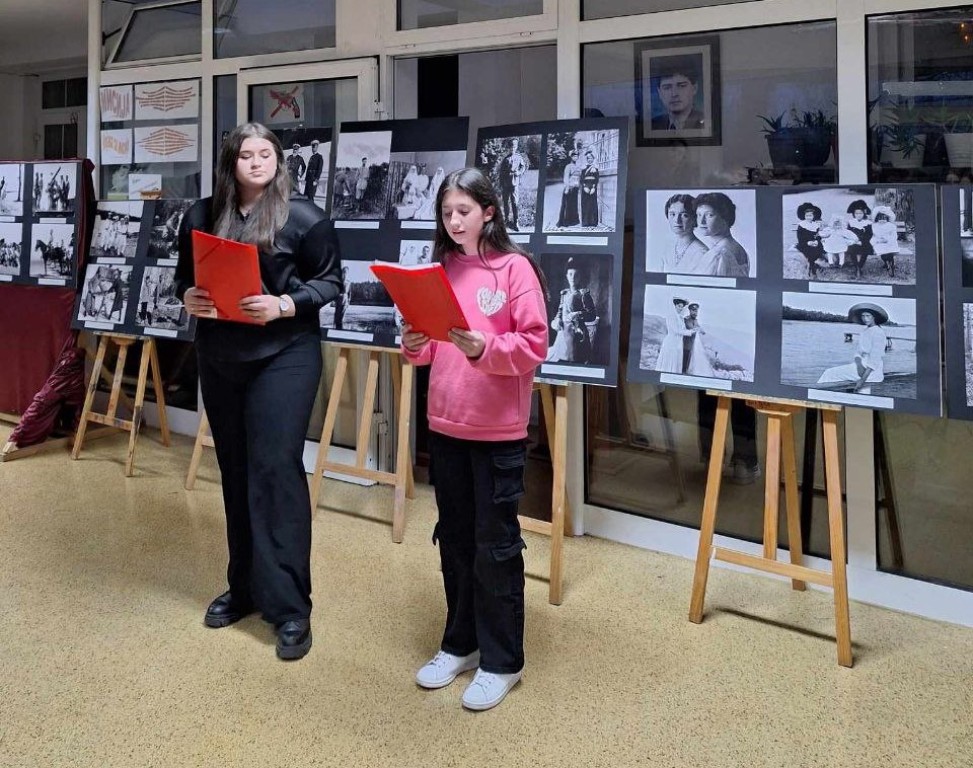
On 23rd February 2024, the Siniša Stoilov Secondary School, in tje town of Zrnovci – situated in the eastern part of North Macedonia – was the venue for a photo-exhibition dedicated to Russia’s last Tsar and his family.

The exhibition named Towards the Russian Tsar. The Romanovs and the Tsar’s Service, presented historical photographs of Emperor Nicholas II and his family. In addition to the photo-exhibition, the organizers held a writing competition for students to participate.

Students of different ages composed poems about the Imperial Family and read them at the opening of the exhibition, while others presented their drawings and watercolours. All participants of the competitions were awarded with certificates of honour.

The photos were provided by the Sretensky Monastery in Moscow and are part of a nationwide project that has been successfully implemented in many cities across Russia and abroad.

*As I have noted in previous posts, I support any initiative – big or small – to help keep the memory of Nicholas II and his family alive in 21st century Russia – PG

© Paul Gilbert. 29 February 2024
Alexander Palace hosts conference dedicated to the creation of the IRMHS

PHOTO: the IRMHS conference was held in the
Large Library Hall of the Alexander Palace

On Tuesday, 27th February 2024, the Alexander Palace at Tsarskoye Selo hosted a conference dedicated to the history of the creation of the Imperial Russian Military Historical Society (IRMHS). The event was a joint effort between the local branch of the IRMHS of the Leningrad region, the Directorate of the IRMHS in Moscow, and the Tsarskoye Selo State Museum.

The organizers chose the Alexander Palace deliberately, since it was here at the beginning of the 20th century that a meeting was held on the creation of the Imperial Russian Military Historical Society took place. The conference was held in the Large Library Hall of the palace.

Vladimir Kazakov, Executive Director of the Regional Branch of the Russian Military Historical Society in the Leningrad Region, read out a welcome address from Vitaly Martynyuk, Executive Director of the Russian Military Historical Society:

– It is symbolic that the conference is being held in such a historic place – in the Alexander Palace, where in 1907 Emperor Nicholas II read the Journal of the Council of the Russian Military History Society and wrote on it: “Deeply sympathizing with the goals of the Society, I willingly accept the title of its Honorary Chairman and bestow on it the title of Imperial.” The activities of the organization fully corresponded to such a high title,” Vitaly Martynyuk emphasized.

He recalled that the Imperial Russian Military Historical Society made a significant contribution to the anniversary celebrations dedicated to the 200th anniversary of the Battle of Lesnaya (1708) and the victory in the Battle of Poltava (1709), as well as the 100th anniversary of the Patriotic War of 1812. With the participation of IRMHS, monuments to Alexander Suvorov in Izmail and Rymnik, Mikhail Skobelev were installed in Moscow, Peter the Great in Kexholm, and Mikhail Kutuzov in the Crimea were created.

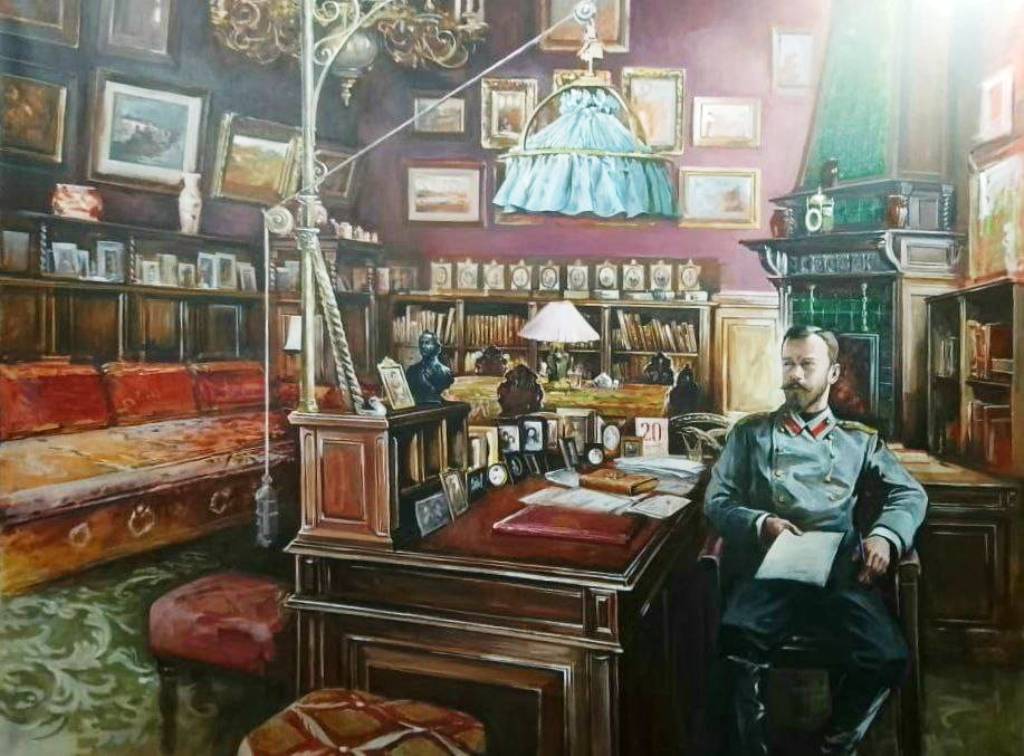
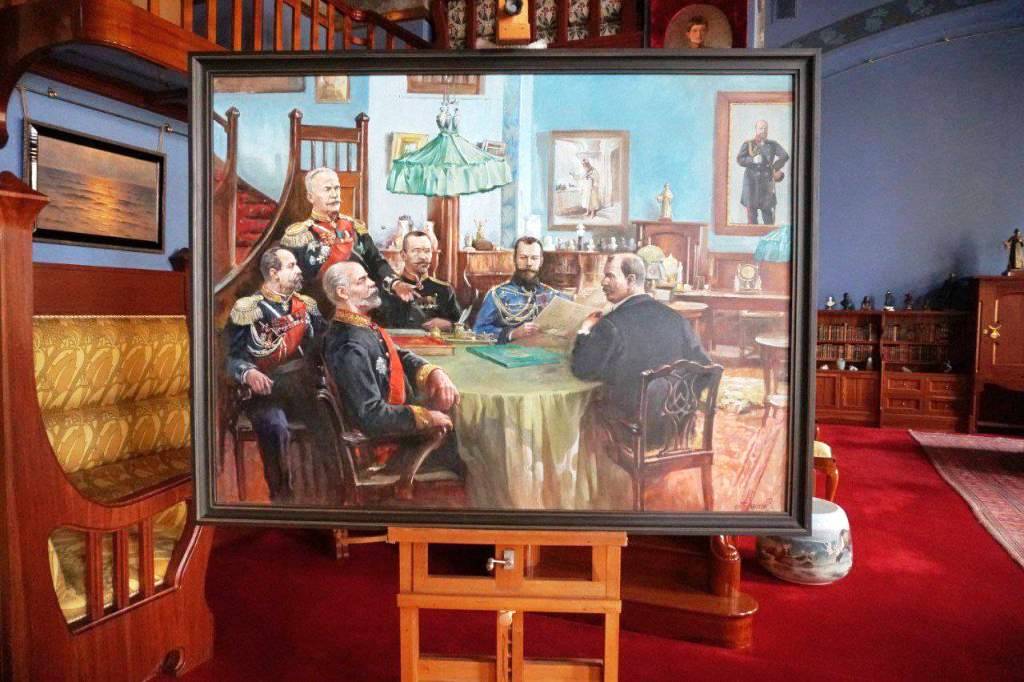
One of the key events of the conference, was the presentation of two new paintings by Andrei Romasyukov, a Russian military artist, an expert in Russian military history of the 19th and 20th centuries were presented in the Working and New Studies of Emperor Nicholas II, located in the eastern wing of the Alexander Palace.

The first painting depicting Emperor Nicholas II granting his consent to the Russian Military Historical Society on 20th October 1907, was unveiled in the Tsar’s Working Study. The second painting depicting the Emperor hosting a reception of the IRVIO Deputation on 22nd November 1907, was unveiled in the Tsar’s New Study.

PHOTOS: Nicholas II in the Tsar’s Working Study by Andrei Romasyukov

***

PHOTOS: Nicholas II in the Tsar’s New Study by Andrei Romasyukov

The conference was attended by researchers from the Tsarskoye Selo State Museum, the A.V. Suvorov Museum, the Museum of Artillery, Engineers and Signal Corps, and the Russian National Library. Historians from the St. Petersburg, Leningrad and Vologda regions presented papers based on their research on the activities of the Imperial Russian Military Historical Society. In addition, archival documents dating from the early 20th century, relating to the creation of the Russian Military Historical Society were presented.

Participants of the conference were given a tour of the former private apartments of Emperor Nicholas II and Empress Alexandra Feodorovna, including the State Halls of the Alexander Palace, which were recreated between Autumn 2015 and August 2021.

© Paul Gilbert. 28 February 2024
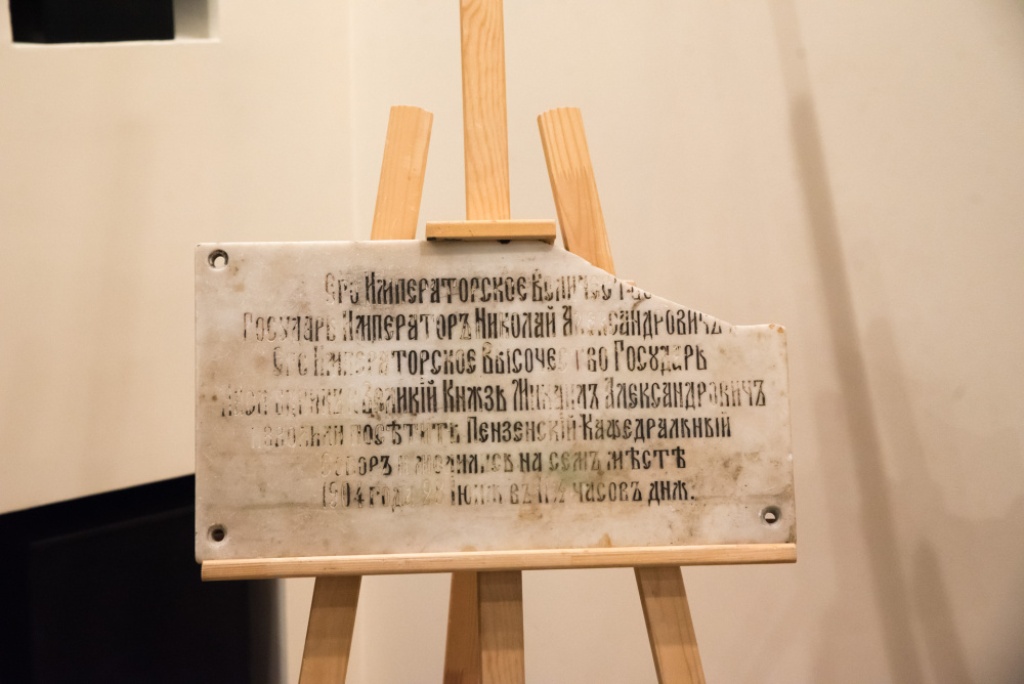
Photo-exhibit dedicated to the family of Nicholas II opens in Sayansk

On 26th January 2024, a photo-exhibition The Tsar’s Family. Love and Mercy. opened in the Siberian city of Sayansk. The exhibition features photographs reflecting the life and work of the last Russian Emperor and his family. The photos are provided by the Sretensky Monastery in Moscow and are part of a nationwide project that has been successfully implemented in many cities across Russia and abroad.

Father Volodymyr Danilko, head of the diocesan department of religious education, delivered an opening speech at the opening of the exhibit. Art historian Svetlana Panina spoke about Christian virtues and relationships within the family of Nicholas II.

The exhibition runs until 2nd March 2024, at the Art Gallery in Sayansk.

The importance of these photo-exhibitions

On 30th January 2024, I read a particularly disturbing article in one of the online Russian media outlets, which told about two schoolchildren fighting over Nicholas II. One boy spoke negatively about the Tsar, referring to him as “a weak ruler” and “Nicholas the Bloody”, while the second boy defended the Tsar. An argyment ensued, followed by a physical altercation, leaving one boy with a broken nose. The fight took place in the school yard of the Petrovskaya School, one of the top 30 private educational institutions in Moscow.

It is very sad that school children are still being taught the same negative Bolshevik myths and lies, which have endured for more than a century, by either their parents or educators, who still embrace the Bolshevik assessment of Russia’s much slandered Tsar. This is one reason WHY, these photo-exhibitions are so important in 21st century Russia. They provide children with a more honest and truthful assessment of the life and reign of Nicholas II.

*As I have noted in previous posts, I support any initiative – big or small – to help keep the memory of Nicholas II and his family alive in 21st century Russia – PG

© Paul Gilbert. 9 February 2024
Livadia Palace hosts new exhibit dedicated to the family of Nicholas II

On 14th January 2024, with the blessing of His Eminence Tikhon, Metropolitan of Simferopol and Crimea, the photo exhibition The Tsar’s Family. Love and Mercy, opened at the Livadia Palace in Crimea.

The exhibition presents more than 100 vintage photographs that tell about the close relationship within the family of the last Russian emperor Nicholas II. The photographs reflect many aspects of the life of the Tsar’s family during the late 19th and early 20th centuries, including the upbringing of the children, and the warm and loving relationship, which they shared with both their parents and each other.

In addition, the photo exhibition also shows the Tsar’s Family’s dedication to acts of charity and their service to the Fatherland, and a wonderful example of Russian family traditions and unshakable spiritual values.

The rector of the Church of the Exaltation of the Cross, Archpriest Dimitry Gotskalyuk, in his welcoming speech noted the special symbolic and cultural significance of the photo project for Crimea. For many decades, the inhabitants of the blessed land of Taurida have revered the Holy Royal Martyrs as the patron saints of the family. The life of the Imperial Family is not only an example of service to people and the Fatherland, but also an example of Russian family traditions and unshakable spiritual values.

The photo exhibition is a joint project of the Church of the Exaltation of the Cross [the Imperial family’s church adjacent to the Livadia Palace], and the Livadia Palace State Museum, with the support of the Sretensky Monastery in Moscow.

The photo project The Tsar’s Family: Love and Mercy was created in 2016 by the Sretensky Monastery in Moscow. The travelling exhibition has already been presented in Serbia, Germany, Italy, Canada, Argentina, New Zealand, South Africa, Romania, Croatia, Montenegro, Bosnia and Herzegovina, Macedonia, and the Czech Republic. The exhibition has also been presented in many cities of Russia: Moscow, Voronezh, Kursk, Ryazan, Penza, Krasnodar, Belgorod, Velikiye Luki, etc.

The exhibition runs until 19th May 2024, in the Music Salon of the Livadia Palace

*As I have noted in previous posts, I support any initiative – big or small – to help keep the memory of Nicholas II and his family alive in 21st century Russia – PG

© Paul Gilbert. 20 January 2024

Outdoor photo-exhibit dedicated to the family of Nicholas II opens in Penza

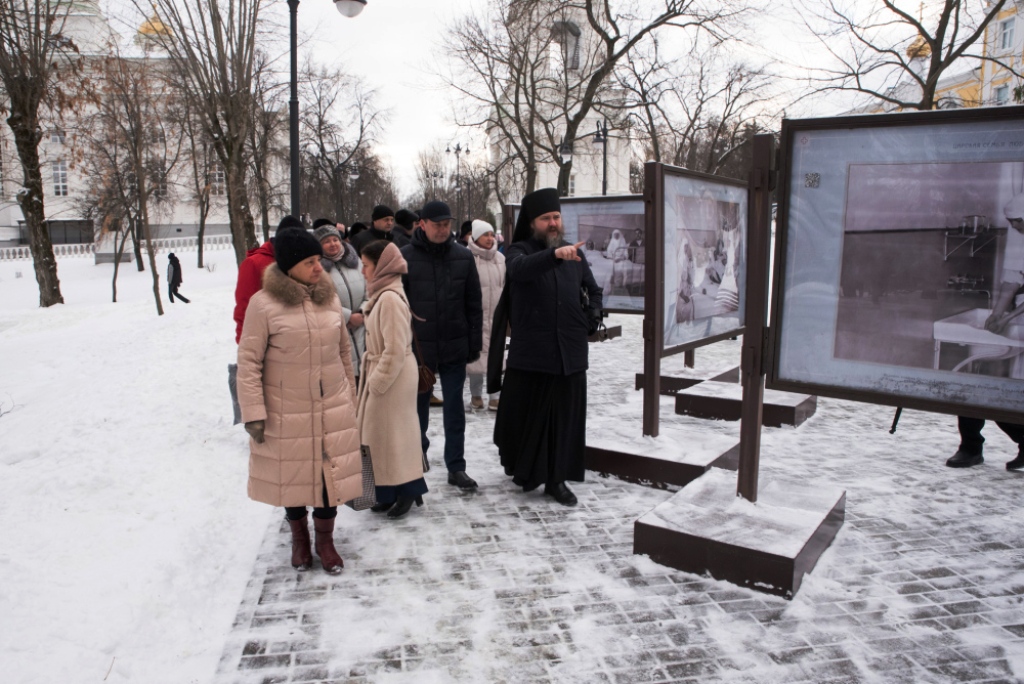
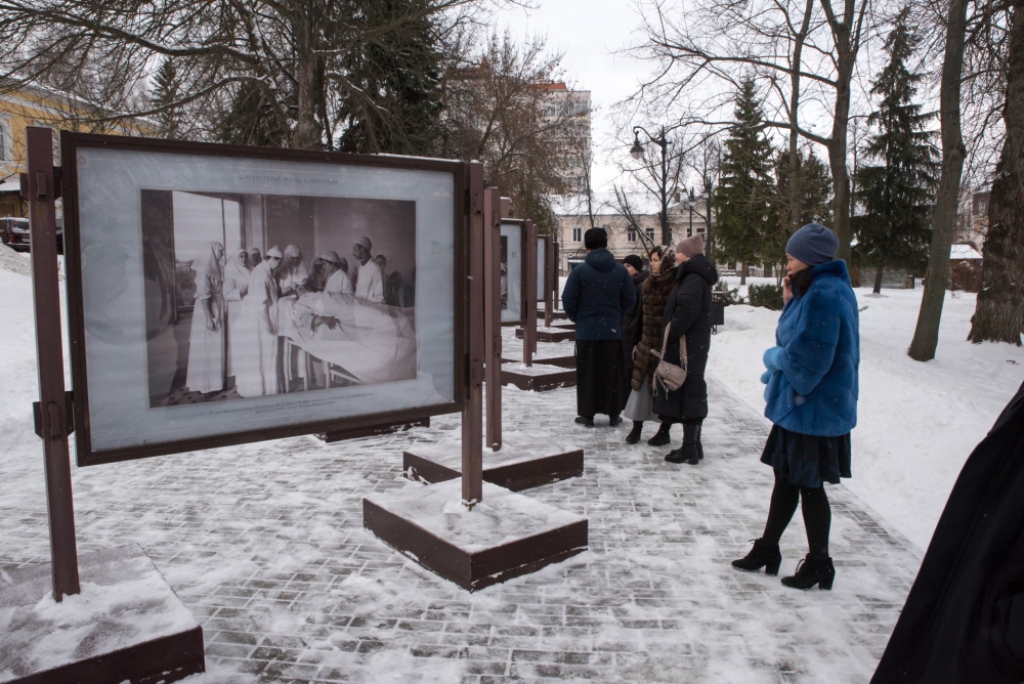
On 20th December 2023, an outdoor photo-exhibition dedicated to Emperor Nicholas II and his family opened near the Spassky Cathedral in Penza. Penza is the second Russian city after Moscow, where these unique photographs are presented to the general public in an outdoor setting.

The travelling exhibition The Tsar’s Family: Love and Mercy was previously held near the Sretensky Monastery in central Moscow from 16th October 2023 to 16th November 2023.

The Penza exhibit opened in a tree-lined alley located between the Spassky Cathedral and the Penza Diocesan Administration Building. Most of the photographs presented at the exhibition are dedicated to the participation of the Imperial Family II in matters of charity and service to others and the Fatherland.

Of particular note are selected photographs dedicated to the service of Empress Alexandra Feodorovna and the Grand Duchesses as nurses in infirmaries and hospitals during the First World War.

The Tsar’s Family: Love and Mercy photo project was created in 2016 by the Sretensky Monastery in Moscow. The creator of the project, a resident of the Sretensky Monastery, Hieromonk Ignaty (Shestakov), gave lectures on the Tsar and his family at two universities: Penza State University and the Penza Artillery Engineering Institute.

***

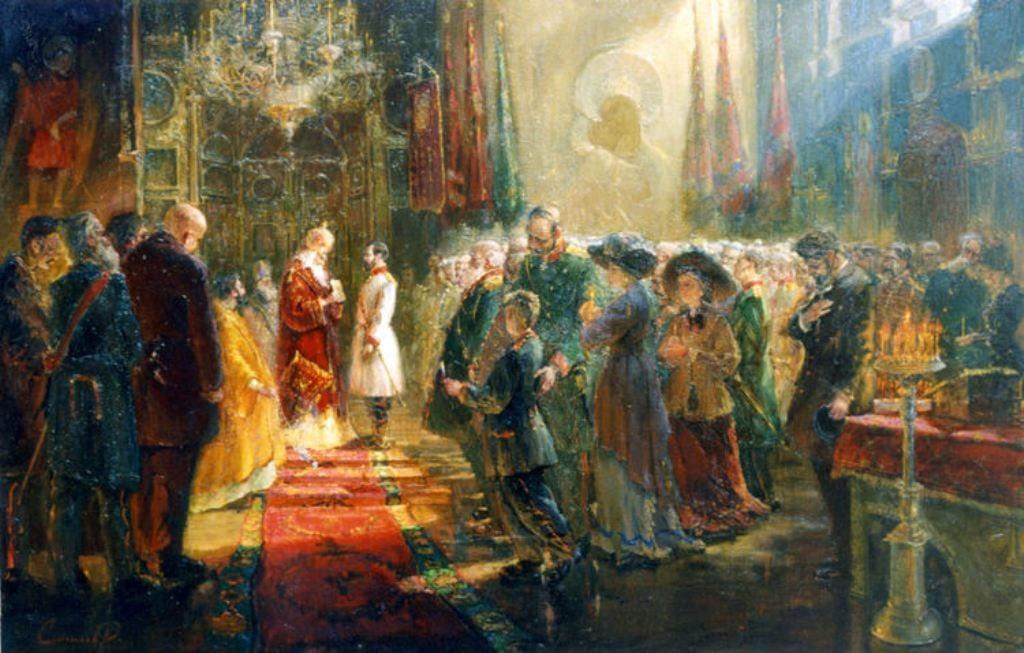
“The old buildings and streets of Penza remember the visit of Emperor Nicholas II to the city on 28th June 1904. During his visit, the Tsar attended a review of the troops going to the Russo-Japanese War, after which he attended a Divine Liturgy in the Spassky Cathedral.

In memory of Emperor Nicholas II’s visit to Penza, a memorial plaque was installed on one of the columns of the Spassky Cathedral, which was considered lost after the destruction of the cathedral by the Soviets in 1934.

In the late 1990s, this artifact was found by the famous Penza collector Igor Sergeevich Shishkin, who kept it all these years until June 2022, on the day of the consecration of the revived Spassky Cathedral by Patriarch Kirill. On this day, Igor Sergeevich handed over a memorial plaque to the Penza diocese.

There are plans to have the memorial plaque reinstalled to its original place in the Spassky Cathedral, next to the new icon of Nicholas II, for which a case is now being made.

A painting dedicated to this event was painted in the 1990s by Penza artist Denis Santalov. The painting depicts Nicholas II standing before the priest, who offers the Tsar an icon, which he in turn would kiss and make the sign of the cross.

© Paul Gilbert. 17 January 2024