Directors of Museum of Nicholas II and Livadia Palace meet in Crimea
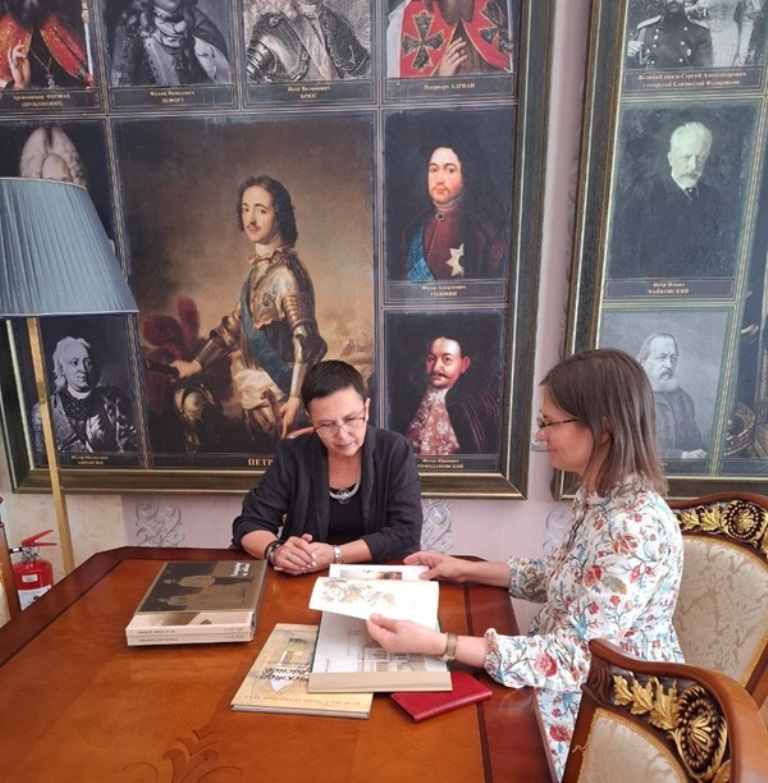
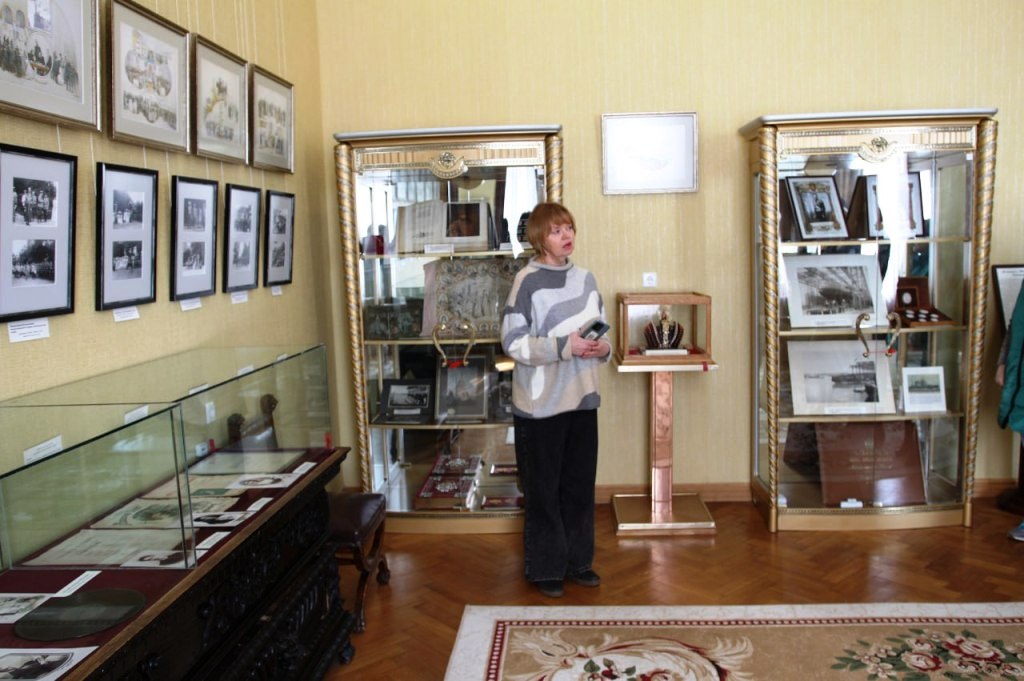
PHOTO: Larissa Kovalchuk and Anna Sadrieva at Livadia Palace

On 11th August 2025, Livadia Palace hosted a meeting between the new Director of the Livadia Palace Larissa Kovalchuk and the President of the Nicholas II Foundation, who also serves as the Director of the Museum of Emperor Nicholas II in Moscow, Anna Alexandrovna Sadrieva. Together, the two parties agreed on mutual cooperation and discussed plans for future joint exhibitions.

The Emperor Nicholas II Foundation was created on 21st May 2021, to support the Museum of Emperor Nicholas II (Moscow), as well as other initiatives to help restore and disseminate the historical truth about Russia’s much slandered Tsar. During the last 4 years, the Foundation have hosted dozens of events, offered hundreds of museum tours, while expanding their collection with new acquisitions.

The Museum of Emperor Nicholas II (includes VIDEO) is based on the unique collection of the famous Russian art historian Alexander Vasilyevich Renzhin, which was formed over the course of 35 years and contains more than 3.000 authentic objects dating from 1868 to 1918, including personal items which belonged to Emperor Nicholas II and members of his family.

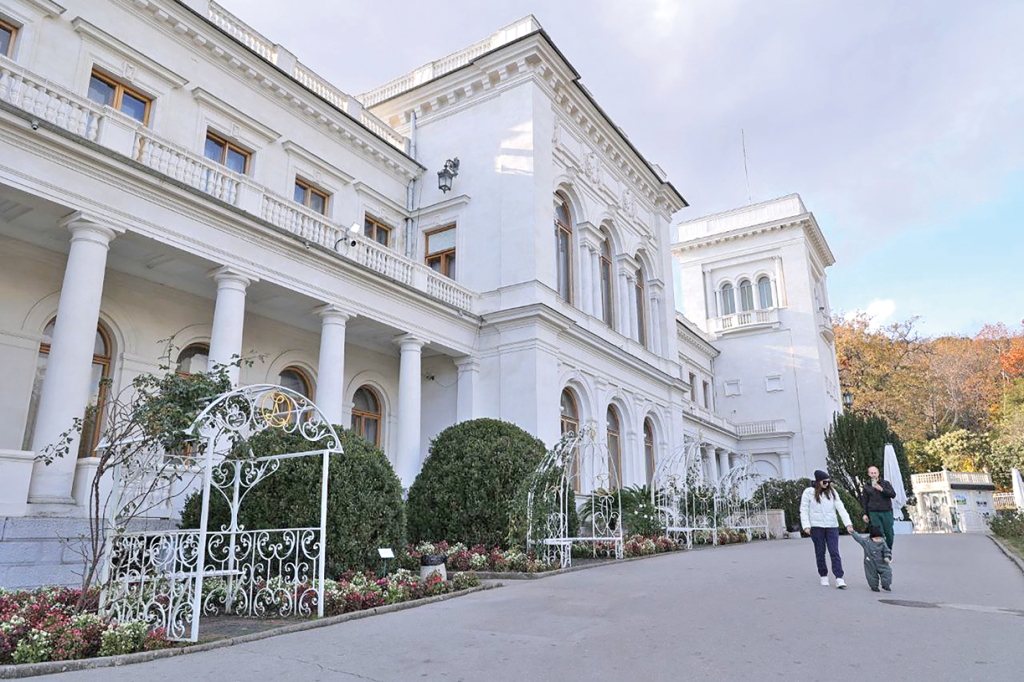
Livadia was a favorite vacation spot for the Imperial Family, overlooking the Black Sea on the southern coast of Crimea. Here, among the dense greenery of the centuries-old park, in addition to other buildings of the former estate, the New Grand Imperial Palace, made under the direction of the architect Nikolai Petrovich Krasnov (1864-1939) for the last Russian Tsar, stands out.

Emperor Nicholas II spent about 4 million gold rubles on the palace. The palace contains 116 rooms, with interiors furnished in different styles. In November 1911 Grand Duchess Olga Nikolaevna celebrated her 16th birthday at Livadia. The Imperial family visited Livadia in the fall of 1911 and 1913 and in the spring of 1912 and 1914, often spending months at a time.

In 1922, the former Imperial Residence was opened to the public as a museum, however, it closed 5 years later due to a lack of visitors. On 30th April, 1918, German troops entered Livadia and immediately began to plunder the palace. After the end of World War II, Franklin Delano Roosevelt (1882-1945), the 32nd President of the United States, expressed an interest in buying Livadia Palace. In July 2022, Livadia Palace marked its 100th anniversary as a museum. Sadly, nearly all of the palace’s former furnishings were lost.

The beginning of discussions and cooperation between the two large museums dedicated to the life and reign of Emperor Nicholas II, and the everyday life of his family, is a step towards joint educational projects and exhibitions that will help immerse visitors in Imperial Russian history during the late 19th to early 20 centuries.

© Paul Gilbert. 12 August 2025
Nicholas II’s study in Livadia Palace to be recreated

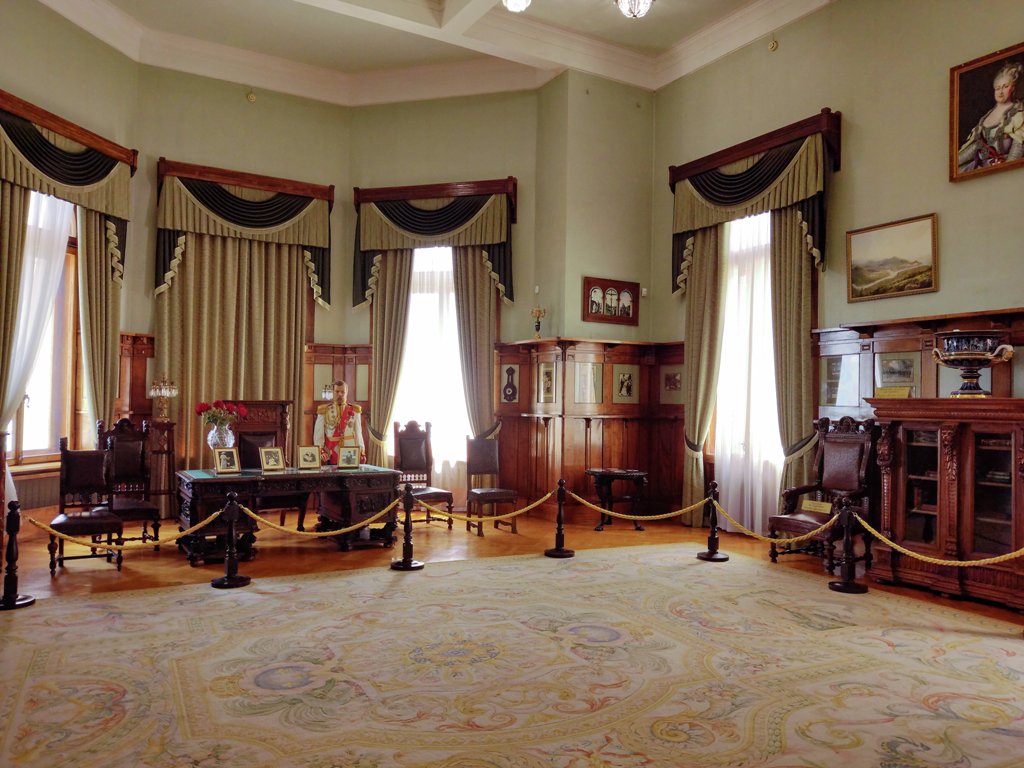
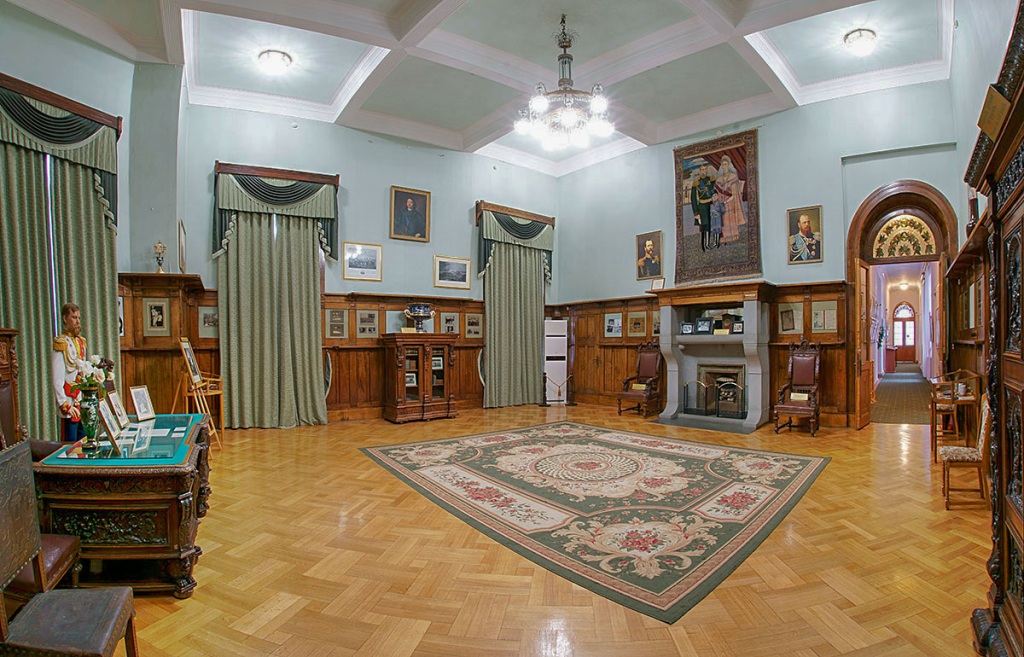
PHOTO: the Emperor’s Study in Livadia Palace, as it looks today

According to Natella Sheremeteva, one of the founders of the Foundation for the Preservation of Historical Cultural Heritage, the Study of Emperor Nicholas II in the Livadia Palace, Crimea will be recreated in 2025.

“The Foundation’s projects will provide close cooperation with Crimean museums. The expositions of the Crimean palace-museums should be improved and replenished with antiques from private collections. Assistance in this will be provided by the Foundation . . . One of the immediate priorities is to assist the Livadia Palace in recreating the Study of Emperor Nicholas II”, she said during a cultural event held in Yalta over the weekend.

Sheremeteva, who is also curator of the Antique Art Gallery, added: “We have been operating for more than 20 years. We are quite well known and respected in St. Petersburg. This year, a decision was made to relocate to Yalta, our services are needed here more.”

“In 2025 we will begin to recreate the historic interior of the Study of Emperor Nicholas II in the Livadia Palace,” said Sheremeteva.

In turn, Alexander Balinchenko, Director of the Alupka Palace and Park Museum, who was present at the event, thanked the Foundation for the Preservation of Historical Cultural Heritage, for its philanthropic activities and wished fruitful cooperation: “This is a very important event for all of us!”

It is not clear if the furniture will be recreated for the Emperor’s Study, as was done with the New Study and Working Study of Nicholas II in the Alexander Palace at Tsarskoye Selo. It is important to note that the desk which is currently on display in this interior is not the original, it is merely a replacement. The cost to recreate furniture for this interior would be costly, and only possible with the financial assistance of a large Russian corporation of wealthy oligarch.

PHOTO: the Emperor’s Study in Livadia Palace, as it looks today

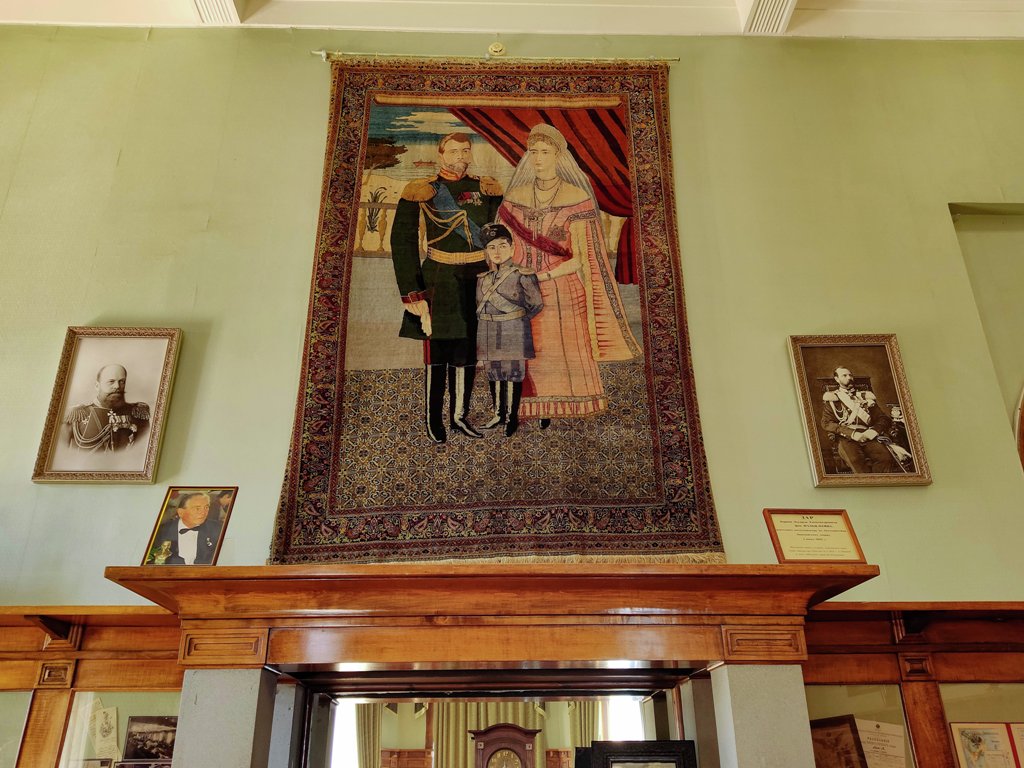
In 1913, the unique carpet – seen on above photo – was gifted by Ahmad Shah Qajar Shah of Persia to the family of Emperor Nicholas II on the occasion of the celebration of the 300th anniversary of the Romanov dynasty. After the Revolution, the carpet among other items came into the possession of *Baron Eduard von Falz-Fein.

After the fall of the Soviet Union in 1991, von Falz-Fein dedicated a significant part of his life to the return of historical and cultural monuments to Russia, including the priceless carpet, which he gifted to Livadia Palace, where it remains on display to this day. It is one of the few original items from the Study of Emperor Nicholas II to have survived to the present day.

*Baron Eduard Oleg Alexandrowitsch von Falz-Fein (14 September 1912 – 17 November 2018) was born in Imperial Russia, and fled with his parent to Germany in 1918. He lived for most of his life in Liechtenstein, where he became a successful athlete, businessman and philanthropist. It is interesting to note that Falz-Fein funded much of the research on the identification of the Romanov family remains. He died in Vaduz on 17 November 2018, at the age of 106!

History of the Studay of Emperor Nicholas II in Livadia Palace

One of the most beautiful interiors of the Livadia Palace was the Emperor’s Study, which was located on the second floor. In 1911, Nicholas II wrote in his diary: “I am delighted with my upper study.”

Despite his abscence from the northern capital, the Emperor faithfully carried out his duties during his stays in Crimea. Couriers arrived by train from St. Petersburg, with “piles of papers and documents”, which were delivered to the imperial residence at Livadia. Nicholas II diligently read the documents, often writing notes and signed them in his Study daily. He regularly met with officials (ambassadors, political and state figures), whom Nicholas II received, always in uniform.

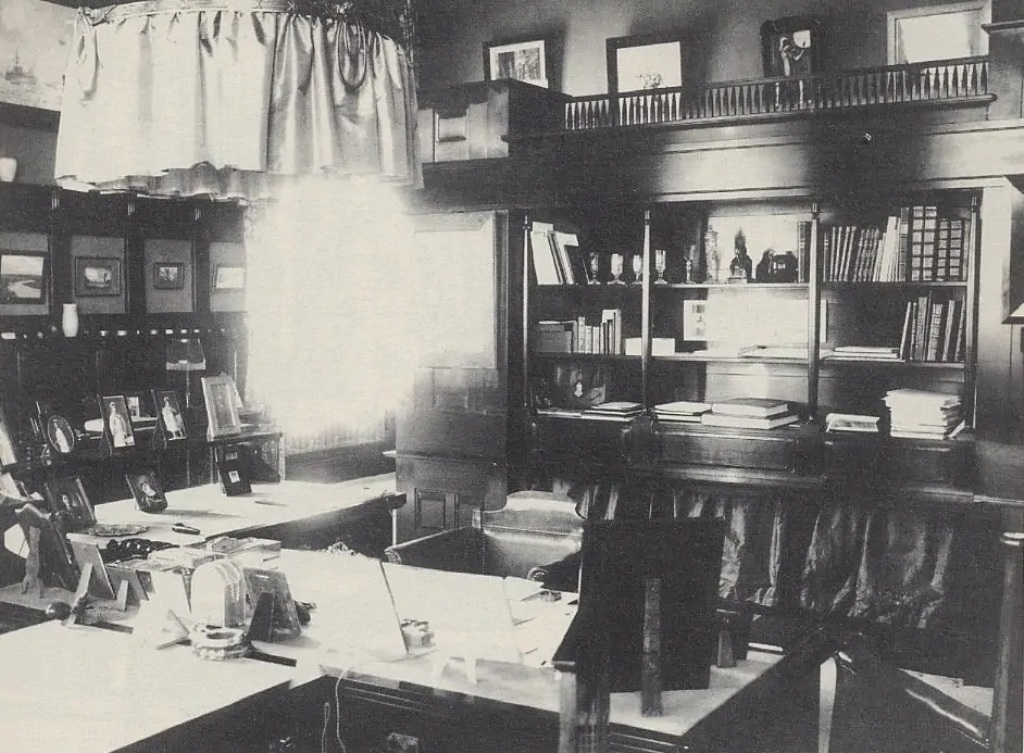
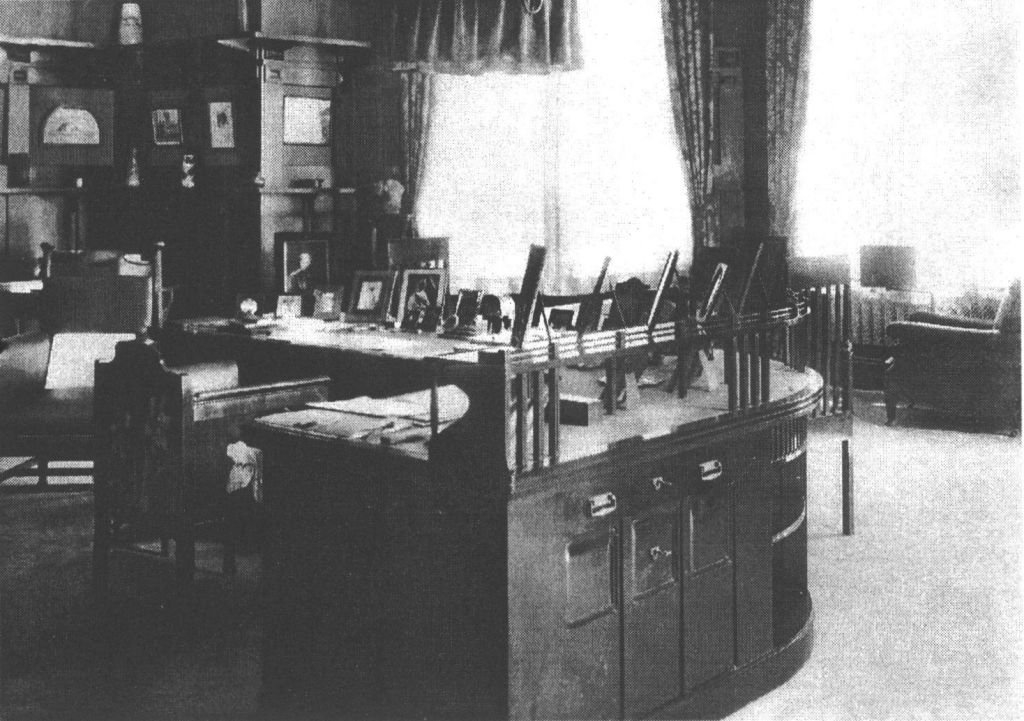
PHOTOS: the Study of Emperor Nicholas II in Livadia Palace as it looked in 1912-1914

The furniture and the wall panels with shelves in the Emperor’s Study were made by the craftsmen of the F.F. Tarasov Furniture Factory in St. Petersburg and the K.V. Zibrecht Factory in Moscow.

The furniture was made from ash wood with baitsovka in a dark greenish-brown tone. They were complemented with green Moroccan leather chairs and armchairs, embossed with the image of the iris flower in the Art Nouveau style.

The furniture was composed in such a way that the natural light, which flooded the spacious interior, gave the impression that the Emperor’s Study was divided into two parts – a working part, a business one, facing the windows of the bay window, and a corner part, in which Nicholas would relax while smoking a cigarette in front of a massive fireplace made of gray-green diorite.

While the original wall panels and fireplace have survived, none of the furniture – including the Emperor’s desk – has not survived to the present day. On 30th April, 1918, German troops entered Livadia and immediately began to plunder the palace. Any remaining items of furniture and decoration were transferred to other museums. Livadia Palace then became a sanitorium. In 1993 the Livadia Palace received the status of a museum.

© Paul Gilbert. 29 December 2024

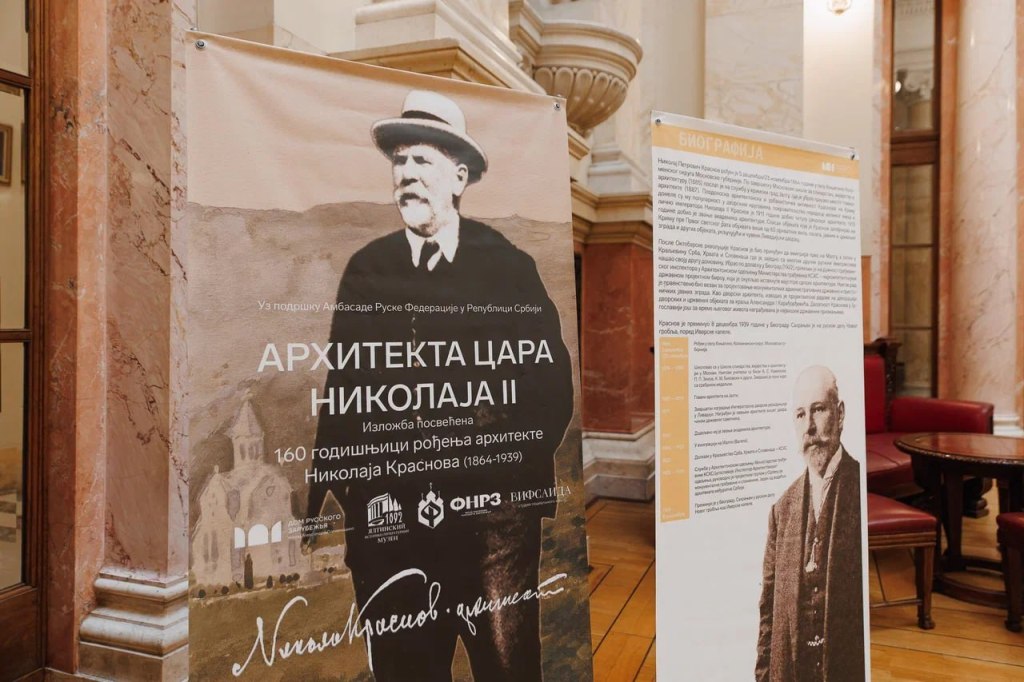
Nikolai Krasnov exhibition opens in Crimea

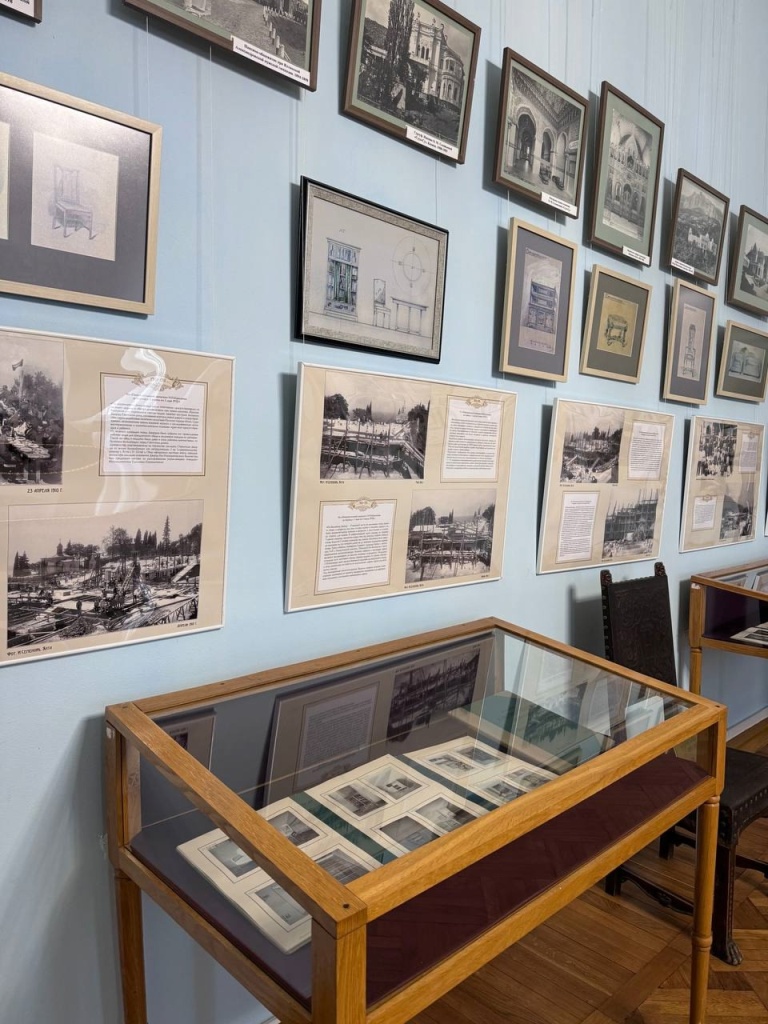
On 6th December 2024, a new exhibition dedicated to Nikolai Petrovich Krasnov (1864-1939), opened at Livadia Palace in Crimea. The exhibition is timed to the 160th anniversary of the birth of the outstanding Russian-Serbian architect and painter.

Krasnov is best known as the architect who planned and constructed many of the Romanov estates which dotted the southern coast of Crimea, during the late 19th and early 20th centuries. His masterpiece, of course, is the white Italian-style palace at Livadia, the Imperial Residence of Emperor Nicholas II and his family, during their stay in Crimea.

NOTE: click on the images below to enlarge and view each photo in greater detail.

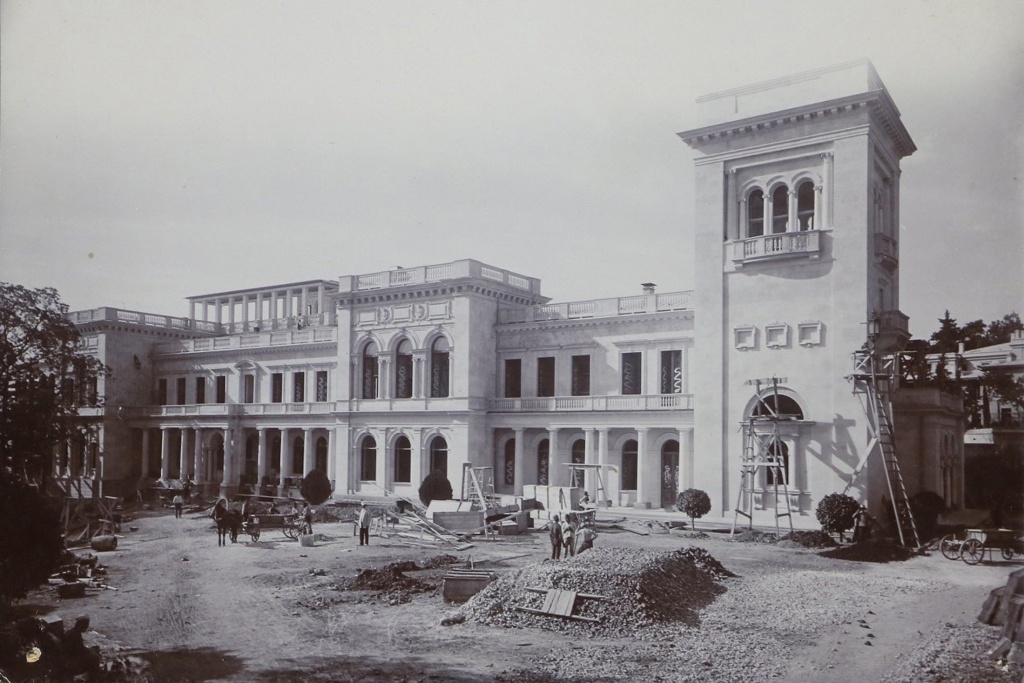
The exhibition features photographs by the famous Yalta photographer and Supplier to the Imperial Court Ivan Ivanovich Semyonov, which depict the stages of the construction of the Livadia Palace. In total, Semenov took about 500 such photos.

Each photo on display in the exhibition includes an explanatory note, outlining the progress of construction, of which Krasnov regularly sent to St. Petersburg to the Ministry of the Imperial Court and Appanages for subsequent approval by the Emperor.

Some of these photos were placed in a special album “Construction of ‘Livadia’ the New Grand Palace in the Name of His Imperial Majesty 1910-1911“, which was presented to the Imperial Family. Fortunately the album has survived to the present day, and is now in the collection of the Livadia Palace Museum.

PHOTO from the exhibition: Livadia Palace under construction. 1911.
Photo: Ivan Ivanovich Semyonov

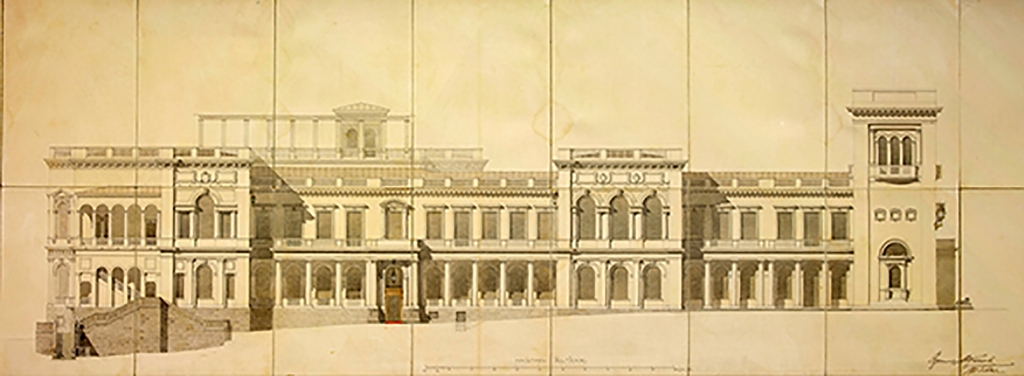
PHOTO: Nikolai Krasnov’s drawing of the Livadia Palace (1910)

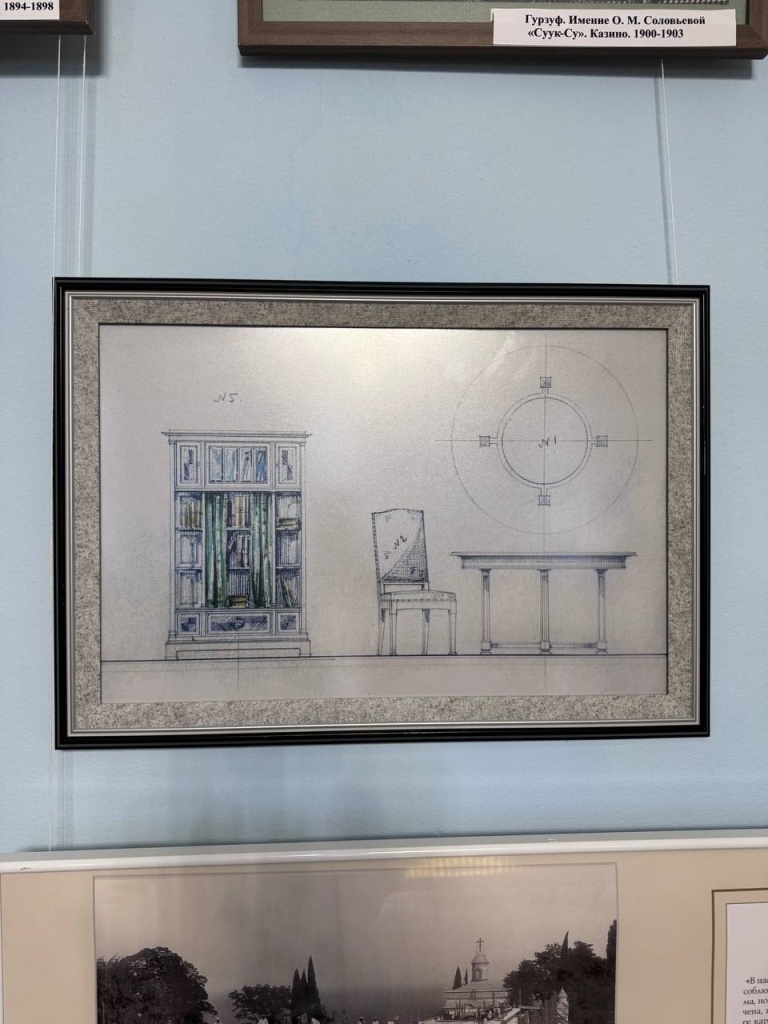
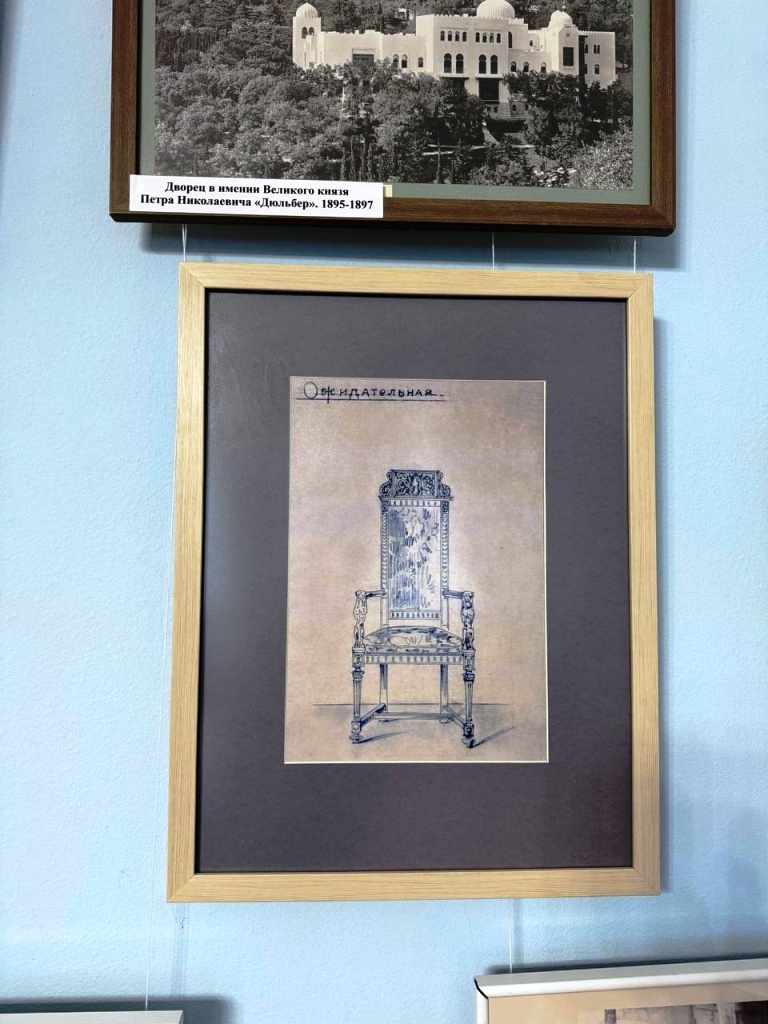
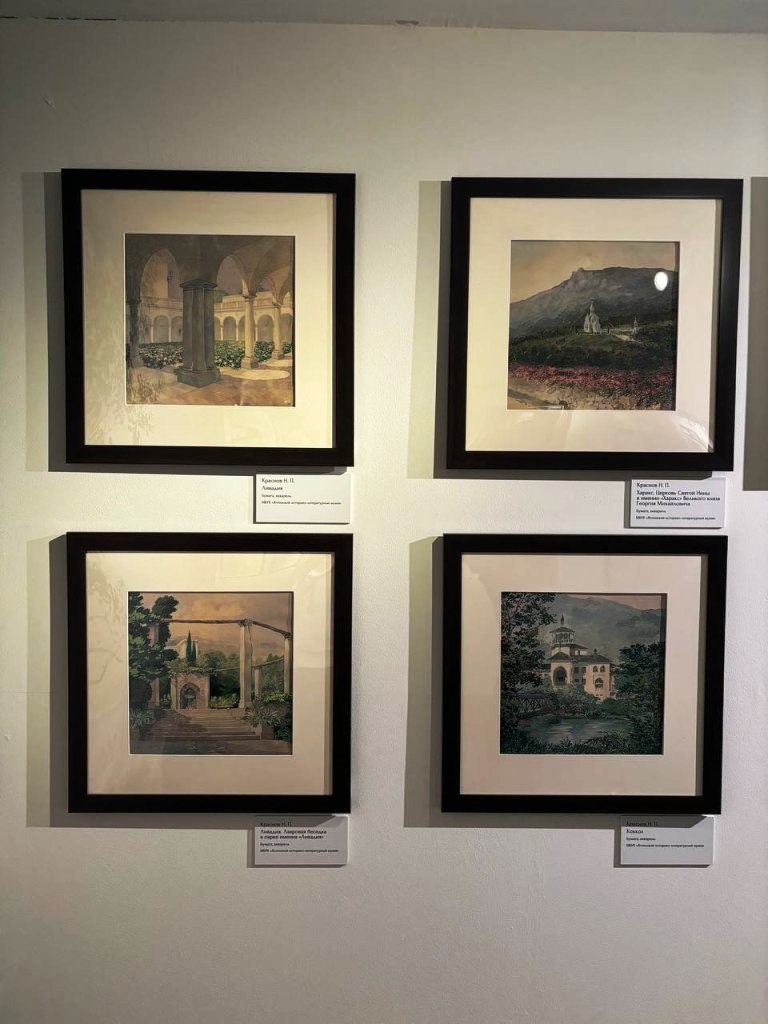
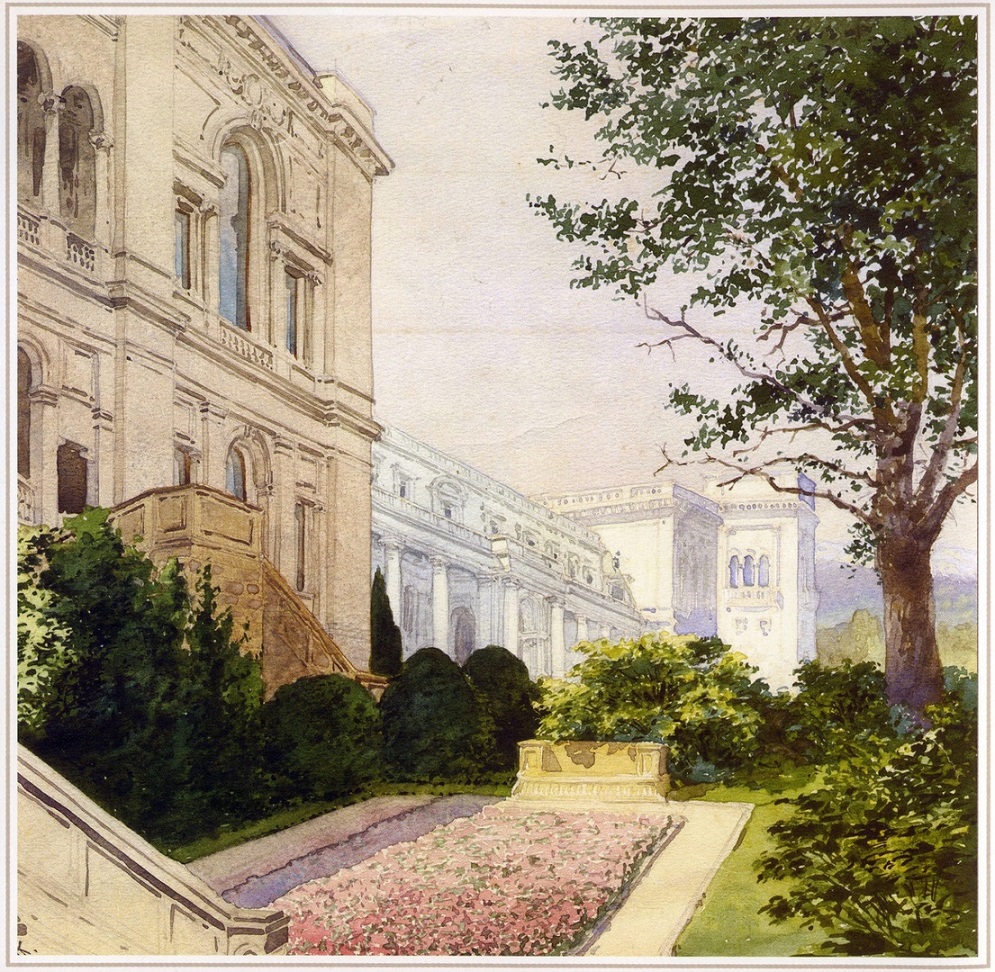
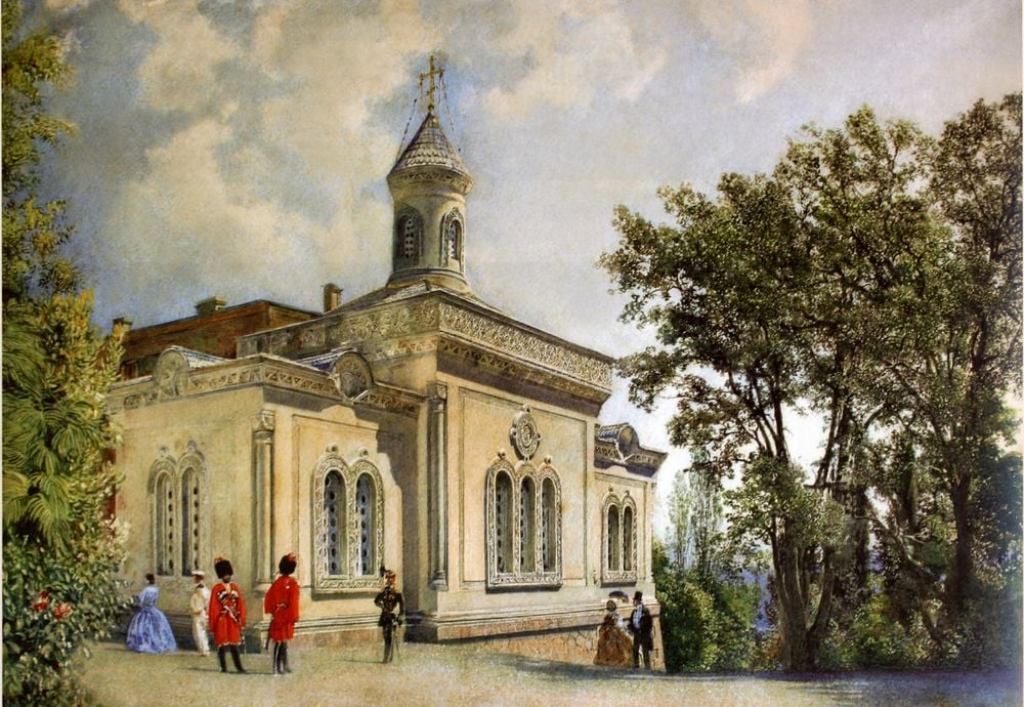
In addition to the photographs are a materials related to the life and work of the architect, including his drawings of his projects, and a collection of beautiful watercolours of the Livadia Palace and gardens, painted by Nikolai Krasnov – NOTE: click on the link to view 10 of Krasnov’s watercolours – PG.

PHOTO: Northern facade of the Livadia Palace
Watercolour by Nikolai Petrovich Krasnov (1864-1939)

PHOTO: view of the Livadia Palace as it looks today

Livadia must have been beautiful before the First World War and the Russian Revolution. Krasnov had begun working on the project since the autumn of 1909. The new palace was built on the site of the old Large (Bolshoi) wooden Palace. Construction on the new white limestone palace began on 21st January 1910, and after 17 months of construction.

The palace was built in the Italian Renaissance style, and consisted of 116 rooms, with interiors furnished in different styles, . Emperor Nicholas II spent about 4 million gold rubles on the palace. Livadia Palace was inaugurated on 11th September 1911.

In November 1911 Grand Duchess Olga Nikolaevna celebrated her 16th birthday at Livadia. The Imperial family visited and stayed in their new Livadia Palace on only four occasions: in the autumn of 1911 and 1913 and in the spring of 1912 and 1914, where they took up residence for several months at a time. The Tsar even considered moving the capital of the Russian Empire to Yalta.

On 30th April, 1918, German troops entered Livadia and immediately began to plunder the palace. In 1993 the Livadia Palace received the status of a museum. In July 2022, Livadia Palace celebrated it’s 100th anniversary as a museum – NOTE: the link features 18 colour photos of the palace and it’s interiors, as they look today – PG.

***

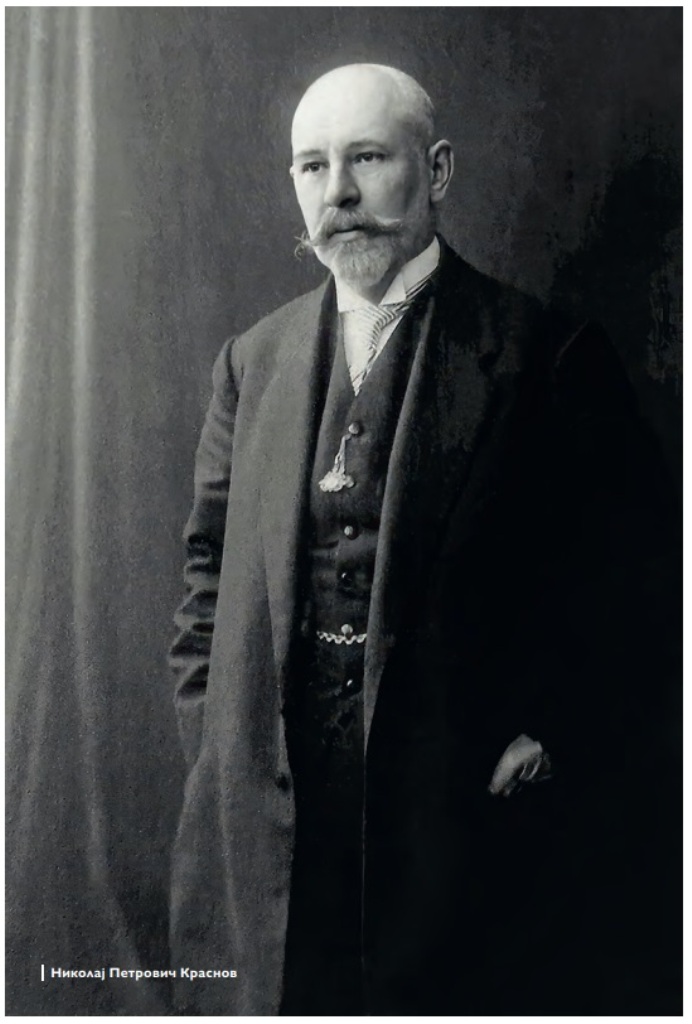
PHOTO: Nikolai Petrovich Krasnov (1864-1939)

Nikolai Petrovich Krasnov was born on 5th December (O.S. 23rd November) 1864, in the village of  Khonyatino, situated in the Kolomna district.

In 1876, at the age of 12, Nikolai entered the School of Painting, Sculpture and Architecture in Moscow, where he studied for 10 years. From 1887 to 1899 he served as the chief architect of Yalta. From 1889 to 1911 he ran his own architecture firm. The young architect was fully responsible for solving a wide range of issues related to the rapid development of Yalta as an all-Russian resort city.

In recognition for his work on Livadia Palace, on 5th October 1911, Krasnov was granted the title of Architect of the Highest Court and awarded the Order of St. Vladimir. On 6th December of the same year, he was assigned to the Main Directorate of Appanages of the Imperial Court, with the assignment of technical supervision of all construction and furniture and wallpaper work in the palaces and adjacent buildings, which were planned in the following years in Livadia. 

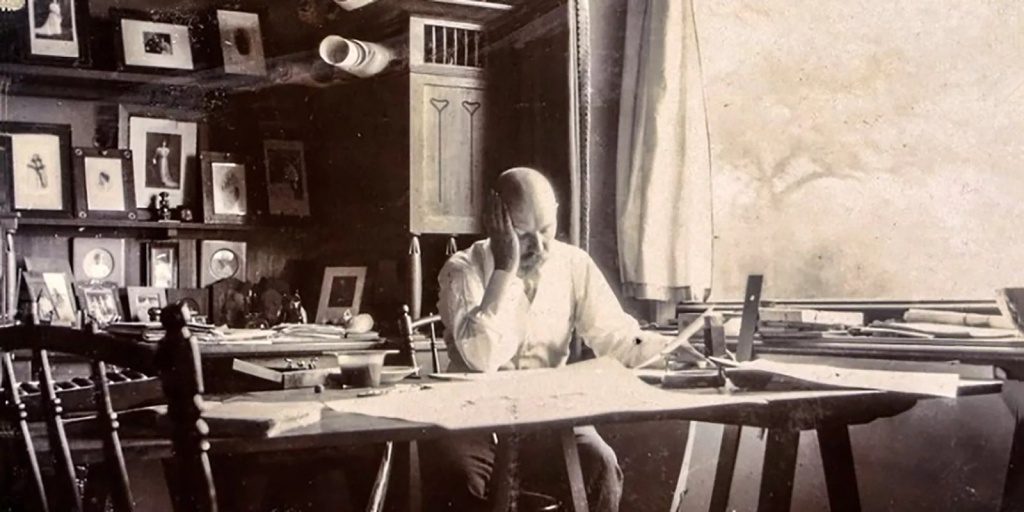
PHOTO: Nikolai Krasnov in his office in Yalta

Following the Bolshevik Revolution in 1917, in 1919, Nikolai Krasnov emigrated with his wife and daughter. They first lived in Malta for several years, before settling in Belgrade, Serbia in 1922. For the next seventeen years, Krasnov served as an inspector for the Architectural Division. He left a significant mark in the architecture of present-day Serbia.

Nikolai Krasnov died on 8th December 1939 in Belgrade, Serbia. He was buried in the Russian sector of the New Cemetery in Belgrade. 

To this day, the Serbian people deeply revere the memory of the Yalta architect, most famous for Livadia Palace, the Crimea residence of Nicholas II and his family.

© Paul Gilbert. 7 December 2024

Tsesarevich Alexei Nikolaevich Exhibition opens in Livadia Palace

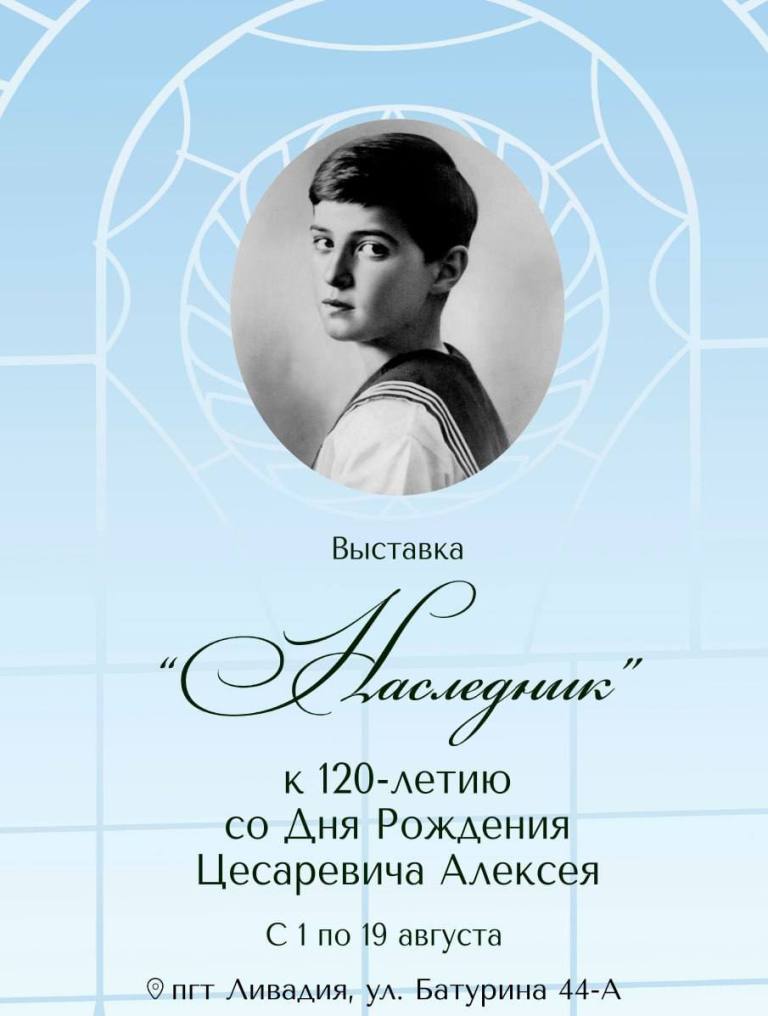
On 1st August 2024, a new exhibition dedicated to Tsesarevich Alexei Nikolaevich (1904-1918) opened at Livadia Palace in Crimea. The exhibition simply titled “Наследник / Heir” is timed to the 120th anniversary of the birth of Tsesarevich Alexei Nikolaevich, who was born on 12th (O.S. 30th July) August 1904.

The grand opening of the exhibition on 1st August was attended by those who received invitions and to members of the press. The exhibit opened to visitors the following day, in the Music Room, located on the second floor of the palace.

Visitors to the exhbition will see authentic items from Tsesarevich Alexei’s rooms, and which are now in the collection of the Livadia State Palace-Museum. Among these items are religious paintings and sketches, including a sketch entitled “Bayan” by the famous Russian artist Viktor Mikhaylovich Vasnetsov (one of Nicholas II’s favourite artists), and “The Tsar’s Family in Livadia” a watercolour by Elena Samokish-Sudkovskaya, as well as pieces of furniture, photographs, etc.

The exhibition explores Alexei’s short life [he was murdered just weeks before his 14th birthday], the long-awaited heir to the Russian throne, and beloved son of Emperor Nicholas II and Empress Alexandra Feodorovna. The exhibition looks at his hobbies, the close ties he shared with his parents, sisters and tutors, the piety of the family, and the happy times Alexei spent in Livadia. In addition, the exhibit looks at the First World War and Alexei’s visits and stays with the Tsar at Mogilev. In the last part of the exhibition, visitors will see rare artifacts associated with the tragic death of the Imperial Family in Ekaterinburg in July 1918.

The exhibition will be complemented by authentic items from the collection of the Yalta Historical and Literary Museum, the archive of the Livadia Church of the Exaltation of the Holy Cross as well as from private collections.

The exhibition “Наследник / Heir” is open to visitors in the Music Room of the Livadia Palace, from 2nd August to 19th August 2024.

CLICK on the IMAGE above to watch the VIDEO. Duration: 2 mins., 47 secs.

NOTE: the video is in Russian only, however, you can watch an English language version by
clicking on the Closed Captioning [CC] button and adjusting Google Translate to English. ENJOY!

© Paul Gilbert. 3 August 2024

Visitors to the museum will see authentic items from the museum’s funds, once located in the rooms of the Tsarevich and other living rooms of the palace. Among them are engravings on religious subjects, the engraving “Bayan” from the painting by Viktor Vasnetsov, Elena Samokish-Sudkovskaya’s watercolor “The Royal Family in Livadia”, pieces of furniture, etc.

The exhibition will show the short life of the heir to the Russian throne, the most long-awaited child in the family of the last emperor – his hobbies, close ties with loved ones, the spiritual world of the family, happy times spent in Livadia. One of the topics will be the difficult period of the First World War and staying with the Tsar at headquarters. Also, visitors to the museum will see the rarest artifacts associated with the tragic death of the royal family in Yekaterinburg in 1918.

The exhibition will be complemented by authentic items from the collection of the Yalta Historical and Literary Museum, the archive of the Livadia Church of the Exaltation of the Holy Cross and private collections.

The opening of the exhibition “The Heir” will take place on August 1 at 12:00 in the Music Salon of the Livadia Palace. Admission by invitation.

The exhibition will be available to visitors from August 2 to August 19, 2024.

Is it true that Nicholas II wanted to move the Russian capital to Crimea?

Emperor Nicholas II was all very fond of his residence in Livadia, a magnificent white limestone palace perched on a ledge overlooking the Black Sea on the southern coast of Crimea.

The old Large wooden palace[1] was demolished to make way for the new Imperial Residence. Construction on the new palace began on 21st January 1910, and after only 17 months, was inaugurated on 11th September 1911. The Tsar spent about 4 million gold rubles – from his own funds – to finance it’s construction. The palace had 116 rooms, with interiors furnished in different styles, and surrounded by beautifully landscaped gardens.

The Imperial Family stayed in the new Livadia Palace in the autumn of 1911 and 1913 and in the spring of 1912 and 1914, their visits lasting months at a time.

But, is it true that Nicholas II wanted to move the capital of the Russian Empire to Yalta?

PHOTO: Northern facade of the Livadia Palace
Watercolour by Nikolay Petrovich Krasnov (1864-1939)

A diplomat, a Russian general, Alexander Mossolov[2], wrote in his diary, noting a conversation he had had with the Emperor, who told him about his idea of ​​transferring the capital from rainy St. Petersburg to sunny Crimea.

According to Mossolov, while returning from Uchan-Su[3] along a path high above the highway with a beautiful view of Yalta, the Emperor noted that he was tied to the southern coast of Crimea and did not want to leave. And when Mossolov inquired whether the Emperor would have liked to transfer the capital to Yalta, Nicholas II replied: “This idea has flashed through my mind more than once.”

True, after a few minutes the Emperor admitted that it was impossible to do this.

“And if it were the capital, I probably would have stopped loving this place.” Some dreams, the diplomat quoted the emperor.

***

Any one who has ever visited Livadia, and stood at the windows on the balconies admiring the magnificent views of both the mountains behind and the Black Sea in front, can appreciate why this place was so loved by the Imperial Family.

Following the Tsar’s abdication in February 1917, the Imperial Family were held under house arrest in the Alexander Palace at Tsarskoye Selo, until the end of July. It was the decision of the Head of the new Provisional Goverment Alexander Kerensky who decided to send the Imperial Family into exile. Nicholas hoped that they would be allowed to settle in Livadia, where they would be far removed from the capital, however, Kerensky had other plans – he sent them to Tobolsk in Siberia.

Sadly, the Imperial Family’s “peace” would have been short lived. During the First World War, Crimea was occupied by German forces. On 30th April 1918, German troops entered Livadia, and immediately began to plunder the palace, many of its artefacts lost forever. The Imperial Family would have been forced to flee or be captured by the enemy.

NOTES:

[1] The Large or Grand Imperial Palace was constructed between 1862-66 by the famous Russian architect Ippolit Antonovich Monighetti (1819-1878) for Emperor Alexaander II, his wife Empress Maria Alexandrovna and their children. Emperor Nicholas II and his family resided in the nearby Small or Maly Palace (where Nicholas’s father Emperor Alexander III died on 2nd November (O.S. 20th October) 1894). from 1894 until 1911. The

[2] Lieutenant-General Alexander Alexandrovich Mossolov (1854-1939) served as Head of the Office of the Ministry of the Imperial Court. He was one of the few people of who remained faithful to Nicholas II. Mossolov is the author of ‘At the Court of the Last Tsar.’ The English language edition was published in 1935, the content of which is somewhat different from the Russian version.

[3] Uchan-Su is the highest (98 metres /322 ft) waterfall in Crimea, situated 7 km from Yalta, on the southern slopes of the Crimean Mountains.

© Paul Gilbert. 3 August 2024

‘The Emperor on Vacation’ – Set of 3 photo albums


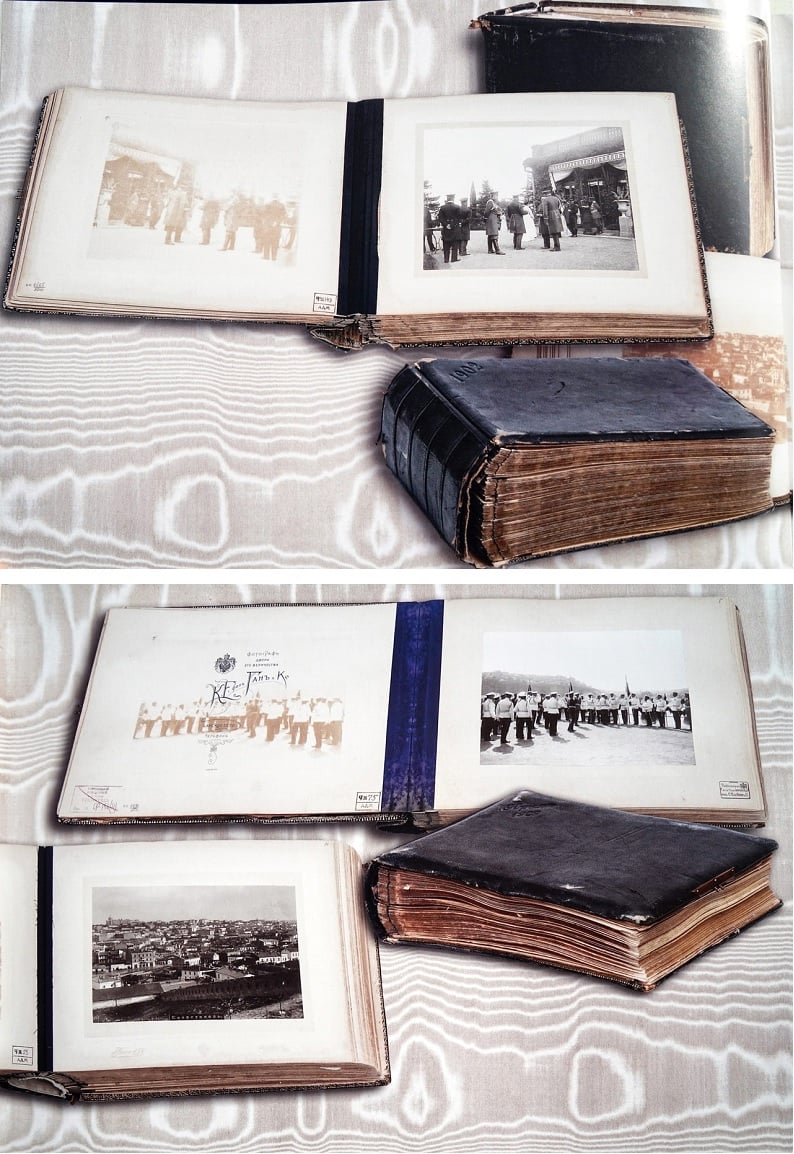
PHOTO: three photo albums from the family of Emperor Nicholas II at Livadia, during the years 1902, 1912 and 1913. From the Collection of Historical and Literary Museum in Yalta, Crimea.

 One of the most prized titles in my private collection of more than 300+ books on the life and reign of Emperor Nicholas II, is a 3-volume set of photo albums, which I purchaed from a Russian publisher in Crimea in 2020.

The photographs in these books have been reproduced from three little known family albums of Emperor Nicholas II during their visits to Livadia in various years during the early 20th century.

The albums had been tucked away for decades in the dusty archives of the Historical and Literary Museum in Yalta, Crimea. They were found in Livadia Palace following the 1917 Revolution, and seized by the regional Soviet after the Imperial residences were nationalized by the Bolsheviks.

I was made aware of the existence of these family albums of the Imperial Family during my visit to Yalta and Crimea in October 2000, however, it was not possible to view them at the time.

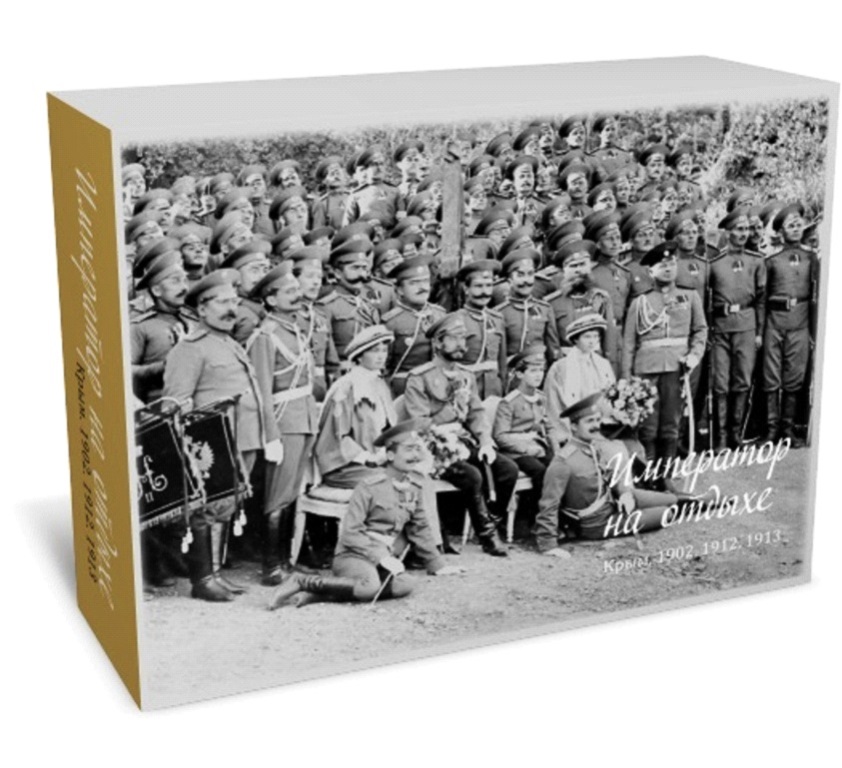
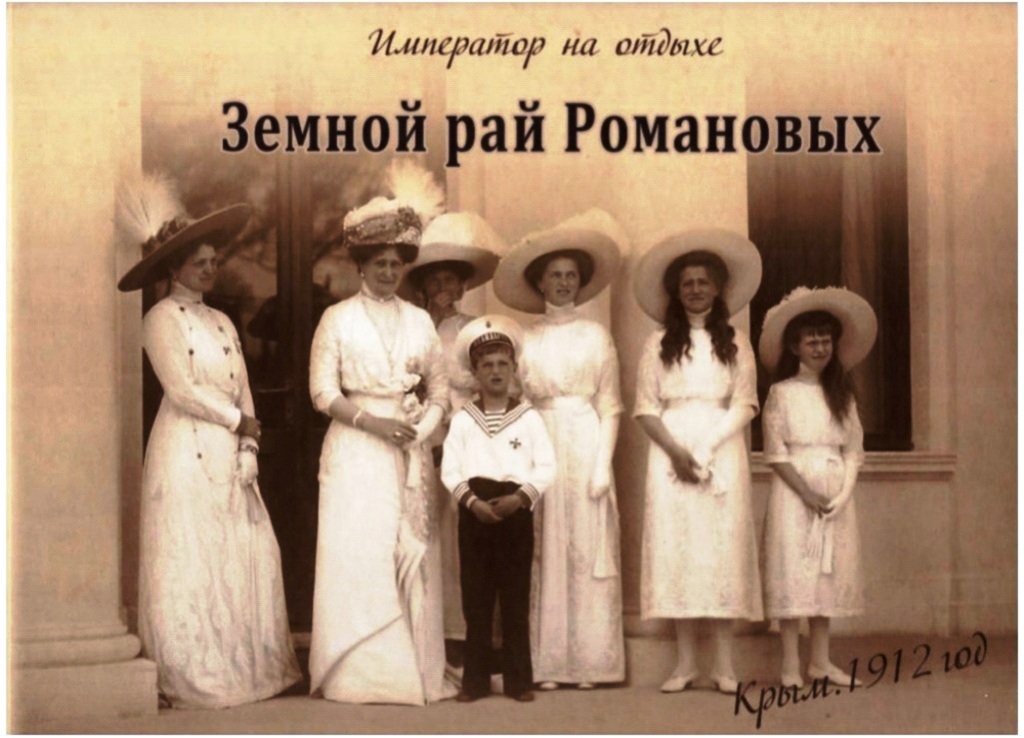
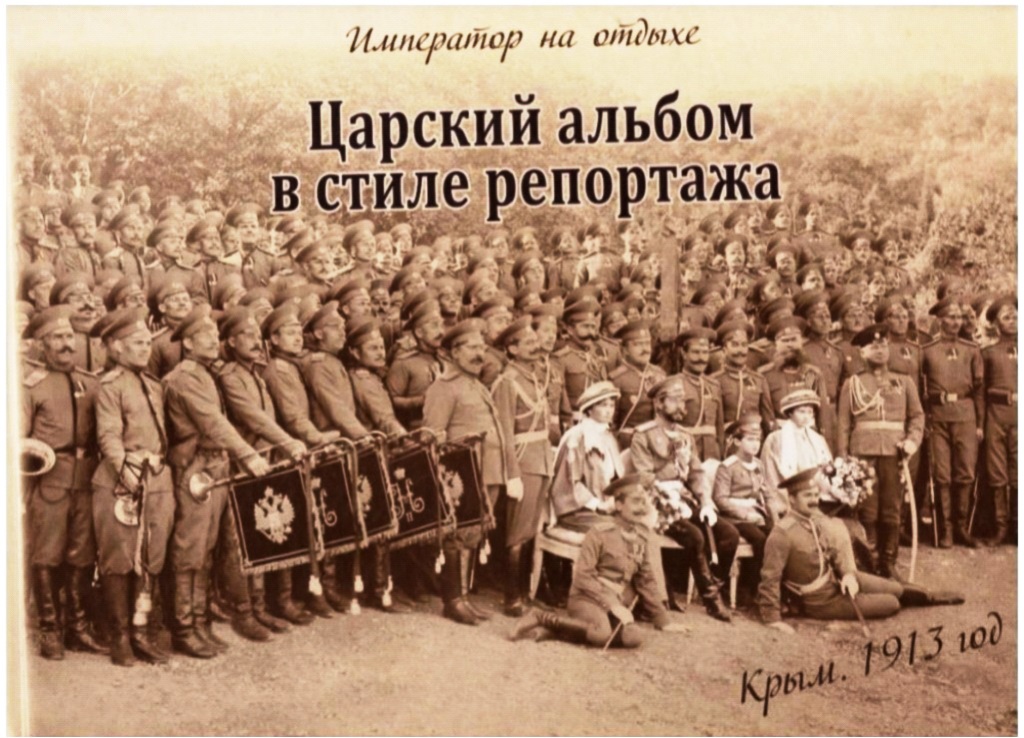
The albums were reproduced in 2019 by the N. Orianda Publishing House in Simferopol, Crimea under the title Император на отдыхе / The Emperor on Vacation in three handsome hard cover volumes. Each album is filled with high quality photographs of the Imperial family during their stay in Crimea in 1902, 1912 and 1913 respectively. The albums are packaged in a handsome slip case. Text and captions are in Russian.

This collection of photographs are indeed special, as there are no staged portraits, they reflect the private, home life of the Imperial Family: walks, picnics, excursions, family and friendly meetings, etc. – all set against the backdrop of picturesque Crimean nature, and the region’s historical and architectural monuments. Also included are a few images taken during official meetings and parades. In addition, are photos of the old wooden palaces at Livadia, and the Imperial Yacht Standart, docked in Yalta.

These albums will be indispensable to historians and any one interested in the life of Russia’s last Tsar and his family. The photographs have not been published in any of the pictorials published by Western publishers over the past decades – they are new to us!

It is interesting to note that that only 100 sets were printed! The price for the entire set was 10,000 rubles ($150 USD). After placing my order, I shared the information on my Facebook page, and within a few days, the remaining sets were sold out! I do know if a reprint was ever issued, and even if it was, it would be impossible to order these albums, due to the economic sanctions imposed by the West against Russia in 2022.

The 3-volume set of albums is encased in a handsome slipcase

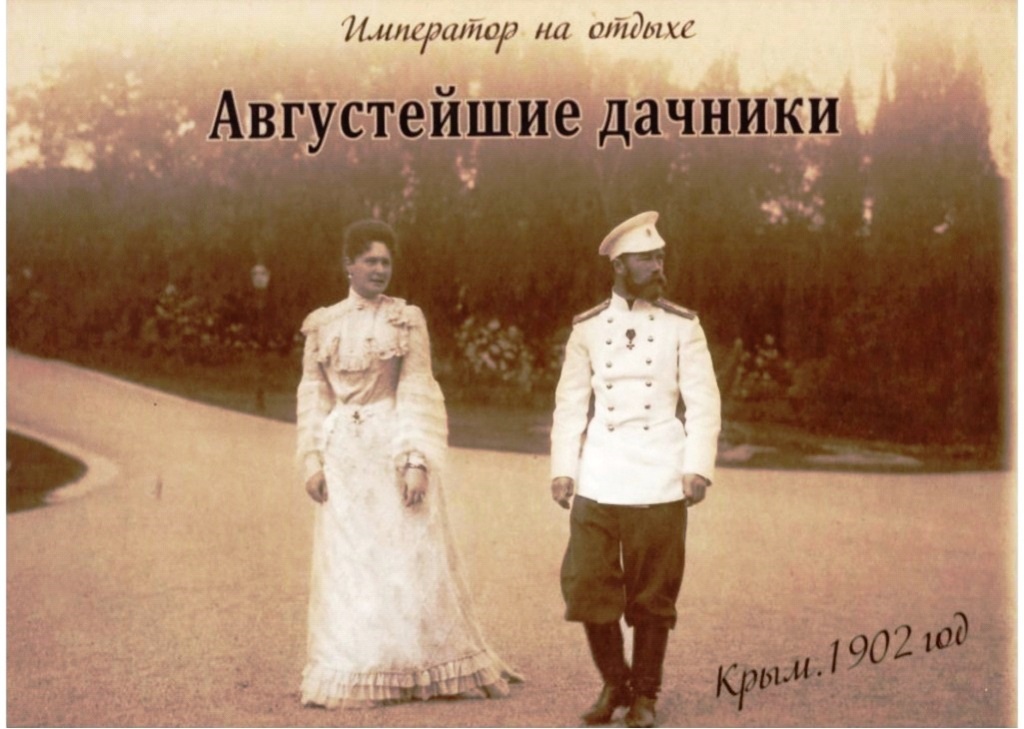
Volume I (1902) Августейшие дачники / August Summer Residents
128 pages with 60 full-page black and white photos


Volume II (1912) Земной рай Романовых / Romanovs Earthly Paradise
224 pages with 112 full-page black and white photos


Volume III (1913) Царский альбом в стиле репортажа
88 pages with 40 full-page black and white photos

Published by the N. Orianda Publishing House in Simferopol, Crimea.
LanguageL Russian only. ISBN: 9785604293164

© Paul Gilbert. 14 May 2024

Livadia hosts new exhibition dedicated to the Romanovs in Crimea

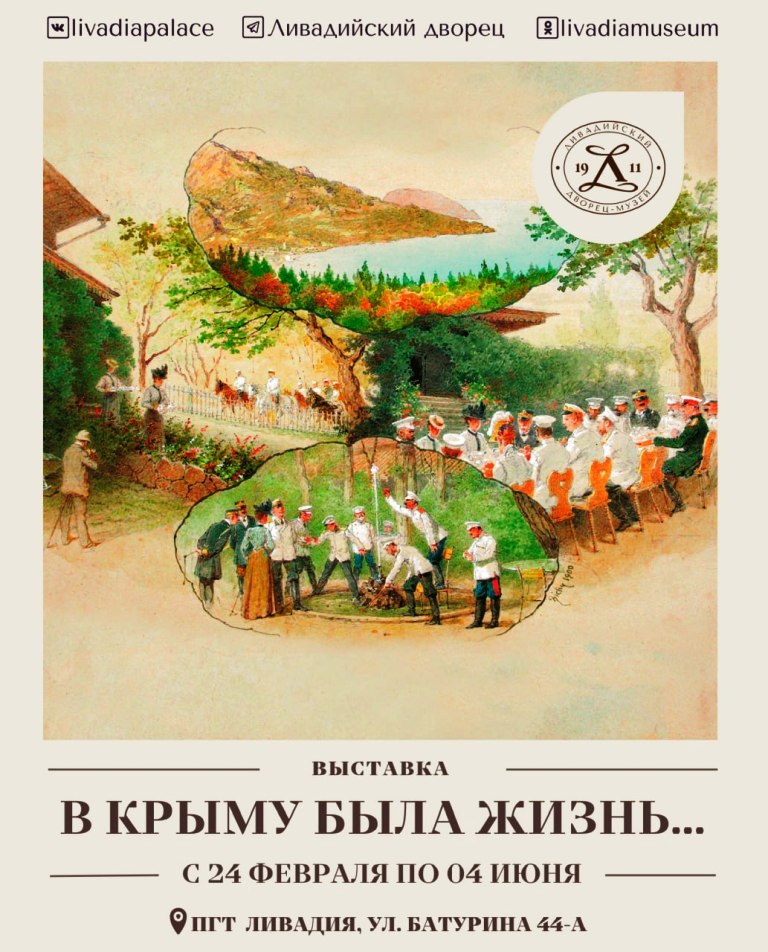
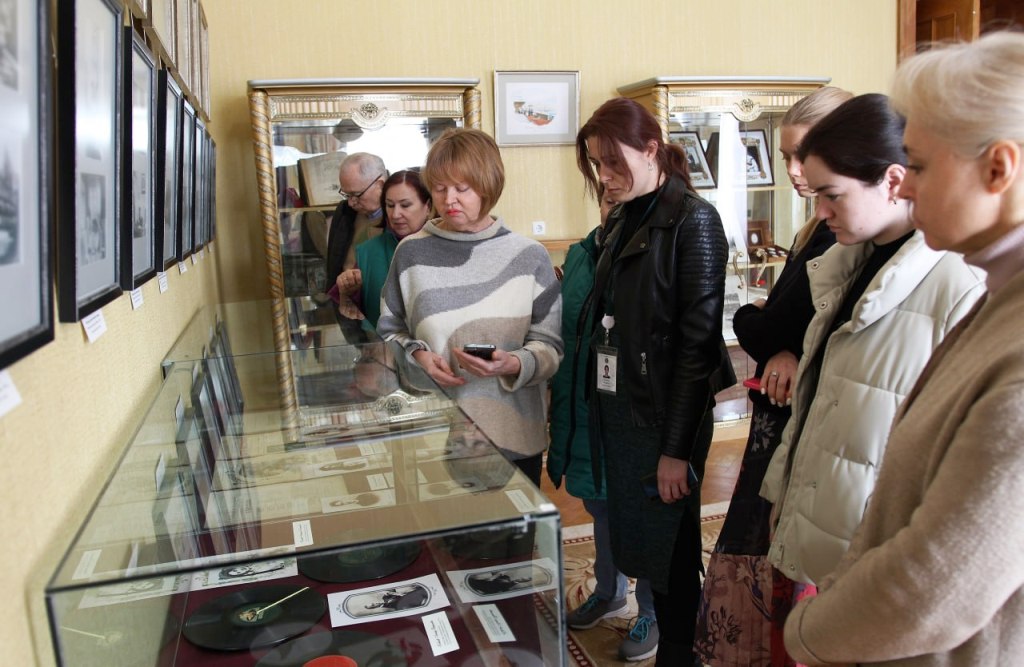
On 24th February 2024, the exhibition There was life in the Crimea…, opened in the Exhibition Hall of Livadia Palace, situated near Yalta on the southern coast of Crimea. The exhibit is part of The Romanovs in Crimea, which is on permanent display on the second floor of the palace.

The exhibition showcases items from the collection of Livadia Palace Museum, and explores the pastimes and private lives of Emperor Nicholas II and his family, during their stays at Livadia during the first decade of the 20th century.

The Tsar and his family were very fond of their southern coastal estate, especially during the warm summer months. It was only on one occasion, that the Imperial Family were forced to extend their stay. During their visit to Crimea in 1900, the Sovereign fell ill with typhoid, forcing the Imperial Family to extend their stay until Christmas. This period is documented in the exhibition with copies of watercolours from the album “Livadia. 1900-1901” by the court painter Mihály Zichy (1827-1906). The watercolours, in the form of collages, depict episodes of the life of the Imperial Family during their stay in Crimea.

Among them are collages depicting the Imperial Family on the Imperial Yacht “Shtandart“; the meeting of Nicholas II with his his cousin Prince George of Greece; the reception of the Turkish envoy; the Tsar during his illness in 1900; the reception of deputies of the Taurida province; the Tsar’s meeting with the Knights of St. George; equestrian riding; playing board games, etc.

It is interesting to note, that in 2015, a number of these watercolours were reproduced in a handsome Russian language album, “Царское имение Ливадия в акварелях и фотодокументах [The Tsar’s Livadia Estate in Watercolors and Photographic Documents] by Lyudmila Aleksandrovna Tikhonova.

Also on display at the exhibition, are sheet music of classical works and phonograph records, which were fashionable at the beginning of the 20th century. The Tsar and his family often listened to these records in the palace’s Music Room. On other occasions, the Empress and her daughters would play pieces from the sheet music on the piano.

The last time that Nicholas II and his family visited the old wooden palaces at Livadia, was in the autumn of 1909. The exhibition features an interecting collection of photographs of this visit.

The old wooden Grand Palace was demolished in 1910, to make way for a new Italian Neo-Renaissance style stone palace, which would serve as the residence of Nicholas II and his family during their visits to Crimea. The Imperial family visited their new white palace in the fall of 1911 and 1913 and in the spring of 1912 and 1914.

© Paul Gilbert. 3 March 2024

Livadia Palace hosts new exhibit dedicated to the family of Nicholas II

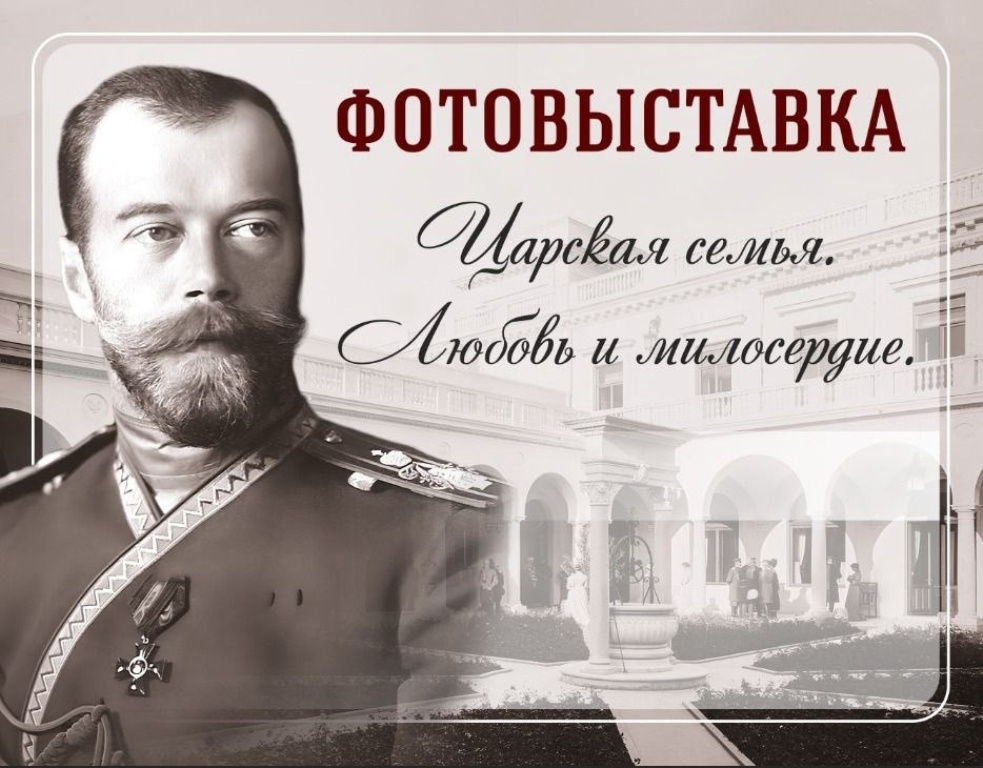
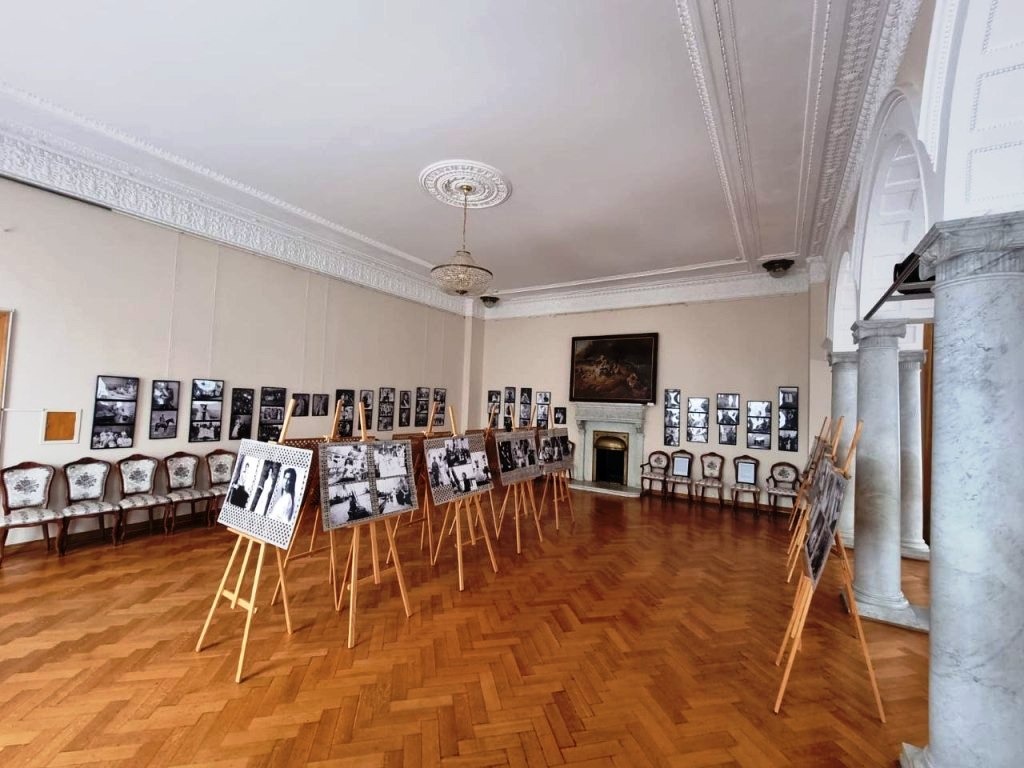
On 14th January 2024, with the blessing of His Eminence Tikhon, Metropolitan of Simferopol and Crimea, the photo exhibition The Tsar’s Family. Love and Mercy, opened at the Livadia Palace in Crimea.

The exhibition presents more than 100 vintage photographs that tell about the close relationship within the family of the last Russian emperor Nicholas II. The photographs reflect many aspects of the life of the Tsar’s family during the late 19th and early 20th centuries, including the upbringing of the children, and the warm and loving relationship, which they shared with both their parents and each other.

In addition, the photo exhibition also shows the Tsar’s Family’s dedication to acts of charity and their service to the Fatherland, and a wonderful example of Russian family traditions and unshakable spiritual values.

The rector of the Church of the Exaltation of the Cross, Archpriest Dimitry Gotskalyuk, in his welcoming speech noted the special symbolic and cultural significance of the photo project for Crimea. For many decades, the inhabitants of the blessed land of Taurida have revered the Holy Royal Martyrs as the patron saints of the family. The life of the Imperial Family is not only an example of service to people and the Fatherland, but also an example of Russian family traditions and unshakable spiritual values.

The photo exhibition is a joint project of the Church of the Exaltation of the Cross [the Imperial family’s church adjacent to the Livadia Palace], and the Livadia Palace State Museum, with the support of the Sretensky Monastery in Moscow.

The photo project The Tsar’s Family: Love and Mercy was created in 2016 by the Sretensky Monastery in Moscow. The travelling exhibition has already been presented in Serbia, Germany, Italy, Canada, Argentina, New Zealand, South Africa, Romania, Croatia, Montenegro, Bosnia and Herzegovina, Macedonia, and the Czech Republic. The exhibition has also been presented in many cities of Russia: Moscow, Voronezh, Kursk, Ryazan, Penza, Krasnodar, Belgorod, Velikiye Luki, etc.

The exhibition runs until 19th May 2024, in the Music Salon of the Livadia Palace

*As I have noted in previous posts, I support any initiative – big or small – to help keep the memory of Nicholas II and his family alive in 21st century Russia – PG

© Paul Gilbert. 20 January 2024

On this day in 1894: Nicholas II ascended the throne

PHOTO: Tsesarevich and Grand Duke Nicholas Alexandrovich. 1894

On this day – 2nd November[1] [O.S. 20th October] 1894, Tsesarevich and Grand Duke Nicholas Alexandrovich ascended the throne as Russia’s last emperor and tsar.

It was on this historic day, that Nicholas Alexandrovich inherited the throne from his father Alexander III (1845-1894), who ruled Russia for only 13 years. Government officials, courtiers and troops of the Imperial Russian Army, among others, all took an oath of allegiance to their new emperor.

In the Church of the Exaltation of the Cross [adjacent to Livadia Palace], Nicholas pledged his oath of allegiance to Russia solemnly promising to protect the autocracy firmly and unswervingly, like his late father.

It was also in the Church of the Exaltation of the Cross, that the holy righteous John of Kronstadt anointed Princess Alix of Hesse, who became the Orthodox faithful Grand Duchess and future Empress Alexandra Feodorovna.

NOTE: The Church of the Exaltation of the Cross has survived to this day – PG

***

Though Nicholas Alexandrovich was heir-apparent to the throne, his father failed to prepare him for his future role as Tsar. He attended meetings of the State Council; however, as his father was only in his forties, it was expected that it would be many years before Nicholas succeeded to the throne. Alexander’s assumptions that he would live a long life and had years to prepare Nicholas for becoming Tsar proved wrong, as by 1894, Alexander’s health was failing.

Russia’s finance minister, Count Sergei Yulyevich Witte (1849-1915), suggested to the Tsar that Nicholas be appointed to the Siberian Railway Committee. According to Witte, Alexander argued that Nicholas was not mature enough to take on serious responsibilities. Witte stated that if Nicholas was not introduced to state affairs, he would never be ready to understand them.

Nicholas was only 26 years old when his father died suddenly after a long and serious illness, at the age of 49.

PHOTO: the Church of the Exaltation of the Cross [adjacent to Livadia Palace]

On 27th (O.S. 14th) November 1894, Nicholas Alexandrovich married Grand Duchess Alexandra Feodorovna (future Empress Alexandra Fedorovna). Their nuptials fell on the birthday of the Dowager Empress Maria Feodorovna, and court mourning could be slightly relaxed. The ceremony was held in the Grand Church (the home church of the Imperial Family) of the Winter Palace in St. Petersburg.

A respectable period of mourning was the reason his coronation was postponed for a year and a half. The Holy Coronation of Emperor Nicholas II and Empress Alexandra Feodorovna, took place on 27th (O.S. 14th) May 1896 in the Assumption Cathedral of the Moscow Kremlin. It would be the last coronation of a Romanov Tsar.

During the reign of Nicholas II, Russia made considerable progress in all areas of life, while experiencing tremendous growth in its economy. Under his reforms, the Russian Empire reached an unprecedented level of economic development. However, this time was also marked by the growth of revolutionary sentiments.

Click HERE to read 70 facts about Emperor Nicholas II and his reign, originally published on 13th July 2021.

His Imperial Majesty Sovereign Emperor Nicholas II reigned over the Russian Empire for more than 22 years. He abdicated on 15th March 1917 (O.S. 2nd March) 1917.

Some historians argue that the act of abdication was invalid for two reasons: one, because it was signed in pencil, violating all the necessary legal and procedural methods and format, and thus had no legal force; and two, because the instrument of abdication was never officially published by the Imperial Senate.

Regardless, as God’s Anointed, Nicholas II could not be displaced during his lifetime. Since the will of God was nowhere manifest, neither in the naming of his brother Grand Duke Mikhail Alexandrovich to the throne, nor in the Tsar’s signing of the instrument of abdication, his status as Tsar remained inviolate and unassailable. He remained Emperor until the day of his death and martyrdom on 17th July 1918. Ot was on this day, that the Russian Imperial House ceased to exist.

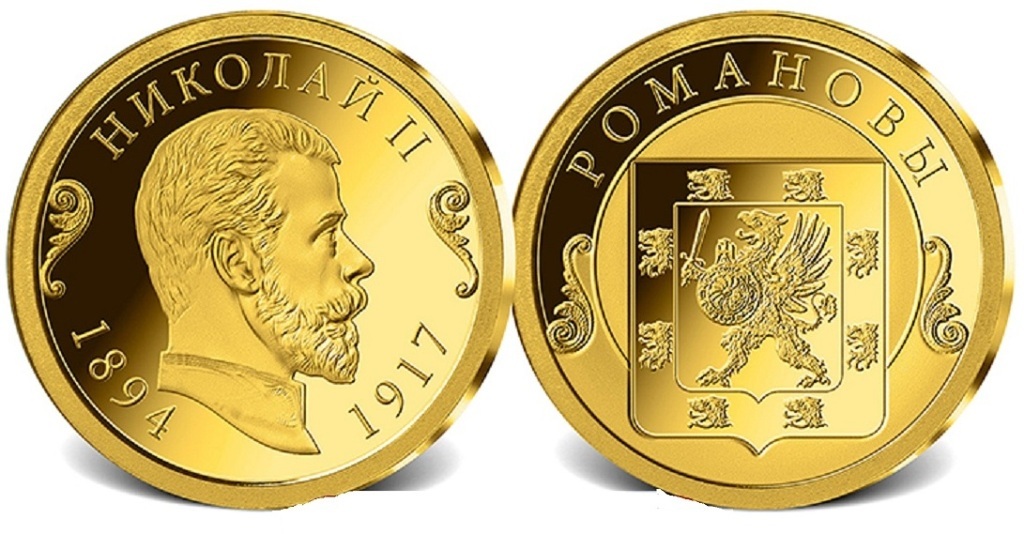
In 2018, a commemorative medal was issued, marking the 124th anniversary of Nicholas II’s ascension to the throne in 1894. The medal was the first of The Romanovs. Golden Collection to be minted by the Imperial Mint in Moscow.

NOTES:

[1] In recent years there has been much confusion by non-Orthodox Christians and Westerners with regard to the correct dates of important events (births, deaths, marriages, etc.) among members of the Russian Imperial Family, according to the New Style calendar.

As an example, is the date marking the death of Alexander III and the accession to the throne of Nicholas II. This happened on the day of Saint Artemius the Great Martyr and the righteous youth Artemiy, on 20th October (2nd November). And if this day is celebrated on 1st November or 3, then we are not commemorating the memory of these saints. Do not rely on any dates on Wikipedia which often provide the incorrect dates of the Gregorian calendar for the late 19th and early 20th centuries.

With the passage of every leap day that is on the Julian (Old Style) Calendar but not on the Gregorian Calendar, the difference between the two calendars grows another day. Currently, the Gregorian Calendar is thirteen days ahead of the Julian Calendar. Beginning on 14th March 2100 (29th February 2100 Julian), the difference will be fourteen days.

© Paul Gilbert. 2 November 2022

FDR wanted to buy Livadia Palace in final days of WWII

PHOTO: FDR arriving at Livadia Palace in February 1945

On 22nd April 2017, a bust of Franklin Delano Roosevelt (1882-1945), the 32nd President of the United States commonly known as FDR, was unveiled in Yalta, Crimea on a street named in his honour.

Back in the 1960s, one of Yalta’s oldest streets was named after Franklin D. Roosevelt. The city authorities decided to commemorate the 32nd US president’s participation in the 1945 Yalta Conference of the “Big Three” leaders of the anti-Hitler coalition.

Roosevelt impressed by Crimea

The 1945 Yalta Conference was held in the Palace of Livadia, the former residence of Emperor Nicholas II and his family, situated on the southern coast of Crimea, overlooking the Black Sea.

It was at Livadia Palace, where the largest group of the US delegation was housed. The reason for the decision to accommodate the American delegation in the Livadia Palace was because of the physical condition of the US leader who had been bound to a wheelchair after contracting polio in 1921.

The palace left a great impression on the American leader. In fact, according to a transcript of a conversation with Stalin in February 1945, Roosevelt said that he felt very well in Livadia and stated that when he would no longer be president, he would like to ask the Soviet government to sell Livadia to him. He noted that he was fond of breeding trees and would plant lots of them in the hills around the palace’s vicinity.

“Roosevelt’s personal apartment was located on the ground floor and he could move around by himself, quite easily. It should be noted however that a slight lapse in security was permitted as the delegation and its leader were accommodated where the sessions were being held. Though the frontline was far away, security measures during the conference were unprecedentedly tight,” says Dmitry Blintsov, a research fellow at the Livadia Palace museum’s exhibition department.

PHOTO: Churchill, FDR and Stalin pose for photos in the Italian Courtyard of Livadia Palace, February 1945

The Livadia Palace and its picturesque park impressed the US leader so much that he asked Stalin, in earnest or not, to sell it to him. The transcript of Roosevelt’s personal meeting with Stalin of February 4, 1945 puts it as follows:

“Roosevelt says he feels very well in Livadia. When he is no longer president, he would like to ask the Soviet government to sell Livadia to him. He is fond of gardening. He would plant lots of trees in the hills around Livadia.”

Roosevelt arrived in Yalta accompanied by his daughter Anna. Winston Churchill’s daughter, Sarah, and one of the daughters of US Ambassador to Russia Averell Harriman, Kathleen, were also there. “I think their daughters provided psychological support to their fathers after the long and heated political debates so far away from their homes,” the historian suggests.

Nevertheless, despite the positive impressions from Livadia, upon returning home Roosevelt said that he had been shocked to see the devastation that the German Nazi forces had inflicted on Crimea.

“During my stay in Yalta, I saw the kind of reckless, senseless fury, the terrible destruction that comes out of German militarism… And even the humblest of the homes of Yalta were not spared… I had read about Warsaw and Lidice and Rotterdam and Coventry—but I saw Sevastopol and Yalta! And I know that there is not room enough on earth for both German militarism and Christian decency” – said FDR, in his address to Congress, 1945.

© Paul Gilbert. 24 October 2022